Peru Top Attractions 2026: Ultimate Travel Planning Guide
Key Takeaways: Planning Your Peru Attractions Visit in 2026
- Machu Picchu dominates costs: Entry tickets cost $62 for standard admission, with additional $12 for Huayna Picchu mountain access in 2026, requiring advance booking 2-3 months ahead for peak season
- Strategic timing matters: Dry season (May-September 2026) offers best weather for Inca Trail and highland sites, while shoulder months April and October provide fewer crowds with acceptable conditions
- Multi-region itineraries optimize value: Combining Cusco-Sacred Valley-Machu Picchu with coastal Lima and Amazon rainforest creates comprehensive Peru experience for $1,200-2,400 per person for 10-14 days
- Domestic flights save significant time: Lima-Cusco flights cost $80-150 and replace 20+ hour bus journeys, while Cusco-Puerto Maldonado runs $100-180 for Amazon access
- Altitude preparation is essential: Cusco sits at 3,400m (11,150 feet), requiring 2-3 days acclimatization before Machu Picchu or Sacred Valley excursions to prevent altitude sickness
- Advance booking secures availability: Machu Picchu entrance permits, Inca Trail treks, and Amazon lodges sell out 3-6 months ahead for June-August 2026 peak season
- Contact us by filling out the trip planner form, and our partner’s expert travel advisors will work closely with you to create your tailor-made itinerary (Free Service)
Discovering Peru’s Top Attractions in 2026
Peru stands as South America’s premier destination for archaeological wonders, diverse ecosystems, and cultural richness. From the iconic mountaintop citadel of Machu Picchu to the biodiverse Amazon rainforest, from the floating islands of Lake Titicaca to the colonial splendor of Cusco’s streets, Peru delivers experiences that span 5,000 years of continuous civilization. The country’s top attractions combine Inca archaeological sites, Spanish colonial architecture, pre-Columbian cultures, Amazon wildlife encounters, and coastal desert landscapes into a compact geographic area accessible within 10-14 day itineraries.
Planning Peru visits in 2026 requires understanding elevation challenges, seasonal weather patterns, booking timelines, and transportation logistics across dramatically different environments. Cusco and the Sacred Valley operate at high altitude where acclimatization determines comfort and safety. Machu Picchu entrance permits follow strict daily limits with timed entry slots that sell out months ahead for peak season. The Amazon rainforest demands different preparation with mosquito protection, vaccination requirements, and lodge reservations. Meanwhile, coastal Lima offers museum collections and culinary experiences at sea level without altitude concerns.
This comprehensive guide addresses the practical planning elements for Peru’s top attractions in 2026. You’ll find detailed cost breakdowns, seasonal timing analysis, transportation comparisons, accommodation strategies across different regions, and booking timelines for permits and tours. The information applies confident, specific guidance based on current operational patterns while noting where flexibility helps optimize your Peru adventure. Whether you’re planning a focused Cusco-Machu Picchu experience or an extensive multi-region exploration, you’ll understand exactly what each attraction requires for successful visits.
Peru’s infrastructure continues improving for tourism while maintaining authentic cultural character. Modern airports serve Cusco, Lima, and Arequipa. The train system to Machu Picchu operates with multiple daily departures and comfort levels. Amazon lodges offer varying degrees of rustic charm versus modern amenities. Understanding these options allows you to match Peru’s attractions with your preferences, timeline, and budget for memorable 2026 experiences.
People Also Ask About Peru Top Attractions 2026
How much does it cost to visit Peru’s top attractions in 2026?
Peru’s top attractions cost $1,200-2,400 per person for comprehensive 10-14 day trips including Machu Picchu, Cusco, Sacred Valley, and Amazon rainforest. Machu Picchu entrance costs $62 for standard admission (check machupicchu.gob.pe for current official rates as pricing may vary), round-trip trains from Ollantaytambo run $120-140 for tourist class or $450-500 for luxury Hiram Bingham service. Cusco-area accommodations range $40-80 per night for comfortable mid-range hotels, $100-200 for upscale colonial properties. Amazon rainforest lodges cost $200-400 per person per night all-inclusive with meals, guided excursions, and boat transfers. Domestic flights between Lima-Cusco-Puerto Maldonado add $300-500 to total trip costs. Budget travelers focusing solely on Cusco-Sacred Valley-Machu Picchu manage $600-900 for week-long trips using hostels, shared tours, and economical train options.
When is the best time to visit Peru’s top attractions in 2026?
May through September 2026 represents optimal timing for Peru’s highland attractions including Machu Picchu, Cusco, Sacred Valley, and Lake Titicaca with dry weather, clear mountain views, and comfortable daytime temperatures of 18-22°C (64-72°F). June-August brings peak tourist season with maximum crowds requiring advance booking 3-6 months ahead for Machu Picchu permits, hotels, and Inca Trail treks. Shoulder months April and October offer excellent alternatives with 60-70% fewer visitors, moderate rainfall, and easier last-minute booking while maintaining good weather conditions. December-March brings heavy rainy season making Inca Trail impassable (closed February for maintenance) and creating muddy conditions at archaeological sites, though Amazon rainforest visits excel during these wet months with higher water levels enabling better river exploration and wildlife viewing. Coastal Lima visits work year-round with stable 15-25°C temperatures, though winter months June-September bring persistent gray skies and coastal fog.
Do you need advance bookings for Peru’s top attractions in 2026?
Advance bookings are essential for Peru’s most popular attractions in 2026. Machu Picchu entrance permits require purchase 2-3 months ahead for June-August visits, while Inca Trail permits (limited to 500 people daily including guides and porters) sell out 4-6 months in advance for high season departures. Amazon rainforest lodges near Puerto Maldonado and Iquitos book 3-4 months ahead for dry season stays when wildlife viewing reaches peak conditions. Sacred Valley hotels in Ollantaytambo and Urubamba fill 1-2 months early for May-September period. Cusco accommodations in historic center properties require 2-4 week advance reservation for peak months. Last-minute travelers can still access Machu Picchu during shoulder seasons April, October-November with 1-2 week advance booking, though preferred morning time slots fill first. Lima coastal hotels and museums accommodate walk-in visits year-round without advance planning needed.
What’s the best way to get between Peru’s top attractions in 2026?
Domestic flights provide the most time-efficient transportation between Peru’s top attractions. Lima-Cusco flights cost $80-150 for 1 hour 20 minute journeys replacing 20+ hour bus trips, operating 15-20 times daily on LATAM, Avianca, and Sky Airline. Cusco-Puerto Maldonado flights run $100-180 for 45-minute connections to Amazon lodges, eliminating two-day overland alternatives. Within Sacred Valley, private transfers cost $40-60 between Cusco-Ollantaytambo-Pisac covering 25-45 kilometers in 45-90 minutes. Shared minivan services (colectivos) charge $3-5 per person for same routes with flexible departure schedules. Train service to Machu Picchu from Ollantaytambo or Poroy station near Cusco operates as the only non-hiking access method, with Peru Rail and Inca Rail providing multiple daily departures in tourist class ($120-140 round-trip) and premium Vistadome service ($180-220). Luxury Hiram Bingham train runs $450-500 with gourmet dining and bus transfers. Overnight buses between major cities like Lima-Arequipa or Cusco-Puno offer sleeper seats for $30-50 covering 8-12 hour routes, popular with budget travelers willing to sacrifice time for savings.
Extended multi-day tours – 5+ days
Featured Peru Multi-Day Tour Packages

3 days
Peru 3-Day Discovery Tour
- ✓ Comprehensive Peru experience
- ✓ Expert local guides included
- ✓ All accommodation included
- ✓ Transportation provided

5 days
Peru 5-Day Highlights Experience
- ✓ Comprehensive Peru experience
- ✓ Expert local guides included
- ✓ All accommodation included
- ✓ Transportation provided
7 days
Peru 7-Day Cultural Journey
- ✓ Comprehensive Peru experience
- ✓ Expert local guides included
- ✓ All accommodation included
- ✓ Transportation provided
10 days
Peru 10-Day Complete Adventure
- ✓ Comprehensive Peru experience
- ✓ Expert local guides included
- ✓ All accommodation included
- ✓ Transportation provided
Multi-day tour packages powered by TourRadar. Prices and availability subject to change.
Essential Planning Information for Peru Attractions 2026
Understanding Peru’s Top Attractions Hierarchy
Peru’s attraction landscape organizes into three distinct tiers based on visitor priorities, accessibility, and time requirements. Tier One encompasses the unmissable highlights led by Machu Picchu, followed by Cusco’s colonial historic center, Sacred Valley archaeological sites (Ollantaytambo, Pisac, Moray), and Amazon rainforest lodges near Puerto Maldonado or Iquitos. These attractions require 8-10 days minimum for proper exploration with altitude acclimatization time. Tier Two includes Lake Titicaca with Uros floating islands and Taquile Island, Arequipa’s white stone colonial architecture and Santa Catalina monastery, Nazca Lines flight tours, and Rainbow Mountain (Vinicunca). These additions extend trips to 12-14 days. Tier Three comprises specialized destinations like Huacachina oasis, Paracas National Reserve, Colca Canyon condor viewing, and northern coastal archaeological sites (Chan Chan, Huacas del Sol y Luna) requiring 16+ day itineraries.
First-time Peru visitors focus on Tier One attractions establishing the Cusco-Sacred Valley-Machu Picchu circuit as foundation. This core requires 5-6 days including 2 days Cusco acclimatization and historic center exploration, 1 day Sacred Valley tour visiting Pisac market and Ollantaytambo fortress, and 1-2 days for Machu Picchu round-trip with optional Huayna Picchu or Machu Picchu Mountain climbs. Adding Amazon rainforest extends total to 8-9 days with 3-day/2-night minimum lodge stays. Lima typically serves as arrival/departure hub warranting 1-2 days for museums, historic center, and coastal districts.
Geographic distribution affects planning sequences. Highland attractions (Cusco, Sacred Valley, Machu Picchu, Lake Titicaca) operate at 2,800-3,800m elevation requiring gradual acclimatization starting in lower-altitude Sacred Valley or Cusco before ascending to higher sites. Amazon rainforest sits at 200-400m elevation with hot, humid conditions contrasting sharply with cool highland nights. Coastal Lima remains at sea level with stable temperatures but persistent winter fog June-September. Most itineraries follow a logical progression: arrive Lima (sea level) → fly to Cusco (3,400m) → acclimatize 2 days → visit Sacred Valley (2,800m) → journey to Machu Picchu (2,430m) → return Cusco → optional Lake Titicaca or Amazon extension → depart Lima.
Current Costs and Pricing Breakdown for 2026
Peru’s top attractions generate costs across entrance fees, transportation, accommodation, guided tours, and meals creating total daily expenses of $80-200 per person depending on comfort level and destinations visited. Machu Picchu represents the single largest expense with entrance fees of $62 for standard admission, additional $12 for Huayna Picchu mountain access (check machupicchu.gob.pe for current official rates as pricing may vary). Round-trip train service adds $120-140 for tourist class from Ollantaytambo or $180-220 for Vistadome upgraded service, while luxury Hiram Bingham train costs $450-500 including meals and bus transfers. Aguas Calientes (Machu Picchu town) hotels range $50-100 per night for basic comfort, $120-200 for superior properties near hot springs.
Cusco entrance fees utilize the Boleto Turístico (Tourist Ticket) costing $40 for general circuit covering 16 sites including Sacsayhuaman fortress, Qoricancha sun temple, Cusco Cathedral, and major Sacred Valley ruins. Partial tickets cost $20 covering Cusco-area sites or $20 for Sacred Valley circuit. Individual site entries aren’t available making the combined ticket essential for archaeological exploration. Cusco historic center hotels cost $40-80 per night for comfortable mid-range colonial properties, $100-200 for boutique hotels in restored mansions. Meals run $8-15 for local restaurants, $20-35 for tourist-oriented establishments, $40-60 for upscale dining experiences.
Amazon rainforest lodge costs operate all-inclusive at $200-400 per person per night covering accommodation, meals, guided excursions, boat transfers, and park fees. Three-day/two-night minimum stays cost $400-800 total per person with mid-range lodges, while luxury properties reach $600-1,200 for same duration. Puerto Maldonado serves as main Amazon gateway from Cusco with domestic flights at $100-180 one-way. Lake Titicaca boat tours to Uros floating islands and Taquile Island cost $25-35 for full-day shared excursions or $80-120 for private boat arrangements. Puno lakefront hotels range $35-70 per night for standard comfort.
Domestic flight costs significantly impact total budgets. Lima-Cusco one-way tickets run $80-150 depending on advance booking and season, with June-August commanding premium pricing. Cusco-Puerto Maldonado costs $100-180 one-way, while Lima-Arequipa runs $70-130. Budget travelers substituting overnight buses save $50-100 per route but lose full days to travel time. Private guided tours in Sacred Valley cost $60-100 per person for full-day excursions visiting Pisac, Ollantaytambo, and Chinchero with transportation, while shared group tours run $35-50 per person. Inca Trail four-day treks cost $550-750 per person in group departures including permits, guides, porters, camping equipment, and meals.
Altitude Acclimatization Requirements
Cusco sits at 3,400m (11,150 feet) elevation where reduced oxygen levels cause altitude sickness (soroche) in 50-70% of arriving visitors. Symptoms include headaches, nausea, fatigue, dizziness, and sleep disruption typically appearing 6-12 hours after arrival and lasting 24-48 hours. Proper acclimatization requires 2-3 days in Cusco or Sacred Valley before ascending to higher elevations like Rainbow Mountain (5,200m) or attempting strenuous activities like Inca Trail trekking. The Sacred Valley towns of Urubamba (2,870m) and Ollantaytambo (2,792m) sit 500-600m lower than Cusco providing gentler acclimatization starting points with less intense symptoms.
Acclimatization strategies include drinking 3-4 liters of water daily, avoiding alcohol first 48 hours, eating light meals, minimizing physical exertion day 1-2, and consuming coca tea (widely available in hotels and restaurants). Prescription medication acetazolamide (Diamox) prevents altitude sickness when taken 24 hours before ascending and continuing for 2-3 days at altitude, requiring doctor consultation before travel. Most hotels provide oxygen tanks for emergency use, while pharmacies sell canned oxygen for $8-12. Severe altitude sickness requires immediate descent to lower elevations – descending just 300-500m often provides rapid symptom relief.
Machu Picchu sits at 2,430m (7,970 feet), actually 1,000m lower than Cusco, making the citadel visit easier on acclimatized bodies. However, many visitors attempt Machu Picchu immediately after Cusco arrival experiencing compounded altitude effects. Optimal sequences visit Sacred Valley first (day 1-2 at 2,800m), spend days 3-4 in Cusco (3,400m), then journey to Machu Picchu (2,430m) on days 5-6 when fully acclimatized. Travelers with heart conditions, pregnancy, or respiratory issues should consult doctors before booking Peru highland trips and consider focusing on sea-level Lima attractions plus Amazon rainforest (200-400m) avoiding altitude entirely.
Best Time to Visit Peru’s Top Attractions in 2026
Dry Season Advantages: May-September 2026
May through September represents Peru’s dry season delivering optimal conditions for highland attractions. Rainfall drops to 5-15mm monthly in Cusco compared to 150-180mm during January-March wet season. Clear skies provide unobstructed mountain views from Machu Picchu, with sunrise visibility reaching 85-90% probability in June-July versus 40-50% in rainy months. Daily temperatures range 18-22°C (64-72°F) in Cusco with cool nights dropping to 2-5°C (35-41°F). Machu Picchu enjoys similar conditions with afternoon clouds building 2-3 PM but rarely producing significant rain during dry months.
June-August constitutes absolute peak season bringing maximum visitor numbers to all major sites. Machu Picchu reaches daily capacity of 4,500 visitors with morning slots (6 AM-12 PM) selling out 2-3 months ahead. Cusco historic center hotels book solid 4-6 weeks in advance for best properties. Inca Trail permits sell out 5-6 months early requiring January-February booking for July-August departures. This peak period delivers guaranteed weather but creates crowded conditions at popular viewpoints, longer security lines, and premium pricing for all services. Travelers prioritizing photography benefit from clear conditions despite crowds, while those seeking solitude struggle during these months.
May and September serve as shoulder months offering 85-90% of dry season weather reliability with 40-50% fewer crowds. Machu Picchu morning slots remain available 3-4 weeks ahead. Hotels in Cusco and Sacred Valley maintain availability 2-3 weeks out for most properties. Pricing runs 15-20% below peak season rates for hotels and tours. These months balance excellent weather with manageable crowds creating optimal conditions for first-time visitors wanting both reliable sunshine and reasonable crowd levels. April and October extend the favorable window with 70-75% dry weather probability and even lighter crowds, accepting occasional afternoon showers as tradeoff for solitude.
Rainy Season Considerations: December-March 2026
December through March brings heavy rainfall to Peru’s highlands with Cusco receiving 130-180mm monthly, Machu Picchu getting 150-200mm. Daily rain probabilities reach 60-70% with typical patterns showing morning sunshine transitioning to afternoon/evening storms. The Inca Trail closes entirely February 1-28 for annual maintenance and recovery, eliminating the classic four-day trek option. Archaeological sites become muddy and slippery requiring extra caution on stone staircases. Mountain views disappear behind clouds 60-70% of time reducing Machu Picchu’s photographic appeal. However, fewer tourists visit during rainy season creating opportunities for solitary experiences at major sites.
Budget travelers benefit from rainy season with hotel rates dropping 30-40% below high season levels. Machu Picchu permits remain available for next-day purchase in shoulder wet months November and April. Tour operators offer discounted Sacred Valley excursions and multi-day packages. January-February sees domestic tourism from Lima residents on summer vacation partially offsetting international visitor declines. Travelers comfortable with umbrellas, rain jackets, and weather uncertainties secure significant savings while still accessing all attractions except the closed Inca Trail.
Amazon rainforest visits actually improve during wet season when higher water levels enable boat navigation deeper into tributary systems accessing remote jungle areas. Wildlife viewing intensifies as animals congregate near water sources. Temperatures remain hot and humid year-round at 25-32°C (77-90°F), with rainfall patterns less impactful than highland regions since Amazon receives substantial precipitation all months. December-March represents excellent timing for Amazon-focused trips or Lima coastal stays avoiding altitude and highland rain challenges entirely.
Month-by-Month 2026 Planning Calendar
January 2026 brings high rainy season to Cusco and Machu Picchu with 150-180mm rainfall but offers empty sites for travelers accepting weather trade-offs. Amazon lodges excel with high water levels. February closes Inca Trail for maintenance making it worst month for traditional trekking but excellent for alternative Amazon or coastal experiences. March transitions toward dry season with improving weather in final weeks and low tourist numbers creating last opportunity for off-season rates before April arrival surge.
April marks shoulder season start with rapidly improving weather, 50-60% dry days, and advancing green landscapes from recent rains. Crowds remain light with 40% below high season levels. Booking windows shorten to 2-3 weeks ahead. May establishes reliable dry weather with 80% sunny days, moderate crowds, and full services availability marking ideal timing for value-focused travelers. June brings absolute peak season with maximum crowds, premium pricing, guaranteed weather, and 3-4 month advance booking requirements for popular dates.
July-August continues peak season intensity with highest visitor numbers, longest booking lead times (4-6 months for Inca Trail), and highest prices. September starts high season wind-down with excellent 80-85% dry weather, decreasing crowds, and 4-6 week booking windows. October extends shoulder season with occasional rain increasing, 60-70% fewer crowds than peak, and easier last-minute planning. November transitions to wet season with increasing rainfall but maintains some dry days and very low crowds for budget-conscious travelers.
December combines holiday tourism with rainy season start creating mixed conditions – higher crowds for Christmas/New Year weeks but weather deterioration and some tour operator closures during late month. This pattern creates opportunity for mid-December visits catching last reliable weather before heavy rains establish in January 2026.
Budget Planning for Peru Top Attractions 2026
Budget Traveler Strategies: $50-80 Daily
Budget travelers visit Peru’s top attractions for $50-80 per person daily using hostels, street food, public transportation, and shared tours. Cusco hostel dormitories cost $12-18 per night in historic center locations with breakfast included. Private hostel rooms run $25-35 per night for couples sharing costs. Meals from local markets and street vendors cost $3-5 for breakfast (tamales, empanadas, coffee), $4-8 for lunch set menus (menú del día with soup, main course, drink), and $6-12 for dinner at local restaurants outside tourist zones.
Transportation costs minimize through walking Cusco historic center and using public buses/colectivos at $0.50-1 per ride. Sacred Valley shared tours cost $35-50 per person for full-day excursions with transportation and guide. Machu Picchu access combines bus from Cusco to Ollantaytambo ($3-5), tourist train to Aguas Calientes ($65-70 one-way for economy Expedition service), entrance fee $62, and bus up to citadel $12 one-way ($24 round-trip). Total Machu Picchu day trip costs $200-230 per person from Cusco. Overnight stays in Aguas Calientes add hostel costs $20-30 per night allowing early morning citadel entry before crowds arrive.
Budget-focused Peru itineraries require 7-10 days for core Cusco-Sacred Valley-Machu Picchu experience. Sample budget breakdown: accommodation $84-126 (7 nights at $12-18), meals $140-210 (7 days at $20-30 daily), Machu Picchu excursion $200-230, Sacred Valley tour $35-50, Cusco sightseeing $40-50, domestic flights $160-300 (Lima-Cusco round-trip), creating $660-965 total excluding international flights. Adding 3-day Amazon lodge stay increases costs by $400-600 total. Budget travelers skip expensive Inca Trail treks ($550-750) in favor of day hikes from Cusco or free walking tours of historic center.
Mid-Range Comfort Planning: $100-150 Daily
Mid-range travelers enjoy Peru’s top attractions with comfortable hotels, quality restaurants, private transfers, and small-group tours for $100-150 per person daily. Cusco mid-range hotels in colonial buildings cost $60-90 per night for double occupancy ($30-45 per person) with private bathrooms, WiFi, and breakfast. Sacred Valley hotels in Urubamba or Ollantaytambo run $70-110 per night ($35-55 per person) with mountain views and garden settings. Meals at tourist-oriented restaurants cost $10-18 for breakfast, $15-25 for lunch, $25-40 for dinner including drinks and tips.
Transportation upgrades include private Sacred Valley day tours at $80-120 per person visiting Pisac, Ollantaytambo, Moray, and Maras salt mines with dedicated guide and vehicle. Machu Picchu visits use Vistadome train service at $180-220 round-trip offering panoramic windows, snacks, and entertainment. Upgrading to afternoon Machu Picchu entry (after 12 PM) costs same $62 but experiences 40-50% fewer visitors for more peaceful exploration. Amazon lodge mid-range options at $250-350 per person per night all-inclusive provide comfortable cabins, quality meals, expert naturalist guides, and varied excursion programming.
Mid-range Peru trips span 10-14 days covering major attractions with comfortable pacing. Sample breakdown for 12-day trip: accommodation $660-990 (11 nights at $60-90), meals $660-990 (12 days at $55-82.50), Machu Picchu with Vistadome train $242, Sacred Valley private tour $100, Cusco city tour $45, Amazon lodge 3 days/2 nights $500-700, Lake Titicaca full-day tour $35, domestic flights $400-600 (Lima-Cusco-Puerto Maldonado-Lima), totaling $2,642-3,797 per person excluding international flights. This range provides comfortable experiences at Peru’s top attractions without luxury splurges.
Luxury Experience Investment: $200-400+ Daily
Luxury Peru experiences cost $200-400+ per person daily using boutique hotels, private guides, premium transportation, and exclusive access. Cusco luxury properties in restored colonial mansions cost $180-280 per night for superior rooms ($90-140 per person), $300-450 for suites with fireplaces and valley views. Belmond Hotel Monasterio, the former San Antonio Abad monastery, charges $350-500 per night for historic atmosphere and oxygen-enriched rooms assisting altitude acclimatization. Sacred Valley options include Explora Valle Sagrado at $600-900 per night all-inclusive with excursions, Sol y Luna at $280-400, and Tambo del Inka near Ollantaytambo at $250-380.
Machu Picchu luxury approaches use Belmond Hiram Bingham train at $450-500 per person round-trip including gourmet meals, bar service, live music, and priority bus transfers. Overnight stays at Belmond Sanctuary Lodge (only hotel at Machu Picchu entrance) cost $800-1,200 per night enabling unlimited citadel re-entry and sunrise access before general admission begins. Private Machu Picchu guides cost $150-200 for 2-3 hour customized tours versus $30-40 per person for shared groups. Helicopter flights from Cusco to Aguas Calientes run $4,000-5,000 round-trip for groups up to 5 passengers bypassing train entirely.
Amazon rainforest luxury lodges like Inkaterra Reserva Amazonica near Puerto Maldonado cost $400-600 per person per night all-inclusive, while Tambopata Research Center deeper in jungle runs $500-750. These properties provide expert naturalist guides, canopy walkways, private observation platforms, gourmet dining, and extensive excursion options creating immersive wildlife experiences. Luxury Peru itineraries typically span 10-12 days with careful attention to pacing, comfort, and exclusive experiences totaling $4,000-8,000+ per person excluding international flights.
Transportation Between Peru Top Attractions 2026
Domestic Flight Networks and Costs
Peru’s domestic flight network connects major attraction gateways through Lima’s Jorge Chávez International Airport serving as central hub. Lima-Cusco represents the most frequent route with 15-20 daily flights on LATAM Airlines, Avianca Peru, and Sky Airline. Flight duration runs 1 hour 20 minutes covering 1,100 kilometers that require 20-22 hours by bus. One-way tickets cost $80-150 depending on advance booking, departure time, and season. Morning flights (6-9 AM) command premium pricing but deliver full days for Cusco acclimatization and sightseeing. Afternoon departures (12-4 PM) run $10-20 cheaper with arrival timing allowing evening hotel check-in and light acclimatization activities.
Cusco-Puerto Maldonado flights operate 2-4 times daily on 45-minute routes connecting highland attractions to Amazon rainforest lodges. LATAM and Sky Airline charge $100-180 one-way with advance purchase. These flights eliminate the alternative of 10-12 hour bus journeys on rough roads through high mountain passes and jungle transitions. Puerto Maldonado airport sits 8 kilometers from town with lodge representatives meeting arrivals for boat transfers directly to jungle properties. Most Amazon lodges include flight coordination and transfers in all-inclusive packages simplifying logistics.
Lima-Arequipa flights serve travelers extending itineraries south toward Colca Canyon, running 1 hour 30 minutes with 8-12 daily departures on major carriers. One-way costs range $70-130 with advance booking. Arequipa-Cusco direct flights operate 1-2 times daily at $90-160 one-way enabling circular routes through southern Peru. Juliaca serves Lake Titicaca region with flights from Lima (1 hour 40 minutes, $90-160) and Cusco (50 minutes, $80-140), with ground transfers continuing 45 minutes to Puno lakeside town. Booking domestic flights 4-8 weeks ahead secures best pricing, while last-minute purchases within 7 days often pay 40-60% premiums during high season.
Train Services to Machu Picchu
Train access to Machu Picchu operates as the only non-hiking transportation method with Peru Rail and Inca Rail providing services from multiple departure points. Ollantaytambo Sacred Valley station offers most frequent departures (8-12 daily each company) running 1 hour 45 minutes to Aguas Calientes (Machu Picchu Pueblo). Tourist class Expedition/Voyager trains cost $65-70 one-way, $120-140 round-trip with basic seating, windows, and snack service. Vistadome premium service runs $90-110 one-way, $180-220 round-trip featuring panoramic ceiling windows, served meals, and Andean entertainment.
Poroy station 20 minutes from Cusco operates trains during dry season (April-December) running 3.5 hours to Aguas Calientes. These departures work for travelers based in Cusco avoiding Sacred Valley hotel changes, adding $5-8 taxi costs between Cusco center and Poroy. Departure times concentrate 6-9 AM for morning Machu Picchu arrival, with return trains 2-7 PM allowing full-day citadel exploration. All trains require advance booking 1-4 weeks during high season as trains sell out for popular time slots. Checking both Peru Rail and Inca Rail websites reveals best availability and pricing as companies operate on same tracks with similar services at competitive rates.
Belmond Hiram Bingham luxury train operates once daily (9 AM departure, 5:50 PM return) as all-inclusive experience with gourmet brunch, afternoon tea, live music, open bar, and priority bus transfers to Machu Picchu entrance. Round-trip cost runs $450-500 per person targeting luxury travelers wanting premium service. The train uses 1920s Pullman-style carriages creating vintage atmosphere with white-tablecloth dining and attentive service. Most budget and mid-range travelers find Expedition or Vistadome trains provide adequate comfort for the relatively short journey, saving $200-350 for other trip expenses.
Ground Transportation Options
Cusco-area ground transportation includes taxis, private transfers, shared vans (colectivos), and public buses creating flexible options at varying price points. Cusco historic center to airport taxis cost $8-12 for 20-minute trips with licensed companies from official taxi stands. Private transfers to Sacred Valley towns run $40-60 for Ollantaytambo (2 hours), $50-70 for Urubamba (1.5 hours), accommodating 1-4 passengers with luggage. Hotels arrange these services or book through online platforms 1-2 days ahead guaranteeing fixed pricing and reliable pickup timing.
Colectivos operate shared van services on fixed routes departing when full (10-12 passengers). Cusco-Ollantaytambo costs $3-5 per person taking 2-2.5 hours from Pavitos street terminal near Cusco center. Colectivos to Pisac run $2-3 for 1-hour journeys, while Urubamba costs $2.50-4. These services provide authentic local transportation requiring flexibility on departure times and comfort with crowded conditions. Public buses cost $1.50-2.50 on same routes taking 20-30 minutes longer than colectivos with additional stops.
Long-distance buses connect Peru’s major cities on overnight routes using reclining seats (semi-cama at 140-160 degrees) or full-flat beds (cama at 180 degrees). Cruz del Sur and Oltursa represent premium operators with safety standards, WiFi, meals, and modern fleets. Lima-Cusco overnight buses cost $35-55 for semi-cama, $50-75 for cama, taking 20-22 hours on mountainous routes reaching 4,300m elevation. Cusco-Puno runs $15-25 for 6-7 hour daylight journeys around Lake Titicaca’s northern shore. Budget travelers save $60-120 per person using buses versus flights, accepting full-day transit time sacrifices and potential altitude discomfort on high passes.
Sample 2026 Peru Top Attractions Itineraries
Classic 10-Day Cusco-Machu Picchu-Amazon Circuit
This foundational 10-day itinerary covers Peru’s essential highland and rainforest attractions balancing acclimatization needs with efficient routing. Day 1 begins with Lima arrival, evening coastal district exploration in Miraflores or Barranco, and overnight near airport for early morning domestic flight. Day 2 flies Cusco (land 10-11 AM), takes private transfer to Sacred Valley Urubamba (2,870m elevation) for gentle acclimatization, afternoon rest and light exploration, overnight Sacred Valley. Day 3 explores Sacred Valley with private or shared tour visiting Pisac archaeological site and market, Ollantaytambo fortress, and Chinchero weaving village, overnight Ollantaytambo positioned near train station.
Day 4 departs morning train to Aguas Calientes, checks into hotel, afternoon hot springs or town exploration preparing for early Machu Picchu entry. Day 5 enters Machu Picchu 6 AM for sunrise and morning exploration before crowds, returns Aguas Calientes for lunch, afternoon train back to Ollantaytambo, transfer to Cusco (arrives evening), overnight Cusco. Day 6 focuses on Cusco acclimatization with morning city walking tour covering Plaza de Armas, Qoricancha sun temple, and San Blas artisan neighborhood, afternoon at San Pedro market and free exploration, overnight Cusco.
Day 7 continues Cusco with morning visit to Sacsayhuaman fortress complex outside city, afternoon museum visits (Pre-Columbian Art Museum, Inka Museum), evening flight to Puerto Maldonado, boat transfer to Amazon lodge arriving after dark. Days 8-9 follow lodge programming with morning and afternoon guided excursions (wildlife spotting, jungle trails, canoe trips, canopy walkway), overnight Amazon lodge. Day 10 returns Puerto Maldonado morning boat and flight to Lima for evening international departure.
Budget breakdown: Accommodation $330-550 (9 nights: 1 Lima $40-60, 2 Sacred Valley $60-90, 1 Aguas Calientes $35-50, 2 Cusco $60-90, 2 Amazon lodge $500-700 total, 1 final Lima optional), meals $350-600 (10 days at $35-60 daily including Amazon all-inclusive), Machu Picchu train and entry $242-262, Sacred Valley tour $50-100, Cusco city tours $60-80, domestic flights $380-630 (Lima-Cusco $80-150, Cusco-Puerto Maldonado $100-180, Puerto Maldonado-Lima $80-150, Lima-Cusco alternative return $120-150). Total: $1,412-2,222 per person excluding international flights, representing mid-range comfort approaching budget-conscious luxury.
Extended 14-Day Complete Peru Experience
This comprehensive 14-day journey adds Lake Titicaca and extended Cusco region exploration to the classic circuit. Days 1-2 match previous itinerary (Lima arrival, fly to Sacred Valley). Day 3 explores Sacred Valley full-day tour with Pisac, Ollantaytambo, Moray circular agricultural terraces, and Maras salt mines, overnight Ollantaytambo. Day 4 morning train to Machu Picchu, midday citadel exploration, afternoon return train to Ollantaytambo, evening to Cusco, overnight Cusco.
Day 5 provides Cusco rest day with optional activities: chocolate workshop, cooking class, or free exploration of markets and neighborhoods. Day 6 takes full-day excursion to Rainbow Mountain (Vinicunca) departing 3 AM, reaching colorful geological formations at 5,200m after 3-hour hike, returning Cusco evening exhausted but rewarded. Day 7 involves morning Cusco historic center and museums, afternoon bus departure to Puno (6 hours), evening Lake Titicaca arrival.
Day 8 explores Lake Titicaca with morning boat to Uros floating reed islands, continues to Taquile Island for lunch and cultural demonstration, returns Puno late afternoon. Day 9 flies or buses back to Cusco, afternoon flight to Puerto Maldonado, boat transfer to Amazon lodge. Days 10-12 follow Amazon lodge programming with varied excursions exploring different jungle zones, wildlife observation, and cultural visits to local communities. Day 13 returns to Lima via Puerto Maldonado, full day exploring Lima museums (Larco Museum, MALI modern art museum), coastal districts, and culinary experiences. Day 14 departs internationally from Lima.
Budget breakdown: Accommodation $650-1,100 (13 nights: 2 Lima $80-120, 2 Sacred Valley $70-110, 3 Cusco $120-180, 1 Puno $40-70, 3 Amazon $600-900, 2 additional $80-120), meals $560-1,120 (14 days including Amazon all-inclusive at higher daily rate), Machu Picchu $242-262, Sacred Valley extended tour $80-120, Rainbow Mountain tour $60-80, Lake Titicaca tour $35-50, Cusco activities $80-120, domestic flights $550-900 (multiple segments), Cusco-Puno bus or flight $50-140. Total: $2,307-3,892 per person excluding international flights, creating comprehensive Peru experience across diverse ecosystems and cultural regions.
Budget Backpacker 7-Day Cusco Focus
This condensed 7-day itinerary maximizes the essential Cusco-Sacred Valley-Machu Picchu experience on minimal budget using hostels, public transportation, and strategic splurges. Day 1 flies Lima to Cusco morning, takes local bus to Ollantaytambo Sacred Valley ($3-5, 2.5 hours), checks into hostel ($12-18 dorm), afternoon exploring fortress ruins and town, early sleep preparing for altitude.
Day 2 explores Sacred Valley using public colectivos visiting Pisac archaeological site morning ($2-3 transport, $4 entry with partial Boleto Turistico), afternoon Pisac market and lunch, returns Ollantaytambo evening. Day 3 departs earliest Expedition train to Aguas Calientes (6:10 AM, $65-70), stores luggage at hostel, takes first bus to Machu Picchu (5:30 AM from Aguas Calientes, included with morning time slot tickets), explores citadel 6 AM-12 PM, returns Aguas Calientes for lunch, afternoon train back Ollantaytambo, local bus to Cusco ($3-5), checks into Cusco hostel.
Days 4-5 explore Cusco using walking for free historic center sights (Plaza de Armas, cathedral exterior, San Blas neighborhood, markets), purchasing $40 Boleto Turistico for Qoricancha, Sacsayhuaman, and additional sites. Day 6 takes free walking tour of Cusco (tip guide $10-15), afternoon souvenir shopping and final alpaca product purchases at San Pedro market. Day 7 takes early bus to Lima (20-22 hours overnight, $35-50) or flies if budget allows ($80-150), connects international departure.
Budget breakdown: Accommodation $84-126 (7 nights hostels at $12-18), meals $105-175 (7 days at $15-25 daily using markets and cheap restaurants), Machu Picchu train $130-140 (one-way plus return), Machu Picchu entry $62, Machu Picchu bus $24, Boleto Turistico $40, Local transport $15-25, Free walking tour tip $10-15, Lima-Cusco flight $80-150, Cusco-Lima bus or flight $35-150. Total: $585-907 per person excluding international flights, proving Peru’s top attractions remain accessible to strict budget travelers willing to prioritize the essentials.
Booking Strategies and Reservations for Peru Attractions 2026
Machu Picchu Permit Purchase Process
Machu Picchu entrance permits require advance purchase through official government website machupicchu.gob.pe or authorized resellers. The site operates timed entry system with four circuits: Circuit 1 (upper terraces and panoramic views), Circuit 2 (lower terraces and classic photo spots), Circuit 3 (agricultural terraces and Inca Bridge trail), and Circuit 4 (Huchuy Picchu mountain trail). Most visitors select Circuit 2 for comprehensive citadel experience including the famous postcard viewpoint. Entry times split into morning slots (6 AM, 7 AM, 8 AM, 9 AM) and afternoon slots (10 AM, 11 AM, 12 PM, 1 PM, 2 PM) with each group limited to specific maximum capacities.
Purchasing directly through official website requires passport information, payment by credit card, and selection of specific circuit and time slot. Morning entries 6-8 AM provide cooler temperatures, better lighting for photography, and fewer crowds during first hours. These prime slots sell out 2-3 months ahead for June-August high season. Afternoon entries after 12 PM face 40-50% fewer visitors creating more peaceful exploration conditions while accepting increased cloud cover probability. Machu Picchu permits cost $62 for standard admission to one circuit. Adding Huayna Picchu mountain climb (limited to 200 daily, two time slots 7-8 AM and 10-11 AM entry) costs additional $12 and requires separate advance booking often selling out 3-4 months ahead.
Alternative booking through tour operators or hotels adds $10-15 service fees but provides assistance navigating the complex website, managing passport requirements, and confirming receipt. Operators also offer flexibility rebooking if dates change, though official tickets are non-refundable. Last-minute travelers during shoulder seasons April, September-November can sometimes purchase tickets 3-7 days ahead, though morning slots fill first leaving afternoon options. December-March rainy season maintains better availability even within 1-2 weeks of visit dates.
Inca Trail Permit Coordination
The classic 4-day Inca Trail trek requires permits limited to 500 people daily including hikers, guides, porters, and cooks. With typical trekking groups using 8-10 support staff per 4 hikers, actual hiker permits number around 200 daily. These permits sell out 4-6 months in advance for high season June-August departures, requiring booking in January-February for July-August treks. Trek operators purchase permits in bulk then allocate to paying clients, making operator selection the first booking step rather than individual permit purchase.
Selecting trek operators involves comparing group sizes (2-16 hikers typical), porter treatment policies, guide quality, equipment standards, and meal programs. Premium operators charge $650-850 per person with small groups, high-quality tents, excellent food, and fair porter wages. Budget operators run $550-650 with larger groups and basic equipment still meeting minimum standards. All treks include camping equipment, meals from breakfast day 1 through final lunch day 4, park entrance fees, Machu Picchu entry, and train return to Cusco or Ollantaytambo. Personal porter service for carrying 7kg of personal items costs additional $130-180 for entire trek.
Alternative treks bypass permit limitations while still reaching Machu Picchu. Salkantay Trek (5 days) circles through high mountain passes (4,600m) before descending to jungle terrain and train to Aguas Calientes. Lares Trek (4 days) explores northern valleys with hot springs and traditional weaving villages, ending with train connection. These alternatives cost $450-600 per person, require no advance permits, and book 2-4 weeks ahead even during high season. They trade the specific historical Inca Trail sites for different mountain and cultural landscapes while reaching Machu Picchu’s north entry point via train rather than Sun Gate arrival of classic trail.
Amazon Lodge Reservation Timing
Amazon rainforest lodges near Puerto Maldonado (Tambopata National Reserve) and Iquitos (Pacaya-Samiria National Reserve) operate all-inclusive programs requiring advance booking for room allocation and excursion planning. Mid-range lodges like Posada Amazonas and Refugio Amazonas book 2-3 months ahead for dry season May-October when wildlife viewing reaches peak conditions. These properties offer 3-day/2-night minimum stays ($400-600 per person) or 4-day/3-night programs ($600-900) including round-trip boat transfers, all meals, guided excursions, and park fees.
Luxury properties like Inkaterra Reserva Amazonica and Tambopata Research Center require 3-4 months advance booking for high season with rates $500-750 per person per night. These lodges provide expert naturalist guides, specialized excursions (canopy walkway access, nocturnal wildlife spotting, macaw clay lick visits), upgraded accommodations, and gourmet dining. Most offer 3-5 day programs customized to guest interests whether focused on birdwatching, photography, or general wildlife diversity.
Lodge selection considers accessibility tradeoffs: properties 45-90 minutes by boat from Puerto Maldonado offer easier access but moderate wildlife diversity being closer to civilization. Lodges 3-4 hours upriver reach more remote jungle areas with greater biodiversity but require full afternoon travel days limiting first and last day activities. Reservations require deposit payment (typically 30-50% of total) with balance due 30-60 days before arrival. Coordinating lodge stays with Cusco schedules requires careful attention to flight timing as Puerto Maldonado serves as connection point between highland and jungle experiences.
Accommodation Booking Windows by Region
Cusco historic center hotels require 4-6 weeks advance booking for June-August peak season, 2-3 weeks for shoulder months May, September, and 1-2 weeks for remaining months. Properties in converted colonial buildings and mansions offer limited inventory (15-30 rooms typical) creating faster sell-outs than modern hotel chains. Booking.com, Hotels.com, and direct hotel websites provide comparable pricing with best deals often found through metasearch comparing all platforms. Last-minute bookings within 3-5 days find availability during all months except absolute peak weeks but lose choice of specific properties and room types.
Sacred Valley accommodations in Urubamba and Ollantaytambo follow similar patterns with 3-4 week booking windows for high season. Properties here attract visitors preferring lower altitude (500-600m below Cusco) for easier acclimatization and mountain/agricultural valley views. Ollantaytambo positioning near train station creates value for early morning Machu Picchu departures avoiding Cusco-Sacred Valley transfers.
Aguas Calientes (Machu Picchu Pueblo) hotels book 6-8 weeks ahead for June-August as limited town capacity (2,000 residents) creates restricted accommodation supply facing massive daily visitor flows. Staying overnight enables earliest 5:30 AM bus rides to citadel entrance reaching for 6 AM opening, while day-trippers from Cusco or Sacred Valley rarely arrive before 8-9 AM. Properties range from basic hostels at $25-40 per night to mid-range hotels $80-120 and upscale Inkaterra Machu Picchu Pueblo Hotel at $350-500. Direct hotel booking often provides better rates than online platforms for Aguas Calientes due to limited inventory on aggregator sites.
Peru’s Individual Top Attractions Planning for 2026
Machu Picchu: The Crown Jewel
Machu Picchu stands as Peru’s most visited attraction and one of the New Seven Wonders of the World. This 15th-century Inca citadel sits at 2,430m on a mountain ridge above the Sacred Valley, built around 1450 under emperor Pachacuti and abandoned a century later during Spanish conquest. The site remained largely unknown to the outside world until American historian Hiram Bingham’s 1911 expedition brought it to international attention. Today it receives approximately 1.5 million visitors annually with daily limits of 4,500 people across four timed circuits protecting the fragile archaeological remains.
Visiting Machu Picchu requires careful planning around permits, circuits, and timing. Circuit 2 provides the classic experience including the Agricultural Sector with terraces, the Temple of the Sun, the Royal Residence, the Sacred Plaza, and access to the Guard House viewpoint for iconic photographs. This 2.5-3 hour route covers the most significant structures and viewing angles. Circuit 1 focuses on upper terraces and panoramic views but misses many central structures. Circuit 3 emphasizes agricultural areas and connects to Inca Bridge trail. Circuit 4 incorporates Huchuy Picchu mountain trail for elevated perspective.
Additional hiking options enhance basic citadel visits. Huayna Picchu mountain rises 360m above the main ruins requiring steep stone staircases and hand cables for the 1.5-2 hour round-trip climb. The summit delivers stunning aerial views of the citadel and surrounding Urubamba canyon but limits access to 200 people daily split between 7-8 AM and 10-11 AM entry groups. Machu Picchu Mountain provides alternative summit experience with 2.5-3 hour round-trip on gradual switchbacks reaching even higher elevations. Both mountains require separate permits beyond standard citadel entry.
Practical Machu Picchu logistics include mandatory bus service from Aguas Calientes ($24 round-trip, 20-minute zigzag climb) or 1.5-hour hike on steep stone stairs. Facilities inside Machu Picchu limit to entrance area with bathrooms, emergency services, and small café before security checkpoint. No food or drinks beyond water bottles enter the archaeological zone. Luggage storage operates in Aguas Calientes town for travelers continuing directly to other destinations. The site opens 6 AM daily with last entry at 2 PM, closing 5:30 PM. Weather conditions affect heavily during rainy season December-March when afternoon clouds obscure mountains and stone surfaces become slippery.
Cusco: Historic Andean Capital
Cusco served as the Inca Empire capital from the 13th century until Spanish conquest in 1533, when colonial architecture was literally built atop Inca foundations creating the unique architectural fusion visible throughout the historic center. The city sits at 3,400m in an Andean valley surrounded by mountains, today home to 430,000 residents and serving as tourism gateway to Machu Picchu and Sacred Valley. UNESCO designated Cusco a World Heritage Site in 1983 for its exceptional testimony to the Inca civilization and Spanish colonial period.
Key Cusco attractions concentrate in the historic center walkable within 20-30 minute radius from Plaza de Armas. Qoricancha (Temple of the Sun) represents the most important Inca religious site, once covered in gold sheets and housing mummified Inca rulers, now incorporated into Santo Domingo colonial church with original Inca stonework visible in foundations and walls. Entry costs $4 included with Boleto Turistico or $8 independently. The Cusco Cathedral dominates Plaza de Armas with its elaborate colonial baroque interior, massive silver altar, and important colonial art collection ($10 entry separate from Boleto Turistico).
The Boleto Turistico ($40 for general circuit) provides access to 16 sites including Sacsayhuaman fortress complex overlooking Cusco, Q’enqo ceremonial cave, Puka Pukara military outpost, Tambomachay water temple, and Sacred Valley sites Pisac and Ollantaytambo ruins. Sacsayhuaman alone justifies the ticket with its massive zigzag stone walls using blocks weighing 100+ tons fitted without mortar. The complex sprawls across hilltop 2 kilometers from city center accessible by taxi ($4-6), colectivo ($1), or 30-minute uphill walk. Sunset timing (5-6 PM depending on season) provides excellent photography light and city panoramas.
San Blas neighborhood northeast of Plaza de Armas contains Cusco’s artisan quarter with narrow cobblestone streets, workshops, galleries, cafes, and the small San Blas church housing an elaborately carved wooden pulpit. This area offers authentic local atmosphere with fewer tourists and opportunities to observe traditional craftwork including textiles, ceramics, and silver. San Pedro Market near the train station operates as Cusco’s main local market with produce, meats, prepared foods, juice stands, and tourist souvenirs providing cultural immersion and economical meals at $3-6 for full plates.
Sacred Valley: Living Inca Heritage
The Sacred Valley (Urubamba Valley) extends 60 kilometers from Pisac to Ollantaytambo at elevations of 2,700-2,900m, 400-500m lower than Cusco providing easier acclimatization and warmer temperatures. The Incas considered this fertile valley sacred for its agricultural productivity, establishing major administrative centers, agricultural research stations, and royal estates throughout the region. Today it contains some of Peru’s most impressive archaeological sites alongside traditional Quechua communities maintaining ancient farming and weaving techniques.
Pisac features twin attractions: the hilltop archaeological complex with impressive agricultural terraces, temple areas, and cliff-face tombs overlooking the valley, plus the colorful artisan market operating daily with expanded selections on Tuesday, Thursday, and Sunday market days. The ruins require 1.5-2 hours for complete exploration including the steep terraces, ceremonial centers, and residential sectors. Entry uses Boleto Turistico partial Sacred Valley ticket ($20). The town market offers textiles, ceramics, alpaca products, and jewelry at negotiable prices with quality ranging from mass-produced tourist items to authentic handwoven pieces from surrounding communities.
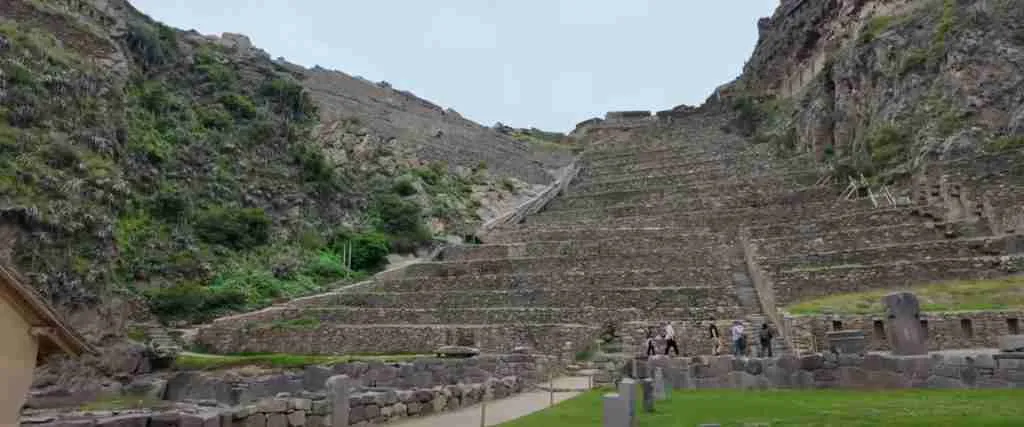
Ollantaytambo represents the Sacred Valley’s most complete Inca town with original stone streets, water channels, and trapezoidal doorways still used by local residents. The massive fortress complex rises above town in steep agricultural terraces leading to the Temple of the Sun constructed from massive pink granite blocks transported from quarries 6 kilometers away across the river. The site demonstrates sophisticated Inca engineering with water management systems, defensive walls, and ceremonial areas. Exploring requires 2-3 hours climbing steep stone staircases to upper terraces and temple platforms where views extend across the valley and surrounding peaks.
Additional Sacred Valley sites include Moray circular agricultural terraces creating microclimates for crop experimentation, Maras salt mines with 3,000+ evaporation pools producing salt since Inca times, and Chinchero highland town (3,762m) with colonial church built atop Inca walls and renowned weaving demonstrations showing traditional natural dye techniques. A full-day Sacred Valley tour visiting Pisac, Ollantaytambo, Moray, and Maras costs $50-100 per person with transportation and guide, while independent visits using public transport and taxi combinations run $15-25 total plus individual site entries.
Amazon Rainforest: Biodiversity Immersion
Peru’s Amazon rainforest covers 60% of the country’s territory containing some of the planet’s highest biodiversity concentrations. Tambopata National Reserve near Puerto Maldonado and Pacaya-Samiria National Reserve near Iquitos provide accessible tourism infrastructure within pristine jungle environments. These regions host 1,000+ bird species, 200+ mammal species including jaguars, giant otters, tapirs, and several monkey species, plus thousands of plant, insect, and reptile varieties within complex rainforest ecosystems.
Puerto Maldonado serves as primary Amazon gateway from Cusco with 45-minute flights operating 2-4 times daily. Lodges along Tambopata River range from 1-4 hours by motorized canoe from town, with remoteness correlating to wildlife diversity. Three-day/two-night minimum stays allow meaningful jungle immersion with typical daily schedules including 6 AM dawn birdwatching, morning canoe trips or jungle trails, midday rest during peak heat, afternoon wildlife spotting excursions, and optional night walks searching for nocturnal species. Guides provide expertise identifying species, explaining ecological relationships, and ensuring safe wildlife encounters.
Highlight experiences include macaw clay lick visits where hundreds of colorful parrots gather at riverbank mineral deposits creating spectacular displays (best June-November), canopy walkway platforms 30-40m high for treetop perspective and primate observation, oxbow lake kayaking amid giant river otters and caiman, and medicinal plant trail learning traditional medicine uses. Photography opportunities excel though challenging with moving wildlife, dense vegetation, and limited light requiring telephoto lenses (300mm+ recommended) and higher ISO capabilities.
Amazon preparation requires yellow fever vaccination (administered 10+ days before travel), malaria prophylaxis consultation with doctors (typically recommended for Iquitos region, optional for Tambopata), insect repellent with DEET 30%+, lightweight long sleeves and pants for mosquito protection, waterproof rain gear, rubber boots (usually provided by lodges), and sun protection despite forest canopy. Most lodges provide mosquito netting, safe drinking water, and basic medical supplies. Cell phone service and WiFi are generally unavailable creating complete disconnection opportunities.
Lake Titicaca: Floating Islands and Highland Culture
Lake Titicaca straddles the Peru-Bolivia border at 3,812m elevation as the highest navigable lake in the world. The Peruvian section accessed from Puno town contains the famous Uros floating islands constructed entirely from totora reeds that grow in shallow lake sections. These artificial islands support small communities maintaining traditional lifestyles fishing, weaving reed crafts, and hosting tourists. Approximately 70 islands exist with population varying from 2-10 families per island, continuously rebuilding reed bases as bottom layers decompose requiring new material every 2-3 months.
Standard day trips from Puno visit the Uros islands for 1-2 hours observing reed construction techniques, touring island homes, and purchasing handicrafts directly from artisans. Boats then continue to Taquile Island, a natural island 30 kilometers from Puno where 2,000 residents maintain traditional Quechua culture with communal land ownership, collective decision-making, and renowned textile production. Men knit the distinctive chullo hats using techniques passed from fathers to sons, while women weave belts and create ceremonial textiles. The island requires steep climbs from boat landing to main plaza (3,950m elevation) challenging for visitors not fully acclimatized to altitude.
Full-day tours cost $25-35 per person in shared boats with 10-15 travelers, including transportation, guide, and island entry fees. Private boat tours run $80-120 for 1-4 people offering flexible timing and pace. Departure times typically run 7-8 AM from Puno port, returning 4-5 PM. Overnight homestays on Taquile provide cultural immersion opportunities for $40-60 per person including dinner, breakfast, and simple accommodation with local families. The lake’s high elevation and strong sun require sunscreen, hats, and layered clothing for variable temperatures (cool mornings warming to 15-18°C midday, dropping again in afternoon).
Puno town itself offers limited attractions serving primarily as Lake Titicaca gateway. The Yavari steamship museum, Casa del Corregidor colonial mansion, and Mirador Kuntur Wasi viewpoint provide brief diversions. Most travelers spend one night in Puno for the lake tour then continue to Cusco (6-hour bus) or cross into Bolivia toward La Paz. Puno sits at higher elevation than Cusco requiring continued altitude caution particularly for visitors arriving directly from sea-level Lima. The town experiences cold nights (often dropping below freezing June-August) contrasting with pleasant sunny days when cloud-free skies prevail.
Planning Your Peru Top Attractions Visit in 2026
Entry Requirements and Documentation
U.S., Canadian, European Union, Australian, and New Zealand passport holders enter Peru visa-free for stays up to 183 days (6 months) for tourism purposes. Immigration officials stamp passports upon entry at Jorge Chávez International Airport in Lima or other international entry points. Passports must maintain 6 months validity beyond intended departure date with at least two blank pages for stamps. Border officials occasionally request proof of onward travel (return flight ticket or bus reservation to neighboring country) though this requirement applies inconsistently.
Tourist cards (Tarjeta Andina de Migración) issued on arrival must be retained throughout stay and surrendered upon departure. Losing this card requires obtaining police report and replacement from immigration office (Migraciones) in major cities, potentially causing departure delays. Photocopying the card and passport information page provides backup documentation. Extensions beyond initial 183 days require application at Migraciones offices with fees around $30, though most tourists never approach this generous allowance.
Health documentation requires yellow fever vaccination certificates for travelers visiting Amazon rainforest regions (Puerto Maldonado, Iquitos). Vaccination must occur at least 10 days before travel providing lifetime immunity recognized internationally. While coastal and highland areas don’t mandate vaccination, some travelers choose to protect against potential mosquito exposure. COVID-19 vaccination requirements no longer apply for Peru entry as of 2024, though policies can change requiring verification closer to travel dates. Travel insurance providing medical coverage and evacuation services is strongly recommended though not required for entry.
Money, Currency, and Payment Systems
Peru uses the Sol (PEN) as official currency with exchange rates fluctuating around 3.6-3.8 soles per U.S. dollar in 2026. U.S. dollars are widely accepted in tourism-oriented businesses (hotels, tour operators, upscale restaurants) often at slightly unfavorable exchange rates compared to paying in soles. ATMs throughout cities dispense soles with daily limits typically 1,400-2,000 soles ($370-540) using international cards (Visa, Mastercard, Maestro). Bank fees range 15-20 soles ($4-5.50) per transaction regardless of withdrawal amount, making maximum withdrawals most economical. Inform banks of Peru travel dates preventing fraud blocks on cards.
Credit cards work at hotels, tour agencies, upscale restaurants, and some shops with Visa enjoying widest acceptance followed by Mastercard. American Express and Discover have limited acceptance. Many businesses add 3-5% surcharges for credit card payment (though technically prohibited) or offer “cash discounts” effectively creating same pricing differential. Small restaurants, markets, transportation, and budget accommodations operate cash-only requiring adequate sol supply. Exchanging currency at official exchange houses (casas de cambio) in Lima, Cusco, and other tourist cities provides better rates than airport exchanges or hotels.
Carrying mix of large and small denomination bills proves practical. Taxi drivers, market vendors, and small shops often lack change for 100 or 200 sol notes ($27-54), creating frustrating payment situations. Requesting small bills (10, 20, 50 soles) when withdrawing from ATMs or exchanging currency prevents this issue. Counterfeit bills circulate particularly in tourist areas, requiring verification of security features when receiving change. Legitimate bills include watermarks, security threads, and color-changing ink observable by tilting. Major supermarkets and pharmacies provide reliable sources of small change when making purchases.
Safety and Common Sense Precautions
Peru’s major tourist destinations including Lima tourist districts, Cusco, Sacred Valley, and organized tour destinations maintain generally good safety for international visitors using common sense precautions. Petty theft (pickpocketing, bag snatching) represents the primary concern in crowded areas like markets, bus stations, and busy plazas. Wearing bags across body, securing valuables in interior pockets, and avoiding phone use while walking reduces theft opportunities. Authorized taxis arranged through hotels or rideshare apps (Beat, Cabify, InDriver) provide safer alternatives to street hailing where unlicensed operators occasionally collaborate with thieves.
Tourist police (Policía de Turismo) operate in Cusco, Lima, and major destinations providing assistance in English for reporting crimes, handling disputes with tour operators, or addressing tourist-specific issues. Their offices near Plaza de Armas in Cusco and Miraflores in Lima offer resources for visitors. Most crimes against tourists involve theft rather than violence, though walking alone after dark in non-tourist neighborhoods or displaying expensive electronics/jewelry increases risks. Groups attract less attention than solo travelers, though solo travel remains viable with appropriate awareness.
Altitude sickness creates legitimate health concern requiring gradual acclimatization, hydration, and possible medication. Severe symptoms (confusion, difficulty breathing at rest, persistent vomiting) demand immediate descent to lower elevations and medical attention. Most hotels maintain oxygen supplies for guest use. Food safety requires attention to restaurant cleanliness, avoiding raw vegetables washed in tap water, and choosing busy establishments with high turnover suggesting fresh ingredients. Bottled water is essential for drinking and tooth brushing throughout Peru. Travel insurance covering medical evacuation provides critical protection for serious altitude illness or other emergencies requiring transport to Lima facilities or international repatriation.
2026 Updates and Current Information for Peru Attractions
Infrastructure Improvements and Tourism Developments
Peru’s tourism infrastructure continues modernizing while preserving cultural heritage and environmental protection. The Chinchero airport project near Sacred Valley, planned to replace Cusco’s limited Alejandro Velasco Astete International Airport, faces ongoing environmental review and community consultation extending timeline beyond 2026. When completed, this larger facility will accommodate widebody aircraft enabling direct international flights to Cusco region eliminating Lima connections. Current travelers continue using existing Cusco airport with domestic flight connections from Lima.
Machu Picchu management implements enhanced visitor controls and circuit systems protecting archaeological remains from erosion and damage caused by 1.5 million annual visitors. The four-circuit system with timed entries replaces previous open-access approach limiting crowding at sensitive structures and viewpoints. Additional routes and alternative entry points under development will eventually increase total daily capacity while better distributing visitor flows across the expansive site. These changes require careful permit selection matching desired viewpoints and time availability to appropriate circuits.
Amazon lodge development focuses on sustainable ecotourism with community partnerships, environmental education programs, and conservation initiatives. New properties opening near Puerto Maldonado and Iquitos emphasize low-impact design, renewable energy, waste management, and local employment. These lodges partner with indigenous communities sharing tourism revenues and preserving traditional knowledge while providing economic alternatives to logging and mining pressures threatening rainforest regions. Travelers can specifically seek operators with credible sustainability certifications (Rainforest Alliance, Green Globe) supporting conservation-oriented tourism.
Seasonal Variations and Climate Patterns
Peru’s climate varies dramatically by region and elevation creating complex seasonal patterns affecting attraction visits. Coastal Lima experiences year-round moderate temperatures (15-27°C) with minimal rainfall but heavy fog and overcast skies June-October locally called “la garúa.” This coastal cloud layer creates gray conditions disappointing visitors expecting perpetual sunshine but has minimal impact on museum visits, culinary experiences, and historic site exploration. Summer months December-March bring clearer skies and warmer temperatures ideal for beach districts though coastal water remains cold (15-18°C) year-round due to Humboldt Current.
Highland regions including Cusco, Sacred Valley, Machu Picchu, and Lake Titicaca follow distinct wet (November-March) and dry (April-October) seasons. Dry season delivers 80-90% sunny days with comfortable temperatures and minimal rainfall making this period optimal for archaeological site visits, trekking, and mountain photography. Rainy season brings afternoon storms and cloudy conditions reducing archaeological site appeal though creating lush green landscapes, fewer crowds, and lower prices. The Inca Trail closure during February affects only this specific trek while all other Machu Picchu access routes remain operational year-round.
Amazon rainforest patterns differ from highland cycles. The region experiences higher rainfall November-April creating flooded forests allowing boat navigation into areas inaccessible during low water months. Wildlife concentrates near permanent water sources during dry months May-October potentially improving sighting reliability. However, both seasons offer excellent jungle experiences with different characteristics: wet season provides boat-based exploration and lush vegetation, dry season enables more trail hiking and macaw clay lick visits. Temperature remains hot and humid year-round (25-32°C) with rainfall expected any month though varying in intensity and frequency.
Cultural Events and Festival Calendar for 2026
Peru’s festival calendar fills with cultural celebrations combining Catholic traditions with indigenous Andean customs creating unique hybrid events. Inti Raymi (June 24) celebrates the winter solstice and Inca sun god with elaborate ceremonies at Sacsayhuaman fortress involving costumed processions, traditional music, and historical reenactments. This represents Cusco’s biggest annual event attracting 100,000+ spectators requiring advance hotel bookings 2-3 months early and higher accommodation rates. Attending involves purchasing grandstand tickets ($50-150) for premium fortress views or free viewing from surrounding hillsides with distant perspectives.
Corpus Christi (late May-early June, dates vary by Catholic calendar) brings Cusco another major festival with processions carrying religious statues from 15 parishes to the cathedral. Streets fill with decorated platforms, traditional dancers, and vendors selling traditional foods. This event creates cultural immersion opportunity though increasing crowds and limiting some archaeological site access during procession routes. Cusco Anniversary Week (June 1-7) coincides with Inti Raymi period bringing parades, concerts, and civic celebrations throughout the city.
Virgen del Carmen festival (July 15-17) in Paucartambo village 4 hours from Cusco showcases elaborate costumes, masked dances, and music performances representing one of Peru’s most spectacular regional festivals. Attending requires early morning departure from Cusco, all-day commitment, and potential overnight stay as events continue late evening. Candelaria festival (early February) in Puno features extensive folkloric dance competitions, parades, and celebrations honoring patron saint of Lake Titicaca combining Catholic and Aymara traditions. These festivals offer authentic cultural experiences though coinciding with tourist crowds and advance planning requirements.

Frequently Asked Questions: Peru Top Attractions 2026
How many days do you need to visit Peru’s top attractions?
Minimum 10 days covers Peru’s essential top attractions including Cusco (2-3 days), Sacred Valley (1-2 days), Machu Picchu (1-2 days), and Amazon rainforest (3 days), plus Lima connections. This timeline provides adequate acclimatization, prevents rushed experiences, and allows comprehensive exploration of each destination. Extended 12-14 day itineraries add Lake Titicaca, Arequipa, or additional Cusco region sites like Rainbow Mountain. Budget travelers condensing to 7 days can complete Cusco-Sacred Valley-Machu Picchu core circuit sacrificing Amazon or other extensions. Travelers with 16+ days incorporate northern coastal archaeology, Nazca Lines, or Colca Canyon for comprehensive Peru coverage.
Can you visit Machu Picchu and the Amazon in the same trip?
Yes, Machu Picchu and Amazon rainforest combine excellently in single Peru trips with efficient routing through Cusco. The standard sequence visits Cusco-Sacred Valley-Machu Picchu first (5-6 days) then flies Cusco to Puerto Maldonado (45 minutes) for Amazon lodge stays (3-4 days) before returning to Lima. This progression handles altitude acclimatization properly by starting in highlands then dropping to Amazon’s 200m elevation. Total trip duration runs 10-12 days including Lima arrival/departure. Reverse routing (Amazon first, then Cusco) works but places Machu Picchu at trip end when travelers may be tired, and requires immediate altitude adjustment upon Cusco arrival versus gradual acclimatization when starting there.
Is altitude sickness serious at Peru’s top attractions?
Altitude sickness affects 50-70% of visitors arriving in Cusco (3,400m) or Lake Titicaca (3,812m) causing headaches, nausea, fatigue, and dizziness typically resolving within 48 hours. Most cases remain mild and manageable with rest, hydration, light meals, and coca tea. Severe altitude sickness (High Altitude Pulmonary Edema or High Altitude Cerebral Edema) occurs rarely in tourists but requires immediate descent and medical treatment. Prevention strategies include 2-3 day gradual acclimatization starting in lower-altitude Sacred Valley (2,800m), prescription medication acetazolamide (Diamox), avoiding alcohol first 48 hours, and minimizing strenuous activity during initial days. Travelers with heart conditions, pregnancy, or respiratory issues should consult doctors before booking highland destinations and consider focusing on sea-level Lima and Amazon rainforest (200-400m) instead.
What’s the best base city for exploring Peru’s top attractions?
Cusco serves as optimal base for Peru’s highland attractions providing direct access to Sacred Valley day trips (1-2 hours), Machu Picchu train connections (3.5 hours), and extensive accommodation/restaurant options in historic colonial setting. The city offers 2-3 days of sightseeing in its own right with Inca sites, museums, and cultural experiences while serving as operations hub for regional exploration. Ollantaytambo in Sacred Valley provides alternative base 500m lower elevation than Cusco with easier acclimatization, proximity to Machu Picchu train station, and quieter atmosphere though fewer dining and accommodation options. Lima serves purely as international gateway and domestic flight hub rather than base for exploring scattered attractions requiring multiple regional flights. Most itineraries use Cusco as primary base (4-6 nights) with possible Sacred Valley overnight and Aguas Calientes stay before Machu Picchu morning visit.
Do you need a guide for Peru’s top attractions?
Guided tours enhance but aren’t required for most Peru attractions. Machu Picchu allows independent exploration without guides, though hiring one ($30-50 per person for 2-3 hours in shared groups, $80-120 for private) provides historical context, architectural explanations, and photo assistance significantly enriching the experience. Sacred Valley archaeological sites like Pisac and Ollantaytambo similarly permit self-guided visits using information placards though guides illuminate Inca engineering techniques, cultural significance, and lesser-known details invisible to independent visitors. Cusco city walking works well independently using maps and self-paced exploration, while guided city tours ($15-30 per person) efficiently connect highlights with historical narratives. Amazon lodge visits require guides as part of all-inclusive packages for safety, wildlife identification, and navigation through complex rainforest ecosystems. The Inca Trail mandates licensed guides and porters (no independent trekking allowed) included in all organized trek packages.
Can you visit Peru’s top attractions with children?
Peru’s top attractions accommodate children of all ages with appropriate preparation for altitude, hiking distances, and local conditions. Families with young children (under 8) should consult pediatricians regarding altitude safety for Cusco-Machu Picchu visits, consider focusing on sea-level Lima attractions and Amazon rainforest avoiding elevation concerns, or plan extended acclimatization periods (3-4 days minimum) in Cusco before excursions. Older children (8+) generally handle altitude similar to adults requiring same precautions. Train rides to Machu Picchu engage children more than long drives, while citadel exploration involves significant stair climbing and walking (2-3 hours minimum) challenging for small children needing frequent breaks. Amazon lodges welcome families offering wildlife spotting adventures exciting for children though jungle heat, insects, and basic facilities require realistic expectations. Sacred Valley day tours work well for families providing varied activities (markets, ruins, local culture) with moderate physical demands. Most tour operators offer family discounts for children under 12, while children under 8 often enter attractions free or at reduced rates.
What vaccinations do you need for Peru’s top attractions?
Yellow fever vaccination is required for travelers visiting Amazon rainforest regions (Puerto Maldonado, Iquitos) and should be administered at least 10 days before travel providing lifetime immunity. While not required for coastal Lima or highland Cusco-Machu Picchu areas, many travelers vaccinate as precaution against potential mosquito exposure. Routine vaccinations should be current including tetanus-diphtheria, measles-mumps-rubella, and seasonal influenza. Hepatitis A vaccine is recommended for all Peru travelers due to potential food and water contamination risks. Hepatitis B vaccination applies for travelers with potential medical care needs, tattoo/piercing plans, or extended stays. Typhoid vaccination provides additional protection against contaminated food and water though careful restaurant selection and bottled water use reduce transmission risk. Rabies vaccination series (pre-exposure) applies only for travelers planning extensive rural time, animal handling, or remote trekking far from medical facilities where post-exposure treatment might be delayed. Consult travel medicine specialists or CDC resources 4-6 weeks before departure allowing time for multi-dose vaccine series.
How much does a Peru top attractions trip cost in 2026?
Peru top attractions trips cost $1,200-2,400 per person for 10-14 days including domestic flights, mid-range accommodation, tours, meals, and attraction entries but excluding international flights. Budget backpackers using hostels, public transportation, and economical choices manage $600-900 for 7-10 day focused Cusco-Machu Picchu trips. Luxury travelers using boutique hotels, private guides, premium trains, and upscale experiences spend $4,000-8,000+ for comprehensive 12-14 day itineraries. Major cost components include Machu Picchu ($242-262 with train and entry), domestic flights ($300-600 for typical Lima-Cusco-Puerto Maldonado-Lima routing), Amazon lodge ($400-800 for 3 days/2 nights mid-range), accommodation ($40-200 per night depending on comfort level), and meals ($20-80 daily). Booking advance flights and trains, traveling shoulder seasons April-May or September-October, staying in mid-range versus luxury properties, and selecting economical restaurant options provides 30-40% savings versus peak season luxury approaches. International flights from United States to Lima cost additional $400-900 round-trip depending on departure city and booking timing.
Is Peru safe for tourists visiting top attractions in 2026?
Peru’s major tourist destinations including Lima tourist districts (Miraflores, Barranco, San Isidro), Cusco, Sacred Valley, Machu Picchu, and organized Amazon tours maintain generally good safety using common sense precautions against petty theft. Tourist areas receive additional police presence and tourism infrastructure creating safer environments than non-tourist neighborhoods. Primary risks involve pickpocketing and bag snatching in crowded areas like markets, buses, and plazas prevented by securing valuables, using cross-body bags, and maintaining awareness. Authorized transportation through hotels or rideshare apps avoids unlicensed taxi issues. Tourist police offices in major destinations provide English-speaking assistance for reporting crimes or resolving disputes. Political demonstrations occasionally occur in Lima and regional capitals but rarely affect tourist areas or organized tours. Altitude sickness creates legitimate health concern requiring gradual acclimatization and possible medical intervention for severe cases. Overall, millions of international tourists visit Peru’s top attractions annually with vast majority experiencing safe, enjoyable trips by following standard travel precautions and using registered tour operators for activities.
Can you do the Inca Trail without advance booking in 2026?
No, Inca Trail permits cannot be purchased without advance booking as the trail limits access to 500 people daily including hikers, guides, porters, and cooks. Permits sell out 4-6 months ahead for high season June-August departures requiring booking in January-February for July-August treks. Tour operators purchase permits in bulk allocation then assign to paid clients, making operator booking the purchase method rather than individual permit sales. Last-minute travelers (within 2-3 weeks) occasionally find cancellation permits during shoulder months April-May and September-October when agencies release unconfirmed reservations, but this approach carries high risk of unavailability. Alternative treks (Salkantay, Lares) don’t require permits and book 2-4 weeks ahead providing backup options for travelers without advance Inca Trail reservations. Walking the Inca Trail without permits (illegally) faces enforcement through checkpoint controls at trail entrances and archaeological sites making this approach impossible. Budget adequate planning time (4-6 months for peak season) when Inca Trail represents trip priority, or select alternative trek options allowing flexible timing.