
Perito Moreno Glacier 2026: Complete UNESCO Visitor Guide
This complete 2026 planning guide provides the detailed cost breakdowns, transportation logistics, accommodation strategies, and timing recommendations you need to maximize your Perito Moreno experience while managing your budget effectively. Whether you’re planning a dedicated glacier visit or incorporating Perito Moreno into a broader Patagonian journey, understanding the practical realities of access, costs, and seasonal variations ensures your visit aligns with both your expectations and your travel budget.
Key Takeaways
- Standard park entry costs ARS 18,000 (approximately $20 USD) for foreign adults in 2026, with walkway access and multiple viewing platforms included (check official rates as pricing may vary)
- Visit during shoulder seasons (April-May or September-November 2026) for 30-50% lower accommodation costs and fewer crowds while maintaining excellent glacier viewing conditions
- Book El Calafate accommodation 2-3 months ahead for summer 2026 (December-February), as glacier-view hotels sell out completely during peak season
- Budget $180-280 per day including park entry, meals, transportation, and mid-range lodging for comprehensive Perito Moreno experience in 2026
- Combine walkway visit with either Minitrekking ($150-180) or boat tour ($35-50) for the most rewarding single-day glacier experience without overwhelming costs
- Flying to El Calafate saves 40+ hours compared to overland routes from Buenos Aires, with round-trip flights averaging $250-400 domestically in 2026
Introduction: Planning Your Perito Moreno Glacier Visit in 2026
Perito Moreno Glacier stands as one of Patagonia’s most accessible and spectacular natural wonders, attracting over 300,000 visitors annually to Los Glaciares National Park in Argentina’s Santa Cruz Province. Unlike most glaciers worldwide experiencing retreat, Perito Moreno maintains dynamic equilibrium—advancing, rupturing, and reforming in a continuous cycle that creates one of nature’s most dramatic spectacles. The glacier spans 250 square kilometers with a front face reaching 74 meters above Lago Argentino’s surface and extending another 170 meters below water level.
What sets Perito Moreno apart from other glacial destinations is the combination of accessibility and authentic wilderness experience. Steel walkways positioned at glacier level provide intimate views of the ice wall from multiple angles, while the complete absence of development beyond the walkway system preserves the raw Patagonian landscape. You stand mere meters from a living glacier that calves ice blocks the size of buildings into turquoise waters, with the thunderous cracks and crashes echoing across the lake throughout the day.
People Also Ask About Perito Moreno Glacier 2026
How much does it cost to visit Perito Moreno Glacier in 2026?
Park entry costs ARS 18,000 (approximately $20 USD) for foreign adults in 2026, providing access to the extensive walkway system with multiple viewing platforms at Perito Moreno Glacier (check the official Parques Nacionales website for current rates as pricing may vary). This entrance fee grants unlimited time on the walkways during park operating hours, with no additional charges for platform access or trail use. Argentine nationals and Mercosur residents pay reduced rates of ARS 9,000 ($10 USD equivalent).
Transportation from El Calafate adds $25-35 for standard shuttle buses or $80-120 for private transfers. A complete day visit including park entry, round-trip transportation, and meals totals $85-125 per person before optional activities. Adding either Minitrekking ($150-180) or boat tours ($35-50) increases daily costs to $220-305 per person. Budget-conscious travelers can minimize costs by using public shuttle services, packing lunch from El Calafate supermarkets, and limiting visits to the walkway system alone, reducing total expenses to approximately $70-85 for the complete day.
When is the best time to visit Perito Moreno Glacier in 2026?
The optimal visiting window extends from October through April 2026, with each period offering distinct advantages. Summer months (December-February 2026) provide the longest daylight hours—up to 17 hours daily—allowing extended time on the walkways and the warmest temperatures reaching 15-20°C (59-68°F). However, summer brings maximum crowds with 1,500-2,000 daily visitors and premium accommodation rates peaking at $200-350 per night in El Calafate.
Shoulder seasons (April-May and September-November 2026) deliver the ideal balance of favorable conditions and practical advantages. April 2026 offers stable weather with 12-hour days, moderate temperatures around 8-12°C (46-54°F), dramatically reduced crowds of 300-500 daily visitors, and accommodation costs 30-50% below summer peaks. The glacier remains fully accessible and active, with calving events occurring throughout the year regardless of season. September-November 2026 provides similar benefits with gradually warming temperatures and wildflowers appearing in the surrounding landscape.
Do you need advance bookings for Perito Moreno Glacier in 2026?
Park entry itself requires no advance booking—you purchase tickets at the park entrance upon arrival. However, several practical factors make advance planning essential for 2026 visits. Transportation from El Calafate operates on scheduled departures with limited capacity, particularly during summer months. Shuttle buses fill 1-2 days ahead during December-February 2026, while shoulder seasons allow same-day or next-day bookings.
Optional activities demand much longer advance booking windows. Minitrekking and Big Ice expeditions sell out 7-14 days ahead during summer 2026, and up to 30 days ahead for preferred morning departure times. Boat tours offer more flexibility with 2-3 day advance booking sufficient even during peak season. Accommodation in El Calafate presents the most critical booking challenge, with glacier-view hotels selling out completely 2-3 months ahead for summer 2026 visits. Budget and mid-range options disappear 3-4 weeks before arrival during peak periods. Shoulder season visits allow 2-3 week advance booking windows for acceptable accommodation choices.
How long should you spend at Perito Moreno Glacier in 2026?
A standard walkway visit requires 2-4 hours to fully explore all viewing platforms, photograph the glacier from multiple angles, and witness calving events. Most visitors spend 3-3.5 hours at the glacier, allowing time for the complete walkway circuit, lunch at the on-site cafeteria, and extended observation periods at prime viewing points. The walkway system spans 4 kilometers of platforms and trails, with the circuit taking 90-120 minutes at a leisurely pace including photo stops.
Adding Minitrekking extends your visit to 5-6 hours total—4.5 hours for the ice trekking experience plus 1-1.5 hours for independent walkway exploration afterward. Big Ice expeditions consume 8-9 hours including the trekking component, with minimal time remaining for walkway access. Boat tour additions add 60-90 minutes to your glacier visit. For most travelers, allocating a full day (9 AM-5 PM) provides the optimal balance, allowing unhurried walkway exploration, lunch, optional boat tour, and buffer time for transportation delays or extended calving observation.
Extended multi-day tours – 5+ days
Featured Park Los Glaciares National Park Multi-Day Tour Packages
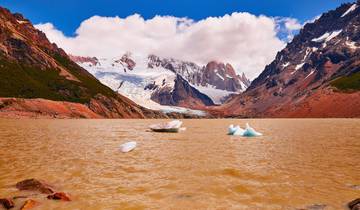
9 days
Patagonia Hiking
- ✓ Comprehensive Park Los Glaciares National Park tour
- ✓ Expert local guides included
- ✓ All accommodation arranged
- ✓ Transportation provided
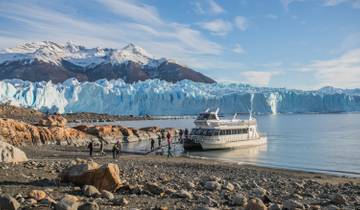
4 days
Land of Glaciers: El Calafate
- ✓ Comprehensive Park Los Glaciares National Park tour
- ✓ Expert local guides included
- ✓ All accommodation arranged
- ✓ Transportation provided
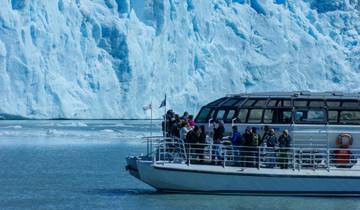
3 days
3-Day El Calafate Escape with Optional Airfare from Buenos Aires
- ✓ Comprehensive Park Los Glaciares National Park tour
- ✓ Expert local guides included
- ✓ All accommodation arranged
- ✓ Transportation provided
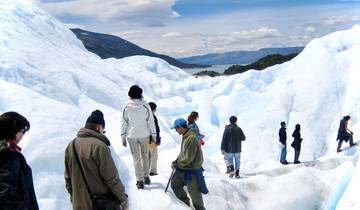
4 days
4 Days and 3 Nights: El Calafate & El Chalten Majestic Wonders
- ✓ Comprehensive Park Los Glaciares National Park tour
- ✓ Expert local guides included
- ✓ All accommodation arranged
- ✓ Transportation provided
Multi-day tour packages powered by TourRadar. Prices and availability subject to change.
Essential Planning Information 2026
Current Costs and Pricing Breakdown 2026
Park entrance fees operate on a tiered system based on residency status. Foreign visitors pay ARS 18,000 (approximately $20 USD) for adults, while children under 6 enter free and youth ages 6-12 receive 50% discounts at ARS 9,000 (check Parques Nacionales website for current official rates as pricing may vary). Argentine nationals and Mercosur residents pay ARS 9,000 for adults, with proportional youth discounts. Senior visitors over 65 from Argentina receive free entry upon presenting valid identification.
Transportation costs vary significantly by service level and booking timing. Standard shuttle buses from El Calafate charge $25-30 per person round-trip, departing 8:30-9:30 AM and returning 4:00-5:00 PM. Private transfers cost $80-120 for vehicles accommodating 1-4 passengers, offering flexible departure times and door-to-door service. Rental cars range $60-90 daily for compact vehicles suitable for the paved 80-kilometer route to the park, though parking costs an additional ARS 2,000 ($2 USD) at the glacier parking area.
On-site expenses include cafeteria meals at $15-25 for sandwiches, empanadas, and beverages, though many visitors pack lunch from El Calafate supermarkets where supplies cost $8-12 for complete picnic provisions. The cafeteria offers the only food service within the park, with no alternatives between El Calafate and the glacier. Optional boat tours operated by Hielo y Aventura cost $35-50 for the standard one-hour Safari Nautico excursion approaching within 200 meters of the glacier face.
Transportation Options and Schedules 2026
El Calafate serves as the gateway to Perito Moreno Glacier, located 80 kilometers west via paved Route 11. Multiple transportation options accommodate different budgets and schedules. Standard shuttle services operated by companies including Taqsa, Cal-Tur, and Chaltén Travel depart El Calafate terminals 8:30-9:30 AM with return departures from the glacier 4:00-5:00 PM, providing 6-7 hours at the site. These shuttles cost $25-30 per person round-trip and require advance booking 1-2 days ahead during summer months.
Private transfer services offer maximum flexibility with customizable departure times and extended glacier access. Companies like Glaciar Sur and Patagonia Dreams charge $80-120 for vehicles seating 1-4 passengers, with the ability to coordinate departures as early as 7:00 AM for sunrise viewing or extend returns until park closing. The journey takes 90 minutes each direction, with the final 50 kilometers offering increasingly spectacular views of the Southern Patagonian Ice Field and surrounding peaks.
Rental cars provide the greatest independence, allowing spontaneous stops at viewpoints along Route 11 and flexible glacier visiting hours. Companies including Localiza, Avis, and Budget operate from El Calafate airport and downtown locations, with compact cars sufficient for the entirely paved route. Daily rates range $60-90 during summer 2026, decreasing to $45-65 during shoulder seasons. Fuel costs add approximately $15-20 for the round-trip journey, with gas stations available in El Calafate before departure.
Best Time to Visit Perito Moreno Glacier 2026
Seasonal Analysis for 2026 Glacier Visits
Summer season (December-February 2026) delivers maximum daylight and warmest temperatures but presents significant practical challenges. Daily visitors peak at 1,500-2,000, creating crowded walkways during midday hours and extended waits at prime viewing platforms. Temperatures reach 15-20°C (59-68°F), allowing comfortable exploration in light layers though wind conditions remain variable with gusts reaching 40-60 km/h. The glacier exhibits active calving throughout summer with frequent ice collapses occurring 5-10 times daily during peak activity periods.
Daylight extends from 5:00 AM until 10:00 PM during late December 2026, providing extraordinary flexibility for early morning or evening visits when crowds diminish substantially. However, accommodation costs peak at $200-350 per night for mid-range hotels, with budget hostels charging $45-70 for dormitory beds. Transportation services expand to meet demand, with shuttle departures every 30-60 minutes throughout the morning.
Shoulder seasons transform the glacier experience through dramatic crowd reduction and cost savings while maintaining excellent viewing conditions. April 2026 offers stable weather with 50-60mm monthly precipitation spread across 8-10 rain days, temperatures averaging 8-12°C (46-54°F), and 12-hour daylight from 7:30 AM to 7:30 PM. Daily visitor counts drop to 300-500, creating peaceful walkway exploration and unobstructed viewing platform access.
Accommodation rates decrease 30-50% compared to summer peaks, with mid-range hotels available at $120-180 per night and quality hostels at $30-45. The glacier remains fully active with calving events continuing throughout autumn, while surrounding beech forests display spectacular golden foliage during April creating enhanced photographic opportunities. September-November 2026 mirrors April’s advantages with gradually warming temperatures and wildflower displays emerging in October-November.
Weather Patterns and Glacier Viewing Conditions 2026
Patagonian weather operates independently from seasonal expectations, with wind representing the most consistent factor across all months. Prevailing westerlies blow at 20-40 km/h throughout the year, gusting to 60-80 km/h during storm systems passing through the region. The glacier’s east-facing orientation provides some shelter from the strongest winds, though exposed walkway sections experience full force conditions particularly during afternoon hours when winds typically intensify.
Precipitation totals remain relatively consistent year-round, averaging 150-200mm annually in the El Calafate region, though the glacier microclimate receives higher amounts. Summer months (December-February 2026) bring 40-60mm monthly precipitation across 6-8 rain days, typically arriving as afternoon thunderstorms that clear within 2-3 hours. Winter precipitation (June-August) shifts toward snow above 800 meters elevation, though the glacier viewing areas at 200 meters remain predominantly rain with occasional wet snow during the coldest periods.
Cloud cover affects glacier photography and viewing quality, with clear skies occurring 40-50% of days during summer and increasing to 60-70% during autumn and spring months. The glacier’s massive scale ensures impressive viewing even under overcast conditions, while diffused light during cloudy periods actually enhances ice detail in photographs by reducing harsh shadows and blown highlights. Morning hours (8:00-11:00 AM) provide the most reliable clear conditions before afternoon cloud development.
Accommodation Strategies for 2026 Glacier Visits
El Calafate Lodging Options and Booking Windows
El Calafate serves as the exclusive base for Perito Moreno Glacier visits, with no accommodation options closer to the glacier itself. The town offers comprehensive lodging across all budget levels, though strategic booking becomes critical during peak season. Budget hostels like América del Sur, Hospedaje del Glaciar, and I Keu Ken provide dormitory beds at $30-45 per night and private doubles at $65-90 during shoulder seasons (April-May, September-November 2026), increasing to $45-70 for dorms and $90-140 for privates during summer peaks.
Mid-range hotels including Rochester, Esplendor by Wyndham, and Kosten Aike deliver comfortable accommodations with glacier or lake views at $120-180 per night during shoulder seasons, escalating to $200-280 during December-February 2026. These properties offer private bathrooms, heating, WiFi, and breakfast, with some providing shuttle service to the glacier or tour booking assistance. Location within El Calafate affects both pricing and convenience, with properties along Avenida del Libertador commanding premiums of 15-20% over equivalent hotels in outlying neighborhoods.
Luxury options like Eolo, Design Suites, and Los Álamos deliver exceptional glacier-region experiences at $350-600 per night. These properties feature gourmet restaurants, spa facilities, guided excursions, and premium glacier viewpoints from their elevated positions outside El Calafate. Eolo’s location 27 kilometers from town provides dramatic Southern Patagonian Ice Field views but requires private transportation for all glacier visits and dining.
Booking timelines vary dramatically by season. Summer 2026 visits (December-February) demand 2-3 month advance reservations for mid-range and luxury properties, with budget hostels filling 4-6 weeks ahead. Shoulder season windows extend to 3-4 weeks for mid-range hotels and 1-2 weeks for hostels. Last-minute bookings during summer risk limited availability at premium rates, while shoulder seasons allow reasonable flexibility even with 5-7 day advance booking.
Alternative Accommodation Approaches 2026
El Chaltén, located 220 kilometers north of El Calafate, offers lower accommodation costs and exceptional trekking opportunities but creates logistical challenges for Perito Moreno access. The three-hour drive each direction makes day trips impractical, while El Chaltén provides no direct glacier services or tours. Travelers attempting to combine both destinations in a single Patagonian journey find sequential visits more practical—spending 2-3 nights in El Chaltén for trekking followed by 2-3 nights in El Calafate for glacier exploration.
Vacation rentals through Airbnb and Booking.com provide kitchen facilities reducing meal costs and appealing to families or groups. Complete apartments range $90-140 per night during shoulder seasons and $150-240 during summer, sleeping 2-4 guests. These properties work well for 3+ night stays when daily breakfast and cooking capability offset the slightly higher nightly rates compared to hostel dormitories. However, rental properties typically lack the tour booking assistance and local knowledge available through hotel reception desks.
Camping options in El Calafate include Camping El Ovejero and Camping del Glaciar at $15-25 per person including tent sites, bathrooms, and basic shelter from wind. These campgrounds operate October-April only, closing during winter months. While camping dramatically reduces accommodation costs, the challenging wind conditions, limited facilities, and distance from town center make this option suitable primarily for experienced campers with appropriate gear and transportation.
Sample 2026 Glacier Itineraries
One-Day Complete Glacier Experience
The single-day comprehensive visit maximizes glacier access while managing costs effectively. Depart El Calafate 8:30 AM via standard shuttle ($25-30), arriving at the glacier parking area 10:00 AM after the scenic 90-minute journey through Patagonian steppe transitioning to dramatic mountain landscapes. Purchase park entry at the entrance booth ($20), then proceed to the walkway system for initial glacier viewing from the main platforms.
Spend 10:00 AM-12:00 PM exploring the northern walkway sections, photographing the glacier from multiple angles and waiting for calving events. The upper walkways provide panoramic views of the complete glacier and surrounding peaks, while lower platforms position you at glacier level for intimate ice wall perspectives. Calving occurs unpredictably but averages 5-10 major events daily during active periods, with thunderous cracks often providing 10-30 second warnings before ice collapses.
Break for lunch 12:00-1:00 PM either at the on-site cafeteria ($15-25) or at picnic tables using supplies from El Calafate ($8-12). The afternoon session 1:00-3:30 PM focuses on southern walkway sections and extended observation from prime viewing platforms. Board the 3:30-4:00 PM boat tour ($35-50) for one-hour glacier approach, providing water-level perspectives of the ice wall and close views of icebergs calved from the glacier face. Return shuttle departs 5:00 PM, reaching El Calafate 6:30 PM. Park entry $20, shuttle $30, lunch $12, boat tour $45, snacks $8. Total day cost: $115 per person (excluding accommodation).
Two-Day Intensive Glacier Exploration
Multi-day visits allow comprehensive glacier experiences including ice trekking without rushed schedules. Day one follows the complete walkway exploration outlined above, concluding with evening return to El Calafate for dinner at local restaurants ($25-40 for complete meals) and overnight rest. This approach provides your first glacier impressions and understanding of the scale and geography before committing to ice trekking on day two.
Day two begins with 7:45 AM pickup for Minitrekking, the accessible ice walking experience operated by Hielo y Aventura. The program includes boat crossing of Lago Rico ($150-180 total including all equipment and park entry), followed by 20-minute forest approach hike to the glacier tongue. Certified guides provide crampon fitting and ice walking instruction before leading 90-minute glacier surface explorations across blue ice formations, exploring crevasses, and drinking meltwater from surface pools.
The complete Minitrekking experience runs 4.5 hours, concluding around 1:00 PM. Afternoon hours 2:00-4:30 PM allow independent walkway exploration from new perspectives informed by your ice-level experience, creating appreciation for the glacier’s massive three-dimensional structure. Return to El Calafate by 6:00 PM. Day one costs (walkway only): $115. Day two: Minitrekking $165, lunch $15, snacks $10. Total two-day cost: $305 per person (excluding accommodation $120-180 per night).
Extended Patagonian Glacier Journey
Comprehensive Patagonian visits combine Perito Moreno with complementary experiences in the broader El Calafate region and Southern Patagonian Ice Field. A four-day itinerary provides balanced glacier exploration, reduced daily costs through strategic activity spacing, and recovery time between intensive experiences.
Day one: Arrival in El Calafate, orientation walk through town, visit Glaciarium ice museum ($15 entry) for glaciology education and regional glacier overview. Light dinner and early rest preparing for glacier visit. Day one costs: Museum $15, dinner $25-35, snacks $8. Total: $48-58 per person (excluding accommodation).
Day two: Full-day Perito Moreno walkway visit with boat tour as outlined in one-day itinerary. Return early evening for restaurant dinner sampling Patagonian lamb and regional wines. Day two costs: Park entry $20, shuttle $30, lunch $12, boat tour $45, dinner $35-45. Total: $142-152 per person (excluding accommodation).
Day three: Minitrekking glacier experience, afternoon town exploration and relaxation. Evening visit to local craft beer pubs sampling regional brews. Day three costs: Minitrekking $165, lunch $15, beer tasting $20-30. Total: $200-210 per person (excluding accommodation).
Day four: Morning visit to Laguna Nimez reserve for flamingo and waterfowl observation ($10 entry), afternoon Upsala Glacier boat excursion ($120-150 full-day tour including lunch). Final dinner in El Calafate before overnight rest. Day four costs: Reserve $10, Upsala tour $135, dinner $30-40. Total: $175-200 per person (excluding accommodation).
Four-day total: Activities and meals $565-620 per person, accommodation $480-720 (4 nights mid-range), total package $1,045-1,340 per person for comprehensive Patagonian glacier experience.
Money-Saving Strategies for 2026 Glacier Visits
Advance Booking Benefits and Timing Optimization
Strategic booking timing creates substantial savings across all expense categories. Flights to El Calafate from Buenos Aires cost $250-400 round-trip when booked 2-3 months ahead for shoulder season travel (April-May, September-November 2026), increasing to $400-600 for equivalent summer flights. Flexibility on exact travel dates within a two-week window allows capturing promotional fares that appear unpredictably, with Tuesday-Thursday departures typically costing 10-15% less than weekend flights.
Accommodation advance booking prevents premium pricing during peak availability crunches. Mid-range hotels charge $120-180 when booked 4-6 weeks ahead for summer visits, versus $200-280 for equivalent rooms booked 1-2 weeks before arrival. Shoulder season rates ($90-140 for identical properties) combined with 3-4 week advance booking creates $60-140 per night savings compared to peak season last-minute rates.
Activity bundling through tour operators like Hielo y Aventura produces package discounts of 10-15% compared to booking walkway entry, boat tour, and ice trekking separately. Combination packages including multiple days or activities leverage operator efficiencies and guaranteed customer volume into reduced per-activity pricing. A walkway visit + boat tour + Minitrekking package costs $195-225 versus $235-270 for identical experiences booked individually.
Cost Reduction Through Service Selection
Transportation choices create the widest single-day cost variation. Standard shuttle services at $25-30 round-trip provide identical glacier access as private transfers costing $80-120, with the only differences being departure time flexibility and door-to-door convenience. Groups of 3-4 travelers find shared private transfers cost-competitive at $20-30 per person while maintaining scheduling flexibility, but solo travelers or couples gain no financial advantage from private options.
Self-catering drastically reduces food expenses without compromising glacier time. El Calafate supermarkets (Cordiez, Cooperativa, and others) stock complete picnic supplies—bread, cheese, cured meats, fruit, chocolate, and beverages—for $8-12 per person versus $15-25 for equivalent cafeteria meals. Bringing reusable water bottles for refilling at park facilities eliminates beverage purchases. Three meals daily from supermarkets cost $20-30 versus $45-75 for restaurant dining, creating $25-45 daily savings across multi-day visits.
Activity prioritization allows comprehensive glacier experiences within budget constraints. The walkway system alone provides spectacular glacier viewing and photography at minimal cost beyond park entry and transportation ($75-85 total). Adding a boat tour ($35-50) creates water-level perspectives for modest additional expense, while ice trekking ($150-180) delivers the most immersive experience at premium pricing. Most visitors find the walkway + boat tour combination offers optimal value, with ice trekking reserved for glacier enthusiasts willing to allocate budget accordingly.
Practical Planning for Your 2026 Visit
Physical Requirements and Accessibility Considerations
The Perito Moreno walkway system accommodates diverse mobility levels through well-maintained steel platforms and paved pathways. The main circuit requires moderate fitness for extended walking—approximately 4 kilometers total distance—with some stairways connecting different platform levels. However, visitors can customize their walking distance by selecting specific sections rather than completing the full circuit, with the most impressive views accessible within 500 meters of the main parking area.
Wheelchair accessibility exists for the initial 200-300 meters of walkways from the visitor center, providing glacier views though not the complete circuit. The park maintains paved access to several major viewing platforms, allowing visitors with mobility limitations to experience the glacier’s scale and witness calving events. Advanced age alone creates no barriers, with visitors in their 70s and 80s regularly completing the walkway system at comfortable paces with rest breaks at viewing platforms.
Ice trekking programs impose specific requirements. Minitrekking accepts participants ages 10-65 in reasonable physical condition, requiring ability to hike 20 minutes through forest terrain and walk 90 minutes on uneven ice surfaces wearing crampons. Big Ice expeditions demand higher fitness with age restrictions of 18-50 and prerequisites of good cardiovascular conditioning for sustained glacier hiking with elevation changes. Operators conduct no fitness testing but emphasize honest self-assessment, as the remote glacier location prevents easy departure once programs begin.
What to Pack for 2026 Glacier Experiences
Patagonian weather variability demands layered clothing systems regardless of season. Base layers include moisture-wicking shirts and lightweight pants, with fleece or wool mid-layers providing insulation. Waterproof and windproof outer shells prove essential year-round, as wind and rain occur unpredictably across all months. Temperatures range from 5-20°C (41-68°F) during summer and -5-10°C (23-50°F) during winter, but wind chill reduces perceived temperatures substantially.
Footwear requirements vary by planned activities. Sturdy hiking boots with ankle support work well for walkway exploration and provide appropriate foundation for crampon attachment during ice trekking. Running shoes or lightweight trail shoes suffice for walkway-only visits during dry conditions, though waterproof capabilities help during rain. Ice trekking operators provide crampons, helmets, and harnesses, but participants supply their own boots meeting operator specifications (ankle support, rigid soles).
Photography gear benefits from protective measures against wind, spray, and temperature extremes. Camera rain covers protect against mist from calving events and sudden rain showers, while extra batteries compensate for cold-weather power drain. Polarizing filters reduce glare from ice and water surfaces, enhancing blue ice tones and cloud definition. Telephoto lenses (200-400mm) capture calving event details, while wide angles (16-35mm) convey glacier scale and surrounding mountain context.
Essential supplies include high-SPF sunscreen (glacier reflection intensifies UV exposure), sunglasses with full UV protection, water bottles (1-2 liters per person), energy snacks (nuts, dried fruit, chocolate), and small first-aid kit with blister treatment. Cash in Argentine pesos covers park entry and cafeteria purchases, as credit card acceptance proves unreliable at the glacier. Bring sufficient warm layers even during summer, as weather can deteriorate rapidly with temperature drops of 10-15°C within hours.
Booking and Reservations for 2026 Glacier Visits
Official Booking Channels and Procedures
Perito Moreno Glacier park entry requires no advance reservation, with tickets purchased at the park entrance upon arrival. The entrance booth accepts cash (Argentine pesos preferred) and credit cards, operating during park hours 8:00 AM-6:00 PM in summer and 9:00 AM-5:00 PM during winter months. Lines at the entrance create minimal delays except during peak summer midday arrivals (11:00 AM-1:00 PM) when tour buses converge, potentially creating 15-20 minute waits.
Transportation booking proceeds through tour operators in El Calafate or online platforms. Major shuttle operators including Taqsa, Cal-Tur, and Chaltén Travel maintain offices along Avenida del Libertador in El Calafate and sell tickets through hotel reception desks. Online booking via company websites provides guaranteed seats and fixed pricing, while walk-in purchases offer potential last-minute discounts during low-demand periods. Reserve summer shuttle seats 1-2 days ahead, while shoulder season allows same-day or next-day booking in most cases.
Ice trekking reservations operate exclusively through Hielo y Aventura, the sole concessionaire holding glacier access permits. Book Minitrekking and Big Ice expeditions via their website (hieloyaventura.com) or El Calafate office at Avenida Libertador 935. Summer departures (December-February 2026) require 7-14 day advance booking, while shoulder seasons accept reservations 3-5 days ahead. Payment typically requires 30-50% deposit with balance due upon check-in, with cancellations 48+ hours before departure receiving full refunds minus processing fees.
Tour Operator Selection and Quality Indicators
Glacier tour quality varies substantially despite similar pricing structures. Reputable operators maintain small group sizes (15-20 maximum), employ bilingual guides with glaciology knowledge, and use modern equipment maintained to international safety standards. Hielo y Aventura holds the official park concession for ice trekking, ensuring compliance with park regulations and liability coverage. Their programs include complete equipment (crampons, harnesses, helmets), professional guide instruction, and boat transport across Lago Rico.
Boat tour operators including Hielo y Aventura (Safari Nautico) and independent services offer different vessel types and approach distances. Standard one-hour tours cost $35-50 and approach within 200 meters of the glacier face, providing excellent ice wall perspectives and iceberg navigation. Extended tours ($60-80) include additional navigation through iceberg fields and approach to the glacier’s southern edge where calving occurs most frequently. All operators depart from the port facility adjacent to the walkway system, with departures every 60-90 minutes during peak hours.
Package tours from El Calafate including transportation, park entry, and guided walkway tours cost $85-120 depending on group size and meal inclusions. These packages simplify logistics for first-time visitors and those unfamiliar with Spanish, but independent travel using shuttle buses and self-guided walkway exploration costs 25-35% less while providing identical glacier access and flexibility.
2026 Updates and Current Information
Park Operations and Facility Status
Los Glaciares National Park continues expanding visitor facilities while maintaining environmental protection standards. The 2025-2026 season introduced extended summer operating hours, with gates opening 8:00 AM and closing 7:00 PM during December-January to accommodate longer daylight periods. Shoulder season hours (April-May, September-November) operate 9:00 AM-6:00 PM, while winter reduces access to 9:30 AM-5:00 PM during the lowest visitation period.
Walkway maintenance programs operate continuously, with sections occasionally closed for repairs or safety upgrades. The park posts current walkway status on their website and at the entrance booth, with closures rarely affecting more than 15-20% of the total platform system. Even during maintenance periods, the core viewing areas remain accessible, ensuring glacier visibility from multiple angles. Major infrastructure upgrades completed in 2024-2025 improved accessibility sections and added interpretive signage explaining glacier dynamics and regional geology.
WiFi availability remains limited to the visitor center area, with no cellular coverage at viewing platforms. This connectivity absence enhances the wilderness experience but requires pre-downloading maps, transportation schedules, and accommodation information before departing El Calafate. Emergency communication capabilities exist through park ranger stations positioned at the visitor center and main walkway intersection points.
Environmental Considerations and Glacier Status
Perito Moreno Glacier maintains its rare status as a stable glacier, neither advancing nor retreating significantly over multi-decade observation periods. The glacier advances at 2 meters daily at its center, balanced by equivalent calving rates that maintain the ice front position. This dynamic equilibrium creates the periodic rupture events—occurring every 4-6 years on average—when glacier advance blocks the Brazo Rico arm of Lago Argentino, creating rising water levels that eventually break through the ice dam in spectacular flooding events.
The most recent rupture occurred in March 2018, with the next event anticipated sometime during 2024-2026 based on historical patterns. These rupture events transform the glacier experience, drawing international media attention and creating visitor surges in the weeks preceding predicted breakthrough. However, predicting exact rupture timing proves impossible, with the breakthrough occurring unpredictably once the ice dam reaches critical pressure differentials. Visitors during inter-rupture periods witness gradual advance and daily calving but miss the massive ice collapse spectacle.
Climate change affects Patagonian glaciers broadly, with many glaciers in Los Glaciares National Park experiencing retreat and thinning. Upsala Glacier, for example, has retreated 8 kilometers since 1980. Perito Moreno’s stability likely results from its unique geometry—steep valley walls channel ice flow efficiently while maintaining accumulation zone at high elevations receiving consistent snowfall. Scientists monitor the glacier continuously for signs of changing dynamics, but current data indicates stability continuing through at least 2026-2030.
Frequently Asked Questions: Perito Moreno Glacier 2026
Can you visit Perito Moreno Glacier without a tour?
Independent visits work perfectly for the walkway system, requiring only park entry payment and transportation to the glacier. The walkways feature clear signage in Spanish and English, with maps available at the visitor center showing platform layouts and viewing points. Self-guided exploration allows unlimited time at preferred viewpoints and flexibility to wait for calving events or optimal lighting conditions. Ice trekking programs require tour booking through authorized operators holding glacier access permits, as independent glacier walking poses serious safety risks and violates park regulations.
What is the difference between Perito Moreno walkways and ice trekking?
The walkway system provides steel platform viewing from solid ground at glacier level, requiring no special equipment and accessible to nearly all fitness levels. You observe the glacier from 100-200 meters distance, photographing the ice wall and witnessing calving events from safe vantage points. Ice trekking involves walking on the glacier surface wearing crampons, exploring crevasses and ice formations at intimate range under guide supervision. Minitrekking spends 90 minutes on ice, while Big Ice extends to 3.5 hours with deeper glacier penetration and more challenging terrain.
Is Perito Moreno Glacier worth visiting in winter?
Winter visits (June-August) offer unique advantages including minimal crowds (50-100 daily visitors versus 1,500+ in summer), dramatically reduced accommodation costs, and pristine snow coverage on surrounding peaks. The glacier remains fully active with calving events continuing throughout winter, while ice appears more vivid blue against white snow backgrounds. However, winter brings shorter days (9 hours of daylight), colder temperatures (-5 to 5°C), and occasional snow that can temporarily close access roads. Ice trekking programs operate on reduced schedules or pause completely during coldest periods.
How often does the Perito Moreno Glacier calve?
Major calving events—ice blocks the size of buildings collapsing from the glacier face—occur 5-10 times daily during active periods, with frequency varying by season, water temperature, and glacier advance rate. Summer typically brings increased calving due to warmer temperatures and greater ice movement. However, calving timing proves completely unpredictable, with events separated by 20 minutes to 4 hours. Extended observation time (3-4 hours) provides reasonable probability of witnessing spectacular calving, though guarantees prove impossible. Smaller ice falls occur more frequently, with continuous creaking and cracking audible throughout viewing periods.
Can you drink water from Perito Moreno Glacier?
Glacier meltwater proves safe to drink, containing no pollutants or contaminants due to the ice’s formation from ancient snow predating industrial development. Ice trekking programs allow participants to drink directly from surface meltwater pools on the glacier, providing uniquely pure water with subtle mineral flavors from rock flour ground by glacier movement. However, visitors on the walkways cannot access glacier water directly, requiring packed water bottles from El Calafate. The on-site cafeteria sells bottled water and beverages at premium prices compared to town rates.
What wildlife can you see at Perito Moreno Glacier?
Andean condors soar above the glacier, utilizing thermal updrafts from the ice and surrounding cliffs for effortless flight. These massive birds—wingspan reaching 3 meters—appear throughout the day, with morning hours providing optimal viewing as they leave overnight roosts. Black-chested buzzard eagles patrol the walkway areas hunting small mammals, while Patagonian sierra finches forage near visitor facilities. Guanacos (wild relatives of llamas) graze in the surrounding steppe, occasionally visible from the access road or distant hillsides.
Aquatic birds including Magellanic cormorants dive in Lago Argentino near the glacier, catching fish in the cold waters. The lake itself appears turquoise due to glacial rock flour—microscopic particles ground by glacier movement and suspended in the water. This rock flour creates the distinctive color while making the water unsuitable for swimming despite ice-free temperatures during summer months. Foxes and pumas inhabit the broader park area but avoid visitor concentrations, remaining elusive except during extended backcountry exploration.
How does Perito Moreno compare to other Patagonian glaciers?
Perito Moreno offers unmatched accessibility among major Patagonian glaciers, with paved road access and extensive viewing infrastructure eliminating the multi-day trekking required for glaciers in Torres del Paine or Northern Patagonian Ice Field. The glacier’s active calving and dramatic ice wall create more dynamic viewing than slowly-retreating glaciers like Upsala, while the glacier’s stability ensures consistent viewing quality across multiple years.
Grey Glacier in Torres del Paine National Park (Chile) requires 3-4 hour hikes for viewing, with views from greater distances and no platform infrastructure. Viedma and Upsala glaciers near El Calafate demand boat access with limited landing opportunities. FitzRoy region glaciers involve technical approach hikes through challenging terrain. Perito Moreno’s combination of accessibility, viewing quality, activity options, and glacier dynamics makes it the definitive Patagonian glacier destination for most travelers, particularly those on limited timeframes or preferring comfortable access.
What makes Perito Moreno Glacier UNESCO-worthy?
Los Glaciares National Park earned UNESCO World Heritage designation in 1981 for containing the most important concentration of continental glaciers outside Antarctica and Greenland. The park protects 47 major glaciers flowing from the Southern Patagonian Ice Field, representing critical climate change indicators and containing vast freshwater reserves. Perito Moreno specifically demonstrates rare glacier dynamics through its stability and periodic rupture cycles, providing scientists with natural laboratories for studying ice movement, calving mechanics, and glacier-lake interactions.
The designation also recognizes the park’s pristine wilderness character, protecting 726,000 hectares of Patagonian steppe, beech forest, and alpine environments supporting unique wildlife assemblages. The UNESCO status triggers international funding for conservation programs, monitoring infrastructure, and sustainable tourism development that balances public access with environmental protection. This designation places Perito Moreno among global natural treasures including the Grand Canyon, Great Barrier Reef, and Galápagos Islands.
Is it better to visit Perito Moreno Glacier in the morning or afternoon?
Morning visits (8:30-11:00 AM arrival) provide calmer winds, clearer skies before afternoon cloud development, and fewer crowds on walkways. The glacier faces east, receiving direct sunlight throughout morning hours that enhances ice detail and creates dramatic shadows in crevasses and ice formations. Calving frequency shows no consistent morning versus afternoon pattern, occurring unpredictably throughout the day regardless of timing.
Afternoon visits (1:00-4:00 PM arrival) encounter higher visitor volumes but offer warmer temperatures and the opportunity to witness sunset light on surrounding peaks during late summer afternoons. Wind typically intensifies afternoon, creating more challenging photography conditions but also more dramatic wave action against the glacier face during calving events. For most visitors, morning arrival provides optimal conditions, though afternoon visits prove perfectly satisfactory when morning departure proves impossible.
Can you visit Perito Moreno Glacier and Torres del Paine in one trip?
Combining both destinations requires minimum 7-8 days and careful logistics planning. El Calafate (Argentina) and Puerto Natales (Chile, gateway to Torres del Paine) lie 250 kilometers apart across the international border, connected by daily buses (5-6 hours, $30-50) and less frequent shared transfers. Flight connections require routing through Buenos Aires or Santiago with overnight stays, making overland travel more practical despite the time commitment.
A typical combination itinerary allocates 2-3 nights in El Calafate for Perito Moreno exploration, followed by bus transfer to Puerto Natales and 3-4 nights for Torres del Paine trekking or tours. This pacing allows comprehensive glacier experiences followed by mountain and lake scenery in Torres del Paine without excessive rushing. Border crossing requires valid passport (no visa for most nationalities) and typically adds 45-90 minutes to bus journey during customs and immigration processing. The combination creates exceptional Patagonian diversity but demands adequate vacation time for execution.