Peloponnese Road Trip Guide 2026: UNESCO Sites & Hidden Gems
The Peloponnese peninsula holds five of Greece’s UNESCO World Heritage Sites — more per square kilometre of driveable road than almost anywhere in the Mediterranean — alongside medieval castle towns, near-deserted Byzantine villages, and coastline that rivals the best of the Greek islands. A self-drive circuit of the Peloponnese in 2026 is one of Europe’s great road trips: a journey through 3,000 years of civilisation on roads that range from easy motorway to spectacular mountain switchbacks, all within a peninsula roughly 200 kilometres end to end. This guide covers every UNESCO site, the best hidden gems between them, driving routes by duration, accommodation, costs, and everything needed to plan the trip well.
Key Takeaways for 2026
- The Peloponnese contains 5 UNESCO World Heritage Sites: Bassae (1986), Epidaurus (1988), Olympia (1989), Mystras (1989), and the joint Mycenae & Tiryns inscription (1999).
- As of April 2025, Greece introduced a new tiered pricing system — Olympia, Epidaurus, and Mycenae now each cost €20 per adult; Tiryns €10; seasonal discounts have been abolished and a single year-round price applies at all state-managed sites.
- A car is essential — public transport connects the main towns but leaves the UNESCO sites, hidden villages, and coastal drives largely inaccessible without one.
- Seven days covers all five UNESCO sites comfortably; ten days allows for the hidden gems, coastal exploration, and a far more relaxed pace.
- Nafplio makes the ideal base for the Argolid UNESCO cluster (Mycenae, Tiryns, Epidaurus); Olympia village for the western Peloponnese; Sparta or Gythio for Mystras and the Mani.
- Spring (late April–May) and autumn (September–October) offer the best conditions: mild temperatures, lower crowds, and full summer opening hours at all sites.
People Also Ask About the Peloponnese Road Trip 2026
How many UNESCO World Heritage Sites are in the Peloponnese in 2026?
The Peloponnese contains five UNESCO World Heritage Sites as of 2026: the Temple of Apollo Epicurius at Bassae (inscribed 1986), the Sanctuary of Asclepius at Epidaurus (1988), the Archaeological Site of Olympia (1989), Mystras (1989), and the joint inscription of the Archaeological Sites of Mycenae and Tiryns (1999). These five inscriptions span ancient Bronze Age citadels, a classical Greek healing sanctuary, the birthplace of the Olympic Games, an isolated mountaintop temple, and a remarkably preserved Byzantine city. No Peloponnese sites were added to or removed from the UNESCO list in the period leading up to 2026. Together, they trace 3,000 years of continuous civilisation across one of Greece’s most historically dense regions.
How long does a Peloponnese road trip covering the UNESCO sites take in 2026?
A minimum of seven days is needed to visit all five UNESCO sites at a reasonable pace, allowing one full day for each major site cluster. Seven days leaves little room for diversions; ten days is the ideal duration for a comprehensive trip that includes the hidden gems, coastal drives, and adequate rest between major archaeological sites. A two-week Peloponnese road trip allows deeper exploration of areas like the Mani peninsula, the Arcadian highlands, and western Messenia. For visitors with less time, a focused five-day circuit of the Argolid sites (Mycenae, Tiryns, Epidaurus) combined with Mystras and Olympia is feasible with early starts, but demanding. All five UNESCO sites are driveable on a single circuit without backtracking if the route is planned logically.
What does a Peloponnese road trip cost in 2026?
A budget for a Peloponnese road trip in 2026 depends strongly on accommodation choices and how many days are allocated. UNESCO site admissions for all five sites total €75–80 per adult (Olympia €20, Epidaurus €20, Mycenae €20, Tiryns €10, Mystras approximately €10, Bassae approximately €5–10 — verify current rates at culture.gov.gr). Rental car costs run €35–60 per day for a standard vehicle from Athens, plus fuel. Daily budget for accommodation, food, and incidentals ranges from €80–120 per person for budget travel, €150–250 per person mid-range. A seven-day trip for two people costs approximately €1,200–2,000 total excluding flights, depending on accommodation standard and dining choices.
When is the best time to do a Peloponnese road trip in 2026?
Late April through May and September through mid-October are the best windows for a Peloponnese road trip in 2026. Spring brings wildflowers, green landscapes, temperatures of 18–26°C, and full summer opening hours at all UNESCO sites (which activate from April 1). September offers similar temperatures after the intense summer heat, fewer crowds than July–August, and the added possibility of attending the Epidaurus Festival performances that run into early autumn. July and August are fully accessible and have the longest site hours, but midday temperatures frequently exceed 38°C at exposed sites like Mycenae and Olympia, and visitor volumes peak sharply in these months. Winter (November–March) is viable — sites remain open with reduced hours (08:30–15:30) and no seasonal discounts since April 2025, but the Arcadian mountain roads to Bassae can be affected by snow and ice.
Extended multi-day tours – 5+ days
Featured Peloponnese Islands Multi-Day Tour Packages
3 days
Peloponnese Islands 3-Day Discovery Tour
- ✓ Comprehensive Peloponnese Islands experience
- ✓ Expert local guides included
- ✓ All accommodation included
- ✓ Transportation provided
5 days
Peloponnese Islands 5-Day Highlights Experience
- ✓ Comprehensive Peloponnese Islands experience
- ✓ Expert local guides included
- ✓ All accommodation included
- ✓ Transportation provided
7 days
Peloponnese Islands 7-Day Cultural Journey
- ✓ Comprehensive Peloponnese Islands experience
- ✓ Expert local guides included
- ✓ All accommodation included
- ✓ Transportation provided
10 days
Peloponnese Islands 10-Day Complete Adventure
- ✓ Comprehensive Peloponnese Islands experience
- ✓ Expert local guides included
- ✓ All accommodation included
- ✓ Transportation provided
Multi-day tour packages powered by TourRadar. Prices and availability subject to change.
Introduction: Why the Peloponnese Road Trip Stands Apart
Most European road trips choose between history and landscape. The Peloponnese refuses that compromise. The drive from the Mycenaean citadels of the northeast to the Byzantine ruins of Mystras in the south passes through citrus-planted valleys, jagged mountain passes, and coastal stretches where the sea turns every shade of blue the Greek light can produce. The drive west to Olympia follows river valleys into the heartland of ancient religious life. The mountain road to Bassae climbs through highland scenery that feels utterly remote despite the site’s extreme historical importance. Everywhere, Byzantine churches, Venetian towers, Ottoman fountains, and Greek War of Independence monuments mark the layering of civilisations that gives the Peloponnese its extraordinary density.
The peninsula’s practical advantages for road-tripping are significant. The distances are manageable — the full UNESCO circuit covers roughly 700 kilometres of driving, typically spread across seven to ten days with no single day requiring more than 2–3 hours behind the wheel. The road network has improved substantially, and while the mountain roads to Bassae and Mystras demand attention, nothing requires specialist driving skills. Accommodation options exist at every quality level, from village guesthouses to boutique hotels converted from neoclassical mansions in Nafplio. Food is excellent throughout — the Peloponnese produces some of Greece’s finest olive oil, wine, and produce, and even small village tavernas consistently deliver well.
The 2026 visit context is worth noting: Greece’s revised ticketing system (active from April 2025) has made planning slightly more complex, with all sites now on single year-round pricing and most combination tickets discontinued. The individual site admission costs for all five UNESCO sites together total approximately €75–80 per adult — a real consideration for budget-conscious travellers, but still reasonable value for what is one of the world’s great archaeological landscapes.
The 5 UNESCO World Heritage Sites of the Peloponnese
Each of the five Peloponnese UNESCO sites occupies a distinct historical era and geographical zone. Understanding each one before arriving sharpens the experience of standing among the ruins considerably.
Mycenae and Tiryns: The Bronze Age Citadels (UNESCO 1999)
Located in the Argolid plain of the northeastern Peloponnese, Mycenae and Tiryns are the two greatest surviving monuments of Mycenaean civilization — the Bronze Age culture that flourished between 1600 and 1100 BC, gave Greece its first written language, and inspired Homer’s epics. Mycenae’s Lion Gate (1250 BC) is the oldest monumental sculpture in Europe still standing in its original position. Its shaft graves yielded extraordinary gold treasures now in Athens’ National Archaeological Museum. Tiryns, 20 kilometres southeast near Nafplio, preserves the most massive Cyclopean walls in Greece — up to 8 metres thick — and corbelled galleries within the wall that remain visitable today. The two sites together represent the full spectrum of Mycenaean achievement and are best visited in sequence, starting with Tiryns in the morning and Mycenae in the afternoon.
Sanctuary of Asclepius at Epidaurus: The Healing Sanctuary (UNESCO 1988)
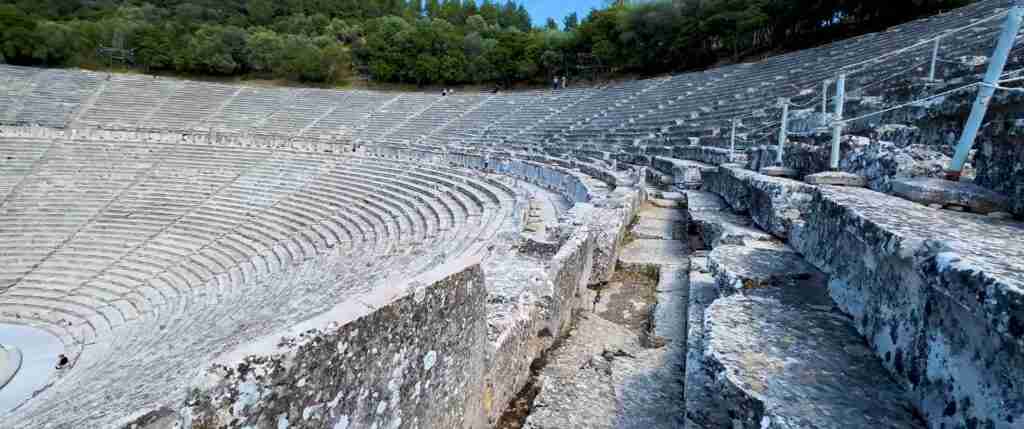
Thirty kilometres east of Nafplio, Epidaurus was the most celebrated healing sanctuary of the ancient world — a combination of religious center, spa, and proto-hospital that drew pilgrims seeking cures from across the Mediterranean. The Theatre of Epidaurus, built around 340 BC and capable of seating 14,000 spectators, is the best-preserved ancient theatre anywhere and still hosts performances of ancient drama during the Epidaurus Festival each summer. Its acoustics — a whisper from the circular orchestra reaching the highest tier unaided — remain one of antiquity’s most discussed engineering achievements. Beyond the theatre, the sanctuary’s ruins include the Temple of Asclepius, the circular Tholos (whose architectural purpose remains debated by scholars), the enkoimeterion (the sleeping hall where healing dreams were induced), and a stadium. Allow 2.5–3 hours for site and museum.
Archaeological Site of Olympia: The Birthplace of the Olympics (UNESCO 1989)
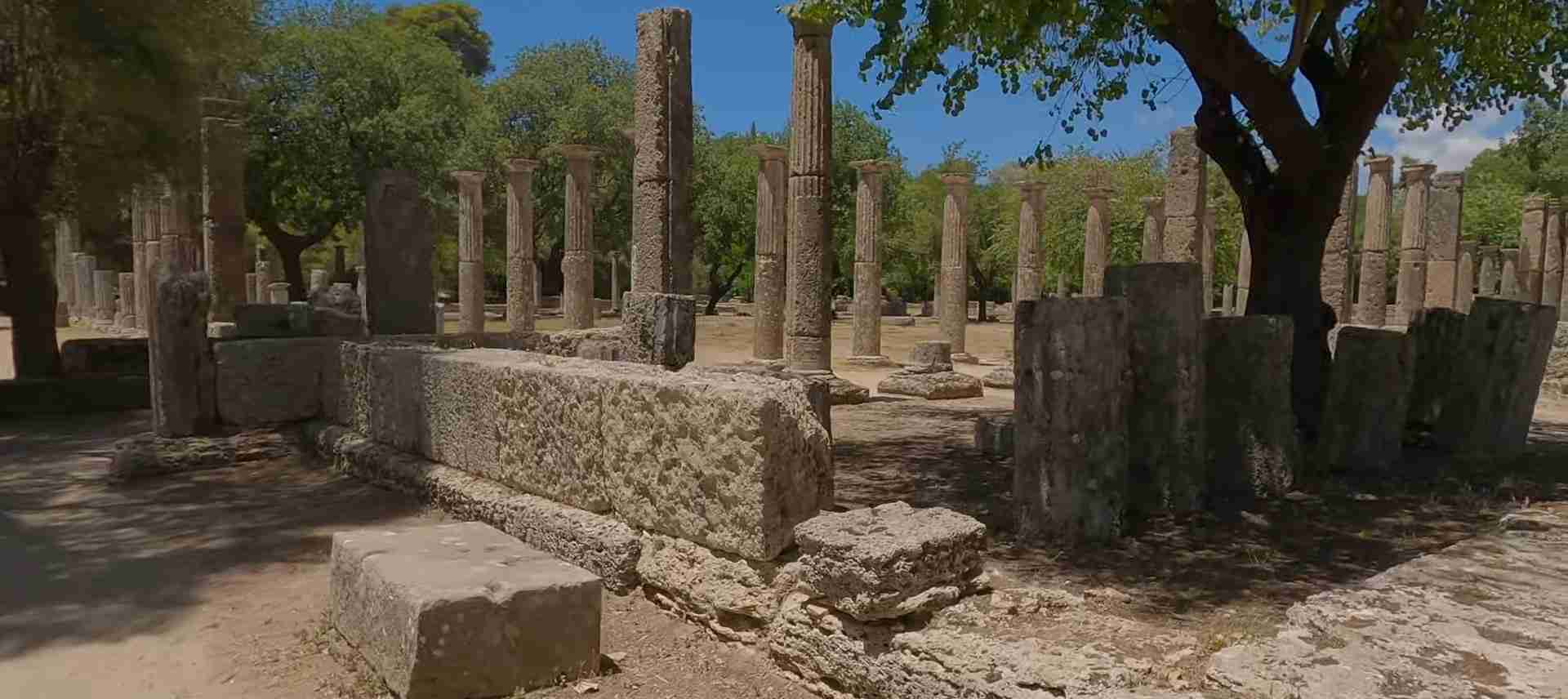
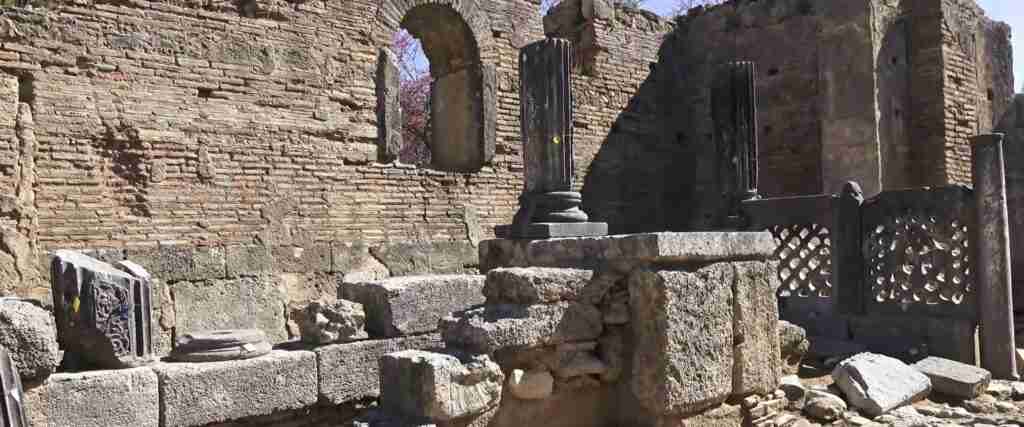
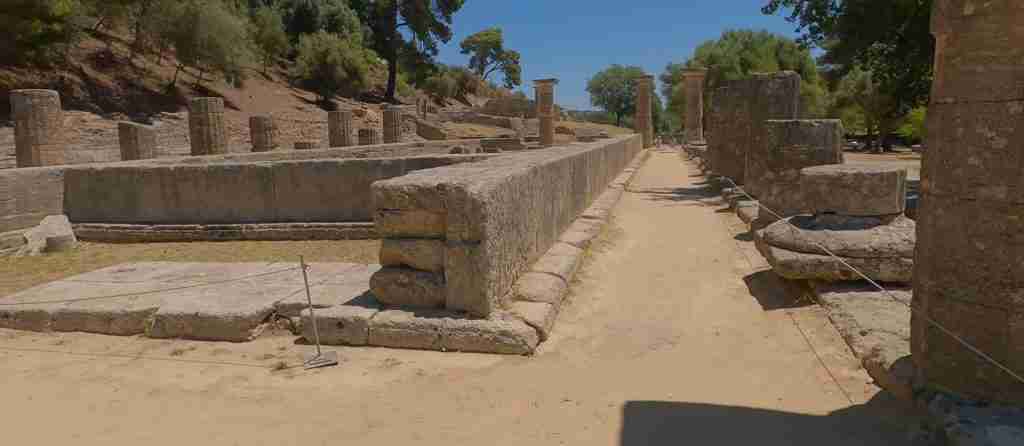
In a green valley in the western Peloponnese where the Alpheios and Kladeos rivers meet, Olympia was for over a millennium the most important religious sanctuary in the Greek world. The Olympic Games were held here every four years from 776 BC to 393 AD — 1,169 years of uninterrupted competition, suspended only by the Olympic truce that brought warring city-states to peaceful coexistence. The physical site today contains the ruins of the Temple of Zeus (home to Pheidias’ chryselephantine statue, one of the Seven Wonders of the ancient world, now lost), the earlier Temple of Hera, the stadium where visitors can still run the ancient 192-metre sprint course, the gymnasium, the palaestra, and the workshop of Pheidias where archaeological evidence of the famous statue’s creation was found. The Archaeological Museum of Olympia displays the Hermes of Praxiteles and the Nike of Paionios — two of the finest Greek originals in existence. Budget 3–4 hours for site, archaeological museum, and the Museum of the History of the Olympic Games, all included in a single combined ticket.
Mystras: The Byzantine City on the Mountain (UNESCO 1989)
Built on the steep slopes of Mount Taygetos above the Spartan plain, Mystras was one of the last and most brilliant centers of Byzantine civilization — a fully inhabited city-state of palaces, churches, monasteries, and residential quarters that flourished under the Palaeologan dynasty in the 14th and 15th centuries. Its scholars transmitted Neo-Platonic philosophy to Renaissance Italy; its workshops produced distinctive late-Byzantine frescoes of remarkable sophistication; its last ruler, Constantine Palaeologos, left here to become the last Byzantine emperor before Constantinople’s fall in 1453. The site was progressively abandoned through the 18th and early 19th centuries and has been uninhabited since 1953. What remains — spread across three interconnected sections of a hillside connected by steep cobbled paths — is one of Europe’s finest examples of a medieval settlement preserved in near-entirety. The Pantanassa Convent, still inhabited by a small community of nuns, remains the emotional heart of the site. Allow 2.5–3.5 hours and wear sturdy footwear for the uneven terrain and gradient.
Temple of Apollo Epicurius at Bassae: The Mountain Temple (UNESCO 1986)
Greece’s first UNESCO World Heritage Site, and still its most remote, Bassae sits at 1,130 metres on the slopes of Mount Kotilion in the heart of Arcadia — a location so isolated that it remained largely intact while classical temples elsewhere were dismantled for building material or converted to churches. Built around 420 BC by Ictinus, one of the architects of the Parthenon, the Temple of Apollo Epicurius is the only Greek temple to incorporate all three classical architectural orders (Doric exterior, Ionic interior, and the earliest known Corinthian capital) and is oriented north–south rather than the conventional east–west. Since 1987 it has been enclosed in a large protective tent — visually unusual but necessary for preservation against the harsh mountain weather. The Bassae Frieze, 31 metres of relief sculpture originally crowning the interior, was removed in 1812 and is now in the British Museum in London. The drive to Bassae, through mountain scenery of genuine grandeur, is itself a highlight; budget 1.5 hours minimum at the site.
Admission Fees and Opening Hours for Peloponnese UNESCO Sites 2026
Greece’s Ministry of Culture implemented a comprehensive new tiered pricing system on April 1, 2025, replacing the previous seasonal structure. All sites now carry a single year-round admission price — the former winter 50% discount has been abolished. Check culture.gov.gr for confirmation of any further updates before visiting, as ticketing policy can evolve.
Peloponnese UNESCO site admissions in 2026:
- Ancient Olympia (combined: archaeological site + Archaeological Museum + Museum of the History of the Olympic Games): €20 full / reduced rates for eligible visitors. Summer hours: 08:00–20:00 (April–October); winter 08:30–15:30.
- Epidaurus (Sanctuary of Asclepius, theatre, and museum): €20 full. Summer hours vary by month from 08:00–19:00 (April) to 08:00–20:00 (May–October); winter 08:30–15:30.
- Mycenae (acropolis + Treasury of Atreus + Archaeological Museum of Mycenae): €20 full. Summer hours: 08:00–19:00 (April), 08:00–20:00 (May–October); winter 08:30–15:30.
- Tiryns: €10 full / €5 reduced. Hours: 08:30–15:30 year-round (extended summer hours may apply — verify at culture.gov.gr).
- Mystras: Approximately €10–12 full under the new tiered system. Summer hours: 08:00–20:00 (April–August), reducing progressively to 08:00–18:00 (October); winter 08:30–15:30.
- Bassae/Temple of Apollo Epicurius: Lower-traffic site, likely €5–10 under the new structure. Winter hours: 08:30–15:30; check culture.gov.gr for summer schedule.
Free admission applies at all Ministry of Culture sites on national holidays including 28 October, 6 March, 18 April (International Monuments Day), 18 May (International Museums Day), 5 June (Environment Day), the last weekend of September, and the first Sunday of every month November through March. From April 2025, EU citizens under 25 and non-EU citizens under 18 enter free on presentation of valid ID. Over-65 EU citizens receive a 50% reduction.
Total UNESCO admission per adult for all five sites (Olympia + Epidaurus + Mycenae + Tiryns + Mystras + Bassae): approximately €75–82. Book Mycenae’s Treasury of Atreus timed slot online at hhticket.gr in advance during peak season (July–August) as the tholos chamber fills quickly.
Suggested Peloponnese Road Trip Routes 2026
Two core itinerary formats suit most travellers: a focused seven-day UNESCO circuit and a more expansive ten-day route that adds coastal and hidden-gem diversions. Both assume rental from Athens (approximately 150 km from Nafplio, 2 hours on the A7 motorway) with return to Athens or Patras. Distances given are driving estimates; always allow additional time for mountain roads.
The 7-Day Peloponnese UNESCO Circuit 2026
Day 1 — Athens to Nafplio (150 km, 2 hours): Arrive in Nafplio by early afternoon; orientation walk through the old town, Venetian fortress of Bourtzi visible from the harbour, Syntagma Square. Overnight Nafplio.
Day 2 — Tiryns and Mycenae: Tiryns first (4 km from Nafplio, 45–60 minutes on site), then drive 20 km northwest to Mycenae for the afternoon (2.5–3.5 hours covering acropolis, Treasury of Atreus, museum). Return to Nafplio. Overnight Nafplio.
Day 3 — Epidaurus: Drive 30 km east to Epidaurus (40 minutes). Full morning and early afternoon at the sanctuary and theatre — arrive by 09:00 for the best light and smaller crowds. Afternoon return via the Argolic Gulf coastal road. Overnight Nafplio.
Day 4 — Nafplio to Mystras via Sparta (210 km, 2.5 hours driving): Morning departure south through the Argolid and Laconia. Brief stop possible at Monemvasia viewpoint en route or continue directly to Sparta, then 6 km west to Mystras. Afternoon site visit (2.5–3 hours). Overnight Sparta or guesthouse directly below the Mystras site.
Day 5 — Mystras to Olympia (250 km, 3 hours): Morning at Mystras if additional exploration desired, then long drive northwest through the Arcadian highlands. Route via Kalamata and Pyrgos or through mountain roads — either is scenic. Arrive Olympia by late afternoon. Overnight Olympia village.
Day 6 — Ancient Olympia: Full day at the site — archaeological site, Archaeological Museum, and Museum of the History of the Olympic Games. Allow 3.5–4 hours for all three components. Afternoon at leisure in Olympia village. Overnight Olympia.
Day 7 — Olympia to Bassae and return to Athens or Patras (Bassae detour: 70 km south, 1.5 hours driving from Olympia): Morning drive south to Bassae (allow 1.5 hours at site). Return north to the motorway via Andritsaina, then continue to Athens (300 km, 3.5 hours) or Patras (120 km, 1.5 hours) for onward travel.
The 10-Day Peloponnese Extended Route 2026
Days 1–3: As above (Nafplio base, Tiryns, Mycenae, Epidaurus), with an added day for Nafplio’s Palamidi fortress, Nafplio Archaeological Museum, and the Mycenaean cemetery of Dendra.
Days 4–5: Mystras and the Mani peninsula. After Mystras on Day 4, continue south to the Mani — one of Greece’s most dramatic landscapes of stone tower-villages and wild coastline. Overnight in Areopolis or Gythio.
Day 6: Deep Mani and Diros Caves (if open), or Monemvasia — the Byzantine rock-town entirely enclosed within medieval walls, perched on an island connected to the mainland by a narrow causeway.
Day 7: Drive northwest via Kalamata to Ancient Messene — one of the most complete and undervisited archaeological sites in Greece, founded 371 BC and excavated only since the late 1980s. The intact circuit walls, theatre, stadium, gymnasium, and temples cover an enormous area. Not a UNESCO site but arguably comparable in scale. Overnight Kalamata or Pylos area.
Day 8: Methoni and Koroni — two Venetian sea fortresses at the southwestern tip of the Peloponnese, both dramatically positioned on headlands above turquoise water. Neither requires more than 90 minutes to explore, and the coastal drive between them is excellent.
Days 9–10: Olympia and Bassae, as Days 6–7 of the seven-day route above. Option to add Patras and its Roman Odeon before departure, or Diakofto–Kalavrita rack railway in the northern Peloponnese as a final half-day detour before Athens return.
Hidden Gems on the Peloponnese Road Trip 2026
The UNESCO sites are the framework, but the Peloponnese’s hidden character reveals itself between them. Several places between the major sites reward detours that add relatively little driving time.
Ancient Messene: The Site That Should Be UNESCO
Located 130 km southwest of Nafplio near the town of Messini, Ancient Messene is the most under-visited major archaeological site in Greece. Founded in 369 BC after the Theban general Epaminondas ended Spartan domination of the region, the city was built with deliberate magnificence as a statement of Messenian identity and freedom. Its circuit walls — originally 9 km long — remain the best-preserved Classical fortification walls in the Mediterranean world. Within them: a 10,000-capacity theatre, a stadium, a gymnasium, temples, a fountain house, and a sanctuary of Asclepius that predates Epidaurus’ fame. Unlike most Greek sites, Ancient Messene is set in a green valley with a functioning village (Mavromati) within the ancient perimeter, creating an atmosphere unlike anywhere else in Greek archaeology. Entry costs €10. Allow 2–3 hours.
Monemvasia: The Byzantine Rock Town
At the far southeastern tip of the Peloponnese, Monemvasia is a complete medieval town built entirely within the walls of a massive sea rock — invisible from the mainland until you reach the single causeway that is its only land connection (the name means “single entry”). The lower town of Byzantine churches, Venetian palaces, and Ottoman fountains is inhabited by a small year-round community with tavernas and guesthouses. The ruined upper town, reached by a steep path, is abandoned and extraordinary — the 13th-century Cathedral of Hagia Sophia perches at the summit with views of open sea in three directions. Monemvasia has no UNESCO designation but is arguably among the finest medieval townscapes in Greece. No entry fee for the town; parking on the mainland is free.
The Mani Peninsula: Stone Towers and Wild Coast
The central finger of the southern Peloponnese, the Mani is a landscape unlike anything else in Greece. Historically isolated, the Maniots developed a fierce independence expressed architecturally in hundreds of defensive tower-houses — some medieval, some 19th-century — that cluster in villages like Vathia, Kitta, and Areopolis. The coastline along the western Mani (Exo Mani) is dramatically beautiful; the deep Mani (Mesa Mani) around Cape Tenaro, supposedly one of the mythological entrances to the Underworld, is bleaker and more ancient-feeling. The Diros Caves on the western coast — a vast underground lake navigated by punt — are one of Greece’s most unusual tourist experiences. No UNESCO designation but the tower village landscape has been nominated multiple times.
The Lousios Gorge and Dimitsana: Arcadian Highlands
In the heart of the Arcadian highlands between Olympia and the Argolid, the Lousios Gorge cuts a dramatic canyon through the plateau where the River Lousios runs. A hiking trail connects a series of monasteries built into the gorge cliff-faces, including the Monastery of Agiou Ioannou Prodromou — literally embedded in the rock wall above the river. The nearby village of Dimitsana, stone-built and stacked on a ridge, contains an open-air Water Mill Museum demonstrating the industrial history of this mountain region. The drive from Dimitsana west toward Olympia or south toward Tripoli passes through highland scenery that rarely features in Peloponnese travel coverage despite being among its finest. No entry fees for the gorge trail; monastery visits involve a small donation.
Nestor’s Palace near Pylos: The Best-Preserved Mycenaean Palace
Forty kilometres north of Pylos on the west coast of Messenia, the Palace of Nestor at Ano Englianos is the best-preserved Mycenaean palace in Greece — a fact most travellers don’t know because the site is far less famous than Mycenae. The palace, destroyed by fire around 1180 BC (the same catastrophe that ended Mycenaean civilization elsewhere), was accidentally preserved by that very fire: it baked thousands of Linear B administrative tablets and fixed the painted floor decorations permanently. A new modern shelter structure completed in 2016 protects the excavated palace floor plan, which remains readable and detailed in a way Mycenae’s heavily robbed remains cannot match. The nearby Chora Museum holds the Linear B tablets and palace finds. Entry approximately €6–8. Allow 1.5 hours for palace and museum.
Nafplio: The Essential Peloponnese Base
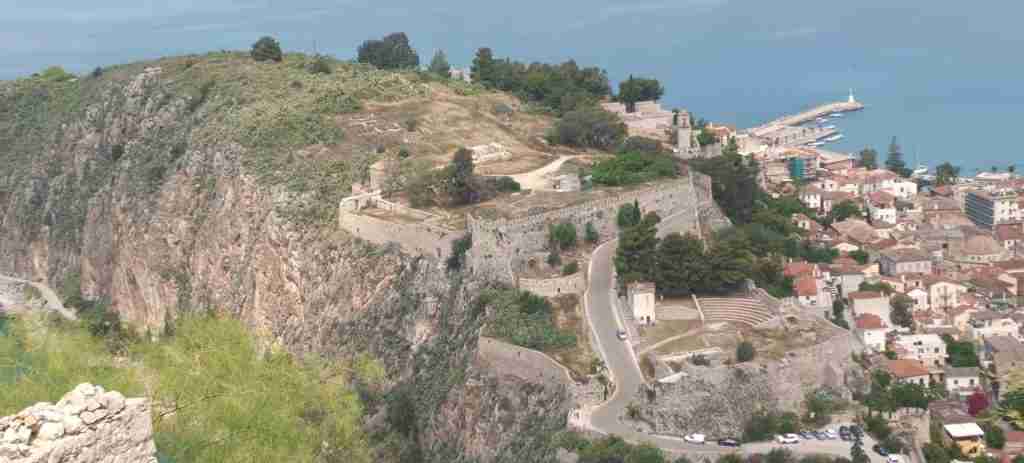
Nafplio itself deserves recognition as a hidden gem in plain sight — a beautifully preserved neoclassical town, Greece’s first modern capital (1828–1834), built around a Venetian-fortified harbour with the castle island of Bourtzi visible from every seafront seat. The Palamidi fortress above the town requires a climb of 999 steps or a short drive and rewards with panoramic views of the entire Argolic Gulf. The Archaeological Museum of Nafplio on Syntagma Square holds the Dendra bronze armor — the most complete Mycenaean warrior’s panoply ever found. The old town’s streets, maintained to an unusually high standard, contain some of the Peloponnese’s best restaurants, cafés, and accommodation. Nafplio works as a 3-night base for the Argolid UNESCO cluster without a single night feeling wasted.
Where to Stay on a Peloponnese Road Trip 2026
Accommodation strategy on a Peloponnese road trip depends on whether centralized basing or nightly moves suit the traveller’s style. Both approaches work. The following price ranges apply for standard double rooms in 2026 — verify current rates on Booking.com or equivalent platforms before committing.
Nafplio holds the strongest accommodation portfolio in the Argolid: boutique hotels in converted neoclassical buildings run €120–220 per night in high season, while perfectly adequate guesthouses and smaller hotels in the old town deliver €75–120. The town is small enough that any central location works. Book 6–8 weeks ahead for July–August arrivals; spring and autumn require only 1–2 weeks’ notice.
Olympia village is compact and tourism-focused, with most accommodation within walking distance of the archaeological site. Mid-range hotels run €90–160 per night in peak season; smaller family-run options €60–90. The Europa Hotel above the village has the most dramatic hilltop position and pool with archaeological site views (€140–180 high season).
Near Mystras, accommodation options cluster in the village of Mystras itself (2 km from the site entrance, several small guesthouses at €70–110) or in Sparta (6 km, more hotel options, €80–140). Sparta has nothing to recommend it historically but provides full services and easier parking.
The Mani peninsula offers increasingly good accommodation in converted tower-houses — particularly in Areopolis and Gythio. Expect €100–180 per night for atmospheric stone-built rooms in peak season.
Budget travellers throughout the Peloponnese find reliable options in the €50–80 range in smaller towns like Pylos, Kyparissia, and Kalamata — useful overnight stops on longer driving days.
Food and Dining on a Peloponnese Road Trip 2026
Peloponnese cuisine follows Greek taverna logic — straightforward, ingredient-led, and best at midday rather than late dinner. The peninsula produces some of Greece’s most celebrated food products: Kalamata olives and olive oil (PDO designation), Corinthian currants, Arcadian mountain honey, Nemean wine (Agiorgitiko grape, one of Greece’s finest reds), and lamb and kid from the mountain villages of Arcadia and the Mani.
Meal costs at a standard Peloponnese taverna in 2026 run €12–18 per person for a full lunch with a carafe of house wine — meze plates, a grilled main, and village salad. Dinner at the same level in tourist areas like Nafplio old town runs €18–28 per person. Fine dining in Nafplio reaches €45–70 per person. Self-catering from local markets and supermarkets costs €8–12 per person per day for simple provisions.
Specific food highlights by area: Nafplio’s harbour front has reliable fresh fish tavernas; Kalamata’s central market is worth a morning stop for olives, oil, and local products; Olympia village’s tavernas are uniformly tourist-oriented (quality varies — ask locally); the Mani specialises in slow-cooked pork dishes and local cheeses. Nemea, if your route passes through the northeastern Peloponnese, offers winery visits with direct sales at prices well below retail export pricing.
Sample Budget for a Peloponnese Road Trip 2026
The following budget covers two people sharing a rental car and mid-range accommodation for seven days. Accommodation costs are excluded from the daily total per the standard methodology — the nightly ranges are listed separately.
Accommodation (per room per night, mid-range): €90–160 depending on location and season. Seven nights at an average of €120 = €840 for two people total (€420 per person).
Rental car: €40–55 per day for a standard compact including basic insurance, booked from Athens. Seven days = €280–385 total for the car (split between passengers: €140–193 per person for two sharing).
Fuel: A 700 km circuit at Greek fuel prices of approximately €1.80–2.00 per litre and 7 litres/100 km consumption: €88–98 total for the car (€44–49 per person for two sharing).
UNESCO admissions (per adult): Olympia €20, Epidaurus €20, Mycenae €20, Tiryns €10, Mystras €10–12, Bassae €5–10. Total per adult: €85–92.
Food (per person per day): Lunch €14–18, dinner €20–28, breakfast (typically included at accommodation or €5–8 at a café): approximately €40–55 per person per day.
Seven-day totals per person (excluding accommodation, two people sharing car): Car + fuel €184–242, admissions €85–92, food (7 days) €280–385, miscellaneous (Palamidi, Nafplio museum, non-UNESCO sites, tips) €40–60. Total per person (excluding accommodation): approximately €590–780. Add accommodation (€420 per person for seven nights mid-range): full seven-day cost per person approximately €1,010–1,200.
Practical Tips for Driving the Peloponnese in 2026
Car rental is best arranged from Athens Airport (ATH) or central Athens, where supply is greatest and prices are most competitive. Compact cars handle all Peloponnese roads adequately. SUVs offer more comfort on the mountain roads to Bassae and the deep Mani but are unnecessary for any other part of the route. Automatic transmission vehicles are widely available but cost €5–15 per day more than manual — worth it for travellers unconfident on winding mountain roads.
The A7 toll motorway connects Athens to Tripoli (the hub of the central Peloponnese) efficiently; tolls run approximately €8–12 for the full Athens–Nafplio section. Secondary and tertiary roads are generally well-surfaced but narrow — meeting lorries or tourist coaches on the road to Bassae requires care. The approach road to Bassae from Andritsaina (13 km of mountain switchbacks) demands slow, attentive driving and should be avoided after dark. Google Maps and offline download of the relevant area (Maps.me works well for Greek secondary roads) are both recommended.
Parking at all UNESCO sites includes free designated lots. Village parking in old town areas like Nafplio’s upper streets and Mystras’ lower approach can be competitive in peak season — arrive early or use the main town car parks and walk. Greek fuel stations cluster on main roads and in towns; the road to Bassae has no fuel available for the final 30 km — fill up in Andritsaina or earlier.
Greek driving conventions worth knowing: horn use is common on mountain blind bends (standard practice, not aggression); flashing headlights from oncoming traffic signals police presence ahead; small roadside shrines (iconostases) mark accident spots. Speed limits are 130 km/h on motorway, 90 km/h on secondary roads, 50 km/h in built-up areas. Traffic police enforce limits around archaeological site access roads in peak season.
Frequently Asked Questions About the Peloponnese Road Trip 2026
Is a car essential for a Peloponnese road trip in 2026?
Yes. While Nafplio, Olympia village, Sparta, and Kalamata are reachable by KTEL intercity bus from Athens, the UNESCO sites themselves are not within walking distance of bus stops, and the connections between sites require multiple transfers with long waits. Bassae has no public transport at all. Tiryns and Mycenae require taxis from Nafplio or a rental car. The Mani, Monemvasia, Messene, and the Lousios Gorge are effectively inaccessible without private transport. Renting from Athens and returning to Patras (one-way rental, typically possible with a modest additional fee) can reduce backtracking on longer itineraries.
In what order should the Peloponnese UNESCO sites be visited in 2026?
The most efficient circuit from Athens follows this geographic logic: Athens → Nafplio (base for Mycenae, Tiryns, Epidaurus) → south to Mystras → west to Olympia → detour south to Bassae → return north to Athens or continue to Patras. This avoids backtracking and follows a natural geographic arc. The reverse is equally valid if arriving from Patras or the western ferry ports. Splitting the eastern Argolid sites across two days (Tiryns + Mycenae Day 1, Epidaurus Day 2) is strongly preferable to attempting all three in one day, which exhausts most visitors.
Can Bassae be combined with Olympia in a single day in 2026?
Yes, but the day is full. Bassae lies approximately 70 km south of Olympia by road (1 hour 15 minutes driving), with the final 13 km on mountain switchbacks. A combined day works best if Olympia is visited in the morning (08:00 opening), with a midday drive to Bassae arriving for a 1.5–2 hour afternoon visit, then returning to Olympia by evening. The reverse (Bassae first) requires an early departure and careful timing given the mountain approach. Given Bassae’s elevation and mountain exposure, wind and low cloud are possible even in summer — the protective tent mitigates this but the site can be cold; bring an extra layer.
Is the Epidaurus Festival worth timing the trip around in 2026?
For many visitors, yes. The Epidaurus Festival runs each summer (typically July–August, with some September dates) and presents ancient Greek dramas — Sophocles, Euripides, Aristophanes — performed in the original 4th-century BC theatre by leading Greek and international theatre companies. The acoustic experience of a live performance in this setting is unlike anything available elsewhere. Tickets sell out well in advance for top productions; check the Epidaurus Festival official website early in the year for the 2026 programme and bookings. Performances begin at 21:00; the long summer twilight means the sun is usually still visible from the upper tiers at curtain rise.
How does driving in the Peloponnese compare to mainland Greece?
The Peloponnese is significantly easier to navigate than Athens or northern Greek cities. Traffic is light outside the brief summer peak, roads are generally well-maintained, and fellow drivers are accustomed to tourists. The mountain roads — particularly the approach to Bassae, the Taygetos mountain road above Mystras, and the internal Mani roads — require attention and should not be rushed. Rental car GPS or downloaded offline maps handle the main routes accurately; some small village roads near Mystras and in the deep Mani appear imprecisely on older GPS software. Allow extra time on mountain legs: 60 km of mountain road takes 90 minutes, not 45.
What are the quietest times to visit each UNESCO site in 2026?
Opening time (08:00 or 08:30) is the best slot at every Peloponnese site for avoiding crowds and heat. At Mycenae and Olympia, the peak crowd window is 10:30–14:00, when tour buses from Athens and Nafplio arrive in sequence. Epidaurus, by contrast, is busiest in the late afternoon as visitors time their stay for the theatrical performances at the nearby theatre in summer. Mystras is relatively uncrowded at any time outside July–August weekends. Bassae is almost always quiet given its remote location — even in peak season, visitor numbers are modest compared to the Argolid sites.
Are children well-catered for on a Peloponnese road trip in 2026?
The Peloponnese works well for families with children aged 7 and above who have some interest in history. Olympia is the strongest site for children — the Olympic stadium where they can run the ancient sprint course is a genuine highlight. Epidaurus’ acoustic theatre demonstration (dropping a coin at the orchestra for listeners in the upper tiers) consistently impresses young visitors. Mycenae’s Lion Gate and the underground Treasury of Atreus provide theatrical drama. The beach access throughout the peninsula — particularly in the southern Mani and along the western coast near Methoni and Koroni — gives families natural breaks between archaeological sites. Children under 18 (non-EU) or under 25 (EU) enter all Ministry of Culture sites free on presentation of ID.
What are the most common planning mistakes on a Peloponnese road trip?
Underestimating time at the UNESCO sites is the most common error — particularly at Olympia, where three separate ticketed areas (the archaeological site, the Archaeological Museum, and the Museum of the History of the Olympic Games) together require a genuine full day. Attempting all three Argolid UNESCO sites (Mycenae, Tiryns, Epidaurus) in a single day is possible but leaves most visitors exhausted and underinformed at the third site. Not booking the Mycenae Treasury of Atreus timed slot online in advance is a consistent frustration in July–August, when the tholos chamber fills early. Driving to Bassae without checking the weather or road conditions (the mountain summit frequently has cloud even in summer) is another avoidable problem. Finally, setting Nafplio as a one-night stop rather than a 2–3 night base consistently generates regret — the town is a travel highlight in its own right.
What is the state of the protective tent at Bassae in 2026?
The protective tent covering the Temple of Apollo Epicurius at Bassae has been in place since 1987 and is a permanent feature of the site. It is functional rather than beautiful but does not obstruct appreciation of the temple’s architectural details — the interior of the tent is large enough to walk around the entire building, and the Doric columns and surviving architectural elements are clearly visible. The tent is structurally maintained by the Greek Ministry of Culture and was subject to ongoing preservation assessments and reinforcement work in recent years. Before visiting, check culture.gov.gr for any site closure announcements — mountain weather events occasionally cause temporary closures. The tent means rain does not disrupt the visit, which is an advantage given Bassae’s elevation.
Where should the Peloponnese road trip begin and end?
Most travellers begin and end in Athens, picking up and returning their rental car at Athens International Airport or in central Athens. The A7 motorway makes the Athens–Nafplio connection (150 km) a straightforward 2-hour drive. Alternatively, ferries connect Patras in the northwestern Peloponnese with Italy (Ancona, Bari, Venice, Brindisi) and the Ionian islands — making a one-way circuit (fly into Athens, rent car, complete the Peloponnese circuit, depart from Patras by ferry) a practical option for travellers arriving from Western Europe. Kalamata has a regional airport with some direct European connections, useful for flying in or out of the southwestern Peloponnese.