
Peloponnese Off the Beaten Path 2026: The Ultimate Cultural Road Trip Guide
The Peloponnese peninsula concentrates more driveable UNESCO World Heritage, Byzantine ghost cities, Mycenaean citadels, Frankish sea fortresses, and remote Arcadian gorges per square kilometre than almost anywhere else in the Mediterranean world. Most visitors touch Nafplio and Mycenae before returning to Athens; the travellers who keep driving discover a landscape where five millennia of civilisation layer into a single road trip circuit that changes character every hundred kilometres. This guide covers every essential cultural destination, every worthwhile detour, and every cost to expect on a complete Peloponnese circuit in 2026.
Key Takeaways
- Perfect Duration: Seven days completes the UNESCO circuit with minimal detours; ten days unlocks the full off the beaten path experience including the Mani peninsula, the Arcadian highlands, Bassae, and Ancient Messene without ever feeling rushed.
- Five UNESCO Sites in One Circuit: Ancient Olympia, Mycenae and Tiryns, Mystras, Epidaurus, and the Temple of Apollo Epicurius at Bassae sit within a single driveable loop — an unmatched concentration of World Heritage accessible on a self-drive itinerary.
- Daily Budget Reality for 2026: Budget travelers need €80–130 per person daily (two sharing, car rental included); mid-range visitors spend €140–215; luxury travelers invest €270–440. A 10-day mid-range circuit costs approximately €1,400–2,150 per person in total.
- Car Rental is Non-Negotiable: Public transport reaches fewer than a fifth of the cultural sites on this route. Rental cars cost €30–65 per day depending on season; booking from Athens Airport secures the widest selection, best rates, and the most straightforward pickup logistics.
- Greece’s 2025 Ticketing Overhaul: Single year-round pricing now applies across all major sites; most combination tickets are discontinued as of April 2025. Book Mycenae and Epidaurus online in high season to guarantee timed entry and avoid queues.
- Shoulder Season Sweet Spot: April–June and September–October deliver comfortable temperatures, fully open sites, manageable crowds, and hotel rates 25–40% below August peaks — the optimal window for this itinerary in 2026.
People Also Ask About the Peloponnese Road Trip 2026
How much does a Peloponnese road trip cost per day in 2026?
A Peloponnese road trip costs €80–130 per person daily on a budget (two sharing a guesthouse, economy car rental included), €140–215 per person daily at mid-range, and €270–440 per person daily at the luxury tier. These figures include accommodation, all meals, car rental, fuel, and archaeological site entry fees. The car-dependent nature of the Peloponnese circuit means transport costs are built into every tier rather than being optional — the rental and fuel contribution runs approximately €20–35 per person daily depending on the car category and how much ground you cover each day. Eating at village tavernas and choosing inland guesthouses over Nafplio’s premium waterfront hotels brings costs toward the lower end of the mid-range band without sacrificing experience quality.
How many days do you need for a complete Peloponnese road trip in 2026?
Ten days is the ideal duration for a complete Peloponnese road trip in 2026. This allows a full day at Olympia, a full day at Mystras, two days in the Mani peninsula, time at Monemvasia, the Argolid cluster (Mycenae, Tiryns, Epidaurus), Ancient Messene, and at least one Arcadian detour to the Lousios Gorge or Bassae. Seven days is achievable if you focus on the five UNESCO sites and sacrifice most off the beaten path diversions. Five days covers the Argolid circuit (Nafplio, Mycenae, Tiryns, Epidaurus) with long day trips to Mystras or Monemvasia but leaves the western and southern Peloponnese unexplored. For visitors with two weeks, adding Elafonisos island, Pylos, and deeper Arcadian village time transforms the trip from itinerary to immersion.
Which UNESCO World Heritage Sites does the Peloponnese road trip cover in 2026?
The Peloponnese circuit covers five UNESCO World Heritage Sites: the Archaeological Site of Ancient Olympia (inscribed 1989), the Archaeological Sites of Mycenae and Tiryns (inscribed 1999), the Medieval City of Mystras (inscribed 1989), the Archaeological Site of Epidaurus (inscribed 1988), and the Temple of Apollo Epicurius at Bassae (inscribed 1986). Together, these five sites span roughly 3,000 years of civilisation — from Late Bronze Age Mycenaean palatial culture through Classical Greek religious architecture to Byzantine imperial decline. All five are driveable on a single anticlockwise loop from Athens without any significant backtracking if the route is planned in the correct order. Entry fees for the five inscriptions total approximately €83 per adult at 2025–2026 single year-round pricing (Mycenae and Tiryns, co-inscribed as one UNESCO site, carry separate admission charges).
What are the best off the beaten path stops on the Peloponnese 2026 road trip?
The most rewarding off the beaten path stops on the Peloponnese in 2026 are Ancient Messene (a spectacularly preserved ancient city that receives a fraction of Olympia’s visitor numbers), the Mani peninsula’s tower village of Vathia (hauntingly photogenic and nearly deserted), Monemvasia’s lower medieval town (packed with Byzantine churches and Venetian architecture on a sea-girt rock), the Lousios Gorge in Arcadia (deep canyon with Byzantine monasteries clinging to vertical cliffs), Geraki (a miniature Mystras that most travellers never find), the Palace of Nestor near Pylos (the best-preserved Mycenaean palace on the peninsula, smaller than Mycenae but more intimate), and the Temple of Apollo Epicurius at Bassae (isolated in the mountains, covered by a protective tent, and genuinely difficult to reach — which is precisely why it rewards the effort).
Extended multi-day tours – 5+ days
Featured Peloponnese Islands Multi-Day Tour Packages
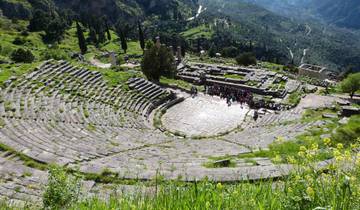
3 days
Epidaurus, Mycenae, Olympia and Delphi Three Days Tour from Athens
- ✓ Comprehensive Peloponnese Islands tour
- ✓ Expert local guides included
- ✓ All accommodation arranged
- ✓ Transportation provided
5 days
Athens, Delphi & Greek Islands By Cruise – 5 Days
- ✓ Comprehensive Peloponnese Islands tour
- ✓ Expert local guides included
- ✓ All accommodation arranged
- ✓ Transportation provided
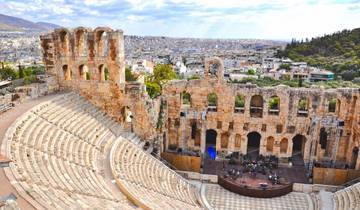
5 days
Discovery of Athens, Argolis & Delphi – 5 Days
- ✓ Comprehensive Peloponnese Islands tour
- ✓ Expert local guides included
- ✓ All accommodation arranged
- ✓ Transportation provided
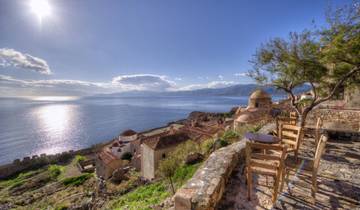
8 days
Paradisial Peloponnese | Semi-Private 8-Day Guided Tour
- ✓ Comprehensive Peloponnese Islands tour
- ✓ Expert local guides included
- ✓ All accommodation arranged
- ✓ Transportation provided
Multi-day tour packages powered by TourRadar. Prices and availability subject to change.
Introduction: The Peloponnese as Europe’s Greatest Cultural Road Trip Destination in 2026
The case for driving the Peloponnese rather than island-hopping or concentrating on Athens is simple: nowhere else in Greece — and very few places in Europe — allows a single itinerary to move from Bronze Age palaces to Classical temples to Byzantine cities to Frankish crusader fortresses to Venetian sea castles, all within a region small enough that no drive between consecutive highlights exceeds three hours.
The peninsula stretches roughly 250 kilometres from north to south and is cut internally by mountain ranges that historically divided it into distinct political and cultural zones: the Argolid in the northeast, commanding access to the Aegean and home to Mycenaean civilisation’s greatest centres; Laconia in the southeast, ancient Sparta’s domain and later the Byzantine empire’s last intellectual flowering at Mystras; the Mani peninsula, that wild middle finger of rock pointing toward Africa, whose tower-house clans maintained effective independence from every successive occupying power; Messenia in the southwest, site of both the most underrated ancient city in Greece and the best Mycenaean palace outside Knossos; and Arcadia in the mountainous interior, the landscape of pastoral myth now threaded by gorges, Byzantine monasteries, and villages where traditional stone architecture survives intact.
What makes 2026 a particularly compelling moment for this trip is a combination of factors. Greece’s revised ticketing system, implemented across all major archaeological sites from April 2025, has introduced single year-round pricing and discontinued most combination tickets. The practical effect is that planning has become slightly more complex — you book sites individually rather than with a regional pass — but individual ticket prices remain among the most affordable in Europe for what is on offer. A €20 ticket to Mystras, for context, buys admission to a hillside medieval city with dozens of intact Byzantine frescoed churches; the same €20 in Tuscany would struggle to cover coffee and a museum postcard.
The 2026 road trip context also benefits from continuing improvements to the E65 motorway connecting Athens to the Peloponnese via the Rio-Antirrio Bridge, upgrades to the road network through Laconia and Messenia, and a growing infrastructure of boutique accommodation in restored stone houses and traditional tower homes across the peninsula. Travelling between April and October, visitors find all five UNESCO sites fully operational, mountain roads accessible, and coastal tavernas in full swing.
This guide follows an anticlockwise loop from Athens — the logical direction that keeps the most spectacular destinations (the Mani, Mystras, Monemvasia) as sustained high points in the middle of the trip rather than afterthoughts at the end. Every cultural destination is treated with the detail it deserves. Every cost is stated directly. The goal is a guide that functions equally well as pre-trip planning document, in-car companion, and honest cost calculator for every budget tier.
Planning Your Peloponnese Road Trip Route 2026
The anticlockwise direction — Athens to Nafplio to Monemvasia to Mystras to Mani to Kalamata to Olympia to Arcadia and back to Athens — is the route recommended for 2026. Driving anticlockwise places the archaeological Argolid (Mycenae, Tiryns, Epidaurus) at the start when energy is highest and the landscape is familiar from Athens; saves the dramatically different terrain of the Mani and Mystras for the middle when the journey’s own momentum is established; and routes through Olympia and Arcadia on the return, giving the circuit a natural conclusion that moves through increasingly verdant, mountainous scenery.
Picking Up the Rental Car in 2026
Athens International Airport (Eleftherios Venizelos) is the correct pickup point for a Peloponnese road trip in 2026. All major rental companies operate desks in the arrivals terminal, prices are competitive, and the motorway connection to the Peloponnese via the E65 and the Rio-Antirrio Bridge is straightforward. Picking up in central Athens introduces unnecessary city driving; picking up in Nafplio or Corinth saves no money and often costs more due to limited supply.
Economy cars (Toyota Yaris class) cost €25–35 per day in shoulder season (April–June, September–October) and €45–65 per day in July and August from mainstream brokers including Europcar, Autounion, and Budget. Mid-range SUVs run €55–90 per day in peak season. Booking at least 30–35 days in advance secures meaningfully lower rates — data from comparison platforms shows advance bookings running 30–35% cheaper than last-minute walk-ups for Peloponnese rentals. Full insurance coverage (CDW with zero excess) costs €8–15 extra per day and is strongly recommended given the mountain roads to Bassae and the narrow lanes of the Mani.
Driving Conditions and Road Network in 2026
The Peloponnese’s road network divides into three categories. The E65 and National Road 7 are fast four-lane motorways with toll plazas; tolls for a full circuit from Athens add up to €15–20 in total. Secondary provincial roads connecting Nafplio to Epidaurus, Sparta to Areopolis, and Kalamata to Olympia are well-surfaced single-carriageway routes with passing points — perfectly manageable in any rental car. Mountain roads to Bassae (from Andritsaina) and the upper Lousios Gorge switchback steeply but require no specialist driving skill; they do require time, attention, and daylight.
Greece drives on the right. International driving licences are not required for EU licence holders; visitors from outside the EU should carry an International Driving Permit alongside their national licence. Fuel stations appear in all towns and most large villages; the most remote stretches — deep Mani and the Bassae approach — warrant filling up before departure. Unleaded 95 petrol costs approximately €1.80–2.10 per litre at current Greek pump prices; a 7-day trip covering 900–1,200 kilometres in an economy car consumes roughly €80–130 in fuel total, split between occupants.
Route Distances and Drive Times 2026
The full 10-day anticlockwise circuit covers approximately 1,100–1,300 kilometres of driving, depending on detours. Key legs by drive time: Athens to Nafplio, 2 hours; Nafplio to Monemvasia, 2.5 hours; Monemvasia to Mystras via Sparta, 1.5 hours; Mystras to Areopolis, 1 hour; Areopolis to Kalamata via Vathia and the Mani coast, 2 hours; Kalamata to Ancient Messene and Pylos, 1 hour; Pylos to Olympia, 2.5 hours; Olympia to Bassae and Dimitsana (Arcadian detour), 2.5 hours; Dimitsana to Athens via Corinth, 3 hours. These are driving times without stops; site visits and meals add three to eight hours to each day.
The Five UNESCO World Heritage Sites of the Peloponnese 2026
The Peloponnese holds five of Greece’s eighteen UNESCO World Heritage Sites, spanning from 3,500-year-old Bronze Age palaces to a fourteenth-century Byzantine city. All five are accessible on a single road trip circuit. Greece’s revised ticketing system, active from April 2025, means each site now operates on single year-round pricing; book online in advance for the two busiest (Mycenae, Epidaurus) to secure timed entry in peak season.
Ancient Olympia: The Birthplace of the Games
Ancient Olympia delivers its UNESCO inscription across a large shaded site in the western Peloponnese where the Sacred Grove of Altis held the greatest Panhellenic games for more than a millennium. The highlights are the enormous Temple of Zeus — the largest Doric temple ever built on the Greek mainland, now reduced to fallen column drums whose scale remains astonishing — the intact Temple of Hera, the original Olympic stadium with its stone starting blocks and tunnel entrance still in place, and the exceptional Archaeological Museum housing Praxiteles’ original Hermes statue and the Zeus temple’s surviving pedimental sculpture. Allow three to four hours for site and museum combined.
Entry for the combined site and museum ticket costs €20 per adult in 2026. The site opens at 8:00 and closes at 20:00 in summer (April–October); check the official Ministry of Culture website for winter hours. Olympia village, a short walk from the site, offers every practical need including restaurants, ATMs, and car parks (free at the main site car park). Free entrance days occur on select national and cultural dates throughout the year; the official Ministry of Culture site lists these annually.
Archaeological Sites of Mycenae and Tiryns: The Mycenaean World
Mycenae operates as the centrepiece of the Argolid UNESCO cluster, a fortified citadel of cyclopean masonry on a commanding hill between two mountain peaks where the Bronze Age Mycenaean civilisation reached its zenith between 1350 and 1200 BC. The Lion Gate — the earliest known monumental sculpture in European art — marks the entrance; the Treasury of Atreus (Tomb of Agamemnon), a tholos tomb with a 13.5-metre corbelled dome that remained the largest vaulted space in the ancient world for more than a thousand years, sits just below. The on-site museum houses gold masks, Linear B tablets, and Mycenaean frescoes. Combined entry to the site and museum costs €14 per adult.
Tiryns, 4 kilometres from Nafplio, is often overshadowed by Mycenae despite housing the most intact example of Mycenaean defensive architecture in Greece — its cyclopean walls reach a width of 8 metres and include corbelled galleries that visitors can walk through. Entry costs €6 per adult. The two sites pair naturally into a single day from a Nafplio base, with Mycenae in the morning (open from 8:00) and Tiryns in the afternoon. Both sites open year-round.
Medieval City of Mystras: Byzantium’s Last Flowering
Mystras is the most emotionally powerful site on the Peloponnese circuit and, arguably, the most underappreciated UNESCO site in Greece. This hillside Byzantine city, built on a spur of Mount Taygetos above the Spartan plain, functioned as the capital of the Despotate of Morea from the mid-fourteenth century and remained inhabited until 1832 — longer than Constantinople itself after the Ottoman conquest. What survives is extraordinary: intact palace complexes, a dozen Byzantine churches with original frescoes in extraordinary condition (the Pantanassa church’s frescoes from the 1400s rank among the finest surviving Byzantine paintings anywhere), fortification walls, and a city layout that allows visitors to move through medieval urban space rather than simply view isolated monuments.
The combined site and museum entry costs €20 per adult in 2026. The site divides into an upper section (palace, Agia Sofia church) and lower section (Pantanassa, Perivleptos, Metropolis museum); allow four hours minimum, five if taking photographs seriously. The site opens at 8:00 daily. One permanent resident — a community of nuns at the Pantanassa convent — continues to live within the ruined city. Wear sturdy footwear; cobbled paths are steep and uneven.
Archaeological Site of Epidaurus: Theatre of the Ancient World
Epidaurus commands attention primarily for its theatre — the best-preserved ancient Greek theatre in the world and still used for performances during the Athens and Epidaurus Festival (June–August, check the programme at greekfestival.gr for 2026 dates). The acoustics, designed by Polykleitos the Younger in the fourth century BC, remain functional enough that a pin dropped in the orchestra pit is audible in the top row of 55 tiers. The wider sanctuary of Asclepius, god of medicine, includes the circular Tholos whose basement labyrinth had a sacred function still debated by scholars, the abaton (healing dormitory), and a museum with surgical instruments, dedicatory offerings, and inscription cures recording miraculous healings. Entry costs €15 per adult in 2026. Allow two to three hours. The site lies one hour from Nafplio by car.
Temple of Apollo Epicurius at Bassae: The Difficult Pilgrimage
Bassae is the Peloponnese’s most remote UNESCO site and its most architecturally significant after Olympia’s Temple of Zeus. Designed by Iktinos, the same architect responsible for the Parthenon, and completed around 420 BC in the highlands of Arcadia at an altitude of 1,131 metres, the temple introduced the first known Corinthian capital in Greek architecture and features an unusual north–south orientation with a side door for solar alignment. The entire structure is enclosed in a large protective tent — an ungainly necessity to prevent further deterioration — which creates a strange experience: a masterwork of ancient architecture seen through modern industrial scaffolding. The tension between the sublime columns inside and the industrial exterior is, somehow, part of Bassae’s power.
Entry costs €8 per adult. The approach from Andritsaina via a mountain road takes 45 minutes of careful driving; from Olympia, allow 1.5 hours for the combined drive. The site opens at 8:30. Services at Bassae itself are minimal — carry water and food if making it a standalone excursion. The village of Andritsaina, 14 kilometres below, has tavernas and a small museum.
Off the Beaten Path Cultural Destinations Worth the Detour in 2026
The five UNESCO sites anchor the Peloponnese circuit, but the richest experiences on the road trip come from destinations that appear on no mainstream highlight reel. Each of the following rewards time, patience, and willingness to leave the GPS routing for a slightly longer road.
Ancient Messene: Greece’s Most Underrated Ancient City
Ancient Messene receives perhaps one-tenth of Olympia’s visitor numbers and arguably deserves equal billing. Founded in 369 BC by the Theban general Epaminondas immediately after he defeated Sparta at the Battle of Leuctra, the city was built at extraordinary speed as both military statement and democratic manifesto — Messenia had been enslaved by Sparta for centuries, and Messene was the visible declaration of freedom. What survives is remarkable in scope and condition: the Arcadian Gate with its circular forechamber, nearly four kilometres of circuit walls that rank among the best-preserved in antiquity, the Asklepion complex, a stadium, an odeon, a theatre, and the Heroon of Aristomenes. Entry costs €12 per adult. Allow three hours minimum. The site lies 30 kilometres northwest of Kalamata.
Mani Peninsula: The Tower Villages and the Wild South
The Mani occupies the middle of the Peloponnese’s three southern prongs and operates by its own logic. The landscape — bare grey limestone ridges falling to crystalline sea, punctuated by medieval stone tower houses that clans built as instruments of vendetta warfare — is unlike anything else in Greece. Vathia, the most photographed Mani village, sits on a bare hilltop above the sea with perhaps a dozen inhabited houses among a larger cluster of abandoned towers; the view in morning light, towers silhouetted against the Laconian Gulf, justifies alone the detour from the main route.
Areopolis, the Mani’s unofficial capital, functions as the best overnight base: a compact town of cobblestone alleys, tower house hotels, and a central plateia ringed with cafés. The underground caves of Pyrgos Dirou, 8 kilometres south of Areopolis, are among Greece’s most impressive — boat tours navigate illuminated subterranean caverns; entry including the boat tour costs €15 per adult. Deeper Mani, south of Vathia, becomes increasingly austere and rewarding: the churches of Kita and Stavri hold Byzantine frescoes accessible without admission charge. No combination ticket covers the Mani’s dispersed heritage; its rewards are diffuse and experiential rather than consolidated at a single ticketed site.
Monemvasia: The Byzantine Rock-City
Monemvasia occupies a massive sea rock connected to the mainland by a single causeway — its name derives from the Greek for “single entrance.” The lower town, enclosed by sixteenth-century Venetian walls, contains the finest concentration of Byzantine and post-Byzantine religious architecture in the Peloponnese: the cathedral of Christos Elkomenos holds a revered Byzantine icon; the Church of Agia Sofia clings to the cliff face; dozens of smaller churches with faded frescoes line medieval lanes too narrow for cars. The upper castle, reached by a path from the lower town, adds panoramic views and the ruins of a Byzantine palace complex. Entry to the town is free; the castle area charges €4 per adult.
Monemvasia is also the most expensive overnight on the Peloponnese circuit: hotels within the medieval town walls range €180–380 per room per night, reflecting the uniqueness of sleeping inside an intact medieval city. Alternatives in the mainland village of Gefyra opposite cost €80–130 per room and are a five-minute walk from the causeway entrance. The town is best experienced early morning or evening when day-trippers from Sparta have departed; the medieval lanes at dusk, lit by low lamps and emptied of crowds, are among the most atmospheric spaces in all of Greece.
Lousios Gorge and the Arcadian Highlands
The Lousios Gorge in Arcadia cuts 300 metres deep through the mountains of the central Peloponnese, and the monasteries built into its cliff faces between the eleventh and seventeenth centuries are among the most dramatic examples of Byzantine monastic architecture in the Orthodox world. The Monastery of Prodromos, accessible via a steep footpath from the village of Dimitsana, appears glued to a vertical rock face above the gorge; the earlier Monastery of Philosophon, on the opposite bank, contains fourteenth-century frescoes in a cave setting. Hiking the gorge trail from Dimitsana to Stemnitsa (approximately 10 kilometres) takes three to four hours and connects the main monasteries with the archaeological site of ancient Gortys, whose ruins include an Asklepion with a circular pool carved from the rock.
Dimitsana village, at the northern end of the gorge, preserves a traditional stone architecture and an Open-Air Water Power Museum documenting the region’s eighteenth-century industrial past (mills, tanneries, gunpowder factories). Entry to the museum costs €4. The village of Stemnitsa at the southern end is home to a silversmithing school whose tradition dates to the Byzantine era; workshops are open to visitors. Neither village has been significantly altered by tourism, and accommodation in both runs €70–120 per room at small family-run guesthouses.
Pylos and the Palace of Nestor
The Palace of Nestor, 17 kilometres north of Pylos, is the best-preserved Mycenaean palace on the Greek mainland after Knossos — and far less visited than either. The palace complex, inhabited by the dynasty of the Mycenaean king Nestor mentioned in Homer’s Iliad, survived in enough detail for archaeologists to reconstruct its floor plan almost completely: the great megaron (throne room) with its central hearth and columns, the pantry with Linear B tablets still in place when excavated, the famous bathtub room, and painted stucco floors with octopus and marine decorations. Entry costs €10 per adult. The site was renovated in 2022 with a new roof structure and an excellent on-site museum housing the original finds.
Pylos itself, a well-preserved neoclassical town on Navarino Bay, adds another layer of historical significance: the bay was the site of the Battle of Navarino in 1827, when a combined British-French-Russian fleet destroyed the Ottoman-Egyptian armada and effectively sealed Greek independence. The Niokastro fortress, a well-preserved sixteenth-century Ottoman castle overlooking the bay, charges €4 entry and provides sweeping views over what remains one of the most beautiful natural harbours in the Mediterranean.
Methoni and Koroni: The Eyes of Venice
Methoni and Koroni, facing each other across the Messenian Gulf, were designated by the Venetian Republic as “the eyes of Venice” — strategic deep-water harbours that controlled Eastern Mediterranean trade routes for centuries. Methoni’s fortress is one of the largest surviving Venetian fortifications in the world: a vast enclosure of walls, towers, cisterns, a Byzantine church, and a Turkish octagonal tower (the Bourtzi) standing on a sea rock accessed by a walkway from the main fortification. Entry to Methoni is free, as it is to Koroni’s hilltop fortress, which now encloses an active monastery and offers panoramic views over the Messenian coast. The combination of intact Venetian-Byzantine-Ottoman architectural layers at both sites, achieved at no entry cost, makes this pairing among the best free cultural experiences on the peninsula.
Geraki: The Hidden Mystras
Geraki, 42 kilometres southeast of Sparta, is what Mystras was before Mystras became a UNESCO site and received signposting, car parks, and a ticket booth. A Frankish castle of the thirteenth century crowns the hill; below it, some fifteen Byzantine churches dating from the thirteenth to the sixteenth centuries preserve fresco cycles in conditions ranging from damaged to extraordinary. The Church of Agios Sozon holds some of the finest Byzantine paintings in Laconia. Most churches are kept locked; the site guardian opens them for visiting groups on request. There is no formal entry fee. The village at the hill’s base has a small café and no tourism infrastructure whatsoever — Geraki is a working village that happens to contain mediaeval treasures, and that unselfconsciousness is precisely its appeal.
Suggested Road Trip Itineraries 2026
Three itineraries cover the main use cases: a 7-day UNESCO circuit for first-time Peloponnese visitors, a 10-day complete route integrating the off the beaten path stops, and a focused 5-day Argolid circuit for travellers with limited time arriving from or returning to Athens.
7-Day Peloponnese Heritage Circuit 2026
Day 1 — Athens to Nafplio via Corinth (2.5 hours driving): Stop at the Corinth Canal viewpoint (free, 10 minutes), then visit Ancient Corinth with its Temple of Apollo and excellent museum (€12 entry, allow 2 hours). Reach Nafplio by afternoon. Walk the waterfront, climb to the Palamidi fortress (€8 entry) for sunset over the Argolic Gulf, and overnight in Nafplio — the best base for the Argolid.
Day 2 — Mycenae and Tiryns: Mycenae opens at 8:00; arrive early before the day tour buses from Athens. Morning at the citadel and museum (€14 combined, 3 hours). Afternoon at Tiryns (€6, 1.5 hours). Return to Nafplio for the evening. Accommodation: Nafplio, second night.
Day 3 — Epidaurus and drive to Monemvasia (2.5 hours): Epidaurus opens at 8:00; arrive early for the acoustics demonstration in the empty theatre. Two to three hours on site (€15). Drive south via Argos toward Monemvasia, arriving late afternoon. Explore the lower town at dusk. Overnight Monemvasia or Gefyra village.
Day 4 — Monemvasia, Geraki, and Mystras area: Morning in Monemvasia (upper castle, churches, lanes). Drive north to Geraki (45 minutes) for the Byzantine churches if the guardian is in residence. Continue to Sparta area for overnight, positioning for Mystras next morning.
Day 5 — Mystras and Mani: Full morning at Mystras (€20, 4 hours minimum). Drive south through Gytheio to Areopolis (1.5 hours). Afternoon in the Mani: Areopolis lanes, coastal drive south to Vathia if time permits. Overnight Areopolis or Kardamyli.
Day 6 — Mani coast and drive west to Pylos (2 hours): Morning drive along the Outer Mani coast via Stoupa and Kardamyli (or from Areopolis). Reach Kalamata (1 hour), brief stop, then drive to Ancient Messene (30 minutes, €12, 2.5 hours on site). Continue to Pylos for overnight.
Day 7 — Olympia and return to Athens (2.5 hours from Olympia): Morning drive from Pylos to Olympia via Methoni (30-minute stop at the free fortress). Olympia in the afternoon (€20, 3 hours). Return to Athens, arriving by evening. Total driving for the circuit: approximately 850–950 kilometres.
10-Day Complete Peloponnese 2026
The 10-day itinerary follows the same anticlockwise logic as the 7-day but adds the essential off the beaten path elements that make the Peloponnese exceptional rather than merely impressive.
Days 1–2: Athens → Corinth → Nafplio (Day 1, same as 7-day). Mycenae and Tiryns (Day 2).
Day 3 — Epidaurus and full Nafplio exploration: Epidaurus in the morning; use the extra day for Nafplio’s Byzantine Museum (€4), the Bourtzi island fortress (€5 by boat), and the town’s neoclassical architecture at leisure.
Day 4 — Drive to Monemvasia via coastal route (3 hours): Take the coastal road through Astros and Leonidio rather than the inland motorway. The Leonidio gorge and the Tyros coast offer dramatic scenery unavailable on the main route. Overnight Monemvasia.
Day 5 — Monemvasia and Geraki, overnight Sparta area: Full Monemvasia morning including castle area (€4). Drive to Geraki in the afternoon. Overnight near Sparta or Mystras.
Day 6 — Mystras (full day): Dedicate the entire day to Mystras without a driving obligation. Upper and lower town, all major churches, the palace complex, the museum. This is the one site on the circuit that deserves unhurried time. Overnight near Mystras.
Day 7 — Mani peninsula deep drive: South from Areopolis into the Deep Mani: Pyrgos Dirou caves (€15 boat tour), Vathia, Cape Tainaron (the southernmost point of mainland Greece, with a Hellenistic temple of Poseidon). Return north via the Exo Mani coast through Stoupa and Kardamyli. Overnight Kardamyli or Stoupa.
Day 8 — Kalamata, Ancient Messene, and Pylos: Kalamata briefly (Kastro fortress, central market), then Ancient Messene (€12, 3 hours). Drive to Pylos including the Palace of Nestor (€10) and Methoni fortress (free). Overnight Pylos.
Day 9 — Koroni and Olympia: Morning at Koroni fortress (free, 45 minutes). Drive north to Olympia (2.5 hours via the coast). Full afternoon and evening at Olympia village; overnight Olympia.
Day 10 — Bassae and Arcadian highlands, return to Athens (4 hours total): Morning drive to Bassae via Andritsaina (1.5 hours). Temple of Apollo Epicurius (€8, 1.5 hours on site). Continue north through Arcadia via Dimitsana and the Lousios Gorge viewpoints. Return to Athens via Tripoli and the E65 motorway. Total circuit: approximately 1,100–1,250 kilometres.
5-Day Argolid Focus 2026
For visitors with five days from Athens, a focused Argolid circuit covers four of the region’s five UNESCO sites with time for Nafplio’s medieval town and a long day trip into either Mystras or Monemvasia.
Day 1: Athens → Ancient Corinth → Nafplio. Day 2: Mycenae and Tiryns. Day 3: Epidaurus (morning) + Nafplio (Palamidi fortress, old town streets, Byzantine Museum). Day 4: Long day trip to either Mystras (2 hours each way, €20 entry, 4 hours on site — a full, rewarding day; the round trip from Nafplio adds approximately 280 kilometres of driving) or Monemvasia (2.5 hours each way, best as an overnight unless starting very early). Day 5: Return to Athens, stopping at Nemea for the ancient stadium and winery visits (free stadium entry, wine tastings at local producers €5–10). Total driving: approximately 700–800 kilometres (the Day 4 long-range day trip from Nafplio to Mystras or Monemvasia accounts for the majority of this distance).
Car Rental and Road Transport Costs 2026
Car rental is the single largest variable cost on a Peloponnese road trip in 2026, and managing it wisely has more impact on the trip’s total cost than any other decision. The figures below reflect current market rates from comparison platforms; book 30–35 days ahead to access the lowest tier.
Rental Car Prices by Category and Season 2026
Economy cars (Volkswagen Polo, Toyota Yaris, or equivalent — sufficient for the entire Peloponnese circuit including mountain roads to Bassae) cost €25–35 per day in shoulder season (April–June, September–October) and €45–65 per day in peak summer (July–August) from mainstream brokers. Small SUVs (Opel Grandland, Hyundai Tucson class) run €45–60 per day in shoulder season and €70–90 in peak. Premium or large SUVs reach €80–120 per day in August.
For a couple splitting costs, the per-person daily car rental contribution runs €13–32 at economy and shoulder season, rising to €22–45 per person in peak season for an economy car. This is the figure built into the daily budget calculations across all three budget tiers in this guide.
One-way rentals (pick up Athens Airport, drop Patras or Kalamata) are possible with Autounion, Budget, and Avis but attract surcharges of €30–80; the circuit logic of returning to Athens eliminates this cost entirely and is almost always the better option.
Fuel Costs 2026
Unleaded 95 petrol costs approximately €1.80–2.10 per litre at Greek fuel stations in 2026. A 7-day circuit of 850–950 kilometres in an economy car (averaging 6.5 litres per 100 km) consumes approximately 55–62 litres — a total fuel cost of €99–130 for the entire 7-day trip, or €50–65 per person when split between two travellers. A 10-day trip covering 1,100–1,250 kilometres adds roughly €130–165 in fuel total (€65–83 per person). Fill up in all towns of any size before mountain diversions; fuel stations are absent on the Bassae approach road and sparse in the deep Mani.
Road Tolls 2026
Toll roads on the E65 and National Road 7 add €15–20 in total to a full Peloponnese circuit. The main toll points are the Rio-Antirrio Bridge (€13.60 for a standard car, payable in each direction if crossing twice) and several motorway tollbooths between Athens and Corinth (€3–5 total). The anticlockwise route as described crosses Rio-Antirrio once (southbound, avoided on the return to Athens via the E65); total tolls for the recommended 10-day circuit run approximately €18–22.
Parking Costs 2026
Parking at all five UNESCO archaeological sites is free in designated site car parks. Nafplio old town charges €2–3 per hour in the waterfront pay zones; free parking is available five minutes’ walk away in the upper residential neighbourhoods. Monemvasia has free parking in the mainland village of Gefyra. Olympia village offers free street parking. Hidden parking cost to budget for: €5–10 per day in the few urban stops (Nafplio, Kalamata), zero elsewhere on the circuit.
Accommodation Costs and Best Overnight Bases 2026
Accommodation costs on the Peloponnese vary significantly by base and season. The figures below cover all three budget tiers, per room per night for two sharing, and identify the best overnight bases for each section of the circuit.
Budget Accommodation in the Peloponnese 2026 (€50–80 per room)
Budget travellers find genuine value throughout the Peloponnese, particularly in inland towns and villages away from the main tourist bases. Family-run studios and village guesthouses in Areopolis, Kardamyli, Olympia village, Dimitsana, and the Spartan plain offer rooms for €50–75 per night with breakfast sometimes included. Basic hotels at the perimeter of Nafplio (10 minutes’ walk from the waterfront) run €60–80. Budget options in Monemvasia itself are effectively non-existent at this price tier; the cheapest options sit across the causeway in Gefyra at €55–75 per room.
Per-person contribution to accommodation for two sharing a budget room: €25–40 per night, depending on location and season. July and August see even budget properties in Nafplio and Monemvasia rise to €80–110 per room; booking two months ahead is essential for high season at any price tier.
Mid-Range Accommodation in the Peloponnese 2026 (€100–150 per room)
The mid-range offers the Peloponnese’s most characterful accommodation: restored stone manor houses in Arcadia, neoclassical mansions converted to boutique hotels in Nafplio, traditional tower homes in the Mani, and olive grove estates near Kalamata. Specific examples include the cluster of boutique hotels in Nafplio’s old town (€110–150 per room), renovated stone houses in Kardamyli and Stoupa (€100–140), hotel properties in Olympia village (€95–130), and the excellent selection of traditional guesthouses in Dimitsana and Stemnitsa (€90–130). Per-person contribution for two sharing: €50–75 per night.
Luxury Accommodation in the Peloponnese 2026 (€200–380 per room)
The luxury tier on the Peloponnese has expanded substantially in the past decade, driven by increasing demand for high-quality accommodation outside the islands. The Euphoria Retreat near Mystras (spa resort in a neoclassical mansion at the foot of Mystras hill) charges €250–450 per room. Monemvasia’s within-the-walls hotels, several occupying converted medieval buildings, range €220–380 per room. Nafplio’s top properties (Nafplia Palace, Byron boutique, Ilion) run €180–280. The Mani’s converted tower houses reach €200–350 for architecturally distinctive rooms. Per-person contribution for two sharing luxury accommodation: €100–190 per night.
Food, Wine, and Dining Costs 2026
The Peloponnese is one of Greece’s principal agricultural regions — producing a large share of the country’s olive oil, table olives, figs, currants, citrus, and wine — and the quality of village taverna cooking throughout the peninsula consistently exceeds what the price suggests. Eating well here costs significantly less than the Greek islands or central Athens.
Budget Dining 2026 (€22–35 per day)
Budget travellers eating at village bakeries, souvlaki stands, and simple tavernas can sustain comfortably on €22–35 per day. A pastry and coffee breakfast costs €4–6 at any local bakery (fournos); the ubiquitous tiropita (cheese pie) is typically €1.50–2.50 per portion. A souvlaki or gyros lunch with bread and salad runs €7–10. A simple taverna dinner of grilled meat or fish, Greek salad, bread, and a shared half-litre of local house wine costs €14–20 per person. Self-catering from supermarkets (abundant in all towns, Lidl and AB Vassilopoulos being the main chains) brings daily food costs to €12–18.
Mid-Range Dining 2026 (€45–70 per day)
The mid-range opens up taverna dining at a more relaxed pace with starters, regional specialities, and wine. A proper taverna dinner with mezedes (dips, dolmades, grilled octopus, saganaki), a main course, dessert, and wine or local beer runs €22–38 per person. Lunch at a sit-down restaurant adds €14–22. Morning coffee and pastry at a café adds €4–7. Total mid-range daily food: €45–70, with the Mani and Kalamata areas offering particularly good value for the quality of cooking.
Regional Specialities Worth Seeking Out
The Peloponnese’s distinct regional food culture rewards adventurous eating. In Messenia, order sfela (a salty goat cheese cooked in whey) and local Kalamata olives as starters. In Laconia, try the local Tsakonian aubergines (meaty and sweet, unlike anything found in northern Greece) and the distinctive Mystras honey produced from thyme and wildflowers on Mount Taygetos. In Arcadia, pork sourced from free-range mountain pigs appears in every taverna. In the Argolid, the catch of the day from the Argolic Gulf (red mullet, sea bream, sea bass) is grilled simply with lemon and olive oil at harbour-front tavernas. Nemean wine — primarily the Agiorgitiko red grape — is the peninsula’s signature wine; a bottle from a local producer costs €7–15 in a restaurant and half that from the estate.
Dining Costs in Context 2026
The Peloponnese consistently undercuts Athens and the popular islands on restaurant prices at comparable quality levels. A meal that costs €35 per person in Santorini costs €20–25 in a Mani village. Coffee runs €2.50–3.50 rather than the €5–7 of Mykonos. This regional food economy is a significant factor in the overall affordability of the circuit.
Cultural Site Entry Prices 2026
Greece’s revised ticketing system, active from April 2025, has introduced single year-round pricing across all state-run archaeological sites. Most combination tickets have been discontinued. The following prices are current for 2026; check the official Ministry of Culture website (odysseus.culture.gr) before visiting for any changes to hours or free admission days.
UNESCO Sites — Adult Entry Prices 2026
- Ancient Olympia (combined site and museum): €20
- Mycenae (combined citadel and museum): €14
- Tiryns: €6
- Mystras (combined site and museum): €20
- Epidaurus (site and museum): €15
- Temple of Apollo at Bassae: €8
- Total for all five UNESCO inscriptions (six individual tickets, since Mycenae and Tiryns have separate admissions): approximately €83 per adult
Other Major Sites — Adult Entry Prices 2026
- Ancient Messene: €12
- Palace of Nestor (Pylos): €10
- Ancient Corinth (site and museum): €12
- Palamidi Fortress, Nafplio: €8
- Bourtzi island fortress (Nafplio): €5 (includes boat)
- Pyrgos Dirou caves, Mani (boat tour): €15
- Monemvasia castle area: €4
- Niokastro fortress, Pylos: €4
- Nafplio Byzantine Museum: €4
- Palace of Nestor site museum: included in €10 entry
Free Sites 2026
Several of the most enjoyable cultural destinations on the Peloponnese circuit charge no entry fee at all. Methoni fortress is free. Koroni fortress is free. Ancient Sparta’s archaeological area is free (open Tuesday–Sunday, 8:00–16:00). Geraki’s Byzantine churches have no set admission. The Mani tower villages are unrestricted. The Rio-Antirrio Bridge is free to view on foot from the Antirrio side. National free admission days at all Ministry of Culture sites occur on 6 March, 18 April, 18 May, the last weekend of September, 28 October, and select Sundays between November and March.
Reduced Admission Categories 2026
EU citizens aged 65 and over receive a 50% discount at all state archaeological sites and museums. EU students with valid student ID enter free. Children under 18 (EU citizens) enter free. Non-EU students with valid ID receive 50% reduction. Disabled visitors and one accompanying person enter free. Proof of eligibility must be carried; inspection at entry is routine.
Complete Daily Budget Breakdown 2026
The following breakdowns cover all three budget tiers on a per-person, per-day basis for two people sharing accommodation, with car rental included. Hotel rates are divided by two before entering any calculation. All totals are verified sums of their stated components.
Budget Tier Daily Costs 2026
Budget travellers staying in village guesthouses, eating at local tavernas, and sharing an economy rental car need €80–130 per person daily on the Peloponnese circuit. Component breakdown: accommodation €25–40 per person (two sharing a €50–80 guesthouse room), meals €22–35, car rental per person €15–22 (economy car €30–45/day split two ways), fuel per person €5–10, attractions and site entries €5–15. A 7-day budget circuit costs approximately €560–910 per person in total; a 10-day circuit costs approximately €800–1,300 per person. These figures assume some free sites alongside UNESCO entries, self-catering on at least two meals per day, and advance car rental booking to access the lower rate range.
Mid-Range Tier Daily Costs 2026
Mid-range travellers staying in boutique guesthouses and stone-house hotels, eating all meals at sit-down tavernas and restaurants, and renting a mid-range car spend €140–215 per person daily. Component breakdown: accommodation €50–75 per person (two sharing a €100–150 hotel room), meals €45–70, car rental per person €22–32 (mid-range car €45–65/day split two ways), fuel per person €8–12, attractions and entries €15–25. A 7-day mid-range circuit costs approximately €980–1,505 per person; a 10-day circuit costs approximately €1,400–2,150 per person. Travelling in shoulder season (April–June, September–October) rather than peak summer brings hotel costs toward the lower end and car rental costs down by approximately 30%.
Luxury Tier Daily Costs 2026
Luxury travellers in boutique spa hotels and medieval town properties, dining at the peninsula’s top restaurants, and renting a premium SUV invest €270–440 per person daily. Component breakdown: accommodation €100–175 per person (two sharing a €200–350 room), meals €85–130, car rental per person €40–60 (premium car €80–120/day split two ways), fuel per person €10–15, premium experiences and entries €35–60. A 7-day luxury circuit costs approximately €1,890–3,080 per person; a 10-day circuit costs approximately €2,700–4,400 per person. Booking the Euphoria Retreat near Mystras, historic tower house hotels in the Mani, and a performance at the Epidaurus Festival all fall within this tier.
Budget Tier Traveller Profiles and Notes
Solo travellers bear the full room cost without splitting: add €25–80 per night to the per-person accommodation figure depending on tier and location. Families with children save on entry fees (EU children under 18 enter free at all state sites) but may require two rooms, increasing accommodation costs by 60–90%. Campervans or camper conversions offer an alternative accommodation strategy in the Peloponnese: several campsite options exist near Olympia, the Mani coast, and the Argolid at €15–25 per pitch per night, though site quality varies and air-conditioning in July–August is not a minor consideration.
Seasonal Planning and Price Variations 2026
The Peloponnese has five distinct travel seasons in 2026, each with different advantages in terms of weather, crowds, cost, and operational status of sites and accommodation.
April and May 2026 — Best Overall Month Combination
April and May deliver the Peloponnese at its most rewarding. Wildflowers cover the hillsides around Mystras and in the Mani; temperatures run 18–24°C; all five UNESCO sites operate full summer hours from April 1; hotel rates sit at 25–40% below August peaks; and crowds are manageable even at Mycenae and Epidaurus. Car rental rates are at their lowest of the year for the warm season. The one consideration: some smaller tavernas and guesthouses in remote areas (deep Mani, upper Arcadia) open in late April rather than early April; a quick call ahead confirms status.
June 2026 — Strong Month, Watch for Heat
June brings full operational infrastructure across the peninsula, comfortable swimming temperatures (22–24°C sea), manageable heat on most days (26–32°C), and shoulder season pricing that extends through most of the month before July pricing kicks in after mid-June bookings fill. The Epidaurus Festival begins in late June; checking the programme and booking performance tickets (€15–35 depending on production) well in advance is essential if attending.
July and August 2026 — Peak Season Realities
Peak season brings temperatures of 34–40°C at Mycenae, Olympia, and Epidaurus — all open sites with limited shade. Archaeological site visiting in July and August should be concentrated in the 8:00–11:00 window and resumed after 17:00; midday hours are genuinely uncomfortable and potentially dangerous in heat waves. Hotel rates reach annual peaks (add 35–50% to shoulder season prices). Car rental prices peak, and availability at economy rates is limited without advance booking. The compensating factor: evenings in Nafplio, Monemvasia, and Areopolis are spectacular in summer, with outdoor dining until midnight and a social energy absent in cooler months.
September and October 2026 — Optimal for Culture and Comfort
September is the calendar’s second-best month for the Peloponnese. Heat has broken by mid-September (typically dropping to 26–30°C from the mid-month peak); sea temperatures remain ideal for swimming; crowds thin significantly after the first week of September; and hotel rates begin falling toward shoulder season levels. October offers cooler temperatures (18–24°C), the olive harvest beginning across Messenia and Laconia (a cultural experience in its own right), and occasional dramatic thunderstorm light over the Mani landscape. All major sites remain open through October at summer hours; some reduce to winter hours from November 1.
November to March 2026 — Off-Season Possibilities
Winter on the Peloponnese is mild by northern European standards (10–16°C in Nafplio and the coast; colder in Arcadia and the mountains) but operationally constrained. Many boutique guesthouses close from December to February. The Bassae road is sometimes snow-affected from December to March. Mystras takes on a particular beauty in winter light and is almost completely crowd-free. Hotel rates drop to annual lows — often €35–55 for budget rooms, €70–100 for mid-range. The UNESCO sites operate on reduced winter hours (typically 8:00–15:00) but remain open. Off-season travel requires more planning and tolerance for closed restaurants and guesthouses, but rewards with an intimacy with the landscape that summer cannot offer.
Cultural Immersion Beyond the Archaeological Sites 2026
The Peloponnese’s cultural depth extends well beyond ticketed sites into living traditions that visitors willing to move slowly and talk to people encounter naturally on the road.
Byzantine and Orthodox Heritage
The Peloponnese holds hundreds of active Byzantine and post-Byzantine churches, many with original fresco cycles that receive no formal tourism infrastructure and no entry charge. The best strategy is to stop at any small church or chapel visible from the road and try the door; a significant proportion are unlocked and contain paintings of genuine artistic quality. In the Mani especially, the density of Byzantine chapels in fields and olive groves is extraordinary — the peninsula’s isolation during the medieval period meant it retained Orthodoxy intact while the rest of the Peloponnese passed through Frankish and Venetian control.
The Olive Harvest and Oil Culture
Messenia produces some of Greece’s most prized extra virgin olive oil, and the harvest season (October to December) is the most vivid expression of the peninsula’s agricultural identity. Several estates near Kalamata and in the Mani offer harvest participation and oil tasting; the Klio Estate and the Biolea Farm (near Kalamata) welcome visitors for tastings year-round. A quality bottle of Messenian extra virgin olive oil purchased directly from a producer costs €8–15 and makes the most culturally authentic souvenir available on the circuit.
Nemean Wine and Winery Culture
The Nemea wine region in the northern Peloponnese (southeast of Ancient Corinth) produces the Agiorgitiko grape — a deeply coloured, richly structured red that has become one of Greece’s most internationally recognised wines. The Skouras, Palivou, Gaia Wines, and Domaine Lafkiotis estates all offer tastings (€5–15 per person, refunded against purchase); visiting Nemea before or after the Argolid sites adds half a day and a tangible connection to the agricultural landscape whose productivity funded the Mycenaean palace economy three millennia ago.
Village Life in Arcadia and the Mani
The Peloponnese’s interior villages — Dimitsana, Stemnitsa, Lagkadia, Karytaina, Andritsaina — operate on schedules set by agricultural cycles and Orthodox feast days rather than tourist itineraries. Arriving in a village on the afternoon of a local panegyri (saint’s day festival) reveals a Greece that requires no site ticket: dancing in the plateia, tables of food brought from every house, music from an ensemble of elderly musicians playing regional instruments. The dates are not widely published; asking at any hotel or café for the nearest upcoming panegyri is the reliable approach.
Kalamata and Spartan Market Culture
Kalamata’s Saturday morning street market (laiki agora) running along the Nedon river is one of the best food markets in southern Greece — an hour among the olive oil sellers, herb vendors, cheese producers, and dried fig merchants delivers more direct contact with Messenian food culture than any museum. Sparta’s twice-weekly market similarly provides access to Laconian produce including the distinctive sfela cheese and thyme honey. Both markets are free to walk, and buying directly from producers yields quality unavailable in tourist shops.
Money-Saving Strategies for the Peloponnese 2026
The Peloponnese is already among the most affordable major cultural destinations in Mediterranean Europe. Applied strategically, the following approaches push costs toward the lower end of each budget tier without compromising the essential experiences.
Car Rental Savings 2026
Book the rental car 30–35 days in advance through a comparison platform (Cheapflights, Kayak, or Momondo) using the Athens Airport pickup location. Rates booked this far ahead are approximately 30–35% lower than week-of availability. An economy car is fully adequate for the entire Peloponnese circuit including Bassae; upgrading to an SUV adds cost without meaningful practical benefit. Full insurance (CDW zero excess) from the rental company typically costs €8–15 per day; purchasing it as an add-on is more straightforward than navigating credit card coverage complications at a Greek rental desk, particularly for the mountain roads.
Accommodation Savings 2026
Choosing inland bases over waterfront locations cuts accommodation costs by 30–50% without reducing access to the cultural sites. Staying outside Nafplio’s old town (a 10-minute walk rather than a 2-minute walk to the waterfront) saves €30–50 per night. In Monemvasia, the mainland village of Gefyra costs €80–100 less per room than the within-the-walls medieval properties. Booking direct with guesthouses via telephone or email — rather than through OTA platforms — occasionally secures a 10–15% discount, particularly for stays of three or more nights.
Timing Savings 2026
Travelling in April-May or September saves 25–40% on accommodation versus July-August at virtually every property on the peninsula. Car rental rates in shoulder months run 30–40% below August peaks. Site entry prices do not vary seasonally under Greece’s new single-pricing system, so the savings are entirely in accommodation and transport. A 10-day mid-range trip in May costs approximately €1,400–1,750 per person; the same trip in August costs approximately €1,800–2,300 per person — a difference of €400–550 per person from timing alone.
Free Admission Days and Discounts 2026
Planning a site visit to coincide with a national free admission day eliminates entry costs entirely — potentially saving €20 (Mystras or Olympia) in a single morning. Free admission days in 2026 include 6 March (Memory of the Greek War of Independence), 18 April (International Monuments Day), 18 May (International Museums Day), the last full weekend of September, 28 October (Oxi Day), and select winter Sundays at reduced-hour sites. EU citizens under 25 with student ID enter all state sites free; this is the most underused discount on the peninsula.
Food Savings 2026
Eating the main meal at lunch rather than dinner saves approximately 20–25% at most tavernas, which operate a cheaper lunchtime menu. Avoiding restaurants immediately adjacent to UNESCO sites (standard tourist-price markup of 30–50%) in favour of the same village’s inland plateia reduces meal costs without any quality sacrifice. Buying provisions at supermarkets or village bakeries for breakfast and lunch, then spending properly on one taverna dinner per day, delivers the best value-to-experience ratio across all budget tiers.
Hidden Costs and Practical Fees 2026
Several costs on the Peloponnese road trip are not obvious from advance planning and catch travellers unprepared. The following items account for the gap between theoretical budget estimates and actual spending.
Car Rental Add-On Costs 2026
Full insurance (CDW zero excess): €8–15 per day. Additional driver fee: €5–10 per day. Young driver surcharge (21–24 years): €8–15 per day. GPS/navigation unit rental: €5–10 per day (unnecessary if using a smartphone with offline Google Maps downloaded for the Peloponnese). One-way drop fee: €30–80 if not returning to Athens Airport. Baby/child seat: €3–8 per day. A couple renting an economy car for 10 days with full insurance and one additional driver pays approximately €460–750 total, or €230–375 per person — higher than the base rental rate suggests.
Accommodation Taxes and Fees 2026
Greece applies a mandatory Climate Crisis Resilience Fee (previously called the tourist levy) to all accommodation: €1.50–4 per room per night for 1-2 star properties, €4–10 for 3-4 star, up to €20 for 5-star, depending on season. This is charged at the property and must be paid in cash at most guesthouses. Budget €3–8 per room per night for this levy across a typical Peloponnese mix of 2-3 star accommodation.
ATM and Banking Fees 2026
Greek ATMs charge a withdrawal fee of €2–4 per transaction imposed by the local bank (in addition to any fees from your home bank). Major towns (Nafplio, Kalamata, Sparta, Pylos, Olympia) have ATMs; smaller villages and remote areas do not. Withdraw adequate cash in each major town; several excellent tavernas, guesthouses, and local producers in rural areas are cash-only. Budget €10–20 for ATM fees across a 10-day circuit using typical withdrawal patterns.
Archaeological Site Parking Notes
Parking at the five UNESCO sites is free but occasionally requires using unofficial paid lots operated by adjacent landowners, who charge €2–3 during peak summer. These are particularly common at Mycenae (where private operators position themselves between the car park and the Lion Gate) and at Epidaurus during festival season. The official site car parks are always free; the paid operators occupy adjacent land but offer no advantage in distance to the entrance.
Photography and Drone Fees 2026
Standard photography at all Greek archaeological sites is free and permitted for personal use. Professional commercial photography requires a separate permit (€150–500 per day) applied for through the Ministry of Culture. Drone flight is prohibited at all archaeological sites and in the airspace immediately above them; Greek aviation authorities enforce this restriction, and fines for violation are substantial.
Emergency and Health Costs 2026
EU citizens with a valid European Health Insurance Card (EHIC) receive emergency medical treatment at public hospitals at no or minimal cost. Travel insurance covering medical evacuation is strongly recommended for the mountain sections of the itinerary (Bassae approach, Arcadian roads, Mani). A basic pharmacy (farmakeio) exists in every town on the circuit; prescription and over-the-counter medications are substantially cheaper than in northern Europe. Budget for travel insurance: €35–70 per person for a 10-day trip from a UK or EU departure, depending on coverage level.
Frequently Asked Questions About the Peloponnese Road Trip 2026
Is the Peloponnese suitable as a self-drive road trip for first-time visitors to Greece?
The Peloponnese is one of the most appropriate destinations in Europe for first-time self-drive visitors to Greece. Road signage is comprehensive and bilingual (Greek and Latin script); the main routes are well-surfaced modern roads; GPS navigation works reliably throughout; and English is spoken at virtually all accommodation, car rental, and site entry points. The only sections requiring additional care are the mountain approach roads to Bassae (narrow, no guardrails on sections) and the lane-width roads of the deep Mani — both perfectly manageable at reduced speed with a standard rental car.
Do I need to book archaeological sites in advance for 2026?
Mycenae and Epidaurus require online advance booking during the peak months of July and August — entry capacity is managed through timed slots and walk-up availability can be exhausted by mid-morning on busy days. All other sites on the Peloponnese circuit accept walk-up entry throughout the year. Online booking for Mycenae and Epidaurus is handled through the etickets.tap.gr platform (Ministry of Culture official ticketing). For travel between April–June and September–October, advance booking is unnecessary but not inconvenient. Olympia, Mystras, and Bassae do not currently operate timed entry systems; arriving at 8:00–9:00 at any of these sites provides the best experience regardless of season.
What is the Peloponnese’s best base for an extended road trip?
Nafplio is the ideal starting base for the Argolid section (Mycenae, Tiryns, Epidaurus), and its charm, infrastructure, and central position make it the default first overnight stop for the circuit. Beyond that, the anticlockwise route benefits from moving bases rather than staying at a single hub: Monemvasia for the southeast, Areopolis or Kardamyli for the Mani, Pylos for the southwest, and Olympia village for the west. This moving-base approach, made practical by having a rental car, allows each morning to begin with fresh proximity to the day’s main sites rather than long drives from a fixed point.
How does the Peloponnese compare in cost to the Greek islands?
The Peloponnese runs approximately 30–50% less expensive than comparable quality tiers on popular islands (Santorini, Mykonos, Rhodes) for accommodation and dining. The cost of reaching the islands (ferry or flight from Athens) is also eliminated — replaced by a car rental that adds significant daily cost but also provides the transport itself. A mid-range daily cost of €140–215 per person on the Peloponnese road trip would purchase a budget-to-low-mid-range experience on Santorini or Mykonos. The trade-off is that island scenery and beach infrastructure are more immediately spectacular; the Peloponnese rewards cultural depth over coastal glamour.
Can Ancient Messene be combined with a single-day visit to Olympia?
Combining Ancient Messene and Olympia in a single day is technically possible (they are approximately 90 kilometres and 1.5 hours apart by road) but pressured, since both sites deserve three to four hours each for a complete visit. The better approach is to visit Ancient Messene from a Kalamata or Pylos base the afternoon before the Olympia day, using Messene’s cooler late-afternoon hours when the light on the stadium and theatre is excellent. This gives both sites full unhurried time and positions the traveller perfectly for an early start at Olympia the following morning.
Is the Peloponnese manageable in a campervan in 2026?
Campervans and smaller motorhomes are practical for the Peloponnese’s main routes but face limitations on the mountain approach to Bassae (the road is narrow and a long wheelbase creates difficulties on hairpin bends) and in the deep Mani (several village access roads are single-track with no turning space for anything larger than a standard car). Several formal campsites operate near Olympia, in the Argolid, and along the Messenian coast; wild camping in designated natural areas is technically prohibited under Greek law, though enforcement in remote agricultural areas is minimal. Campsite fees run €15–25 per night for a pitch with electric hookup.
What is the best way to see the Bassae temple if it’s difficult to reach?
Bassae is best approached as a dedicated half-day excursion from Olympia (1.5 hours each way) or as the morning stop on the final Arcadian-to-Athens return day. The approach road from Andritsaina involves 14 kilometres of winding mountain road that takes 45 minutes to drive at safe speeds. No tour buses service Bassae regularly, which is precisely why the site retains its isolation. Carry water, food, and a charged phone with offline maps (mobile signal is absent on the upper approach). Arrive before 11:00 to have the site in cooler temperatures; the afternoon sun in the roofless tent enclosure in summer is intense. The site experience — walking around Iktinos’ Corinthian-capital innovation in near-complete silence at 1,131 metres — rewards every kilometre of the approach road.
Are there any notable day trips from Nafplio beyond the standard Argolid circuit?
From a Nafplio base, two day trips extend the standard Mycenae-Tiryns-Epidaurus circuit significantly. The first is a drive south through Leonidio to the Tsakonian village cluster (2.5 hours from Nafplio), where the Tsakonian language — the only surviving dialect directly descended from ancient Dorian Greek — is still spoken by a small community of elderly residents. The second is north to the Nemean wine region (1 hour from Nafplio) for ancient stadium and winery visits, easily combined with a stop at the Stymphalian Lake (mythological site of one of Hercules’ labours, now a wetland nature reserve with good birdwatching). Both exceed the standard day trip brief and provide cultural depth outside the conventional Argolid circuit.
What should I know about eating and drinking in Mani specifically?
The Mani has a distinct food culture even within the Peloponnese. Pork features prominently — traditionally cured in salt and sun-dried rather than smoked, producing a different flavour profile from mainland Greek charcuterie. The local honey (thyme and wildflower from the bare limestone ridges) is among the best in Greece and available directly from producers in Areopolis and village shops throughout the peninsula. Tsipouro, the local grape marc spirit, is served as an aperitif at most tavernas; accepting a glass when offered is customary and costs nothing. Tavernas in the Mani are sparser than in the Argolid — always establish whether the evening’s intended village has a restaurant before assuming; planning ahead prevents arriving in Vathia (population: approximately a dozen) expecting dinner options.
How should I structure the visit to Mystras to see the frescoes properly?
Mystras’s frescoed churches are distributed across a large, steep hillside site accessed by two gates (upper and lower). The strategic approach for 2026 is to enter through the lower gate (Metropolis district) when the site opens at 8:00, visiting the Cathedral of Agios Demetrios and its museum first while light enters the frescoed apse directly. Move uphill through the Pantanassa convent (ask the resident nuns to unlock the upper church for viewing the 1430s frescoes — they do so willingly for respectful visitors, and this single act of access reveals paintings of extraordinary quality) and the Perivleptos church (the fresco cycle here, particularly the Nativity and Entry into Jerusalem scenes, represents Byzantine painting at its late apogee). Continue to the upper gate district for the palace and Agia Sofia. The site requires comfortable footwear; the paths are steep and partly unpaved. Photography of the frescoes is permitted for personal use without flash.