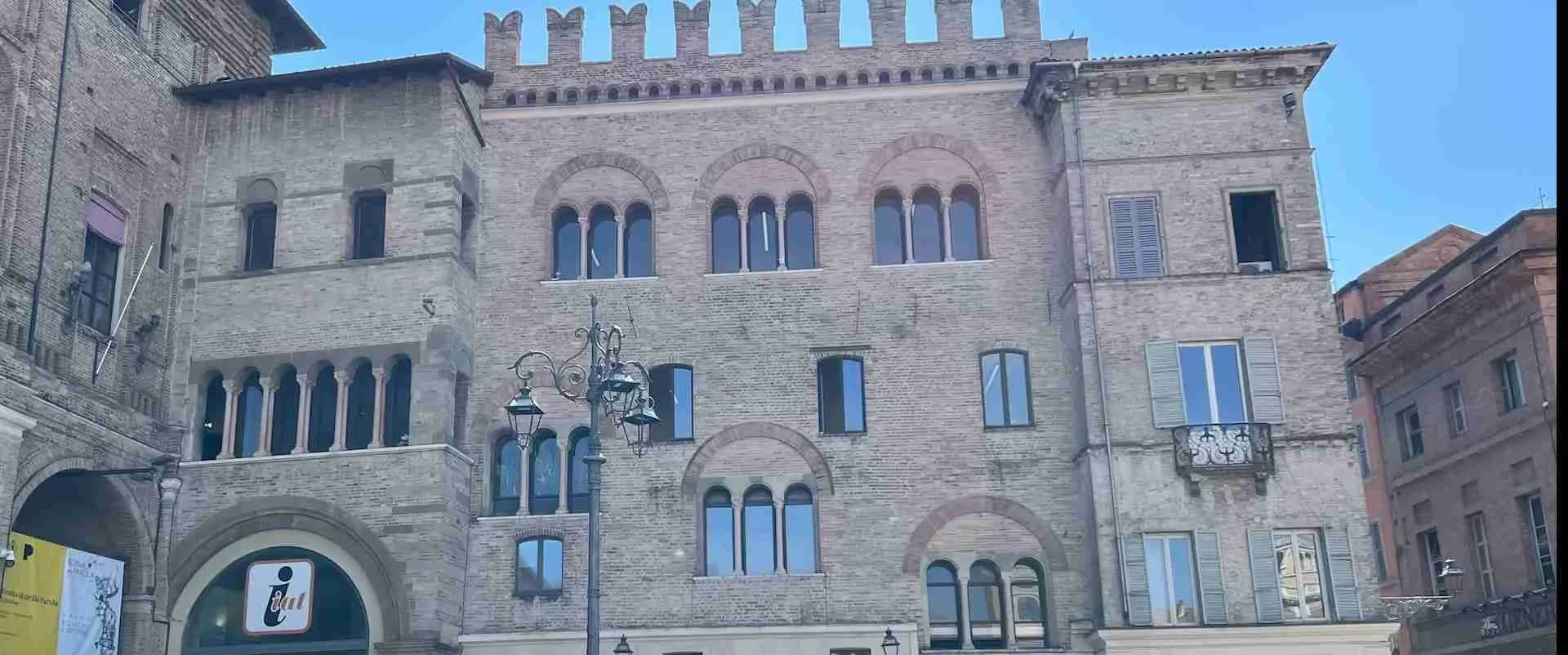
Parma Best Tours & Walking Routes 2026: Secret Spots & Lesser-Known Treasures
Parma rewards visitors who venture beyond the obvious. As Italy’s first UNESCO Creative City of Gastronomy and one of the country’s most underrated cultural capitals, it holds a remarkable concentration of Correggio frescoes, Baroque opera houses, medieval castle country, and a food heritage built over centuries — yet its historic center remains blessedly uncrowded. This guide maps every tour type available in 2026, from free self-guided walks through the bohemian Oltretorrente quarter to private food tours into the Parma hills where cheese and ham are still made by hand.
Key Takeaways
- Tours from €0 to €250: Parma’s most compelling cultural experiences include entirely free walking routes through the historic center, €25 group walking tours, and premium full-day food tours starting at €99 per person. The first Sunday of each month grants free entry to the Pilotta Complex and Baptistery, the two largest paid sites.
- Hidden art rivals Florence: The Camera di San Paolo, the San Giovanni Evangelista church, and the Galleria Nazionale at the Pilotta hold Correggio and Parmigianino frescoes and canvases that rank among the finest in Italian Renaissance art — yet none attracts the queues of major museum cities.
- Oltretorrente is the unmissable local quarter: The neighborhood beyond the Parma stream holds the city’s best street life, colorful 19th-century public housing, the ducal park, and the birthplace of conductor Arturo Toscanini — all free and entirely off most tourist maps.
- Food tours demand planning in advance: Factory visits to Parmigiano Reggiano dairies (€70–80 per person) start at 8:30 AM when the cheese-making process begins; full Food Valley tours combining cheese, prosciutto and lunch run €99–175 per person and require booking at least a week ahead in peak season.
- Castle day trips depart in 20–25 minutes: Torrechiara (€8) and Fontanellato (€8) are both under 25 minutes from Parma by car. A cumulative ticket covering the Pilotta, Torrechiara, and additional sites reduces the combined entry to €25 — check against individual prices before buying.
- Three walking circuits cover the entire historic center: Parma’s centro storico is compact enough for a 4–5 hour self-guided walk taking in every major monument. Splitting the city into a Duomo circuit, a Pilotta circuit, and an Oltretorrente circuit produces three self-contained half-day routes with no retracing.
People Also Ask About Parma Tours 2026
What are the best guided tours in Parma in 2026?
The best guided tours in Parma in 2026 fall into two categories: city walking tours and food production tours. Group walking tours of the historic center last two hours and cost around €25 per person, covering Piazza Garibaldi, the Duomo, Baptistery, Pilotta Palace, and the Steccata basilica with local commentary. Private walking tours offer more depth and flexibility for €80–120 for a couple. On the culinary side, half-day Parmigiano Reggiano dairy visits (€70–80 per person) and full-day food tours combining cheese, Prosciutto di Parma, and lunch (€99–175 per person) are the standout experiences. Booking in advance on GetYourGuide or Viator is recommended for group tours from April through October, when availability tightens.
How much do walking tours of Parma cost in 2026?
Walking tour costs in Parma in 2026 range from free to around €80 per person depending on format. Self-guided walks using the free Audiogiro app cost nothing. Group walking tours of the centro storico cost approximately €25 per person for a two-hour experience with a local guide. Walking food tours with tastings at local shops and salumerie run €35–55 per person for a two-to-three hour experience. Private city walking tours run higher, at approximately €80–120 for a couple sharing a 2.5-hour session. The Pilotta Complex (€18), Baptistery and Diocesan Museum (€18), and Camera di San Paolo (€8) charge separate admission if your tour includes interior visits; these are not included in most standard walking tour prices.
What secret spots and lesser-known places can I discover in Parma in 2026?
Parma holds several exceptional sites that most visitors miss entirely. The Camera di San Paolo (€8) contains Correggio’s earliest Parma commission — a ceiling fresco of extraordinary intimacy hidden in a former convent chamber. The Bodoni Museum inside the Pilotta is one of the world’s great typography collections, free with Pilotta admission. The Museo Glauco Lombardi (€7) houses Napoleon’s personal effects and the wardrobe of Marie Louise of Austria with almost no waiting. The Ancient Apothecary of San Giovanni Evangelista (€5) is a 16th-century monastic pharmacy unchanged in appearance. In the Oltretorrente quarter, Via della Salute’s row of painted public housing from 1855 is one of Parma’s most photographed streets and entirely off the tourist trail. Fontanellato’s Rocca Sanvitale (€8) holds the only fully operational Camera Ottica in Italy.
Are Parma food tours worth taking in 2026?
Parma food tours deliver experiences that are genuinely impossible to replicate independently. Parmigiano Reggiano dairies begin production before 8:30 AM; visiting the dairy at that hour, watching the curd-cutting and wheel-forming, and tasting freshly made cheese alongside aged examples is an experience with no equivalent in the city center. Prosciutto factories in Langhirano involve the same quality of access. The main trade-off is cost — half-day food tours run €70–175 per person depending on operator and inclusions. City food walking tours in the old town (€35–55 per person) offer a lower-cost entry point with stops at salumerie, cheese shops, and pasta producers. For serious food travelers, the full-day Food Valley experience is worth every cent. For a tighter budget, the city food walk combined with purchasing directly at the Mercato della Ghiaia delivers comparable tasting breadth for less.
Extended multi-day tours – 5+ days
Featured Emilia Romagna Multi-Day Tour Packages

3 days
Emilia Romagna 3-Day Discovery Tour
- ✓ Comprehensive Emilia Romagna experience
- ✓ Expert local guides included
- ✓ All accommodation included
- ✓ Transportation provided

5 days
Emilia Romagna 5-Day Highlights Experience
- ✓ Comprehensive Emilia Romagna experience
- ✓ Expert local guides included
- ✓ All accommodation included
- ✓ Transportation provided

7 days
Emilia Romagna 7-Day Cultural Journey
- ✓ Comprehensive Emilia Romagna experience
- ✓ Expert local guides included
- ✓ All accommodation included
- ✓ Transportation provided

10 days
Emilia Romagna 10-Day Complete Adventure
- ✓ Comprehensive Emilia Romagna experience
- ✓ Expert local guides included
- ✓ All accommodation included
- ✓ Transportation provided
Multi-day tour packages powered by TourRadar. Prices and availability subject to change.
Introduction: Parma, Italy’s Most Underrated Cultural Capital
Two facts define Parma’s unusual position in Italian tourism. First, it is officially the world’s first UNESCO Creative City of Gastronomy, a designation it has held since 2015 that is rooted not in restaurants or restaurant critics but in a genuine centuries-long culture of food production. Parmigiano Reggiano and Prosciutto di Parma are not marketing inventions; they are the products of ancient consortia with legally protected production zones and methods that farmers still follow by hand. Second, Parma contains a concentration of Correggio and Parmigianino masterworks comparable to Florence’s concentration of Botticelli and Leonardo — and attracts a fraction of the visitors.
Both facts produce consequences for travelers. The food experiences available in and around Parma — factory visits, food village day trips, market tastings, trattoria meals with dishes that exist only locally — have a depth and authenticity difficult to find elsewhere. The cultural sites, from the painted chambers of the Camera di San Paolo to the wooden theatre inside the Pilotta Palace, carry genuine weight without the pressure of crowds. The city still feels like somewhere Italians live rather than a stage set assembled for visitors.
Parma is also the birthplace of Arturo Toscanini, the conductor many consider the greatest of the 20th century. It is the city that produced the painter Correggio, whose atmospheric, softly lit frescoes permanently influenced European painting and directly inspired Raphael. It was the capital of a small but prestigious duchy — the Duchy of Parma and Piacenza — and bears the aesthetic imprint of successive Farnese, Bourbon, and Austrian rulers who funded extraordinary architecture. The Teatro Regio opera house, built under Duchess Marie Louise of Austria in 1829, remains one of the most beautiful in Italy.
Walking this city well means knowing where to look. Many of its treasures — the Camera di San Paolo, the Bodoni Museum, the painted corridor churches of Oltretorrente, the moat-surrounded Rocca Sanvitale at Fontanellato 14 kilometers to the northwest — do not appear in standard itineraries. This guide covers all of them, along with every tour format available in 2026 so that visitors can navigate Parma’s layers at exactly the depth and pace they want.
Classic Walking Routes Through Parma’s Historic Center 2026
Parma’s centro storico measures roughly two kilometers across at its widest point. Every major monument is reachable on foot, and the absence of significant gradients makes walking consistently comfortable. The three circuits below can be done independently on a single day or spread across two shorter days. Each takes between 90 minutes and three hours at a relaxed pace.
Route 1: The Piazza Duomo and Baptistery Circuit (1.5–2 Hours)
Begin at Piazza Garibaldi, the elegant main square dominated by the clock-towered Palazzo del Governatore (1564, with a façade clock from 1761). The square functions as Parma’s living room — locals gather here throughout the day regardless of season, and the morning coffee ritual at the surrounding bars is an efficient way to absorb city pace before starting.
From Piazza Garibaldi, walk five minutes south along Strada Cavour to arrive at Piazza Duomo, which many architectural historians consider among the most balanced Romanesque piazzas in Italy. The Cathedral (Duomo), dedicated to the Assumption of the Virgin, has a Romanesque exterior begun in the late 11th century. Free to enter, it rewards close attention inside: Benedetto Antelami’s 12th-century Deposition relief is embedded in the right transept, and Correggio’s celebrated dome fresco — the Assumption of the Virgin, painted between 1526 and 1530 — fills the interior with light and movement in a way that still stops visitors where they stand. The fresco was so innovative that it reportedly prompted a local canon to complain of “a hash of frogs’ legs.” History has reversed that verdict comprehensively.
Adjacent to the Duomo stands the Baptistery, one of Italy’s finest examples of the transition from Romanesque to early Gothic, begun by Benedetto Antelami in 1196 in pink Verona marble. The combined Baptistery and Diocesan Museum ticket costs €18 for adults in 2026 (check the official diocesan website for current rates). The octagonal interior holds an extraordinarily complete cycle of Antelami’s sculptural months, seasons, and zodiac signs that predates most comparable decorative programs in Italy.
The circuit continues to the Basilica of Santa Maria della Steccata, a five-minute walk from Piazza Duomo. Entry is free, and the interior holds ceiling frescoes by Parmigianino begun in 1531 — work the painter notoriously struggled to complete and was briefly jailed for the delay. The church also served as his burial place. The visit takes 20–30 minutes and rewards anyone interested in Mannerist painting at its most personal and unfinished.
Route 2: The Pilotta Palace and Riverside Walk (2–3 Hours)
The Complesso Monumentale della Pilotta — known simply as the Pilotta — is one of the largest palace complexes in Italy by footprint, built by the Farnese family from 1583 onward and never fully completed. The exterior is deliberately severe, a vast brick mass beside the Parma stream that looks more like a fortress than a court residence. The interior is an entirely different matter.
The single €18 Pilotta ticket (first Sunday of each month free, subject to crowd management for free-entry days) covers five museums inside the complex. The Galleria Nazionale holds the definitive collection of Correggio and Parmigianino paintings, including Correggio’s Rest on the Flight into Egypt, the Madonna of St. Jerome, and the full body of Parmigianino’s panel work. The Teatro Farnese, on the upper floor, is a complete Baroque theatre built entirely of wood in 1618 — the largest of its kind to survive in Italy — which was destroyed in the Second World War and fully reconstructed, original timbers where recoverable. The Palatine Library and the Bodoni Museum occupy additional wings; the Bodoni collection (see the Secret Spots section below) is unmissable for anyone with an interest in typography or print history.
After the Pilotta, follow the Parma stream south toward the Ponte di Mezzo, the historic bridge connecting the centro storico to Oltretorrente. The riverside path is planted with trees and scattered with benches, the ideal point for a break before crossing into the bohemian quarter.
Route 3: The Gastronomy Loop Walk (2 Hours)
This loop covers the commercial food streets of the centro storico and is best done in the morning when shops are active. Begin at the Mercato della Ghiaia, the covered market in Piazza della Ghiaia (open Tuesday, Thursday, Friday and Saturday mornings), where vendors sell aged wheels of Parmigiano, sliced Prosciutto di Parma, Culatello, Coppa di Parma, fresh pasta, and seasonal vegetables from the Po Valley. Budget €15–30 for tasting purchases if buying direct.
From the Ghiaia, walk along Strada Farini — Parma’s finest shopping street and one of the most handsome 19th-century commercial corridors in northern Italy — and turn into the streets behind toward Via Cavour, where several historic salumerie and cheese shops operate. The Casa del Parmigiano Reggiano on Via Farini stocks wheels cut to order. From here, the loop continues to Piazza Garibaldi before doubling back through Via Repubblica to cover the university district and the Oratorio di San Quirino, a small Baroque chapel that rarely appears in guides.
Guided City Tours: Best Operators and Prices in Parma 2026
Parma has a healthy ecosystem of licensed local guides operating through both international booking platforms and direct booking. The city’s designation as a UNESCO Creative City of Gastronomy has spurred investment in quality guided experiences over the past decade, and the average standard of city guides is noticeably high.
Group Walking Tours: What’s Included and Where to Book
Standard group walking tours of Parma’s historic center last two hours and cost approximately €25 per person (check current availability on Viator or GetYourGuide, where prices fluctuate by operator and season). Groups are capped at 10–20 participants depending on the operator. The typical route covers Piazza Garibaldi, the Pilotta exterior, the Steccata basilica, the Ponte di Mezzo, Piazza Duomo, the Baptistery, and selected food streets, with a small Parmigiano Reggiano tasting included in most versions. Monument interiors are not included in the base price; guides will advise on separate ticketing if the group wishes to enter the Pilotta or Baptistery.
Meeting point for most group tours is Piazza Garibaldi 18 or in front of the Palazzo del Governatore. The tour operates in both Italian and English. Book at least 48 hours ahead in spring and autumn; same-day booking is often possible in winter. Guides consistently rated highly by previous travelers include those operating through ParmaCity Tour and through the local agency Exploraemilia, both of which use authorized regional guides.
Private Walking Tours: Personalized Parma Experiences
Private walking tours in Parma run approximately €80–120 for a couple sharing a 2.5-hour session, depending on the guide. The advantage of private tours is the ability to focus on a specific interest — art history, food culture, architecture, or music — without pacing to a group. Several excellent guides operate independently and are bookable through GetYourGuide or through the Parma Tourist Office (IAT), located near the Pilotta at Piazzale della Pilotta 5.
The tour with guide Giulia Marinelli, frequently cited in traveler reviews for her depth of knowledge of both food culture and art history, is one of the most consistently recommended private experiences. Her half-day food and culture combination — covering city history alongside cheese and prosciutto factory visits in the surrounding hills — runs approximately €175 per person for the full experience. Booking by email through ToursByLocals or similar platforms is the standard method.
Themed Heritage Tours: Music, Art, and Architecture Focus
The Teatro Regio di Parma operates a dedicated heritage tour program called “Tour dal Regio al Regio” combining guided visits to the opera house interior, the Museo Glauco Lombardi, and the Basilica della Steccata. This multi-site circuit is arranged directly with the Teatro Regio (tel. +39 0521 203995 or email [email protected]) and provides access to the opera house stage and auditorium. It is particularly suited to visitors interested in Parma’s dual musical legacy as Verdi’s adopted city and Toscanini’s birthplace.
Separate from the teatro program, the Complesso della Pilotta offers dedicated guided tours of the Farnese Theatre interior, which is not fully accessible on standard self-guided visits. These tours provide context on the original 17th-century theatre design and the post-war reconstruction and are especially valuable for visitors with an architectural interest. Contact the Pilotta directly (tel. +39 0521 233617 or [email protected]) to arrange.
The Correggio and Parmigianino Art Trail
Parma’s greatest cultural distinction is its density of work by two painters whose output elsewhere is scattered across major European museums: Antonio Allegri, known as Correggio (c.1489–1534), and Girolamo Francesco Maria Mazzola, known as Parmigianino (1503–1540). Both spent their most productive years in Parma, and the city holds an extraordinary concentration of their work in situ — meaning in the buildings and rooms for which the paintings were originally made.
Camera di San Paolo: Correggio’s Intimate Masterpiece
The Camera di San Paolo on Strada Macedonio Melloni 3 is one of the essential art experiences of northern Italy and one of Parma’s best-kept secrets among general visitors. The site is a former Benedictine convent whose abbess, Giovanna da Piacenza, commissioned a series of decorative frescoes for her private apartment around 1519. Correggio painted the main chamber — a room whose low barrel-vaulted ceiling he transformed into a garden pergola held up by garlands, with sixteen lunettes each containing a mythological scene and a central oculus. The effect is simultaneously intimate and astonishing.
Entry costs €8 per person (check the official site at cultura.comune.parma.it for current rates). The museum opens Monday, Wednesday, Thursday and Friday 9:30–17:30; Saturday and Sunday 9:30–18:30; closed Tuesday. A free guided visit runs every Thursday at 15:30 with advance booking by email to [email protected]. Capacity is capped at 10 visitors per guided session. The complex also holds Alessandro Araldi’s earlier frescoes in an adjacent chamber — a useful comparison for understanding what Correggio’s innovation looked like against its immediate antecedent.
From 30 April to 2 August 2026, the site operates extended evening hours on Fridays and Saturdays until 22:00 in connection with Brian Eno’s generative music installation in the adjacent gardens — an unusual opportunity to visit Correggio’s frescoes by artificial evening light.
San Giovanni Evangelista: The Overlooked Correggio Church
The Church of San Giovanni Evangelista on Piazzale San Giovanni, a three-minute walk from the Duomo, holds Correggio’s fresco of the Vision of St. John in its dome — the companion piece to the Assumption fresco in the Duomo, painted at the same period. Parmigianino contributed frescoes to the right nave and chancel. The church is free to enter, attached to a Benedictine monastery still in active use, and open daily during standard hours.
The church is frequently described as one of Parma’s most undervisited great monuments. Few visitors who come specifically for the Duomo fresco continue the three-minute walk to San Giovanni. The Ancient Apothecary of San Giovanni Evangelista, physically connected to the monastery complex, is a separate ticket item at €5 per person and represents an entirely different kind of hidden treasure: a 16th-century monastic pharmacy that still holds its original fittings, ceramic jars, herbal preparations and dispensary furniture. Hours are 9:00–13:00 and 15:00–19:00 with a noon closure that catches visitors off guard.
The Galleria Nazionale and Parmigianino at the Pilotta
The Galleria Nazionale inside the Pilotta Complex houses the definitive state collection of Parma painting. The Correggio rooms hold the Rest on the Flight into Egypt, the Madonna of St. Jerome (known locally as Il Giorno — “The Day”), and the Portrait of a Gentleman. The Parmigianino holdings include the disturbing, enigmatic Schiava Turca and the Madonna dal Collo Lungo oil study. The collection also holds significant Cima da Conegliano, Sebastiano del Piombo, El Greco, and van Dyck.
The Galleria is included in the single €18 Pilotta ticket alongside the Farnese Theatre, Biblioteca Palatina, Museo Bodoni, and Museo Archeologico — a genuinely exceptional combined price for five distinct museum spaces. Plan three hours minimum for a thoughtful visit to the full complex.
Oltretorrente and the Bohemian Quarter Walk
Cross the Ponte di Mezzo and the city changes register immediately. Oltretorrente — literally “beyond the torrent,” referring to the Parma stream — is the medieval working-class and student neighborhood west of the city center, with a cultural and architectural identity entirely distinct from the Farnese-shaped centro storico. Laundry dries from balconies. Trattorias post handwritten menus. University students fill the bars in the evening. The streets are narrower and the buildings lower, and there are almost no tourists.
Via della Salute and the Historic Colored Houses
Via della Salute runs parallel to the Parma stream in the heart of Oltretorrente and holds a row of brightly painted terraced houses that function as one of Parma’s most photographed subjects — and one of the least discussed in terms of what they represent. Built in 1855 under Duchess Marie Louise of Austria as one of Italy’s earliest examples of planned public housing, the row was designed to provide dignified low-cost accommodation for the city’s working poor. The color-coded facades were a practical system to help illiterate residents identify their unit. The buildings are still residential and should be observed from the street rather than entered.
The surrounding streets of Oltretorrente reward unstructured walking. The Chiesa di Santa Croce on the via of the same name is a Romanesque church with a 12th-century bell tower, largely unvisited but architecturally significant. The neighborhood’s artisan workshops — a handful still operate in the ground floors of converted medieval buildings — produce the kind of craft trade encounter that the centro storico has largely lost.
Parco Ducale and the Palazzo Ducale
The Farnese family chose Oltretorrente for their ducal residence, and the Palazzo Ducale — a grand 16th-century mansion with internal frescoes inspired by the Ariosto epics — still stands at the edge of the Parco Ducale. The palazzo now serves as the headquarters of the Carabinieri military police and is not publicly accessible internally, but the exterior and the park are entirely open. The Parco Ducale spreads over approximately 20 hectares of formal and informal gardens planted with ancient plane trees, fountains, sculptures, and a small lake with an island. The park functions as the city’s living room on weekend afternoons; bring a picnic, sit under a 200-year-old plane tree, and watch Parma go about its weekend in a way that no guided tour will show you.
The Arturo Toscanini Birthplace
Borgo Rodolfo Tanzi 13 in Oltretorrente is the birthplace of Arturo Toscanini (1867–1957), the conductor whom many musicians consider the finest interpreter of Verdi and Wagner in the 20th century. The house has been converted into the Museo Casa Natale Arturo Toscanini, a compact museum holding personal photographs, letters, batons, scores, and recordings. It documents both Toscanini’s Parma childhood and his later international career at La Scala, the Metropolitan Opera, and the NBC Symphony Orchestra. The museum provides a genuinely moving dimension to Parma’s operatic identity and is rarely crowded. Check current opening times and admission with the Comune di Parma directly.
Culinary and Food Tours in Parma 2026: Prices and What’s Included
Parma’s food identity is not a marketing construct. The production zones for Parmigiano Reggiano and Prosciutto di Parma overlap precisely with the city and its surrounding hills, and both products are still made under rigorous consortium rules that specify the breed of cow, the altitude of grazing, the aging period, and the method of preparation. Visiting the production facilities is one of the few food experiences in Italy where the gap between description and reality narrows rather than widens.
City Food Walking Tours: Sampling Parma’s Best in the Old Town
City food walking tours remain in the centro storico and last two to three hours, combining stops at salumerie, norcinerie (cured meat specialists), cheese shops, pasta producers, and bakeries with commentary on Parma’s gastronomic history. Prices for these group tours run €35–55 per person depending on the operator and the quantity of food included (check current listings on Viator for specific operator prices). The Mercato della Ghiaia — Parma’s main covered market, operating Tuesday, Thursday, Friday, and Saturday mornings on Piazza della Ghiaia — is the usual anchor stop, providing direct access to vendors of aged Parmigiano wheels, sliced prosciutto, Coppa di Parma, tortelli pasta, and seasonal produce.
The best city food tours distinguish themselves by the selection of producers they include. Look for tours that visit a norcineria where the salami and culatello are still selected and cut by hand rather than pre-packaged — several of these survive on Via Farini and in the streets behind Piazza Ghiaia. Operators who include a stop at a fresh pasta laboratory showing tortelli d’erbette (the local parsley, ricotta, and chard pasta) being made by hand add an important dimension absent from cheese-only experiences.
Parmigiano Reggiano Dairy Factory Visits
Parmigiano Reggiano production follows a strict timetable that begins before 8:30 AM: the milk arrives from the previous evening’s milking and the morning’s milking, is combined in copper vats, and the curd-cutting process begins at a precise point in the coagulation. Arriving at a dairy at 8:30 AM and watching a cheesemaker use a traditional spino wire tool to cut the curd into rice-sized granules, then lifting the resulting wheel by hand into its mould, is an unreproducible experience. The aging rooms — where wheels rest on wooden shelves for a minimum of 12 months (young Parmigiano), 24 months (classic), or 36–48 months (stravecchio) — have their own austere grandeur.
Half-day Parmigiano dairy visits from Parma cost approximately €70–80 per person including transport to the dairy and a guided tasting with local sparkling wine (check current operator prices through GetYourGuide or Viator before booking; prices change seasonally). The ParmaLook food tour operators consistently receive strong reviews for small-group dairy experiences with English-language commentary. Solo dairy tours without a guide but including tasting are also bookable directly through several dairies, at lower cost but requiring your own transport.
Prosciutto di Parma Factory Tours
Prosciutto di Parma production is concentrated in the Langhirano valley south of Parma, where the Apennine mountain air provides precisely the ventilation conditions the Consortium requires for the 14–36 month curing process. Langhirano is approximately 20 minutes from Parma by car. A visit to the Salumificio Conti or similar certified producer reveals the ham’s transformation across production stages: from the fresh leg, through the salting, through the gradual application of lard to control drying rate, to the thumping-and-smelling inspection (the Parma ham sommelier’s tool is a horse-bone needle) that determines when a wheel is ready. Tasting at a prosciuttificio involves the freshly sliced product at various ages — a direct sensory education on why vintage-aged ham carries a significant premium.
Prosciutto factory visits are combined with Parmigiano dairy visits on full Food Valley tours. Standalone prosciutto visits require a car or a tour operator’s transport; no public bus connects the Langhirano factories to Parma city center.
Full-Day Food Valley Tours: The Complete Gourmet Experience
Full Food Valley tours combine both a Parmigiano dairy and a prosciutto factory with a traditional lunch of local pasta, accompanied by Lambrusco wine, into a 5–7 hour experience. The Taste Bologna food tour based in Parma prices the group version of this experience at €99 per person (plus tax; check tastebologna.net for current rates), with a maximum group size that keeps the experience genuinely small-scale. Private full-day food tours run higher — the tours offered by local guide Giulia Marinelli and comparable operators on ToursByLocals run approximately €175 per person for small groups, including transport, all entry fees, and the full lunch.
For travelers combining wine with the food experience, operators including Bike Food Stories and local agencies offer routes into the Colli di Parma wine country west of the city, where Malvasia di Candia Aromatica, Barbera, and Bonarda grapes produce the kind of frizzante wines served in the city’s oldest osterie. These half-day wine and food countryside experiences run €80–130 per person including transport and tastings.
Parma’s Secret Spots and Lesser-Known Attractions 2026
The five sites below appear on almost no standard tourist itinerary. Each deserves considerably more attention than it receives.
The Bodoni Museum: Typography’s Greatest Achievement
The Museo Bodoni inside the Pilotta Complex is dedicated to Giambattista Bodoni (1740–1813), the printer, typographer, and type designer who worked for the Farnese court and produced what many typographers consider the most refined typefaces in Western printing history. The Bodoni typeface family is still one of the most widely used in contemporary graphic design. The museum holds Bodoni’s original typographic punches — the metal tools used to cut letterforms — alongside his finest printed books, binding samples, and the presses on which he worked. It is a remarkable place: quiet, finely detailed, and entirely accessible to visitors with no prior knowledge of printing history. Access is included in the €18 Pilotta ticket.
Museo Glauco Lombardi: Napoleon’s Parma Connection
The Museo Glauco Lombardi at Strada Garibaldi 15 holds one of the most personal museum collections in Italy: the accumulated acquisitions of a collector who spent his life tracking down objects belonging to Napoleon Bonaparte and Marie Louise of Austria, Napoleon’s second wife and Duchess of Parma from 1816 until her death in 1847. The collection covers both periods of Marie Louise’s life — as French Empress and as Parma’s ruling duchess — and includes her opera gowns, personal jewellery, her fortepiano with the score of Verdi’s I Lombardi alla Prima Crociata (which Verdi dedicated to her), Napoleonic portraits and memorabilia, and a vast documentary archive.
Entry costs €7 per person (€5 for groups of 20, seniors, and holders of touring club cards). The museum opens Tuesday through Friday 9:30–16:00, Saturday 9:30–16:00, and Sunday 9:30–19:00; closed Monday. The guided tour included in the admission is particularly worthwhile — the guides carry detailed knowledge of the personalities involved and bring the collection to life in a way that the labels alone do not.
The Ancient Apothecary of San Giovanni Evangelista
Adjacent to the San Giovanni Evangelista monastery complex on Borgo Pipa, the Antica Spezieria di San Giovanni Evangelista is a 16th-century Benedictine pharmacy that functioned as a public dispensary until 1881. The current interior dates substantially from the late 16th and 17th centuries, with wooden shelving, ceramic pharmacy jars decorated with Farnese heraldic motifs, mortars and pestles, alembics, and a dispensary counter. The monks still maintain the herb garden in the attached cloister. This is one of the most evocative small historic interiors in Emilia-Romagna and is entirely free of crowds. Entry is €5 per person, with hours 9:00–13:00 and 15:00–19:00 daily. Note the midday closure — many visitors arrive at noon and find the doors shut.
Santa Cristina and the Hidden Baroque Churches
Parma holds several small Baroque churches that most visitors walk past without noticing. Santa Cristina on Piazzale San Giovanni has an elegant interior with ceiling frescoes rarely cited in guidebooks. The Oratorio di San Quirino, a small Baroque chapel a short walk from Piazza Ghiaia, contains 18th-century decoration of considerable quality. The Santuario dell’Annunciata in Oltretorrente combines medieval structure with Baroque furnishing in a context that feels entirely separated from the tourist city. All three are free to enter during standard church hours and are worth including in any extended walking day.
Piazza della Ghiaia and the Covered Market
Piazza della Ghiaia — “the square of the gravel,” named for the riverbed material that once covered it — is Parma’s working market square. The covered market building on the square operates Tuesday, Thursday, Friday, and Saturday mornings with vendors of Parmigiano at various ages, Culatello di Zibello (the prized whole-muscle salume from the foggy Po Valley lowlands, often called Italy’s finest cured meat), fresh tortelli, local cheeses, and seasonal produce. The atmosphere is genuine market activity rather than tourist staging. Arriving at 9:00 AM when the morning producers set up is the best way to see the square at its liveliest.
Day Trip Tours from Parma 2026: Castles, Food Villages, and Vineyards
Parma’s surrounding territory is dense with medieval castles, moat-ringed fortresses, and the food production infrastructure — dairies, prosciutto factories, balsamic vinegar attics, salami producers — that makes the Food Valley region a destination in its own right. Four day trips below are achievable in half a day to a full day from the city.
Torrechiara Castle: The Fairy-Tale Fortress
Castello di Torrechiara, 18 kilometers south of Parma in the Apennine foothills, is one of the best-preserved 15th-century fortresses in northern Italy. Built between 1448 and 1460 by the nobleman Pier Maria II de’ Rossi — a man of sufficient cultural ambition to commission a personal Benedictine abbey alongside his castle — the structure sits on a hill above Torrechiara village with panoramic views over the Parma Valley. Its defining feature is the Camera d’Oro, or Golden Chamber: a first-floor room whose walls are covered in frescoes by Benedetto Bembo depicting the love story between Pier Maria and his companion Bianca Pellegrini, with portraits of the couple interwoven with landscape and heraldic imagery in a style that is both sophisticated and intimate. The castle also became internationally known as a filming location for the 1985 fantasy film Ladyhawke.
Entry costs €8 per person (under 18 free; check complessopilotta.it for current rates as Torrechiara is managed by the Pilotta Consortium). A cumulative ticket covering Torrechiara, the Pilotta, the Veleia archaeological site, and the San Giovanni Apothecary costs €25 — compare this against individual prices before buying, depending on which sites you plan to visit. The castle is open Tuesday through Sunday; the Camera d’Oro is accessible only on guided tours, which run at set times. By car, Torrechiara is 25 minutes via the SP665 south; there is limited bus service and driving is the practical option for most visitors. Several guided tours departing from Parma combine Torrechiara with Parmigiano and Prosciutto factory visits for a full-day experience.
Fontanellato and the Rocca Sanvitale
The Rocca Sanvitale di Fontanellato, 14 kilometers northwest of Parma, occupies a special place among Emilia-Romagna castles for three distinct reasons. First, it retains its medieval moat in full, fed by natural spring water and still containing large carp visible from the exterior walls — one of the very few functioning moats left in Italy. Second, it contains a room frescoed by Parmigianino in 1523 depicting the myth of Diana and Actaeon, a small cabinet of extraordinary quality painted for Paola Gonzaga, Countess Sanvitale. Third, it holds the only fully operational Camera Ottica in Italy — a 19th-century optical system of mirrors that projects an inverted image of the square and street outside onto a screen inside a darkened room, an experience unlike anything else in the region.
The full guided tour costs €8 per person (partial route including the Parmigianino room and Camera Ottica but not the noble apartments costs €4; check fontanellato.org for current rates). Guided visits to the noble apartments are required for access to the upper floors; visitors choosing the partial route visit independently without a guide. The castle closes Tuesday in winter but opens also on Tuesday in April and May. Fontanellato itself is a well-preserved medieval borgo with a good Thursday market. The combination of the castle visit and a lunch in the village piazza makes an ideal half-day from Parma by car (20 minutes via the A1 motorway direction Milan and exit Fidenza, or via the SP10 minor road).
Soragna and the Culatello Country
The Bassa Parmense — the flat Po Valley lowlands north of Parma — produces Culatello di Zibello, a whole-muscle ham cured in the fog-laden air of the river valley and considered by many Italian food professionals the finest salume in the country. The area around Soragna, 30 kilometers north of Parma, offers guided visits to the Antica Corte Pallavicina estate on the Po bank, where Culatello hangs in historic cellars and the Spigaroli family produces the cured meat alongside Parma ham and other products. Tours of the estate combine cellar visits and tastings with optional lunch at the on-site Michelin-recognized restaurant. Contact Antica Corte Pallavicina directly to arrange visits; prices and availability depend on group size and season.
The Rocca Meli Lupi di Soragna is a second castle in the area, a privately owned residence still occupied by the Meli Lupi family, which has managed the estate since the 16th century. Guided tours of the Rocca’s furnished apartments, art gallery, and gardens are available on specific days; check the castle website for current tour schedules.
Busseto: The Giuseppe Verdi Day Trip
Busseto, 30 kilometers northwest of Parma, was the birthplace and lifelong home of Giuseppe Verdi (1813–1901), and the town centers its entire identity on the connection. The small historical center holds the Teatro Giuseppe Verdi (a working opera house named for the composer), the Palazzo Orlandi where Verdi lived as a young man, and the nearby Villa Sant’Agata where he composed his late masterpieces including Otello and Falstaff. A Verdi museum operates in the Palazzo Orlandi with original scores, portraits, and personal effects. Bus services connect Parma to Busseto (approximately one hour), though a car allows the addition of Roncole Verdi, the village 3 kilometers outside Busseto where Verdi was born and where his birth house has been preserved as a museum.
Self-Guided Walking Routes for Independent Travelers 2026
Independent travelers in Parma have access to several free and low-cost tools that provide guided content without booking a formal tour. The city’s compact scale and excellent pedestrian infrastructure make solo exploration entirely practical.
The Free Audiogiro App and Digital Guides
The Audiogiro app provides free audio guides for Parma’s historic center in Italian, English, French, and German. The app is downloadable from standard app stores and works offline once content is downloaded. It covers all major monuments and several lesser-known sites in the centro storico and Oltretorrente. The IAT Tourist Office at Piazzale della Pilotta 5 distributes printed walking route maps free of charge and can suggest current temporary exhibitions and special access opportunities not listed on standard booking platforms.
Parmawelcome.it, the official Parma tourism portal, publishes downloadable PDF walking route maps and current attraction opening hours. The hours PDF is updated periodically; verifying current hours for smaller sites directly with the relevant institutions before visiting avoids the midday-closure disappointment that catches many visitors (the Antica Spezieria, for example, closes between 13:00 and 15:00).
A Full-Day Self-Guided Route: The Best of Parma in 8 Hours
A full self-guided day in Parma begins at 8:30 AM with coffee at one of the bars on Piazza Garibaldi. By 9:00 AM the Pilotta is open; a three-hour visit covering the Galleria Nazionale, Farnese Theatre, and Bodoni Museum at a measured pace ends at noon. Lunch in Oltretorrente — any of the trattorias on the streets behind the Ducal Park serves the local tortelli d’erbette and anolini in brodo at honest prices — takes one hour.
The early afternoon covers the Camera di San Paolo (€8, open from 9:30), San Giovanni Evangelista church (free), and the Antica Spezieria (€5, reopens at 15:00 after the midday closure). The Piazza Duomo, Duomo interior, and Baptistery fill the mid-to-late afternoon. Early evening in Parma belongs to the Strada Farini aperitivo circuit, where bars set out free food with the evening’s first drink in a tradition that predates the Milanese version and remains less performative. Budget: approximately €31 for the Pilotta, Camera di San Paolo, and Spezieria combined, or €25 using the cumulative ticket if also planning day trips to Torrechiara.
Evening Walks: Parma’s Illuminated Historic Center
Parma’s historic center illuminates effectively in the evening, particularly around Piazza Garibaldi, the Pilotta exterior, and along Strada Farini. The city’s student population — Parma has a university active since the 11th century — keeps the streets lively through the evening into late night. An evening walk beginning at the Steccata basilica (check closing times as they vary by season) and continuing through Piazza Garibaldi to the Pilotta riverside, then crossing into Oltretorrente for dinner, covers the city’s two contrasting personalities — the formal ducal center and the lived-in working quarter — in a single two-hour circuit.
Cycling Tours and Bike Routes Around Parma 2026
Parma is an unusually cycling-friendly Italian city. The historic center is largely restricted to residents and service vehicles, which means the central streets are navigable by bicycle without the conflict with traffic found in many comparable cities. A network of marked cycle routes extends from the center into the Po Valley flatlands, connecting food production villages along routes designed for practical cycling rather than athletic touring.
City Bike Hire and Cycling in the Centro Storico
Electric and standard bike hire is available from multiple operators in the city center. The Bicittà bike-sharing system operates docking stations throughout the centro storico and Oltretorrente; day passes are available for visitors at low cost. Electric bikes are the recommended option for the full-day city and countryside combination — the city center is flat but the hills south toward Torrechiara and the prosciutto country involve moderate climbing. The Po Valley routes to the north are entirely flat and well suited to standard cycling.
Food Valley Cycling Routes into the Countryside
The operator Bike Food Stories runs guided cycling tours combining the flat Food Valley route north of Parma with stops at food producers — cheese dairies, wine estates, and traditional farm food. These full-day cycling food tours are designed for non-specialist cyclists and use the flat Po Valley roads at a pace that allows genuine stops and conversations with producers rather than athletic riding. Check bikefoodstories.it for current routes, pricing, and availability. Cycling wine tours in the Colli di Parma west of the city — a hillier proposition for more confident cyclists — follow routes through the Malvasia and Barbera vineyard zone; several wine estates receive cyclists by appointment for tastings.
The Music Heritage Trail: Verdi, Toscanini, and Parma’s Operatic Soul
Parma’s relationship with opera is institutional rather than aspirational. The city has produced, cultivated, or shaped the careers of several of the most significant figures in the 19th and 20th century operatic tradition. Walking the music heritage trail requires no musical training — but visiting Teatro Regio during an opera season and experiencing the response of the Parma audience (among the most technically knowledgeable and vocally critical in the world) is an experience of its own kind.
Casa Natale Arturo Toscanini
Borgo Rodolfo Tanzi 13 is a modest Ottocento townhouse in Oltretorrente that holds the restored birthplace of Arturo Toscanini. The conductor was born here in 1867 and maintained his connection to Parma throughout his life. The museum spread across the restored rooms covers his childhood, his early career at Parma, his rise to international prominence at La Scala and the Metropolitan Opera, and his famous break with Mussolini’s regime. The audio archive — recordings of Toscanini’s NBC Symphony concerts and his late-career Verdi performances — makes this a particularly charged place for anyone with an interest in how he shaped 20th-century musical performance standards.
Teatro Regio di Parma: Behind the Scenes Tours
The Teatro Regio on Via Garibaldi was built in 1829 under Marie Louise of Austria and is considered one of the two or three finest opera houses in Italy alongside La Scala and La Fenice. A 30-minute guided tour of the Foyer, Sala (auditorium), and Ridotto is available when the theatre is not in rehearsal or production. Contact the Teatro Regio directly (tel. +39 0521 203995 or [email protected]) to arrange a tour and confirm availability; specific pricing varies by tour type. The theatre’s autumn-to-spring opera season draws international casts and produces the annual Verdi Festival in October, for which tickets require advance booking through the theater’s official website.
The Verdi Circuit: Busseto and the Birthplace of Opera
Verdi’s connection to Parma was lifelong and complex. He was born in Roncole Verdi, educated in Busseto, and spent his most productive adult years at Villa Sant’Agata outside Busseto, returning to his home territory between Milan seasons until his death in 1901. The Verdi circuit — Roncole Verdi birth house, Busseto museum, and Villa Sant’Agata — requires a full day from Parma and private transport for the Villa visit (opening times at Villa Sant’Agata are limited; book through the Amici di Verdi association website in advance). The Teatro Giuseppe Verdi in Busseto runs a small annual opera season in Verdi’s name and is worth checking for performances coinciding with your visit.
Planning and Booking Your Parma Tours 2026
Best Seasons and Timing for Tours in 2026
April through June and September through October are the ideal seasons for touring Parma: mild temperatures, active food production, and all attractions at standard operating capacity. The Parmigiano Reggiano dairy visits run year-round since cheese production continues daily, but spring and autumn additionally offer access to open countryside and the castle day trips without summer heat. The Verdi Festival in October draws opera visitors from across Europe; accommodation books up weeks ahead for festival dates and prices rise accordingly.
July and August bring heat to the Po Valley (temperatures regularly exceed 35°C) and see some Italian producers on holiday closure, but the main city attractions remain open and visitor numbers stay lower than in major tourist cities. Winter — November through March — is cold and sometimes foggy in the lowlands, but the museums are uncrowded and the trattorias serve their most fortifying seasonal menus, including anolini in brodo (pasta in rich beef broth) and the full range of local cured meats.
Free Entry Days and Discount Opportunities in 2026
The first Sunday of each month provides free entry to the Pilotta Complex, the Baptistery and Diocesan Museum, and several other state-managed sites in Parma. On these Sundays, a free ticket is still required for queue management — it must be collected from the ticket office or reserved in advance at pilotta.ticka.it. The Sundays are crowded and not recommended for visitors who want unhurried access to the galleries; the trade-off between cost and crowd is real.
The cumulative ticket at €25 — covering the Pilotta, Torrechiara Castle, the Veleia archaeological site, and the Antica Spezieria di San Giovanni — is worth comparing against the individual entry prices of the specific sites you plan to visit. The Pilotta alone is €18; adding Torrechiara (€8) and Spezieria (€5) to a single day gives individual total of €31 versus €25 combined — a €6 saving. Under-18s enter all state-managed Parma sites free. EU citizens aged 18–25 pay €2 reduced entry to Pilotta, Torrechiara, Spezieria, and Camera di San Paolo.
Practical Tour Planning Tips for Parma 2026
Advance booking is strongly recommended for food production tours from April through October. The Parmigiano dairies accept small groups only, and popular operators fill their morning sessions weeks ahead in peak season. The Camera di San Paolo’s Thursday afternoon guided visits have a strict 10-person cap and book out quickly; email booking to [email protected] as soon as your travel dates are confirmed.
Parma’s centro storico operates a limited traffic zone (ZTL) that applies to private vehicles on weekdays; park at the Pilotta car park or in the Ospedale Vecchio area and walk in. The railway station on Piazza Carlo Alberto Dalla Chiesa is 15 minutes’ walk from Piazza Garibaldi and serves direct connections from Milan (55 minutes), Bologna (35 minutes), and Florence (90 minutes, with change at Bologna). Most tours meet in the city center; transport from the station to meeting points is straightforward on foot or by city bus.
Parma’s dress code applies at all religious sites: shoulders and knees must be covered for entry to the Duomo, Steccata, San Giovanni Evangelista, and any active convent or monastery complex. Lightweight scarves and layering work efficiently for visitors moving between churches and museums in the same half-day.
Frequently Asked Questions
What is the best free walking route in Parma in 2026?
The best free walking route in Parma combines Piazza Garibaldi (Palazzo del Governatore exterior), the Pilotta exterior and riverside walk, the San Giovanni Evangelista church (free interior with Correggio and Parmigianino frescoes), Santa Maria della Steccata (free with Parmigianino frescoes), the Duomo exterior and interior (free), and the entire Oltretorrente neighborhood including Via della Salute, Parco Ducale, and the Ponte di Mezzo. This complete circuit covers Parma’s essential character in three to four hours at no cost beyond optional purchases. The Audiogiro app provides free audio commentary for the route.
How long does a visit to the Pilotta Complex take in 2026?
A thorough visit to the Pilotta Monumental Complex — covering the Galleria Nazionale, Teatro Farnese, Biblioteca Palatina, Museo Bodoni, and the archaeological museum — takes a minimum of two to three hours and rewards a full half-day for visitors with a serious interest in art or typography. The Farnese Theatre alone takes 20–30 minutes; the Galleria Nazionale, with its Correggio and Parmigianino holdings, deserves at least 90 minutes. The Bodoni Museum is compact but dense, and rushing it defeats the point. The €18 ticket is among the best-value combined museum entries in Emilia-Romagna.
Is Parma walkable from the train station?
Parma is entirely walkable from the train station. The station on Piazzale Carlo Alberto Dalla Chiesa is 15 minutes on foot from Piazza Garibaldi via Viale Bottego and Strada della Repubblica. All major monuments — the Duomo, Baptistery, Pilotta, Camera di San Paolo, Steccata basilica, Teatro Regio — lie within a 10–20 minute walk of the station. The Oltretorrente neighborhood is 20–25 minutes from the station on foot. A city bus runs along the main axis for those preferring not to walk, but for fit visitors in reasonable weather, the station-to-centro-storico walk is pleasant and passes through representative parts of the city.
How do I book a Parmigiano Reggiano factory visit from Parma?
Parmigiano Reggiano factory visits from Parma book most efficiently through Viator, GetYourGuide, or direct operators like ParmaLook (parmalook.com). The visits start at 8:30 AM to catch the production process, last approximately two to three hours including transport from Parma and a guided tasting, and cost approximately €70–80 per person. For a budget alternative, several dairies near Parma accept individual visitors directly during production hours for a smaller entrance and tasting fee; the Consorzio del Parmigiano Reggiano website (parmigianoreggiano.com) maintains a directory of dairies open to visitors, including those within 30 minutes of the city.
What is the Camera di San Paolo in Parma and why should I visit?
The Camera di San Paolo is a former Benedictine abbess’s private chamber in a convent on Strada Macedonio Melloni 3, painted by Correggio around 1519 with a ceiling fresco transforming the vaulted room into an illusionistic garden pergola with mythological lunettes. It is Correggio’s earliest known major work in Parma and represents a pivotal moment in Italian illusionistic ceiling painting. The room is intimate, brilliantly preserved, and genuinely extraordinary. Entry costs €8 per person; the site is closed Tuesday. A free guided visit runs every Thursday at 15:30 with advance email booking required. The adjacent Cella di Santa Caterina holds frescoes by Alessandro Araldi that serve as a visual baseline for understanding what made Correggio revolutionary.
Are there day trips from Parma to castles and fortresses?
Parma is surrounded by exceptional castle territory. Torrechiara (€8, 20–25 minutes south by car) holds the Camera d’Oro frescoes and panoramic hilltop views. Fontanellato’s Rocca Sanvitale (€8 full guided tour, €4 partial route, 20 minutes northwest) has a functioning medieval moat and the only operational Camera Ottica in Italy, alongside Parmigianino’s Diana and Actaeon frescoed chamber. Soragna’s Rocca Meli Lupi (still private, tours on specific days) is in the Culatello country north of the city. The Reggia di Colorno — sometimes called Parma’s little Versailles — is a royal palace 15 kilometers north of the city with gardens and staterooms. Without a car, organized day trips departing from Parma are the practical option for all castle destinations.
What hidden attractions does the Pilotta Complex contain that most visitors miss?
Most visitors to the Pilotta focus on the Galleria Nazionale and the Farnese Theatre, missing two of the complex’s most exceptional components. The Bodoni Museum is dedicated to Giambattista Bodoni, the Farnese court printer who created the Bodoni typeface and produced some of the finest printed books in Western history; his original metal type punches are on display alongside extraordinary printed volumes. The Biblioteca Palatina holds over 700,000 volumes, incunabula, and illuminated manuscripts in a historic reading room. The Museo Archaeologico holds artefacts from the Roman colony of Veleia in the Parma hills, offering a context for the city’s pre-medieval history. All are included in the single €18 Pilotta admission.
What is the Oltretorrente neighborhood in Parma?
Oltretorrente is the medieval neighborhood west of the Parma stream, connected to the centro storico by the Ponte di Mezzo. Historically the working-class and artisan quarter of the city, it retains a lived-in character — laundry on balconies, student bars, family trattorias — absent from the more formal historic center across the bridge. Its highlights include Via della Salute (a row of brightly colored 19th-century public housing built under Duchess Marie Louise), the Parco Ducale (the Farnese ducal gardens, free and public), and the Casa Natale Arturo Toscanini on Borgo Rodolfo Tanzi 13. All are free to visit and none is crowded. The neighborhood is the best place in Parma to eat at prices reflecting local rather than tourist economics.
When is Parma free on the first Sunday of the month in 2026?
The first Sunday of each month in 2026 grants free entry to the Pilotta Monumental Complex and the Baptistery and Diocesan Museum under the Italian Ministry of Culture’s Domenica al Museo initiative. A free ticket is still required for queue management and must be collected from the ticket office or reserved in advance at pilotta.ticka.it on those days. The free Sundays can be crowded, particularly at the Galleria Nazionale. The Camera di San Paolo and Museo Glauco Lombardi operate their own separate institutional pricing and are not covered by the Domenica al Museo scheme, though both remain modestly priced at €8 and €7 respectively throughout the year.
How much time should I allow for a complete Parma itinerary in 2026?
Two full days allow a thorough visit to the city’s major cultural sites, one walking food tour, and at least one half-day in the surrounding territory. Day one covers the Pilotta Complex (half-day morning), Piazza Duomo and Baptistery (early afternoon), Camera di San Paolo (late afternoon), and Oltretorrente including Parco Ducale for the evening. Day two begins with a Parmigiano Reggiano dairy visit (departure 8:30 AM) and continues with an afternoon at Torrechiara or Fontanellato. Three days allows the addition of the music heritage trail, the Busseto Verdi circuit, or a full Food Valley day combining cheese, prosciutto, culatello, and lunch in the river country. Parma does not yield its best material in a single rushed day.