
Paphos Travel Guide 2026: UNESCO Archaeological Park & Aphrodite’s Birthplace
Paphos combines exceptional archaeological treasures with legendary mythology along Cyprus’s southwestern coast, where ancient Roman mosaics meet the birthplace of Aphrodite. This UNESCO World Heritage destination rewards travelers with remarkably preserved ruins, stunning Mediterranean beaches, and surprisingly accessible pricing that makes extended stays both practical and enriching.
Key Takeaways About Paphos 2026
- UNESCO Heritage Since 1980: Paphos Archaeological Park features world-class Roman mosaics from the 2nd-4th centuries AD, with three main UNESCO components including Kato Paphos, Tombs of the Kings, and Palaepaphos sanctuary at Kouklia
- Daily Budget Planning 2026: Budget travelers need €55-80 per person daily (two sharing budget accommodation), mid-range travelers spend €110-170 per person daily, and luxury visitors invest €230-385+ per person daily
- Mythological Significance: Petra tou Romiou (Aphrodite’s Rock) marks the legendary birthplace where the goddess of love emerged from sea foam 25 kilometers east of Paphos, accessible by bus route 631 with no admission fee
- Archaeological Access 2026: Main site entry costs €4.50 covering four Roman villas with exceptional mosaics, ancient odeon, Byzantine fortress ruins, and extensive excavations dating from 4th century BC through medieval periods
- Weekly Cost Ranges: Seven-day visits cost €385-560 per person for budget comfort, €770-1,190 for mid-range experiences, and €1,610-2,695 for luxury accommodations and premium dining
- Transportation Efficiency: Public buses cost €1.50-2 for single rides connecting all major sites, while taxis charge €3.42 base fare plus €0.73 per kilometer, making self-guided exploration highly affordable
People Also Ask About Paphos 2026
How Much Does Paphos Cost Per Day in 2026?
Daily costs in Paphos range €55-80 per person for budget travelers sharing accommodation, €110-170 for mid-range comfort, and €230-385+ for luxury experiences. Budget travelers stay in budget hotels at €25-35 per person (two sharing €50-70 rooms), eat at local tavernas for €23-35 daily, use public buses at €2-3, and visit archaeological sites for €7. Mid-range visitors pay €45-80 per person for nicer hotels (two sharing €90-160 rooms), dine at better restaurants for €43-62 daily, mix buses and occasional taxis for €5-10, and spend €15-20 on attractions and tours. Luxury travelers invest €100-175+ per person for upscale hotels (two sharing €200-350+ rooms), enjoy fine dining for €80-120 daily, use private taxis and tours for €20-40, and access premium experiences for €30-50.
Is Paphos Archaeological Park Worth Visiting in 2026?
Paphos Archaeological Park absolutely merits visiting as one of Cyprus’s most significant UNESCO World Heritage Sites, featuring exceptionally preserved Roman mosaics depicting Greek mythology scenes in vivid colors and intricate detail. The €4.50 admission grants access to four elaborate Roman villas including the House of Dionysus with 556 square meters of mosaic floors, the ancient odeon still used for performances, Saranta Kolones Byzantine fortress, and ongoing excavations revealing layers from Hellenistic through medieval periods. Plan two to three hours for thorough exploration, arriving early morning or late afternoon to avoid intense midday sun across the largely unshaded site. The park sits within walking distance of Paphos Harbour, making it easily combined with waterfront dining and the medieval castle for a full day of historical immersion.
How Do I Get to Aphrodite’s Rock from Paphos in 2026?
Reaching Aphrodite’s Rock from Paphos requires taking bus route 631 from the Harbour bus station directly to Petra tou Romiou, with the journey taking approximately 30 minutes and costing €1.50-2 for a single fare during daytime hours. The bus drops passengers at the site entrance where a short tunnel provides beach access within one minute. Alternatively, taxis charge €20-25 each way for the 25-kilometer journey, while rental cars offer flexibility to combine Aphrodite’s Rock with nearby Kouklia archaeological site and coastal viewpoints along the scenic B6 highway. The site includes upper viewing platforms accessible via roadside parking and lower beach access where dramatic rock formations rise from Mediterranean waters, with no admission fees for either vantage point.
What’s the Best Time to Visit Paphos Archaeological Park in 2026?
Visit Paphos Archaeological Park during early morning hours from 8:30-10:00 AM or late afternoon from 4:00-6:00 PM to avoid intense Mediterranean sun and tourist groups concentrated during midday. Summer hours extend until 7:30 PM from April 16 through September 15, while winter closing time moves to 5:00 PM from September 16 through April 15. April and May offer ideal conditions with spring wildflowers blooming throughout ruins and comfortable temperatures for extended walking across rocky terrain. September and October provide similarly pleasant weather with fewer crowds than peak summer months. Bring substantial water supplies, sun protection including wide-brimmed hats, and sturdy walking shoes for uneven ancient pathways, as shade remains minimal throughout the extensive site despite ongoing shelter construction projects protecting mosaic floors.
Extended multi-day tours – 5+ days
Featured Paphos Multi-Day Tour Packages

3 days
Paphos 3-Day Discovery Tour
- ✓ Comprehensive Paphos experience
- ✓ Expert local guides included
- ✓ All accommodation included
- ✓ Transportation provided
5 days
Paphos 5-Day Highlights Experience
- ✓ Comprehensive Paphos experience
- ✓ Expert local guides included
- ✓ All accommodation included
- ✓ Transportation provided
7 days
Paphos 7-Day Cultural Journey
- ✓ Comprehensive Paphos experience
- ✓ Expert local guides included
- ✓ All accommodation included
- ✓ Transportation provided
10 days
Paphos 10-Day Complete Adventure
- ✓ Comprehensive Paphos experience
- ✓ Expert local guides included
- ✓ All accommodation included
- ✓ Transportation provided
Multi-day tour packages powered by TourRadar. Prices and availability subject to change.
Introduction: Planning Your Paphos Journey 2026
Paphos stands apart from typical Mediterranean beach destinations through its remarkable concentration of ancient history, UNESCO-protected archaeological treasures, and direct mythological connections that transform sightseeing into genuine cultural immersion. Founded around 320 BC by Nicocles, the last king of the Paphian dynasty, as the port city of Nea Paphos, this southwestern Cyprus coastal settlement rapidly evolved into the capital of the Ptolemaic Kingdom during the 3rd century BC and subsequently served as the Roman provincial capital of Cyprus until devastating 4th century AD earthquakes prompted administrative relocation to Salamis. The city’s significance extended beyond political administration, establishing itself as the primary center for Aphrodite worship throughout the ancient Mediterranean world, with her sanctuary at nearby Kouklia drawing pilgrims from across the Greek and Roman empires.
Today’s Paphos combines two distinct zones serving different traveler interests. Kato Paphos along the coast concentrates archaeological sites, harbor attractions, beachfront hotels, and tourist infrastructure within compact walkable distances, while Ktima (Upper Paphos) preserves authentic Cypriot town character three kilometers inland with traditional markets, residential neighborhoods, and the Karavella bus station serving intercity routes. The UNESCO World Heritage inscription granted in 1980 recognizes three main components: the Kato Paphos Archaeological Park containing exceptional Roman villa mosaics, the Tombs of the Kings necropolis with elaborate 4th century BC rock-cut burial chambers, and Palaepaphos (Old Paphos) at Kouklia preserving the original Sanctuary of Aphrodite where worship ceremonies continued from Mycenaean times through the Roman era. This combination of concentrated heritage assets, Mediterranean climate, developing tourism infrastructure, and surprisingly moderate pricing makes Paphos particularly rewarding for travelers seeking substantive cultural engagement beyond standard resort experiences.
Planning a 2026 Paphos visit requires understanding seasonal pricing variations, site accessibility patterns, and budget allocation across accommodation, dining, transportation, and attraction categories. Summer months from June through September bring peak tourist crowds, maximum hotel rates, and intense heat that can limit comfortable midday sightseeing at exposed archaeological sites. Spring shoulder season from March through May and autumn from October through early November deliver optimal conditions with pleasant temperatures, blooming spring flowers or autumn harvest activities, reduced accommodation costs dropping 30-40% below summer peaks, and manageable visitor numbers at major attractions. Winter from December through February presents the lowest rates and minimal crowds but brings increased rainfall probability and shorter daylight hours limiting evening exploration options. Archaeological sites maintain year-round operations with extended summer hours until 7:30 PM and winter closing at 5:00 PM, while most restaurants, shops, and transportation services function consistently regardless of season.
Budget allocation for Paphos trips depends significantly on accommodation tier selection, dining venue preferences, and transportation approach. Budget-conscious travelers staying in €50-70 nightly budget hotels or guesthouses, eating primarily at local tavernas and preparing occasional meals from supermarket purchases, using exclusively public bus transportation, and focusing on the major included archaeological sites can maintain daily costs around €55-80 per person when sharing accommodation. Mid-range visitors selecting €90-160 nightly hotels with better locations and amenities, dining at established restaurants for most meals, mixing public buses with occasional taxis for convenience, and adding organized tours or rental car days typically spend €110-170 per person daily. Luxury travelers booking €200-350+ nightly upscale hotels or resorts, enjoying fine dining experiences, using private transportation, and accessing premium tour options invest €230-385+ per person daily. These ranges provide realistic planning frameworks accounting for all major expense categories including accommodation divided by two for couples sharing rooms, three daily meals, local transportation, and entrance fees or tour costs.
Understanding Paphos’s UNESCO World Heritage Status 2026
Paphos gained UNESCO World Heritage Site designation in 1980 based on outstanding universal value demonstrated through exceptional Hellenistic and Roman architectural remains, world-class mosaic artworks, and profound historical-religious significance as a major cult center for Aphrodite worship spanning nearly two millennia. The inscription recognizes three distinct components forming an integrated heritage landscape: the Kato Paphos Archaeological Park preserving the ancient city’s core with residential villas, public buildings, fortifications, and religious structures; the Tombs of the Kings necropolis showcasing elaborate underground burial architecture; and Palaepaphos at Kouklia containing sanctuary remains marking the original pre-Hellenistic settlement. Together these sites trace coastal urban development from prehistoric origins through Hellenistic flourishing, Roman provincial administration, Early Christian transformation, and eventual medieval abandonment following Arab raids and Byzantine decline.
The Archaeological Park’s mosaic floors represent the primary artistic justification for UNESCO recognition, featuring exceptionally preserved 2nd-4th century AD floor decorations depicting Greek mythological narratives with remarkable technical sophistication and aesthetic achievement. The House of Dionysus occupies 2,000 square meters with 556 square meters covered in intricate mosaic panels showing Dionysus mythology, hunting scenes, and seasonal celebrations rendered in thousands of tiny colored stone tesserae creating lifelike figures, complex compositions, and sophisticated perspective effects. The House of Theseus, originally a Roman governor’s residence, displays the famous Theseus and Minotaur mosaic alongside scenes of Achilles’ early life demonstrating advanced artistic techniques. The House of Aion contains five mosaic panels depicting the infancy of Dionysus with extraordinary detail, while the House of Orpheus showcases the mythical musician charming animals through his music. These mosaics rank among the finest examples surviving from the Roman world, comparable to North African masterpieces at Carthage and Volubilis but superior in preservation quality and contextual setting within original architectural spaces.
Beyond mosaic artworks, the archaeological park preserves substantial architectural remains illustrating ancient urban planning and civic infrastructure. The ancient odeon, a small 2nd century AD theater-like structure seating approximately 1,200 spectators, underwent reconstruction and now hosts summer concerts and theatrical performances maintaining continuity with its original entertainment function. The agora marketplace ruins reveal commercial district organization with columned porticos surrounding open trading spaces. The Saranta Kolones (Forty Columns) fortress represents Byzantine defensive architecture from the 7th century AD, constructed partly using spolia materials from earlier Roman buildings and featuring massive walls, underground chambers, and strategic harbor oversight positioning before its destruction by 13th century earthquakes. The Chrysopolitissa Basilica remains demonstrate Early Christian architectural scale and ambition with seven-aisled basilica layout dating to the 4th century AD, while nearby St. Paul’s Pillar marks legendary locations where the apostle Paul supposedly suffered flogging during his missionary work converting Cyprus to Christianity around 45 AD.
The Tombs of the Kings necropolis, located two kilometers north along the coastal road, represents the second major UNESCO component with 4th century BC through 3rd century AD rock-cut underground burial chambers carved into solid limestone bedrock. Despite the “kings” designation, these elaborate tombs actually served Paphian aristocrats, high-ranking officials, and wealthy merchants rather than royalty, with naming tradition reflecting their monumental scale and architectural sophistication rather than actual occupant status. The tombs feature diverse architectural styles from simple cave chambers to complex multi-room complexes with Doric peristyle courtyards, painted frescoes, and Egyptian-influenced design elements reflecting Ptolemaic cultural synthesis. Eight main tomb complexes remain accessible to visitors, with underground chambers reached via carved staircases descending into rock, open courtyards surrounded by colonnaded porticos, and subsidiary chambers radiating from central spaces. The site demonstrates fascinating funerary practices combining Greek architectural traditions with local Cypriot limestone-cutting expertise and Ptolemaic Egyptian decorative influences creating unique hybrid forms.
Palaepaphos at Kouklia village, situated 15 kilometers east of modern Paphos, preserves remains of the original pre-Hellenistic settlement and most importantly the Sanctuary of Aphrodite, which functioned as the primary cult center for goddess worship from Mycenaean times around the 12th century BC through the Roman era. The sanctuary complex contained a sacred conical stone representing the goddess, temple structures for worship ceremonies, pilgrim accommodation facilities, and administrative buildings managing the extensive religious enterprise that attracted devotees from across the Mediterranean world. Archaeological excavations revealed temple foundations, altar areas, votive offering deposits, and architectural fragments documenting the sanctuary’s thousand-year operation and its evolution through successive cultural periods. The site now incorporates a manor house museum displaying artifacts from the sanctuary and surrounding settlement including pottery, sculptures, jewelry, and inscriptions illuminating ancient religious practices and daily life in Old Paphos before the capital’s transfer to the coastal location.
The UNESCO inscription carries specific management responsibilities implemented through Cyprus’s Department of Antiquities, which maintains conservation programs, coordinates excavation projects, implements visitor infrastructure improvements, and enforces protective regulations preventing inappropriate development within heritage zones. A Master Plan for Kato Paphos initiated in 1991 guides ongoing improvements including protective shelters constructed over delicate mosaic floors preventing weather damage while maintaining visitor viewing access, pathway systems directing foot traffic away from fragile archaeological features, interpretive signage explaining site significance, and security measures deterring vandalism or unauthorized access to sensitive areas. Similar planning frameworks govern the Tombs of the Kings and Palaepaphos sites ensuring coordinated preservation approaches across all three UNESCO components. These management systems balance heritage conservation requirements with public access needs and tourism infrastructure development supporting Paphos’s contemporary role as a major Mediterranean cultural destination.
Paphos Archaeological Park: Detailed Exploration Guide 2026
Kato Paphos Archaeological Park encompasses approximately 80 hectares of ancient city remains concentrated along the Paphos Harbor waterfront, with excavations revealing continuous occupation layers from the late 4th century BC Hellenistic foundation through Roman imperial flourishing, Early Christian transformation, Byzantine decline, and eventual medieval abandonment. The site remains under active archaeological investigation with new discoveries regularly emerging from ongoing excavation programs conducted by the Cyprus Department of Antiquities and international research teams including long-running Polish Centre of Mediterranean Archaeology University of Warsaw expeditions. Visitors access the main park through a single entrance point located behind Paphos Harbor on Apostolou Pavlou Avenue, where the ticketing office operates daily from 8:30 AM to 7:30 PM during summer months (April 16-September 15) and 8:30 AM to 5:00 PM in winter (September 16-April 15), with last admissions accepted 30 minutes before closing.
The €4.50 admission fee grants access to all park areas including the four major Roman villas, ancient odeon, Byzantine fortress ruins, basilica remains, and ongoing excavation zones where interpretive panels explain archaeological discoveries and working methodologies. No separate tickets exist for individual structures within the park, making the single admission exceptional value for the extensive site coverage provided. Audio guides remain unavailable from official park administration, though visitors can download smartphone apps providing detailed commentary and navigation assistance throughout the complex. Guided tours operate through private tour companies rather than park staff, with typical two-hour walking tours costing €20-30 per person when joining group departures or €80-120 for private custom itineraries. The park maintains wheelchair-accessible pathways connecting major attractions, though some villa interiors and elevated viewing areas require climbing steps or navigating uneven ancient surfaces limiting mobility-impaired access to certain features.
The House of Dionysus stands as the Archaeological Park’s centerpiece attraction, featuring 15 mosaic panels depicting various Dionysus mythology episodes, hunting scenes, and Four Seasons personifications across 556 square meters of preserved floor decoration. The villa occupied approximately 2,000 square meters when complete, functioning as a wealthy Roman’s residence during the 2nd-3rd centuries AD with atrium courtyard, triclinium dining hall, private bath complex, and numerous subsidiary rooms arranged around the central mosaic-decorated spaces. The name derives from repeated Dionysus depictions including the famous Triumph of Dionysus panel showing the god’s procession with satyrs and maenads, the Ganymede and Eagle scene, and various vintage and harvest representations connecting to the wine god’s agricultural associations. Other notable panels include the Four Seasons portrayed as female figures with seasonal attributes, elaborate hunting scenes with panthers and other exotic animals, and the Pyramus and Thisbe tragic love story rendered in exceptional detail with landscape background elements and emotional facial expressions. Modern protective shelters cover the most delicate mosaics preventing rain damage and intense sun exposure while maintaining sufficient natural light for viewing and photography.
The House of Theseus, significantly larger than the Dionysus villa, served as the Roman governor’s official residence during the 3rd-4th centuries AD, reflecting its occupant’s administrative importance through architectural scale and decorative sophistication. The complex contained over 100 rooms arranged around multiple courtyards with different functional zones for official administration, private family quarters, servant accommodations, and storage facilities. The central mosaic depicting Theseus slaying the Minotaur in the Cretan labyrinth provides the villa’s modern name, showing the Athenian hero confronting the bull-headed monster while Ariadne and other witnesses observe the legendary combat. Additional mosaic panels illustrate Achilles’ infancy including the famous scene of his mother Thetis bathing the baby Achilles in the River Styx to grant invulnerability, missing only the heel by which she held him and creating his famous vulnerable point. The villa’s bath complex demonstrates Roman hydraulic engineering with hypocaust underfloor heating systems, hot and cold water pools, changing rooms, and exercise areas representing luxury lifestyle features common among provincial elite.
The House of Aion contains five remarkable mosaic panels discovered in 1983 during new excavation phases and now protected within modern shelters, depicting scenes from Dionysus’ infancy with extraordinary artistic sophistication. The central panel shows the infant Dionysus’ first bath administered by nymphs on Mount Nysa where Zeus sent his son for protection from Hera’s jealous rage, rendered with complex multi-figure composition, detailed landscape elements, and subtle emotional expressions. Surrounding panels illustrate Leda and the Swan, the beauty contest between Cassiopeia and the Nereids, and other mythological episodes less commonly represented in Roman mosaic art, suggesting the villa owner’s particular cultural interests or the mosaic workshop’s specialized repertoire. The House of Orpheus focuses on the legendary musician’s ability to charm wild animals through his lyre playing, depicted in a large central mosaic showing Orpheus surrounded by entranced beasts including lions, elephants, boars, and birds responding to his supernatural musical powers. This theme held philosophical significance in Roman culture representing reason’s ability to tame savage nature and order chaos through civilizing arts.
The ancient odeon adjacent to the villa complexes represents one of few restored structures within the park, reconstructed during the 1960s-1970s using original stone materials found scattered across the site and following archaeological evidence for the original 2nd century AD design. The small theater seated approximately 1,200 spectators on limestone benches arranged in semi-circular cavea configuration facing a modest stage building, serving performances of music, poetry recitations, rhetorical displays, and small-scale theatrical productions during the Roman period. Unlike large Roman theaters designed for massive public spectacles with elaborate stage architecture, the odeon functioned as an intimate venue for refined cultural presentations suited to Paphos’s scale as a provincial capital. Contemporary use continues through summer concert series featuring classical music performances, traditional Cypriot folk programs, and occasional theatrical productions maintaining continuity with the structure’s original entertainment function while generating modest park revenue and providing unique atmospheric performance venues.
The Saranta Kolones fortress occupies a prominent position overlooking Paphos Harbor, constructed during the 7th century AD as Byzantine defensive fortification responding to Arab maritime raids threatening Cyprus’s coastal settlements. The name “Forty Columns” derives from the numerous granite columns incorporated as structural elements and decorative features throughout the complex, most originally taken as spolia from earlier Roman buildings demolished to provide construction materials. The fortress featured massive outer walls reaching 3 meters thick, corner towers providing defensive firing positions, underground chambers for storage and refuge during sieges, central courtyard for garrison accommodation, and strategic positioning commanding harbor approaches. A major earthquake in 1222 AD destroyed much of the structure, with surviving ruins now revealing complex architectural layout, construction techniques combining Roman building materials with Byzantine fortification principles, and strategic importance during Cyprus’s turbulent medieval period when the island faced repeated attacks from Arab fleets, Crusader ambitions, and eventual Venetian and Ottoman conquests.
The Chrysopolitissa Basilica ruins demonstrate Early Christian architectural ambition and religious significance during Cyprus’s Christian transformation following Constantine’s 4th century AD conversion and the empire’s official adoption of Christianity. The massive seven-aisled basilica layout represents one of Cyprus’s largest church structures, featuring columned arcades separating nave and aisles, mosaic floor decorations (less elaborate than the pagan villa examples but incorporating Christian symbols), baptistery complex for conversion ceremonies, and extensive auxiliary buildings supporting the religious community. St. Paul’s Pillar stands adjacent to the basilica ruins, traditionally identified as the location where the apostle Paul suffered flogging around 45 AD during his missionary journey to Cyprus described in the Acts of the Apostles. While historical verification remains impossible, the site holds profound significance for Christian pilgrims and represents Paphos’s role in Christianity’s Mediterranean expansion. The basilica functioned until the 7th century Arab raids disrupted Cypriot Christian communities, with the site gradually falling into ruin as population centers shifted inland for defensive purposes.
Practical considerations for Archaeological Park visits include appropriate preparation for Mediterranean climate conditions, particularly during summer months when temperatures regularly exceed 35°C and most site areas lack shade protection. Essential items include substantial water supplies (vending machines exist near the entrance but charge premium prices for convenience), wide-brimmed hats or other sun protection, high-SPF sunscreen reapplied throughout extended visits, and comfortable closed-toe walking shoes with good traction for navigating uneven ancient pavements and stone surfaces. The park’s rocky terrain and exposed conditions make unsuitable footwear like sandals or flip-flops potentially hazardous, while inadequate sun protection can lead to serious heat exhaustion during prolonged midday exploration. Most visitors spend 2-3 hours touring major highlights, though archaeological enthusiasts or professional historians might allocate half-day or longer engagements for comprehensive examination of all villa areas, inscriptions, architectural details, and ongoing excavation zones.
Photography remains permitted throughout the park without additional fees, though some modern protective shelters create challenging lighting conditions over certain mosaic panels where glass or fabric roofing materials affect natural light penetration. Early morning or late afternoon visits provide optimal photography conditions with softer directional light enhancing mosaic details and reducing harsh shadows, while midday overhead sun creates flatter illumination washing out subtle color variations and depth. Tripods and professional equipment require no special permissions for personal use, though commercial photography or filming for publication requires advance coordination with the Cyprus Department of Antiquities. The park prohibits touching mosaics or climbing on ancient structures beyond designated viewing areas, with staff monitoring major attractions and occasional security patrols discouraging inappropriate behavior threatening heritage preservation.
Tombs of the Kings: Underground Necropolis Exploration 2026
The Tombs of the Kings necropolis extends along the coastal plateau approximately 2 kilometers north of Paphos Harbor, featuring elaborate underground burial chambers carved into solid limestone bedrock between the 4th century BC and 3rd century AD. The €2.50 admission fee provides access to eight main tomb complexes showcasing diverse architectural styles from simple cave chambers to elaborate multi-room structures with Doric peristyle courtyards, frescoed walls, and Egyptian-influenced design elements. Despite the dramatic “Kings” designation, no actual royalty received burial here; instead, the tombs served Paphian aristocrats, wealthy merchants, and high-ranking administrative officials whose social status warranted monumental funerary architecture but fell short of genuine royal lineage. The naming tradition reflects the tombs’ impressive scale and architectural sophistication rather than historical occupant identity, with similar prestigious necropoli throughout the ancient Mediterranean world receiving comparable royal appellations regardless of actual burial populations.
Accessing the necropolis requires either walking the coastal promenade approximately 30-40 minutes from Paphos Harbor, taking local bus routes stopping at the Tombs of the Kings Avenue, or arranging taxi transfers charging €10-12 for the short journey. The site entrance includes a small visitor center with basic facilities, ticket office operating identical hours to the Archaeological Park (8:30 AM-7:30 PM summer, 8:30 AM-5:00 PM winter), and introductory interpretive panels explaining the necropolis’s historical context, architectural features, and funerary practices represented in different tomb types. The coastal setting provides stunning Mediterranean views contrasting dramatically with the underground burial chambers, with sea breezes offering welcome cooling during hot summer visits and rocky promontories creating natural viewing platforms overlooking azure waters stretching toward the horizon.
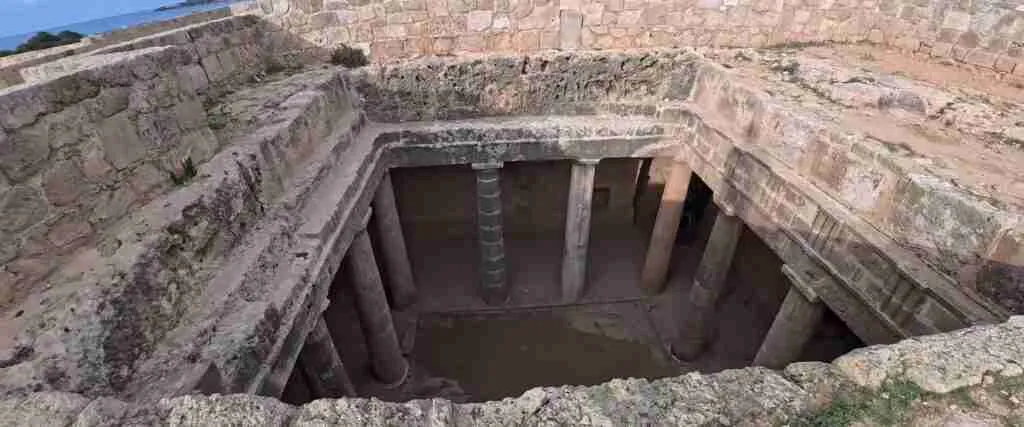
Tomb 3 represents the necropolis’s most architecturally sophisticated example, featuring a monumental carved entrance staircase descending to an open-air peristyle courtyard surrounded by Doric columns supporting stone architraves, with burial chambers radiating from the central courtyard spaces. The precise column proportions, careful stone cutting producing smooth surfaces, and overall architectural harmony demonstrate advanced technical capabilities and substantial financial investment in funerary display. The open courtyard design differs from typical underground burial traditions, instead creating hybrid spaces combining open-air ritual areas for funeral ceremonies with surrounding rock-cut chambers for actual body placement. Faded fresco fragments survive on some chamber walls suggesting original elaborate interior decoration, though centuries of exposure to elements, calcium deposits from water infiltration, and human disturbance have erased most painted details leaving only ghostly traces of former artistic programs.
Tomb 4 demonstrates Egyptian architectural influences reflecting Ptolemaic period cultural exchange when Cyprus fell under Egyptian control during Hellenistic times. The entrance arrangement, chamber proportions, and decorative details incorporate Egyptian design elements including simplified pyramid-form carved details, papyrus-inspired column capitals, and spatial organization recalling Egyptian rock-cut tombs along the Nile Valley. These hybrid forms illustrate broader Mediterranean cultural synthesis during Hellenistic times when Greek, Egyptian, Persian, and local Cypriot traditions merged creating distinctive regional variations within broadly Hellenistic artistic language. The tomb’s multi-chambered layout provided space for extended family burials continuing over generations, with initial interment placing the deceased in carved niches or simple rock shelves, then subsequent burials requiring removal of earlier bones to ossuaries making room for fresh occupants.
Tomb 8 preserves some of the necropolis’s best-surviving carved architectural details including doorway surrounds with molding profiles, chamber ceiling decorations, and wall niches designed for lamp placement or offerings. The relatively enclosed design protected interior features from weathering more effectively than open courtyard tombs, maintaining sharper carving details and surface finishes illustrating original workshop quality. Small carved benches along chamber walls possibly served ritual functions during funeral ceremonies when mourners gathered to conduct traditional observances, while drainage channels carved into floors managed water infiltration preventing chamber flooding during Cyprus’s winter rainy season. The tomb’s proximity to sea cliffs created additional architectural challenges requiring careful consideration of rock stability, water table levels, and structural integrity when excavating large underground voids in porous limestone bedrock.
Archaeological evidence from the necropolis reveals fascinating details about ancient Cypriot funerary practices including body preparation methods, grave goods selection, post-burial ritual activities, and tomb reuse patterns. Initial burials typically included ceramic vessels containing food and drink offerings for the deceased’s journey to the afterlife, jewelry and personal ornaments demonstrating the individual’s wealth and status, oil lamps providing symbolic light in the tomb’s darkness, and occasionally coins placed in the mouth following Greek tradition of payment for Charon the ferryman crossing the River Styx. Over subsequent generations families reopened tombs for additional burials, moving earlier skeletal remains to side chambers or ossuaries and clearing central spaces for new occupants. This reuse continued until Christianity’s adoption discouraged traditional pagan burial practices, though some tombs show evidence of Christian-era usage suggesting gradual rather than abrupt transformation of funerary customs during late Roman and Early Byzantine periods.
Practical considerations for Tombs of the Kings visits include even more extreme sun exposure than the Archaeological Park, with virtually no shade anywhere across the open rocky terrain between tomb entrances. The coastal location generates strong winds that can provide cooling relief during hot days but also create dusty conditions requiring eye protection and secured hats. The underground chambers offer welcome temperature relief dropping 5-10°C below surface conditions, though the sudden temperature changes can feel disorienting after prolonged exposure to intense surface heat. Sturdy footwear remains essential given the uneven rocky terrain, carved staircases descending into tombs, and occasionally slippery surfaces where water infiltration creates algae growth on stone surfaces. Most visitors spend 1-2 hours exploring accessible tombs, photographing dramatic architectural features, and enjoying coastal panoramas from elevated viewing positions.
Photography opportunities abound at the Tombs of the Kings, with dramatic contrasts between bright coastal sunshine and shadowy underground chambers creating atmospheric lighting effects. The carved staircases descending into darkness, column-ringed courtyards framing blue sky openings, and weathered stone surfaces showing centuries of natural erosion provide compelling visual subjects. Morning or late afternoon visits deliver the most favorable lighting angles for photography, with directional sunlight penetrating chamber entrances and illuminating carved details while maintaining shadow depth adding three-dimensional modeling to otherwise flat stone surfaces. The site’s relative emptiness compared to the more popular Archaeological Park allows extended photography sessions without crowds obstructing views or appearing unwanted in frame compositions.
Palaepaphos and Sanctuary of Aphrodite 2026
Palaepaphos, located in present-day Kouklia village 15 kilometers east of modern Paphos along the B6 coastal highway, preserves remains of the original pre-Hellenistic settlement predating the 4th century BC foundation of Nea Paphos as the new coastal capital. The site’s primary significance derives from the Sanctuary of Aphrodite, which functioned as the ancient Mediterranean world’s principal cult center for the goddess of love from at least the 12th century BC through the 4th century AD. The sanctuary attracted pilgrims from throughout the Greek and Roman Mediterranean seeking the goddess’s favor in matters of love, fertility, and prosperity, generating substantial religious tourism revenues that supported Paphos’s economic prosperity for over a millennium. Archaeological excavations reveal temple foundations, altar platforms, pilgrim accommodation structures, administrative buildings, and artifact deposits documenting the sanctuary’s evolution through successive cultural periods and its central role in ancient Cypriot religious life.
Reaching Palaepaphos requires either renting a car for independent exploration combining the Kouklia site with Aphrodite’s Rock and other coastal attractions, taking organized tours that package multiple stops into half-day or full-day itineraries costing €40-60 per person, or using intercity bus services from Paphos requiring careful schedule coordination for return connections. The archaeological site operates similar hours to other Paphos heritage locations with €4.50 admission granting access to sanctuary remains and the Lusignan Manor House Museum displaying excavated artifacts and interpretive exhibits explaining the sanctuary’s historical significance. The museum collection includes pottery vessels used in religious ceremonies, votive offerings deposited by pilgrims seeking divine favor, architectural fragments from temple structures, inscriptions recording dedications and administrative matters, and jewelry pieces demonstrating ancient Cypriot metalworking skills.
The Sanctuary of Aphrodite’s most sacred feature was a conical black stone representing the goddess rather than anthropomorphic statue forms typical in Greek and Roman religious practice. This aniconic worship tradition reflected pre-Greek Cypriot and Near Eastern influences, with the sacred stone possibly being a meteorite or naturally formed volcanic rock interpreted as divine manifestation. Ancient sources describe elaborate temple structures surrounding the sacred stone, though surviving remains reveal primarily foundation walls and architectural fragments rather than standing buildings, as successive construction phases dismantled earlier structures for building materials and major earthquakes caused repeated collapses requiring reconstruction efforts. The sanctuary layout included temenos sacred precinct walls defining consecrated spaces, altar areas for animal sacrifices and ritual offerings, treasury buildings storing accumulated votive gifts, dormitories accommodating pilgrims during extended visits, and administrative offices managing the extensive religious enterprise.
The sanctuary’s economic importance extended far beyond purely religious functions, generating substantial revenues through temple taxes on offerings, accommodation fees charged to pilgrims, sales of ritual items and souvenirs, and agricultural production from extensive temple-owned estates worked by dependent populations. The sanctuary employed large staffs including priests conducting ceremonies, temple prostitutes participating in fertility cult rituals, administrative officials recording transactions and managing assets, craftsmen producing ritual objects and maintaining buildings, agricultural workers tending temple lands, and support personnel providing various services. This religious-economic complex functioned as one of ancient Cyprus’s major institutions comparable to other famous Mediterranean sanctuaries like Delphi’s Apollo oracle or Ephesus’s Artemis temple, though Paphos’s Aphrodite cult held particular prestige given Cyprus’s legendary status as the goddess’s birthplace island.
The sanctuary maintained operations through the Roman period when Cyprus fell under provincial administration, with Roman authorities generally respecting local religious traditions while gradually introducing imperial cult worship alongside indigenous deities. The site underwent architectural renovations and expansions during Roman times, incorporating Roman architectural styles and construction techniques while maintaining fundamental sanctuary layout and ritual practices. Christianity’s rise during the 4th-5th centuries AD gradually undermined traditional pagan worship, with Christian authorities eventually suppressing the Aphrodite cult and repurposing sanctuary buildings for new religious functions or abandoning them entirely. The transition occurred gradually rather than through sudden prohibition, with archaeological evidence suggesting continued use into the 4th century AD before final abandonment and subsequent centuries of stone robbing that dismantled most above-ground structures leaving primarily foundations visible today.
The Lusignan Manor House, a medieval structure constructed by Frankish Crusader lords controlling Cyprus during the 12th-15th centuries AD, now serves as the archaeological site museum and visitor center. The well-preserved Gothic architecture demonstrates medieval Cypriot building traditions blending French Crusader styles with local Byzantine and Islamic influences, featuring pointed arches, cross-vaulted ceilings, decorative stone carving, and defensive features reflecting the politically unstable medieval period. The museum’s artifact displays trace sanctuary history from Bronze Age origins through Classical flourishing, Hellenistic expansion, Roman prosperity, and eventual Christian-era decline. Notable exhibits include temple architectural fragments showing various construction phases, inscribed stone tablets recording dedications and regulations, terracotta figurines representing worshippers and divine images, imported luxury goods demonstrating international connections, and comparative material illustrating broader Mediterranean Aphrodite worship traditions.
Combining Palaepaphos visits with Aphrodite’s Rock (Petra tou Romiou) located 10 kilometers further east creates logical full-day itineraries connecting multiple Aphrodite-related sites. Organized tours typically package both locations along with coastal viewpoints, traditional villages, and sometimes Kourion archaeological site further east into comprehensive experiences showcasing southwestern Cyprus’s heritage landscape. Independent travelers using rental cars enjoy flexibility to determine their own pacing, add spontaneous stops at scenic coastal overlooks or local wineries, and avoid tour group schedules and crowding at major attractions. Bus-dependent visitors face scheduling challenges given infrequent intercity services and need for coordinated connections between multiple destinations.
Petra tou Romiou: Aphrodite’s Rock Experience 2026
Petra tou Romiou, universally known as Aphrodite’s Rock, marks the legendary birthplace where the goddess of love and beauty emerged from Mediterranean sea foam approximately 25 kilometers east of Paphos along the scenic B6 coastal highway. According to Hesiod’s ancient Greek mythology recorded in the Theogony, the Titan Cronus castrated his father Uranus (Sky) and threw the severed genitals into the sea, from whose resulting foam Aphrodite arose fully formed as an adult goddess of extraordinary beauty. The dramatic sea stack formations rising from crashing waves, brilliant white limestone cliffs surrounding a small pebble beach, and stunning Mediterranean vistas create an appropriately dramatic setting for such mythological origins, making the location Cyprus’s most photographed natural landmark and essential inclusion on virtually every Paphos itinerary.
The site comprises two distinct viewing areas serving different visitor interests and physical abilities. The upper roadside viewpoint sits directly adjacent to the B6 highway with parking areas accommodating tour buses and private vehicles, offering elevated panoramic perspectives photographing the rock formations from above with sweeping coastal views extending in both directions. Short walking paths lead to slightly elevated positions providing varied photographic angles and interpretive signage explaining the site’s mythological significance and geological formation processes. The lower beach level accessed through a pedestrian underpass beneath the highway provides intimate engagement with the actual rock formations, pebble beach for swimming during calm conditions, and dramatically different perspectives photographing upward toward towering limestone formations rather than downward from elevated viewing positions.
Accessing Aphrodite’s Rock from Paphos requires either taking bus route 631 departing from the Harbour bus station with approximately hourly service during peak daytime hours, costing €1.50-2 for the 30-minute journey to the site entrance. The bus drops passengers at the upper viewpoint with the pedestrian tunnel entrance clearly visible, making beach access straightforward for those wanting to descend for closer engagement. Return buses follow similar hourly schedules, though verifying current timetables before departing avoids extended waits at this relatively remote coastal location lacking substantial surrounding development. Taxis charge €20-25 each way from Paphos for the 25-kilometer journey, with drivers typically willing to wait 30-60 minutes for passenger exploration before return trips. Rental cars provide greatest flexibility for combining Aphrodite’s Rock with Kouklia archaeological site, coastal viewpoint stops, traditional villages like Pissouri, or continuing eastward toward Limassol for extended day trips along Cyprus’s southern coast.
Swimming at Aphrodite’s Rock beach remains possible but requires caution given frequently rough sea conditions, strong currents, rocky seabed, and lack of lifeguard supervision. Local legends claim that swimming around the large rock formation three times grants eternal beauty, eternal love, or fertility depending on specific myth variations, creating particular appeal for romantic couples visiting the birthplace of the goddess of love. However, the powerful Mediterranean swells, sharp rocks creating hazardous underwater terrain, and strong currents pulling swimmers away from shore make such swimming attempts potentially dangerous, with several drowning incidents recorded over recent decades highlighting genuine safety concerns. Swimming remains feasible during calm summer morning conditions before afternoon winds strengthen, though even experienced swimmers should exercise appropriate caution assessing conditions before entering water.
Photography opportunities at Aphrodite’s Rock rival anywhere in Cyprus, with dramatic limestone formations, azure Mediterranean waters, coastal cliff backdrops, and changing light conditions creating endless compositional possibilities. Sunrise visits capture golden light illuminating white limestone cliffs while eastern sky colors reflect in calm morning waters, though early timing requires private transportation given absent bus services during pre-dawn hours. Sunset photography attracts crowds at the western-facing location where descending sun creates spectacular color displays reflecting off sea surfaces and silhouetting rock formations, with late afternoon light enhancing three-dimensional relief of cliff faces and emphasizing geological textures. Midday harsh overhead lighting creates less favorable conditions with washed-out colors and minimal shadow depth, though the intense blue Mediterranean waters photograph brilliantly regardless of sun angle.
The small pebble beach attracts sunbathers during summer months seeking relatively uncrowded swimming locations away from developed resort beaches, though facilities remain minimal with portable toilets near the highway crossing but no beach services, shade structures, or refreshment vendors. A small cafe-restaurant operates near the upper viewpoint serving basic meals, snacks, cold drinks, and ice cream, though pricing reflects captive tourist market positioning rather than local taverna rates. Visitors planning extended beach time should bring necessary supplies including water, snacks, beach umbrellas or sun shelters, appropriate sun protection, and sturdy water shoes protecting feet from rocky beach surfaces and sharp underwater terrain.
The mythological significance extends beyond the birth legend to broader themes of love, beauty, and fertility associated with Aphrodite worship throughout the ancient Mediterranean world. The goddess’s cult centered on Cyprus with major sanctuaries at Paphos and Amathus, spreading throughout the Greek world and later Roman Empire where she merged with the Roman Venus. Cyprus maintained special status as “Aphrodite’s island” where the goddess’s power held particular potency, attracting pilgrims seeking her blessings on marriages, pregnancy, beauty preservation, and romantic relationships. Modern visitors engage with these ancient associations through romantic tourism positioning Aphrodite’s Rock as ideal proposal locations, wedding photography backdrops, or honeymoon destinations, continuing millennia-old traditions of seeking the goddess’s favor in matters of love even among tourists uninterested in actual mythological belief systems.
Combining Aphrodite’s Rock with nearby attractions creates richer full-day experiences rather than brief photo stops before returning to Paphos. The Palaepaphos archaeological site and Sanctuary of Aphrodite museum at Kouklia lie just 10 kilometers west, providing historical context for Aphrodite worship traditions connected to the birthplace legend. The traditional village of Pissouri approximately 20 kilometers east offers authentic Cypriot atmosphere, traditional tavernas serving excellent local cuisine, and dramatic coastal cliffs popular with paragliding enthusiasts. Wine enthusiasts can detour slightly inland to Commandaria wine region villages where small family wineries produce the famous sweet dessert wine historically associated with Crusader knights and considered Cyprus’s oldest named wine appellation.
Accommodation Options Paphos 2026
Paphos accommodation spans diverse categories from budget guesthouses and apartments through mid-range hotels to luxury beach resorts, with pricing, location, and amenity combinations serving different traveler priorities and budgetary constraints. The coastal Kato Paphos zone concentrates most tourist-oriented hotels within walking distance of archaeological sites, harbor attractions, beaches, and waterfront restaurants, while inland Ktima (Upper Paphos) and surrounding residential areas offer quieter settings, lower rates, and more authentic neighborhood character at the expense of requiring transportation to reach coastal attractions. Seasonal pricing variations create significant cost differences between peak summer months (June-September) when rates reach maximum levels and shoulder seasons (March-May, October-November) when prices drop 30-40% below summer peaks, with winter months (December-February) delivering lowest rates but coinciding with increased rainfall probability and cooler temperatures.
Budget accommodation in Paphos ranges €50-70 per night for basic hotels, guesthouses, and self-catering apartments providing clean rooms, essential amenities, and acceptable locations either within Kato Paphos’s outer edges or Ktima areas requiring bus connections to coastal attractions. Representative options include the Sunny Hill Hotel Apartments at approximately €44-54 per night offering self-catering units with kitchenettes allowing meal preparation for additional savings, the Artemis Cynthia Complex at €54-69 nightly providing poolside settings and apartment-style layouts, and various small guesthouses charging €50-65 nightly with basic room configurations and shared facilities. These budget choices suit cost-conscious travelers prioritizing location access over amenities, younger travelers accepting simpler conditions in exchange for lower rates, and visitors planning mostly daytime sightseeing with minimal time spent in accommodations. Dividing by two for couples sharing rooms yields €25-35 per person nightly, forming the foundation for budget-tier daily cost calculations.
Mid-range hotels priced €90-160 per night occupy Kato Paphos’s better positions within easy walking distance of harbor attractions while delivering superior room quality, reliable air conditioning, swimming pools, breakfast service, and professional management standards ensuring consistent experiences. Examples include the Pyramos Hotel at €92-108 nightly featuring seaside location near Archaeological Park, complimentary breakfast, and modernized rooms, the Amphora Hotel & Suites at €110-145 nightly providing direct beach access and family-friendly amenities, and various three-star properties charging €100-130 nightly with pool facilities, on-site restaurants, and central Kato Paphos positioning. These mid-range options attract mainstream tourists seeking comfort and convenience without luxury-tier pricing, families wanting reliable facilities and kid-friendly features, and travelers prioritizing location quality over budget constraints. Per-person costs of €45-80 nightly when sharing rooms position mid-range accommodation as the backbone for comfortable Paphos stays balancing quality and value.
Luxury accommodation commanded by properties charging €200-350+ per night includes upscale beach resorts, boutique hotels, and adults-only retreats delivering comprehensive resort experiences with premium dining, spa facilities, extensive grounds, private beaches, attentive service, and sophisticated design aesthetics. The Elysium Hotel at €280-350+ nightly represents Paphos’s premier luxury option with beachfront setting, multiple restaurants, elaborate spa, and refined ambiance favored by honeymoon couples and luxury travelers. The Almyra Hotel at €220-290 nightly offers contemporary design, Mediterranean garden settings, and adult-focused sophisticated atmosphere. The Annabelle at €240-310 nightly provides established luxury credentials, Alykes Beach positioning, and traditional upscale hospitality standards. These luxury properties cater to travelers prioritizing exceptional service quality, comprehensive on-site amenities minimizing need for external dining or entertainment, romantic getaway couples, and visitors treating Paphos visits as destination luxury experiences rather than sightseeing bases. Per-person rates of €100-175+ nightly when sharing establish luxury-tier accommodation foundations for premium daily budgets.
Location considerations within Paphos significantly affect accommodation value and convenience. Kato Paphos waterfront properties command premium pricing but deliver unmatched walkability to Archaeological Park, Tombs of the Kings coastal promenade, harbor restaurants, and beach access, eliminating transportation costs and allowing spontaneous evening harbor strolls or early morning archaeological site visits before crowds arrive. Properties set back from the immediate waterfront one or two blocks inland offer slightly lower rates while maintaining reasonable walking access to major attractions. Upper Paphos (Ktima) accommodations provide authentic neighborhood atmosphere and lower pricing but require bus connections or taxis for coastal attraction access, adding transportation costs and reducing spontaneous flexibility. Outlying areas like Coral Bay to the north deliver excellent beaches and resort-style accommodations but position guests 10-12 kilometers from UNESCO archaeological sites requiring dedicated transportation for heritage sightseeing.
Booking strategies affect final accommodation costs substantially. Direct hotel website reservations occasionally offer best available rates with loyalty program benefits, while major booking platforms (Booking.com, Expedia, Hotels.com) provide extensive choices, transparent guest reviews, and competitive pricing particularly during promotional periods. Advance booking 2-3 months ahead secures better selections and occasional early-bird discounts, though last-minute deals sometimes emerge during off-peak periods when hotels prefer filling rooms at discounted rates rather than maintaining empty inventory. Package deals combining flights and accommodation through tour operators or online travel agencies can deliver substantial savings compared to separately booking components, particularly for summer high-season travel when individual rates reach peak levels.
Accommodation inclusions affect daily budgeting calculations. Properties offering breakfast included in room rates save €8-15 per person daily compared to restaurants or cafes, immediately recovering €56-105 over week-long stays and influencing total value assessments. Self-catering apartments with kitchens allow lunch or dinner preparation from supermarket purchases, potentially saving €15-25 daily compared to restaurant meals and accumulating €105-175 weekly savings for budget-conscious travelers willing to allocate time to shopping and cooking. All-inclusive resort packages bundling meals, drinks, and activities eliminate daily budgeting uncertainties though typically commanding higher upfront rates, requiring careful calculation whether comprehensive inclusions justify premium pricing versus à la carte approaches offering greater flexibility but less predictable costs.
Dining and Food Costs Paphos 2026
Paphos dining spans traditional Cypriot tavernas serving generous mezze platters and grilled meats, international restaurants catering to diverse tourist preferences, harbourside seafood establishments, and fast-food chains providing familiar convenience options, with pricing ranging from budget-friendly local eateries to upscale fine dining experiences commanding premium rates. Traditional Cypriot cuisine emphasizes mezze sharing plates including hummus, tahini, tzatziki, grilled halloumi cheese, dolmades (stuffed grape leaves), keftedes (meat balls), sheftalia (grilled sausages), souvlaki (skewered meats), and fresh salads, accompanied by local wines or regional beers. Typical meals conclude with complimentary fruit plates or traditional desserts offered by taverna owners following Cypriot hospitality customs, adding unexpected value to dining experiences and distinguishing authentic local establishments from tourist-focused restaurants following international service models.
Budget dining focusing on local tavernas, fast-food options, and self-catering from supermarkets maintains daily meal costs around €23-35 per person covering breakfast, lunch, and dinner. Morning meals from supermarkets combining fresh bread, cheese, yogurt, fruit, and coffee cost €5-8 compared to €10-15 for hotel or cafe breakfasts, immediately establishing substantial savings for budget-conscious travelers willing to prepare simple morning meals. Lunch from bakeries offering cheese pies, spinach pies, and other savory pastries costs €3-5, while fast-food chains like McDonald’s or KFC charge €7-8 for combo meals providing quick inexpensive options. Traditional tavernas in less tourist-focused neighborhoods serve generous Greek salads for €6-8, souvlaki plates with sides for €8-10, and mezze platters for two at €18-25 offering exceptional value given quantity and quality. Evening supermarket shopping for bread, cheese, olives, tomatoes, and local wine creates simple dinners for €8-12 per person, particularly practical for travelers in self-catering accommodations with kitchen facilities.
Mid-range dining at established restaurants balancing quality and value typically costs €43-62 per person daily across three meals. Breakfast at hotel buffets or quality cafes runs €8-12 for continental selections including fresh bread, jams, cheese, cold cuts, eggs, fruit, yogurt, and coffee or tea. Lunch at harbor-area restaurants serving pasta dishes, sandwiches, burgers, or lighter mezze selections costs €15-20 including soft drinks. Dinner at mid-range tavernas or international restaurants runs €20-30 per person for main courses, sides, and beverages, with mezze platters for two costing €25-35 providing excellent value when shared. Wine consumption adds €3-5 per glass or €15-25 per bottle for local Cypriot varieties, while cocktails at harbor bars cost €8-10. This mid-range dining tier balances traditional experiences at quality tavernas with occasional international variety, atmospheric harbor dining, and sufficient flexibility for spontaneous restaurant choices without constant budget monitoring.
Upscale dining experiences at fine restaurants, luxury hotel venues, and premium seafood establishments consume €80-120 per person daily emphasizing quality ingredients, sophisticated preparation, attentive service, and refined atmospheres. Breakfast at luxury hotels delivers extensive buffet spreads with fresh pastries, hot dishes, champagne, and specialty coffee drinks costing €20-25 per person. Lunch at upscale harbor restaurants featuring fresh fish, creative Mediterranean fusion dishes, or quality Italian options runs €30-40 per person including appetizers, mains, and wine. Dinner at premium establishments like luxury hotel signature restaurants, renowned seafood specialists, or sophisticated international venues costs €50-70 per person for multi-course meals with wine pairings. This luxury dining tier suits travelers prioritizing culinary experiences as central vacation elements, celebrating special occasions, or maintaining upscale lifestyle standards regardless of destination.
Specific restaurant recommendations span categories and locations. Steve’s Restaurant & Bar at Paphos Harbor serves reliable taverna classics in atmospheric waterfront setting with mezze platters for two at €28-35, fresh grilled fish at €18-22, and traditional Cypriot dishes garnering consistent positive reviews. The Seven St. Georges Tavern in Coral Bay offers authentic local atmosphere, generous portions, and very reasonable pricing with mezze platters €20-28 and grilled meats €12-16. For upscale dining, Il Classico at the Elysium Hotel delivers refined Italian cuisine in elegant surroundings with mains €25-35. The Pelican Cove at Kefalos Beach Resort provides fresh seafood in dramatic clifftop setting overlooking the Mediterranean with fish dishes €22-30. These recommendations represent starting points for further exploration, with TripAdvisor, Google Reviews, and local recommendations providing current assessments and expanding options.
Traditional Cypriot mezze experiences merit special attention as quintessential local dining traditions offering exceptional value and cultural authenticity. Mezze meals commence with cold appetizers including various dips, salads, and cheese preparations, progress through warm dishes like grilled halloumi and sausages, continue with meat courses including souvlaki, kebabs, and grilled chops, and conclude with dessert and complimentary fruit. Complete mezze dinners for two typically cost €35-50 depending on restaurant positioning and specific selections, providing enormous food quantities that often defeat even hearty appetites and deliver memorable gastronomic experiences showcasing Cypriot culinary traditions. Tavernas in less tourist-focused areas or surrounding villages often provide more generous portions and lower pricing than harbor-front establishments, rewarding visitors willing to explore beyond immediate central zones.
Wine and alcohol costs merit separate consideration given Cyprus’s strong local wine production traditions and varied drinking culture impacts on daily budgets. Local Cypriot wines including Commandaria dessert wine, Maratheftiko red grape varieties, and Xynisteri white grapes offer excellent quality at reasonable pricing, with restaurant bottles costing €15-25 for good local selections and €30+ for premium vintages. Beer including popular Keo and Leon Cypriot lagers costs €3-4 for half-liter bottles at restaurants, €1.50-2.50 at supermarkets. Cocktails at harbor bars run €8-10, while upscale hotel venues charge €10-12. Coffee culture remains strong with traditional Greek/Cypriot coffee served in small cups alongside filtered or espresso options, costing €2-3 at local cafes, €3-5 at tourist-focused establishments.
Supermarket shopping for self-catering dramatically reduces food costs for budget-conscious travelers willing to allocate time for shopping and meal preparation. Lidl operates several Paphos locations offering familiar European discount pricing on basics, while Papantoniou and Alpha Mega represent larger local supermarket chains with comprehensive selections. Fresh bread costs €1-2, local cheese €4-6 per kilogram, fresh vegetables and fruits follow seasonal pricing generally lower than Northern European equivalents, while imported specialty items carry premium markings. Simple self-prepared lunches assembling fresh bread, cheese, tomatoes, olives, and fruit cost €3-5 per person, while evening meals combining pasta or rice with vegetables and protein run €6-10 per person excluding wine. This self-catering approach particularly suits apartment accommodation providing full kitchens, families with children’s specific food preferences, and extended-stay visitors tire of constant restaurant meals.
Transportation Within Paphos 2026
Paphos transportation options include public buses serving major routes, taxis offering door-to-door convenience, rental cars providing independent mobility, and walking for central Kato Paphos exploration, with different combinations suiting varied budgets, mobility requirements, and flexibility priorities. The public bus network operated by Paphos Transport Organization connects Kato Paphos harbor area with Upper Paphos (Ktima), Coral Bay beaches, Tombs of the Kings, and surrounding residential zones, though service frequencies, route coverage, and evening operations remain limited compared to major European metropolitan systems. Understanding transportation options influences accommodation location decisions, daily budget calculations, and practical itinerary planning particularly for visitors without rental vehicles dependent on public services or taxi costs.
Public buses represent the most economical transportation option with single fares costing €1.50-2 during daytime hours (6:00 AM-8:30 PM) and €2.50-3 for evening/night service after 8:30 PM. Multi-ride options include paper smart cards valid for four trips at €6.50 or seven-day unlimited passes at €20, delivering savings for visitors making frequent bus journeys during extended stays. Major routes include Harbor-Karavella connections between coastal Kato Paphos and Upper Paphos town center every 15-20 minutes during peak daytime hours, route 615 serving Coral Bay beach areas to the north, and route 631 reaching Aphrodite’s Rock eastward along the coast. Bus stops marked by distinctive signage display route numbers and approximate frequencies, though printed timetables or the Paphos Transport Organization website provide detailed schedules essential for planning journeys particularly during evening hours or Sundays when reduced frequencies complicate connections.
Route 612 and 613 connect Paphos International Airport with Kato Paphos and Karavella bus station respectively, operating approximately hourly during daytime with journey times around 30 minutes and fares €2 during day, €3 during evening/night hours after 9:00 PM. This airport bus service provides budget-friendly transfers avoiding €30-35 taxi costs, though luggage space limitations during busy flights, potential standing room only conditions, and indirect routing making multiple stops create comfort and convenience trade-offs versus private transfers. Travelers with substantial luggage, mobility limitations, tight flight connections, or simply preferring door-to-door convenience typically justify taxi costs despite the budget impact, while independent backpackers, budget travelers, or visitors with flexible timing find bus transfers perfectly adequate.
Taxis in Paphos operate on metered fares with base charges €3.42 during daytime hours (6:00 AM-8:30 PM) and €4.36 during evening/night rates, plus €0.73-0.85 per kilometer depending on time period. Typical fares within central Paphos range €8-12 for short journeys like harbor to Upper Paphos, €10-15 for Coral Bay connections, and €20-25 for Aphrodite’s Rock round-trips excluding waiting time charges. Airport transfers cost €30-35 to Kato Paphos hotels, with prices increasing for more distant resort areas like Coral Bay. Taxis accept cash payments though many now accommodate credit cards, with bills over €20 sometimes creating change difficulties as drivers maintain limited cash reserves. Tipping remains optional though rounding up fares to nearest whole euros represents common practice among satisfied passengers.
Taxi booking options include traditional street hailing in busy areas, taxi ranks at harbor and major hotels, phone dispatch services through established companies like Paphos Union Taxis (+357 26 923000) or Andreas Taxi Services (+357 99 423372), and ride-hailing apps including CABCY partnering with local licensed taxis and Bolt operating limited services primarily for airport pickups. Pre-booking through hotel concierges or established taxi companies ensures English-speaking drivers, agreed pricing for complex journeys, and reliable pickup timing for important transfers like early morning airport departures. Taxi apps provide transparent pricing and electronic payment convenience though driver availability can prove limited particularly in less central areas or during busy periods.
Rental cars provide maximum flexibility for independent Paphos exploration, enabling day trips to Troodos Mountains, Akamas Peninsula, eastern coastal towns, and traditional villages inaccessible via public transportation. Major international rental companies including Hertz, Avis, and Europcar operate airport locations and downtown offices, while numerous local agencies offer competitive pricing particularly for longer rental periods. Daily rates start around €25-35 for economy manual transmission vehicles during off-peak periods, increasing to €40-55 during summer high season, with automatic transmission commanding €10-15 daily premiums. Weekly rentals deliver better per-day rates typically saving 20-30% compared to daily bookings, making car rental economically competitive with frequent taxi usage for visitors planning extensive exploration beyond central Paphos walkable zones.
Driving in Cyprus follows left-side British tradition inherited from colonial history, potentially challenging for visitors accustomed to right-side driving requiring initial adjustment periods for safe operation. Road conditions generally maintain good standards on major highways and town streets, though rural mountain roads feature narrow widths, sharp curves, and steep gradients demanding careful driving particularly for larger rental vehicles. Parking in central Kato Paphos includes metered street spaces charging €1-2 per hour during daytime with free evening/Sunday parking, plus several paid lots near harbor and Archaeological Park at similar hourly rates. Most hotels outside immediate central zones provide free guest parking eliminating this recurring cost factor.
Walking represents the most practical transportation mode within compact Kato Paphos where Archaeological Park, Tombs of the Kings coastal promenade, harbor attractions, and beachfront hotels cluster within 2-3 kilometer radius readily covered on foot by reasonably mobile visitors. The seafront promenade extending from harbor northward past Tombs of the Kings provides pleasant traffic-free walking connecting major attractions with Mediterranean views, though the approximately 3-kilometer distance may challenge visitors during intense midday summer heat. The harbor to Archaeological Park distance covers roughly one kilometer taking 10-15 minutes at relaxed pace, making walking the obvious choice for this heavily tourist-trafficked route. Sturdy comfortable walking shoes, generous sun protection, and sufficient hydration prove essential for extended Paphos pedestrian exploration given hot Mediterranean climate, limited shade along many routes, and uneven ancient stone pavements at archaeological sites.
Transportation budget allocation depends significantly on accommodation location choices and planned activity patterns. Visitors staying in central Kato Paphos properties within walking distance of major attractions can minimize transportation costs to occasional taxis for evening restaurant trips or day-trip destinations, maintaining daily costs around €2-5 for incidental bus rides. Those selecting more distant accommodations requiring daily bus commuting to coastal attractions should budget €3-6 daily for multiple round-trip fares. Travelers planning extensive exploration including Aphrodite’s Rock, Troodos Mountain villages, Akamas Peninsula, or other regional destinations might find rental car costs of €30-45 daily (divided between passengers) competitive with multiple taxi journeys while delivering superior flexibility and spontaneous detour opportunities.
Attraction Costs and Site Passes 2026
Paphos archaeological and heritage attractions maintain remarkably affordable admission pricing compared to Western European museum standards, with UNESCO World Heritage sites charging modest fees reflecting Cypriot government policies prioritizing public heritage access over revenue maximization. The three major UNESCO components operate independently with separate admission charges rather than integrated passes, though the relatively low individual site fees make universal pass systems less economically compelling than in destinations with premium-priced attractions. Beyond formal ticketed sites, numerous free attractions including beaches, harbor promenade, coastal walking paths, traditional villages, and various churches or minor monuments provide rich experiences without admission costs, allowing budget-conscious visitors to enjoy substantial Paphos heritage engagement while minimizing attraction expenditure.
Paphos Archaeological Park charges €4.50 admission granting comprehensive access to all villa areas, mosaic collections, ancient odeon, Byzantine fortress ruins, basilica remains, and ongoing excavation zones, representing exceptional value given the extensive site coverage, world-class mosaic artworks, and typically 2-3 hours required for thorough exploration. The single admission covers all park structures without additional fees for specific buildings, making this the destination’s most cost-effective major attraction despite being its premier UNESCO component. Children under 16 enter free when accompanied by paying adults, benefiting family travelers and making the Archaeological Park particularly family-friendly from cost perspective. No audio guides exist through official park administration, though various smartphone apps provide self-guided commentary for visitors preferring structured information beyond printed signage and interpretive panels.
Tombs of the Kings admission costs €2.50 providing access to the full necropolis area with eight major tomb complexes, coastal viewpoints, and interpretive facilities. While less expensive than the Archaeological Park reflecting the necropolis’s smaller scale and shorter typical visit duration around 1-2 hours, the Tombs of the Kings admission still delivers substantial value given the unique underground architecture, historical significance, and dramatic coastal setting. The walk from central Paphos harbor requires approximately 30-40 minutes following the coastal promenade, alternatively accessible via local bus routes or short taxi rides costing €8-10 each way. Combining both UNESCO sites on single-day itineraries creates comprehensive archaeological experiences for combined admission totaling just €7, remarkably affordable considering these rank among the Mediterranean’s most significant heritage locations.
Palaepaphos (Kouklia) archaeological site and museum charges €4.50 admission covering sanctuary remains, Lusignan Manor House museum, and interpretive exhibits explaining Aphrodite cult significance and ancient Cypriot religious practices. The site’s distance 15 kilometers east of Paphos limits casual walk-in visitors compared to centrally-located Archaeological Park and Tombs of the Kings, typically attracting visitors using rental cars, organized tours, or dedicated taxi trips specifically targeting this destination. The admission value depends substantially on individual interest levels in ancient religion, archaeological site interpretation, and medieval Cypriot architecture represented by the manor house museum building, with hardcore archaeology enthusiasts finding the admission worthwhile while casual tourists might question whether the relatively limited visible remains justify the travel effort and admission cost.
Petra tou Romiou (Aphrodite’s Rock) charges no admission fee for either upper viewpoint areas or lower beach access, operating as open coastal landscape accessible to all visitors. This free status combined with dramatic natural beauty, mythological significance, and photogenic qualities makes Aphrodite’s Rock arguably Paphos’s best value attraction, delivering memorable experiences and Instagram-worthy photographs without any direct costs beyond transportation to reach the location. The lack of formal site facilities, interpretive centers, or managed tourism infrastructure reflects both the location’s natural landscape character and Cyprus’s general approach to coastal access remaining predominantly free public amenity rather than commercialized attraction requiring paid entry.
Beyond the three main UNESCO components and Aphrodite’s Rock, various secondary attractions operate with modest admission fees or free access. The Byzantine Museum in Upper Paphos charges €2 displaying icon collections and religious artifacts. The Paphos Municipal Gardens and Zoo admission costs €5 for adults, €2.50 for children providing family-friendly entertainment though the zoo’s standards and animal welfare conditions attract mixed reviews. Various beaches including Coral Bay, Faros Beach near the lighthouse, and Municipal Beach remain free access public amenities with optional sunbed and umbrella rentals charging €5-8 per day. The medieval Paphos Castle at the harbor entrance charges €2.50 admission for access to modest interior displays and rooftop viewpoints overlooking harbor activities, though many visitors photograph the castle’s distinctive exterior without paying for interior access.
Organized tours and activities add substantial costs for visitors purchasing guided experiences beyond self-directed archaeological site visits. Half-day Paphos heritage tours combining Archaeological Park, Tombs of the Kings, and harbor area typically cost €35-45 per person including guide services and transportation but excluding site admission fees. Full-day tours extending to Aphrodite’s Rock, Palaepaphos, and sometimes Troodos Mountain villages range €50-65 per person. Jeep safari adventures exploring Akamas Peninsula backcountry cost €60-80 per person for full-day experiences including lunch. Boat trips along Paphos coast range €25-40 for half-day excursions. Wine tasting tours visiting Commandaria region wineries charge €50-70 per person including multiple tastings and traditional lunch. These organized experiences deliver convenience, expert commentary, and social interaction with fellow travelers, though budget-conscious visitors can replicate similar itineraries independently using rental cars or public transportation at substantially lower costs trading guided interpretation for independent exploration.
Museum pass systems or multi-site tickets don’t exist for Paphos attractions, reflecting the already modest individual site fees making package discount systems economically unnecessary. The combined cost of Paphos Archaeological Park €4.50 plus Tombs of the Kings €2.50 equals just €7 for the two premier UNESCO World Heritage attractions, with Palaepaphos adding €4.50 bringing total major site admission to €11.50. This combined figure represents a fraction of typical single major museum admissions in cities like Paris, London, or Rome, making Paphos exceptional heritage value even without discount passes. Budget-conscious travelers can easily maintain attraction costs under €15-20 daily visiting major paid sites while incorporating numerous free attractions including beaches, harbor promenade, traditional neighborhoods, and coastal walking paths providing rich Paphos experiences without constant admission charges.
Daily Budget Breakdowns Paphos 2026
Understanding realistic daily budget requirements for different comfort levels helps travelers plan appropriate financial allocations and select accommodation, dining, and activity combinations matching their priorities. The following breakdowns reflect per-person costs assuming two travelers sharing accommodation, covering all major expense categories including lodging, meals, transportation, and attractions. Solo travelers face higher per-person accommodation costs given single-occupancy room rates typically charging 60-80% of double-occupancy rates rather than splitting costs equally, while groups of three or four can sometimes reduce per-person accommodation costs further by sharing multi-bed rooms or apartments.
Budget Daily Costs: €55-80 Per Person
Budget travelers maintaining daily costs around €55-80 per person stay in basic hotels, guesthouses, or self-catering apartments charging €50-70 nightly, yielding €25-35 per person when sharing rooms. Meals emphasize local tavernas, supermarket purchases, and fast-food options totaling €23-35 daily across breakfast (€5-8 from supermarket supplies or bakery items), lunch (€6-10 at tavernas or bakeries), and dinner (€12-17 at neighborhood restaurants or self-prepared meals). Transportation relies exclusively on public buses charging €1.50-2 per ride, with typical daily costs around €2-3 covering return trips to Archaeological Park or other attractions accessible via bus routes. Attraction expenses average €7 daily covering Archaeological Park one day, Tombs of the Kings another day, with multiple free days enjoying beaches, harbor promenade, or coastal walking.
This budget tier delivers perfectly adequate Paphos experiences for travelers prioritizing cultural engagement over luxury amenities, accepting simpler accommodation standards, willing to walk 15-20 minutes from less central hotel locations, comfortable eating primarily at local establishments rather than tourist-focused restaurants, and planning activities around public transportation schedules. The budget approach works particularly well during shoulder season months when pleasant weather supports extensive walking, daylight hours remain generous for evening exploration, and lower hotel rates enhance value propositions. Budget travelers should expect basic hotel rooms without views or premium amenities, occasional language barriers at truly local tavernas, 10-15 minute walks from budget accommodation to harbor area, and limited spontaneous flexibility given public bus schedule dependence.
Mid-Range Daily Costs: €110-170 Per Person
Mid-range travelers spending €110-170 per person daily select comfortable hotels charging €90-160 nightly in good Kato Paphos locations, yielding €45-80 per person when sharing rooms. Meals at established restaurants with varied cuisine options total €43-62 daily including hotel or cafe breakfasts (€8-12), restaurant lunches (€15-20), and dinner at quality tavernas or international venues (€20-30). Transportation mixes primarily public buses with occasional taxis for convenience or reaching destinations poorly served by bus routes, averaging €5-10 daily. Attractions and activities allocate €15-20 daily covering archaeological site admissions, occasional organized tours, or special experiences beyond basic sightseeing.
Mid-range spending delivers substantially enhanced comfort, convenience, and flexibility compared to strict budget approaches while maintaining reasonable cost control and avoiding luxury-tier pricing. Hotels provide reliable air conditioning, swimming pools, breakfast services, and professional management ensuring consistent quality. Restaurant meals emphasize atmosphere and variety without constant price monitoring, allowing spontaneous choices at appealing venues rather than searching lowest-cost options. Mixed transportation approaches use taxis strategically for evening returns from harbor dining or reaching attractions like Aphrodite’s Rock without complex bus connections, while maintaining buses as primary daytime transportation. This mid-range tier represents optimal balance for mainstream travelers seeking comfort and quality without excessive luxury expenditure, families wanting reliable facilities and convenient locations, and visitors treating Paphos as genuine vacation destination rather than backpacking budget challenge.
Luxury Daily Costs: €230-385+ Per Person
Luxury travelers investing €230-385+ per person daily book upscale hotels or beach resorts charging €200-350+ nightly, dividing to €100-175+ per person when sharing rooms. Dining emphasizes quality restaurants, luxury hotel venues, and premium seafood establishments totaling €80-120 daily across upscale breakfasts (€20-25), refined lunches (€30-40), and fine dinner experiences (€50-70). Transportation primarily uses taxis and private tour options costing €20-40 daily avoiding public buses entirely. Attractions and premium experiences allocate €30-50 daily for organized tours, special activities, spa treatments, or other elevated experiences beyond basic archaeological site visits.
Luxury-tier spending delivers exceptional service quality, comprehensive resort amenities, sophisticated dining experiences, and maximum convenience eliminating cost-driven compromises affecting lower budget tiers. Accommodations feature beachfront positions, multiple on-site restaurants, extensive spa facilities, attentive staff, and refined atmospheres. Dining experiences emphasize fresh ingredients, skilled preparation, elegant presentations, and atmospheric settings. Private transportation eliminates schedule dependencies and provides door-to-door convenience. This approach suits honeymoon couples, special occasion celebrations, travelers accustomed to upscale standards, and visitors treating Paphos as luxury destination experience rather than heritage education opportunity, though even luxury budgets benefit from Paphos’s overall affordability compared to French Riviera or Italian coast equivalents.
Sample Itineraries with Cost Breakdowns 2026
Three-Day Budget Itinerary: €157-185 Per Person
Day One focuses on Paphos Archaeological Park and harbor area. Morning begins with supermarket breakfast (€5), followed by 9:00 AM Archaeological Park visit spending three hours exploring villa mosaics and ancient structures (admission €4.50, bring packed lunch from supermarket €4). Afternoon relaxes at nearby Municipal Beach, then evening features harbor promenade stroll and dinner at local taverna (€12). Accommodation €25-35 per person, transport €2 bus fare. Day total: €52.50-60.50 per person.
Day Two explores Tombs of the Kings and Coral Bay. Breakfast from yesterday’s supermarket purchases (€3), morning bus to Tombs of the Kings with two-hour exploration (admission €2.50, bus €2), midday at nearby beach, afternoon bus to Coral Bay for swimming and beach time (bus €2), returning for neighborhood taverna dinner (€14). Day total: €48.50-58.50 per person.
Day Three visits Aphrodite’s Rock and coastal exploration. Supermarket breakfast (€4), bus route 631 to Petra tou Romiou for morning photography and beach time (bus €2 each way), packed lunch from supermarket (€5), late afternoon return to Paphos for final harbor evening and farewell dinner at slightly nicer restaurant (€15). Day total: €56-66 per person.
Three-day total: €157-185 per person covering accommodation €75-105, meals €69-105, transport €10-12, and attractions €7. This demonstrates how budget-conscious travelers can thoroughly experience Paphos’s UNESCO highlights and coastal beauty while maintaining costs well under €200 per person for three nights and comprehensive sightseeing, though requiring early morning market runs, acceptance of basic accommodation, and exclusive bus-based transportation.
Five-Day Mid-Range Itinerary: €550-850 Per Person
Day One covers Archaeological Park and harbor introduction. Hotel breakfast included, morning Archaeological Park visit (admission €4.50), harbor lunch at waterfront restaurant (€18), afternoon swimming at Alykes Beach, evening harbor dinner with wine (€28). Accommodation €45-80 per person, transport none needed (walking). Day total: €95.50-130.50 per person.
Day Two explores Tombs of the Kings and coastal promenade. Hotel breakfast, morning taxi to Tombs of the Kings (€10, admission €2.50), leisurely walk back along promenade to harbor (one hour), lunch at seaside cafe (€16), afternoon pool time at hotel, evening Upper Paphos exploration with traditional taverna dinner (€24, taxi return €10). Day total: €107.50-142.50 per person.
Day Three features Aphrodite’s Rock and Palaepaphos. Hotel breakfast, organized half-day tour to Aphrodite’s Rock, Kouklia archaeological site, and coastal viewpoints (€45 per person including guide and transport but excluding €4.50 Palaepaphos admission), returning for late lunch at harbor (€20), afternoon leisure at hotel, evening fine dining experience (€35). Day total: €149.50-184.50 per person.
Day Four involves Troodos Mountains exploration. Hotel breakfast, full-day organized mountain tour visiting Byzantine monastery, traditional mountain villages, and scenic viewpoints (€55 including lunch and guide). Evening returns to Paphos for casual harbor dinner (€20). Day total: €120-155 per person.
Day Five focuses on beach leisure and departure. Hotel breakfast, morning swimming and relaxation at Coral Bay, beach taverna lunch (€18), afternoon shopping in Upper Paphos, farewell dinner at quality restaurant (€32, taxi €10 each way). Day total: €105-140 per person.
Five-day total: €577.50-752.50 per person covering accommodation €225-400, meals €215-310, transport €40-50 including taxis and organized tours, and attractions €69.50-82.50 for site admissions and tours. This mid-range itinerary balances independent exploration with convenient organized tours, mixes beach leisure with cultural sightseeing, and maintains comfortable standards without excessive luxury spending.
Three-Day Luxury Itinerary: €690-1,155 Per Person
Day One emphasizes arrival and orientation. Luxury hotel breakfast included, private airport transfer (€40), midday arrival and hotel check-in, light lunch at hotel restaurant (€35), afternoon spa treatment (€80), evening fine dining at hotel signature restaurant with wine pairings (€75). Accommodation €100-175 per person. Day total: €330-405 per person.
Day Two features private guided heritage tour. Hotel breakfast, private half-day tour with knowledgeable guide visiting Archaeological Park and Tombs of the Kings with detailed commentary (€120 per person including private transport and admissions), lunch at upscale harbor restaurant (€45), afternoon yacht charter along Paphos coast (€90 per person share for three-hour excursion), evening gourmet dinner at premium seafood restaurant (€70). Day total: €425-500 per person.
Day Three combines leisure and departure. Hotel breakfast, morning couples spa treatments (€150 per person), leisure hotel time and gourmet lunch (€40), private transfer to Aphrodite’s Rock for sunset photography (€35 each way including waiting time), farewell dinner at finest restaurant (€80). Day total: €405-480 per person.
Three-day total: €1,160-1,385 per person covering accommodation €300-525, meals €240-360, transport €110-140, activities and experiences €260-310, spa treatments €230, and admissions €7. This luxury approach prioritizes exceptional experiences, eliminates all budget compromises, provides private guided attention, and delivers comprehensive pampering suitable for special occasions or travelers maintaining consistent luxury standards.
Money-Saving Strategies Paphos 2026
Implementing strategic money-saving approaches significantly reduces Paphos costs without severely compromising experience quality, allowing travelers to extend visit durations, upgrade selected elements, or simply maintain lower overall expenditure. The following strategies combine selective splurging on highest-value experiences with intelligent economizing on less consequential elements, creating optimal value rather than blanket budget approaches uniformly cutting all categories.
Shoulder season travel during March-May or September-October delivers 30-40% accommodation savings compared to peak summer rates while maintaining excellent weather conditions, generous daylight hours, and reduced tourist crowds at major attractions. Spring visitors enjoy wildflower displays throughout archaeological ruins adding photographic appeal, while autumn travelers benefit from harvest activities, wine festivals, and still-warm Mediterranean waters comfortable for swimming. The shoulder season calculation proves particularly compelling for week-long or longer stays where accommodation represents largest expense category, with seven-night stays saving €200-300+ per couple during shoulder months versus summer peaks.
Self-catering apartments with kitchen facilities enable substantial meal cost reductions through supermarket shopping and home cooking, particularly effective for breakfast and lunch preparations saving €15-25 daily per person compared to restaurant meals. This approach works especially well for families with children’s specific food preferences, extended-stay visitors tiring of constant restaurant meals, and travelers comfortable allocating morning shopping time and meal preparation efforts. The savings accumulate dramatically over week-long stays potentially reducing total food costs 40-50% while maintaining perfectly adequate nutrition and occasionally splurging on memorable dinner experiences at quality restaurants.
Accommodation location trade-offs balance walkability premium pricing against slightly distant budget options requiring brief bus connections or 10-15 minute walks. Properties one or two blocks back from immediate harbor waterfront positions typically charge 20-30% less than beachfront equivalents while maintaining easy access to archaeological sites, restaurants, and attractions. Similarly, Upper Paphos accommodations offer authentic neighborhood character and lower rates accepting the requirement for €2 bus fares connecting to coastal Kato Paphos attractions. These location compromises prove particularly acceptable during pleasant shoulder season weather when walking remains comfortable and evening harbor strolls become enjoyable activities rather than inconvenient necessities.
Public transportation mastery dramatically reduces daily transport costs, with €20 seven-day bus passes providing unlimited travel representing exceptional value for visitors making frequent journeys between accommodation, beaches, attractions, and dining venues. Learning key route numbers (Harbor-Karavella for Upper Paphos access, route 615 for Coral Bay, route 631 for Aphrodite’s Rock) and approximate frequencies enables efficient planning maximizing bus utility. Combining walking for central Kato Paphos movements with strategic bus usage for longer distances and occasional taxis reserved for evening convenience or reaching bus-inaccessible destinations creates optimal transportation cost-effectiveness.
Free attraction emphasis including beaches, harbor promenade, traditional neighborhood exploration, and coastal walking paths provides rich experiences without admission costs. Numerous churches including Agia Kyriaki Chrysopolitissa with St. Paul’s Pillar, coastal viewpoints along the Tombs of the Kings promenade, Municipal Gardens, and various historic quarters offer engaging cultural content complementing the paid UNESCO sites. Alternating paid archaeological site days with free beach or walking days maintains interesting variety while controlling daily attraction expenditure, with the modest €7 combined Archaeological Park and Tombs of the Kings admission representing just 2-3 days’ worth of attraction budget across week-long stays.
Lunch as main meal strategy exploits Mediterranean dining traditions where midday menus often deliver substantial portions at lower pricing than equivalent evening dinner selections. Many restaurants offer lunch specials or set menus providing multiple courses at discounted rates compared to à la carte evening ordering, while harbor cafes and tavernas feature generous lunch platters suitable as day’s primary meal. Following this pattern with light self-prepared breakfasts and simple evening snacks rather than full dinners substantially reduces daily food costs while maintaining satisfying nutrition and enjoyable midday dining experiences.
Organized tour alternatives through rental car independence eliminates guide fees and group tour premiums, with daily car rental costs €30-45 split between passengers often proving competitive with €45-65 per person half-day or full-day organized excursions. This independent approach particularly suits couples or small groups comfortable with navigation, self-guided exploration, and flexible scheduling unencumbered by fixed tour itineraries and group pace compromises. The rental car adds bonus flexibility for spontaneous detours, multiple brief stops impossible on organized tours, and extended time at personally preferred destinations rather than tour-dictated durations.
Booking strategy timing influences final costs with advance reservations 2-3 months ahead securing better selection and occasional early-bird discounts, though last-minute deals sometimes emerge during off-peak periods when hotels prefer discounted bookings over empty rooms. Comparison shopping across booking platforms, direct hotel websites, and package tour operators occasionally reveals significant price variations for identical properties and dates. Price-matching policies at major booking sites sometimes secure better rates when lower pricing exists elsewhere, while loyalty program memberships deliver occasional perks like room upgrades, late checkouts, or complimentary amenities adding value beyond base rates.
Hidden Costs and Budget Surprises 2026
Beyond obvious expenses like accommodation, meals, and attraction admissions, various less-apparent costs affect total Paphos budgets requiring advance awareness and planning allocation. Understanding these potential surprise expenses prevents budget overruns and financial stress during trips, with strategic preparation either minimizing impacts or building appropriate contingency funds.
Airport transfers represent the first significant cost many visitors encounter, with taxi fares charging €30-35 from Paphos International Airport to Kato Paphos hotels despite the relatively short 15-kilometer distance. Budget-conscious travelers using public buses save substantially with €2 fares, though the approximately 30-minute journey with potential standing room only conditions, limited luggage space, and multiple stops may feel less appealing after long international flights particularly for families with children or travelers hauling substantial baggage. Pre-booking airport transfer services through hotels or specialized companies sometimes delivers slightly lower rates than taxi ranks while guaranteeing English-speaking drivers and appropriate vehicle sizes for groups or luggage requirements.
Restaurant service charges and tipping customs create occasional confusion, with Cyprus following European standards where service remains optional rather than obligatory American-style expectations. Quality restaurants automatically include 10% service charges in bills, making additional tipping unnecessary though rounding up bills or leaving small amounts for exceptional service represents common practice. Casual tavernas and cafes typically don’t add automatic service charges, with customers deciding whether to tip based on satisfaction levels, though expectations remain modest with €1-2 for basic service or 5-10% for attentive experiences considered generous. Total additional costs beyond menu prices generally add just 5-10% rather than American 15-20% standards, though visitors should verify bills carefully noting whether service charges already appear before deciding additional tipping amounts.
Beach amenities including sunbed and umbrella rentals charge €5-8 daily at popular beaches like Coral Bay or organized hotel beaches, adding unexpected costs for visitors assuming free beach access includes all facilities. While sand and sea remain free public amenities, the commercial sunbed operations charge for furniture rental with attendants collecting fees mid-morning after beachgoers settle. Budget-conscious visitors bringing beach towels and either accepting direct sun exposure or investing €15-25 in portable beach umbrellas purchased from local shops entirely avoid these recurring daily charges across week-long stays.
Parking fees in central Paphos zones charge €1-2 hourly during business hours Monday through Saturday, with Sunday and evening parking generally free. Visitors using rental cars face accumulated parking costs if exploring central areas rather than using hotel parking, though the harbor area and Archaeological Park vicinity provide metered street parking and paid lots at comparable rates. Daily parking totals can reach €5-10 for full-day central Paphos presence, creating unexpected expense category for rental car users who didn’t anticipate parking charges beyond hotel provisions.
Water and beverage costs at restaurants charge €2-3 for bottled water, €3-4 for soft drinks, and €3-5 for coffee or tea, quickly accumulating across multiple daily consumption at meals and cafe breaks. Budget travelers purchasing large supermarket water bottles at €1-2 and refilling smaller bottles for daily carrying substantially reduce hydration costs, while avoiding automatic restaurant beverage orders saves €10-15 daily. These seemingly minor per-item costs compound dramatically across week-long stays potentially adding €70-100+ to total food budgets beyond meal pricing, making beverage strategy a legitimate economizing focus.
Tourism taxes or resort fees rarely appear in Paphos with most hotels including all charges in quoted rates, contrasting with some Mediterranean destinations imposing additional per-night taxes collected upon checkout. However, travelers should verify booking confirmations noting whether rates include all taxes and fees or if additional charges apply at check-in or departure. Unexpected checkout bills for resort fees, tourism taxes, or facility charges occasionally surprise visitors who misunderstood inclusive versus exclusive pricing during reservation processes.
Currency exchange and payment processing fees affect final costs depending on payment methods and exchange sources. Cypriot euro pricing eliminates exchange rate uncertainties for eurozone visitors, though others face conversion considerations. Credit cards offering no foreign transaction fees provide most favorable terms, while cards charging 2-3% foreign transaction fees add substantial costs over week-long stays involving multiple purchases. ATM withdrawals at bank machines using debit cards typically deliver fair exchange rates though sometimes include fixed transaction fees making larger withdrawals more economical than frequent small amounts. Airport exchange bureaus and hotel currency exchange services generally offer less favorable rates than bank ATMs, making advance small-amount cash withdrawals at first ATM encounters prudent strategies establishing local currency reserves for vendors accepting only cash.
Souvenir and shopping costs represent highly variable personal spending beyond core travel necessities, though many visitors allocate €50-150 for gifts, local products, or personal mementos. Traditional Cypriot items include pottery, lacework, wine, olive oil, spices, and handcrafted jewelry, available at various price points from inexpensive market stalls through upscale boutiques. Visitors should budget appropriate amounts matching gift-giving obligations and personal collecting interests, with markets and traditional shops in Upper Paphos generally offering better value than tourist-focused harbor boutiques charging premium positioning pricing.
Seasonal Considerations and Pricing Variations 2026
Understanding Paphos’s seasonal patterns profoundly affects trip planning, budget allocation, and experience quality, with substantial pricing fluctuations, weather variations, and crowd density shifts creating dramatically different conditions across the calendar year. Strategic seasonal selection balances personal preferences regarding weather, crowds, and pricing against specific travel constraints including work schedules, school holidays, or other fixed commitments.
Summer peak season from June through September brings maximum hotel rates, largest tourist crowds, intense Mediterranean heat regularly exceeding 35°C, guaranteed sunny weather with minimal rainfall, extended daylight hours supporting late evening activities, warmest sea temperatures ideal for swimming, and bustling atmosphere with all restaurants, shops, and attractions operating at full capacity. Hotel rates reach annual highs typically 40-50% above shoulder season pricing, while restaurant prices remain stable year-round. Archaeological site visits during midday summer heat prove challenging with intense sun exposure, minimal shade, and potential heat exhaustion risks, though early morning or late afternoon timing mitigates these concerns. Beach conditions remain ideal with calm seas, warm water, and consistent sunshine supporting extended seaside leisure.
Shoulder seasons during March-May spring and September-October autumn deliver optimal conditions for many travelers combining pleasant temperatures around 20-28°C, reduced but still substantial tourist numbers, hotel rates 30-40% below summer peaks, wildflower blooms throughout archaeological sites during spring, harvest activities and wine festivals during autumn, and comfortable conditions for extended walking or archaeological exploration. Spring sees gradually warming weather with occasional rainfall maintaining green landscapes, while autumn experiences initially hot conditions gradually cooling through October. These shoulder periods represent ideal timing for travelers prioritizing cultural engagement over beach leisure, budget-conscious visitors seeking maximum value, and anyone preferring moderate crowds and comfortable sightseeing temperatures.
Winter low season from November through February presents mixed advantages including lowest annual hotel rates often 50-60% below summer peaks, minimal tourist crowds creating nearly private archaeological site experiences, authentic local atmosphere without tourism industry seasonal inflation, but accepting increased rainfall probability particularly December-January, cooler temperatures around 12-18°C comfortable for walking but cool for swimming, shorter daylight hours limiting evening activities, and some restaurants or seasonal businesses closing during slowest months. Winter remains perfectly viable for budget-conscious travelers emphasizing heritage exploration over beach activities, retirees or remote workers with flexible timing, and visitors from colder climates finding 15°C sunny days preferable to home winter conditions.
Specific 2026 date considerations include Easter falling April 20 creating busy holiday period with elevated pricing around that weekend, while Christmas and New Year (December 25-January 1) see modest European visitor increases though nothing approaching summer crowds. School holiday periods particularly late July through August bring family travel peaks when accommodation availability tightens and advance booking becomes essential. Cypriot national holidays including Independence Day (October 1) and Greek National Day (March 25) affect local business operations though minimally impact tourist services.
Weather patterns follow Mediterranean norms with reliable summer sunshine June-September averaging 11-13 hours daily sunshine, minimal rainfall, and consistent temperatures. Spring transitions see March still experiencing occasional rain with 6-7 sunshine hours daily, progressing to near-summer conditions by May with 9-10 sunshine hours. Autumn begins hot and dry in September gradually cooling through November when winter rains commence. Winter December-February averages 5-6 sunshine hours daily with periodic rainstorms though many pleasant sunny days intersperse between weather systems. Sea temperatures peak at 27-28°C during August-September, remain swimmable around 22-24°C through October, drop to 16-18°C during winter months deterring all but hardy swimmers, and gradually warm through spring reaching comfortable 20-22°C by May.
Seasonal activity variations affect available experiences with summer emphasizing beach leisure, water sports, boat excursions, and evening harbor entertainment, while shoulder seasons support ideal hiking conditions in Troodos Mountains or Akamas Peninsula, spring wildflower photography at archaeological sites, and autumn wine harvest activities at regional wineries. Winter focuses on heritage exploration, cozy taverna dining, and authentic local experiences during quieter periods when tourist infrastructure operates at reduced capacity but locals reclaim their town creating different atmospheric character.
Practical Tips for Paphos Visitors 2026
Successfully navigating Paphos requires understanding various practical considerations beyond basic itinerary planning, with local customs, logistical details, safety matters, and insider knowledge enhancing experiences while preventing common tourist frustrations or mistakes. The following practical guidance reflects lessons from experienced Paphos visitors and local insights providing valuable operational intelligence.
Language presents minimal barriers with English widely spoken throughout tourist areas, hotels, restaurants, and attractions given Cyprus’s British colonial history and continued strong UK tourism connections. Staff at major hotels and established restaurants typically speak fluent English, while even small neighborhood tavernas usually manage sufficient English for ordering meals and basic interactions. Greek remains the primary local language with Cypriot dialect varying somewhat from mainland Greek, though visitors need no Greek knowledge for successful Paphos navigation. Learning basic courtesies like “kalimera” (good morning), “efcharisto” (thank you), and “parakalo” (please/you’re welcome) demonstrates cultural respect appreciated by locals even when subsequent conversation continues in English.
Mobile connectivity and WiFi access proves generally reliable with hotels providing complimentary WiFi, most restaurants and cafes offering free access, and good cellular coverage throughout developed areas. European Union visitors using EU mobile plans benefit from roam-like-home regulations eliminating international data charges, while others should verify international roaming costs with home carriers or purchase local Cypriot SIM cards providing substantially lower rates for extended stays. Major archaeological sites lack WiFi though cellular coverage remains adequate for basic connectivity. Downloading offline maps, archaeological site apps, and key travel information before departing accommodations prevents connectivity frustrations during explorations.
Opening hours follow Mediterranean patterns with many shops and businesses closing during midday 1:00-4:00 PM particularly during summer heat, reopening for evening operations until 7:00-8:00 PM. Archaeological sites maintain consistent daily operations without midday closures, though the intense sun makes midday visits less comfortable than morning or late afternoon timing. Restaurants typically serve lunch 12:00-3:00 PM and dinner 6:00-11:00 PM, with kitchen closing times worth noting for late diners. Sunday operations see reduced bus services, some shop closures, and generally quieter atmosphere though major tourist facilities and restaurants maintain normal schedules.
Dress codes remain casual throughout Paphos with beach resort atmosphere prevailing, though modest dress covering shoulders and knees shows respect when visiting functioning churches or religious sites. Archaeological outdoor sites involve substantial walking on uneven surfaces requiring sturdy closed-toe shoes rather than sandals or flip-flops, while beach areas obviously permit swimwear and casual attire. Evening restaurant dining accepts smart casual standards without requiring formal dress though upscale hotel restaurants may encourage collared shirts and long trousers for men, while beachwear remains inappropriate for evening dining venues.
Safety levels remain high with Cyprus generally enjoying low crime rates and Paphos proving particularly safe for tourists including solo travelers, families with children, and elderly visitors. Petty theft occasionally occurs in crowded tourist areas though violent crime remains rare. Standard precautions including securing valuables in hotel safes, maintaining awareness in crowded locations, and avoiding excessive visible wealth displays prove sufficient. Swimming safety deserves attention given occasional rough seas particularly at exposed beaches like Aphrodite’s Rock lacking lifeguard supervision, with assessing conditions before entering water and heeding local warnings preventing tragic incidents.
Health considerations for Cyprus include strong sun exposure requiring high-SPF sunscreen, wide-brimmed hats, and generous hydration during extended outdoor activities particularly archaeological site visits lacking shade. Tap water meets European safety standards and remains potable though some visitors prefer bottled water for taste preferences. No special vaccinations prove necessary for Cyprus travel from North America or Europe. Travel insurance covering medical emergencies, trip cancellations, and lost luggage provides peace of mind though Cyprus’s European Union membership means EU citizens enjoy reciprocal healthcare access under European Health Insurance Card provisions.
Photography etiquette at archaeological sites permits general tourist photography without restrictions though professional equipment for commercial purposes requires advance permissions from Cyprus Department of Antiquities. Mosaic photography works best with polarizing filters reducing glare from protective shelters, while dramatic ancient architecture benefits from golden hour lighting shortly after sunrise or before sunset. Respecting other visitors’ experiences by not blocking viewing areas during photography, keeping reasonable voice levels in contemplative spaces, and generally exercising courtesy ensures positive interactions and maintains sites’ dignified atmosphere.
Shopping for authentic Cypriot products versus imported tourist trinkets requires distinguishing local crafts including Lefkara lace (traditional needlework from mountain villages), pottery with distinct Cypriot designs, halloumi cheese from local producers, olive oil from Cypriot estates, and Commandaria wine unique to Cyprus. Upper Paphos traditional shops and the old town market offer better authenticity and value than harbor-area tourist boutiques predominantly stocking Chinese-manufactured souvenirs. Asking shopkeepers about product origins and supporting establishments displaying local artisan credentials ensures purchases support genuine Cypriot craftspeople rather than global supply chains.
Family Travel Considerations 2026
Families visiting Paphos with children face different priorities and constraints than solo travelers or couples, requiring accommodations with appropriate facilities, kid-friendly dining options, engaging age-appropriate activities, and logistical arrangements accounting for young travelers’ needs. Successfully planning family Paphos trips balances children’s entertainment requirements with adults’ heritage interests, creating itineraries satisfying diverse age groups while managing budgets stretched by per-person costs across multiple family members.
Family accommodation priorities emphasize apartment-style units with multiple bedrooms, kitchen facilities enabling flexible meal timing and accommodating picky eaters, swimming pools providing on-site entertainment, and locations minimizing lengthy walks or complex public transportation with tired children. Self-catering capabilities prove particularly valuable allowing breakfast in rooms before busy beach days, packed lunches avoiding expensive archaeological site vicinity restaurants, and occasional simple dinners when children tire or parents desire quiet evenings. Accommodations with separate adult and children’s sleeping areas prevent early evening disruptions when young children require bedtime hours before adult relaxation. Budget-friendly family apartments €70-100 nightly sleep four in two-bedroom layouts with kitchens, while mid-range family hotels €130-200 nightly offer family rooms or connecting doubles with breakfast included and pool facilities.
Children’s attraction interests differ from adult archaeological fascinations, requiring itinerary balance incorporating child-engaging activities alongside heritage sites. Beaches represent universal family favorites with Coral Bay’s sandy shore and calm waters suiting young children better than rocky Paphos Harbor beaches. The Paphos Zoo and Municipal Gardens provide 2-3 hour diversions featuring various animals, bird exhibits, and playground areas. Paphos Aphrodite Waterpark approximately 10 kilometers from town offers full-day family entertainment with water slides, wave pools, lazy river, and children’s areas, though the €38 adult and €24 child admissions create substantial family costs. Archaeological sites can engage older children particularly when parents frame visits as adventure treasure hunts or mythology storytelling opportunities rather than dry historical lectures, though realistically expecting young children to enthusiastically appreciate Roman mosaics proves unrealistic.
Child-friendly dining emphasizes establishments with outdoor seating allowing children to move around, quick service preventing restless waiting periods, familiar menu options alongside Cypriot specialties, and tolerant atmospheres accepting normal children’s behavior without judgemental looks from childless diners. Tavernas generally welcome families with children being common Cypriot family dining traditions, while upscale fine dining restaurants prove less suitable for young children given formal atmospheres and extended meal timing. Many restaurants offer children’s menus with simpler options like pasta, chicken, chips, though ordering regular menu items and sharing family-style often delivers better value and variety. Supermarket self-catering allows complete control over meal timing, portion sizes, and familiar foods preventing the “I don’t like that” dinner table battles in unfamiliar restaurants.
Budget calculations for families multiply per-person costs across all members creating substantially higher totals compared to couples. A family of four faces doubled accommodation costs €100-200 nightly even with apartment savings versus separate rooms, meals totaling €100-150 daily feeding four people three times, transportation on per-person bus fares though children under certain ages ride free, and attraction admissions where children under 16 enter free at major archaeological sites creating modest savings. Weekly family budgets realistically require €1,400-2,100 for budget comfort, €2,800-4,200 for mid-range experiences, accounting for four people’s accommodation, meals, transport, and activities. These figures emphasize the value of self-catering apartments reducing meal costs €300-400 weekly compared to restaurant-only dining.
Family travel timing considerations favor shoulder season avoiding peak summer heat intensity challenging young children at archaeological sites, plus securing lower accommodation rates when booking multiple rooms or large apartment units, reduced crowds at beaches and attractions, and pleasant temperatures supporting comfortable all-day exploration. School holiday constraints obviously limit timing flexibility for families with school-age children, though considering late May or early June before peak summer, or September immediately after school resumption captures good weather while avoiding July-August peak periods. Easter breaks coinciding with spring shoulder season combine excellent conditions with convenient holiday timing.
Practical family considerations include bringing or renting beach toys, inflatables, and snorkel gear rather than purchasing expensive tourist shop versions, securing child-appropriate sun protection including rash guard swimming shirts preventing sunburn on extended beach days, portable first-aid kits with familiar medications, and electronic entertainment for downtime including tablets loaded with movies or games useful during travel days, restaurant waiting periods, or evening accommodation time. Cyprus pharmacies stock familiar international medication brands though having children’s pain relievers, antihistamines, and other routine items prevents hunting unknown product equivalents. Baby supplies including diapers and formula remain readily available at Paphos supermarkets with major international brands stocked.
Frequently Asked Questions Paphos 2026
How Many Days Should I Spend in Paphos?
Plan 4-5 days for comprehensive Paphos experiences covering all major UNESCO sites, Aphrodite’s Rock, beach leisure, and a day trip to Troodos Mountains or Akamas Peninsula. Minimum 3-day itineraries adequately cover Archaeological Park, Tombs of the Kings, Aphrodite’s Rock, and beach time but feel rushed and allow limited flexibility for weather adaptations or spontaneous discoveries. Week-long stays permit leisurely pacing including multiple beach days, repeated favorite site visits, extensive day trip explorations, and genuine relaxation rather than constant sightseeing pressure. Budget-conscious travelers might extend visits to 7-10 days capitalizing on Paphos’s overall affordability and weekly accommodation discounts, while time-constrained visitors can accomplish meaningful heritage engagement within compact 3-4 day windows accepting the necessarily faster pace.
Is Paphos More Expensive Than Other Cyprus Destinations?
Paphos prices generally match or slightly undercut Limassol while proving substantially more affordable than Ayia Napa’s premium resort positioning, with accommodation, dining, and attraction costs remaining moderate by Mediterranean standards. Budget hotels charge €50-70 nightly in Paphos versus €60-85 in Limassol or Ayia Napa, while mid-range dining costs €20-30 per person regardless of destination. Archaeological attractions prove universally affordable across Cyprus with consistent €2.50-4.50 admission pricing. Paphos’s overall value proposition reflects its positioning as heritage-focused destination rather than pure beach resort, attracting culturally-motivated travelers rather than exclusively beach party crowds willing to pay premium pricing for famous nightlife scenes. Daily budget requirements €55-80 for budget travel, €110-170 for mid-range comfort prove comparable to other Cypriot coastal towns excluding expensive Ayia Napa summer clubbing season.
Do I Need a Rental Car in Paphos?
Cars remain optional rather than essential for Paphos stays focused on central Kato Paphos archaeological sites, beaches, and harbor area, with walking and public buses adequately covering these core attractions. Visitors planning day trips to Troodos Mountains, Akamas Peninsula, traditional villages, or extensive coastal exploration benefit substantially from rental car flexibility enabling spontaneous stops, personal pacing, and accessing locations poorly served by public transportation. The decision weighs daily rental costs €30-45 plus fuel versus organizing paid tours €45-65 per person for structured excursions or accepting limitations of bus-dependent itineraries. Couples or small groups splitting rental costs often find cars economically competitive with tour packages while delivering superior flexibility. Solo travelers or those uncomfortable navigating unfamiliar driving conditions might prefer organized tours eliminating driving stress. Budget travelers staying in central Kato Paphos hotels can thoroughly enjoy core Paphos attractions without car rental, adding organized tour day for Troodos Mountains if desired.
When Is the Best Weather in Paphos?
April-May and September-October deliver optimal weather balancing warm comfortable temperatures 22-28°C, generous sunshine 9-11 hours daily, minimal rainfall, still-pleasant or warming Mediterranean sea temperatures, and reduced humidity compared to peak summer. June-August guarantee maximum sunshine and hot weather 30-35°C+ ideal for beach-focused stays but potentially challenging for extensive archaeological site exploration during midday hours. November-March bring cooler temperatures 12-20°C with increased rainfall probability though many sunny pleasant days intersperse between winter storms. Swimming remains comfortable May through October with water temperatures 20-27°C, barely tolerable in November around 19°C, and genuinely cold December-March at 16-18°C suiting only determined hardy swimmers. Archaeological site visits prove most comfortable March-May and September-October when pleasant temperatures support extended outdoor exploration without summer’s intense heat exhaustion risks.
Can I Visit Paphos on a Budget?
Budget-conscious travelers can thoroughly experience Paphos maintaining costs around €55-80 per person daily through strategic choices prioritizing value over luxury. Stay in budget hotels or apartments €50-70 nightly yielding €25-35 per person shared, eat primarily at local tavernas and incorporate supermarket purchases for €23-35 daily meals, use exclusively public buses at €2-3 daily, emphasize free beaches and harbor promenade alongside modest-cost UNESCO sites totaling €7 for Archaeological Park plus Tombs of the Kings. Weekly budget stays cost approximately €385-560 per person covering all accommodation, meals, transport, and attractions for comprehensive heritage engagement. This budget approach requires accepting basic hotel standards, walking 10-15 minutes from less central locations, planning activities around bus schedules, and prioritizing authentic experiences over luxury amenities, but delivers genuine cultural immersion and memorable Paphos heritage engagement for remarkably affordable investment.
Are Paphos Archaeological Sites Suitable for Children?
Older children ages 8+ with genuine interest in history, mythology, or archaeology can genuinely appreciate Archaeological Park mosaics and Tombs of the Kings especially when parents frame visits as storytelling adventures explaining mythological scenes or ancient lifestyles rather than dry historical lectures. The open outdoor settings allow children to move around freely unlike restrictive museum environments, while relatively short 1-2 hour visit durations prevent complete attention span exhaustion. Younger children ages 3-7 typically tolerate brief archaeological site visits of 45-60 minutes maximum before losing interest and requiring alternative activities like beach time or playground visits. Toddlers under 3 gain minimal educational value though outdoor sites permit stroller usage across most pathways. Families benefit from timing archaeological visits during cooler morning hours before beach afternoons, breaking heritage days with ice cream stops or harbor playground visits, and accepting realistic attention span limitations rather than forcing extended unwilling children through comprehensive site coverage creating negative experiences for everyone involved.
What Should I Pack for Paphos in 2026?
Essential Paphos packing includes sturdy walking shoes with good traction for rocky archaeological sites and uneven ancient pavements, lightweight breathable clothing in natural fabrics suitable for hot Mediterranean conditions, modest dress covering shoulders and knees for church visits, wide-brimmed sun hats and high-SPF sunscreen for intense sun exposure, swimwear and beach gear, small daypack for water bottles and daily essentials, power adapters for UK-style three-prong plugs (Cyprus uses British electrical standards), prescription medications in original packaging, and basic first-aid supplies. Spring and autumn visitors should add light jacket or sweater for cooler evenings and occasional rain gear, while winter travelers need warmer layers though Cyprus winters remain mild by northern European standards. Beach shoes protect feet on rocky Mediterranean shores, while snorkel gear suits travelers planning extensive swimming though rental options exist. Camera equipment with spare batteries and memory cards captures archaeological wonders, though smartphone cameras prove adequate for casual documentation.
Is Tap Water Safe to Drink in Paphos?
Cypriot tap water meets European Union safety standards and remains technically safe for consumption throughout Paphos, with modern water treatment systems ensuring microbiological safety. However, the heavily mineralized content creates taste many visitors find unpleasant, with slight chlorine additions used for disinfection further affecting palatability. Most tourists and even some locals prefer bottled water for drinking, with large 1.5-liter bottles costing €1-2 at supermarkets providing economical alternatives to expensive hotel minibar or restaurant bottles. The tap water remains perfectly safe for tooth brushing, food preparation, and making coffee or tea where boiling masks mineral taste, with genuine health concerns essentially nonexistent for short-term tourist usage. Travelers with sensitive digestive systems or those preferring familiar taste profiles should stick to bottled water, while others can safely use tap water understanding the taste differences versus home water supplies.
Do Restaurants in Paphos Accept Credit Cards?
Established restaurants in tourist areas universally accept credit cards including Visa, MasterCard, and increasingly American Express, though small family tavernas in less tourist-focused neighborhoods or villages may operate cash-only requiring advance ATM visits. Harbor restaurants, hotel dining venues, and mid-range or upscale establishments process cards without issue, while checking payment methods before ordering at small local tavernas prevents awkward situations when bills arrive. Credit cards offering no foreign transaction fees deliver most favorable terms for international visitors, while those charging 2-3% foreign transaction fees add noticeable costs across week-long stays. Carrying modest cash reserves covers situations where cards prove unacceptable plus tips for service staff who may not benefit from credit card gratuities depending on restaurant processing, small purchases like ice cream or beach sunbeds, and emergency backup when card systems experience technical failures.
How Far in Advance Should I Book Paphos Accommodation?
Summer peak season July-August requires 2-3 months advance booking securing good selection and avoiding sold-out situations particularly for specific hotel preferences or larger family-suitable units. Shoulder season April-May and September-October permits 4-6 weeks advance booking generally providing adequate selection though popular hotels fill earlier. Winter low season November-March allows greater flexibility with last-minute bookings sometimes securing better rates when hotels prefer discounted occupancy over empty rooms, though Christmas-New Year holiday periods deserve advance attention. Early bookers benefit from greater selection, occasional advance purchase discounts, and peace of mind confirming accommodation well ahead of travel dates, while flexible travelers willing to accept limited selection can sometimes score last-minute deals during off-peak periods. Major holiday periods including Easter, Greek Orthodox Easter (often different dates), and European school vacation weeks deserve maximum advance booking minimizing selection limitations and potential availability crises.