
Panama City Travel Tips 2026: Essential Planning & Practical Advice
Key Takeaways
- US, Canadian, and EU citizens enter Panama visa-free for 180 days, requiring passport validity 6+ months beyond travel dates and return ticket proof
- US dollars circulate alongside Panamanian balboa (1:1 parity), eliminating currency exchange needs and providing financial convenience for North American travelers
- Metro system covers key districts for $0.35 per ride with rechargeable cards, while taxis cost $3-8 for most city journeys using meter-based pricing
- Peak season (December-April) brings dry weather and higher accommodation costs ($180-350/night), while wet season (May-November) offers 25-35% savings with manageable afternoon rainfall
- Tap water meets safe drinking standards in Panama City proper, though bottled water provides backup option costing $1-2 for 1.5-liter bottles
- Crime concentrates in specific neighborhoods (El Chorrillo, parts of Calidonia), with tourist areas like Casco Viejo, El Cangrejo, and Punta Pacifica maintaining strong security presence and low incident rates
Introduction: Navigating Panama City Successfully in 2026
Panama City presents unique opportunities and challenges for international travelers, blending modern infrastructure with developing-world logistics, first-world healthcare with budget-friendly costs, and North American convenience with Latin American cultural traditions. As Central America’s most cosmopolitan capital and the strategic link between Atlantic and Pacific, Panama City rewards travelers who arrive prepared with practical knowledge spanning entry requirements, money management, transportation networks, safety protocols, and cultural understanding.
The city’s rapid development over the past two decades transformed it from regional backwater to international banking center and tourist destination. This evolution created excellent visitor infrastructure including modern metro system, international hotel chains, diverse restaurant scene, and professional tourism services. However, older neighborhoods retain challenging conditions, requiring informed navigation and realistic expectations about service standards, street conditions, and facility quality variations across different districts.
Success in Panama City depends on understanding practical realities: where dollars work (everywhere), how metro operates (efficiently but with limited coverage), which neighborhoods demand caution (several near downtown), when rain arrives (typically afternoons during wet season), and how cultural norms differ from North American or European expectations. This comprehensive guide provides actionable intelligence across all practical dimensions, ensuring travelers maximize Panama City experiences while avoiding common pitfalls and frustrations.
People Also Ask About Panama City Travel in 2026
Do I need a visa to visit Panama City in 2026?
US, Canadian, UK, EU, Australian, and New Zealand citizens enter Panama visa-free for tourist stays up to 180 days. Entry requires passport validity minimum 6 months beyond travel dates, return or onward ticket proof, and sufficient funds demonstration (credit card or cash). Immigration officials rarely request funds proof but travelers should carry $500+ cash or equivalent credit documentation. Citizens from other nations should verify requirements through Panamanian embassy websites or professional visa services. Business travel exceeding 180 days requires work permits through sponsoring Panamanian entities. Cruise ship passengers entering for day visits (Colón port) receive automatic shore pass without standard immigration processing.
Is Panama City safe for tourists in 2026?
Panama City maintains moderate safety levels with tourist areas experiencing low crime rates but certain neighborhoods requiring vigilance. Casco Viejo, El Cangrejo, Punta Pacifica, Costa del Este, and the Amador Causeway feature strong police presence and CCTV coverage, with violent crime extremely rare. Petty theft (pickpocketing, bag snatching) occurs in crowded areas, markets, and public transportation. Areas requiring caution include El Chorrillo (adjacent to Casco Viejo), parts of Calidonia, Santa Ana, and Curundú neighborhoods. After-dark street walking outside tourist zones warrants taxi usage. Standard urban safety practices apply: avoid phone display in public, secure valuables in hotel safes, use ATMs in banks or shopping centers during daylight, and remain aware of surroundings. Emergency services respond quickly in tourist districts, with English-speaking operators available for 911 calls.
What is the best way to get around Panama City in 2026?
The Metro system provides fastest, cheapest transportation for routes along Lines 1 (north-south, Albrook to Los Andes) and 2 (east-west, San Miguelito to Nuevo Chorrillo), costing $0.35 per ride with rechargeable tarjeta cards ($2 initial card fee). Metros run 5:00 AM-11:00 PM on weekdays, 5:00 AM-10:00 PM weekends, with trains every 3-8 minutes during peak hours. Taxis provide flexible transportation, with metered rides costing $3-8 for most city journeys. Apps like Cabify and Uber operate legally, offering ride-hailing convenience at comparable or slightly lower pricing than traditional taxis. MetroBus system covers areas beyond Metro reach, costing $0.25 with same rechargeable cards, though buses prove crowded during peak hours and challenging for non-Spanish speakers navigating routes. Rental cars cost $35-65 daily but face heavy traffic, aggressive driving conditions, and limited parking in downtown areas, making them impractical for city-only visits.
Can I use US dollars in Panama City in 2026?
US dollars serve as Panama’s functional currency alongside the Panamanian balboa, which exists only in coin form at 1:1 parity with the dollar. Bills are exclusively US currency, eliminating exchange needs for American travelers. All businesses, restaurants, hotels, and services accept dollars without question. Credit cards process in dollars, ATMs dispense dollars, and prices display in dollars. This monetary system makes Panama City exceptionally convenient for US travelers while providing currency stability rare in Latin America. Change often returns as mix of US coins and Panamanian balboa coins, which hold identical value and circulate interchangeably. Travelers from other nations exchange currency before arrival or use ATMs upon landing, as exchange services within Panama City offer poor rates compared to home-country banks or credit card international withdrawal fees.
Extended multi-day tours – 5+ days
Featured Panama Multi-Day Tour Packages
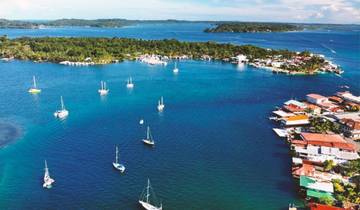
9 days
9 Days Across Panama: Culture, Mountains & Caribbean Paradise
- ✓ Comprehensive Panama tour
- ✓ Expert local guides included
- ✓ All accommodation arranged
- ✓ Transportation provided

8 days
Highlights of Panama
- ✓ Comprehensive Panama tour
- ✓ Expert local guides included
- ✓ All accommodation arranged
- ✓ Transportation provided
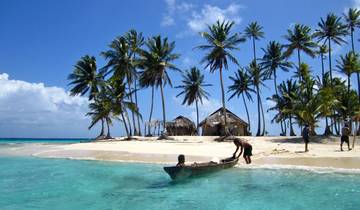
5 days
Panama & San Blas Islands (Guna Yala) – 5 days
- ✓ Comprehensive Panama tour
- ✓ Expert local guides included
- ✓ All accommodation arranged
- ✓ Transportation provided
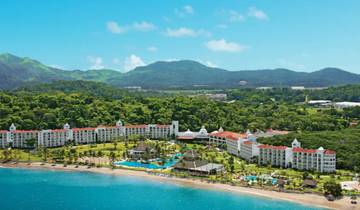
8 days
Explore Panama and Enjoy Paradise at Playa Bonita
- ✓ Comprehensive Panama tour
- ✓ Expert local guides included
- ✓ All accommodation arranged
- ✓ Transportation provided
Multi-day tour packages powered by TourRadar. Prices and availability subject to change.
Entry Requirements and Documentation for 2026
Passport and Visa Regulations
Passport validity requirements demand 6 months remaining validity beyond intended departure date from Panama. Many travelers overlook this standard, facing entry denial if passports expire within 6 months of travel. Verification during trip planning prevents arrival complications, with passport renewal requiring 6-12 weeks for routine processing in most countries. Expedited services reduce timing to 2-4 weeks at increased cost.
Visa-free entry for eligible nationalities extends to 180 days (6 months), among the most generous tourist visa policies in Central America. This extended period benefits long-term travelers, digital nomads, and retirees exploring Panama as potential residence destination. Entry stamps specify authorized stay duration, with overstay penalties of $50 fine plus $1 per day overstayed, collected upon departure at airport immigration.
Return or onward ticket requirement applies universally, with airlines checking documentation before boarding flights to Panama. Immigration officials occasionally request proof, particularly from younger travelers or those on one-way tickets. Travelers planning extended Central American travel should book refundable onward ticket or utilize ticket rental services ($15-25 for 48-hour valid reservation) satisfying entry requirements without committing to specific departure dates.
Tourist card requirements affect certain nationalities not qualifying for standard visa-free entry. Citizens of China, India, and some other nations purchase tourist cards ($20-30) valid for 30 days, available at Panamanian embassies or occasionally at airports (availability varies). These travelers should secure tourist cards in advance through diplomatic channels avoiding arrival complications. Business visas require separate application through Panamanian embassies, involving invitation letters from Panamanian entities, proof of business purpose, and processing fees $50-100.
Customs Regulations and Prohibited Items
Customs allowances permit personal items, used clothing, and electronics without duties. New items in original packaging may incur questions, with officials determining personal use versus commercial import intentions. Travelers bringing multiple new electronics (cameras, laptops, tablets) should carry receipts demonstrating ownership prior to Panama travel, avoiding equipment confiscation or duty charges.
Alcohol and tobacco allowances cover 3 liters of spirits and 500 cigarettes or 500 grams of tobacco per adult traveler. Exceeding limits requires duty payment at variable rates depending on product value and quantity. Panama’s domestic alcohol and tobacco prices remain low, making imported product transport economically unnecessary for most travelers.
Prohibited items include fresh fruits, vegetables, meat products, and plants without agricultural permits. These restrictions protect Panama’s agricultural sector and ecosystem from disease introduction. Violations result in item confiscation and potential fines $100-500. Prescription medications require original containers with patient name matching passport, while quantities exceeding 90-day supply may require physician documentation explaining medical necessity.
Currency declaration requirements activate at $10,000+ cash or equivalent negotiable instruments (traveler’s checks, money orders). Travelers carrying large sums complete declaration forms upon arrival, with failure to declare subject to confiscation and potential legal action. Most travelers never approach these thresholds, but retirees relocating funds or business travelers should understand declaration processes.
Money Matters and Financial Planning for 2026
ATM Access and Banking Services
ATM availability throughout Panama City provides convenient cash access, with machines in banks, shopping centers, hotels, and some convenience stores. Daily withdrawal limits range $400-600 depending on issuing bank and account type. International withdrawal fees vary by home bank, typically $3-5 per transaction plus 1-3% foreign transaction fees, making large withdrawals more economical than multiple small withdrawals.
Bank ATMs inside branches offer security advantages over street-located machines, reducing skimming risk and providing immediate assistance for card retention or malfunction issues. Banking hours run 8:00 AM-3:00 PM weekdays, 9:00 AM-12:00 PM Saturdays, with ATMs accessible 24/7. Major banks include Banco General, Banistmo, Global Bank, and BAC, all providing reliable ATM networks and English-language interfaces.
Credit card acceptance reaches high levels in tourist areas, hotels, restaurants, and established businesses. Visa and Mastercard work universally, while American Express and Discover face more limited acceptance. Small vendors, markets, and budget eateries operate cash-only, requiring adequate cash reserves for daily expenses. Credit card fraud protection in Panama meets international standards, though travelers should monitor accounts for unauthorized charges and report discrepancies immediately.
Money exchange services provide poor rates compared to ATM withdrawals, with airport exchange booths offering particularly unfavorable conversions (5-8% below market rates). Travelers from non-dollar countries should exchange minimal currency at airports for immediate needs (taxi to hotel) and complete substantial exchange through ATMs after arrival. Banks offer better exchange rates than independent cambios (exchange offices) but require account relationships for currency exchange services in most cases.
Tipping Customs and Service Charges in 2026
Restaurant tipping follows 10% standard for adequate service, 15-20% for exceptional service. Many restaurants include 10% service charge (propina) automatically, noted on bills as “servicio incluido” or similar phrasing. Travelers should verify bill details before adding additional gratuity, avoiding double-tipping. High-end restaurants expecting international clientele sometimes leave gratuity optional despite service charge inclusion, creating confusion resolved by asking servers about tipping expectations.
Hotel tipping covers bellhops ($2-5 per bag depending on hotel category), housekeeping ($3-5 per night left daily or as lump sum at checkout), and concierge services ($5-10 for restaurant reservations or tour bookings, $10-20 for exceptional multi-day assistance). Valet parking receives $2-3 per retrieval. All-inclusive resorts or hotels with mandatory service charges may reduce or eliminate tipping expectations, with policies specified during check-in.
Taxi and ride-hailing tipping remains optional, with most Panamanians rounding up to nearest dollar or adding $1-2 for longer rides or luggage assistance. Tour guides receive $5-10 per person for half-day tours, $10-20 for full-day experiences, and $20-40 per day for multi-day programs. Driver-only services (no guiding) receive lower gratuities ($5-10 daily). Group tours sometimes include automatic gratuity additions disclosed during booking.
Spa and salon services follow 15-20% tipping standards, with tips provided directly to service providers rather than desk staff. Massage therapists, hairstylists, and aestheticians rely significantly on tips as income supplements. Casino dealer tipping varies by game and wins, with players occasionally tipping after significant wins or at session conclusions.
Transportation Navigation in Panama City 2026
Metro System Operations and Route Planning
Panama City Metro operates two lines covering major transportation corridors. Line 1 runs north-south from Albrook (bus terminal and shopping center) through downtown areas to Los Andes, serving 16 stations over 15 kilometers. Line 2 connects east-west from San Miguelito through business districts to Nuevo Chorrillo, adding 11 stations and 21 kilometers. Combined, the system provides access to major hotel areas, shopping districts, and business zones.
Metro tarjeta cards (rechargeable smart cards) cost $2 initial purchase, reloadable in increments from $2-50 at station kiosks or retail partners. Single rides cost $0.35 regardless of distance or transfers between lines. Cards work across Metro and MetroBus systems, providing integrated public transportation payment. Senior citizens (60+) and students receive discounted fares with proper documentation registered on cards.
Operating hours run 5:00 AM-11:00 PM weekdays, 5:00 AM-10:00 PM weekends and holidays, with trains arriving every 3-8 minutes during peak hours (6:30-9:00 AM, 4:30-7:00 PM) and 10-15 minutes off-peak. Stations feature air conditioning, security personnel, CCTV coverage, and clear signage in Spanish and English. Cleanliness and safety levels exceed most Latin American metro systems, creating comfortable travel environment.
Route planning uses official Metro de Panama app (iOS and Android) providing real-time arrivals, route planning, and service disruption notifications. Stations connect to bus routes through nearby MetroBus stops, with signage indicating bus route numbers and destinations. Peak hour crowding occurs on Line 1 downtown sections, with standing room only common during rush periods. Off-peak travel (mid-morning, early afternoon) provides guaranteed seating and more comfortable experiences.
Taxi Services and Ride-Hailing Apps for 2026
Traditional taxis use official yellow paint, illuminated roof signs, and meter systems (taximetros). Legal taxis display vehicle identification numbers, driver credentials, and meter certification stickers. Base fare starts at $2.00, with $0.15-0.30 per kilometer and time-based charges during slow traffic. Airport pickups add $2.00 surcharge to metered fare. Most city rides cost $3-8, with trips to suburban areas reaching $10-15.
Taxi hailing occurs curbside in hotel zones, commercial districts, and tourist areas. During peak hours or rain, availability decreases significantly. Travelers should request meter activation (“con taximetro, por favor”) before departure, as some drivers attempt negotiated flat rates exceeding meter pricing. Reputable drivers activate meters automatically, providing printed receipts upon request. Language barriers rarely impact taxi service, as drivers understand major hotel names and landmark references.
Uber and Cabify operate legally throughout Panama City, offering reliable alternatives to traditional taxis. Pricing matches or slightly undercuts taxi meters, with surge pricing during peak demand periods occasionally reversing this advantage. Ride-hailing apps eliminate language barriers, provide upfront pricing, enable payment through stored credit cards, and create service quality accountability through rating systems. Airport pickup requires walking to designated ride-hailing zones outside terminal buildings.
Rental car services operate at Tocumen International Airport and major hotels, with international companies (Hertz, Avis, Budget, Enterprise) and local operators available. Daily rates range $35-65 for economy vehicles, $50-85 for mid-size sedans, and $75-120 for SUVs. International driver’s licenses gain acceptance alongside valid home-country licenses for rental periods under 90 days. Rental agreements include mandatory third-party liability insurance, with collision damage waiver optional ($15-25 daily).
Accommodation Strategies for 2026 Panama City Visits
Neighborhood Selection and Location Priorities
Casco Viejo provides atmospheric colonial architecture, UNESCO heritage experience, excellent restaurant concentration, and strong nightlife within compact walkable area. Accommodation costs $85-180 per night for boutique hotels and renovated guesthouses. Location advantages include cultural immersion, architectural beauty, and restaurant variety. Disadvantages cover noise from bars and restaurants, uneven street conditions, and some security concerns in adjacent neighborhoods requiring taxi usage for evening activities beyond immediate colonial core.
El Cangrejo and Bella Vista deliver central location, business district proximity, diverse dining, and metro access via Iglesia del Carmen station. Mid-range hotels cost $70-140 per night, with some luxury options reaching $200-280. These neighborhoods provide strong infrastructure, walkable streets during daylight, and local character beyond sterile hotel zones. Moderate traffic noise and limited architectural interest represent minor drawbacks for experience-focused travelers.
Punta Pacifica and Punta Paitilla showcase modern high-rise condominiums, luxury hotels, Pacific coastline access, and upscale shopping. Accommodation runs $150-350 per night for international chain hotels (Waldorf Astoria, Hilton, JW Marriott). Areas offer modern infrastructure, ocean views, excellent security, and resort-like environment. Disadvantages include distance from historical sites, limited authentic Panamanian character, and reliance on taxis or cars for most activities.
Costa del Este represents newer development featuring gated communities, modern shopping, coastal setting, and expatriate concentration. Hotels cost $90-170 per night in limited inventory favoring serviced apartments and extended-stay properties. Location suits travelers with rental cars, families wanting residential atmosphere, or visitors conducting business in eastern suburbs. Poor public transportation access and distance from major attractions limit appeal for car-free tourists prioritizing cultural experiences.
Booking Timing and Rate Optimization for 2026
Advanced booking (8-12 weeks ahead) secures lowest rates for peak season travel (December-April), with early reservations saving 20-35% versus last-minute pricing. Hotels fill during Christmas-New Year period, Carnival (February), and Easter week, with availability becoming scarce 4-6 weeks prior to these dates. Booking platforms like Booking.com, Hotels.com, and Expedia offer competitive pricing with flexible cancellation policies, while direct hotel booking sometimes yields better rates or room upgrades through loyalty programs.
Last-minute bookings (1-3 days ahead) occasionally produce deep discounts (30-50% off standard rates) during low-demand periods (May-June, September-October). Apps like HotelTonight specialize in unsold inventory, offering flash sales and daily deals. This strategy requires flexibility and acceptance of limited selection, working best for budget-conscious travelers visiting during shoulder or low seasons.
Package deals combining flights and hotels through bundling platforms (Expedia, Kayak, Priceline) save 15-25% versus separate bookings, with algorithms pricing bundles below component sums. Vacation package specialists occasionally offer Panama City deals including tours or activities, though independent booking usually provides better value and flexibility for experienced travelers.
Loyalty programs with international chains (Marriott, Hilton, IHG) deliver points accumulation, room upgrades, late checkout, and complimentary breakfast for frequent travelers. Elite status in these programs significantly enhances budget hotel value through perks worth $25-50+ daily. First-time visitors benefit from joining programs before booking even without prior status, as points accumulation begins immediately and provides future trip discounts.
Health and Safety Protocols for 2026
Medical Facilities and Healthcare Access
Panama City offers excellent private healthcare meeting international standards at costs well below North American rates. Hospital Punta Pacifica (affiliated with Johns Hopkins Medicine) provides premium care with English-speaking physicians, modern equipment, and international insurance acceptance. Consultation fees run $80-120, with specialist visits $100-150. Hospital Nacional and Centro Médico Paitilla offer similar quality at slightly lower pricing. Public hospitals provide adequate emergency care but face crowding and limited English support.
Pharmacies (farmacias) operate extensively throughout Panama City, with major chains including Farmacia Arrocha, Metro Plus, and Rey. Many medications available prescription-only in North America sell over-counter in Panama, including antibiotics, anti-inflammatories, and some controlled substances (regulations vary). Pharmacists provide informal medical consultation for common ailments, recommending treatments and dosages. Prescription medications should carry labels with patient names and prescribing physician information for customs clearance.
Travel insurance proves essential for comprehensive coverage, as US Medicare and many international health plans exclude foreign treatment. Policies costing $45-85 per week provide medical coverage $100,000+, emergency evacuation, and repatriation. Pre-existing condition coverage requires purchasing insurance within 14-21 days of initial trip deposit. Specialized insurers like World Nomads, IMG Global, and Allianz offer competitive policies with adventure activity coverage and trip cancellation protection.
Vaccinations recommended by CDC include routine vaccines (MMR, tetanus-diphtheria), hepatitis A (food/water transmission), and typhoid for travelers venturing beyond urban areas. Hepatitis B suits travelers with potential medical procedures, tattoos, or extended stays. Yellow fever vaccination proves unnecessary for Panama City but becomes mandatory for travel to Darien Province or certain South American countries requiring proof of Panama arrival vaccination. Malaria prophylaxis applies only to Darien and San Blas regions, not Panama City or most tourist destinations.
Water Quality and Food Safety Considerations
Tap water in Panama City meets potable standards, with treatment plants serving urban areas producing safe drinking water. Most travelers drink tap water without issues, though bottled water provides backup option for those with sensitive digestion or preferring guaranteed quality. Restaurants and hotels use tap water for ice, cooking, and beverages without safety concerns. Outside Panama City proper (rural areas, small towns), bottled water becomes advisable as treatment quality varies.
Food safety in established restaurants reaches acceptable standards, with health inspections and regulations enforced in licensed establishments. Upscale and mid-range restaurants present minimal risk, while street vendors and market food stalls require more caution. Common sense practices apply: choose busy vendors with high turnover, avoid items sitting unrefrigerated for extended periods, and select thoroughly cooked foods over raw preparations when uncertain about handling practices.
Traveler’s diarrhea affects 20-30% of visitors regardless of precautions, typically resulting from different bacterial strains rather than contamination. Prevention strategies include gradual introduction to local foods, hand washing before meals, and anti-diarrheal medication packing (Imodium, Pepto-Bismol). Most cases resolve within 2-3 days with rest, hydration, and basic treatment. Severe symptoms (high fever, bloody stool, debilitating cramps) warrant medical consultation at clinics or hospitals.
Dengue fever presents seasonal risk during wet months (May-November), transmitted by Aedes mosquitoes active during daylight hours. Prevention involves insect repellent (DEET 25-50%), long sleeves/pants during dawn and dusk, and accommodation with screens or air conditioning. Dengue symptoms (high fever, severe headache, joint pain) develop 4-10 days post-infection, requiring medical evaluation and supportive care. No specific treatment exists, but severe cases require hospitalization for monitoring and fluid management.
Communication and Connectivity in 2026
Mobile Phone Services and SIM Card Options
Local SIM cards from providers Cable & Wireless (Mas Movil), Claro, Digicel, and Tigo offer economical data and calling plans for unlocked GSM phones. Tourist SIM packages at Tocumen Airport cost $10-20 for 7-15 days with 2-5 GB data, unlimited local calls, and varying international call minutes. Convenience stores, phone company retail locations, and shopping center kiosks sell SIM cards with passport identification required for registration.
International roaming through home carriers provides convenience but expensive pricing, with US carriers charging $5-10 daily for international plans or per-usage rates reaching $0.50-2.00 per minute calling and $5-15 per MB data without roaming packages. Travelers planning brief visits (2-3 days) or minimal phone usage may find roaming acceptable, while longer stays or heavy data needs favor local SIM purchase.
WhatsApp dominates Panamanian communication, with business, personal, and even professional services utilizing the platform for messaging, calls, and coordination. WiFi-only phone usage through WhatsApp proves viable in Panama City’s extensive WiFi environment, though data connection improves reliability and allows mapping, ride-hailing, and restaurant research during transit or outdoor activities.
eSIM services from providers like Airalo, Holafly, and Nomad offer digital SIM activation without physical card purchase, supporting eSIM-compatible devices (iPhone XS and newer, recent Samsung Galaxy, Google Pixel). Plans cost $8-25 for 1-7 GB valid 7-30 days, with instant activation upon landing via QR code scanning. This technology suits frequent travelers wanting multi-country coverage without physical SIM management.
WiFi Availability and Internet Access
WiFi availability reaches high levels across Panama City, with hotels, restaurants, cafes, shopping centers, and even metro stations offering free internet access. Connection quality varies significantly, with hotels and international chains providing reliable speeds (10-50 Mbps) while local establishments deliver slower, intermittent service. Password-protected networks in hotels and cafes provide security advantages over completely open networks vulnerable to interception.
Coworking spaces cater to digital nomads and business travelers, offering professional WiFi (100+ Mbps), private meeting rooms, printing services, and networking opportunities. Selina Hub, Workings, and Conecta charge $5-15 daily or $75-150 monthly for access. These spaces concentrate in El Cangrejo, Casco Viejo, and Obarrio neighborhoods, providing reliable infrastructure for remote work requirements.
VPN usage protects financial transactions, password entry, and sensitive communications on public WiFi networks. Free VPN services provide basic protection but often sell user data or inject advertising. Paid services ($3-10 monthly) from NordVPN, ExpressVPN, or Surfshark deliver reliable encryption, minimal speed impact, and privacy guarantees. Business travelers and those accessing financial accounts through public networks should consider VPNs essential security tools.
Internet cafes exist but decline in relevance with ubiquitous smartphone usage and hotel WiFi. Remaining locations charge $1-2 hourly, providing desktop computer access with printing ($0.25-0.50 per page) and scanning services. These facilities serve primarily locals without home internet rather than tourists, though occasional travelers need internet cafes for document printing or computer-specific tasks unavailable via mobile devices.
Cultural Etiquette and Social Customs in 2026
Language Considerations and Communication Strategies
Spanish dominates daily communication, with English proficiency concentrated in tourist sectors, upscale hotels, and business environments. Hotel staff, tour guides, and restaurant servers in tourist areas generally speak functional English, while taxi drivers, market vendors, and local restaurant staff operate primarily in Spanish. Basic Spanish phrases for greetings, numbers, ordering food, and navigation significantly improve interaction quality and demonstrate cultural respect.
Translation apps like Google Translate provide real-time assistance, with camera translation proving particularly valuable for menus, signs, and printed materials. Downloaded Spanish language packs enable offline translation when data connectivity proves limited. Voice translation features facilitate spoken conversations with vendors or service providers, though quality varies and face-to-face interaction works better than phone-based translation for nuanced exchanges.
Panamanians appreciate foreign visitors attempting Spanish regardless of proficiency level, with errors viewed as earnest effort rather than incompetence. Politeness markers (“por favor,” “gracias,” “disculpe”) carry significant cultural weight, with their omission potentially perceived as rudeness. Formal address (usted rather than tú) suits initial interactions with older individuals or professional contexts, with informal address adopted when rapport develops.
Regional Spanish variations in Panama include distinctive pronunciation (soft or dropped final consonants, unique intonation) and local vocabulary (che, chombo, yeyé) differing from Mexican or European Spanish. These differences rarely impede basic communication, though classroom Spanish learners may initially struggle with Panamanian accent and speed. Patient repetition requests (“¿Puede repetir, por favor?”) resolve most comprehension challenges.
Dress Codes and Social Norms
Business casual dress prevails in upscale restaurants, casinos, and formal settings, with men wearing collared shirts and trousers (shorts discouraged), while women opt for dresses, skirts, or dress pants with modest tops. Beach resort casual dominates tourist areas, with shorts, sundresses, and sandals acceptable for daytime activities. Religious sites require modest coverage (shoulders and knees), with churches occasionally providing wraps for underdressed visitors.
Swimwear restricts to beaches, pools, and resort areas, with wearing bikinis or swim shorts in urban areas or while walking to/from beaches considered inappropriate. Cover-ups or clothing over swimwear suits street transit. Topless or nude sunbathing remains illegal and culturally unacceptable on all Panama beaches regardless of seclusion or tourist concentration.
Personal presentation carries cultural significance, with Panamanians favoring neat, clean appearance over casual slovenliness. Wrinkled, stained, or excessively worn clothing creates negative impressions in service interactions, restaurants, or professional contexts. Climate demands lightweight fabrics, but maintaining groomed appearance demonstrates respect for local values and often improves service quality in restaurants and retail environments.
Punctuality expectations vary by context, with business meetings demanding promptness while social gatherings operate on flexible “Panamanian time” accepting 15-30 minute delays. Tour departures, restaurant reservations, and medical appointments require punctual arrival, with late arrival potentially resulting in service denial or tour departure without refund. Understanding context-specific timing expectations prevents frustration and demonstrates cultural adaptation.
Weather and Seasonal Planning for 2026
Climate Patterns and Seasonal Characteristics
Dry season (December-April) brings minimal rainfall, lower humidity, and consistent sunshine, creating optimal conditions for outdoor activities, sightseeing, and photography. Daytime temperatures range 86-92°F (30-33°C), with nighttime cooling to 72-77°F (22-25°C). Morning hours provide most comfortable touring conditions before midday heat intensifies. This period corresponds to high tourist season, with increased accommodation costs and crowded attractions requiring advance reservations.
Wet season (May-November) features afternoon thunderstorms, higher humidity, and occasional all-day rain events. Typical patterns involve sunny mornings transitioning to afternoon downpours (1:00-4:00 PM), clearing by evening. Total monthly rainfall varies from 6-10 inches, with October representing wettest month. Morning activities proceed normally, with afternoon plans requiring flexibility or rain-tolerant alternatives. Rainforest tours actually improve during wet season through enhanced wildlife activity and dramatic atmospheric conditions.
Shoulder seasons (May and November) offer optimal balance of reduced tourist volumes, moderate pricing (15-25% below high season), and manageable precipitation. May experiences wet season beginning with lighter rain patterns establishing, while November transitions toward dry season with decreasing frequency and intensity. These months suit budget-conscious travelers accepting occasional weather disruptions for significant cost savings and crowd reduction.
Temperature remains consistently warm year-round, with seasonal variation minimal (5-7°F annual range). Humidity fluctuations prove more noticeable than temperature changes, with dry season offering 60-75% relative humidity versus 75-90% during wet months. Air conditioning becomes essential for comfortable sleeping in most accommodation categories, with budget options sometimes offering only fans creating challenging rest conditions for humidity-sensitive travelers.
Packing Recommendations for 2026 Visits
Light, breathable clothing in natural fibers (cotton, linen) or moisture-wicking synthetics suits Panama City’s tropical climate. Pack multiple shirt changes daily, as humidity and heat generate perspiration requiring frequent clothing changes for comfort. Lightweight long pants and long-sleeve shirts serve for air-conditioned restaurants, religious site visits, and mosquito protection during dawn/dusk outdoor activities.
Rain gear requirements include compact umbrella and lightweight rain jacket or poncho, particularly for wet season travel. Waterproof bag or dry sack protects electronics, documents, and cameras during unexpected downpours. Footwear should include comfortable walking shoes with good tread for cobblestone streets, water-resistant sandals or water shoes for wet conditions, and dressier shoes for upscale dining or evening entertainment.
Sun protection essentials include high-SPF broad-spectrum sunscreen (50+ recommended), wide-brimmed hat or cap, and quality sunglasses with UV protection. Panama’s equatorial location produces intense sun exposure year-round, with sunburn risk high even during overcast conditions. Reusable water bottle maintains hydration in heat, with insulated bottles keeping water cool for extended periods.
Travel health kit should contain basic medications (pain relievers, antihistamines, anti-diarrheal, antacids), prescription medications in original containers, basic first aid supplies (bandages, antiseptic), insect repellent with DEET 25-50%, and personal hygiene items. Electrical adapters for US-style two-prong outlets (Type A) prove unnecessary for American travelers but required for European, British, or Australian electronics. Universal adapter plus surge protector supports multiple device charging while protecting against voltage irregularities.
Budget Planning and Cost Management for 2026
Daily Budget Estimates by Travel Style
Budget travelers spending $45-75 daily utilize economy accommodation ($25-45/night in hostels or budget hotels), street food and economical restaurants ($15-25 daily for three meals), public transportation ($3-5 daily for Metro and bus fares), and limited paid activities focusing on free or low-cost experiences. This budget requires significant compromise on comfort, location, and spontaneity but proves sustainable for extended Panama City stays.
Mid-range travelers allocating $120-200 daily enjoy comfortable 3-star hotels ($70-120/night), diverse restaurant selection mixing local and international cuisine ($35-55 daily), mix of taxis and Metro transportation ($8-15 daily), and regular paid activities including tours and attractions ($25-40 daily). This category balances comfort with reasonable economy, providing quality experiences without luxury pricing.
Luxury travelers budgeting $350-600+ daily access premium 4-5 star hotels ($180-350/night), fine dining and upscale restaurants ($75-120+ daily), private transportation or frequent taxis ($25-45 daily), and comprehensive tour participation with premium operators ($80-150 daily). This budget eliminates constraints, allowing spontaneous decisions, service quality prioritization, and comfort maximization.
Sample daily cost breakdowns demonstrate real-world expenses: Budget day includes hostel bed $30, breakfast at bakery $4, lunch at local restaurant $7, dinner street food $8, snacks $4, Metro/bus fares $3, museum entry $12, water/drinks $5, totaling $73. Mid-range day features boutique hotel $95, breakfast at cafe $12, lunch mid-range restaurant $18, dinner good restaurant $28, coffee/snacks $8, taxis $12, tour activity $35, drinks $10, totaling $218. Luxury day encompasses high-end hotel $285, gourmet breakfast $25, upscale lunch $45, fine dining dinner $75, premium cafe/bars $25, private car service $40, guided tour $95, spa treatment $65, cocktails $35, totaling $690 per person.
Money-Saving Strategies for Panama City Travel
Meal cost reduction utilizes market food shopping for breakfast items, snacks, and beverages, with supermarkets like Super 99, Rey, and Riba Smith offering imported and local products at reasonable prices. Preparing simple breakfast in accommodation with coffee maker and refrigerator access saves $8-15 daily versus restaurant breakfast. Lunch specials (almuerzo del dia) at local restaurants provide complete meals (soup, main course, drink, sometimes dessert) for $5-8, representing best dining value.
Accommodation savings come through staying slightly outside prime tourist zones, with neighborhoods like Calidonia or San Francisco offering 30-40% lower rates than Casco Viejo or Punta Pacifica while maintaining reasonable metro or taxi access. Booking directly through hotel websites rather than aggregator platforms occasionally yields 10-15% discounts or room upgrades. Extended stays qualify for weekly or monthly rates reducing per-night costs 15-30%.
Free and low-cost activities include Cinta Costera waterfront walk, Casco Viejo architecture exploration (exterior viewing free), Plaza de Francia, Balboa Monument, fish market visits, and public parks. Miraflores Locks observation deck costs $17.50 but provides hours of canal watching. Free walking tours operate on tip-basis, with $10-15 gratuity appropriate for 2-3 hour quality experiences. Metropolitan Natural Park charges $4 entry for rainforest hiking within city limits.
Transportation economies emphasize Metro and MetroBus usage ($0.25-0.35 per ride) over taxi dependency ($3-8 per trip). A daily Metro/bus pass concept doesn’t exist, but rechargeable card eliminates per-purchase markup costs. Walking proves viable in compact areas (Casco Viejo, El Cangrejo) during morning and evening hours when heat moderates, saving transport costs while providing street-level neighborhood appreciation.
FAQ: Panama City Travel Tips 2026
What voltage and plug types are used in Panama City?
Panama uses 110-120V electricity at 60Hz, matching US standards and requiring no voltage conversion for American electronics. Wall outlets accept US-style two-flat-prong plugs (Type A). European, British, and Australian travelers need plug adapters (no voltage conversion required for modern phone chargers, laptops, and cameras supporting 110-240V input). Adapters cost $3-8 at airports, electronics stores, or hotel shops. High-power appliances designed exclusively for 220-240V (some hair dryers, electric kettles) require voltage converters or replacement with dual-voltage models.
How easy is it to find vegetarian or special diet food in Panama City in 2026?
Panama City offers increasing vegetarian and vegan options, particularly in Casco Viejo, El Cangrejo, and upscale neighborhoods. Dedicated vegetarian restaurants include Loving Hut (vegan), Café Unido (vegetarian options), and various health-conscious cafes. Traditional Panamanian cuisine emphasizes meat and seafood, but rice, beans, plantains, and vegetables provide vegetarian foundations with protein additions optional. Upscale and international restaurants accommodate dietary restrictions reliably, while local economical spots face limited flexibility. Gluten-free awareness grows slowly, with dedicated gluten-free products available at specialty stores and some upscale supermarkets. Travelers with severe allergies should communicate restrictions in Spanish (“soy alérgico/a a…”) and carry translation cards explaining dietary needs.
Can I drink alcohol in public areas in Panama City in 2026?
Public alcohol consumption faces legal restrictions, with drinking prohibited on streets, parks, beaches (except designated areas), and public transportation. Enforcement varies, with tourist areas seeing occasional police intervention particularly during events or weekends. Restaurants, bars, and cafes with outdoor seating allow alcohol consumption in their designated areas. Beach areas sometimes tolerate discrete beer consumption, though glass containers face prohibitions on many beaches. Legal drinking age stands at 18, with identification checks common at bars and alcohol retail establishments. DUI laws apply strictly, with blood alcohol limit 0.05% and penalties including fines, license suspension, and potential incarceration for high BAC or accident involvement.
Is smoking permitted in restaurants and public spaces in Panama City in 2026?
Panama implements smoking bans in enclosed public spaces, including restaurants, bars, shopping centers, public transportation, and offices. Restaurants with outdoor seating often permit smoking in exterior areas, with signage indicating smoking/non-smoking sections. Some bars operate as smoking establishments through exemptions or selective enforcement. Hotels designate smoking rooms (increasingly limited) or restrict smoking to outdoor balconies and designated areas. Cigarettes sell widely at convenience stores, supermarkets, and specialized tobacco shops, with prices $4-8 per pack for international brands and $2-4 for local brands. Vaping regulations mirror smoking restrictions, with e-cigarettes treated identically to traditional cigarettes regarding public use prohibitions.
How much should I budget for souvenirs and shopping in Panama City in 2026?
Souvenir costs vary dramatically by item type and shopping location. Mola textiles (traditional Guna reverse-appliqué art) range $15-150 depending on size, complexity, and quality. Small tourist trinkets (keychains, magnets, postcards) cost $2-8. Handcrafted items from Emberá villages (baskets, carvings) run $10-75. Panama hats (actually Ecuadorian toquilla straw hats) cost $25-200+ for quality examples. Coffee represents excellent value at $8-15 per pound for premium Geisha or Boquete varieties. Shopping location impacts pricing significantly, with airport shops charging 30-50% premiums over market or specialty store prices. Bargaining proves acceptable at markets and craft vendors, potentially reducing prices 10-20% from initial quotes, while fixed-price stores and malls reject negotiation.
What emergency numbers should I know for Panama City in 2026?
Emergency services utilize 911 as universal emergency number, with English-speaking operators available for tourist assistance. Police non-emergency number: 104. Fire department: 103. Ambulance service: 911 or private ambulance services like SEMM (263-7096) or SUME (229-1133). Tourist police (Politur) specifically assists visitors and responds to tourist-area incidents: 211-3060. US Embassy emergency line for American citizens: 317-5000. Lost/stolen credit cards require immediate reporting to card issuers (numbers on card reverse or bank websites). Travelers should photograph or note all emergency numbers, embassy contacts, and travel insurance emergency coordination numbers before departure.
How reliable is public transportation for reaching Panama City attractions in 2026?
Metro system reliably serves limited areas efficiently, with Line 1 accessing Albrook (bus terminal, shopping, Miraflores Locks transfers), downtown districts, and northern suburbs, while Line 2 covers eastern business areas and coastal zones. Major gaps include no Metro access to Tocumen Airport (under construction), Casco Viejo (closest station requires 15-minute walk or short taxi), Amador Causeway (taxi or bus necessary), and Biomuseo. MetroBus system fills some gaps but requires route knowledge and Spanish for navigation. Taxis or ride-hailing apps prove necessary for many tourist destinations, efficient airport transfers, and evening transportation when Metro closes (11:00 PM weekdays, 10:00 PM weekends). Combination strategies using Metro for backbone transportation and taxis for first/last-mile connections optimize cost while maintaining flexibility.
Should I be concerned about protests or political demonstrations in Panama City in 2026?
Panama experiences occasional protests related to labor disputes, political disagreements, or social issues, typically involving road blockages, marches, or demonstrations in downtown areas. Via España, Via Brasil, and areas near government buildings see most activity. Protests generally remain peaceful, though traffic disruptions prove common and some demonstrations escalate to property damage or police intervention. Travelers should avoid protest areas, monitor local news for demonstration notifications, and adjust plans around significant blockages. Hotel staff and tour operators provide current information about areas experiencing disruption. Political stability in Panama significantly exceeds many Latin American nations, with protests representing normal democratic expression rather than indicators of instability or visitor danger.
What are the best apps to download before visiting Panama City in 2026?
Essential apps include Google Maps (offline map download recommended), WhatsApp (dominant communication platform), Uber/Cabify (transportation), Google Translate (language assistance with offline Spanish pack), XE Currency (currency conversion though less relevant given dollar usage). Recommended additions: Metro de Panama (official metro app for route planning), OpenTable or similar (restaurant reservations), TripAdvisor (reviews and recommendations), hotel-specific apps (Marriott, Hilton, etc. for booking management), banking apps for account monitoring, and travel insurance provider apps for claims and medical coordination. Weather apps like AccuWeather or Weather Underground provide hourly forecasts useful for activity timing during wet season. Download and configure all apps before departure when stable WiFi available, ensuring offline functionality where applicable.
How accessible is Panama City for travelers with mobility challenges in 2026?
Panama City presents mixed accessibility, with modern areas (Punta Pacifica, Costa del Este, newer shopping centers) offering excellent wheelchair access, elevators, and smooth surfaces, while older neighborhoods (Casco Viejo, downtown) feature uneven cobblestones, limited curb cuts, and challenging terrain. Metro stations include elevators (though occasional maintenance issues occur) and designated wheelchair areas in trains, providing accessible transportation along covered routes. Many modern hotels meet international accessibility standards, while budget accommodations and colonial-converted properties lack elevator access and accessible rooms. Casco Viejo’s UNESCO heritage status limits building modifications, creating inherent accessibility challenges. Panama Canal tours on modern vessels accommodate wheelchairs with crew assistance for boarding. Travelers with mobility limitations should select accommodation carefully, focus activities on newer areas with confirmed accessibility, arrange private transportation avoiding MetroBus challenges, and contact tour operators in advance confirming accessibility provisions.