Paestum Day Trip from Naples 2026: Travel Planning Guide
Paestum stands among Italy’s most extraordinary archaeological sites, preserving three remarkably intact Greek temples from the 6th and 5th centuries BC just 90 kilometers south of Naples. This UNESCO World Heritage site offers travelers a peaceful alternative to crowded Pompeii, combining ancient Magna Graecia temples with a world-class museum housing the famous Tomb of the Diver, all reachable by direct train in under two hours from Naples.
Key Takeaways
- Direct trains from Naples Centrale to Paestum run hourly, costing €8-25 for a 1-2 hour journey in 2026
- Archaeological Park entry costs €15 (March-November) or €10 (December-February), valid for 3 days including Velia site and museum
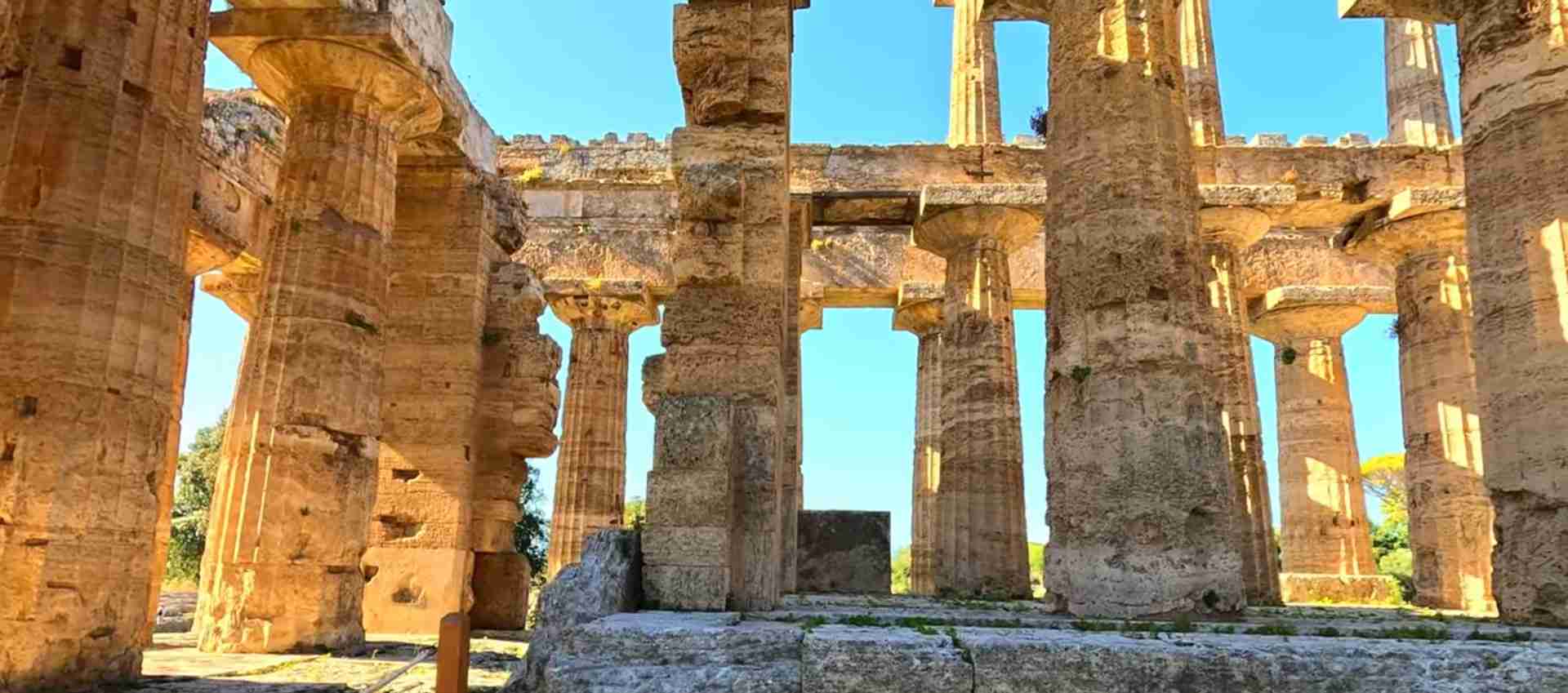
- The three Greek temples—Temple of Hera I (Basilica), Temple of Hera II (Neptune), and Temple of Athena—rank among the best-preserved Doric temples worldwide
- Plan 3-4 hours minimum for the archaeological site and museum to properly explore both areas
- Total day trip budget ranges €48-88 per person including transport, entry, and meals (excluding Naples accommodation)
- Paestum station sits 950 meters from the archaeological park entrance, an easy 10-minute walk
People Also Ask About Paestum Day Trip 2026
How much does a Paestum day trip from Naples cost in 2026?
A Paestum day trip from Naples costs €48-88 per person in 2026. This breaks down to €16-50 for round-trip trains (€8-25 each way depending on train type and booking timing), €15 for archaeological park entry including museum (March-November pricing), and €12-18 for lunch. Add €5-10 for snacks or coffee. Budget travelers booking regional trains in advance can complete the trip for under €50, while those taking faster Intercity or Frecciarossa services will spend €70-88. These costs exclude Naples accommodation.
Is Paestum worth visiting from Naples in 2026?
Paestum is absolutely worth visiting from Naples in 2026, offering three of the world’s best-preserved Greek temples in a UNESCO World Heritage site without Pompeii’s overwhelming crowds. The 1-2 hour train journey delivers exceptional value: you gain access to remarkably intact 6th-5th century BC Doric temples, see the famous Tomb of the Diver fresco (the only known example of Greek painting from the Classical period), and explore extensive Roman ruins including an amphitheater and forum. The site’s manageable size, authentic local restaurants serving buffalo mozzarella, and peaceful atmosphere make it ideal for travelers seeking quality archaeological experiences without tourist saturation.
What are the best temples to see in Paestum in 2026?
Paestum’s three magnificent Greek temples—all fully accessible in 2026—each offer unique architectural and historical significance. The Temple of Hera II (often called Temple of Neptune), built around 460-450 BC, stands as the largest and best-preserved with its 6×14 column arrangement and unusual 24 flutes per column. The Temple of Hera I (the Basilica), dating to approximately 550 BC, represents Paestum’s oldest temple with distinctive archaic features. The Temple of Athena (also called Temple of Ceres), constructed around 500 BC, showcases the transition from archaic to classical Greek architecture. All three temples remain in extraordinary condition, allowing visitors to walk through these 2,500-year-old structures and appreciate their architectural sophistication.
How long should I spend at Paestum on a day trip in 2026?
Allocate 4-6 hours total for a Paestum day trip in 2026 to properly experience both the archaeological park and museum without rushing. The archaeological site requires 2-3 hours to explore the three temples, walk the ancient city walls, examine the Roman amphitheater and forum, and photograph the ruins from multiple perspectives. The National Archaeological Museum deserves 1-1.5 hours to view the Tomb of the Diver, Lucanian tomb frescoes, temple metopes, and artifact collections. Add 45-60 minutes for lunch at a local restaurant. Combined with 2-4 hours round-trip train travel from Naples, expect to dedicate 6-10 hours total including transit time. Early morning departure (8-9 AM from Naples) allows comfortable exploration with afternoon return.
Extended multi-day tours – 5+ days
Featured Paestum Multi-Day Tour Packages
7 days
Gastronomic Road Trip Through Sunny Campania
- ✓ Booking needs min. 2 travelers

7 days
Cilento tour – 7 days
- ✓ Comprehensive Paestum tour
- ✓ Expert local guides included
- ✓ All accommodation arranged
- ✓ Transportation provided

6 days
Italy – Paestum & Cilento Coast 6 Days
- ✓ Comprehensive Paestum tour
- ✓ Expert local guides included
- ✓ All accommodation arranged
- ✓ Transportation provided
7 days
Italy – Paestum & the Cilento National Park 7 Days
- ✓ Comprehensive Paestum tour
- ✓ Expert local guides included
- ✓ All accommodation arranged
- ✓ Transportation provided
Multi-day tour packages powered by TourRadar. Prices and availability subject to change.
Introduction to Paestum Day Trip Planning 2026
Paestum offers one of southern Italy’s most rewarding day trips—a journey 90 kilometers south from Naples into the heart of ancient Magna Graecia, where three magnificent Greek temples stand in near-perfect preservation against a backdrop of modern agricultural fields. Unlike the volcanic burial that preserved Pompeii, Paestum’s temples survived through continuous use and gradual abandonment, leaving structures so complete they rival anything found in Greece itself.
Originally founded as Poseidonia by Greek colonists from Sybaris around 600 BC, the city flourished as a major commercial and religious center before passing to the Lucanians and then the Romans, who renamed it Paestum. Malaria and economic decline led to the city’s abandonment in the early Middle Ages, leaving the temples forgotten until rediscovery in the 18th century during road construction. Today, the archaeological park encompasses the three temples, substantial city walls spanning nearly 5 kilometers, a Roman forum and amphitheater, residential areas, and an exceptional museum housing some of the finest examples of ancient Greek painting ever discovered.
Planning a 2026 day trip from Naples requires understanding several practical elements: direct train connections run frequently and affordably, the site opens early and closes late during peak season, combined tickets include both the archaeological area and museum, and the town of Paestum itself offers authentic dining experiences featuring the region’s famous buffalo mozzarella. The site’s compact layout and proximity to the train station make it ideally suited for day visitors, while its relative obscurity compared to Pompeii means you’ll often have these ancient wonders largely to yourself.
This guide provides comprehensive 2026 planning information for maximizing your Paestum day trip, from choosing optimal trains and understanding ticket options to exploring each temple, navigating the museum’s treasures, and budgeting accurately for this exceptional archaeological adventure.
Transportation: Getting to Paestum from Naples 2026
Direct trains connect Naples Centrale to Paestum station throughout the day in 2026, making this one of the easiest archaeological day trips from Naples. Trenitalia operates regular Regionale (regional), Intercity, and occasional Frecciarossa services on this route, with journey times ranging from 1 hour 7 minutes on the fastest trains to approximately 1 hour 45 minutes on standard regional services.
Train frequencies average 14-34 departures daily depending on the day of week and season, with services beginning around 5:40 AM and continuing until approximately 8:30 PM from Naples. Return trains from Paestum to Naples run on a similar schedule, providing flexibility for both morning and afternoon visits. Direct trains eliminate the need for connections, simplifying the journey significantly.
Ticket prices for Naples to Paestum trains in 2026 start from €8 one-way when booking Regionale services in advance, rising to €12-15 for same-day Regionale tickets and €18-25 for faster Intercity or Frecciarossa services. Round-trip costs therefore range from €16 (budget Regionale, advance booking) to €50 (premium Frecciarossa, same-day purchase). Check official rates at the time of booking as pricing varies by train type and advance purchase timing.
Paestum station sits directly across from Porta Sirena, one of the four ancient city gates, placing you 950 meters (approximately 10 minutes’ walk) from the main archaeological park entrance at Porta Principale. This proximity makes Paestum exceptionally convenient for car-free travelers. The walk from the station to the archaeological site entrance follows Via Magna Graecia, a pleasant tree-lined road passing souvenir shops and cafes.
For optimal scheduling, consider departing Naples between 8:00-9:30 AM to arrive at Paestum by 10:00-11:00 AM, allowing 3-4 hours for site exploration plus lunch before catching return trains between 3:00-5:00 PM. This timing avoids the hottest midday hours in summer while providing ample time for thorough exploration. Check current Trenitalia schedules at trenitalia.com when planning your 2026 visit, as timetables may adjust seasonally.
Alternative transportation options include CSTP and SITA buses from Naples and Salerno, though trains offer superior frequency, reliability, and journey times. Private car rental allows flexibility for combining Paestum with other Cilento region destinations, though parking costs €5 at the archaeological site and trains eliminate driving stress.
Paestum Archaeological Park Entry and Tickets 2026
The Archaeological Park of Paestum operates with seasonal pricing in 2026, charging €15 for full-price admission from March through November and €10 from December through February. Reduced tickets cost €2 for EU citizens aged 18-25 years, while entry remains free for all visitors under 18 years regardless of nationality. Check official sources for current rates as pricing structures may adjust.
Tickets include comprehensive access to the archaeological park’s three temples, ancient city walls, Roman amphitheater and forum, residential areas, and the National Archaeological Museum of Paestum in a single admission. The ticket remains valid for three consecutive days and also grants one-time entry to the archaeological site of Velia (ancient Elea), located 45 kilometers south along the Cilento coast. This multi-site access provides exceptional value for those planning extended exploration of Magna Graecia sites.
The archaeological park opens daily from 8:30 AM to 7:30 PM during the extended season (March 30, 2025 through September 21, 2026 based on official schedules). Last admission occurs at 6:30 PM, with site staff assisting visitor exit from the main Porta Principale gate beginning at 7:00 PM. Winter hours typically reduce closing times, so verify current schedules if visiting during November-March shoulder seasons.
Closure days are limited to December 25 (Christmas Day) and January 1 (New Year’s Day). The museum follows slightly different hours on the first and third Monday of each month, closing at 1:40 PM with last entry at 1:00 PM rather than maintaining full-day access. Plan accordingly if visiting on these specific Mondays.
Tickets can be purchased at three locations: the Museum ticket office, the Porta Principale ticket office (positioned in front of the Temple of Neptune/Hera II), or online in advance through the official Archaeological Parks of Paestum and Velia website at parchipaestumvelia.cultura.gov.it. Online booking provides advance confirmation and potential queue avoidance during peak April-June season, though Paestum rarely experiences the overwhelming crowds that plague Pompeii.
Free admission is granted on the first Sunday of each month without advance booking requirements. This offers budget-conscious travelers an excellent opportunity, though expect modestly increased visitor numbers on these dates. Audio guides are available for purchase at ticket offices, providing detailed explanations of the temples and archaeological features throughout the site.
The park maintains four entrance gates: Porta Aurea (north), Porta Sirena (east, nearest the train station), Porta Giustizia (south), and Porta Marina (west). Day trippers arriving by train typically enter through Porta Principale ticket office near the Temple of Neptune, which provides the most direct access to the site’s highlights. Cloakrooms at Porta Principale allow luggage storage for travelers carrying backpacks or bags.
The Three Greek Temples of Paestum 2026
Paestum’s three Doric temples constitute the archaeological park’s primary attraction, representing some of the finest and most complete examples of ancient Greek religious architecture surviving anywhere in the world. Built during Paestum’s Greek period (6th-5th centuries BC) when the city served as a prosperous Magna Graecia colony, these temples showcase the evolution of Doric temple design from archaic to classical styles.
Temple of Hera I (The Basilica) – Circa 550 BC
The Temple of Hera I, commonly called the Basilica due to 18th-century misidentification as a Roman civic building, stands as Paestum’s oldest temple, constructed around 550 BC during the archaic period of Greek architecture. This temple dedicated to Hera, the queen of the Olympian gods and patron deity of Paestum (ancient Poseidonia), exhibits distinctive archaic features that set it apart from the later classical temples.
The temple’s ground plan measures approximately 24 meters by 54 meters, supported by 9 columns across the short ends and 18 columns along the long sides. The columns display the characteristic archaic swelling (entasis) and capital designs that predate classical refinements. Uniquely among Greek temples, the Basilica features an odd number of columns (9) on its facade rather than the even numbers preferred in classical architecture, creating an unconventional central column that blocks the direct view into the temple’s interior.
Walking through the Basilica today, visitors can appreciate the temple’s robust construction and the subtle architectural details that reveal ancient engineering sophistication. The columns lack the fluting regularity of later temples, and the capitals show heavier, more substantial proportions characteristic of archaic Greek design. The temple’s interior originally housed a cult statue of Hera, though only the foundations remain visible today.
Temple of Hera II (Temple of Neptune) – Circa 460-450 BC
The Temple of Hera II, erroneously called the Temple of Neptune or Poseidon since the 18th century, represents Paestum’s largest and best-preserved temple, constructed around 460-450 BC during the height of classical Greek architecture. Modern archaeological research confirms this temple also honored Hera rather than Poseidon, despite the persistent traditional naming.
This temple embodies classical Doric perfection with its harmonious proportions and refined architectural details. The structure measures approximately 24 meters by 60 meters, with 6 columns across the short ends and 14 columns along the long sides—the canonical proportions for a Doric temple. The columns rise to nearly 9 meters tall and feature 24 flutes each (rather than the typical 20), creating distinctive vertical emphasis and shadow play throughout the day.
The Temple of Hera II survives in remarkable condition, with its complete colonnade, architrave, and substantial portions of the pediments still standing. Visitors can walk entirely around the temple’s exterior and through its interior, examining the two-story internal colonnade (though the upper level has collapsed) and the foundations of the inner chamber (cella) where Hera’s cult statue once resided. The temple’s preservation allows clear understanding of Greek temple construction techniques, including the interlocking stone blocks assembled without mortar.
This temple offers the archaeological park’s most photogenic views, particularly during golden hour when the honey-colored limestone glows against the sky. The western approach provides the classic postcard perspective, while the eastern side offers views framed by the Temple of Hera I in the foreground.
Temple of Athena (Temple of Ceres) – Circa 500 BC
The Temple of Athena, traditionally misidentified as the Temple of Ceres, dates to approximately 500 BC and occupies an elevated position at the northern edge of the ancient city. This temple dedicated to Athena, goddess of wisdom and warfare, demonstrates the transition from archaic to classical Greek architectural principles.
Smaller than the two Hera temples, the Temple of Athena measures roughly 14 meters by 33 meters with 6 columns on the short sides and 13 along the long sides. The temple exhibits innovative architectural features that preview classical developments: the columns show more refined proportions than the archaic Basilica, the capitals display emerging classical elegance, and the temple incorporated both Doric and Ionic elements in its design (making it technically a hybrid rather than purely Doric temple).
The Temple of Athena’s elevated location provides commanding views across the archaeological park toward the Hera temples to the south. This positioning reflects both the temple’s religious importance and its role in the ancient city’s sacred landscape. Visitors ascending to the Athena temple gain perspective on Paestum’s urban layout and the relationship between sacred and civic spaces.
While less completely preserved than the Temple of Hera II, the Athena temple retains sufficient structure to convey its original grandeur, including substantial portions of its colonnade and the foundations of its interior chambers. The temple’s design influenced later Greek and Roman religious architecture throughout Magna Graecia.
The National Archaeological Museum 2026
The National Archaeological Museum of Paestum houses an extraordinary collection of artifacts excavated from the ancient city and surrounding necropolises, with several pieces ranking among the most significant examples of ancient Greek and Lucanian art ever discovered. Located directly across from the archaeological park’s main entrance, the museum provides essential context for understanding the ruins and brings ancient Paestum to life through sculpture, pottery, weapons, architectural elements, and—most famously—painted tomb frescoes.
The museum’s crown jewel is the Tomb of the Diver (Tomba del Tuffatore), dated to approximately 470 BC and discovered in 1968 in a necropolis about 1.5 kilometers south of Paestum’s ancient walls. This painted tomb consists of five limestone slabs forming a small burial chamber, each decorated with banquet scenes depicting the Greek symposium ritual. The cover slab features the tomb’s namesake image: a young man diving from a platform into water, captured mid-leap in a composition of remarkable grace and symbolism.
The diving scene represents the soul’s transition from earthly life to the afterlife, employing the metaphor of plunging into the unknown waters of death. This interpretation is reinforced by the absence of a pool below the diver—he leaps into void or sky, suggesting transcendence rather than athletic activity. The Tomb of the Diver stands as the only known example of Greek painting from the Classical period with figural scenes, making it invaluable for understanding ancient Greek artistic techniques and funerary beliefs. The frescoes’ preservation owes to the tomb’s sealed environment, which protected the painted surfaces for 2,500 years.
Beyond the Tomb of the Diver, the museum displays an exceptional series of Lucanian painted tombs from the 4th century BC, when Paestum had passed from Greek to Lucanian control. These tomb paintings depict warriors in combat, riders on horseback, funeral processions, and domestic scenes, executed in red, black, yellow, and white pigments. The Lucanian tombs provide crucial evidence for understanding the indigenous Italic peoples who inherited Greek Paestum and adapted Hellenistic culture to their own traditions.
The museum’s sculpture collection includes remarkable architectural elements from the Greek temples, particularly the sandstone metopes (decorative panels) from the Temple of Hera I’s frieze. These 6th-century BC reliefs depict mythological scenes and demonstrate archaic Greek sculptural style. Additional galleries display votive offerings recovered from temple sanctuaries, domestic pottery illustrating daily life, bronze weapons and armor from tombs, and jewelry revealing ancient craftsmanship.
One significant gallery presents artifacts documenting Paestum’s foundation myth and early history, including materials from the 7th-6th centuries BC when Greek colonists first established Poseidonia. Other sections trace the city’s later periods: the Lucanian occupation (4th century BC), Roman conquest and transformation (3rd century BC onward), and eventual abandonment during the Early Middle Ages.
Plan to spend 60-90 minutes in the museum to properly appreciate its major treasures without rushing. The Tomb of the Diver deserves careful study—allow time to examine all five painted slabs and read the interpretive materials explaining the symposium iconography and diving symbolism. The Lucanian tomb paintings, while less famous, reward detailed viewing with their vivid portrayal of ancient life and death rituals. Museum signage is provided in Italian and English, making the collection accessible to international visitors.
The museum opens 8:30 AM to 7:30 PM daily during the main season (March-November 2026), with last entry at 6:30 PM. On the first and third Monday of each month, hours reduce to 8:30 AM-1:40 PM with last entry at 1:00 PM. Entry is included in the archaeological park ticket—no separate admission is required. Photography without flash is generally permitted for personal use.
Exploring the Archaeological Park 2026: Beyond the Temples
While the three Greek temples dominate Paestum’s archaeological landscape, the broader park preserves substantial remains from both the Greek and Roman periods, revealing the complete urban environment of an ancient city. Exploring beyond the temples provides crucial context for understanding how Paestum functioned as a living community over 1,500 years of occupation.
The ancient city walls form Paestum’s most impressive non-temple feature, extending nearly 5 kilometers in a rough rectangle around the urban core. Constructed in the 4th century BC during the Lucanian period using large limestone blocks, these defensive walls incorporated four main gates (Porta Aurea, Porta Sirena, Porta Giustizia, Porta Marina) and numerous towers spaced at regular intervals. Long stretches of the walls remain standing to considerable height, allowing visitors to walk portions of the defensive circuit and appreciate the engineering required to protect the ancient city.
The Roman Forum occupies the central area between the Temple of Hera II and Temple of Athena, representing Paestum’s transformation after Roman conquest in 273 BC. This public square measures approximately 60 meters by 200 meters and preserves the foundations of civic buildings including the comitium (assembly hall), aerarium (treasury), and various temples and shrines from the Roman period. The forum’s layout demonstrates how Roman urban planning overlaid the earlier Greek city, adapting existing sacred spaces while introducing characteristically Roman civic structures.
The Roman Amphitheater, partially visible near the forum and partially buried beneath the modern road, dates to the 1st century BC and represents one of Italy’s oldest surviving amphitheaters. While only the western half remains accessible within the archaeological park (the eastern half lies beneath Via Magna Graecia), the visible portions show the elliptical arena, seating tiers, and access corridors typical of Roman entertainment architecture. The amphitheater hosted gladiatorial contests and public spectacles during Paestum’s Roman centuries.
Residential areas scattered throughout the park reveal foundations and lower walls of ancient houses, shops, and workshops. These structures demonstrate the typical Greek and Roman house plans: central courtyards surrounded by rooms, with Greek houses showing simplicity and Roman houses displaying more elaborate decoration including occasional mosaic floor fragments. Walking through these domestic quarters humanizes the ancient city, showing where ordinary citizens lived, worked, and raised families in the shadow of the great temples.
The Via Sacra (Sacred Way) forms the park’s main north-south thoroughfare, running from the Temple of Athena southward past the forum and continuing toward Porta Giustizia. This ancient street, paved with large limestone blocks showing wear patterns from centuries of cart traffic, connected the city’s major sacred and civic spaces. Walking the Via Sacra today follows the same path ancient Paestans used for religious processions, market days, and daily movement through their city.
Various smaller shrines and altars dot the archaeological park, marking sites of worship for numerous deities beyond Hera and Athena. These include sanctuaries dedicated to other Greek gods, hero cults, and later Roman religious practices. Informational plaques throughout the site identify these features and explain their religious significance within the polytheistic framework of ancient Greek and Roman culture.
The site’s layout encourages leisurely wandering—paths connect the major monuments while allowing off-route exploration through lesser-visited areas. The park’s 25-hectare extent means you can often find yourself alone among the ruins, particularly in the residential quarters away from the main temple complex. This spaciousness and relative quietness starkly contrasts with the crowded conditions at Pompeii and Herculaneum, offering a more contemplative archaeological experience.
Dining Options and Costs in Paestum 2026
Paestum town offers authentic Campanian and Cilento region dining, specializing in buffalo mozzarella (mozzarella di bufala) produced from the water buffalo herds that graze the surrounding plains. Restaurants cluster near the archaeological site and along Via Magna Graecia between the train station and ruins, providing convenient options for day-trippers seeking lunch during their visit.
Buffalo mozzarella tasting represents Paestum’s signature culinary experience—many local farms (caseifici) operate small restaurants or tasting rooms where visitors can sample freshly made mozzarella alongside tomatoes, basil, and local olive oil. These tastings typically cost €8-12 per person for a generous portion that can constitute a light lunch when paired with bread. The quality surpasses supermarket mozzarella dramatically, with the fresh product exhibiting creamy texture and delicate milk flavor that explains this cheese’s global reputation.
Casual trattorias and pizzerias near the archaeological site serve pizza for €5-8 (margherita or basic varieties) and pasta dishes for €8-14. A typical lunch consisting of pasta or pizza, water, and coffee runs €12-18 per person. These establishments cater to both tourists and locals, maintaining reasonable prices despite proximity to a major attraction. Portions follow standard generous Italian sizing.
Mid-range restaurants featuring traditional Cilento cuisine offer more elaborate meals with antipasti, primi (first course), and secondi (main course) options. Expect to spend €20-35 per person for a full meal with house wine at these venues. Seafood features prominently—the Tyrrhenian Sea lies just 3 kilometers west—with dishes highlighting local fish, shellfish, and squid prepared in classic southern Italian styles.
One highly recommended dining option is lunch at an agriturismo (farm restaurant) located within walking distance of the ruins. These working farms serve meals prepared from their own produce, meats, and of course, buffalo mozzarella. Lunch at an agriturismo typically costs €20-30 per person for a multi-course meal, often served in outdoor garden settings with views toward the countryside or sea. This experience combines excellent food with authentic agricultural tourism, though requires advance booking during peak season.
For quick budget options, bars near the train station and archaeological site offer panini (sandwiches) for €4-6, suitable for travelers minimizing lunch expenses. Several cafes provide outdoor seating with temple views, making them pleasant spots for coffee (€1.50-3) and pastry (€2-4) breaks.
Note that many restaurants in small Italian towns like Paestum close between lunch and dinner service (typically 3:00 PM-7:00 PM), so plan meal times accordingly. Lunch service generally runs 12:30 PM-3:00 PM, aligning well with mid-day breaks from archaeological exploration.
Sample One-Day Budget Breakdown 2026
A complete day trip from Naples to Paestum in 2026 costs €48-88 per person depending on train choices, meal preferences, and optional expenses. This breakdown assumes mid-range travel style with standard comfort level and includes all essential costs for a comprehensive visit.
Transportation represents the largest variable expense. Round-trip regional train tickets booked in advance cost €16 total (€8 each way), while same-day regional fares rise to €24-30 (€12-15 each way). Faster Intercity or Frecciarossa services command €36-50 round-trip (€18-25 each way). Budget-conscious travelers booking Regionale trains ahead minimize transport costs, while those prioritizing comfort and reduced travel time will pay premium prices for faster services.
Archaeological park entry costs €15 during March-November 2026 peak season or €10 during December-February winter months. This ticket includes both the archaeological site and museum, plus Velia site access if desired. EU citizens aged 18-25 pay reduced €2 admission, and under-18s enter free, significantly reducing family or youth traveler costs.
Lunch expenses range €12-35 depending on dining choice. A casual pizza or pasta meal with water costs €12-18 at a trattoria near the site. Mid-range restaurant meals featuring multiple courses and wine run €20-30. Buffalo mozzarella tasting at a farm costs €8-12 and can substitute for a light lunch. Budget travelers packing sandwiches from Naples eliminate this expense entirely.
Optional costs include coffee/snacks (€5-10 for afternoon coffee and pastry breaks), audio guide rental if desired (approximately €5-7), bottled water for site exploration (€2-3), and any souvenir purchases. These extras add €10-20 to the day’s total depending on individual preferences.
Sample Budget Scenario 1 (Economy): Regional train advance booking €16, archaeological park entry €15, pizza lunch €14, coffee €3. Total: €48 per person.
Sample Budget Scenario 2 (Mid-Range): Same-day Intercity train €40, archaeological park entry €15, trattoria lunch €25, coffee and snacks €8. Total: €88 per person.
Sample Budget Scenario 3 (Family – Two Adults, Two Children Ages 10 and 14): Round-trip regional trains €32 (€16 adult tickets × 2, children €16 total with Italian youth discounts), archaeological entry €32 (€15 full × 2 adults, €2 reduced × 1 for 14-year-old, free for 10-year-old), lunch for four €50-60 (family-style meal sharing dishes), snacks €10. Total: €124-134 for entire family or €31-34 per person average.
These budgets exclude Naples accommodation, which is separate from the day trip cost. They also exclude optional extensions such as visiting Velia archaeological site (included in ticket but requires additional transport) or combining Paestum with other Cilento destinations.
Best Time to Visit Paestum 2026
Paestum offers excellent visiting conditions year-round due to southern Italy’s Mediterranean climate, though seasonal variations affect temperature, rainfall, crowd levels, and daylight hours. Choosing optimal timing depends on balancing weather preferences, tourist density, and operational hours.
Spring (March-May 2026) represents peak visiting season for Paestum, combining pleasant temperatures (15-25°C), blooming wildflowers surrounding the temples, and extended daylight for photography. March and April see moderate tourist numbers, while May experiences increased visitors as summer season begins. The archaeological park operates full hours (8:30 AM-7:30 PM), and higher ticket pricing (€15) applies beginning late March. Occasional spring rainfall requires flexible planning, though showers tend to be brief and followed by clear skies.
Summer (June-August 2026) brings hot temperatures (28-35°C) and intense Mediterranean sun, making early morning or late afternoon visits preferable to midday exploration. The temples’ lack of shade means summer heat can become uncomfortable, particularly during July-August peak. However, summer offers the longest daylight hours for extended visits and evening photography, plus warm evenings for outdoor dining. Tourist numbers increase but remain far below Pompeii’s overwhelming crowds. Bring sun protection, hat, and water for summer visits.
Autumn (September-November 2026) provides excellent visiting conditions with warm but less intense temperatures (20-28°C September-October, cooling to 15-22°C in November), fewer tourists as schools resume, and dramatic light for photography as the sun’s angle lowers. September ranks among the year’s best months for Paestum, offering summer warmth without peak crowds. November transitions to winter weather patterns with increased rainfall probability and reduced daylight. Winter pricing (€10 admission) begins in December.
Winter (December-February 2026) sees the fewest tourists and lowest admission prices (€10), creating an intimate archaeological experience. Temperatures range 8-15°C with increased rainfall frequency and occasional cold snaps. Shorter daylight hours (8:30 AM-5:00 PM typical winter closing) limit exploration time, and some restaurants reduce winter operating schedules. However, clear winter days provide exceptional photographic light and peaceful site atmosphere. Bring layers for changeable winter weather.
For optimal conditions balancing weather, crowd levels, and costs, visit Paestum during April-May or September-October 2026. These shoulder season months offer comfortable temperatures, manageable tourist numbers, and excellent photographic light while avoiding summer heat extremes and winter weather uncertainty.
Avoid Italian public holiday weekends (particularly April 25, May 1, June 2, August 15) when domestic tourism spikes, though even holiday crowds at Paestum remain modest compared to major sites. Weekdays see lighter visitor numbers than weekends year-round.
Photography Guide: Capturing Paestum’s Temples 2026
Paestum offers exceptional photographic opportunities year-round, with the temples’ honey-colored limestone and open site layout permitting photography from multiple perspectives throughout the day. Understanding optimal lighting conditions, composition strategies, and prohibited areas enhances photographic results while respecting site preservation rules.
Golden hour photography delivers Paestum’s most dramatic temple images. Early morning (7:00-9:00 AM) provides soft eastward light illuminating the Temple of Hera II’s western facade, creating warm tones against blue sky. The site opens at 8:30 AM, placing the last 30 minutes of golden hour available for photography. Late afternoon/early evening (5:00-7:00 PM during extended summer hours) offers westward light on the temples’ eastern faces, producing the signature glowing limestone effect seen in classic Paestum photographs. Plan arrival timing to coincide with golden hour for optimal light quality.
The Temple of Hera II (Temple of Neptune) provides the most photogenic subject due to its complete colonnade and monumental scale. Approach from the west for the classic frontal view showing all 6 facade columns, or from the south for dramatic angle perspectives emphasizing the temple’s length and column repetition. Interior shots through the colonnade create depth and framing effects. Experiment with low angles to emphasize column height and monumentality, or climb to the elevated areas near the Temple of Athena for overview shots showing multiple temples in single frame.
The Temple of Hera I (Basilica) offers unique photographic opportunities due to its archaic proportions and position adjacent to the Temple of Hera II. Compose shots showing both temples together to demonstrate architectural evolution across a century of Greek temple building. The Basilica’s odd-numbered facade column creates central symmetry opportunities. Close-ups of column capitals and architectural details showcase archaic design characteristics.
The Temple of Athena’s elevated northern position provides excellent vantage points for wide-angle shots encompassing the southern temple complex, city walls, and surrounding landscape. This perspective reveals Paestum’s geographic setting and the temples’ relationship to the ancient urban plan. Sunrise photography from the Athena temple area captures both temples and coastal plain in morning light.
Detail photography opportunities abound: weathered limestone textures showing 2,500 years of erosion, column fluting shadow patterns, wildflowers growing among ruins in spring, the contrast between ancient stonework and modern agriculture visible beyond the walls. These close-up and contextual images complement monumental temple shots.
Prohibited photography includes flash usage (which can damage ancient surfaces and artifacts), tripod placement that blocks pathways or creates visitor hazards, and climbing on temple structures for elevated perspectives. Drones are prohibited without special permits. The museum permits photography without flash for personal use; commercial photography requires authorization.
Compositional tips: include human figures for scale reference in temple shots, use the Via Sacra’s linear perspective to create depth, photograph temple silhouettes against sunset skies after site closure (exterior walls viewable from surrounding areas), and experiment with both horizontal and vertical orientations to emphasize different architectural elements.
Weather considerations: Overcast skies create even lighting that reduces harsh shadows and works well for architectural detail shots. After rainfall, the limestone temples exhibit deeper color saturation and dramatic texture. Summer’s intense sun produces high contrast requiring exposure bracketing; shoot slightly underexposed to preserve highlight detail in the bright limestone.
Practical Tips for Paestum Day Trips 2026
Successful Paestum day trips require understanding several practical considerations beyond basic transportation and ticketing. These tips address common visitor questions and optimize the archaeological experience.
Wear comfortable walking shoes suitable for uneven terrain. The archaeological park’s paths include ancient paving stones, gravel areas, and occasional rough surfaces requiring stable footwear. Avoid sandals or open-toed shoes, particularly for walking the ancient streets and climbing to elevated viewing areas. The site’s 25-hectare extent involves substantial walking—typically 2-3 kilometers total exploring the temples, walls, and museum.
Bring sun protection during April-October including hat, sunglasses, and sunscreen. The temples and archaeological park offer virtually no shade, leaving visitors exposed to Mediterranean sun throughout site exploration. Summer temperatures can exceed 35°C, making sun protection essential. Winter visitors should bring layers and rain jacket for changeable weather.
Carry water bottles as on-site refreshment options are limited. Small bars near the entrance sell drinks, but no facilities exist within the archaeological park itself. A 1-liter water bottle per person is recommended for summer visits. Refilling opportunities exist at restroom facilities near the entrance.
Plan museum visit strategically within your day. Some visitors explore the archaeological site first, then visit the museum afterward to contextualize what they’ve seen. Others reverse this order, viewing the museum collection first to gain historical understanding before walking the ruins. Either approach works—museum-first provides educational foundation, while ruins-first creates anticipation for seeing the artifacts. Allow 60-90 minutes for the museum to properly appreciate major pieces like the Tomb of the Diver.
Luggage storage is available at the Porta Principale ticket office cloakroom, allowing day-trippers arriving directly from Naples hotels (for instance, before catching afternoon trains onward to Amalfi Coast or Salerno) to visit Paestum without dragging full luggage through the archaeological site. This service accommodates backpacks and rolling suitcases.
Audio guides enhance site understanding for visitors unfamiliar with ancient Greek architecture and mythology. The guides provide detailed explanations of temple construction techniques, religious significance, and historical context unavailable from signage alone. Audio guides cost approximately €5-7 and are available in multiple languages at ticket offices.
Accessibility provisions include wheelchair-accessible paths connecting the museum and main temple areas via Porta Principale entrance. The archaeological site features rough terrain in many areas, but paved routes exist allowing visitors with mobility limitations to view the three main temples and major monuments. Electric off-road vehicles (Zoom Uphill) are available free of charge for visitors with disabilities, providing access to more remote site areas. Contact the archaeological park in advance to arrange this service.
Bathroom facilities are located near the entrance areas and museum. No facilities exist within the archaeological park interior, so plan accordingly before beginning site exploration.
Pets are permitted in the archaeological park on leash with muzzle required and owner responsible for waste removal. Animals cannot approach the temples directly or enter the museum building (small animals in carriers may be permitted in museum—verify current policy).
Picnicking is generally not permitted within the archaeological park itself, though visitors can eat in designated areas near entrances. Local restaurants provide better lunch options than packed meals, particularly given Paestum’s exceptional buffalo mozzarella and regional cuisine.
Security screening similar to airport procedures does not exist at Paestum, though large bags may be subject to inspection. The site maintains relaxed security atmosphere compared to major urban museums.
English language support is available throughout the site via signage, museum labels, and audio guides. Museum staff and ticket office personnel typically speak sufficient English for basic communication, though Italian language skills enhance interaction with local restaurant staff and residents.
Combining Paestum with Other Cilento Destinations 2026
While Paestum functions excellently as a standalone Naples day trip, travelers with additional time or multi-day Cilento region itineraries can combine the archaeological site with other nearby destinations to create more comprehensive southern Italy experiences.
Velia (ancient Elea), located 45 kilometers south of Paestum near the modern town of Ascea Marina, represents another major Magna Graecia archaeological site included in the Paestum ticket. Founded by Greek colonists around 540 BC, Velia achieved fame as home to the Eleatic School of philosophy founded by Parmenides and Zeno. The archaeological park preserves city walls, residential areas, Roman baths, and the Porta Rosa, one of the earliest known examples of a true arch. Reaching Velia from Paestum requires either private car (45-minute drive) or train to Ascea station (30-40 minutes), making it feasible for extended day trips or overnight Cilento stays.
The Cilento Coast offers pristine beaches and dramatic coastal scenery stretching south from Paestum. Agropoli, a medieval coastal town 12 kilometers south, provides beach access, a historic old town with castle, and harbor views. Further south, Acciaroli, Pioppi, and other small fishing villages preserve authentic southern Italian coastal atmosphere without Amalfi Coast’s commercialization and crowds. These destinations require private car for practical access.
Certosa di Padula, a massive Carthusian monastery and UNESCO World Heritage Site, lies approximately 50 kilometers inland from Paestum in the Vallo di Diano. This 18th-century complex features Europe’s largest monastery cloister, baroque church, and museum collections. Combining Padula with Paestum requires full-day commitment and private transportation, but rewards architecture enthusiasts with one of southern Italy’s most impressive monastic buildings.
Buffalo mozzarella farm visits can extend Paestum visits into culinary experiences. Numerous farms (caseifici) surrounding Paestum offer tours showing the mozzarella production process from water buffalo milking through cheese formation, followed by tastings of fresh products. These tours typically last 45-90 minutes and cost €10-20 per person. Some farms require advance booking; hotels or tourist offices can arrange visits.
For travelers basing in Salerno rather than Naples, Paestum lies just 40 kilometers south with frequent train connections taking 30-40 minutes. This positioning makes Paestum an easier day trip from Salerno than from Naples, and allows combination with Salerno’s medieval historic center, harbor promenade, and cathedral.
Multi-day Cilento itineraries might include: Day 1 Paestum archaeological site and museum, Day 2 Velia ruins and beach time at Ascea Marina, Day 3 Certosa di Padula and inland mountain villages, Day 4 Cilento coastal exploration. This approach requires rental car and Cilento-based accommodation but provides comprehensive regional experience beyond the typical Naples-Pompeii-Amalfi tourist circuit.
Historical Context: Understanding Ancient Paestum
Paestum’s temples stand as physical monuments to a complex 1,500-year history spanning Greek colonization, Lucanian occupation, Roman conquest, and medieval abandonment. Understanding this historical trajectory enriches archaeological site interpretation and explains the ruins’ exceptional preservation.
Greek colonists from Sybaris (a powerful Greek city on Italy’s southeastern coast) founded Poseidonia around 600 BC as part of the Magna Graecia expansion establishing Greek settlements throughout southern Italy and Sicily. The colonists chose this coastal location for its agricultural potential, strategic position on maritime trade routes, and distance from established powers. Poseidonia flourished during the 6th-5th centuries BC, constructing the three great temples that survive today, establishing sanctuary complexes, and developing as a significant commercial center trading agricultural products, pottery, and metalwork throughout the Mediterranean.
The city’s Greek period ended around 400 BC when the Lucanians, an indigenous Italic people from the interior mountains, conquered Poseidonia and incorporated it into their expanding confederation. The Lucanian period (4th century BC) brought cultural transformation—Greek language and architecture persisted, but Lucanian customs, burial practices, and political systems replaced Hellenistic traditions. The painted tombs discovered in Paestum’s necropolises, including several displayed in the museum, date to this Lucanian era and reveal the cultural synthesis between Greek and Italic civilizations.
Rome conquered Paestum in 273 BC during its expansion across southern Italy, establishing a Latin colony and renaming the city with its current designation. Roman Paestum prospered initially, particularly during the Republic and early Empire, with Romans maintaining the Greek temples (now dedicated to Roman equivalents of the Greek deities), constructing the forum, amphitheater, and baths, and introducing characteristic Roman urban infrastructure. The city gained importance as a coastal fortress and regional administrative center.
Decline began during the late Roman Empire as malaria spread through the coastal plains due to environmental changes affecting drainage and creating mosquito-breeding marshes. The Sele River’s silting gradually closed Paestum’s port, eliminating maritime trade advantages. Combined pressures from disease, economic stagnation, and periodic barbarian invasions prompted population exodus during the 4th-9th centuries AD. By the Early Middle Ages, Paestum stood virtually abandoned, with survivors retreating to higher ground inland and establishing the modern town of Capaccio.
The abandoned temples survived medieval centuries through a combination of factors: their massive stone construction resisted collapse, their remote swampy location discouraged stone quarrying for building materials (unlike Rome’s ancient monuments), and limited population in the area eliminated pressure to repurpose the site. Paestum essentially disappeared from historical consciousness, known only to local farmers and occasional travelers navigating the coastal road.
Rediscovery occurred in the 18th century when engineers surveying routes for the new Bourbon coastal road encountered the temples standing amid malarial marshes. Initially dismissed as Roman structures (hence the erroneous “Basilica” and “Temple of Neptune” names that persist today), the temples attracted scholarly attention once identified as Greek. Early archaeologists and Grand Tour travelers visited Paestum, producing drawings and descriptions that brought the site to European awareness.
Systematic archaeological excavation began in the 19th century and continued throughout the 20th century, uncovering the city walls, forum, amphitheater, residential areas, and necropolises. The 1968 discovery of the Tomb of the Diver represented a watershed moment in understanding ancient Greek painting and funeral practices. Modern conservation efforts have stabilized the temples against erosion, restored fallen elements where possible using original materials, and implemented protective measures ensuring their survival for future generations.
Today’s Paestum thus represents multiple historical layers: Greek religious architecture from the 6th-5th centuries BC, Lucanian cultural transformation of the 4th century BC, Roman urban development from the 3rd century BC through 4th century AD, medieval abandonment and forgetting, 18th-century rediscovery, and modern archaeological interpretation and conservation. Walking among the temples connects visitors directly to this complex historical narrative spanning 2,600 years.
Guided Tours vs. Independent Visits 2026
Paestum accommodates both guided tour participants and independent visitors effectively, with the choice depending on travel preferences, budget considerations, and desired depth of archaeological interpretation.
Independent visits offer maximum flexibility and cost savings. The archaeological park’s clear layout, abundant signage, and comprehensive museum labeling allow self-guided exploration without difficulty. Visitors can set their own pace, focus on particular temples or features of personal interest, and adjust timing based on weather, energy levels, or train schedules. Audio guides available at ticket offices provide detailed explanations without requiring group coordination. Independent visits work particularly well for travelers with background knowledge of ancient Greek architecture or those prioritizing photographic opportunities over expert commentary.
Guided tours provide expert interpretation unavailable from signage alone, explaining architectural details, construction techniques, historical context, and cultural significance with depth and engagement that enhances archaeological understanding. Professional guides licensed by the Campania Region bring years of study and experience, answering questions and tailoring explanations to group interests. Tours typically last 2-3 hours covering the major temples, city walls, forum, and museum highlights.
Tour pricing generally ranges €25-45 per person for small group tours (8-15 participants) and €150-250 for private tours accommodating families or small parties. These costs include guide service but typically exclude archaeological park entry tickets (€15 additional). Tours can be booked through the archaeological park’s authorized concessionaires (contact [email protected] or phone +39 081 2395653) or through third-party tour operators offering Paestum day trips from Naples with transportation included.
Combined Naples-to-Paestum day trip packages offered by various tour companies include round-trip transportation by minivan or coach, archaeological park entry, and guided site tour, typically costing €80-120 per person. These packages eliminate train ticket booking, provide door-to-door service from Naples hotels, and often include stops at buffalo mozzarella farms. The convenience premium suits travelers prioritizing simplicity over cost savings or those uncomfortable navigating Italian train systems independently.
For budget-conscious travelers or those confident in independent travel, the self-guided approach using regional trains and audio guide rental maximizes value while maintaining quality archaeological experience. For those seeking expert knowledge and willing to invest in professional interpretation, guided tours justify their cost through enhanced understanding and engaging presentation. Tour participants consistently report that professional guides bring the ancient city to life in ways independent exploration cannot match.
Hybrid approaches work well: independent train travel to Paestum, joining a small group tour at the site for expert-led temple exploration, then independent museum visit and lunch. This balances cost control with expert interpretation while maintaining schedule flexibility.
Frequently Asked Questions About Paestum Day Trips 2026
How early should I arrive at Paestum to avoid crowds in 2026?
Arrive at Paestum by 9:00-9:30 AM to enjoy the archaeological site before peak visitor numbers, which typically build between 11:00 AM-2:00 PM when tour buses arrive from Naples and Salerno. The park opens at 8:30 AM, but catching the earliest train from Naples (departing around 7:00-7:30 AM) allows arrival by 9:00 AM and provides 2-3 hours of relatively quiet exploration time. Early arrival also positions you for optimal morning photography light on the temples. Paestum never reaches the overwhelming crowd levels of Pompeii, but morning visits offer the most peaceful experience year-round.
Can I visit both Paestum and Pompeii in one day from Naples in 2026?
Visiting both Paestum and Pompeii in a single day from Naples is theoretically possible but not recommended. The combined travel time alone (1-2 hours each direction to Paestum, plus 30-40 minutes each direction to Pompeii) consumes 3-5 hours. Both sites deserve 3-4 hours minimum for proper exploration, creating a 9-13 hour total commitment before adding meal breaks. This rushed approach sacrifices the contemplative archaeological experience both sites merit and risks exhaustion. Instead, dedicate separate full days to each site—Pompeii one day, Paestum another—to appreciate their significance properly. Alternatively, overnight in the Cilento region to visit Paestum unhurried.
What should I bring for a comfortable Paestum visit in 2026?
Essential items for Paestum day trips include comfortable closed-toe walking shoes for uneven ancient paving, sun protection (hat, sunglasses, sunscreen) for the exposed site, 1-liter water bottle per person as on-site refreshment options are limited, camera or smartphone for photography, and light backpack for carrying supplies. April-October visitors should bring sun hat and possibly umbrella for rare rain showers. November-March visitors need layered clothing and rain jacket for changeable weather. Small first-aid kit, phone charger, and any necessary medications round out the packing list. Cash for lunch and small purchases is useful, though most restaurants accept credit cards.
Are there luggage storage facilities at Paestum in 2026?
Yes, luggage storage (cloakroom service) is available at the Porta Principale ticket office near the Temple of Neptune, accommodating backpacks, rolling suitcases, and travel bags for day-trippers visiting Paestum between Naples and onward destinations like the Amalfi Coast or Salerno. This free service allows travelers to explore the archaeological site unencumbered by luggage. Paestum train station lacks dedicated luggage storage facilities, making the archaeological park’s cloakroom particularly valuable. For valuable items or electronics, maintain personal possession rather than checking at the cloakroom.
How accessible is Paestum for visitors with mobility limitations in 2026?
Paestum provides reasonable accessibility for visitors with mobility limitations through wheelchair-accessible paths connecting the museum and main temple areas via the Porta Principale entrance. Paved routes allow viewing of all three major temples and the forum area without navigating rough terrain, though some archaeological park sections with uneven ancient paving remain challenging for wheelchairs. The museum building is fully accessible with ramps and elevators. Free electric off-road vehicles (Zoom Uphill) are available for visitors with disabilities to access more remote site areas—contact the archaeological park at +39 3347221758 in advance to arrange this service. Accessible restrooms are located near the entrance areas.
Can I buy Paestum tickets in advance for 2026?
Yes, Paestum archaeological park tickets can be purchased in advance through the official Archaeological Parks of Paestum and Velia website at parchipaestumvelia.cultura.gov.it, providing guaranteed entry without ticket office queuing. Online booking is recommended during peak April-June season when visitor numbers peak, though Paestum rarely experiences the sold-out conditions common at Pompeii. Advance tickets show date and time slot selection at booking, ensuring coordination with train schedules. Same-day ticket purchase at the Porta Principale or Museum ticket offices remains available and practical given the site’s moderate crowd levels, but advance booking provides peace of mind and occasionally offers small discounts.
What food options exist near Paestum archaeological site in 2026?
Multiple dining options cluster near the Paestum archaeological site entrance along Via Magna Graecia. Trattorias and pizzerias offer lunch for €12-18 per person featuring pasta, pizza, and local specialties including buffalo mozzarella. Several restaurants operate within 200 meters of the site entrance, providing convenient mid-visit meal breaks. For authentic culinary experiences, nearby buffalo mozzarella farms (caseifici) serve fresh mozzarella tastings for €8-12, while agriturismo farm restaurants located 1-2 kilometers from the ruins offer multi-course meals for €20-30. The immediate station area has limited dining, so walk the 10 minutes to the archaeological site area for better restaurant selection and quality.
Is Paestum suitable for children and families in 2026?
Paestum works excellently for families with children, offering hands-on ancient history without the overwhelming scale and crowds that can fatigue young visitors at Pompeii. The site’s three easily identifiable temples provide clear focal points for exploration, while the spacious layout allows children to move freely. Kids can walk through the ancient structures, climb elevated viewing areas, and imagine Greek and Roman life. The museum’s painted tombs—particularly the Tomb of the Diver with its striking imagery—engage children’s visual interest. Free entry for under-18s makes Paestum economical for families. The site’s moderate size (3-4 hour visit) suits children’s attention spans better than full-day archaeological marathons. Buffalo mozzarella farm visits add interactive educational elements appealing to food-interested young travelers.
What is the significance of the Tomb of the Diver in 2026?
The Tomb of the Diver, dated to approximately 470 BC and displayed in Paestum’s National Archaeological Museum, stands as the only known example of Greek painting from the Classical period depicting figural scenes, making it one of ancient art’s most significant discoveries. The tomb’s cover slab shows a young man diving from a platform, symbolizing the soul’s transition from earthly life into the afterlife through the metaphor of plunging into unknown waters. The tomb’s other four slabs depict Greek symposium (banquet) scenes with remarkable detail and artistic sophistication. The frescoes’ survival owes to the tomb’s sealed environment protecting the painted surfaces for 2,500 years. This unique preservation allows modern viewers to see authentic Classical Greek painting techniques, color palettes, and iconographic traditions otherwise lost except through pottery decoration and Roman copies.
How does Paestum compare to Pompeii for day trips from Naples in 2026?
Paestum and Pompeii offer contrasting archaeological experiences, each valuable for different reasons. Paestum preserves three of the world’s finest Greek temples in remarkable completeness, focuses on religious architecture and Greek civilization, operates with far fewer crowds, and provides a peaceful contemplative atmosphere. The site is smaller (3-4 hours vs. 5-8 hours for Pompeii), less overwhelming, and emphasizes quality over quantity. Pompeii presents a complete Roman city frozen by Vesuvius’s eruption, showing streets, houses, shops, forums, theaters, and daily life details in unparalleled comprehensiveness. Pompeii attracts vastly more visitors, creating crowd management challenges but also better infrastructure and more guided tour options. For architectural beauty and peaceful exploration, Paestum excels. For comprehensive Roman urban archaeology and famous historical drama, Pompeii delivers. Ideally, visit both on separate days to appreciate each site’s unique contributions to understanding ancient Mediterranean civilization.