Ontario Travel Guide 2026: Ultimate Planning Resource
Ontario beckons travelers in 2026 with Canada’s most diverse provincial landscape spanning cosmopolitan Toronto, historic Ottawa, thundering Niagara Falls, and pristine wilderness across 415,000 square miles. This comprehensive planning resource delivers verified pricing, transportation strategies, accommodation recommendations, and insider perspectives across Ontario’s cultural centers, natural wonders, and hidden treasures to transform your 2026 Canadian adventure from overwhelming possibility into confident reality.
Key Takeaways for Ontario Travel 2026
- Budget Planning 2026: Expect $225-355 per person daily for mid-range comfort assuming two sharing hotel accommodation, with budget travelers managing $112-183 and luxury experiences reaching $430-700 daily depending on season and destination choices.
- Transportation Savings 2026: Ontario’s One Fare program extends through 2026, eliminating double fares when transferring between GO Transit and TTC, saving regular commuters up to $1,600 annually while TTC holds fares at $3.30 through 2026.
- Peak Season Strategy: July and August deliver warmest weather but highest prices and crowds, while May-June and September-October offer 20-30% lower accommodation rates, comfortable temperatures, and smaller crowds at major attractions.
- Regional Diversity: Ontario encompasses distinct experiences from Toronto’s urban sophistication and Ottawa’s political heritage to Muskoka’s cottage country, Niagara’s wine region, and Algonquin’s wilderness, requiring strategic destination selection based on interests.
- Booking Timeline 2026: Reserve Toronto and Ottawa hotels 3-4 months ahead for summer travel, secure Niagara Falls accommodations 4-6 months early for peak viewing season June-August, and book provincial park campsites when reservations open five months in advance.
- Multi-City Value: Toronto CityPASS at $135 saves 38% on five attractions including CN Tower and ROM, while combining Toronto base with day trips to Niagara Falls, Niagara-on-the-Lake wineries, and Blue Mountain maximizes regional exploration efficiently.
People Also Ask About Ontario Travel 2026
How Much Does a Week in Ontario Cost in 2026?
A week in Ontario costs approximately $1,575-2,485 per person for mid-range travelers sharing hotel accommodation. Hotel accommodation $720-1,090 for six nights (two sharing mid-range hotels at $120-182 per person nightly after taxes), meals $490-790, transportation $120-175 depending on transit versus rental car, and attractions $245-430. Budget travelers manage $785-1,280 weekly using hostels and budget hotels, while luxury visitors invest $3,015-4,900 with upscale hotels, fine dining, and premium experiences. Toronto and Ottawa command highest costs, while smaller cities and towns offer 15-25% savings on accommodation and dining.
What’s the Best Way to Travel Between Toronto and Ottawa in 2026?
VIA Rail offers the most comfortable Toronto-Ottawa connection with five daily departures, journey time 4.5-5 hours, and fares $54-175 depending on booking timing and class selection. Megabus and FlixBus provide budget alternatives at $35-65 with similar journey times but less legroom and amenities. Driving covers 450 kilometers in 4.5 hours via Highway 401 and Highway 7, costing $65-85 in fuel plus highway tolls, offering flexibility for stops at Kingston, Thousand Islands, or Prince Edward County en route. Flying makes little sense given airport transit time, security procedures, and total journey time exceeding train or bus options.
Is Ontario Expensive Compared to Other Canadian Provinces in 2026?
Ontario sits mid-range among Canadian provinces for travel costs, significantly more affordable than British Columbia and substantially cheaper than exploring remote territories, but pricier than Maritime provinces. Toronto hotel rates average $175 nightly compared to Vancouver’s $215, while Ottawa at $165 undercuts both. Restaurant meals in Toronto cost approximately 20% more than Montreal but remain below Vancouver pricing. Transportation costs align with other major Canadian cities, though Ontario’s One Fare program through 2026 delivers savings unavailable elsewhere. Overall, Ontario offers better value than western Canada while exceeding eastern province affordability.
Do I Need a Car to Explore Ontario in 2026?
Toronto and Ottawa function excellently without cars given comprehensive public transit systems, with TTC and OC Transpo delivering reliable coverage and GO Transit connecting Greater Toronto suburbs. However, exploring beyond urban cores benefits enormously from vehicle access, particularly for Niagara wine country, Muskoka cottage region, Algonquin Provincial Park, Prince Edward County, and Bruce Peninsula destinations lacking practical public transportation. Optimal strategy combines Toronto car-free basecamp with 2-3 day rental for regional excursions, balancing urban parking costs against rural exploration freedom. Summer weekend rentals require advance booking given high demand.
Extended multi-day tours – 5+ days
Featured Ontario Multi-Day Tour Packages

3 days
Ontario 3-Day Discovery Tour
- ✓ Comprehensive Ontario experience
- ✓ Expert local guides included
- ✓ All accommodation included
- ✓ Transportation provided

5 days
Ontario 5-Day Highlights Experience
- ✓ Comprehensive Ontario experience
- ✓ Expert local guides included
- ✓ All accommodation included
- ✓ Transportation provided

7 days
Ontario 7-Day Cultural Journey
- ✓ Comprehensive Ontario experience
- ✓ Expert local guides included
- ✓ All accommodation included
- ✓ Transportation provided
10 days
Ontario 10-Day Complete Adventure
- ✓ Comprehensive Ontario experience
- ✓ Expert local guides included
- ✓ All accommodation included
- ✓ Transportation provided
Multi-day tour packages powered by TourRadar. Prices and availability subject to change.
Introduction: Discovering Ontario in 2026
Ontario stands as Canada’s most populous and economically dynamic province, wielding outsized influence on the nation’s cultural, political, and economic landscape while offering travelers extraordinary diversity compressed into a single jurisdiction. From Toronto’s 2.9 million residents making it North America’s fourth-largest city to Ottawa’s parliamentary pageantry as national capital, from Niagara Falls’ 750,000 gallons plunging per second to Algonquin Provincial Park’s 7,653 square kilometers of wilderness, Ontario delivers experiences spanning every travel interest and budget level.
The 2026 travel landscape in Ontario presents compelling opportunities shaped by infrastructure improvements, fare stabilization programs, and post-pandemic tourism normalization. Transportation Minister Prabmeet Sarkaria’s extension of the One Fare program through 2026 continues eliminating double fares across Greater Toronto and Hamilton Area transit systems, generating documented savings approaching $200 million since 2024 launch. Toronto’s three-year TTC fare freeze maintains adult fares at $3.30 through 2026, while Ottawa implements modest 2.5% increases bringing OC Transpo fares to $4.10 by January 2026, both figures representing manageable costs within broader travel budgets.
Ontario’s tourism infrastructure spans sophisticated urban centers, meticulously preserved heritage sites, world-class museums and galleries, internationally acclaimed restaurants, and pristine natural environments accessible through comprehensive provincial parks systems. The province encompasses four Great Lakes coastlines (Superior, Huron, Erie, Ontario), two UNESCO World Heritage Sites (Rideau Canal, Pimachiowin Aki shared with Manitoba), and cultural attractions rivaling any North American destination. This 2026 planning guide synthesizes verified pricing, strategic timing recommendations, transportation logistics, accommodation strategies, and regional highlights to transform Ontario’s overwhelming possibilities into actionable itineraries matching your interests, timeline, and budget parameters.
Understanding Ontario’s Regions and Destinations for 2026 Planning
Ontario divides into distinct regions each offering unique attractions and requiring tailored planning approaches based on your interests and available time. Strategic region selection determines transportation needs, accommodation booking timelines, and optimal season timing for your 2026 visit.
Greater Toronto Area: Urban Sophistication
Toronto anchors Ontario tourism with CN Tower’s iconic skyline punctuation, Royal Ontario Museum’s six million artifacts, Distillery District’s Victorian industrial architecture converted to galleries and restaurants, and Harbourfront Centre’s waterfront programming across 10 acres. The Greater Toronto Area extends through Mississauga, Markham, Vaughan, and Oakville, collectively housing 6.4 million residents and generating Canada’s most diverse dining scene representing 80+ cultural communities. Toronto delivers year-round accessibility with subway, streetcar, and bus networks blanketing the urban core, GO Transit trains connecting suburbs, and Pearson International Airport 25 kilometers west serving as Canada’s busiest aviation hub.
Accommodation in Toronto spans budget hostels at $35-55 per bed, mid-range hotels at $175-265 nightly, and luxury properties at $350-550, with downtown locations commanding 30-40% premiums over subway-accessible neighborhoods like North York or Etobicoke. All hotels add 13% Harmonized Sales Tax plus 4% Municipal Accommodation Tax totaling 17.52% to quoted rates. Peak summer months July-August and major events including Toronto International Film Festival in September quadruple some hotel rates, making advance booking essential for budget control.
National Capital Region: Political and Cultural Heritage
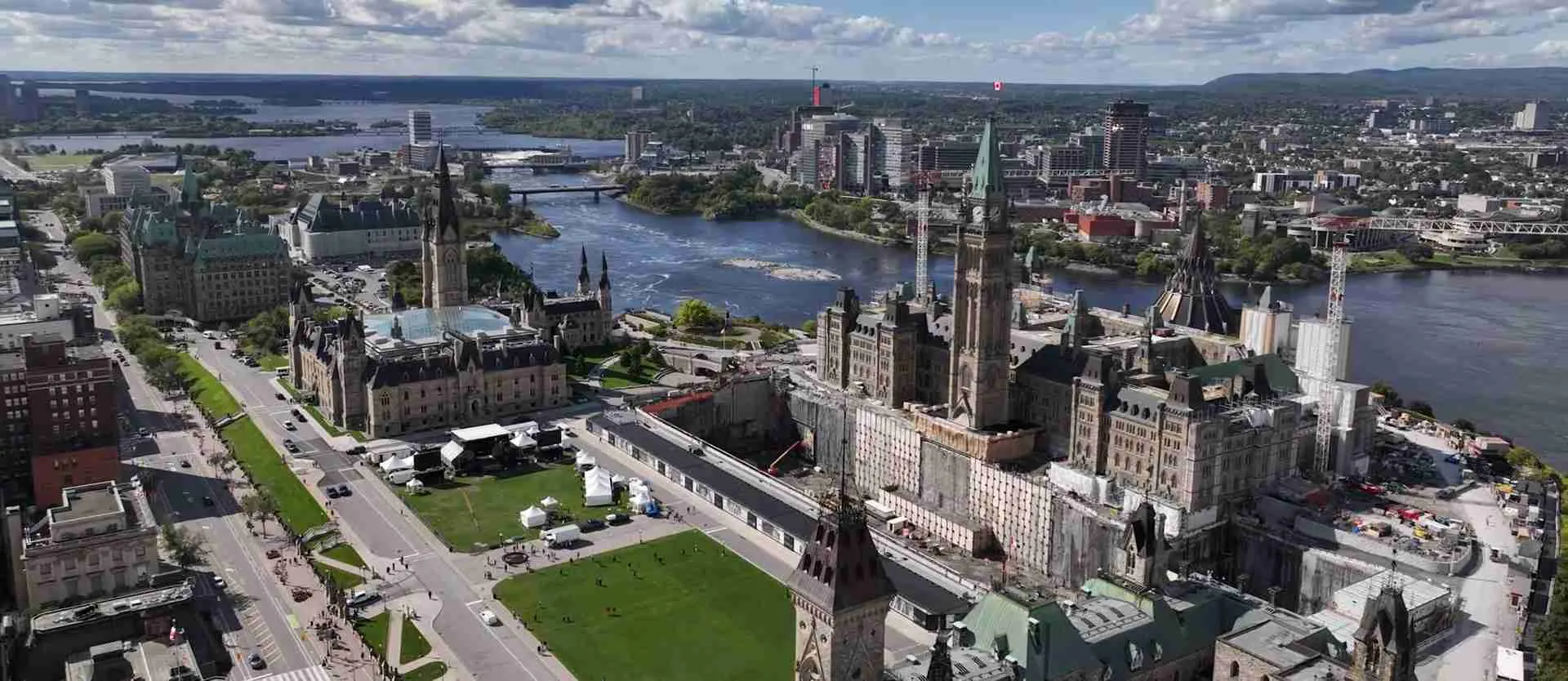
Ottawa functions as Canada’s capital and Ontario’s second tourism hub, with Parliament Hill’s Gothic Revival architecture commanding bluff positions overlooking Ottawa River, Rideau Canal’s 202 kilometers earning UNESCO World Heritage designation, and world-class museums including Canadian War Museum, National Gallery of Canada, and Canadian Museum of Nature delivering comprehensive Canadian historical and cultural context. The ByWard Market neighborhood concentrates restaurants, bars, galleries, and artisan vendors within walkable blocks, while Gatineau across the river in Quebec offers additional dining and cultural attractions.
Ottawa accommodation averages 8% cheaper than Toronto with mid-range hotels at $165-240 nightly, budget options at $85-135, and luxury properties at $275-425. Downtown positions near Parliament Hill and ByWard Market justify premiums, while neighborhoods like The Glebe and Westboro Village deliver local character at modest savings. OC Transpo’s comprehensive bus network and O-Train light rail lines provide excellent car-free mobility, though winter temperatures regularly plunging to -15°C demand appropriate clothing preparations for outdoor exploration.
Niagara Region: Natural Wonder and Wine Country
Niagara Falls delivers Ontario’s most concentrated international tourism with Horseshoe Falls spanning 792 meters and plunging 57 meters, generating mist clouds visible kilometers away and thunder audible throughout Clifton Hill’s entertainment district. Beyond the falls, Niagara-on-the-Lake’s 19th-century village charm and surrounding wine region produce excellent Icewine, Riesling, and Chardonnay across 100+ wineries dotting the Niagara Escarpment’s microclimates. Fort George National Historic Site, Shaw Festival Theatre, and scenic Niagara Parkway cycling route expand regional attractions beyond obvious waterfall viewing.
Niagara Falls accommodation divides between Fallsview properties commanding $245-450 nightly with direct falls views and Lundy’s Lane hotels at $135-215 offering shuttle access to attractions. June through August peak season demands booking 4-6 months ahead, while shoulder months April-May and September-October deliver 25-35% savings with reduced crowds though cooler temperatures. Day trips from Toronto via organized tours at $85-135 or GO Transit at $25-35 round-trip provide economical alternatives to overnight stays.
Muskoka and Cottage Country: Wilderness Retreat
Muskoka’s 1,600 lakes, granite outcrops, and dense forests define Ontario’s cottage country mythology, attracting Toronto urbanites seeking weekend escapes 150-250 kilometers north of the city. Towns including Gravenhurst, Bracebridge, and Huntsville serve as service centers, while lake access determines accommodation character from rustic cabins at $125-250 nightly to luxury resorts at $350-650. Activities center on water sports, hiking, golf, and seasonal pursuits including fall color tours peaking late September through mid-October and winter ice fishing, snowmobiling, and cross-country skiing.
Muskoka requires vehicle access given negligible public transportation, with Highway 400 delivering Toronto connections in 2-3 hours depending on cottage location. Peak demand June through August and Canadian holiday weekends necessitate booking 6-12 months ahead for desirable waterfront properties, while May and September offer availability at 20-30% discounts with excellent weather and minimal blackfly harassment.
Algonquin Provincial Park: Backcountry Wilderness
Algonquin Provincial Park’s 7,653 square kilometers encompass Ontario’s premier wilderness experience with 2,400 lakes, 1,200 kilometers of canoe routes, abundant wildlife including 2,000 black bears, and 1,500 moose. Highway 60 corridor provides accessible camping, hiking, and wildlife viewing, while backcountry canoe routes reaching 30+ kilometers from roads deliver solitude impossible in urban Ontario. Peak autumn colors mid-September through early October attract photographers and leaf-peepers, while spring wildflowers in May and summer canoeing in July-August represent prime visitation windows.
Algonquin camping reservations open five months ahead and sell rapidly for summer weekends and autumn color peak. Frontcountry campgrounds charge $45-58 nightly per site accommodating tents or RVs, while backcountry permits cost $17.50 per person nightly plus $13.50 reservation fee. Vehicle permits add $21 daily or $83.50 annually for Ontario Parks access. Budget $135-175 daily for two people including camping, food, gear, and permits, with rental canoes at $50-75 daily if needed.
Prince Edward County: Culinary and Wine Destination
Prince Edward County’s island geography 200 kilometers east of Toronto creates microclimates supporting 40+ wineries, craft breweries, artisan cheese makers, and farm-to-table restaurants earning national culinary recognition. Sandbanks Provincial Park’s massive sand dunes and beaches, Picton’s heritage downtown, and Wellington’s art galleries distribute attractions across the county, while cycling routes traverse quiet rural roads connecting wineries and studios. Autumn harvest season September through October delivers peak agricultural experiences, while summer beaches attract Toronto weekenders seeking Lake Ontario swimming and sailing.
Accommodation spans bed-and-breakfasts at $145-235 nightly, heritage inns at $185-295, and cottage rentals at $200-400, with two-night minimums standard for summer weekends. Public transportation reaches Picton via Megabus from Toronto, but exploring wineries and beaches requires rental car access. Budget $225-325 daily per couple for accommodation, meals emphasizing local producers, wine tastings at $15-25 per winery, and modest attraction fees.
Bruce Peninsula and Georgian Bay: Coastal Wilderness
Bruce Peninsula National Park and Fathom Five National Marine Park protect Georgian Bay’s dramatic limestone cliffs, crystal-clear waters, and 22 shipwrecks accessible to divers. The Bruce Trail’s 890 kilometers from Niagara to Tobermory traverse peninsula length, while Flowerpot Island’s distinctive rock formations and Grotto cave swimming attract summer adventurers. Tobermory village serves as peninsula gateway with ferry connections to Manitoulin Island and diving charter operations exploring freshwater shipwrecks in exceptional visibility.
Bruce Peninsula demands vehicle access given remote location 300 kilometers northwest of Toronto and minimal public transportation. Summer months June through August see accommodation fully booked months ahead, with Tobermory hotels, motels, and B&Bs charging $165-285 nightly and requiring 2-3 night minimums. Camping at Cyprus Lake within park boundaries costs $43.50-57.50 nightly per site with reservations opening five months ahead and disappearing within hours for summer weekends. Budget $185-265 daily for couples including accommodation, meals in limited Tobermory restaurants, park entry at $13 daily, and modest activity costs.
Transportation Planning for Ontario 2026
Ontario’s transportation infrastructure combines comprehensive urban transit systems, extensive inter-city bus and rail networks, and highway systems requiring strategic vehicle decisions based on destinations and itinerary structure. The 2026 One Fare program extension and TTC fare freeze create savings opportunities unavailable in previous years.
Toronto Public Transportation 2026
Toronto Transit Commission operates North America’s third-busiest transit system with four subway lines, 11 streetcar routes, and 140+ bus routes delivering comprehensive coverage across the city. Adult fares in 2026 remain frozen at $3.30 per ride using PRESTO card, debit, or credit tap payments, with children under 12 riding free. TTC Monthly Pass costs $156 for unlimited travel, breaking even at 48 rides monthly and justifying purchase for stays exceeding two weeks with daily transit use.
PRESTO card ($4 one-time card cost) enables seamless transfers between TTC, GO Transit, and regional systems under Ontario’s One Fare program, eliminating the double fares that previously cost commuters $6-8 per journey. Digital PRESTO cards load into Apple Wallet or Google Wallet without physical card purchase, though hotel visitors often find single-ride tap payments most convenient for occasional transit use. The 24-hour Presto Day Pass at $13.50 covers unlimited TTC travel but requires minimum four rides to justify versus single-fare tap payments.
Subway lines operate 6 AM to 2 AM Monday-Saturday and 8 AM to 2 AM Sunday with frequency every 2-5 minutes peak periods and 5-10 minutes off-peak. Streetcars handle downtown surface routes including popular 510 Spadina and 504 King lines, while Blue Night Network buses serve 24-hour coverage on major corridors. Toronto Pearson Airport connects downtown via UP Express train at $12.50 adult fare with 25-minute journey time to Union Station, operating every 15 minutes and accepting PRESTO card or credit card tap payments.
Ottawa Transportation Options 2026
OC Transpo operates Ottawa’s public transit with Confederation Line O-Train light rail serving downtown corridor and extensive bus routes covering neighborhoods. Adult fares increased 2.5% in January 2026 to $4.10 using PRESTO or debit/credit tap, or $4.15 cash, with transfers valid 90 minutes from first tap. Monthly pass costs $128 representing break-even at 32 rides, suitable for extended stays or daily commuters but excessive for typical tourist itineraries.
Confederation Line stations connect Parliament Hill, ByWard Market, Rideau Centre, and University of Ottawa within walkable downtown core, while bus routes extend to Gatineau across the river, Orleans suburbs, and Kanata tech sector. Free transit applies to riders under 18 during summer months, holidays, and weekends starting 2026 as council incentive for family tourism. Ottawa Airport connects downtown via Route 97 bus at standard $4.10 fare with 40-minute journey time, or taxi/rideshare at $40-55.
Confederation Line frequency reaches every 3-5 minutes during peak commuting hours and 10-15 minutes midday and evenings, with reduced service after 11 PM requiring bus transfers on many routes. Winter operations occasionally face delays during extreme cold snaps below -25°C or significant snowfall, though OC Transpo maintains generally reliable year-round service despite harsh climate challenges.
GO Transit Regional Connections 2026
GO Transit operates commuter rail and bus services throughout Greater Toronto and Hamilton Area, extending to Niagara Falls, Barrie, Kitchener-Waterloo, and Peterborough. The province’s 2026 fare restructuring reduces GO Transit base fares to $3 for trips within Toronto city limits and journeys under 10 kilometers, aligning with TTC pricing and encouraging transit integration. Longer routes charge distance-based fares ranging $8-25 for typical tourist destinations.
One Fare program enables free transfers between GO Transit and TTC, Brampton Transit, Durham Region Transit, MiWay, and York Region Transit when using same PRESTO card, debit card, or credit card for tap-on and tap-off across systems. This eliminates the former $6-8 double-fare penalty and enables economical suburban accommodation strategies with GO Transit commutes into Toronto attractions. Trips to Niagara Falls via GO Transit require bus-train-bus combination taking 2.5-3 hours at $25-30 compared to $85-135 organized tours including admission tickets.
GO Train frequencies vary dramatically by route, with Lakeshore lines operating 15-minute frequency all-day and other routes running primarily peak commuting hours. Weekend and holiday service operates reduced schedules requiring careful timetable verification before planning itineraries dependent on GO Transit connections. All GO Transit vehicles accept PRESTO card, debit card, and credit card tap payments, though cash purchases require station ticket machines.
Inter-City Bus Services 2026
Megabus and FlixBus dominate inter-city bus routes connecting Toronto, Ottawa, Montreal, Niagara Falls, Kingston, London, and Windsor with competitive fares reflecting advance booking timing. Toronto-Ottawa costs $35-65 depending on booking window, departure time, and demand, with early morning and late evening departures typically cheapest. Toronto-Niagara Falls runs $18-35 with journey times 1.5-2 hours via Queen Elizabeth Way highway, though limited drop-off points require additional local transit connections to hotels and attractions.
Ontario Northland operates coach services from Toronto to North Bay, Sudbury, Timmins, and other northern destinations lacking VIA Rail access, with fares $55-95 and journey times 4-7 hours depending on route. The reinstated Northlander passenger rail service between Toronto and Timmins targeting late 2026 launch will supplement bus options with improved comfort and reliability, though exact fares and schedules remain unpublished as of early 2026.
Bus travel advantages include rock-bottom pricing particularly for advance bookings, convenient downtown-to-downtown service avoiding airport hassles, and free WiFi on most routes. Disadvantages encompass limited luggage space, longer journey times versus trains or flights, traffic delay vulnerabilities, and less legroom than rail alternatives. Budget travelers prioritizing cost savings over comfort find buses optimal, while those valuing journey experience favor VIA Rail or rental vehicles.
VIA Rail Connections 2026
VIA Rail operates Canada’s passenger rail service with Ontario routes connecting Toronto-Ottawa-Montreal corridor, Toronto-Windsor via London, Toronto-Sarnia, and Toronto-Niagara Falls seasonal summer service. The flagship Toronto-Ottawa route offers five daily departures with 4.5-5 hour journey times, Economy fares $54-115, and Business Class $175-245 depending on booking timing and day of week. Advance purchase 7-14 days ahead typically delivers 30-40% savings versus last-minute bookings.
VIA Rail advantages include comfortable seating with generous legroom, onboard cafe car service, reliable schedules immune to highway traffic delays, and scenic route views particularly Kingston-Ottawa stretch following St. Lawrence River. Business Class upgrades include meals, alcoholic beverages, priority boarding, and lounge access at major stations justifying premiums for longer journeys. Economy passengers find basic amenities adequate with cafe car snack and beverage purchases supplementing ticket cost.
Toronto’s Union Station serves as Ontario rail hub with connections to subway, GO Transit, and UP Express airport train, while Ottawa Station on Tremblay Road requires 15-minute bus connection or $15-20 rideshare to downtown core. Advance seat selection costs $5-10 but guarantees specific seating, while free seat assignment risks middle seats or rear cars during busy periods. Luggage allowances permit two carry-on bags plus two checked bags without fees, exceeding airline restrictions.
Rental Car Strategies 2026
Vehicle rental provides essential access to Ontario destinations beyond Toronto-Ottawa urban cores, particularly wine regions, provincial parks, Muskoka cottages, and rural attractions lacking practical public transportation. Rental rates vary dramatically by season, location, and booking timing, with summer peak weeks July-August commanding $85-145 daily for economy cars, compared to $45-75 daily shoulder months May-June and September-October. Weekly rentals deliver 15-25% per-day savings versus daily rates.
Toronto Pearson Airport concentration generates competitive pricing but adds Airport Improvement Fee and concession charges totaling $35-50 beyond base rental cost. Downtown Toronto locations avoid airport fees but charge parking premiums $25-45 daily for hotel or garage storage, negating airport savings for city-based stays. Optimal strategy secures vehicle only for regional excursion days, picking up morning of departure and returning evening same day or 2-3 days later after wine country, cottage, or park exploration.
Insurance coverage requires careful attention, with personal automobile policies sometimes covering Canadian rentals and credit cards providing collision damage waiver, potentially eliminating $18-35 daily insurance charges rental agencies push aggressively. Verify coverage details before departing to avoid unnecessary duplicate coverage or dangerous assumption of protection you lack. Winter months November-March require snow tires by law in many regions, adding $15-25 daily to rental costs when applicable.
Fuel costs in 2026 Ontario average $1.45-1.65 per liter depending on region and proximity to U.S. border, translating to roughly $0.36-0.42 per kilometer for typical economy car fuel consumption. Highway 407 Electronic Toll Route bypassing Toronto congestion charges $0.25-0.35 per kilometer plus $4.50 trip charge, convenient for airport connections or cross-town travel but expensive for longer distances. Most Ontario highways remain free including Highway 401 Toronto-Ottawa-Montreal corridor and Highway 400 Toronto-Muskoka route.
Accommodation Strategies and Costs 2026
Ontario accommodation spans every budget tier from hostel dormitories and budget motels to luxury hotels and boutique inns, with pricing determined by city, neighborhood, season, and booking timing. Strategic accommodation selection balances location convenience, transportation access, and nightly costs within overall trip budget parameters.
Budget Accommodation Options 2026
Hostel dormitories in Toronto and Ottawa cost $35-55 per bed nightly with shared bathrooms, communal kitchens, and social atmospheres attracting backpackers and solo travelers. HI Toronto Hostel on Church Street charges $40-48 per bed in 4-8 bed dormitories, while Ottawa Backpackers Inn costs $38-52 depending on room size and season. Private rooms with shared bathrooms at hostels run $85-125, bridging gap to budget hotels while maintaining hostel amenities and social opportunities.
Budget hotels and motels charge $85-145 nightly for basic private rooms with en-suite bathrooms, typically lacking amenities like restaurants, fitness centers, or room service but delivering fundamental shelter needs. Chains including Comfort Inn, Days Inn, and Travelodge cluster near highway interchanges and suburban areas, requiring transit connections or vehicle access to downtown attractions but offering parking and predictable standardized quality. Add 13% HST plus 4% Municipal Accommodation Tax totaling 17.52% to quoted rates in Toronto, or 13% HST in other Ontario cities.
Budget travelers sharing hotel accommodation manage $43-73 per person nightly for budget hotels after taxes (budget hotel $85-145 plus 17.52% tax in Toronto equals $100-170, divided by 2 equals $50-85 per person), or $35-55 per person for hostel dormitories, translating to accommodation costs $300-595 weekly for couples or friends sharing rooms. Solo travelers pay full room rates without splitting costs, substantially increasing budget tier difficulty without companion travelers to share expenses.
Mid-Range Hotel Pricing 2026
Mid-range hotels in Toronto average $175-265 nightly for three-star properties with amenities including fitness centers, business centers, complimentary breakfast, and convenient transit or downtown access. Holiday Inn, Hampton Inn, Courtyard by Marriott, and Cambridge Suites exemplify this tier, delivering predictable comfort and services without luxury hotel expense. Downtown Toronto locations command premium positions, while subway-accessible neighborhoods including North York, Etobicoke, and Scarborough deliver equivalent quality at $145-215 with 15-20 minute commute trade-offs.
Ottawa mid-range hotels cost $165-240 nightly representing 8% savings versus Toronto equivalent properties, with downtown ByWard Market and Parliament Hill areas justifying premiums while The Glebe and Westboro neighborhoods offer character at modest discounts. Parking charges add $25-40 daily to accommodation costs in urban cores, while suburban properties typically include free parking, factoring into location value calculations for vehicle-equipped travelers.
Niagara Falls mid-range hotels split between Fallsview properties at $185-285 nightly with direct waterfall views from rooms and Lundy’s Lane locations at $135-215 requiring 10-15 minute drives or shuttle rides to falls viewing areas. June through August peak season inflates rates 30-50% above shoulder month pricing, with bookings 4-6 months ahead essential for preferred properties and dates. Mid-range couples sharing rooms budget $103-156 per person nightly in Toronto (mid-range hotel $175-265 plus 17.52% tax equals $206-312, divided by 2 equals $103-156), $97-141 in Ottawa (mid-range hotel $165-240 plus 13% tax equals $187-271, divided by 2 equals $94-136), or $79-167 in Niagara Falls depending on season and specific property selection.
Luxury and Boutique Properties 2026
Luxury hotels in Toronto including Ritz-Carlton, Four Seasons, Shangri-La, and Fairmont Royal York charge $350-550 nightly for superior rooms with premium amenities, exceptional service, rooftop pools, spa facilities, and Michelin-quality restaurants. Boutique properties like Hazelton Hotel in Yorkville or Drake Hotel on Queen West deliver distinctive design, personalized service, and neighborhood immersion at $295-425 nightly, splitting difference between chain luxury and mid-range standardization.
Ottawa’s Fairmont Chateau Laurier commands $325-485 nightly for castle-like accommodations facing Parliament Hill, while ANDAZ Ottawa ByWard Market delivers contemporary luxury at $285-425 with rooftop terrace and modern aesthetic. Smaller cities and resort destinations including Muskoka, Prince Edward County, and Niagara-on-the-Lake support luxury inns, heritage properties, and lakefront resorts at $295-650 nightly with exceptional service and location justifying premiums over chain hotels.
Luxury travelers sharing accommodation invest $206-323 per person nightly in Toronto (luxury hotel $350-550 plus 17.52% tax equals $411-647, divided by 2 equals $206-324), $165-270 in Ottawa depending on city and specific property selection, translating to $1,440-2,260 weekly accommodation expenses before meals, transportation, and activities. Solo luxury travelers face full room rates without cost-sharing opportunities, doubling per-person accommodation expenses relative to couples or traveling companions.
Alternative Accommodation: Vacation Rentals and B&Bs
Vacation rental apartments and homes through Airbnb and Vrbo cost $125-285 nightly for one-bedroom units in Toronto or Ottawa, $165-350 for two-bedroom spaces sleeping four, and $225-550 for entire houses accommodating 6-10 people. Kitchens enable grocery shopping and meal preparation reducing dining expenses, while multiple bedrooms support group travel cost-splitting unavailable in hotel configurations. Downtown locations command premiums matching hotel pricing, while residential neighborhoods deliver savings with transit access trade-offs.
Cleaning fees of $75-150 per stay and service fees of 12-18% add substantially to quoted nightly rates, making vacation rentals most economical for stays exceeding 4-5 nights when upfront fees amortize across multiple days. Minimum stay requirements of 2-3 nights are standard for urban rentals, extending to 5-7 nights at cottage country and resort properties during summer peak demand.
Bed-and-breakfasts operate throughout Ontario offering intimate accommodations in heritage homes, country properties, and small-town locations at $125-235 nightly including full breakfast. Prince Edward County, Niagara-on-the-Lake, Stratford, and Ottawa neighborhoods support thriving B&B sectors with personal hospitality and local expertise compensating for fewer amenities than hotels. Shared bathrooms are uncommon in Ontario B&Bs compared to European standards, with most offering en-suite facilities and private room entrances.
Camping and Provincial Parks 2026
Ontario Parks operates 340 parks including 115 with campground facilities ranging from wilderness backcountry sites accessible only by canoe to full-service campgrounds with electrical hookups, showers, and interpretive programs. Frontcountry camping at popular parks including Algonquin, Killarney, Sandbanks, and Bon Echo costs $45-58 nightly per site accommodating tents or recreational vehicles, while backcountry sites charge $17.50 per person nightly plus $13.50 reservation fee per trip.
Vehicle entry permits cost $21 daily or $83.50 annually providing access to day-use areas, hiking trails, beaches, and interpretive facilities beyond camping reservations. Roofed accommodations including yurts, Otentiks, cabins, and safari tents operate at premium parks charging $95-185 nightly with basic furniture and heating but requiring guests to supply bedding, cookware, and camp supplies. Reservations open five months ahead at 7 AM on specific dates with popular parks and summer weekends selling out within hours of availability.
Camping couples budget $45-75 daily including site fees, vehicle permits, camp food, firewood at $9-11 per bundle, and modest supplies, representing Ontario’s most economical accommodation option and delivering wilderness experiences impossible in urban hotel settings. Rental equipment including tents, sleeping bags, camp stoves, and coolers costs $85-145 for weekend packages from outfitters near major parks when arriving without personal gear.
Daily Budget Planning for Ontario 2026
Ontario daily costs vary dramatically by city, accommodation tier, dining choices, and activity selection, with travelers managing budgets from $112 daily to $700+ depending on expectations and travel style. These comprehensive breakdowns assume two travelers sharing hotel accommodation with per-person costs calculated after dividing room rates by two and including applicable taxes.
Budget Travel Costs 2026
Budget travelers prioritizing cost minimization manage Ontario exploration on $112-183 per person daily assuming two sharing accommodation. Hotel accommodation $50-85 per person (two sharing budget hotel at $85-145 nightly plus 17.52% Toronto tax equals $100-170 total, divided by 2 equals $50-85 per person), breakfast $10-15 at hotel or cafe, lunch $15-22 emphasizing food courts and ethnic eateries, dinner $22-35 at casual restaurants or takeout, local transportation $7-13 using public transit or walking, and attractions $15-25 selecting free museums, parks, and self-guided exploration.
Budget strategies maximizing value include hostel stays with shared kitchens enabling grocery shopping and meal preparation, Toronto CityPASS at $135 saving 38% on five major attractions versus individual admission, free museum days and provincial park day-use when camping elsewhere, ethnic neighborhood dining delivering authentic cuisine at fraction of downtown prices, and public transportation exclusively avoiding parking and rental car costs.
Budget weekly costs total $785-1,280 per person for seven days including accommodation, meals, transportation, and modest attractions, rising to $1,570-2,560 per person over two weeks. Solo budget travelers face challenges splitting accommodation costs, typically adding $50-85 daily versus coupled travelers sharing rooms.
Mid-Range Travel Costs 2026
Mid-range travelers balancing comfort and value invest $225-355 per person daily for quality experiences without luxury premiums. Hotel accommodation $103-156 per person (two sharing mid-range hotel at $175-265 nightly plus 17.52% Toronto tax equals $206-312 total, divided by 2 equals $103-156 per person), breakfast $15-22 at hotel or neighborhood cafe, lunch $22-35 at casual dining or food halls, dinner $45-75 at mid-range restaurants with wine, local transportation $10-18 combining public transit with occasional rideshare, and attractions $30-50 including major paid sites and tours.
Mid-range strategies optimize experience-to-cost ratios through advance online booking delivering 15-25% attraction savings, neighborhood dining avoiding tourist district markups, strategic vehicle rental only for regional excursion days, shoulder season travel reducing accommodation 20-30% while maintaining excellent weather, and Toronto/Ottawa base camps with day trips to Niagara, wine country, or provincial parks maximizing regional diversity efficiently.
Mid-range weekly costs reach $1,575-2,485 per person for seven days including accommodation, all meals, transportation, and diverse attractions, extending to $3,150-4,970 per person over two weeks. Couples sharing rooms enjoy substantial per-person savings versus solo travelers paying full accommodation rates without cost-splitting opportunities.
Luxury Travel Costs 2026
Luxury travelers seeking premium experiences invest $430-700 per person daily for exceptional quality, service, and access. Hotel accommodation $206-323 per person (two sharing luxury hotel at $350-550 nightly plus 17.52% Toronto tax equals $411-647 total, divided by 2 equals $206-324 per person), breakfast $25-40 at hotel restaurant or upscale cafe, lunch $40-65 at quality establishments, dinner $85-145 at fine dining restaurants with wine pairings, transportation $25-45 including rideshare and parking without public transit, and attractions $50-85 emphasizing private tours, premium experiences, and VIP access.
Luxury enhancements elevating experiences include EdgeWalk at CN Tower at $199 for hands-free rooftop walk, helicopter tours over Niagara Falls at $165-285, private wine tour transportation in Niagara at $450-750 per group, spa treatments at $145-285, premium theater including Stratford Festival orchestra seats at $95-165, and Michelin-quality dining at restaurants including Alo, Canoe, or George garnering international acclaim.
Luxury weekly costs total $3,015-4,900 per person for seven days with exceptional accommodation, dining, and experiences, rising to $6,030-9,800 per person over two weeks. Solo luxury travelers pay full hotel rates, parking, and transportation costs without companions to split expenses, substantially increasing per-person investment requirements.
Toronto Attractions and Experiences 2026
Toronto concentrates Ontario’s most diverse urban attractions within North America’s fourth-largest city, blending iconic landmarks with neighborhood character, world-class museums with ethnic dining, and waterfront access with cultural institutions rivaling any global metropolis.
CN Tower and Downtown Core 2026
CN Tower dominates Toronto’s skyline at 553 meters with observation levels at 342-346 meters delivering panoramic views extending 160 kilometers on clear days to Niagara Falls and New York State. General admission includes LookOut Level, Glass Floor with transparent panels revealing streets 342 meters below, and outdoor SkyTerrace experiencing open-air perspectives. Toronto CityPASS at $135 includes CN Tower admission plus four additional attractions, saving 38% versus individual tickets at $217 combined value (check official website for current rates as pricing varies seasonally).
EdgeWalk adventure at $199 plus tax enables hands-free walk around exterior platform at 356 meters secured by harness and rail system, operating May through October with advance reservations essential and experience rated as Toronto’s most thrilling attraction. 360 Restaurant at 351 meters rotates completely each 72 minutes while serving contemporary Canadian cuisine at $65-145 per person with priority observation deck access included with dinner reservations. Budget 60-90 minutes for CN Tower visit including elevator waits, though sunset timing and photography enthusiasm extend visits substantially.
Ripley’s Aquarium of Canada adjacent to CN Tower houses 20,000 aquatic animals in 5.7 million liters across North America’s longest underwater viewing tunnel at 96 meters and interactive touch exhibits featuring stingrays, horseshoe crabs, and scarlet cleaner shrimp. Toronto CityPASS includes aquarium admission valued individually at $44 adult tickets (check official website for current rates). Combined CN Tower and aquarium tickets sold as “Sea the Sky” package deliver modest savings versus separate admission purchases when not using CityPASS.
Museums and Cultural Institutions 2026
Royal Ontario Museum (ROM) showcases six million artifacts spanning art, culture, and nature across 40 galleries with strengths including dinosaur collections, Ancient Egypt holdings, and Canadian indigenous materials. Plan Ahead Pricing reduces admission costs for advance online booking with adult tickets starting at $25 when purchased weeks early rising to higher day-of-visit rates (check rom.on.ca for current pricing calendar). Toronto CityPASS includes ROM admission representing one of five attraction choices available through the pass program.
Art Gallery of Ontario (AGO) holds 95,000 works emphasizing Canadian historical art, contemporary pieces, and European masters within Frank Gehry’s architecturally significant building featuring wooden galleria spanning Dundas Street. Permanent collection admission costs $25 adults with special exhibition surcharges adding $5-15 depending on featured artists (check ago.ca for current rates). Toronto CityPASS includes AGO as one of three choice attractions beyond mandatory CN Tower and aquarium, making pass purchase strategic for visitors planning comprehensive museum exploration.
Distillery District occupies 13 acres of Victorian industrial buildings converted to pedestrian-only neighborhood housing 50+ galleries, boutiques, restaurants, and artisan spaces within preserved brick warehouses. Free admission enables wandering cobblestone streets year-round with seasonal programming including winter Christmas Market from late November through December, summer Jazz Festival in July, and various art markets and festivals throughout warmer months. Budget 2-3 hours for district exploration with additional time for shopping, dining, or scheduled performances.
Toronto Islands and Waterfront 2026
Toronto Islands comprise 15 interconnected islands housing Centreville Amusement Park, beaches, picnic areas, walking and cycling trails, and spectacular downtown skyline views across 550 meters of Lake Ontario channel. Jack Layton Ferry Terminal at foot of Bay Street operates year-round service to Ward’s Island, Centre Island, and Hanlan’s Point at $9.11 adult round-trip via Toronto ferries accepting PRESTO card or credit card tap payments. Summer weekends see substantial ferry lineups requiring 30-60 minute waits, making weekday visits or shoulder season timing advisable.
Bicycle rentals at $10-15 hourly or $40-60 daily enable efficient island exploration across 30+ kilometers of paths connecting beaches, Gibraltar Point Lighthouse dating to 1808, and peaceful residential neighborhoods on Ward’s and Algonquin islands where 700 residents maintain year-round community. Beaches including Ward’s Island Beach and Centre Island Beach offer swimming June through September with lifeguard supervision, changing facilities, and picnic areas though Lake Ontario water temperatures remain cool even peak summer at 18-22°C.
Harbourfront Centre along Queens Quay delivers year-round programming across 10 acres including free concerts, art installations, cultural festivals, farmers markets, and skating rink January through March. Power Plant Contemporary Art Gallery showcases rotating exhibitions without admission charge, while seasonal events including Outdoor Art Fair in July, Harvest Festival in September, and winter programming maintain activity through temperature extremes. Budget 2-4 hours for waterfront exploration depending on event timing and weather conditions.
Neighborhood Exploration and Dining 2026
Kensington Market’s bohemian character spans vintage clothing stores, international grocers, cafes, and street art within pedestrian-friendly blocks west of Spadina Avenue. Sunday Pedestrian Sundays close streets to vehicles May through October, amplifying neighborhood atmosphere with buskers and impromptu performances. Budget dining emphasizes Jamaican patties at $4-6, Vietnamese pho at $12-16, and Middle Eastern falafel at $8-12, delivering authentic international cuisine at fraction of downtown restaurant costs.
St. Lawrence Market earned National Geographic recognition as world’s best food market with 120 vendors selling fresh produce, artisan bread, cheese, charcuterie, and prepared foods within 1845 building and contemporary north market annex. Saturday farmers market operates year-round with Ontario agricultural producers selling seasonal vegetables, fruits, maple syrup, and specialty products directly to consumers. Peameal bacon sandwiches at Carousel Bakery represent market institution at $9-12, while prepared food vendors deliver lunch options at $12-18 with exceptional quality and variety.
Greektown along Danforth Avenue between Pape and Donlands stations concentrates Greek restaurants, bakeries, tavernas, and Mediterranean markets within subway-accessible neighborhood hosting Taste of the Danforth festival each August attracting 1+ million visitors. Restaurant meals cost $22-38 per person with generous portions, grilled seafood, mezze platters, and hospitality exceeding downtown tourist districts at similar price points. Subsequent neighborhoods including Little India on Gerrard, Koreatown on Bloor, and Little Italy on College deliver equivalent authenticity and value.
Ottawa Attractions and Experiences 2026
Ottawa delivers concentrated Canadian political heritage, museums explaining national history and culture, and outdoor recreation along Rideau Canal and Ottawa River within manageable walkable downtown core accessible entirely by public transportation.
Parliament Hill and Government Precinct 2026
Parliament Hill’s Gothic Revival buildings house Canadian federal government atop bluff commanding Ottawa River views with Centre Block’s Peace Tower rising 92 meters above grounds. Free guided tours explore Senate and House of Commons chambers when Parliament not sitting, explaining Canadian political system, architecture, and history through 45-60 minute interpretive programs requiring advance online booking through free timed-entry reservations during peak summer season.
Changing of the Guard ceremony operates daily late June through late August at 10 AM on Parliament Hill lawns weather permitting, showcasing ceremonial military tradition lasting 30-40 minutes without admission charge. Sound and light show “Northern Lights” projects Canadian storytelling onto Parliament buildings free of charge nightly at 9:30-10 PM July through early September, requiring early arrival for optimal viewing positions as thousands attend popular summer programming.
Supreme Court of Canada offers free public tours explaining judicial system and landmark legal decisions shaping Canadian society, operating year-round with advance registration recommended. Nearby Rideau Hall serves as Governor General’s official residence with grounds open to public year-round for walking, interpretation of Canadian constitutional monarchy system, and seasonal programming including garden tours, historical vignettes, and winter outdoor skating rink.
National Museums 2026
Canadian War Museum chronicles military history from indigenous warfare through contemporary peacekeeping with personal narratives, artifacts, and architecture symbolizing conflict and reconciliation. Admission costs $17 adults with youth under 18 free, and annual memberships at $50 individual or $100 family delivering unlimited visits plus reciprocal privileges at other national museums (check official site for current rates). Budget 2-3 hours for comprehensive exploration emphasizing First World War trenches recreation, Second World War galleries, and Cold War tensions exhibits.
National Gallery of Canada houses 75,000 works emphasizing Canadian artists including Group of Seven landscape painters, indigenous contemporary art, and European masters within architectural landmark designed by Moshe Safdie. General admission costs $20 adults with special exhibitions adding $5-10 surcharges depending on featured collections (check gallery.ca for current rates). Thursday evening admission after 5 PM reduces cost to $10 adult, delivering value timing for budget-conscious visitors willing to explore abbreviated 2-3 hour visits.
Canadian Museum of Nature occupies renovated heritage “castle” building blocks from Parliament Hill, exploring natural history through dinosaur fossils, mineral collections, Canadian mammals, Arctic ecology, and live insect galleries. Admission costs $18.50 adults with family packages delivering savings for groups (check nature.ca for current rates). Interactive elements engage children while adults appreciate comprehensive natural science coverage explaining Canadian biodiversity and geological heritage.
Rideau Canal and Outdoor Activities 2026
Rideau Canal earned UNESCO World Heritage designation for 202-kilometer engineering achievement connecting Ottawa and Kingston, with Ottawa portion transforming into world’s largest skating rink January through March when ice thickness permits public access. Skateway operates 7.8 kilometers through downtown with support facilities including skate rentals at $20 daily, warming pavilions, food vendors selling Beavertails pastry at $7-10, and cleared ice maintained by National Capital Commission.
Summer canal activities emphasize cycling and walking paths paralleling waterway, canal boat tours explaining lock system and history at $28-35 adult tickets for 90-minute narrated cruises, and Parks Canada interpretation at eight historic lock stations within Ottawa segment. Kayak and paddleboard rentals cost $25-40 hourly enabling water-level perspective through downtown corridor complementing shoreline trail exploration.
Gatineau Park across Ottawa River in Quebec encompasses 361 square kilometers of forested hills, 50+ hiking trails, 165 kilometers of cycling routes, beaches at Lac Meech and Lac Philippe, and Champlain Lookout delivering panoramic Ottawa Valley views. Park entry remains free year-round with paid parking at $12-15 daily at major access points during summer peak season. Autumn color viewing mid-September through mid-October attracts regional tourists with Gatineau Parkway closing to vehicles Sunday mornings for cyclist and pedestrian exclusive access.
ByWard Market and Dining Scene 2026
ByWard Market operates as Ottawa’s oldest public market since 1826 within pedestrian-friendly blocks housing 200+ businesses including farmers market stalls, restaurants, bars, galleries, and artisan shops. Fresh produce, baked goods, cheese, and specialty foods concentrate in covered market building operating year-round with outdoor vendors May through October expanding selection during growing season. Lunch options range from $12-18 at food stalls to $22-35 at casual restaurants within market precinct.
BeaverTails pastry originated at ByWard Market as Ottawa cultural institution serving fried dough stretched to beaver tail shape and topped with cinnamon sugar, chocolate, or other variations at $7-10 per pastry. Multiple locations operate throughout market area with flagship stall on George Street maintaining original recipes since 1978 and attracting lines during peak tourist periods.
Restaurant scene extends beyond market area to neighborhoods including Elgin Street, Westboro Village, and Little Italy on Preston Street delivering diverse international cuisine at moderate pricing. Mid-range dinner costs $35-55 per person with wine at neighborhood establishments compared to $45-75 downtown tourist areas, rewarding travelers willing to venture beyond immediate Parliament Hill vicinity for authentic local dining experiences.
Niagara Falls and Region Attractions 2026
Niagara Falls concentrates natural spectacle with tourism infrastructure delivering viewpoints, boat tours, entertainment districts, and wine country access within day-trip distance from Toronto or destination stays warranting dedicated accommodation.
Falls Viewing and Boat Tours 2026
Horseshoe Falls on Canadian side delivers superior viewing versus American Falls, with 792-meter curved crest plunging 57 meters and generating 750,000 gallons per second flow during peak daytime hours reduced to 50% overnight for hydroelectric diversion. Table Rock Welcome Centre provides closest ground-level approach with viewing platforms, interpretive exhibits, and Journey Behind the Falls attraction accessing tunnels behind water curtain at $18.50 adult admission (check official Niagara Parks site for current rates).
Hornblower Niagara Cruises (formerly Maid of the Mist) operates Canadian-side boat tours approaching falls base receiving thorough soaking despite provided rain ponchos. Adult tickets cost $32-38 depending on season with advance online booking reducing prices 10-15% versus day-of-purchase at ticket booth (check official site for current rates). Boats depart every 15-30 minutes during operating season mid-April through November with peak summer waits of 30-60 minutes common at ticket counters, making advance purchase and timed entry advisable.
Skylon Tower observation deck at 236 meters elevation delivers aerial perspective of falls, gorge, and surrounding region from indoor and outdoor platforms. Admission costs $17-19 adult with revolving restaurant dining eliminating admission charge for diners purchasing $45+ meals (check official site for current rates). Evening illumination transforms falls with colored lights 8 PM-midnight year-round plus fireworks displays at 10 PM Friday and Sunday nights May through October creating magical nocturnal viewing opportunities.
Niagara Parkway and Attractions 2026
Niagara Parkway parallels Niagara River 56 kilometers from Niagara-on-the-Lake to Fort Erie, designated by Winston Churchill as “prettiest Sunday afternoon drive in the world” and offering cycling route connecting multiple attractions, parks, and historic sites. Whirlpool Aerocar cable car crosses Niagara Whirlpool at $17 adult tickets (check official site for current rates), while White Water Walk wooden boardwalk follows gorge rapids at $15 adult admission delivering perspectives of Class VI whitewater impossible from upper viewing points.
Butterfly Conservatory houses 2,000 free-flying tropical butterflies within climate-controlled greenhouse environment featuring waterfalls, tropical plants, and educational interpretation. Admission costs $18 adult (check official site for current rates) with Niagara Parks Power Pass at $60-80 delivering admission to six attractions including Journey Behind the Falls, Butterfly Conservatory, White Water Walk, and others, saving 25-35% versus individual ticket purchases for visitors planning comprehensive attraction exploration.
Niagara Glen Nature Reserve protects 4 kilometers of undeveloped gorge with hiking trails descending to riverbank through 12,000-year-old rock formations, forest ecosystems, and unique microclimate supporting rare plant species. Free access year-round with parking at $5 daily enables wilderness experience minutes from tourist district congestion, requiring moderate fitness for 200-meter elevation descent and ascent on rocky, rooted trails.
Niagara-on-the-Lake and Wine Country 2026
Niagara-on-the-Lake preserves 19th-century town character with heritage buildings, boutique shopping, Shaw Festival Theatre, and gateway position to surrounding wine region producing world-renowned Icewine, Riesling, Chardonnay, and Pinot Noir from 100+ wineries exploiting Niagara Escarpment microclimates. Fort George National Historic Site interprets War of 1812 with costumed interpreters, artillery demonstrations, and restored military buildings at $12 adult admission plus $8.50 Parks Canada Discovery Pass covering national historic sites nationwide.
Winery tastings cost $15-25 per flight sampling 4-6 wines with many operations requiring advance reservations during peak summer weekends May through October. Larger wineries including Peller Estates, Inniskillin, and Jackson-Triggs offer comprehensive tours with production facility access, while smaller boutique operations emphasize intimate tastings with winemaker interactions and limited-release specialties unavailable through retail channels. Self-drive winery tours require designated driver or modest alcohol consumption given Ontario’s 0.05% blood alcohol limit, while organized tours at $85-135 per person include transportation, tastings at 3-4 wineries, and lunch eliminating driving concerns.
Cycling represents ideal wine country exploration method with flat terrain, quiet roads, and designated routes connecting wineries, farms, and villages across Niagara Peninsula. Bike rental shops in Niagara-on-the-Lake charge $40-60 daily for quality hybrid or road bikes with helmets, locks, and route maps, operating May through October during prime cycling season. Self-guided cycling delivers flexibility unavailable on group tours, though requires participants to manage tasting room reservations, lunch stops, and distance planning within physical capabilities.
Provincial Parks and Natural Areas 2026
Ontario’s provincial parks system protects 8.3 million hectares across 340 parks ranging from wilderness backcountry accessible only by canoe to day-use recreation areas with beaches, picnic facilities, and interpretive programming within driving distance of urban centers.
Algonquin Provincial Park Planning 2026
Algonquin Provincial Park’s 7,653 square kilometers encompass quintessential Ontario wilderness with 2,400 lakes, 1,200 kilometers of canoe routes, abundant wildlife including 2,000 black bears and 1,500 moose, and autumn colors rivaling any North American location. Highway 60 corridor concentrates services including visitor center, campgrounds, outfitters, day-use areas, and 15 hiking trails ranging 1-11 kilometers delivering accessible wilderness sampling without backcountry commitment.
Camping reservations open five months ahead at 7 AM on designated dates with summer weekends and September/October autumn color peak selling out within hours. Frontcountry campgrounds along Highway 60 charge $48-58 nightly per site accommodating tents or RVs with amenities including toilets, showers, and interpretive programs. Mew Lake, Pog Lake, and Rock Lake campgrounds operate year-round enabling winter camping, cross-country skiing, and snowshoeing, while others open May through October during ice-free season.
Backcountry camping requires permits at $17.50 per person nightly plus $13.50 reservation fee per trip, enabling overnight canoe trips ranging 2-10 days through interconnected lakes with 1,900 designated campsites offering wilderness solitude impossible near roads. Rentals including canoes at $50-75 daily, paddles, life jackets, and portage carts address visitors arriving without personal equipment, while outfitters provide complete trip planning, maps, bear-proof food containers, and safety orientation.
Killarney Provincial Park Access 2026
Killarney Provincial Park protects white quartzite ridges, pink granite shores, and crystal-clear lakes 100 kilometers southwest of Sudbury, inspiring Group of Seven landscape artists including A.Y. Jackson who lobbied for park designation achieved in 1964. La Cloche Silhouette Trail ranks among Ontario’s most spectacular 100-kilometer backpacking routes circumnavigating Killarney ridges through 7-10 days of challenging terrain with stunning vistas, though shorter day hikes including Crack Trail and Cranberry Bog Trail deliver park sampling without multi-day commitment.
Vehicle access requires Highway 637 from Highway 69, with final 10 kilometers on gravel road suitable for passenger vehicles but rough for low-clearance sedans. George Lake Campground operates May through October with 133 sites at $48 nightly plus vehicle permit at $21 daily, requiring reservations five months ahead for summer weekends and autumn color timing mid-September through early October. Canoe and kayak rentals at park store cost $50-65 daily enabling lake exploration without portaging from parking areas.
Backcountry permits at $17.50 per person nightly plus $13.50 reservation fee enable overnight stays at 130 interior campsites reached by canoe and portage. Popular canoe loops include Collins Inlet extending 3-5 days and Killarney Ridge Route combining canoeing and hiking over 4-7 days. Bear-proof food containers are mandatory for all backcountry camping, available for rental at $15 per trip or purchase at park store.
Bruce Peninsula National Park Adventures 2026
Bruce Peninsula National Park protects Georgian Bay’s dramatic limestone cliffs, clear aquamarine waters, and diverse ecosystems at peninsula’s northern tip 300 kilometers northwest of Toronto. The Grotto represents park’s iconic attraction with water-filled cave carved by wave action, accessible via moderate 4-kilometer round-trip hike requiring scrambling over rocks and roots. Summer weekends see parking fully booked requiring advance online parking reservations at $13 per vehicle eliminating former overcrowding and unauthorized parking issues.
Cyprus Lake Campground operates May through October with 242 sites at $43.50-57.50 nightly plus vehicle permit at $13 daily, serving as base for Grotto access, Indian Head Cove, and Bruce Trail segment hiking. Reservations open five months ahead with summer weekend availability disappearing within hours of release, making flexibility or weekday timing essential for spontaneous travelers. Yurts and rustic cabins rent at $125-145 nightly providing roofed accommodation for visitors without camping equipment.
Fathom Five National Marine Park adjacent to terrestrial park protects 22 shipwrecks visible to divers and snorkelers in Georgian Bay’s exceptionally clear waters. Glass-bottom boat tours from Tobermoy at $35-45 adult tickets enable wreck viewing without diving certification, while Flowerpot Island excursions combine boat transport at $38-48 round-trip with hiking opportunities exploring distinctive flowerpot rock formations and lighthouse heritage. Park day-use permits cost $6.40 daily covering marine park access regardless of activity selection.
Seasonal Considerations and Best Times to Visit 2026
Ontario experiences dramatic seasonal variation affecting attraction accessibility, accommodation pricing, crowd levels, and weather conditions requiring strategic timing decisions aligned with priorities and tolerance for temperature extremes.
Summer Peak Season: June-August 2026
Summer delivers warmest temperatures averaging 25-28°C in southern Ontario, longest daylight hours enabling extended sightseeing, and maximum attraction accessibility with provincial parks, beaches, patios, and outdoor festivals operating peak programming. June through August represents highest accommodation pricing, largest crowds at major attractions requiring advance booking, and greatest competition for camping reservations, restaurant tables, and tour slots.
Advantages include guaranteed warm weather for outdoor activities, swimming opportunities at beaches and lakes, festival programming including Toronto Jazz Festival, Ottawa Bluesfest, and Niagara Wine Festival, and complete attraction operations without seasonal closures. Disadvantages encompass premium pricing on accommodation reaching 30-50% above shoulder season rates, crowds requiring patience at popular sites including CN Tower, Niagara Falls viewing areas, and Algonquin trails, and booking competition demanding 3-6 month advance planning for preferred dates and properties.
Mid-June through early July and late August through Labour Day represent optimal summer timing, avoiding July and early August peak congestion while maintaining excellent weather. Weekday travel in any summer month reduces crowds substantially versus weekend visitation, particularly at provincial parks and outdoor attractions where day-trippers concentrate on Saturdays and Sundays.
Shoulder Seasons: May and September-October 2026
Shoulder months deliver 20-30% accommodation savings versus summer peaks, smaller crowds at attractions, comfortable temperatures averaging 15-22°C ideal for walking and outdoor exploration, and autumn color displays mid-September through mid-October ranking among North America’s finest. May brings spring wildflowers, migrating birds, and maple syrup season at sugar bushes, while September-October delivers harvest festivals, wine country grape picking, and pristine weather before winter arrival.
May considerations include occasional cool days requiring layers and fleece jackets, blackfly season in northern Ontario lasting 2-3 weeks mid-May through early June, and reduced ferry schedules to Toronto Islands and other seasonal services. September-October benefits from consistently pleasant weather, autumn colors peaking different weeks across regions enabling extended color-viewing windows, and harvest season emphasis at wineries, farmers markets, and agricultural festivals celebrating Ontario’s agricultural abundance.
Specific timing recommendations prioritize late May avoiding blackflies, early June before summer crowds, early September combining pleasant weather with reduced congestion, and late September through mid-October for autumn color viewing with advance accommodation booking essential for color peak weekends in Algonquin, Killarney, and Muskoka regions.
Winter Season: November-March 2026
Winter transforms Ontario with Rideau Canal Skateway operating 7.8 kilometers through Ottawa, Blue Mountain ski resort 150 kilometers north of Toronto, winter festivals including Ottawa Winterlude in February, and dramatic cost savings on urban hotel accommodation dropping 40-50% below summer peaks. Toronto and Ottawa function excellently in winter with heated PATH underground walkways, comprehensive indoor attractions, and public transit operating reliably despite snow and cold.
Challenges include temperatures regularly reaching -10 to -20°C requiring serious winter clothing including insulated jacket, warm boots, gloves, and hat, reduced daylight hours limiting sightseeing time particularly December-January, and provincial park closures except designated winter camping facilities. Niagara Falls viewing continues year-round with falls partially freezing in extreme cold creating spectacular ice formations, while CN Tower, museums, and indoor attractions operate normal schedules regardless of weather.
Winter advantages for budget travelers include dramatically reduced accommodation costs, negligible crowds at indoor attractions, unique experiences including ice skating on canal, Nordic skiing in provincial parks, and curling lessons at community clubs, and opportunities for northern lights viewing in regions north of Algonquin during clear, dark nights. January and February represent coldest months but also deliver brightest sunny days following storm systems, while November and March offer milder transition temperatures at -5 to +5°C.
Food and Dining Scene 2026
Ontario’s dining landscape reflects remarkable ethnic diversity, agricultural abundance, and culinary innovation spanning budget ethnic eateries through Michelin-quality fine dining establishments competing internationally for recognition and talent.
Budget Dining Strategies 2026
Budget meals emphasize ethnic neighborhoods delivering authentic cuisine at $12-22 per person including Little India on Gerrard East, Chinatown along Spadina and Dundas, Little Italy on College Street, Greektown on Danforth, and Koreatown on Bloor West. Vietnamese pho restaurants charge $12-16 for generous noodle soup bowls, Caribbean roti shops deliver $10-14 curried wraps, Middle Eastern shawarma and falafel costs $8-14, and Chinese bakeries sell buns and pastries at $3-6 enabling economical breakfast or snack options.
Food courts at Eaton Centre, Pacific Mall in Markham, and Path underground walkways offer $10-16 meals from diverse vendors including Thai, Japanese, Indian, Mexican, and Canadian options in climate-controlled environments convenient for downtown exploration. St. Lawrence Market prepared food vendors deliver $12-18 lunch plates emphasizing quality local ingredients and artisan preparation exceeding typical food court standards.
Grocery shopping at No Frills, FreshCo, or Walmart reduces meal costs dramatically for travelers with kitchen access in vacation rentals or accommodations with mini-fridges and microwaves. Breakfast items including yogurt, granola, fruit, and coffee total $8-12 per person versus $15-25 at restaurants, while sandwich components enable $6-10 lunches compared to $18-28 restaurant equivalents. Ontario farmers markets operate May through October with fresh produce, baked goods, and specialty products directly from producers at competitive pricing.
Mid-Range Restaurant Experiences 2026
Casual dining restaurants charge $22-38 per person for lunch and $35-55 for dinner with beverage, delivering quality preparation, pleasant atmospheres, and service without fine dining formality or expense. Chains including Earls, Moxies, and Joey represent reliable mid-tier options with extensive menus, while independent restaurants in neighborhoods beyond tourist districts deliver better value and more distinctive cuisine at equivalent or lower pricing.
Toronto neighborhoods including Leslieville, Queen West, Bloor West Village, and Liberty Village concentrate independent restaurants emphasizing seasonal Ontario ingredients, creative preparations, and moderate pricing at $28-45 per person for dinner with wine glass. Ottawa’s Elgin Street, Westboro Village, and Wellington West neighborhoods deliver equivalent quality at $25-40 per person, reflecting capital city’s 8% lower overall costs versus Toronto according to comparative cost-of-living analysis.
Lunch specials at quality restaurants deliver exceptional value with $16-25 prix fixe menus including appetizer, entree, and sometimes dessert, representing 30-40% savings versus equivalent dinner pricing while maintaining food quality and service standards. Business district restaurants particularly emphasize lunch pricing to attract office workers, creating opportunities for budget-conscious travelers timing main meals midday rather than evening.
Fine Dining and Culinary Excellence 2026
Toronto restaurants including Alo, Canoe, Edulis, and George earn international recognition with tasting menus at $125-185 per person plus wine pairings at $85-145, delivering innovative techniques, impeccable ingredients, and service rivaling Michelin-starred establishments globally. Reservations typically require 2-4 weeks advance booking with popular dates and prime seating times filling immediately upon availability release.
Wine country dining at restaurants including Trius Winery Restaurant, Peller Estates Restaurant, and Niagara-on-the-Lake’s fine dining establishments emphasizes local wine pairings with Ontario ingredients at $75-135 per person for multi-course meals showcasing regional terroir and culinary talent. Ottawa fine dining options including Beckta, North & Navy, and Play Food & Wine deliver capital sophistication at $65-115 per person with innovative preparations and excellent service in elegant environments.
Stratford restaurants supported by renowned theater festival include Bijou, Pazzo Taverna, and Revival House offering exceptional quality at $55-95 per person reflecting town’s culinary excellence cultivated through decades of sophisticated visitors attending Shakespeare and contemporary theater performances. Small-town Ontario supports surprising culinary gems in locations including Prince Edward County, Perth, Elora, and St. Jacobs where chef-driven restaurants serve farm-to-table menus at $45-85 per person rivaling urban quality without city pricing.
Practical Planning Tips for Ontario 2026
Successful Ontario exploration requires attention to practical details including booking timelines, weather preparation, connectivity, safety considerations, and money management strategies maximizing trip value while minimizing frustrations and oversights.
Booking Timeline Recommendations 2026
Toronto and Ottawa hotels require 3-4 month advance booking for summer travel June through August, with rates increasing and availability decreasing as departure dates approach. Niagara Falls accommodation demands 4-6 months lead time for peak viewing season June through August when waterfall flow maximizes and weather guarantees outdoor comfort. Provincial park camping reservations open precisely five months ahead at 7 AM with popular parks and summer weekends selling out within hours, requiring exact timing and flexibility for securing preferred sites and dates.
VIA Rail advance purchase fares deliver 30-40% savings versus last-minute booking, with optimal pricing appearing 7-14 days ahead for typical routes though some promotional fares require longer lead times. Toronto CityPASS and attraction tickets benefit from online advance purchase reducing prices 10-15% versus gate purchases while enabling direct entry avoiding ticket counter lineups at CN Tower, ROM, and other major attractions.
Restaurant reservations become essential for fine dining 2-4 weeks ahead, mid-range establishments 1-2 weeks for weekend dining, and Niagara wine country tastings 1-2 weeks advance for summer weekends when walk-in availability evaporates. Many restaurants use OpenTable or Resy platforms enabling online booking without phone calls, though some exclusive establishments maintain telephone-only reservation systems requiring direct contact.
Weather and Packing Considerations 2026
Summer temperatures averaging 25-28°C with occasional heat waves reaching 30-35°C require lightweight breathable clothing, sun protection including hat and sunscreen, comfortable walking shoes, and light jacket or sweater for air-conditioned interiors and evening cooling. Rain showers occur regularly throughout summer demanding compact umbrella or packable rain jacket preventing soaked clothing and ruined outdoor plans.
Shoulder seasons May and September-October bring variable conditions ranging 10-22°C requiring layering strategy with base layer, fleece or sweater, and weather-resistant outer jacket enabling adjustment throughout day as temperatures fluctuate. Waterproof hiking boots serve well for trail exploration, while comfortable walking shoes suffice for urban touring provided weather remains dry.
Winter demands serious cold weather preparation with insulated jacket rated -20°C, warm boots with traction for snow and ice, thermal base layers, winter gloves or mittens, and warm hat covering ears. Indoor heating maintains comfortable temperatures in buildings, vehicles, and public transit, but outdoor exploration requires proper clothing preventing dangerous cold exposure during extended sightseeing or transportation waits.
Connectivity and Communication 2026
Canadian cellular networks charge substantial roaming fees for U.S. and international visitors, with voice calls at $1-2 per minute and data at $10-15 per megabyte creating shocking bills if roaming remains enabled without international plan activation. Rogers, Bell, and Telus offer short-term visitor SIM cards at $35-55 for 2-3 GB data and limited voice/text, available at airport kiosks and retail stores, while U.S. visitors should verify international add-on packages with home carriers before crossing border.
Free WiFi operates at most hotels, cafes, restaurants, and public libraries with password requests typically provided without purchase requirements. Tim Hortons, Starbucks, and McDonalds maintain comprehensive WiFi coverage convenient for connectivity without data plan expense, though public WiFi security concerns warrant VPN usage for sensitive transactions or communications.
Google Maps, Apple Maps, and transit apps including Transit function excellently for navigation and public transportation routing, with offline map downloads enabling use without data connectivity. Accommodation addresses, attraction opening hours, and transportation schedules benefit from screenshot or note capture before departing WiFi availability, preventing frustration when connectivity lapses.
Money and Payment Systems 2026
Canadian currency uses dollars and cents with current exchange rates making calculation simple for U.S. visitors, while European and Asian visitors find favorable rates given Canadian dollar’s relative weakness versus Euro, British Pound, and some Asian currencies. Credit cards are accepted universally at hotels, restaurants, attractions, and most retail establishments, with Visa and Mastercard functioning seamlessly while American Express acceptance remains less comprehensive.
Debit cards with credit card networks (Visa Debit, Mastercard Debit) function for purchases and ATM withdrawals, though foreign transaction fees of 2-3% add costs to every purchase when using U.S. or international cards. Some credit cards eliminate foreign transaction fees, making them optimal payment method for travelers, while cash remains necessary for farmers markets, small vendors, and occasional establishments avoiding card processing fees.
Tipping conventions follow North American standards with 15-20% expected at sit-down restaurants, $2-5 per bag for hotel porters, $3-5 per night for housekeeping, and 15-18% for taxi and rideshare drivers. Many restaurants include service charges for groups exceeding six people, while counter service establishments including cafes and quick-service restaurants display tip prompts at 15-20% on payment terminals despite lesser service justifying lower or zero tips based on personal judgment.
Safety and Security Considerations 2026
Ontario maintains generally safe environment for visitors with violent crime rates low in tourist areas and property crime manageable through common-sense precautions. Downtown Toronto and Ottawa neighborhoods remain safe for evening walking, though particular attention to surroundings and avoiding isolated areas after midnight represents prudent practice as in any major urban center. Vehicle break-ins target tourist rental cars parked at trailheads and tourist sites, requiring luggage and valuable items removed from vehicles or locked in trunks out of sight.
Wildlife encounters in provincial parks require proper food storage in bear-proof containers or vehicle trunks, maintaining distance from black bears, moose, and other large animals, and following park guidelines for backcountry travel. Black bears rarely attack humans but defend food sources aggressively, making proper storage essential rather than optional, while moose cause injuries primarily through vehicle collisions on rural highways particularly dusk and dawn when animals move between feeding areas.
Weather hazards include summer heat waves requiring hydration and indoor cooling access, winter cold demanding proper clothing preventing frostbite and hypothermia during outdoor exposure, and severe thunderstorms producing dangerous lightning and occasional tornadoes in extreme southern Ontario. Environment Canada weather alerts provide advance warning through websites and smartphone apps, enabling appropriate precautions when hazardous conditions threaten.
Multi-Day Itinerary Suggestions 2026
Ontario’s geographic scale requires strategic itinerary construction balancing urban cultural attractions, natural areas, travel time, and practical logistics within available days and transportation methods.
Five-Day Toronto Focus Itinerary
Day 1 concentrates downtown core with CN Tower morning visit avoiding afternoon crowds, PATH underground walkway exploration connecting commerce court to Eaton Centre, and afternoon at Royal Ontario Museum with evening dinner in Yorkville or Queen West neighborhood. Day 2 explores Toronto Islands with morning ferry and bicycle rental enabling full island circuit, afternoon return for Distillery District wandering, and evening baseball game at Rogers Centre or theater performance depending on event schedule and interests.
Day 3 dedicates to Niagara Falls day trip either via organized tour at $85-135 or independent GO Transit journey at $25-35 round-trip, including boat tour approaching falls, clifftop viewing at Table Rock, and possible wine tasting at one or two Niagara-on-the-Lake wineries before return evening arrival in Toronto. Day 4 focuses Kensington Market morning browsing followed by Art Gallery of Ontario, St. Lawrence Market lunch, afternoon Harbourfront waterfront stroll, and evening in entertainment district with dinner and live music or theater.
Day 5 allows flexibility for previously missed attractions, specific interest pursuing including shopping at Yorkville boutiques or Bloor Street luxury retailers, museum revisits, neighborhood exploration in Leslieville or Junction, or relaxed morning and early afternoon before evening departure. Budget $1,125-1,775 per person for this five-day itinerary assuming mid-range accommodation sharing hotel at $103-156 nightly, diverse dining mixing budget and mid-range restaurants at $82-132 daily, Toronto CityPASS covering major attractions at $135, transportation at $50-90 total, and miscellaneous expenses.
Seven-Day Toronto and Ottawa Combination
Days 1-3 follow Toronto core itinerary outlined above. Day 4 morning departure via VIA Rail to Ottawa arriving early afternoon for Parliament Hill visit and evening ByWard Market dinner. Day 5 explores National Gallery of Canada morning, Canadian War Museum afternoon, and evening canal walk or summer festival attendance depending on season and programming. Day 6 dedicates to Rideau Canal exploration with possible Gatineau Park excursion or day trip to Thousand Islands region 90 minutes east via vehicle rental or organized tour.
Day 7 allows Ottawa museum revisits, Supreme Court tour, neighborhood exploration in The Glebe or Westboro Village, shopping at ByWard Market artisan vendors, and relaxed afternoon before evening return to Toronto via VIA Rail or departure from Ottawa airport depending on flight arrangements. Budget $1,660-2,570 per person for seven days assuming mid-range hotels in both cities at average $120-145 nightly per person sharing rooms, VIA Rail Economy class one-way at $85, diverse dining at $82-132 daily, comprehensive attraction coverage through Toronto CityPASS at $135 and individual Ottawa museum tickets at $55-75, and consistent public transit use at $10-18 daily.
Ten-Day Comprehensive Ontario Circuit
Days 1-3 cover Toronto as outlined previously. Day 4 involves vehicle rental and drive to Niagara region with overnight stay in Niagara-on-the-Lake, wine touring, and falls viewing. Day 5 continues to Prince Edward County with afternoon arrival, winery visits, and Sandbanks Provincial Park beach time before two-night accommodation enabling relaxed regional exploration. Day 6 explores county thoroughly with more wineries, artisan food producers, and Picton downtown wandering.
Day 7 drives north to Algonquin Provincial Park with Highway 60 corridor hiking, visitor center orientation, and evening wildlife viewing along roadways where moose and beaver sightings occur regularly at dusk. Day 8 allows full Algonquin day with canoeing on one of accessible lakes, additional hiking, or scenic driving before departing toward Toronto with overnight stop in Huntsville or Gravenhurst sampling Muskoka atmosphere.
Day 9 returns Toronto with vehicle drop-off and afternoon/evening in any previously missed neighborhoods or attractions, while Day 10 provides departure buffer with morning flexibility before flights or continued travel. Budget $2,575-3,950 per person for ten days including mid-range accommodation throughout at average $103-156 nightly per person, vehicle rental 6 days at $450-650 total divided by 2 equals $225-325 per person, fuel $185-245 total divided by 2 equals $93-123 per person, diverse dining at $82-132 daily, comprehensive attractions at $30-50 daily, and Algonquin camping upgrade option reducing one hotel night cost while adding authentic wilderness experience.
Frequently Asked Questions About Ontario Travel 2026
Do I Need a Visa to Visit Ontario in 2026?
U.S. citizens require only valid passport for Ontario visits under six months duration without visa requirements, while citizens from many countries including United Kingdom, Australia, France, Germany, and Japan qualify for Electronic Travel Authorization (eTA) costing $7 CAD and valid five years or until passport expiration. Visitors from countries requiring full visitor visas should apply through Canadian immigration website or visa application centers in home countries allowing 4-8 weeks processing before travel. Border officials may request proof of onward travel, sufficient funds, and accommodation details, though routine tourist entries typically process quickly without extensive questioning.
What’s the Drinking Age and Alcohol Rules in Ontario?
Ontario’s legal drinking age is 19 years with strict enforcement at bars, restaurants, and liquor stores requiring government-issued photo identification including passport, driver’s license, or provincial ID card. Alcohol purchases occur at LCBO (Liquor Control Board of Ontario) government stores with extensive wine, spirits, and beer selections at standardized pricing, or The Beer Store retail chains specializing in beer products. Grocery stores now sell beer and wine in designated sections with identical pricing to LCBO. Public consumption of alcohol is illegal in parks, beaches, streets, and vehicles with fines of $125-300 for violations, though licensed patios, restaurants, and bars permit drinking in designated areas.
Is Tap Water Safe to Drink Throughout Ontario?
Ontario municipal water systems maintain excellent quality meeting or exceeding Canadian drinking water standards with Toronto, Ottawa, and other cities delivering safe tap water without boiling or filtration requirements. Hotels, restaurants, and public buildings provide free tap water safe for consumption, while reusable water bottles filled from taps eliminate bottled water expense and plastic waste. Small towns and rural areas occasionally issue boil-water advisories following infrastructure problems or testing anomalies, with posted notices at affected properties and local news coverage alerting residents and visitors. Backcountry water sources require filtration, boiling, or chemical treatment preventing giardia and other waterborne pathogens regardless of crystal-clear appearance.
Can I Use My Phone and Get Good Internet Access in Ontario?
International visitors face expensive roaming charges unless activating international plan add-ons with home carriers or purchasing Canadian SIM cards at $35-55 providing data and voice service for short-term stays. Rogers, Bell, and Telus operate Canada’s major networks with excellent urban coverage in Toronto, Ottawa, and other cities, while rural areas and provincial parks experience gaps and reduced speeds. Free WiFi operates widely at hotels, cafes, restaurants, and public libraries enabling connectivity without cellular data, though public WiFi security concerns warrant caution for sensitive transactions. U.S. visitors with T-Mobile or some premium plans may find Canadian coverage included in existing plans, while AT&T and Verizon typically charge roaming fees requiring international add-on purchases.
What Language Do People Speak in Ontario?
English serves as primary language throughout Ontario with comprehensive use in Toronto, Ottawa, and all tourist destinations ensuring travelers face no communication barriers at hotels, restaurants, attractions, or transportation systems. French maintains status as Canada’s other official language with Ottawa’s proximity to Quebec creating bilingual signage and some French-speaking service particularly in federal government contexts and eastern Ontario regions bordering Quebec. Toronto’s multicultural character produces linguistic diversity with Chinese, Italian, Portuguese, Polish, and dozens of other languages spoken in ethnic neighborhoods, though English remains universal for commerce and tourism regardless of neighborhood ethnic concentration.
Are Credit Cards Accepted Everywhere in Ontario?
Credit cards function universally at hotels, restaurants, major attractions, retail stores, and gas stations with Visa and Mastercard accepted nearly everywhere, while American Express maintains reasonable though not universal acceptance. Contactless tap payment operates up to $250 per transaction without PIN entry, while chip-and-PIN technology standard in Canada may confuse U.S. visitors still using magnetic stripe and signature systems. Small vendors, farmers markets, food trucks, and some ethnic eateries operate cash-only requiring currency availability, while major establishments accept cards without minimum purchase requirements unlike some U.S. retailers. Foreign transaction fees of 2-3% apply to most U.S. and international cards except specific no-foreign-fee credit cards, making those optimal payment methods for travelers prioritizing cost management.
How Much Should I Budget Per Day in Ontario in 2026?
Budget travelers manage $112-183 per person daily sharing accommodation through hostel dormitories or budget hotels, eating at ethnic eateries and food courts, using public transit exclusively, and selecting free or low-cost attractions. Mid-range travelers spend $225-355 per person daily with quality hotels, diverse dining including mid-range restaurants, comprehensive attraction admission, and flexible transportation combining transit with occasional rideshare. Luxury travelers invest $430-700 per person daily for upscale hotels, fine dining, premium attractions and tours, and convenient transportation without public transit constraints. These estimates assume two people sharing accommodation and apply to Toronto and Ottawa areas, with smaller cities and rural destinations running 15-25% cheaper on accommodation and dining while outdoor recreation destinations add activity and equipment costs.
Is Ontario Safe for Solo Female Travelers?
Ontario maintains safe environment for solo female travelers with low violent crime rates, well-lit urban areas, reliable public transportation operating late evenings, and generally respectful social culture. Toronto and Ottawa downtown cores remain safe for evening walking with busy streets, active nightlife districts, and visible security, though common-sense precautions including staying aware of surroundings and avoiding isolated areas after midnight apply universally. Accommodation in established hotels and hostels provides secure environments, while ride-sharing apps enable safe late-night transportation avoiding less-reliable taxi services. Solo female travelers report positive experiences throughout Ontario with friendly locals, helpful staff, and minimal harassment compared to many international destinations, though standard travel awareness and intuition remain important everywhere.
Can I See Northern Lights in Ontario?
Northern lights (aurora borealis) appear occasionally in northern Ontario with sightings possible in regions including Algonquin Provincial Park, Sudbury, Thunder Bay, and areas north of these locations during strong geomagnetic activity. Winter months November through March provide darkest skies and most frequent displays, though summer aurora occasionally occurs during major solar storms. Toronto and Ottawa remain too far south for regular aurora viewing with light pollution further reducing visibility, while dedicated dark sky preserves including Torrance Barrens near Gravenhurst and Killarney Provincial Park offer optimal viewing conditions during active displays. Aurora forecasting apps and websites including SpaceWeather.com provide advance warning of likely displays enabling travel timing for serious aurora hunters, while casual visitors enjoy unexpected bonuses when displays occur during unplanned northern travels.
Do I Need International Driver’s License for Ontario?
U.S. driver’s licenses function fully in Ontario without international driving permit requirements, enabling immediate vehicle rental and legal operation throughout province. Visitors from most developed countries including United Kingdom, Australia, Germany, France, and Japan use home country licenses for stays under three months without additional documentation. Rental agencies require valid license in English or French plus credit card for security deposit, while non-English licenses benefit from International Driving Permit (IDP) although not legally required. Ontario drives on right side of road matching U.S. and European continental practices, though metric system applies with distances in kilometers and speed limits in km/h requiring mental conversion for U.S. visitors accustomed to miles per hour.