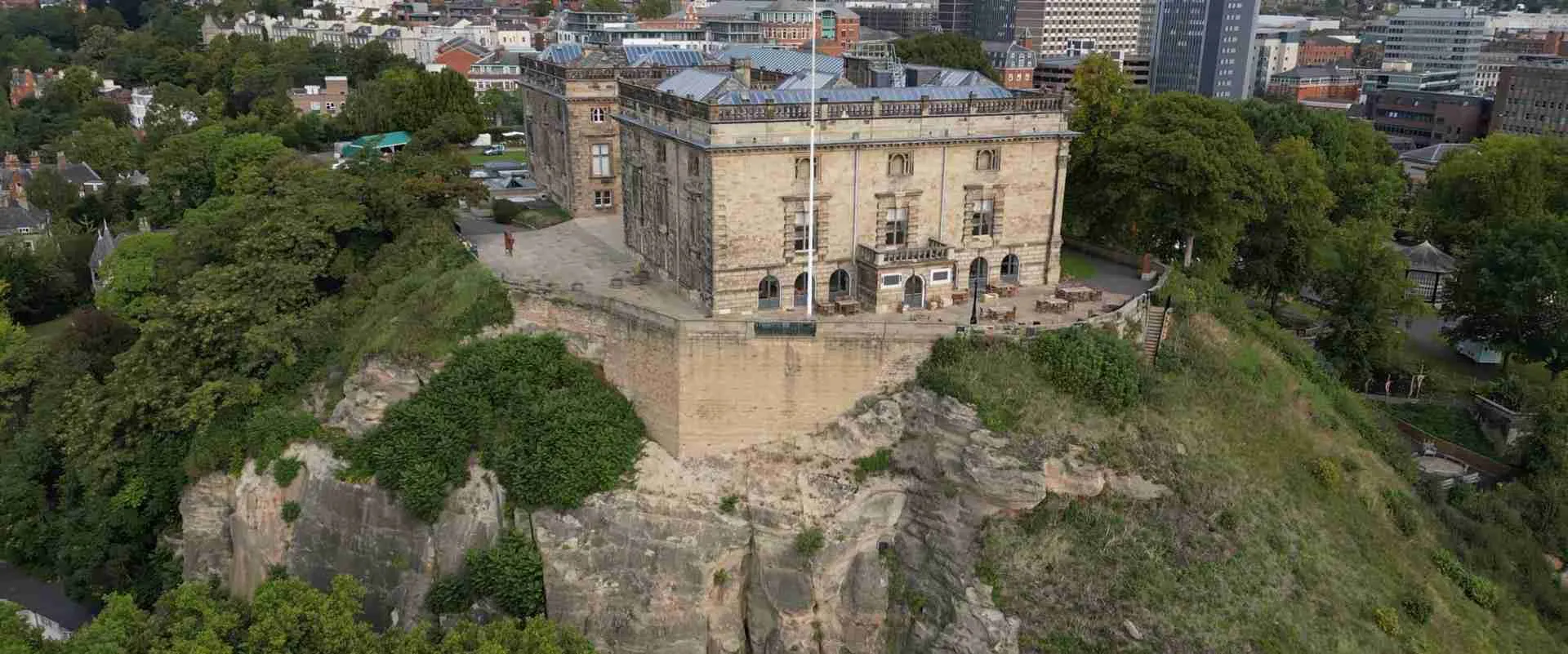
Nottingham Best Tours & Walking Routes 2026: East Midlands’ Secret Spots & Lesser-Known Treasures
Nottingham’s sandstone bedrock holds more than 800 mapped caves, its medieval alleys give way to a Victorian lace quarter, and a castle perched on Castle Rock overlooks the rooftops all at once — which makes the city one of England’s most rewarding destinations for walkers. This 2026 guide covers every notable guided tour and self-guided route, from the theatrical Robin Hood Town Tour and the Watson Fothergill architecture walk to free hidden rambles through the Park Estate and Sneinton that most first-time visitors never find.
Key Takeaways
- Nottingham divides neatly into two kinds of experience: paid guided tours (the Robin Hood Town Tour at £22 per adult and the Watson Fothergill Walk at £20 per person are the standout options) and entirely free self-guided walks through the Lace Market, Park Estate, Sneinton, and the Arboretum that rival the guided options for atmosphere.
- Underground access sits at the heart of the city’s identity: the City of Caves on Garner’s Hill (£12 adult) and the castle’s Underground Adventure Tour (£9 add-on to the £18 admission) give access to the vast sandstone cave network from two distinct angles; book in advance, especially for weekends and school holidays.
- The three-site Rover Pass (Nottingham Castle, Wollaton Hall, and Newstead Abbey) costs £39 adult and saves £12 compared with buying each separately — 24% less — making it excellent value if you plan to visit all three.
- Budget travelers who concentrate on free routes — Park Tunnel, Nottingham Arboretum, Lace Market, Sneinton Market, Nottingham Contemporary — can fill two full days without a single admission charge; a budget two-night visit including the best paid tours runs approximately £180–250 per person (two sharing a budget hotel).
- Mid-range visitors combining guided tours with key paid attractions should budget £135–205 per person per day (two sharing); a two-night mid-range visit with the Robin Hood Tour, Watson Fothergill Walk, City of Caves, and Nottingham Castle runs approximately £300–400 per person.
- Note for 2026: the Green’s Windmill tower itself is under repair and closed to climbers until approximately November 2026; the science centre, community garden, and mill shop remain open and free Wednesday to Sunday 10am–4pm.
People Also Ask About Nottingham Tours & Walking Routes 2026
What is the best walking tour of Nottingham in 2026?
The Robin Hood Town Tour is the most acclaimed guided walk in 2026. Led by a costumed character guide known as Ezekial Bone with more than 30 years of experience, it covers roughly 1.2 miles in two hours, starting at the Cross Keys pub on Byard Lane (NG1 2GJ) and finishing at Ye Olde Trip to Jerusalem. Adult tickets cost £22, concessions £17, and children aged ten and under £9; advance booking is strongly recommended. For a very different experience, the Watson Fothergill Architecture Walk, led by guide Lucy Brouwer, explores Victorian Gothic buildings across a 2km city-centre circuit in around two hours for £20 per person, meeting outside the Tourism Centre on Smithy Row. Both tours run throughout 2026 on scheduled public dates and are available for private group bookings.
How much do Nottingham tours and walking routes cost in 2026?
Costs in 2026 range from free to £22 per person depending on what you choose. The Robin Hood Town Tour is £22 adult; the Watson Fothergill Walk is £20; the City of Caves audio tour is £12 adult; Nottingham Castle admission is £18 adult (a 12-month annual pass). Several of the city’s most atmospheric routes — the Park Estate and Park Tunnel walk, the Lace Market circuit, the Sneinton Market area, and the Nottingham Arboretum — cost nothing at all. A full touring day combining one guided walk with one paid underground attraction runs roughly £30–40 in attraction costs per person; for total daily costs including accommodation and food, budget travelers spending two nights and mixing free routes with the essential paid tours should expect approximately £180–250 per person (two sharing a budget hotel).
What are the best hidden spots to discover on a Nottingham walking route in 2026?
The most rewarding secret is the Park Tunnel itself — a Grade II listed sandstone passage built in 1855 for the Fifth Duke of Newcastle, 125 metres long and free to walk through, yet missed by most first-time visitors. The Park Estate beyond it, a grid of Victorian villas built for Nottingham’s wealthier residents in the mid-nineteenth century, is equally overlooked. Sneinton Market Avenues, a ten-minute walk east of the Lace Market, houses independent makers, a record shop, and rotating food vendors in a regenerated market complex that most tourists never find. The Nottingham Arboretum, the city’s oldest public park (opened 1852), holds more than 800 trees, a Chinese Bell Tower Garden, an ornamental lake, and a Victorian bandstand, all free and five minutes from the city centre. Green’s Windmill in Sneinton — the restored tower mill associated with mathematician George Green — is free to visit and makes an ideal anchor for the eastern walking loop.
Are Nottingham’s underground cave tours worth doing in 2026?
Emphatically yes — and the city offers two distinct underground experiences that are meaningfully different. The City of Caves on Garner’s Hill gives access to the largest publicly available section of the sandstone network, with an audio-guided self-paced tour through medieval tanneries, the Drury Hill slum remains, and a World War Two air-raid shelter; admission is £12 adult. Nottingham Castle’s Underground Adventure Tour descends via Mortimer’s Hole and the castle dungeon network beneath Castle Rock, exploring wine cellars and medieval fortress foundations; it costs £9 per person on top of the £18 castle admission and involves steep staircases with limited headroom. Both run daily, both require advance booking at weekends, and the Castle caves are not suitable for pushchairs. Done together, they provide a layered picture of how Nottingham’s residents used the sandstone beneath their streets across eight centuries.
Extended multi-day tours – 5+ days
Featured Coventry Multi-Day Tour Packages

3 days
Coventry 3-Day Discovery Tour
- ✓ Comprehensive Coventry experience
- ✓ Expert local guides included
- ✓ All accommodation included
- ✓ Transportation provided

5 days
Coventry 5-Day Highlights Experience
- ✓ Comprehensive Coventry experience
- ✓ Expert local guides included
- ✓ All accommodation included
- ✓ Transportation provided
7 days
Coventry 7-Day Cultural Journey
- ✓ Comprehensive Coventry experience
- ✓ Expert local guides included
- ✓ All accommodation included
- ✓ Transportation provided
10 days
Coventry 10-Day Complete Adventure
- ✓ Comprehensive Coventry experience
- ✓ Expert local guides included
- ✓ All accommodation included
- ✓ Transportation provided
Multi-day tour packages powered by TourRadar. Prices and availability subject to change.
Nottingham’s Walking City: An Introduction to 2026’s Route Landscape
Nottingham earns its walkable reputation from geography as much as from heritage. The city was built on Nottingham Castle Sandstone — a permeable, easily carved rock laid down around 250 million years ago by ancient river systems. The same geology that produced Sherwood Forest also honeycombed the ridge beneath the medieval town with cavities that became homes, storerooms, tanneries, pubs, and air-raid shelters. As the city expanded in the Victorian era, it pushed outward and uphill: the prestigious Park Estate filled the hillside west of the castle, a formal arboretum was laid out on the northern flank, and the lace industry concentrated into a distinctive quarter of warehouses to the east. The result is a city that changes character every few hundred metres on foot, rewarding walkers who stray from the main shopping streets.
The medieval core — bounded roughly by Old Market Square, the castle, and the Lace Market — is compact and walkable in an hour at a stroll, but it contains at least a full day’s worth of content if you dip underground, step into the Victorian courtroom at the National Justice Museum, and follow the side streets. The Lace Market itself, centred on High Pavement and running north toward Weekday Cross and Nottingham Contemporary, is one of the finest mid-Victorian commercial districts surviving in England: five- and six-storey warehouses in yellow and red brick, now converted to apartments, galleries, and restaurants, line streets that were once choked with hosiery and lace. The Nottingham Contemporary gallery occupies the foot of Garner’s Hill, almost directly above the new entrance to the City of Caves.
Beyond the medieval core, the routes diverge in character. Westward, the Park Estate runs toward the castle’s blind side: pedestrians reach it through the Park Tunnel, an 1855 sandstone passage built for horse-drawn carriages that proved too steep and was repurposed as a pedestrian walkway. To the north, the Arboretum offers a quiet Victorian park whose tree collection predates many of the city’s prominent buildings. Eastward, a fifteen-minute walk through Sneinton leads to a revived market cluster and to Green’s Windmill, the restored tower mill that once belonged to the mathematician George Green. Further afield, Wollaton Hall sits amid a free deer park four miles west of the centre, and Newstead Abbey, the ancestral home of Lord Byron, occupies a landscaped estate twelve miles north on the A60.
The tram network (Nottingham Express Transit, the NET) links several of these areas: the Lace Market stop deposits visitors almost at the City of Caves entrance; the Arboretum stop runs adjacent to the park. A tram day ticket costs £5.80 per adult (£5.65 by contactless) and covers unlimited journeys across the network. Most of the walking routes described in this guide can be combined on foot, however, and the central circuit between Old Market Square, the Lace Market, the castle, and the Park Estate covers roughly three miles in total — a manageable morning for any reasonably fit walker.
Nottingham’s tourism infrastructure in 2026 is settled and confident. Nottingham Castle, which completed a £31 million redevelopment in 2021 and saw its management transferred to Nottingham City Council following the prior Trust’s insolvency in 2023, operates a pay-once annual pass model at £18 per adult. Wollaton Hall introduced a similar annual pass at £15 per adult from April 2025. The City of Caves operates under the umbrella of the National Justice Museum charity (registered charity 1030554) and has relocated its public entrance from the now-demolished Broadmarsh Shopping Centre to a new street-level access point at the foot of Garner’s Hill — a change that many older maps and sat-nav systems have not yet caught up with. Visitors searching for the old Broadmarsh entrance in 2026 will not find it; use postcode NG1 1HF and look for the steps descending beside Nottingham Contemporary.
The Robin Hood Town Tour 2026: Nottingham’s Signature Guided Walk
Of all the guided walking tours operating in Nottingham in 2026, the Robin Hood Town Tour has the strongest claim to being the definitive city experience. Running continuously for more than 30 years and consistently rated among the best walking tours in England, it is a two-hour theatrical performance as much as a history walk — the guide plays Robin Hood in full costume, working through the evidence behind the legend, the history of medieval Nottingham, and the transformation of the outlaw ballads over seven centuries, all while covering roughly 1.2 miles of the city’s most significant streets and spaces.
The tour departs from inside the Cross Keys pub at 15 Byard Lane, Fletcher Gate (postcode NG1 2GJ; NCP car park directly opposite). Tickets for 2026 are priced at £22 for adults, £17 for concessions, £12 for young people aged 11–13, and £9 for children aged ten and under. Booking in advance is strongly advised as popular dates sell out; walk-up spaces are occasionally available but require a call or text to 07941 210 986 to confirm. Check the Visit Nottinghamshire website for current scheduled dates and the ‘Book Now’ function, or contact the guide directly.
The route covers Old Market Square — one of the largest civic squares in England at around 13,000 square feet — the medieval street pattern of the old town, St Mary’s Church in the Lace Market (which features in the Robin Hood tradition and is closed on Saturdays), and the Lace Market itself. Participants descend into the cave network for a portion of the tour, seeing sections of the sandstone labyrinth that served as a WWII public air-raid shelter. The tour concludes at Ye Olde Trip to Jerusalem, the inn built into the foot of Castle Rock that reputedly dates from the twelfth century, making it one of Britain’s oldest licensed premises (the date is contested, but the building’s integration into the castle sandstone is beyond dispute).
The tour’s particular strength is its approach to the Robin Hood question directly: rather than presenting the legend as settled history, the guide works through the documentary evidence for historical figures who may have contributed to the composite character, the social context of fifteenth-century forest law that made an outlaw hero culturally compelling, and the ways in which the story evolved from simple ballads into the elaborate narrative known today. The result is more intellectually satisfying than a simple costume pageant, and the theatrical delivery makes it engaging for participants of all ages.
Group bookings and private city tours are available throughout 2026. The standard tour lasts approximately two hours and covers roughly 1.2 miles on flat and gently sloping ground, making it broadly accessible; the underground sections involve some uneven surfaces. Participants are advised to wear flat, comfortable shoes. The guide meets guests inside the Cross Keys pub just before the advertised start time.
Underground Nottingham: City of Caves & Castle Cave Tours 2026
Nottingham is built above Britain’s largest urban cave network: more than 800 hand-carved sandstone caverns and passages have been mapped beneath the streets, representing roughly a thousand years of continuous excavation and use. The network served every social class — merchant wine cellars, medieval tanneries, slum dwellings carved directly into the rock, WW2 air-raid shelters, and the foundations and dungeons of the castle itself. In 2026 visitors can access this subterranean world from two distinct points, each offering a substantially different experience.
City of Caves: Garner’s Hill Entrance
The City of Caves is operated by the National Justice Museum charity and offers audio-guided self-paced access to the largest publicly available section of the network. The entrance in 2026 is at the foot of Garner’s Hill steps, immediately beside Nottingham Contemporary — postcode NG1 1HF. This is important: many online maps, including some Google Maps entries, still direct visitors to the old Broadmarsh Shopping Centre entrance, which no longer exists following the demolition of the centre. From Weekday Cross, walk toward Nottingham Contemporary and descend the steps to the left; the entrance is at the bottom.
Admission for 2026: adult £12, child aged 5–15 £9.50, under-5s free, concessions (students and over-60s) £11. Family tickets are available at £32 for two adults and two children, £36.50 for two adults and three children, and £26 for one adult and three children. Tickets function as annual passes, granting unlimited return visits for 12 months from purchase. A joint ticket covering both the City of Caves and the National Justice Museum costs £23 per adult (£17.50 child, £22 concession), saving £5 on the combined individual price. The site is cashless in 2026; visitors wishing to pay cash must first go to the National Justice Museum on High Pavement, about five minutes’ walk away, to purchase tickets there.
The tour is audio-guided and self-paced, lasting under an hour. Entry is staggered and group sizes are capped, so weekend and school-holiday visits require advance booking through the City of Caves website or the National Justice Museum ticketing platform. Opening hours run Monday to Sunday 10am–5pm, with the final tour beginning at 4:10pm. The site closes on 24–26 December and 1 January. There are no on-site toilets; facilities are available at the National Justice Museum five minutes away. The caves are inaccessible for wheelchair users, pushchair users, and visitors with limited mobility due to steps and uneven surfaces.
The audio tour covers a medieval tannery whose water channels and pits survive in remarkable condition; the remains of the Drury Hill slum, a warren of dwellings that were carved directly into the rock and inhabited until the Victorian era; and a World War Two air-raid shelter fitted out with period furnishings that recreates the experience of Nottingham residents sheltering during the Blitz. The Enchanted Well, a deep natural feature in the sandstone, features in the tour as a landmark of the network.
Nottingham Castle Underground Adventure Tour
Nottingham Castle offers a separate underground experience as a paid add-on to standard admission. The castle’s standard annual pass (£18 adult, children under 16 free with up to three per paying adult) grants access to the museum galleries, the Rebellion Gallery, the Robin Hood Adventures interactive exhibition, Brewhouse Yard, and Hood’s Hideout adventure playground. The Underground Adventure Tour costs an additional £9 per person on top and must be booked separately — it does not form part of standard entry.
This tour descends via Mortimer’s Hole — the tunnel named for Roger Mortimer, first Earl of March, who held regency power over the young King Edward III before being captured in the castle in 1330 by the king’s own men in a nocturnal raid through the cave network. The tour also covers dungeon chambers, medieval wine cellars, and the foundations of the original medieval fortress beneath the later Ducal Palace. Sections involve steep staircases and low headroom; it is not suitable for pushchairs and may present difficulties for visitors with limited mobility or significant claustrophobia. Time slots sell out quickly at weekends; book in advance at the Nottingham Castle website.
Peak-season opening hours (7 February–1 November 2026): 10am–5pm daily including bank holidays, last entry 4pm. Winter hours (2 November 2026–5 February 2027): 11am–4pm daily, last entry 3pm. The site is closed Christmas Day, Boxing Day, and New Year’s Day. No public parking is available at the castle; the nearest car parks are on Canal Street and in the city centre. Tram stop: Nottingham Station (about ten minutes’ walk).
The Watson Fothergill Architecture Walk: Victorian Nottingham Revealed
Nottingham’s most distinctive Victorian architecture owes a substantial debt to one prolific local architect: Fothergill Watson, who practised under the professional name Watson Fothergill from the 1870s until the early twentieth century. His buildings cluster in the city centre — ornate Gothic Revival structures in red and yellow brick with turrets, oriel windows, corbelled stacks, and tile work — and can be seen on King Street, George Street, Pelham Street, and a dozen other streets within walking distance of Old Market Square. Together they constitute one of the most coherent examples of Victorian Gothic commercial architecture outside London, though most visitors walk past them without recognising them as the work of a single hand.
The Watson Fothergill Walk is a public guided tour led by local architectural historian Lucy Brouwer, running on scheduled dates throughout 2026. Tickets are £20 per person; book in advance through Eventbrite as places are strictly limited. Public walks depart at 10am (with some evening departures at 6pm in summer months) from outside the Nottingham Tourism Centre on Smithy Row, directly adjacent to the Council House on Old Market Square. The route covers approximately 2km of city-centre streets and takes around two hours, finishing at Fothergill’s Pub and Bistro in Mortimer House — itself a Fothergill building dating from 1882–83 — where participants have the option to continue with refreshments.
For groups of six or more, private tours can be booked directly with Lucy Brouwer at a rate starting at £100 for up to four people and £20 per head for groups of five to twenty. The walks are available as private bookings throughout the year. The Watson Fothergill Walk has been described by visiting guides as the equivalent of a Nottingham Charles Rennie Mackintosh trail; the buildings are sufficiently numerous and varied that even repeat visitors to the city find the guided walk revealing architectural details — dates, building functions, family histories — that are invisible without context.
The walk includes the former Jessop and Son department store on King Street (1895), Watson Fothergill’s own office building at 15–17 George Street, the Flying Horse Walk arcade with its listed Fothergill facade (now home to the Cheese Shop, among other occupants), and several bank and commercial buildings whose Gothic detailing survives largely intact. The guide also connects Fothergill’s career to the broader social history of Victorian Nottingham: the hosiery and lace industries that funded the buildings, the Nonconformist patronage networks that shaped architectural taste, and the stories of the families and businesses who commissioned the structures. Evening dates in the summer months allow participants to see the buildings in the long light, when the brickwork takes on particular colour.
Self-guided alternatives exist for those who prefer independence: the Architecture in Nottingham resource maintained by various heritage organisations maps the principal Fothergill buildings, and a short walk down King Street, George Street, and Pelham Street will reveal the main cluster without a guide. The guided version, however, adds the interpretive layer that makes the buildings legible rather than simply ornamental.
The Lace Market & Creative Quarter: A Self-Guided Walking Route 2026
The Lace Market walking route is the city’s best free experience for visitors interested in architecture, independent shopping, and Victorian industrial history. The district takes its name from the lace and hosiery trade that dominated the East Midlands economy from the late eighteenth century through the early twentieth, and the surviving warehouses — massive five- and six-storey structures in Nottingham’s characteristic red and yellow brick — give the area a scale and solemnity that contrasts strikingly with the medieval streets of the city core a few hundred metres away.
The logical start point is Weekday Cross, where the street market once stood and where several of Nottingham’s most architecturally significant Victorian commercial buildings cluster. From here, High Pavement runs east past the National Justice Museum (housed in the Grade II* listed Shire Hall, a former Victorian courthouse and county gaol) and the Lace Market Hotel to the bend where it meets Stoney Street and Fletcher Gate. The National Justice Museum charges £16 adult admission (£11.50 child 5–15, concession £15, annual pass model) and offers daily theatrical performances including a trial re-enactment in the original Victorian courtroom and a tour of the Georgian gaol cells. Free exhibition spaces on the ground floor are open without a ticket and are worth a look even for visitors who do not buy admission.
The self-guided walking loop runs from Weekday Cross south along Garner’s Hill (past the City of Caves entrance and beside Nottingham Contemporary, the free contemporary art gallery that anchors the creative quarter), then north-east along High Pavement past the National Justice Museum, continuing along Stoney Street and Adams Walk through the heart of the warehouse district, and returning to Old Market Square via Bridlesmith Gate and the independent boutiques of the city’s creative retail core. The full loop covers around a mile and takes between ninety minutes and three hours depending on how much time you spend inside the gallery and museum.
Nottingham Contemporary, positioned at the foot of the Garner’s Hill steps, is free to enter and presents changing exhibitions of contemporary art by national and international artists. It is one of the largest contemporary art spaces in the UK outside London and functions as a genuine public resource rather than a purely commercial gallery. Check the programme before visiting as major exhibition changeovers mean the gallery occasionally closes briefly between shows.
The Creative Quarter designation covers the area from Hockley north through the Lace Market, and this is where the city’s independent retail culture concentrates: vintage clothing (Wild Clothing on Broad Street has been trading for over 40 years), independent record shops, specialist bookshops, and a strong coffee culture clustered around Hockley’s small streets. The Flying Horse Walk arcade — the listed Fothergill-designed structure on King Street — now houses the Cheese Shop and several jewellery and art businesses. Broadway Cinema on Broad Street, slightly north of the Lace Market proper, is one of the UK’s leading independent cinemas with a good café.
For 2026, a useful practical note: the Lace Market tram stop deposits visitors at the top of Garner’s Hill, within easy walking distance of both the City of Caves entrance and the National Justice Museum. This makes it simple to combine a Lace Market walking route with an afternoon underground tour without navigating the city centre on foot.
Sneinton & Green’s Windmill: A Village Walk Beyond the Tourist Trail
Sneinton — pronounced locally as “Snenton” — sits immediately east of the Lace Market, separated from it by a short climb through streets that the tourist map generally leaves blank. That gap is a significant asset. The ten-to-fifteen-minute walk from the City of Caves entrance or from Nottingham Contemporary opens onto a neighbourhood of Victorian terraces, a revived market complex, and one of the city’s most quietly remarkable heritage sites: Green’s Windmill and Science Centre on Windmill Lane.
Sneinton Market Avenues is the logical midpoint of this route. The regenerated market complex on Gedling Street houses a cluster of permanent independent units — a record shop, an independent chocolate maker, craft workshops, handmade clothing stalls, and food vendors serving everything from specialist coffees to plant-based street food. The surrounding streets are covered in murals commissioned through various public art programmes, making the eastern wall of the market square one of the better concentrations of street art in the East Midlands. Most units open on Saturdays from 10am–4pm; some operate additional weekday hours. Check current schedules at the Sneinton Market website. Browsing is entirely free, and the market’s independent character — genuinely local makers and traders rather than chains — makes it a pleasant contrast to the chain-dominated city centre.
From Sneinton Market, a further ten-minute walk south-east along Windmill Lane leads to Green’s Windmill and Science Centre (postcode NG2 4QB). The windmill was built by George Green’s father William in 1807 and operated by the mathematical physicist George Green (1793–1841) during the period in which he developed the mathematical tools that underpin much of modern physics — most famously the Green’s theorem and Green’s functions used in electromagnetism and quantum mechanics. Green published his foundational essay An Essay on the Application of Mathematical Analysis to the Theories of Electricity and Magnetism in 1828, largely self-funded through subscriptions, before the significance of his work was recognized. The windmill is now a Nottingham City Council heritage attraction and a functioning working mill.
In 2026, a significant practical note: the windmill tower itself is not open to the public due to major repair works that began in November 2025 and are expected to be complete approximately November 2026. The interactive science centre — which covers George Green’s mathematics through hands-on experiments with light, electricity, and magnetism — the community garden, and the mill shop remain open and free, Wednesday to Sunday 10am–4pm. No booking is needed and admission is free throughout. Group tours of ten or more, including the opportunity to see the miller at work when accessible, can be arranged for £3 per person; contact the mill at 0115 915 6878. A free car park is available on Windmill Lane via the RingGo app or the number on the parking sign (registration required).
For walkers returning to the city centre from Green’s Windmill, the number 43 bus from King Street passes Windmill Lane and provides a direct link without needing to retrace the full route on foot.
The Park Estate & Park Tunnel: 2026’s Most Rewarding Hidden Walk
Of all the routes described in this guide, the Park Estate and Park Tunnel circuit generates the most consistent reaction from visitors who discover it: surprise that it exists at all, and irritation that no one mentioned it earlier. The Estate sits immediately west of Nottingham Castle, occupying the hillside that was once a royal deer park; the Tunnel was built in 1855 to give the Estate’s wealthy new residents a carriage entrance directly from Derby Road. Today the tunnel is free, pedestrian-only, and remarkably atmospheric.
The Park Tunnel was commissioned by the Fifth Duke of Newcastle and designed by architect Thomas Chambers Hine — the same Hine who later oversaw the conversion of Nottingham Castle into a museum. The Duke’s specification called for a gradient no steeper than 1 in 14 to allow heavily loaded horse-drawn carriages to pass. The completed tunnel has a gradient of 1 in 12, which proved too steep for horses to manage on ascent, and the tunnel was never used for its intended purpose. It is now a Grade II listed structure, pedestrian only, running 125 metres through the natural Castle Rock sandstone. The first section is entirely unlined — the walls are raw geology — with a central open shaft providing natural light and ventilation and a staircase ascending to the Ropewalk and Upper College Street. The second section emerges onto Derby Road via a flight of stairs.
Approach from the city-centre side via The Ropewalk (off Upper College Street, near the Royal Concert Hall) and descend into the open shaft, then continue through the tunnel toward the Park Estate. This direction gives the more theatrical approach, emerging from the tunnel into the Victorian townscape of the Estate. From the Derby Road approach, enter at the foot of the steps in the car park beneath the building on the Derby Road corner. No admission charge, no booking required, open at all times during daylight hours.
The Park Estate beyond the tunnel is a coherent piece of mid-Victorian urban planning designed by Thomas Chambers Hine for the Newcastle estate from the 1850s onward. The streets — Newcastle Drive, The Ropewalk, Tunnel Road, Castle Grove — are lined with villas and terraces in a variety of Gothic and Italianate styles, many of them Grade II listed. It was developed as Nottingham’s most exclusive residential address, conceived partly in response to the enclosure of the old open fields around the city, and it retains much of its original character. A residential estate rather than a public park, it is entirely legal to walk through its streets, and the Nottingham Civic Society occasionally runs guided walks of the area; check their website for current dates.
Combining the Park Tunnel walk with a visit to Nottingham Castle makes logistical sense: the castle entrance is a five-minute walk from the Estate, and the descent through Ye Olde Trip to Jerusalem (built into the Castle Rock face at the castle’s eastern foot) makes a natural finale. The inn is free to enter as a functioning pub; the cave rooms cut into the sandstone behind the bar are genuine and accessible to customers, and the experience of drinking in rooms carved from the same rock formation that runs under the entire city is one of Nottingham’s most singular pleasures.
Wollaton Hall & Deer Park: A Half-Day Nature Walk 2026
Wollaton Hall is one of England’s most spectacular Elizabethan prodigy houses, built between 1580 and 1588 to a design attributed to architect Robert Smythson, who also worked at Hardwick Hall and Longleat. Its silhouette — towers at each corner, a raised central hall rising above the roofline, an ornate skyline of strapwork and balustrading — is instantly recognizable and has been used as a filming location for various productions. The hall sits in the centre of Wollaton Park, a 500-acre estate four miles west of Nottingham city centre that retains a herd of fallow and red deer.
From 2026 visitors’ perspective, the key operational point is the ticket structure. Entrance to the park and grounds, including the deer, the walled garden, and the lake, is free. Admission to the hall’s Natural History Museum — housed in the state rooms and gallery spaces — costs £15 per adult (annual pass model; children under 16 free with up to three per paying adult). Opening hours for the hall: 11am–4pm daily, last entry 3pm. The Rover Pass covering Wollaton Hall, Nottingham Castle, and Newstead Abbey costs £39 adult and provides 12-month access to all three; at a saving of £12 compared with buying each separately (24% less), it represents good value for anyone visiting all three sites during the same trip or over the course of a year.
For walkers, the deer park circuit is a genuine draw in its own right, independent of the hall admission. The perimeter path covers roughly three miles of open parkland with views of the hall from multiple angles, the lake and its wildlife, and sections of mixed woodland. The park opens from early morning; check current hours on the Wollaton Hall website. A car park charges for vehicle access, though pedestrians and cyclists can enter freely. From the city centre, the Wollaton Park ride (bus services via the city centre) runs to the park gates; check Nottingham City Transport for current schedules and fares.
The Natural History Museum inside the hall houses a notable collection of natural history specimens accumulated by Nottingham City Museums over more than a century. The Dinosaur Gallery on the ground floor is a particular draw for families, with fossil specimens including large skeletal reconstructions. The hall’s state rooms retain much of their original Elizabethan structure and give a clear sense of the ambition of the original commission. The hall is particularly atmospheric in autumn, when the deer rut adds sound and movement to the parkland backdrop.
Newstead Abbey: A Day-Trip Walking Route from Nottingham 2026
Newstead Abbey sits twelve miles north of Nottingham on the A60 Mansfield road, within easy reach by bus or car. Originally an Augustinian priory founded in the twelfth century, it was dissolved under Henry VIII in 1539 and passed through several owners before reaching the Byron family in 1540. Lord Byron inherited the estate in 1798 at the age of ten and used it intermittently until financial pressures forced him to sell in 1817. The property subsequently passed to Colonel Thomas Wildman, who undertook the Victorian restoration of the house, and was eventually purchased by Nottingham City Council in 1931, which has operated it since.
The house and its setting make a strong case for a half-day excursion from Nottingham. The landscaped grounds include formal gardens, a Japanese garden, a rose garden, lakes, ponds, and waterfalls spread across an estate of several hundred acres. The gardens are free to walk through (a parking charge of £7 at weekends and £6 on weekdays applies to drivers; walkers and cyclists pay £2). The grounds are particularly good in late spring when rhododendrons and azaleas are in flower, and in autumn when the Japanese maples turn. A formal walled garden, waterfall walks, and the medieval West Front of the original priory church — which survives as the house’s dramatic facade — all reward time at a walking pace.
House admission in 2026 is £18 per adult (annual pass model; children under 16 free with up to three per paying adult). The house is undergoing significant repair works in 2026 under the ‘Raise the Roof’ programme. During the works, the ‘Heart of Medieval Newstead’ exhibition in the Cloisters remains open daily 11am–4pm (last entry 3pm), and guided walk-throughs of the main house are available at 12pm, 1pm, and 2pm on weekends and school holidays. Check the Newstead Abbey website for the current phase of works and which rooms are accessible before visiting.
The Rover Pass covering all three Nottingham City Museums sites (Newstead Abbey, Wollaton Hall, and Nottingham Castle) costs £39 per adult and is purchasable at any of the three sites. For a visitor planning to combine Newstead Abbey with a castle visit during the same trip, the Rover Pass saves £12 versus buying individually.
Getting there without a car: the Trent Barton Pronto bus service runs regularly from Victoria Bus Station in Nottingham city centre to Mansfield, stopping at Newstead Abbey Gates. Trent Barton operates a frequent service; check trentbarton.co.uk for current timetables and fares. The journey takes roughly 30–40 minutes. Taxi services are also available from Nottingham Station for those arriving by train. Return the same way or combine a bus outward journey with a taxi return on days when evening services are limited.
Secret Spots & Hidden Corners Most Visitors Miss
Beyond the named tours and established routes, Nottingham rewards explorers who stray slightly off the standard paths. The following spots appear on no single “must see” list but are genuinely worthwhile and genuinely overlooked.
The Nottingham Arboretum. The city’s oldest public park opened on 11 May 1852 and covers 17 acres on the northern flank of the city centre, a five-minute walk from the shops. Designed by the botanist Samuel Curtis (1779–1860), who had earlier contributed to the layout of Victoria Park in London, the Arboretum holds more than 800 trees including specimens from the original nineteenth-century planting — ancient London planes, cut-leaved alders, cedars, and rare ornamental species — many labelled with the numbered catalogue system Curtis devised. It is a Grade II listed historic landscape (Historic England) and a Green Flag Award winner, free to enter and open from 8am on weekdays and 9am at weekends and bank holidays.
The park’s features include a Victorian bandstand, an ornamental lake, a Chinese Bell Tower Garden (the original bell, which had been brought from Canton in the 1860s, was replaced with a replica in later years), Crimean War cannon plaques, and a small seasonal café by the main gates. The Heritage Trail leaflet and Tree Trail are downloadable from Nottingham City Council’s website and identify the key trees and historical features; both are worth picking up before the visit. The Arboretum’s connection to J.M. Barrie, author of Peter Pan, is a matter of local tradition — Barrie lived and worked in Nottingham in his early career, and the park’s atmosphere is often cited in that context — though the specific inspiration for Neverland is interpretive rather than documented.
The Park Tunnel at dusk. Described at length in the Park Estate section above, the tunnel takes on a different character in the late afternoon when the natural light shaft at its centre casts a column of light into the sandstone passage below. Most visitors encounter it briefly as a through-route; spending ten minutes simply standing in the central open section, looking up at the shaft and out along the tunnel, gives a sense of the geology and the ambition of the Victorian project that the quick walk-through misses.
Ye Olde Salutation Inn cave rooms. While Ye Olde Trip to Jerusalem at the castle foot is the most famous cave pub in Nottingham, the Salutation Inn on Maid Marian Way near the castle contains its own cave rooms cut into the sandstone at basement level. The caves here are accessible as part of a visit to the pub and include a cave bar space that is regularly used for events. Nottingham’s cave pubs are a specific subset of the underground experience that no other city in England replicates; the Salutation and the Trip together make a combined visit that is effectively a further underground tour at no additional cost beyond the price of a drink.
The Backlit Gallery, Sneinton. Tucked within the Sneinton Market Avenues complex, Backlit is an artist-led independent gallery occupying a former industrial unit. It presents exhibitions by emerging and mid-career contemporary artists in a context that is deliberately separate from the commercial gallery circuit. Entry is free; check the Backlit website for current exhibitions and opening days, which typically follow the Thursday-Sunday pattern of the broader creative quarter.
Watson Fothergill’s Own Buildings as a Self-Guided Loop. Even without the guided walk, visitors who download the available architectural map can identify the key Fothergill buildings along a self-guided loop between Old Market Square, King Street, George Street, and Pelham Street. The architect’s office building at 15–17 George Street still displays the carved stonework details that Fothergill applied to his commercial commissions, and the contrast with the neighbouring generic Victorian terrace buildings to either side makes the Fothergill effect visible immediately. Allow ninety minutes to cover the main cluster without rushing.
St Mary’s Church, Lace Market. This medieval church on High Pavement is the oldest standing building in Nottingham and the mother church of the city, with elements of the structure dating to the thirteenth century. The current building is predominantly Perpendicular Gothic from the fifteenth century, with Victorian restoration. It features in the Robin Hood tradition and is referenced on the Robin Hood Town Tour; it closes on Saturdays, so visit on any other day of the week. Entry is free. The interior preserves some notable medieval fabric and Victorian stained glass.
The DH Lawrence Birthplace Museum, Eastwood. Technically outside Nottingham (Eastwood is nine miles north-west of the city centre), the birthplace of Lawrence at 8a Victoria Street is operated by Nottinghamshire County Council as a small house museum. It is easily reachable by bus from Nottingham’s Victoria Bus Station and represents a worthwhile literary detour for visitors interested in the broader East Midlands cultural landscape. Admission charges apply; check the museum website for current prices and opening times before visiting.
Tour Costs and Budgeting for Nottingham’s Walks 2026
Nottingham’s range of touring options in 2026 is unusually wide: at one end, several days of worthwhile content can be assembled entirely from free routes, free galleries, and free parks; at the other, a single day combining a guided tour with two underground experiences and a heritage pass runs to significant cost per person. The following breakdown gives verified 2026 prices and recommended combinations at each level.
Free options. The following cost nothing in 2026 and collectively represent a full two days of content: the Park Estate and Park Tunnel walk; the Nottingham Arboretum; the Lace Market self-guided walking route; Nottingham Contemporary gallery; the Sneinton Market Avenues; Green’s Windmill science centre and garden (Wednesday–Sunday 10am–4pm); Wollaton Park and deer park grounds; and the ground-floor free exhibition at the National Justice Museum. Ye Olde Trip to Jerusalem and the Salutation Inn’s cave rooms are free to visit as pub customers.
Individual ticket prices. Robin Hood Town Tour: adult £22, concession £17, youth (11–13) £12, child (10 and under) £9. Watson Fothergill Walk: £20 per person. City of Caves: adult £12, child (5–15) £9.50, concession £11, under-5s free. National Justice Museum: adult £16, child (5–15) £11.50, concession £15. Joint City of Caves and National Justice Museum: adult £23, child £17.50, concession £22 (saving £5 on the combined individual price). Nottingham Castle: £18 adult (annual pass model, children under 16 free). Castle Underground Adventure Tour add-on: £9 per person. Wollaton Hall: £15 adult. Newstead Abbey: £18 adult. Rover Pass (all three Nottingham City Museums sites): £39 adult, children go free.
Rover Pass value. Buying Nottingham Castle (£18), Wollaton Hall (£15), and Newstead Abbey (£18) individually costs £51 per adult. The Rover Pass covering all three costs £39, a saving of £12 — 24% less than the combined individual price. It is purchasable at any of the three sites. Visitors who plan to visit all three sites during a single trip or within twelve months of first use should buy the Rover Pass.
Budget day in Nottingham. A day built around free walking routes and one paid tour or attraction runs approximately £0–22 in entry costs per person. Adding budget hotel accommodation (£80–105 per room, two sharing), three meals (£28–40), and a tram day ticket (£5.80) produces a total of approximately £75–120 per person per day (two sharing a budget hotel).
Mid-range day. A day combining one guided walk (£20–22) with one or two paid attractions (£12–27) in a mid-range hotel (£130–175 per room, two sharing) with three meals (£40–62) and transport (£8–14) runs approximately £135–205 per person per day.
Recommended two-night visit combinations. Budget visit (free walking days plus two paid highlights): combine a free Lace Market and Arboretum day with one paid day covering the City of Caves (£12) and Robin Hood Town Tour (£22) — total attraction costs £34, with two nights’ budget accommodation and meals running approximately £180–250 per person in total. Mid-range visit: Watson Fothergill Walk (£20) and City of Caves (£12) on day one; Robin Hood Town Tour (£22) and Nottingham Castle (£18) on day two — total attraction costs £72, with two nights’ mid-range accommodation and meals running approximately £300–400 per person in total. Check official websites for current prices before visiting; all figures in this section are verified for 2026 at the time of writing.
Practical Logistics for Nottingham’s Tours & Walking Routes 2026
Getting to Nottingham. Nottingham Station (on the Midland Main Line) receives regular East Midlands Railway services from London St Pancras (journey approximately 1 hour 50 minutes), Derby, Sheffield, and Leicester. Coaches serve the city from London and other major centres; National Express and Megabus both operate from Nottingham. The station is roughly fifteen minutes’ walk from the city centre attractions, or two tram stops to the Lace Market area.
Tram (NET — Nottingham Express Transit). The tram network is the most useful public transport tool for visitors combining multiple sites. The Lace Market stop is the key hub for the historic core, adjacent to both the City of Caves entrance and the National Justice Museum. The Arboretum stop serves the northern park. A single adult journey costs £3.60 (£3.50 by contactless payment); a day ticket costs £5.80 (£5.65 by contactless). Contactless payment can be made directly at the lime-green validators at each tram stop — no need to purchase in advance. Note that from 1 May 2026, Penalty Fare Notices for travelling without a valid ticket increased to £120; buy before boarding.
City of Caves — entrance location for 2026. The old Broadmarsh Shopping Centre entrance no longer exists. The 2026 entrance is at the foot of the Garner’s Hill steps, beside Nottingham Contemporary, postcode NG1 1HF. From Weekday Cross, walk toward Nottingham Contemporary and descend the stairs on your left. This is the only public entrance and it is cashless — bring a card or buy at the National Justice Museum in advance.
Booking ahead. The Robin Hood Town Tour, City of Caves, and Nottingham Castle Underground Adventure Tour all sell out on popular weekends and school holidays. Book in advance for all three. The Watson Fothergill Walk is limited to small groups and sells out for public scheduled dates; book through Eventbrite or directly at watsonfothergillwalk.com. Nottingham Castle general admission (without the cave tour) can usually be managed without advance booking on weekdays, though online pre-purchase saves time at the gate.
Footwear. Flat, comfortable shoes are strongly recommended for all Nottingham walking routes. The cave tours involve uneven surfaces, steep steps, and low headroom in places. The Park Estate involves a steep gradient through the tunnel; the Park steps at the northern end of the estate are also steep. The Lace Market and Sneinton Market routes are predominantly flat. Wollaton Park is gently undulating across open parkland. Newstead Abbey’s gardens involve grass paths that can be muddy in wet weather.
Accessibility. The City of Caves and Nottingham Castle Underground Adventure Tour are not accessible to wheelchair users or pushchair users due to steps and uneven surfaces. Nottingham Arboretum, Sneinton Market Avenues, and the Lace Market walking route are broadly accessible on level ground. Wollaton Hall has some steps in the museum galleries but is partially accessible; the park grounds are accessible on surfaced paths. Newstead Abbey has no lift access to the upper floor of the house. Contact individual venues before visiting if you have specific accessibility requirements.
Weather and seasonality. Nottingham’s underground tours (City of Caves, Castle caves) maintain a consistent cool temperature year-round and are a welcome option on hot summer days. Wollaton Park is particularly good in late autumn when the deer rut is active and the leaf colour is at its peak (usually October). Newstead Abbey gardens are best in late spring (rhododendrons) and early autumn (Japanese maples). The Watson Fothergill Walk and Robin Hood Town Tour run throughout the year and are not heavily weather-dependent; both guides typically continue in light rain.
Parking. Nottingham Castle has no public parking. The National Justice Museum has no on-site parking; the Lace Market car park and Stoney Street car park are each less than five minutes’ walk from the museum. City of Caves has no parking; the Broadmarsh Car Park (adjacent to the old centre site) and the Lace Market car park are the nearest options. Wollaton Hall charges for parking. Newstead Abbey charges £7 at weekends and £6 on weekdays. All venues recommend approaching by public transport where possible.
Frequently Asked Questions
What is the Robin Hood Town Tour and how do I book it in 2026?
The Robin Hood Town Tour is Nottingham’s long-running signature guided walk, in operation for more than 30 years. A single costumed character guide plays Robin Hood and covers the history of the legend, medieval Nottingham, the city’s cave network, the lace heritage, and Sherwood Forest through a two-hour walk of roughly 1.2 miles. It starts inside the Cross Keys pub at 15 Byard Lane, Fletcher Gate (NG1 2GJ) and finishes at Ye Olde Trip to Jerusalem. Adult tickets are £22, concessions £17, youth aged 11–13 £12, children aged ten and under £9. Book through the Visit Nottinghamshire website using the ‘Book Now’ function; walk-up spaces may be available but require calling or texting 07941 210 986 in advance to confirm. Group and private tour bookings are available throughout the year.
Is it worth buying the Rover Pass for Nottingham Castle, Wollaton Hall, and Newstead Abbey?
The Rover Pass costs £39 per adult (children under 16 go free with up to three per paying adult) and provides a 12-month annual pass to all three Nottingham City Museums sites. Buying Nottingham Castle (£18), Wollaton Hall (£15), and Newstead Abbey (£18) separately costs £51 per adult — the Rover Pass saves £12, or 24%. If you plan to visit all three within the same trip or within twelve months of first purchase, the Rover Pass is clearly worth buying. The pass is available at any of the three sites. Parking charges at Wollaton Hall and Newstead Abbey are not included. Children under 16 enter free with each paying adult at all three sites.
Where is the City of Caves entrance in 2026?
The City of Caves entrance changed from the old Broadmarsh Shopping Centre location to Garner’s Hill following the demolition of the Broadmarsh Centre. In 2026, the entrance is at the foot of the Garner’s Hill steps, directly beside Nottingham Contemporary, postcode NG1 1HF. Many maps — including some online sources — still show the old Broadmarsh address, which will not lead you to a working entrance. From Weekday Cross, walk toward Nottingham Contemporary and descend the steps to your left; the City of Caves entrance is at the bottom. The tram Lace Market stop is the most convenient public transport option: from the stop, the entrance is a two-minute walk down Garner’s Hill. The site is cashless; book online at nationaljusticemuseum.org.uk/cityofcaves or buy tickets at the National Justice Museum on High Pavement beforehand.
What can I visit in Nottingham for free in 2026?
Nottingham offers a substantial amount of free content in 2026. The Nottingham Arboretum (open from 8am weekdays, 9am weekends) is free to enter, as is the entire Lace Market walking route, the Park Estate, the Park Tunnel, Nottingham Contemporary gallery, Sneinton Market Avenues, and Wollaton Park’s deer park and grounds (car parking charges apply for drivers but pedestrians enter freely). Green’s Windmill’s science centre, community garden, and mill shop are free Wednesday to Sunday 10am–4pm, though the windmill tower itself is closed for repair until approximately November 2026. The National Justice Museum has free exhibition spaces on the ground floor that do not require an admission ticket. Ye Olde Trip to Jerusalem and other cave pubs are free to visit as functioning pub customers. A visitor who focuses on free options can fill two full days with genuinely worthwhile experiences at zero admission cost.
Is Green’s Windmill open in 2026?
Green’s Windmill is partially open in 2026. The windmill tower and working mill are not accessible to the public because major repair works began in November 2025 and are estimated to conclude approximately November 2026. However, the interactive science centre, community garden, and mill shop remain open and free to visit, Wednesday to Sunday 10am–4pm. No booking is required and there is no admission charge. The science centre covers the life and mathematics of George Green (1793–1841) through hands-on experiments. Group tours of ten or more, when the miller is in residence and the works allow, can be arranged for £3 per person (phone 0115 915 6878). The windmill is expected to reopen for public climbing and internal tours once the repair programme is complete; check greensmill.org.uk for updates closer to the end of 2026.
How do I get to Newstead Abbey from Nottingham without a car?
The most straightforward public transport option is the Trent Barton Pronto bus service, which runs regularly from Victoria Bus Station in Nottingham city centre to Mansfield and stops at Newstead Abbey Gates. The journey takes approximately 30–40 minutes. Check current timetables and fares at trentbarton.co.uk before travelling, as schedules can vary by season and day of week. Taxis are available from Nottingham Station and can be booked for a direct return journey from the abbey, which is useful if evening bus services are limited. Newstead Abbey is twelve miles north of Nottingham on the A60. If you are travelling by train, Newstead has a rail station (on the Robin Hood Line from Nottingham Station) — check East Midlands Railway timetables for connecting services, as frequency varies.
What is the Watson Fothergill Architecture Walk and how do I book?
The Watson Fothergill Walk is a guided architecture tour of Nottingham city centre buildings designed by Victorian architect Watson Fothergill (1841–1928), one of the most prolific architects of Gothic Revival commercial buildings in the East Midlands. The tour is led by architectural historian Lucy Brouwer, covers approximately 2km over two hours, and finishes at Fothergill’s Pub in Mortimer House. Tickets for public scheduled dates cost £20 per person; advance booking through Eventbrite is essential as group sizes are strictly limited. Public walks depart from outside the Nottingham Tourism Centre on Smithy Row (next to the Council House on Old Market Square) at 10am on scheduled dates, with some evening departures in summer. Private group tours (six to twenty people) can be booked directly at watsonfothergillwalk.com, starting at £100 for up to four people with £20 per head above that. Check the website and Substack newsletter for current 2026 scheduled dates.
Are Nottingham’s cave tours suitable for children?
Both of Nottingham’s main underground experiences welcome children, but with different considerations. The City of Caves audio tour admits children aged 5–15 at £9.50 per ticket; under-5s enter free. The tour is self-paced and staggered-entry, so younger children can move at a comfortable pace. The caves are not accessible for pushchairs. Some sections are narrow and atmospheric — they are genuinely underground spaces with uneven surfaces — so children who are easily frightened by enclosed spaces should be prepared. The Nottingham Castle Underground Adventure Tour (£9 add-on) involves steeper stairs and lower headroom and explicitly notes it is not suitable for pushchairs; it is most comfortable for older children and adults. Both tours run at a consistent cool underground temperature, so a layer is useful regardless of the season above ground.
What is the best time of year to visit Nottingham for tours and walking?
May through September offers the widest range of scheduled guided tours and the best walking conditions. The Watson Fothergill Walk and Robin Hood Town Tour run throughout the year but schedule more frequent dates in spring and summer; evening walks in June and July take advantage of the long light. Newstead Abbey gardens are particularly good in late May and early June when rhododendrons are in flower, and again in October for autumn colour. Wollaton Park in October and November sees the deer rut, adding an extraordinary wildlife dimension to the park walk. The underground tours are weather-neutral and genuinely useful on wet or very hot days. December sees Nottingham’s German Christmas Market fill Old Market Square and the surrounding streets — the city centre is very busy but festive. School holiday periods (late July to early September, Easter) see higher demand at the City of Caves, Castle, and Robin Hood Tour; book well in advance for these periods.
What walking gear do I need for Nottingham’s routes?
The key recommendation across all Nottingham routes is flat, comfortable footwear with grip. The City of Caves and Castle Underground Adventure Tour both involve uneven, damp sandstone surfaces and steep stairs; smart shoes or heels are actively unsuitable. The Park Tunnel has a significant gradient and the steps at the Park Estate end are steep. The Lace Market, Sneinton Market, and Old Market Square routes are flat and comfortable in most footwear. Wollaton Park’s grass paths become muddy in wet weather; waterproof footwear is useful from October to April. A waterproof layer is recommended for any of the outdoor guided tours — the Robin Hood Town Tour and Watson Fothergill Walk typically continue in light rain, and both guides work outdoors for portions of the route. Underground tours maintain a constant temperature of around 10–12°C regardless of season, so a light extra layer is worth carrying even in summer.