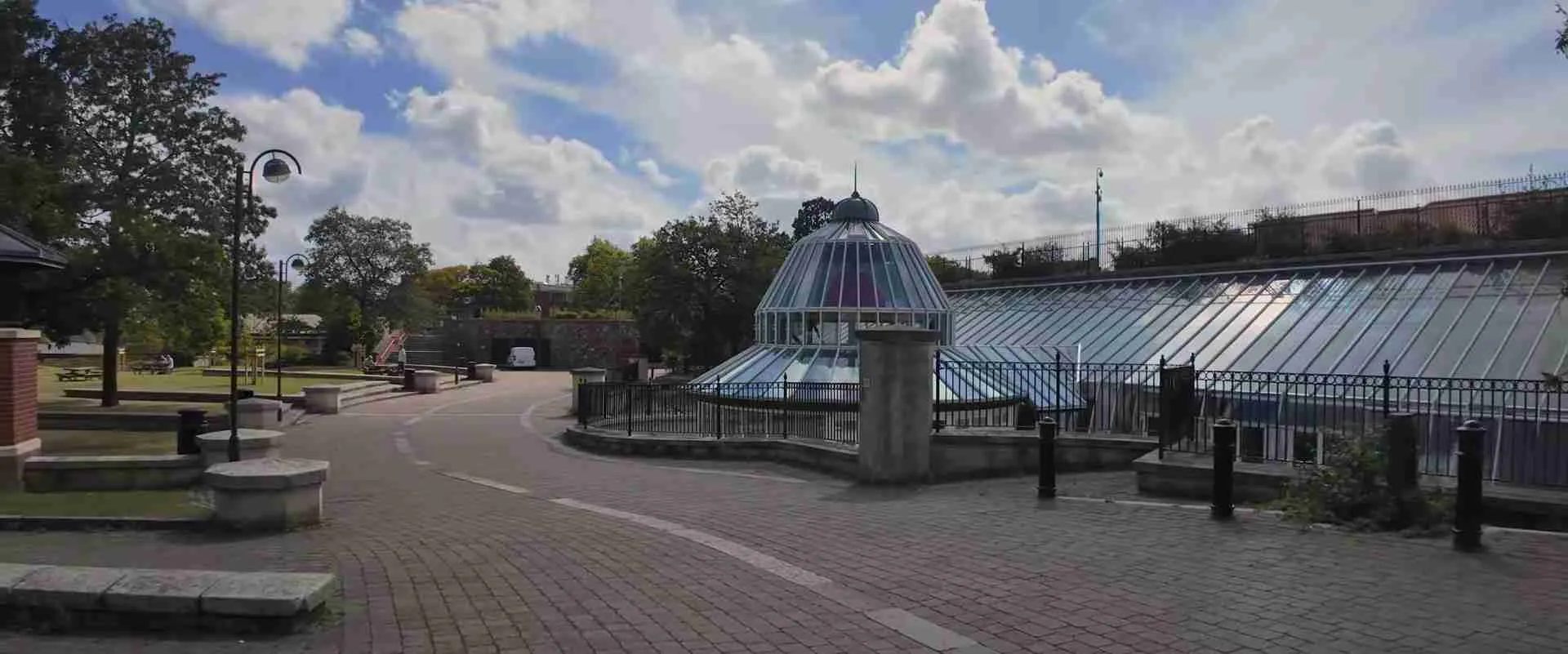
Norwich Best Tours & Walking Routes 2026: Secret Spots & Lesser-Known Treasures
Norwich packs more medieval history, hidden courtyards, and underground secrets into a walkable city centre than almost anywhere else in England — yet it remains one of the most under-visited destinations in the UK. From a street buried beneath an ordinary shoe shop to a forgotten Victorian garden in a chalk quarry, a cathedral whose spire catches light from the second-highest Norman tower in England, and a castle keep just reborn after a £27.5m transformation, the rewards for curious walkers in 2026 are exceptional.
Key Takeaways
- Norwich offers guided walking tours from as little as £9 per person ($11), including tip-based free tours that cover twelve major stops in under two hours, making it one of the best-value city-walking destinations in England in 2026.
- The city’s most distinctive 2026 experience — the Shoebox Hidden Street Tour, a 1-hour guided descent into a medieval street buried beneath Castle Meadow — costs £16.50 per adult ($21), but bookings are only available until 24 December 2026 when the lease expires.
- Norwich Castle Museum & Art Gallery reopened its medieval keep in August 2025 after a £27.5m transformation, now the UK’s most accessible castle; adult tickets cost £15.30 online, £17 on the door ($19–$22), with a £2.50 twilight ticket available in the final hour before closing.
- Budget travelers can fill a full day of walking, a tip-based guided tour, and Cathedral entry for around £65–95 per person daily ($85–120); mid-range walkers combining the Castle, a Shoebox tour, and one museum spend £135–175 per person daily ($170–220, two sharing a hotel).
- Norwich Cathedral is free to enter, runs free hourly guided tours Monday to Saturday from 10am to 3pm, and hosts free Choral Evensong most weekday evenings at 5:30pm — three of the best no-cost experiences in the city.
- Marriott’s Way, a 26-mile traffic-free cycling and walking trail starting at the city’s inner ring road, connects Norwich directly to the North Norfolk countryside along two disused railway lines, with the first 5-mile section to Drayton suitable for families.
People Also Ask About Norwich Tours 2026
What are the best guided walking tours in Norwich in 2026?
The Norwich Free Walking Tour is the natural starting point: a tip-based 1 hour 45-minute route covering twelve stops including the Forum, Guildhall, Norwich Market, Norwich Castle, St Andrews Hall, Elm Hill, Tombland, and the Cathedral, with typical tips of £15–20 per person and group sizes capped at fifteen. For specialist depth, the Shoebox Experiences offer unique underground tours of a buried medieval street (£16.50 per adult) and a former Victorian rifle range (£20 per adult). Paul Dickson Tours runs a wide menu of bookable themed walks from £9 per person, including a Black History walk and a historic pub tour. Cheryl Cade Tours specializes in food-and-drink routes — gin, cheese, and beer — from £15 per person. Ghost Walks Norwich offers an after-dark Elm Hill circuit for £12 per person. Every operator listed on the Visit Norwich website has been vetted for quality, and most require advance booking.
How much do Norwich tours and walking routes cost in 2026?
Norwich has one of England’s best ranges of low-cost and free walking options. The Norwich Free Walking Tour has no upfront charge; most people tip £15–20. Paul Dickson Tours starts at £9 per person. Self-guided walking is entirely free: Norwich Cathedral, Cathedral Close, Elm Hill, the Norwich Lanes, Pull’s Ferry, and Cow Tower cost nothing to explore. Admission is charged at three Norfolk Museums Service sites: Norwich Castle (£15.30 online, £17 on the door for adults), the Museum of Norwich at the Bridewell (£7.74 online, £8.60 on the door), and Strangers’ Hall (£6.75 online, £7.50 on the door). A Norfolk Museums Pass provides free unlimited entry to all three and is worth calculating against a multi-day visit. Budget walkers who stick to free attractions and tip the free tour spend £20–35 in a full day of guided exploration.
What secret spots can I discover on Norwich walking routes in 2026?
Norwich’s best-kept secrets reward walkers willing to leave the main streets. The Plantation Garden, a 3-acre Victorian garden in a former chalk quarry behind St John the Baptist Cathedral, asks only £2 from an honesty box. Ten Bell Lane, a pastel-painted alley in the Norwich Lanes, is beloved by photographers but almost invisible to first-time visitors. The Great Hospital, a functioning medieval almshouse off Bishopgate, retains an eagle roof on its 14th-century cloister that most visitors never find. Pull’s Ferry, a 15th-century flint watergate beside the River Wensum, sits just minutes from the Cathedral but sees a fraction of its foot traffic. Tombland Alley, running behind Tombland Square, opens into a hidden courtyard of medieval detail. And beneath Castle Meadow, the Shoebox Experiences Hidden Street Tour takes visitors underground into a medieval street that a shoe shop concealed for decades.
Is the Norwich Free Walking Tour worth booking in 2026?
Yes — reviewers consistently rate it five stars on TripAdvisor, praising the guides’ local knowledge, the informal pace, and the insider dining and shopping recommendations given alongside the history. The tour covers twelve stops in 1 hour 45 minutes, groups are capped at fifteen so every visitor can hear the guide, and the dog-friendly format is appreciated by those arriving with pets. There is no upfront booking fee; the ask at the end is to tip what the tour was worth, with most guests paying £15–20 in 2026. Advance booking through the operator’s website is strongly recommended as popular time slots fill quickly, especially on weekends and during school holidays. The tour starts at the Forum and finishes at the Cathedral, leaving participants within easy walking distance of Elm Hill for afternoon exploration.
Extended multi-day tours – 5+ days
Featured South East England Multi-Day Tour Packages
3 days
South East England 3-Day Discovery Tour
- ✓ Comprehensive South East England experience
- ✓ Expert local guides included
- ✓ All accommodation included
- ✓ Transportation provided
5 days
South East England 5-Day Highlights Experience
- ✓ Comprehensive South East England experience
- ✓ Expert local guides included
- ✓ All accommodation included
- ✓ Transportation provided

7 days
South East England 7-Day Cultural Journey
- ✓ Comprehensive South East England experience
- ✓ Expert local guides included
- ✓ All accommodation included
- ✓ Transportation provided

10 days
South East England 10-Day Complete Adventure
- ✓ Comprehensive South East England experience
- ✓ Expert local guides included
- ✓ All accommodation included
- ✓ Transportation provided
Multi-day tour packages powered by TourRadar. Prices and availability subject to change.
Norwich as a Walking Destination: An Introduction
Norwich occupies a quiet category of its own among English cities: medieval enough to justify a full week of exploration, compact enough to walk end-to-end in under thirty minutes, and just overlooked enough that its streets carry none of the overcrowding that afflicts comparable destinations in the Cotswolds or the South. It is England’s most complete medieval city centre still largely intact — over thirty medieval churches stand within the old city walls alone — and has been the UK’s first UNESCO City of Literature since 2012, a designation recognising a literary culture that stretches from Julian of Norwich (Europe’s first known female author writing in English) to the W.G. Sebald and Ian McEwan connections embedded in its university and independent publishing scene today.
What makes Norwich specifically rewarding for tours and walking routes in 2026 is a combination of new and longstanding assets. Norwich Castle completed the most significant heritage transformation in its 900-year history in August 2025, reopening its medieval keep after a £27.5m Royal Palace Reborn project that installed the British Museum’s first medieval gallery outside London. The result won “Restoration or Conservation Project of the Year” at the 2026 Museums + Heritage Awards and has made the castle the UK’s most accessible, with every level from basement to rooftop battlements now reachable by lift. At the same time, the independently run Shoebox Experiences has opened new underground experiences in 2025–2026, adding Carrow House and The Forgotten Vaults and a tour of the city’s only surviving Victorian rifle range to its flagship hidden medieval street tour. These new and upgraded anchors give the 2026 walking scene a freshness that rewards both first-time visitors and those who have explored the city before.
The physical geography of Norwich is on the walker’s side. The historic core is compact and flat enough to cover several miles without strain; the cathedral, castle, market, and medieval lanes cluster within a ten-minute walk of one another. The River Wensum forms a gentle arc around the northern and eastern edges of the old city, creating a riverside route that connects Cathedral Close to Bishop Bridge and Cow Tower without crossing a single busy road. For cyclists, Marriott’s Way provides 26 miles of traffic-free riding along a former railway line beginning just five minutes from the train station. This guide covers every walking and cycling option systematically, with verified prices, route details, and the lesser-known spots that most visitors miss.
Norwich Free Walking Tour 2026: Start Here
For first-time visitors and those who prefer to orient themselves before exploring independently, the free walking tour is the single best investment of two hours in Norwich. Norwich Free Walking Tours runs daily, rain or shine, covering twelve stops across the medieval city centre in 1 hour 45 minutes. The route proceeds from the Forum — a modern glass-fronted civic building that contains the Norfolk and Norwich Millennium Library, one of the busiest public libraries in the UK — through the Guildhall, Norwich Market, the medieval shopping arcade known as the Royal Arcade, up through Elm Hill, and into Tombland (the Anglo-Saxon market place whose name derives from the Old English for “empty ground”) before finishing at the Cathedral Close. Along the way, guides draw on deep local knowledge to point out the medieval alleys concealed behind the market stalls, the pub on Elm Hill with original 15th-century fittings, and the gap in a cathedral wall through which the close suddenly opens before you.
There is no upfront charge. Bookings are made through the operator’s website and the tip asked at the end — typically £15–20 per person ($19–25) — represents payment for what is genuinely one of the most warmly reviewed guided tours in East Anglia. Group sizes are capped at fifteen, ensuring everyone stays within hearing range. Private tours for groups of two to thirty or more are bookable via email, with bespoke pricing on inquiry.
Two other operators offer short, affordable guided walks that complement rather than compete with the free tour. Norwich Story Walks delivers theatrical, storytelling-focused tours for £10 per person ($13), including the Weird and Wonderful Walk and the Her Story Walk, which foregrounds the remarkable number of women who shaped the city — from Julian of Norwich in the 14th century to suffragist Edith Cavell, whose grave is in the Cathedral Close. Cheryl Cade Tours runs a Cathedral-to-Cathedral walk among its portfolio, tracing the half-mile between Norwich Cathedral and St John the Baptist Cathedral (the Roman Catholic cathedral) through the layers of the medieval and Victorian city, from £15 per person ($19). All three operators ask for advance booking via their websites or by telephone.
Paul Dickson Tours rounds out the introductory offering with a wider menu of bookable themed walks starting from £9 per person ($11), including an introduction to Norwich for first-time visitors, a focused walk around Norwich Market tracing the 900-year trading tradition on the same sloping ground below the castle, a Historic Pubs of Norwich route, and a Black History walk exploring the city’s Stranger communities — the refugee weavers from the Low Countries who transformed Norwich’s textile industry in the 16th century and whose legacy is commemorated in Strangers’ Hall museum and the street names around Colegate. Group bookings accommodate up to twenty people, with larger groups available on request. Paul takes bookings via his website, phone (07801 103737), or email.
Norwich Castle Quarter Walking Route 2026
The most rewarding half-day walking circuit in Norwich starts and ends at the castle mound and takes in the city’s greatest concentration of landmark buildings within a quarter mile. Begin at the Forum on Millennium Plain, cross to the Guildhall — a 15th-century flint-and-glass building that served as the city’s civic centre for five hundred years and whose ground-floor colonnades shelter one of Norwich’s best spots for observing street life — and descend via Dove Street into the Norwich Market.
Norwich Market is one of the oldest in England, occupying the same sloping ground below the castle that has been a trading site since the Norman Conquest. Its distinctive striped awnings shelter around 200 stalls selling hot food, local produce, clothing, crafts, and Norfolk specialties. The stalls open Monday to Saturday and the market is most animated on weekday mornings; allow thirty minutes for a circuit and a coffee from one of the several independent food stalls. From the top of the market, the Royal Arcade — an art nouveau covered passage dating from 1899, with original glazed tile panels and ornamental ironwork — leads through to Back of the Inns and the approaches to Norwich Castle.
Norwich Castle Museum & Art Gallery is the unmissable anchor of any visit in 2026. The Royal Palace Reborn project, completed in August 2025 after five years of work and a £27.5m budget, reinstated the medieval floors, rooms, and furnishings of the Norman keep as they were thought to appear around 1121 under King Henry I. The result is the only experience in England where visitors can walk through a furnished Norman royal palace rather than an empty shell. The British Museum’s first medieval gallery outside London — installed in the Castle as part of a national partnership — displays objects of international significance alongside local finds, and new lifts carry visitors to all five levels including the rooftop battlements for panoramic views over Norwich. Adult tickets are £15.30 online ($19) or £17 on the door ($22); the 10% advance booking discount rewards pre-planning, and the £2.50 twilight ticket for the final hour before closing is excellent value for those who arrive in the late afternoon.
From the Castle, a short walk south past Castle Meadow leads past the Shoebox building — starting point of the hidden medieval street tour described in a dedicated section below — and into Gentleman’s Walk, the city’s main pedestrian thoroughfare. The South Asia Collection, housed in a striking Victorian building off Upper King Street, holds an internationally significant collection of material culture from India, Pakistan, and the wider Indian subcontinent, including textiles, jewellery, and religious objects; check the official website for current admission details and opening hours before visiting. From here, it is a ten-minute walk back through the Norwich Lanes to the Forum, completing the circuit.
Guided Tours of Norwich’s Medieval Heritage 2026
For those who want to go deeper than the major landmarks, a second tier of guided walking tours focuses specifically on the medieval fabric that makes Norwich unusual even by English standards. The city has, by most accounts, the highest concentration of surviving medieval churches in northern Europe outside Italy; over thirty still stand within the old city walls, in varying states of use as parish churches, concert halls, arts venues, and museums. Any guided walk through Norwich that takes the side streets inevitably encounters them at intervals of a few hundred yards.
The Shoebox Experiences’ City of Centuries Tour (£16.50 per adult, £8.50 per child) takes a walking route from the modern Forum to the 11th-century Cathedral, tracing 1,000 years of cityscape on a route that encompasses Colegate — one of the best-preserved medieval streets in England, with several churches of the 12th–15th centuries intact — the Dutch-gabled buildings around St George’s, and the remarkable Blackfriars Hall complex, a Dominican church converted after the dissolution of the monasteries into one of the most intact medieval great halls still in civic use in England. The Matriarchs, Mayors & Merchants Tour (£16.50 adult, £8.50 child) focuses on the women, civic figures, and traders who shaped the city’s geography, including the Stranger communities who arrived from the Low Countries in the 1560s and left behind an architectural legacy visible in the Dutch-influenced gabling on Colegate.
The “Nasty Norwich” tour (available via Viator and operator-direct from approximately £16–20) takes a different approach, visiting less comfortable chapters of the city’s history — the prison complex beneath the castle, the role of public execution in civic life, and the darker episodes of plague, riot, and religious persecution that punctuated the medieval city’s otherwise celebrated prosperity. This is factual history rather than theatrical ghost-tour sensationalism, and reviewers praise its frankness for giving a more complete picture of the city than conventional heritage tourism tends to provide. Norwich Cathedral’s Great Hospital, visible on this tour, is a functioning medieval almshouse founded in 1249 that retains an eagle-decorated 14th-century cloister around a still-inhabited courtyard — one of the most completely preserved medieval institutions in England.
Paul Dickson Tours’ city-introduction walk (from £9 per person) provides a solid grounding in the entire sweep from Anglo-Saxon settlement through Norman conquest, textile wealth, religious reformation, and industrial development, with a particular strength on the Strangers’ communities and their impact on local architecture, food, and culture. The specialist Norwich: A Black History walk traces the often-overlooked presence of African and Caribbean people in Norwich from the medieval period through the 18th-century sugar and slavery economy to the Windrush-era communities, with stops at the Cathedral, the Castle’s collections, and specific streets in the Pockthorpe area. Advance booking is essential for all Paul Dickson walks; slots on the more popular routes sell out weeks ahead during summer.
The Shoebox Experiences 2026: Underground Norwich and Hidden Histories
No element of the 2026 Norwich walking scene is as unusual — or as time-sensitive — as the Shoebox Experiences’ underground tours. The company operates from 21–23 Castle Meadow, a building of historical importance on Norwich’s “Norwich’s 12” register, and offers access to spaces beneath and behind it that are not otherwise open to the public.
The flagship Hidden Street Tour (£16.50 per adult / $21, £8.50 per child / $11) descends two flights of steep stairs into a medieval street that was sealed beneath the building decades ago when the site was occupied by a shoe shop — giving the company its name. Over one hour, an expert guide leads groups of up to fifteen through the atmospheric remains of a 15th-century commercial street: exposed undercrofts, remnants of shopfronts, and residential spaces whose architecture has survived intact beneath the layers of subsequent building. The storytelling is specific, humorous, and grounded in the documented history of Norwich’s medieval wool and weaving trade. However, this is one of the most urgent time-sensitive bookings in Norwich in 2026: the current lease on the building expires on 24 December 2026, and the Shoebox is currently fundraising through Crowdfunder to buy the property outright. If the purchase does not succeed, this tour will end on that date. Anyone with an interest in visiting should book ahead rather than assuming availability will persist.
Two further underground experiences opened in 2025–2026. Carrow House and The Forgotten Vaults (£20 per adult / $25, £8.50 per child) explores a building with a significant role in Norwich’s insurance history — it was the original home of Norwich Union, the company that became Aviva — and descends into sealed cellar spaces described as The Forgotten Vaults. The Old Rifle Range and Underground Norwich tour (£20 per adult / $25, £8.50 per child) accesses the city’s only surviving Victorian underground rifle range on Upper St Giles Street, a space that was sealed and forgotten for generations and whose history interweaves military, civic, and social Norwich in unexpected ways. Both tours are available through the Shoebox website and run seven days a week.
Above ground, the Shoebox’s walking-tour menu covers the full city. The Norwich Knowledge Tour (£16.50 adult, £8.50 child) tests and builds knowledge of the city’s history in an engaging format, while the Magnificent Marble Hall Tour (£16.50 adult, £8.50 child) takes visitors inside one of the city’s most spectacular interiors — a building open to the public only on these scheduled tours. The Tavern Trail (£16.50 adult) walks the most scenic stretch of riverside Norwich, while the Tipsy Tavern Trail (£45 per adult / $57) expands the route to a three-hour tour of the city’s most historic pubs with four included drinks — excellent value for groups and a strong candidate for hen parties, birthdays, and corporate evenings.
Elm Hill and the Norwich Lanes Walking Circuit 2026
Elm Hill is Norwich’s most photographed street: a gentle cobbled descent of half-mile-long medieval buildings, timber-framed merchant houses, and independent shops, running from Princes Street down to Wensum Street and the river. It is not hidden — but it is never overcrowded on weekday mornings, and the quality of its architecture and atmosphere rewards a slow circuit on foot. The buildings date largely from the 15th and 16th centuries and several retain original timber-framing visible inside premises that have become antique shops, independent bookshops, and coffee houses. The Britons Arms, a thatched beguinage from the 15th century near the top of the hill, is a reliable lunch stop. Several of the buildings visible today postdate a major fire in 1507 that destroyed much of the original medieval street, making Elm Hill a post-fire reconstruction rather than the completely intact medieval street it appears to be — a detail most guides mention and worth noting for accuracy.
From the bottom of Elm Hill, a five-minute walk east along Wensum Street and through Tombland — the Anglo-Saxon market ground flanked by two of Norwich’s oldest inn buildings — brings walkers to the Cathedral gatehouse arch at Erpingham Gate. Entering the Close through this arch opens into what the Cathedral itself describes as “the village within the city”: 44 acres of quiet grounds, historic houses, and gardens enclosing the Cathedral in a remarkable pocket of calm at the centre of a busy city. Tombland Alley, a narrow passage running behind the Tombland facades, connects to Pulls Ferry Lane and the riverside; it sees a fraction of the foot traffic that uses the main approaches and is one of the genuinely undiscovered pedestrian routes in the city centre.
West of the castle and market, the Norwich Lanes quarter is the city’s independent retail and café district: a grid of narrow streets and courts including St Benedicts Street, Pottergate, Lobster Lane, and the colourful Ten Bell Lane. Ten Bell Lane deserves its own mention: a single short alley whose pastel-painted facades and cobbled surface make it one of the most consistently photographed spots in the city outside the Cathedral and Elm Hill, yet many first-time visitors never find it. Look for it between Pottergate and St Benedicts Street. The streets around St Giles — particularly Upper St Giles, which has preserved Georgian and early Victorian shopfronts largely intact — form a quieter extension of the Lanes worth including in a morning circuit. A cup of coffee from one of the independent cafés on St Benedicts Street makes a natural stopping point before continuing toward Strangers’ Hall.
Strangers’ Hall (adult £6.75 online, £7.50 door, $9–10) is a Grade I listed 14th-century merchant’s house on Charing Cross that has been preserved as a museum of domestic history, with period rooms spanning the 16th–19th centuries. The knot garden at the rear is free to enter without a ticket. Its name records the Flemish and Dutch “strangers” whose merchant presence transformed Norwich in the 16th century, and the Hall’s collections preserve the material culture of that period better than almost anywhere in England. The adjacent Bridewell Alley leads to the Museum of Norwich at the Bridewell (adult £7.74 online, £8.60 door, $10–11), a former medieval merchant’s house and later house of correction that now houses galleries on Norwich’s industrial heritage, including the city’s well-documented mustard-manufacturing history, the production of wire netting and footwear, and the broader social history of working life in the city. Both museums are open Tuesday to Saturday, 10am to 4:30pm, and both participate in the Norfolk Museums Pass scheme.
Norwich Cathedral Close and Riverside Walk 2026
Norwich Cathedral is one of the finest complete Romanesque cathedrals in Europe and the most generous free attraction in the city. Founded in 1096 by Bishop Herbert de Losinga, it retains the highest Norman tower in England and the second-tallest spire in the country (96 metres), the largest monastic cloisters in England, and what multiple sources confirm is the largest collection of medieval roof boss sculptures in the world — over 1,200 bosses carved with biblical narratives, heraldic devices, and medieval imagery in the nave vaults and cloisters alone. There is no admission charge. Free guided tours run Monday to Saturday every hour between 10am and 3pm, covering the Cathedral’s history from Norman foundation through Reformation, Civil War, plague, and present-day use; they last approximately one hour and begin at the donations desk. Guides wear green sashes and are available between tours to answer questions. For those who want a behind-the-scenes perspective, the Upper Level Tour (£10 per adult / $13, bookable via the Cathedral’s events calendar) ascends to the structural galleries above the east end of the Cathedral for views normally inaccessible to the public. Specialist tours run on selected weekdays and Saturdays at 10:30am, each covering a different topic — medieval graffiti (uncovered during the 2013 Norfolk Medieval Graffiti Survey), the peregrine falcons nesting on the spire, and the Cathedral’s musical and choral traditions among them. These require advance booking and carry a small additional fee.
Choral Evensong is one of the great underused free experiences in Norwich: the Cathedral Choir sings most weekday evenings at 5:30pm and most Sundays at 3:30pm. Attending a choral evensong in the main nave costs nothing and provides an hour of music in an extraordinary acoustic context that no ticketed concert can replicate. Check the Cathedral website for the current weekly schedule, as some services are replaced by special events during school holidays and at Christmas.
From the Cathedral’s south door, a riverside path follows the Wensum east through the Cathedral grounds and along Pull’s Ferry Lane to Pull’s Ferry itself — a 15th-century flint watergate that once admitted stone barges carrying Caen limestone for the cathedral’s construction along a canal cut directly into the precinct. The canal is long-silted and grassed over, but the gatehouse arch remains, mirrored in the river, one of the most evocative medieval structures in Norwich and entirely free to walk to and through. Continue east from Pull’s Ferry along the riverbank to reach Cow Tower (open site, free), a circular artillery tower built in 1398 to defend the city’s river approach and one of the earliest examples of purpose-built artillery fortification in England. Its brick construction — unusual for late-14th-century Norwich, where flint was the dominant material — and the intact series of gunport openings at each level make it architecturally distinctive even among medieval towers. Bishop Bridge, immediately beyond Cow Tower, is thought to be the oldest surviving medieval bridge in Norwich still carrying traffic; the view from its parapet back along the Wensum toward the Cathedral spire is one of the best riverside compositions in the city.
Returning through Tombland and along Palace Street, walkers pass the Great Hospital on Bishopgate — a working medieval almshouse founded in 1249, whose 14th-century cloister with its carved eagle corbels can be viewed through the entrance gate and whose medieval buildings remain occupied. The site is not a standard visitor attraction, but the gate is generally open during daylight hours and the courtyard visible from it is remarkable for its completeness. No admission is charged to view the exterior; check locally about organised access to the cloister interior.
Secret Spots Along Norwich Walking Routes 2026
Norwich’s density of medieval buildings means that nearly every residential street in the city centre conceals something worth seeking out; the following spots are either genuinely overlooked or known only to residents and dedicated repeat visitors.
The Plantation Garden (£2 honesty box / $3, children under 16 free) is the city’s most consistently surprising hidden site. Tucked behind St John the Baptist Cathedral on Earlham Road, approximately a fifteen-minute walk from the city centre, it occupies a three-acre former chalk quarry whose Victorian restoration by amateur gardener Henry Trevor created a sequence of terraced lawns, a Gothic-style fountain, exotic planting, and carved stone steps that feel entirely private despite being open 9am to 6pm (9am to 4pm in winter) every day of the year. It is run by volunteers; all entry donations go to the Plantation Garden Preservation Trust for maintenance and replanting. Seasonal concerts take place on summer Sunday afternoons when a small bandstand and temporary seating are set up in the lower garden.
Ten Bell Lane, accessed from Pottergate or St Benedicts Street in the Norwich Lanes, is a narrow alley of pastel-painted 18th-century and early Victorian townhouse facades whose scale and colour saturation make it significantly more photogenic than Elm Hill’s more famous cobblestones. Most first-time visitors walk within twenty metres of it without turning in.
Colegate, running east from the top of St Giles Street, is one of the most architecturally intact medieval streets in Norwich outside Elm Hill and receives a small fraction of the visitor attention. It retains several 15th- and 16th-century houses with Dutch gabling (evidence of the Flemish Stranger community), and three medieval churches in close succession: St Clement’s, St George Colegate, and St Michael at Plea (now the Norwich Marriage Room), all of which predate the Reformation. The street has no formal walking-tour promotion; it is simply there, quiet and largely unvisited.
Tombland Alley is a pedestrian passage running behind the buildings on the east side of Tombland Square that opens into a small courtyard before connecting to the Cathedral gatehouse approach. The passage itself sees minimal foot traffic and preserves a medieval street-level detail — ancient setts, overhanging eaves, a filled-in archway — more genuinely undisturbed than much of the main walking circuits.
Hook’s Walk and the southern Cathedral Close: Most visitors enter the Cathedral Close through Erpingham Gate off Tombland and walk directly to the south door. Hook’s Walk is a separate pedestrian route entering the Close from Lower Close to the southeast, threading between the backs of canonry houses and offering views of the Cathedral’s east end from ground level that are not visible from the main visitor approach. The eastern end of the Close, around The Ferry Lane and Pull’s Ferry, is quieter than the Cathedral precinct and retains a riverside character more like a small Norfolk village than a city-centre heritage site.
St Peter Mancroft church, overlooking the Market Place at its northwestern corner, is one of the finest Perpendicular Gothic churches in England and technically one of the city’s most visible buildings — yet almost no visitors go inside. Its medieval nave, 15th-century nave glass, and historic organ (the first organ on which the young Horatio Nelson is said to have made acquaintance with music, by local tradition) reward a ten-minute detour. Entry is free during opening hours.
Ghost Walks and Evening Tours of Norwich 2026
Norwich’s medieval buildings, Civil War history, and documented plague years give Norwich Ghost Walks a substantive historical foundation. The company runs three distinct routes: the Elm Hill route, visiting the street’s most atmospheric medieval buildings and the ghostly traditions associated with specific addresses along it; the River route, following the Wensum through the less-touristed northern bank past the remains of medieval priories and the city’s execution grounds; and the Norwich Castle route (summer months only), which adds the castle dungeons and the stories of public execution on the castle mound to the itinerary. All routes are priced at £12 per person ($15), with private walk bookings at £12 per person plus a £30 group supplement, with a minimum booking of £150. The company can be reached at 07831 189985 and advance booking is recommended.
For those who prefer their evening exploration with a pint in hand, Norwich Pub Tours runs two formats: the Original Norwich Pub Tour and the Blood and Gore Pub Tour, both priced at £20 per person ($25) with private group options from £150 for a two-hour tour (minimum ten people recommended). Routes visit some of the oldest licensed premises in the city, several with 15th- and 16th-century interiors, and the guides balance architectural history with the kinds of local anecdotes that guidebooks tend to omit. Booking is via the company website or email.
The Shoebox’s Tipsy Tavern Trail (£45 per adult / $57) is the most comprehensive evening option: a three-hour tour of the most scenic streets in Norwich, starting on Bishop Bridge above the River Wensum and finishing at the Murderers pub on Timber Hill, with four included drinks at four separate historic pubs along the route. At £45 per person the price point is higher, but reviews consistently describe it as excellent value given the tour length and inclusions. The route also includes a 25% food discount at the Murderers on the day of the tour. Evening tours sell out well ahead on weekends and booking at least one to two weeks in advance is prudent.
A note on timing: most evening walking tours start between 7pm and 8pm, allowing visitors to eat in the city first. The Norwich Lanes area has a strong independent restaurant and café scene within a five-minute walk of most evening tour start points, and several operators will point groups toward specific venues on request.
Food, Drink, and Specialist Walking Tours 2026
Norwich has developed a strong food and drink walking tour scene, partly because the city’s independent culinary culture — built around the Norwich Market, a cluster of artisanal producers in the surrounding area, and a brewing and distilling scene that has grown substantially in the past decade — provides genuine material for gastronomic routes.
Cheryl Cade Tours runs the most extensive food-and-drink menu. The Cathedral to Cathedral walk introduces the city through architecture and history; the Cheese Tour explores Norwich’s independent and artisanal cheesemakers; the Gin Tour visits the city’s distilleries and bar scene; and the Beer and Cheese Tour combines both. All tours start from £15 per person ($19), with private and bespoke group formats available. Cheryl Cade can be contacted through her website, by phone (01603 787868), or by email. Advance booking is required.
Through the GetYourGuide and Viator booking platforms, several additional food-focused tours are available in 2026. A Sausage Roll Walking Tour (approximately $39 / £31 per person) combines the bakery culture unique to Norfolk with a walking circuit of the city centre. A Guided Afternoon Tea Walking Tour (approximately $133 / £105 per person for small groups) takes participants through a curated afternoon tea experience at venues along a heritage route. A Traditional British Food and Drink Tasting Tour (approximately $133 / £105 per person) samples local specialties across multiple stops. Exact pricing on these platform-listed tours should be verified at booking, as prices vary with group size and seasonal availability.
For independent food exploration, Norwich Market is the essential starting point. The market runs Monday to Saturday and the permanent stalls include a strong representation of hot food — salt beef rolls, Ethiopian injera wraps, Welsh rarebit, Thai street food, and fresh Norfolk seafood among the options — alongside fresh produce and artisanal goods. Prices are significantly below those of the surrounding cafés and restaurants. The Refectory at Norwich Cathedral (open Monday to Saturday 8am–6pm, Sunday 8am–4pm), operated in partnership with artisan bakers Bread Source, provides breakfast and lunch under the shadow of the Cathedral spire in one of the most atmospheric café settings in the city; it is technically a tourist-facing venue but has a genuine following among local workers and residents.
Cycling Routes from Norwich City Centre 2026
Norwich is a practical starting point for traffic-free cycling, and two principal routes make the city accessible even for visitors who arrive with little cycling experience.
Marriott’s Way is a 26-mile shared footpath, bridleway, and cycle route running from Norwich to the historic market town of Aylsham, following the trackbeds of two disused railway lines: the Great Eastern line and the Midland and Great Northern Railway. It is named after William Marriott, who served as chief engineer and manager of the M&GN Railway for over four decades. The trail begins at the roundabout where Barn Road meets Barker Street, just inside the inner ring road approximately fifteen minutes’ walk from the city centre, and the first section is signposted from there. The entire route is designated a County Wildlife Site, with the first 14 miles through the Wensum River valley additionally recognised as a Special Area of Conservation and Site of Special Scientific Interest; wildlife recorded along this stretch includes otters, kingfishers, water voles, and peregrine falcons. Mile markers of rail-sculpture — each unique, incorporating a metal rubbing plaque detailing local railway history — provide a sense of progress.
For day visitors, Section 1 (Norwich to Drayton, approximately 5 miles each way) is the most practical option. This section crosses the Wensum on a high A-frame bridge with views across the river valley, passes through the Wensum Valley wildlife corridor with over 100 recorded plant, insect, fish, and bird species, and reaches the village of Drayton in under two hours at a comfortable cycling pace. The surface along most of Marriott’s Way is unsealed and can become muddy after rain; wider tyres and mudguards are recommended, particularly in autumn and winter. The trail is explicitly open to cyclists along its full length but is shared with walkers and horse riders; self-paced navigation and courteous passing are important on busier weekend days.
Cycle hire in Norwich is available through Beryl Bikes, the city’s dockless hire scheme with bays distributed across the city centre, and from Bikebox, a hire and repair shop in Norwich. Both provide bikes suitable for the Marriott’s Way surface. Beryl Bikes is accessible through the Beryl app and charges per minute; rates and bay locations should be checked via the app before setting out, as coverage and availability vary by time of day. The Whitwell and Reepham Station, approximately fifteen miles from Norwich along Marriott’s Way, has a café and bike shop in the former signal box, making it a practical midway stop for a full-day return ride.
Within the city, the Norwich Riverside Walk follows the River Wensum on both banks from the Cathedral Close south to the train station area, connecting Pull’s Ferry, Bishop Bridge, Cow Tower, and Whitefriars Bridge along a route that is largely traffic-free and well-surfaced. It is suitable for all wheeled transport and walkers in equal measure. The University of East Anglia campus, approximately two miles west of the city centre along Earlham Road, is accessible by a cycle-friendly route and contains the Sainsbury Centre for Visual Arts — one of the most significant art museums in East Anglia, in a building designed by Sir Norman Foster and free to enter. The campus route from the city centre is flat and takes approximately 20 minutes by bike.
Budget Planning for Norwich Tours 2026
Norwich is among the most accessible mid-sized English cities for budget-conscious travelers, primarily because its single most impressive free asset — the Cathedral — requires no admission fee, and most of the walking routes that define a Norwich visit require only the cost of a tip-based guided tour or nothing at all. The following figures are verified from current sources and expressed per person per day, with hotel costs divided by two before summing to reflect two people sharing a double room.
Budget travelers (hostel dorm accommodation, free and tip-based tours, self-guided walking) can expect to spend approximately £65–95 per person daily ($85–120). This covers a hostel dorm bed at £25–35 per person, three meals at budget Norwich Market and café prices at £22–32, and a typical free walking tour tip of £15 alongside the Plantation Garden entry fee of £2. Transport within the city centre is unnecessary for most itineraries. Booking the free walking tour via the operator’s website and timing Cathedral visits to coincide with the free hourly guided tours add significant value at no extra cost.
Mid-range travelers (hotel double room, Norwich Castle visit, one Shoebox underground tour, one independent museum) should budget approximately £135–175 per person daily ($170–220, two sharing). This assumes a hotel room at £110–150 per night divided to £55–75 per person, meals at £35–52, and a combined activities spend of approximately £40 covering Norwich Castle admission online (£15.30) plus the Hidden Street Tour (£16.50) plus the Museum of Norwich (£7.74). Pre-booking all three attractions online saves 10% on the museums compared to door prices and is straightforward via the Norfolk Museums Service and Shoebox websites. Check the official Norwich Castle admissions page for current rates, as the Keep reopened only in August 2025 and prices reflect the significantly enhanced offer.
Upscale travelers (quality hotel, multiple specialist tours including the Tipsy Tavern Trail, fine dining) should expect approximately £230–320 per person daily ($290–405, two sharing). Hotel rooms at this level run £180–260 per night divided to £90–130 per person; meals at Norwich’s better restaurants cost £55–80 per person; and a full tours day combining Norwich Castle (£15.30) with the Tipsy Tavern Trail (£45) and a specialty Shoebox or Cheryl Cade tour (£15–25) comes to £75–90 in activities. The Cathedral Upper Level Tour (£10) and specialist talks add further options at modest cost.
Three significant savings strategies are worth knowing. First, the Norfolk Museums Pass provides free unlimited entry to all Norfolk Museums Service sites including Norwich Castle, the Museum of Norwich, and Strangers’ Hall; for anyone planning to visit two or more of these on the same day or across consecutive days, the Pass is worth calculating against standard admission prices. Details are on the Norfolk Museums Service website. Second, booking Norwich Castle online at least one day in advance saves 10% off the door price — effectively covering a coffee. Third, the Castle’s twilight ticket at £2.50 on the door (not available online) provides access to the entire museum for the final hour before closing; this is an exceptional deal for visitors whose schedules allow a late-afternoon arrival.
A two-day Norwich touring visit works out to approximately £130–190 per person for budget travelers ($165–240), £270–350 per person for mid-range ($345–445, two sharing), and £460–640 per person for upscale visitors ($585–815, two sharing). These figures cover accommodation, food, and the categories of tours and admissions described above; any additional specialist tours (Cathedral Upper Level, additional Shoebox experiences, food-tasting tours) add to the mid-range and upscale figures accordingly.
Practical Tips for Norwich Walking Routes 2026
Norwich is best approached by train for visitors traveling from London or the English Midlands. Direct services from London Liverpool Street take approximately 1 hour 50 minutes to 2 hours; from Cambridge, connections take around 1 hour. The station sits on the south side of the city centre, approximately a 15-minute walk from the Cathedral and ten minutes from Norwich Castle. There is no underground system in Norwich; the city is compact enough that most visitors walk between attractions. Local buses serve the outer residential areas and the University of East Anglia, but the historic core is pedestrian-first and most guided walking tours begin at central landmarks reachable on foot from the station.
Footwear is worth thinking about before arriving. Elm Hill and several of the other medieval streets in the city centre are surfaced with original cobbles or large square setts, which are uneven underfoot and particularly challenging in wet weather or for those with mobility considerations. Flat, closed-toe shoes with a firm sole are more comfortable than heeled shoes for anything more than a short circuit. The Shoebox underground tours involve steep staircases and uneven flooring and are not wheelchair accessible; the rest of the city’s walking routes, including Norwich Cathedral (accessible by lift), Norwich Castle (the UK’s most accessible castle post-reopening, with all five floors served by lifts), and the riverside walk, are largely step-free or have accessible alternatives.
Peak visitor season in Norwich runs from May through September, with the heaviest crowds on weekends in July and August during school holidays. The Norwich Cathedral free tours and Norwich Castle are busiest between 11am and 2pm on summer weekends; arriving at opening time (10am) or in the late afternoon gives a noticeably quieter experience at both. The Shoebox underground tours run seven days a week and should be booked at least several days in advance in peak season; weekend slots in summer are frequently sold out a week ahead. The free walking tour caps groups at fifteen and is fully booked on most summer weekend afternoons.
Norwich’s weather follows the East Anglian pattern: drier and sunnier than much of England due to its position on the sheltered east coast, but cool enough in spring and autumn to warrant a waterproof layer on longer walking days. Summer temperatures are comfortable for walking, rarely exceeding 26–28°C. The Marriott’s Way trail becomes significantly muddier from late October through March; wider tyres or walking boots are appropriate for those months. The Plantation Garden is particularly worth visiting in spring (April–May for early colour) and again in late summer (August–September for late seasonal planting), though it is open and maintained throughout the year.
Frequently Asked Questions About Norwich Tours 2026
How long does the Norwich Free Walking Tour take in 2026?
The Norwich Free Walking Tour runs for approximately 1 hour 45 minutes, covering twelve stops across the medieval city centre from the Forum to the Cathedral. The pace is described as relaxed by reviewers; the tour is dog-friendly and groups are capped at fifteen to keep the experience personal. There is no upfront charge; the ask is a tip at the end, typically £15–20 per person ($19–25). Advance booking via the operator’s website is strongly recommended, particularly for weekend slots in summer. The company also runs private tours for groups of two to thirty or more people, priced on inquiry via email.
Is Norwich Cathedral free to visit in 2026?
Yes. Norwich Cathedral charges no admission and offers free guided tours Monday to Saturday every hour between 10am and 3pm, lasting approximately one hour each. Donations are welcomed and directly support the Cathedral’s maintenance and music programme. For a specialist experience, the Upper Level Tour (£10 per adult / $13) visits the structural galleries above the east end, with views not otherwise accessible to the public; it runs typically on Wednesdays and Saturdays at 10:30am and must be booked in advance through the Cathedral’s events calendar. Choral Evensong at 5:30pm on most weekday evenings and 3:30pm on most Sundays is free and open to all.
What is new at Norwich Castle in 2026?
The Royal Palace Reborn transformation, completed in August 2025 after a £27.5m restoration, has made Norwich Castle the most significant heritage attraction in East Anglia. The medieval keep has been reinstated to its approximate appearance as a furnished Norman royal palace circa 1121, with original floors, rooms, and period-accurate furnishings installed throughout all five levels. The British Museum’s first permanent medieval gallery outside London is housed within the Castle as part of an ongoing national partnership. New lifts carry visitors to all levels including the rooftop battlements, making it the UK’s most accessible castle. The Castle won “Restoration or Conservation Project of the Year” at the 2026 Museums + Heritage Awards. Adult tickets are £15.30 online ($19) or £17 on the door ($22); book at least one day in advance to secure the 10% discount. A £2.50 twilight ticket is available on the door for the final hour before 5pm closing.
What is the Shoebox Hidden Street Tour and is it still running in 2026?
The Shoebox Hidden Street Tour is a one-hour guided tour beneath 21–23 Castle Meadow, descending into a medieval street that was sealed beneath the building when it was occupied by a shoe shop for much of the 20th century. At £16.50 per adult ($21) and £8.50 per child ($11), it is the most distinctive urban heritage experience in Norwich. The tour is running in 2026, but the current lease on the building expires on 24 December 2026; the Shoebox Enterprises is fundraising via Crowdfunder to purchase the building outright. Gift vouchers and bookings are currently accepted only through 24 December 2026. Anyone wishing to visit should book well in advance rather than leaving it to the final months of the year. The tour runs up to seven days a week; the Shoebox website shows current availability. Note that the tour involves three flights of steep stairs and is not wheelchair or pram accessible.
What are the best free walking routes in Norwich in 2026?
Several self-guided walking routes cost nothing. The Cathedral Close and Riverside Walk connects Pull’s Ferry, Cow Tower, and Bishop Bridge along the Wensum on an almost entirely traffic-free path; allow ninety minutes. The Elm Hill and Norwich Lanes circuit walks from Princes Street down through Elm Hill, along Wensum Street to Tombland, and back through the Lanes via St Benedicts Street and Pottergate; allow two hours at an exploratory pace. The Norwich Castle Quarter circuit from the Forum through the Royal Arcade, Norwich Market, and Castle Meadow takes approximately one hour. For a combined route covering all three circuits, a full day of walking requires no map beyond a basic city plan available free from the Forum’s information point.
How far is Marriott’s Way and where does it start in Norwich in 2026?
Marriott’s Way is 26 miles long, running from Norwich to Aylsham along the trackbeds of two disused railway lines. The Norwich entrance is at the roundabout where Barn Road meets Barker Street, just inside the inner ring road, approximately fifteen minutes’ walk from the train station or city centre. The first section to Drayton is approximately 5 miles and suitable for families and occasional cyclists; the surface is unsealed and can be muddy after rain, so wider tyres or walking boots are recommended. Cycle hire is available in Norwich through the Beryl Bikes dockless scheme (bookable via app) or Bikebox. A café and bike shop at Whitwell and Reepham Station, approximately 15 miles from Norwich, provides a practical midway stop for a full-day return ride.
What is the best ghost tour in Norwich in 2026?
Ghost Walks Norwich runs three routes, all priced at £12 per person ($15): the Elm Hill route covering the medieval street’s atmospheric buildings and traditions; the River route following the Wensum through the city’s northern medieval precincts; and the Castle route (summer months only) including the castle dungeons and mound. All start in the evening; booking via the operator’s website (0783 1189985) is strongly advised, with private walk bookings requiring a minimum spend of £150. An alternative evening option with a lighter tone is the Shoebox Tipsy Tavern Trail (£45 per person / $57), a three-hour tour visiting four historic pubs with four included drinks, combining history and entertainment without specifically focusing on the macabre. Book both well ahead for weekend dates in summer.
Which Norwich museums are best combined in a single day in 2026?
The three Norfolk Museums Service venues in Norwich can each be visited in one to two hours and combine into an excellent full day. Start with Norwich Castle (allow two hours for the keep and galleries; adult £15.30 online, £17 door), proceed to the Museum of Norwich at the Bridewell (1 hour; adult £7.74 online, £8.60 door) on Bridewell Alley, and finish at Strangers’ Hall (1 hour; adult £6.75 online, £7.50 door) on Charing Cross. All three are within ten minutes’ walk of each other. Combined advance admissions for one adult come to £29.79 ($38) online; the Norfolk Museums Pass provides free unlimited entry to all three and may be worth calculating if visiting across multiple days. All three close at 4:30pm–5pm; plan the day to finish at Strangers’ Hall, which has the shortest recommended dwell time.
How much does a self-guided walk around Norwich cost in 2026?
A self-guided walking day can be done for under £25 per person ($32). The Plantation Garden asks £2 from an honesty box; the Cathedral, Cathedral Close, Pull’s Ferry, Cow Tower, Bishop Bridge, Elm Hill, the Norwich Lanes, and Norwich Market are all free to walk through at any time of day. Lunch at Norwich Market costs approximately £8–12 for a good hot meal from one of the stalls. Coffee from the Lanes’ independent cafés runs £3–5 per cup. A tip of £15–20 for the free walking tour, if taken, represents most of the day’s touring expenditure. For those who want only free experiences, it is entirely possible to spend eight hours in Norwich’s historic core, visit the Cathedral and its free tours, walk all of the medieval streets, and leave having paid nothing beyond a suggested donation.
Are Norwich walking tours suitable for families with children in 2026?
Most Norwich walking tours explicitly accommodate families. The Norwich Free Walking Tour is dog-friendly and operates at a relaxed pace suitable for older children. The Shoebox Hidden Street Tour runs a separate Family Fun version during school holidays, with the same route but storytelling adjusted for younger audiences (£16.50 adult, £8.50 child / $21 and $11); note that the tour involves steep stairs and cannot accommodate pushchairs. Norwich Castle, post-reopening, offers interactive elements across all five floors and is now the UK’s most accessible castle with step-free routes to the battlements. Norwich Cathedral hosts family activity days during school holidays. The first 5 miles of Marriott’s Way (Norwich to Drayton) are flat and traffic-free, making them suitable for family cycling with children aged approximately six and above on bikes of their own. The Plantation Garden (£2 / $3 adults, under-16s free) is a particularly good stop for a family picnic and open-air break mid-afternoon.