Northern Puglia Travel Guide: The Ultimate Off-the-Beaten-Path Cultural Itinerary
Northern Puglia stretches from the dramatic Gargano peninsula jutting into the Adriatic to ancient hilltop towns of the Daunia Apennines and the wind-swept Tavoliere plains, sheltering more history per kilometer than almost anywhere else in Italy. While the south of the region draws crowds to Alberobello’s trulli and Lecce’s baroque facades, the north rewards travelers with UNESCO sanctuaries carved into limestone cliffs, Frederick II’s most mysterious castle, Roman amphitheaters, and cathedral seafronts of extraordinary beauty. This guide reveals northern Puglia’s layered cultural riches and structures them into a practical off-the-beaten-path itinerary for genuinely curious travelers.
Key Takeaways
- Northern Puglia divides into three distinct cultural zones — the Gargano Peninsula and National Park, the interior Tavoliere and Daunia hilltown belt, and the Adriatic coast from Manfredonia north through Trani and Barletta — each carrying a separate historical identity and architectural tradition that rewards dedicated exploration.
- Two UNESCO World Heritage Sites anchor the region: the Sanctuary of San Michele Arcangelo at Monte Sant’Angelo, inscribed in 2011 as part of Italy’s Longobard heritage network, and Castel del Monte near Andria, inscribed in 1996 as one of the most perfectly conceived medieval buildings in Europe.
- Lucera’s Swabian castle — one of the largest medieval fortresses in southern Italy — and its intact Roman amphitheater document two millennia of overlapping civilizations, including a unique 13th-century experiment in which Frederick II settled 20,000 Saracen Muslims here as a free community, yet the town receives a fraction of the visitors that crowd more famous Puglian destinations.
- Trani’s Romanesque cathedral, rising directly from a limestone promontory above the Adriatic, stands as one of the most dramatically positioned churches in Italy, paired with one of the best-preserved medieval Jewish quarters on the Italian peninsula.
- The Gargano National Park combines a UNESCO-affiliated sacred mountain, Europe’s oldest and most intact beech forest (Foresta Umbra), dramatic white limestone cliffs, sea caves, and a pristine archipelago — making it one of Italy’s most geographically varied protected landscapes within a single park boundary.
- Northern Puglia’s food culture centers on durum wheat pasta shapes unique to the area, Caciocavallo Podolico cheese aged in natural caves, and Nero di Troia red wine — flavors almost entirely absent from mainstream Italian restaurant menus worldwide and best experienced in the towns and farms where they originate.
People Also Ask About Northern Puglia’s Cultural Heritage
What distinguishes Northern Puglia from the rest of Puglia?
Northern Puglia differs from the rest of the region in both geography and historical identity. Where central and southern Puglia are dominated by the flat Murge plateau, baroque towns, and trulli architecture of the Valle d’Itria, the north encompasses the mountainous Gargano peninsula, the deep agricultural Tavoliere plains, the Daunia Apennines, and a Norman-Swabian castle-studded Adriatic coast. Historically, the north absorbed more layers of conquest — Roman, Byzantine, Lombard, Saracen, Norman, and Swabian — and the architecture reflects this complexity. Romanesque cathedrals here are larger and more refined, the medieval fortresses more ambitious in scale, and the sacred landscape more intense, particularly along the ancient pilgrimage routes that converge on Monte Sant’Angelo from across Christian Europe. Travelers also encounter significantly fewer crowds at all but the most famous sites.
What UNESCO World Heritage Sites are located in Northern Puglia?
Two UNESCO World Heritage Sites are located in northern Puglia. Castel del Monte, the octagonal castle built by Holy Roman Emperor Frederick II near Andria in the 13th century, was inscribed in 1996 for its perfect geometric form and its synthesis of Classical, Islamic, and Northern European architectural traditions into a building of entirely original character. Monte Sant’Angelo’s Sanctuary of San Michele Arcangelo was inscribed in 2011 as one of seven Longobard sites across Italy under the designation “Longobards in Italy: Places of the Power (568–774 A.D.),” recognized as the oldest continuously used Longobard monument in the world and one of the earliest Christian shrines in Western Europe. The sanctuary marks the site of apparitions of the Archangel Michael to the Bishop of Siponto beginning in the late 5th century, and it has drawn pilgrims continuously for fifteen hundred years.
What are the most historically significant sites to visit in Northern Puglia?
The most historically significant sites in northern Puglia span two thousand years. Castel del Monte and Monte Sant’Angelo rank first as UNESCO-designated landmarks of international importance. Lucera’s Swabian castle and Roman amphitheater document successive layers of civilization across two millennia. Troia’s 12th-century Romanesque cathedral, with its extraordinary bronze doors and rose window, is considered one of Italy’s finest medieval churches. Trani’s Romanesque cathedral and Jewish quarter document the cosmopolitan culture of the Norman-era Adriatic coast. Ancient Canusium — modern Canosa di Puglia — preserves early Christian basilica mosaics, Daunian hypogea tombs, and a 5th-century pavement depicting Bactrian camels with no obvious iconographic precedent. The Basilica di Santa Maria di Siponto near Manfredonia is among the finest and least-visited Romanesque churches in southern Italy.
Is it possible to explore Northern Puglia without a rental car?
Exploring northern Puglia without a car is possible but requires planning and accepts significant limitations. The coastal towns — Barletta, Trani, Bisceglie, and Manfredonia — are well connected by Trenitalia and Ferrovie del Gargano rail services, and Foggia serves as the main rail hub for the interior. Reaching Monte Sant’Angelo, Troia, Bovino, Castel del Monte, and Gargano’s smaller villages without a car requires infrequent buses operated by SITA Sud and Ferrovie del Gargano, services that often run only a few times daily and stop by early evening. For deeper exploration of the Daunia villages, Foresta Umbra, and the full Gargano circuit, a rental car provides significantly greater flexibility. Summer brings additional bus and minibus services to Gargano coastal towns from Foggia and Manfredonia.
Extended multi-day tours – 5+ days
Featured Puglia Multi-Day Tour Packages
3 days
Puglia 3-Day Discovery Tour
- ✓ Comprehensive Puglia experience
- ✓ Expert local guides included
- ✓ All accommodation included
- ✓ Transportation provided
5 days
Puglia 5-Day Highlights Experience
- ✓ Comprehensive Puglia experience
- ✓ Expert local guides included
- ✓ All accommodation included
- ✓ Transportation provided
7 days
Puglia 7-Day Cultural Journey
- ✓ Comprehensive Puglia experience
- ✓ Expert local guides included
- ✓ All accommodation included
- ✓ Transportation provided
10 days
Puglia 10-Day Complete Adventure
- ✓ Comprehensive Puglia experience
- ✓ Expert local guides included
- ✓ All accommodation included
- ✓ Transportation provided
Multi-day tour packages powered by TourRadar. Prices and availability subject to change.
Introduction — The Italy That Tourism Forgot
Northern Puglia is the section of one of Italy’s most beloved regions that receives the least attention from international travelers. This is not an accident of geography or infrastructure — it is the product of an unspoken hierarchy that routes visitors toward the trulli of Alberobello, the baroque extravagance of Lecce, and the white-washed coastline of the Salento peninsula while the north quietly keeps its extraordinary cultural wealth to itself. The consequence for the traveler willing to diverge from those gravitational pull points is the rare experience of encountering world-class heritage without the crowds that normally accompany it.
This northern territory encompasses a remarkable range of landscapes. The Gargano — a limestone promontory jutting into the Adriatic like a rough spur on Italy’s boot — carries its ancient forests, medieval pilgrimage routes, and cliff-lined shores as a distinct geographical personality, separate from the rest of Puglia by both geology and historical development. West of the Gargano, the Tavoliere delle Puglie — Italy’s second-largest plain after the Po Valley — supported human settlement as far back as the Neolithic period, and its fringes rise into the Daunia Subapennines, a chain of hill towns where medieval streets, Romanesque churches, and regional vernacular architecture have survived almost unaltered because there was never quite enough prosperity or tourism to warrant replacing them. Further south along the Adriatic coast, the BAT province (Barletta-Andria-Trani) presents a series of Norman-era towns whose cathedrals, castles, and waterfronts represent some of the highest achievements of southern Italian medieval architecture.
Understanding why northern Puglia looks and feels different from the rest of the region requires a brief immersion in its layered history. Rome established cities of strategic importance here — Luceria (Lucera), Canusium (Canosa di Puglia), and the port at Sipontum (Siponto) — exploiting the grain wealth of the Tavoliere and the natural harbor of the Gargano’s southern coast. After Rome’s collapse, the Lombards settled across the southern Apennines and left their most enduring monument at Monte Sant’Angelo, where the apparition of the Archangel Michael transformed a limestone cave into a pilgrimage destination that would draw devotees from across Europe for fifteen hundred years. Byzantine and Saracen forces contested the coast during the early medieval period, and the arrival of the Normans in the 11th century brought a constructive energy that produced the extraordinary cycle of Romanesque cathedrals along the Adriatic — Trani, Barletta, Troia, Manfredonia — that remain among the finest examples of Pugliese Romanesque in existence.
The Norman kingdom was absorbed by the Hohenstaufen dynasty, and it was Frederick II of Hohenstaufen — Holy Roman Emperor, King of Sicily, and one of the most extraordinary rulers medieval Europe ever produced — who left his most visible mark on northern Puglia. His Castel del Monte, rising from a low hill in the Murge near Andria, defies architectural categorization to a degree that has occupied scholars for centuries. His re-settlement of thousands of Saracens from Sicily into Lucera created an experiment in multicultural administration that functioned for sixty years before being dismantled by his Angevin successors. The ruins of his castle at Lucera — one of the largest medieval fortresses in southern Italy — dominate the town’s skyline as a physical document of that ambition.
The Angevins and subsequent dynasties brought relative decline to many of these once-prosperous towns. Trade routes shifted, earthquakes struck the Daunia hills repeatedly, and the agricultural poor remained agricultural poor for centuries, supplying emigrants to the Americas and northern Europe in their millions during the 20th century. This relative underdevelopment, painful as it was historically, preserved the physical heritage that now gives northern Puglia much of its appeal. Towns that were never wealthy enough to tear down their medieval centers and replace them with modern buildings now possess intact urban fabrics of exceptional authenticity.
The contemporary visitor arrives in a region where the infrastructure of mass tourism has not yet overwhelmed the substance of local culture. Restaurants cook as they have always cooked, in a tradition built on hard durum wheat, local olive oil, sheep-milk cheese, and the particular intensity of Adriatic fish. Winemakers around Cerignola, Canosa, and San Severo are producing wines from Nero di Troia and Bombino Nero grapes that command international attention. And the people, accustomed to travelers who come with genuine curiosity rather than tour-group efficiency, tend to respond with an openness that makes northern Puglia one of the more rewarding places in Italy to travel as an independent visitor.
Geographic Orientation — Northern Puglia’s Three Cultural Zones
Northern Puglia does not function as a single homogeneous destination. Three distinct geographic and cultural zones each demand a different approach and reveal different layers of historical personality. Understanding the geography before arriving prevents the common mistake of treating the region as a simple coastal drive and missing the inland depths that contain some of its most extraordinary places.
The Gargano Peninsula occupies the northeastern corner of the region, a limestone massif rising from the Adriatic that was once an island and retains something of that isolated character. Its interior is covered by the Foresta Umbra, a primeval forest of beech, oak, and yew that represents the last significant remnant of the ancient forest that once covered much of southern Italy. The Gargano’s coastline is dramatic — white limestone cliffs, sea stacks, turquoise water, and a series of small towns perched on promontories above the sea. The interior is sacred ground, defined by Monte Sant’Angelo and the pilgrimage routes that have led travelers to it since late antiquity. The Tremiti Islands, 22 kilometers offshore from the Gargano coast, complete the picture of an area that combines natural grandeur with deep cultural significance.
The Tavoliere and Daunia Interior covers the vast agricultural plains and the hill country to the west. Foggia, the provincial capital, is the hub of the Tavoliere, a city rebuilt after devastating World War II bombing but surrounded by archaeological evidence of Neolithic civilization: the ditched enclosures visible from the air as crop marks represent one of Europe’s densest concentrations of Neolithic settlements, predating the Egyptian pyramids by millennia. Lucera and Troia anchor the cultural heritage of this zone, while Bovino, Orsara di Puglia, and Ascoli Satriano offer the quiet pleasures of authentic medieval hill towns that most international travelers never reach.
The Adriatic Coast and BAT Province runs south from Manfredonia through Siponto to Barletta, Trani, Bisceglie, and the cultural triangle of Andria, Trani, and Castel del Monte. This is the zone of Norman-Swabian architectural achievement, where the combination of Byzantine craftsmanship, Arabic spatial intelligence, and Northern European stone construction produced buildings of an originality that remains startling. The urban waterfronts of Trani and Barletta are among the most photogenic in Italy, and Castel del Monte, visible from the surrounding plains, stands as one of the great architectural puzzles of the medieval world.
The Gargano Peninsula — Italy’s Ancient Sacred Spur
The Gargano peninsula projects into the Adriatic like a geographic anomaly, and geologically it very nearly is one. While most of Puglia rests on a flat carbonate platform, the Gargano is a limestone massif that once stood as an island before sediment deposits joined it to the mainland — a geological history that explains both its extraordinary biodiversity and the sense of separateness that has defined it culturally for millennia. Today protected as the Parco Nazionale del Gargano, it encompasses 1,200 square kilometers that include Italy’s southernmost beech forest, 150 kilometers of coastline, a brackish lagoon system, and one of Christianity’s oldest pilgrimage destinations.
Foresta Umbra — The Ancient Heart of the Gargano
Foresta Umbra occupies the highest interior plateau of the Gargano, and the name — umbra meaning shadow — describes the light conditions accurately. The forest canopy closes completely overhead, creating deep green shade throughout summer even when the surrounding coast bakes under full Mediterranean sun. The trees are extraordinary: beech trees reaching six hundred years of age, Turkey oaks with trunk circumferences impossible to encircle with outstretched arms, yews dating to the medieval period, and a diverse understory of orchids, fungi, and ferns that flourishes in the moisture retained by the limestone karst beneath.
European brown bears disappeared from the Gargano centuries ago, but the forest still shelters roe deer, wild boar, peregrine falcons, and several endemic species of insects and plants found nowhere else on Earth. The visitor center at Foresta Umbra — at roughly 800 meters elevation, near Vico del Gargano — provides an introduction to the ecosystem and trail maps for self-guided walks. The forest is accessible year-round, though the beech trees are most spectacular either in late spring when new growth produces an almost luminescent green, or in October when the canopy turns gold and red before the winter leaf fall.
The forest road between Vieste and Vico del Gargano traverses the plateau and provides the most dramatic approach to this interior landscape. Stopping points along this route reveal increasingly distant views south across the Adriatic and, on clear days, east toward the Albanian coastline. The complete absence of development across much of this plateau — no pylons, no wind turbines, no industrial agriculture — produces a rare experience of genuine wilderness within a short drive of well-serviced coastal towns.
Gargano Coastal Villages — Vieste, Peschici, and the Adriatic Cliffs
Vieste is the Gargano’s principal coastal town and one of the most visually striking settlements in southern Italy. The medieval white-washed old town occupies the tip of a narrow limestone promontory, with the Adriatic on both sides and a Swabian castle completing the seaward end of the citadel. The Pizzomunno — a towering white monolith rising from the sea at the town’s main beach — has been Vieste’s symbol for centuries and appears in countless local legends. The town’s beaches are excellent, but the more extraordinary swimming is found in the sea caves and coves accessible by boat from the harbor, where limestone cliffs drop directly into water of an improbable blue-green transparency.
Beyond the beaches, Vieste rewards exploration of its medieval center, where narrow whitewashed lanes, the 13th-century cathedral of Santa Maria Assunta, and the Chianca Amara — a stone slab where the town’s citizens were executed during a devastating Ottoman raid in 1554 — document the violent history of a coastline that was prey to Turkish raiders for three centuries. The raid killed several thousand of Vieste’s inhabitants and left a trauma in local memory that shaped the town’s watchtower network and the defensive positioning of its architecture.
Peschici, 30 kilometers to the northwest, is Vieste’s quieter counterpart — a medieval village of whitewashed houses clinging to a clifftop above the sea with photogenic intensity that makes it one of the most photographed townscapes on the southern Adriatic. Founded by the Lombards in the 10th century, Peschici has maintained a compact historic center of exceptional charm, with sea views from virtually every turning. The watchtowers built against Ottoman raids punctuate the cliffside at regular intervals, giving the town its distinctive silhouette against the sky.
Rodi Garganico, further west, is one of the oldest settlements on the Gargano and is surrounded by orange and lemon groves that thrive in the sheltered microclimate of the Gargano’s northern slope. The Sunday morning market here sells citrus fruit with an intensity of fragrance rarely encountered in commercial settings. Mattinata, on the southern flank of the Gargano near Manfredonia, offers access to the white pebble beaches of the Architiello coast and the sea caves of the Baia delle Zagare, considered among the most beautiful cove environments in all of Puglia.
Vico del Gargano and the Citrus Civilization
Vico del Gargano deserves particular attention as both a beautifully preserved medieval hill town and the center of the Gargano’s remarkable citrus-growing tradition. The town’s elevated position, sheltered from north winds and facing south toward the sea, creates conditions suitable for varieties of oranges, lemons, and citrons that have been cultivated here since Arab traders introduced citrus culture in the early medieval period. The chinotto — a bitter orange used in traditional Italian aperitivo preparations — grows in groves around the town, and the local winter citrus harvest festival draws visitors who would never normally consider the Gargano in the colder months. The historic center’s tangle of alleyways, Aragonese towers, and medieval churches, organized around the Chiesa Madre di Santa Maria Assunta, makes it one of the most rewarding towns on the peninsula to explore on foot without a predetermined route.
Monte Sant’Angelo — Pilgrimage at the Summit of the Gargano
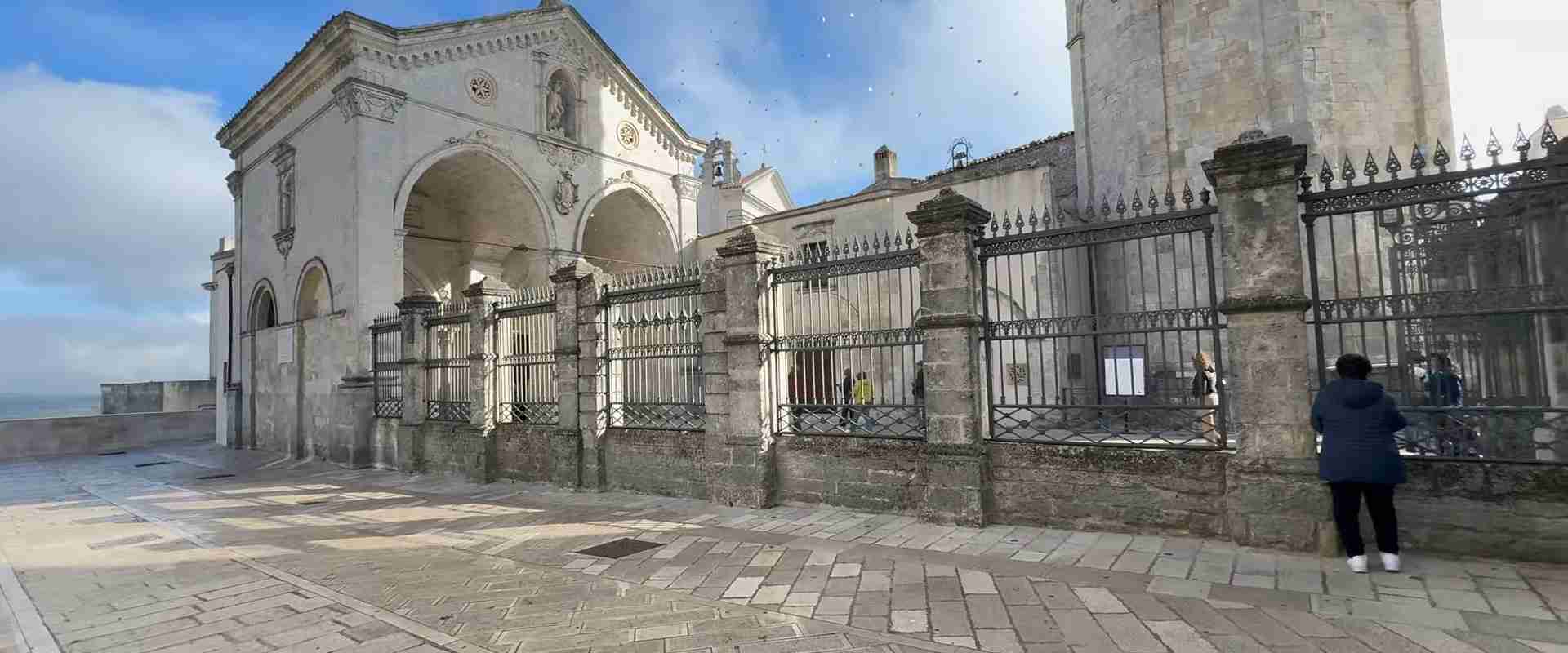
Monte Sant’Angelo is the spiritual heart of the Gargano and one of the most important pilgrimage sites in Western Christendom. The town sits at 800 meters above sea level on the southern slope of the Gargano massif, and it owes its entire existence and historical significance to a series of apparitions of the Archangel Michael that, according to tradition, began in 490 CE when the Bishop of Siponto discovered a bull sheltering from a storm in a cave on the mountainside and received, upon investigating, a vision of the Archangel declaring the cave to be under his divine protection.
The Sanctuary of San Michele Arcangelo built around that original cave is among the oldest Christian sanctuaries in Western Europe and the oldest place of Christian worship anywhere in the world dedicated to a specific archangel, predating Rome’s own Castel Sant’Angelo by decades. The Byzantine emperors of Constantinople considered it a holy place of first rank. The Lombard rulers of southern Italy venerated San Michele as their celestial patron and made Monte Sant’Angelo a principal site of Lombard royal and religious identity. Crusaders stopped here for benediction before sailing to the Holy Land from the Puglian ports, and the Via Sacra Langobardorum — the pilgrimage road that connected the Lombard territories of northern Italy to Monte Sant’Angelo through the Apennines — was one of the major pilgrimage arteries of medieval Europe, worn smooth by centuries of footsteps from pilgrims as geographically diverse as Irish monks, Frankish nobles, and Byzantine merchants.
The sanctuary complex that visitors enter today combines medieval and later construction that has been continuously modified over fifteen centuries, but the cave church at its core — approached via a flight of steps descending to the cave mouth — retains an atmosphere of extraordinary antiquity. The bronze doors, cast in Constantinople in 1076 at the order of the Archbishop of Salerno, depict scenes from both apparitions with a Byzantine refinement that documents the deep eastern cultural connections of Norman-era southern Italy. Inside the cave, the natural rock walls close around a space that manages to feel simultaneously intimate and immense. The 8th-century marble throne attributed to the Lombard King Rothari and a 13th-century bishop’s throne carved from a single block of marble stand within the cave, and the floor-level baptismal font hollowed directly from the living rock communicates the unmediated relationship between Christianity and this particular geological place that has animated the sanctuary’s meaning since its foundation.
The town around the sanctuary rewards exploration independent of the pilgrimage route. The Castello dei Normanni, an 11th-century Norman fortress expanded by Frederick II, provides panoramic views over the Gargano plateau and the Adriatic far below. The Tomba di Rotari — despite its popular name almost certainly a 6th-century baptistery rather than a tomb — stands next to the church of San Pietro as one of the earliest surviving medieval Christian structures in southern Italy, its cylindrical form unique among contemporary religious buildings of the region. The historic center’s streets, many covered with traditional limestone paving and flanked by the white facades characteristic of the Gargano built environment, channel visitors through a sensory landscape that has changed remarkably little over the centuries.
Monte Sant’Angelo was inscribed on the UNESCO World Heritage List in 2011 as one of seven Longobard sites across Italy under the inscription “Longobards in Italy: Places of the Power (568–774 A.D.),” recognized for the outstanding universal value of its Longobard cultural heritage and its continuous role in the spiritual geography of medieval and modern Europe.
San Giovanni Rotondo — Modern Pilgrimage and the Legacy of Padre Pio
Twenty kilometers west of Monte Sant’Angelo, San Giovanni Rotondo presents a different but equally intense experience of religious pilgrimage. The town was the home for fifty-one years of Francesco Forgione — known to the world as Padre Pio of Pietrelcina — the Capuchin friar who bore the stigmata from 1918 until his death in 1968 and was canonized by Pope John Paul II in 2002. His remains are venerated in the crypt of the Sanctuary of Santa Maria delle Grazie, and San Giovanni Rotondo has become one of the most visited Catholic pilgrimage destinations in the world, attracting several million visitors annually from every continent.
The town itself — a modest agricultural settlement before Padre Pio’s international reputation transformed its economy — now centers on the enormous Renzo Piano-designed Basilica di San Pio da Pietrelcina, completed in 2004 and capable of accommodating 30,000 worshippers at a single Mass. Piano’s building, constructed in curved stone ribs of warm Apricena stone quarried from the Pugliese subsoil, simultaneously recalls the vaulted geometry of a Puglian masseria and the wings of a descending bird in flight. It is one of the most architecturally significant religious buildings constructed in Italy in the past fifty years, and it merits attention as a work of contemporary architecture entirely independent of its religious significance. The contrast between Piano’s vast modern structure and the original smaller Capuchin church where Padre Pio spent his entire ministry provides a telling architectural narrative about how pilgrimage transforms its host towns over time — and how quickly.
The Tremiti Islands — Puglia’s Adriatic Archipelago
The Tremiti Islands lie 22 kilometers offshore from the Gargano coast and form Italy’s only true island group in the Adriatic. The archipelago consists of five islands — San Domino, San Nicola, Capraia, Pianosa, and Cretaccio — though only San Domino and San Nicola are inhabited and accessible to visitors. Ferry services operate from Vieste, Peschici, Rodi Garganico, and the Molisan port of Termoli during the main tourist season, with reduced services in shoulder season.
San Nicola is the administrative and historical heart of the archipelago. Its entire surface is occupied by a medieval fortress-abbey complex: the Abbey of Santa Maria a Mare, founded by Benedictine monks in the 9th century and expanded through the medieval period into a fortified religious community. The abbey’s Romanesque church, with a magnificent 11th-century mosaic floor and a Byzantine-style icon of the Virgin considered miraculous by the local population, sits within fortifications that required centuries of construction to render defensible against the constant threat of pirate raids. The island’s long function as a penal settlement — it housed a Bourbon-era prison colony from the 18th century — accounts for some of its austere outer appearance, but the abbey interior belies any severity with the warmth of its medieval craftsmanship.
San Domino is the largest island and the most naturally beautiful, covered in Aleppo pine forest that descends directly to the sea, creating a rare combination of shade and swimming access unique in the Adriatic. The coastline is fractured into sea caves, grottos, and coves — most accessible only by boat — with water clarity that has made the Tremiti a center for diving and snorkeling of genuine quality. The Grotta delle Viole, where violet light filters through underwater openings in the limestone floor, is the most celebrated of these natural features and one of the most beautiful coastal grottos in southern Italy.
Overnight visitors to the Tremiti encounter a particularly intense form of quietness in the shoulder and off-season months, when the summer day-trippers have departed and the islands revert to their permanent communities of a few hundred inhabitants. The natural park designation that protects the archipelago prohibits new construction and limits motorized vehicles, preserving an atmosphere of genuine island isolation that is becoming increasingly rare along the central Mediterranean coast.
Lucera — Frederick II’s Arab Colony and Two Thousand Years of Civilization
Lucera is the most historically layered and, among international travelers, the most underrated town in southern Italy. It sits on a hill at the northern edge of the Tavoliere plain with panoramic views south across wheat fields and north toward the Daunia Apennines, and its physical inheritance from three of the most important civilizations that ever ruled this territory — Rome, the Hohenstaufen empire, and the Angevin kingdom — makes it a destination of exceptional density for anyone interested in how historical civilizations leave their marks on landscape.
Rome founded Luceria Apula as a Latin colony in 314 BCE on the site of an earlier Samnite settlement, and the town became an important strategic node for the domination of Apulia. The Roman amphitheater, built in the 1st century BCE and capable of holding 18,000 spectators in its prime, is the only Roman amphitheater in Puglia in a reasonably intact state. The elliptical structure, set in a public park on the eastern edge of the modern town, has been weathered by two millennia into a landscape of grass-covered stone arches that is more romantic than reconstructed — in the manner of Rome’s Palatine Hill, where ruins have softened into something pastoral without losing their power to communicate scale. The amphitheater’s dimensions speak directly to the importance Lucera held in the Roman hierarchy of southern Italian cities.
The Swabian castle on Lucera’s hilltop is the single most dramatic structure in the wider Gargano-Tavoliere area. Frederick II ordered its construction around 1233, and his son Manfred continued it through the 1260s. The resulting fortification — a polygonal enceinte of twenty-four towers enclosing a vast internal courtyard — covers the entire hilltop and measures 900 meters in its perimeter, ranking it among the largest medieval castles in the whole of southern Italy. The cylindrical keep and associated towers that rise from the northwest corner of the enceinte are visible from the Tavoliere plain 20 kilometers away, functioning today as a navigational landmark in precisely the manner they served a military surveillance function seven centuries ago.
What makes Lucera uniquely fascinating is the human history contained within and around those walls. Between 1224 and 1246, Frederick II systematically transported the Saracen Muslim population of Sicily — approximately 20,000 people — to Lucera, where he settled them with religious freedom, exemption from civil taxation, and the right to bear arms. These Saracens served as Frederick’s most loyal military force, free from papal censure precisely because they were Muslim and therefore already outside the Church’s jurisdiction, and they maintained the town’s Arabic cultural character for six decades. Mosques and minarets characterized this Lucera Saracenorum. The experiment was terminated with extreme violence when the Angevin king Charles II of Naples massacred or enslaved the Muslim population in 1300 — a brutal act of religious cleansing that ended one of the most remarkable experiments in multicultural coexistence in medieval European history. The Angevins then built the Cattedrale di Santa Maria della Vittoria directly on the site of Lucera’s principal mosque, and that church still stands in the town center.
The Museo Civico Giuseppe Fiorelli, housed in a former Augustinian convent adjacent to the castle, provides a comprehensive archaeological account of Lucera’s successive civilizations, with particular attention to the Roman period and the material culture of the Saracen colony. The collection of finds from the amphitheater and surrounding Roman settlement is among the better-curated provincial museums in Puglia, presenting its material with the contextual depth that the complexity of Lucera’s history demands.
Troia — The Romanesque Cathedral Hidden in the Apennines
Troia sits on a hilltop 23 kilometers south of Foggia, the kind of Daunia town that travelers driving between the provincial capital and the Adriatic coast might pass through without stopping — which would be a significant oversight. The town’s cathedral, the Cattedrale dell’Assunta, is considered one of the masterpieces of southern Italian Romanesque architecture, and the combination of its 12th-century construction, its extraordinary decorative details, and its almost complete obscurity outside architectural scholarship makes it one of the most genuinely surprising discoveries available to travelers in the region.
The cathedral was built in multiple campaigns between 1093 and the mid-12th century on the site of an earlier Byzantine church, and the façade accumulates several of the most distinctive features of the Pugliese Romanesque tradition into an unusually compact and intense composition. The rose window is a virtuoso piece of medieval stone cutting: a wheel of delicate tracery with eleven concentric rings of carved stone creating a play of light and shadow that shifts through the day as the sun moves across the square. The complete absence of structural damage over nine centuries speaks to the quality of the original construction.
The most celebrated element of the Troia cathedral is its set of bronze doors, cast in two separate campaigns in 1119 and 1127 by the craftsman Oderisius da Benevento. The doors’ fifty-six panels depict episcopal processions, fantastical animals, Eucharistic imagery, and narrative scenes from church history in a low-relief style that combines Byzantine iconographic conventions with a vitality of individual expression that feels almost Renaissance in its narrative ambition, five centuries before the Florentine Renaissance transformed Italian art. These doors are arguably the finest medieval bronze casting in southern Italy, more unified in artistic vision than the more famous doors at Monte Sant’Angelo, and they deserve far greater recognition than their current obscurity affords them.
The town around the cathedral is modest — a few thousand inhabitants, a main piazza with a fountain, some medieval streets running from the cathedral square — but this human scale is precisely what sets off the cathedral’s quality most effectively. This is Romanesque architecture encountered as it was always meant to be encountered: as part of a living community rather than as a museum piece separated from daily life by barriers and audio guides.
The Daunia Villages — Medieval Hill Towns in the Subapennines
The Daunia Subapennines, the hill country rising between the Tavoliere plain and the Campanian border to the west, preserve a scatter of medieval towns that represent some of the least-visited but most atmospherically authentic communities in southern Italy. The frequent earthquakes that have struck this zone — notably severe in 1930 and 2002 — have left visible marks, but the towns that survived have done so with architectural integrity largely intact, and the absence of significant tourist infrastructure means that daily life here proceeds in ways that feel continuous with the region’s deep traditions.
Bovino, 50 kilometers southwest of Foggia, is the finest of these towns. The medieval fortification, originally constructed by the Normans and modified by Frederick II, sits on the highest point above a town of cobbled streets and a Romanesque cathedral dating from the 11th century. The Museo Diocesano di Bovino contains liturgical silver, medieval manuscripts, and Romanesque architectural fragments from churches destroyed in later earthquakes — a collection whose quality relative to its obscurity is representative of the northern Puglian interior experience generally. Bovino was also a station on the Via Appia Traiana, the Roman road connecting Benevento to Brindisi, and Roman milestones and architectural fragments appear in the local museum collection alongside the medieval material.
Orsara di Puglia, 25 kilometers to the northeast, has developed a certain gastronomic reputation in recent years — its local cuisine, centered on ancient grain varieties, wild herbs, and preservation techniques predating industrialization, draws food travelers from Rome and Turin who combine the culinary pilgrimage with the visual pleasure of an intact medieval center organized around the remains of a Benedictine abbey. The town’s festival of Fuochi and Fucacoste (fires and pumpkins) on the first of November — a syncretic tradition mixing Christian All Saints’ observance with evidently pre-Christian elements — is one of the most distinctive folkloric events in all of Puglia.
Ascoli Satriano, whose ancient identity as Ausculum Apulum marks it as the site of Pyrrhus of Epirus’s costly victory over Rome in 279 BCE (the victory that gave its adjective to the English language), preserves Roman-era finds of considerable significance in its local museum alongside a medieval and early modern town fabric that rewards an unhurried afternoon. The battlefield itself is not definitively located, but the landscape around the town gives an immediate sense of why this rolling Daunia terrain was an appropriate site for the cavalry-heavy tactics of the Hellenistic world.
Manfredonia and the Archaeological Mystery of Ancient Siponto
Manfredonia occupies a natural harbor at the southern base of the Gargano peninsula, founded by the Angevin king Manfred in 1256 explicitly to replace the ancient city of Siponto, which had been repeatedly devastated by earthquakes and finally abandoned entirely after a particularly destructive event in 1223. The town’s 13th-century Angevin castle, considerably expanded and modified by subsequent rulers including the Aragonese, now houses the National Archaeological Museum of Manfredonia — and that museum contains the most important collection of Daunian stele in existence.
These stele are extraordinary objects: carved limestone slabs decorated with geometric patterns and occasionally stylized human figures, dating from the 7th to the 3rd centuries BCE and representing the funerary art tradition of the ancient Daunian civilization that preceded Greek and Roman influence in this part of Puglia. The stele are genuinely enigmatic. They resist easy art-historical categorization, bearing no obvious relationship to Greek funerary art despite the proximity of Greek colonies on the Ionian coast, and their geometric vocabulary is rich enough and varied enough to suggest a sophisticated artistic tradition whose full context remains poorly understood. Spending an hour with the Manfredonia collection rewards the effort with more unanswered questions than answers — which is, arguably, the appropriate intellectual state for approaching a civilization whose language has never been fully deciphered.
Four kilometers south of Manfredonia, the abandoned site of ancient Siponto preserves the Basilica di Santa Maria di Siponto, one of the finest Romanesque churches in Puglia. The basilica was constructed in the 11th century on the site of an early Christian church and is notable for its blind arcade exterior decoration, its elevated floor over a remarkable crypt, and the quality of its stonework — all the more striking for its setting in an open field surrounded by pine trees and the archaeological traces of the Roman city, with the Adriatic visible to the east across the coastal plain. Adjacent to the church, Edoardo Tresoldi’s 2016 wire-mesh installation reconstructing the outline of the Early Christian basilica that once stood beside the medieval building has become one of the most discussed works of site-specific contemporary art in Italy. The installation’s transparency — the wire mesh allows views through the “walls” to the landscape beyond while simultaneously conveying the scale and spatial organization of the lost building — makes it a genuinely thought-provoking complement to the surviving Romanesque church rather than a distraction from it.
Castel del Monte — Frederick II’s Octagonal Enigma and UNESCO World Heritage
Castel del Monte is the most famous building in Puglia and one of the most architecturally mysterious structures in Italy. It stands on a 540-meter hill in the Murge near Andria, visible from the surrounding plain in all directions, a perfectly formed octagonal tower surrounded by eight octagonal towers at each corner — eight sides, eight towers, eight trapezoidal rooms on each of its two floors, eight windows illuminating each room in a sequence calibrated to the solar calendar. There is no moat, no stables, no granary, no permanent water supply, no kitchen in any conventional position. Whatever Castel del Monte was built for, it was not in the ordinary sense a castle for garrisoning troops and defending territory.
Frederick II ordered its construction around 1240, following his return from the Sixth Crusade — a campaign he had led while under papal excommunication, concluding it by negotiating with the Sultan of Egypt rather than fighting, thereby achieving the return of Jerusalem to Christian governance through diplomacy alone. Scholars have proposed every conceivable function for Castel del Monte: a hunting lodge (architecturally extreme for the purpose), an astronomical observatory (the alignment with solstice sunrise is demonstrably precise), a symbol of imperial cosmic authority expressed in mathematical form, a monument to the synthesis of the three civilizations whose accumulated knowledge Frederick had absorbed — the Christian mathematical tradition, the Islamic geometric tradition, and the Greek philosophical heritage — compressed into octagonal stone. All of these interpretations hold partial validity, which is perhaps the point: Castel del Monte may have been designed to resist singular explanation.
The architectural details demonstrate the cultural synthesis that Frederick embodied. The pointed arches of the interior courtyard arcades are Islamic in derivation. The marble column bases and capitals draw directly on Classical Roman models. The marble carvings — fragments survive in the upper rooms — show Gothic European stylistic features contemporary with the great French cathedrals being built during the same decade. The precision of the geometric plan has no exact parallel in either Islamic or European medieval architecture. UNESCO inscribed Castel del Monte in 1996 with the designation that it represents “a unique masterpiece of medieval architecture,” and the citation reflects genuine architectural judgment rather than bureaucratic classification.
Visitors entering today find an interior of great beauty in its stripped condition — the polychrome marble revetments, porphyry inlays, and colored stone floors that once covered every surface having been dispersed over the centuries. The restored rooms on both floors allow circumnavigation of the entire building through a sequence of trapezoidal spaces that, following the octagonal logic relentlessly, creates a slightly disorienting spatial experience: each room differs fractionally from the others as the geometry adjusts to the corner tower positions, and the cumulative effect is of a building that has no single privileged viewpoint, no axis, no hierarchy — a spatial politics that may itself be the building’s deepest architectural statement.
The views from the upper floor windows — narrow pointed lancets that frame precise segments of the surrounding Murge landscape — operate like architectural sights aimed at specific points on the horizon. Whether those points carry astronomical or territorial significance is one of the debates that has animated Castel del Monte scholarship for two centuries and shows no sign of resolution. Arriving at the castle in the morning before the main tourist coaches from Bari and Barletta arrive, when the building is quiet and the light rakes across the pale ashlar at a low angle, provides the clearest experience of the spatial intelligence that makes this building unlike any other in the medieval world.
Trani — The Cathedral of Light and the Adriatic’s Jewish Heritage
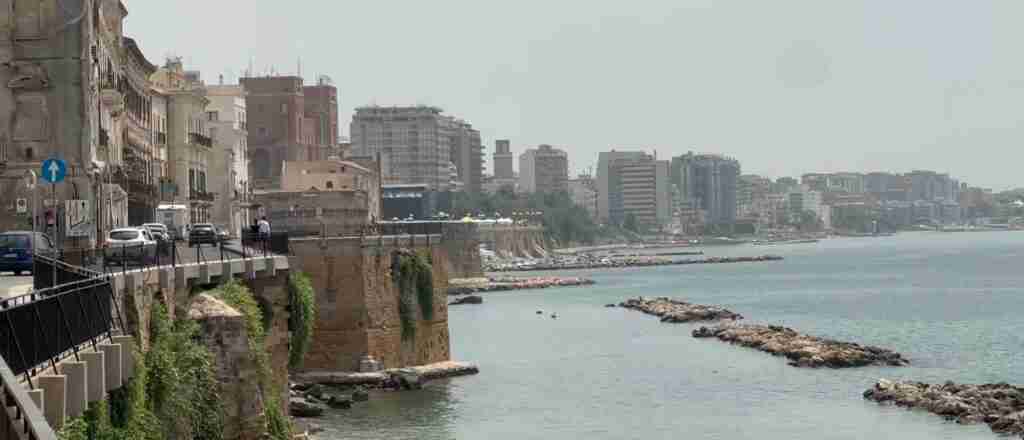
Trani is, by a significant margin, the most beautiful town on the northern Puglian coast and one of the most beautiful in all of Italy. It sits on a low limestone promontory above the Adriatic, and its principal monument — the Cattedrale di San Nicola Pellegrino — is positioned at the seaward end of that promontory in a relationship with the sea that seems architecturally designed for maximum dramatic effect: the white limestone cathedral, its façade perfectly composed, rises directly from the waterfront with nothing between its foundations and the Adriatic waves below.
The cathedral was constructed between 1097 and the mid-13th century and is widely considered the finest example of Pugliese Romanesque architecture in existence. The façade composition — a central portal flanked by blind arcading, two flanking towers of which one is complete and one is vestigial, and the characteristic Pugliese blind gallery running below the roofline — achieves a proportion and finish that transcends its stylistic category into something that feels universally right. The color of the stone — a pale warm limestone known as pietra di Trani that turns golden in late afternoon light — transforms the building at sunset into one of northern Puglia’s essential visual experiences, and the reflection of the cathedral in the harbor water doubles the effect. This building has been photographed from every possible angle across two centuries of photography, and it has never been reduced to cliché.
The interior organizes itself across three levels: the main cathedral floor, the lower church (Santa Maria della Scala), and the crypt housing the relics of the cathedral’s dedicatee. The main level preserves fragments of mosaic flooring and the late Romanesque bishop’s throne. The lower church contains 12th-century frescoes of significant historical and artistic value. The crypt — where the relics of San Nicola Pellegrino, the Greek pilgrim who died in Trani in 1094 and whose canonization the cathedral was built to celebrate, are kept — retains the atmosphere of early medieval Christianity in its most concentrated form: low vaulting, thick columns, subdued light, and the sense of a spiritual practice continuous over nearly a thousand years.
Trani’s historical importance extended well beyond its cathedral. As one of the most prosperous commercial ports of the medieval Adriatic, it attracted Venetian, Greek, and Jewish trading communities, and the medieval Jewish quarter — the Giudecca — occupying the area between the cathedral and the old harbor is one of the best preserved in the Italian peninsula. Four medieval synagogues were built in the Giudecca at the height of the Jewish community’s presence in the 12th and 13th centuries. Three were converted to churches following the 1494 expulsion of Jews from the Kingdom of Naples; the Scolanova synagogue, the largest and architecturally finest of the four, has been partially restored and is periodically open for visits, providing direct physical evidence of a community whose architectural sophistication rivaled anything being built in the Christian city around it. The carved stone portals of other former synagogues survive embedded in the walls of converted buildings throughout the quarter, legible to those who know how to read them as documents of a community that was expunged from the urban fabric but never entirely erased from it.
Trani’s Swabian castle, built by Frederick II in 1233 in the same campaign that produced his castles at Barletta, Lucera, and Gioia del Colle, protects the harbor entrance and is now used as a cultural venue hosting rotating exhibitions. The harbor itself — a working fishing harbor surrounded by restaurants and wine bars operating out of the old harbor-front warehouses — functions as the town’s social center and offers what is arguably the best seafront promenade in northern Puglia for the combination of architectural quality, gastronomy, and the visual pleasure of watching fishing boats return in the early morning light.
Barletta — The Colossus, the Castle, and the Disfida
Barletta is Trani’s larger northern neighbor and presents a more complex urban personality — less immediately beautiful than Trani but historically richer and more dramatically marked by the large-scale physical interventions of successive military and commercial powers. Its principal monument is unlike anything else in Italy, or indeed anywhere else in the world.
The Colosso di Barletta is a 5.11-meter bronze figure of a late Roman emperor that stands in the city center where it has been displayed, with various modifications and reinterpretations, for at least nine centuries. The statue’s exact identification remains disputed: serious scholarly candidates include the emperors Valentinian I, Heraclius, Marcian, and Theodosius II, with current consensus inclining toward a late 4th or early 5th-century date of creation. What is certain is that this figure is the largest surviving bronze statue from antiquity, far exceeding in scale and preservation anything comparable remaining from Rome itself, and that it arrived in Barletta during the medieval period — possibly looted from Constantinople during the Fourth Crusade of 1204, though the exact provenance remains unresolved. The arms and lower legs are medieval restorations executed in iron; the torso, head, and imperial regalia are original Roman casting of exceptional quality. The statue stands in a small piazza with what might be described as imperial indifference to the passing centuries, its scale entirely out of proportion with the surrounding medieval buildings in a way that makes it stranger and more powerful than any museum installation could achieve.
Barletta’s other principal historical narrative concerns the Disfida di Barletta of 1503 — a formal tournament challenge in which thirteen Italian knights serving the Spanish-aligned Kingdom of Naples fought thirteen French knights following an alleged slight to Italian military honor during the Wars of Italy. The Italians won definitively. The event became a founding story of Italian national pride, celebrated by the novelist Massimo d’Azeglio in his 1833 historical novel and thereby absorbed into the cultural vocabulary of the Risorgimento. A dedicated museum near the town center commemorates the event, and an annual historical reenactment in September fills the streets with costumed combatants and provides northern Puglia’s most theatrical public spectacle.
The Norman-Swabian castle, substantially rebuilt by Frederick II in the 13th century, occupies the harbor promontory in a form that is more massive and less refined than Trani’s equivalent. It contains a local archaeological collection. The Romanesque Basilica del Santo Sepolcro — a mid-12th-century church of the Crusader period built by the Knights Templar on the model of the Church of the Holy Sepulchre in Jerusalem — stands adjacent to the Colosso and preserves a 14th-century Gothic portal of considerable quality, representing a later architectural intervention that documents Barletta’s continued importance as a Crusader staging port long after the initial wave of Norman construction had passed.
Canosa di Puglia — Ancient Canusium and Underground Heritage
Canosa di Puglia occupies the site of ancient Canusium, founded by the Daunian people and later one of the most important Roman cities in Apulia. Horace and Cicero both described Canusium as a significant center; after the catastrophic Battle of Cannae in 216 BCE — fought in the fields a few kilometers away, where Hannibal’s army destroyed a Roman force of 70,000 men in one afternoon — the Roman survivors found refuge in Canusium. The town’s historical importance declined as Barletta’s harbor and Bari’s commercial primacy grew during the medieval period, but the archaeological legacy that remained below and at the surface of the modern town is of exceptional richness.
The most spectacular of Canosa’s ancient monuments are the hypogea — underground burial chambers — that dot the area around the town. The Ipogeo di Varrone, named (perhaps incorrectly) for the Roman grammarian Marcus Terentius Varro, is a 3rd-century BCE tomb with a vestibule and burial chamber decorated with architectural details executed in locally quarried limestone, providing a vivid image of how Canusian aristocratic families understood the afterlife and chose to materialize that understanding in stone. The Ipogeo Lagrasta consists of multiple interconnected chambers that contained grave goods — now dispersed to various museums — documenting the wealth and cultural connections of the Canusian noble class at the height of the town’s pre-Roman importance.
Above ground, the Basilica di San Leucio — a 5th-century Christian basilica constructed over the site of an earlier temple to Minerva — preserves a pavement mosaic of exceptional interest and unusual iconographic content. The mosaic’s Bactrian camel panel, depicting two humped camels in a stylized landscape, represents a subject with no obvious iconographic precedent in North African or Near Eastern Christian art of the period and has generated considerable scholarly debate about what it might document regarding the trade routes and cultural connections of late antique Apulia. The local archaeological museum, Palazzo Casieri, presents the town’s Roman and Daunian material in well-labeled sequence.
The Culinary Heritage of Northern Puglia
Northern Puglia’s culinary tradition is built on the agricultural foundations of the Tavoliere — Italy’s granary in both antiquity and the modern era — combined with the pastoral heritage of the Gargano and Daunia hills and the coastal fishing culture of the Adriatic. The result is a cuisine of exceptional honesty and regional specificity that produces dishes both more rustic and more ingredient-focused than the more celebrated cooking of the Salento and Valle d’Itria to the south, rooted in agricultural cycles and local ecological conditions rather than the baroque decorativeness that characterizes the southern Puglian table.
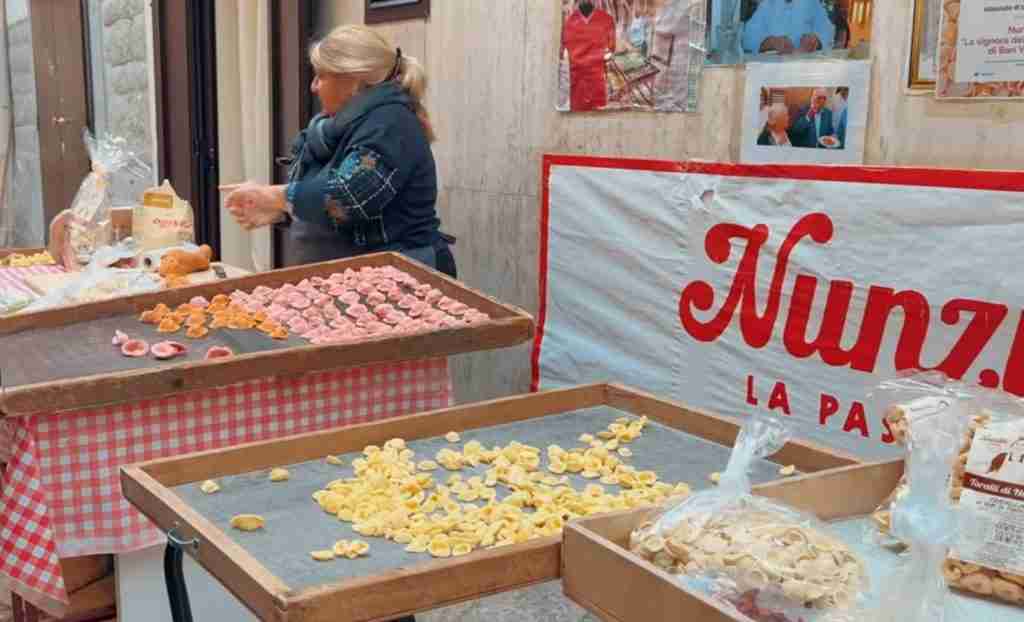
The pasta tradition of the north differs from the more widely known shapes of central and southern Puglia. Troccoli — a thick square-section spaghetti made from hard durum wheat semolina and traditionally cut with a troccolaio, a ridged rolling pin specific to the Foggia area — appears on few restaurant menus outside the province but defines the northern pasta vocabulary. It is traditionally served with lamb ragù, local pork sausage, or the bottarga (dried and pressed grey mullet roe) from the Lago di Varano lagoon on the Gargano coast. Cavatelli, the small ear-shaped pasta shared with neighboring Basilicata and Molise, appears in northern Puglia dressed with turnip tops, fava bean purée (macco), or the porcini and ovoli mushrooms that emerge in the Foresta Umbra in autumn — a combination of forest and agricultural ingredients that captures the region’s geographical range on a single plate.
Caciocavallo Podolico defines the pastoral heritage of the Gargano and Daunia hills. It is produced from the milk of the Podolica cow, a Balkan-origin breed of extraordinary hardiness that grazes the Gargano plateau and Daunia hillsides on wild grasses, orchids, and aromatic herbs unavailable to stall-fed cattle, migrating with its herders in a pattern of transhumance that has been continuous in this landscape for centuries. The cheese is aged in natural caves or cellars, hung in pairs on wooden crossbeams in the traditional caciocavallo form, for periods ranging from several months to several years, developing increasingly complex flavors that progress from mild and supple in youth to sharp, granular, and deeply savory at full maturity. Aged Caciocavallo Podolico commands premium prices from cheese specialists across Italy and increasingly from international importers; eating it in the Gargano, purchased directly from a shepherd who knows the name of every animal in his herd, is one of the region’s essential gastronomic experiences.
The wines of northern Puglia have undergone significant quality transformation in the past two decades. Nero di Troia — the principal indigenous black grape variety of the Barletta-Andria-Trani area — is the basis for the Castel del Monte DOC and several other appellations. At its best, produced by estates such as Rivera in Andria, Torrevento near Corato, and Botromagno in Gravina, Nero di Troia yields red wines of considerable structural complexity: dark fruit, earthy mineral character, and an aging potential that distinguishes them from the more immediately approachable wines made from Primitivo and Negroamaro further south. The vine is notoriously difficult to grow and vinify — prone to early spoilage and uneven ripening — which explains why it remained largely unknown outside the region until winemakers committed to its rehabilitation in the 1990s. That rehabilitation is one of the quiet successes of contemporary southern Italian viticulture.
The olive oil of the Foggia area and Gargano has its own protected designation. Gargano DOP oil, produced from Ogliarola Garganica olives grown on the peninsula’s slopes, yields an oil of medium intensity with distinctive floral and fruity notes characteristic of the Gargano microclimate, different in character from the more intensely fruity Coratina-based oils of the BAT province to the south. The harvest in October and November activates an annual social ritual that draws local families to orchards in continuous production for generations, and the resulting oil — consumed fresh, within weeks of pressing — has a vivid, almost vegetative quality impossible to replicate in a supermarket bottle.
Fish markets in Manfredonia, Vieste, and Barletta supply the region’s restaurants with Adriatic seafood of genuine quality — the Adriatic is shallower and more biologically productive than the Tyrrhenian, and the variety of species available in northern Puglian fish markets exceeds what most Italian coastal cities can offer. Local preparations are characteristically direct: grilled orata (sea bream) with lemon and local olive oil, pasta with sea urchin roe (ricci di mare) from the Gargano waters, spaghetti alle vongole using local clams, and the northern Puglian brodetto di pesce (fish stew) flavored with wine vinegar in a distinctively bracing departure from the tomato-based fish soups of southern Puglia. The brodetto’s vinegar note, shared with the fish stews of Molise and Marche to the north, betrays the Adriatic cultural continuity that connects these coastal communities across regional administrative boundaries.
A Cultural Itinerary for Northern Puglia — Seven to Ten Days
The following itinerary prioritizes cultural depth over scenic completeness, routing through the major historical sites while providing enough time at each to move beyond surface-level visits. A rental car is the most practical approach, as several key destinations — Castel del Monte, Troia, Monte Sant’Angelo, Foresta Umbra, the Daunia villages — are difficult to reach efficiently by public transport and reward arrival on your own schedule.
Days One and Two — The Adriatic Coast from Trani to Barletta
Begin in Trani, arriving in the afternoon and spending the first evening walking the harbor front and viewing the cathedral in the last hour of afternoon light — the golden limestone catches the sun with particular intensity between 4 and 6 PM in summer and the harbor reflection doubles the impact. Use day two for the Giudecca in the morning (the former synagogue of Scolanova, the embedded portals, the layered urban fabric of the Jewish quarter), the cathedral interior at late morning, and an afternoon drive north to Barletta to see the Colosso, the castle, and the Basilica del Santo Sepolcro. Dinner in Barletta’s centro storico, within walking distance of the harbor front.
Day Three — Andria, Canosa, and Castel del Monte
Drive west from Barletta to Canosa di Puglia for the morning — the hypogea, the San Leucio basilica mosaic floor, and the local museum fill three to four hours of genuine engagement. Lunch in Canosa, then drive the 25 kilometers to Castel del Monte for the afternoon. Arriving no later than 3 PM allows two hours for the castle before crowds thin and the evening light transforms the pale ashlar. Return to Andria or Trani for the night.
Day Four — Foggia, Lucera, and Troia
Drive west to Foggia as a transit point, then north to Lucera for the morning and early afternoon — the Roman amphitheater, the Swabian castle (allow at least ninety minutes), and the Museo Civico all reward unhurried attention. Drive south to Troia in the late afternoon to see the cathedral façade and bronze doors before closing time, noting that Troia’s cathedral has limited opening hours that require advance research. Stay in Foggia or return to Lucera for the night.
Day Five — Orsara di Puglia, Bovino, and the Daunia Interior
A slow day in the Daunia hills: market morning in Orsara di Puglia if the timing aligns, then Bovino for the castle, the 11th-century Romanesque cathedral, and the diocesan museum. A late afternoon drive east across the Tavoliere toward the coast — the light across the wheat fields in the two hours before sunset, when the plain turns from green to gold to amber in rapid sequence, is one of northern Puglia’s quieter and most moving visual pleasures.
Days Six and Seven — The Sacred Gargano
Drive east to Manfredonia: morning at the National Archaeological Museum for the Daunian stele collection, then south to Siponto for the Romanesque basilica and Tresoldi’s wire installation. Continue up the Gargano slope to Monte Sant’Angelo, arriving by 2 PM for the sanctuary (afternoons are generally less congested than mornings), the Norman castle, and a late evening in the historic center. On day seven, visit San Giovanni Rotondo to see the Renzo Piano church, then drive north through the Gargano interior to Foresta Umbra for an afternoon walk before descending toward the coast.
Days Eight and Nine — Gargano Coast and Tremiti Islands
Arrive in Vieste in late morning of day eight — time in the medieval center and at the Chianca Amara, lunch with views toward the Pizzomunno beach, and an afternoon boat excursion to the sea caves along the cliffs south of town. Drive to Peschici for the evening. On day nine, take the morning ferry from Vieste or Rodi Garganico to the Tremiti Islands — a full day alternating between San Domino (swimming in the coves, walking the pine forest trails, boat tour of the grottos) and a late afternoon visit to the abbey and mosaic floor on San Nicola before the return ferry.
Day Ten — Vico del Gargano and Departure
A final morning in Vico del Gargano — the medieval center, the citrus groves on the approach road, and a last lunch of troccoli with local lamb ragù before heading south through the Gargano plateau toward Foggia or Bari for the return journey. This closing stage provides a final synthesis of the culinary and architectural vernacular that distinguishes northern Puglia from every other part of Italy, and from most other places in Europe.
Practical Information for Visiting Northern Puglia
Getting to Northern Puglia
Bari Karol Wojtyła Airport is the primary international gateway for Puglia, located 70 kilometers south of Barletta with direct connections to London, Amsterdam, Munich, Paris, Frankfurt, Brussels, and numerous other European cities, as well as Rome and Milan domestically. Foggia, the northern provincial capital, sits 100 kilometers from Bari Airport and connects directly to both Bari and Rome on the main Adriatic rail line. Trenitalia operates frequent InterCity services between Rome Termini and Foggia in approximately four hours, making a rail-car combination — arriving by train and collecting a rental car at Foggia or Bari station — a practical and environmentally sensible approach to the region. Pescara Airport in Abruzzo provides an alternative gateway for travelers approaching from northern Italy or connecting through that hub.
Getting Around Northern Puglia Without a Car
The coastal towns from Barletta to Manfredonia are connected by both Trenitalia rail services and the Ferrovie del Gargano regional railway. Ferrovie del Gargano also operates services from Foggia and Manfredonia toward the Gargano coast, with connecting bus services to Vieste and Peschici, though the schedules require advance research and early planning. SITA Sud buses serve Lucera, Troia, Bovino, and Monte Sant’Angelo from Foggia with services that are functional but infrequent — typically a few departures daily, sometimes stopping by early evening. For organized access to Castel del Monte without a car, several operators in Andria, Barletta, and Bari offer day-tour departures that make this UNESCO site accessible to travelers without rental vehicles.
Best Base Towns for Cultural Exploration
Trani is the most rewarding base for travelers prioritizing the Adriatic coast and the BAT province, combining the finest accommodation and restaurant infrastructure in northern Puglia with a genuinely beautiful historic environment, and providing rail access to Barletta (15 minutes), Bisceglie (10 minutes), and Bari (45 minutes). Foggia serves as the practical hub for the Tavoliere and Daunia interior, with good rail connections and reasonable accommodation, though limited charm as a destination in itself — its historic center was heavily bombed in 1943 and largely replaced by postwar development. Monte Sant’Angelo or San Giovanni Rotondo provide Gargano bases with convenient access to both the sacred interior and the coastal towns, though accommodation options are more limited than on the coast. Vieste is the largest and best-equipped resort town on the Gargano coast and the natural base for beach-oriented visits combined with Gargano exploration, but summer accommodation books months in advance and should be reserved well ahead of travel.
Frequently Asked Questions About Northern Puglia
How does northern Puglia compare to the rest of the region for cultural tourism?
Northern Puglia offers a higher concentration of medieval and ancient heritage than the more touristically developed south, with significantly fewer crowds at most sites. Castel del Monte, Lucera, Trani, Monte Sant’Angelo, and Troia provide cultural experiences of international quality without the queues and tourist infrastructure pressures of Alberobello, Lecce, or Ostuni. The trade-off is that public transport is less developed, English is less widely spoken outside the main coastal resorts, and the general tourism infrastructure is less polished than in the south. Travelers who plan carefully and value authenticity over convenience tend to find northern Puglia substantially more rewarding than the more-visited southern areas of the region, particularly on a second or third visit to Puglia when the famous highlights have already been seen.
When is the best time of year to visit northern Puglia?
May, June, and September are ideal months for combining cultural visits with comfortable weather. In May and June, the Tavoliere and Daunia are green before the summer heat dries the landscape, wildflowers cover the Gargano plateau, and coastal temperatures are warm without being excessive. September brings softer light, lower temperatures than August, and the beginning of harvest season — grape harvest typically in September, olive picking from October — that animates the local food culture in ways summer cannot match. July and August are extremely hot across the Tavoliere (regularly exceeding 40°C on the plain) and crowded on the Gargano coast, with Vieste and Peschici reaching accommodation capacity. The Tremiti Islands are most accessible June through September; off-season ferry services are greatly reduced. Winter is quiet, cool, and atmospheric in the hill towns and at the major monuments, with Lucera, Troia, and Castel del Monte offering a quality of solitary encounter with important historical sites that is impossible in any other season.
Are there entrance fees for the major sites in northern Puglia?
Most major sites charge admission fees. Castel del Monte operates under the standard Italian national monument admission structure managed by the Polo Museale della Puglia (consult the official site for current rates, which are subject to periodic revision). The Sanctuary of Monte Sant’Angelo is free to enter, as is the case for all active places of Catholic worship in Italy. The National Archaeological Museum in Manfredonia, the Museo Civico in Lucera, and the Diocesan Museum in Bovino charge modest entrance fees appropriate to their scale. The Tremiti Islands themselves have no entrance fee; visitors pay only for ferry transportation. Foresta Umbra’s visitor center and walking trails are freely accessible, with guided excursions available through the Parco Nazionale del Gargano at additional cost. The Romanesque basilica at Siponto is free to enter and, as a result, often entirely empty — an atmospheric gift to independent travelers.
What language skills are useful for independent travel in northern Puglia?
Italian is essential for comfortable independent travel beyond the main Gargano coastal resorts. Unlike Lecce, Alberobello, or the Salento coast, the interior towns and smaller Gargano villages do not have a significant English-speaking service infrastructure in place. Museum staff, restaurant owners, and accommodation hosts in towns like Lucera, Troia, Bovino, and Monte Sant’Angelo typically speak little or no English, and attempting to communicate only in English will significantly limit access to the informal warmth and local knowledge that defines the northern Puglian experience at its best. Basic Italian travel vocabulary — sufficient to read menus, follow directions, and make reservations — removes most friction from the journey and often transforms the quality of interactions with local people who appreciate the effort. A translation app provides useful backup for more complex exchanges.
What are the most overlooked sites in northern Puglia that most visitors miss?
The most consistently overlooked site in northern Puglia is the Basilica di Santa Maria di Siponto near Manfredonia — a Romanesque church of exceptional quality in an open archaeological landscape that rewards the short detour from the town. Troia’s cathedral is known to architectural specialists but almost completely absent from general Italy travel itineraries, despite being one of the finest medieval buildings in southern Italy. The Roman amphitheater at Lucera, easily one of the most evocative classical ruins in the south, attracts a fraction of the visitors that travel to comparably significant sites in Sicily and Campania. The Daunian stele collection at the Manfredonia museum is world-class in scholarly significance and presented with real curatorial intelligence, yet it rarely appears on recommended itineraries. Vico del Gargano, among the most beautiful and best-preserved medieval hill towns in southern Italy, remains almost entirely absent from international travel literature.
How much time is needed to see northern Puglia’s main sites properly?
A thorough cultural tour of northern Puglia’s major sites requires a minimum of seven days by car, and ten days allows sufficient depth at each location without rushed transitions. A five-day itinerary is feasible for travelers limiting themselves to the coastal sites — Trani, Barletta, Castel del Monte, Manfredonia, Monte Sant’Angelo — but necessarily excludes the Daunia interior and the full Gargano coastal circuit. Day-trippers from Bari can reach Trani and Barletta comfortably by rail, and Castel del Monte is reachable as a day trip from Bari with a car or organized tour. The Tremiti Islands require at minimum an overnight stay to experience the islands after the day-trip ferry visitors depart and the quietness settles; two or three nights allow the kind of immersion in island atmosphere that justifies the journey.
Is northern Puglia suitable for families traveling with children?
Northern Puglia suits families particularly well in terms of variety. The Gargano beaches are excellent for children and significantly less crowded than comparable beaches in more popular parts of Puglia. The sea cave boat excursions and Tremiti Islands snorkeling appeal strongly to older children. Foresta Umbra’s nature trails provide non-urban engagement with a genuinely wild landscape. Castel del Monte captivates children interested in medieval history — its perfect geometry, mysterious towers, and unanswered historical questions function as a real architectural puzzle rather than a conventional castle. The primary consideration for families is that summer heat in the Tavoliere and Daunia interior is extreme in July and August, regularly exceeding 40°C on the plain, making morning-only visits to inland sites and afternoon rest essential for managing younger children’s energy and safety.
What distinguishes Pugliese Romanesque architecture from other Italian Romanesque traditions?
Pugliese Romanesque, concentrated in its finest expression in the cathedral cities of northern Puglia — Trani, Barletta, Troia, Manfredonia, and Bitonto — developed a distinctive regional character under Norman patronage during the 11th and 12th centuries. The defining features include warm creamy limestone quarried locally (pietra di Trani and similar material), carved portals typically flanked by lions or bulls supporting the jamb columns, a preference for blind arcading as the primary exterior decorative device rather than the sculptural portals favored in Burgundy and Provence, and the frequent use of monumental bronze doors cast in Constantinople or under direct Byzantine artistic influence as a threshold statement. The spatial organization of northern Puglian Romanesque interiors — typically three naves, a crypt beneath a raised choir, and a combination of round and slightly pointed arches — reflects the intersection of Norman structural thinking with Byzantine decorative sensibility that characterizes the artistic production of the Norman kingdom of southern Italy and Sicily at its 12th-century peak.
Are there organized tours covering northern Puglia’s cultural heritage?
Several tour operators based in Bari, Andria, and Foggia offer northern Puglia day trips and multi-day itineraries focused on cultural heritage. Castel del Monte day trips from Bari are widely available and provide a convenient option for travelers based in the regional capital without rental cars. For the interior cultural circuit — Lucera, Troia, Monte Sant’Angelo, and the Daunia villages — specialized small-group and private tours are less common but available from operators focusing on the less-touristed parts of Puglia; searching for “northern Puglia cultural tour” identifies the relevant providers. The Parco Nazionale del Gargano’s visitor centers at Vieste and Foresta Umbra offer organized guided walks within the park territory on a seasonal basis. Several Puglia-based food and wine operators run tours focused specifically on Caciocavallo Podolico producers, Nero di Troia estates, and olive oil mills in the BAT province.
What architectural period is most brilliantly represented in northern Puglia?
The Romanesque period of the 11th through 13th centuries is most brilliantly represented in northern Puglia, in both the ecclesiastical buildings along the Adriatic coast and the military architecture of the Swabian period. Trani, Troia, Manfredonia, and Barletta provide a comprehensive education in the possibilities of regional Romanesque expression, each demonstrating different aspects of the tradition with buildings of international quality. The 13th-century Hohenstaufen military architecture — Castel del Monte above all, but also Lucera and the Swabian additions to the castles at Trani and Barletta — represents a simultaneously distinct and complementary achievement that, at Castel del Monte, reached a level of architectural originality that transcends its historical period entirely. Earlier periods are also well represented: the pre-Roman Daunian civilization in Canosa and Manfredonia, the Longobard heritage at Monte Sant’Angelo, and Early Christian basilica fragments at Siponto and Canosa provide cultural depth extending back three thousand years — making northern Puglia among the most layered archaeological and architectural landscapes in the Mediterranean.