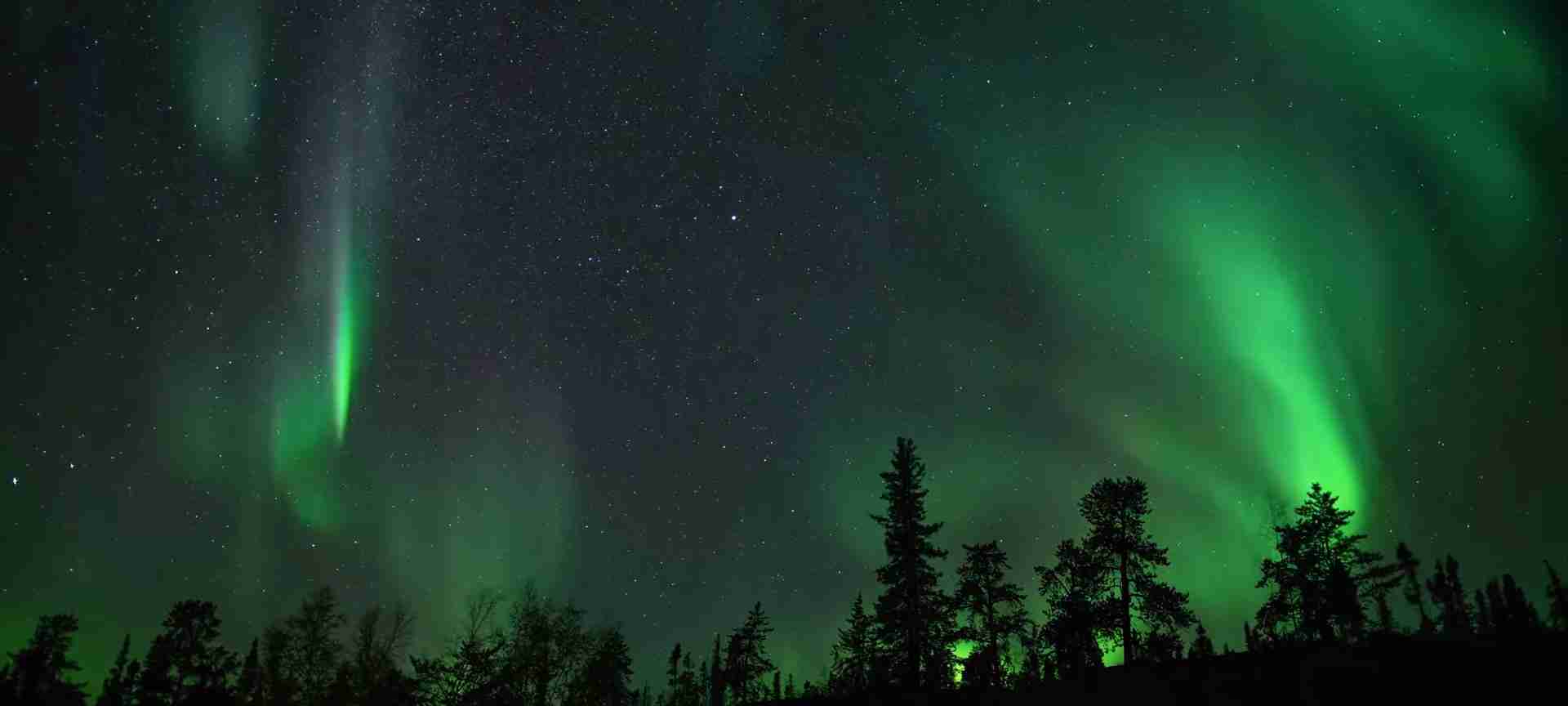
Northern Lights in Yellowknife: Complete Viewing Guide
Yellowknife sits directly beneath the auroral oval at 69 degrees magnetic latitude, earning its reputation as the Aurora Capital of North America with northern lights visible up to 240 nights annually. The city’s position under the oval, combined with stable continental weather patterns and minimal light pollution, creates optimal conditions for witnessing one of Earth’s most spectacular natural phenomena. This guide provides comprehensive information on understanding, viewing, and photographing the aurora borealis in Yellowknife, while exploring the deep cultural significance these lights hold for the Dene peoples who have observed them for thousands of years.
Key Takeaways
- Optimal Viewing Success: Visitors have a 90-95% chance of seeing the northern lights during a three-night stay in Yellowknife, with aurora appearing directly overhead rather than on the horizon. The city’s location beneath the auroral oval at 69 degrees magnetic latitude requires only a KP index of 1 or higher for visible displays, far lower than most aurora destinations.
- Viewing Seasons and Timing: The aurora season spans mid-August through mid-April, with peak viewing between 10 PM and 2 AM local time. September and October offer milder temperatures with opportunities for aurora reflections on water, while December through March provide the longest darkness periods with 18-20 hours suitable for viewing, though temperatures can reach -40°C.
- Indigenous Cultural Significance: The Dene peoples have observed and interpreted the northern lights for millennia, viewing them as manifestations of ancestral spirits and sources of weather prediction. Traditional knowledge emphasizes respectful protocols including never whistling at the lights, and many Indigenous-owned tour operators share these cultural perspectives alongside viewing experiences.
- Photography Fundamentals: Capturing the aurora requires manual camera settings with wide-angle lenses (14-24mm), apertures of f/2.8 or wider, ISO 1600-3200, and shutter speeds between 1-15 seconds depending on aurora movement. Modern smartphones with night mode capabilities can also capture aurora displays, though dedicated cameras produce superior results.
- Solar Maximum Advantage: The current solar cycle maximum extends through 2025-2026, producing the most active aurora period in over a decade. This peak solar activity increases both the frequency and intensity of northern lights displays, with March particularly benefiting from the equinox effect that enhances geomagnetic activity.
- Viewing Infrastructure: Yellowknife offers diverse viewing options from downtown locations during strong activity to specialized facilities like Aurora Village with heated teepees, or aurora hunting tours that drive to multiple locations along the Ingraham Trail. Arctic-rated clothing rental available locally enables comfortable viewing during extreme cold conditions.
People Also Ask About Northern Lights in Yellowknife
Why is Yellowknife the best place to see the northern lights?
Yellowknife sits directly beneath the auroral oval at 69 degrees magnetic latitude, positioning the city under the zone where aurora most frequently occur. Unlike locations at lower latitudes where aurora appear on the northern horizon, Yellowknife experiences aurora directly overhead, creating immersive displays that surround viewers. The city requires only a KP index of 1 for visible aurora compared to KP 3-5 needed at lower latitudes, dramatically increasing viewing success rates. Yellowknife’s continental climate produces stable weather with clear skies, particularly during winter when maritime weather systems cannot reach the region. The absence of nearby mountains or oceans reduces cloud formation and precipitation, while the surrounding boreal forest creates minimal light pollution. These combined factors give Yellowknife a 90-95% aurora viewing success rate during three-night visits.
What causes the different colors in the northern lights?
Aurora colors result from charged solar particles colliding with specific atmospheric gases at different altitudes. Green, the most common color visible between 100-300 kilometers altitude, occurs when solar particles excite oxygen atoms. Pink and red aurora appearing at lower and higher altitudes respectively also result from oxygen collisions under different atmospheric conditions. Purple and blue hues, rarer than green, occur when solar particles collide with nitrogen. The intensity and variety of colors depend on solar storm strength, with powerful geomagnetic storms producing vibrant multi-colored displays while weaker aurora activity shows primarily green. Color perception also varies with human vision, as cameras often capture colors more vividly than the human eye perceives them, particularly reds and purples that appear faint to observers but photograph brilliantly.
Can I see the northern lights in Yellowknife during summer?
Aurora viewing in Yellowknife from late May through mid-August faces significant challenges due to extended daylight hours approaching the midnight sun phenomenon. During peak summer, Yellowknife experiences only 4-5 hours of twilight darkness unsuitable for aurora observation, as the lights require dark skies to become visible. Late August marks the practical beginning of aurora season when darkness returns for 10-12 hours nightly, allowing aurora displays to emerge. September and October provide excellent viewing conditions with 10-12 hours of darkness and milder temperatures compared to winter, making these shoulder season months popular for visitors seeking comfortable aurora experiences. The aurora itself occurs year-round as solar activity continues constantly, but viewing requires darkness that summer months cannot provide at Yellowknife’s northern latitude.
How cold does it get during aurora viewing in Yellowknife?
Winter aurora viewing in Yellowknife regularly occurs at temperatures between -25°C and -40°C, with -40°C representing the point where Fahrenheit and Celsius scales converge. September and October viewing sessions typically range from 0°C to -15°C, offering substantially more comfortable conditions for extended outdoor observation. January and February experience the coldest temperatures but also the longest viewing windows with 18-20 hours of suitable darkness. Wind chill significantly affects comfort levels, potentially making -25°C feel like -35°C or colder during active weather systems. However, proper layering with Arctic-rated clothing enables comfortable viewing even in extreme cold. Local tour operators and outfitters rent complete winter clothing packages including insulated parkas, boots rated to -50°C, insulated pants, mittens, and face protection, allowing visitors to dress appropriately without transporting bulky gear.
Extended multi-day tours – 5+ days
Featured Yellowknife Multi-Day Tour Packages
3 days
Yellowknife 3-Day Discovery Tour
- ✓ Comprehensive Yellowknife experience
- ✓ Expert local guides included
- ✓ All accommodation included
- ✓ Transportation provided
5 days
Yellowknife 5-Day Highlights Experience
- ✓ Comprehensive Yellowknife experience
- ✓ Expert local guides included
- ✓ All accommodation included
- ✓ Transportation provided
7 days
Yellowknife 7-Day Cultural Journey
- ✓ Comprehensive Yellowknife experience
- ✓ Expert local guides included
- ✓ All accommodation included
- ✓ Transportation provided
10 days
Yellowknife 10-Day Complete Adventure
- ✓ Comprehensive Yellowknife experience
- ✓ Expert local guides included
- ✓ All accommodation included
- ✓ Transportation provided
Multi-day tour packages powered by TourRadar. Prices and availability subject to change.
Understanding the Aurora Borealis Phenomenon
The aurora borealis occurs when the solar wind, a continuous stream of charged particles ejected from the sun’s corona, interacts with Earth’s magnetosphere and atmosphere. This celestial light display represents one of the most visible manifestations of solar-terrestrial physics, transforming invisible electromagnetic energy into luminous curtains, arcs, and rays that dance across the polar skies.
Solar-Terrestrial Dynamics and Aurora Formation
The sun continuously ejects charged particles, primarily electrons and protons, that travel through space at speeds reaching 400-800 kilometers per second. When these particles encounter Earth’s magnetic field, the magnetosphere channels them toward the poles along magnetic field lines. As charged particles descend into the atmosphere at altitudes between 100-500 kilometers, they collide with oxygen and nitrogen atoms, transferring energy that causes these atoms to emit photons as visible light. The specific colors depend on which gas is struck and at what altitude. Oxygen produces green light at 100-300 kilometers altitude and red light above 300 kilometers, while nitrogen creates blue and purple hues. The intensity of aurora displays correlates directly with solar activity, with stronger solar storms producing brighter, more colorful, and more dynamic auroral displays.
The Auroral Oval and Yellowknife’s Geographic Advantage
The auroral oval, a ring-shaped zone surrounding each magnetic pole, represents the area where aurora most frequently occur. This oval expands during geomagnetic storms and contracts during quiet periods, but maintains its center around the magnetic poles rather than geographic poles. Yellowknife sits at 62.4 degrees north latitude and 114.4 degrees west longitude, positioning the city at 69 degrees magnetic latitude directly beneath the auroral oval’s typical position. This placement means aurora appear overhead in Yellowknife rather than on the horizon as they do at lower latitudes. The overhead position creates immersive displays where aurora can surround observers, with curtains extending from one horizon to another through the zenith. This geographic advantage explains why Yellowknife experiences aurora on approximately 240 nights annually compared to 100-150 nights at locations farther south.
Solar Cycle Dynamics and Current Maximum Conditions
The sun follows an approximately 11-year activity cycle measured by sunspot counts and solar storm frequency. Solar maximum, the peak of this cycle, produces frequent coronal mass ejections and solar flares that generate intense aurora displays. Solar Cycle 25 reached its maximum phase in 2024-2025 and continues through 2026, creating the most active aurora period since Solar Cycle 24’s maximum in 2014-2015. During solar maximum, observers can expect aurora displays with greater frequency, intensity, and color variety compared to solar minimum years. The equinox effect, occurring during March and September, further enhances aurora activity as Earth’s magnetic field alignment with the solar wind creates favorable conditions for geomagnetic storms. This combination of solar maximum and equinox periods makes 2025-2026 particularly exceptional for Yellowknife aurora viewing.
KP Index and Geomagnetic Activity Scales
The KP index, ranging from 0 to 9, measures global geomagnetic activity and predicts aurora visibility at different latitudes. Each KP value represents a specific intensity of Earth’s magnetic field disturbance caused by solar wind interaction. Yellowknife requires only KP 1 or higher for visible aurora due to its position beneath the auroral oval, while locations at 60 degrees magnetic latitude need KP 2-3, and mid-latitude sites require KP 5-7 for viewing opportunities. KP values of 5 or higher indicate geomagnetic storms producing spectacular multi-colored aurora displays visible even in Yellowknife’s city core. Real-time and forecast KP values, available through Space Weather Prediction Center and aurora forecast applications, help visitors plan optimal viewing times. The 30-minute forecast updates prove particularly valuable for deciding when to venture outdoors during evening viewing windows.
Yellowknife Viewing Seasons and Optimal Timing
Aurora viewing in Yellowknife spans eight months annually from mid-August through mid-April, with distinct seasonal characteristics affecting viewing conditions, temperature comfort, and photographic opportunities. Understanding seasonal variations enables visitors to select timing that matches their priorities between aurora intensity, weather comfort, and complementary activities.
Fall Aurora Season: Late August Through October
The fall aurora season begins in late August when darkness returns for 10-12 hours nightly after the midnight sun period ends. September and October offer optimal conditions combining reliable aurora displays with relatively mild temperatures ranging from 0°C to -15°C, eliminating the extreme cold preparation required during winter months. This shoulder season provides unique photographic opportunities as unfrozen lakes and rivers create stunning aurora reflections on water, producing mirror images that double the visual impact. The landscape transitions through autumn colors with tamarack trees turning brilliant yellow, adding golden foreground elements to aurora photographs. September benefits from the autumn equinox effect that enhances geomagnetic activity, often producing the year’s strongest aurora displays. Fall viewing enables extended outdoor sessions without discomfort, with warm jacket and layers sufficient for 3-4 hour viewing periods. Complementary activities include hiking, fishing, canoeing, and wildlife viewing during daylight hours, creating well-rounded trip experiences.
Winter Peak Season: December Through March
Winter aurora season from mid-November through mid-April delivers the longest darkness periods with 18-20 hours suitable for viewing during December and January. Extended darkness increases aurora encounter probability as displays can occur anytime after sunset around 4 PM until sunrise after 10 AM during mid-winter. Temperatures range from -25°C to -40°C regularly, with January and February experiencing the coldest conditions but also the clearest skies as extreme cold prevents cloud formation. The winter landscape transforms into snow-covered terrain providing bright foreground elements that reflect aurora colors, enhancing photographic compositions. March represents an exceptional transition period combining lengthening daylight for activities with continued strong aurora displays, plus the spring equinox effect that boosts geomagnetic activity. Winter viewing requires proper Arctic-rated clothing and shelter planning, but specialized facilities and tour operators provide heated viewing areas making extended cold-weather observation comfortable. The winter season coincides with complementary activities including dog sledding, ice fishing on Great Slave Lake, snowshoeing, cross-country skiing, and snowmobiling.
Optimal Nightly Viewing Windows
Aurora displays occur most frequently between 10 PM and 2 AM local time, centered around magnetic midnight which occurs approximately 1:45 AM in Yellowknife. This four-hour window represents peak probability, though aurora can appear anytime after dark. Serious viewers begin watching from 9 PM and continue monitoring until 3 AM to capture displays occurring outside the prime window. Aurora activity follows patterns with displays often intensifying in waves, with 30-60 minute active periods followed by quieter intervals. Multiple viewing sessions throughout the night increase success rates, as aurora absent at 10 PM may emerge brilliantly at 1 AM. The extended winter darkness means displays occurring at 5 AM or 8 AM, while rare, remain possible during December and January when sunrise doesn’t occur until after 10 AM. Patient observers who monitor forecasts and remain flexible with timing throughout viewing windows achieve the highest success rates.
Multi-Night Viewing Strategy
Booking three to five consecutive viewing nights dramatically increases aurora observation probability despite Yellowknife’s high success rates. Weather patterns, particularly cloud cover, represent the primary variable affecting viewing success rather than aurora absence. A three-night stay during September or October with KP index reaching 1 or higher produces approximately 80-90% aurora viewing success when accounting for weather variations. Five-night stays approach 95% success rates, providing buffer against occasional cloudy periods. Multi-night strategies enable flexibility to optimize around weather forecasts, concentrating efforts on clear-sky nights predicted 24-48 hours in advance. This approach also allows for rest between viewing sessions, as aurora observation involves late-night outdoor periods that can prove exhausting when maintained consecutive nights. Tour operators and local guides emphasize multi-night bookings as the single most effective strategy for guaranteeing successful aurora experiences.
Premier Viewing Locations Around Yellowknife
Yellowknife offers viewing options spanning urban locations accessible by walking to remote wilderness sites requiring vehicle access or guided transport. Location selection depends on aurora strength, desired comfort level, photography priorities, and interest in cultural experiences. The city’s position beneath the auroral oval means strong displays remain visible even from downtown, though escaping light pollution enhances color saturation and photographic results.
Aurora Village: Heated Comfort in Traditional Setting
Aurora Village, located 25 minutes from downtown Yellowknife along the Ingraham Trail, operates as Yellowknife’s premier specialized viewing facility. The Indigenous-owned site features 21 traditional heated teepees surrounding Aurora Lake, five hilltop viewpoints offering 360-degree unobstructed horizons, and custom-designed heated outdoor viewing seats that swivel to track aurora movements across the sky. The teepees provide warm refuge during viewing sessions with wood-burning stoves, while the lake creates opportunities for aurora reflection photography. Transportation from downtown hotels runs continuously throughout viewing hours, with multilingual guides available in English, Japanese, Mandarin, Cantonese, and Korean. The facility includes heated washrooms, a gift shop featuring Indigenous crafts and Canadian products, and professional photography services. Tripod rentals and photography guidance help visitors capture quality images. Aurora Village’s infrastructure enables comfortable viewing even during -40°C conditions, making extended observation sessions feasible for visitors unprepared for extreme cold. The site’s design emphasizes both comfort and cultural authenticity, with consultation from Dene elders informing the traditional sled-inspired heated seat design.
Indigenous Cultural Aurora Experiences
B. Dene Adventures operates a traditional Dene culture camp offering aurora viewing integrated with authentic cultural immersion. Owned and operated by Bobby Drygeese, the lakefront camp emphasizes Dene traditions through hands-on experiences including traditional drumming, cooking whitefish over open fires, bannock preparation, and direct storytelling from Dene elders. Guests travel to the camp via snowmobile-pulled sleds during winter, adding adventure to the journey. The camp provides heated indoor spaces for cultural activities interspersed with outdoor aurora observation, creating balanced comfort during viewing sessions. This cultural approach transforms aurora viewing from pure observation into understanding the lights through Indigenous perspectives that have interpreted these displays for thousands of years. North Star Adventures, operated by Joe Buffalo Child for 18 years, similarly combines aurora viewing with Dene cultural storytelling and traditions. These Indigenous-owned operators provide unique experiences unavailable through standard tour companies, connecting visitors with the deep cultural significance the aurora holds for the peoples who have observed them since time immemorial.
Aurora Hunting Tours Along Ingraham Trail
Aurora hunting tours employ mobile strategies, driving to multiple locations along the Ingraham Trail to optimize viewing conditions based on real-time cloud patterns and aurora intensity. Guides monitor forecasts and weather continuously, relocating groups to areas with clearest skies and strongest displays. This flexibility maximizes success rates by adapting to changing conditions rather than remaining at fixed locations. Typical hunting tours visit three to five different lakes and viewpoints throughout the evening, spending 45-60 minutes at each location. Sites include Vee Lake, Yellowknife River Day Use Area, Prelude Lake Territorial Park, and various unnamed wilderness locations known to experienced guides. The mobile approach particularly benefits photography enthusiasts seeking diverse foreground elements, as each location offers distinct landscape features. Tours provide hot chocolate, maple cookies, and warm beverages during stops, with guides assisting with camera settings and photographing visitors beneath aurora displays. The hunting format suits active visitors who prefer variety and movement over stationary observation.
Bush Pilot’s Monument: Elevated Urban Viewing
Bush Pilot’s Monument, located atop a rock outcrop in Old Town Yellowknife, provides the city’s best urban aurora viewing location with 360-degree unobstructed horizons. The monument sits on exposed bedrock elevated above surrounding development, eliminating foreground light pollution while maintaining quick access from downtown accommodations. A parking area and stairs lead to the summit where visitors can observe aurora overhead without vehicle or tour requirements. The elevated position provides commanding views across Yellowknife Bay, Great Slave Lake, and the surrounding boreal forest, offering diverse landscape elements for photographic composition. The monument remains accessible year-round though winter conditions require appropriate footwear for navigating icy stairs. Strong aurora displays visible at this location confirm sufficient intensity for excellent viewing, as urban light pollution slightly diminishes fainter displays. The monument serves well for spontaneous viewing when staying downtown and aurora forecasts indicate strong activity, eliminating the 30-60 minute transit time to remote locations.
Dettah Ice Road: Winter Wilderness Access
The Dettah Ice Road, operational January through March when Great Slave Lake freezes sufficiently for vehicle traffic, creates a unique aurora viewing venue on the frozen lake surface. The 6.5-kilometer ice road connects Yellowknife to the Indigenous community of Dettah, crossing Yellowknife Bay with massive expanses of flat ice providing unobstructed 360-degree horizons. Viewing from the ice road combines the aurora overhead with reflections off the snow-covered ice surface, creating surreal atmospheres enhanced by pressure ridges and ice formations. The road remains open only during sufficient cold when ice reaches adequate thickness, typically closing by late March as temperatures warm. Safety protocols require staying on marked routes and monitoring ice conditions, as the Northwest Territories government manages ice road operations with regular thickness testing. The experience appeals particularly to adventurous visitors seeking unique viewing environments beyond standard observation platforms, though temperatures on exposed ice can prove especially severe with wind chill exceeding -45°C during cold snaps.
Downtown Yellowknife Viewing Opportunities
Strong aurora displays with KP index of 3 or higher remain visible from downtown Yellowknife streets, hotels, and waterfront areas despite urban light pollution. The city’s modest size and lack of high-rise development mean light pollution remains minimal compared to major urban centers, with many downtown locations offering reasonably dark sky views. Yellowknife Bay waterfront provides open northern horizons allowing aurora observation without escaping the city. Walking a few blocks away from the brightest street lights significantly improves viewing conditions while maintaining immediate access to accommodations and warmth. The city has installed “Northern Lighthouses,” tiny lighthouse-shaped indicators placed throughout downtown that illuminate when active aurora forecasts predict evening displays, alerting residents and visitors when worthwhile viewing conditions exist. Downtown viewing proves practical for short observation sessions during very strong displays or when arriving late after aurora tours, weather conditions unexpectedly improve, or spontaneous viewing opportunities emerge at hotels offering northern-facing rooms.
Mastering Northern Lights Photography
Photographing aurora displays requires manual control over camera settings, appropriate equipment, and understanding how aurora movement and brightness dictate optimal exposure parameters. While modern smartphone cameras increasingly capture aurora images, dedicated DSLR or mirrorless cameras produce superior results enabling large prints and detailed captures of aurora color complexity and landscape integration.
Essential Camera Equipment and Gear
Aurora photography demands a camera system offering full manual control over aperture, shutter speed, and ISO sensitivity, with automatic modes failing in low-light aurora conditions. Modern DSLR and mirrorless cameras with strong high-ISO performance between 1600-6400 deliver the cleanest results, though cameras limited to ISO 800-1600 remain capable of capturing aurora. Full-frame sensors provide advantages in low-light performance compared to crop sensors, but crop sensor cameras produce excellent results with proper technique. Wide-angle lenses between 14-24mm for full-frame cameras or 10-20mm for crop sensors enable capturing expansive aurora displays while including foreground landscape elements. Fast lenses with apertures of f/2.8 or wider prove optimal, though f/3.5-f/4 lenses work adequately with higher ISO settings. A sturdy tripod rated for wind resistance maintains stability during long exposures, with ball heads enabling quick composition adjustments as aurora moves across the sky. Spare batteries prove essential as cold temperatures drain battery power rapidly, with lithium batteries performing better than older battery technologies in extreme cold. Large-capacity memory cards or multiple cards prevent running out of storage during active displays producing hundreds of images. Remote shutter releases or using the camera’s built-in timer mode eliminates camera shake from pressing the shutter button, though timer mode suffices for most situations.
Camera Settings for Aurora Photography
Manual mode (M) provides necessary control over all exposure parameters, with automatic modes unable to correctly expose aurora scenes. Setting the camera to shoot RAW format rather than JPEG preserves maximum image data for post-processing adjustments to white balance, exposure, and color. Manual focus to infinity ensures sharp stars and aurora, as autofocus systems cannot function in darkness. Focus achievement involves setting the lens to manual focus, using live view mode zoomed to maximum magnification on a distant bright star or the moon, then adjusting the focus ring until the star appears as sharp as possible. Marking the focus ring position with tape prevents accidental shifts during viewing sessions, as refocusing in darkness proves frustrating. White balance set manually to 3500-4000 Kelvin produces natural aurora colors, though RAW shooting enables white balance adjustment during editing without image quality loss.
Aperture should be set to the widest available opening, typically f/2.8 on most dedicated aurora photography lenses, though f/1.4-f/2.0 lenses provide additional advantages. Opening the aperture maximally allows the most light to reach the camera sensor in the shortest time while maintaining lower ISO values that produce cleaner images with less digital noise. ISO settings between 1600-3200 serve as starting points for most aurora conditions, with bright active displays allowing ISO 800-1600 and faint aurora requiring ISO 3200-6400. Higher ISO values introduce digital noise degrading image quality, but capturing the aurora takes precedence over perfect technical quality when displays prove faint. Shutter speed represents the most variable setting requiring constant adjustment as aurora brightness and movement change. Bright, active, rapidly-moving aurora demands fast shutter speeds between 1-5 seconds to freeze motion and prevent blur. Moderate aurora movement benefits from 5-10 second exposures, while faint, slow-moving displays require 10-15 second exposures to accumulate sufficient light. Exposures exceeding 15 seconds risk star trailing as Earth’s rotation becomes noticeable, though stationary aurora can tolerate 20-25 second exposures when necessary.
Compositional Techniques and Foreground Integration
Aurora photographs gain dramatic impact by incorporating foreground landscape elements that provide scale, context, and visual interest beyond aurora alone. Trees, frozen lakes, cabins, teepees, rock formations, and human figures create compositional anchors grounding the celestial display in earthly context. Silhouetted trees against green aurora create striking contrasts, while snow-covered landscapes reflect aurora colors adding depth and complexity. Wide-angle lenses enable including both foreground elements and expansive sky, requiring positioning that places interesting foreground approximately one-third to one-half of the frame with aurora filling the upper portion. Scout locations during daylight to identify compositional opportunities, noting tree positions, lake access, and unobstructed sky views. The rule of thirds applies effectively to aurora photography, placing horizon lines in the lower or upper third rather than center frame. Including human figures beneath aurora provides scale demonstrating the display’s immensity, requiring careful positioning to avoid blocking key aurora features while maintaining recognizable silhouettes.
Shooting Strategy During Active Displays
Active aurora displays move and change constantly, requiring photographers to shoot continuously while adjusting settings for evolving conditions. Begin with baseline settings of f/2.8, ISO 2000, and 5 seconds, then review the first test image to adjust parameters. If the image appears too dark, increase ISO to 3200 or extend shutter speed to 8 seconds. If too bright with blown highlights in aurora, decrease ISO to 1600 or reduce shutter speed to 3 seconds. Monitor histograms rather than relying solely on LCD screen preview, as screens appear deceptively bright in darkness. Histograms displaying peaks in the left third indicate proper exposure for aurora scenes where sky should render relatively dark. Shoot continuously as aurora evolves, taking 5-10 images of particularly impressive moments to ensure capturing the peak intensity. Bracket exposures by shooting sequences at different settings, one stop under and over the baseline exposure, providing options during editing. Change compositions frequently by moving to different positions, adjusting zoom if using zoom lenses, and incorporating varied foreground elements. Extended displays lasting 2-4 hours enable hundreds of frames, with active photographers easily capturing 300-500 images during exceptional nights.
Smartphone Aurora Photography Techniques
Modern smartphones including recent iPhones, Samsung Galaxy models, and Google Pixels feature enhanced night modes and manual controls enabling aurora photography, though results cannot match dedicated cameras. The newest phones employ computational photography processing multiple exposures to create enhanced low-light images, with night modes automatically engaging in dark conditions. For best results, use Pro or Manual camera modes when available rather than relying on automatic settings. Set the longest exposure time available, typically 10-30 seconds depending on model, ISO to maximum or near-maximum values typically 1600-3200, and focus to infinity if manual focus exists. Place the phone on a completely stable surface or use a phone tripod mount, as any movement during exposure creates blur. Timer mode eliminates shake from touching the screen to trigger capture. Frame compositions including both aurora and foreground elements, though phone wide-angle lenses automatically capture expansive scenes. Accept that phone aurora images will show more noise and less color detail than DSLR captures, but remain perfectly suitable for social media sharing and memories. The best phone aurora photos occur during bright displays with KP index of 3 or higher when phones’ light-gathering limitations prove less consequential.
Indigenous Cultural Perspectives on the Aurora
The Dene peoples have observed and interpreted the aurora borealis for thousands of years, developing complex knowledge systems that view the lights not as passive atmospheric phenomena but as active spiritual presences carrying meaning and requiring respectful engagement. Understanding these cultural perspectives enriches aurora viewing experiences, connecting observers with deep traditional knowledge that predates scientific explanation by millennia.
Dene Traditional Knowledge and Aurora Interpretation
Dene tradition holds that the aurora represents the spirits of ancestors who have passed into the spirit world, dancing across the sky as visible manifestations of their continuing presence. The dancing lights demonstrate that those who have died remain connected to the living world, watching over their descendants and the land. This interpretation frames aurora viewing as a spiritual encounter rather than merely observing a natural phenomenon, creating profound emotional connections for Dene peoples watching displays their grandparents and great-grandparents observed from the same lands. Joe Buffalo Child, who has operated aurora tours for over 18 years, describes viewing aurora as maintaining connection to his grandparents who raised him and have since passed, stating the lights hold special meaning as this cultural and familial link. The belief that aurora carries ancestral presence transforms viewing from entertainment into an act of remembrance and cultural continuity, explaining the deep significance aurora holds within Dene communities.
Respect Protocols and Traditional Practices
Traditional Dene knowledge emphasizes specific protocols governing proper behavior when aurora appears, reflecting broader principles of respectful human-nature relationships central to Indigenous worldviews. The prohibition against whistling at the aurora represents the most widely known protocol, with elders teaching that whistling disrespects the spirits represented by the lights and could result in harm including the traditional warning that the lights might cut off the whistler’s head. This dramatic teaching serves deeper purposes beyond literal belief, emphasizing the importance of showing respect for natural phenomena and recognizing that humans occupy a position within nature requiring humility rather than dominance. Modern practitioners including teachers of Inuktitut language and Inuit culture from northern communities continue observing these protocols, demonstrating their enduring relevance as expressions of cultural identity and spiritual connection. The protocols also teach ecological awareness, as traditional knowledge includes interpreting aurora behavior to predict weather patterns, with still, quiet aurora indicating fair weather and light winds suitable for hunting the following day.
Integration of Indigenous and Scientific Knowledge
Contemporary understanding increasingly recognizes the value of integrating Indigenous traditional knowledge with Western scientific approaches, a philosophy expressed through the Mi’kmaw concept of “etuaptmumk” or two-eyed seeing. One eye sees using Indigenous knowledge systems that have observed aurora for thousands of years within comprehensive worldviews connecting celestial, terrestrial, and spiritual realms. The other eye sees with Western scientific methods explaining electromagnetic processes, solar physics, and atmospheric chemistry. Neither perspective invalidates the other, instead offering complementary insights that together create richer understanding than either achieves alone. Indigenous knowledge provides cultural, spiritual, and practical interpretations including weather prediction and seasonal awareness, while science explains mechanical processes and enables forecasting. Tour operators and cultural experiences in Yellowknife increasingly embrace this dual perspective, with Indigenous-owned businesses sharing traditional stories and protocols while also explaining scientific aurora formation for visitors seeking comprehensive understanding.
Experiencing Aurora Through Indigenous Cultural Tourism
Yellowknife offers multiple Indigenous-owned and operated aurora viewing experiences that integrate traditional knowledge, cultural practices, and storytelling with aurora observation. Aurora Village, owned by the Morin family originally from Fort Resolution, operates the largest Indigenous aurora tourism facility featuring traditional teepee designs informed by consultation with Dene elders. B. Dene Adventures provides immersive cultural experiences including traditional drumming using instruments tuned specifically for each evening, cooking fresh whitefish from Great Slave Lake over open fires, preparing bannock, and direct storytelling from elders sharing Dene legends about the lights. These cultural operators emphasize that their aurora experiences represent Dene traditions rather than adapted tourism products, creating authentic encounters with living culture. North Star Adventures and My Backyard Tours similarly combine viewing with cultural education, creating opportunities for visitors to understand aurora through Indigenous perspectives. These experiences transform simple observation into meaningful cultural exchange, connecting visitors with knowledge systems that have interpreted these lights since time immemorial while supporting Indigenous businesses and cultural continuity.
Respecting Cultural Distinctions and Regional Identities
Understanding Indigenous cultural perspectives requires recognizing that “Indigenous” encompasses many distinct nations with different traditions, languages, art forms, and aurora interpretations. The Dene peoples of the Northwest Territories including Yellowknife region possess cultural practices distinct from Inuit communities farther north, Cree nations to the south and west, and particularly from West Coast Indigenous nations including Haida, Tlingit, and Kwakwaka’wakw whose totem pole traditions bear no connection to aurora-region cultures. Conflating these distinct traditions or assuming visual markers like totem poles represent all Indigenous peoples erases unique cultural identities. Dene artistic traditions include moose-hair tufting, intricate beadwork, birchbark work, and materials sourced from the subarctic environment surrounding their territories. The Prince of Wales Northern Heritage Centre in Yellowknife provides comprehensive education on regional Indigenous cultures, distinguishing between different nations and their specific traditions. Respectful cultural engagement requires recognizing these distinctions and learning about the specific peoples whose traditional territories visitors occupy when viewing aurora in Yellowknife.
Understanding Aurora Forecasts and Planning
Successful aurora viewing requires understanding forecast systems that predict both aurora probability and weather conditions, then applying this information to optimize viewing timing and location selection. Multiple forecasting tools exist serving different prediction timeframes from 30-minute nowcasts to multi-day outlooks.
Space Weather Prediction and KP Index Forecasting
NOAA Space Weather Prediction Center provides the authoritative source for aurora forecasting, issuing KP index predictions at three-hour intervals extending three days forward. These forecasts predict global geomagnetic activity levels based on solar wind measurements from satellites positioned 1.5 million kilometers toward the sun, providing approximately 30-60 minute warning before solar wind disturbances reach Earth. The three-day forecast enables preliminary planning to identify nights with elevated aurora probability, though accuracy decreases beyond 24 hours as solar wind conditions change rapidly. Regional aurora forecast websites including AuroraForecast.com, AuroraNow.app, and similar services translate global KP predictions into localized forecasts specific to Yellowknife’s magnetic latitude, indicating whether aurora will appear low on the horizon, overhead, or extraordinarily bright. These services often provide visual representations showing predicted aurora viewing zones across maps, simplifying interpretation for non-technical users.
Real-Time Aurora Detection and Nowcasting
Short-term forecasting services update every 15-30 minutes based on real-time solar wind measurements and ground-based magnetometer networks, providing immediate confirmation when aurora displays begin. These nowcast systems detect geomagnetic activity onset approximately 30-45 minutes before visible aurora appears, enabling viewers to prepare and move to viewing locations before displays intensify. Mobile applications including Aurora Now, My Aurora Forecast, and Aurora Fcst send push notifications when forecasts predict aurora visibility at user-specified locations, alerting viewers even during evening hours when checking forecasts manually becomes impractical. These notification systems prove particularly valuable for travelers unfamiliar with aurora forecast interpretation or those wanting to rest indoors until displays become likely. Local Yellowknife resources including Edge North’s Yellowknife Aurora Forecast provide city-specific predictions incorporating local weather conditions alongside geomagnetic forecasts, creating one-stop planning resources. Some services integrate web cameras at aurora viewing sites enabling real-time verification that displays are currently visible before venturing outdoors.
Weather Forecast Integration
Cloud cover represents the primary obstacle to aurora viewing in Yellowknife, as even strong aurora displays become invisible behind overcast skies. Environment Canada weather forecasts, accessed through weather.gc.ca or mobile applications, provide cloud cover predictions at hourly intervals extending 7 days forward. Focus particularly on nighttime cloud cover predictions between 10 PM and 3 AM when aurora typically appears. Clear sky forecasts indicated as “Mainly Clear” or “Clear” provide optimal conditions, while “Partly Cloudy” forecasts suggest possible viewing windows. “Mostly Cloudy” or “Cloudy” predictions indicate low probability though gaps in clouds sometimes permit brief viewing. Satellite imagery updated every 15 minutes during viewing hours enables real-time assessment of cloud movement, helping identify whether overcast conditions will break or persist. Winter high-pressure systems typically bring extended clear-sky periods lasting 3-5 days, providing ideal viewing stretches. Temperature forecasts also inform clothing preparation, as -25°C versus -40°C requires significantly different layering strategies.
Aurora Viewing Decision Framework
Effective planning combines geomagnetic forecasts with weather predictions to determine optimal viewing nights during multi-night stays. Begin by checking the three-day KP forecast to identify nights with elevated activity, typically KP 2 or higher. Cross-reference these predictions with weather forecasts to find nights combining elevated KP with clear or partly cloudy conditions. Prioritize nights showing KP 3+ with clear forecasts, as these nearly guarantee spectacular displays. For nights with moderate forecasts, check nowcast updates after 8 PM to verify whether conditions are developing favorably. During cloudy periods with strong KP predictions, consider venturing out anyway as cloud gaps often emerge, particularly during dynamic weather transitions. Flexibility proves essential, as forecasts change and displays can emerge during unpredicted periods. Travelers booking three-night stays should plan viewing attempts all three nights, concentrating special efforts and longer sessions on nights with most favorable forecasts while conducting shorter monitoring sessions on marginal nights. This comprehensive approach maximizes the probability of witnessing displays during the trip window.
Physical Preparation for Aurora Viewing
Extended aurora viewing sessions in Yellowknife’s climate demand proper preparation for cold exposure, particularly during winter months when temperatures regularly reach -25°C to -40°C. Inadequate clothing transforms anticipated magical experiences into uncomfortable ordeals limiting observation time and creating health risks including hypothermia and frostbite.
Layering System for Extreme Cold
Arctic-rated clothing systems employ three distinct layers providing warmth through trapped air insulation and moisture management. The base layer worn directly against skin should consist of synthetic materials or merino wool that wick moisture away from the body, avoiding cotton which retains moisture and loses insulating properties when damp. Lightweight synthetic or wool long underwear covering both upper body and legs forms this foundation layer. The mid-layer provides primary insulation through fleece, synthetic insulation, or down, with thickness varying based on expected temperatures. Fleece jackets, insulated vests, or lightweight down sweaters serve well for mild conditions -5°C to -15°C, while thicker fleece or expedition-weight insulation suits temperatures below -20°C. The outer shell layer protects against wind and precipitation using windproof, water-resistant parkas and pants. Arctic-rated parkas designed for -40°C to -50°C incorporate thick down or synthetic insulation with windproof shells, large hoods accommodating hat layers underneath, and extended coverage protecting the lower back and upper thighs. Insulated snow pants or bib overalls complete the system, preventing cold from penetrating at the waist.
Extremity Protection and Critical Areas
Hands, feet, and head require specialized protection as extremities cool rapidly in extreme temperatures. Insulated gloves or mittens rated to -40°C prove essential, with many aurora watchers preferring mittens over gloves as fingers grouped together retain warmth more effectively. Layering thin liner gloves inside heavier mittens enables brief removal of outer mittens for camera operation without exposing bare skin. Chemical hand warmer packets placed inside mittens or pockets provide supplemental heat during extended outdoor periods. Boots rated to -40°C or -50°C with felt liners or thick wool socks prevent foot freezing, requiring sizing large enough to accommodate thick socks without compression that restricts circulation. Avoiding tight boots proves critical as compressed feet cool rapidly. Wool or synthetic sock layers with thin liner socks beneath thick insulating socks manages moisture while maximizing warmth. Head protection requires warm hats covering ears completely, with many viewers layering thin balaclava face coverings beneath warm toques. Face exposure proves most challenging, as neck gaiters, balaclavas, or scarves protect cheeks and nose from frostbite during extreme cold. Sunglasses or ski goggles shield eyes from wind during extremely cold conditions.
Local Clothing Rental Services
Visitors lacking Arctic-rated gear can rent complete winter clothing packages from Yellowknife tour operators and outdoor outfitters, eliminating the need to purchase expensive specialized clothing for single trips. Rental packages typically include expedition-rated parkas, insulated bibs or snow pants, insulated boots rated to -50°C, mittens, and balaclavas or face protection. Aurora Village, Aurora Hunting tour companies, and independent outfitters offer multi-day rental periods covering entire visit duration. Rental costs range from CAD 30-50 per day for complete packages, representing substantial savings compared to purchasing Arctic-rated clothing costing CAD 1000+ for comparable quality. Rental equipment undergoes cleaning and maintenance between users, with proper sizing available across wide ranges accommodating most body types. Booking rental clothing advance ensures availability, particularly during peak December through February period when demand exceeds supply. Many tour packages include clothing rental as part of all-inclusive pricing, simplifying preparation for visitors unfamiliar with extreme cold requirements.
Cold Weather Survival Strategies
Extended outdoor viewing sessions require active heat management beyond proper clothing. Movement generates body heat, so periodic walking, light exercise, or dancing prevents cooling even in extreme temperatures. Many viewing facilities provide heated shelters, fire pits, or warming huts enabling regular warmups between outdoor observation periods. Hot beverages including tea, coffee, or hot chocolate carried in insulated thermoses maintain core body temperature, with frequent small sips proving more effective than large amounts consumed sporadically. High-calorie snacks including chocolate, nuts, and energy bars fuel metabolism generating body heat. Monitoring for cold injury symptoms including numbness, tingling, pain, or discoloration in extremities enables early intervention before serious frostbite develops. Returning indoors immediately when symptoms appear prevents injury, as frostbite can occur within 10-30 minutes at -40°C with wind chill. Alcohol consumption during viewing sessions impairs cold perception and judgment while dilating blood vessels accelerating heat loss, making it inadvisable despite the warming sensation. Viewing alone in extreme cold creates risks, as partners monitor each other for cold injury symptoms that affected individuals may not notice promptly.
Complementary Yellowknife Winter Activities
Aurora viewing occurs exclusively during evening and nighttime hours, leaving daylight periods for exploring Yellowknife’s distinctive subarctic environment through winter activities that complement nighttime aurora experiences. These activities provide balanced itineraries combining cultural, adventure, and natural experiences.
Dog Sledding Through Boreal Forest
Dog sledding represents quintessential northern winter experiences, enabling visitors to travel through snow-covered boreal forest using traditional transportation methods refined over thousands of years. Multiple operators near Yellowknife offer half-day and full-day sledding excursions, with some experiences featuring opportunities to drive teams personally while others position guests as passengers while mushers control dogs. Teams typically consist of 6-12 sled dogs, primarily Alaskan Huskies bred for endurance and cold tolerance. Tours traverse frozen lakes, forest trails, and wilderness routes extending 15-30 kilometers depending on duration selected. Educational components include learning about dog training, musher lifestyle, and the cultural significance of dog teams in northern Indigenous communities. Some operators emphasize cultural preservation, operating Indigenous family businesses sharing traditional knowledge alongside modern mushing techniques. The combination of mushing adventure during daylight hours followed by aurora viewing at night creates comprehensive northern experiences spanning traditional and natural phenomena.
Ice Fishing on Great Slave Lake
Great Slave Lake, North America’s deepest lake reaching depths exceeding 600 meters, freezes solid enough for vehicle traffic by January, transforming into a massive ice fishing playground. Commercial ice fishing demonstrations teach traditional techniques including chiseling through ice, setting gill nets, and pulling catches including lake trout, whitefish, northern pike, and Arctic grayling. These demonstrations often incorporate fresh-caught fish cooked over ice fires, providing authentic northern meal experiences. Recreational ice fishing with local guides occurs in heated fishing shacks equipped with augered holes, tip-ups, and jigging rods. The experience combines relaxation with the possibility of landing trophy lake trout exceeding 10 kilograms. Ice thickness approaching 1 meter by February enables driving directly to fishing locations, with ice roads extending dozens of kilometers across the frozen lake. Some fishing experiences integrate Indigenous cultural knowledge sharing, explaining traditional fishing methods, fish processing techniques, and the importance of fisheries to northern communities.
Snowshoeing and Winter Hiking
Yellowknife’s surrounding boreal forest and Canadian Shield bedrock landscape offer extensive winter hiking and snowshoeing opportunities on maintained trails and backcountry routes. Cameron Falls Trail, Prospector’s Trail, and Jackfish Lake routes provide varied terrain spanning 2-8 kilometers with views of frozen waterfalls, bedrock outcrops displaying glacial scars, and snow-laden spruce and pine forests. Snowshoes enable travel across deep snow covering trails from November through April, with equipment rental available from outdoor retailers and some hotels. Guided snowshoe tours combine exercise with education about boreal ecology, identifying animal tracks including moose, caribou, fox, and snowshoe hare, and explaining how northern wildlife survives extreme winter conditions. The stark beauty of snow-covered forests and frozen waterways contrasts dramatically with lush summer landscapes, offering different aesthetic experiences. Some tours incorporate short winter camping elements including fire-building demonstrations, making tea over campfires, and traditional winter survival skills used by Indigenous peoples and early explorers.
Yellowknife City Tours and Cultural Sites
Yellowknife’s history as a gold mining town, diamond capital, and administrative center creates unique urban character worth exploring through guided walking or bus tours. The Old Town historic district features colorful houseboats floating on Yellowknife Bay during summer and frozen in place during winter, alongside heritage buildings from the 1930s gold rush era. Bush Pilot’s Monument provides panoramic city views while commemorating aviators who opened northern aviation routes. The Prince of Wales Northern Heritage Centre showcases Northwest Territories history, geology, and Indigenous cultures through exhibits featuring Dene and Inuit artifacts, contemporary northern art, and natural history displays explaining the region’s unique ecology. The Legislative Assembly building features northern architectural design and Indigenous artwork, with tours available explaining territorial governance. Several tour operators offer cultural tours emphasizing Indigenous history, explaining place names derived from Dene language, visiting significant cultural sites, and connecting Yellowknife’s modern development to thousands of years of Dene presence on these lands.
Practical Travel Planning for Yellowknife
Yellowknife’s remote location requires specific logistical planning regarding transportation, accommodation selection, and understanding the unique characteristics of visiting northern communities during winter months. Thorough preparation ensures smooth experiences allowing focus on aurora observation rather than resolving unexpected challenges.
Transportation and Accessibility
Yellowknife Airport receives daily direct flights from Vancouver, Calgary, Edmonton, and Toronto operated by Air Canada and Canadian North, with flight times ranging from 2.5 hours from Edmonton to 4.5 hours from Vancouver. No passenger rail service reaches Yellowknife, making air travel the practical access method for most visitors. Driving from Edmonton requires approximately 15 hours covering 1500 kilometers via Highway 3 through northern Alberta, with limited services between communities and extreme winter driving conditions requiring extensive cold-weather vehicle preparation. The airport sits 6 kilometers from downtown with taxi services, hotel shuttles, and rental cars available. Most aurora tour packages include airport transfers as part of all-inclusive pricing. Within Yellowknife, taxi services provide transportation between hotels, restaurants, and downtown attractions, though walking remains feasible during milder weather. Rental vehicles enable independent exploration of Ingraham Trail viewing locations and daytime activities, though winter driving experience and comfort operating in extreme cold proves necessary.
Accommodation Selection Strategies
Yellowknife offers accommodation ranging from downtown hotels to aurora-specific lodges and remote wilderness camps, with location selection depending on priorities between comfort, proximity to viewing sites, and budget. Downtown hotels including Explorer Hotel, Chateau Nova, and Days Inn provide standard amenities, restaurants, and proximity to city services, requiring 20-30 minute drives to reach prime viewing locations outside light pollution zones. These hotels suit visitors prioritizing convenience, booking separate aurora tours, and engaging in daytime activities downtown. Aurora-specific lodges positioned along Ingraham Trail including Blachford Lake Lodge and Aurora Village accommodations provide remote settings with integrated viewing facilities, though requiring commitments to multi-night packages typically 3-5 nights minimum. These lodges maximize viewing time by eliminating nightly transportation logistics, with aurora visible directly from accommodations during displays. Budget-conscious travelers can book downtown hostels or budget hotels combined with self-guided viewing using rental vehicles to access public viewing locations. Booking accommodations minimum 3-6 months advance during peak December through March season ensures availability, as quality properties fill completely during popular periods.
Seasonal Timing Considerations
Visitors must balance priorities between aurora season optimal timing, temperature comfort, complementary activities availability, and personal schedule constraints. September offers the warmest aurora season temperatures with autumn colors and water-based activities still available before freeze-up, appealing to cold-averse travelers or those incorporating hiking and canoeing. October provides transition conditions with cooling temperatures and early snow while maintaining reasonable comfort. December through February delivers longest darkness maximizing aurora encounter probability with coldest temperatures requiring maximum preparation, suited for experienced winter travelers or those prioritizing aurora intensity over comfort. March combines reasonable temperatures with strong equinox aurora activity plus lengthening daylight enabling both aurora and daylight activities, representing optimal balance for many visitors. April marks late season with rapidly shortening aurora viewing windows as spring approaches. Avoiding March break periods in late March and Christmas-New Year weeks in late December minimizes costs and crowding, though aurora quality remains excellent throughout the season regardless of visitor volumes.
Budgeting and Cost Planning
Yellowknife aurora trips involve significant costs due to northern location and seasonal tourism concentration. Round-trip airfare from southern Canadian cities ranges CAD 600-1200 depending on departure city and booking timing, with prices rising substantially during peak holiday periods. Downtown hotel accommodation costs CAD 150-250 nightly for standard rooms, while aurora lodge packages including accommodation, meals, and viewing sessions range CAD 500-800 per night with 3-night minimums. Individual aurora viewing tours without accommodation cost CAD 150-300 per person per night. Meals at Yellowknife restaurants range CAD 20-40 for casual dining and CAD 50-80 for upscale experiences, with groceries available for self-catering at prices elevated 20-30% above southern Canada due to transportation costs. Winter clothing rental adds CAD 30-50 daily. Vehicle rental for independent exploration costs CAD 60-80 per day.
A budget-conscious five-night trip includes flights CAD 600-1200, budget hotel CAD 500-750, rental car CAD 300-400, casual dining CAD 200-400, clothing rental CAD 150-250, and fuel CAD 100-150. Total: approximately CAD 2000-3200 per person. Mid-range experiences include flights CAD 600-1200, downtown hotel CAD 750-1250, aurora tours three nights CAD 450-900, restaurant dining CAD 350-500, and clothing rental CAD 150-250. Total: approximately CAD 2500-4000 per person for five nights. Luxury experiences at aurora lodges include flights CAD 600-1200 and lodge packages CAD 4000-6000 for five nights with all meals, activities, and clothing included. Total: approximately CAD 5000-7200 per person for five nights.
Health, Safety, and Environmental Responsibility
Aurora viewing in extreme northern environments presents specific health considerations and environmental responsibilities that visitors should understand to ensure safe experiences while minimizing impacts on fragile subarctic ecosystems and supporting sustainable tourism practices.
Cold Weather Health Risks and Prevention
Hypothermia occurs when core body temperature drops below 35°C, initially causing shivering, confusion, and loss of coordination before progressing to unconsciousness and death if untreated. Prevention requires proper layering, regular warming breaks, staying dry, consuming adequate calories, and recognizing early symptoms. Frostbite results from tissue freezing, most commonly affecting fingers, toes, ears, nose, and cheeks during exposure to extreme cold. Superficial frostbite causes skin numbness and waxy appearance but resolves with warming, while deep frostbite damages underlying tissues requiring medical treatment. Prevention involves covering all exposed skin, avoiding tight clothing restricting circulation, staying dry, and immediately warming any numb or painful areas. Wind chill dramatically accelerates heat loss, with -25°C feeling like -35°C or colder during windy conditions. Monitoring wind chill forecasts and adjusting clothing accordingly prevents cold injuries. Dehydration occurs readily in cold dry air despite lack of obvious sweating, requiring conscious fluid intake even when not feeling thirsty. Alcohol impairs cold perception and judgment while accelerating heat loss, making consumption during viewing sessions hazardous.
Aurora Viewing Etiquette and Light Pollution Awareness
Proper aurora viewing etiquette maintains enjoyable experiences for all observers while protecting optimal viewing conditions. Avoid using white flashlights or headlamps near other viewers, as bright lights destroy night vision adaptation requiring 20-30 minutes to restore. Red-filtered lights preserve night vision while providing necessary illumination for equipment adjustment and navigation. Minimize smartphone screen brightness and cup hands around screens to prevent light spill affecting nearby viewers. Photography flash completely disrupts observations and provides no benefit for aurora photography, requiring disabling automatic flash before shooting. Keep conversations at moderate volume levels as sound carries exceptionally far in cold still air, with loud groups disturbing viewers seeking contemplative experiences. Many organized viewing facilities including Aurora Village designate quiet zones separate from social areas, respecting these divisions maintains options for different viewing preferences. When driving to remote viewing locations, park vehicles with headlights facing away from viewing areas and turn off lights immediately upon parking to minimize light pollution.
Wildlife Awareness and Boreal Forest Safety
Yellowknife’s boreal forest ecosystem hosts wildlife including moose, black bears (during fall shoulder season before hibernation), wolves, foxes, lynx, and numerous smaller species. While encounters remain rare during aurora viewing as most large mammals avoid areas with human activity, visitors venturing independently should carry bear spray during September and October, make noise when moving through forested areas, and store food properly. Winter period eliminates bear concerns as hibernation begins by November. Wolves extremely rarely approach humans but maintain populations throughout the region, with sightings from distance possible though not dangerous. Moose represent greater hazards than predators as they become aggressive when surprised or protecting calves, requiring maintaining distance minimum 30 meters if encountered. Trails may show fresh moose, caribou, or smaller animal tracks, photographing these from distance without attempting approach maintains safety. Yellowknife’s extreme latitude means winter darkness extends through late morning and afternoon, requiring awareness of shortened daylight periods that compress daytime activity windows. Summer months present opposite challenges with midnight sun creating constant daylight that disrupts sleep patterns for visitors unaccustomed to extended light.
Sustainable Tourism and Environmental Stewardship
Aurora tourism generates economic benefits supporting northern communities while creating environmental pressures that visitors should minimize through responsible practices. Follow Leave No Trace principles by packing out all garbage, avoiding tree or vegetation damage, staying on established trails, and leaving natural features undisturbed. Frozen lakes and snow-covered terrain appear resilient but damage from vehicle tracks and trampling persists through summer as vegetation struggles to recover in short growing seasons. Support Indigenous-owned tourism businesses including Aurora Village, B. Dene Adventures, and My Backyard Tours, directing tourism revenue to communities with deepest cultural connections to the land. Choose tour operators demonstrating environmental responsibility through waste reduction, efficient transportation, and education about northern ecosystems. Minimize plastic waste by carrying reusable water bottles and avoiding single-use items, as northern waste management infrastructure faces limitations compared to southern Canada. Respect the fragile nature of boreal and subarctic ecosystems where climate change impacts accelerate, with permafrost thaw, changing wildlife patterns, and ecosystem stress becoming increasingly evident throughout the Northwest Territories.
Frequently Asked Questions
What is the best month to see the northern lights in Yellowknife?
September and December through March represent optimal months for Yellowknife aurora viewing, each offering distinct advantages. September combines milder temperatures averaging 0°C to -10°C with the autumn equinox effect that enhances aurora activity, producing some of the year’s strongest displays. The unfrozen lakes create opportunities for aurora reflection photography while the comfortable temperatures enable extended viewing without extreme cold preparation. December and January provide the longest darkness periods with 18-20 hours suitable for aurora observation, maximizing encounter probability as displays can occur anytime from 4 PM through 10 AM. These mid-winter months experience coldest temperatures regularly reaching -30°C to -40°C but also the clearest skies as extreme cold prevents cloud formation. March offers balanced conditions combining reasonable temperatures with spring equinox aurora enhancement, plus sufficient daylight for complementary activities. The choice depends on personal priorities between temperature comfort favoring September, maximum viewing windows favoring December-January, or balanced conditions favoring March.
Can you see the northern lights from Yellowknife hotels?
Strong aurora displays with KP index of 3 or higher remain visible from Yellowknife downtown hotels and streets despite modest urban light pollution, as the city’s small size and lack of high-rise development creates relatively dark sky conditions compared to major urban centers. However, optimal viewing requires escaping downtown light pollution by driving 20-30 minutes to darker locations along the Ingraham Trail or joining guided tours that transport visitors to prime viewing sites. Hotels with northern-facing rooms sometimes permit aurora observation from windows during intense displays, though windows reduce visibility and prevent photography. The aurora appears overhead in Yellowknife rather than on the horizon, meaning downtown locations don’t block views as they would at lower latitudes. For serious viewing and photography, venturing outside the city proves essential. Some hotels including those near the airport on Yellowknife’s outskirts experience less light pollution than downtown properties, improving viewing prospects from these locations. Booking tours that handle transportation to optimal locations eliminates the compromise of attempting downtown viewing.
How long do northern lights displays last in Yellowknife?
Aurora displays vary dramatically in duration from brief 15-30 minute appearances to extended shows lasting 4-6 hours or longer during major geomagnetic storms. Typical displays persist 2-3 hours with varying intensity, beginning faintly, intensifying to peak brightness and activity, then gradually fading. The aurora rarely maintains constant intensity throughout displays, instead pulsing through active phases lasting 20-40 minutes separated by quieter periods of 10-30 minutes. During active phases, curtains and arcs dance rapidly across the sky with colors intensifying and forms shifting continuously. Quiet periods show static arcs or faint glows that many viewers might dismiss as clouds or light pollution if unfamiliar with aurora appearance. Patience proves essential as displays that appear finished sometimes resume with renewed intensity 30-60 minutes later. Extended winter darkness in Yellowknife means displays occurring at midnight can continue through 5 AM or later, with multiple viewing sessions throughout the night capturing different phases. Multi-hour displays during strong geomagnetic storms exhaust viewers before the aurora finishes, creating the unusual circumstance of choosing sleep over continued viewing.
What should I wear for aurora viewing in Yellowknife in winter?
Winter aurora viewing requires Arctic-rated clothing systems protecting against -25°C to -40°C temperatures, employing three-layer approaches combining base layer moisture wicking, mid-layer insulation, and outer shell wind protection. Base layers should consist of synthetic or merino wool long underwear covering torso and legs, avoiding cotton that loses insulation when damp. Mid-layers include thick fleece jackets or down sweaters providing primary warmth through trapped air insulation. Outer shells require parkas rated to -40°C or -50°C with down or synthetic insulation, windproof shells, large hoods, and extended coverage protecting lower back and thighs. Insulated snow pants or bibs complete the system. Extremities need specialized protection including insulated boots rated to -40°C with thick wool or synthetic socks, mittens rated to -40°C (preferred over gloves as grouped fingers retain more heat), warm toques covering ears, and balaclavas or neck gaiters protecting face, nose, and cheeks. Chemical hand warmer packets placed inside mittens or pockets provide supplemental heat. Layering thin liner gloves inside heavier mittens enables brief removal for camera operation. Visitors lacking appropriate gear can rent complete winter clothing packages from tour operators and outfitters for CAD 30-50 daily, eliminating the need to purchase expensive specialized clothing for single trips.
Do I need a tour to see the northern lights in Yellowknife?
Independent aurora viewing without tours remains possible for visitors with rental vehicles, appropriate cold-weather gear, and comfort navigating in darkness, though organized tours provide significant advantages particularly for first-time visitors. Tours eliminate the need to understand aurora forecasts, locate optimal viewing sites, and navigate rural roads in darkness and extreme cold, instead transporting guests to best locations based on current conditions. Guides provide aurora science education, photography assistance, cultural interpretation, and real-time repositioning when weather conditions change. Heated facilities, hot beverages, and warm shelters at tour locations enable extended comfortable viewing impossible when viewing independently without shelter. Photography-focused tours offer specific advantages including tripod availability, camera settings assistance, and guides who photograph visitors beneath displays. Cultural tours operated by Indigenous businesses add dimension through traditional storytelling and practices that independent viewing cannot replicate. However, independent viewing costs significantly less, requires no advance booking, and allows complete flexibility in timing and location selection. Bush Pilot’s Monument provides excellent urban viewing without driving, while locations along Ingraham Trail including Vee Lake and Yellowknife River Day Use Area offer dark-sky conditions accessible with rental vehicles. The ideal approach often combines independent viewing on multiple nights with one guided cultural experience or photography tour.
What is the Dene cultural significance of the northern lights?
Dene traditional knowledge holds that the aurora represents the spirits of ancestors who have passed into the spirit world, dancing across the sky as manifestations of their continuing presence and connection to the living world. This interpretation frames aurora viewing as spiritual encounter rather than purely observing atmospheric phenomena, creating profound meaning for Dene peoples maintaining cultural continuity with their grandparents and earlier generations who observed the same lights from the same lands. Traditional knowledge emphasizes respectful protocols including never whistling at the aurora, as whistling disrespects the spirits represented by the lights and demonstrates lack of reverence for natural phenomena. This teaching serves deeper purposes beyond literal belief, emphasizing proper humble relationship between humans and nature central to Indigenous worldviews. Traditional knowledge also encompasses practical applications including interpreting aurora behavior to predict weather, with still quiet aurora indicating fair weather and light winds suitable for hunting the following day. Contemporary Dene tour operators including Bobby Drygeese of B. Dene Adventures and Joe Buffalo Child of North Star Adventures share these cultural perspectives through experiences combining aurora observation with drumming, storytelling from elders, traditional food preparation, and direct cultural education, enabling visitors to understand aurora through Indigenous knowledge systems developed over thousands of years.
Can you photograph the northern lights with a smartphone?
Modern smartphones including recent iPhones, Samsung Galaxy models, and Google Pixels increasingly capture aurora photographs using enhanced night modes and computational photography that processes multiple exposures into improved low-light images, though results cannot match dedicated DSLR or mirrorless cameras. For best smartphone results, use Pro or Manual camera modes when available rather than automatic settings, setting the longest exposure time available typically 10-30 seconds, ISO to maximum or near-maximum values typically 1600-3200, and focus to infinity if manual focus control exists. Place the phone on completely stable surfaces or use phone tripod mounts, as any movement during exposure creates blur, with timer mode eliminating shake from touching the screen to trigger capture. The newest phones employ night modes that automatically engage in darkness, optimizing settings automatically though manual control provides better results. Phone aurora photographs work well during bright displays with KP index of 3 or higher when phones’ light-gathering limitations prove less consequential. Accept that phone images show more noise and less color detail than dedicated camera captures, but remain suitable for social media sharing and personal memories. Serious photographers prioritizing high-quality images for printing or detailed color capture should bring DSLR or mirrorless cameras with wide-angle lenses and manual controls.
How far in advance should I book a Yellowknife aurora trip?
Booking Yellowknife aurora trips 4-6 months in advance for peak winter season December through March ensures accommodation availability and tour space, as quality hotels and popular aurora experiences fill completely during high-demand periods. Christmas through New Year’s week and March break periods require even earlier booking 6-8 months advance due to holiday travel concentration. September and October shoulder season offers more flexibility with 2-3 months advance booking typically sufficient, though popular Indigenous cultural experiences including B. Dene Adventures and Aurora Village still benefit from early reservation. Last-minute trips remain possible during non-holiday periods, particularly November and April when visitor volumes decrease, though choices become limited. Booking early also provides better airfare pricing as flights from southern Canada increase substantially within 6-8 weeks of departure. Multi-night aurora lodge packages typically require minimum 3-night stays and fill earliest due to limited capacity, making early booking essential for these experiences. Downtown hotels offer more availability but prime rooms and lowest rates disappear months before arrival. Tours and activities can often be booked 2-4 weeks advance even during busy season, though specialized experiences like Indigenous cultural tours have limited daily capacity requiring earlier reservation.
What other activities are available during the day in Yellowknife?
Yellowknife offers diverse winter activities complementing evening aurora viewing, providing balanced itineraries utilizing daylight hours. Dog sledding through boreal forest represents quintessential northern experiences with multiple operators offering half-day and full-day excursions either driving teams personally or riding as passengers with mushers controlling dogs. Ice fishing on Great Slave Lake enables learning traditional techniques and catching lake trout, whitefish, pike, and Arctic grayling through ice exceeding one meter thick by February. Snowshoeing and winter hiking on maintained trails including Cameron Falls Trail and Prospector’s Trail provide boreal forest immersion with opportunities to identify animal tracks and observe snow-covered landscapes. Yellowknife city tours explore Old Town historic district, Bush Pilot’s Monument, and the Legislative Assembly building while learning about gold rush history, diamond mining, and Indigenous cultural heritage. The Prince of Wales Northern Heritage Centre showcases Northwest Territories history through exhibits featuring Dene and Inuit artifacts, contemporary northern art, and natural history displays. Cross-country skiing, snowmobiling, winter photography workshops, and visits to the Great Slave Lake frozen shoreline provide additional options. Some tour packages integrate cultural experiences including traditional bannock making, Indigenous storytelling, and learning about northern survival skills. September and October enable hiking, canoeing, and fishing before freeze-up transforms the landscape to winter conditions.
What makes Yellowknife different from other aurora viewing destinations?
Yellowknife distinguishes itself from competing aurora destinations through its position directly beneath the auroral oval at 69 degrees magnetic latitude, requiring only KP index of 1 for visible displays compared to KP 3-5 at locations farther south including Iceland, Alaska’s Fairbanks, and Scandinavia. This low threshold produces the 90-95% viewing success rate during three-night stays that exceeds other popular destinations. Yellowknife experiences aurora overhead rather than on the horizon, creating immersive 360-degree displays surrounding observers impossible at lower latitudes. The city’s continental climate produces more stable clear-sky conditions than maritime destinations like Iceland or coastal Norway where volatile weather systems create persistent cloud cover. Yellowknife’s infrastructure specifically developed for aurora tourism provides heated viewing facilities, multilingual guides, and specialized transportation eliminating common challenges facing independent viewers. The strong Indigenous cultural presence, particularly Dene peoples with thousands of years of aurora observation tradition, enables cultural tourism experiences integrating traditional knowledge and spiritual perspectives unavailable at destinations lacking Indigenous populations or where Indigenous communities remain disconnected from tourism. Accessibility proves superior to many northern destinations, with daily direct flights from major Canadian cities eliminating the need for complex international travel, though this advantage applies primarily to North American visitors. The combination of optimal geographic position, stable weather, developed tourism infrastructure, and deep cultural significance creates unique advantages over competing destinations.