
Nice Best Tours, Routes, Biking and Walking Itineraries 2027: Old Town, Eze, Monaco & Corniche Drives
Nice sits at the junction of three of the most rewarding travel corridors on the French Riviera, putting medieval hilltop villages, a sovereign principality, and three stacked coastal cliff roads within a €2 bus ride or a morning’s cycling. Whether you plan to cover the city on foot, rent an e-bike, join a shared minivan tour, or drive a self-designed Corniche loop, this guide lays out every verified option, price, and practical detail you need to build the 2027 visit that fits your pace and budget.
Key Takeaways
- Nice’s Old Town (Vieux-Nice) and Castle Hill are completely free to explore on foot, making self-guided walking the most cost-effective way to spend a first morning; a local guide adds depth for €29–35 per person over about two hours.
- Bus line 82 or 602 reaches Eze Village from central Nice for €1.70–2.10 each way; the return trip can be combined with bus 602 continuing to Monaco, so an Eze–Monaco loop is achievable for under €10 in transport costs per person.
- The TER regional train from Nice-Ville to Monaco takes 22–25 minutes and costs €4–7 one-way; trains run every 15 minutes throughout the day, making Monaco a very easy half-day or full-day escape from Nice in 2027.
- Guided e-bike tours of Nice and the French Riviera coastline range from €45–90 per adult depending on duration and route; self-directed e-bike rental starts at €20 for a half-day, ideal for covering the Promenade des Anglais and the port area independently.
- Organized shared tours covering Eze, Monaco, and Monte Carlo start at around €50–75 per person for a half-day and €110–130 for a full day; these are worth the premium in spring and summer, when driving and parking on the Corniche roads becomes challenging.
- The hop-on hop-off sightseeing bus covers 12 stops across Nice and Villefranche-sur-Mer for €24 per person per day, with audio commentary in nine languages — a strong first-day option that provides context before heading out on independent cycling and walking routes.
People Also Ask About Nice Tours and Itineraries 2027
What are the best organized tours from Nice in 2027?
The most popular organized tours from Nice in 2027 combine Eze Village and Monaco in a single half-day excursion. Shared small-group tours depart each morning and afternoon, cover the medieval lanes of Eze and the Monte Carlo waterfront, and cost around €50–75 per adult for five to six hours. Full-day versions that also include Villefranche-sur-Mer or the perfumery town of Grasse run €110–130 per adult. For the Promenade des Anglais and Old Town Nice itself, guided walking tours lasting two to two and a half hours start at €29 per person and are led by local English-speaking guides. Guided e-bike tours of the city and nearby coastal roads offer a more active alternative, starting at about €45 per adult for a three-hour morning session that covers the promenade, port, and the lower hills east of Castle Hill.
How do you travel from Nice to Eze and Monaco by public transport in 2027?
Both Eze and Monaco are easily reached from Nice by public transport in 2027. For Eze Village, bus line 82 (operated by Lignes d’Azur, departing from the Vauban stop near Place Masséna) or bus 602 (operated by the regional Zou! network, departing from near Port Lympia) both run to Eze Village along the Moyenne Corniche and cost €1.70 and €2.10 respectively. The journey takes 20–30 minutes. Bus 602 continues from Eze to Monaco, so you can combine the two stops on the same ticket direction. For Monaco alone, the TER train from Nice-Ville station is fastest at 22–25 minutes and €4–7 per journey, running every 15 minutes. Bus 600 (Zou!) follows the same coastal corridor in about 55 minutes for €2.10–2.50.
How much do day trips from Nice to Monaco cost in 2027?
The basic cost of a self-directed day trip from Nice to Monaco in 2027 depends on which attractions you visit. Transport by TER train costs €8–14 return. Entry to the Prince’s Palace State Apartments is €13, the Oceanographic Museum costs €18–22, and the afternoon gaming rooms of the Monte Carlo Casino cost €18–20 (which includes a €10 voucher redeemable at the bar or slots). A representative full-day trip covering the train, Palace, and Oceanographic Museum comes to approximately €40–50 per person before meals — and considerably more if you add casino access or take a private transfer. Joining an organized shared half-day tour from Nice costs €50–75 and includes transport, a guide, and stops at both Eze and Monaco, eliminating the need to manage connections independently.
What are the best cycling and walking routes in Nice in 2027?
The top cycling and walking routes from Nice in 2027 range from a leisurely seafront stroll to a challenging climb above the city. For walking, the self-guided loop through Old Town Nice and up to Castle Hill is the essential urban circuit, free of charge, and takes two to three hours at an unhurried pace. The Promenade des Anglais offers the city’s best flat route for both walking and cycling, stretching 7 kilometres along the Baie des Anges. By e-bike, the Moyenne Corniche road to Eze Village is the standout longer route: about 12 kilometres each way with steady elevation gain, rewarded by panoramic Mediterranean views. The Nietzsche Path (Chemin de Nietzsche) descending from Eze Village to the sea is a noted hiking trail for those who prefer legs over pedals.
Extended multi-day tours – 5+ days
Featured French Riviera Multi-Day Tour Packages
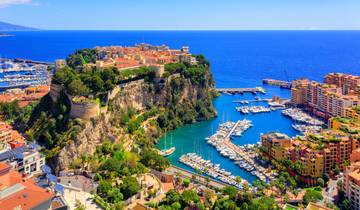
8 days
Stunning French Riviera
- ✓ Comprehensive French Riviera tour
- ✓ Expert local guides included
- ✓ All accommodation arranged
- ✓ Transportation provided
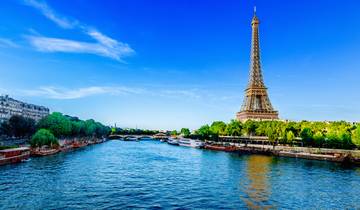
11 days
Paris & the French Riviera
- ✓ Comprehensive French Riviera tour
- ✓ Expert local guides included
- ✓ All accommodation arranged
- ✓ Transportation provided
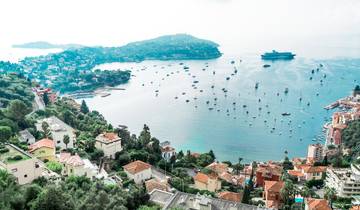
5 days
5 Day Nice and Monaco
- ✓ Comprehensive French Riviera tour
- ✓ Expert local guides included
- ✓ All accommodation arranged
- ✓ Transportation provided
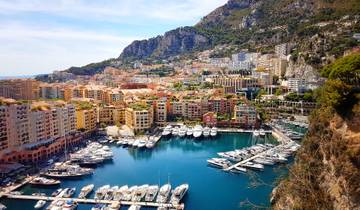
5 days
5 Days / 4 nights Full trip to the French Riviera from Nice, Côte d'Azur
- ✓ Comprehensive French Riviera tour
- ✓ Expert local guides included
- ✓ All accommodation arranged
- ✓ Transportation provided
Multi-day tour packages powered by TourRadar. Prices and availability subject to change.
Why Nice Is a Perfect Base for Tours and Routes in 2027
Few cities on the Mediterranean coast offer the combination of compact urban walkability, excellent public transport connections, and immediate access to dramatic coastal landscape that makes Nice so effective as a touring base. The city centre is small enough to cover on foot in a morning, yet within an hour of the railway station or the eastern bus terminus you can be standing at 430 metres above sea level in a perched medieval village, watching cargo ships disappear toward the Italian border beneath you.
The geography is the key to understanding how to plan efficiently. Nice sits at the western anchor of a 30-kilometre arc that curves northeast through Villefranche-sur-Mer, Beaulieu-sur-Mer, and Cap-Ferrat before reaching Eze and eventually Monaco. Three roads — the Grande Corniche, the Moyenne Corniche, and the Basse Corniche — run in parallel across this arc at different altitudes, offering three completely different experiences of the same coastline. Driving, cycling, and bus travel each access different parts of this network, and combining modes across a two- or three-day stay unlocks the full range of the landscape.
Within Nice itself, the most rewarding touring structure is a movement from the flat and urban toward the elevated and coastal. Start with the Old Town and the Promenade des Anglais at sea level, climb Castle Hill for the first panoramic frame, and then extend outward to Eze and Monaco on subsequent days. This progression — from immersive street-level exploration to wide Riviera vistas — is what most experienced visitors to the French Riviera describe as the defining shape of a well-constructed Nice stay.
In 2027 the infrastructure for both independent and guided touring remains excellent. The Lignes d’Azur and Zou! regional bus networks are reliable, the TER rail service to Monaco is fast and frequent, and the local cycle infrastructure along the promenade and port has been steadily improved over recent years. The city is also a certified UNESCO Creative City of Design, and its walkable Old Town has been recognised under the UNESCO Heritage of the Mediterranean initiative — both distinctions that underpin the quality of the built environment you will move through on foot or by bike.
Walking Tours in Nice’s Old Town in 2027
Old Town Nice covers roughly one square kilometre between the Promenade des Anglais and the base of Castle Hill, and it is one of the most rewarding urban walking environments on the entire French Riviera. The district retains the dense, irregular layout of an 18th-century Italian-influenced trading town: narrow lanes (some barely two metres wide), deep ochre and terracotta building facades, Baroque churches punctuating nearly every second corner, and the arched southern end of the Cours Saleya — a wide market square that functions as the social heart of the neighbourhood from morning to late afternoon.
Self-Guided Old Town Walking Route
A self-guided loop around Old Town Nice begins naturally at Place Masséna, the large red-and-white square at the boundary between the modern city and the historic district. From Place Masséna, drop south toward the Cours Saleya, where the flower and produce market runs Tuesday through Sunday mornings. The buildings on the north side of the square are the most photographed in Nice, with their banded paint and deep green shutters showing the Genoese influence that shaped the city’s architecture from the 17th century onward.
Continue east along the Cours Saleya toward the sea and pick up Rue Saint-François-de-Paule, which passes the Chapelle de la Miséricorde (Baroque, 1736, open at limited hours) and the historic Alziari olive oil shop before emerging at the Quai des États-Unis, the promenade-level road along the waterfront. A few metres east of the Quai des États-Unis lie the twin landmarks that define the boundary between the Old Town and Castle Hill: the base of the Bellanda Tower (Tour Bellanda), which houses a small free museum, and the elevator that lifts visitors to the summit of Castle Hill without charge.
For the return through the interior of the Old Town, take Rue du Marché, Rue Pairolière, or any of the parallel lanes running north from the Cours Saleya. Each contains a different mixture of local bakeries, cheese shops, and galleries, and the density of Baroque decoration on the church façades — notably the Cathedral of Saint Nicholas (Cathédrale Sainte-Réparate, 17th century) on Place Rossetti — rewards slow movement. The full self-guided loop takes two to three hours at a relaxed pace and costs nothing beyond whatever you spend on coffee or a market purchase.
Guided Walking Tours of Nice’s Old Town in 2027
Local-guide walking tours of Old Town Nice in 2027 typically run two to two and a half hours, cover the Cours Saleya market, the Baroque churches, the historic lanes, and Castle Hill, and are priced from €29 per adult for small group departures up to €35 for curated tours with a maximum of eight participants. Most operators provide multilingual tours departing at set times (typically 10:00 and 14:00 in high season); tickets should be booked in advance through the operator’s website or through platforms such as GetYourGuide or Viator, particularly in July and August when group tours fill quickly. Private walking tours of Old Town and Castle Hill start from approximately €100–140 for groups of up to eight people, making them economically comparable to group tickets for parties of four or more.
Several operators also offer food-focused walking tours that combine the Old Town circuit with tastings of local specialities: socca (a chickpea flatbread cooked on a griddle, a Nice staple), pissaladière (an onion and anchovy tart), and pan bagnat (a Niçoise pressed sandwich). These food-tour variants run three to three and a half hours and are priced in the €40–60 range per adult, typically in the morning to coincide with market hours. They represent particularly good value for visitors who want to absorb both the architectural and culinary character of the district in a single outing.
Castle Hill: Nice’s Essential Panoramic Walk
Castle Hill — known in French as Colline du Château, and named for the medieval citadel that stood here until its demolition on the orders of Louis XIV in 1706 — is an 87-metre rocky promontory that marks the eastern end of the Old Town. Today it is a public park, entirely free to enter, offering what is widely regarded as the best panoramic view of Nice: the Baie des Anges stretching west toward the airport and Antibes, the red-tile rooftops of the Old Town directly below, and the port (Port Lympia) to the east with its ochre customs buildings framing the mouth of the harbour.
How to Reach Castle Hill
There are three ways up. The most popular is the free elevator (ascenseur) situated at the eastern end of the Quai des États-Unis, tucked into the cliff face at the foot of the Bellanda Tower. The elevator operates during park hours (8:30 am to 6:00 pm, or 8:00 pm in summer months) and can have a brief queue in peak season. The second route is the Lesage Staircase (Montée Lesage), a stepped path of approximately 200 steps that begins from the same Quai des États-Unis/Rue des Ponchettes corner and takes 10–15 minutes to climb. The third is the gentler path up from the eastern side through the Montée Auguste Kerl, starting from Rue Saint-Joseph near the port — this approach has a less dramatic final view but a much easier gradient, suitable for those with pushchairs or limited mobility. The park itself is stroller-accessible on the main paths once at the summit, though the stepped viewing terraces are not.
What to See on Castle Hill
At the summit, the main terrace directly above the elevator exit offers the classic unobstructed view west along the Baie des Anges, with the promenade and the Negresco hotel visible from this height as a creamy white mansion set against the blue water. A series of stepped terraces descend toward the sea on the southern side, each offering a slightly different angle. The artificial waterfall (a 19th-century ornamental feature) is photogenic from below and provides a focal point in the park’s interior. The Château Cemetery (Cimetière du Château) in the northeast section of the hill is one of the more unusual sights on the French Riviera: it contains the tombs of several of the English and Russian aristocrats who wintered in Nice in the 19th century, and its sculptural quality is well above the average for municipal cemeteries. The Bellanda Tower museum at the base of the elevator is free to enter and contains a small display on Nice’s naval history.
Most visitors spend 45 minutes to an hour on Castle Hill. The combination of Old Town walking (two hours) and Castle Hill (one hour) makes a natural half-day loop from Place Masséna, costing nothing except the transport to get to the start point. The elevator and park are free; there is no ticket required at any point.
The Promenade des Anglais: Walking, Running, and Cycling Route
The Promenade des Anglais — named for the English winter community whose charitable contributions funded its original construction in the 1820s — is the defining corridor of Nice. Stretching approximately 7 kilometres along the western arc of the Baie des Anges from the airport in the west to the base of Castle Hill in the east, it serves simultaneously as a seafront road, a cycling lane, a pedestrian promenade, and a beach access spine. Its palmlined central section between the Negresco hotel and the Jardin Albert 1er is effectively a flat walking and cycling park running alongside the sea.
The Best Section for Walking
The most rewarding stretch for on-foot exploration runs between the Hotel Negresco (at number 37 on the western end of the central section) and the Quai des États-Unis at the eastern end near the Old Town. This 3-kilometre segment is car-free or low-traffic on the seaward walkway and passes the Masséna Museum, several public beach accesses, and the bronze promenade markers that delineate the historic development of the waterfront. Walking this stretch end-to-end takes about 45 minutes at a gentle pace and is one of the most reliably pleasant urban walks on the French Riviera in any season, though midsummer brings beach crowds that can make the pavement narrow in places. Morning and evening are the best times: morning for the clear light over the water, evening for the long Mediterranean dusk and the lit façades of the buildings on the inland side.
Cycling the Promenade des Anglais
A segregated cycle lane runs the full length of the Promenade des Anglais and connects eastward toward the port and the cycling path that runs along the lower Corniche road toward Cap-Ferrat. This makes the promenade the natural starting point for any self-directed e-bike excursion along the coast. Rental shops and e-bike hire stations are clustered in the Old Town and near Place Masséna, so joining the cycle route from the city centre is straightforward. The flat terrain of the promenade itself suits all fitness levels; the terrain steepens sharply once you turn north toward Castle Hill or east toward Villefranche, which is where an e-bike’s electric assist becomes genuinely useful rather than merely convenient.
E-Bike and Cycling Tours in Nice in 2027
Nice has become one of the most active e-bike touring destinations on the French Riviera over the past several years, and by 2027 the range of guided and self-directed cycling options from the city is extensive. The combination of a flat promenade start, quickly accessible hills, and the coastal road to Villefranche makes the city particularly well-suited to e-bike tourism: the electric assist removes the deterrent of elevation, and the distances involved (the Old Town to the Eze Village bus terminus at the Col de Villefranche is about 8 kilometres) are manageable as a day’s cycling for anyone reasonably comfortable on a bike.
Guided E-Bike City Tours of Nice in 2027
Guided e-bike city tours of Nice in 2027 typically run three to three and a half hours, cover the Promenade des Anglais, Old Town, Castle Hill base, Place Garibaldi, Port Lympia, and several hidden gardens and backstreets, and are priced from €45–70 per adult in a small group (maximum ten participants). Nice Cycle Tours, one of the established operators, offers a Nice City E-bike Tour at €50 per adult for a 3.5-hour group departure at 10:00 am. Several larger operators through GetYourGuide and Viator offer similar products from €46 per adult. Helmets are included and the e-bikes are typically modern 7-gear assisted models with Bosch motors; no prior cycling fitness is required, though participants must be able to ride a standard bicycle.
Longer guided e-bike tours extend the Nice circuit out to Villefranche-sur-Mer (3.5 hours, from approximately €57–69 per adult), combining the promenade and Old Town sections with the coastal road east of Castle Hill and the descent into the bay. The Villefranche extension adds approximately 10 kilometres of cycling and the opportunity to see one of the most photogenic bays on the French Riviera — the deep navy-blue horseshoe bay that formed part of the natural defence of the ancient port — from the hillside road above it.
For visitors wanting to reach Eze Village by bike, specialist e-bike tours operate the Nice-to-Eze route, covering approximately 12 kilometres each way with an elevation gain of around 430 metres to the village. These tours are priced from approximately €85–90 per adult and include about 40 minutes of cycling each way, with time in Eze Village for the Exotic Garden and the medieval lanes. They are typically small-group or semi-private departures and represent the most immersive way to experience the Moyenne Corniche landscape without being enclosed in a vehicle.
E-Bike Rental in Nice: Options and Prices in 2027
Self-directed e-bike rental in Nice in 2027 offers genuine flexibility for experienced cyclists who want to plan their own route. Holland Bikes, which operates from a central location near Place Masséna, charges €20 for a half-day e-bike hire and €39 for a full day, with Bosch-motored bikes and helmets included. Standard city bike rental starts from €19 per day for non-electric models. Several other rental operators near the promenade and port offer comparable pricing, typically in the €20–40 range for an electric bike depending on duration.
The recommended self-directed e-bike day routes from Nice in 2027 are: the Promenade des Anglais west-to-east and return (flat, 14 kilometres round trip, approximately 90 minutes including stops); the Old Town and port circuit (flat to moderate, 10 kilometres, two hours with Old Town exploration); and the Villefranche-sur-Mer circuit (moderate elevation, 20 kilometres round trip, three to four hours with a stop in Villefranche). The Eze circuit is also achievable on a rental bike but requires a reasonable level of cycling fitness given the sustained climb to the village — the Moyenne Corniche road has several long gradients at 8–10% — so an e-bike with full power assist is strongly recommended over a standard rental cycle for this route.
Lime e-scooters and electric bikes are also available for short urban journeys through the standard app and are priced on a per-minute basis; they are convenient for moving between the station, promenade, and Old Town but are not practical for multi-hour touring excursions and cannot legally be ridden on the Corniche roads.
Getting to Eze Village from Nice in 2027
Eze Village perches on a cone-shaped rock at 429 metres above sea level on the Moyenne Corniche, 12 kilometres northeast of Nice. It is one of the most visited perched villages (villages perchés) on the French Riviera — justly so, given that its panorama combines 180-degree views over the sea with a medieval street plan that has changed relatively little since the 14th century. Getting there from Nice is straightforward by bus, manageable by e-bike, and particularly scenic by car on any of the three Corniche roads, though parking in Eze itself is limited.
By Bus: Routes 82 and 602 in 2027
Two bus lines serve Eze Village from Nice directly along the Moyenne Corniche. Bus 82 (Lignes d’Azur, the Nice municipal network) departs from the Vauban stop near Place Masséna and runs to Eze Village and on to the Plateau de la Justice, with a fare of €1.70 per journey using a rechargeable travel card or purchased from the Ligne d’Azur app. Bus 602 (Zou! regional network) departs from near Port Lympia (the stop “Bavastro”) and follows the same Moyenne Corniche alignment to Eze Village and onward to Monaco; the fare is €2.10 per journey through the Zou! app or €2.50 cash to the driver. Both services run approximately every 30–60 minutes depending on the time of day and day of the week; on Sundays and public holidays, frequency is reduced. The journey from Nice to Eze Village takes 20–30 minutes on either service.
A return ticket on bus 82 costs €3.40 (using the Lignes d’Azur travel card). Using bus 602 for the Eze leg and then the same ticket to continue to Monaco means you can visit both destinations for a combined transport cost of approximately €4.20 from Nice. This is one of the highest-value public transport routes in Europe relative to the scenery it delivers — the Moyenne Corniche road passes through two dramatic road-cut tunnels and emerges repeatedly at hairpin bends with open sea views — and it is a genuinely enjoyable 30-minute bus journey in its own right, quite apart from the destination.
By E-Bike or Bicycle
The cycling route from Nice to Eze Village follows the D6007 (Moyenne Corniche) for approximately 12 kilometres from the Port Lympia area to the village car park below the medieval gate. The road has a reasonable surface and moderate traffic for much of its length, with the most demanding section being a sustained 4-kilometre climb beginning after the Col de Villefranche viewpoint. On a standard rental bike this climb requires a good level of fitness; on an e-bike with full power assist, it is accessible to most cyclists. The descent from the village back to Nice (or continuing to Monaco) is fast and rewarding, with care required on the hairpin bends in wet conditions. Total cycling time from Nice to Eze Village is approximately 45–60 minutes by e-bike; 90–120 minutes by standard bike.
By Guided Tour or Taxi
Organized half-day and full-day tours from Nice cover Eze as part of a combined Eze–Monaco excursion; prices and options are detailed in the Organized Group Tours section below. Private taxis from Nice to Eze Village run approximately €40–55 one way depending on the operator and time of day; Uber operates in the area and is typically slightly cheaper. For a group of four, a private taxi to Eze compares favourably with organized tour prices and offers full flexibility over timing, particularly useful if you want to arrive early before the tour groups and enjoy the village lanes in relative quiet.
Eze Village: What to See and Do
Eze is built around a single central spine of stone lanes that winds uphill from the medieval gate (Porte de la Grande Arche, 14th century) to the summit, where the Eze Exotic Garden (Jardin Exotique d’Eze) occupies the site of the original castle. The compact geography means that a thorough exploration of the village takes only two to three hours, and most visitors combine it with a stop in Monaco to make the day feel complete. The village becomes very busy from 10:00 am onward in summer; arriving on the first morning bus from Nice (departing around 8:30 am) provides at least an hour of relative calm before the tour coaches arrive from the main coastal resorts.
The Medieval Village
The lanes between the gate and the summit are lined with the workshops and boutiques of artisan glassmakers, perfumers, ceramic artists, and jewellers that have occupied them since the mid-20th century. The Fragonard Perfumery branch in Eze (one of three factory-boutiques the Grasse-based house operates on the Riviera) is free to enter and offers a short guided introduction to perfume composition before opening into the sales floor — a popular stop for visitors who want to understand the region’s perfume industry without making the longer excursion to Grasse itself. The perfumery is also the one business in the village where no admission is charged and no uphill pressure applies.
Eze Exotic Garden (Jardin Exotique d’Eze)
The Eze Exotic Garden (Jardin Exotique d’Eze) at the summit of the village is the single best viewpoint on the Moyenne Corniche and arguably the finest elevated sea view between Nice and Menton. Built on the ruins of the medieval castle that dominated the rock, it combines a well-maintained collection of cacti, succulents, and Mediterranean drought-adapted plants with a series of terraced viewing platforms from which the full panorama of the coastline — from Cap-Ferrat to the Italian border — is visible in clear conditions. The entrance fee is €10 per adult; children under 12 enter free. Tickets can be purchased at the garden entrance or at a kiosk near the village gate at the bottom of the lane, which allows you to proceed directly to the summit without stopping. The garden is open year-round, with hours varying by season (9:00 am to 7:00 pm in summer, shorter in winter). Allow 45 to 60 minutes for a full circuit of the garden and its viewpoints.
The Nietzsche Path
The Nietzsche Path is a hiking trail that descends from Eze Village at 429 metres to the Eze-sur-Mer railway station at sea level, covering approximately 600 metres of elevation change over roughly 2.5 kilometres of rocky path. The trail takes its name from the philosopher Friedrich Nietzsche, who spent several winters in Nice and the surrounding area in the 1880s and regularly walked this route; he later noted that the ideas for parts of his work “Thus Spoke Zarathustra” came to him during walks on the Riviera coastal paths. The descent takes 45–60 minutes; the ascent from sea level to the village takes 90 minutes to two hours and is considerably more demanding, suitable for reasonably fit walkers in appropriate footwear. From Eze-sur-Mer station at the bottom, a TER train (or a bus connection back toward Nice or onward to Monaco) is available, making the one-way downhill hike followed by a train a popular circuit that avoids backtracking.
The Three Corniche Drives in 2027: Grande, Moyenne, and Basse
The Corniche roads — the Grande Corniche, the Moyenne Corniche, and the Basse Corniche — are three parallel routes that run between Nice and Menton (approximately 30 kilometres) at three different altitudes above the Mediterranean. They were constructed in different eras for different purposes, pass through different landscape environments, and offer fundamentally different driving experiences. Using all three in a single day is the classic French Riviera Corniche circuit, and it is one of the most rewarding self-drive or guided-drive excursions in Europe. By 2027, all three roads are in good condition and are accessible year-round, though the Grande Corniche can become congested with cyclists and sightseers in peak summer months.
Basse Corniche (Low Coastal Road) — D6098
The Basse Corniche (literally the “low” or lower coastal road, officially the D6098) runs at sea level or just above it, passing through or alongside the coastal resorts of Villefranche-sur-Mer, Saint-Jean-Cap-Ferrat, Beaulieu-sur-Mer, Èze-sur-Mer (the beach settlement below Eze Village), and Cap d’Ail before entering Monaco. It is the road that Bus 100 follows, making it the budget-traveller option for coastal sightseeing from a bus window. By car it is the slowest of the three roads due to the resort traffic and the frequent settlements it passes through, but it offers the closest views of the sea and direct access to the beaches and coves along the way. The stop at Beaulieu-sur-Mer, with its intact Belle Époque promenade and the Villa Kérylos (a precise reconstruction of an ancient Greek villa built in 1902–1908, now a national monument), is worth at least an hour’s stop. Cap-Ferrat, a pine-wooded peninsula between Villefranche and Beaulieu, is reached from the Basse Corniche and contains the Villa Ephrussi de Rothschild, a rose-pink Italianate villa with exceptional formal gardens open to the public.
Moyenne Corniche (Middle Road) — D6007
The Moyenne Corniche (middle road, D6007) runs at mid-cliff between the sea and the plateau, and it is the road that leads most directly to Eze Village — its defining landmark and the most photographed stop on any Corniche circuit. Engineered in the 1920s and cutting through natural rock faces in several sections, it provides sweeping open views of the coast without descending to sea level, and its dramatic framing — the road as a ledge on the cliff face, the sea far below — makes it the most cinematically recognizable of the three routes; it appears in numerous French New Wave films and advertising campaigns set on the Riviera. The viewpoint near the Col de Villefranche (where the road crests before descending toward Eze) provides one of the most complete coastal panoramas between Nice and Monaco, encompassing Cap-Ferrat, Nice airport, the Antibes headland, and (in clear conditions) the mountains behind Cannes. From Eze Village on the Moyenne Corniche, the road continues to La Turbie and eventually to Monaco, making it the natural through-route for a Corniche loop.
Grande Corniche (High Road) — D2564
The Grande Corniche (high road, D2564) runs at up to 550 metres above sea level across the plateau, taking a wider, inland arc between Nice and Menton. Its primary attraction is the village of La Turbie, which sits at 480 metres directly above Monaco and contains the Trophy of Augustus (Trophée des Alpes), a Roman victory monument erected around 7–6 BC to commemorate the subjugation of the Alpine tribes by Augustus Caesar. The trophy, which was partially reconstructed in the 1930s, is one of the most significant Roman monuments in France outside Nîmes or Arles, and its position above the Principality of Monaco — the modern microstate visible in full directly below — creates an arresting juxtaposition of antiquity and contemporary wealth. The road itself is the oldest of the three Corniches, following in part the alignment of the ancient Via Julia Augusta (the Roman coastal road). From La Turbie the Grande Corniche descends back toward Nice through Col d’Èze, where it intersects with the Moyenne Corniche and the road connecting back to the village.
The Classic Corniche Loop
The standard half-day Corniche loop from Nice drives out on the Moyenne Corniche (stopping at Eze Village and optionally La Turbie), crosses to the Grande Corniche at La Turbie for the Trophy of Augustus stop, and returns to Nice via the Grande Corniche through Col d’Èze. A full-day version extends the outward journey down to the Basse Corniche after Monaco for the return, allowing stops at Cap-Ferrat and Villefranche-sur-Mer on the way back. Without a car, this loop can be approximated using the bus network: bus 602 out to Eze and Monaco on the Moyenne Corniche, bus 600 back to Nice on the coastal road — a combination that covers two of the three Corniches and costs under €5 in total transport. The Grande Corniche to La Turbie has no regular bus service and is most practical by car, motorcycle, or bicycle (it is a popular road cycling route given the well-surfaced gradient and low car traffic outside summer weekends).
Day Trip to Monaco from Nice in 2027
Monaco is the world’s second-smallest sovereign state and the most densely populated country on Earth, occupying roughly 2 square kilometres of reclaimed and natural land on the French Riviera coast 18 kilometres northeast of Nice. Despite — or perhaps because of — its extreme compactness, it contains an unusual density of spectacle: a medieval old town on a rocky promontory, the world’s most famous casino, a world-class oceanographic museum founded by the oceanographer-prince Albert I, and a princely palace whose changing of the guard ceremony draws a crowd every day at 11:55 am. As a day trip from Nice in 2027, it is entirely manageable on public transport and costs are predictable in advance.
Getting to Monaco from Nice in 2027
The fastest option is the TER regional train from Nice-Ville station to Monaco-Monte Carlo station. Trains run every 15 minutes throughout the day, the journey takes 22–25 minutes, and the one-way fare is €4–7 (buy through the SNCF Connect app to avoid queuing at the station ticket machines). The Monaco-Monte Carlo station is underground, emerging directly into the heart of the Condamine district near the port, well-placed for reaching either Monaco-Ville (The Rock) by bus or Monte Carlo on foot. Bus 600 (Zou!) offers a more scenic but slower alternative at €2.10–2.50 and takes 50–60 minutes along the Basse Corniche coastal road; it is a good return option after a day spent in Monaco, when speed matters less than the view. Bus 100 (Lignes d’Azur) takes approximately 75 minutes along the same coastal alignment for €1.50 and stops through Villefranche and Beaulieu-sur-Mer, making it the best value if you want to turn the return journey into a further coastal tour.
Monaco-Ville (The Rock): Walking the Old Town
Monaco-Ville — the original medieval city on the high rocky promontory known simply as “The Rock” — is connected to the lower districts by a bus (CAM line 1, €2 cash or €1.50 contactless) or a short but steep walk up from the port. Within Monaco-Ville, the visiting circuit is compact and well-signed: the Cathedral of Our Lady of the Immaculate Conception (Monaco Cathedral), where Princess Grace Kelly is buried, sits at the highest point of the peninsula along with the Prince’s Palace; the adjacent palace square (Place du Palais) is where the Changing of the Guard ceremony takes place each day at 11:55 am (free to watch, no ticket required). The lanes of Monaco-Ville are genuinely pedestrian and relatively undeveloped compared to the casino quarter below — small restaurants, a handful of boutiques, and the rampart walls overlooking the sea — and exploring them on foot takes about an hour.
Monte Carlo and the Grand Casino
Monte Carlo is the casino quarter of Monaco, immediately north of the port, and its centrepiece is the Monte Carlo Casino (Casino de Monte-Carlo) on the Place du Casino — a Belle Époque masterpiece completed in 1878, designed by the architect Charles Garnier (who also designed the Paris Opéra). The casino’s Atrium (entrance hall) is free to enter at any time with no age restriction and no ID required, and provides a view of the ornate interior. To enter the historic gaming rooms for a morning cultural visit (9:00 am to 1:00 pm in peak season), the fee is approximately €18–19 per adult with an audio guide included; the afternoon and evening gaming rooms open from 2:00 pm and cost €18–20 per adult (which includes a €10 credit voucher redeemable on certain machines or at the bar). Children under 18 are not permitted in the gaming rooms after 2:00 pm. The Place du Casino is itself one of the most photographed squares in Monaco — the formal gardens, the Café de Paris, and the frontages of the Hôtel de Paris and Hôtel Hermitage create the Monaco skyline most visitors picture before arrival.
Prince’s Palace (State Apartments)
The Prince’s Palace of Monaco (Palais Princier), official residence of the Grimaldi family, opens its State Apartments to visitors from April to October. The guided tour covers the ceremonial rooms, including the Throne Room and the Blue Room, and includes the separate Napoleon Museum (containing personal effects of Napoleon Bonaparte that came into the collection through the Grimaldi family). Admission in 2027 is €13 per adult, €8 for children aged 6–17, and €11 for students; children under 6 enter free. The tour lasts approximately 30–45 minutes and is self-guided with an audio guide (included). The Palace is closed to tourists in the November-to-March off-season, during which time the Changing of the Guard ceremony continues but the interior is not accessible.
Oceanographic Museum (Musée Océanographique)
The Oceanographic Museum (Musée Océanographique de Monaco) is built into the southern cliff face of Monaco-Ville, making it physically one of the most dramatically sited science museums in Europe: the main entrance is at street level on the Rock, but the building descends through the cliff to the sea below, with its rooftop terrace directly above the waves. Founded by Prince Albert I of Monaco in 1910 — Albert I was a working oceanographer who undertook dozens of research expeditions in the Atlantic and Mediterranean — the museum houses an extensive collection of marine specimens, interactive ocean science exhibits, and a large aquarium containing Mediterranean and tropical species. Admission is approximately €18–22 per adult (prices have risen modestly in recent years; check the official site for the current 2027 rate). A virtual submarine experience and a rooftop terrace with views over the Principality are included in the standard ticket. Allow at least two hours for a thorough visit. The museum is open daily year-round and is particularly popular with families.
Hop-On Hop-Off Bus Tours of Nice in 2027
The Nice Le Grand Tour hop-on hop-off sightseeing bus — operated by Société Transports Touristiques Niçois — covers 12 stops across Nice and Villefranche-sur-Mer on a single route, runs continuously from 10:00 am to 6:00 pm (reduced frequency in winter), and completes a full circuit in approximately one hour and 15 minutes. The 1-day pass is priced at €24 per adult in 2027, with audio commentary available in nine languages (English, French, Italian, German, Spanish, Russian, Japanese, Chinese, Portuguese) via individual headphones provided on board. The route connects Place Masséna, the Promenade des Anglais, the Hotel Negresco, the Russian Orthodox Cathedral, the SNCF train station, Place Garibaldi, Port Lympia, and the bay of Villefranche-sur-Mer — covering most of the city’s principal sights in a single loop.
The hop-on hop-off bus is a particularly practical option as a first-day orientation tool, providing a condensed overview of Nice’s geography before visitors commit to more specific self-directed walking or cycling routes. The Villefranche stop is the highlight of the route for most passengers: the bus descends from the Nice headland and reveals the horseshoe bay of Villefranche from the road above, providing a view that is difficult to replicate on foot or by bus on any other route. A 2-day pass is also available at a small premium over the 1-day price and allows revisiting specific stops at leisure across two consecutive days. Tickets are sold online in advance (recommended to guarantee a seat in high season) or directly from the driver at any stop.
Organized Group Tours to Eze, Monaco & Monte Carlo in 2027
Organized tours from Nice to Eze and Monaco are the single most popular activity product on the French Riviera, and by 2027 the range of shared, small-group, and private options is comprehensive. They range from budget-friendly shared minivan excursions to private chauffeur-guided full-day circuits, and the choice between them is primarily a matter of flexibility versus cost.
Half-Day Shared Tours in 2027
Half-day shared tours from Nice covering Eze Village and Monaco/Monte Carlo run approximately five to six hours (typically 09:00–14:00 or 14:00–19:00) and carry groups of six to fifteen passengers in air-conditioned minivans. They depart from central Nice pickup points (hotel lobbies or a central meeting point near Place Masséna) and cover both destinations with a local English-speaking guide, a stop for the Eze Exotic Garden (garden entrance fee typically not included and charged separately at €10), and Monte Carlo highlights including the Place du Casino and Monaco-Ville. Prices in 2027 start from around €50–75 per adult for a standard shared departure. These tours are best booked at least 24–48 hours in advance through GetYourGuide or Viator; morning departures in July and August can sell out several days ahead. The value proposition is primarily convenience and the guide’s commentary — the combined bus fares for the same journey cost under €5, but organizing the connections efficiently on a first visit takes more planning than most visitors want to invest in a half-day.
Full-Day Tours in 2027
Full-day tours from Nice — typically eight to nine hours — cover Eze and Monaco with additional stops, most commonly Villefranche-sur-Mer, Saint-Paul-de-Vence, Cannes, or Antibes depending on the operator. Prices range from approximately €110–130 per adult for shared small-group tours. Some full-day products combine a morning stop at the Grasse perfumeries (inland from Cannes) with the afternoon Eze–Monaco circuit, which is a strong option for visitors who want to understand the regional perfume industry. The “French Riviera in One Day” style tours that cover five to seven destinations tend to have limited time at each stop; visitors who want more than 90 minutes in Monaco are generally better served by the half-day Monaco-specific option combined with an independent afternoon.
Private Tour Options in 2027
Private tours — a dedicated driver-guide for a group of two to eight people in a single vehicle — start from approximately €400–500 for a half-day circuit of Eze and Monaco for up to four passengers, and are best booked through platforms such as Tours by Locals or the local agency networks. The flexibility of a private tour — adjusting timing at Eze based on the group’s pace, arriving at Monaco before the main tour group coaches at 10:30 am, choosing which Corniche road to use for each leg — makes the premium meaningful. For groups of four or more, the per-person cost of a private option becomes comparable to the shared group prices.
Villefranche-sur-Mer: Day Trip Extension from Nice in 2027
Villefranche-sur-Mer is the first settlement east of Nice on the Basse Corniche, approximately 6 kilometres from the city centre, and it is easily overlooked in favour of Eze and Monaco — which is partly why it rewards a visit. The town sits at the mouth of a deep natural harbour that served for centuries as an anchorage for the Savoy navy, and its layout preserves the compressed, layered character of a medieval port: a single long quayside backed by a vertical sequence of orange and pink houses climbing the hillside, connected by a series of stepped lanes and the famous Rue Obscure, a 13th-century vaulted passageway that runs the length of the old port at ground level beneath the buildings above it.
The Villefranche Citadel (Citadelle Saint-Elme), a 16th-century military fortification built under orders from the Duke of Savoy, occupies the western promontory of the bay and contains several small municipal museums (free or nominal charge). The Chapel of Saint Peter (Chapelle Saint-Pierre), a Romanesque fishermen’s chapel on the quay, was decorated in 1957 by the artist Jean Cocteau, who was a regular resident of the Riviera; the interior is a complete Cocteau work and costs a few euros to enter. For visitors arriving with children, the shallow sandy beach immediately east of the citadel is one of the more sheltered and family-accessible beaches in the area.
Getting to Villefranche-sur-Mer from Nice in 2027: the hop-on hop-off bus includes a Villefranche stop (covered in the standard €24 pass); the TER train from Nice-Riquier or Nice-Ville takes 8–10 minutes; Bus 100 from the Albert 1er stop takes about 20 minutes. Any of these options makes Villefranche an easy half-morning addition to a Nice base, either on the way back from Eze or as a standalone morning excursion before heading out along the Corniche in the afternoon.
Sample Itineraries for Nice, Eze, Monaco, and the Corniches in 2027
The following sample itineraries use the tours, routes, and transport options detailed above and are calibrated for first-time visitors to the French Riviera with a Nice base. All transport costs are per person and exclude meals.
3-Day Self-Drive or Cycling Circuit in 2027
Day 1 — Nice City (walking and optional guided tour): Start at Place Masséna and walk south through Old Town Nice to the Cours Saleya flower market. Allow 90 minutes for the market and the Old Town lanes, then continue east to Castle Hill by the free elevator or the Lesage Staircase. Spend an hour on Castle Hill, then descend to the port and walk west along the Promenade des Anglais to the Negresco. Afternoon: rent an e-bike from a promenade-area shop (€20 half-day) and cycle the full promenade length east-to-west and return. Total transport cost: approximately €2 (one bus/tram to Place Masséna) plus bike rental. Optional: replace the afternoon e-bike ride with a guided Old Town and Castle Hill walking tour (€29–35 per person, departing 10:00 or 14:00).
Day 2 — Moyenne Corniche, Eze Village, Monaco: Take bus 602 from near Port Lympia (€2.10) to Eze Village. Arrive before 09:30 if possible to beat the tour group arrivals. Walk the medieval lanes to the Fragonard Perfumery (free entry), then continue to the Eze Exotic Garden (€10). Allow 90 minutes in Eze total. From Eze, take bus 602 onward to Monaco (€2.10). Visit Monaco-Ville on foot: the Palace square and the 11:55 Changing of the Guard (free), the Cathedral, and the rampart walk. Afternoon: walk from Monaco-Ville down to the port and up to Monte Carlo for the Place du Casino. Optional: Prince’s Palace State Apartments (€13) or Oceanographic Museum (€18–22). Return to Nice by TER train (€4–7). Approximate total transport and attractions cost (without casino): €40–50 per person, excluding meals.
Day 3 — Grande and Basse Corniche loop (by rental car or guided tour): By car, drive the Moyenne Corniche from Nice to La Turbie (30 minutes), visit the Trophy of Augustus (Trophée des Alpes, approximately €6 per adult), drive the Grande Corniche back through Col d’Èze to the viewpoint above Nice. Descend to Villefranche-sur-Mer via the Basse Corniche and walk the quay and Rue Obscure (free). Return to Nice on the coastal road. Total drive approximately 60 kilometres. By guided tour: a full-day shared small-group tour covering Eze, Monaco, and Villefranche runs €110–130 per adult and handles transport and commentary throughout.
2-Day Public Transport Itinerary in 2027
Day 1 — Nice city by hop-on hop-off and on foot: Purchase the Nice Le Grand Tour hop-on hop-off pass (€24). Begin at the Promenade des Anglais stop and ride the full circuit once to orientate, noting the stop at Villefranche-sur-Mer for the bay view. Hop off at the Old Town/Cours Saleya stop and explore Old Town Nice for 90 minutes. Hop off at Castle Hill and take the free elevator up; 60 minutes at the top, then descend on foot via the Lesage Staircase back to the Old Town. Continue the afternoon on foot along the promenade to the Negresco. Total cost: €24.
Day 2 — Eze and Monaco by bus and train: Take bus 82 from Vauban to Eze Village (€1.70). Visit the Exotic Garden (€10) and the village lanes (2 hours). Take bus 602 from Eze Village to Monaco (€2.10). Walk to Monaco-Ville for the Changing of the Guard at 11:55 and the Cathedral; continue to Monte Carlo for the Place du Casino and Oceanographic Museum (€18–22). Return to Nice by TER train from Monaco-Monte Carlo station (€4–7). Total transport plus Eze garden plus museum: approximately €36–45 per person.
Practical Booking and Travel Tips for Nice Tours in 2027
Booking timing: Old Town walking tours and hop-on hop-off passes can be purchased on the day in spring and autumn. Between late June and mid-September, guided walking tours, e-bike tours, and small-group tours to Eze and Monaco should be booked at least 48 hours in advance, and private tours ideally a week ahead. The hop-on hop-off bus in July and August can be full by 11:00 am; buy online the night before and board at the first stop for the best chance of upper-deck seating.
Bus practicalities: Bus 82 and bus 602 to Eze Village both load quickly at busy times; arrive at the stop five minutes before the scheduled departure. The bus 602 (Zou! regional network) requires a separate ticket from the Nice Lignes d’Azur city network; a Nice day or week pass does not cover the fare to Monaco or Eze by bus 602. Buy a Zou! ticket through the Zou! app or pay cash to the driver. Bus 100 to Monaco is the longest but cheapest option (€1.50); it is covered by the standard Lignes d’Azur single ticket.
Monaco dress code for the casino: The Monte Carlo Casino requires smart-casual dress after 2:00 pm for the gaming rooms. Shorts, flip-flops, and sportswear are not permitted. Passport or national identity card is required for entry regardless of age. The morning cultural visit has a more relaxed dress requirement but still excludes beachwear. The Atrium (lobby) is free, casual-dress, and family-accessible at any time.
Parking on the Corniche roads: Parking in Eze Village itself is very limited and often full by 10:00 am in summer; the recommended approach by car is to park below the village at the designated car park and walk up the lane to the gate. Monaco offers underground parking (charged) but central streets are restricted during the Formula 1 Grand Prix period, typically held in late May; if your visit overlaps with the Monaco Grand Prix, the inner Principality is effectively closed to standard tourist traffic and prices across the entire Riviera spike sharply — plan accordingly or adjust dates.
Weather and season: The French Riviera enjoys over 300 days of sunshine annually, and Nice specifically is one of the sunniest cities in France. All routes described are accessible year-round. November to March is the quietest and cheapest period; most outdoor attractions remain open, the weather is mild compared to northern Europe, and the Corniche roads are largely free of tourist traffic. The Moyenne Corniche and Grande Corniche can be briefly closed after exceptional snowfall on the higher sections (rare but possible in January and February), so check local conditions before driving in winter.
Frequently Asked Questions
What are the best walking tours in Nice’s Old Town in 2027?
The best guided walking tours of Old Town Nice in 2027 depart twice daily (morning and afternoon) and cover the Cours Saleya market, the Baroque churches, the historic lanes, and Castle Hill in about two to two and a half hours. Small-group tours are priced from €29 per adult; private tours for groups of up to eight start from approximately €100. The self-guided version — using the free elevator to Castle Hill and the marked heritage route through the Old Town — is equally rewarding and costs nothing. Food-focused tours that combine the walking circuit with market tastings (socca, pissaladière, and local specialities) are available from about €40–60 per adult and are particularly popular in the morning when the market is active.
How much does a hop-on hop-off bus tour cost in Nice in 2027?
The Nice Le Grand Tour hop-on hop-off sightseeing bus costs €24 per adult per day in 2027. The ticket includes unlimited boarding and alighting at all 12 stops across Nice and Villefranche-sur-Mer and audio commentary in nine languages. A 2-day pass is available at a slightly higher price, useful if you want to revisit specific stops or split the route across two mornings. Children’s pricing is available; check the official Nice Le Grand Tour website for the current child fare. Tickets can be bought online in advance (recommended in summer) or directly from the driver at any stop.
Can I cycle from Nice to Eze in 2027?
Yes, cycling from Nice to Eze Village is entirely feasible in 2027 on a rented e-bike, and several guided e-bike tours operate this route. The distance is approximately 12 kilometres each way on the D6007 Moyenne Corniche road, with a sustained climb of around 430 metres to the village. On a standard rental bicycle, the climb requires a reasonable level of cycling fitness; on a full-power-assist e-bike (available from about €39 per day at operators including Holland Bikes near Place Masséna), the gradient is accessible to most recreational cyclists. Total return cycling time is approximately 1.5–2 hours. Alternatively, a guided e-bike tour from Nice to Eze runs about four hours and is priced from approximately €85–90 per adult, including guide commentary and time in the village.
What is the cheapest way to get from Nice to Monaco in 2027?
The cheapest way to reach Monaco from Nice in 2027 is by Bus 100 (Lignes d’Azur), which runs along the Basse Corniche through Villefranche, Beaulieu-sur-Mer, and Cap d’Ail and costs €1.50 per person one-way. The journey takes approximately 75 minutes and passes through the coastal villages, making it a scenic route as well as an economical one. A step up in speed and price is Bus 600 (Zou!), costing €2.10 through the app (€2.50 cash) and taking 50–60 minutes. The fastest option is the TER train from Nice-Ville, at €4–7 one-way and 22–25 minutes — the best value for time. All three modes are significantly cheaper than a taxi (approximately €50–70 one-way).
How much does it cost to visit Monaco from Nice in 2027?
The basic cost of a self-directed day in Monaco from Nice in 2027 is approximately €40–50 per person for transport plus the main paid attractions (TER train return at €8–14, Prince’s Palace at €13, Oceanographic Museum at €18–22), or approximately €25–30 without any paid attractions — just the train and walking. The Monte Carlo Casino gaming rooms (after 2:00 pm) cost €18–20 and include a €10 credit voucher. Adding the casino brings the total attractions spend to approximately €50–60. An organized half-day tour from Nice covering both Eze and Monaco costs €50–75 per adult (the Eze Exotic Garden entry of €10 is usually charged separately). Allow €20–35 per person for a light lunch and a coffee in Monaco, where restaurant prices are noticeably higher than in Nice.
What are the three Corniche roads and which is the best drive in 2027?
The three Corniche roads run in parallel between Nice and Menton at different elevations: the Basse Corniche (low road, D6098) follows the coast at sea level through the resort villages; the Moyenne Corniche (middle road, D6007) runs at mid-cliff and is the road to Eze Village; the Grande Corniche (high road, D2564) traverses the plateau above 400 metres and passes through La Turbie with its Roman Trophy of Augustus monument. For a single road drive in 2027, the Moyenne Corniche offers the best balance of dramatic scenery and accessible stops. The classic recommendation is a loop combining two or three of them in a half-day: outward on the Moyenne Corniche to Eze, continue to La Turbie and return on the Grande Corniche through Col d’Èze, then descend to Villefranche for the return on the Basse Corniche.
Do I need to book organized tours to Eze and Monaco in advance in 2027?
In spring and early autumn, most tours have availability and can be booked one or two days in advance through the major platforms. Between late June and mid-September, advance booking of at least 48 hours is strongly recommended for guided group tours to Eze and Monaco, as departures frequently sell out — particularly morning departures on Monday and Friday when cruise ship passengers supplement the independent traveller demand. Private tour bookings in high season are best made at least a week ahead. The Eze and Monaco destinations themselves do not require advance tickets for independent visitors; only the Eze Exotic Garden and the Monaco Prince’s Palace and Oceanographic Museum benefit from pre-booking to skip queues in peak months.
What can I see in Eze Village in 2027?
Eze Village in 2027 offers a well-preserved medieval lane network, the Eze Exotic Garden (Jardin Exotique d’Eze) at the summit with its panoramic Mediterranean views (€10 per adult), a free Fragonard Perfumery boutique with guided introductions to perfume composition, the 14th-century gate (Porte de la Grande Arche), several artisan studios and ceramic shops, and a series of small restaurants and cafés serving Provençal cuisine. The Nietzsche Path begins at the base of the village and descends 2.5 kilometres to the Eze-sur-Mer railway station below — a 45-to-60-minute downhill walk through Mediterranean scrub with open sea views for most of its length. Two hours on-site is sufficient for a focused visit; those wanting to combine a full Exotic Garden visit, a lunch stop, and a stroll of the lanes should allow three to three and a half hours.
Are there family-friendly tours and routes in Nice in 2027?
Nice offers a strong range of family-friendly touring options in 2027. The hop-on hop-off sightseeing bus is suitable for children of all ages, covers the city without requiring sustained walking, and the Villefranche stop provides a dramatic bay view that tends to hold children’s attention. Castle Hill is accessible via the free elevator and is family-friendly with its artificial waterfall, open green space, and children’s playground near the summit. The Oceanographic Museum in Monaco is one of the top family attractions on the Riviera, with its large aquarium, interactive exhibits, and the virtual submarine experience. E-bike tours accept children as passengers (age restrictions vary by operator; confirm in advance) and the flat Promenade des Anglais provides safe, traffic-free cycling for children who ride independently. The Eze Exotic Garden admits children under 12 free of charge. Most organized tours to Eze and Monaco are suitable for families with children aged 8 and above.
What is the best time of day to avoid crowds in Nice’s Old Town in 2027?
The best time to explore Old Town Nice with the fewest crowds in 2027 is between 8:00 and 10:00 in the morning, when the Cours Saleya flower market is setting up and the lanes have not yet filled with day visitors from the coastal hotels. By 10:30 am in summer, the Old Town becomes noticeably busy, and by midday the Cours Saleya can be very congested. A second window is after 17:00, when tour groups have left and the afternoon light on the building façades is at its richest; however, the flower market closes at lunchtime, so this second window misses the market. Eze Village follows a similar pattern: arriving by 9:30 am allows about an hour of relative quiet before the first tour coaches arrive from Nice and the coastal resorts. The Monte Carlo Casino, Prince’s Palace, and Monaco’s main squares are busy from 10:00 am onward on all days throughout the summer season.