Nashville Museums & Galleries 2026: Complete Cultural Guide
Nashville’s cultural scene extends far beyond honky-tonks and recording studios, encompassing world-class museums and galleries that chronicle American music history, visual arts, and Tennessee heritage. From the comprehensive Country Music Hall of Fame to the groundbreaking National Museum of African American Music and the elegant Frist Art Museum, Music City offers cultural experiences ranging from free admission to premium VIP tours across more than 30 venues throughout downtown and surrounding neighborhoods.
Key Takeaways About Nashville Museums & Galleries 2026
- Budget Cultural Days 2026: Museum enthusiasts can experience Nashville’s cultural scene for approximately $60-105 per person daily by prioritizing free venues like Tennessee State Museum, utilizing Nissan Free Wednesdays at NMAAM, and selecting one or two paid attractions with budget dining and public transit.
- Mid-Range Cultural Exploration 2026: Visitors focusing on comprehensive museum experiences with quality dining spend approximately $145-220 per person daily, covering two to three major venues, mid-range restaurant meals, and convenient rideshare transportation between attractions.
- Premium Cultural Experiences 2026: Luxury cultural tourists investing in VIP tours, private guided experiences, and exclusive access at three to four venues with upscale dining spend approximately $285-425 per person daily for the most comprehensive Nashville museum experience.
- Free Museum Network 2026: Nashville maintains seven permanently free museums including Tennessee State Museum, Fort Nashborough, and Tennessee Agricultural Museum, plus monthly free days at National Museum of African American Music (first Wednesday) and Frist Art Museum (select dates), enabling zero-cost cultural itineraries.
- Major Venue Admission 2026: Top museum tickets cost $28-32 for adults at Country Music Hall of Fame ($32) and Johnny Cash Museum ($28), with combo packages offering 15-20% savings when bundling multiple attractions with transportation passes and studio tours.
- Downtown Cultural District Access 2026: Most major museums cluster within a twelve-block radius of downtown Broadway, accessible via $4 WeGo bus day passes or $15-25 validated parking at nearby garages, with walkable distances between venues averaging five to ten minutes.
People Also Ask About Nashville Museums & Galleries 2026
How Much Do Nashville Museums Cost Per Day in 2026?
Nashville museum costs range from $60-105 per person daily for budget visitors utilizing free venues and one paid attraction, $145-220 daily for mid-range visitors covering two to three major museums with quality meals, and $285-425 daily for luxury visitors experiencing VIP tours at three to four venues with premium dining. Budget travelers prioritize Tennessee State Museum and other free venues, adding one marquee attraction like Country Music Hall of Fame. Mid-range visitors balance paid and free museums while enjoying comfortable dining. Luxury tourists invest in private guided experiences, exclusive access programs, and comprehensive venue coverage with upscale meals at museum cafes and nearby restaurants.
Which Nashville Museums Offer Free Admission in 2026?
Seven Nashville museums provide permanent free admission in 2026: Tennessee State Museum (Tennessee history and culture), Fort Nashborough (18th-century settlement), Tennessee Agricultural Museum (farming heritage), Centennial Park Conservatory, Adventure Science Center planetarium shows (select times), Cheekwood mansion second-floor galleries (separate garden admission), and Fort Negley Civil War Site. Additionally, National Museum of African American Music offers Nissan Free Wednesdays every first Wednesday monthly, Frist Art Museum provides periodic free admission days throughout the year, and Parthenon offers SNAP/WIC participant discounts. Country Music Hall of Fame provides Community Counts Passports through local libraries for free admission. Free museum days enable comprehensive cultural exploration without admission costs when planned strategically around monthly free Wednesday schedules and library passport programs.
What Are the Best Museums for First-Time Nashville Visitors in 2026?
First-time Nashville visitors in 2026 should prioritize Country Music Hall of Fame and Museum (comprehensive country music history with 350,000 square feet of galleries), National Museum of African American Music (56,000 square feet covering 50+ music genres with interactive technology), and Tennessee State Museum (free admission covering 14,000 years of state history). These three venues provide comprehensive understanding of Nashville’s musical and cultural significance within six to eight hours total. Country Music Hall of Fame requires approximately two to three hours for self-guided exploration, NMAAM demands two to three hours for interactive exhibits, and Tennessee State Museum merits ninety minutes to two hours. Combined admission costs $32 plus NMAAM ticket for these essential cultural anchors, establishing foundation knowledge before exploring specialized venues like Johnny Cash Museum, Musicians Hall of Fame, or Frist Art Museum contemporary exhibitions.
How Can I Save Money on Nashville Museum Admissions in 2026?
Nashville museum savings in 2026 come through five strategic approaches: utilize monthly free admission days at NMAAM (first Wednesday) and Frist Art Museum (announced dates); check out Country Music Hall of Fame Community Counts Passports at Nashville Public Library locations for free adult admission; purchase multi-attraction passes bundling three to six venues at 15-20% discount versus individual tickets; visit permanently free Tennessee State Museum, Fort Nashborough, and Tennessee Agricultural Museum requiring zero admission costs; and access local resident discounts at Country Music Hall of Fame (Davidson County residents pay what you want January annually) and Parthenon (Davidson County youth free, accompanying adults 25% off). Bank of America cardholders receive free Frist Art Museum admission first full weekend monthly. Combining free venues, strategic timing, library passports, and multi-attraction passes reduces cultural exploration costs by 40-60% compared to paying full individual admission prices at every venue.
Extended multi-day tours – 5+ days
Featured South Usa Multi-Day Tour Packages
10 days
Rhythms of the Road
- ✓ Comprehensive South Usa tour
- ✓ Expert local guides included
- ✓ All accommodation arranged
- ✓ Transportation provided
5 days
Highlights of New Orleans
- ✓ Comprehensive South Usa tour
- ✓ Expert local guides included
- ✓ All accommodation arranged
- ✓ Transportation provided

14 days
Best of the South: Charleston to New Orleans
- ✓ Comprehensive South Usa tour
- ✓ Expert local guides included
- ✓ All accommodation arranged
- ✓ Transportation provided
14 days
The American South
- ✓ Comprehensive South Usa tour
- ✓ Expert local guides included
- ✓ All accommodation arranged
- ✓ Transportation provided
Multi-day tour packages powered by TourRadar. Prices and availability subject to change.
Introduction: Nashville’s Museum & Gallery Landscape 2026
Nashville’s evolution from frontier settlement to Music City culminates in a cultural infrastructure exceeding 30 museums and galleries preserving American musical heritage, Tennessee history, visual arts, and specialized collections. The 2026 museum landscape reflects massive investment in cultural institutions over the past two decades, highlighted by Tennessee State Museum’s 2018 relocation to a 120,000-square-foot facility, National Museum of African American Music’s 2021 opening establishing the nation’s only comprehensive NMAAM institution, and Country Music Hall of Fame’s 2014 expansion doubling capacity to 350,000 square feet. These flagship institutions anchor a downtown cultural district supplemented by specialized venues celebrating individual artists like Johnny Cash and Patsy Cline, historic sites including Fort Nashborough and Belle Meade Plantation, and contemporary art spaces led by Frist Art Museum’s rotating exhibitions and independent galleries throughout the Wedgewood-Houston and Germantown neighborhoods.
The city’s museum network divides into five distinct categories serving different visitor interests and budgets. Music history museums dominate with eight major venues chronicling country, African American music, individual artists, and music production heritage through instruments, costumes, handwritten lyrics, and interactive technology. Art museums and galleries span classical collections at Parthenon and Cheekwood to contemporary exhibitions at Frist Art Museum and commercial galleries showcasing Southern artists. History museums preserve Tennessee’s 14,000-year narrative through state, military, and specialized agricultural collections. Science and education venues provide family-oriented programming. Historic houses and estates offer architectural preservation with decorative arts collections. This diversity enables customized itineraries balancing free admission venues, budget-friendly attractions, and premium experiences requiring advance reservations.
Visitor planning for 2026 museum exploration centers on downtown clustering, free admission optimization, and seasonal programming awareness. Twelve major venues operate within a fifteen-minute walk of Broadway and Fifth Avenue intersection, enabling efficient multi-venue days using WeGo public transit’s $4 day passes or short rideshare transfers. Strategic timing around monthly free days—particularly National Museum of African American Music’s first Wednesday program and Frist Art Museum’s periodic free admission—substantially reduces costs. Summer brings extended hours at most venues, while winter offers reduced crowds and easier RCA Studio B tour availability through Country Music Hall of Fame. Special exhibitions rotate quarterly at Frist Art Museum and annually at major music museums, warranting advance schedule checking for temporary displays complementing permanent collections. Contemporary gallery openings cluster in Wedgewood-Houston’s first Saturday art crawl pattern, providing free wine-and-cheese exhibition access.
Cultural tourism economics in Nashville favor visitors willing to combine free and paid experiences strategically. Tennessee State Museum’s permanent free admission provides comprehensive state context without cost, while selective paid admissions at Country Music Hall of Fame and NMAAM deliver specialized music history unavailable elsewhere. Multi-attraction passes bundling three to six venues with transportation elements save 15-20% versus individual ticket purchases but require commitment to venues included in package. Local library cardholders access free Country Music Hall of Fame admission through Community Counts Passports checked out at Nashville Public Library branches, creating substantial savings for extended-stay visitors establishing temporary library membership. Museums for All program provides $3 admission per person with EBT/SNAP/WIC cards at Frist Art Museum and other participating venues, improving cultural access for budget-conscious travelers. Understanding admission structures, free-day patterns, and discount programs transforms Nashville cultural exploration from expensive proposition to achievable experience across budget levels.
Major Music Museums Nashville 2026
Nashville’s music museum network establishes the city as America’s premier destination for music history preservation, spanning comprehensive genre surveys to artist-specific collections. These venues collectively house hundreds of thousands of artifacts chronicling country music’s evolution, African American musical contributions, and individual legend legacies through original instruments, stage costumes, handwritten lyrics, Grammy awards, and multimedia installations.
Country Music Hall of Fame and Museum 2026
The Country Music Hall of Fame and Museum maintains its position as the world’s largest repository of country music history, occupying 350,000 square feet at 222 Fifth Avenue South with permanent and rotating exhibitions, educational programming, and access to Historic RCA Studio B. General admission costs $32 for adults and $22 for youth ages 6-12 in 2026, with children 5 and under entering free. Check the official website for current rates as seasonal variations may apply. The museum opens daily 9 AM to 5 PM except Thanksgiving, Christmas, and New Year’s Day, utilizing timed entry ticketing recommended for advance online purchase to avoid wait times during peak visitation periods.
Core permanent exhibitions trace country music evolution from nineteenth-century folk traditions through contemporary chart-toppers across two floors of chronologically arranged galleries. Sing Me Back Home: A Journey Through Country Music presents instruments, stage wear, and artifacts from founding figures like Hank Williams and Patsy Cline through modern stars including Taylor Swift and Chris Stapleton. Interactive touchscreens access audio recordings, video performances, and artist biographies. Rotating special exhibitions occupy the ACM Gallery and Ford Theater with annual installations exploring specific themes, eras, or artists—2026 features exhibitions on Dolly Parton’s six-decade career, Rosanne Cash’s artistic evolution, and Muscle Shoals recording studios’ influence on multiple genres. The museum’s Taylor Swift Education Center provides hands-on workshops and programs included with admission, covering songwriting, instrument playing, and music production fundamentals.
Visitor experience enhancement comes through optional add-ons beyond basic admission. Audio guides cost $5 providing curator commentary and extended artifact explanations across permanent galleries. RCA Studio B guided tours add $23 to museum admission, transporting visitors to the historic recording facility where Elvis Presley, Dolly Parton, and hundreds of other artists recorded classic hits—this thirty-minute guided experience requires advance reservation and includes transportation from the museum. Hatch Show Print guided tours also add $23, bringing visitors inside the working letterpress shop creating iconic concert posters since 1879 with opportunities to print personal souvenirs. The Experience It All Package bundles museum admission, RCA Studio B tour, and Hatch Show Print tour for $83 adults ($68 youth), saving $14 compared to purchasing components separately.
Local resident programs substantially reduce admission costs for Davidson County and bordering counties including Cheatham, Robertson, Rutherford, Sumner, Williamson, and Wilson. Youth ages 18 and under from these counties receive free admission year-round with proof of residency—school ID, library card, or driver’s license suffices—plus two accompanying adults receive 25% discount reducing $32 admission to $24. Community Counts Passports checked out from participating Nashville Public Library locations provide free admission for up to two adults plus youth 18 and under, creating zero-cost access for library cardholders. January annually features pay-what-you-want admission for local residents—2026’s program runs January 1-31—enabling suggested donation amounts rather than fixed pricing with proof of local residency required.
Museum visiting strategy centers on morning arrival before 11 AM for smallest crowds, allocating ninety minutes to two hours for permanent collection self-guided exploration or scheduling early 8:30 AM docent-led guided tours occurring before public opening for enhanced storytelling with priceless artifact access. RCA Studio B tours require booking at museum arrival or advance online reservation, departing museum hourly for the twenty-minute bus transfer to recording studio. Wednesday afternoons attract lighter visitation than weekends, while summer months bring extended evening hours accommodating after-dinner cultural exploration. Museum members enjoy unlimited admission, concert pre-sales, and 10% discounts at Museum Store, Red Onion Grill, and Bajo Taco—membership investment reaches break-even point after three to four visits annually for frequent Nashville visitors.
National Museum of African American Music 2026
National Museum of African American Music (NMAAM) opened January 2021 as the nation’s only museum dedicated exclusively to preserving and celebrating African American musical contributions across all genres, occupying 56,000 square feet at 510 Broadway within the Fifth + Broadway development. Adult admission pricing requires checking the official website for current 2026 rates, with Nissan Free Wednesdays providing complimentary gallery access every first Wednesday of each month excluding special exhibitions—RFID interactive wristbands cost $5 on free days enabling personalized music playlist creation. Hours run Tuesday through Saturday 10 AM to 5 PM, Sunday noon to 5 PM, closed Mondays except holiday weekends. Timed entry tickets recommended for busy periods though walk-up availability typically accommodates spontaneous visits.
The museum experience begins with Rivers of Rhythm, a fifteen-minute film establishing African musical traditions transported through Middle Passage to North America, forming foundations for spirituals, blues, jazz, gospel, R&B, rock, funk, disco, and hip-hop development across four centuries. Six interactive galleries chronicle specific movements: Musical Crossroads explores pre-twentieth-century sacred and secular traditions; Love Supreme examines jazz’s revolutionary impact; Wade in the Water celebrates gospel’s spiritual and social justice dimensions; One Nation Under a Groove traces R&B evolution through funk, disco, and contemporary urban music; The Message documents hip-hop’s cultural explosion; and Suits and Soul profiles African American music business pioneers establishing labels, management companies, and publishing enterprises. Each gallery features floor-to-ceiling video projections, listening stations, artifact displays, and participatory elements—visitors can record gospel performances receiving professional coaching, compete in rap battles with rhythm tracking technology, and create funk tracks using vintage synthesizer interfaces.
RFID wristband technology personalizes visitor experience throughout museum journey, enabling song saving, video capturing, and artist profile bookmarking to digital accounts accessible post-visit. Approximately 1,600 artifacts rotate through exhibitions including Louis Armstrong’s trumpet, Ella Fitzgerald’s Grammy Award, stage clothing from Whitney Houston and Nat King Cole, and items from Lisa “Left Eye” Lopes. Interactive kiosks access the museum’s digital archive containing thousands of songs, performances, and interviews unavailable through standard streaming services. The One Nation experience immerses visitors in psychedelic disco chamber recreating 1970s club atmospheres with synchronized lighting and sound. Visiting time averages two and a half to three and a half hours for comprehensive exploration—rushing through primary galleries in ninety minutes misses participatory elements and interactive stations providing depth beyond passive artifact viewing.
Programming beyond permanent exhibitions includes Heartbeat Saturdays featuring resident DJs and live community engagement weekly, Soundtrack for All offering free admission for youth under 18 every Tuesday, and annual Black Music Month celebrations each June with film screenings, live performances, and Bridge to Broadway Block Party spanning multiple genres. Special traveling exhibitions supplement permanent galleries—2025-2026 features Jubilation! celebrating Fisk Jubilee Singers’ legacy touring nationally before Nashville residency. The museum’s 190-seat theater hosts panel discussions, film screenings, and intimate performances included with admission, while the second-floor event spaces accommodate private functions, weddings, and corporate gatherings outside public hours.
Visitor arrival strategy prioritizes Tuesday mornings or Thursday afternoons for lightest crowds, avoiding first Wednesdays when free admission attracts maximum attendance creating gallery congestion and extended wait times for interactive elements. Wristband activation at entry kiosk precedes theater film—arriving thirty minutes before desired film start time ensures seating in the 15-minute Rivers of Rhythm presentation establishing contextual foundation. Gallery exploration flows chronologically from Musical Crossroads through The Message, though non-linear navigation permits interest-driven pathway selection. Interactive stations accommodate extended engagement—budget forty-five minutes beyond basic walkthrough time if planning to record gospel performances, create funk compositions, or participate fully in rap battle studio. Museum Cafe on-site provides light refreshments, while Fifth + Broadway development houses fifteen restaurants upstairs in Assembly Food Hall, creating convenient lunch options without leaving the complex. Parking validation reduces Fifth + Broadway garage rates to $6 for up to three hours with museum ticket.
Johnny Cash Museum 2026
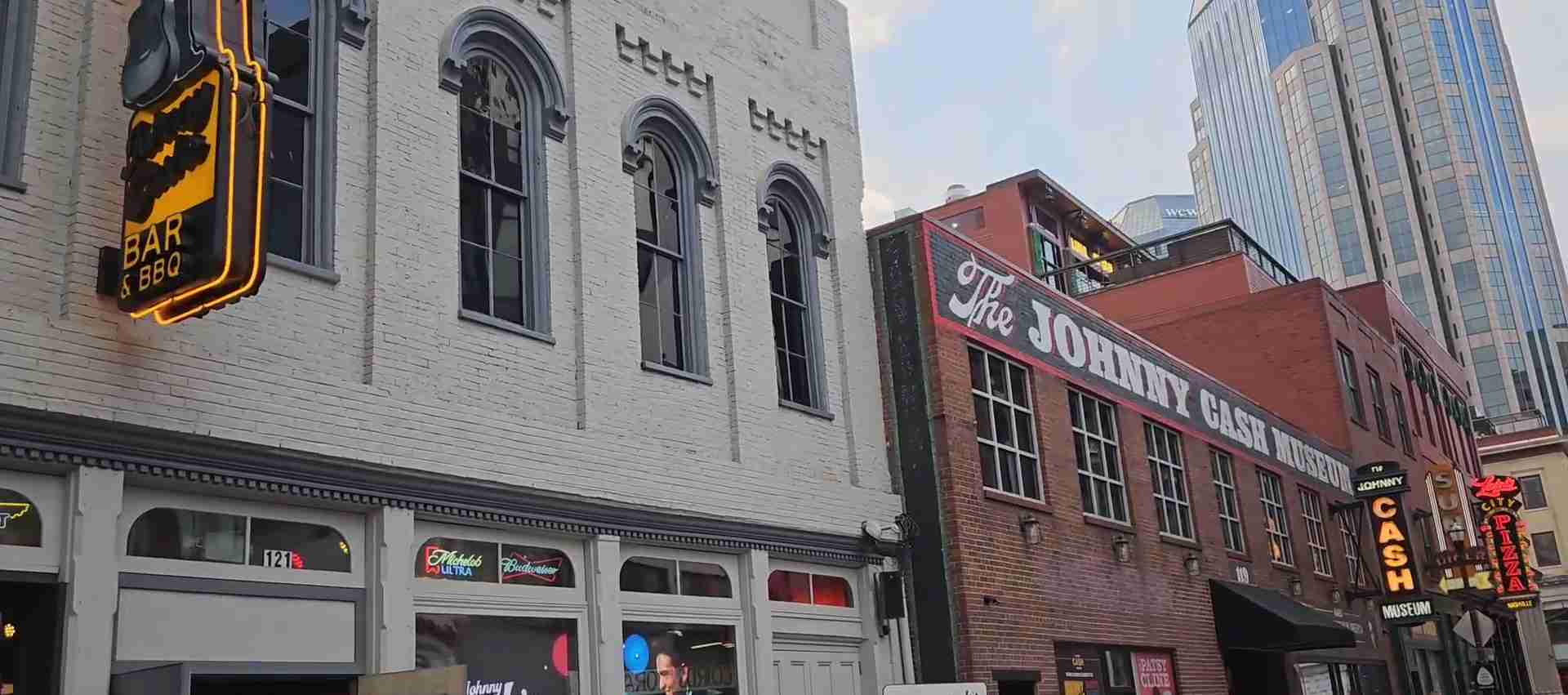
Johnny Cash Museum houses the world’s largest collection of Johnny Cash artifacts and memorabilia, occupying two floors at 119 Third Avenue South between Broadway and Demonbreun Street. Adult admission costs $28 plus tax, youth ages 6-15 pay $24 plus tax, children 5 and under enter free with paying adult. Check the museum website for current official pricing. Discounts of $1 apply for AAA members, military, seniors, and college students with ID presented at ticket counter—online advance purchase carries convenience fees but guarantees admission during peak periods without wait times. Hours run 9 AM to 7 PM daily except Thanksgiving and Christmas, with self-guided exploration averaging sixty to ninety minutes though Cash devotees often extend visits to two hours examining detailed exhibits.
Museum layout chronicles Cash’s life journey from Arkansas Delta childhood through Air Force service, Sun Records discovery, superstardom, personal struggles, spiritual redemption, and artistic legacy across chronologically arranged galleries. Original artifacts include performance costumes spanning black stage wear to colorful television outfits, handwritten lyrics documenting creative process, guitars used in recording sessions and concerts, Grammy and CMA awards representing industry recognition, personal letters revealing family relationships, and props from famous prison concerts at Folsom and San Quentin. The Sun Records exhibit displays microphone used by Elvis Presley, glasses worn by Roy Orbison, and drum belonging to W.S. “Fluke” Holland, Cash’s drummer for forty years, establishing Cash’s position within the legendary Memphis label’s roster alongside rock pioneers. Multimedia installations screen footage from The Johnny Cash Show variety program, appearances on other television series, and documentary interviews with family members and musical collaborators.
Interactive elements include listening stations featuring album tracks, alternative takes, and live performances spanning Cash’s six-decade career from 1950s rockabilly through 2000s American Recordings series produced by Rick Rubin. Touchscreen displays access extensive photo archives, setlists from historic concerts, and behind-the-scenes production notes. The Highwaymen section celebrates Cash’s supergroup collaboration with Waylon Jennings, Willie Nelson, and Kris Kristofferson through memorabilia from their 1985-1995 touring period. Video presentations examine Cash’s cultural impact beyond music, including activism for Native American rights, prison reform advocacy, and spiritual witness through gospel recordings. Museum walls display gold and platinum record certifications representing commercial success across multiple decades and musical styles.
VIP guided tours with Randall Bart—a personal friend and associate of Cash—provide enhanced experience through firsthand stories, behind-the-scenes details, and personal anecdotes unavailable in standard exhibits. These premium tours require advance booking, adding significant value through direct connection to Cash’s life and career from someone within his inner circle. Standard self-guided admission provides comprehensive coverage for most visitors through thoughtfully curated displays and extensive multimedia content. Museum Store occupies ground floor with collectibles, apparel, books, vinyl records, and exclusive merchandise unavailable elsewhere. Johnny Cash’s Bar & BBQ operates adjacent to museum entrance, providing convenient meal option before or after cultural exploration though separate business with independent pricing.
Visiting strategy suggests morning arrival before 11 AM or late afternoon after 4 PM for smallest crowds, particularly avoiding Broadway bar rush hours when foot traffic peaks. Museum location three blocks from Lower Broadway honky-tonks enables easy walk from entertainment district but requires navigating daytime tourist congestion along Third Avenue. Most visitors allocate sixty minutes for thorough but efficient exploration, though Cash superfans examining every artifact, reading all handwritten letters, and watching complete video presentations extend visits to two hours. Museum welcomes leashed, well-behaved dogs at no additional charge—unusual policy among Nashville cultural venues. No large bags, oversized backpacks, or luggage permitted inside galleries, with no bag check service available requiring advance planning for travelers with carry-on items.
Musicians Hall of Fame and Museum 2026
Musicians Hall of Fame and Museum celebrates session musicians, sidemen, and studio professionals whose instrumental performances shaped recorded music across all genres, differentiating this venue from artist-focused museums by honoring the skilled players behind iconic recordings. Located at 401 Gay Street inside the Nashville Municipal Auditorium, admission pricing requires checking the official website for current 2026 rates. The museum houses extensive instrument collection including guitars, drums, keyboards, and brass played on classic recordings from 1950s through present day, with Grammy Museum Gallery providing additional exhibit space exploring Recording Academy history and award evolution.
Permanent collection features instruments from legendary sessions: guitars used on Beach Boys’ Pet Sounds recordings, drums from Motown rhythm section backing Supremes and Temptations, keyboards from Bob Dylan’s Nashville recording sessions, and brass from Tower of Power’s funk classics. Interactive exhibits allow visitors to hear isolated instrumental tracks from famous songs, revealing individual musicians’ contributions to final mixes. Touchscreen databases document thousands of session players’ discographies, establishing appreciation for musicians appearing on multiple classic albums without name recognition beyond industry professionals. The Grammy Museum Gallery rotates exhibitions annually, celebrating award winners, genre evolution, and music production technology advancement.
Museum visiting duration averages ninety minutes for comprehensive exploration, though music production enthusiasts and multi-instrumentalists often extend time examining specific instrument collections and technical performance details. Location inside Municipal Auditorium—home to Grand Ole Opry 1939-1974—adds historic context, with lobby displays chronicling the building’s role in country music broadcast history. Free parking available in adjacent lots after 5 PM and weekends, with metered street parking or paid garage options during weekday business hours. Museum appeals particularly to musicians, producers, and serious music fans interested in technical performance aspects beyond artist biography and stage costume displays found at other venues.
Art Museums and Galleries Nashville 2026
Nashville’s visual arts landscape balances historic collections, contemporary exhibitions, and commercial galleries representing regional and national artists. These venues provide cultural alternatives to music-focused institutions while maintaining connection to Nashville’s creative identity through Southern artist representation and music-themed exhibitions.
Frist Art Museum 2026
Frist Art Museum occupies the former main post office building at 919 Broadway, a National Register art deco structure housing 24,000 square feet of gallery space presenting rotating exhibitions from local, regional, national, and international artists. Adult admission costs vary by exhibition—check the official website for current pricing—with free admission for visitors 18 and younger, college students on Thursdays 5-8 PM, and Museums for All participants with EBT/SNAP/WIC cards paying $3 per person. Bank of America cardholders receive free admission first full weekend monthly. Hours run Monday 10 AM to 5:30 PM, Thursday 10 AM to 8 PM, Friday-Saturday 10 AM to 5:30 PM, Sunday 1-5:30 PM, closed Tuesday-Wednesday. The museum never charges admission for youth under 18, creating exceptional family value for cultural exploration.
Exhibition programming rotates every eight to twelve weeks with typically four to six simultaneous shows occupying different gallery spaces, ensuring fresh content for repeat visitors and diverse offerings spanning historical masters to contemporary emerging artists. Recent and upcoming 2025-2026 exhibitions include A Landmark Repurposed celebrating the museum’s 25th anniversary in the converted post office building, Sole Study exploring connections between sneakers, hip-hop, and individuality, Sister Griot: The Iconoclastic Art of Barbara Babcock, In Her Place featuring Nashville women artists in the 21st century, and The Impressionist Revolution: Monet to Matisse bringing Dallas Museum of Art’s collection. Exhibitions span painting, sculpture, photography, decorative arts, and multimedia installations, with thematic programming connecting visual arts to broader cultural conversations around identity, place, and creativity.
Martin ArtQuest provides interactive art-making space on the lower level where children and families create original artworks using provided materials, instruction stations, and hands-on projects tied to current exhibitions—this permanent installation transforms museum visit from passive viewing into active creative participation. The Turner Courtyard offers architectural centerpiece with soaring ceilings and natural light, serving as gathering space and occasional performance venue. Museum Store stocks art prints, books, art supplies, clothing, blown glass, pottery, and jewelry from local and national makers. Cafe Cheeserie occupies museum space with sandwiches, soups, salads, and charcuterie boards for lunch in the Turner Courtyard, providing meal option during extended cultural day without leaving the building.
Periodic free admission days occur throughout the year on non-scheduled dates announced via museum email subscriptions and social media—these events attract maximum attendance creating gallery crowding that reduces contemplative viewing experience. Thursday evening hours 5-8 PM provide quieter atmosphere with college student free admission, while Sunday afternoons typically see lightest overall attendance. Museum parking lot offers $3 hourly validated parking for visitors, maximum three hours, with additional $12 hourly for extensions—public transit via WeGo routes provides $4 day pass alternative. Gallery talks, artist presentations, and family programming included with admission supplement self-guided exhibition viewing, with schedules posted monthly on museum website and distributed in lobby printed calendars. Membership provides unlimited admission plus concert pre-sales, class discounts, and 10% Museum Store savings, reaching value proposition after four to five annual visits.
Parthenon and Art Collection 2026
Nashville Parthenon replicates the ancient Athenian temple in full scale within Centennial Park, housing 19th and 20th century American art collections alongside the 42-foot Athena Parthenos statue. Adult admission costs $15, with $2 discounts for seniors, students, military with ID, and Davidson County residents. Children under 4 enter free. SNAP/WIC participants with EBT cards receive free admission for up to four people at ticket counter. Hours vary weekly—check the official website before visiting. Blue Star Museums program provides free admission for active-duty military families and their families Armed Forces Day through Labor Day (May 16-September 7, 2026). The building closes March through June 2026 for full HVAC renovation—verify operational status before planning visit during these months.
Permanent art collection comprises American paintings from the Cowan Collection donated by local businessman James M. Cowan, spanning Hudson River School landscapes, Impressionist works, and early modern pieces. The collection rotates regularly through available gallery space, with certain signature works consistently displayed. The Athena Parthenos statue, completed in 1990 and gilded in 2002, stands as the tallest indoor sculpture in the Western world at 42 feet, recreating Phidias’ original from ancient Athens. The sculpture incorporates more than eight pounds of gold leaf and depicts the goddess with Nike (Victory) figure in extended hand, shield featuring mythological battle reliefs, and serpent symbolizing protection. Architectural details throughout the building replicate Parthenon design elements including Doric columns, pediment sculptures, and interior cella arrangement, creating educational resource for classical architecture study.
Museum Store sells Nashville Parthenon merchandise, local products including Goo-Goo Clusters and Centennial Park bee honey, clothing, toys, books, and classical mythology-themed items. Centennial Park surrounding the Parthenon provides 132 acres of green space, walking paths, Lake Watauga, and recreational facilities, enabling picnic lunch before or after museum visit. The park hosts festivals, concerts, and community events throughout the year, creating variable parking availability and crowd levels during special events. Free parking exists in surrounding park lots, while metered street parking lines adjacent roads. Location 2.5 miles west of downtown requires vehicle or rideshare transportation from Broadway area, with WeGo bus routes serving Elliston Place near the park.
Visiting time averages sixty to ninety minutes for art collection viewing and Athena statue examination, with architecture enthusiasts extending visits to explore column construction, pediment sculpture details, and building material analysis. School groups frequently visit during academic year creating daytime congestion, while weekends attract family visitors—Tuesday and Wednesday mornings typically provide quietest experience when operational. Combined Parthenon and Centennial Park visit creates affordable half-day cultural and outdoor recreation option for budget-conscious travelers, pairing classical art and architecture with Nashville’s largest urban park without expensive downtown parking or premium admission fees.
Cheekwood Estate and Gardens 2026
Cheekwood Estate and Gardens encompasses 55-acre botanical garden estate with Georgian-style mansion housing art galleries, sculpture trails, and seasonal horticultural displays at 1200 Forrest Park Drive in Belle Meade. Garden admission costs vary seasonally—check the official website for current pricing—with mansion galleries requiring separate admission or combination tickets bundling estate access. Hours run daily with seasonal variation, typically 9 AM to 5 PM with extended summer evening hours during special events. Members of reciprocal garden organizations including Morton Arboretum receive discounted or free garden admission, though mansion galleries require separate payment.
Mansion art galleries occupy second floor and selected first-floor rooms with rotating contemporary art exhibitions, folk art collections, and decorative arts displays. The Worcester Reed Warner Collection of Worcester porcelain provides permanent installation alongside rotating shows featuring regional artists, craft traditions, and thematic exhibitions connecting visual arts to landscape, nature, and Southern culture. Outdoor sculpture installations throughout 55 acres integrate contemporary artworks with garden design, creating gallery experience spanning indoor and outdoor spaces. Artist-in-residence programs periodically bring working studios to estate grounds, enabling visitor observation of creative processes.
Gardens themselves provide primary attraction with seasonal displays: spring bulbs and flowering trees, summer perennials and annual color, fall foliage and harvest displays, winter holiday lights. Thirteen distinct garden areas include Japanese garden, perennial border, herb garden, water garden, and woodland sculpture trail. Mansion interior preserves Cheek family period rooms with original furnishings, establishing historical context for Nashville’s early 20th century wealth from Maxwell House Coffee fortune. Museum Store in mansion offers garden-themed merchandise, local artisan crafts, plants, seeds, and seasonal decorative items.
Location in Belle Meade neighborhood seven miles southwest of downtown requires personal vehicle or rideshare transportation—no direct public transit serves the estate. Free parking provided in estate lots, with accessible drop-off near mansion entrance. Visiting time averages two to three hours for comprehensive garden exploration and mansion galleries, though horticultural enthusiasts often extend to half-day visits photographing seasonal displays and walking all trails. Restaurant on grounds serves lunch and afternoon tea (reservations recommended), while picnic areas accommodate packed meals. Combined Cheekwood and Belle Meade Plantation visit creates full-day belle-meade-historic-district cultural itinerary for visitors interested in Nashville antebellum and early 20th century history, architecture, and decorative arts.
Contemporary Gallery Scene 2026
Nashville’s contemporary gallery network concentrates in Wedgewood-Houston Arts District (WeHo), Marathon Village, and Germantown neighborhoods, featuring commercial galleries, artist studios, and cooperative spaces. First Saturday Art Crawl in Wedgewood-Houston brings free gallery openings, wine receptions, and artist meet-and-greets monthly 6-9 PM, creating accessible entry point for contemporary art exploration without admission fees. Participating venues span David Lusk Gallery (established Memphis-Nashville gallery representing Southern contemporary artists), Zeitgeist Gallery (alternative space for emerging artists), OZ Arts Nashville (contemporary performance and visual arts), and numerous independent studios and project spaces.
David Lusk Gallery at 516 Hagan Street operates Tuesday-Saturday with free admission, focusing on contemporary painting, sculpture, and photography by Southern artists exploring regional identity, landscape, and culture through modern perspectives. Gallery maintains professional exhibition standards with museum-quality presentations, knowledgeable staff providing artist insights without sales pressure, and rotating shows every six weeks. Established in Memphis before Nashville expansion, the gallery has track record discovering artists before national recognition. Marathon Village galleries within the converted automobile factory complex at 1200 Clinton Street include studios, small galleries, and artisan workshops open irregular hours—visiting during First Saturday ensures maximum venue accessibility.
Fisk University Galleries (Carl Van Vechten Gallery and Aaron Douglas Gallery) house historically significant African American art collection including Alfred Stieglitz Collection of modern art donated by Georgia O’Keeffe, works by Harlem Renaissance artists, and contemporary pieces. Free admission though hours align with academic calendar requiring schedule verification before visiting. The university’s connection to Fisk Jubilee Singers and African American educational history adds cultural context to art collection. Location near Tennessee State University campus north of downtown requires vehicle transportation from tourist district.
Gallery visiting strategy for contemporary art enthusiasts centers on First Saturday Art Crawl participation, providing free wine, cheese, and exhibition access across multiple venues within walkable Wedgewood-Houston district. Individual gallery visits during business hours enable focused viewing without crowd congestion and extended time for artist conversation when present. Contemporary galleries appeal particularly to collectors, artists, and art students interested in living Southern artists and current creative practice rather than historical collections and established masterworks found in traditional museums.
History and Heritage Museums Nashville 2026
Nashville’s history museum network chronicles Tennessee’s development from prehistoric Native American habitation through contemporary society, emphasizing Civil War significance, state political history, and cultural evolution. These venues provide context for Nashville’s emergence as regional center and complement music-focused institutions with broader historical perspective.
Tennessee State Museum 2026
Tennessee State Museum offers comprehensive state history survey from prehistoric times through contemporary era, occupying 120,000 square feet at 1000 Rosa L. Parks Boulevard adjacent to Bicentennial Capitol Mall State Park. Admission remains permanently free for all visitors—no tickets required—with voluntary donations accepted. Hours run Tuesday through Saturday 10 AM to 5 PM, Sunday 1-5 PM, closed Mondays except holiday observances. Free admission combined with downtown location creates exceptional value for budget-conscious cultural tourists seeking context for Tennessee’s role in American history without admission costs.
Permanent exhibitions span three floors chronologically arranged: First Peoples gallery examines 14,000 years of Native American habitation with artifacts from Paleo-Indian through Mississippian periods including pottery, tools, and ceremonial objects; Forging a Nation explores frontier settlement, statehood, antebellum agriculture, and slavery; Civil War and Reconstruction chronicles Tennessee’s divided loyalties and strategic importance with extensive military artifacts, uniforms, weapons, and flags; New South addresses industrialization, civil rights movement, and 20th century transformation. The Tennessee Time Tunnel provides immersive walkthrough experience connecting past to present through multimedia installations and interactive elements. Artifact collection exceeds 60,000 objects including Andrew Jackson possessions, Davy Crockett memorabilia, Civil War weapons, suffragette materials, and music history items connecting to Tennessee’s cultural contributions.
Special exhibitions rotate annually in temporary gallery space, recently featuring topics including Tennessee women’s history, music heritage, and contemporary social issues. Museum Theater screens orientation film and documentary presentations included with free admission. Education Center provides hands-on activities for children and families, creating multi-generational visit appeal. Museum Store offers Tennessee-themed books, children’s educational toys, local artisan crafts, and historical reproduction items at accessible price points.
Location adjacent to Bicentennial Capitol Mall State Park enables combined visit spanning museum indoor exhibitions and outdoor 19-acre commemorative landscape with World War II memorial, Tennessee county map plaza, and Rivers of Tennessee fountains. Free parking exists in museum garage with validation, while WeGo bus routes serve Rosa Parks Boulevard stops. Visiting time averages ninety minutes to two hours for thorough permanent exhibition exploration, though history enthusiasts often extend to three hours examining detailed artifact displays and reading comprehensive text panels. Tuesday through Thursday mornings attract lightest crowds, while weekends bring families and school groups creating congestion around interactive elements. The museum’s permanent free admission policy eliminates strategic timing pressure around admission costs, though quieter periods enhance contemplative engagement with Tennessee’s complex historical narrative.
Fort Nashborough and Civil War Sites 2026
Fort Nashborough reconstructs the 1780 frontier settlement establishing Nashville, occupying riverfront property at 170 First Avenue North near downtown. Free admission enables exploration of log cabin structures, stockade walls, and interpretive exhibits explaining settlement life, Native American relations, and frontier survival strategies. Hours vary seasonally—check before visiting. Costumed interpreters periodically demonstrate period crafts, cooking, and daily activities, though staffing levels vary by season and budget. The compact site requires thirty to forty-five minutes for comprehensive exploration, combining outdoor historical structures with small visitor center containing artifacts and explanatory displays.
Fort Negley Civil War Site preserves Union army fortifications constructed 1862-1863 atop St. Cloud Hill, representing largest inland stone fort built during the Civil War. Free admission provides access to partially reconstructed fort walls, earthworks, and interpretive signage explaining military strategy, construction by formerly enslaved persons and Union soldiers, and fort’s role in Nashville occupation. Visitor center houses exhibits on Civil War Nashville, African American contributions to fort construction, and Battle of Nashville significance. The hilltop location offers panoramic downtown views explaining strategic military positioning. Hours run daily dawn to dusk for grounds, with visitor center operating limited hours requiring schedule verification. Visiting time averages sixty minutes for fort exploration and exhibit viewing, with additional time for downtown views and walking trails through surrounding park.
Battle of Nashville historic sites span multiple locations across southern Nashville neighborhoods where December 1864 Union victory effectively ended Confederate operations in Tennessee. Self-guided driving tour connects preserved battlefield sections, interpretive markers, and commemorative monuments, requiring vehicle and two to three hours for comprehensive circuit. The Nashville Convention and Visitors Corporation provides free downloadable battlefield tour guide with maps and site descriptions, enabling independent exploration without tour operator costs. Most battlefield parcels offer free access, though some sites on private property require viewing from roadside.
Combined Civil War sites itinerary creates full-day historical immersion for military history enthusiasts, spanning Fort Negley morning visit, picnic lunch at nearby park, afternoon battlefield driving tour, and evening Tennessee State Museum Civil War gallery exploration. All venues except museum charge no admission, creating budget-friendly cultural day requiring only vehicle, fuel, and meal costs. These sites appeal particularly to Civil War scholars, military tacticians, and visitors interested in Nashville’s strategic importance beyond music heritage narrative dominating tourist marketing.
Historic House Museums 2026
Belle Meade Historic Site and Winery preserves antebellum Greek Revival mansion and Thoroughbred horse breeding farm at 5025 Harding Pike. Admission pricing varies—check the official website for current rates—with guided mansion tours included plus optional winery tastings, horse experiences, and specialty tours exploring enslaved persons’ histories and Civil War battles occurring on the property. The 30-acre site combines mansion architecture, period furnishings, enslaved quarters interpretation, and working winery producing wines from historic grape varieties. Guided tours run continuously throughout operating hours with last tour departing one hour before closing. Visiting time averages ninety minutes to two hours for mansion tour, grounds exploration, and winery tasting, extending to half-day with specialty tour additions.
Belmont Mansion stands as largest pre-Civil War house remaining in Tennessee, built 1853 as Italianate summer villa for Adelicia Acklen. Located at Belmont Boulevard adjacent to Belmont University, admission requires advance online booking or availability-based tickets at arrival. The mansion preserves original furnishings, art collection, and architectural details representing Nashville’s antebellum wealth from plantation agriculture. Guided tours lasting forty-five minutes examine mansion’s nineteen rooms with historical interpreter introduction followed by self-guided exploration. Gardens and grounds free to explore with mansion admission, creating combined indoor-outdoor historical experience. Museum Store sells period reproduction items, Nashville history books, and local artisan products.
Andrew Jackson’s Hermitage preserves the plantation home and grounds of seventh U.S. President, located twelve miles east of downtown at 4580 Rachel’s Lane. Admission pricing includes mansion tour, grounds access, museum exhibits, and interpretive programs—check official website for current rates. The 1,120-acre site encompasses mansion, enslaved quarters, Jackson tomb, museum complex with interactive exhibits, and gardens. Visiting time averages three to four hours for comprehensive exploration including mansion guided tour, museum galleries, and grounds walking. Location requires personal vehicle or tour operator transportation from downtown Nashville.
Historic house museums collectively provide antebellum architecture, decorative arts, and social history complementing Civil War military narratives and music heritage focus of other Nashville cultural venues. These sites appeal particularly to architecture enthusiasts, decorative arts collectors, and visitors interested in 19th century Southern plantation culture including both elite wealth displays and historically honest enslaved persons’ experience interpretation increasingly incorporated into tour narratives. Combined Belle Meade and Belmont Mansion visit creates half-day antebellum architecture itinerary, while Hermitage merits dedicated full afternoon for comprehensive presidential history exploration.
Specialized and Niche Museums Nashville 2026
Beyond major music, art, and history institutions, Nashville’s specialized museum network preserves focused collections appealing to enthusiasts of particular subjects from automobiles to agriculture, creating diverse cultural landscape beyond mainstream tourist attractions.
Lane Motor Museum 2026
Lane Motor Museum houses collection exceeding 500 vehicles emphasizing rare European microcars, unusual prototypes, and alternative fuel vehicles from early automotive era through contemporary designs. Located at 702 Murfreesboro Pike in industrial area southeast of downtown, adult admission pricing requires checking official website for current rates. Hours run Thursday through Monday 10 AM to 5 PM, closed Tuesday-Wednesday. The museum occupies former Sunbeam Bread bakery with two floors of vehicle displays spanning cars, motorcycles, military vehicles, and amphibious automobiles rarely seen in American museums.
Collection highlights include extensive microcar holdings from post-World War II European manufacturers, steam and electric vehicles representing alternative propulsion experimentation, Tatra aerodynamic designs, and one-off prototypes never reaching production. Interactive exhibits explain automotive engineering, manufacturing processes, and cultural contexts producing unusual vehicle designs. The museum’s focus on non-American marques and unconventional designs differentiates from typical automotive museums celebrating muscle cars and classic Americana. Most vehicles remain operational with periodic demonstration drives during special events.
Visiting time averages ninety minutes to two hours for automotive enthusiasts, though casual visitors complete circuit in sixty minutes. Location in industrial neighborhood requires personal vehicle or rideshare—no convenient public transit access exists. Free parking provided in museum lot. The venue appeals specifically to automobile historians, engineering enthusiasts, and collectors interested in automotive curiosities rather than mass-market classics. Museum Store sells automotive books, model cars, and vehicle-related merchandise. Special events including Cars and Coffee gatherings bring owner vehicles to museum grounds periodically throughout the year.
Adventure Science Center 2026
Adventure Science Center provides hands-on science education for children and families, occupying facility at 800 Fort Negley Boulevard with permanent exhibits, traveling installations, and Sudekum Planetarium. Admission pricing varies—check official website for current rates—with discounts for students, seniors, teachers, and first responders. Hours run daily with seasonal variation. The center emphasizes interactive learning through hands-on exhibits spanning biology, physics, space science, and Tennessee natural history.
Permanent exhibitions include Adventure Tower’s 75-foot climb through four floors of science challenges, BodyQuest exploring human anatomy and health, Space Chase examining solar system and space exploration, and Tennessee environments showcasing state ecology. Sudekum Planetarium presents astronomy shows on 63-foot dome screen with both educational programming for school groups and evening laser light shows set to popular music. Traveling exhibitions rotate quarterly, bringing national touring shows on topics from dinosaurs to marine biology to energy technology.
The center targets elementary through middle school age children though exhibits accommodate younger siblings and adults supervising. Birthday party packages, scout programs, and school field trips represent significant visitor segments. Visiting time averages two to three hours for families exploring all permanent exhibitions and planetarium show, extending to half-day with lunch in on-site cafe and outdoor Sudekum Planet Walk. Location near Fort Negley enables combined science center and Civil War site visit for diverse cultural-historical-educational day. Free parking provided in center lot. The venue provides rainy-day family alternative to outdoor Nashville activities while maintaining educational value and interactive engagement beyond passive museum viewing.
Tennessee Agricultural Museum 2026
Tennessee Agricultural Museum preserves state farming heritage through antique tools, equipment, and log cabin village at Ellington Agricultural Center, 404 Hogan Road. Permanent free admission enables exploration of indoor galleries showcasing agricultural implements, rural life artifacts, and farming technology evolution without cost barrier. Hours run Monday through Friday 9 AM to 4 PM, closed weekends and state holidays. Outdoor log cabin village depicts 19th century farm settlement with structures relocated from various Tennessee sites. Nature trail through wooded property provides walking path connecting indoor museum with outdoor historical structures.
Collection encompasses hand tools, horse-drawn equipment, early tractors, household implements, and textile production devices illustrating self-sufficient farm life spanning pioneer settlement through mechanization era. Seasonal demonstrations of heritage crafts including blacksmithing, weaving, and food preservation occur periodically with volunteer presenters. The compact museum requires forty-five minutes to one hour for thorough exploration, extending with outdoor cabin village tour and nature trail walk to ninety-minute visit.
Location in southeast Nashville requires personal vehicle—no public transit serves the property. Free parking abundant in state government facility lots. The museum appeals primarily to agricultural history enthusiasts, genealogists researching rural ancestors, and school groups studying Tennessee farming heritage. Free admission and peaceful wooded setting create budget-friendly cultural stop for visitors interested in rural history beyond Nashville’s urban music and entertainment focus. Combined with nearby Lane Motor Museum, the agricultural museum creates unusual specialized cultural pairing spanning automotive and agricultural technology evolution.
Museum Planning Strategies Nashville 2026
Successful Nashville museum exploration requires strategic planning balancing free admission opportunities, paid marquee attractions, geographic clustering, and special programming schedules. These approaches maximize cultural experiences while managing time and budget constraints across diverse visitor priorities.
Free Museum Maximization 2026
Nashville maintains seven permanently free museums plus monthly free admission days at premium venues, enabling comprehensive cultural exploration without admission costs for budget-conscious travelers. Tennessee State Museum anchors free museum network providing state history context spanning prehistoric through contemporary eras, requiring ninety minutes to two hours for thorough permanent exhibition viewing. Fort Nashborough and Fort Negley offer free Civil War and frontier settlement interpretation, each requiring thirty to sixty minutes. Tennessee Agricultural Museum preserves farming heritage at zero cost, while Centennial Park Conservatory provides botanical displays without admission fees.
Monthly free days at National Museum of African American Music (first Wednesday via Nissan Free Wednesdays) and periodic free admission at Frist Art Museum (announced via email subscription) supplement permanently free venues. Strategic timing around these monthly cycles enables premier museum access without $28-32 admission costs. Bank of America cardholders receive free Frist admission first full weekend monthly, while college students access free Frist admission Thursdays 5-8 PM year-round. Country Music Hall of Fame Community Counts Passports checked out from Nashville Public Library provide free admission for up to two adults plus children, creating zero-cost access to city’s flagship music museum through temporary library card acquisition.
Comprehensive free museum itinerary spans Tennessee State Museum morning visit (two hours), lunch at nearby food hall, afternoon Fort Negley Civil War site exploration (one hour), and evening Frist Art Museum visit during Thursday free college student hours or scheduled free admission day. Transportation via $4 WeGo day pass eliminates vehicle costs. Total daily expenditure covers meals and transit only, eliminating $60-95 in museum admission fees through strategic free venue selection and timing. Extended-stay visitors timing arrival around first Wednesday monthly add NMAAM free day, while library passport acquisition enables Country Music Hall of Fame access completing major venue coverage at zero admission cost beyond library card fees if non-resident.
Downtown Cultural District Walkability 2026
Nashville’s primary museum concentration clusters within twelve-block radius of Broadway and Fifth Avenue intersection, enabling efficient multi-venue days through walking or short transit hops. Country Music Hall of Fame (Fifth Avenue South), National Museum of African American Music (510 Broadway), Johnny Cash Museum (Third Avenue South), Musicians Hall of Fame (401 Gay Street), and Frist Art Museum (919 Broadway) all locate within fifteen-minute walks of each other, eliminating vehicle expenses and parking fees through pedestrian navigation.
Strategic geographic clustering enables three to four venue days: morning Country Music Hall of Fame visit (two to three hours including RCA Studio B tour), lunch at nearby restaurant or museum cafe, afternoon NMAAM exploration (two to three hours), and late afternoon Johnny Cash Museum tour (one hour), concluding with dinner on Broadway entertainment district. Total walking distance spans approximately 1.2 miles across the day, manageable for most fitness levels with rest breaks at each venue. WeGo bus day pass provides backup for fatigue or inclement weather, enabling transit between venues for $4 total rather than $8-15 per rideshare leg.
Parking strategy for downtown cultural district centers on early arrival securing on-street metered spots ($2-3 hourly) or using museum-adjacent garages with validation discounts. Country Music Hall of Fame validation reduces Walk of Fame Garage to $15 three-hour rate ($25 six-hour). Frist Art Museum validation provides $3 hourly parking in museum lot, maximum three hours. NMAAM validation cuts Fifth + Broadway garage to $6 three-hour rate. Strategic parking at one venue early, walking to others, returning for vehicle creates cost-effective approach versus moving car between each stop incurring new parking fees. Evening arrivals after 5 PM access free parking in many public lots and garages, enabling late afternoon museum visits transitioning to evening Broadway entertainment without daytime parking premiums.
Multi-Attraction Pass Economics 2026
Nashville Multi-Attraction Passes bundle three to six venues with transportation elements at 15-20% discount versus individual admission prices, requiring commitment to included attractions but delivering savings for visitors planning comprehensive cultural coverage. Typical packages include Country Music Hall of Fame, Johnny Cash Museum, Musicians Hall of Fame, RCA Studio B or Hatch Show Print tour, hop-on-hop-off trolley day pass, and Madame Tussauds wax museum, totaling $130-180 depending on configuration versus $200+ purchasing components separately.
Pass value proposition depends on visitor priorities and time constraints. Culture-focused travelers planning to visit all included venues within two to three days achieve maximum savings, while casual tourists visiting only one to two attractions pay premium for unused components. Passes typically activate on first use with 30 to 90-day expiration, accommodating multi-day stays but limiting value for single-day visitors. Advance online purchase required for most pass programs, with mobile ticket delivery enabling immediate access without physical voucher pickup.
Alternative bundling through individual venue combination tickets—Country Music Hall of Fame plus RCA Studio B plus Hatch Show Print Experience It All Package saving $14 versus separate purchases—provides focused savings without committing to broader multi-attraction pass including venues of lesser interest. Visitors should itemize planned attractions with individual admission prices, compare against available pass options, and select program aligning with actual visitation intentions rather than aspirational comprehensive coverage likely abandoned due to time or interest constraints. Two-venue days maximize cultural engagement depth over quantity-focused marathon itineraries rushing through five venues superficially.
Seasonal Programming and Special Exhibitions 2026
Museum programming cycles influence optimal visitation timing across Nashville’s cultural network, with special exhibitions, temporary installations, and seasonal events supplementing permanent collections. Frist Art Museum rotates exhibitions every eight to twelve weeks, warranting pre-trip schedule checking to align visit with personally interesting shows rather than arriving for generic contemporary art assumptions—specific exhibitions spanning Impressionism to hip-hop culture to regional artists determine visit appeal beyond architectural appreciation.
Country Music Hall of Fame annual exhibition rotation brings new content to ACM Gallery and Ford Theater spaces, with 2026 featuring Dolly Parton retrospective, Rosanne Cash career survey, and Muscle Shoals studio history. These temporary exhibitions enhance repeat visitor value and provide focused entry points for non-country-music-enthusiasts drawn by specific artists or eras. NMAAM’s traveling exhibition schedule supplements permanent galleries with additional content—Jubilation! celebrating Fisk Jubilee Singers touring nationally before Nashville residency creates time-limited viewing opportunity.
Summer brings extended museum hours accommodating post-dinner cultural exploration when daytime heat reduces outdoor activity appeal. Winter reduces tourist crowds improving viewing conditions at major venues while cold weather increases museum appeal over park activities. Holiday programming at Cheekwood Estate (December lights displays) and seasonal exhibitions at multiple venues create special-occasion visit motivations beyond year-round permanent collection access. First Saturday Art Crawl in Wedgewood-Houston occurs monthly providing regular contemporary gallery access, while annual events including Black Music Month at NMAAM (June) concentrate programming around specific calendar periods.
Advance exhibition schedule checking via venue websites, email subscriptions, and social media accounts prevents arrival disappointment finding closed galleries, temporary closures for exhibition installations, or missed limited-time shows departing week before visit. Parthenon’s 2026 HVAC renovation closing March through June exemplifies temporary closures requiring verification. Special programming announcements enable strategic timing capturing curator talks, artist presentations, and enhanced interpretation events included with admission rather than standard self-guided viewing.
Nashville Museum Costs and Budget Planning 2026
Museum-focused Nashville visits span $60-425 per person daily depending on venue selection, admission timing, dining choices, and transportation modes. Understanding cost structures across budget tiers enables strategic planning matching cultural priorities with financial constraints.
Budget Museum Days 2026: $60-105 Per Person Daily
Budget cultural tourists experience Nashville museums for approximately $60-105 per person daily by prioritizing permanently free venues, utilizing monthly free admission days at premium attractions, selecting budget dining options, and relying on public transportation. Accommodation costs appear separately as these figures represent daily museum exploration expenses assuming lodging secured independently.
Daily budget breakdown spans Tennessee State Museum morning visit (free admission), lunch at downtown food hall ($12-18), afternoon National Museum of African American Music on first Wednesday free day (RFID wristband $5 optional), coffee break ($5-8), and Parthenon late afternoon visit ($15 with resident discount or free with SNAP/EBT). WeGo public transit day pass costs $4 covering unlimited rides between venues. Total minimum daily costs reach $60 (free museums, budget meals, transit) extending to $105 adding one paid venue, moderate meal prices, and attraction-based snacks or coffee. This tier requires strategic timing around free admission schedules, accepts limited food venue selection favoring quick-service establishments, and commits to transit wait times over rideshare convenience.
Budget week itinerary covers Monday Tennessee State Museum and Fort Negley (free), Tuesday Tennessee Agricultural Museum and Lane Motor Museum (admission fee), Wednesday NMAAM free day and Fort Nashborough (free/minimal), Thursday Frist Art Museum on college student free evening hours and downtown galleries (free), Friday Country Music Hall of Fame via library passport (free) with self-guided exploration, weekend Parthenon and Cheekwood gardens (paid admissions). Weekly museum costs total approximately $420-735 combining free venue majority with selective paid attraction additions, budget dining throughout, and consistent public transit usage. This budget tier demands flexibility timing visits around free day schedules rather than preferred dates, limits paid venue selection to two to three weekly, and accepts longer travel times using transit over private vehicles.
Mid-Range Museum Exploration 2026: $145-220 Per Person Daily
Mid-range museum visitors experience Nashville’s cultural offerings for approximately $145-220 per person daily through balanced free and paid venue selection, quality restaurant meals, convenient transportation, and comprehensive venue coverage without premium tour additions. This tier accommodates spontaneous scheduling independent of free admission day requirements while maintaining cost consciousness.
Daily mid-range breakdown includes two major paid venues—Country Music Hall of Fame ($32) plus RCA Studio B tour ($23 add-on) combined with Johnny Cash Museum ($28)—totaling $83 admission costs. Meals span breakfast at hotel or coffee shop ($12-18), lunch at mid-range restaurant ($18-28), dinner at quality establishment ($30-45), and afternoon coffee or snacks ($8-12), totaling $68-103 food costs. Transportation via rideshare between venues ($15-25 total) or validated museum parking ($15-20) plus occasional walking provides convenience over strict transit adherence. Daily totals reach $145 combining lower-end choices extending to $220 with premium meal selections and multiple rideshare trips. This tier enables preferred venue visitation regardless of free day calendars, accommodates mid-range restaurant preferences over quick-service only, and provides transportation flexibility balancing cost and convenience.
Mid-range weekly planning covers comprehensive major venue circuit: Country Music Hall of Fame with RCA Studio B and Hatch Show Print tours ($83), NMAAM ($30-40 estimated adult admission), Johnny Cash Museum ($28), Frist Art Museum during paid admission period ($15-25), Musicians Hall of Fame ($20-30 estimated), Cheekwood Estate and Gardens ($20-30), Parthenon ($15). Total weekly admission costs reach approximately $211-276, combined with mid-range dining ($68-103 daily × 7 = $476-721) and mixed rideshare/transit transportation ($15-25 daily × 7 = $105-175), generating $792-1,172 weekly museum-focused cultural spending. Add accommodation, activities beyond museums, and shopping to reach comprehensive trip budgets. This tier captures most major venues within one week, balances free and paid attractions without free-day scheduling constraints, and maintains meal quality while avoiding luxury premium pricing.
Luxury Cultural Experiences 2026: $285-425 Per Person Daily
Luxury museum tourists invest approximately $285-425 per person daily for VIP guided tours, private curator access, premium dining at museum restaurants, exclusive after-hours experiences, and comprehensive venue coverage including all special exhibition access and enhanced tour options. This tier prioritizes depth over budget, exclusivity over crowds, and enhanced interpretation over self-guided exploration.
Daily luxury breakdown encompasses three to four venues with premium additions: Country Music Hall of Fame early morning docent-guided tour before public opening ($55 vs $32 standard admission) plus RCA Studio B ($23) and Hatch Show Print ($23) for $101 total Country Music Hall of Fame complex coverage; Johnny Cash Museum VIP tour with Randall Bart personal guide (pricing varies, advance booking required); NMAAM with RFID wristband and extended time exploring all interactive elements; Frist Art Museum during special exhibition period with curator gallery talk attendance. Admission costs reach $120-180 spanning these enhanced experiences. Meals elevate to upscale restaurants: breakfast at hotel or boutique cafe ($18-28), lunch at museum cafe or downtown establishment ($28-40), dinner at fine dining venue ($45-70), premium coffee and snacks ($12-18), totaling $103-156 daily. Private car service or premium rideshare throughout day ($35-55), museum parking validation at multiple stops ($15-25), enables efficient navigation without schedule constraints tied to public transit routes. Daily totals span $285-425 depending on specific tour selections, restaurant choices, and transportation frequency.
Luxury weekly itinerary covers all major venues with premium access: Country Music Hall of Fame docent tour package, NMAAM comprehensive exploration with multiple return visits perfecting interactive elements, Johnny Cash VIP experience, Musicians Hall of Fame private tour if available, Frist Art Museum during major exhibition with curator engagement, Cheekwood Estate guided garden and mansion tour, Belle Meade mansion and specialty tours exploring enslaved history and winery, Hermitage presidential estate full experience. Weekly admission and tour costs reach approximately $550-850, combined with upscale daily dining ($103-156 × 7 = $721-1,092) and premium transportation ($35-55 × 7 = $245-385), generating $1,516-2,327 weekly museum and cultural spending before accommodation and non-museum activities. This tier eliminates budget constraints enabling optimal cultural engagement, provides enhanced interpretation through expert guides and curators, accesses exclusive experiences unavailable to general admission visitors, and maintains luxury dining standards throughout museum days rather than budget meal compromises.
Family Museum Budget Considerations 2026
Family museum costs multiply admission fees across multiple children while also enabling discounts and free admission at select venues. Understanding family-specific pricing structures and free youth admission policies substantially impacts budget planning for Nashville cultural exploration with children.
Free youth admission programs include Frist Art Museum (18 and under free always), Country Music Hall of Fame local youth program (Davidson County and bordering counties children 18 and under free with adult 25% discount), Tennessee State Museum (free for all ages), and NMAAM Soundtrack for All Tuesdays (youth under 18 free). These policies dramatically reduce family admission costs—a family of four (two adults, two children ages 8 and 12) pays $64 at Country Music Hall of Fame via local discount versus $108 full non-resident price, saves entirely at Frist Art Museum, and accesses Tennessee State Museum at zero cost. Strategic venue selection prioritizing youth-free or discounted attractions controls family cultural budgets.
Family daily costs span $120-210 for family of four (two adults, two school-age children) covering two venues with meals and transportation. Example day includes Country Music Hall of Fame with local discount ($64 admission), lunch at downtown quick-service restaurant ($40-60), afternoon Tennessee State Museum (free), snacks ($15-25), WeGo transit or parking ($10-20), totaling $129-169. Add premium venue requiring full youth admission like Johnny Cash Museum ($28 × 2 adults + $24 × 2 youth = $104), mid-range restaurant meal ($60-80), transportation ($15-25) reaching $179-209 daily. Families utilizing free venues, youth admission discounts, budget dining, and public transit maintain lower range, while comprehensive paid venue coverage, quality meals, and parking/rideshare convenience push toward upper range.
Weekly family museum budgets for four-person household engaging three to four museum days weekly (balancing cultural venues with outdoor activities, entertainment, rest) total approximately $400-850 spanning free venue emphasis to comprehensive paid attraction circuit. Budget-conscious families prioritize free venues (Tennessee State Museum, Fort Nashborough, Fort Negley, monthly NMAAM and Frist free days) with selective single paid attraction weekly, achieving $400-550 weekly cultural costs. Mid-range families balance free and paid venues visiting two to three paid attractions weekly with quality meals, reaching $550-700 weekly. Luxury-oriented families covering all major venues regardless of free options with dining upgrades approach $700-850 weekly for museum-focused cultural programming. These figures represent museum-specific costs supplementing accommodation, non-museum entertainment, and general vacation expenses.
Transportation and Logistics Nashville Museums 2026
Efficient museum exploration requires understanding Nashville’s transportation infrastructure, parking economics, and geographic venue distribution to minimize travel time and costs while maximizing cultural engagement hours.
Public Transportation Museum Access 2026
WeGo Public Transit operates bus routes serving downtown cultural district with connections to suburban museum locations, providing budget-friendly transportation alternative to rideshare services and parking fees. Day passes cost $4 enabling unlimited rides across all routes, while single rides cost $2. Routes 6, 52, 55, and others serve Broadway corridor accessing Country Music Hall of Fame, NMAAM, Johnny Cash Museum, and Frist Art Museum within two blocks of stops. Rosa Parks Boulevard routes access Tennessee State Museum and Bicentennial Capitol Mall State Park. Limited Sunday and evening service reduces weekend and post-5 PM convenience, requiring schedule verification through WeGo website or mobile app before planning late afternoon museum visits transitioning to evening dining.
Bus frequency varies by route with downtown cultural district routes operating 15-30 minute headways weekdays, extending to 30-60 minutes weekends. Trip planning requires WeGo app download or website route mapping to identify specific stop locations and transfer connections. Most major downtown museums locate within three-block walk of multiple route stops, though suburban venues like Cheekwood Estate, Lane Motor Museum, and Tennessee Agricultural Museum require personal vehicles as bus service either doesn’t exist or involves multiple transfers with excessive travel times.
Transit limitations for museum touring include restricted weekend and evening service reducing late afternoon cultural exploration flexibility, multiple-route navigation complexity for visitors unfamiliar with system, and limited service to outer venues requiring supplemental rideshare or rental car. Budget-focused multi-day visitors benefit maximally from $4 day passes enabling unlimited downtown venue hopping, while single-venue days or evening arrivals potentially waste pass value better served by single $2 rides or short rideshare trips. Combining WeGo downtown days with rental car suburban venue days optimizes transportation economics across week-long museum itineraries.
Parking Strategies for Museum Visitors 2026
Downtown Nashville parking for museum access spans metered street spots ($2-3 hourly with two to three-hour limits), public garages ($15-30 daily), and museum-validated parking offering discounted rates. Strategic parking selection based on daily itinerary reduces costs versus defaulting to nearest premium garage.
Museum validation programs substantially discount parking: Country Music Hall of Fame validates Walk of Fame Garage (161 Fourth Avenue South) and SoBro Tower Garage (210 Third Avenue South) to $15 three-hour flat rate or $25 six-hour rate versus $5-7 hourly standard pricing. Frist Art Museum parking lot charges $3 hourly for first three hours with validation, $12 hourly additional. NMAAM validates Fifth + Broadway garage to $6 three-hour rate. Johnny Cash Museum lacks dedicated parking but most downtown garages serve the Third Avenue South location within two-block walk. Utilizing museum validation requires ticket presentation at garage payment kiosks or parking lot attendant windows, sometimes requiring advance validation code pickup from museum information desks.
Multi-venue days benefit from early garage parking at first museum securing validation, walking to subsequent venues, returning for vehicle late afternoon, versus driving between each stop paying new parking fees at every location. Example strategy parks at Walk of Fame Garage near Country Music Hall of Fame 9 AM, walks to NMAAM (0.4 miles, eight minutes), Johnny Cash Museum (0.3 miles additional, six minutes), Frist Art Museum (0.5 miles additional, ten minutes), returns to garage by 3 PM within six-hour $25 validated window. Total parking cost $25 versus $15-20 per location attempting vehicle moves equaling $60-80 total. Combined with lunch stop eliminating need to return to vehicle mid-day, this approach minimizes parking expenses while enabling comprehensive cultural district coverage.
Evening and weekend parking options improve after 5 PM when many public garages reduce rates or offer free parking, and on-street meters become free after 6 PM weekdays and all day Sundays. Late afternoon museum arrivals for Thursday Frist Art Museum extended hours or weekend visits benefit from reduced parking costs, though museum hours may not align with free parking periods requiring verification before assuming savings. Private event parking lots occasionally offer $5-10 daily flat rates within walking distance of cultural district, requiring advance online booking through parking apps like ParkWhiz or SpotHero identifying deals below standard garage pricing.
Rideshare Economics for Museum Touring 2026
Uber and Lyft operate throughout Nashville with typical downtown cultural district rides costing $8-15 for short hops between museums and $15-25 for longer transfers to suburban venues. Rideshare advantages include door-to-door service eliminating walking between parking and venues, no parking fee payments, and schedule flexibility independent of bus routes and operating hours. Disadvantages include per-trip costs accumulating rapidly with multiple daily transfers, surge pricing during peak hours potentially doubling standard rates, and wait times for vehicle arrival extending total travel duration.
Daily rideshare costs for museum touring vary based on venue quantity and geographic spread. Downtown cultural district itinerary covering Country Music Hall of Fame, NMAAM, Johnny Cash Museum, and Frist Art Museum generates approximately four rides ($8-15 each) totaling $32-60 versus $4 WeGo day pass or $15-25 validated parking. Suburban venue additions like Cheekwood Estate ($18-25 from downtown) or Lane Motor Museum ($15-22 from downtown) increase daily rideshare spending to $70-110 range. Budget-conscious travelers utilize rideshare selectively for suburban venues lacking transit access while defaulting to WeGo or walking for downtown cluster, reducing daily rideshare costs to $20-40 supplementing other transportation modes.
Rideshare tips for museum visitors include requesting rides five to ten minutes before planned departure creating buffer for driver arrival, scheduling pickups from designated museum entrances rather than side doors reducing confusion, and monitoring pricing during surge periods potentially adjusting timing fifteen to twenty minutes to avoid premium rates. Multiple same-destination travelers benefit from rideshare cost-sharing absent with public transit where each person pays separate fare—family of four pays same $15 rideshare as solo traveler versus $16 combined WeGo fares ($4 × 4 adults), equalizing costs while providing superior convenience. Premium rideshare tiers (Uber Black, Lyft Lux) double to triple base rates providing negligible value for short museum transfers better suited to standard service.
Sample Nashville Museum Itineraries 2026
These three-day itineraries demonstrate strategic museum coverage across budget levels, balancing free and paid venues, geographic clustering, and daily pacing to maximize cultural engagement while controlling costs and physical demands.
Budget Three-Day Museum Focus 2026
This budget itinerary prioritizes free venues and monthly free admission days, spending approximately $180-315 for three days of museum exploration per person including meals, transportation, and selective paid attractions.
Day One: Free Foundation – Begin at Tennessee State Museum 10 AM for two-hour exploration of state history (free admission). Lunch at Assembly Food Hall in Fifth + Broadway ($12-18). Afternoon Tennessee Agricultural Museum and grounds tour (free admission, drive or rideshare required $15-22 round trip). Light dinner at budget restaurant ($15-25). Daily total: $42-65 per person.
Day Two: Strategic Free Wednesday – National Museum of African American Music on first Wednesday free day, arrive 10 AM (free admission, optional $5 RFID wristband). Lunch at nearby restaurant ($12-18). Afternoon Parthenon visit utilizing SNAP/EBT discount if applicable or standard $15 admission. Coffee at Centennial Park area cafe ($5-8). Dinner at mid-range restaurant ($20-30). WeGo transit day pass $4. Daily total: $56-81 per person.
Day Three: One Premium Venue – Country Music Hall of Fame via Community Counts Passport checked out from Nashville Public Library previous day (free admission), arrive 9 AM for two to three-hour exploration. Lunch at Red Onion Grill in museum ($18-28). Afternoon Fort Nashborough and riverfront walk (free). Dinner at downtown restaurant ($20-30). WeGo day pass or validated parking $4-15. Daily total: $42-73 per person.
Three-day total: approximately $140-219 per person for museum admissions and meals, plus $40-96 transportation depending on mix of public transit, walking, and selective rideshare, reaching $180-315 comprehensive three-day museum-focused budget. This itinerary requires strategic timing around first Wednesday free NMAAM day and advance library passport acquisition, demonstrates substantial cultural coverage at minimal cost through free venue emphasis.
Mid-Range Five-Day Comprehensive Coverage 2026
This mid-range itinerary balances free and paid major venues with quality dining and convenient transportation, spending approximately $725-1,100 per person across five days of comprehensive Nashville cultural exploration.
Day One: Music Heritage Foundation – Country Music Hall of Fame with RCA Studio B tour arrive 9 AM ($32 + $23 = $55 admission). Lunch at museum cafe ($18-28). Afternoon Johnny Cash Museum ($28). Coffee break ($5-8). Dinner at mid-range Broadway area restaurant ($30-45). Validated parking or rideshare ($15-25). Daily total: $146-189 per person.
Day Two: African American Music and Art – National Museum of African American Music 10 AM ($30-40 estimated adult admission, RFID wristband included). Lunch at Fifth + Broadway Assembly Food Hall ($18-28). Afternoon Frist Art Museum during paid admission period ($15-25). Dinner at quality restaurant ($30-45). Transit or rideshare ($10-20). Daily total: $103-158 per person.
Day Three: History and Heritage – Tennessee State Museum morning (free). Lunch at downtown establishment ($18-28). Afternoon Belle Meade Historic Site guided mansion tour and winery tasting ($25-35 estimated). Dinner at neighborhood restaurant near accommodation ($25-40). Rideshare or parking ($20-30). Daily total: $88-133 per person.
Day Four: Art and Gardens – Cheekwood Estate and Gardens day visit ($20-30 combined admission). Lunch at Cheekwood cafe ($22-32). Afternoon Parthenon and Centennial Park ($15 admission). Coffee at Elliston Place area ($5-8). Dinner at West End restaurant ($28-40). Vehicle or rideshare necessary for Cheekwood ($25-35 transportation). Daily total: $115-145 per person.
Day Five: Specialized Interests – Musicians Hall of Fame morning ($20-30 estimated admission). Lunch at downtown restaurant ($18-28). Afternoon free venue selection: Fort Nashborough, Fort Negley, or return to Frist Art Museum on free admission day if scheduled. Farewell dinner at upscale restaurant ($40-60). Transit or parking ($10-20). Daily total: $88-138 per person.
Five-day total: approximately $540-763 for museum admissions and meals, plus $80-130 transportation across five days, reaching $620-893 per person. Add premium accommodation, shopping, non-museum entertainment, and incidentals to reach comprehensive Nashville visit budget. This itinerary covers all major music museums, primary art venues, key history sites, and specialty attractions while maintaining meal quality and transportation convenience without luxury premium pricing.
Luxury Three-Day VIP Cultural Experience 2026
This luxury itinerary emphasizes VIP tours, private access, comprehensive venue coverage, and upscale dining, spending approximately $855-1,275 per person across three intensive cultural days with premium experiences.
Day One: Music Heritage Deep Dive – Country Music Hall of Fame early docent-led guided tour before public opening 8:30 AM ($55). RCA Studio B guided tour ($23). Lunch at upscale downtown restaurant ($35-50). Hatch Show Print guided tour ($23). Johnny Cash Museum VIP tour with Randall Bart (pricing varies, book in advance). Premium dinner at chef-driven restaurant ($60-85). Private car service throughout day ($50-70). Daily total: $246-356 per person.
Day Two: Comprehensive Art and Culture – National Museum of African American Music extended exploration 10 AM with all interactive elements, RFID wristband ($35-45 estimated comprehensive admission). Lunch at Assembly Food Hall premium vendors ($28-40). Frist Art Museum during major exhibition with curator gallery talk attendance ($15-25). Afternoon coffee at museum cafe ($8-12). Cheekwood Estate private curator-led tour if available or comprehensive self-guided mansion and gardens exploration ($35-50). Dinner at fine dining establishment ($65-90). Premium transportation ($45-65). Daily total: $231-327 per person.
Day Three: Heritage and History Excellence – Belle Meade Historic Site comprehensive tour package including mansion, enslaved history tour, winery tasting, and specialty programming ($45-65). Lunch at Belle Meade Mansion cafe or nearby upscale restaurant ($32-45). Hermitage presidential estate full experience with mansion, museum, and grounds ($30-40). Late afternoon Tennessee State Museum for any missed historical context (free). Farewell dinner at Nashville’s premier restaurant ($75-110). Premium transportation and parking ($55-75). Daily total: $237-335 per person.
Three-day total: approximately $714-1,018 for museum VIP experiences and upscale dining, plus $150-210 premium transportation, reaching $864-1,228 per person for three-day luxury cultural immersion. This itinerary provides deepest cultural engagement through expert guides, exclusive access, comprehensive venue coverage, and luxury dining standards throughout, appealing to affluent travelers prioritizing cultural depth over budget considerations.
Practical Museum Visitor Information Nashville 2026
Successful museum exploration requires understanding operational details, accessibility features, and visitor services beyond admission pricing and exhibition content. These practical considerations prevent arrival disappointments and enhance overall cultural experience.
Museum Hours and Seasonal Variations 2026
Nashville museum operating hours vary by venue and season, requiring advance verification before finalizing daily itineraries. Major venues maintain year-round schedules with holiday closures, while smaller specialized museums operate limited days or seasonal hours. Country Music Hall of Fame opens daily 9 AM to 5 PM except Thanksgiving, Christmas, and New Year’s Day, with occasional special evening hours during CMA Fest (June) and other major events. National Museum of African American Music operates Tuesday through Saturday 10 AM to 5 PM, Sunday noon to 5 PM, closed Mondays except holiday weekends—this Monday closure eliminates first-day-of-week cultural options for some weekend visitors arriving Sunday evening.
Frist Art Museum maintains unusual schedule closing Tuesday-Wednesday, operating Monday, Thursday-Friday 10 AM to 5:30 PM, Thursday extended to 8 PM, Saturday 10 AM to 5:30 PM, Sunday 1-5:30 PM. This Tuesday-Wednesday closure differentiates from most museums closing only Mondays, requiring calendar checking before assuming availability. Tennessee State Museum closes Mondays, operating Tuesday-Saturday 10 AM to 5 PM, Sunday 1-5 PM. Smaller venues including Johnny Cash Museum maintain daily 9 AM to 7 PM hours providing flexibility for late afternoon visits after outdoor morning activities.
Seasonal hour adjustments include summer extended evening hours at select venues and winter reduced weekend hours at outdoor sites like Cheekwood gardens. Holiday periods bring special hours with some venues opening holiday Mondays when normally closed (Martin Luther King Jr. Day, Presidents Day, Memorial Day, Labor Day) while closing entirely for Thanksgiving, Christmas, and New Year’s Day nearly universally. Special event periods including CMA Fest week (June), Black Music Month (June at NMAAM), and holiday exhibition installations at Frist Art Museum may alter standard schedules, extend hours, or create temporary gallery closures requiring advance verification.
Last admission times typically occur 30-60 minutes before official closing to enable thorough final visitor exploration without rushed exit. Museums conducting guided tours establish last tour departure times 60-90 minutes before closing to complete full tour experience. RCA Studio B tours from Country Music Hall of Fame depart hourly but require bus transfer time, with final tour leaving museum ensuring return before closing. Visitors planning comprehensive single-venue exploration should arrive minimum two hours before closing for adequate viewing time, while quick visits targeting specific exhibits or sections tolerate arrival closer to closing though risk rushed experience missing contextual galleries.
Accessibility and Visitor Services 2026
Nashville museums maintain ADA compliance with wheelchair accessibility, assistive listening devices, and accommodation programs, though specific services vary by venue age and facility configuration. Modern facilities including Tennessee State Museum (2018 construction) and NMAAM (2021 opening) incorporate comprehensive universal design from inception with wheelchair-accessible galleries, elevators serving all floors, accessible restrooms on every level, and wide circulation paths accommodating mobility devices. Historic structures like Parthenon and Belle Meade mansion retrofit accessibility within preservation constraints, providing ramp access to primary public spaces while some upper floors or exterior areas remain inaccessible to wheelchairs.
Audio description services, large-print labels, and assistive listening devices availability varies by institution with larger venues offering more comprehensive programs. Country Music Hall of Fame provides audio guides with descriptive audio tracks supplementing standard tour commentary, while Frist Art Museum offers periodic audio-described tours scheduled in advance requiring registration. NMAAM’s heavy reliance on audio-visual interactive exhibits creates accessibility challenges for hearing-impaired visitors despite closed captioning on video elements, while visual impairment reduces interactive element engagement though tactile components and audio descriptions partially compensate. Museums should be contacted directly regarding specific accessibility needs beyond standard wheelchair access to verify available accommodations.
Service animal policies universally welcome credentialed service dogs assisting visitors with disabilities, while emotional support animals without service certification face restrictions. Johnny Cash Museum notably welcomes all leashed, well-behaved dogs regardless of service status—unusual policy enabling pet owners to include dogs in cultural exploration though most venues restrict to certified service animals only. Photography policies vary with most museums permitting non-flash photography in permanent galleries for personal use while prohibiting photography in special exhibitions per lender requirements, and all venues prohibiting commercial photography or videography without advance permission. Tripods, selfie sticks, and photography equipment beyond handheld devices typically require advance approval or prohibition.
Bag check and storage services vary dramatically across venues with most prohibiting large backpacks, luggage, and oversized items in galleries due to artifact protection and circulation concerns. Few museums offer bag check services requiring visitors to secure items in vehicles, hotels, or avoid bringing restricted items. Frist Art Museum provides self-serve coat check but cannot accommodate large bags, while Country Music Hall of Fame warns against bringing luggage without storage options. Visitors touring museums mid-day during hotel checkout or pre-flight should arrange luggage storage at hotels, airport storage facilities, or avoid museum visits while encumbered with large bags incompatible with gallery security requirements.
Museum Dining and Break Facilities 2026
On-site dining options enable extended museum visits without exiting for external meal breaks, though availability and quality vary substantially across venues. Country Music Hall of Fame complex houses Red Onion Grill serving burgers, sandwiches, and Southern comfort food ($12-22 entrees) and Bajo Taco offering Mexican cuisine, both providing museum visitor convenience with mid-range pricing and Nashville-appropriate menus. Frist Art Museum’s Cafe Cheeserie presents sandwiches, soups, salads, and charcuterie boards ($14-24) in the Turner Courtyard, enabling lunch during multi-hour art exploration with table service and quality ingredients justifying slight premium over quick-service pricing elsewhere.
NMAAM locates within Fifth + Broadway development housing Assembly Food Hall on upper level, providing fifteen restaurant options from barbecue to poke bowls to pizza spanning $10-25 price points—this proximity creates exceptional lunch flexibility without dedicated museum cafe but requiring brief exit and reentry. Johnny Cash Museum operates adjacent to Johnny Cash’s Bar & BBQ as separate business, while Belle Meade and Cheekwood maintain on-site cafes with seasonal hours and limited menus appealing primarily to estate visitors rather than destination dining. Tennessee State Museum and most smaller venues lack dining facilities requiring external restaurant walks or packed lunch consumption in designated areas when permitted.
Picnic policies vary with outdoor venues like Cheekwood permitting packed lunches in designated garden areas, while indoor museums prohibit outside food and beverages in galleries restricting consumption to outdoor grounds when available or designated eating areas separate from artifact spaces. Museum cafes universally prohibit outside food consumption at their tables, requiring visitors bringing packed meals to utilize outdoor spaces or leave property for external eating. Water fountains and bottle refill stations exist at most major venues enabling hydration during extended visits without purchasing beverages, though bringing refillable water bottles recommended for Nashville summer heat managing visitor comfort.
Coffee shops and snack options exist at major venues with museum stores selling beverages, packaged snacks, and grab-and-go items when full cafes absent. Museum cafes generally operate reduced hours compared to gallery access, often opening 11 AM for lunch service and closing by 3-4 PM, requiring meal timing awareness to avoid arriving hungry finding cafe closed outside operating windows. Quality varies substantially from Country Music Hall of Fame’s full restaurant service to minimal packaged snacks at smaller venues, warranting advance research matching meal expectations to available options or planning external restaurant visits during gallery closures or between museum days.
Museum Shopping and Souvenirs Nashville 2026
Museum stores provide specialized merchandise unavailable at generic tourist shops, offering books, artist reproductions, local artisan products, and exclusive items tied to collections. These retail spaces generate crucial nonprofit revenue while enabling cultural memory preservation through physical objects connecting to museum experiences.
Museum Store Highlights and Pricing 2026
Country Music Hall of Fame Museum Store occupies significant square footage with extensive inventory spanning country music recordings, artist biographies, Nashville history books, apparel featuring museum branding and artist graphics, instruments including beginner guitars and harmonicas, home goods, children’s toys, and exclusive collaborations with local makers. Pricing ranges from $8-15 postcards and magnets through $25-45 apparel to $200+ premium items like signed books and limited-edition prints. The store provides destination shopping independent of museum admission for music enthusiasts seeking country music merchandise beyond generic Broadway souvenir shops.
NMAAM Museum Store focuses on African American music heritage through genre-specific recordings spanning blues, jazz, gospel, R&B, funk, and hip-hop difficult to find at mainstream retailers, artist biographies and music history books, NMAAM-branded apparel and accessories, and items from Black-owned businesses and artisans. Interactive wristband recordings created during museum visit can be downloaded creating personalized souvenir playlist documenting individual music journey through galleries. Frist Art Museum store stocks art supplies, exhibition catalogues, artist monographs, art-themed home goods including pottery and blown glass from local craftspeople, jewelry, and children’s art activity books appealing to creative audiences seeking quality design objects.
Parthenon Museum Store sells Greek mythology books, classical art reproductions, Nashville Parthenon branded items, local honey from Centennial Park bees, Goo-Goo Clusters, and mythology-themed toys and educational materials for children. Belle Meade and Cheekwood stores emphasize decorative arts, garden books, seeds, plants, and upscale home goods reflecting their estate heritage and horticultural focus. Johnny Cash Museum store provides Cash-specific merchandise including recordings, biographies, branded apparel, and collectibles appealing to dedicated fans seeking artist memorabilia beyond generic music souvenirs.
Local Artisan and Exclusive Collaborations 2026
Museum stores increasingly feature Nashville artisan collaborations creating exclusive products available only through these retail channels, supporting local creative economy while providing unique souvenirs differentiating from mass-produced tourist merchandise. Frist Art Museum partners with regional jewelers, potters, and textile artists creating limited runs of museum-exclusive items, while Country Music Hall of Fame collaborates with Nashville graphic designers, apparel makers, and food producers for co-branded products tying music heritage to local craft.
These exclusive collaborations typically price at premium above generic souvenirs—$45-85 for artist-designed jewelry versus $15-25 mass-produced items, $35-60 for limited-edition prints versus $10-20 standard posters—reflecting handmade production and small batch manufacturing economics. Collectors and design-conscious shoppers seeking distinctive Nashville memories beyond Lower Broadway novelty find value in these museum store exclusives unavailable elsewhere, while budget souvenir seekers better served by generic shops offering cheaper alternatives sacrificing uniqueness for price accessibility.
Museum members typically receive 10% discount on store purchases, creating additional membership value proposition beyond admission benefits for frequent visitors or significant souvenir shoppers. Some venues extend discounts to same-day ticket holders while others restrict member-only, requiring membership inquiry before assuming discount availability. Store inventory rotates with special exhibitions bringing temporary merchandise tied to featured artists or themes, creating time-limited purchasing windows for exhibition-specific items departing with show closure.
Nashville Museum Tips for Different Traveler Types 2026
Museum strategies vary across traveler profiles with families, solo visitors, seniors, and international tourists facing distinct priorities, constraints, and opportunities within Nashville’s cultural landscape. Understanding profile-specific considerations optimizes experience quality and resource allocation.
Family Museum Strategies 2026
Families with children benefit from prioritizing venues with interactive elements, youth-friendly programming, and free or discounted child admission over static artifact displays lacking engagement opportunities. NMAAM’s interactive technology including gospel singing instruction, disco dance chamber, and rap battle studio maintains children’s attention spans beyond passive viewing, while Adventure Science Center’s hands-on exhibits and planetarium shows provide science education in entertaining formats. Frist Art Museum’s Martin ArtQuest art-making space enables creative activity breaking passive gallery viewing with productive hands-on creation.
Free youth admission programs at Frist Art Museum (18 and under always free), Country Music Hall of Fame local youth program, and NMAAM Tuesday free youth days substantially reduce family cultural costs compared to adult-priced venues charging full admission for children above toddler age. Strategic venue selection around these free youth policies saves $50-100 daily for family of four versus paying youth admission everywhere. Families should verify age cutoffs and residency requirements as policies vary—some venues define “youth” as under 13, others 18, while local programs require proof of Davidson County or bordering county residency excluding tourists from certain discounts.
Pacing considerations for family museum days include shorter single-venue visits (60-90 minutes) versus adult-focused multi-hour deep dives, incorporating lunch breaks and outdoor play between museums to prevent fatigue meltdowns, and scheduling most demanding cultural activity during optimal child energy periods (typically mid-morning 10 AM-noon) rather than forcing museum visits during usual naptime or pre-dinner crankiness windows. Families attempting adult-pace comprehensive coverage (three venues, six hours galleries) typically experience declining engagement and behavioral challenges by venue three, better served by quality single-venue morning visit followed by afternoon outdoor activity or entertainment balancing cultural and physical energy expenditures.
Solo Traveler Museum Approaches 2026
Solo museum visitors maximize flexibility scheduling visits around optimal times avoiding crowds, spending extended periods at exhibits of personal interest without group compromise, and engaging deeply with audio guides and interactive elements without conversational distraction. Solo travelers benefit from weekday museum visits during business hours when tourist crowds minimize and local school groups occupy different wings, creating peaceful contemplative viewing unavailable during weekend peak attendance.
Solo dining at museum cafes provides convenient lunch without external restaurant navigation, though some solo visitors prefer external establishments for people-watching and local atmosphere unavailable in institutional cafe settings. Solo travelers should verify museum cafe table availability during peak lunch hours (noon-1:30 PM) as limited seating may face waits, while arriving 11:30 AM or post-1:30 PM typically ensures immediate seating at most venues. Packed lunch consumption in designated outdoor areas when permitted eliminates cafe costs while enabling flexible timing independent of restaurant hours.
Photography opportunities expand for solo travelers without group member reluctance to pause for shot composition, enabling architectural detail documentation and personal perspective capturing impossible when managing group movement pace. Museum stores provide souvenir shopping without group deadline pressure, allowing thorough merchandise examination and considered purchasing rather than rushed selection before group departure. Solo visitors should budget 20-30% additional time per venue versus group estimates to accommodate personal interest deepdives, photography pauses, and contemplative engagement without externally imposed schedule constraints.
Senior Visitor Considerations 2026
Senior museum visitors benefit from discount admission programs at most major venues, with typical $1-3 reductions for visitors 65+ requiring photo ID verification. While modest savings individually, these discounts accumulate across multi-venue weeks into meaningful budget relief. Gallery seating availability becomes crucial consideration for visitors unable to stand extended periods, with Frist Art Museum, Country Music Hall of Fame, and Tennessee State Museum providing benches throughout galleries while smaller venues offer minimal seating requiring strategic visit timing and duration limitations.
Accessibility beyond wheelchair accommodation includes consideration of walking distances between exhibits, building multiple floors requiring elevator navigation, and campus-style facilities like Cheekwood spanning 55 acres requiring substantial walking or tram services when available. Seniors with mobility limitations should research venue layouts prioritizing compact single-floor museums (Johnny Cash Museum, Musicians Hall of Fame) over multi-story complexes requiring extensive circulation to view comprehensive collections. Most venues provide wheelchairs for temporary use though availability limited requiring early arrival securing devices before capacity reached.
Docent-led tours provide seating during presentations and paced movement avoiding rushed self-guided marathon attempting comprehensive coverage in compressed timeframe. Country Music Hall of Fame early morning guided tours enable senior visitors to experience museum before general admission crowds while receiving enhanced interpretation through expert guides, though 8:30 AM departure time may conflict with preferred later morning schedules. Afternoon visits after 2 PM offer declining crowd levels as day visitors depart, creating quieter environments for contemplative viewing though approaching closing time limits available exploration duration.
International Visitor Guidance 2026
International visitors unfamiliar with American country music history benefit from chronological exhibition approaches at Country Music Hall of Fame establishing genre context from 19th century folk traditions through contemporary stars, while jumping directly to modern exhibits risks confusion without foundational understanding. Audio guides offering multiple languages expand accessibility though availability varies by venue—Country Music Hall of Fame provides guides in five languages while smaller museums offer English only requiring stronger English comprehension or reduced engagement.
Cultural context differences require acknowledgment that references to American regional music traditions, Southern culture, and Civil War history assume baseline knowledge international visitors may lack, potentially reducing exhibition comprehension without supplemental research or guide assistance. International visitors should allocate additional viewing time reading comprehensive text panels and watching orientation films establishing contextual foundations taken for granted by American audiences. Tennessee State Museum’s comprehensive state history survey benefits international visitors seeking American South understanding beyond music stereotypes, connecting Nashville’s cultural development to broader regional patterns.
Currency exchange and credit card acceptance universally accommodate international payment methods at major museums with contactless payment and major credit cards accepted, while smaller venues occasionally prefer cash creating need for advance ATM visits securing dollars. Museum cafes and stores similarly accept cards though minimum purchase amounts may apply for credit transactions. International visitors should verify passport validity serving as photo ID for senior and military discounts claiming similar verification as domestic driver’s licenses, though passport presentation typically suffices for age verification when standard discount policies apply.
Beyond Museums: Related Cultural Experiences Nashville 2026
Museum exploration integrates into broader Nashville cultural ecosystem including live music venues, historic districts, and performing arts complementing static exhibitions with dynamic contemporary creative expression and contextual neighborhood experiences.
Live Music Venue Connections 2026
Nashville’s museum network documenting music history connects directly to contemporary live performance venues enabling visitors to experience genres learned about in galleries through real-time performances. Ryman Auditorium, the former Grand Ole Opry home featured extensively in Country Music Hall of Fame exhibits, offers daily self-guided tours ($34 adults) plus evening concert programming spanning country, rock, and Americana artists, creating museum-to-venue connection experiencing legendary space in both historical interpretation and active performance contexts.
Grand Ole Opry continuing operations at current facility provides live country music shows Tuesday, Friday, and Saturday nights ($60-125 tickets depending on seating) featuring mix of legendary performers and contemporary stars, enabling visitors to witness genre evolution beyond museum artifact displays. Station Inn bluegrass club showcases traditional acoustic music Monday through Saturday nights, while Blue Bird Cafe’s songwriter rounds present intimate performances by Nashville songwriting community responsible for hits recorded by major artists—both venues charge minimal covers ($10-25) creating affordable live music complementing museum exhibitions.
Lower Broadway honky-tonks including Tootsie’s Orchid Lounge, Robert’s Western World, and Legends Corner provide free admission with tipping-based artist compensation, enabling budget travelers to experience Nashville live music tradition without ticket costs though drink purchases expected. These venues operate afternoon through late night creating flexible scheduling around museum hours, with late afternoon 4-6 PM periods offering lighter crowds and easier stage visibility than evening peak hours. Combined museum morning plus afternoon live music venue visit creates comprehensive music education spanning historical context and contemporary practice within single day.
Historic District Walking and Context 2026
Germantown, Printer’s Alley, and Jefferson Street historic districts provide neighborhood context for museum collections, enabling visitors to experience architectural preservation, cultural heritage sites, and community character referenced in exhibitions. Germantown’s 19th century working-class neighborhood architecture contextualizes Tennessee State Museum’s industrialization exhibits, while Jefferson Street’s historic African American business district connects to NMAAM’s music heritage narrative and Fisk University’s role in black education and cultural development.
Self-guided walking tours using free downloadable maps from Nashville Convention and Visitors Corporation enable independent exploration without tour operator costs, though guided walking tours ($25-45 per person) provide enhanced historical interpretation and insider stories absent from signage alone. Broadway historic corridor from riverfront through Honky Tonk Highway preserves late 19th and early 20th century commercial architecture housing current tourist entertainment, while residential neighborhoods surrounding Belmont and Vanderbilt universities maintain period homes and tree-lined streets contrasting downtown density.
Civil Rights movement sites including Woolworth on Fifth lunch counter sit-in location, Tennessee State Capitol voting rights history, and Fisk University campus connect museum exhibitions to physical locations where documented events occurred, creating spatial understanding absent from artifact-only displays. Most historic districts enable free walking exploration during daylight hours, while some specific buildings require admission or operate limited access hours necessitating advance research for interior tours. Combined museum and neighborhood walking creates comprehensive cultural understanding connecting gallery learning to physical landscape exploration.
Performing Arts and Symphony 2026
Nashville Symphony at Schermerhorn Symphony Center presents classical programming September through May, with ticket prices ranging $25-125 depending on seating and performance. While distinct from country music heritage dominating tourist marketing, symphony performances complement Frist Art Museum classical collections and provide refined cultural alternative to honky-tonk entertainment. Tennessee Performing Arts Center hosts Broadway touring productions, ballet, and theatrical performances creating diverse performing arts options beyond music focus.
OZ Arts Nashville presents contemporary visual art exhibitions alongside experimental performances, dance, and interdisciplinary works appealing to culturally adventurous audiences seeking cutting-edge expression beyond traditional museum and music offerings. Free gallery hours enable exhibition viewing without performance ticket purchase, while ticketed events ($25-60) provide unique Nashville cultural experiences unavailable in mainstream tourist circuit. Combined Frist Art Museum daytime visit plus OZ Arts evening performance creates contemporary art immersion spanning visual and performing dimensions.
Nashville Ballet, Nashville Opera, and Nashville Repertory Theatre provide classical performing arts programming complementing visual arts and museum offerings for visitors seeking comprehensive cultural engagement beyond music exclusive focus. These organizations operate September through May seasons with summer hiatus, requiring schedule verification before planning performance attendance during June-August period. Student rush tickets, senior discounts, and preview performance pricing reduce admission costs below standard ticket prices for budget-conscious performing arts enthusiasts willing to accept flexible seating or alternative performance dates.
Frequently Asked Questions About Nashville Museums & Galleries 2026
Are Nashville Museums Open on Mondays in 2026?
Most Nashville museums close Mondays following standard museum industry practice, with notable exceptions including Country Music Hall of Fame operating daily except major holidays and Johnny Cash Museum maintaining seven-day schedule. Tennessee State Museum, Frist Art Museum, NMAAM, and most smaller venues close Mondays, requiring Tuesday through Sunday visitation planning. However, holiday Mondays including Memorial Day, Labor Day, and Martin Luther King Jr. Day often see normally closed museums opening while maintaining Tuesday-Wednesday closures at venues like Frist Art Museum regardless of holiday status. Visitors planning Monday museum days should verify specific venue schedules before finalizing itineraries to avoid arrival at closed facilities, with Country Music Hall of Fame and Johnny Cash Museum providing reliable Monday options when other venues unavailable.
Do I Need to Buy Nashville Museum Tickets in Advance in 2026?
Advance ticket purchase proves optional but recommended at major venues during peak visitation periods including summer weekends, CMA Fest week in June, and holiday periods when walk-up availability may face extended wait times or sold-out time slots. Country Music Hall of Fame utilizes timed entry ticketing with advance online purchase guaranteeing admission at desired time versus potential waiting for next available slot during busy periods. NMAAM and most other venues accommodate walk-up visitors though advance purchase eliminates ticket counter lines during peak hours. Advance booking becomes essential for specialty experiences including Country Music Hall of Fame docent-led tours, RCA Studio B tours requiring limited capacity bus transfers, and Johnny Cash Museum VIP tours with Randall Bart requiring reservation coordination. Budget-conscious travelers should note advance online purchase often carries convenience fees adding $2-5 per ticket versus face-value pricing at venue box offices, making walk-up purchase financially preferable when visiting during off-peak periods guaranteeing immediate availability without wait times or sold-out risk.
Which Nashville Museums Are Best for Children in 2026?
National Museum of African American Music provides most engaging children’s experience through extensive interactive technology including gospel singing booths, disco dance chambers, and rap battle studios transforming passive viewing into active participation maintaining attention spans across two to three-hour visits. Adventure Science Center offers hands-on science exhibits and planetarium shows specifically designed for elementary through middle school ages, while Frist Art Museum’s Martin ArtQuest permanent art-making space enables creative production complementing gallery viewing. Country Music Hall of Fame provides interactive listening stations and instrument displays appealing to musically inclined children though extensive text-based historical exhibits may lose younger visitors lacking patience for reading comprehension. Tennessee State Museum’s broad historical scope includes periods of child interest—prehistoric Native American artifacts, Civil War military items—though comprehensive state history survey risks overwhelming young visitors without focused parental guidance selecting age-appropriate sections. Parents should prioritize venues with hands-on components, activity spaces, and age-appropriate interpretation over text-heavy historical museums lacking interactive elements, while free youth admission at Frist Art Museum and select other venues substantially reduces family cultural costs enabling guilt-free departure if children lose interest.
How Long Should I Spend at Country Music Hall of Fame in 2026?
Country Music Hall of Fame merits two to three hours for thorough permanent collection exploration through self-guided audio tour, extending to four to five hours adding RCA Studio B tour (requiring thirty-minute bus transfer each direction plus forty-five-minute guided tour) and Hatch Show Print tour (thirty-minute guided experience). Visitors should allocate minimum ninety minutes for rushed highlights-only visit hitting major artifacts and Hall of Fame rotunda without comprehensive gallery viewing, though this abbreviated approach misses contextual exhibitions and multimedia presentations providing depth beyond artifact displays. Special exhibition attendance adds thirty to sixty minutes depending on show scope and personal interest level. Taylor Swift Education Center programs and live music performances scheduled throughout the day create opportunities extending visit duration for families or visitors attending ticketed events. RCA Studio B tours depart hourly requiring advance booking at museum arrival or online reservation prior to visit, with popular time slots selling out during busy periods necessitating flexible scheduling or disappointment risking arrival finding day’s tours filled. Most visitors find two-hour self-guided visit plus RCA Studio B tour provides comprehensive Country Music Hall of Fame experience balancing thoroughness with time efficiency.
Are There Combination Tickets for Multiple Nashville Museums in 2026?
Nashville Multi-Attraction Passes bundle three to six venues with transportation elements at 15-20% discount versus individual admission prices, typically including Country Music Hall of Fame, Johnny Cash Museum, RCA Studio B or Hatch Show Print tour, hop-on-hop-off trolley day pass, and sometimes Musicians Hall of Fame or Madame Tussauds wax museum. Individual venue combination packages exist including Country Music Hall of Fame’s Experience It All Package combining museum admission, RCA Studio B tour, and Hatch Show Print tour for $83 adults versus $101 purchasing separately, saving $18 while guaranteeing coordinated scheduling. Passes require advance online purchase with 30 to 90-day expiration from first use, accommodating multi-day stays but limiting value for single-day visitors or travelers unable to visit all included venues. Budget-conscious visitors should itemize personally interesting venues, calculate individual admission total, and compare against available pass pricing to verify actual savings rather than assuming bundled options automatically provide better value—passes including multiple low-interest venues may cost more than selective individual admission paying only for priority attractions. Most passes exclude permanently free venues like Tennessee State Museum which require no admission regardless of pass purchase, while monthly free days at NMAAM and Frist Art Museum reduce premium venue costs when timed strategically.
Can I Take Photos in Nashville Museums in 2026?
Photography policies vary across Nashville museums with most permitting non-flash personal photography in permanent collection galleries while prohibiting photography in special exhibitions per lender contractual requirements protecting borrowed artworks. Country Music Hall of Fame allows photography throughout permanent galleries for personal use without flash, tripods, or selfie sticks, while special exhibitions may prohibit all photography requiring verification at gallery entrances. Frist Art Museum’s photography policy changes per exhibition with some shows permitting photography, others prohibiting entirely based on artwork lender stipulations—signage at each gallery entrance clearly indicates current policy. NMAAM encourages photography and social media sharing throughout galleries including interactive elements and artifact displays, while Tennessee State Museum permits photography for personal use without commercial intent. Historic house museums including Belle Meade, Belmont Mansion, and Hermitage typically prohibit interior photography protecting period furnishings and decorative arts from flash damage and intellectual property concerns. Visitors should verify specific venue policies before assuming photography permission, respect no-photography signage in restricted areas, and never use flash photography regardless of permission as light exposure damages sensitive artifacts, textiles, and artwork over time necessitating universal flash prohibition across museum industry.
What’s the Best Time of Year to Visit Nashville Museums in 2026?
Fall (September through November) and spring (March through May) provide optimal Nashville museum visiting conditions combining comfortable weather enabling pleasant walks between downtown venues, smaller tourist crowds than summer peak season reducing gallery congestion and ticket line waits, and full museum programming calendars with special exhibitions and events concentrated outside summer when many institutions reduce activities. Summer (June through August) brings maximum tourist crowds, elevated admission prices at some venues during peak season pricing, and sweltering outdoor temperatures making air-conditioned museum interiors appealing midday refuge though gallery crowding peaks. Winter (December through February) offers smallest crowds and lowest hotel rates enabling budget cultural travel, though some outdoor venues like Cheekwood reduce hours or close gardens entirely, and holiday period closures eliminate museum access Christmas week. Special event timing including CMA Fest (June), Black Music Month at NMAAM (June), and major exhibitions at Frist Art Museum creates specific-interest visitation windows warranting summer or shoulder season travel despite weather and crowd tradeoffs. First-time visitors prioritizing comprehensive venue coverage without time constraints benefit from fall or spring shoulder seasons balancing weather, crowds, and programming, while budget travelers targeting lowest costs select January through February accepting cold weather and reduced hours for significant accommodation and potential admission savings through local resident January programs at Country Music Hall of Fame.
Are Nashville Museums Wheelchair Accessible in 2026?
Major Nashville museums including Tennessee State Museum, NMAAM, Country Music Hall of Fame, and Frist Art Museum provide comprehensive wheelchair accessibility through elevators serving all floors, accessible restrooms, wide gallery circulation paths, and assistive devices available at no charge for temporary visitor use. Modern facilities constructed within past decade (Tennessee State Museum 2018, NMAAM 2021) incorporate universal design from inception exceeding minimum ADA requirements with accessible drinking fountains, lowered information counters, and wheelchair-height interactive exhibits throughout. Historic structures including Parthenon, Belle Meade mansion, and Belmont mansion retrofit accessibility within preservation constraints providing ground-floor access via ramps while second floors or exterior areas may remain inaccessible to wheelchairs due to structural limitations preventing elevator installation in protected historic buildings. Visitors with mobility limitations should contact specific venues in advance verifying accessibility features meet individual needs beyond general wheelchair accommodation, particularly for specialty tours like RCA Studio B requiring bus transfer with lift-equipped vehicle availability varying by demand. Museum cafes and stores maintain accessibility standards matching gallery spaces though some historic venue shops occupy buildings with step access only necessitating external assistance. Parking accessibility varies with major venues providing designated accessible spaces in adjacent lots or garages, while street parking accessible spots limited requiring early arrival securing designated spaces before capacity reached during busy periods.
Do Nashville Museums Offer Student or Military Discounts in 2026?
Most Nashville museums provide student discounts requiring current college ID presentation at ticket counter, typically reducing adult admission $1-5 depending on venue base pricing. Country Music Hall of Fame, Johnny Cash Museum, Frist Art Museum, and Parthenon all extend student discounts though exact amounts vary requiring official website verification before budgeting. Military discounts similarly apply at most major venues with active-duty service members and veterans presenting valid military ID receiving $1-3 reductions, while Parthenon participates in Blue Star Museums program providing free admission for active-duty military families Armed Forces Day through Labor Day annually (May 16-September 7, 2026). Student discounts typically apply to college and university students with valid current enrollment verification, while high school student eligibility varies by venue with some extending discounts to all students and others restricting college-level enrollment. Advance online ticket purchase often prohibits discount application requiring in-person box office purchase presenting ID for rate reduction, eliminating online convenience fees but risking sold-out time slots during peak periods. Free college student admission at Frist Art Museum Thursday evenings 5-8 PM provides superior value over nominal discount at other venues, creating strategic timing opportunity for student visitors maximizing cultural exploration while minimizing costs through total admission elimination rather than modest price reduction.
Which Nashville Museum Is Best for Country Music Beginners in 2026?
Country Music Hall of Fame provides most comprehensive country music education for beginners through chronological permanent exhibition tracing genre evolution from 19th-century folk traditions through contemporary chart-toppers, establishing foundational understanding unavailable at artist-specific museums like Johnny Cash Museum assuming baseline genre knowledge. The Hall of Fame’s audio guide offers detailed commentary explaining musical influences, technological developments, and cultural contexts shaping country music across decades, while interactive listening stations enable direct musical experience supplementing historical narrative. Sing Me Back Home permanent exhibition presents instruments, costumes, handwritten lyrics, and multimedia installations from founding pioneers through modern stars, creating accessible entry point for visitors unfamiliar with genre history but interested in understanding Nashville’s musical significance. RCA Studio B tour addition provides practical recording industry context demonstrating how famous songs were created, while avoiding overwhelming beginners with excessive artist-specific detail better appreciated after establishing genre foundation. Visitors should allocate minimum two hours for thorough permanent collection exploration, beginning with earliest historical galleries establishing genre roots before advancing chronologically through subsequent eras preventing confusion jumping directly to modern exhibits without contextual understanding. Johnny Cash Museum and other artist-specific venues provide depth on individual performers appealing to established fans but risk confusing beginners lacking broader genre framework needed to contextualize specific artist contributions within larger country music evolution narrative.