Morocco UNESCO World Heritage Sites: Complete 2026 Guide
This comprehensive 2026 guide provides detailed planning information for visiting Morocco’s UNESCO World Heritage Sites, including current entry costs, seasonal considerations, transportation connections, accommodation strategies near major heritage areas, sample itineraries covering multiple sites, and practical tips for maximizing your cultural immersion. Whether you’re planning a focused heritage tour concentrating on the imperial cities or a comprehensive journey encompassing all nine sites, this guide equips you with essential information for an enriching Moroccan World Heritage adventure in 2026.
Key Takeaways
- Morocco features nine UNESCO World Heritage Sites spanning cultural medinas, archaeological wonders, and historic cities across diverse regions
- Entry fees range €2-12 per site in 2026, with many medinas offering free exploration of public areas and souks
- Spring (March-May) and autumn (September-November) provide optimal weather for heritage site visits across Morocco’s varied climate zones
- Strategic multi-city itineraries allow visiting 4-6 UNESCO sites within 7-10 days using Morocco’s efficient rail and bus networks
- Budget travelers can experience Morocco’s World Heritage Sites for €50-80 daily including accommodation, while mid-range visitors spend €100-150
- Advance booking essential for popular riads in Fez and Marrakech medinas during peak season (March-April, October-November)
Introduction to Morocco’s UNESCO World Heritage 2026
Morocco stands as one of Africa’s most heritage-rich nations, home to nine UNESCO World Heritage Sites that showcase millennia of Berber, Arab, African, and European cultural fusion. From the imperial cities of Fez and Marrakech to the ancient Roman ruins of Volubilis and the Portuguese coastal fortifications of Mazagan, these sites represent the extraordinary diversity of Moroccan civilization across different epochs and regions. Planning your 2026 Morocco heritage journey requires understanding the geographical spread of these sites, optimal visiting seasons, transportation logistics between destinations, and strategic budgeting to maximize your World Heritage experience.
The nine UNESCO-designated sites span Morocco’s major regions: the cultural triangle of Fez, Meknes, and Rabat in the north; Marrakech and Essaouira in the west-central area; the archaeological treasures of Volubilis near Meknes; the fortified village of Ait-Ben-Haddou in the Atlas Mountains; the historic city of Tétouan in the Rif; and the Portuguese city of Mazagan (El Jadida) on the Atlantic coast. Each site offers distinct architectural styles, cultural significance, and visiting experiences, from navigating labyrinthine medieval medinas to exploring Roman mosaics and touring mud-brick kasbahs that served as backdrops for Hollywood films.
People Also Ask About Morocco UNESCO Sites 2026
How many UNESCO World Heritage Sites does Morocco have in 2026?
Morocco features nine UNESCO World Heritage Sites in 2026, all designated for their outstanding cultural significance. These include the medinas of Fez, Marrakech, Tétouan, and Essaouira; the historic cities of Meknes and Rabat; the archaeological site of Volubilis; the fortified village of Ait-Ben-Haddou; and the Portuguese City of Mazagan (El Jadida). Morocco submitted its first site, the Medina of Fez, for inscription in 1981, and has steadily expanded its World Heritage portfolio to become one of Africa’s most heritage-rich nations. No natural sites appear on Morocco’s UNESCO list, with all nine designations recognizing cultural and architectural heritage spanning from Roman times through the Islamic imperial period to Portuguese colonial architecture.
What are the entrance fees for Morocco’s UNESCO sites in 2026?
Entrance fees for Morocco’s UNESCO World Heritage Sites range €2-12 in 2026, with specific costs varying by site type. Check official tourism websites for current rates as pricing may vary. The medinas of Fez, Marrakech, Essaouira, and Tétouan function as living historic districts with free access to public streets, souks, and plazas, though individual monuments within the medinas charge separate admission (typically €2-7). Volubilis archaeological site costs €7 for entry. Ait-Ben-Haddou charges €2 for the fortified village. Meknes monuments use a combined ticket system at €12 covering multiple sites. Rabat’s heritage monuments feature individual pricing €2-5 per site. Mazagan fortress in El Jadida offers free exterior access with €3 charged for certain interior sections. Many sites offer reduced rates for Moroccan residents and students with valid identification.
When is the best time to visit Morocco’s UNESCO Heritage Sites in 2026?
Spring (March-May) and autumn (September-November) provide optimal conditions for visiting Morocco’s UNESCO sites in 2026, offering comfortable temperatures, manageable crowds, and ideal photography light. March through April sees pleasant weather across most sites with temperatures 18-25°C, perfect for exploring medinas and archaeological ruins. The autumn months of October-November deliver similar conditions with added benefit of post-summer lower accommodation rates. Summer (June-August) brings intense heat to inland sites like Marrakech, Fez, and Volubilis (often exceeding 38°C), making early morning and evening visits essential. Coastal sites like Essaouira and Mazagan remain comfortable year-round thanks to Atlantic breezes. Winter (December-February) offers the lowest prices and smallest crowds but brings cooler temperatures (10-18°C) and occasional rain, particularly in northern sites like Tétouan.
How many days do you need to visit all Morocco UNESCO sites in 2026?
Visiting all nine UNESCO World Heritage Sites in Morocco requires minimum 10-12 days for a comprehensive tour in 2026, though 14-16 days allows more relaxed exploration and deeper cultural immersion. A strategic northern loop covers Rabat, Meknes, Volubilis, Fez, and Tétouan in 5-6 days. The central-western circuit encompasses Marrakech, Essaouira, and Mazagan in 4-5 days. Ait-Ben-Haddou in the Atlas Mountains adds 2-3 days including transit time from Marrakech. Efficient travelers can visit the four major imperial cities (Fez, Meknes, Rabat, Marrakech) plus Volubilis in 7-8 days using Morocco’s excellent train connections. Adding the more remote sites of Tétouan, Essaouira, Mazagan, and Ait-Ben-Haddou extends the journey to two weeks for thorough exploration without rushed schedules.
Extended multi-day tours – 5+ days
Featured Morocco Multi-Day Tour Packages

3 days
Morocco 3-Day Discovery Tour
- ✓ Comprehensive Morocco experience
- ✓ Expert local guides included
- ✓ All accommodation included
- ✓ Transportation provided
5 days
Morocco 5-Day Highlights Experience
- ✓ Comprehensive Morocco experience
- ✓ Expert local guides included
- ✓ All accommodation included
- ✓ Transportation provided
7 days
Morocco 7-Day Cultural Journey
- ✓ Comprehensive Morocco experience
- ✓ Expert local guides included
- ✓ All accommodation included
- ✓ Transportation provided
10 days
Morocco 10-Day Complete Adventure
- ✓ Comprehensive Morocco experience
- ✓ Expert local guides included
- ✓ All accommodation included
- ✓ Transportation provided
Multi-day tour packages powered by TourRadar. Prices and availability subject to change.
Essential Planning Information for 2026
Current Costs and Pricing Breakdown 2026
Budget planning for Morocco’s UNESCO World Heritage Sites varies significantly based on your travel style and itinerary scope. Entry fees for Morocco’s nine UNESCO sites cost approximately €30-50 total in 2026 when visiting all designated locations. Check official Moroccan Ministry of Culture and tourism websites for current rates as pricing may vary seasonally and by visitor category. Beyond admission costs, daily expenses encompass accommodation (€15-200+ per night depending on comfort level and location), meals (€10-40 daily), inter-city transportation (€5-30 per journey), and local transport within cities (€2-8 daily). The total budget for a comprehensive 10-day UNESCO tour ranges €500-800 for budget travelers, €1,000-1,500 for mid-range visitors, and €2,000-3,500 for luxury experiences.
Individual site pricing in 2026 reflects Morocco’s strategy of maintaining affordable cultural access while generating heritage preservation funds. Volubilis archaeological site charges €7 entry, making it one of the higher-priced single attractions. The medinas of Fez and Marrakech remain free to enter as living urban districts, though specific monuments like the Bou Inania Madrasa in Fez or Bahia Palace in Marrakech charge €2-7 separately. Meknes offers a combined ticket at €12 covering multiple imperial monuments including Bab Mansour gate complex and the Mausoleum of Moulay Ismail. Ait-Ben-Haddou maintains minimal €2 entry fees to support village maintenance. Essaouira medina and ramparts are free to explore, while Mazagan fortress in El Jadida charges €3 for certain interior sections beyond the free-access fortress walls.
Accommodation costs near UNESCO sites span wide ranges based on property type and season. Budget riads and guesthouses in Fez or Marrakech medinas cost €20-45 per night for basic rooms with shared facilities. Mid-range riads with private bathrooms, breakfast, and rooftop terraces range €60-120 nightly. Luxury heritage riads in prime medina locations charge €150-400 per night offering restored palatial architecture, pools, and full-service amenities. Outside the imperial cities, accommodation costs decrease notably: Essaouira offers ocean-view hotels €50-100, Meknes provides comfortable lodging €40-80, and Ait-Ben-Haddou features atmospheric kasbahs-turned-guesthouses €35-90 per night. Peak season (March-April, October-November) sees prices increase 30-50% above low-season rates, with advance booking essential for preferred properties.
Transportation Options and Schedules 2026
Morocco’s efficient rail network connects the major UNESCO heritage cities of Rabat, Meknes, Fez, and Marrakech with frequent, affordable service operated by ONCF (Office National des Chemins de Fer). High-speed Al Boraq trains link Casablanca-Rabat-Tangier in under two hours, while conventional trains connect Fez-Meknes (45 minutes, €3-5), Rabat-Fez (3 hours, €10-15), and Marrakech-Casablanca (3 hours, €8-12). First-class carriages offer air-conditioning and reserved seating for approximately double the second-class fare. Trains depart hourly during peak times (7 AM-7 PM) with reduced frequency evenings and weekends. Book tickets online at oncf.ma or purchase at stations, with advance booking unnecessary except during major holidays (Ramadan, Eid periods).
CTM and Supratours bus companies provide comprehensive coverage to UNESCO sites unreachable by rail, including Essaouira, Tétouan, Ait-Ben-Haddou, and Mazagan. Marrakech-Essaouira buses (€8-12, 3 hours) depart five times daily from Marrakech CTM station. Tangier-Tétouan buses (€5-8, 1.5 hours) run every 30-60 minutes throughout the day. Marrakech-Ait-Ben-Haddou service (€12-18, 4.5 hours including Ouarzazate stop) operates twice daily, with morning departures recommended for optimal arrival timing. Casablanca-El Jadida buses (€5-7, 1.5 hours) provide hourly service connecting to Mazagan fortress. CTM offers superior comfort and reliability compared to cheaper local bus operators, with air-conditioning, assigned seats, and punctual schedules worth the slight premium.
Renting a car provides maximum flexibility for visiting multiple UNESCO sites, particularly useful for reaching Volubilis (22 km from Meknes with no direct public transport) and optimizing Ait-Ben-Haddou access. Rental costs range €25-50 daily for economy cars, €50-80 for SUVs better suited to Atlas Mountain roads. International agencies (Hertz, Avis, Europcar) operate in major cities with reliable vehicles and comprehensive insurance options. Morocco’s highways connecting imperial cities feature excellent conditions with toll charges €2-8 per segment. Parking near medinas costs €2-5 daily in supervised lots. Driving allows combining UNESCO sites with scenic routes like the Tizi n’Tichka pass between Marrakech and Ait-Ben-Haddou or the coastal road from Essaouira to Mazagan, adding considerable value beyond simple transportation.
Best Time to Visit Morocco UNESCO Sites 2026
Seasonal Analysis for 2026 Heritage Touring
Spring 2026 (March-May) represents the premier season for Morocco UNESCO World Heritage exploration, combining ideal weather conditions with vibrant cultural atmosphere. March temperatures range 15-23°C across most heritage sites, perfect for extensive medina wandering and archaeological site exploration without heat exhaustion concerns. April brings warmer conditions (18-26°C) with occasional showers in northern regions, creating lush landscapes around Tétouan and Volubilis. May transitions toward summer warmth (22-30°C) with increased crowds in major sites as European school holiday visitors arrive. Spring advantages include blooming gardens in historic palaces, comfortable daylight photography hours (sunrise 6:30-7 AM, sunset 7-8 PM), and active cultural festivals like the Fez Festival of World Sacred Music (typically late April-early May).
Autumn 2026 (September-November) provides Morocco’s second optimal heritage touring window with similar temperature ranges to spring but distinct character. September maintains summer warmth (25-32°C) with lingering heat in inland cities like Marrakech and Fez, while coastal Essaouira and Mazagan enjoy comfortable breezes. October delivers perfect conditions (20-28°C) across all heritage regions with peak fall color in Atlas Mountain approaches to Ait-Ben-Haddou. November sees temperatures cooling (15-24°C) with occasional rain in northern zones but excellent touring conditions and post-peak-season accommodation discounts. Autumn benefits include harvest season food markets, lower hotel rates than spring, superb photography light during shorter days (sunset by 6 PM November), and reduced European tourist numbers after October.
Summer 2026 (June-August) presents challenging conditions for Morocco’s interior UNESCO sites while offering advantages for coastal heritage locations. Marrakech, Fez, and Meknes experience intense heat (32-40°C) requiring early morning starts (6-10 AM) and evening visits (5-8 PM) with midday siesta breaks. Volubilis becomes particularly brutal under summer sun with minimal shade among Roman ruins. However, coastal Essaouira maintains comfortable 20-26°C year-round thanks to Atlantic influence, making summer ideal for this UNESCO medina. Mazagan in El Jadida similarly benefits from ocean moderation. Summer advantages include extended daylight hours (sunrise 5:30 AM, sunset 8:30 PM), lower accommodation rates except July-August when domestic Moroccan tourism peaks, and fewer international tour groups in major medinas.
Weather Patterns and Crowd Predictions 2026
Morocco’s UNESCO sites experience distinct regional weather patterns affecting visiting conditions throughout 2026. The northern imperial cities (Fez, Meknes, Rabat, Tétouan) feature Mediterranean climate with rainy winters (December-February) receiving 50-100mm monthly precipitation, while summers stay hot and dry. Marrakech and interior regions experience more extreme continental patterns with scorching summers and cool winters (occasional night temperatures near freezing December-January). Coastal Essaouira and Mazagan enjoy year-round moderate temperatures (15-25°C) with persistent winds that earned Essaouira its reputation as Morocco’s wind city. Ait-Ben-Haddou in the Atlas foothills sees cold winters with occasional snow and very hot summers, requiring seasonal timing considerations.
Crowd patterns at Morocco’s UNESCO sites peak during spring break periods (late March-mid April) when European school holidays drive increased visitation, particularly to Marrakech and Fez medinas. October marks another high-traffic month as autumn travelers arrive before winter, with Moroccan domestic tourism adding to international visitors during Eid al-Fitr holidays (dates vary by Islamic calendar, typically October 2026). Christmas-New Year weeks bring moderate crowds seeking winter sun. Summer months paradoxically see fewer tourists at inland sites due to extreme heat, creating opportunities for heat-tolerant visitors to explore Fez and Marrakech medinas with reduced competition for riad accommodation and less congested souks.
Ramadan observance significantly impacts UNESCO site visiting dynamics in 2026, with the holy month falling approximately March 1-29 (dates confirmed closer to the lunar calendar determination). During Ramadan, many restaurants and cafes close during daylight hours, monuments may operate reduced hours, and general business activity slows until evening iftar meals. However, Ramadan offers unique cultural experiences with special prayers at historic mosques (non-Muslims cannot enter active mosques but can observe exteriors during these periods), iftar feasts in medina squares, and reduced crowds at major tourist sites as many Moroccan families focus on religious observance. Post-Ramadan Eid al-Fitr celebrations (late March-early April 2026) bring festive atmosphere but also increased domestic travel and fully booked accommodation.
Accommodation Strategies Near Heritage Sites 2026
Budget Accommodation Options in Heritage Quarters
Budget travelers can stay within UNESCO heritage medinas for €15-45 per night in 2026, choosing from hostels, basic guesthouses, and simple family-run riads. Fez medina hosts numerous budget riads in restored traditional houses offering dorm beds €12-20 and private rooms €30-45 with shared bathrooms, communal terraces, and continental breakfast. Popular budget areas include the northern medina near Bab Boujloud gate where guest houses benefit from easy access while maintaining authentic medina immersion. Marrakech offers hostel dormitories €10-18 in the northern medina and southern mellah (former Jewish quarter) with private rooms €35-55, many featuring rooftop terraces with Atlas Mountain views.
Essaouira provides excellent budget value with medina guesthouses €25-40 per night in renovated fishermen’s houses, many overlooking the Atlantic or the UNESCO-listed ramparts. The windy coastal climate keeps buildings naturally cool, eliminating need for air-conditioning that drives up costs in interior cities. Meknes budget accommodation clusters near the imperial monuments for €20-35 nightly, offering convenient walking access to Bab Mansour and other heritage sites. Ait-Ben-Haddou features basic kasbahs-turned-guesthouses on the new village side of the river for €15-30, providing views across to the UNESCO fortified village while offering simple but atmospheric lodging with traditional Berber hospitality and home-cooked tagine dinners.
Budget accommodation booking strategies for 2026 include advance reservation (1-2 weeks minimum) during peak seasons to secure best-value properties before they fill. Off-season (November-February excluding holidays) enables walk-in arrangements with 20-30% discounts from posted rates through direct negotiation. Many budget riads lack online presence, requiring phone or email contact, though booking platforms like Hostelworld, Booking.com budget filters, and specialized Morocco accommodation sites list verified options. Consider staying slightly outside immediate medina centers where prices drop 30-40% while maintaining 10-15 minute walking distance to UNESCO monuments, particularly effective in larger medinas like Fez where peripheral quarters offer authentic experiences with reduced tourist saturation and lower costs.
Mid-Range and Luxury Heritage Properties
Mid-range riads in Morocco’s UNESCO medinas cost €60-150 per night in 2026, providing restored traditional architecture, private bathrooms, rooftop terraces, breakfast, and often pools or hammams. Fez medina features dozens of beautifully renovated 18th-19th century merchant houses converted to boutique riads with hand-carved cedar ceilings, zellige tilework, and central courtyards. Properties in this range offer 4-8 rooms maintaining intimate atmosphere, English-speaking staff providing cultural guidance, and strategic locations near major monuments. Marrakech mid-range riads concentrate in the northern medina quarters near Jemaa el-Fnaa square and the mellah, ranging €80-140 with premium properties approaching luxury standards but maintaining moderate pricing through smaller size or less central locations.
Luxury heritage hotels in Fez and Marrakech medinas range €150-400+ per night, occupying restored palaces and noble mansions with museum-quality architecture. Properties like Riad Fes feature 26 suites in a 17th-century palace with multiple courtyards, fine-dining restaurants, spa facilities, and concierge services arranging private heritage tours. Marrakech luxury riads offer similar experiences with properties commanding €200-500 nightly for palatial suites, private plunge pools, in-house hammams, and locations in prestigious medina quarters. These properties provide English and French-speaking staff, arrange airport transfers, organize private guides for UNESCO site exploration, and often feature rooftop restaurants with monument views.
Regional variations in accommodation quality and pricing create opportunities for luxury experiences at mid-range prices outside the major imperial cities. Essaouira boutique hotels in restored medina buildings cost €90-180 for properties that would command €200+ in Marrakech, offering ocean views, rooftop terraces, and sophisticated restoration quality. Tétouan medina guesthouses provide excellent value with beautifully maintained traditional houses €50-100 nightly. Meknes lacks the tourist infrastructure of Fez or Marrakech, resulting in 30-40% lower prices for comparable quality accommodation. Near Ait-Ben-Haddou, luxury kasbahs with pools and mountain views cost €120-200, approximately half the equivalent Marrakech luxury property rates while delivering unique Atlas foothills settings.
Strategic 2026 UNESCO Touring Itineraries
Imperial Cities Heritage Circuit (7-8 Days)
The Imperial Cities circuit covers Morocco’s four historic capitals—Rabat, Meknes, Fez, and Marrakech—plus Volubilis archaeological site, providing comprehensive exposure to Moroccan Islamic architecture and urban planning. Begin in Rabat (Days 1-2) exploring the UNESCO-listed ensemble of Hassan Tower, Mohammed V Mausoleum, Kasbah of the Udayas, and Chellah necropolis. Budget €60-85 daily including mid-range accommodation €50-70, meals €25-35, site entries €8-12, and local transport €5-8. Train to Meknes (Day 3) for imperial monuments including Bab Mansour gate and the Mausoleum of Moulay Ismail, staying overnight €40-80. Day trip to Volubilis (Day 4) via grand taxi €15-20 return or rental car, exploring Roman ruins before continuing to Fez.
Fez medina exploration (Days 5-6) requires minimum two full days navigating the world’s largest car-free urban area, visiting Bou Inania Madrasa, Al-Qarawiyyin Mosque complex, tanneries, and countless souks. Accommodation in atmospheric medina riad €60-120 per night. Daily costs €70-100 including meals €30-45, guided tour €25-40 (highly recommended for first day orientation), site entries €10-15, and mint tea breaks €3-6. High-speed train to Marrakech (Days 7-8) takes 7 hours with dramatic scenery. Marrakech exploration encompasses Jemaa el-Fnaa square, Bahia Palace, Saadian Tombs, Koutoubia Mosque, and labyrinthine souks. Budget €80-120 daily with accommodation €60-100, meals €35-50, entries €15-20, and evening entertainment €10-15.
Total Imperial Cities circuit costs: €560-800 budget travelers (basic riads, street food, second-class trains), €900-1,400 mid-range (comfortable riads, restaurant meals, first-class trains, guided tours), €1,800-2,800 luxury (boutique hotels, fine dining, private guides, car rental). Accommodation €280-560 for eight nights, meals €200-400, transportation €60-120, site entries €60-100, activities and guides €80-200. Train costs Rabat-Meknes €8, Meknes-Fez €5, Fez-Marrakech €25 second-class or €40-50 first-class.
Comprehensive Nine-Site Heritage Tour (12-14 Days)
A complete Morocco UNESCO tour covering all nine World Heritage Sites requires 12-14 days with strategic routing minimizing backtracking. Start Casablanca arrival with bus to Mazagan/El Jadida (Day 1) for Portuguese fortress exploration, staying overnight €40-70. Continue to Essaouira (Day 2) via bus through Oualidia, arriving afternoon for sunset on UNESCO ramparts. Essaouira days (3-4) allow medina exploration, port visits, and island tours. Budget €60-90 daily with accommodation €45-75, meals €25-40, activities €15-25. Bus to Marrakech (Day 5) for two-night stay exploring the medina, with day trip to Ait-Ben-Haddou (Day 7) via organized tour €40-60 or rental car allowing flexible Atlas mountain exploration.
Continue the northern circuit Marrakech-Meknes by train (Day 8) for overnight stay and Volubilis day trip (Day 9). Proceed to Fez (Day 10-11) for comprehensive medina immersion over two full days. Northern extension to Tétouan (Day 12) requires bus via Tangier or direct service, exploring the Spanish-influenced medina and staying overnight €35-60. Return route through Rabat (Days 13-14) completes the UNESCO collection with the capital’s monuments before Casablanca airport departure. Daily costs throughout northern circuit: €65-95 budget, €100-150 mid-range, €180-300 luxury depending on accommodation standard and dining choices.
Total comprehensive tour costs: €780-1,260 budget (hostels and basic riads, street food and local restaurants, public transportation exclusively, self-guided exploration), €1,400-2,100 mid-range (comfortable riads, mix of local and tourist restaurants, some first-class trains, occasional private guides), €2,800-4,200 luxury (boutique hotels, fine dining, rental car or private driver, daily guided tours). Major cost components include accommodation €420-1,400 for 14 nights, meals €280-700, transportation €100-350, site entries €80-120, guides and activities €150-450. The comprehensive tour provides unmatched depth across Morocco’s heritage spectrum from imperial capitals to coastal fortresses, Roman archaeology to Berber kasbahs, delivered across manageable daily distances with varied regional experiences preventing cultural fatigue.
Weekend Heritage Escapes (3-4 Days)
Short heritage-focused weekends target single-city deep dives or regional clusters for time-limited visitors. Fez weekend (3-4 days) provides thorough medina exploration, Volubilis day trip, and potential Meknes add-on. Arrive Friday evening, full days Saturday-Sunday in medina with Monday morning Volubilis excursion before afternoon departure. Budget €180-280 total including accommodation €90-180, meals €60-100, transport and entries €30-60. Marrakech extended weekend offers medina immersion plus Atlas mountain day trip to Ait-Ben-Haddou, requiring early Saturday departure for the 8-hour round trip adventure. Total costs €200-320 with accommodation €100-200, meals €70-100, and Ait-Ben-Haddou tour €40-60.
Northern heritage weekend combines Rabat and Meknes (with Volubilis) across three days. Friday afternoon arrival Rabat for evening Kasbah exploration, full Saturday covering Hassan Tower complex and Chellah, train to Meknes Saturday evening. Sunday includes Meknes monuments morning, Volubilis afternoon via taxi, overnight Meknes. Monday morning train to Casablanca airport. Budget €170-260 covering accommodation €80-160, meals €55-80, transport €25-40, entries €20-30. Coastal heritage escape focuses on Essaouira (2 nights) with possible Mazagan extension. Budget €140-220 for relaxed medina exploration, coastal walks, seafood dining, and artistic quarters discovery with minimal entry costs given the free-access ramparts and medina streets.
Weekend trip strategies for 2026 include targeting shoulder seasons (May, September, November) when 3-day breaks offer excellent weather without peak pricing. Friday arrivals allow Saturday-Sunday full touring with Monday morning buffer for departures. Book accommodation 2-4 weeks ahead guaranteeing availability in preferred medina quarters. Weekend costs average €50-90 daily for budget travelers, €80-140 mid-range, €160-280 luxury. Focused single-destination weekends provide deeper cultural immersion than rushed multi-city attempts, allowing time for cooking classes, hammam experiences, artisan workshops, and guided historical walking tours that transform surface-level tourist visits into meaningful cultural exchanges with Morocco’s living World Heritage traditions.
Money-Saving Strategies for 2026 Heritage Tours
Advance Booking Benefits and Discount Opportunities
Early booking (2-4 months advance) for accommodation in Morocco’s UNESCO medinas delivers 15-25% savings compared to last-minute rates, particularly during peak seasons (March-April, October-November). Many riads offer direct booking discounts 10-20% off compared to online travel agency commissions, plus flexible payment terms allowing deposits rather than full prepayment. Contact properties directly via email or phone after comparing OTA prices to negotiate better rates, especially for stays exceeding three nights. Low-season advance booking (November-February excluding holidays) enables negotiation of 30-40% discounts from posted prices through direct communication with riad owners seeking to fill inventory during slower periods.
Transportation advance booking applies primarily to train travel, though savings remain modest (5-10%) given Morocco’s already affordable rail fares. ONCF allows online booking up to 30 days before travel with slightly better rates than station purchase. Bus companies CTM and Supratours offer marginal advance booking discounts through their websites. The primary benefit of advance booking stems from guaranteed seats rather than cost savings, particularly relevant for popular routes (Marrakech-Essaouira, Fez-Marrakech) during peak seasons. Rental cars booked 4-8 weeks ahead save 20-30% compared to walk-up rates, with international aggregators (rentalcars.com, kayak) providing best comparisons across agencies. Skip airport rentals in favor of city-center pickup for €5-10 daily savings.
Combined ticket opportunities exist primarily in Meknes where the €12 imperial monuments pass covers multiple sites more economically than individual entries. Marrakech offers no official multi-site pass despite featuring numerous paid monuments. Some private tour operators provide package deals combining entry fees, guides, and transportation at 15-20% savings versus booking components separately, though verify exact inclusions and compare against independent arrangements. Museum passes and tourist cards remain rare in Morocco compared to European destinations, with most savings achieved through strategic accommodation and transportation timing rather than bundled entry tickets.
Budget Optimization Across Accommodation, Meals, and Transport
Accommodation represents the largest variable cost in Morocco UNESCO tours, with strategic choices saving €30-80 daily. Stay in basic medina riads (€20-40) rather than tourist hotels outside the walls (€50-90), gaining authentic heritage immersion while reducing costs. Consider guesthouses in less-touristy medina quarters where prices run 30-40% below properties near major monuments, with 5-10 minute walks to main sites. Share rooms when traveling with companions, as double rooms typically cost only €10-20 more than singles. Book apartments or riads with kitchenettes for self-catering breakfast and occasional meals, saving €5-15 daily on restaurant meals while experiencing local markets.
Meal costs in Morocco range €2-25 per meal depending on venue type. Street food and local eateries serving tagines, couscous, and sandwiches cost €2-6 per meal with excellent quality and authentic flavors. Mid-range medina restaurants charge €10-18 for sit-down meals with similar dishes but tourist-oriented atmosphere. Tourist restaurants in prime locations near major monuments command €18-30 for equivalent food. Strategy: eat main meal at lunch (many restaurants offer €6-10 set menus) with light dinners from souks buying bread, cheese, olives, and dates for €3-5. Mint tea in local cafes costs €0.50-1 versus €3-5 in tourist establishments. Budget €15-25 daily for three meals using local eateries versus €40-65 in tourist restaurants, achieving €25-40 daily savings.
Transportation savings favor trains over private options and public buses over tourist shuttles. Second-class trains cost half first-class fares with perfectly adequate comfort for short journeys (under 3 hours). CTM buses cost €5-15 for most inter-city routes versus €40-80 for private shuttle services or shared taxis. Within cities, walk extensively rather than taking petit taxis (€2-5 per ride adds up quickly). Calculate whether rental cars justify costs: a €35 daily rental plus €10 fuel plus €5 parking equals €50 daily versus €15-25 in public transportation. Rental cars make economic sense for groups of 3-4 sharing costs or itineraries requiring multiple remote sites like Volubilis and Ait-Ben-Haddou where public transport connections prove time-consuming.
Regional Deep Dives: Individual UNESCO Sites 2026
Medina of Fez: Morocco’s Cultural Capital
The Medina of Fez, designated UNESCO World Heritage in 1981, represents the world’s largest car-free urban area and Morocco’s spiritual capital. The medina encompasses 9,400 streets and alleys within 140-hectare walls, home to 150,000 residents maintaining medieval urban traditions. Fez el-Bali (Old Fez) contains over 300 mosques, dozens of madrasas (Islamic schools), countless souks organized by craft guilds, and the Al-Qarawiyyin Mosque complex founded in 859 CE and housing one of the world’s oldest continually operating universities. Entry to the medina itself remains free, though individual monuments charge €2-7 admission. The Bou Inania Madrasa (€3) showcases extraordinary 14th-century Marinid architecture with intricate zellige tilework and carved cedar ceilings, representing one of the few religious structures in Morocco accessible to non-Muslims.
Navigating Fez medina requires patience, comfortable walking shoes, and ideally a guide for initial orientation (€25-40 for half-day tours arranged through riads or tourist office). The medina’s vertical topography means constant climbing and descending steep hills between quarters, with main routes connecting major gates like Bab Boujloud in the west to Bab Guissa in the north. Key landmarks include the Chouara Tannery district where leather production continues using centuries-old techniques (viewing terraces charge €1-3 tips to overlook the colorful dye pits), the Nejjarine Square with its beautiful fountain and wood museum (€3 entry), and the Attarine Souk specializing in spices, perfumes, and traditional medicines. Plan minimum two full days exploring Fez medina, staying within the walls to experience dawn and dusk when the medina truly comes alive for residents while tourist crowds dissipate.
Accommodation in Fez medina spans budget guesthouses €25-45, mid-range riads €60-120, and luxury boutique hotels €150-350. Most properties cluster in the northern medina near Bab Boujloud offering easier access and better conditions for wheeled luggage (though expect porter assistance €3-8 for navigating final approaches). Dining options include hole-in-the-wall eateries serving tagines €4-8, medina restaurants €12-25, and riad dining rooms €20-40. Daily costs in Fez: €50-75 budget (basic riad, local meals, self-guided exploration), €90-140 mid-range (comfortable riad, mix of dining, guided tours), €180-300 luxury (boutique hotel, fine dining, private guides). Transportation to Fez: trains from Rabat (€10-15, 3 hours), Marrakech (€25-40, 7 hours), or Meknes (€3-5, 45 minutes).
Medina of Marrakech: The Red City
Marrakech medina, inscribed as UNESCO World Heritage in 1985, functions as Morocco’s tourism capital while maintaining authentic Moroccan character. The medina centers on Jemaa el-Fnaa square, a living cultural space featuring storytellers, musicians, snake charmers, acrobats, and food vendors creating chaotic, sensory-overload spectacle daily from dawn until midnight. The square transforms throughout the day: morning sees orange juice vendors and dried fruit merchants, afternoon brings henna artists and musicians, evening explodes with dozens of food stalls serving grilled meats, tagines, and snail soup while crowds gather around entertainers under smoke-filled skies. The square itself remains free, though expect €1-3 tips for watching performers up close and nominal purchases to support vendors.
Beyond Jemaa el-Fnaa, Marrakech medina contains numerous paid monuments including Bahia Palace (€7), a 19th-century vizier’s residence featuring beautiful gardens and painted ceilings; Saadian Tombs (€7), rediscovered royal necropolis with extraordinary tilework; and Ben Youssef Madrasa (€5), a restored 14th-century Islamic college with stunning courtyard. The Koutoubia Mosque, Marrakech’s signature 12th-century minaret visible throughout the city, remains closed to non-Muslims but offers beautiful exterior views particularly at sunset. The medina souks north of Jemaa el-Fnaa organize by specialty: leather goods in one quarter, metalwork in another, carpets in a third, creating labyrinthine covered markets perfect for shopping and cultural immersion. Budget €15-30 for daily monument entries plus shopping (negotiate prices down 30-50% from initial offers).
Marrakech accommodation costs run higher than other imperial cities given intense tourism demand. Budget options €30-55 include hostels and basic riads in the northern medina and mellah. Mid-range riads €70-140 offer pools and rooftop terraces. Luxury properties €180-500+ occupy restored palaces with museum-quality architecture. Stay in the northern medina for easier access and slightly lower costs versus southern quarters nearer Jemaa el-Fnaa. Daily costs Marrakech: €60-90 budget (basic accommodation, street food, self-guided exploration), €100-160 mid-range (comfortable riad, restaurant meals, occasional guides), €200-400 luxury (boutique hotel, fine dining, private tours, spa treatments). Transportation to Marrakech: trains from Fez (€25-40), Rabat via Casablanca (€20-35), buses from Essaouira (€8-12).
Ait-Ben-Haddou: Atlas Mountain Kasbah
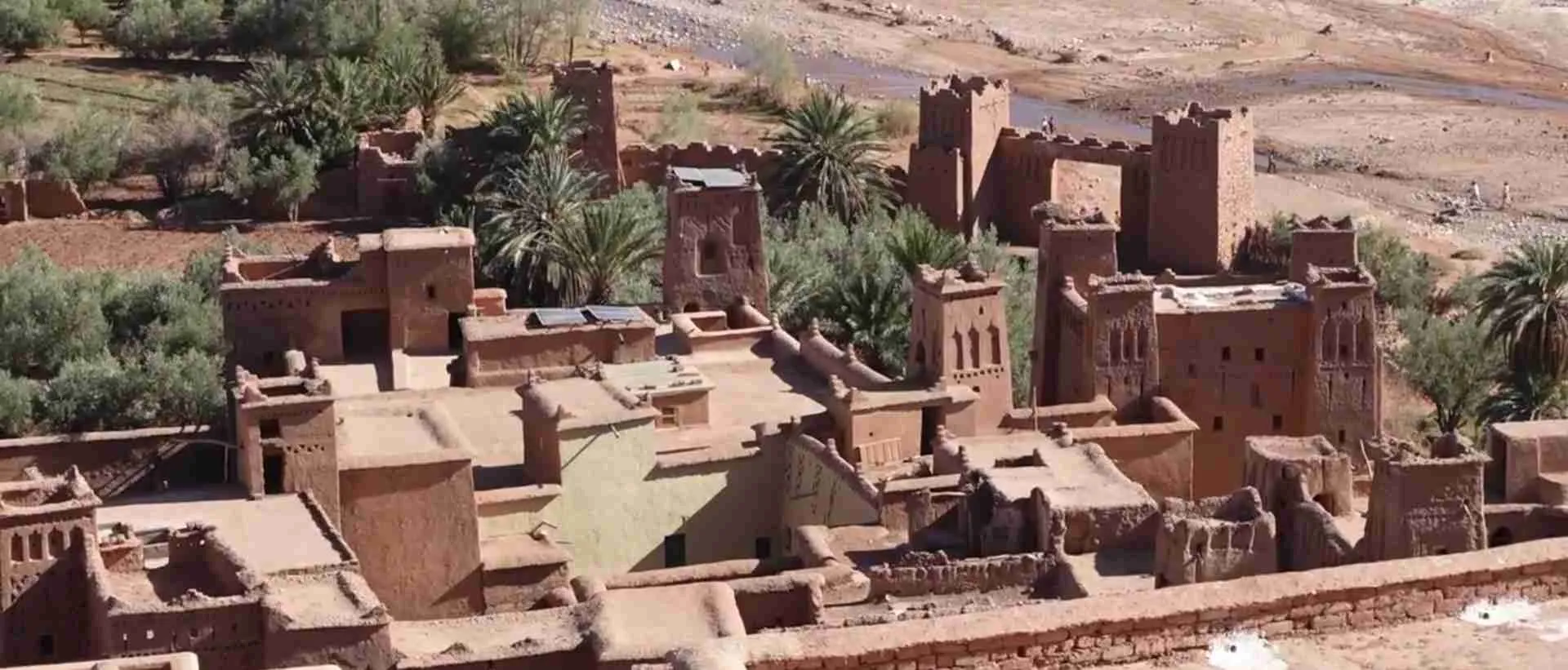
Ait-Ben-Haddou, designated UNESCO World Heritage in 1987, represents traditional pre-Saharan habitat and one of Morocco’s most photographed sites. This fortified village (ksar) sits on a hillside overlooking Ounila Valley, comprising earthen buildings surrounded by defensive walls with distinctive clay architecture that has served as backdrop for dozens of films including Lawrence of Arabia, Gladiator, and Game of Thrones. The ksar once housed numerous families along the trans-Saharan trade route, though only a handful of families maintain permanent residence today with most inhabitants relocating to the modern village across the river while maintaining ancestral properties for tourism and festivals.
Visiting Ait-Ben-Haddou requires crossing the river via stepping stones (wade-able during low water) or footbridge (€0.50 toll), then climbing the steep village paths to the granary at the summit for panoramic views. Entry costs €2 collected at the village entrance, with optional local guides offering 1-hour tours €10-15 providing historical context and access to restored interior spaces. The climb takes 20-30 minutes at moderate pace with spectacular photo opportunities throughout. Visit early morning (7-9 AM) or late afternoon (4-6 PM) for optimal light avoiding midday heat and tour group crowds. The modern village across the river contains cafes and restaurants (€8-15 for meals) plus several kasbahs converted to guesthouses €35-90 per night, many with pools and Atlas mountain views.
Accessing Ait-Ben-Haddou from Marrakech requires crossing the High Atlas via spectacular Tizi n’Tichka pass (2,260m elevation), a 4-hour journey by bus (€12-18, two daily departures morning and afternoon) or rental car. Organized day tours from Marrakech (€40-70 per person) handle transportation and provide English-speaking guides, departing 7-8 AM and returning 7-8 PM after stops at Ait-Ben-Haddou and nearby Ouarzazate film studios. Overnight stays allow sunrise photography and deeper exploration without rushed schedules, with kasbahs offering atmospheric traditional architecture, Berber hospitality, and home-cooked tagine dinners. Daily costs Ait-Ben-Haddou: €35-60 including basic kasbah accommodation €20-40, meals €10-15, entry €2, local guide €10, total cost excluding Marrakech transportation.
Essaouira Medina: Atlantic Coast Jewel
Essaouira medina, designated UNESCO World Heritage in 2001, exemplifies 18th-century fortified coastal town planning blending Moroccan and European architectural influences. The Portuguese established the original fortress (Mogador) in the 16th century before the Moroccan Sultan commissioned French architect Théodore Cornut to redesign the town in 1760s following European military architecture principles. The result combines traditional Moroccan medina layout with bastioned fortifications, straight streets on grid pattern, and distinctive blue-and-white color scheme influenced by Atlantic light. The medina remains free to access as a living urban district with ramparts, Skala de la Ville fortress platform, and Skala du Port providing dramatic Atlantic views at sunset.
Essaouira’s compact medina allows thorough exploration within 1-2 days, walking the ramparts (free access with €1-3 tips appreciated at fortress platforms), browsing souks specializing in woodwork (particularly thuya wood crafts), and enjoying the fishing port where daily catches arrive morning and lunchtime. The port area features outdoor grills (€8-15 for fresh seafood plates) where vendors cook your selected fish, calamari, or prawns immediately. The beach north of the medina stretches for kilometers attracting windsurfers year-round thanks to consistent Atlantic breezes. Essaouira’s artistic heritage includes galleries throughout the medina showcasing Gnaoua-inspired art (traditional Moroccan spiritual music and culture with sub-Saharan African roots) and numerous music festivals, particularly the Gnaoua World Music Festival (typically June, confirming 2026 dates through official tourism channels).
Accommodation in Essaouira spans budget guesthouses €25-50, mid-range riads with ocean views €60-110, and luxury properties €130-280. The Atlantic climate maintains comfortable year-round temperatures 15-25°C, making Essaouira ideal for summer visits when interior cities suffer intense heat. Daily costs: €50-75 budget (basic accommodation, seafood port meals, self-guided exploration), €85-130 mid-range (comfortable riad, restaurant dining, occasional activities), €160-280 luxury (boutique hotel, fine dining, water sports, spa). Transportation to Essaouira: buses from Marrakech (€8-12, 3 hours, five daily departures) or Casablanca (€12-18, 6 hours via coastal route). The laid-back coastal atmosphere contrasts sharply with frenetic Marrakech, providing perfect counterbalance in combined itineraries.
Volubilis Archaeological Site: Roman Morocco
Volubilis, designated UNESCO World Heritage in 1997, represents Morocco’s most significant Roman archaeological site and best-preserved ruins in North Africa outside Libya and Tunisia. The site flourished as capital of Roman Mauretania Tingitana province from 25 BCE until 285 CE, reaching population 20,000 during its peak. Excavations begun in early 20th century revealed substantial public buildings, merchant houses with intact mosaic floors, triumphal arch, basilica, temples, and forum. Visitors today explore approximately 40 hectares of partially excavated ruins showcasing extraordinary floor mosaics depicting mythological scenes, including the famous Orpheus mosaic, Acrobat mosaic, and Dionysus discoveries mosaic, many preserved in situ under modern protective structures.
Entry to Volubilis costs €7 in 2026, with the site open daily 8:30 AM-6:30 PM (5:30 PM winter months). Plan minimum 2-3 hours for thorough exploration, bringing water, sun protection, and comfortable walking shoes given limited shade among ruins. Official guides available at the entrance offer 90-minute tours €15-20 per person (or €50-80 for private group tours) providing essential historical context for understanding the site’s significance. The most impressive remains include the Tangier Gate entrance, Capitol temple foundations, Basilica with forest of columns, House of Orpheus with exceptional mosaics, and Gordian Palace complex. Late afternoon visits (3-6 PM) provide excellent photography light with fewer tour groups and pleasant temperatures outside summer months.
Accessing Volubilis requires transportation from Meknes (22 km) via grand taxi (€15-25 return including waiting time, negotiate clearly before departing), rental car (straightforward drive on good roads), or organized tours from Meknes or Fez (€35-60 including transportation, guide, and sometimes Meknes monuments). No public buses serve Volubilis directly. Combine Volubilis with Meknes for efficient day trip from Fez or as stop between Fez and Rabat. No accommodation or restaurants exist at the site itself; bring picnic supplies or plan meals in nearby Moulay Idriss village (2 km) offering basic cafes and restaurants €6-12 for tagine lunches. Budget €35-55 for Volubilis excursion from Meknes including transport, entry, optional guide, and meals.
Practical Logistics and Travel Intelligence 2026
Entry Requirements and Documentation
Morocco maintains visa-free entry for passport holders from over 60 countries including USA, Canada, UK, EU nations, Australia, and New Zealand, allowing stays up to 90 days for tourism purposes. Visitors receive entry stamp upon arrival at airports or land borders with no advance visa application required. Passports must maintain six months validity beyond intended departure date from Morocco. Travelers from countries requiring visas should apply at Moroccan embassies or consulates in their home countries 2-4 weeks before travel, submitting passport, completed application form, photos, proof of accommodation, and return flight confirmation. Consular fees vary by nationality, typically €30-50 for tourist visas.
Arriving via Casablanca Mohammed V International Airport (CMN), Morocco’s main international hub, provides connections to imperial cities via train, bus, or rental car. Train station connects directly to airport terminal with departures to Rabat (55 minutes, €4-6), Fez (4 hours, €13-18), and Marrakech (3.5 hours, €11-15) with service every 1-2 hours 6 AM-11 PM. Marrakech Menara Airport (RAK) serves numerous European carriers with domestic and international flights, offering convenient entry for travelers prioritizing southern UNESCO sites. Fez-Saïss Airport (FEZ) handles limited European flights providing direct access to Morocco’s cultural capital. Arriving at smaller airports often proves more expensive for onward travel than routing through Casablanca’s superior rail connections.
Currency exchange happens at airports, banks, and exchange offices throughout Morocco using Moroccan Dirham (MAD). Airport exchange rates provide convenience with 3-5% worse rates than city banks. ATMs offering best exchange rates (interbank rates plus card fees 1-3%) operate throughout imperial cities and tourist areas, accepting Visa and Mastercard widely. Credit cards work at tourist restaurants, hotels, and tour operators with 2-3% foreign transaction fees typical. Cash remains essential for street food, taxis, souk shopping, and budget accommodations. Budget €200-400 cash for weekly UNESCO touring covering small purchases, tips, and establishments not accepting cards.
Health, Safety, and Cultural Considerations
Morocco presents relatively low health risks for tourists practicing basic precautions. Tap water in major cities receives treatment though travelers’ sensitive stomachs may prefer bottled water €0.50-1 per 1.5L bottle. Avoid ice in drinks and raw vegetables in budget establishments, opting for cooked foods and peeled fruits. Common traveler ailments include mild stomach upset from rich tagines and unfamiliar spices, treated with over-the-counter medications from pharmacies (abundant in medinas, staff often speak French or English). Travel insurance covering medical treatment and evacuation proves essential, costing €30-80 for 2-week Morocco coverage. Private hospitals in Rabat, Casablanca, Fez, and Marrakech provide good care with English-speaking doctors, requiring payment upfront with insurance reimbursement later.
Safety in Morocco’s UNESCO medinas remains generally good with tourist police presence in major areas and medina residents protective of their neighborhoods’ reputation. Pickpocketing occurs in crowded areas like Marrakech Jemaa el-Fnaa and Fez souks, requiring vigilant bag security and avoiding displaying expensive electronics or jewelry. After-dark medina navigation requires caution in poorly-lit alleys, with many riads offering porter escort service for evening returns (€3-5). Women travelers face moderate hassling and unwanted attention, particularly in tourist areas, managed through confident body language, ignoring persistent vendors, and dressing modestly (covering shoulders and knees reduces but doesn’t eliminate attention). Solo women travelers report safe, positive experiences taking common-sense precautions.
Cultural respect enhances UNESCO site experiences and local interactions. Dress modestly at religious sites and in traditional neighborhoods, covering shoulders, avoiding shorts, and wearing loose-fitting clothing. Remove shoes when entering mosques (exterior viewing only for non-Muslims in most cases), homes, and some shops. Ramadan observance (approximately March 2026) deserves respect: avoid eating, drinking, or smoking in public during daylight hours. Photography etiquette requires asking permission before photographing people, particularly women, with expected small tips €1-3 for posed photos. Learning basic Arabic or French phrases (Morocco’s two main languages) demonstrates respect: “salam alaikum” (peace be upon you), “shukran” (thank you), “afak” (please), and “la shukran” (no thank you) for declining vendor offers.
Mobile Connectivity and Digital Resources 2026
Mobile connectivity in Morocco reaches excellent standards in cities and along major routes with 4G coverage throughout imperial cities, UNESCO sites, and highways connecting them. Local SIM cards from Maroc Telecom, Orange Morocco, or Inwi cost €5-8 with tourist packages offering 10-20GB data plus local calls for €10-20 for 30-day validity. Purchase at airport shops or operator stores in city centers, bringing passport for registration. Data-only packages work well for travelers using WhatsApp for calls versus traditional phone service. WiFi reaches ubiquitous availability in riads, hotels, cafes, and restaurants throughout UNESCO medina areas with varying speed and reliability, typically sufficient for messaging, basic web browsing, and photo uploads though frustrating for video streaming or large file transfers.
Essential apps for 2026 Morocco UNESCO touring include: Google Maps for navigation (download offline maps for each city covering medina areas plus surrounding regions), ONCF app for train bookings and schedules, Careem or Uber (limited availability to Casablanca and Rabat), WhatsApp for communication with riad owners and tour operators, XE Currency for real-time exchange rate checking, and Duolingo or similar for basic Arabic/French phrases. Download offline map applications like Maps.me providing detailed medina street-level navigation without data connection. UNESCO World Heritage app provides background information on all Moroccan sites though website content often more current than app databases.
Official tourism resources include Visit Morocco (visitmorocco.com) offering destination information, practical advice, and event calendars. Moroccan National Tourist Office maintains offices in major cities providing free maps, brochures, and assistance with accommodation and tours. Each imperial city operates tourist offices near main medina gates: Fez at Bab Boujloud, Marrakech at Jemaa el-Fnaa, Meknes near Bab Mansour. UNESCO Morocco provides site-specific information through onmo.ma (Office National Marocain du Tourisme UNESCO section) detailing history, visiting information, and conservation efforts. Travel forums like TripAdvisor Morocco forums and Lonely Planet Thorn Tree provide current traveler reports and advice though verify information against official sources for pricing and logistics subject to frequent changes.
FAQ: Morocco UNESCO World Heritage Sites 2026
What is the best order to visit Morocco’s UNESCO sites?
The optimal visiting order follows geographical logic minimizing backtracking. Start in northern Morocco covering Rabat-Meknes-Volubilis-Fez-Tétouan in a linear progression using trains and buses. Continue south to Marrakech by train, then west to Essaouira and Mazagan on the coast before returning to Marrakech for the Atlas mountain journey to Ait-Ben-Haddou. This routing covers all nine sites efficiently with logical transportation connections and minimal repeat routes.
Can you visit Morocco’s UNESCO sites independently or do you need tours?
Independent travel works perfectly well for Morocco’s UNESCO sites with excellent train connections between imperial cities and straightforward bus routes to coastal destinations. The medinas of Fez, Marrakech, Essaouira, and Tétouan welcome self-guided exploration (though hiring a guide for initial Fez orientation proves valuable given the complex layout). Volubilis benefits from guide context for understanding Roman ruins but remains accessible independently. Only Ait-Ben-Haddou presents logistical challenges for independent travelers given limited public transport, making organized tours or rental cars practical choices. Overall, independent travelers save 30-50% versus fully organized tours while maintaining flexibility and authentic experiences.
How much should you budget per day for visiting Morocco’s UNESCO sites?
Daily budgets vary significantly by travel style and destination choices. Budget travelers spend €50-80 daily including basic riad accommodation €20-45, local meals €15-25, site entries €5-10, and local transportation €5-10. Mid-range visitors budget €100-150 daily with comfortable riads €60-100, restaurant dining €30-45, occasional guides €15-30, and first-class train travel. Luxury travelers spend €180-350 daily covering boutique hotels €150-250, fine dining €50-100, private guides and tours, and rental cars or private drivers. Weekly UNESCO tours cost €500-800 budget, €900-1,400 mid-range, and €1,800-3,500 luxury for comprehensive experiences.
What are the must-see highlights if you only have one week?
One week allows visiting five to six UNESCO sites focusing on the imperial cities core. Prioritize Fez medina (2 days) for the most authentic medieval Islamic city experience, Marrakech (2 days) for iconic Jemaa el-Fnaa and southern Moroccan culture, day trip to Volubilis archaeological site from Fez or Meknes, and add either Essaouira coastal medina (2 days) or Ait-Ben-Haddou Atlas kasbah (day trip from Marrakech). This covers diverse architectural styles from medieval urban planning to Roman ruins, coastal fortifications, and Atlas mountain earthen architecture, providing comprehensive Morocco heritage exposure within limited time.
Are Morocco’s UNESCO sites suitable for families with children?
Morocco’s UNESCO sites work well for families with school-age children offering fascinating cultural exposure, though some practical challenges exist. Medinas like Fez and Marrakech provide sensory-rich environments that engage curious children with colorful souks, street performers, and labyrinthine streets, though the crowds, aggressive vendors, and navigation complexity stress some families. Volubilis archaeological site appeals to children interested in ancient civilizations with impressive mosaics and column ruins to explore. Ait-Ben-Haddou offers adventure appeal with kasbah climbing and film location recognition. Families should book accommodations with pools for afternoon breaks from sightseeing, plan shorter medina sessions (2-3 hours) with frequent snack and rest stops, and consider private guides providing child-friendly historical context at major sites.
What is the best way to get between Morocco’s UNESCO sites?
Morocco’s train network provides the best connections between Rabat, Meknes, Fez, and Marrakech with comfortable, punctual service at affordable prices €5-25 for most routes. Buses handle destinations without rail access including Essaouira, Tétouan, and connections to Mazagan, with CTM and Supratours offering reliable service €5-18. Rental cars suit travelers visiting Volubilis (limited public transport from Meknes) and Ait-Ben-Haddou (accessible by bus but rental car provides flexibility for Atlas mountain exploration). Grand taxis (shared or private) fill gaps for short connections like Meknes-Volubilis. Multi-modal approach combining trains for long distances, buses for coastal routes, and rental car for Atlas mountain regions provides optimal balance of cost, convenience, and flexibility.
Do Morocco’s UNESCO sites get very crowded?
Crowd levels vary significantly by site, season, and time of day. Marrakech Jemaa el-Fnaa square experiences heavy crowds year-round, particularly evenings when square transforms into open-air food market and entertainment venue. Fez medina absorbs crowds well given its immense size, though main tourist routes (Bab Boujloud to Attarine Souk) see concentrated visitor numbers. Peak season (March-April, October-November) brings maximum crowds to imperial city medinas, while summer heat reduces visitor numbers despite being vacation season. Strategic timing helps: visit major sites early morning (8-10 AM) or late afternoon (4-6 PM) avoiding midday tour group concentrations. Secondary UNESCO sites like Tétouan, Mazagan, and Essaouira see far fewer visitors providing peaceful exploration. Volubilis receives moderate crowds with early morning or late afternoon visits ensuring solitude among ruins.
What language skills are needed for visiting Morocco’s UNESCO sites?
French proves most useful in Morocco given the colonial legacy, with many Moroccans in tourist areas speaking French alongside Arabic. English reaches increasingly common usage in hotels, restaurants, and tourist services in major cities, though remains limited in smaller towns and among older generations. Arabic (specifically Moroccan Darija dialect) dominates daily life though differs significantly from Modern Standard Arabic taught in language courses. Learning basic greetings and numbers in Arabic demonstrates respect and facilitates market interactions, while French phrases help in restaurants, hotels, and transportation bookings. Many tourism professionals speak multiple languages including Spanish (particularly in northern Morocco near Spanish enclaves) and even Italian or German in heavily-touristed areas. Translation apps like Google Translate help bridge communication gaps, working offline with downloaded language packs.
Can you visit Morocco’s UNESCO sites during Ramadan?
Visiting Morocco during Ramadan (approximately March 2026) presents unique opportunities and challenges for UNESCO site tourism. Many cafes and restaurants close during daylight hours as Muslims observe fasting, though tourist establishments often remain open with discreet service. Monument opening hours may reduce or shift earlier in the day, with some sites closing entirely during prayer times. Ramadan offers cultural insights through evening iftar breaking-fast celebrations, special prayers at historic mosques (observable from exteriors), and festive atmosphere after sunset. Tourist crowds decrease during Ramadan providing quieter medina exploration, though some shops and services operate reduced hours. Visitors should respect the holy month by avoiding eating, drinking, or smoking in public during daylight hours. The post-Ramadan Eid al-Fitr celebration brings heightened festivities though also peak domestic tourism affecting accommodation availability.
Are guide services necessary at Morocco’s UNESCO sites?
Guide necessity varies by site complexity and visitor interests. Fez medina strongly benefits from guide services (€25-40 half-day) for initial orientation given the maze-like layout and numbered houses making independent navigation challenging. Guides provide cultural context explaining Islamic architecture, craft traditions, and daily life patterns invisible to casual observation. Marrakech medina works well independently though guides enhance understanding of historical monuments. Volubilis archaeological site merits guide investment (€15-20 per person or €50-80 private group) to interpret Roman ruins, identify mosaic subjects, and understand site significance. Essaouira, Tétouan, Ait-Ben-Haddou, and Mazagan suit self-guided exploration with information panels and straightforward layouts. Official guides wear badges and charge standardized rates, while unofficial guides offer services at lower costs with variable quality. Negotiate prices clearly before beginning tours, confirming duration, sites covered, and language preference to avoid misunderstandings.