Morocco Itinerary 7 Days 2026: Imperial Cities & Sahara Desert
Key Takeaways
- This comprehensive 7-day Morocco itinerary covers four Imperial Cities (Casablanca, Rabat, Fes, Marrakech) plus authentic Sahara Desert experience with overnight camel trekking
- Total budget ranges €850-1,400 per person excluding international flights, with accommodation representing 35-40% of costs and transportation another 25-30%
- Optimal routing follows Casablanca→Rabat→Fes→Sahara Desert→Dades Valley→Marrakech, minimizing backtracking and maximizing diverse experiences
- Pre-booking desert tours 2-4 weeks ahead ensures availability during peak season, while accommodation in Imperial Cities can be reserved 1-2 weeks in advance
- Private drivers offer flexibility and comfort for 2+ travelers at competitive rates compared to organized group tours, particularly for the Fes-Sahara-Marrakech circuit
- Shoulder season months (March-April, October-November) provide ideal weather conditions, manageable crowds, and moderate pricing for this intensive Morocco circuit
Planning Your Morocco 7-Day Journey 2026
Seven days in Morocco delivers transformative experiences spanning imperial grandeur, Saharan wilderness, and Atlas Mountain landscapes. This carefully crafted itinerary balances iconic destinations with authentic cultural encounters, providing comprehensive Morocco immersion within time constraints facing most international travelers. The route connects four Imperial Cities—Casablanca, Rabat, Fes, and Marrakech—each representing distinct historical periods and architectural traditions, while incorporating magical Sahara Desert overnight camping that defines many travelers’ Morocco dreams.
Morocco’s compact geography combined with well-developed tourism infrastructure makes ambitious multi-city itineraries feasible without exhausting travel days. Distances between major destinations range 200-400km, translating to 3-6 hour drives through spectacular scenery including Middle Atlas cedar forests, dramatic Ziz Valley gorges, and ancient kasbahs dotting desert approaches. Strategic routing minimizes backtracking, following logical progression from Atlantic coast through Middle Atlas to Sahara before crossing High Atlas returning to Marrakech.
This itinerary suits active travelers comfortable with daily location changes, early starts, and full-day activities. Couples, friend groups, families with older children, and solo travelers joining small group tours all successfully complete this circuit. The pace balances structured activities with free exploration time, guided cultural immersion with independent discovery, and physical activities like camel trekking with leisurely medina wandering. Flexibility built into the schedule accommodates personal interests whether emphasizing photography, shopping, culinary experiences, or historical exploration.
People Also Ask About Morocco 7-Day Itinerary 2026
How much does a 7-day Morocco trip cost in 2026?
Budget travelers can complete this 7-day Morocco itinerary for €850-1,100 per person staying in budget riads and hostels (€30-50 per night), using shared desert tours (€180-220 for 2-day Sahara experience), eating at local restaurants (€15-25 daily), and utilizing CTM buses between cities (€8-15 per journey). Check official booking platforms for current accommodation rates as pricing may vary. Mid-range travelers spending €1,100-1,800 stay in comfortable riads (€60-90 per night), book private drivers for flexibility (€350-450 for 3-day Fes-Marrakech circuit with desert overnight), dine at nicer restaurants (€30-45 daily), and include additional activities like cooking classes or hammam experiences. Luxury travelers exceeding €2,000 per person stay in premium riads and kasbahs (€150-300+ per night), hire private drivers throughout the journey, eat at upscale restaurants, and enjoy exclusive experiences like private desert camps and specialized tours.
Is 7 days enough time to see Morocco in 2026?
Seven days provides sufficient time for comprehensive Morocco introduction covering major highlights without feeling rushed. This duration allows visiting four Imperial Cities, experiencing Sahara Desert overnight, crossing Atlas Mountains, and exploring iconic medinas, while maintaining reasonable daily pacing. However, seven days requires accepting trade-offs: skipping coastal towns like Essaouira, limiting time in each city to 1-2 days, and following efficient routing without detours. Travelers seeking deeper immersion in specific regions, more relaxed pacing, or additional destinations like Chefchaouen Blue City or Merzouga dunes benefit from 10-14 day itineraries. Seven days works excellently for first-time Morocco visitors wanting diverse experiences sampling imperial grandeur, desert adventure, and cultural authenticity before potentially returning for extended regional exploration.
What is the best route for a 7-day Morocco itinerary in 2026?
The optimal 7-day Morocco route follows Casablanca→Rabat→Fes→Sahara Desert→Dades Valley→Marrakech, forming an efficient circuit minimizing backtracking. Start in Casablanca (international airport hub), visit Hassan II Mosque, then transfer to Rabat (80km, 1 hour) exploring Morocco’s political capital. Continue to Fes (200km, 2.5 hours) for two nights immersing in the world’s largest living medieval medina. Depart Fes for 2-day Sahara Desert experience via Middle Atlas, Ziz Valley, and Merzouga or Erg Chebbi dunes, sleeping in desert camps. Return through Todra Gorge and Dades Valley to Marrakech (350km from desert, 6-7 hours including stops) spending final 2-3 nights in Morocco’s most famous tourist destination. This routing flows naturally from north to south, experiences diverse landscapes in logical progression, and positions Marrakech as convenient final stop before departing from Marrakech-Menara Airport or returning to Casablanca.
When is the best time to visit Morocco for this itinerary in 2026?
March-May and September-November represent ideal seasons for this 7-day Morocco itinerary in 2026. Spring months (March-May) offer comfortable temperatures (18-25°C in cities, 15-20°C in mountains, 20-30°C in desert), blooming wildflowers across Atlas Mountains, and moderate tourist crowds building toward summer peak. Autumn months (September-November) deliver similar pleasant weather with harvest season agricultural activities, clearer air after summer heat, and reduced tourist numbers compared to spring. Avoid July-August when Sahara Desert temperatures exceed 45°C making desert experiences uncomfortable despite being peak season for European visitors. Winter (December-February) brings cold desert nights (below 0°C), snow potentially closing Atlas Mountain passes, but offers lowest prices and smallest crowds for budget-conscious travelers accepting weather limitations. The 2026 Islamic calendar places Ramadan from February 28-March 30, when daytime dining options reduce and attraction hours may vary.
Extended multi-day tours – 5+ days
Featured Morocco Multi-Day Tour Packages
10 days
Totally Morocco Tour from Casablanca
- ✓ Comprehensive Morocco tour
- ✓ Expert local guides included
- ✓ All accommodation arranged
- ✓ Transportation provided
9 days
Timeless Morocco
- ✓ Comprehensive Morocco tour
- ✓ Expert local guides included
- ✓ All accommodation arranged
- ✓ Transportation provided
9 days
Imperial Cities & Sahara Discovery Tour from Marrakech
- ✓ Comprehensive Morocco tour
- ✓ Expert local guides included
- ✓ All accommodation arranged
- ✓ Transportation provided
9 days
The Magic of Morocco Tour 9 Days From Casablanca
- ✓ Comprehensive Morocco tour
- ✓ Expert local guides included
- ✓ All accommodation arranged
- ✓ Transportation provided
Multi-day tour packages powered by TourRadar. Prices and availability subject to change.
Essential Planning Information 2026
Entry Requirements and Documentation
Most international visitors from North America, Europe, Australia, and many other countries enter Morocco visa-free for stays up to 90 days. Passports must remain valid for six months beyond entry date. Travelers present passports at immigration receiving entry stamps, though electronic systems increasingly track entries digitally. UK citizens traveling on emergency travel documents should verify current acceptance policies. Citizens from countries requiring visas must obtain them from Moroccan embassies or consulates before travel, as visa-on-arrival options remain unavailable for most nationalities.
No mandatory vaccinations exist for Morocco entry, though travelers should ensure routine immunizations remain current including MMR, tetanus-diphtheria, and hepatitis A. Travelers from yellow fever endemic regions must present yellow fever vaccination certificates. Health insurance covering international medical care proves valuable, as Morocco operates on pay-first, reimbursement-later system for most medical services. Bring sufficient quantities of prescription medications in original containers with doctor’s letters explaining medical necessity.
Currency and Payment Systems
Morocco’s currency, the Moroccan Dirham (MAD), exchanges at approximately €1 = 10.8 MAD in early 2026. ATMs throughout cities dispense dirhams at competitive exchange rates with standard international card fees (€3-5 per withdrawal). Withdraw larger amounts reducing transaction frequency and associated fees. Credit cards see acceptance in upscale hotels, restaurants, and tour companies, though cash remains essential for medina shopping, local restaurants, transportation, and tipping. Notify banks of Morocco travel plans preventing fraud alerts blocking card usage.
Tipping culture in Morocco expects 10-15% in restaurants, 20-30 MAD daily for hotel staff, 50-100 MAD daily for private drivers, and 100-150 MAD for multi-day guides. Bargaining dominates medina shopping with initial prices typically inflated 100-300% above seller’s acceptable range. Start negotiations at 30-40% of asking prices, remain friendly but firm, and be prepared to walk away encouraging better offers.
Communication and Connectivity
Mobile connectivity throughout Morocco’s cities and major routes enables reliable communication, navigation, and translation app usage. Purchase local SIM cards at airport shops or city telecommunications stores (Maroc Telecom, Orange, Inwi) for 50-100 MAD including data packages (5-20GB depending on plan). Unlocked phones accept Moroccan SIM cards providing cost-effective data access compared to international roaming charges. WiFi availability in riads, hotels, restaurants, and cafes supports communication without mobile data for less data-intensive needs.
Download offline maps through Google Maps or Maps.me covering your itinerary before departing, ensuring navigation capability in areas with spotty connectivity. Translation apps like Google Translate support offline French and Arabic, though French serves as more universal second language in tourist areas. WhatsApp functions as primary communication tool in Morocco, used by drivers, tour operators, and accommodation providers for coordination.
Complete 7-Day Morocco Itinerary 2026
Day 1: Arrival in Casablanca and Hassan II Mosque
International flights arrive at Mohammed V International Airport, Morocco’s primary gateway located 30km south of Casablanca. Airport trains provide efficient, comfortable transfers to Casa-Voyageurs station (43 MAD, 45 minutes, departures hourly) connecting to city center hotels. Alternatively, official taxi services charge fixed rates to city destinations (250-300 MAD to downtown, verify meter usage or negotiate fare before departure).
Check into your Casablanca accommodation in Maarif neighborhood or near Hassan II Mosque, providing convenient access to the city’s primary attraction while avoiding congested old medina areas. After settling in, spend the afternoon visiting Hassan II Mosque, one of the world’s largest mosques and Morocco’s only mosque admitting non-Muslim visitors through guided tours. Tours operate 9:00 AM, 10:00 AM, 11:00 AM, and 2:00 PM daily (except Friday mornings during prayers). Admission costs 130 MAD for adults in 2026 (check official mosque website for current rates as pricing may vary). The hour-long tour explores the magnificent prayer hall accommodating 25,000 worshippers, the intricate hand-carved cedar ceilings, the elaborate marble floors, and the dramatic oceanfront location with retractable roof designed by French architect Michel Pinseau.
Evening exploration of Casablanca’s Corniche waterfront provides relaxing conclusion to your first day. The 4km promenade stretches from Hassan II Mosque south past beach clubs, seafood restaurants, and cafes. Dine at local seafood restaurants serving fresh catch including sea bass, shrimp, calamari, and Moroccan fish tagines. Sunset views from Corniche cafes offer serene introduction to Moroccan coastal ambiance.
Day 1 Budget Summary: Accommodation €40-80 per night (mid-range hotel). Airport train €4, Hassan II Mosque tour €12, lunch €10-15, dinner €20-30, snacks/drinks €5-8, local transport €3-5. Total day cost: €50-70 per person (excluding accommodation).
Day 2: Rabat Imperial City and Transfer to Fes
Depart Casablanca early morning (8:00-9:00 AM) for Rabat, Morocco’s capital and administrative center. Trains from Casa-Voyageurs to Rabat Ville station depart every 30-60 minutes (75-90 MAD first class, 1 hour journey) providing comfortable travel with air conditioning and reliable schedules. Store luggage at hotel (if arriving directly) or at train station lockers (20-30 MAD) enabling unencumbered city exploration.
Rabat’s compact historic district allows comprehensive morning exploration covering four UNESCO World Heritage sites. Begin at Kasbah des Oudaias, the 12th-century fortress overlooking the Atlantic Ocean and Bou Regreg River. The blue-white painted streets within the kasbah create photogenic environment reminiscent of Chefchaouen, while Andalusian Gardens provide peaceful oasis with traditional Islamic garden design. Admission remains free with donation boxes for garden maintenance.
Walk 15 minutes south to Hassan Tower and Mohammed V Mausoleum complex. The unfinished Hassan Tower, intended as world’s largest minaret when begun in 1195, stands 44 meters tall surrounded by 200+ columns marking the planned mosque’s footprint. The adjacent mausoleum housing Mohammed V and Hassan II showcases exquisite Moroccan craftsmanship with marble, zellige tilework, and carved cedar. Admission free, open 9:00 AM-5:30 PM daily with modest dress required.
Continue to Chellah, the ancient Roman and medieval necropolis located 1.5km south (10-minute taxi ride, 15-20 MAD). The ruins combine Roman settlement remains with 14th-century Merinid dynasty structures, gardens, and stork nesting platforms creating unique historical layers. Admission 70 MAD explores the atmospheric site requiring 1-1.5 hours for comprehensive visit.
Afternoon train departure from Rabat Ville to Fes (approximately 2:30 PM, arriving 5:00-5:30 PM) provides 2.5-hour journey through agricultural plains and rolling hills. First-class tickets cost 130-150 MAD, second-class 80-95 MAD. Arriving in Fes before evening allows hotel check-in, neighborhood orientation, and relaxed dinner in Fes el-Bali medina or nearby modern Ville Nouvelle district.
Day 2 Budget Summary: Accommodation €50-90 per night (Fes riad). Casablanca-Rabat train €7-8, lunch in Rabat €12-18, Chellah admission €6.50, Rabat-Fes train €12-14, dinner €15-25, taxis/local transport €10-15, snacks/drinks €5-8. Total day cost: €68-95 per person (excluding accommodation).
Day 3: Fes Medina Full-Day Exploration
Dedicate this entire day to Fes el-Bali, the world’s largest car-free medieval urban zone and UNESCO World Heritage site. The 9th-century medina contains over 9,000 alleyways, 300+ mosques, and countless workshops maintaining traditional crafts unchanged for centuries. Hiring an official licensed guide (200-250 MAD for 4-hour morning tour, negotiate directly at riad or through hotel concierge) provides invaluable orientation, historical context, and navigation through the labyrinthine streets.
Begin morning exploration at Bab Boujloud (Blue Gate), the iconic blue-tiled entrance to Fes el-Bali. Walking Talaa Kebira (Grand Talaa), the medina’s main commercial artery, leads past spice markets, textile sellers, and traditional hammams. Visit Bou Inania Madrasa, the 14th-century Koranic school showcasing Morocco’s finest Islamic architecture with carved cedar ceilings, zellige tilework, and marble columns. Admission 20 MAD, open 9:00 AM-5:00 PM daily.
Navigate through the Chouara Tannery, Fes’s most photographed site where leather dyeing follows centuries-old methods using natural pigments and traditional stone vats. View tannery operations from surrounding leather shop terraces (no admission fee, though terrace access expects potential purchases or small tips). Morning visits (9:00-11:00 AM) show most active dyeing work with better light than afternoon sessions.
Continue to Al-Qarawiyyin Mosque and University complex, founded in 859 AD and recognized by UNESCO and Guinness Records as the world’s oldest continuously operating educational institution. Non-Muslims cannot enter the mosque, but peek through ornate doorways from adjacent streets revealing portions of the magnificent courtyard and prayer hall. The nearby Al-Attarine Madrasa (admission 20 MAD) provides accessible example of similar architectural glory with intricate geometric patterns and carved stucco.
Afternoon exploration focuses on Fes’s renowned artisan quarters. Visit woodworking workshops producing traditional carved furniture and decorative items, ceramic studios creating famous blue Fassi pottery, and metalworking souks hammering brass, copper, and silver into traditional lamps, trays, and decorative pieces. The Nejjarine Museum of Wooden Arts and Crafts (admission 20 MAD) occupies a beautifully restored funduq (merchant’s inn) displaying traditional woodworking tools and finished pieces.
Evening ascent to Merenid Tombs ruins north of the medina provides spectacular sunset viewpoints overlooking the entire Fes el-Bali medina. The 14-century royal necropolis sits hillside 15-minute taxi ride from Bab Boujloud (30-40 MAD round-trip with waiting time). Sunset timing varies seasonally: 5:30-6:00 PM in winter, 7:30-8:00 PM in summer.
Day 3 Budget Summary: Licensed guide €20-23, Bou Inania + Al-Attarine + Nejjarine admissions €5.50 total, lunch €12-18, dinner €15-25, taxi to Merenid Tombs €3-4, snacks/drinks/tips €8-12. Total day cost: €64-92 per person (excluding accommodation €50-90 per night).
Day 4: Fes to Sahara Desert via Middle Atlas (Overnight in Desert Camp)
This day begins the multi-day journey from Fes to Marrakech via the Sahara Desert, requiring pre-arranged transportation with either shared group tour or private driver. Most travelers book 2-day/1-night desert tours departing Fes early morning (7:00-8:00 AM) and arriving Marrakech evening of Day 5. Shared group tours (8-15 participants in minibus) cost 180-220 MAD per person for 2-day experience in 2026, while private drivers for 2 passengers range €350-450 for the 2-day circuit (check tour operator websites for current rates as pricing may vary).
The route from Fes to Merzouga/Erg Chebbi dunes covers approximately 465km (7-8 hours driving with stops) through diverse landscapes showcasing Morocco’s geographical variety. Depart Fes climbing into Middle Atlas Mountains, first stop at Ifrane, the “Switzerland of Morocco” featuring European-style architecture and cedar-lined streets. Continue through Azrou’s cedar forests inhabited by Barbary macaque troops allowing close wildlife photography (small tips appreciated for macaque feeding demonstrations by local guides, 10-20 MAD optional).
Lunch stop occurs in Midelt (approximately 12:30-1:30 PM), a mountain town at 1,520m elevation between Middle and High Atlas ranges. Local restaurants serve traditional tagines, grilled meats, and salads (80-120 MAD per person lunch included in tour packages, or 60-90 MAD if self-arranged). Post-lunch driving descends through dramatic Ziz Valley gorges lined with date palm oases creating stunning visual contrasts against desert landscapes.
Arrive late afternoon (4:00-5:00 PM) at Merzouga village or Erg Chebbi dunes base. After settling at accommodation briefly, begin the camel trek into the Sahara just before sunset (timing varies seasonally, typically 5:30-6:30 PM). The 1-1.5 hour camel ride traverses towering orange sand dunes reaching heights of 150 meters, culminating at traditional Berber desert camps nestled among dunes. Witness spectacular Saharan sunset painting dunes in golden-red hues before enjoying traditional Berber dinner under star-filled skies (dinner and breakfast included in desert tour packages). Evening entertainment includes traditional Berber music around campfires, stargazing in pollution-free desert darkness showing extraordinary celestial displays, and overnight accommodation in traditional nomad-style tents equipped with mattresses and blankets (private or shared tents depending on booking).
Day 4 Budget Summary: 2-day desert tour €180-220 per person shared group (includes transport, camel trek, dinner, breakfast, accommodation). Private driver option €175-225 per person (2 travelers splitting €350-450 total). Lunches/stops/tips typically included in tour packages, though budget €10-15 for additional snacks/drinks.
Day 5: Sahara Sunrise, Todra Gorge, and Arrival in Marrakech
Wake before dawn (5:30-6:30 AM depending on season) for sunrise camel trek returning to Merzouga village. Saharan sunrise rivals sunset splendor as low-angle light illuminates dunes in shifting pink-orange tones before blue sky emerges. The early morning camel ride lasts 1-1.5 hours reaching accommodation for breakfast and shower opportunities before departing toward Marrakech.
Departure from Merzouga occurs mid-morning (9:00-10:00 AM) beginning the 350km journey to Marrakech through Todra Gorge and Dades Valley. First major stop at Todra Gorge (2 hours from Merzouga) provides spectacular canyon scenery where 300-meter limestone cliffs compress into narrow passages popular with rock climbers. Walk through the gorge bottom (free access) for 30-45 minutes appreciating geological drama and refreshing shade. Local cafes serve mint tea and snacks (20-30 MAD) with gorge views.
Continue through Dades Valley, the “Valley of a Thousand Kasbahs,” where traditional fortified adobe structures dot hillsides overlooking the Dades River. Photo stops at panoramic viewpoints document the distinctive kasbahs architecture and valley cultivation. Lunch occurs in Dades Valley town (approximately 1:30-2:30 PM, 80-120 MAD per person included in tour packages or 60-90 MAD self-arranged).
Afternoon driving crosses the High Atlas Mountains via Tizi n’Tichka Pass (2,260m elevation), Morocco’s highest major road pass. The winding mountain road offers dramatic switchbacks, snow-capped peaks (winter/spring), and Berber villages clinging to mountainsides. Arrive Marrakech early evening (6:00-7:00 PM) concluding the 2-day desert circuit. Check into Marrakech accommodation in medina or Hivernage/Gueliz districts depending on preferences for traditional atmosphere versus modern amenities.
Day 5 Budget Summary: Covered by Day 4 desert tour package (transport, breakfast, lunch included). Dinner in Marrakech €15-30 depending on restaurant choice. Snacks/drinks during driving €8-12. Total day cost beyond tour package: €23-42 per person (excluding accommodation €50-120 per night in Marrakech).
Day 6: Marrakech Medina and Souks Exploration
Marrakech’s Jemaa el-Fnaa square serves as the throbbing heart of the medina and starting point for comprehensive city exploration. Arrive early morning (8:00-9:00 AM) when the square awakens with fruit juice vendors, snake charmers preparing for tourist performances, and market stalls assembling. The UNESCO-recognized square transforms throughout the day, relatively calm mornings transitioning to chaotic afternoon-evening scenes with storytellers, musicians, henna artists, and food stalls creating sensory overload epitomizing Moroccan street culture.
Begin structured medina exploration at Koutoubia Mosque, Marrakech’s largest mosque and the city’s architectural icon. The 77-meter minaret dominates the skyline, visible from throughout the medina. Non-Muslims cannot enter the mosque, but surrounding gardens provide peaceful respite and excellent photo opportunities (free access). Walk northeast from Koutoubia toward the souks, Marrakech’s vast labyrinth of specialized markets selling everything from spices and carpets to metalwork and traditional slippers.
Navigate through the souks with or without a guide depending on comfort level with getting temporarily lost (part of the authentic experience). Key souk areas include Souk Semmarine (textiles and carpets), Souk Cherratine (leather goods), Souk Haddadine (blacksmiths hammering decorative metalwork), and Souk des Teinturiers (dyers’ souk with colorful hanging wool). Bargaining applies to all purchases with good humor and patience.
Mid-morning visit to Ben Youssef Madrasa, the largest Islamic college in Morocco and one of the medina’s must-see monuments. The 16th-century Koranic school showcases Saadian-era architecture with carved cedar, sculpted stucco, and zellige tilework. Admission 50 MAD, open 9:00 AM-6:00 PM. Allow 45 minutes for comprehensive exploration including the central courtyard, prayer hall, and upstairs student dormitory cells.
Lunch options throughout the medina range from budget-friendly street food at Jemaa el-Fnaa stalls (30-50 MAD) to elevated rooftop restaurants overlooking the square with better hygiene standards (80-150 MAD). Marrakech cuisine specialties include tangia (slow-cooked meat in ceramic urn), pastilla (sweet-savory pigeon or chicken pie), and various tagines.
Afternoon exploration should include at least one of Marrakech’s major palace/garden monuments. Bahia Palace (admission 70 MAD, open 9:00 AM-5:00 PM) demonstrates late 19th-century aristocratic Moroccan architecture with elaborate painted ceilings, courtyards, and decorative elements. Alternatively, Majorelle Garden (admission 150 MAD, open 8:00 AM-6:30 PM) offers the famous cobalt-blue garden designed by French artist Jacques Majorelle and later owned by Yves Saint Laurent, showcasing exotic plants, bold colors, and tranquil atmosphere escaping medina chaos.
Evening return to Jemaa el-Fnaa experiencing the square’s transformation as sunset approaches. Food stalls erect temporary restaurants serving grilled meats, snails, soups, and traditional dishes (50-80 MAD per person for substantial meal). Rooftop cafes surrounding the square provide elevated perspectives for photography and people-watching while sipping mint tea (20-30 MAD). Nighttime square activities continue past midnight with performers, musicians, and social gatherings creating Morocco’s most iconic cultural scene.
Day 6 Budget Summary: Ben Youssef Madrasa €4.50, Bahia Palace or Majorelle Garden €6.50-14, lunch €8-15, dinner €12-20, mint tea/snacks €5-8, souvenirs/shopping variable. Total day cost: €36-65 per person (excluding accommodation and shopping purchases).
Day 7: Marrakech Cultural Sites and Departure Preparation
Final full day in Morocco allows flexible scheduling based on departure flight times and remaining interests. Morning exploration might include visiting any monuments missed during Day 6, shopping for last-minute souvenirs, or experiencing traditional hammam (Moroccan steam bath). Public hammams cost 20-40 MAD for basic service, while upscale spa hammams range 200-400 MAD including full treatment packages with massage and argan oil applications.
Visit Saadian Tombs if not included in Day 6 itinerary (admission 70 MAD, open 9:00 AM-5:00 PM). Discovered only in 1917, these royal mausoleums house members of the Saadian dynasty in elaborately decorated chambers demonstrating Morocco’s finest architectural craftsmanship. The compact site requires 30-45 minutes for comprehensive visit.
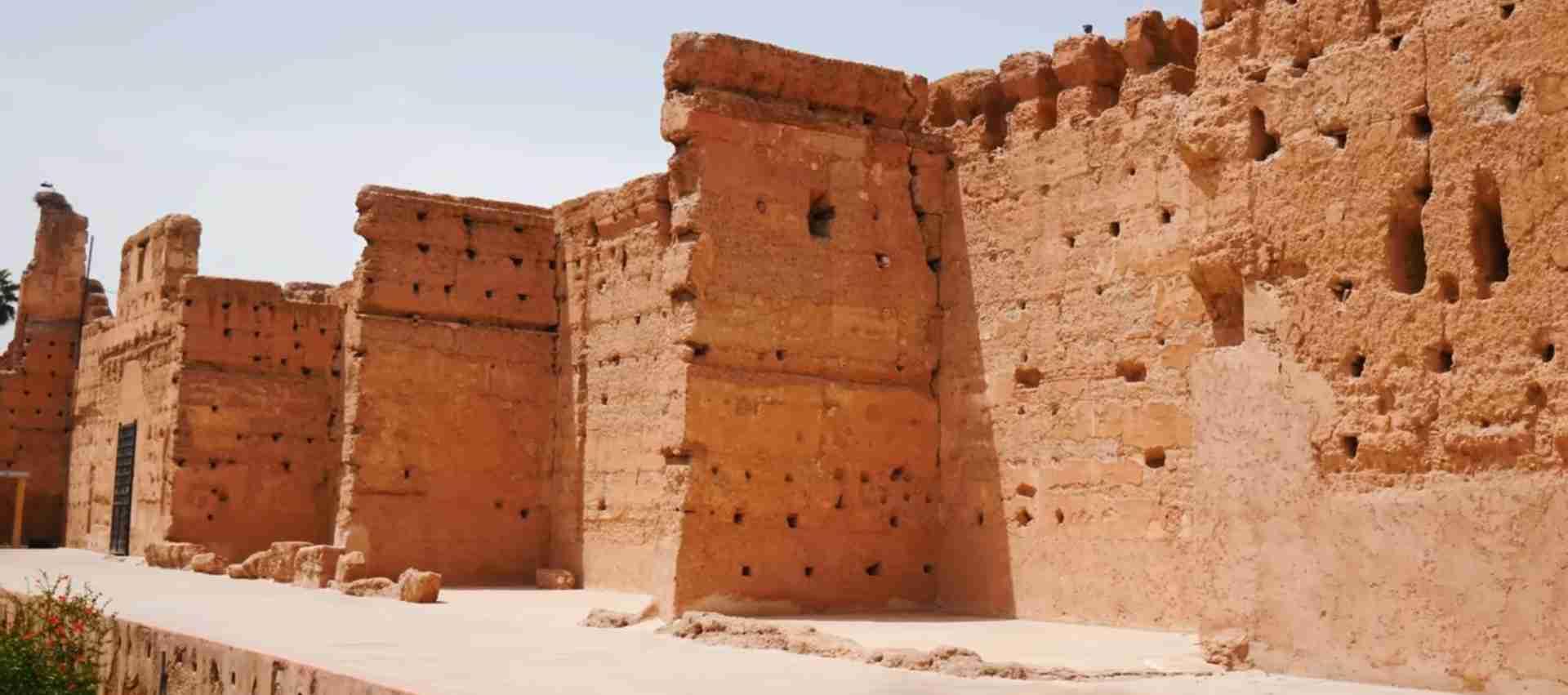
El Badi Palace ruins (admission 70 MAD, open 9:00 AM-5:00 PM) showcase the remains of a 16th-century palace once rivaling Europe’s grandest royal residences. Though stripped of decorative elements by subsequent rulers, the massive walls, sunken gardens, and underground passages provide imagination-stimulating glimpses into imperial Moroccan grandeur. Storks nesting atop ruins create photogenic scenes particularly during spring nesting season.
Gueliz and Hivernage districts provide modern Marrakech shopping alternatives to medina souks. Carrefour supermarket offers packaged Moroccan food products (argan oil, spices, preserved lemons) with fixed prices eliminating bargaining. Ensemble Artisanal cooperative (near train station) displays traditional crafts with government-regulated prices providing reference points for evaluating medina souk bargaining.
Departure logistics depend on whether flying from Marrakech-Menara Airport (RAK) or returning to Casablanca Mohammed V Airport (CMN). Marrakech airport sits 6km southwest of city center with official taxis charging fixed 100 MAD daytime rate (150 MAD nighttime, 8:00 PM-6:00 AM). Alternatively, bus #19 connects Jemaa el-Fnaa to airport (30 MAD, 30-40 minutes, departures every 30 minutes). For Casablanca flights, trains depart Marrakech station to Casa-Voyageurs (approximately 3 hours, 180-220 MAD first class) with onward airport train connections. Book train tickets online or at station, advance booking recommended during busy seasons.
Day 7 Budget Summary: Saadian Tombs + El Badi Palace admissions €13 total, hammam experience €2-37 depending on type, lunch €8-15, snacks/drinks €5-10, airport transfer €2.80-14, last-minute shopping variable. Total day cost: €31-90 per person (excluding accommodation and departure transport if flying from Casablanca).
Budget Breakdown 2026
Accommodation Costs by Category
Budget accommodation (€30-50 per night) includes hostels with shared dormitories, budget riads with basic amenities, and economy hotels in ville nouvelle districts. Cities like Fes and Marrakech offer excellent budget riads in restored traditional houses combining authentic atmosphere with affordable pricing. Shared bathrooms remain common at this tier, though private rooms with ensuite bathrooms appear at higher end of the range.
Mid-range accommodation (€60-90 per night) provides comfortable riads and hotels with air conditioning, WiFi, ensuite bathrooms, and often rooftop terraces or interior courtyard seating. This tier offers excellent value in Morocco, accessing authentic traditional architecture with modern comfort levels. Many mid-range riads include generous Moroccan breakfast with fresh bread, jams, cheese, olives, and fresh juice.
Luxury accommodation (€150-300+ per night) encompasses premium riads in prime medina locations, boutique hotels with pool facilities, and high-end properties with spa services. These establishments provide exceptional service, refined traditional decoration, gourmet dining, and concierge assistance arranging activities. Notable luxury options include La Mamounia Marrakech, Palais Amani Fes, and premium desert camps offering luxury tents with private bathrooms.
7-Night Accommodation Total: €210-350 (budget), €420-630 (mid-range), €1,050-2,100+ (luxury)
Transportation Costs Breakdown
Inter-city train travel on this itinerary includes Casablanca-Rabat (€7-8 first class), Rabat-Fes (€12-14 first class), totaling approximately €20-25 for train segments. The Fes-Marrakech desert circuit requires either joining shared group tours (€180-220 per person including all transport, accommodation, and meals for 2 days) or hiring private drivers (€350-450 total for 2 passengers, €500-650 for 3-4 passengers).
Local transportation within cities involves short taxi rides (€1.50-4 per journey) and occasional bus tickets (€0.50-1). Budget €30-50 total for intra-city transportation across the week. Airport transfers cost approximately €20-30 round trip depending on arrival/departure cities and transport methods selected.
Total Transportation: €250-320 per person (mid-range with shared desert tour), €350-450 per person (private driver option for 2 travelers)
Food and Dining Costs
Budget dining focuses on local restaurants, street food, and market snacks. Breakfast often included in accommodation rates, lunch at local restaurants costs €3-8, dinner €8-15, with snacks and drinks adding €3-5 daily. Daily food budget: €15-25 per person.
Mid-range dining includes nicer restaurants, rooftop dining experiences, and occasional upscale meals. Breakfast included in riads, lunch €8-15, dinner €15-30, snacks and cafes €5-8 daily. Daily food budget: €30-45 per person.
Upscale dining incorporates fine dining restaurants, hotel restaurants, and food experiences like cooking classes. Daily budget: €50-80+ per person including premium restaurant meals and specialty dining experiences.
7-Day Food Total: €105-175 (budget), €210-315 (mid-range), €350-560+ (upscale)
Activities and Admission Fees
Major admission costs include Hassan II Mosque tour (€12), Chellah (€6.50), Fes medina madrasas (€5.50), Ben Youssef Madrasa (€4.50), Bahia Palace (€6.50), Majorelle Garden (€14), Saadian Tombs (€6.50), El Badi Palace (€6.50). Additional activities like hammam (€2-37), cooking classes (€35-70), and optional guided tours (€20-40 per tour) increase costs.
Admission Fees Total: €60-85 for major monuments. Additional activities: €50-200 depending on selections.
Complete 7-Day Budget Summary
Budget Traveler Total: €850-1,100 per person (including accommodation €210-350, transportation €250-320, food €105-175, activities €60-85, miscellaneous €50-100)
Mid-Range Traveler Total: €1,250-1,800 per person (including accommodation €420-630, transportation €300-400, food €210-315, activities €110-235, miscellaneous €100-150)
Luxury Traveler Total: €2,200-3,500+ per person (including accommodation €1,050-2,100, transportation €400-600, food €350-560, activities €200-400, miscellaneous €200-300)
All budgets exclude international flights to Morocco, travel insurance, shopping purchases, and alcoholic beverages (available in licensed restaurants and hotels at premium prices).
Transportation Guide 2026
Getting Around Between Cities
Morocco’s ONCF railway network provides comfortable, efficient connections between Casablanca, Rabat, and Fes. First-class compartments offer air conditioning, spacious seating, and reduced crowding compared to second-class. Purchase tickets online at ONCF website (oncf-voyages.ma), at station ticket windows, or through automated kiosks accepting credit cards. Booking advance tickets (2-7 days ahead) guarantees seats during busy periods, though same-day tickets remain generally available.
Train travel between Marrakech and Casablanca operates frequently (every 1-2 hours, 3-hour journey, 180-220 MAD first class). However, the desert circuit requires different transportation. CTM bus company operates routes from Fes toward southern destinations, though reaching Merzouga/Sahara typically requires multiple connections and consumes 10-12+ hours, making organized desert tours or private drivers more practical options.
Private Driver vs. Shared Tour Considerations
Shared desert tours (€180-220 per person for 2-day Fes-Marrakech circuit) provide cost-effective desert experiences with guaranteed departures, meeting fellow travelers, and all logistics handled. Minibuses typically carry 8-15 passengers with English or French-speaking drivers stopping at major highlights. Fixed schedules limit flexibility, requiring adherence to group timing and predetermined restaurant stops.
Private drivers (€350-450 for 2 passengers, €500-650 for 3-4 passengers over 2 days) offer maximum flexibility customizing itineraries, stopping at personal interests, and traveling at preferred paces. Private vehicles provide more space, direct communication with drivers enabling spontaneous detours, and better photography opportunities without coordinating with larger groups. Per-person costs become competitive with shared tours when traveling as couples, friends, or families splitting driver fees. Desert camp accommodation and meals cost extra with private drivers (add €60-90 per person for desert camp experience).
Urban Transportation Options
Petits taxis (small taxis) operate within cities, legally carrying up to 3 passengers. Meters should run automatically, though drivers sometimes claim meters are broken requesting flat fees. Insist on meter usage or negotiate prices before entering. Typical city rides cost 15-40 MAD depending on distance. Grands taxis (large Mercedes sedans) operate inter-city routes or longer urban distances, carrying up to 6 passengers with shared fares. These prove most useful for airport transfers or reaching locations outside city centers.
Ride-hailing apps including Uber, Careem (owned by Uber), and local app InDrive operate in Casablanca, Rabat, Marrakech, and Fes. These services provide reliable pricing, GPS tracking, cashless payment options, and eliminate negotiation stress. Prices generally comparable to metered taxis with added convenience.
Walking remains the primary medina transportation method, as car access proves impossible in narrow alleyways. Comfortable walking shoes essential for uneven surfaces, stairs, and extended daily walking distances. Riads typically arrange porters meeting arriving guests at medina entry points, transporting luggage via handcart to accommodations (tip 10-20 MAD per bag).
Accommodation Strategies 2026
Choosing Between Medina and Ville Nouvelle
Medina accommodation provides authentic Moroccan experiences staying in traditional riads with interior courtyards, tiled fountains, and historic architecture. Advantages include proximity to major monuments, atmospheric settings, and immersive cultural environments. Challenges include navigating narrow alleyways with luggage, potential difficulty finding addresses, and noise from nearby mosques broadcasting pre-dawn calls to prayer (approximately 5:00-6:00 AM depending on season).
Ville Nouvelle (new town) accommodation offers modern hotels with familiar amenities, easier vehicle access, and quieter environments away from tourist crowds. These areas feature European-style cafes, supermarkets, and contemporary restaurants. However, ville nouvelle locations require taxis or longer walks accessing historic medinas and primary tourist sites.
Optimal strategy combines both: medina riads in Fes and Marrakech for atmospheric traditional experiences, ville nouvelle hotels in Casablanca or Rabat for convenience and modern amenities during shorter stays.
Booking Timing and Strategies
Peak season (March-May, October-November) sees highest demand requiring advance booking 2-4 weeks ahead for mid-range accommodations, longer for luxury properties or during holidays. Summer months (June-August) offer more availability with last-minute booking often securing good rates, though desert experiences see increased European family travel.
Booking platforms including Booking.com dominate Moroccan accommodation market with excellent inventory, reliable reviews, and flexible cancellation policies. Airbnb features entire riads or apartments particularly useful for groups, while specialized sites like I Love Marrakech and Morocco boutique hotel directories showcase curated properties.
Direct booking with riads sometimes secures better rates or upgrade opportunities, though lacks booking platform protections. Reach out directly via WhatsApp (widely used by Moroccan businesses) negotiating extended stay discounts, airport transfer inclusions, or complimentary services like guided medina orientation.
What to Expect in Traditional Riads
Riads feature interior courtyards open to sky, often with fountain or small pool, surrounded by rooms on multiple floors. Traditional architecture emphasizes privacy and cooling through interior spaces rather than street-facing windows. Many riads climb 3-4 stories with steep stairs, challenging for those with mobility limitations or heavy luggage.
Rooms vary substantially in size, light, and configuration within same riad. Specify preferences when booking: ground floor room (fewer stairs), room with windows (more light), larger room (more space). Rooftop terraces common in riads provide excellent breakfast settings, sunset viewing, and relaxation spaces with medina panoramas.
Riad staff typically includes managers, housekeepers, and sometimes cooks preparing traditional Moroccan breakfasts and optional dinners. Service levels range from hands-off minimal interaction to attentive guidance helping navigate medinas, arrange taxis, or book activities. Read recent reviews assessing service quality and manager responsiveness.
Booking and Reservations 2026
Essential Advance Bookings
Desert tours from Fes to Marrakech require advance reservation, particularly during March-May and October-November peak seasons. Book 2-4 weeks ahead ensuring availability, preferred departure dates, and desired accommodation tier (standard, superior, or luxury desert camps). Compare multiple tour operators reading recent reviews assessing guide quality, vehicle conditions, and actual itineraries versus promotional descriptions.
Train tickets between major cities generally don’t require advance booking except during Moroccan holidays or summer peak season. However, purchasing tickets 2-7 days ahead guarantees first-class seating and eliminates station queuing time. ONCF website (oncf-voyages.ma) offers online booking with e-tickets displayed on smartphones eliminating physical ticket requirements.
Hassan II Mosque tours in Casablanca don’t require advance booking, though arriving 30 minutes before scheduled tour times (9:00 AM, 10:00 AM, 11:00 AM, 2:00 PM) ensures admission without waiting for subsequent tours. Friday morning tours don’t operate due to prayer services.
Recommended Tour Operators
Reputable desert tour operators include Morocco Desert Tours, Sahara Desert Trips, and Fes Desert Tours, all maintaining positive review profiles and English-speaking guides. Private driver services like Morocco Private Tours and Select Morocco Tours offer customizable itineraries with flexible schedules. Verify operator legitimacy through recent reviews, direct communication assessing responsiveness, and clear pricing breakdowns including all inclusions and exclusions.
Local guides in Fes and Marrakech work independently or through riad arrangements. Official licensed guides wear visible identification badges issued by tourism authorities. Rates run approximately 200-250 MAD for 3-4 hour medina tours, negotiable depending on group size and tour duration. Book guides through accommodation or approach accredited guides near major medina entrances.
Scam Awareness and Prevention
Morocco’s tourism-heavy cities see persistent scam attempts targeting uninformed travelers. Common scams include fake guides offering unsolicited medina tours, leather shop hustles claiming ownership of tanneries, and aggressive carpet seller tactics. Politely but firmly decline unwanted services, keep walking without engaging, and seek assistance from legitimate shopkeepers if harassment persists.
Restaurant touts claiming favorite restaurants are closed (directing to commission-paying alternatives) operate near popular dining areas. Verify closures by walking directly to intended restaurants rather than trusting street advisors. Taxi scams involve broken meter claims or deliberate longer routes. Counter by using Uber/ride-hailing apps, insisting on meters, or agreeing to firm prices before entering vehicles.
Credit card skimming remains relatively rare though possible at less reputable establishments. Use ATMs inside banks rather than standalone machines, cover PIN entry, and monitor accounts for unauthorized charges. Carry mixed denominations of cash avoiding displaying large bills attracting unwanted attention.
Money-Saving Tips for 2026
Timing Optimization
Traveling during shoulder seasons (March-April, October-November) provides optimal weather while avoiding summer European vacation peak pricing. Winter months (December-February) offer lowest accommodation rates and smallest crowds, acceptable for those unbothered by cooler temperatures and potential desert night discomfort.
Mid-week travel (Monday-Thursday) sometimes secures better hotel rates than weekends, particularly in business-oriented cities like Casablanca and Rabat. Flexibility with departure dates enables comparing pricing across different date combinations, potentially saving €50-150 on accommodation over the week.
Strategic Spending Decisions
Prioritize spending on desert experiences, quality accommodation in signature cities (Fes and Marrakech), and licensed guides providing cultural context. Economize on inter-city transportation using trains instead of private drivers, eat at local restaurants rather than tourist-oriented establishments, and skip expensive optional activities like luxury spa treatments not unique to Morocco.
Group travel dramatically reduces per-person costs through shared private drivers, split accommodation costs (many riads offer family rooms or entire property rentals), and shared meal orders enabling sampling diverse dishes. Solo travelers save money joining shared desert tours, staying in hostels or budget riads, and eating street food or small local restaurants.
Free and Low-Cost Experiences
Many of Morocco’s most memorable experiences cost nothing: wandering Fes medina alleyways, people-watching in Jemaa el-Fnaa square, observing artisans in their workshops, sunset views from Merenid Tombs, exploring Kasbah des Oudaias in Rabat, and photographing architectural details throughout historic districts. Public beaches in Casablanca, garden parks in major cities, and self-guided exploration provide rich experiences without admission fees.
Sunrise and sunset viewing opportunities throughout the itinerary—Sahara dunes, Atlas Mountains, medina rooftops, ocean corniche—create magical moments without cost. Conversation with local residents, observing daily life rhythms, and navigating souks provide authentic cultural immersion requiring only time and respectful curiosity.
Packing Essentials 2026
Clothing Considerations
Morocco’s Islamic culture values modest dress, particularly for women. Pack lightweight long pants or maxi skirts, loose-fitting tops covering shoulders and upper arms, and scarves useful for covering hair in religious sites or providing sun protection. Men should avoid sleeveless shirts and very short shorts in medinas, though modern Moroccan cities show increasing tolerance for Western casual wear.
Desert overnight requires warm layers as temperatures drop significantly after sunset (potentially near 0°C in winter, 10-15°C even in summer). Pack fleece jacket, long pants, and warm socks for comfortable desert camp sleeping. Daytime desert temperatures necessitate sun protection including wide-brimmed hat, sunglasses, and breathable long-sleeve shirts preventing sunburn.
Comfortable broken-in walking shoes essential for uneven medina streets, cobblestone surfaces, and all-day exploration. Pack one pair sturdy walking shoes and one pair sandals for hot weather and easy removal (required when entering mosques, some riads, or traditional restaurants).
Practical Items
Bring power adapter for European two-pin outlets (Type C/E), portable battery pack for phone charging during long desert driving days, headlamp or flashlight for navigating dark medina alleys at night or finding restrooms in desert camps, and reusable water bottle reducing plastic waste. Water purification tablets or filtered water bottle enables refilling from tap water (generally safe in cities) rather than purchasing constant bottled water.
Pack basic toiletries including hand sanitizer (public restroom standards vary), toilet paper or tissues (not always provided), sunscreen (expensive in Morocco), lip balm (dry climate), and any prescription medications. Include small daypack for daily excursions carrying water, camera, snacks, and purchases.
Documents and Money
Carry passport photocopies separate from original, travel insurance documentation, accommodation confirmation emails or printouts, and driver contact information if using private drivers. Store small amount of emergency cash separately from main wallet. Download offline maps, translation apps, and banking apps before departure ensuring access without internet connectivity.
Safety and Health Considerations
Health Precautions
Moroccan tap water meets safety standards in cities, though travelers with sensitive stomachs might prefer bottled water initially allowing gradual adaptation. Brush teeth with tap water without concern. Avoid ice in drinks at questionable establishments, though reputable restaurants and hotels maintain proper ice hygiene. Street food poses moderate risk—choose vendors with high turnover, visible cooking processes, and local customer bases indicating quality and freshness.
Sun exposure requires vigilant protection particularly in desert and mountain environments where altitude and reflection intensify UV exposure. Apply sunscreen liberally every 2 hours, wear protective clothing, and maintain hydration drinking 2-3 liters daily in hot conditions. Heat exhaustion symptoms include dizziness, nausea, and confusion—rest in shade, drink water, and seek medical attention if symptoms persist.
Personal Safety
Morocco maintains relatively safe tourism environment with low violent crime rates. However, petty theft including pickpocketing, bag snatching, and distraction scams occurs in crowded tourist areas. Secure valuables in front pockets, hotel safes, or concealed money belts. Avoid displaying expensive jewelry, cameras, or large cash amounts. Walk confidently, stay aware of surroundings, and trust instincts if situations feel uncomfortable.
Solo female travelers should take additional precautions including avoiding isolated areas after dark, dressing modestly respecting local norms, and deflecting persistent attention from street vendors or would-be guides firmly but politely. Consider joining other travelers for evening activities or hiring reputable guides for medina exploration.
Emergency Contacts
Morocco’s emergency numbers include 19 for police, 15 for ambulance/SAMU medical emergencies, and 150 for fire services. Tourist police operate in major cities addressing issues specific to visitors including scams, harassment, or disputes with merchants. Embassy or consulate contact information for your home country should be readily available in phone contacts or written documentation.
Cultural Etiquette and Customs
Social Interactions
Moroccans value polite greetings and pleasantries before business transactions or asking directions. Learn basic Arabic phrases: “Salam alaikum” (peace be upon you), “Shukran” (thank you), “Afak” (please), and “La shukran” (no thank you). French serves as second language in tourism contexts: “Bonjour” (hello), “Merci” (thank you), “Pardon” (excuse me).
Physical contact between unrelated men and women remains limited in traditional contexts. Men should not initiate handshakes with Moroccan women unless women extend hands first. Same-gender friends commonly walk hand-in-hand or arm-in-arm reflecting friendship rather than romantic relationships.
Dining Etiquette
Moroccan meals often involve communal dishes eaten with bread or hands rather than utensils. Use right hand only for eating, as left hands are considered unclean in Islamic tradition. Wash hands before meals using provided water basins. Pace eating to match fellow diners rather than quickly finishing portions. Accepting tea or food offerings shows respect, though politely declining after accepting once proves acceptable.
Religious Sensitivity
Respect prayer times by lowering voice near mosques during calls to prayer, avoiding photography of people engaged in prayer, and stepping aside allowing worshippers to pass on their way to mosques. Remove shoes before entering mosques (only open mosques to non-Muslims), maintain modest dress, and follow guide instructions regarding restricted areas. During Ramadan, eating, drinking, or smoking publicly during daylight hours shows disrespect to fasting Muslims—consume meals and beverages discreetly in non-public spaces.
Extending Your Morocco Journey
Adding Chefchaouen Blue City
Morocco’s famous blue-painted mountain town requires 2 additional days inserted between Rabat and Fes. CTM buses connect Casablanca-Chefchaouen (5-6 hours) or Tangier-Chefchaouen (2.5 hours), while private drivers provide more flexible routing. Chefchaouen’s photogenic blue-washed medina offers unique aesthetic experiences and relaxed mountain atmosphere contrasting with larger imperial cities.
Coastal Extensions: Essaouira
Atlantic coast town Essaouira sits 2.5 hours west of Marrakech (175km) offering beaches, windsurfing, fresh seafood, and relaxed atmosphere. Add 2 days post-Marrakech for coastal contrast, or substitute Essaouira for one Marrakech night if preferring seaside over additional city time. CTM buses and shared taxis provide regular Marrakech-Essaouira connections (70-90 MAD).
Southern Circuit Extension
Travelers fascinated by desert landscapes can extend Sahara experiences adding Todra Gorge overnight, Dades Valley exploration, Ait Benhaddou UNESCO kasbah (famous film location), and Ouarzazate “Hollywood of Africa” studios. This extension requires 2-3 additional days creating comprehensive southern Morocco circuit.
Frequently Asked Questions
Do I need a visa to visit Morocco?
Most international visitors from North America, Europe, Australia, and many other countries enter Morocco visa-free for stays up to 90 days. Upon arrival, immigration officials stamp passports with entry dates, though electronic tracking systems increasingly replace physical stamps. Passports must remain valid for six months beyond entry date. Verify current visa requirements for your nationality before departure, as policies occasionally change. Some nationalities require visas obtained from Moroccan embassies or consulates before travel.
Is Morocco safe for tourists?
Morocco maintains strong tourism infrastructure with generally safe conditions for international visitors. Violent crime targeting tourists remains rare, though petty theft like pickpocketing occurs in crowded tourist areas. Standard travel precautions apply: secure valuables, avoid displaying expensive items, stay aware of surroundings, and trust instincts if situations feel uncomfortable. Solo female travelers should dress modestly, avoid isolated areas after dark, and be prepared to deflect persistent attention from street vendors or would-be guides. Tourist police operate in major cities addressing visitor-specific concerns. Overall, millions of tourists visit Morocco annually without serious incidents, making it one of Africa’s safer destinations.
What languages are spoken in Morocco?
Morocco’s official languages include Arabic and Berber (Tamazight), with French widely spoken as legacy of colonial period. Darija (Moroccan Arabic dialect) serves as everyday communication language, while Modern Standard Arabic appears in formal contexts. French dominates tourism industry with hotels, restaurants, guides, and transportation providers commonly speaking French. English increasingly appears in tourist areas, particularly among younger Moroccans, though less universally than French. Learning basic Arabic or French phrases enhances travel experiences and local interactions, though English-only travelers navigate successfully in major tourist destinations.
Can I drink alcohol in Morocco?
Morocco, as Islamic country, restricts but doesn’t prohibit alcohol. Licensed hotels, upscale restaurants, and some bars serve alcohol to tourists and non-Muslim residents. Alcohol remains unavailable in most local restaurants and cafes, particularly in medinas. Carrefour supermarkets and specialized shops sell beer, wine, and spirits, though at premium prices due to import taxes. Public drinking outside licensed premises is illegal and culturally inappropriate. During Ramadan, alcohol availability reduces further with some establishments suspending service. Respect local customs by consuming alcohol discreetly in appropriate venues rather than in public spaces.
What’s the best way to handle money in Morocco?
Withdraw Moroccan dirhams from ATMs using debit or credit cards at competitive exchange rates with standard international transaction fees (typically €3-5 per withdrawal). Withdraw larger amounts reducing transaction frequency. Credit cards see acceptance in upscale hotels, restaurants, and tour operators, though cash remains essential for medina shopping, local restaurants, taxis, and tips. Exchange offices (bureaux de change) exist at airports, train stations, and major streets, though ATMs generally offer better rates. Avoid black market currency exchange, as risks outweigh minimal rate improvements. Notify banks of Morocco travel plans preventing fraud alerts blocking card usage. Keep mixed denominations as change scarcity complicates transactions with large bills.
How should I dress in Morocco?
Morocco’s Islamic culture values modest dress, though urban areas show increasing tolerance for Western clothing styles. Women should pack lightweight long pants, maxi skirts, or capri-length pants, plus loose-fitting tops covering shoulders and upper arms. Avoid revealing clothing, very short shorts, low-cut tops, or see-through fabrics, particularly in medinas and rural areas. Scarves provide versatile options for covering hair in mosques or conservative areas, shoulder coverage, and sun protection. Men should avoid sleeveless shirts and very short shorts in medinas, though t-shirts and knee-length shorts prove generally acceptable. Beaches near major cities permit swimwear, though bikinis attract attention—one-piece suits or tankini styles prove more comfortable. Dressing modestly shows cultural respect and reduces unwanted attention.
Is haggling expected in Moroccan markets?
Bargaining forms essential part of souk shopping culture with initial asking prices typically inflated 100-300% above seller’s acceptable range. Start negotiations at 30-40% of quoted prices, counter-offer incrementally, and be prepared to walk away encouraging better offers—sellers often chase departing customers with reduced prices. Maintain friendly, good-humored approach viewing bargaining as social interaction rather than confrontation. Fixed-price shops and cooperatives display signs indicating non-negotiable pricing. Restaurants, cafes, accommodations, and transportation services operate at stated prices without haggling. Museum admissions, attraction tickets, and official services maintain fixed pricing. Cooperative artisan centers provide government-regulated prices offering reference points for evaluating private vendor pricing.
Can I take a day trip to the Sahara Desert from Marrakech?
True Sahara dunes near Merzouga or Erg Chebbi sit 560km from Marrakech requiring 9-10 hours driving each direction, making legitimate day trips impossible. Tour operators advertising “Sahara day trips from Marrakech” actually visit Agafay Desert rocky landscapes 40km from city, not authentic sand dunes. Experiencing genuine Sahara requires minimum 2-day/1-night tours departing Marrakech or Fes, with 3-day/2-night versions providing more relaxed pacing. Alternatively, Zagora Desert sits closer to Marrakech (7-8 hours) with smaller dunes offering compromise between time constraints and authentic desert experience. For this 7-day itinerary, the 2-day Fes-to-Marrakech desert circuit provides optimal genuine Sahara experience within time limitations.
What souvenirs should I buy in Morocco?
Morocco offers exceptional handicrafts including Berber carpets and rugs (research quality markers and negotiate firmly), argan oil cosmetics and culinary products (verify authenticity through cooperatives), leather goods including traditional slippers and bags (Fes produces finest leather), ceramic tagines and decorative pottery, traditional lanterns and metalwork, spices from souk spice vendors, preserved lemons for cooking, traditional textiles including scarves and blankets, and hand-painted ceramics. Purchase significant items like carpets from reputable dealers providing certificates of authenticity and offering shipping services. Cooperative artisan centers provide guaranteed authenticity at regulated prices eliminating bargaining stress. Avoid buying antiques (export restrictions apply), animal products (customs issues), or precious stones without gemologist verification (many imitations). Budget €50-200 for quality souvenirs depending on items selected.
How do I deal with aggressive street vendors and fake guides?
Persistent touts and unofficial guides approach tourists offering unsolicited medina tours, directions, or shop recommendations (earning commissions from merchant sales). Politely but firmly decline with “La shukran” (no thank you) without stopping or engaging in conversation—prolonged interaction encourages continued harassment. Walk confidently with purpose, avoid appearing lost or confused even when genuinely disoriented, and if harassment persists, enter legitimate shops seeking assistance or asking staff to intervene. Official licensed guides wear visible identification badges and work through hotels or tourism offices. If accepting unsolicited guide services, negotiate clear pricing and itinerary before starting, though official guides through proper channels provide better experiences. Report aggressive harassment to tourist police operating in major medinas.