Montreux Day Trips 2026: Best Excursions & Planning
Montreux anchors Switzerland’s spectacular lake-and-mountain corridor where terraced vineyards cascade to Lake Geneva shores and Alpine peaks tower overhead. This lakeside resort town delivers exceptional access to UNESCO vineyard terraces, medieval castles perched on rocky promontories, glacier-topped summits, cheese-making villages, and cogwheel railways ascending to panoramic viewpoints — all within 90 minutes by train, bus, or boat.
Key Takeaways
- Mountain Peaks Access 2026: Rochers-de-Naye cogwheel railway climbs 1,600 meters in 50 minutes delivering 360-degree Alpine panoramas including Mont Blanc, Matterhorn, and Lake Geneva from 2,042 meters elevation. Glacier 3000 cable car reaches 2,971 meters in 15 minutes for the world’s only peak-connecting suspension bridge and year-round glacier activities. Both destinations operate daily with discounts for Swiss Travel Pass holders.
- UNESCO Heritage Sites 2026: Lavaux vineyard terraces stretch 30 kilometers from Lausanne to Montreux with 10,000 stone-walled terraces built by 12th-century monks now producing exceptional Chasselas wines. Chillon Castle stands as Switzerland’s most-visited historical monument with 800 years of documented history accessible via 10-minute train, boat, or lakeside walk from Montreux center.
- Culinary Excursions 2026: Gruyères village combines medieval architecture, 13th-century castle, artisanal cheese production at La Maison du Gruyère, and Maison Cailler chocolate factory visits. The Chocolate Train organized excursion from Montreux includes Golden Pass panoramic railway, cheese factory tour, medieval village exploration, and chocolate tastings for CHF 59-69 ($66-77) depending on rail pass discounts.
- Transportation Integration 2026: Montreux railway station connects to all major day trip destinations via Swiss Federal Railways network, Golden Pass Line panoramic trains, MOB cogwheel railways, and coordinated bus services. Swiss Travel Pass provides free or 50% discounted access to most excursions including trains, boats, cable cars, and museum admissions across the region.
- Seasonal Planning 2026: April through October delivers optimal weather for vineyard hiking, mountain excursions, and lake cruises with extended opening hours and full service schedules. December transforms Rochers-de-Naye into Santa’s House winter destination while Montreux Christmas Market creates festive base-town atmosphere. January-March offers reduced winter schedules with Monday-Tuesday closures on some mountain railways.
- Budget Planning 2026: Independent day trips range CHF 30-120 ($33-134) per person including return transport and primary admission combining regional trains with attraction entries. Organized tours cost CHF 150-250 ($167-279) per person providing guided experiences, reserved seating, meals, and comprehensive itineraries. Multi-destination excursions benefit from Swiss Travel Pass investments offering unlimited travel plus 50% mountain railway discounts.
People Also Ask About Montreux Day Trips 2026
What are the best day trips from Montreux in 2026?
The top day trips from Montreux in 2026 include Rochers-de-Naye for mountain panoramas accessible via 50-minute cogwheel train, Lavaux UNESCO vineyard terraces for wine tasting and lakeside hiking, Chillon Castle for medieval fortress exploration, Glacier 3000 for year-round alpine glacier experiences, and Gruyères for cheese factory visits and medieval village charm. Each destination offers distinct experiences ranging from cultural heritage to natural spectacles within 30-90 minutes travel time from Montreux center using coordinated public transport connections.
How much does a day trip from Montreux cost in 2026?
Independent day trips from Montreux in 2026 cost CHF 30-120 ($33-134) per person for transport and primary admissions. Rochers-de-Naye return train costs approximately CHF 72 ($80) full fare with 50% Swiss Travel Pass discount. Glacier 3000 cable car runs CHF 70 ($78) return with similar pass discounts. Chillon Castle admission CHF 15 ($17) comes free with Swiss Travel Pass. Lavaux vineyard visits via regional trains cost CHF 10-30 ($11-33) depending on distance with wine tastings CHF 10-25 ($11-28) additional. Organized multi-destination tours range CHF 150-250 ($167-279) including transport, admissions, guides, and meals.
Can you visit Lavaux vineyards from Montreux in 2026?
Lavaux vineyard terraces connect directly to Montreux via 10-minute regional train service to village stations including Rivaz, St-Saphorin, Epesses, and Cully along the UNESCO-protected 30-kilometer stretch. Trains depart hourly from Montreux stopping at lakeside vineyard villages where marked hiking trails ascend through terraced slopes. The scenic Train des Vignes climbs from Vevey (5 minutes from Montreux) to Puidoux-Chexbres hilltop station in 12 minutes providing elevated vineyard access. Lavaux Express and Lavaux Panoramic wheeled tourist trains navigate vineyard roads for CHF 16-17 ($18-19) offering guided commentary while regular trains remain free for Swiss Travel Pass holders.
Is the Chocolate Train from Montreux worth it in 2026?
The Chocolate Train organized excursion from Montreux delivers comprehensive Gruyères region experience combining Golden Pass Belle Époque panoramic railway, La Maison du Gruyère cheese factory tour with tastings, medieval Gruyères village exploration, and Maison Cailler chocolate factory visit with unlimited sampling. The full-day excursion operates May-September costing CHF 69 ($77) second class for Swiss Half Fare Card holders or CHF 59 ($66) for Swiss Travel Pass holders with coffee and croissants served aboard morning train. Independent travelers can replicate this route via regular trains and bus connections for approximately CHF 30-50 ($33-56) sacrificing organized timing, reserved seating, and onboard service while gaining schedule flexibility and extended village exploration time.
Extended multi-day tours – 5+ days
Featured Montreux Multi-Day Tour Packages
6 days
Switzerland in a Nutshell Small Group Tour 2026
- ✓ Comprehensive Montreux tour
- ✓ Expert local guides included
- ✓ All accommodation arranged
- ✓ Transportation provided

5 days
5-Days in Genava : Scenic Switzerland Wonders of Annecy & Zermatt
- ✓ Comprehensive Montreux tour
- ✓ Expert local guides included
- ✓ All accommodation arranged
- ✓ Transportation provided
7 days
Tailor-Made 7 Days Luxury Golden Pass Line of Switzerland Trip, Daily Depart
- ✓ Comprehensive Montreux tour
- ✓ Expert local guides included
- ✓ All accommodation arranged
- ✓ Transportation provided

6 days
Switzerland in a Nutshell Small Group Tour 2027
- ✓ Comprehensive Montreux tour
- ✓ Expert local guides included
- ✓ All accommodation arranged
- ✓ Transportation provided
Multi-day tour packages powered by TourRadar. Prices and availability subject to change.
Introduction to Montreux Day Trip Opportunities 2026
Montreux occupies Switzerland’s most strategically positioned tourism hub where Lake Geneva shoreline meets terraced vineyard slopes rising toward glacier-capped Alpine summits. This lakeside resort town anchors the Swiss Riviera corridor delivering exceptional access to Western Switzerland’s premier natural and cultural destinations through Switzerland’s densest concentration of scenic railways, cogwheel trains, cable cars, and coordinated boat services. The Montreux railway station functions as the primary gateway connecting Switzerland’s standard-gauge rail network to specialized mountain railways, panoramic Golden Pass Line services, and regional trains serving UNESCO vineyard villages along 30 kilometers of lakefront terraces.
The geographic concentration of world-class destinations within 90-minute radius from Montreux creates unique day trip possibilities combining medieval castles, Alpine peaks exceeding 3,000 meters elevation, UNESCO World Heritage vineyard landscapes, artisanal cheese and chocolate production facilities, and preserved Belle Époque steamboat services across Lake Geneva’s cobalt waters. This destination density reflects centuries of infrastructure development beginning with 12th-century monastic vineyard terracing, continuing through 19th-century railway construction connecting Alpine valleys to lakeside resorts, and culminating in 20th-century cable car installations bringing glacier summits within minutes of valley floors.
Switzerland’s integrated public transport system reaches maximum effectiveness in the Montreux region where rail, bus, boat, and cable car timetables synchronize to facilitate seamless multi-modal journeys. The Swiss Travel Pass system transforms this infrastructure into accessible day trip opportunities providing unlimited travel on most routes plus significant discounts on premium mountain railways and cable cars. This integration enables travelers to combine morning vineyard hiking with afternoon mountain summits or medieval castle exploration with evening lake cruises without vehicle dependency or complex logistics.
Seasonal variation significantly impacts day trip planning throughout 2026 with April-October delivering full service schedules, extended operating hours, and optimal weather conditions for mountain and vineyard excursions. Summer months bring peak crowds to premier destinations requiring advance reservations for organized tours and early morning departures for independent travelers seeking solitude at popular viewpoints. Winter transforms mountain destinations with Santa’s House installations at Rochers-de-Naye and reduced service schedules on certain routes while Montreux’s lakeside Christmas Market creates festive base atmosphere for cold-weather excursions.
This comprehensive guide examines Montreux’s premier day trip destinations with verified 2026 pricing, current transport schedules, seasonal considerations, and strategic planning recommendations enabling travelers to maximize limited time in Switzerland’s lake-and-mountain corridor. Each destination section provides practical logistics, cost breakdowns, timing recommendations, and insider strategies developed through extensive on-site research and local expertise.
Rochers-de-Naye Mountain Railway Experience 2026
Rochers-de-Naye summit reaches 2,042 meters above sea level towering 1,600 meters directly above Montreux lakefront delivering Switzerland’s most accessible mountain panorama from a resort town base. The MOB cogwheel railway departs Montreux station climbing through successive climate zones from lakeside Mediterranean vegetation through deciduous forests to Alpine meadows and rocky summit terrain in 50 continuous minutes. This electric rack railway operates year-round except limited winter closures on Monday-Tuesday January-March when service terminates at mid-station Haut-de-Caux rather than continuing to summit.
The railway infrastructure represents exceptional Swiss mountain engineering with maximum gradients reaching 22 percent requiring cogwheel traction throughout the climb. Trains depart Montreux hourly beginning 8:28 AM with final ascents at 3:34 PM during winter months extending to 5:34 PM summer season with return services continuing until early evening. The route passes notable intermediate stations including Glion village at 300 meters elevation where original 1892 steam railway commenced operations, Les Avants at 968 meters serving Belle Époque resort hotels, and Haut-de-Caux at 1,274 meters offering intermediate mountain access and emergency turnaround point during weather closures.
Summit facilities concentrate around the modern Rochers-de-Naye station building housing Restaurant Alpin with traditional Swiss cuisine, heated observation terraces, and panoramic windows facing south toward Lake Geneva and Mont Blanc massif. The 360-degree summit view encompasses Lake Geneva stretching 72 kilometers from Geneva to Villeneuve, French Alps including Mont Blanc at 4,808 meters, Jura Mountains forming Switzerland-France border, and complete Bernese Oberland range featuring Eiger, Mönch, and Jungfrau peaks. Clear weather days enable identification of individual Alpine summits exceeding 100 kilometers distant while thermal inversions create dramatic cloud seas filling valleys below summit elevation.
The alpine garden adjacent to summit station cultivates over 1,000 high-altitude plant species from mountain ranges worldwide including Himalayas, Andes, and Alps arranged in geographic sections demonstrating altitude-adapted vegetation. This botanical collection operates May-October when snow cover permits access with educational signage explaining plant adaptations to extreme mountain environments. The marmot park houses semi-wild Alpine marmot colonies visible from observation platforms with animals most active during morning and late afternoon feeding periods throughout summer season.
Hiking routes radiate from summit station including the challenging Jaman ridge traverse requiring mountain experience and proper equipment for exposed sections. The via ferrata climbing route adds steel cable protection to technical rock sections enabling experienced hikers with proper safety gear to access otherwise inaccessible ridgeline terrain. Easier walking paths circle the summit area providing accessible viewpoint access for visitors without technical climbing skills or extensive mountain experience.
December transforms Rochers-de-Naye into Santa’s House destination with elaborate Christmas installations, costumed characters, and festive decorations throughout summit facilities. This seasonal attraction operates weekends and holiday periods December-early January requiring advance reservations through official booking system. The Christmas market theme continues Montreux’s lakeside festival atmosphere extending family-oriented winter activities to mountain elevations.
Return train fares from Montreux to Rochers-de-Naye summit cost approximately CHF 72 ($80) for adults purchasing full-price tickets at station counters or via official MOB railway website. Swiss Travel Pass holders receive free travel from Montreux to mid-station Haut-de-Caux plus 50% discount on the Haut-de-Caux to summit section reducing total cost to approximately CHF 25-30 ($28-33) for the upper railway segment. Swiss Half Fare Card provides 50% discount on entire journey. Children ages 6-15 pay half adult fares while children under 6 travel free. No seat reservations are required or available as all carriages operate single-class configuration with first-come seating.
Weather conditions change rapidly at 2,000-meter elevations with summit temperatures averaging 10-15 degrees Celsius below Montreux lakefront readings. Visitors should pack warm layers, windproof jackets, and sturdy footwear even during summer months when lakeside temperatures reach 25-30 degrees Celsius. Morning departures typically encounter clearer atmospheric conditions before afternoon cloud build-up obscures distant mountain views. Summit restaurant provides shelter during inclement weather with indoor dining and observation areas maintaining comfort regardless of external conditions.
Glacier 3000 Alpine Summit Experience 2026
Glacier 3000 delivers Switzerland’s fastest glacier access ascending from Col du Pillon valley station at 1,546 meters to Scex Rouge summit at 2,971 meters in two connected cable car sections totaling 15 minutes travel time. This year-round mountain destination operates between Gstaad and Les Diablerets in the Vaud Alps approximately 90 minutes from Montreux via coordinated public transport requiring train to Aigle or Gstaad followed by connecting postal bus to Col du Pillon cable car base station. The infrastructure represents modern Swiss mountain engineering with large-capacity gondolas replacing earlier installations to handle increased visitor numbers while reducing wait times during peak periods.
The cable car ascent transitions through multiple climate zones with lower sections traversing Alpine meadows and upper portions crossing permanent snowfields regardless of season. The intermediate station Cabane mid-way provides optional stop for hikers accessing lower-elevation trails while most visitors continue directly to Scex Rouge summit station. The upper cable car section climbs nearly vertical granite cliffs delivering dramatic exposure and expansive views across glacier-carved valleys toward surrounding 4,000-meter peaks.
Summit facilities center on Restaurant Botta designed by renowned Swiss-Italian architect Mario Botta featuring angular concrete construction integrated into rocky summit landscape. The building houses self-service and table-service dining areas, observation terraces, and floor-to-ceiling windows maximizing panoramic views toward 24 peaks exceeding 4,000 meters elevation including Matterhorn, Mont Blanc, Eiger, Mönch, and Jungfrau. The Peak Walk by Tissot suspension bridge extends 107 meters between Scex Rouge summit and adjacent View Point peak creating the world’s only pedestrian bridge connecting two mountain summits with dramatic void exposure 3,000 meters above valley floors.
The Ice Express chairlift ascends from Scex Rouge to glacier plateau enabling access to marked Glacier Walk trail crossing permanent snowfield toward Quille du Diable rocky pinnacle. This glacier traverse requires proper footwear and sun protection with trail markers guiding hikers across crevasse-free sections suitable for non-technical glacier walking. The Fun Park toboggan run operates year-round on snow-covered slope adjacent to glacier walk providing family-oriented sledding activity included with cable car admission.
Additional summit activities include dog sledding during winter months, summer snow tubing, and guided glacier tours departing from summit station. The Alpine Coaster toboggan track descends 1,000 meters from mid-station to valley floor operating May-October as gravity-powered attraction separate from cable car admission. Winter skiing and snowboarding utilize permanent snowfields with equipment rental available at base and summit stations throughout snow season.
Return cable car tickets from Col du Pillon to Scex Rouge summit cost approximately CHF 70 ($78) for adults purchasing standard admission at valley station or via official Glacier 3000 website. Swiss Travel Pass and Swiss Half Fare Card holders receive 50% discount reducing cost to CHF 35 ($39) for return journey. Children ages 6-15 pay half adult fares while children under 6 travel free. The ticket remains valid for entire operating day enabling multiple ascents and descents if desired though most visitors complete single return journey spending 2-4 hours at summit elevation.
Reaching Glacier 3000 from Montreux requires coordinated transport beginning with train departure from Montreux to either Aigle (30 minutes) or Gstaad (90 minutes via Golden Pass Line) followed by postal bus connection to Col du Pillon base station. The Aigle route via Les Diablerets village provides most direct access with buses departing hourly from Aigle station requiring 45 minutes to reach Col du Pillon. Total journey time from Montreux to summit cable car station approximates 90-120 minutes depending on connection timing with return journey following reverse route.
Weather conditions significantly impact Glacier 3000 experience with summit operations occasionally closing during severe storms or high winds. The official website maintains real-time operating status and webcam views enabling advance verification of conditions before departure from Montreux. Clear weather days deliver exceptional visibility across Western Alps while cloudy conditions can reduce summit experience to local snow activities and restaurant facilities. Temperature differences between valley and summit reach 15-20 degrees Celsius requiring warm clothing layers even during summer visits.
Lavaux UNESCO Vineyard Terraces Exploration 2026
Lavaux vineyard terraces extend 30 kilometers along Lake Geneva’s northern shore from Lausanne eastern suburbs to Montreux western approach encompassing 800 hectares of south-facing slopes terraced with 450 kilometers of stone walls creating 10,000 individual vineyard platforms. This UNESCO World Heritage cultural landscape receives protection for exceptional integration of viticulture, architecture, and natural beauty developed continuously since 12th-century Cistercian monks established systematic terracing. The vineyard elevation ranges from 200 meters at lakefront to 550 meters on upper slopes with optimal sun exposure enhanced by triple solar gain from direct sunlight, lake reflection, and stone wall heat retention.
The terraced landscape produces exceptional Chasselas white wines expressing distinct terroir characteristics across designated village appellations. Dézaley and Calamin hold grand cru status representing Lavaux’s most prestigious vineyard sites with steep 45-degree slopes and ancient stone terracing delivering mineral-driven wines of exceptional complexity. Additional village designations include St-Saphorin, Epesses, Lutry, and Villette each expressing unique soil compositions and microclimate variations within broader Lavaux region.
Regional trains connect Montreux to principal Lavaux vineyard villages departing every 30 minutes from Montreux station stopping at Rivaz (8 minutes), St-Saphorin (10 minutes), Epesses (12 minutes), Cully (15 minutes), Villette (18 minutes), and Lutry (22 minutes) with final terminus at Lausanne (25 minutes total). These villages provide trail access points for marked hiking routes traversing terraced slopes with the primary Lavaux Panoramic trail connecting multiple villages across 11-kilometer distance requiring 3-4 hours hiking time with moderate elevation changes. The trail infrastructure includes educational panels explaining viticulture history, vineyard maintenance techniques, and architectural heritage preservation.
The Train des Vignes tourist railway operates May-September connecting Vevey lakefront station to hilltop Puidoux-Chexbres in 12 minutes climbing through vineyard corridors inaccessible to standard trains. This narrow route enables dramatic terraced landscape views from elevated perspective with hourly departures coordinating with regional train schedules. Chexbres village provides excellent starting point for downhill vineyard hikes to lakefront villages with trail options ranging from 60-minute easy walks to 3-hour comprehensive circuits.
Lavaux Express and Lavaux Panoramic wheeled tourist trains navigate narrow vineyard roads offering guided commentary and elevated viewpoint access for visitors preferring motorized transport over hiking. These miniature train services operate separate routes with Lavaux Express covering Lutry-Grandvaux area for CHF 17 ($19) while Lavaux Panoramic serves Chexbres-St-Saphorin-Chardonne circuit for CHF 16 ($18). Both services operate April-October with reduced frequency outside peak summer season.
Wine tasting opportunities abound throughout Lavaux villages with family-operated cave visits offering direct producer experiences. Caveaux typically charge CHF 10-25 ($11-28) per person for tasting flights including 4-6 wines with accompanying local cheese and bread. Advance reservations benefit larger groups though individual visitors often find walk-in availability at village tasting rooms. The Lavaux Vinorama museum in Rivaz provides comprehensive regional wine education through multimedia exhibits, historical displays, and tasting opportunities representing 170+ Lavaux producers. Museum admission costs CHF 10 ($11) for adults including access to permanent and temporary exhibitions with additional tasting sessions available at supplemental cost.
Recommended village exploration combines morning train departure from Montreux to St-Saphorin (10 minutes) followed by terraced vineyard hiking to Rivaz or Epesses (1-2 hours) with lunch stop at village restaurant featuring local wines and lake views. Afternoon continues via regional train to Cully for additional tastings and lakefront promenade before return train to Montreux (15 minutes from Cully). This half-day excursion costs approximately CHF 10-15 ($11-17) for train travel plus CHF 15-35 ($17-39) for wine tastings and refreshments totaling CHF 25-50 ($28-56) per person excluding meal expenses.
Walking routes range from paved lakefront promenades suitable for all fitness levels to steep terraced paths requiring sturdy footwear and moderate fitness. The complete Lausanne-to-Chillon lakefront trail covers 32 kilometers following relatively flat terrain appropriate for cycling or extended day hiking. Upper terraced routes involve significant elevation gain on uneven surfaces with loose gravel sections and narrow vineyard paths between stone walls. Summer heat intensifies on south-facing slopes requiring sun protection, adequate water, and morning or evening timing to avoid midday temperature peaks.
Seasonal considerations influence Lavaux visits throughout 2026 with spring bud-break (April-May) revealing fresh green terraces, summer maturation (June-August) bringing deep foliage coverage, autumn harvest (September-October) creating vibrant yellow-gold landscapes, and winter dormancy (November-March) exposing architectural stone terrace structure. Harvest period brings increased activity with grape picking visible throughout terraced slopes and winery processing operations observable at village facilities. Many caveaux close for vacation periods during winter months limiting tasting availability December-February.
Chillon Castle Medieval Fortress 2026
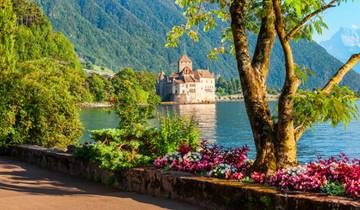
Chillon Castle occupies a rocky island platform directly on Lake Geneva shoreline 3 kilometers south of Montreux center preserving exceptional medieval fortress architecture spanning 800 documented years of continuous occupation. This water-edge stronghold controlled historic trade routes between northern and southern Europe through strategic position at lake narrows where mountains approach closest to shoreline creating natural chokepoint. The castle complex extends across 2,500 square meters incorporating residential quarters, defensive installations, underground vaults, and shoreline fortifications accessible through comprehensive self-guided or organized tour routes.
The fortress structure evolved through multiple construction phases beginning with 11th-century fortifications expanded significantly under Counts of Savoy during 13th-century peak period. The architectural ensemble includes four courtyards, three bailey walls, defensive towers, chapel with 14th-century frescoes, grand halls with painted wooden ceilings, dungeons carved into bedrock, and lakeside curtain walls incorporating boat landing facilities. Byron’s Prisoner of Chillon poem immortalized the castle’s dungeon imprisonment history during 16th-century Reformation conflicts inspiring 19th-century Romantic tourism that established Chillon as Switzerland’s most-visited historical monument.
Contemporary visitor experience utilizes comprehensive interpretation combining explanatory brochures available in 17 languages, touchscreen video stations, audio guide options, and temporary exhibitions complementing permanent historical displays. The self-guided route progresses through chronological sequence beginning with medieval residential quarters, continuing through defensive fortifications and underground storage vaults, and concluding with lakeside terraces offering panoramic views across Lake Geneva toward Dents du Midi mountain range. Average visit duration spans 90-120 minutes for comprehensive exploration though abbreviated visits focusing on primary spaces can complete in 60 minutes.
Guided tours provide enhanced historical context with professional historians leading small groups through castle spaces while explaining architectural evolution, medieval daily life, strategic importance, and contemporary conservation efforts. These tours operate in multiple languages including French, English, German, Spanish, and Italian requiring advance reservation through official castle website. Standard guided tours last approximately 90 minutes costing additional fees beyond base admission with private group tours available for larger parties seeking customized experiences.
Special programs include costumed historical interpretation events where actors in period dress demonstrate medieval crafts, military techniques, and daily life activities. Evening candlelight tours create atmospheric experiences navigating castle corridors and chambers by historical lighting methods during select dates throughout the year. Wine cellar tours descend to underground vaults where castle-owned vineyards produce Clos de Chillon wines available for tasting and purchase at castle boutique.
Castle admission costs CHF 15 ($17) for adults and CHF 7 ($8) for children ages 6-15 with children under 6 entering free. Swiss Travel Pass holders receive free admission presenting valid pass at entrance eliminating ticket purchase requirement. Audio guides cost CHF 6 ($7) additional providing detailed commentary synchronized to numbered stations throughout castle route. The castle boutique sells historical books, postcards, reproductions, local products, and Clos de Chillon wines near exit completing visitor circuit.
Reaching Chillon Castle from Montreux center offers multiple transport options with regional train providing fastest connection departing Montreux every 30 minutes to Veytaux-Chillon station requiring 4 minutes travel time. The station sits 6-minute walk from castle entrance following signposted pathway along lakefront. Bus route 201 departs Montreux center stopping at Château de Chillon bus stop requiring 9 minutes total journey with 2-minute walk to entrance. Lake boats operate seasonal service (April-October) departing Montreux jetty with 10-20 minute crossing to castle boat landing providing scenic water approach.
The lakeside promenade walk from Montreux center to Chillon Castle covers 3 kilometers following flat paved pathway departing from Montreux jetty area and continuing south along shoreline. This scenic 40-50 minute walk passes Belle Époque hotels, waterfront gardens, and swimming areas before reaching castle approach offering active transport option combining exercise with sightseeing. The promenade continues beyond castle toward Villeneuve creating extended walking route popular with joggers and cyclists.
Operating hours vary seasonally with April-September extending 9:00 AM to 7:00 PM (last entry 6:00 PM), March and October reducing to 9:30 AM to 6:00 PM (last entry 5:00 PM), and November-February limiting to 10:00 AM to 5:00 PM (last entry 4:00 PM). The castle closes December 25 and January 1 with all other dates maintaining regular schedule. Peak summer months bring significant crowds with morning arrivals before 10:00 AM or late afternoon visits after 4:00 PM encountering fewer visitors and enabling more intimate exploration experience.
Gruyères Cheese and Chocolate Excursion 2026
Gruyères village combines medieval architecture, artisanal cheese production, chocolate manufacturing, and mountain scenery in comprehensive day excursion accessible via organized Chocolate Train service or independent public transport connections. This hilltop settlement preserves cobblestone streets, traditional wooden chalets, and 13th-century castle overlooking pastoral valleys where centuries of dairy farming support Switzerland’s most renowned cheese production. The village name designates both settlement and surrounding region producing AOP-protected Gruyère cheese following traditional methods developed over 900 years of documented history.
La Maison du Gruyère cheese factory occupies modern facility adjacent to Gruyères railway station demonstrating traditional production techniques through observation windows overlooking copper vat operations. The self-guided tour progresses through multimedia exhibitions explaining milk collection, bacterial culture introduction, curd processing, wheel formation, and maturation aging periods extending 5-24 months for different cheese classifications. Interactive displays engage multiple senses including aroma stations representing alpine meadow plants influencing milk flavors and tactile exhibits demonstrating cheese texture evolution during aging process.
The cheese factory operates daily except major holidays with production demonstrations visible during morning hours when fresh milk processing occurs. Admission costs CHF 7 ($8) for adults and CHF 3.50 ($4) for children including three generous cheese samples representing different aging periods from mild 5-month wheels to intense 24-month reserve selections. The factory restaurant serves traditional fondue, raclette, and cheese-based specialties utilizing production facility cheeses with terrace seating overlooking valley pastures. Factory shop sells vacuum-sealed cheese wheels, regional products, and dairy-related merchandise with international shipping available for larger purchases.
Gruyères castle dominates village skyline from elevated rocky promontory accessible via 15-minute uphill walk from cheese factory through medieval village streets. The castle interior preserves furnished rooms spanning 800 years of occupation with period furniture, tapestries, paintings, and decorative arts representing Gothic, Renaissance, and Baroque aesthetic periods. Admission costs CHF 12 ($13) for adults and CHF 4 ($4.50) for children with Swiss Travel Pass providing 50% discount. Audio guides available in multiple languages provide room-by-room commentary explaining architectural features, historical residents, and artistic collections.
Maison Cailler chocolate factory operates in nearby Broc village 15 minutes by bus from Gruyères offering interactive museum experience chronicling chocolate history, production methods, and brand heritage. The self-guided tour progresses through historical displays, interactive games, production observation areas, and concludes with unlimited chocolate tasting representing Cailler’s complete product range. Factory admission costs CHF 15 ($17) for adults and CHF 7.50 ($8) for children with advance online booking recommended during peak summer season when capacity limits create entry delays.
The organized Chocolate Train excursion from Montreux provides comprehensive Gruyères region experience departing Montreux at 9:00 AM aboard historic Belle Époque railway carriages with plush seating, large windows, and onboard breakfast service of coffee and chocolate croissant. The Golden Pass Line route follows Lake Geneva shoreline to Montbovon junction (90 minutes) where luxury coach continues to cheese factory, Gruyères village, and chocolate factory with coordinated timing and reserved admissions eliminating queue waiting. The return journey uses coach transport directly to Montreux arriving approximately 5:30 PM completing full-day excursion.
Chocolate Train costs CHF 99 ($110) for second-class Belle Époque carriage seating or CHF 125 ($139) for first-class with Swiss Travel Pass holders receiving significant discounts reducing cost to CHF 59 ($66) second class or CHF 79 ($88) first class. Swiss Half Fare Card provides intermediate discount pricing. The excursion operates May-September on select days requiring advance reservation through official Golden Pass services website or Montreux railway station. Included services comprise return transport, coffee and croissant breakfast, cheese factory admission with tastings, Gruyères village free time, and chocolate factory admission with unlimited sampling.
Independent travelers can replicate Chocolate Train routing via regular public transport beginning with morning train departure from Montreux to Montbovon (75 minutes, hourly service) followed by regional train to Gruyères (20 minutes, hourly connection). Return journey follows reverse route with alternative option continuing from Gruyères to Broc (10 minutes) for chocolate factory visit before catching bus to Aigle or Bulle for train connections to Montreux. Total independent transport costs approximate CHF 30-40 ($33-44) depending on connections chosen with admission fees adding CHF 22-34 ($24-38) for cheese factory, castle, and chocolate factory combination.
Recommended independent itinerary allocates 3-4 hours Gruyères village time enabling cheese factory morning demonstration viewing (arrive before 11:00 AM), castle exploration (60-90 minutes), village lunch at traditional restaurant (60-90 minutes), and medieval street wandering before afternoon train departure. The Broc chocolate factory adds 90-minute extension suitable for afternoon visit completing comprehensive cheese-and-chocolate experience without organized tour constraints. This independent approach provides schedule flexibility and cost savings while sacrificing Belle Époque train ambiance and coordinated timing eliminating potential connection stress.
Additional Day Trip Destinations from Montreux 2026
Geneva city reaches accessible day trip distance via 60-minute direct train service departing Montreux hourly throughout the day. Switzerland’s international headquarters hosts United Nations European offices, International Red Cross Museum, CERN particle physics laboratory, and Old Town historic quarter surrounding St. Pierre Cathedral. The Jet d’Eau water fountain projects 140 meters above lake surface creating Geneva’s signature landmark visible throughout city center. Museum passes provide access to 40+ institutions including Patek Philippe Watch Museum, Museum of Art and History, and Ethnography Museum exploring global cultures. Return same-day visits allow 6-8 hours Geneva exploration suitable for focused museum visits, Old Town walking, or waterfront promenades.
Lausanne rises on hillside terraces 25 minutes from Montreux via frequent regional train service connecting Switzerland’s Olympic capital and French-speaking cultural center. The Olympic Museum overlooks lake from hilltop park location presenting comprehensive sports history through interactive exhibits, athlete memorabilia, and Olympic Games documentation. Lausanne Cathedral represents finest Swiss Gothic architecture with 13th-century construction featuring exceptional stained glass, astronomical clock, and tower viewpoints. The Collection de l’Art Brut showcases outsider art in converted warehouse space while MUDAC design museum explores contemporary applied arts. Steep funicular railways connect waterfront Ouchy district to hilltop Old Town eliminating strenuous uphill walking.
Bern occupies central Switzerland location 90 minutes from Montreux via direct IC train service departing twice hourly. Switzerland’s capital preserves exceptional medieval Old Town earning UNESCO World Heritage designation for intact 15th-century arcaded shopping streets. The Zentrum Paul Klee museum houses world’s largest collection of Swiss artist’s works in Renzo Piano-designed undulating building. Bear Park allows observation of Bern’s heraldic animals in semi-natural hillside habitat near historic bear pits. The Bundeshaus (Parliament) offers free guided tours explaining Swiss direct democracy and federal government operations. Cathedral platform provides city panoramas from Switzerland’s tallest church tower at 100 meters elevation.
Zermatt and Matterhorn require full-day commitment with early morning departure from Montreux connecting through Visp to Zermatt (3 hours total) arriving at car-free Alpine resort beneath Switzerland’s iconic pyramid peak. The Gornergrat railway ascends to 3,089 meters providing direct Matterhorn views across glacier landscapes with return journey allowing afternoon village exploration before evening train to Montreux (arriving 8:00-9:00 PM). This extended excursion suits travelers with multi-day Montreux stays seeking Switzerland’s most photogenic mountain while accepting significant travel time investment. Swiss Travel Pass covers complete journey including Gornergrat railway eliminating additional ticket costs.
Jungfraujoch “Top of Europe” combines with Interlaken visit creating ambitious full-day excursion departing Montreux early morning via Golden Pass Line to Interlaken (2.5 hours) connecting to Jungfrau Railway ascending to Europe’s highest railway station at 3,454 meters. Summit facilities include Ice Palace glacier tunnels, Sphinx Observatory platform, and snow activities with views spanning Aletsch Glacier, longest ice stream in Alps. Return routing allows Interlaken lakeside exploration before evening departure to Montreux. Total journey time exceeds 10-12 hours requiring commitment to extensive rail travel while delivering unmatched high-altitude Alpine experience. Significant additional costs apply beyond Swiss Travel Pass coverage for premium Jungfrau Railway segment.
Château d’Oex hot air balloon flights operate year-round from mountain village 60 minutes from Montreux via Golden Pass Line creating extraordinary aerial perspective over Gruyères region. These champagne flights last 60-90 minutes floating above Alpine valleys, medieval villages, and cheese-production pastures with landings followed by traditional celebration. Flight costs range CHF 350-450 ($390-502) per person depending on season and group size requiring advance reservation through specialized operators. Morning flights benefit from stable atmospheric conditions while afternoon ascents may encounter thermal turbulence limiting comfortable floating experience.
Swiss Travel Pass Benefits for Montreux Day Trips 2026
The Swiss Travel Pass system provides unlimited travel on Switzerland’s comprehensive public transport network including trains, buses, and boats with significant discounts on premium mountain railways and cable cars. This integrated pass eliminates individual ticket purchases while enabling spontaneous itinerary changes and multi-destination days without cost concerns. Pass validity periods include 3, 4, 6, 8, or 15 consecutive days with pricing scaling to duration selected. The Flex variant allows selecting specific travel days within one-month validity period accommodating travelers mixing active exploration days with rest periods or non-transport activities.
Montreux-based travelers benefit particularly from Swiss Travel Pass coverage including unlimited regional trains to Lavaux vineyard villages, free admission to Chillon Castle, complete coverage for Lausanne and Geneva excursions, and 50% discounts on Rochers-de-Naye cogwheel railway and Glacier 3000 cable car. The pass covers lake boats operating regular scheduled services across Lake Geneva enabling scenic water transport as alternative to rail connections. The Golden Pass Line panoramic trains between Montreux and destinations including Château d’Oex, Gstaad, and Zweisimmen receive complete pass coverage without surcharges or reservations required.
Premium mountain excursions including Jungfraujoch, Schilthorn, and Glacier 3000 receive 50% discounts rather than free access reflecting higher infrastructure costs and specialized nature of these installations. The Chocolate Train organized excursion provides significant pass holder discounts reducing costs from standard CHF 99 ($110) to CHF 59 ($66) second class though complete free travel does not apply. Museum admissions throughout Switzerland receive free or discounted access with pass presentation at over 500 participating institutions including Olympic Museum Lausanne, Geneva museums, and regional historical collections.
Pass purchase decisions require calculating break-even point comparing pass cost against anticipated transport expenses. A 3-day consecutive Swiss Travel Pass costs approximately CHF 232 ($259) second class for adults (2026 pricing) with typical Montreux-based itinerary including Rochers-de-Naye (CHF 72 full fare), Glacier 3000 (CHF 70 full fare plus connecting trains CHF 40), Lavaux exploration (CHF 20), Chillon Castle (CHF 15), and Gruyères independent visit (CHF 35) totaling CHF 252 ($281) standard ticket costs. This calculation demonstrates pass value even for modest 3-day usage while extended duration passes or intensive daily travel programs generate increasingly favorable economics.
The Swiss Half Fare Card provides alternative approach reducing all transport costs by 50% without unlimited travel benefits. This card suits travelers making fewer journeys or preferring pay-per-use pricing while maintaining discount benefits. The Half Fare Card costs CHF 120 ($134) annual subscription with single-journey option requiring minimum 2 trips to Rochers-de-Naye for break-even calculation. Families benefit from Swiss Family Card providing free children’s travel when accompanying parents hold valid Swiss Travel Pass with registration through official Swiss Travel System completing at station counters or advance online application.
Seasonal Considerations for Montreux Day Trips 2026
Spring season (April-May 2026) delivers optimal conditions for Lavaux vineyard exploration as fresh green terraces emerge from winter dormancy and moderate temperatures enable comfortable hiking without summer heat intensity. Mountain destinations including Rochers-de-Naye and Glacier 3000 begin full operating schedules after winter service reductions with April often bringing mixed conditions as seasonal transition progresses. Wildflower blooms peak in Alpine meadows during late May creating exceptional natural displays at higher elevations. Tourist numbers remain moderate before June peak season arrival enabling more intimate experiences at popular destinations.
Summer months (June-August 2026) bring maximum tourism activity with extended operating hours, full service schedules, and optimal weather probability for mountain and vineyard excursions. Temperatures reach 25-30 degrees Celsius at lakefront elevations while mountain summits maintain comfortable 10-15 degree readings. Lavaux vineyard hiking benefits from early morning or evening timing avoiding midday heat on south-facing slopes. Popular destinations including Chillon Castle and Rochers-de-Naye experience significant crowding during July-August requiring early arrivals or late afternoon visits for reduced congestion. Lake boat services operate expanded summer schedules with frequent departures enabling flexible water transport between destinations.
Autumn season (September-October 2026) delivers exceptional Lavaux vineyard experiences as harvest operations bring activity to terraced slopes and foliage transitions to golden autumn colors. Wine producers welcome visitors to observe picking operations with many caveaux offering new vintage tastings alongside established wines. Mountain weather remains generally stable through September with October bringing increasing precipitation and earlier seasonal closures for some installations. Tourist numbers decline after summer peaks creating more peaceful exploration conditions while maintaining full service availability through early October before winter schedule transitions.
Winter months (November-March 2026) transform Montreux into Christmas market destination with December festival atmosphere extending throughout lakefront promenade. Rochers-de-Naye becomes Santa’s House destination during December holiday period while maintaining regular summit access other winter months except Monday-Tuesday service reductions January-March. Glacier 3000 continues year-round operations with winter skiing and snow activities replacing summer hiking programs. Many Lavaux caveaux close for winter vacation December-February limiting wine tasting availability though village access and hiking remain possible weather permitting. Reduced daylight hours and increased precipitation probability affect outdoor activity planning with flexible itineraries accommodating weather variations.
Montreux Jazz Festival (late June-early July 2026) concentrates international visitors during two-week festival period creating accommodation scarcity and elevated prices while energizing lakefront atmosphere with daily free concerts and cultural programming. Day trip planning during festival benefits from early morning departures avoiding evening return crowds on regional trains and maintaining focus on destinations outside immediate Montreux center where festival activities concentrate. The Christmas Market season (late November-December 2026) similarly impacts local dynamics with festive decorations, seasonal stalls, and special programming creating enhanced base-town atmosphere while potentially complicating transport logistics during peak visitor periods.
Day Trip Budget Planning Montreux 2026
Independent day trip budgets from Montreux range CHF 30-120 ($33-134) per person depending on destination selection, transport choices, meal preferences, and admission combinations. A basic Lavaux vineyard excursion combining regional train to St-Saphorin, 2-hour terraced hiking, wine tasting at village caveau, and return train costs approximately CHF 10 ($11) transport plus CHF 15-25 ($17-28) tastings totaling CHF 25-35 ($28-39) excluding meal expenses. Chillon Castle visits via 4-minute train add CHF 8.40 ($9) return transport plus CHF 15 ($17) admission (free with Swiss Travel Pass) creating CHF 23 ($26) total independent cost.
Mountain railway excursions represent higher cost category with Rochers-de-Naye return journey CHF 72 ($80) full fare or CHF 25-30 ($28-33) for Swiss Travel Pass holders paying only upper section. Adding summit restaurant meal (CHF 20-35 / $22-39) creates total CHF 92-107 ($103-119) full-fare budget or CHF 45-65 ($50-72) with pass discount. Glacier 3000 excursion totals CHF 110-140 ($123-156) combining Montreux-Aigle-Col du Pillon transport (CHF 40 / $44 round-trip), cable car (CHF 70 / $78), with Swiss Travel Pass reducing combined costs to approximately CHF 55-75 ($61-84) through transport coverage and 50% cable car discount.
Organized tour pricing includes comprehensive services eliminating separate ticket purchases and coordination logistics. The Chocolate Train full-day excursion costs CHF 99 ($110) second class standard fare or CHF 59 ($66) for Swiss Travel Pass holders including Belle Époque train, coach transport, cheese factory admission and tastings, village exploration time, chocolate factory admission with unlimited sampling, and onboard breakfast. Multi-destination tours from third-party operators range CHF 150-250 ($167-279) per person for full-day programs combining multiple attractions with professional guides, reserved transportation, and sometimes included meals.
Meal budgets vary significantly by venue selection with self-catering options including supermarket purchases (CHF 10-15 / $11-17 per meal), casual café dining (CHF 20-30 / $22-33), traditional restaurant meals (CHF 30-50 / $33-56), and upscale dining experiences (CHF 60-100+ / $67-112+). Mountain restaurants typically charge premium prices reflecting elevated location costs with simple meals at Rochers-de-Naye or Glacier 3000 summit facilities ranging CHF 25-40 ($28-44) for main courses. Lavaux vineyard village restaurants offer better value with regional specialties and local wines creating authentic dining experiences at moderate pricing.
Multi-day budget optimization benefits from Swiss Travel Pass investment with 3-day consecutive pass (CHF 232 / $259 second class) enabling unlimited regional trains, free museum admissions including Chillon Castle, lake boat services, and 50% mountain railway discounts. Intensive 3-day program combining Rochers-de-Naye, Glacier 3000, Lavaux exploration, Chillon Castle, and Lausanne or Geneva city visit would cost CHF 300+ ($335+) purchasing individual tickets while pass coverage reduces additional costs to approximately CHF 50-70 ($56-78) for discounted mountain railways beyond pass coverage. This calculation demonstrates significant savings for active travelers while providing schedule flexibility and spontaneous destination changes without cost penalties.
Practical Planning Strategies Montreux Day Trips 2026
Weather monitoring assumes critical importance for mountain excursions with summit conditions frequently differing dramatically from valley forecasts. Official destination websites including Rochers-de-Naye and Glacier 3000 maintain real-time webcams and operating status updates enabling morning verification before departure. Mountain weather changes rapidly with morning departures generally encountering clearer conditions before afternoon cloud build-up obscures distant views. Backup indoor destinations including Chillon Castle, museums, or covered shopping areas provide weather-independent alternatives when forecasts predict poor mountain conditions.
Early departure timing maximizes day trip value particularly for popular destinations experiencing midday crowd peaks. Rochers-de-Naye benefits from 8:28 AM or 9:34 AM train departures arriving summit before 10:00 AM when most tour groups reach peak. Lavaux vineyard hiking suits early morning starts avoiding south-facing slope heat during summer months while enabling longer village exploration time before afternoon return. Chillon Castle opening at 9:00 AM April-September allows first-entry advantage before tour bus arrivals typically beginning 10:30-11:00 AM.
Luggage storage facilities at Montreux railway station enable day trip departures without accommodation backpack burden. Automated lockers accept cash and credit cards charging CHF 5-9 ($6-10) depending on locker size for 24-hour rental periods. This service particularly benefits travelers checking out of accommodations while maintaining Montreux base for final-day excursion before evening departure to next destination. Larger items including skis, bicycles, or oversized luggage may require staffed luggage service with higher fees applying.
Advance reservations benefit organized excursions including Chocolate Train, guided Chillon Castle tours, and Lavaux wine cellar visits expecting group attendance. Online booking through official websites or Montreux tourism office secures guaranteed spaces while enabling advance payment eliminating on-site transaction requirements. Mountain railways and cable cars generally operate first-come seating without reservation options though Rochers-de-Naye and Glacier 3000 sell timed entry tickets during peak periods managing capacity and reducing wait times. Last-minute travelers maintain flexibility for most independent destinations while risking capacity limitations during peak summer weekends.
Multi-destination combination days enable efficient regional exploration utilizing coordinated transport timing. A comprehensive Lavaux-Chillon combination departs Montreux morning train to St-Saphorin (10 minutes), hikes terraced vineyards to Rivaz (90 minutes), continues via regional train to Veytaux-Chillon (15 minutes), explores castle (90 minutes), and walks lakeside promenade to Montreux (50 minutes) creating full-day circuit maximizing regional highlights. Alternative combinations link Rochers-de-Naye morning ascent with afternoon Chillon Castle visit or Lavaux wine tasting utilizing common lakeside location and coordinated train schedules.
Mobile phone applications enhance independent travel through real-time transport schedules, digital ticketing, and navigation assistance. The Swiss Travel Pass mobile app enables paperless pass presentation, journey planning, and real-time platform information across national network. Google Maps provides reliable walking directions and public transport connections throughout Switzerland with offline map downloads enabling navigation without continuous data connectivity. Destination-specific apps including Lavaux vineyard trail guides and Chillon Castle augmented reality features supplement standard guidebook information with interactive digital content.
Safety and Health Considerations 2026
Mountain altitude affects visitors differently with Rochers-de-Naye summit at 2,042 meters and Glacier 3000 reaching 2,971 meters potentially causing mild altitude symptoms in sensitive individuals. Adequate hydration, moderate alcohol consumption, and gradual elevation gain help minimize altitude impact though serious altitude sickness remains rare at these moderate elevations. Individuals with heart conditions, respiratory issues, or other medical concerns should consult physicians before high-altitude excursions and monitor symptoms during ascents.
Weather exposure increases significantly at mountain elevations with temperature drops of 10-20 degrees Celsius between valley and summit elevations. Layered clothing systems enable adjustment to changing conditions with wind-resistant outer shells protecting against mountain wind chill even during summer months. Sun exposure intensifies at altitude requiring high-SPF sunscreen, sunglasses, and hat protection preventing sunburn and long-term skin damage. Mountain storms develop rapidly bringing rain, lightning, or snow regardless of season with summit facilities providing shelter during inclement weather.
Hiking terrain varies from paved lakefront promenades to technical mountain paths requiring appropriate footwear selection. Lavaux vineyard trails involve uneven surfaces, loose gravel, and steep sections demanding closed-toe shoes with good traction rather than sandals or smooth-soled footwear. Mountain hiking around Rochers-de-Naye or Glacier 3000 may encounter snow, ice, or wet rocks creating slippery conditions even during summer periods with hiking boots providing necessary ankle support and traction for safe navigation.
Emergency services throughout Switzerland maintain exceptional response capabilities with mountain rescue operations coordinated through standardized 1414 emergency number (Rega helicopter rescue) and 112 European emergency number connecting police, ambulance, and fire services. Mountain railways and cable cars employ professional staff trained in emergency procedures with first aid stations and evacuation protocols established for medical incidents. Travel insurance covering helicopter rescue and emergency medical treatment provides financial protection against potentially significant costs associated with mountain accidents or medical emergencies requiring specialized intervention.
Sustainable Tourism Practices Montreux Region 2026
Public transport utilization represents primary sustainable tourism practice in the Montreux region with comprehensive rail, bus, and boat networks eliminating private vehicle necessity while reducing carbon emissions per passenger compared to individual car travel. The Swiss railway system operates predominantly on hydroelectric power generated from Alpine water resources creating renewable energy transportation with minimal fossil fuel consumption. Travelers choosing train-based excursions contribute to sustainable transport patterns while accessing destinations more efficiently than driving through mountain passes or navigating limited parking facilities.
Lavaux vineyard preservation depends on continued viticulture maintaining terraced landscape against natural erosion and vegetation encroachment. Visitor spending at local caveaux, restaurants, and accommodations supports family vineyard operations enabling economic viability of traditional grape growing. Responsible vineyard hiking includes staying on marked trails avoiding direct vineyard entry, respecting private property signage, and carrying out all waste preventing litter accumulation in sensitive agricultural landscape. The UNESCO World Heritage designation reinforces conservation commitments while international recognition drives tourism supporting local economy.
Mountain destination management increasingly emphasizes environmental protection through waste reduction programs, water conservation measures, and renewable energy installations. Glacier 3000 implements recycling systems, uses solar panels supplementing grid electricity, and promotes sustainable transport through combined cable car and public transport tickets. Rochers-de-Naye restricts motor vehicle access to railway-served summit protecting Alpine meadows from traffic impact while summit facilities utilize modern insulation and energy-efficient systems reducing operational environmental footprint.
Local product purchasing supports regional economies while reducing transportation environmental impacts associated with imported goods. Gruyère cheese, Lavaux wines, and regional agricultural products sold at local markets and specialty shops connect visitors directly to producers while ensuring quality authentic products. Restaurant choices emphasizing seasonal local ingredients over imported specialties align dining experiences with sustainable food system principles while delivering freshest ingredients reflecting regional terroir and traditional cuisine.
Off-season travel distribution reduces peak period overcrowding pressure on popular destinations while supporting year-round economic stability for tourism-dependent communities. Shoulder season visits during April-May or September-October deliver pleasant weather conditions, reduced accommodation costs, and more intimate experiences at attractions while maintaining full service availability. This temporal distribution enables destinations to manage visitor impacts more effectively than concentrated summer peaks while extending economic benefits across longer annual periods.
Family-Friendly Day Trip Recommendations 2026
Rochers-de-Naye combines mountain railway excitement with family-appropriate summit activities including marmot observation park, alpine garden exploration, and accessible walking trails. The cogwheel train journey itself fascinates children with steep gradient climbing, tunnel passages, and changing landscape views maintaining engagement throughout 50-minute ascent. Summit facilities include heated restaurant with children’s menu options, clean restrooms, and protected observation terraces enabling comfortable family time regardless of weather conditions. The December Santa’s House transformation creates magical winter destination specifically designed for family visits with costumed characters, Christmas decorations, and festive atmosphere throughout summit installation.
Chillon Castle delivers exceptional family experience combining medieval architecture, dungeon exploration, tower climbing, and lakeside setting creating adventurous atmosphere engaging children’s imaginations. The self-guided route allows families to progress at comfortable pace without group tour time constraints while explanatory brochures and touchscreen stations provide age-appropriate historical context. Castle courtyards offer open spaces for children to explore safely while underground vaults and defensive installations satisfy adventure-seeking instincts. The adjacent lakeside promenade provides post-castle relaxation area with playground facilities, swimming access, and level walking suitable for strollers or young children.
Chocolate Train excursion specifically targets family market with Belle Époque train carriages, chocolate factory unlimited sampling, and coordinated timing eliminating connection stress for parents managing children. The morning breakfast service aboard historic train creates special occasion atmosphere while cheese factory demonstrations engage children’s curiosity about food production. Gruyères medieval village provides manageable walking scale with cobblestone streets, defensive towers, and historic buildings creating storybook setting appealing to young imaginations. The full-day structured program maintains children’s interest through activity variety preventing boredom common during extended single-location visits.
Lavaux vineyard exploration adapts to family capabilities through diverse trail options ranging from level lakefront promenades to moderate terraced paths with viewpoint rewards. The Lavaux Express and Lavaux Panoramic wheeled trains eliminate hiking requirements while providing commentary and vineyard access suitable for families with young children or stroller users. Lakeside villages offer playgrounds, swimming areas, and ice cream shops creating child-friendly rest stops between walking segments. Parents appreciate wine tasting opportunities while children explore village streets and waterfront areas under safe village environment supervision.
Lake boat cruises between Montreux and destinations including Chillon Castle, Lausanne, or Vevey combine transportation with entertainment as children enjoy water travel, deck exploration, and changing shoreline views. The Belle Époque paddle steamers particularly engage children’s interest with visible paddle wheels, steam engine displays, and historic vessel character. Onboard cafeterias provide refreshments while outdoor decks enable movement and fresh air preventing cabin fever during longer journeys. Seasonal services coordinate with train schedules enabling boat-train combination circuits adding variety to day trip transportation experiences.
Photography Opportunities Montreux Day Trips 2026
Chillon Castle provides Switzerland’s most photogenic medieval fortress with water-edge location enabling dramatic compositions combining stone architecture, lake reflections, and mountain backdrops. The castle’s lakeside position creates optimal lighting conditions with morning sun illuminating fortress facades while afternoon side-lighting emphasizes architectural details and defensive towers. Classic viewpoints include the approach path from Montreux capturing castle silhouette against Dents du Midi peaks, the boat landing perspective showing water-level castle base, and elevated positions from Montreux hillside neighborhoods achieving aerial-style overviews. Interior photography permits available light shooting without flash restrictions allowing atmospheric dungeon captures and period room documentation.
Lavaux vineyard terraces deliver exceptional landscape photography opportunities with geometric stone-walled patterns, Lake Geneva water surfaces, and Alpine mountain horizons creating layered compositions. Golden hour timing during first morning light or evening sun produces warm terraced vineyard illumination while midday overhead sun flattens scene reducing photographic impact. Elevated viewpoints from hilltop villages including Chexbres or Epesses enable comprehensive terrace pattern documentation while lakeside positions capture vineyard slopes rising from water’s edge toward mountain ridges. Seasonal variation transforms landscape character with spring green terraces, summer deep foliage, autumn golden colors, and winter structural stone emphasis offering distinct photographic palettes.
Rochers-de-Naye summit panoramas require wide-angle lens capability capturing 360-degree Alpine views spanning Mont Blanc massif, Bernese Oberland peaks, and complete Lake Geneva expanse. Clear atmospheric conditions enable telephoto compression isolating distant summits including Matterhorn silhouette 100+ kilometers distant. Sunrise ascents utilizing first morning departure capture alpenglow on surrounding peaks while avoiding midday tourist crowds obscuring viewpoint access. The Peak Walk suspension bridge at Glacier 3000 creates dramatic photographic subject with void exposure beneath narrow pedestrian span and mountain vistas extending beyond bridge termination point.
Railway photography benefits from MOB cogwheel train operations on Rochers-de-Naye line with red vintage carriages contrasting against green Alpine meadows and stone viaduct structures. The Golden Pass Line Belle Époque coaches provide additional rolling stock subjects with polished wooden panels and panoramic windows creating elegant train portraits. Lavaux railway sections pass directly through terraced vineyards creating unique train-vineyard compositions impossible to replicate elsewhere. Station architecture at locations including Montreux, Chillon, and mountain summits adds architectural photography subjects complementing transportation documentation.
Seasonal events including Montreux Christmas Market, Lavaux wine harvest, and Rochers-de-Naye Santa’s House create limited-time photographic subjects unavailable during standard tourist seasons. Market stall night photography requires tripod stability and long exposure techniques capturing illuminated decorations and festive atmosphere. Harvest period vineyard photography documents traditional grape picking with workers, harvest baskets, and tractor transport creating agricultural activity subjects enriching standard landscape compositions. Winter snow transforms familiar summer landscapes into monochrome mountain scenes with increased contrast and simplified compositions emphasizing landform structure over vegetation detail.
Accessibility Considerations Montreux Day Trips 2026
Chillon Castle provides extensive accessibility accommodations with wheelchair-accessible entrance routes, elevator service to multiple levels, and modified tour paths avoiding stairs where possible. Approximately 70% of castle spaces remain accessible to wheelchair users though some defensive towers, upper chapel areas, and dungeon sections require stair navigation limiting access for mobility-impaired visitors. The lakeside approach from Veytaux-Chillon train station follows level paved pathway suitable for wheelchairs with bus services offering low-floor vehicle boarding assistance. Audio guides include tactile exhibits and descriptive audio suitable for visually impaired visitors while braille brochures provide alternative information formats.
Mountain railway accessibility varies by installation with Rochers-de-Naye cogwheel trains offering designated wheelchair spaces requiring advance reservation through MOB railway offices. Summit facilities include elevator access to restaurant and observation terraces though outdoor hiking trails remain challenging for mobility-impaired visitors. Glacier 3000 cable cars accommodate wheelchairs in spacious gondola cabins with staff assistance available for boarding procedures. Summit restaurant and Peak Walk suspension bridge maintain barrier-free access though glacier hiking activities require physical capabilities limiting participation for visitors with mobility challenges.
Regional train services throughout Switzerland incorporate low-floor boarding areas, designated wheelchair spaces, and assistance call buttons connecting to conductor support. Stations including Montreux, Vevey, Lausanne, and principal destinations maintain platform elevators, tactile guidance systems for visually impaired travelers, and accessible restroom facilities. The Swiss Travel System website provides comprehensive accessibility information including detailed station facilities, vehicle specifications, and assistance service contact procedures enabling advance planning for mobility-impaired travelers.
Lavaux vineyard exploration presents significant accessibility challenges with terraced hiking trails, uneven surfaces, and steep gradients limiting wheelchair access. The Lavaux Express and Lavaux Panoramic wheeled tourist trains offer partial accessibility enabling vineyard viewing from roads without hiking requirements though boarding assistance may require advance arrangement. Lakeside villages including Cully and Lutry maintain level promenade sections suitable for wheelchair users while hilltop villages including Chexbres involve steep approaches challenging for mobility-impaired visitors. Wine cellars vary in accessibility with modern facilities generally incorporating barrier-free design while traditional cave installations often include stairs and narrow passages limiting access.
Local Cultural Etiquette and Customs 2026
Swiss cultural norms emphasize punctuality with train, bus, and organized tour departures following precise schedules without accommodation for late arrivals. Travelers should arrive at stations and meeting points 10-15 minutes before scheduled departure times allowing ticket validation, platform location, and comfortable boarding without rushing. Tour guides and transport operators maintain strict time discipline expecting participants to respect established schedules and return to designated meeting points at specified times.
Quiet behavior expectations apply to public transport with Swiss passengers generally maintaining subdued conversation volumes, limiting phone usage, and avoiding disruptive behavior. Train designated quiet cars prohibit phone conversations and require headphone use for electronic devices with enforcement through conductor intervention if necessary. Restaurant and café interactions follow formal service patterns with table service preferred over self-service and payment typically occurring at conclusion of meal rather than ordering time.
Language considerations reflect Switzerland’s multilingual character with French predominating in Montreux region though English achieves widespread comprehension in tourism contexts. Greeting service staff with “Bonjour” (good day) upon entering shops or restaurants demonstrates cultural respect while basic French pleasantries including “Merci” (thank you) and “S’il vous plaît” (please) enhance interaction quality. German becomes primary language in Bernese Oberland destinations including Interlaken and Jungfrau region while Italian dominates southern Switzerland including Lugano and Locarno areas.
Tipping practices differ from North American customs with service charges typically included in restaurant bills and additional gratuity remaining optional rather than expected. Rounding up bills to convenient amounts (CHF 47 bill rounded to CHF 50) represents standard practice for satisfactory service while exceptional experiences might warrant 5-10% additional gratuity. Taxi drivers, tour guides, and hotel porters appreciate small tips though amounts remain modest compared to American tipping percentages with CHF 2-5 representing appropriate recognition for standard services.
Sunday closures affect many shops and services throughout Switzerland with supermarkets, retail stores, and some restaurants maintaining limited hours or complete closure. Tourist attractions including Chillon Castle, mountain railways, and museums generally operate normal Sunday schedules though advance verification prevents disappointment. This cultural pattern reflects traditional Sunday rest day observance continuing in contemporary Swiss society despite increasing commercialization pressures.
Emergency Contacts and Practical Information 2026
Emergency services throughout Switzerland respond to standardized numbers with 112 connecting European emergency services coordinating police, ambulance, and fire response. The 1414 number reaches Rega helicopter rescue service specializing in mountain emergencies, medical evacuations, and Alpine rescue operations. Medical emergencies in populated areas utilize ground ambulance services while mountain incidents may trigger helicopter response depending on location accessibility and patient condition severity. All emergency services operate 24/7 with multilingual dispatchers managing non-French emergency communications.
Montreux tourism office occupies central lakefront location near casino providing information services, map distribution, tour bookings, and general assistance during standard business hours Monday-Saturday with reduced Sunday service. The staff speaks multiple languages including French, English, German, and Italian offering comprehensive regional information beyond standard brochure materials. Free WiFi access enables real-time information research and digital mapping while charging stations support mobile device power needs.
Pharmacies (identified by green cross signage) dispense medications, provide basic medical advice, and stock health supplies throughout Montreux and surrounding towns. Rotating emergency pharmacy service maintains after-hours coverage with current emergency pharmacy information posted on all pharmacy doors and available through 0800 pharmacy hotline. Prescription medications require Swiss medical authorization with many common drugs available over-counter in Switzerland that require prescriptions in other countries and vice versa.
Currency exchange services operate at Montreux railway station, major hotels, and specialized exchange offices though ATM cash withdrawal typically provides favorable exchange rates compared to currency exchange counter transactions. Credit cards receive widespread acceptance at restaurants, hotels, and larger shops though smaller establishments and mountain huts may require cash payment. Swiss Francs remain exclusive currency despite Switzerland’s European location with Euro occasionally accepted at tourist facilities though change typically returns in Swiss Francs at unfavorable exchange rates.
Internet connectivity achieves excellent coverage throughout Montreux region with 4G/5G mobile networks, public WiFi hotspots at stations and tourist locations, and hotel/restaurant WiFi access supporting connected travel. Swiss mobile providers offer tourist SIM cards with data packages suitable for short-term visitors while EU roaming agreements enable reasonable data charges for European visitors. Mobile applications including transport planners, mapping services, and destination guides function reliably with Swiss data connectivity supporting real-time information access throughout travel.
Frequently Asked Questions About Montreux Day Trips 2026
What is the best day trip from Montreux for first-time visitors in 2026?
Chillon Castle represents the ideal first-time day trip combining Switzerland’s most-visited historical monument with convenient 10-minute access from Montreux center, moderate time commitment allowing half-day completion, and comprehensive medieval fortress experience including dungeons, towers, courtyards, and lakeside setting. The castle provides accessible introduction to Swiss history and architecture requiring no specialized equipment, advance reservations, or weather dependency while Swiss Travel Pass holders gain free admission. The lakeside walk or short train connection enables easy independent visit without complex logistics or extended travel time investment.
How far in advance should I book Montreux day trip excursions in 2026?
Organized tours including Chocolate Train require 1-2 weeks advance booking during peak summer season (July-August) when capacity fills quickly while shoulder seasons (April-June, September-October) maintain availability with 3-5 days notice. Independent travel to destinations including Rochers-de-Naye, Chillon Castle, and Lavaux vineyards requires no advance reservations except large group visits though morning departures during summer weekends benefit from early station arrival securing preferred seating. Mountain weather variability encourages flexible booking allowing last-minute cancellations or rescheduling based on forecast conditions and webcam summit views available day-of-departure.
Can I visit multiple destinations from Montreux in one day in 2026?
Multi-destination combinations succeed when selecting geographically proximate locations with coordinated transport timing such as Lavaux vineyard morning hiking combined with afternoon Chillon Castle visit (both lakeside within 25 minutes), or Rochers-de-Naye morning ascent followed by afternoon Montreux lakefront exploration. Distant destinations including Glacier 3000, Gruyères, or Zermatt require full-day commitment limiting combination possibilities due to 2-3 hour one-way travel times. The Swiss Travel Pass enables spontaneous itinerary adjustments adding secondary destinations based on morning weather, energy levels, or interest variations without additional ticket costs.
What should I pack for Montreux mountain day trips in 2026?
Mountain excursions require layered clothing including base layer, insulating mid-layer, and waterproof windproof shell accommodating 10-20 degree Celsius temperature drops between valley and summit elevations. Essential items include sturdy closed-toe footwear with good traction, sun protection (high-SPF sunscreen, sunglasses, hat), adequate water supply (1-2 liters per person), energy snacks supplementing restaurant meals, and basic first aid supplies. Backpack capacity should accommodate removed layers during warm periods, purchased souvenirs, and any photography equipment while maintaining comfortable carrying weight during hiking or extended walking portions.
Are Montreux day trips suitable for travelers with limited mobility in 2026?
Accessibility varies significantly by destination with Chillon Castle and regional train destinations including Lavaux villages offering extensive wheelchair accommodations while mountain hiking and terraced vineyard trails present substantial mobility challenges. Rochers-de-Naye and Glacier 3000 cable cars accommodate wheelchairs with advance notification enabling summit access though outdoor hiking activities remain limited. Lake boat cruises provide fully accessible deck areas and facilities while Swiss railway system maintains comprehensive accessibility standards including platform elevators, designated wheelchair spaces, and staff assistance services. Advance research using official destination websites and Swiss Travel System accessibility information enables appropriate destination selection matching individual mobility capabilities.
What time should I start Montreux day trips to avoid crowds in 2026?
Optimal departure timing targets 8:00-9:00 AM from Montreux station reaching destinations before 10:00 AM tour bus arrivals and midday visitor peaks. Rochers-de-Naye first departure at 8:28 AM delivers summit arrival around 9:20 AM providing 1-2 hours relative solitude before increasing crowds. Chillon Castle opens 9:00 AM with first-entry visitors enjoying peaceful exploration before 10:30-11:00 AM group tour influx. Lavaux vineyard hiking benefits from early morning starts avoiding midday summer heat while enabling extended village lunch stops during quieter early afternoon periods when tour groups have departed.
How much does the Swiss Travel Pass save on Montreux day trips in 2026?
A 3-day consecutive Swiss Travel Pass costing CHF 232 ($259) second class provides free unlimited regional trains (saving CHF 40-60), free Chillon Castle admission (CHF 15), free lake boats (CHF 20-40), and 50% mountain railway discounts saving CHF 36 on Rochers-de-Naye (normally CHF 72) and CHF 35 on Glacier 3000 (normally CHF 70) creating total savings exceeding CHF 145-185 even on modest 3-day itinerary. Extended duration passes or intensive daily travel programs generate increasingly favorable economics while providing schedule flexibility and unlimited journey combinations without per-trip cost calculations or ticket purchase requirements.
What is the most scenic day trip from Montreux in 2026?
Lavaux vineyard terraces deliver Switzerland’s most photogenic landscape combining terraced agricultural patterns, Lake Geneva azure waters, and Alpine mountain horizons in UNESCO World Heritage composition. The Train des Vignes ascent from Vevey to hilltop Chexbres provides elevated panoramic perspective while terraced hiking trails through villages including St-Saphorin, Epesses, and Rivaz enable intimate landscape immersion unavailable from vehicle or train windows. Seasonal variations transform scenery throughout the year with spring green terraces, summer deep foliage, autumn golden colors, and winter structural stone patterns offering distinct photographic opportunities across multiple visits.
Can I bring food and drinks on Montreux mountain excursions in 2026?
Personal food and beverages face no restrictions on trains, cable cars, or most outdoor areas though consuming strong-odored foods or alcoholic beverages on public transport may attract disapproval from fellow passengers following Swiss quiet behavior norms. Mountain summit facilities including Rochers-de-Naye and Glacier 3000 permit picnic consumption at designated outdoor areas while requesting restaurant space usage for personal food remains inappropriate. Bringing adequate water and energy snacks ensures proper hydration and nutrition during extended excursions while reducing dependency on potentially expensive or limited mountain restaurant options particularly during peak periods when facilities experience high demand.
What language skills do I need for independent Montreux day trips in 2026?
English comprehension reaches high levels throughout Swiss tourism infrastructure with train station staff, tourist information offices, mountain railway personnel, and attraction admission desks generally managing basic English communication. French remains predominant local language in Montreux region though English-language signage, maps, and information materials support independent navigation. Basic French greetings and courtesy phrases enhance interaction quality though communication succeeds without fluency through gesture, translation apps, and multilingual staff support. Swiss German becomes relevant in Bernese Oberland destinations while Italian dominates Ticino southern region requiring linguistic adaptability for travelers exploring multiple Swiss linguistic zones.