Monreale Day Trip from Palermo 2026: Complete Planning Guide
Key Takeaways
- Monreale Cathedral houses 6,400 square meters of Byzantine mosaics, the largest and most complete mosaic cycle in Italy, located just 8 kilometers from Palermo’s city center
- Public buses run every 30-45 minutes from Palermo to Monreale with tickets costing €1.60 each way, making this the most economical UNESCO World Heritage day trip from Sicily’s capital
- Cathedral admission costs €6 for the main church, with rooftop terrace access at €5 and cloister entry at €8 in 2026 (check official cathedral website for current rates as pricing may vary)
- Optimal visiting strategy allocates 4-5 hours total: 90-120 minutes inside the cathedral, 45 minutes for the cloister, 30 minutes on the rooftop, plus time for lunch in the historic town center
- Morning departures between 8:30-9:30 AM provide the best golden light for mosaic photography while avoiding peak afternoon crowds and summer heat
- Budget €29-37 per person for the complete day trip excluding accommodation: cathedral visits, local transportation, meals, and walking tour of Monreale’s historic center
Introduction: Why Monreale Deserves Your 2026 Sicilian Itinerary
Eight kilometers southwest of Palermo, perched on Monte Caputo’s slopes with commanding views across the Conca d’Oro valley, Monreale represents one of Sicily’s most accessible yet profound cultural experiences. The town’s Norman cathedral, designated a UNESCO World Heritage Site in 2015 as part of the “Arab-Norman Palermo and the Cathedral Churches of Cefalù and Monreale” inscription, contains what many art historians consider the finest and most complete Byzantine mosaic cycle ever created in the Western world.
Planning a Monreale day trip in 2026 offers exceptional value for travelers seeking to understand Sicily’s unique cultural fusion of Norman, Arab, and Byzantine influences without the logistical complexity of longer excursions. The proximity to Palermo eliminates overnight accommodation costs, while the concentration of major monuments within a compact historic center allows comprehensive exploration within a single day. The cathedral’s 6,400 square meters of golden mosaics narrate biblical stories from Creation through the Acts of the Apostles with an artistic sophistication and preservation quality unmatched by similar monuments.
Beyond the cathedral’s artistic treasures, Monreale’s elevated position provides panoramic perspectives of Palermo, Monte Pellegrino, and the Tyrrhenian Sea that contextualize Sicily’s strategic importance throughout Mediterranean history. The town’s slower pace compared to Palermo’s urban intensity creates an atmosphere conducive to contemplative art appreciation, while traditional restaurants and family-run trattorias offer authentic Sicilian cuisine away from tourist-heavy coastal areas.
For 2026 visitors, Monreale combines cultural significance with practical accessibility—frequent public transportation, moderate admission costs, English-language information systems, and flexible visiting hours accommodate diverse travel styles and budgets. Whether your Sicily journey focuses on Norman architecture, Byzantine art, UNESCO heritage sites, or authentic cultural immersion, Monreale delivers substantial educational and aesthetic value within a manageable half-day or full-day timeframe.
People Also Ask About Monreale Day Trip from Palermo 2026
How much does a Monreale day trip from Palermo cost in 2026?
A complete Monreale day trip from Palermo costs €29-37 per person in 2026, covering cathedral admission (€6), rooftop terrace (€5), cloister entry (€8), round-trip bus transportation (€3.20), lunch at a traditional trattoria (€15-20), and afternoon snacks or coffee (€5-8). Check the official Duomo di Monreale website for current admission rates as pricing may vary. This budget excludes accommodation since most travelers return to Palermo the same day. Guided tours with transportation and skip-the-line access range €45-75 per person, while private tours with expert art historians cost €150-250 for groups up to six people. Budget-conscious travelers can reduce costs by bringing picnic supplies from Palermo markets (saving €10-15 on lunch) and focusing visits on the free-admission cathedral nave, though the paid rooftop and cloister sections provide essential perspectives for understanding the monument’s architectural and artistic significance.
How long does it take to get from Palermo to Monreale in 2026?
Public buses from Palermo’s Piazza Indipendenza to Monreale’s cathedral square take 25-35 minutes depending on traffic conditions and time of day. AMAT bus lines 389 and 309 serve this route with departures every 30-45 minutes from 6:30 AM until 9:00 PM on weekdays, with reduced frequency on Sundays and holidays. Morning routes (before 9:00 AM) typically complete the journey in 25-28 minutes, while afternoon services (2:00-6:00 PM) may require 32-35 minutes due to increased traffic in Palermo’s western suburbs. Taxis cover the distance in 15-20 minutes and cost €20-25 for the trip, offering convenience for early morning departures or late afternoon returns. Private drivers and organized tours use the SS186 highway, which provides the most direct route with consistent 18-22 minute travel times. Allow an additional 10-15 minutes for navigating from your Palermo accommodation to Piazza Indipendenza, and factor in 5-10 minute wait times for buses during peak tourist season when services may run at capacity.
What is the best time to visit Monreale Cathedral in 2026?
Morning visits between 8:30-11:00 AM provide optimal conditions for experiencing Monreale Cathedral in 2026. The cathedral opens at 8:30 AM Monday through Saturday (9:00 AM on Sundays), and early arrivals encounter minimal crowds, cooler temperatures, and exceptional natural light for mosaic appreciation and photography. The golden morning sun enters through southern windows, illuminating the apse mosaics of Christ Pantocrator with dramatic intensity that afternoon shadows diminish. Summer months (June-August) make morning visits essential, as midday temperatures inside the stone cathedral can exceed 28-30°C (82-86°F) without climate control, creating uncomfortable viewing conditions for the 90-120 minutes required for comprehensive exploration. Autumn (September-November) and spring (March-May) offer year-round comfortable conditions with fewer crowds than peak summer season, while winter (December-February) provides the quietest experience though with reduced daylight hours for photography. Avoid Sunday mornings when religious services limit access to certain areas, and note that the cathedral closes 12:30-2:30 PM daily for lunch. Afternoon visits (3:00-5:00 PM) accommodate travelers arriving on later trains but contend with tour group congestion and less favorable lighting conditions for the Byzantine mosaics.
Do you need advance tickets for Monreale Cathedral in 2026?
Advance tickets are not required for Monreale Cathedral in 2026, as admission is purchased on-site at the ticket office adjacent to the cathedral entrance. The ticket office opens at 8:30 AM Monday through Saturday and 9:00 AM on Sundays, typically processing visitors within 5-10 minutes even during busy periods. This contrasts with many major Italian monuments where advance booking is mandatory, making Monreale an accessible option for spontaneous day trips. However, guided tours with skip-the-line privileges and guaranteed English-speaking art historian guides do benefit from 24-48 hour advance booking through reputable tour operators, ensuring availability during peak season (July-August) when same-day tours often sell out. The cathedral’s official website offers an optional online booking system for the paid sections (rooftop terrace and cloister) that reduces wait times by 10-15 minutes during peak morning hours (10:00 AM-12:00 PM), though the modest time savings make on-site purchase adequate for most visitors. Groups of 15 or more people must reserve in advance by contacting the cathedral office directly, with discounted group rates available for educational institutions and organized tours. The flexibility of on-site ticketing allows travelers to adjust their schedules based on weather conditions, energy levels, and Palermo departure times without penalty.
Extended multi-day tours – 5+ days
Featured Palermo Multi-Day Tour Packages

3 days
Palermo 3-Day Discovery Tour
- ✓ Comprehensive Palermo experience
- ✓ Expert local guides included
- ✓ All accommodation included
- ✓ Transportation provided
5 days
Palermo 5-Day Highlights Experience
- ✓ Comprehensive Palermo experience
- ✓ Expert local guides included
- ✓ All accommodation included
- ✓ Transportation provided

7 days
Palermo 7-Day Cultural Journey
- ✓ Comprehensive Palermo experience
- ✓ Expert local guides included
- ✓ All accommodation included
- ✓ Transportation provided

10 days
Palermo 10-Day Complete Adventure
- ✓ Comprehensive Palermo experience
- ✓ Expert local guides included
- ✓ All accommodation included
- ✓ Transportation provided
Multi-day tour packages powered by TourRadar. Prices and availability subject to change.
Essential Planning Information 2026
Monreale Cathedral Admission and Visiting Costs
Monreale Cathedral admission costs €6 for adults in 2026, providing access to the main nave, transept, and apse with their complete mosaic cycles. The rooftop terrace costs €5 and offers panoramic views of the Conca d’Oro valley, while the Benedictine cloister requires a separate €8 ticket for its 228 columns with intricate carved capitals. Check the official Duomo di Monreale website for current admission rates as pricing may vary. Combined tickets for all three sections cost €16, saving €3 compared to individual purchases, and represent the best value for visitors allocating a full morning to comprehensive exploration. Children under 6 enter free, while students ages 6-18 and seniors over 65 receive reduced rates at €4 for the cathedral, €3 for the terrace, and €5 for the cloister with valid identification. European Union residents under 25 qualify for the same reduced rates with passport or identity card verification.
Audio guides rent for €5 and provide 45-minute narrated tours in English, Italian, French, German, and Spanish, explaining the biblical narrative sequences, artistic techniques, and historical context of the mosaic cycles. These prove valuable for independent travelers without art history backgrounds, though the cathedral’s excellent printed materials and information panels (available in English) offer sufficient context for budget-conscious visitors. Photography is permitted throughout the cathedral without flash, though tripods and professional equipment require special authorization from the cathedral office. Video recording costs an additional €10 fee regardless of equipment type. The cathedral bookshop near the exit sells scholarly guides, postcards, and reproduction artwork with prices ranging €5-35 for comprehensive English-language publications that enhance post-visit understanding of the mosaics’ iconographic programs.
Separate charges apply for specific services and experiences. Private guided tours with cathedral-authorized art historians cost €120-180 for groups up to 15 people, divided among participants, and last 90-120 minutes with detailed explanations of artistic techniques, historical patronage, and restoration work. Sacred music concerts held monthly in the cathedral nave require €15-25 tickets purchased through the cultural association website, offering exceptional acoustics and atmospheric evening experiences of the space. The treasury museum, housing liturgical objects and historical artifacts, charges €4 admission and opens only on weekends during peak season, making it a supplementary option rather than essential component of day trip planning.
Transportation Options from Palermo to Monreale 2026
Public buses provide the most economical and reliable transportation from central Palermo to Monreale in 2026. AMAT bus lines 389 and 309 depart from Piazza Indipendenza (adjacent to Palazzo dei Normanni) every 30-45 minutes from 6:30 AM until 9:00 PM on weekdays, with reduced service on Sundays and holidays. Standard AMAT tickets cost €1.60 per journey and are valid for 90 minutes from validation, available at tobacco shops, newsstands, and automated machines near major bus stops. The 389 line offers the most direct route with fewer intermediate stops, completing the journey in 25-30 minutes, while the 309 serves additional residential areas and may require 32-38 minutes depending on departure time and traffic conditions.
Buses arrive at Piazza Vittorio Emanuele in Monreale’s historic center, positioned 50 meters downhill from the cathedral entrance with clear signage in English and Italian. Return buses to Palermo depart from the same piazza, with schedules posted at the bus shelter and available through AMAT’s mobile application. Peak frequency occurs 7:00-10:00 AM and 4:00-7:00 PM to accommodate commuters, while midday service (11:00 AM-3:00 PM) runs every 45-60 minutes. Purchase return tickets in Palermo before departure, as Monreale’s limited tobacco shop hours (closed 1:00-4:00 PM and Sundays) may prevent same-day ticket acquisition.
Taxis from Palermo city center to Monreale cost €20-25 for the 20-minute journey, with higher rates applying for evening services or pickups from peripheral hotels. Official white taxis use meters, and drivers typically charge €3.50 base fare plus €1.10 per kilometer, though negotiated flat rates for round-trip service with waiting time (2-3 hours) range €60-75. This option suits early morning departures before bus service begins, groups of three or four people splitting costs, or travelers with mobility concerns navigating Monreale’s steep hillside streets. Free taxi service (phone number +39 091 225455) operates reliably with 10-15 minute pickup times, or arrange advance booking through hotel concierge services.
Organized tours with round-trip transportation from central Palermo hotels cost €45-75 per person for small group experiences (8-15 participants) including cathedral admission, English-speaking guide, and 4-5 hours total duration. These tours depart 9:00-9:30 AM and return to Palermo by 2:00-3:00 PM, often combining Monreale with brief visits to Palermo’s Cappella Palatina or Cathedral. Premium private tours for €150-250 per person (minimum two people) provide flexible departure times, expert art historian guides, luxury transportation, and customized itineraries incorporating local restaurants or additional Norman sites like the Cuba and Zisa palaces. While more expensive than independent public transport, organized tours eliminate navigation stress and provide professional historical context that enhances appreciation of the cathedral’s artistic significance.
Understanding Monreale’s UNESCO World Heritage Significance in 2026
Monreale Cathedral earned UNESCO World Heritage designation in 2015 as part of the serial property “Arab-Norman Palermo and the Cathedral Churches of Cefalù and Monreale,” recognizing Sicily’s unique synthesis of Western, Islamic, and Byzantine cultural elements during the Norman Kingdom of Sicily (1130-1194). The inscription acknowledges how Norman rulers employed Arab craftsmen, Byzantine mosaicists, and Latin architects to create monuments embodying religious tolerance, cultural exchange, and artistic innovation unparalleled in medieval Mediterranean civilization.
The cathedral’s construction between 1174 and 1189 under William II of Sicily demonstrates the Norman monarchy’s strategic use of monumental architecture to legitimize political power while fostering peaceful coexistence among Christian, Muslim, and Jewish communities. The building program employed skilled Muslim artisans for geometric ceiling decorations, Greek mosaicists from Constantinople for the figurative wall coverings, and Latin craftsmen for structural elements, creating a collaborative artistic achievement reflecting Sicily’s multicultural society. This integration of diverse artistic traditions within a cohesive iconographic program illustrating Christian theology represents a cultural synthesis that UNESCO recognized as having universal value for understanding medieval cultural exchange and religious pluralism.
The mosaic cycle’s artistic and technical excellence contributes to the UNESCO designation. The 6,400 square meters of gold-ground mosaics required approximately 2.2 million individual tessellated glass and stone pieces, assembled by Byzantine master craftsmen using techniques developed over eight centuries in Constantinople’s imperial workshops. The preservation quality exceeds other major Byzantine monuments including Hagia Sophia and Ravenna’s churches, providing modern scholars with essential evidence for understanding medieval artistic practices, pigment technologies, and iconographic conventions. The Christ Pantocrator figure in the central apse, measuring 7 meters tall, stands among the most sophisticated examples of Byzantine portraiture, combining theological symbolism with naturalistic human expression that influenced Italian painting for three subsequent centuries.
For 2026 travelers interested in World Heritage sites, Monreale offers opportunities to understand UNESCO’s criteria for cultural landscape designation. The cathedral’s relationship to its mountain setting, the integration of architectural styles, the survival of complete decorative programs, and the continuing religious function demonstrate how UNESCO evaluates monuments not as isolated artistic objects but as living elements within cultural traditions. The site’s accessibility and interpretive materials make it an educational resource for understanding heritage conservation principles, restoration ethics, and the challenges of maintaining active religious spaces that simultaneously serve scholarly research and mass tourism. Visiting Monreale provides context for appreciating Sicily’s other UNESCO properties including Syracuse, Agrigento’s Valley of the Temples, and Villa Romana del Casale, creating a comprehensive framework for understanding the island’s layered cultural heritage.
Sample 2026 Monreale Day Trip Itinerary
Classic Morning Visit from Palermo (8:30 AM – 2:00 PM)
Depart Palermo’s Piazza Indipendenza at 8:15 AM on the 389 bus (€1.60), arriving in Monreale by 8:45 AM before crowds accumulate and morning light reaches optimal intensity for mosaic viewing. Walk 50 meters uphill from the bus stop to the cathedral’s main entrance, arriving for the 8:50 AM ticket office opening. Purchase the combined ticket (€16) covering the cathedral, rooftop terrace, and cloister, saving €3 compared to individual admissions and ensuring comprehensive access to all major artistic components.
Spend 9:00-10:30 AM exploring the cathedral interior, beginning in the nave to appreciate the Creation cycle mosaics that progress chronologically along the upper walls from the Old Testament (Genesis) through the New Testament (Life of Christ) to the Acts of the Apostles. Focus particular attention on the central apse’s Christ Pantocrator (90 minutes provides adequate time for detailed observation), noting how early morning sunlight enters from southeastern clerestory windows to illuminate the gold backgrounds with exceptional brilliance. The transept mosaics depicting Christ’s Passion, Crucifixion, and Resurrection benefit from direct observation without crowds, allowing appreciation of the Byzantine artists’ sophisticated use of color gradations to create three-dimensional effects on flat surfaces.
Ascend to the rooftop terrace at 10:45 AM (30-40 minute visit) for panoramic views of the Conca d’Oro valley, Palermo’s sprawling urban expanse, and the Tyrrhenian Sea beyond Monte Pellegrino. The terrace provides essential perspective for understanding Monreale’s strategic elevated position and the cathedral’s visual dominance of the surrounding landscape. Photograph the exterior apse architecture and decorative interlacing arches that demonstrate Arab-Norman stylistic fusion, noting how Muslim geometric patterns integrate with Christian figurative sculpture.
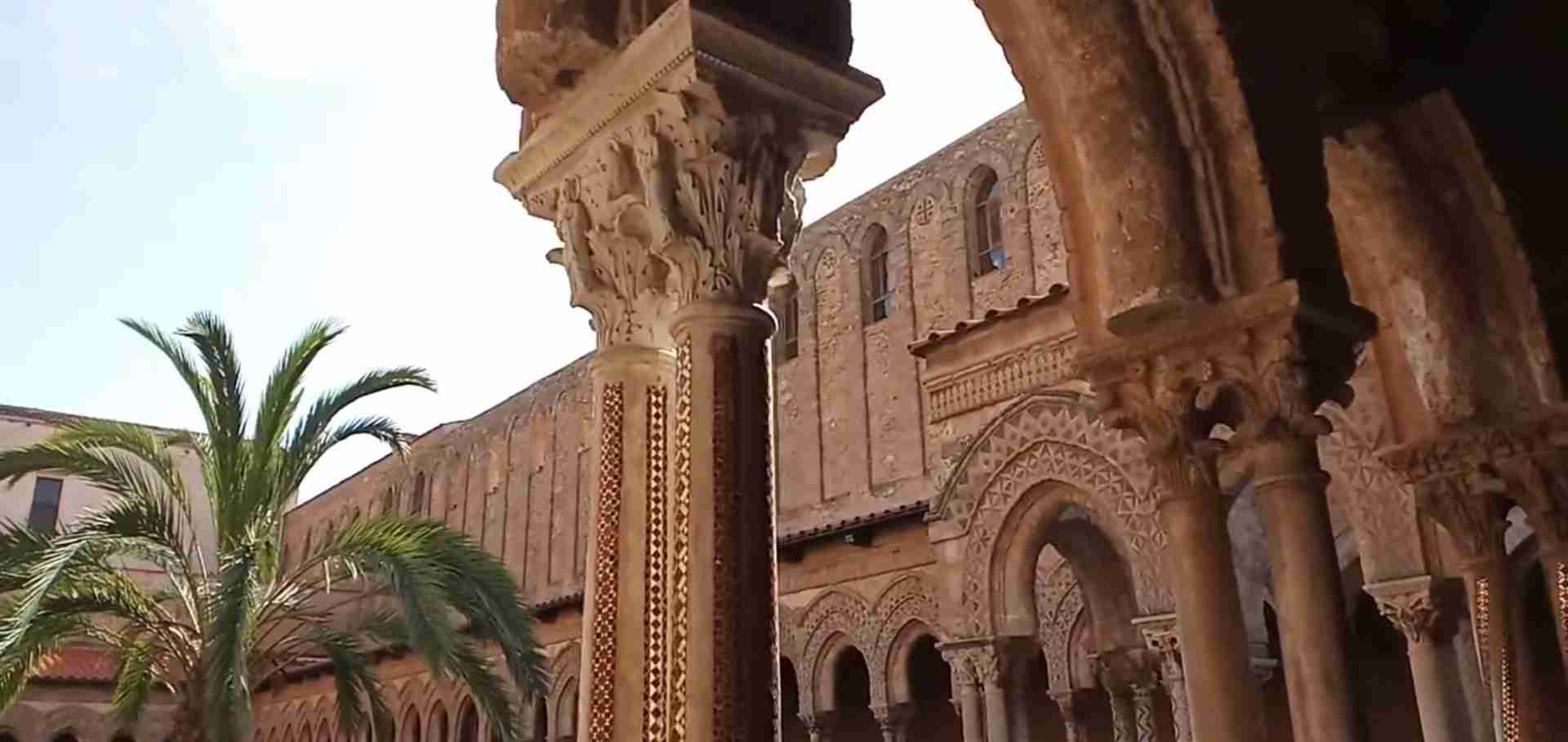
Descend to the Benedictine cloister at 11:30 AM for 45 minutes exploring the enclosed garden courtyard surrounded by 228 columns with intricately carved Romanesque capitals depicting biblical scenes, mythological creatures, and geometric patterns. The cloister’s peaceful atmosphere provides contrast to the cathedral’s spiritual intensity, while the capitals demonstrate how Sicilian-Norman sculptors adapted French Romanesque traditions to Mediterranean themes and Arabic decorative vocabulary. The central fountain with its elegant column supported by carved lions offers excellent photography opportunities and represents one of few surviving examples of 12th-century Islamic-influenced garden design in Christian monastic contexts.
Exit the cathedral complex at 12:30 PM and walk 200 meters down Via Arcivescovado to Monreale’s historic center for lunch at a traditional trattoria. Taverna del Pavone (Via Circonvallazione) serves excellent Sicilian specialties including pasta con le sarde, caponata, and grilled swordfish for €15-20 per person with wine, while Osteria Il Duomo (Vicolo Pensato) offers lighter options like arancini, panelle, and local cheeses for €12-18. Both restaurants feature outdoor seating with views across the valley, and their family-run atmospheres provide authentic cultural immersion away from tourist-heavy Palermo establishments.
Return to Piazza Vittorio Emanuele by 1:50 PM for the 2:00 PM bus to Palermo, arriving back in the city center by 2:30-2:35 PM. Total day cost: Cathedral combined ticket €16, bus round-trip €3.20, lunch €15-20, morning coffee €2-3. Total: €36.20-42.20 per person. This itinerary provides comprehensive exposure to Monreale’s major monuments while returning to Palermo with afternoon time for additional sightseeing, rest, or evening activities.
Extended Full-Day Visit with Walking Tour (8:30 AM – 5:00 PM)
Follow the morning cathedral visit schedule from the classic itinerary (8:30 AM-12:30 PM), then expand afternoon exploration to include Monreale’s historic center and surrounding neighborhoods. After lunch (12:45-1:45 PM), walk Corso Vittorio Emanuele, the town’s main street, lined with baroque palaces, traditional craft shops, and local pastry shops (pasticcerie) selling marzipan fruits, cannoli, and cassata siciliana. Monreale’s streets reveal authentic Sicilian small-town life distinct from Palermo’s urban energy, with elderly residents gathering in neighborhood squares and family-owned businesses maintaining traditional craft practices.
Visit Chiesa di Santa Maria la Nuova at 2:15 PM (free admission), a smaller Norman church with original 12th-century frescoes that complement the cathedral’s Byzantine mosaics, demonstrating contemporary Latin artistic traditions operating alongside Greek Orthodox practices. The church opens irregularly, but afternoon hours (2:00-4:00 PM Tuesday-Saturday) accommodate most visitors. Walk 400 meters south to Belvedere Piazza Guglielmo II for additional panoramic views, often less crowded than the cathedral terrace and offering different perspectives of Mount Etna on clear days.
Explore Villa Comunale gardens at 3:00 PM (free admission), a municipal park with shaded walking paths, children’s play areas, and local residents enjoying afternoon leisure time. The gardens provide cultural observation opportunities showing how Sicilian communities use public spaces, particularly during summer months when evening temperatures make outdoor gathering comfortable. Purchase afternoon gelato from Gelateria Bonomo (Via Circonvallazione) for €3-4, noted for traditional Sicilian flavors including pistachio from Bronte, almond granita, and seasonal fruit sorbets.
Return to Piazza Vittorio Emanuele by 4:45 PM for the 5:00 PM bus to Palermo, arriving in the city center by 5:30-5:35 PM. This extended itinerary suits travelers with limited time in Sicily who want comprehensive exposure to Norman heritage and authentic small-town Sicilian culture. Additional costs: afternoon gelato €3-4, optional craft purchases €5-20. Total day cost: Cathedral combined ticket €16, bus €3.20, lunch €15-20, gelato €3-4. Total: €37.20-43.20 per person.
Best Time to Visit Monreale in 2026
Seasonal Considerations for Cathedral Visits
Spring (March-May) offers optimal conditions for Monreale day trips in 2026, combining comfortable temperatures (15-22°C / 59-72°F), moderate tourist crowds, and clear atmospheric conditions for panoramic valley views. April and early May provide the most consistent weather with minimal rainfall (4-6 days per month) and extended daylight hours (sunset 7:30-8:15 PM) allowing flexible departure times from Palermo. Wildflowers bloom across Monte Caputo’s slopes during April, adding visual interest to the landscape views from the cathedral terrace and rooftop. Easter week (April 13-20, 2026) brings increased crowds and special religious ceremonies that restrict tourist access to certain cathedral areas during services, though the heightened festive atmosphere and traditional processions offer unique cultural experiences for travelers interested in living religious traditions.
Summer (June-August) represents peak tourist season with maximum crowds, highest temperatures (28-35°C / 82-95°F), and longest wait times at the ticket office (15-25 minutes during 10:00 AM-1:00 PM). The cathedral’s stone construction retains heat throughout the day, making the interior uncomfortable during afternoon visits without the climate control systems found in newer museums. However, summer provides reliable weather conditions with minimal rainfall risk and extended evening hours (sunset 8:30-8:45 PM) that accommodate late afternoon visits for travelers with flexible schedules. Morning departures from Palermo before 9:00 AM remain comfortable, and the intense summer sun creates dramatic lighting effects on the gold mosaic backgrounds that photographers appreciate despite the challenging temperature conditions.
Autumn (September-November) rivals spring for ideal visiting conditions, with September offering continued summer warmth without peak-season crowds and October-November providing crisp, clear days (16-23°C / 61-73°F) perfect for extended walking tours through Monreale’s historic center. Harvest season brings local food festivals celebrating Sicilian wine production, olive oil pressing, and traditional agricultural practices that cultural enthusiasts find enriching. Reduced tourist numbers in November make this the quietest month for cathedral visits while maintaining comfortable daytime temperatures and full operational hours. Rainfall increases through autumn (7-10 days per month by November), requiring flexible scheduling and backup activity plans, though showers typically occur during early morning or evening hours rather than midday visiting periods.
Winter (December-February) offers the most economical and uncrowded Monreale experience, with minimal tourist presence and immediate ticket office access throughout the day. Temperatures remain moderate (10-15°C / 50-59°F) compared to northern European winters, though the unheated cathedral interior feels cold during extended visits and morning frost occasionally delays bus departures from Palermo. Shorter daylight hours (sunset 5:00-5:30 PM) compress viable visiting windows, and increased rainfall (8-12 days per month January-February) requires weather-dependent planning. December combines manageable crowds with Christmas decorations and special holiday services that create atmospheric experiences, while January-February appeal to travelers seeking authentic cultural immersion without tourist-season commercialization. The cathedral’s artistic treasures remain equally impressive regardless of season, making winter viable for budget-conscious visitors willing to accommodate weather variability.
Daily Timing Strategies for Optimal Experiences
Early morning arrivals (8:30-9:00 AM) provide the best overall cathedral experience in 2026. The ticket office opens at 8:30 AM Monday-Saturday, and first visitors encounter empty spaces allowing unhurried contemplation of the mosaic cycles without crowd navigation or photography interference. The golden morning light enters through southern clerestory windows between 9:00-10:30 AM, illuminating the apse mosaics with intensity that afternoon shadows diminish. Summer mornings offer the only comfortable temperature window before midday heat accumulates, while winter mornings provide sufficient natural light before short winter days darken by late afternoon.
The 389 bus from Palermo typically carries fewer passengers during 8:00-8:30 AM departures, ensuring available seating and timely arrivals without delays from capacity crowds. Early visits also synchronize with the cathedral’s natural rhythm, as clergy and staff perform opening preparations and morning prayers create an atmosphere of active religious practice rather than tourist museum experience. Photographers benefit from the directional morning light that reveals mosaic texture and gold leaf reflectivity, while the empty spaces allow tripod use without obstructing other visitors.
Mid-morning arrivals (10:00 AM-12:00 PM) represent the busiest period with maximum tourist crowds, tour groups, and wait times at the ticket office (15-25 minutes during peak season). This timing suits travelers departing later from Palermo or combining Monreale with morning visits to Palazzo dei Normanni’s Cappella Palatina. While crowded, the cathedral’s substantial size (102 meters long, 40 meters wide transept) distributes visitors sufficiently for reasonable viewing conditions. Tour groups congregate in the nave and central apse, leaving transept areas and side chapels relatively accessible. Mid-morning visits synchronize with Monreale’s restaurant lunch service, allowing immediate seating after cathedral departure without the 1:00-2:00 PM rush when most tour groups break for meals.
Afternoon visits (2:30-5:00 PM) following the daily closure (12:30-2:30 PM) offer moderate crowds and cooler temperatures as the building’s thermal mass dissipates accumulated morning heat. The cathedral’s west-facing façade receives direct afternoon sunlight that illuminates the bronze entrance doors’ relief panels depicting biblical scenes—details often overlooked during morning arrivals through shadowed portals. However, afternoon light enters obliquely through the southern windows, creating more subdued illumination of the interior mosaics compared to morning’s direct rays. This softer lighting suits travelers sensitive to bright conditions and reduces photographic contrast challenges from intense gold backgrounds.
Late afternoon departures from Monreale (4:30-5:00 PM) coincide with return bus frequency increases as commuters travel between Palermo and residential areas, ensuring regular service without extended wait times. Sunset views from the rooftop terrace (when permitted during extended summer hours) provide dramatic perspectives of the valley with golden-hour light painting Monte Pellegrino and the Tyrrhenian Sea in warm tones that enhance photographic opportunities. Evening temperatures drop 5-8°C from midday peaks, making late visits comfortable during summer months when morning schedules prove impractical for late-rising travelers.
Budget Planning for Your 2026 Monreale Visit
Comprehensive Cost Breakdown by Experience Level
Budget-conscious travelers can complete a comprehensive Monreale day trip for €29-37 per person in 2026. This includes round-trip AMAT bus transportation from Palermo (€3.20), cathedral combined admission ticket (€16), lunch at a modest trattoria or with picnic supplies from Palermo markets (€8-12), and afternoon coffee or snacks (€2-4). Bringing water bottles from Palermo (€1-2 from supermarkets versus €2.50-3 from Monreale tourist area shops) and scheduling visits during free admission periods for the cathedral nave (currently available during morning mass 8:30-9:00 AM, though times vary seasonally) can reduce costs by €6-8. Budget travelers should purchase AMAT bus tickets in Palermo at tobacco shops where availability and operating hours (7:00 AM-8:00 PM) exceed Monreale’s limited tourist services.
This budget level requires accepting longer wait times at the ticket office, navigating public transportation schedules, and foregoing guided tours or audio guide rentals. However, the cathedral’s excellent English-language information panels, free printed brochures, and clear mosaic narrative sequences make self-guided visits entirely feasible for travelers with basic art history knowledge or willingness to read background materials. Budget accommodations in Palermo (€40-60 per night hostels or guesthouses) combined with this minimal-cost Monreale visit create accessible itineraries for students, backpackers, or value-focused travelers experiencing Sicily’s UNESCO heritage.
Mid-range travelers typically spend €55-75 per person for enhanced comfort and experiences. This budget includes round-trip taxi service from central Palermo hotels (€45-50 divided among 2-3 people, or €15-17 per person), cathedral combined ticket (€16), audio guide rental (€5), lunch at quality trattoria with wine (€20-28), and afternoon gelato or pastries (€4-6). Mid-range visitors often join small-group guided tours (€45-65 per person) that include transportation, professional art historian guides, skip-the-line cathedral access, and 4-5 hours comprehensive exploration. These tours provide historical context and artistic interpretation that significantly enhance appreciation of the mosaic cycles’ iconographic complexity and technical achievement.
The mid-range budget accommodates spontaneous decisions, eliminates transportation coordination stress, and provides flexibility for additional experiences like purchasing cathedral bookshop publications (€12-25), visiting the treasury museum (€4), or extending lunch with traditional Sicilian desserts and digestivi. Mid-range travelers typically stay at comfortable Palermo hotels (€90-140 per night) near Quattro Canti or Via Maqueda, positioning themselves for convenient morning bus departures or taxi pickups without navigating peripheral districts.
Luxury and premium travelers allocate €150-250 per person for exclusive experiences emphasizing personalized service, expert guidance, and minimal logistical concerns. This budget includes private driver with luxury vehicle (€120-150 for half-day service), private art historian guide (€150-180 for 3-4 hour cathedral tour divided among group size), extended gourmet lunch at select restaurants (€45-65 per person with wine pairings), and flexibility for spontaneous additions like craft purchases or additional site visits. Premium travelers often combine Monreale with other Norman sites (Zisa Palace, Cuba Palace, Cappella Palatina) into comprehensive half-day or full-day cultural tours that private guides customize based on specific interests in architecture, art history, or medieval Mediterranean civilization.
Luxury accommodations in Palermo (€200-400+ per night at properties like Grand Hotel Villa Igiea or Palazzo Sitano) provide concierge services that coordinate private tours, restaurant reservations, and transportation with minimal traveler effort. These properties often maintain relationships with expert guides and drivers, ensuring high-quality service providers familiar with sophisticated traveler expectations. The premium budget eliminates all logistical concerns, allowing travelers to focus entirely on cultural immersion and artistic appreciation while receiving professional interpretation that reveals layers of historical significance and artistic technique invisible to casual observation.
Money-Saving Strategies for 2026 Visits
Strategic timing reduces Monreale visit costs significantly. Weekday visits avoid weekend tourist crowds that increase wait times and raise taxi availability concerns, while shoulder season travel (March-April, October-November) provides more favorable accommodation rates in Palermo compared to peak summer prices. Purchasing AMAT multi-day transit passes (€8.50 for three days) benefits travelers making multiple Palermo-area excursions, as the pass covers unlimited travel including Monreale routes plus local Palermo transportation for comprehensive city and region exploration.
Bring picnic supplies purchased at Palermo’s Vucciria or Ballarò markets for €8-12 (fresh bread, local cheeses, cured meats, seasonal fruit, water) rather than dining at Monreale restaurants (€15-25). The cathedral’s surrounding gardens and public benches provide pleasant picnic settings with panoramic valley views, and this approach reduces meal costs by €7-13 per person while supporting local food producers through market purchases. Market shopping also provides authentic cultural experiences navigating traditional Sicilian food commerce largely unchanged since medieval times.
Focus cathedral visits on the main nave with free admission during religious services, supplemented by rooftop terrace access (€5) for panoramic views, while skipping the cloister (€8) if budget constraints require prioritization. While the cloister’s carved capitals demonstrate exceptional Romanesque sculpture, the cathedral mosaics represent the site’s primary artistic significance and justify thorough exploration before allocating funds to secondary attractions. Budget-conscious art enthusiasts can study cloister capitals through excellent English-language publications (€12-18) offering superior detail and interpretation compared to brief in-person viewing.
Travel with small groups (2-4 people) to split taxi costs (€5-7 per person versus €1.60 bus fare, but with 20-minute time savings and convenience value) or join organized tours where per-person costs decrease with larger group sizes. Many tour operators offer last-minute discounts (10-20% reductions) for tours departing within 24-48 hours with unfilled capacity, accessible through TripAdvisor, Viator, or direct operator websites. Flexibility with exact visit dates allows travelers to monitor tour availability and secure discounted rates that approach independent visit costs while providing professional guide services.
Monreale Cathedral Architecture and Artistic Significance
The cathedral’s architectural form demonstrates Norman Sicily’s synthesis of Byzantine spatial concepts, Islamic decorative traditions, and Latin construction techniques. The basilica plan measures 102 meters long with a 40-meter transept, creating a Latin cross configuration standard in Western Christian architecture. However, the three-apse termination, elevated central bay, and absence of westwork towers reflect Byzantine ecclesiastical design, while the pointed arches, geometric ceiling patterns, and decorative interlacing on exterior walls demonstrate Arab mathematical influence on structural and ornamental elements.
The mosaic cycle represents the largest and most complete medieval narrative program surviving in Western Europe, executed by Byzantine craftsmen from Constantinople working under Greek master mosaicists between 1174 and 1189. The systematic iconographic program begins in the nave with Old Testament Creation scenes progressing through Abraham, Isaac, Jacob, and Moses narratives, then transitions to Christ’s life, ministry, and passion in the transept and central apse. The theological organization presents salvation history from Creation through Resurrection as a unified divine plan, with Christ Pantocrator dominating the central apse as the ultimate fulfillment of prophetic promises illustrated throughout the building.
Technical analysis reveals sophisticated artistic practices. The mosaicists employed gold-leaf glass tesserae set at slight angles to maximize light reflection, creating the characteristic shimmering effect that illuminates the building’s interior with mystical intensity. Color gradations create illusionistic three-dimensional effects on figures’ drapery and architectural backgrounds, demonstrating Byzantine artists’ advanced understanding of optical perception and paint-equivalent techniques adapted to mosaic medium. The Christ Pantocrator figure uses approximately 100 distinct color tones in the face alone, achieving naturalistic humanity while maintaining transcendent divine presence through the severe frontal pose and penetrating gaze addressing viewers regardless of viewing position.
The Benedictine cloister attached to the cathedral’s southern flank demonstrates contemporary Romanesque sculptural traditions operating alongside Byzantine mosaic workshops. The 228 columns supporting pointed arches combine smooth marble shafts, elaborate carved capitals, and occasional inlaid mosaic decoration in geometric patterns echoing Islamic design vocabulary. Capital subjects include biblical narratives (Samson and the Lion, Daniel in the Lions’ Den), hagiographic scenes depicting Benedictine saints, and mythological creatures (griffins, centaurs) derived from classical antiquity and medieval bestiaries. The stylistic diversity across capitals suggests multiple sculptors working simultaneously, with some following French Romanesque conventions while others incorporated Sicilian landscape elements and naturalistic vegetation unknown in northern European sculpture.
Understanding Monreale’s architectural and artistic achievement requires recognizing the monument as political statement as much as religious architecture. William II commissioned the cathedral to rival Palermo’s Cappella Palatina (built by his grandfather Roger II) and establish Monreale as an independent archiepiscopal see, thereby reducing Palermo archbishop’s authority. The scale, artistic sophistication, and rapid construction demonstrate royal resources and administrative capability while the multicultural artistic workforce symbolized the Norman kingdom’s inclusive governance approach. The building remains an active cathedral with daily services, Benedictine monastic community, and archiepiscopal offices, demonstrating cultural continuity from 12th-century foundation through contemporary religious practice—a living heritage dimension that UNESCO designation recognizes as essential to the site’s significance.
Photography Guide for Monreale Cathedral in 2026
Technical Considerations for Interior Mosaic Photography
Photographing Monreale’s Byzantine mosaics presents specific technical challenges requiring understanding of lighting conditions, reflective surfaces, and spatial constraints. The cathedral permits photography without flash throughout the interior, though tripods and professional stabilization equipment require advance authorization from the cathedral office. Natural light entering through clerestory windows provides primary illumination, creating dynamic conditions that change throughout the day and require exposure compensation relative to meter readings biased by bright gold backgrounds.
Morning visits (9:00-11:00 AM) offer optimal natural light for apse mosaic photography when direct sunlight enters southern windows and illuminates the Christ Pantocrator with maximum intensity. Set camera to aperture priority mode (f/5.6-f/8) allowing sufficient depth of field for sharp focus across the curved apse surface while maintaining manageable shutter speeds (1/60-1/125 second) for handheld shooting. Expose for midtones in Christ’s robes rather than gold backgrounds to prevent underexposure of flesh tones and detail loss in garment folds. Shoot in RAW format enabling post-processing recovery of highlight and shadow detail compressed by the extreme luminance range between illuminated gold tesserae and shadowed architectural elements.
Wide-angle lenses (16-35mm full-frame equivalent) capture the cathedral’s spatial volume and narrative mosaic sequences extending along nave upper walls. However, extreme wide-angle focal lengths (14mm or wider) introduce geometric distortion that undermines the mosaics’ carefully calibrated proportions and perspective systems. Moderate wide-angle focal lengths (24-28mm) balance spatial context with accurate representation of Byzantine artistic intentions. Shoot from the central nave axis to maintain symmetrical composition reflecting the building’s bilateral symmetry, and include architectural elements (columns, arches) framing mosaic panels to provide scale reference and structural context.
Detail photography with normal to moderate telephoto lenses (50-105mm) reveals individual mosaic tesserae, color gradations, and the artists’ sophisticated techniques for creating dimensional effects on flat surfaces. Focus on specific iconographic elements—Christ’s blessing hand gesture, Virgin Mary’s contemplative expression, Archangel Gabriel’s dynamic pose during Annunciation—that demonstrate Byzantine figurative conventions and emotional subtlety. These detail shots complement wide establishing views by documenting artistic quality and technical achievement that overview photography cannot convey.
Afternoon light entering obliquely creates softer illumination with reduced contrast compared to morning’s direct rays. This lighting favors visitors sensitive to bright conditions and simplifies exposure calculations, though the subdued illumination diminishes gold mosaic brilliance and reduces the transcendent visual impact that morning light produces. Increase ISO sensitivity (800-1600) to maintain adequate shutter speeds as natural light decreases through afternoon, accepting moderate noise levels preferable to motion blur from camera shake or subject movement as visitors navigate the space.
Composition Strategies and Alternative Perspectives
The rooftop terrace provides essential perspectives for architectural photography documenting the cathedral’s exterior form, constructional logic, and landscape setting. Photograph the apse exterior showing the decorative interlacing arches (a signature Arab-Norman design element), limestone masonry, and proportional relationships between architectural volumes. Wide-angle lenses (24-35mm) capture the apse complex with surrounding Conca d’Oro valley context, while moderate telephotos (85-135mm) isolate architectural details against the mountainous background.
The cloister offers intimate compositional opportunities emphasizing architectural rhythm, decorative variation, and garden-architecture integration. Position along the covered walkway to photograph columns receding in perspective with the central fountain as compositional focal point. Overcast conditions or shaded areas within the cloister create even lighting without harsh shadows that obscure carved capital details. Photograph individual columns filling the frame to document capital sculpture variations—no two capitals share identical imagery—demonstrating the Romanesque sculptors’ creative diversity within standardized architectural frameworks.
External viewpoints from Monreale’s public spaces provide establishing shots contextualizing the cathedral within Sicily’s landscape and urban fabric. Piazza Vittorio Emanuele positions the western façade with bronze entrance doors against afternoon light, while Via Arcivescovado offers oblique perspectives showing the cathedral’s massing and relationship to adjacent archiepiscopal palace and monastic buildings. Sunset photography from these vantage points during summer months (8:00-8:45 PM) captures the cathedral silhouetted against dramatic sky colors with valley lights beginning to illuminate Palermo’s urban sprawl.
Booking and Reservations for 2026 Monreale Visits
Independent travelers visiting Monreale Cathedral require minimal advance booking for 2026 visits. Cathedral admission tickets purchase on-site at the ticket office adjacent to the main entrance, with typical processing times of 5-10 minutes even during peak tourist season. The cathedral’s official website (www.duomomonreale.it) provides current admission rates, opening hours, and special closure dates for religious holidays, though online ticket purchasing is optional rather than necessary for individual visitors. Check the website 24-48 hours before your planned visit to verify no unexpected closures for liturgical events, restoration work, or administrative holidays.
AMAT buses serving the Palermo-Monreale route operate on published schedules available through the AMAT website (www.amat.pa.it) and mobile application. Bus tickets purchase at tobacco shops (tabacchi), newsstands (edicole), or automated machines near major Palermo bus stops including Piazza Indipendenza. Pre-purchasing round-trip tickets before departure ensures availability regardless of Monreale’s limited retail hours. The AMAT application provides real-time bus tracking during peak season (June-September) when frequency increases to accommodate tourist demand, though schedule reliability remains generally consistent year-round for this heavily-trafficked commuter route.
Organized tours with transportation and professional guides benefit from advance booking, particularly during peak season (July-August) when popular departure times sell out 3-7 days ahead. Reputable tour operators including Context Travel, Walks of Italy, and Sicily Tour Guide offer small-group (8-12 participants) and private experiences with art historian guides, advance reservations through operator websites or booking platforms like Viator, TripAdvisor Experiences, and GetYourGuide. Read recent customer reviews (within 6 months) to verify guide quality, group sizes, and itinerary accuracy, as operator standards vary significantly across Sicily’s fragmented tourism industry.
Private guides and drivers require 48-72 hour advance booking during peak season, though shoulder season availability often accommodates 24-hour notice. Contact guides directly through professional association websites (Federagit, AGTA) or request recommendations through upscale Palermo hotel concierge services. Establish clear pricing, included services, guide languages, and cancellation policies before confirming reservations. Reputable guides provide written confirmations specifying meeting locations, departure times, included admission fees, and total costs to prevent misunderstandings. Premium private tours (€150-250 per person) offer the most flexibility, personalized interpretation, and convenience for travelers prioritizing cultural immersion over budget considerations.
Transportation Logistics: Palermo to Monreale 2026
Public Bus Navigation and Schedules
AMAT operates two primary bus routes between Palermo and Monreale: lines 389 and 309. Line 389 provides the most direct service with departures from Piazza Indipendenza every 30-45 minutes from 6:30 AM until 9:00 PM Monday-Saturday, with reduced Sunday service running every 45-60 minutes from 8:00 AM until 7:30 PM. The route follows SS186 through Palermo’s western suburbs (Borgo Nuovo, Montepellegrino neighborhoods) with minimal intermediate stops, completing the 8-kilometer journey in 25-30 minutes under normal traffic conditions. Morning routes before 9:00 AM typically run on schedule within 3-5 minute variance, while afternoon services (3:00-6:00 PM) may experience 8-12 minute delays during Palermo rush hour.
Board buses at the designated stop on Piazza Indipendenza’s eastern side, adjacent to Palazzo dei Normanni’s western entrance. The stop features clear signage in Italian and English marking 389 and 309 route numbers, with posted schedules indicating next departure times. Electronic displays show real-time bus locations during peak season (June-September), though these systems experience periodic outages requiring travelers to rely on printed schedules or AMAT mobile application updates. Validate tickets immediately upon boarding using the yellow or orange machines near entrance doors—failure to validate results in €50 fines if ticket inspectors board (inspections occur 2-3 times weekly on this route).
Line 309 follows a longer route serving additional residential neighborhoods between Palermo and Monreale, requiring 35-42 minutes total travel time with 10-12 intermediate stops. This line operates less frequently (every 45-60 minutes) and primarily serves commuters, making it a secondary option when 389 buses are at capacity or during off-peak hours when service coordination becomes less predictable. Both routes terminate at Piazza Vittorio Emanuele in Monreale’s historic center, positioning passengers 50 meters downhill from the cathedral entrance with clear directional signage and visible cathedral towers providing orientation landmarks.
Return buses to Palermo depart from the same Piazza Vittorio Emanuele location, with 389 service running every 30-45 minutes until 9:00 PM weekdays (last bus 9:15 PM from Monreale, arriving Palermo 9:45-9:50 PM). Verify return schedule upon arrival in Monreale, as occasional schedule adjustments for religious holidays or municipal events may affect evening departure times. The bus shelter at Piazza Vittorio Emanuele posts updated schedules, and tobacco shops near the square provide schedule printouts to travelers upon request.
Alternative Transportation: Taxis, Rideshare, and Private Drivers
Official white taxis with illuminated roof signs serve the Palermo-Monreale route with metered fares averaging €20-25 for the 15-20 minute journey from central Palermo hotels or transportation hubs. Taxis use a €3.50 base fare plus €1.10 per kilometer rate structure, with supplements applying for evening service (8:00 PM-7:00 AM, add €2), Sunday travel (add €1.50), and luggage exceeding carry-on size (€1 per large bag). Request a receipt (“ricevuta fiscale”) documenting the meter reading to verify fare accuracy and contest potential overcharges through the taxi cooperative if necessary.
Hail taxis at designated taxi stands near Palermo hotels, train station, or major piazzas, or arrange advance pickup through Free Taxi service (phone +39 091 225455) with 10-15 minute response times. Radio-dispatched taxis charge a €2 pickup fee in addition to metered fare, though this cost provides reliability during early morning departures or late afternoon returns when street-hail availability decreases. For travelers with mobility concerns or luggage, specify accessibility requirements when requesting taxis to ensure appropriate vehicle dispatch.
Negotiate flat-rate round-trip taxi service for €60-75 including 2-3 hours waiting time at Monreale, providing door-to-door convenience and eliminating schedule coordination for small groups (3-4 people) where per-person costs approximate tour prices. Establish pricing, waiting time allowances, and return departure flexibility before commencing service, and retain the driver’s contact information for early return requests if visit duration proves shorter than anticipated. This option suits families with children, elderly travelers avoiding public transport crowding, or business visitors with limited schedules requiring maximum time efficiency.
Rideshare services including Uber and Free Now operate in Palermo with variable availability for Monreale destinations. Rideshare costs typically range €18-28 depending on demand surge pricing and vehicle type (standard versus premium options), with advantage of upfront pricing transparency and digital payment convenience. However, return rideshare availability from Monreale proves inconsistent, particularly during midday hours when driver density decreases in peripheral locations. Request return rides 10-15 minutes before departure time to allow driver response and arrival coordination, and maintain taxi service phone numbers as backup option if rideshare requests fail.
Combining Monreale with Other Norman Heritage Sites in 2026
Travelers focusing on Norman Sicilian architecture can create comprehensive full-day itineraries combining Monreale with Palermo’s Cappella Palatina and Cathedral within Palazzo dei Normanni. Depart Palermo hotels at 8:00 AM for the 8:30 AM Cappella Palatina opening (advance tickets recommended, €12 admission), spending 75-90 minutes exploring the royal chapel’s Byzantine mosaics, wooden muqarnas ceiling, and medieval furnishings. Walk 700 meters north to Palermo Cathedral (free admission) for 45-60 minutes examining Norman exterior architecture, royal tombs, and treasury collection (€7 for combined roof terrace and treasury access), then proceed to Piazza Indipendenza for the 11:15 AM bus to Monreale, arriving 11:45 AM.
Visit Monreale Cathedral 12:00-2:30 PM following the comprehensive single-site itinerary outlined previously, then return to Palermo via 3:15 PM bus for late afternoon exploration of lesser-known Norman sites. The Cuba Palace and Zisa Palace (combined ticket €10, open until 6:30 PM) demonstrate Norman secular architecture with strong Islamic influences, located 2 kilometers west of city center and accessible via local buses or taxis. This full-day Norman heritage tour costs €39-47 per person including all admissions, transportation, and basic meals, providing comprehensive exposure to Sicily’s Arab-Norman architectural synthesis across religious and secular contexts.
Advanced travelers can combine Monreale with Cefalù, another component of the UNESCO Arab-Norman serial designation, though this requires full-day commitment and careful schedule coordination. Depart Palermo’s central train station at 7:00 AM on the regional train to Cefalù (€5-7, 50-minute journey), arriving 7:50 AM for 8:00 AM cathedral opening. Explore Cefalù Cathedral’s Norman apse mosaics (second only to Monreale in preservation quality) and medieval town center 8:00-11:30 AM, then return to Palermo on the 11:45 AM train (arriving 12:35 PM). Board the 1:00 PM bus from Piazza Indipendenza to Monreale (arriving 1:30 PM) for afternoon cathedral visit 2:30-5:30 PM following afternoon timing strategies outlined previously. Return to Palermo via 6:00 PM bus.
This ambitious itinerary covers all three UNESCO-designated Norman cathedrals in a single day, though the compressed schedule sacrifices depth for breadth. Budget €50-60 per person including train tickets, bus transportation, cathedral admissions, and meals purchased from bakeries and cafés rather than sit-down restaurants. This routing suits architecture and art history enthusiasts with limited Sicily time who prioritize monument coverage over leisurely cultural immersion, or professional photographers documenting Norman Sicilian heritage across multiple sites. Less time-constrained travelers should dedicate separate days to each destination for thorough exploration without logistical stress.
Planning Your 2026 Monreale Visit: Practical Tips
What to Bring and Wear
Modest dress observing Catholic church standards is required for cathedral entry: shoulders covered (no sleeveless tops), knees covered (no shorts, short skirts, or short dresses), and no see-through or excessively tight clothing. The cathedral maintains strict enforcement during peak tourist season when staff station at entrances to verify appropriate attire before ticket purchase. Bring a lightweight scarf or shawl to cover shoulders if wearing sleeveless clothing during hot summer months—these items also provide warmth in the unheated cathedral interior during winter visits. Comfortable walking shoes with non-slip soles navigate the polished marble floors inside the cathedral and steep cobblestone streets throughout Monreale’s historic center.
Photography equipment including cameras and phones is permitted throughout the cathedral without flash. Bring fully charged devices with sufficient storage capacity for extensive photo documentation—the mosaic cycles warrant hundreds of images capturing overall compositions, narrative sequences, and artistic details. A small notepad or smartphone notes application helps record specific mosaic panels, iconographic questions, or architectural observations for later research, particularly valuable for visitors without professional guide services providing real-time interpretation. Binoculars (8x-10x magnification) reveal upper-level mosaic details invisible to unaided viewing from the nave floor 12-15 meters below ceiling surfaces.
Sun protection including hats, sunglasses, and sunscreen (SPF 30+) is essential for summer visits involving outdoor walking and rooftop terrace exposure to intense Mediterranean sun. Reusable water bottles (750ml-1 liter capacity) reduce costs and environmental impact compared to purchasing bottled water from Monreale tourist shops charging €2.50-3 per bottle. Fill bottles at public fountains in Palermo before departure or ask restaurants to provide tap water refills (“acqua di rubinetto per favore”). Small snacks (energy bars, dried fruit, nuts) purchased from Palermo supermarkets sustain energy during extended morning visits without requiring expensive café stops.
Cathedral Visitor Services and Facilities
Restroom facilities at Monreale Cathedral operate during visitor hours with access near the ticket office and cloister entrance. These facilities meet basic standards though lack the amenities found in modern museum complexes. Additional public restrooms in Monreale’s Piazza Vittorio Emanuele charge €0.50-1 usage fee, standard for Italian public facilities, with better maintenance and cleanliness compared to free alternatives. Plan restroom stops before extended cathedral visits, as facilities within the monument proper are not readily accessible once inside the church interior.
The cathedral bookshop located near the exit sells English-language publications, postcards, reproduction artwork, and religious items with prices ranging €3-35. Scholarly guides to the mosaic cycles (€18-25) provide detailed iconographic analysis, historical context, and technical information enriching post-visit understanding. These publications represent excellent educational value and tangible souvenirs superior to generic tourist merchandise found in surrounding shops. Credit cards are accepted at the bookshop and ticket office, though small cash purchases (postcards, candles) may require exact change or small bills.
English-language information panels throughout the cathedral explain the mosaic narrative sequences, architectural features, and historical development with clear descriptions accessible to non-specialists. Free brochures at the entrance provide overview orientation maps identifying major artistic components and suggesting logical viewing progressions through the nave, transept, and apse areas. Audio guides rent for €5 at the ticket office, available in English, Italian, French, German, and Spanish with 45-minute narrated tours emphasizing artistic techniques, patron relationships, and conservation efforts. These devices use simple headphone systems without complex digital interfaces, suitable for travelers uncomfortable with technology.
The cathedral maintains WiFi access throughout the visitor areas, though connection reliability varies during peak occupancy when bandwidth demand exceeds capacity. The WiFi password is posted at the ticket office and entrance areas, requiring simple registration through smartphone or tablet browsers. Cellular service from major Italian carriers (TIM, Vodafone, Wind) provides adequate data connectivity for independent travelers using navigation apps, translation tools, or research resources during visits. Download cathedral information, maps, and reference materials to devices before arrival to ensure offline access if WiFi or cellular service proves unreliable.
Frequently Asked Questions About Monreale Day Trips from Palermo 2026
Is one day enough for Monreale?
Yes, a half-day visit (4-5 hours) provides comprehensive exposure to Monreale’s major monuments including the cathedral interior, rooftop terrace, and Benedictine cloister. The town’s compact historic center concentrates significant sites within 300-meter walking radius, eliminating transportation time between attractions. Allocate 90-120 minutes for cathedral mosaic exploration, 30-40 minutes for the rooftop terrace, 45 minutes for the cloister, and 60-75 minutes for lunch at traditional trattorias. This schedule allows thorough artistic appreciation while maintaining comfortable pacing without exhaustion. Extended full-day visits (8-9 hours) suit travelers interested in detailed architectural photography, smaller church exploration (Santa Maria la Nuova), walking tours through residential neighborhoods, or leisurely multi-course lunches experiencing authentic Sicilian dining culture.
Can you see Mount Etna from Monreale?
Yes, Mount Etna is visible from Monreale’s cathedral rooftop terrace and various viewpoints throughout the town on clear days, appearing as a distinctive snow-capped volcanic cone 150 kilometers east-southeast across Sicily’s interior. Visibility depends on atmospheric conditions, with optimal clarity during spring (March-May) and autumn (September-November) when reduced humidity and stable high-pressure systems provide crystalline air quality. Summer heat haze and moisture diminish long-distance visibility, while winter weather patterns create variable conditions ranging from exceptional clarity following storms to complete obscuration during overcast periods. Binoculars (8x-10x magnification) reveal Etna’s summit craters and volcanic features that appear as subtle details to unaided viewing, while telephoto lenses (200mm+) capture photographic documentation of Sicily’s dominant landscape element.
What is the difference between Monreale and Palermo Cathedral?
Monreale Cathedral and Palermo Cathedral represent different architectural traditions, construction periods, and artistic emphases within Norman Sicilian heritage. Monreale exemplifies late 12th-century Byzantine mosaic artistry with 6,400 square meters of glass tesserae narrating biblical history, demonstrating Norman-Byzantine synthesis at its artistic peak. The building preserves remarkably intact original decoration with minimal later additions, offering authentic 12th-century spatial and visual experiences. Palermo Cathedral evolved through six centuries of construction and renovation (founded 1184, substantially rebuilt 1781-1801), incorporating Norman, Gothic, Renaissance, Baroque, and Neoclassical elements that create architecturally complex but stylistically inconsistent results. Palermo’s significance rests in royal tomb collection (Roger II, Frederick II, Constance of Aragon) and historical continuity as archiepiscopal seat, while artistic quality cannot match Monreale’s preserved Byzantine masterworks. Both merit visits for comprehensive Norman heritage understanding, though Monreale offers superior aesthetic unity and artistic achievement.
How difficult is the walk in Monreale?
Monreale’s historic center involves moderate hillside walking with elevation changes of 30-40 meters between the bus arrival point (Piazza Vittorio Emanuele) and the cathedral entrance 50 meters uphill. The cathedral interior features level marble floors throughout the nave, transept, and apse areas requiring minimal physical effort for comprehensive viewing. Rooftop terrace access requires climbing approximately 100 stairs in two flights (50 steps to intermediate landing, 50 additional steps to terrace level) without elevator alternatives, which presents challenges for visitors with mobility limitations, cardiovascular conditions, or significant knee/hip problems. The Benedictine cloister maintains ground-level access from the cathedral’s southern entrance with no stair climbing required, making it fully accessible for wheelchairs and mobility-assistance devices. Walking tours through Monreale’s neighborhoods involve cobblestone streets with uneven surfaces requiring attention to foot placement but presenting manageable difficulty for reasonably fit travelers. Overall, Monreale visits demand less physical exertion than comparable hilltown destinations (Taormina, Erice) while providing superior cultural rewards.
Are there good restaurants in Monreale?
Yes, Monreale offers excellent traditional Sicilian restaurants emphasizing regional specialties, seasonal ingredients, and family recipes distinct from tourist-oriented Palermo establishments. Taverna del Pavone (Via Circonvallazione) serves authentic primi piatti including pasta con le sarde, pasta alla Norma, and busiate al pesto trapanese for €12-16, with secondi featuring grilled fish, braised meats, and vegetarian preparations for €15-22. The family-run atmosphere and outdoor terrace overlooking the Conca d’Oro valley provide memorable dining experiences. Osteria Il Duomo (Vicolo Pensato) specializes in street food elevated to restaurant quality—arancini, panelle, sfincione, and caponata—with moderate prices (€10-18 per person) and casual service suited to travelers seeking authentic flavors without formal dining protocols. Ristorante La Botte (Via Circonvallazione) offers upscale interpretations of Sicilian classics with extensive Sicilian wine lists (€25-35 per person for full meals). Reserve tables for lunch (12:30-1:00 PM arrival) during peak season when tour groups consume available seating at popular establishments. Most restaurants close Sundays and Monday mornings, affecting weekend visitor dining options.
Is photography allowed in Monreale Cathedral?
Yes, photography is permitted throughout Monreale Cathedral including the nave, transept, apse, rooftop terrace, and cloister without flash photography, which can damage delicate mosaic surfaces and disturb other visitors. Handheld cameras and smartphones are welcomed for personal documentation and artistic appreciation, though professional equipment including tripods, stabilization systems, and external lighting requires advance authorization from the cathedral administration office. Commercial photography for publication, advertising, or editorial use demands specific permissions and may incur usage fees depending on project scope and distribution plans. Respect other visitors by avoiding obstructive positioning during photography, minimize noise from camera operation, and refrain from using selfie sticks that extend into adjacent personal space or risk contact with artwork and architectural elements. The cathedral’s exceptional preservation and optimal morning lighting conditions create outstanding photography opportunities that constitute legitimate reasons for visiting beyond religious or purely educational motivations.
What should I wear to visit Monreale Cathedral?
Modest attire is required following Catholic church standards: covered shoulders (no sleeveless tops, tank tops, or spaghetti straps), covered knees (no shorts, short skirts, or short dresses above mid-thigh), and no transparent or excessively revealing clothing. Men should wear long pants or knee-length shorts with collared shirts or t-shirts; women should wear knee-length or longer skirts, dresses, or pants with shoulder-covering tops. Lightweight scarves or shawls provide convenient shoulder coverage for travelers wearing sleeveless clothing during hot summer months while allowing temperature-appropriate attire outside the cathedral. Cathedral staff stationed at entrances enforce dress codes strictly during peak tourist season, refusing entry to inappropriately dressed visitors without exceptions. Comfortable closed-toe walking shoes with non-slip soles navigate polished marble floors safely and accommodate extended standing during 90-120 minute comprehensive visits. Avoid high heels or thin-soled fashion shoes that create noise on stone floors and cause foot fatigue during prolonged art observation.
Can I visit Monreale on Sunday?
Yes, Monreale Cathedral is open Sundays with modified hours: 9:00 AM opening (30 minutes later than weekday 8:30 AM start) and potential closures or restricted access during morning masses at 9:30 AM and 11:00 AM. Sunday visits require flexibility and patience navigating active religious services that limit tourist access to certain areas, though the atmospheric qualities of liturgical ceremonies with sacred music and traditional rituals provide unique cultural experiences unavailable during weekday visits. Afternoon hours (2:30-5:00 PM) offer unrestricted tourist access comparable to weekdays, making Sunday afternoon visits viable for travelers with constrained weekly schedules. Sunday bus service between Palermo and Monreale operates reduced frequency (every 45-60 minutes versus weekday 30-45 minutes), requiring more careful schedule coordination and potentially longer wait times at Piazza Indipendenza and Piazza Vittorio Emanuele. Most Monreale restaurants close Sunday evenings or full days, limiting dining options to tourist-oriented establishments near the cathedral with higher prices and variable quality compared to weekday family-run trattorias.
How long should I spend at Monreale Cathedral?
Allocate 90-120 minutes for comprehensive cathedral interior exploration covering the mosaic narrative cycles throughout nave, transept, and apse areas with adequate time for detailed observation, photography, and contemplative appreciation. Rushed visits under 60 minutes provide surface-level exposure insufficient for understanding the mosaic iconography’s theological sophistication and artistic achievement. Add 30-40 minutes for rooftop terrace access with panoramic valley views and exterior architectural examination, plus 45 minutes for the Benedictine cloister’s carved column capitals and garden courtyard. Total on-site time at the cathedral complex spans 2.5-3.5 hours including ticket purchasing, rest breaks, and bookshop visits. Extended visits of 4+ hours suit art history enthusiasts, architecture students, or photographers seeking optimal lighting conditions and multiple perspective documentation. Budget additional 60-90 minutes for Monreale’s historic center exploration, restaurant lunch, and walking tours through residential neighborhoods, bringing total day trip duration to 4-5 hours or full 8-hour days depending on cultural immersion depth and personal pacing preferences.
Is Monreale better than Cappella Palatina?
Monreale Cathedral and Palermo’s Cappella Palatina represent comparable artistic achievements within Norman-Byzantine mosaic traditions, with each offering distinct advantages depending on visitor priorities. Monreale provides vastly larger scale (6,400 square meters of mosaics versus Cappella Palatina’s 600 square meters), comprehensive biblical narrative from Creation through Apostles, and architectural grandeur creating immersive spatial experiences. The cathedral’s accessibility (no advance tickets required, frequent bus service, lower admission costs) and atmospheric town setting enhance overall visit quality. Cappella Palatina offers exceptional intimacy with small-scale royal chapel proportions, closer viewing of mosaic details from elevated galleries, and the unique wooden muqarnas ceiling demonstrating Islamic architectural influences. The chapel’s location within Palazzo dei Normanni’s royal apartments provides historical context for understanding Norman court culture. Ideal itineraries include both monuments on separate occasions for comparative analysis revealing how patron identity, architectural scale, and liturgical function shaped Byzantine artistic workshops’ creative responses. Travelers with time constraints might prioritize Monreale for superior preservation, accessible logistics, and comprehensive narrative scope that exemplifies Norman Sicilian artistic achievement at its apex.