
Mincio Valley Road Trip 2026: The Alternative Verona-to-Borghetto Cycling and Drive Route
The Mincio River corridor between Lake Garda and Mantua offers one of northern Italy’s most rewarding car-free escapes, threading reed marshes, fortified mill villages, and Visconti-era monuments through a landscape that most Garda-bound visitors never reach. This guide covers the full 2026 logistics for the Verona-to-Borghetto journey: e-bike stages along the Mincio Cycling Path (EuroVelo 7), electric-car and private-road routing via the SP28 morainic backroads, parking strategy outside Borghetto’s Restricted Traffic Zone, and a seasonal crowd-management calendar designed to make the trip work across every month of the year.
Key Takeaways
- The Mincio Cycling Path—the local section of EuroVelo 7—runs approximately 42 km from Peschiera del Garda to Mantua; Borghetto sul Mincio lies roughly 15–18 km south of Peschiera by the riverside path, flat throughout and fully suitable for e-bikes and standard bicycles.
- Borghetto sul Mincio enforces a Restricted Traffic Zone (ZTL) around its historic mill quarter on summer weekends and public holidays; drivers should park in Valeggio sul Mincio’s town car parks or at SP28 roadside bays and walk or cycle the final approach.
- The SP28 provincial road through the morainic hills is the recommended driving alternative to the congested SS249 lakeside road, offering a quieter and more scenic approach from the Verona–Garda axis into the Mincio Valley.
- E-bike rentals in the Peschiera–Valeggio corridor cost approximately €25–40 per day in 2026; cycling from Peschiera del Garda to Borghetto sul Mincio takes 60–90 minutes at a comfortable touring pace including brief stops.
- Mid-range visitors on a two-day trip pay approximately €185–270 per person for one hotel night, two days of restaurant meals, e-bike hire, and Sigurtà Garden Park admission, assuming two people sharing a room.
- The heaviest crowds arrive during the Notte del Tocio tortellini festival (third Tuesday of June) and on summer Saturday afternoons; planning arrival before 10:00 or after 17:00 on those days avoids the worst congestion at the Visconti Bridge approach.
People Also Ask About the Mincio Valley Road Trip 2026
How do I travel from Verona to Borghetto sul Mincio by e-bike in 2026?
The most practical 2026 e-bike approach combines a short Trenitalia regional train ride from Verona Porta Nuova to Peschiera del Garda (roughly 15–20 minutes, with frequent departures throughout the day) with e-bike hire in Peschiera and the Mincio Cycling Path southward to Borghetto. The cycling section is approximately 15–18 km on a flat, well-signed path and takes 60–90 minutes at a relaxed pace. Cyclists who prefer to start directly from Verona can follow cycle-friendly provincial roads through Villafranca di Verona and Valeggio sul Mincio to join the path near Borghetto, a total distance of roughly 35–40 km from the city centre. E-bike rentals near Peschiera del Garda railway station start at approximately €25–30 per day; check current availability with local hire operators before travelling, as demand peaks on summer weekends and pre-booking is advisable from June through August.
Where can I park near Borghetto sul Mincio without entering the ZTL in 2026?
The most reliable 2026 strategy is to park in Valeggio sul Mincio’s main town car parks, 1–2 km uphill from Borghetto, and walk or cycle down to the hamlet. Both free and paid spaces exist near the town centre; on peak summer weekends a day-rate charge of approximately €5–8 applies. Roadside bays along the SP28 south of Valeggio provide informal overflow parking that fills later than the town car parks and suits travellers joining the Mincio Cycling Path from the road network. Peschiera del Garda is the third option: ample lakefront and roadside parking there eliminates the ZTL question entirely and connects directly to the cycling path. Italian ZTL cameras operate automatically and issue fines by post, so when in doubt park in Valeggio. Check current ZTL hours and enforcement dates on the Valeggio sul Mincio municipal website before any summer or holiday visit, as the 2026 calendar may differ slightly from prior years.
What is the best time of year to visit Borghetto sul Mincio in 2026?
Late April through early June and the month of September offer the best balance of pleasant weather, open attractions, and manageable visitor volumes at Borghetto sul Mincio in 2026. Sigurtà Garden Park peaks in tulip season (late March to April) and rose season (June), making spring particularly rewarding for combining the two attractions in a single day. July and August bring the highest crowds, active ZTL restrictions, and fully booked restaurants on weekends; the Notte del Tocio festival on the third Tuesday of June draws several thousand visitors and requires months-ahead restaurant booking. Winter visits from November through February are quiet and atmospheric, with the Visconti Bridge especially photogenic in morning mist, though some hire shops and restaurants operate reduced hours. September stands out as the best overall-value month: summer crowds have thinned, Sigurtà Garden Park is still open, e-bike hire operators are running full schedules, and accommodation prices have dropped from their August peaks.
How much does a two-day Mincio Valley road trip cost per person in 2026?
A two-day Mincio Valley road trip costs approximately €185–270 per person at mid-range (one night in a 3-star hotel, two days of restaurant meals, one day’s e-bike hire, Sigurtà Garden Park admission, parking, and fuel or EV charge for the Verona round trip, with two people sharing a room). Budget travellers choosing an agriturismo stay and self-catering one meal can cover the same two days for approximately €140–200 per person. Luxury visitors opting for a boutique hotel, fine-dining restaurants, and a private cycling guide should budget approximately €290–440 per person for the two-day itinerary. Visitors doing a single day trip from Verona without an overnight stay spend approximately €60–90 per person without e-bike hire or €85–130 per person if hiring an e-bike for the Mincio Cycling Path section. All figures assume two people travelling together and sharing transport and accommodation costs.
Extended multi-day tours – 5+ days
Featured Veneto Multi-Day Tour Packages
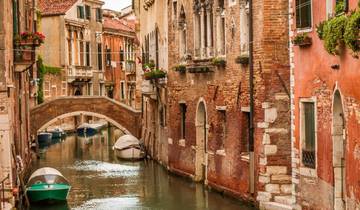
4 days
Discovering Venice
- ✓ Comprehensive Veneto tour
- ✓ Expert local guides included
- ✓ All accommodation arranged
- ✓ Transportation provided

10 days
Dolomites Alta Via 1 – Guided Trek (Most Inclusive, AV1)
- ✓ Comprehensive Veneto tour
- ✓ Expert local guides included
- ✓ All accommodation arranged
- ✓ Transportation provided
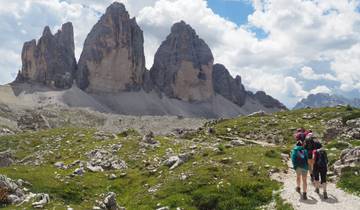
7 days
Dolomites of Cortina Explorer – Self-Guided Hike
- ✓ Comprehensive Veneto tour
- ✓ Expert local guides included
- ✓ All accommodation arranged
- ✓ Transportation provided
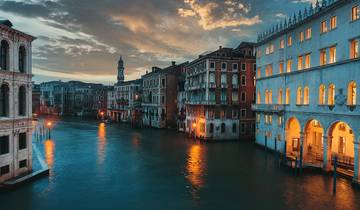
5 days
5-Day Venice the Heart of Italy
- ✓ Comprehensive Veneto tour
- ✓ Expert local guides included
- ✓ All accommodation arranged
- ✓ Transportation provided
Multi-day tour packages powered by TourRadar. Prices and availability subject to change.
Why the Mincio Valley Works as a 2026 Road Trip Alternative
Borghetto sul Mincio is a hamlet within the municipality of Valeggio sul Mincio in the province of Verona. It occupies fewer than a dozen streets and is home to a couple of hundred residents, yet it is listed among Italy’s Most Beautiful Villages—a national designation covering approximately three hundred settlements recognised for their architectural and environmental integrity. The listing at Borghetto rests primarily on the extraordinary concentration of medieval mill buildings lining the Mincio River gorge, the intact Visconti Bridge spanning the river, and the near-total absence of twentieth-century intrusion within the historic core. The result is a village whose visual character has changed less in five hundred years than almost any comparable settlement in the Po plain.
For most visitors approaching the area from Verona, the standard route is the SS249 Gardesana Occidentale westward toward Lazise, Bardolino, or Peschiera del Garda—a scenic but chronically congested corridor on summer weekends when the entire Garda basin is operating at peak capacity. The Mincio Valley route is the deliberate counterweight: quieter roads through the morainic hills south of the lake, a riverside cycling path among the finest in the Veneto-Lombard border zone, and a destination village that repays the effort of the detour because it remains partially hidden from the main Garda circuit.
The corridor’s cycling infrastructure has been formalised through its inclusion as a section of EuroVelo 7, the Sun Route running from North Cape in Norway to Malta. EuroVelo designation requires a continuous, navigable cycle corridor with adequate waymarking and surface quality; the Mincio section between Peschiera del Garda and Mantua, approximately 42 km, meets that standard with a well-maintained off-road path for much of its length and low-traffic provincial road supplements near the built-up sections. The path follows the Mincio River through the wetlands of the Mincio Regional Nature Park, a protected zone that accounts in large part for why the riverside landscape has been spared the development pressure visible elsewhere around southern Lake Garda.
For travellers arriving by car or electric vehicle from Verona, the SP28 provincial road through the morainic hills provides a genuine alternative to both the SS249 and the Autostrada. The SP28 corridor runs southwest of Villafranca di Verona through a characteristic glacially shaped landscape of low ridgelines, Custoza DOC vineyards, and hilltop villages, and intersects the Mincio Valley route at Valeggio sul Mincio—the gateway municipality to Borghetto below. The route is approximately 25–30 km from central Verona, takes 30–40 minutes without traffic, and involves none of the lakeside congestion.
The challenge this guide addresses is practical: how do you integrate the cycling path with a car journey, navigate Borghetto’s Restricted Traffic Zone without incurring a fine, combine a Sigurtà Garden Park visit without overwhelming the day, and time arrival at the Visconti Bridge to avoid the crowd peak? The sections below answer those questions in sequence, from route options and multi-modal logistics through to full budget calculations for every tier of traveller.
Route Logistics: Verona to Borghetto sul Mincio via the Morainic Backroads (2026 Guide)
The Verona-to-Borghetto journey is available as a pure cycling trip, a pure road trip by car or electric vehicle, or—most practically for the majority of visitors—a multi-modal combination that uses private road transit for the upland morainic section and the Mincio Cycling Path for the riverside approach. Each option has a different set of logistics, and understanding all three is the foundation of 2026 trip planning for this corridor.
By private car or electric vehicle, entire route: From Verona’s ring road (Tangenziale Ovest), the most efficient approach to Borghetto sul Mincio heads westbound toward Villafranca di Verona and then southwest via the SP28 through the morainic hills to Valeggio sul Mincio. The total distance from Verona’s urban edge to Valeggio is approximately 22–28 km depending on the exit point; journey time is 30–40 minutes without traffic. GPS navigation will typically route drivers via the faster SP3 or the SP62 main road; the SP28 is a deliberate choice that must be set manually as a waypoint, and is worth it for the quality of the scenery and the significant reduction in truck traffic. From Valeggio, the final 1–2 km downhill to Borghetto is the critical decision point: drive in (only when the ZTL is not active and a parking space is realistically available) or leave the car in Valeggio and walk or cycle in. Parking in Valeggio is almost always the right decision, for reasons detailed in the Parking Strategy section below.
By train and e-bike, recommended combination: Trenitalia operates regional services between Verona Porta Nuova and Peschiera del Garda on the Verona–Milan main line, with departures roughly every 20–30 minutes throughout the day. Journey time is 15–20 minutes. From Peschiera del Garda station, e-bike hire operators are within a few minutes’ walk or ride, and the Mincio Cycling Path is immediately accessible from the southern edge of the fortress town. Cycling south to Borghetto on the path covers approximately 15–18 km on flat terrain; the journey takes 60–90 minutes at a comfortable pace with stops for the reed-bed views and river bends. This is the most seamless option for visitors who want to experience both the cycling path and the village without any parking concern.
By car to Peschiera, then e-bike: Peschiera del Garda has ample parking on the lakefront, in the streets of the historic fortress town, and in free zones on the northern access roads. Parking here, hiring an e-bike, and cycling to Borghetto combines the flexibility of private car travel with the pleasure of the cycling path and eliminates the ZTL problem entirely. The 30–36 km round trip on the path is a satisfying half-day excursion, leaving the afternoon free for Borghetto, Sigurtà Garden Park, or the lakefront at Peschiera. This is also the most practical approach for families or groups who prefer not to navigate the SP28 rural road network.
SP28 routing detail: The SP28 enters the morainic zone southwest of Villafranca di Verona and runs through Custoza—known for its white DOC wine—before descending toward Valeggio sul Mincio. The road climbs gently to the low morainic ridge, offering views across the Garda piedmont and the Mincio plain before the valley comes into view. Two-way single-carriageway sections through the hill villages require standard Italian rural-road driving; speed is limited and overtaking opportunities are infrequent. The road is essentially devoid of lorry traffic and carries modest weekend spillover from the SS249, but nothing approaching that road’s summer congestion. Plan 20–25 minutes for the SP28 section between Villafranca and Valeggio.
Multi-Modal Travel Integration: Combining E-Bike Trails with Private Road Transit
The Mincio Valley route is well suited to a drop-and-ride model: drive (or take the train) to a node where parking or ZTL exposure is not a constraint, transition to the Mincio Cycling Path for the most sensitive leg of the journey, and use the cycling experience as the primary encounter with the valley landscape. Three integration nodes serve different traveller profiles.
Node 1 — Peschiera del Garda (northern entry, maximum cycling): Peschiera sits at the hydraulic origin of the Mincio, where the river exits Lake Garda through a sluiced outflow that has been managed since the Venetian period. The fortress town itself is a UNESCO World Heritage Site as part of the Venetian Defensive Works of the 16th–17th centuries, a designation shared with Bergamo, Palmanova, and other fortified cities of the Venetian state. Parking is uncomplicated, e-bike hire is widely available, and the path south is immediately accessible. This node suits travellers who want the longest cycling section, the full bird’s-eye experience of the Mincio reed beds, and time in Peschiera before or after the ride.
Node 2 — Valeggio sul Mincio upper town (car-and-walk option): Valeggio sits on the morainic ridge directly above Borghetto and is the municipal seat. Its car parks are a 15–20 minute downhill walk from the Visconti Bridge, with the uphill return taking 25–35 minutes. This node suits visitors arriving by car along the SP28 who want a mostly walking approach without committing to a full cycling hire. The downhill walk to Borghetto passes through the older residential streets of Valeggio, which have a quiet domestic character quite different from the tourist intensity of the mill quarter below.
Node 3 — SP28 roadside bays (southern approach, quieter entry): Several informal pull-in areas along the SP28 south and southeast of Valeggio are used by cyclists joining the Mincio Cycling Path from the road network. They are less commonly known than the Valeggio car parks and accordingly fill later on busy days. Travellers who want to park the car and cycle a short section of the path northward into Borghetto from the south find this node particularly effective; the approach from the south gives a different perspective on the mill quarter, framing the buildings against the morainic hillside rather than looking downstream from the bridge.
For a one-day multi-modal itinerary, the cleanest logistics run as follows: drive to Peschiera del Garda (or take the train from Verona), hire an e-bike from a Peschiera operator, cycle south on the Mincio Cycling Path to Borghetto, spend two to three hours walking the mill quarter, the Visconti Bridge, and having lunch, then cycle back to Peschiera for the return journey. The round trip is 30–36 km on flat terrain; battery consumption on a standard hire e-bike (typically 500–630 Wh) is modest, and the return to Peschiera is well within a single charge for any production-era electric hire bike.
For multi-day itineraries extending southward toward Mantua, the Mincio Cycling Path continues from Borghetto through the open agricultural plain of the Mincio Regional Nature Park for approximately 24 km to Mantua. The character of this southern section is different—wider, flatter, more agricultural—but the reed-bed and river-meander scenery of the nature park continues throughout, and the arrival into Mantua via the lagoon approach is one of the most dramatic cycle finishes in northern Italy. Mantua has a Trenitalia station with regular services to Verona (approximately 40–50 minutes), making a one-way Peschiera-to-Mantua cycling day a viable option for travellers who can organise a car pickup or leave a vehicle in Mantua the previous day.
One operational note for 2026: e-bike hire in the Peschiera–Valeggio corridor operates seasonally, with most operators running from late March or early April through October. Outside these months, availability is limited and pre-booking is essential. Operators near Peschiera del Garda railway station are the most consistently available across the extended shoulder season; Valeggio-based hire points tend to close earlier in autumn. Standard hire models available in this corridor include city e-bikes (the most common), mountain e-bikes for any optional hill diversions on the morainic network, and tandem or cargo variants at a small number of operators. Helmet, lock, and basic repair kit are typically included; confirm this at booking.
Timing Strategy: Visiting the Visconti Bridge and Mills Outside Peak Flow Hours
The Visconti Bridge and the water mill quarter of Borghetto sul Mincio are the magnetic centrepiece of the Mincio Valley route—and the physical bottleneck that makes timing genuinely consequential. The hamlet’s lanes are narrow, the bridge walkway is wide enough for two people to pass comfortably but not wide enough for a crowd to gather without interrupting the flow of movement, and the viewpoints along the river bank that reveal the mill facades and cascades together fill quickly when visitor numbers are high. The timing decisions below are the single most effective tool available to the 2026 visitor for improving the quality of the experience.
The Visconti Bridge is a combined fortified dam and raised pedestrian crossing spanning the Mincio at its narrowest point through the village. It was built during the period of Visconti domination of the Verona territory—the Visconti held Verona from 1387 to 1402—and is traditionally associated with Gian Galeazzo Visconti’s programme of hydraulic and military infrastructure across his expanded domains, though the precise construction date and patron are not documented in surviving contemporary records and this attribution should be understood as the received scholarly tradition rather than archival confirmation. The structure’s primary purpose was hydraulic: by raising the Mincio’s water level through the dam, it powered the mill system in the buildings downstream. The mill complex itself, built in a series of phases over the medieval and early modern periods with significant restoration in the twentieth century, is among the best-preserved examples of integrated hydraulic-industrial architecture in the Po plain.
Best arrival windows in 2026:
- Weekday mornings, 09:00–10:30: The lowest-crowd window across all seasons except the Notte del Tocio week and the major public holidays. Restaurant lunch service does not begin until noon, so the village before 10:30 is occupied mainly by other early-arriving visitors and residents going about their morning. Photography of the cascades and mill facades without obstruction is consistently reliable in this window, and the eastern morning light on the mill buildings is the most photogenic of the day.
- Weekday late afternoon, 16:30–18:30: Visitor flow drops as day-trippers from Lake Garda and Verona return to their accommodation; late-afternoon light on the western mill facades is warm and saturated. Restaurants are beginning evening service and walk-in tables become available without a reservation. This window is particularly effective for visitors who spend the morning at Sigurtà Garden Park and arrive at Borghetto for the late-afternoon quieter period.
- Summer weekend mornings, before 09:30: On peak summer Saturdays and Sundays in July and August, the parking in Valeggio sul Mincio begins to fill from around 10:00; arriving by car before 09:30 and walking down to Borghetto before 10:00 puts you in the village ahead of the first major wave of day-trippers and provides a 60–90 minute window of relative calm before the heaviest foot traffic. E-bikers from Peschiera arriving at the same time have the added advantage of bypassing the Valeggio parking situation entirely.
- Off-season, November through February: The village is quiet and genuinely atmospheric in the low winter light. River fog in the Mincio Valley, common from October through January, produces photographic conditions unavailable in summer; the bridge parapet emerging from mist above the mill roofline is a quality of image that warm-season visitors miss. Some mill-house restaurants close or operate reduced winter schedules, so check opening hours before making the drive; the walk from Valeggio is uncrowded in any weather.
Times to avoid:
- Summer Saturday and Sunday afternoons, 13:00–17:00: This is the peak pressure window at Borghetto. ZTL enforcement is at maximum frequency, Valeggio parking is saturated, and the bridge approach sees its heaviest foot traffic of the week. Restaurant waits for walk-in tables can reach 45–90 minutes at the mill-house restaurants. Visitors who have not pre-booked lunch on a summer Saturday afternoon will likely wait or be redirected to restaurants in Valeggio’s town centre.
- Notte del Tocio and the surrounding weekend: The festival draws several thousand visitors to a space designed for a fraction of that number. The event itself—thousands of diners eating tortellini at candlelit outdoor tables along the river and in the mill courtyards—is one of the most memorable experiences the Mincio Valley offers, but it requires months-ahead table booking through the Valeggio sul Mincio municipality, early arrival for parking, and a full commitment to the festival logistics. Arriving without a table booking on the Notte del Tocio itself means spectating from the periphery, which is atmospheric but different in character from the full dining experience.
- Ferragosto (August 15) and the Festa della Repubblica weekend (June 2): These public holiday weekends combine school-holiday demand with peak summer conditions and produce Borghetto crowd levels matching or exceeding a standard summer Saturday. The ZTL is active and the Valeggio car parks fill before 10:00.
ZTL calendar for 2026: Borghetto sul Mincio’s Restricted Traffic Zone typically activates on weekends and public holidays during the summer peak, broadly from late June through early September, and on selected spring weekends during festival periods. The precise 2026 calendar—specific dates and daily hours—is published by the Valeggio sul Mincio municipality and is the only authoritative reference for the current season. Rental car drivers should be aware that Italian ZTL systems are camera-based and fully automated: there is no physical barrier, fines are issued by post to the vehicle’s registered keeper, and hire companies pass those fines to the renter along with an administrative fee that typically runs €25–40 on top of the base penalty. The ZTL boundary signs at Borghetto’s road entry from Valeggio are clear on the ground but easy to miss at driving speed. Parking in Valeggio and walking in eliminates this risk entirely.
Sigurtà Garden Park and traffic overlap: Sigurtà Garden Park lies approximately 2 km from Borghetto within the Valeggio sul Mincio municipality and generates significant independent traffic on the Valeggio approach roads during its tulip season (late March to May) and rose season (June). Visiting the park and Borghetto on the same day is an excellent combination; the practical sequencing is to arrive at Sigurtà at opening time, spend two to three hours, and then walk or drive down to Borghetto for a midday or early-afternoon visit—arriving at Borghetto after 14:00 on weekdays is generally fine outside the summer peak but risks a compressed afternoon window on summer Saturdays. The alternative sequence, visiting Borghetto early and Sigurtà in the afternoon, works well from April through June when park closing is later in the evening.
E-Bike Itinerary 2026: Stage-by-Stage Breakdown of the Mincio Cycling Path
The Mincio Cycling Path, which carries EuroVelo 7 for its length, traces the Mincio River from Peschiera del Garda southward to Mantua across approximately 42 km. The surface varies: sections close to Peschiera and those through the core of the Mincio Regional Nature Park are well-maintained asphalt or compacted gravel, suited to city bikes and standard hybrids; a small number of stretches near agricultural land use rougher compacted earth, presenting no real difficulty for e-bikes and manageable on any bike with tyres wider than 28 mm. The path is broadly accessible to recreational cyclists of moderate fitness. With an e-bike, even the rough sections present no challenge, and the flat terrain throughout means battery consumption is low enough to complete the full 42 km corridor on a single charge on any well-maintained hire bike.
Stage 1 — Peschiera del Garda to Monzambano (approximately 12 km): The path exits Peschiera’s southern fortification wall and immediately enters the reed-lined Mincio corridor. The transition from the busy lake waterfront to the quiet river marshes happens within a kilometre; by the time the fortress town is out of sight behind the first bend, the character of the ride has shifted entirely. The path passes through the village of Salionze before reaching Monzambano, a hilltop village on the morainic ridge with a medieval tower visible from the valley floor. This stage is the most consistently off-road and the most enclosed in vegetation, with the Mincio’s reed beds and waterway visible on one side and the morainic slope rising on the other. At an easy e-bike pace, allow 40–55 minutes for this stage. Monzambano’s main street has a bar and a small grocery shop—suitable for a first stop and a coffee before continuing south.
Stage 2 — Monzambano to Borghetto sul Mincio (approximately 6–8 km): South of Monzambano, the path descends gently toward the river floor and approaches Borghetto from the water level. The final section is the experiential peak of the ride: the valley narrows, the mill facades materialise through the vegetation on the right bank, and the Visconti Bridge appears ahead framed by the hills on both sides. This entry to the village from the cycling path—arriving at river level, seeing the bridge and mill buildings from below rather than from the road above—is a substantially different and more dramatic approach than arriving by car from Valeggio on the road. Total cycling distance from Peschiera to Borghetto: approximately 18–20 km; allow 75–100 minutes at a touring pace including one or two stops. The path deposits cyclists within metres of the mill-quarter entrance; bike parking is available near the village approach.
Stage 3 — Borghetto sul Mincio to Mantua (approximately 24 km, optional extension): Beyond Borghetto, the path continues south through Goito into the wide, open agricultural plain of the lower Mincio. The enclosed valley character of the northern section gives way to a broader landscape of waterway channels, poplar windbreaks, and the managed wetlands of the nature park’s southern zone. The birding interest is high throughout this section—the lower Mincio marshes are significant nesting and wintering habitat for herons, egrets, little bitterns, kingfishers, and marsh harriers—and the pace of riding tends to slow accordingly. Mantua, at the end of this extension, is a UNESCO World Heritage City and warrants its own dedicated visit; arriving into the city via the lagoon approach on the cycling path, with the Gonzaga-era skyline reflected in the water, is an arrival sequence that no other approach to Mantua replicates. If completing the full Peschiera-to-Mantua corridor as a one-way trip, Trenitalia services from Mantua back to Verona run in approximately 40–50 minutes; check the current timetable at trenitalia.com before committing to this option as service frequency on this line varies by day and season.
E-bike hire logistics for 2026: Operators based near Peschiera del Garda railway station offer the most reliable availability and the broadest range of bike types. Standard city e-bikes (the most practical choice for the Mincio path) rent for approximately €25–40 per person per day; helmet and lock are typically included. Multi-day hire packages at reduced daily rates are available from operators with longer-trip experience if your itinerary extends toward Mantua. Tandem e-bikes, cargo bikes, and child seat adaptors are available at selected Peschiera operators—confirm availability at the time of pre-booking if these are needed. Pre-booking is strongly advisable for July and August weekends, when demand from cycling tourists using this section of EuroVelo 7 overlaps with local recreational demand. Several online platforms including specialist Italian cycling hire aggregators can be used for advance reservation; direct contact with the operator’s own website usually gives the most complete current information on availability and pricing. Verify rates directly at point of hire, as pricing may be updated for the 2026 season.
Path conditions and navigation: The Mincio Cycling Path is waymarked with EuroVelo 7 directional signs and Mincio Regional Nature Park cycling route markers. On the main corridor between Peschiera and Borghetto, navigation is straightforward; there are no complex junctions or unmarked diversions on this section. Occasional signage gaps near agricultural crossings are reliably resolved by following the river. A downloaded offline map (komoot, Ride With GPS, or similar) is recommended as a backup; mobile signal along the path is generally good but not universal through the reed-bed sections. Paper cycling maps of the Mincio path are available at the Peschiera del Garda tourist information point near the railway station.
EV and Private Car Routing 2026: SP28 and the Morainic Hills Drive
The SP28 provincial road through the morainic hills is the recommended 2026 driving route from Verona to Borghetto sul Mincio for three overlapping reasons: it is significantly quieter than the SS249 lakeside road, it passes through the Custoza DOC wine country in scenery that repays the slightly longer driving time, and it connects directly into Valeggio sul Mincio without the frustrating approach-road queuing that affects the standard lakeside route on summer weekends.
Routing from Verona: From Verona Porta Nuova or the inner ring road, head westbound on the SS62 or SP23 toward Villafranca di Verona (approximately 12–15 km, 15–20 minutes). At Villafranca, take the SP28 northwest toward Custoza and then southwest toward Valeggio sul Mincio. The SP28 climbs from Villafranca’s flat western plain onto the morainic terraces, passing through Custoza—the village at the centre of the Custoza DOC wine appellation—before descending toward the Mincio Valley. Total distance from Verona city centre to Valeggio sul Mincio via this route is approximately 27–32 km; allow 35–50 minutes depending on the departure point within Verona and traffic conditions on the Villafranca approach. Setting the SP28 as an explicit waypoint in your navigation app before departure is the most reliable way to stay on the scenic route, as GPS systems default to the faster but less rewarding main roads.
Custoza wine country detour: The morainic section of the SP28 passes close to several Custoza DOC estate cellars where direct-sale visits (cantina visits) are possible. Custoza is a dry, aromatic white wine from a blend of local varieties including Garganega, Trebbianello, Tocai Friulano, and Cortese; it pairs well with freshwater fish, light pasta, and the tortellini that awaits in Borghetto. A 20–30 minute stop at one of the roadside cantina signs on the SP28 is an uncrowded alternative to the more heavily visited Garda wine producers on the lakeside roads, and the wines travel well in the boot of the car.
Electric vehicle considerations: EV charging infrastructure in this corridor is modest by the standards of the Garda lakeside towns. Valeggio sul Mincio’s main square has a small public charging installation with standard Type 2 sockets (AC charging); Peschiera del Garda has a broader network near the waterfront and the main car parks, including some faster AC and occasional DC chargers. Borghetto itself has no public charger. The Verona-to-Valeggio round trip is approximately 55–65 km; any modern EV with a real-world range above 200 km handles this comfortably without intermediate charging. Travellers with shorter-range or older EVs should charge in Verona before departure or plan a top-up in Peschiera. The Plugshare and Nextcharge apps are the most reliable tools for verifying current charger status in this area before departure, as charging network installations in the Mincio corridor are expanding and individual units occasionally go offline for maintenance.
The final approach to Borghetto: From Valeggio sul Mincio’s main square, the road to Borghetto descends steeply—approximately 40–50 metres of elevation drop over 1–2 km—to the riverside hamlet. When the ZTL is not active, it is physically possible to drive this road to the bottom, but parking within Borghetto is extremely limited: fewer than thirty spaces exist in the mill quarter, they fill rapidly even outside peak season, and the road itself is one-way in sections. Parking in Valeggio is nearly always more practical than attempting to drive into Borghetto even on days when the ZTL permits it. The walk down is pleasant, shaded for part of the route, and provides a gradual transition from the hilltop town to the riverside hamlet that enhances rather than detracts from the arrival experience.
Parking Strategy 2026: Where to Leave Your Car Near Borghetto sul Mincio
Parking is the logistics element most likely to cause difficulty for first-time visitors to Borghetto sul Mincio, and a clear strategy set before arrival eliminates the improvisation that on summer weekends typically results in either a ZTL violation fine or a 20-minute search for an improper roadside space. The following options are ranked from most to least reliable for 2026.
Option 1 — Valeggio sul Mincio central car parks (recommended for car visitors): Valeggio has two main car parks near its town centre, both signposted from the SP28 and SP3 approach roads. The larger of the two sits within 5 minutes’ walk of the downhill path to Borghetto. On weekdays and in the shoulder seasons, both car parks are free; a paid day rate of approximately €5–8 applies during summer weekends and festival days. The downhill walk from these car parks to the Visconti Bridge takes 20–25 minutes; the return uphill walk takes 25–35 minutes and is the main physical demand of this approach. It is entirely manageable for most adults but worth factoring into plans for families with young children in pushchairs or for older visitors for whom a 40–50 m climb is a consideration.
Option 2 — Valeggio sul Mincio peripheral streets (overflow option): On busy days, the central car parks fill by 10:00–10:30. The residential streets of Valeggio’s outer quarters absorb moderate overflow on weekdays; parking on non-restricted streets is common and generally unproblematic outside the town centre zone. On the Notte del Tocio and on Ferragosto weekend, even peripheral Valeggio is saturated from early morning; arrivals after 09:30 on these days should expect to park on the approach roads and walk in from some distance.
Option 3 — SP28 roadside bays (southern approach, fills later): Informal pull-in areas exist along the SP28 south and southeast of Valeggio, used by cyclists joining the path from the road network and by motorists who have missed the Valeggio car parks. These are not marked as official parking but are regularly used and rarely cause problems outside the highest-demand festival days. They provide a quieter entry point into the Borghetto approach and are useful for travellers who want to combine car parking with a short southbound walk or cycle to join the path.
Option 4 — Peschiera del Garda (northernmost node, eliminates all ZTL exposure): For visitors whose primary interest is the cycling path and the Borghetto experience, parking in Peschiera del Garda is the cleanest solution available. Peschiera has the largest combined parking capacity of any node on this route, free zones exist on the northern access roads, and the cycling path south to Borghetto covers 15–18 km of the most scenic section of the entire corridor. This option adds cycling distance but removes all parking and ZTL uncertainty.
ZTL enforcement detail for rental car drivers: The ZTL boundary at Borghetto is marked by standard blue ZTL signs on the approach road from Valeggio; the signs are visible in normal daylight but can be missed by drivers unfamiliar with Italian traffic signage, particularly at the turning from the main road. Italian ZTL fines range from approximately €80 to €150 for the base penalty; rental car companies are legally required to disclose the driver’s details to the issuing municipality, and typically pass the fine to the renter along with a processing fee of €25–40 per incident. The fine is issued by post weeks or months after the violation and arrives at the rental company’s registered address, then forwarded to the renter. Avoiding the ZTL entirely—by parking in Valeggio or Peschiera—is the only reliable mitigation.
What to See in Borghetto sul Mincio 2026: Visconti Bridge, Water Mills, and the Village
Borghetto sul Mincio rewards slow exploration. The hamlet covers a compact area concentrated around the river gorge, with the Visconti Bridge as its axis and the mill quarter as its defining architectural feature. Two to three hours spent entirely on foot—crossing the bridge, walking the riverside path below the mill buildings, sitting in one of the mill-house restaurants above the cascades, and wandering the dozen streets of the village proper—is a more satisfying use of the visit than trying to absorb it from a car window during a five-minute drive-through.
The Visconti Bridge: The bridge is a fortified dam-and-walkway structure spanning the Mincio at its narrowest point through the village. Its primary engineering purpose was hydraulic: by acting as a weir, the dam raised the river level sufficiently to maintain the water pressure powering the mill system downstream. The raised walkway above the dam provided a defended river crossing within a military and territorial context that the Visconti, as lords of the territory from 1387 to 1402, had strong reasons to control. The bridge’s dimensions are modest—wide enough for foot passengers and slender enough to read as a thread across the gorge—and this modesty is part of what makes it photogenic; it is a functional structure that happens to read beautifully against the backdrop of the morainic hills and the mill rooflines.
The attribution to Gian Galeazzo Visconti’s patronage and the traditional late-fourteenth-century dating are the received historiographical consensus; no primary documentary source confirming the exact construction date or patron has been published in the scholarly literature available to this article, and the attribution should be understood accordingly. What is certain from the physical evidence is that the structure reflects the hydraulic engineering priorities of the late medieval period in the Po plain and that it has been in continuous use as a river crossing and mill power source for several centuries, with maintenance and repair episodes documented into the modern period.
The water mills: The mill buildings that line the Mincio gorge below the bridge are Borghetto’s most photographed feature. Their distinctive form—residential-scale buildings of pale stone with mill mechanisms at their bases drawing on the river flow controlled by the bridge dam—has been substantially restored and converted over the past half-century, with several buildings now housing restaurants whose dining terraces sit directly above the running water. The combination of active hydraulics and dining is unusual enough to be worth emphasising: the sound of the water flowing beneath the terrace is present throughout lunch, and the visual of the cascade visible through the low parapets on the downstream side is what most visitors photograph first. The mill buildings are privately owned and operated; the riverside path between them is publicly accessible.
Italy’s Most Beautiful Villages designation: The listing in Italy’s Most Beautiful Villages network brings a degree of managed visitor expectation—signage quality, public space maintenance, and the absence of commercial intrusion beyond the restaurant and craft-shop cluster—that contributes to the general quality of the Borghetto visit. The designation covers approximately three hundred Italian settlements of demonstrated architectural and environmental integrity; Borghetto qualifies on the strength of the mill-quarter’s completeness and the virtual absence of post-industrial development within the historic core. The designation also signals a commitment by the municipality of Valeggio sul Mincio to maintain this standard, which is broadly reflected in the condition of the approach paths and the treatment of the riverbank below the mills.
Tortellini di Valeggio: The small pasta produced in Valeggio sul Mincio and Borghetto is known locally as nodi d’amore (love knots)—a name reflecting the distinctive tied shape of each piece—and holds IGP (Protected Geographical Indication) status under European food law, confirming its production method as specific to this territory. Eating the pasta in one of the Borghetto mill-house restaurants is a combination of culinary quality and atmospheric setting—the river visible below, the cascade audible through the stone walls—that makes it one of the more justifiable food-as-destination experiences in northern Italy. Both of the traditional preparations, in broth and with butter and sage, are available in every restaurant in the village.
Sigurtà Garden Park 2026: The Essential Companion Attraction
Sigurtà Garden Park lies approximately 2 km north of Borghetto sul Mincio within the Valeggio sul Mincio municipality and is one of the most visited private gardens in Italy. It covers approximately 60 hectares of the morainic terrace above the Mincio River, and its combination of formal garden design, naturalistic parkland, and seasonal planting sequences has earned it multiple international awards, including recognition from the Royal Horticultural Society. For visitors to the Mincio Valley, incorporating Sigurtà into the same day as a Borghetto visit is natural and logistically straightforward.
What to expect: The park is designed for extended walking, with a network of paths covering the full 60 hectares and a tourist train circuit for visitors who prefer a shorter or less physically demanding experience. The tulip season in late March and April, when millions of bulbs bloom across the main lawns, produces the most intense single spectacle; June’s rose garden is the second peak period. Outside these seasons, the park’s perennial structure, mature trees, and lake views provide a quieter but consistently rewarding visit. Opening dates for 2026 run broadly from early March through early November; verify the exact opening and closing dates and current adult admission prices (approximately €15–18 in recent seasons, subject to annual review) on the official Sigurtà Garden Park website before booking.
Combining with Borghetto: The recommended sequence is to arrive at Sigurtà at opening time (typically 09:00), spend two to three hours, and then walk or drive the 2 km to Borghetto for a midday or early-afternoon visit, arriving before the post-13:00 weekend crowd peak. On weekdays outside the tulip and rose peak seasons, no strict sequencing is needed; both attractions can be visited at a relaxed pace within the same day without timing pressure. The park has a car park that serves as a practical base for visiting both Sigurtà and Borghetto by a combination of car and walking; it is not within walking distance of Borghetto but is a short drive down the hill.
Advance online booking for Sigurtà is not required on standard weekdays, but is strongly advisable for tulip-season and rose-season weekends when entrance queues can extend to 20–45 minutes. The official park website and authorised booking platforms are the correct channels for 2026 tickets; check these directly before your visit rather than relying on third-party resellers, whose ticketing fee structures vary.
Dining in the Mincio Valley 2026: Tortellini, Mill-House Restaurants, and Local Eating
Eating in Borghetto sul Mincio is one of the primary motivations for the journey, and the cluster of restaurants occupying former mill buildings above the river cascades represents one of the most atmospheric dining environments in this part of northern Italy. The food is consistent, the settings are extraordinary, and the prices are reasonable for what is delivered; the main challenge is securing a table on busy days.
Mill-house restaurants: The principal restaurants in Borghetto are family-owned establishments that have been serving tortellini di Valeggio to visitors for generations. All operate with the IGP-certified pasta as the centrepiece of the menu; starters, meat secondi (main courses), and regional wine round out the offering. A full lunch—tortellini as a primo, a secondo, house wine and water—runs approximately €28–42 per person at the mill-house restaurants in Borghetto. Portions are generous and the pasta quality is consistently high across the main operators. On summer Saturdays in July and August, every restaurant in the hamlet is fully booked by midday without a reservation; pre-booking by telephone or online at least two to three days in advance is essential for summer weekend visits. On weekdays in spring and autumn, walk-in tables at noon are generally available.
Valeggio sul Mincio town restaurants: Several restaurants and trattorie in Valeggio’s town centre serve the same IGP pasta at somewhat lower prices than the Borghetto mill-house establishments, typically €20–32 per person for a full meal. The settings are less theatrical—indoor dining rooms and conventional pavements rather than waterside terraces—but the pasta quality is identical, governed by the same production standards. When Borghetto’s restaurants are fully booked on a summer weekend, Valeggio’s town centre is the practical alternative and is within a 15–20 minute uphill walk.
Breakfast and snacks: Valeggio sul Mincio’s central pastry shops (pasticcerie) and bars are the practical breakfast option for visitors based in the town or arriving by car from Verona; coffee and a pastry cost €2–4. There is no café-bakery open for early breakfast within Borghetto itself; the handful of businesses there open later in the morning. Cyclists on the Mincio Cycling Path stopping in Monzambano (Stage 1 midpoint) will find a bar at the village; Peschiera del Garda, as a substantial lake town, has the widest choice of breakfast options before the ride begins.
Notte del Tocio dinner logistics: The festival dinner requires a pre-purchased ticket from the Valeggio sul Mincio municipality—bookings typically open in late winter or early spring for the June event and sell out well in advance. The ticket price includes the seated dinner at communal tables along the riverbanks and in the mill courtyards; the meal is a set menu centred on the nodi d’amore in multiple preparations. Wine is purchased separately at the table. Transport logistics on festival night are significant: car parks fill from mid-afternoon, and many visitors arrive by shuttle from outlying car parks set up by the municipality; check the official communication from the organisers for the 2026 specific arrangements.
Accommodation 2026: Where to Stay Along the Mincio Valley Route
The Verona-to-Borghetto corridor offers accommodation across a wide range of styles and price points, from agriturismo farmstays on the morainic hills through compact B&Bs in Valeggio sul Mincio to the full range of lakefront hotels in Peschiera del Garda. The choice of base has a direct effect on logistics, morning access to Borghetto before the crowds, and the character of the overall stay.
Peschiera del Garda: The most practical base for cycling-focused itineraries and for visitors who want lake atmosphere alongside the Mincio Valley experience. Hotels cluster around the fortress waterfront and the streets within the pentagonal walls, with a wider selection in the modern town beyond the walls. Mid-range double rooms run approximately €110–180 per night in summer (June through August), with significant drops in price from mid-September onward. Rooms and apartments in the peak summer months should be booked several months in advance; the July–August period sees full occupancy across most property categories. The Trenitalia connection to Verona (15–20 minutes) makes Peschiera a flexible base for Verona day trips as well as Mincio Valley excursions.
Valeggio sul Mincio: Staying in Valeggio offers direct morning access to Borghetto on foot, eliminates the daily car-park logistics, and puts you within walking distance of the town’s restaurants and pastry shops. The accommodation selection is smaller than in Peschiera—a handful of B&Bs and one or two small hotels—and advance booking is important in summer. Mid-range double rooms in Valeggio run approximately €100–155 per night in high season. The advantage in terms of the Borghetto experience is meaningful: an early morning walk down to the village before the day-trippers arrive, followed by breakfast in Valeggio on return, is a quality of engagement with the place that day-tripper logistics from Verona or Peschiera cannot replicate.
Agriturismo on the morainic hills: Working farm stays and vineyard accommodation on the SP28 corridor and the surrounding Custoza and Villafranca di Verona territory offer a characteristically Italian rural experience at prices generally below those of the lakefront hotels. Double rooms typically run €75–125 per night, often including a farmhouse breakfast with local products and access to wine from the estate’s own production. Several agriturismo properties are within easy driving distance of both Borghetto and Peschiera, and a small number are close enough to the morainic cycle network to allow e-bike access to the Mincio path without needing to drive. This option is best suited to visitors with a car and an interest in the agricultural landscape of the morainic zone.
Verona as a base: For visitors making a single day trip to Borghetto, staying in Verona—a major tourism city with a full range of accommodation across every budget tier—is entirely practical. The drive to Valeggio sul Mincio via SP28 takes 35–50 minutes; the train to Peschiera and e-bike combination adds another 60–90 minutes of travel. Verona’s accommodation and restaurant scene are substantially richer than the Mincio Valley options, making it a sensible base for travellers who want city amenities as well as day-trip access to the valley.
Seasonal Planning 2026: The Mincio Valley Visitor Calendar
Understanding the seasonal rhythm of the Mincio Valley is the most important single input to 2026 planning for this route. The corridor has a clearly defined annual pattern of visitor volume, attraction availability, weather conditions, and logistical complexity; aligning your visit to the right window for your priorities can dramatically change the quality of the experience.
March–April (early spring, tulip season): Sigurtà Garden Park opens in early March and enters its peak season from late March through April as the tulip bulb planting—millions of plants across the main lawns—blooms in sequence across the park. Weekend visitor numbers at Sigurtà are high from late March; Borghetto itself is quieter in this period, with e-bike hire available from late March at most Peschiera operators and the Mincio Cycling Path navigable but occasionally muddy on its unpaved sections after spring rain. The weather on the morainic hills is variable: cool mornings, warming afternoons by mid-April, occasional rain. This is one of the most rewarding windows for combining Sigurtà and Borghetto in a single day before summer volumes arrive.
May (optimal month overall): May is the most consistently recommended month for a first visit to this route. Sigurtà is in full season, the weather on the SP28 hills and the cycling path is reliably warm and clear without summer heat, visitor volumes at Borghetto are below their July–August ceiling, and accommodation prices have not yet reached summer peaks. Long daylight hours (sunset after 20:30 by late May) allow a leisurely pace without rushing. The Mincio wetlands in May support the highest birdlife diversity of the year, making the cycling path additionally rewarding for naturalists.
June (peak season and festival month): June carries the highest cultural density of the Mincio Valley calendar and the highest logistical demands. The rose season at Sigurtà Garden Park overlaps with the approach to the Notte del Tocio, compressing visitor pressure on the Valeggio access roads in the second and third weeks of the month. The festival itself—third Tuesday of June—is one of the most memorable outdoor dining events in the Veneto and worth planning an entire trip around, but the months-ahead booking requirement for dinner tables and the intensive crowd logistics make it a commitment rather than a casual addition to an itinerary. Weekday visits to Borghetto in June are calm and very pleasant; the crowds are a weekend and festival-weekend phenomenon.
July–August (peak summer): The highest-volume period across the entire corridor. ZTL restrictions at Borghetto are at maximum frequency and hours. Parking in Valeggio fills before 10:30 on Saturdays. Temperatures regularly exceed 30°C by mid-morning, making e-biking before 09:00 or after 17:00 substantially more comfortable than during the middle of the day. Mill-house restaurants in Borghetto are at full capacity; walk-in tables on summer weekends are not available without a wait. With appropriate timing and early-morning arrival strategy, July–August visits are fully viable and rewarding—the Mincio reed beds are lush and green, the light in the late evening is extraordinary—but they require the logistical precision described throughout this guide.
September–early October (best value and best balance): September stands out as the ideal month for a first-time or repeat visit to this corridor if festival attendance is not the priority. Summer crowds have receded, Sigurtà Garden Park is still open and less pressured, e-bike hire operators are running full schedules, accommodation prices have dropped from August peaks, and the weather remains warm enough for comfortable cycling through most of the month. The morainic hills in early October, with the vineyard leaves beginning to turn, add a visual dimension absent in high summer. This period is recommended without reservation for visitors who have flexibility in timing.
November–February (off-season): Sigurtà Garden Park closes for the season (typically in early November), most e-bike hire operators in Peschiera run reduced hours or close from November through March, and several Borghetto restaurants operate limited winter schedules or close. What remains is genuinely appealing to a different visitor: Borghetto in winter fog—a common condition in the Mincio River valley from October through January—is among the most atmospheric small-village landscapes in northern Italy. The Visconti Bridge and mill facades in mist, the river visible through the bare winter willows, the absence of tourist noise: these conditions are simply not available in any other season. Visitors who travel in winter should check restaurant and attraction opening hours before committing to the journey, and should be prepared for the possibility that a few businesses will be closed on any given weekday.
Budget Breakdown 2026: What the Mincio Valley Road Trip Actually Costs
The following figures cover a two-day, one-night Mincio Valley visit for two people travelling together and sharing accommodation. All costs are per person. Hotel room costs are divided by two before being included in any per-person total. Figures are for the 2026 season; all prices in euros.
Budget tier — agriturismo or basic B&B on the morainic hills, one self-catered meal, e-bike hire for the Mincio path section:
- Accommodation, one night, agriturismo (two sharing): €35–50 per person
- Meals across two days (restaurant lunch in Borghetto, one simpler meal): €55–80 per person
- E-bike hire, one day: €25–35 per person
- Car fuel or EV charge for Verona round trip, split between two travellers: €5–10 per person
- Parking in Valeggio sul Mincio over one to two days: €3–8 per person
- Sigurtà Garden Park admission: €15–18 per person
Budget travellers on the two-day trip spend approximately €140–200 per person.
Mid-range tier — 3-star hotel in Peschiera del Garda or Valeggio sul Mincio, restaurant meals including the Borghetto tortellini lunch, e-bike hire, and Sigurtà Garden Park:
- Accommodation, one night, 3-star hotel (two sharing): €55–80 per person
- Meals across two days (two restaurant meals per day, wine): €75–110 per person
- E-bike hire, one day: €30–40 per person
- Car fuel or EV charge, split: €5–10 per person
- Parking: €5–10 per person
- Sigurtà Garden Park admission: €15–18 per person
Mid-range visitors on the two-day trip spend approximately €185–270 per person.
Luxury tier — 4-star boutique hotel or converted villa, fine-dining dinners, private cycling guide with premium e-bikes:
- Accommodation, one night, boutique hotel (two sharing): €100–160 per person
- Meals across two days, fine-dining and premium restaurants: €110–160 per person
- Private cycling guide with e-bikes included: €55–80 per person
- Car fuel or EV charge, split: €5–10 per person
- Parking: €5–10 per person
- Sigurtà Garden Park admission: €15–18 per person
Luxury visitors on the two-day trip spend approximately €290–440 per person.
Day-trip variant from Verona: Visitors making a single-day excursion from Verona without overnight accommodation—driving the SP28 to Valeggio, visiting Sigurtà Garden Park in the morning, and having a tortellini lunch in Borghetto before returning—spend approximately €60–90 per person (meals, park admission, parking, and a share of the fuel or EV charge). Adding a half-day e-bike hire from Peschiera del Garda for the Mincio path section raises the day-trip total to approximately €85–130 per person. Day-trip costs do not include accommodation and reflect single-day itineraries only.
Hidden and commonly overlooked costs: Italian ZTL violation fines (€80–150 base, plus rental company processing fee of €25–40) are the most significant avoidable cost on this route. Sigurtà Garden Park tourist train supplements add €3–5 per person for reduced-mobility access. Restaurant cover charges (coperto) of €2–4 per person are standard in Borghetto and not always prominent on menus. E-bike late-return or low-battery charges apply at some operators; confirm the policy at point of hire. Summer weekend parking in Valeggio runs €5–8 per day. Building these into the per-person total produces a more accurate planning figure than the headline costs alone.
Solo traveller adjustment: All figures above assume two people sharing a room. Solo travellers pay the full room rate without division; add approximately €35–80 per night to the per-person accommodation line depending on tier, and adjust all per-person totals accordingly. On the day-trip format, fuel and EV charge costs are not shared, adding approximately €5–10 per person.
Frequently Asked Questions About the Mincio Valley Road Trip 2026
Is the Mincio Cycling Path suitable for beginners or non-regular cyclists in 2026?
The Mincio Cycling Path between Peschiera del Garda and Borghetto sul Mincio is entirely flat, with no meaningful climbs on the riverside section, and is suitable for beginners, occasional cyclists, and families with children on standard bicycles or e-bikes. The surface is a mix of asphalt and compacted gravel throughout this section; a standard city bike or hybrid handles all of it without difficulty. E-bikes are the most practical choice for visitors who want to cover ground comfortably without physical fatigue, and battery consumption on flat terrain is low enough to complete the 30–36 km Peschiera-to-Borghetto round trip with significant charge to spare. The only physical challenge associated with a Borghetto visit by this route is the uphill return walk from Borghetto to Valeggio if using Valeggio as the parking base, which is a climb of approximately 40–50 m over 1–2 km—manageable for most adults but worth considering for families with young children or older visitors.
Can I drive into Borghetto sul Mincio in 2026?
Outside ZTL-active hours—broadly weekday mornings and afternoons in low and shoulder seasons—it is physically possible to drive the approach road from Valeggio down into Borghetto. However, fewer than thirty parking spaces exist within the hamlet, they fill rapidly even in off-peak periods, and the road through the mill quarter is one-way in sections. Italian ZTL cameras are fully automated and issue fines by post; there is no physical barrier to signal enforcement, and rental car drivers in particular face compounded costs (base fine plus hire company processing fee). The practical advice for all visitors in 2026 is to treat Borghetto as a car-free destination regardless of ZTL status on any given day, park in Valeggio, and walk or cycle the final approach. The walk is pleasant and the arrival at the village on foot or by bike is significantly better than arriving by car in any case.
How long does it take to cycle from Peschiera del Garda to Borghetto in 2026?
The Mincio Cycling Path from Peschiera del Garda to Borghetto sul Mincio is approximately 15–18 km. On an e-bike at a comfortable touring pace with one or two stops for photographs or to take in the reed-bed scenery, the outward journey takes 60–90 minutes. On a standard non-electric bicycle at similar pace, allow 75–100 minutes. The path is well-signed throughout on EuroVelo 7 and Mincio Regional Nature Park markers; navigation is straightforward with no complex junctions on the main corridor. Return journey times are broadly similar; the return leg can feel slightly longer if the midday heat has built up on a summer day, which is a further reason to complete the southward ride in the morning.
What is the best way to reach Borghetto sul Mincio from Verona by public transport in 2026?
The most practical public transport option from Verona in 2026 is Trenitalia regional rail to Peschiera del Garda (15–20 minutes from Verona Porta Nuova, frequent departures), followed by e-bike hire in Peschiera and the Mincio Cycling Path south to Borghetto. This combination is faster, more frequent, and more reliable than the bus alternative. Direct bus services from Verona to Valeggio sul Mincio are operated by ATV (Azienda Trasporti Veronesi) on regional routes, but journey times are longer and frequency is lower. There is no direct public transport service into Borghetto itself; the final approach from Valeggio requires cycling, walking, or a local taxi. Check current ATV timetables on the ATV website and Trenitalia schedules at trenitalia.com before travelling, as rural bus services in this corridor operate seasonal timetables.
Does Sigurtà Garden Park require advance booking for 2026 visits?
Advance booking is not required for standard weekday visits to Sigurtà Garden Park outside the peak seasons, and walk-in entry is straightforward on quiet days. For tulip-season weekends (late March through April) and rose-season weekends in June—particularly the weekends immediately surrounding the Notte del Tocio—advance online booking through the official Sigurtà Garden Park website is strongly advisable to avoid entrance queues of 20–45 minutes. The park’s own website is the correct booking channel for 2026; verify current adult admission prices (approximately €15–18 in recent seasons) and opening date details directly, as these are subject to annual review. Third-party ticket platforms may add booking fees; direct booking through the park avoids these.
What are the best photography spots along the Mincio Valley route in 2026?
The highest-impact photography viewpoints on the Mincio Valley route are the Visconti Bridge and mill facades viewed from the river bank below the bridge, the bridge walkway itself looking downstream toward the mill buildings, and the cascade visible through the parapets of the mill-house restaurant terraces. The eastern morning light on the mill facades is the most photogenic of the day; arriving before 09:30 on summer mornings eliminates crowd obstruction from every viewpoint. The Mincio Cycling Path between Peschiera and Monzambano provides landscape photography opportunities in the reed beds that are unavailable from any road; dawn and dusk over the wetlands, when mist lies in the river channels and the first or last light reaches horizontally across the water, produce images qualitatively different from anything achievable later in the day. Winter fog photography of the bridge and mills is a separate category of opportunity that no summer-season guidebook covers adequately: the combination of low mist, still water, and mill rooflines emerging from the grey is one of the most distinctive images the Mincio Valley can offer.
Are there electric vehicle charging points near Borghetto sul Mincio in 2026?
Public EV charging in the immediate Borghetto area is limited. Valeggio sul Mincio’s main square has a small installation with standard Type 2 AC sockets; Peschiera del Garda has a broader charging network near the lakefront car parks, including some faster AC options and occasional DC infrastructure. There are no public chargers within Borghetto itself. The Verona-to-Valeggio round trip is approximately 55–65 km, comfortably within the range of any modern EV without intermediate charging; older or short-range EVs should charge in Verona before departure or in Peschiera on arrival. Use Plugshare or Nextcharge apps to verify current charger status and availability before travel—the network in this corridor is actively expanding in 2026 and individual units occasionally go offline for maintenance.
What is the Notte del Tocio and how do I attend in 2026?
The Notte del Tocio is an annual outdoor festival held on the third Tuesday of June in Borghetto sul Mincio, in which several thousand people gather at communal tables along the riverbanks and in the mill-house courtyards to eat tortellini di Valeggio—the local IGP nodi d’amore pasta—by candlelight. The event has been running for decades and is the defining annual occasion for the valley. Dinner table tickets are sold exclusively through the Valeggio sul Mincio municipality and official event channels; they sell out months ahead and cannot be purchased on the day of the event. For 2026, check the official Valeggio sul Mincio municipal website from January or February onward to confirm dates, ticket release timing, and booking procedure. Visitors who arrive without tickets on the festival night can walk the village approach and experience the atmosphere from the public access areas, but the seated riverside dinner requires a pre-purchased ticket and reserved place at table.
What other attractions pair well with a Borghetto visit in 2026?
Sigurtà Garden Park, 2 km from Borghetto, is the most natural single addition to a Mincio Valley day and works as a morning companion to a Borghetto afternoon. Peschiera del Garda, at the northern end of the cycling route, merits a 1–2 hour exploration of its Venetian pentagonal fortress—a UNESCO World Heritage Site as part of the Venetian Defensive Works of the 16th–17th centuries—and the lakefront is a pleasant aperitivo location in the late afternoon. The Custoza DOC wine zone on the SP28 corridor between Villafranca di Verona and Valeggio offers cantina visits at several estate wineries producing the local dry white; a 20–30 minute stop on the drive in or out is an uncrowded alternative to the busier Garda wine routes. Mantua, reachable by continuing the Mincio Cycling Path southward for approximately 24 km, is a UNESCO World Heritage City with the Gonzaga-era Ducal Palace, the Basilica of Sant’Andrea, and a civic piazza among the most architecturally significant in northern Italy; it warrants its own dedicated half-day or full-day visit and combines naturally with a Borghetto cycling day as a two-day itinerary.
What hidden or easily missed costs should budget planners include for the Mincio Valley trip in 2026?
Several costs are regularly under-counted in first-time Mincio Valley budgets. Italian ZTL fines are the most significant avoidable expense: base fines of €80–150 plus a rental company processing surcharge of €25–40 can add €120–190 per incident, entirely preventable by parking in Valeggio. Sigurtà Garden Park tourist train supplements (for visitors who prefer not to walk the full circuit) add €3–5 per person. Restaurant cover charges (coperto) of €2–4 per person are standard in Borghetto’s mill-house restaurants and are charged per sitting, not per item ordered; they are occasionally absent from the visible menu price. E-bike late-return charges and low-battery penalties apply at some operators—confirm the policy before hire. Weekend parking in Valeggio runs approximately €5–8 per car per day during the summer peak, an amount that adds up over a two-day stay. Including these items from the start produces a planning total that more closely matches the actual out-of-pocket experience.