
Milan Photography Guide: Mastering Architecture and Urban Light
Key Takeaways
- The Duomo roof provides unparalleled architectural photography opportunities with forest of Gothic spires, golden marble surfaces, and panoramic city views best captured during golden hour
- Galleria Vittorio Emanuele II’s geometric glass ceiling and reflective marble floors create complex compositional opportunities requiring careful exposure management and attention to architectural lines
- Milan’s modern architecture including Bosco Verticale and CityLife towers offers striking contrasts between historical and contemporary forms, best photographed using wide-angle lenses and careful framing
- The city’s distinctive Milanese light – soft northern European quality combined with Italian intensity – creates ideal conditions for architectural photography throughout the day
- Successful Milan photography balances technical precision required for architectural subjects with creative vision that captures the city’s dynamic character beyond postcard clichés
Understanding Milan’s Photographic Character
Milan presents photographers with distinctive challenges and opportunities that differ fundamentally from Venice’s romantic canals, Florence’s Renaissance splendor, or Rome’s classical ruins. The city’s photographic appeal lies in architectural contrasts – medieval Gothic beside Art Nouveau elegance, Fascist rationalism confronting contemporary glass towers, centuries-old churches reflected in modern facades. This temporal layering creates visual complexity that rewards careful observation and compositional skill. Milan photography succeeds when it captures these juxtapositions, revealing relationships between historical preservation and urban innovation that characterize the city’s identity.
The city’s northern Italian light differs from the harsh southern Mediterranean sun that characterizes Rome and Naples. Milan’s softer, more diffused illumination creates subtle shadows and gentle transitions between highlight and shade that flatter architectural photography. This quality makes Milan forgiving for photographers shooting during midday hours that would produce harsh contrasts elsewhere. The Po Valley’s occasional fog and haze add atmospheric dimension to urban landscapes, though pollution sometimes reduces clarity. Understanding Milan’s characteristic light conditions enables photographers to work with rather than against environmental factors that shape every image.
Milan’s active urban environment creates dynamic street photography opportunities alongside architectural documentation. The city’s fashion-conscious population provides natural models whose stylish dress and purposeful movement animate urban spaces. Business districts during rush hour offer decisive moments of urban choreography, while aperitivo hour transforms piazzas into social theaters. Successful Milan photography extends beyond famous monuments to capture everyday life that gives the city its distinctive character – the morning coffee ritual at corner bars, the purposeful stride of commuters, the animated conversations in Navigli district. This broader approach produces comprehensive portfolios that document Milan as living city rather than merely architectural museum.
People Also Ask About Milan Photography
What is the best time of day to photograph the Duomo?
Golden hour – the hour after sunrise and before sunset – provides optimal light for Duomo photography, when warm tones enhance the cathedral’s white-pink Candoglia marble and low-angle sun creates dimensional shadows that reveal architectural details. Sunrise golden hour offers advantages including smaller crowds on the roof terraces, softer atmospheric conditions, and eastern light that illuminates the facade beautifully. Sunset golden hour presents more dramatic lighting with deeper orange tones, though roof terraces become more crowded and western light creates challenging backlit conditions for facade photography. Blue hour immediately following sunset creates moody atmospheric images when artificial illumination activates against deep blue skies. Midday harsh overhead sun should be avoided as it creates flat lighting and excessive contrast, though Milan’s northern latitude makes midday less problematic than southern Mediterranean locations.
Do I need special permission to photograph in Milan?
Street photography in public spaces requires no special permission, though Italy’s privacy laws theoretically require consent before publishing recognizable portraits – rules rarely enforced for casual photography. Commercial photography intending for advertising or commercial publication requires location permits and model releases. Tripod use in major tourist areas including Piazza Duomo may be restricted or require permits, though enforcement varies. Interior photography in museums and churches follows individual institutional policies, with many locations prohibiting flash while permitting non-flash personal photography. The Last Supper prohibits all photography due to conservation concerns, though this rule faces frequent violation. Private property including Galleria Vittorio Emanuele II’s commercial spaces may restrict tripod use to prevent obstruction of shoppers. Always ask permission before photographing individuals at close range, respecting those who decline.
What camera equipment works best for Milan photography?
A versatile zoom lens covering 24-70mm or 24-105mm focal range handles most Milan photography situations, providing wide-angle capabilities for architectural interiors and moderate telephoto reach for street details. Wide-angle lenses in the 14-24mm range prove essential for capturing Gothic pinnacles on the Duomo roof and Galleria ceiling details where tight spaces demand extreme focal lengths. A fast prime lens (50mm f/1.8 or 35mm f/1.4) enables low-light interior photography and creates shallow depth-of-field for artistic portraits. Telephoto zoom (70-200mm) proves valuable for isolating architectural details and capturing candid street moments from distance. Full-frame sensors offer advantages in dynamic range and low-light performance, though modern APS-C and micro four-thirds cameras produce excellent results. Sturdy tripod enables long exposures for nighttime architectural photography and HDR bracketing, though mobility restrictions may favor monopod or handheld stabilization. Lens cloths remain essential for dealing with frequent rain and maintaining optics cleanliness.
Where are the best viewpoints for photographing Milan’s skyline?
The Duomo roof provides the most iconic elevated perspective on Milan’s historic center, offering 360-degree views that include Gothic spires in foreground, historic buildings mid-ground, and modern towers on the horizon. Terrazza Martini, a rooftop bar atop La Rinascente department store, offers Duomo views without climbing stairs, though commercial setting requires drink purchase during operating hours. Torre Branca in Parco Sempione elevates photographers 108 meters for panoramic perspectives including the Castello Sforzesco, though the tower operates limited seasonal hours. The towers at Porta Nuova district including Palazzo Lombardia and Torre Solaria provide dramatic modern skyline shots with historical city center visible in distance. The Navigli canal area offers no elevated viewpoints but provides charming ground-level perspectives with canal reflections and colorful buildings. For truly comprehensive skyline coverage, consider helicopter or small aircraft photography tours, though these remain expensive specialty options.
Extended multi-day tours – 5+ days
Featured Milan Multi-Day Tour Packages
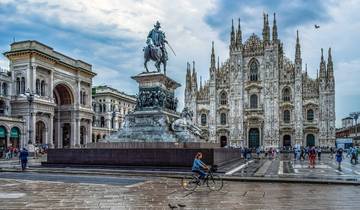
7 days
Two Cities & Two Lakes: From Como to Verona
- ✓ Comprehensive Milan tour
- ✓ Expert local guides included
- ✓ All accommodation arranged
- ✓ Transportation provided

5 days
5 Day Italy Tour Package with Bernina Express – Verona, Sirmione, Bellagio & Como
- ✓ Comprehensive Milan tour
- ✓ Expert local guides included
- ✓ All accommodation arranged
- ✓ Transportation provided
6 days
Lugano for All Ages: Adventures in the Alps
- ✓ Booking needs min. 2 travelers
7 days
Discover Italy end Milan
- ✓ Comprehensive Milan tour
- ✓ Expert local guides included
- ✓ All accommodation arranged
- ✓ Transportation provided
Multi-day tour packages powered by TourRadar. Prices and availability subject to change.
Duomo Roof: Capturing Gothic Majesty
The Duomo roof presents Milan’s most extraordinary photographic opportunity, granting access to Gothic architecture’s intricate details while providing elevated perspectives across the city. Access via stairs or elevator brings photographers among 135 spires, 3,400 statues, and countless decorative elements that transform the roof into marble forest. This environment enables both macro photography of ornamental carvings and wide-angle compositions juxtaposing architecture against urban backdrop. The roof’s white-pink Candoglia marble responds beautifully to changing light conditions, glowing warmly during golden hour, reflecting harsh midday sun, and creating ghostly presence during overcast conditions.
Technical challenges include extreme contrast between bright marble and dark shadows, particularly on sunny days. Expose for highlights to preserve marble texture, allowing shadow areas to go dark rather than blowing out white surfaces. HDR bracketing captures complete tonal range, though natural graduated filters often produce more aesthetically pleasing results than aggressive tone mapping. Polarizing filters reduce glare from marble surfaces and deepen blue skies, creating dramatic contrast though potentially introducing unnatural darkness. The roof’s elevated position 108 meters above street level makes wide-angle lenses essential for capturing context – 16mm or wider on full-frame cameras enables dramatic foreground-to-background compositions.
Compositional strategies should emphasize the roof’s unique three-dimensional complexity rather than settling for obvious symmetrical facades. Diagonals created by receding spires lead viewers’ eyes through frame depth. Layering multiple spires at different distances creates sense of density and architectural richness. Including Madonnina statue (golden Madonna crowning the central spire) provides recognizable focal point and scale reference. Silhouettes against sunrise or sunset skies transform architectural details into graphic shapes. Low angles looking up at spires against sky create dramatic perspectives that emphasize verticality and Gothic aspiration.
Crowds present significant challenges, particularly during peak summer months and weekends when limited roof space fills with tourists. Arrive at opening time or late afternoon for reduced congestion. Use other tourists as scale references rather than obstacles, including human figures to convey architectural grandeur. Patience proves essential – wait for clear moments when key compositional areas empty temporarily. Consider off-season visits (November-February) when fewer tourists and dramatic winter light create ideal conditions despite cold and potential rain. The roof’s exposure to weather requires weatherproof camera gear and willingness to shoot in various conditions that often produce the most dramatic images.
Galleria Vittorio Emanuele II: Geometric Perfection and Light
The Galleria Vittorio Emanuele II presents distinctive photographic opportunities through its soaring glass arcade, geometric floor mosaics, and elegant architectural details. The iron and glass ceiling creates complex lighting situations where natural light filters through geometric patterns, creating dappled illumination that changes throughout the day. Early morning provides soft, even light before harsh midday sun creates excessive contrast. Overcast days produce ideal diffused lighting that illuminates the entire arcade uniformly, eliminating hot spots and deep shadows. The Galleria’s north-south orientation means the central octagon receives direct overhead light midday, creating dramatic but challenging high-contrast conditions.
The mosaic floor featuring bulls from various Italian cities provides popular foreground interest, particularly the Turinese bull whose testicles visitors traditionally spin on for good luck, creating worn depression that adds historical texture. Photograph the mosaics using overhead perspective, either from ground level or elevated positions along the arcade’s second story. Wide-angle lenses (14-24mm) capture the complete octagon including ceiling and floor in single frame. Symmetry dominates Galleria compositions – position yourself precisely centered within the octagon or along the main arcade axis to maximize geometric harmony. Reflections in polished marble floors create mirror effects, requiring careful exposure to balance floor reflections with architectural elements above.
The Galleria’s commercial function creates dynamic human activity that can enhance or detract from architectural photography depending on intentions. Empty arcade shots emphasizing geometric purity require early morning hours (7-8 AM) before shops open and tourists arrive. Including people provides scale and animates spaces, showing the Galleria as functional urban passage rather than museum piece. Fashion-conscious Milanese provide elegant human subjects whose stylish clothing complements the arcade’s Belle Époque elegance. Long exposures blur moving figures into ghostly suggestions of activity while maintaining static architectural sharpness, creating ethereal atmosphere that balances structure and life.
Detail photography reveals the Galleria’s artistic richness beyond famous overview shots. Lunette mosaics depicting four continents demonstrate 19th-century artistic skill and imperialist worldviews. Ornate storefronts including Prada’s original location showcase luxury retail design. Architectural ornaments including capitals, moldings, and decorative ironwork reward close examination. Reflections in shop windows create layered compositions mixing interior displays with reflected architecture. The Galleria’s architectural details provide subject matter for comprehensive photographic series documenting 19th-century Italian architectural achievement and contemporary luxury culture’s colonization of historical spaces.
Modern Architecture: Contemporary Milan Contrasts
Milan’s embrace of contemporary architecture creates dramatic visual contrasts between historical monuments and cutting-edge buildings that define 21st-century architectural photography. The Bosco Verticale (Vertical Forest) residential towers designed by Stefano Boeri present unprecedented architectural forms where 800 trees and 15,000 plants grow from residential terraces, creating living facades that change with seasons. Photograph these towers from multiple distances – wide shots establishing urban context, medium distances showing architectural form and green integration, close-ups revealing vegetation detail and architectural structure. Afternoon light from the west illuminates the vegetation while creating dimensional shadows that reveal the towers’ complex surfaces.
The CityLife district surrounding Hadid Tower (Torre Generali), Libeskind’s Residenze (Torre Isozaki), and Libeskind’s commercial tower creates futuristic environment where curved glass facades and unconventional geometries challenge traditional architectural photography. These buildings demand clear weather and strategic positioning to manage extreme reflections and complex forms. Use polarizing filters to control reflections, though complete reflection elimination often removes interesting visual elements. Wide-angle perspectives emphasize the towers’ dramatic height and unconventional geometries, while telephoto isolation captures abstract compositions from glass surfaces and structural details. The surrounding park provides foreground elements including contemporary sculpture and landscaping that ground architectural shots in human-scaled context.
Porta Nuova district combines completed towers with ongoing construction, documenting Milan’s transformation in real time. The Unicredit Tower (Italy’s tallest building) provides dramatic vertical emphasis that contrasts with surrounding horizontal development. Photograph at dawn or dusk when building illumination creates dramatic effects against sky gradients. The reflecting pools and pedestrian plazas provide foreground interest and reflection opportunities. Low-angle perspectives emphasize height while including architectural base details. The district’s uniform modernist aesthetic creates cohesive visual environment, though photographers must work to create distinctive images within visually similar elements.
Juxtaposing old and new architecture reveals Milan’s temporal layers and willingness to embrace change alongside preservation. Frame shots combining medieval towers with contemporary glass facades, demonstrating centuries of architectural evolution in single image. This contrast photography requires careful positioning to include both historical and modern elements in meaningful relationship rather than accidental collision. Use selective focus to emphasize primary subject while maintaining context. These juxtaposition shots communicate Milan’s distinctive character more effectively than isolated photographs of either historical or contemporary buildings alone, revealing the city’s complex identity balancing tradition and innovation.
Street Photography: Capturing Milanese Life
Milan street photography captures the city’s distinctive urban culture – fashion-conscious residents, purposeful business activity, and elegant café society that gives Milan its sophisticated character. The Brera neighborhood provides charming narrow streets, artistic atmosphere, and diverse subjects from students to elderly residents to bohemian types. Navigli district offers canal-side scenes with colorful buildings, outdoor dining, and evening aperitivo crowds. Corso Como area attracts fashion industry professionals and trendy youth whose stylish appearance enhances visual interest. These neighborhoods provide backdrops that contextualize subjects within distinctive Milanese environments.
Technical approaches to street photography balance environmental documentation with decisive moments capturing fleeting human interactions. Zone focusing at moderate apertures (f/8-f/11) maintains depth-of-field while enabling quick shooting without autofocus delays. Fast shutter speeds (1/250 or faster) freeze motion while shorter telephoto lenses (85mm-135mm) enable candid photography from distance without subjects’ awareness. Alternatively, wide-angle lenses (28mm-35mm) encourage close proximity and environmental portraits that show people within architectural context. Black and white processing often enhances street photography by eliminating color distractions while emphasizing form, gesture, and light quality. However, Milan’s fashion culture makes color significant – the city’s distinctive palette of blacks, grays, and accent colors deserves color capture.
Ethical considerations require respecting subjects’ privacy and dignity while documenting public life. Italian privacy laws theoretically restrict publication of recognizable portraits without consent, though casual photography in public spaces remains legally protected. Practically, most Milanese accept street photography as normal urban activity, though aggressive close-range photography generates understandable negative reactions. Shoot discreetly, avoid interfering with people’s activities, and respect those who object to being photographed. Consider sharing selected images with subjects who made positive interactions possible – this courtesy builds goodwill and sometimes produces interesting conversations. Street photography succeeds when it reveals human dignity and urban life’s richness rather than exploiting people for aesthetic purposes.
Nighttime street photography captures Milan’s transformation after dark when illuminated architecture and street life create entirely different urban character. The Duomo piazza becomes theatrical space with cathedral facade dramatically lit against dark sky. Corso Buenos Aires transforms into river of light with vehicle trails and shop illumination. The Navigli district’s reflection photography multiplies lights in canal surfaces, creating impressionistic effects. Nighttime street photography requires fast lenses, high ISO capability, and image stabilization or tripod support. Long exposures blur moving traffic while maintaining pedestrian detail, creating dynamic energy that conveys urban vitality. Blue hour (twilight) provides particularly photogenic conditions when artificial lights activate while sky retains color, creating balanced exposures impossible during complete darkness.
Churches and Interior Photography
Milan’s churches present significant photographic opportunities alongside substantial technical challenges. These religious spaces combine artistic treasures with architectural magnificence, requiring careful approach that respects sacred function while documenting artistic and historical significance. The Basilica di Sant’Ambrogio demonstrates Romanesque austerity with brick construction, column capitals, and atmospheric apse mosaics. San Lorenzo Maggiore preserves Roman columns and early Christian architecture with distinctive octagonal plan. Santa Maria presso San Satiro features Bramante’s trompe-l’oeil apse creating illusory depth through perspective manipulation – architectural effect best captured from specific viewing position demonstrating the perspective trick.
Technical challenges in church interiors stem from extreme dynamic range between bright windows and dark interior spaces. Modern cameras’ impressive ISO capabilities enable handheld shooting at values (ISO 3200-6400) that previous generations required tripods to manage. However, tripod use remains preferable when permitted, enabling base ISO shooting that maximizes image quality and enables bracketing for HDR processing. Many churches prohibit tripods during service times while permitting their use during visitor hours. Wide-angle lenses prove essential for capturing complete architectural spaces in confined interiors, though distortion correction remains necessary to maintain vertical lines. Shift lenses or post-processing perspective correction prevents converging verticals that make architecture appear to lean backward.
Lighting management requires sophisticated approaches beyond simple exposure adjustment. Expose for mid-tones, allowing windows to blow out partially while maintaining interior detail – attempting to preserve complete highlight detail results in excessively dark overall images. HDR bracketing captures complete tonal range from bright windows to shadowed corners, though excessive tone mapping produces unnatural results. The goal is revealing spaces as perceived by human vision rather than creating technically perfect but aesthetically unpleasing images. Church lighting includes candlelight, which creates warm accent points and atmospheric quality worth incorporating rather than eliminating. Mixed color temperatures from daylight windows, tungsten artificial lights, and candlelight require white balance decisions – either neutral settings that maintain temperature variety or selective adjustment emphasizing particular lighting sources.
Respectful photography protocols acknowledge churches’ religious function rather than treating them merely as tourist attractions. Avoid photography during services unless explicitly permitted. Dress appropriately with covered shoulders and knees. Move quietly without disrupting those in prayer. Photography of individuals in worship requires explicit permission. Many churches request donations for photography permission – these payments support building maintenance and should be viewed as fair exchange rather than exploitative charges. Some locations including the Last Supper prohibit photography entirely, rules that should be respected regardless of personal disagreement. Successful church photography produces images capturing spiritual atmosphere and artistic achievement while honoring the sacred context that gave these buildings their meaning.
Seasonal Photography: Weather and Light Variations
Milan’s four distinct seasons create varying photographic conditions that significantly affect image quality and creative possibilities. Spring (March-May) offers fresh green vegetation in parks and along streets, blooming flowers providing color accents, and increasingly extended daylight hours. Spring’s variable weather produces dramatic cloud formations and occasional storms that create moody atmospheric conditions. The moderate temperatures make extended outdoor photography comfortable while unpredictable rain requires weather protection for equipment. Spring photography captures Milan’s renewal and vitality as the city emerges from winter dormancy.
Summer (June-August) provides maximum daylight hours enabling early morning and late evening shooting sessions that avoid midday heat and harsh lighting. However, summer presents challenges including intense heat that limits comfortable outdoor activity, hazy atmospheric conditions that reduce distant clarity, and massive tourist crowds that complicate architectural photography. Many Milanese abandon the city in August for vacation, creating unusually quiet streets that enable empty urban photography rarely possible otherwise. Summer thunderstorms arrive suddenly, creating dramatic lighting conditions and rainbow opportunities though threatening expensive camera equipment. Golden hour occurs late (around 8:30-9:30 PM in June) enabling evening photography sessions followed by aperitivo and dinner without sacrificing social activities.
Autumn (September-November) provides arguably Milan’s best photography conditions with comfortable temperatures, dramatic weather including fog and morning mist, beautiful foliage color in parks, and reduced tourist crowds after summer peak. The Fashion Week events in September bring international fashion industry to Milan, creating street photography opportunities with stylish attendees and cultural buzz. Autumn light becomes more directional and dramatic as the sun angle lowers, creating dimensional shadows and more interesting lighting conditions than summer’s overhead illumination. Shorter days compress golden hour shooting windows while making midday photography more feasible due to lower sun angles.
Winter (December-February) challenges photographers with cold temperatures, short daylight hours, and frequent gray overcast conditions that some find depressing while others appreciate for diffused lighting. However, winter offers unique advantages including minimal tourist crowds, dramatic fog conditions, occasional snow transforming the city into winter wonderland, and festive Christmas decorations creating colorful night photography opportunities. The famous Duomo Christmas tree and piazza illuminations provide spectacular subjects combining historical architecture with contemporary holiday culture. Winter’s soft light flatters architectural photography throughout the day, eliminating concerns about harsh midday sun. Cold weather requires battery management – lithium batteries lose capacity in freezing temperatures, making backup batteries essential. Weather-sealed camera equipment proves valuable when shooting in rain, snow, or high humidity conditions common during Milan winters.
Post-Processing: Developing Milan Images
Post-processing develops digital captures into finished images that communicate photographic vision while maintaining authenticity that respects architectural and documentary subjects. RAW format capture provides maximum editing flexibility, enabling exposure adjustment, white balance correction, and detail recovery impossible with JPEGs. Develop images using Adobe Lightroom, Capture One, or alternative RAW processors that provide comprehensive control over tonal values, color rendition, and local adjustments. Maintain realistic processing that enhances rather than distorts – architectural photography particularly demands faithful representation that preserves proportions, colors, and spatial relationships.
Perspective correction proves essential for architectural images, preventing converging vertical lines that make buildings appear to lean backward. Lightroom’s Transform panel or Photoshop’s perspective tools straighten verticals while maintaining horizontal lines. However, complete perspective correction sometimes creates unnatural results – slight convergence often appears more dynamic than perfectly parallel verticals. Balance technical correctness with aesthetic judgment, prioritizing images that look right over those that conform strictly to rules. Wide-angle distortion at frame edges may require additional correction, particularly for architectural details photographed close with extreme focal lengths.
Color management addresses Milan’s distinctive light quality and ensures faithful reproduction of architectural materials. The city’s white-pink Candoglia marble requires careful white balance to preserve its characteristic warm tone without excessive orange cast. Interior photography’s mixed lighting demands selective color temperature adjustment – leaving warm tones from artificial lights while correcting daylight areas creates natural appearance. Vibrance adjustment increases color intensity while protecting skin tones, creating visually appealing images without cartoonish oversaturation. Black and white conversion emphasizes form and light while removing color distractions, though Milan’s color palette often deserves preservation – the city’s sophisticated grays, blacks, and accent colors express its design-conscious character.
Detail enhancement through clarity, sharpening, and local adjustments reveals architectural textures and fine details that cameras capture but require emphasis for visual impact. Clarity adjustment increases mid-tone contrast, emphasizing textures in marble, stone, and brick without affecting overall exposure. Sharpening applied during export optimizes images for specific output – screen display requires less sharpening than print reproduction. Local adjustments using brushes or graduated filters enable selective enhancement – brightening foreground elements, darkening skies, emphasizing particular architectural features without affecting entire image. However, excessive local adjustment creates unnatural appearance – successful processing feels invisible, appearing as exceptional photography rather than obvious manipulation.
Equipment Management and Practical Considerations
Managing photographic equipment in Milan requires balancing image quality ambitions with practical realities of urban travel. A complete camera system including multiple lenses, tripod, filters, and accessories quickly becomes burdensome during extended walking sessions covering kilometers of urban exploration. Prioritize essential equipment based on planned photography – architectural shooting demands wide-angle capability and tripod, street photography succeeds with compact setup enabling mobility and discretion. Consider using two bodies with complementary lenses rather than constantly changing lenses – this speeds shooting while reducing dust contamination risks from frequent lens changes in urban environment.
Security concerns require constant vigilance in crowded tourist areas where pickpockets and bag snatchers operate. Cross-body camera straps prevent snatch-and-run theft while distributing weight comfortably. Never leave camera equipment visible in parked vehicles – smash-and-grab theft remains common targeting rental cars with out-of-province plates. Photography insurance provides peace of mind against theft or accidental damage, particularly for professionals carrying expensive equipment. Remain aware of surroundings while shooting – focusing intently through viewfinder creates vulnerability to theft and collision with pedestrians or vehicles. Street photography demands constant environmental awareness that balances photographic vision with practical safety.
Weather protection preserves expensive equipment from rain damage and extends shooting possibilities beyond perfect conditions. Weather-sealed cameras and lenses provide some moisture resistance, though they should not be considered waterproof. Rain covers or plastic bags protect equipment during sudden downpours, enabling shooting in conditions that otherwise would terminate photography sessions. Microfiber cloths remove rain spots from lens surfaces, preventing water damage to optical coatings. Silica gel packets in camera bags absorb moisture, preventing fungus growth that ruins optical elements. Milan’s variable weather makes rain preparation essential – forecasts provide guidance but conditions change rapidly, requiring adaptation and protective equipment.
Digital workflow management ensures organized archives that enable finding specific images years after shooting. Consistent file naming conventions using date, location, and subject information make searching possible without relying on memory. Comprehensive backups protect against data loss from equipment failure, theft, or accidental deletion. Cloud storage, external hard drives, and redundant backup systems provide layered protection proportional to images’ value. Metadata tagging during import speeds searching while preserving information about shooting conditions, camera settings, and GPS locations. Regular catalog maintenance keeps image libraries functional rather than allowing them to become overwhelming digital landfills where valuable photographs disappear amid thousands of mediocre captures.
Frequently Asked Questions
Is the Duomo roof worth the extra cost for photography?
The Duomo roof entrance fee represents exceptional value for photographers, providing unique elevated perspective and intimate access to Gothic architecture impossible to capture from ground level. The ability to shoot among marble spires and statues justifies the expense for anyone serious about Milan architectural photography. The roof access enables portfolio-worthy images that distinguish your work from standard street-level captures made by every tourist. For photographers visiting Milan specifically for architectural shooting, the Duomo roof ranks as essential location worth prioritizing over other paid attractions. Casual photographers shooting primarily for personal memories may find ground-level perspectives sufficient, though they will miss extraordinary compositional opportunities the roof provides.
What photography gear should I bring to Milan for a week?
A versatile two-lens kit covering 16-24mm wide-angle and 24-105mm standard zoom handles most Milan photography situations while remaining portable for extended daily shooting. Add a fast prime (35mm f/1.4 or 50mm f/1.8) for low-light work and shallow depth-of-field creative control. Bring polarizing filter for architectural photography, ND filter for long exposures, and protective UV filters for all lenses. Compact travel tripod enables nighttime and interior photography without excessive weight. Multiple batteries, sufficient memory cards for anticipated shooting volume, and battery charger comprise essential electronics. Microfiber lens cloths, sensor cleaning kit, and rain cover protect equipment. Camera strap providing security and comfort during all-day shooting completes the essential kit. Avoid bringing excessive gear that burdens daily photography – Milan rewards mobility over comprehensive equipment coverage.
Can I sell photographs taken in Milan?
Selling photographs taken in Milan’s public spaces remains legal, though commercial use creates potential complications requiring careful attention to property rights and privacy laws. Recognizable individuals in photographs require model releases before commercial use – Italian privacy laws protect individuals’ image rights, making publication of identifiable portraits potentially problematic without consent. Architectural photography generally presents fewer problems as buildings visible from public spaces can be photographed freely, though some modern buildings’ distinctive designs may be trademarked limiting commercial reproduction. Interior photography in private spaces including museums and churches often requires permission for commercial use even if personal photography is permitted. Stock photography sales constitute commercial use requiring proper releases and permissions. Consult legal expertise before selling Milan photographs commercially to ensure compliance with Italian intellectual property and privacy regulations.
What makes Milan challenging for photography compared to other Italian cities?
Milan presents challenges including active urban environment where pedestrians and vehicles constantly intrude into architectural compositions, modern development that creates visual clutter competing with historical subjects, and weather variability requiring adaptability and weather protection. The city’s working character means photographers cannot easily find empty streets and squares available in museum cities like Venice during early morning hours. Milan’s northern latitude produces different light quality than southern Italian destinations – softer and more diffused but potentially less dramatic than Rome’s Mediterranean sun. The relative scarcity of concentrated historical architecture compared to Florence means photographers must work harder to find distinctive compositions rather than simply pointing cameras at obvious subjects. However, these challenges create opportunities for original work – Milan’s complexity rewards photographers who invest time understanding the city beyond superficial tourist attractions.
How do I photograph Milan’s museums and galleries effectively?
Museum photography requires understanding each institution’s specific policies while managing technical challenges of interior lighting and spatial constraints. Verify photography permissions upon entry – many locations permit non-flash personal photography while prohibiting tripods and commercial use. The Last Supper prohibits all photography, making compliance rather than circumvention the appropriate response. Use high ISO values (3200-6400) enabling handheld shooting in low light, accepting modest noise as preferable to missing shots entirely. Compose carefully to exclude other visitors when possible, creating clean images that emphasize artworks and architecture. Photograph from angles showing works’ scale and museum context rather than attempting to reproduce images as if in art books – your photographs should document museum experience not substitute for artwork itself. Shoot details and installation views showing curation choices and spatial relationships that reveal how institutions present collections.
What are the best alternative viewpoints beyond the famous locations?
Beyond major tourist sites, Milan offers numerous alternative photography locations providing distinctive perspectives and reduced crowds. The Fondazione Prada’s architectural complex combines historical industrial buildings with contemporary additions creating varied photographic opportunities. Navigli canal reflections during blue hour create atmospheric urban waterscapes distinct from Milan’s usual architectural photography. Cimitero Monumentale’s elaborate funerary monuments and sculptures create haunting beauty combining art with mortality’s contemplation. Bosco Verticale towers photograph dramatically from surrounding Porta Nuova district pedestrian plazas. Villa Reale gardens provide green respite and classical architecture. Corso Buenos Aires street photography captures commercial energy and immigrant neighborhoods. These locations enable original work that distinguishes your Milan portfolio from typical tourist collections focusing exclusively on Duomo and Galleria.
How do Milan’s fashion events affect photography opportunities?
Fashion Week in February and September transforms Milan into fashion capital, creating extraordinary street photography opportunities with industry professionals, models, and celebrities congregating at shows and events. The Quadrilatero della Moda becomes open-air fashion theater where paparazzi and street style photographers compete for shots of fashionable attendees. Fashion Week access requires credentials for official shows, but street photography remains open to anyone willing to position themselves strategically near venues. The events create unique atmosphere combining glamour with commercial energy that captures Milan’s fashion industry significance. However, crowds and security complicate photography while Fashion Week premium pricing affects accommodation costs. Photographers should balance Fashion Week’s unique opportunities against practical complications, considering whether your photographic interests align with fashion industry access.
What post-processing style works best for Milan architectural photography?
Milan architectural photography benefits from clean, precise post-processing that emphasizes form and detail while maintaining realistic color and tonal values. Avoid excessive HDR tone mapping or heavy-handed filters that distort architectural proportions and create unnatural appearance. Moderate contrast enhancement emphasizes dimensional shadows while revealing detail in both highlights and shadows. Perspective correction maintains vertical lines while horizontal elements remain level – essential for architectural credibility. Color processing should preserve Milan’s sophisticated palette of grays, blacks, and whites with accent colors rather than imposing arbitrary color grades. Selective adjustments brighten foreground elements or darken skies without obvious graduated filter effects. The goal is enhancing what makes Milan architecturally distinctive while maintaining photographic integrity that respects subjects rather than transforming them into fantasies bearing minimal relationship to actual urban reality.
How can I create unique Milan photographs beyond typical tourist images?
Original Milan photography requires moving beyond obvious subjects and standard perspectives that produce images indistinguishable from millions of existing photographs. Shoot from unusual angles – ground-level perspectives, dramatic upward tilts, overhead views from elevated positions. Focus on details rather than comprehensive views – architectural ornaments, material textures, geometric patterns abstracted from larger contexts. Include Milanese people going about daily activities rather than empty monuments – the city’s living character provides narrative depth that pure architectural documentation lacks. Photograph during unusual conditions – fog, rain, dawn, late night when typical tourists have retreated indoors. Explore neighborhoods beyond tourist center including working-class and immigrant areas that reveal contemporary urban reality. Create photographic series examining specific themes – door handles, window displays, pavement patterns – that force close attention revealing overlooked elements. Developing personal photographic vision requires time and repeated visits rather than expecting instant originality during brief tourist stays.
What are common mistakes to avoid when photographing Milan?
Common Milan photography mistakes include shooting exclusively during harsh midday light rather than optimizing golden hour conditions, attempting to photograph the Duomo from ground level expecting unique results, neglecting modern architecture in favor of only historical monuments, failing to include human elements that convey scale and urban vitality, over-processing images with excessive saturation or HDR effects, photographing exclusively within tourist center while ignoring diverse neighborhoods, shooting only exterior architecture while missing important interior spaces, attempting photography during conditions requiring weather protection without proper equipment, and expecting instant masterpieces without investing time understanding the city’s character and photographic opportunities. Avoiding these mistakes requires planning, patience, technical competence, and willingness to explore beyond obvious subjects while respecting Milan’s working urban character rather than treating it as theme park existing solely for photographic purposes.