Mesa Verde National Park Complete UNESCO Guide: Ancient Puebloan Heritage & Archaeological Wonders
Mesa Verde National Park in southwestern Colorado preserves the most extensive and best-preserved cliff dwelling complex in North America, protecting nearly 5,000 archaeological sites built by Ancestral Puebloan people across seven centuries. Designated as a UNESCO World Heritage Site in 1978 and America’s first archaeological national park in 1906, Mesa Verde offers unparalleled insight into pre-Columbian architecture, engineering innovation, and cultural adaptation. This guide explores the park’s profound historical significance, architectural marvels, and the enduring legacy of the civilization that created these extraordinary structures carved into canyon walls.
Key Takeaways About Mesa Verde National Park
- UNESCO World Heritage Status: Mesa Verde earned UNESCO designation in 1978 as the first national park created specifically to preserve archaeological resources rather than natural landscapes, recognizing its exceptional testimony to Ancestral Puebloan cultural traditions spanning 550 to 1300 CE.
- Unparalleled Archaeological Density: The park protects nearly 5,000 archaeological sites across 52,000 acres, including approximately 600 cliff dwellings that range from small storage structures to villages of 150 rooms, representing one of the highest concentrations of prehistoric settlements in the United States.
- Architectural Innovation: Cliff Palace stands as North America’s largest cliff dwelling with 150 rooms and 23 ceremonial kivas, demonstrating sophisticated construction techniques using sandstone blocks and mud mortar that have survived intact for over 700 years in the protected alcove environment.
- Cultural Continuity: Twenty-four modern Pueblo tribes and communities in New Mexico, Arizona, Colorado, and Texas trace their ancestral roots to Mesa Verde, maintaining spiritual connections to the sites and preserving oral traditions that complement archaeological evidence.
- Elevation and Environment: Located at elevations between 6,000 and 8,572 feet on a high plateau, Mesa Verde’s semi-arid environment with pinyon-juniper woodlands and sandstone geology created the alcoves that sheltered cliff dwellings while presenting significant survival challenges for ancient inhabitants.
- Access and Preservation Balance: Only three cliff dwellings operate regular ranger-guided tours to balance visitor access with preservation needs, while hundreds of additional sites remain protected and closed to minimize deterioration of these irreplaceable cultural resources.
People Also Ask About Mesa Verde National Park
Why Is Mesa Verde a UNESCO World Heritage Site?
Mesa Verde received UNESCO World Heritage designation in 1978 because it represents an outstanding example of a remarkably well-preserved prehistoric settlement landscape of the Ancestral Puebloan culture. The site meets UNESCO Criterion (iii) by providing eloquent testimony to ancient cultural traditions of Native American tribes through its exceptional archaeological sites. The concentration of nearly 5,000 sites, including 600 cliff dwellings built between the 6th and 12th centuries, demonstrates extraordinary architectural achievement and cultural continuity spanning approximately 750 years. Mesa Verde’s universal value lies in its preservation of complete village complexes that reveal detailed information about daily life, social organization, ceremonial practices, and technological innovation of pre-Columbian North American civilization. The sandstone and mud-mortar multi-story buildings have survived intact in form and materials due to both the engineering skills of the builders and the protective alcove environment, offering insights available at few other archaeological sites worldwide.
Who Built the Cliff Dwellings at Mesa Verde and When?
Ancestral Puebloan people built the cliff dwellings at Mesa Verde between approximately 1190 and 1280 CE during the final phase of their occupation of the mesa. These communities had lived in the region since around 550 CE, initially constructing pit houses dug into mesa tops before transitioning to above-ground pueblo structures around 750 CE. The move into cliff alcoves occurred relatively late in the settlement timeline, representing an architectural shift that may have been motivated by defense, climate adaptation, or social reorganization. Construction employed sophisticated dry-stacking techniques using sandstone blocks shaped with harder stone tools, chinked with smaller stones, and mortared with clay-based mud. Major sites like Cliff Palace housed approximately 100 people in 150 rooms, while smaller dwellings accommodated extended family groups. The builders demonstrated advanced understanding of load distribution, water management, and passive solar design by orienting structures to capture winter sun while providing summer shade. By approximately 1300 CE, the Ancestral Puebloan population had migrated away from Mesa Verde, moving primarily south and east to establish communities that evolved into modern Pueblo cultures.
What Makes Mesa Verde Different from Other National Parks?
Mesa Verde stands unique as the first and only national park established primarily to preserve cultural heritage rather than natural features, created by President Theodore Roosevelt in 1906 specifically to protect archaeological sites. While most national parks prioritize geological formations, ecosystems, or wilderness preservation, Mesa Verde’s core mission centers on safeguarding human architectural achievements and the material culture of a pre-Columbian civilization. The park’s 600 cliff dwellings and 4,400 additional archaeological sites represent the densest concentration of Ancestral Puebloan structures in North America, preserved both in their original alcove settings and as complete village complexes rather than isolated ruins. Management priorities focus on archaeological conservation, cultural resource protection, and collaboration with descendant Pueblo communities rather than recreational wilderness access. Unlike parks where visitors freely explore trails and backcountry, Mesa Verde restricts access to most archaeological sites, offering structured ranger-guided tours to minimize human impact on fragile structures. This cultural preservation mandate extends to ongoing archaeological research, tribal consultation on interpretation, and strict protocols for site stabilization that distinguish Mesa Verde’s operations from the National Park Service’s predominantly natural resource-focused portfolio.
How Large Is Cliff Palace and Why Is It Significant?
Cliff Palace is the largest known cliff dwelling in North America, containing 150 rooms and 23 ceremonial kivas spread across a natural sandstone alcove measuring approximately 300 feet long and 90 feet deep. Built between 1190 and 1280 CE, the structure rises to four stories in some sections, housing an estimated 100 people at its peak occupation. The dwelling’s significance extends beyond sheer size to encompass its architectural sophistication, featuring precisely fitted masonry walls, T-shaped doorways characteristic of Ancestral Puebloan construction, decorative elements including painted plaster, and engineered kivas with ventilation systems and raised fire pits. Cliff Palace demonstrates advanced understanding of communal space organization with distinct residential areas, ceremonial spaces, storage rooms, and evidence of specialized craft production areas. The site’s exceptional preservation results from its protected alcove location and limited exposure to weathering, allowing modern visitors to observe original architectural details including roof beam sockets, plaster finishes, and construction sequencing evidence. Archaeological research at Cliff Palace has provided foundational knowledge about Ancestral Puebloan social structure, religious practices, and daily life patterns that inform interpretation throughout the broader Mesa Verde region and contribute to understanding of pre-Columbian North American cultures generally.
Extended multi-day tours – 5+ days
Featured Colorado Multi-Day Tour Packages
3 days
Colorado 3-Day Discovery Tour
- ✓ Comprehensive Colorado experience
- ✓ Expert local guides included
- ✓ All accommodation included
- ✓ Transportation provided

5 days
Colorado 5-Day Highlights Experience
- ✓ Comprehensive Colorado experience
- ✓ Expert local guides included
- ✓ All accommodation included
- ✓ Transportation provided

7 days
Colorado 7-Day Cultural Journey
- ✓ Comprehensive Colorado experience
- ✓ Expert local guides included
- ✓ All accommodation included
- ✓ Transportation provided
10 days
Colorado 10-Day Complete Adventure
- ✓ Comprehensive Colorado experience
- ✓ Expert local guides included
- ✓ All accommodation included
- ✓ Transportation provided
Multi-day tour packages powered by TourRadar. Prices and availability subject to change.
Understanding Mesa Verde National Park: Location, Geography, and UNESCO Context
Mesa Verde National Park occupies 52,073 acres of high plateau terrain in Montezuma County, southwestern Colorado, situated approximately 35 miles west of Durango and 10 miles east of Cortez in the Four Corners region where Colorado, New Mexico, Arizona, and Utah converge. The park’s name, Spanish for “green table,” describes the forested mesa that rises abruptly from surrounding lowlands, creating a distinctive landform visible for miles across the high desert valleys.
The mesa’s geography features a series of parallel finger-like projections extending south from the main plateau, dissected by deep canyons carved by seasonal water flow over millions of years. Elevations range from approximately 6,000 feet at the lowest points to 8,572 feet at Park Point, the highest overlook offering panoramic views across four states. This elevation creates a climate zone characterized by warm summers with afternoon temperatures reaching 90°F, cold winters with substantial snowfall, and dramatic daily temperature swings common to high-altitude semi-arid environments.
The geological foundation consists primarily of Mesaverde Group sandstone formations deposited during the Cretaceous period when the region lay beneath an ancient inland sea. Differential erosion of alternating hard sandstone layers and softer shale created the natural alcoves that provided shelter for cliff dwelling construction. These alcoves, formed over millions of years as water seeped through porous sandstone and froze along shale layers causing rock face spalling, offered ready-made spaces with natural roofs and back walls requiring only front and partition walls for habitable structures.
UNESCO designated Mesa Verde as a World Heritage Site on September 6, 1978, recognizing it as property number 27 on the World Heritage List under cultural criteria. The designation acknowledges Mesa Verde as an outstanding example of human creative genius and cultural tradition, meeting Criterion (iii) which requires sites to “bear a unique or at least exceptional testimony to a cultural tradition or to a civilization which is living or which has disappeared.” Among United States World Heritage Sites, Mesa Verde holds special distinction as the first archaeological property inscribed, predating Canyon de Chelly, Chaco Culture, and other Ancestral Puebloan properties by decades.
The park’s World Heritage status carries specific conservation obligations outlined in UNESCO’s Operational Guidelines, requiring the United States government to ensure protection, conservation, and transmission of the site to future generations. National Park Service management implements these obligations through comprehensive resource protection programs, visitor impact monitoring, archaeological site stabilization protocols, and consultation with twenty-four affiliated Pueblo tribes who maintain cultural connections to Mesa Verde as ancestral homelands.
Vegetation patterns reflect elevation-based life zones, with pinyon pine and Utah juniper dominating lower elevations, transitioning to Gambel oak, mountain mahogany, and serviceberry at mid-elevations, and Douglas fir, ponderosa pine, and aspen groves appearing at the highest reaches. This vegetation diversity supported Ancestral Puebloan subsistence through provision of construction timber, fuel wood, wild plant foods, and browse for game animals. Modern fire ecology research demonstrates that the Ancestral Puebloans actively managed forest resources through selective harvesting and likely through controlled burning, creating landscape mosaics that enhanced both agricultural productivity and wild resource availability.
The park’s position at the northern edge of the Ancestral Puebloan cultural region placed Mesa Verde communities at the intersection of multiple environmental and cultural zones. To the south lay the core Puebloan territories of the San Juan Basin and Rio Grande valleys, while northern connections extended into the Colorado Plateau. This geographic position facilitated trade networks evident in archaeological materials including marine shells from the Pacific Coast and Gulf of California, obsidian from volcanic sources in New Mexico, and turquoise from mines hundreds of miles distant, demonstrating Mesa Verde’s integration into broader pre-Columbian economic and cultural systems.
Ancestral Puebloan History and Cultural Context at Mesa Verde
The Ancestral Puebloan presence at Mesa Verde spans approximately 750 years, from roughly 550 CE to 1300 CE, representing one of the longest continuous occupations of any archaeological district in the American Southwest. This chronology divides into distinct periods marked by architectural evolution, population dynamics, and cultural transformations that culminated in the cliff dwelling construction visible today.
The Basketmaker III period (550-750 CE) marks the earliest substantial settlement evidence, characterized by pit house architecture partially dug into mesa top soil with timber superstructures and earth-covered roofs. These early communities practiced agriculture based on corn, beans, and squash supplemented by hunting and gathering, establishing the subsistence foundation that would support Mesa Verde populations for centuries. Basketmaker sites scattered across the mesa tops numbered in the hundreds, indicating dispersed settlement patterns with small extended family groups occupying individual homesteads rather than concentrated villages.
Pueblo I period (750-900 CE) witnessed the transition from pit houses to above-ground masonry structures, with communities constructing rows of contiguous rooms using shaped sandstone blocks bound with mud mortar. Villages grew larger and more architecturally complex, featuring dedicated storage rooms, work areas, and the emergence of kivas as specialized ceremonial and social spaces evolving from earlier pit house forms. Population estimates suggest steady growth during this period as agricultural techniques improved and communities invested in water management infrastructure including check dams, terraces, and reservoir systems that enhanced crop production.
Pueblo II period (900-1150 CE) represents a florescence marked by population expansion, architectural elaboration, and increased social complexity. Communities constructed multi-story pueblo complexes on mesa tops, with villages reaching dozens or even hundreds of rooms arranged around central plazas. Great kivas, larger ceremonial structures that could accommodate entire communities, appeared at major settlements, suggesting development of pan-village ritual practices and social integration mechanisms. Evidence of long-distance trade intensified, with exotic materials including copper bells from Mesoamerica, macaw feathers from tropical regions, and elaborate pottery from distant production centers indicating participation in extensive exchange networks.
The Pueblo III period (1150-1300 CE) saw the dramatic architectural shift to cliff dwelling construction that defines Mesa Verde’s most famous archaeological features. Between approximately 1190 and 1280 CE, communities relocated from mesa top pueblos into natural sandstone alcoves in canyon walls, constructing the sophisticated multi-story structures visible today. This transition occurred relatively rapidly by archaeological standards, with most major cliff dwellings built within a 50-year span. The motivations behind this move remain debated among archaeologists, with theories including defensive concerns, climatic adaptation, or social/ritual reorganization.
Cliff dwelling architecture demonstrates remarkable engineering sophistication. Builders shaped sandstone blocks using harder stone tools, fitted walls with precision that required minimal mortar, and incorporated architectural features including T-shaped doorways, multi-story construction using log beams and stone floors, ventilator shafts for air circulation, and carefully engineered kivas with sipapu openings representing emergence points in Puebloan cosmology. Plaster finishes on interior walls, some decorated with painted designs, indicate aesthetic concerns beyond mere function. Water management systems collected seepage from alcove walls and roofs, supplementing supplies carried from mesa top springs and small reservoirs.
Social organization inferred from cliff dwelling layouts suggests multi-family household groups occupying room blocks, with communal spaces for food processing, craft production, and social gatherings. Room sizes and construction quality varied, potentially indicating social differentiation or specialized functions. The density of structures within alcoves required sophisticated cooperation for construction, maintenance, and daily living in close quarters. Archaeological evidence of tool production, pottery manufacture, textile weaving, and ornament creation indicates economic specialization and craft guild development.
By approximately 1300 CE, the Ancestral Puebloan population had abandoned Mesa Verde entirely, migrating primarily south and east to establish new communities in the Rio Grande valley, Little Colorado River drainage, and other regions where their descendants continue to live today. This departure appears to have been permanent, with no evidence of reoccupation after the late 13th century. The timing coincided with severe drought periods documented in tree ring records, particularly the Great Drought of 1276-1299 CE, which stressed agricultural systems already pushed to carrying capacity. However, environmental factors alone cannot explain the abandonment, as many groups left before the worst drought impacts, suggesting social, political, or religious factors also influenced migration decisions.
Modern Pueblo peoples including Hopi, Zuni, Acoma, Laguna, and the nineteen Rio Grande Pueblos maintain oral traditions describing migrations from ancestral homelands that match archaeological evidence from Mesa Verde and other Four Corners sites. These oral histories describe clans leaving Mesa Verde in organized groups, carrying sacred objects and knowledge to new territories where they merged with existing communities or established new villages. The archaeological and oral historical records together document Mesa Verde not as an isolated phenomenon but as one chapter in the broader story of Puebloan cultural development, resilience, and adaptation across millennia.
Architecture and Engineering of Mesa Verde Cliff Dwellings
Mesa Verde cliff dwellings represent sophisticated architectural achievements adapted to the specific constraints and opportunities of natural sandstone alcoves. Construction required solving complex engineering challenges including load-bearing wall design, roof structure spanning irregular spaces, water management in confined settings, and maximizing usable space within alcove dimensions determined by geology rather than human planning.
Building materials consisted primarily of locally quarried sandstone, available in abundance from canyon walls and mesa surfaces. Builders shaped blocks using harder stone hammers and abrading tools, creating relatively uniform rectangular units that could be coursed into walls. Block sizes varied depending on structural requirements, with foundation courses using larger stones to establish stable bases and upper courses employing smaller units that reduced weight and simplified lifting. Some walls incorporated roughly shaped stones in rubble core construction with dressed stone facing, while others used carefully selected and fitted blocks throughout their thickness, reflecting either different construction traditions or responses to structural demands.
Mortar technology employed clay-rich mud mixed with water to plastic consistency, applied between stone courses and used to chink gaps with small stone spalls. Clay sources varied in composition, producing mortars ranging from light tan to deep reddish-brown colors visible in exposed walls today. Analysis of mortar samples reveals sophisticated understanding of material properties, with builders apparently adjusting clay-to-sand ratios to achieve appropriate setting times, adhesion strength, and resistance to moisture infiltration. Some mortars incorporated organic materials including plant fibers or animal hair as reinforcement, similar to techniques used in adobe construction traditions.
Wall construction followed several techniques depending on structural requirements and available materials. Core-and-veneer walls, common in multi-story construction, featured rubble cores faced with dressed stone on visible surfaces, economizing labor while maintaining appearance standards. Full coursed masonry appeared in prominent locations including kiva walls, tower structures, and front-facing walls visible from canyon floors. Wall thicknesses varied from single-stone width (approximately 8-12 inches) for interior partitions to 24 inches or more for load-bearing exterior walls supporting multiple stories. Some walls incorporated vertical wooden posts or reinforcement beams embedded in masonry, evidence of hybrid construction techniques combining stone and timber structural systems.
Roofing systems employed log beams spanning between walls or from back alcove surfaces to front wall supports, creating frameworks that carried secondary layers of smaller poles, brush matting, and finally thick clay mud caps that formed weatherproof walking surfaces doubling as floors for upper stories. Beam sizes ranged from substantial timbers 10-12 inches in diameter for primary spans to finger-thick saplings for brush layer construction. Wood species selection favored strong, straight-grained timber including ponderosa pine, Douglas fir, and juniper, with builders transporting logs from forested areas on the mesa top down into canyons, a labor-intensive process requiring organization and cooperation.
Kivas, the circular or D-shaped ceremonial structures that appear in nearly every cliff dwelling, represent architectural forms descended from earlier pit house traditions but adapted to above-ground construction within alcove settings. Kiva architecture includes several distinctive features: subterranean or semi-subterranean excavation with masonry lining walls, southern ventilator shafts that brought fresh air below floor level, deflector stones positioned between ventilators and central fire pits to control airflow, raised masonry fire rings, plastered interior surfaces often decorated with painted designs, pilaster supports for cribbed log roof structures, and sipapus (small floor holes) representing emergence places in Puebloan cosmology. Kiva diameters typically measured 12-15 feet, with some great kivas exceeding 40 feet, requiring sophisticated roof engineering to span such distances using log beams and cribbed pole frameworks.
Multi-story construction, particularly impressive in large sites like Cliff Palace with sections rising four stories, required careful attention to load distribution and structural stability. Ground floor walls bore the accumulated weight of upper stories, necessitating thicker construction and stronger foundations. Upper story walls often employed lighter construction with thinner walls and smaller room dimensions to reduce overall weight. Access between stories utilized interior wooden ladders reaching through roof hatches, a system that also served defensive purposes by allowing residents to remove ladders and deny entry to unwanted visitors.
Room functions varied, with archaeological evidence distinguishing residential spaces from storage rooms, ceremonial areas from work spaces. Residential rooms featured hearths, evidence of domestic activities including food processing and tool production, and sometimes decorative wall treatments. Storage rooms, typically smaller with limited or no windows, contained concentrations of storage vessels and botanical remains from stored crops. Work areas showed evidence of specialized activities including pottery production, stone tool manufacture, textile weaving, and food processing, with some activity areas located in open plaza spaces rather than enclosed rooms.
Water management systems addressed the challenge of supplying cliff dwelling populations without direct access to springs or streams. Builders engineered collection systems that channeled seepage water from alcove walls and roofs into plastered collection basins, supplementing supplies carried from mesa top sources. Some alcoves feature seep springs where water percolating through sandstone emerges at shale layers, providing reliable if limited water sources. Residents likely spent significant daily effort hauling water from mesa top springs down trails to cliff dwellings, a labor-intensive necessity that may have influenced settlement patterns and population densities.
Passive solar design appears in the orientation and placement of many cliff dwellings, with south-facing alcoves capturing low-angle winter sunlight for heating while alcove overhangs provided shade during high-angle summer sun. This environmental control reduced fuel requirements for heating and created more comfortable living conditions in both summer and winter. Archaeological studies measuring solar angles and alcove dimensions demonstrate that builders understood and deliberately exploited these passive climate control opportunities when selecting alcove locations and planning structure orientations.
The remarkable preservation of Mesa Verde architecture results from multiple factors including the protective alcove environment that shelters structures from direct precipitation, low humidity that limits freeze-thaw cycles damaging masonry, construction quality using durable materials and sound engineering principles, and the relatively short time between abandonment and modern protection that limited vandalism and natural deterioration. Even 700 years after construction, many structures retain original roof beams, plaster finishes, and architectural details that provide detailed information about building techniques, labor organization, and the skills of Ancestral Puebloan masons and engineers.
Major Archaeological Sites and Cliff Dwellings at Mesa Verde
Mesa Verde’s nearly 5,000 archaeological sites span the entire spectrum of Ancestral Puebloan occupation, from earliest Basketmaker pit houses to late Pueblo III cliff dwellings, providing comprehensive documentation of cultural evolution across seven centuries. While hundreds of sites exist throughout the park, several major cliff dwellings receive primary attention due to their exceptional preservation, architectural significance, and accessibility for public interpretation.
Cliff Palace, the most famous and largest cliff dwelling in North America, occupies a massive sandstone alcove on Cliff Canyon in the Chapin Mesa district. The structure contains 150 rooms and 23 kivas built between 1190 and 1280 CE, housed an estimated population of 100 people, and demonstrates the pinnacle of Ancestral Puebloan architectural achievement. The site’s layout reflects careful planning with residential room blocks arranged around central plaza areas, multiple kivas indicating separate clan or society use, four-story construction in some sections maximizing vertical space, a distinctive circular tower structure of uncertain purpose that may have served astronomical, ceremonial, or defensive functions, and extensive decorated plaster work including painted designs. The alcove measures approximately 300 feet long, 90 feet deep, and rises 60 feet from floor to ceiling, providing natural protection that preserved original architectural details. Archaeological excavations beginning with Gustaf Nordenskiöld in 1891 and continuing intermittently through the 20th century revealed construction sequences, occupation phases, and artifact assemblages that established chronological frameworks for Mesa Verde archaeology. Cliff Palace’s prominence makes it the site most visitors prioritize, representing Mesa Verde in countless photographs, publications, and popular imagination.
Balcony House, located in Soda Canyon, represents one of the most dramatically situated and best-preserved cliff dwellings, notable for both its architecture and the challenging access route that required residents to traverse exposed cliff faces and climb vertical stone surfaces. The structure contains approximately 40 rooms and 2 kivas in a relatively compact alcove arrangement that maximized limited space. Distinctive features include the namesake balcony element, a reconstructed roof structure projecting from the alcove face, sophisticated masonry work with carefully coursed stone walls, evidence of multi-story construction, rooms with original roof beams and plaster finishes, a narrow tunnel entrance that may have served defensive purposes, and access routes requiring wooden ladders against vertical cliff faces that residents could remove for security. The site’s northeast orientation, unusual among major cliff dwellings which typically face south for solar heating, placed Balcony House in shadow during winter months but provided cooling shade in summer. Archaeological evidence suggests specialized activities including pottery production, with concentrations of ceramic manufacturing debris in work areas. The challenging access – modern tours require visitors to climb a 32-foot ladder, crawl through a narrow tunnel, and navigate steep stone steps – provides insight into daily life challenges faced by original inhabitants who routinely moved supplies, water, and children through these passages.
Long House, located on Wetherill Mesa, stands as the second-largest cliff dwelling at Mesa Verde with 150 rooms and 21 kivas arranged in two distinct residential clusters connected by a central plaza area. Built between 1225 and 1260 CE, the site demonstrates late-period architectural sophistication with carefully planned layout, evidence of separate household or clan groups occupying different sections, a row of upper-story storage rooms built against the alcove back wall, extensive open plaza space suggesting public gathering and ceremonial activities, and exceptional preservation including original roof beams, plaster surfaces, and architectural details. The alcove location provides one of the deepest protected spaces in the park, measuring over 150 feet from front to back wall, creating interior areas with minimal natural light that required inhabitants to adapt daily activities to available illumination. Archaeological research suggests Long House served not only as residential space but also as a community gathering place where people from across Wetherill Mesa congregated for ceremonial events, trade activities, and social interactions. The site’s relative isolation on Wetherill Mesa, accessible only during summer months when the access road opens, means fewer visitors experience Long House compared to Chapin Mesa sites, offering more intimate encounter opportunities with Ancestral Puebloan architecture.
Square Tower House, visible from multiple overlook points but currently accessible only through special backcountry ranger-guided tours, features the tallest structure at Mesa Verde, a four-story tower construction rising approximately 40 feet from alcove floor to tower top. The site contains 60 rooms and 7 kivas distributed across the alcove space, with the tower structure dominating the composition. Architectural analysis suggests the tower served multiple functions including storage in lower levels, possible ceremonial or astronomical observation space in upper levels, and structural engineering experimentation demonstrating Ancestral Puebloan masonry capabilities. The tower’s construction required sophisticated load distribution calculations and careful material selection to support the weight of four stories of stone walls. Archaeological excavations revealed occupation spanning several decades in the late 1200s, with evidence of both residential use and specialized activities including craft production and possible ritual practices.
Spruce Tree House, located near the Chapin Mesa Archaeological Museum, historically served as one of the most accessible cliff dwellings with self-guided access, though the site closed in 2015 due to rockfall hazards threatening visitor safety. The structure contains 130 rooms and 8 kivas in an alcove setting that provided exceptional protection from elements while maintaining convenient access to mesa top resources. Spruce Tree House’s significance extends beyond architectural features to its role in archaeological research history, serving as a training ground for generations of archaeologists and conservation specialists who developed site stabilization techniques, documentation methods, and interpretation strategies later applied throughout Mesa Verde and other Ancestral Puebloan properties. The site’s name derives from a large Douglas fir tree (misidentified as spruce by early explorers) that grew in the alcove, one of the few trees directly associated with cliff dwelling sites. While interior access remains closed, an overlook trail provides views of the structure and interpretation of its architectural features and historical significance.
Beyond these major cliff dwellings, Mesa Verde contains hundreds of smaller sites ranging from single-room structures to mid-sized villages of 20-30 rooms. Many remain unexcavated, intentionally left undisturbed to preserve archaeological context for future research using technologies and methodologies not yet developed. Sites scattered across Chapin Mesa, Wetherill Mesa, and more remote areas of the park demonstrate the extent of Ancestral Puebloan occupation and the variety of architectural responses to alcove spaces, resource availability, and community needs.
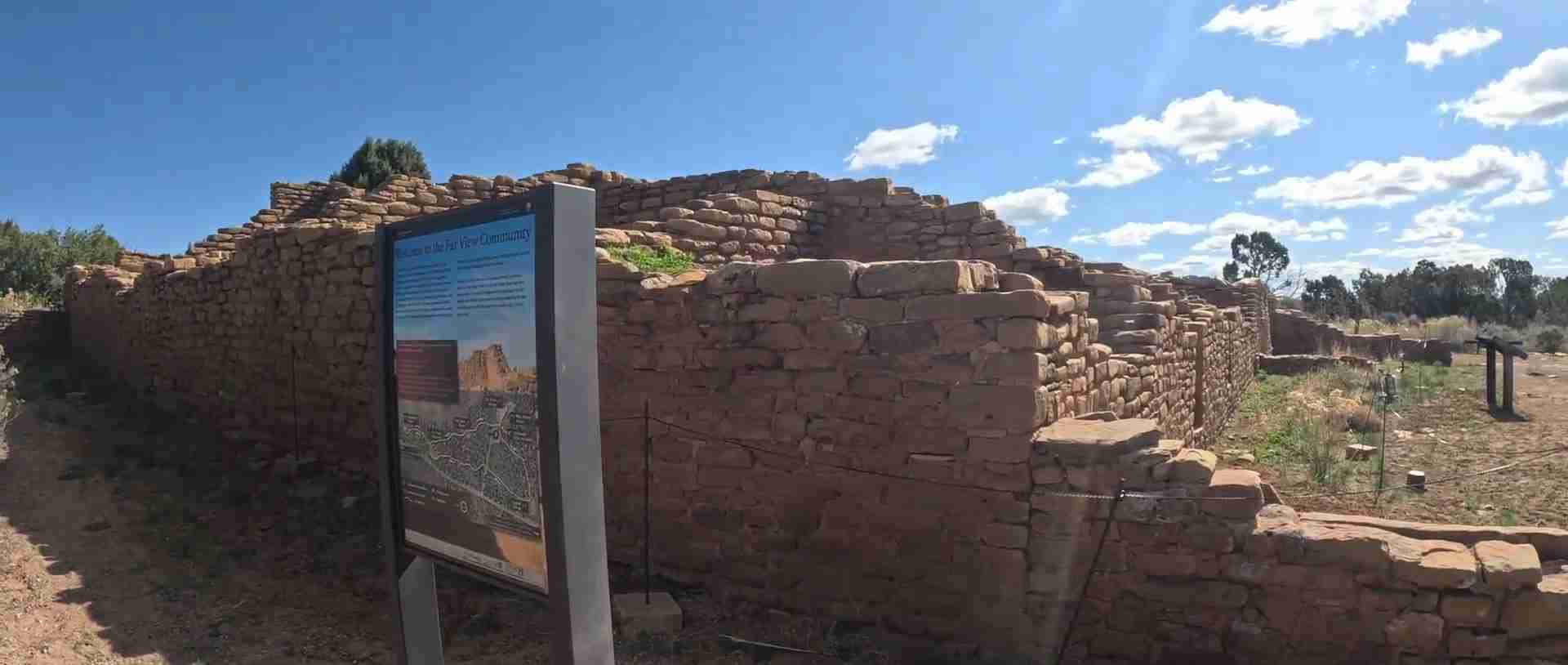
Mesa top sites predating cliff dwelling construction provide essential context for understanding the architectural evolution that culminated in alcove villages. Far View House, Far View Tower, Pipe Shrine House, and numerous other mesa top pueblos demonstrate earlier construction traditions, settlement patterns, and community organization that laid foundations for later cliff dwelling societies. Self-guided trails including Mesa Top Loop Road provide access to these sites, allowing visitors to trace architectural development chronologically and understand cliff dwellings not as isolated phenomena but as the culmination of centuries of cultural evolution and architectural experimentation.
Daily Life and Subsistence in Ancestral Puebloan Mesa Verde
Ancestral Puebloan communities at Mesa Verde developed sophisticated subsistence systems adapted to the semi-arid high plateau environment, combining agriculture, hunting, gathering, and trade to support populations that reached several thousand people at peak occupation periods. Archaeological evidence from excavated sites, including food remains, tools, and architectural features related to food processing and storage, reveals detailed information about daily activities, seasonal rhythms, and the labor-intensive work required to sustain cliff dwelling communities.
Agriculture formed the subsistence foundation, with corn, beans, and squash comprising the agricultural triad that provided carbohydrates, protein, and essential nutrients. Mesa top farming employed water management techniques including check dams that slowed runoff and increased infiltration, agricultural terraces that reduced erosion and created level planting surfaces, and dry farming methods that maximized moisture retention in the soil. Corn varieties adapted to short growing seasons and drought stress provided reliable staple crops that could be stored for winter consumption and insurance against crop failures. Archaeological studies of plant remains from storage contexts reveal that Mesa Verdeans cultivated multiple corn varieties with different maturation periods, spreading harvest risk across the growing season and providing food security despite variable rainfall patterns.
Field locations scattered across mesa tops required daily travel from cliff dwelling residences to agricultural plots, with farmers climbing access trails in early morning, working fields during daylight hours, and returning with harvested crops or to perform evening tasks. This commuting pattern, while labor-intensive, allowed communities to maintain concentrated residential settlements while exploiting dispersed agricultural resources across the landscape. Some evidence suggests seasonal field camps where farmers stayed during peak agricultural periods including planting, weeding, and harvest, reducing daily travel while maintaining family connections to cliff dwelling home bases.
Wild plant gathering supplemented agricultural production with seasonal foods including piñon nuts harvested in autumn and processed into nutritious meal, wild grass seeds collected and ground into flour supplements, prickly pear cactus fruits and pads providing fresh food and moisture during summer months, yucca fruits, leaves, and roots used for both food and fiber production, and numerous medicinal and ceremonial plants gathered for religious and healing purposes. Ethnographic records from modern Pueblo peoples document extensive traditional ecological knowledge about plant resources, processing techniques, and seasonal availability patterns that likely reflect continuity from Ancestral Puebloan practices.
Hunting provided essential protein and materials including hides for clothing, sinew for cordage, and bone for tool production. Primary game species included mule deer hunted both individually and through organized communal drives, bighorn sheep inhabiting canyon cliffs and providing both meat and horn materials for tool manufacture, rabbits and other small game trapped using nets, snares, and throwing sticks, and turkeys that were domesticated and kept in pens, providing both meat and feathers for ceremonial regalia and textile production. Evidence of specialized hunting camps in more remote areas suggests organized expeditions that targeted specific game populations, with meat processed and dried for transport back to villages. Archaeological analyses of animal bone assemblages from Mesa Verde sites indicate selective hunting patterns that may reflect resource management practices including avoiding pregnant females and targeting specific age classes to maintain sustainable game populations.
Water procurement represented one of the most labor-intensive daily activities, with cliff dwelling locations often distant from reliable water sources requiring residents to carry supplies from mesa top springs. Archaeological evidence of water storage vessels, including large jars capable of holding several gallons, indicates strategies for minimizing daily water hauling trips. Some alcoves featured seep springs where groundwater emerged at geological contacts, providing convenient if limited supplies that influenced settlement location decisions. Water conservation practices including reusing cooking water for other purposes and timing water-intensive activities including pottery production and plaster preparation to coincide with periods of spring flow reflected adaptation to water scarcity in the semi-arid environment.
Food processing consumed significant daily labor, with corn grinding requiring hours of work using stone mano and metate implements that wore down through use and required periodic replacement. Archaeological studies measuring mano and metate wear patterns estimate that processing sufficient corn for a family’s daily bread consumption required 2-3 hours of grinding labor, work typically performed by women while men engaged in field agriculture, hunting, and construction projects. Clay cooking pots allowed boiling and stewing that made foods more digestible and allowed preparation of bean dishes that required extended cooking times. Some evidence suggests communal food processing areas where multiple families worked together, potentially reducing individual labor burdens while strengthening social bonds through cooperative work activities.
Craft production formed another essential component of daily life, with pottery manufacture, textile weaving, stone tool production, and other specialized activities requiring significant skill and labor investment. Pottery production employed local clay sources processed by removing impurities and adding temper materials including crushed rock or old pottery sherds, forming vessels using coil-and-scrape techniques that built walls from clay coils smoothed with scrapers, decorating surfaces with painted designs or textured finishes, and firing in outdoor pits that reached temperatures sufficient to harden clay into ceramic. Pottery styles evolved through time, with distinctive designs and vessel forms allowing archaeologists to date sites and trace cultural connections across the region.
Textile production utilized cotton cultivated in warmer areas and traded into Mesa Verde along with local yucca and other plant fibers processed into cordage and woven fabrics. Archaeological preservation of textiles remains rare due to organic material decomposition, but exceptional dry deposits preserve examples of sophisticated weaving techniques including elaborate geometric designs, multiple weaving structures, and evidence of sophisticated loom technologies. Feather blankets combining turkey feathers with cotton or yucca fiber backing provided insulation for cold winter nights in unheated cliff dwellings, demonstrating innovative use of available materials to solve environmental challenges.
Social organization implied by archaeological evidence suggests extended family household groups occupying room blocks within cliff dwellings, with related families living in adjacent spaces and sharing communal work areas. Kivas served as male-focused ceremonial and social spaces where men gathered for rituals, meetings, and social activities separate from residential room blocks that may have been female-dominated spaces. Evidence of social differentiation including variation in room sizes, construction quality, and associated artifact assemblages indicates that Ancestral Puebloan communities were not strictly egalitarian but featured status differences potentially based on clan membership, religious society participation, or skill in valued activities including ceremonial knowledge, craft production, or hunting prowess.
Seasonal rhythms structured daily life, with spring planting, summer field maintenance, autumn harvest, and winter ceremonial cycles creating annual patterns that organized labor, ritual, and social activities. Winter months when agricultural demands decreased allowed time for intensive ceremonial activities, craft production, and social events that strengthened community bonds. Archaeological evidence of large-scale construction projects including major cliff dwelling building episodes suggests organized labor mobilization during periods when agricultural demands allowed workers to focus on building activities, with construction possibly incorporating ceremonial dimensions that made building itself a ritual act rather than purely utilitarian project.
Art, Symbolism, and Rock Art at Mesa Verde
Ancestral Puebloan artistic expression at Mesa Verde appears in multiple media including pottery decoration, architectural ornamentation, rock art panels, and portable objects including jewelry, ceremonial items, and decorated tools. These artistic traditions reflect both aesthetic sensibilities and symbolic systems encoding cosmological concepts, clan affiliations, and ritual knowledge that connected daily life with spiritual dimensions.
Pottery decoration represents the most abundant artistic evidence, with thousands of decorated ceramic vessels recovered from Mesa Verde sites demonstrating stylistic evolution through time. Early periods featured simple geometric designs painted in black mineral pigments on white slip backgrounds, with patterns including parallel lines, checkerboard motifs, and simple triangular elements. Later periods saw elaboration into complex geometric compositions featuring interlocking spiral designs, stepped patterns representing rain clouds and other natural phenomena, and increasingly sophisticated layout planning that integrated decoration with vessel form. Some vessels featured representational images including human figures, animals, and geometric abstractions of living beings, though geometric designs predominated throughout Mesa Verde’s occupation sequence.
Pottery styles serve as cultural markers allowing archaeologists to trace connections between communities, identify trade patterns, and date sites through comparison with established chronological sequences. Mesa Verde black-on-white pottery, the predominant local style, shows influences from neighboring regions including the Kayenta tradition to the south and the Chaco Canyon style to the southeast, indicating cultural exchange and shared aesthetic traditions across the Ancestral Puebloan world. Some pottery clearly arrived at Mesa Verde through trade, with vessel forms and decoration inconsistent with local production traditions, providing tangible evidence of exchange networks connecting Mesa Verde communities to broader southwestern cultural systems.
Architectural ornamentation appears in wall paintings, decorated plaster work, and shaped architectural elements including T-shaped doorways characteristic of Ancestral Puebloan construction. Some kiva walls preserve remnants of painted decoration including geometric designs and possibly representational images, though poor preservation makes interpretation challenging. Painted plaster in residential rooms typically featured simpler designs including bands of color or geometric patterns, potentially indicating room function, clan affiliation, or purely aesthetic choices. T-shaped doorways, found throughout cliff dwellings and earlier mesa top sites, may have carried symbolic significance related to emergence mythology central to Puebloan cosmology, with the T-shape representing the sipapu or emergence place through which ancestral beings entered the world.
Rock art sites scattered throughout Mesa Verde include both petroglyphs (images pecked or carved into rock surfaces) and pictographs (images painted on rock surfaces), though examples appear less numerous than at other Ancestral Puebloan sites including Chaco Canyon or Canyon de Chelly. Petroglyph Point on Chapin Mesa features one of the most accessible rock art panels, displaying numerous pecked images including anthropomorphic figures, animal representations, geometric designs, and abstract symbols whose meanings remain largely uncertain. Some images clearly represent recognizable subjects including bighorn sheep, handprints, and human figures, while others employ symbolic conventions whose interpretation requires knowledge of Ancestral Puebloan belief systems largely lost with the abandonment of Mesa Verde.
Modern Pueblo consultants working with park archaeologists have provided insights into rock art interpretation based on continuity of symbolic traditions from Ancestral Puebloan times through modern Pueblo cultures. Some designs relate to clan symbols still recognized by contemporary Pueblos, connecting specific rock art panels to particular groups and suggesting that panels served as territorial markers, clan identification, or records of ceremonial events. Other images appear to depict astronomical phenomena, spiritual beings from Puebloan mythology, or symbolic representations of natural forces including rain, wind, and agricultural fertility essential to survival in the semi-arid environment.
Portable art objects including decorated bone tools, carved stone effigies, shaped and painted gaming pieces, and ceremonial objects including prayer sticks and altar materials reflect artistic expression integrated into daily life and ritual practice. Archaeological excavations have recovered carved bone hairpins with geometric decoration, stone and shell jewelry including beads, pendants, and mosaic inlay pieces demonstrating sophisticated lapidary skills, ceramic figurines representing both human and animal forms, and painted wooden objects including prayer sticks and ritual paraphernalia. These objects indicate that artistic production extended beyond pottery decoration and rock art to encompass multiple media and serve diverse functions from personal adornment to ceremonial use.
Symbolism embedded in Ancestral Puebloan art connects to cosmological concepts documented in modern Pueblo oral traditions and ethnographic records, suggesting continuity of belief systems across centuries. The underworld-earth surface-sky world tripartite cosmology central to Pueblo thought appears in architectural features including kiva sipapus representing emergence from the underworld, in pottery designs featuring layered geometric patterns potentially representing cosmic levels, and in rock art images showing beings moving between worlds. Directional symbolism associated with cardinal directions and their corresponding colors, seasons, and spiritual beings known from Pueblo traditions may be reflected in four-part geometric designs common in pottery decoration and architectural layout.
The kiva as architectural form embodies symbolic meanings beyond its practical function as ceremonial space. The circular or D-shaped floor plan represents the circular world or cosmos, ventilator shafts bringing air from outside connect interior ritual space with the exterior natural world, fire pits in the center represent the axis mundi or world center, and sipapus mark the spot of emergence from previous worlds according to Puebloan migration narratives. Kiva construction itself may have incorporated ritual dimensions, with building activities serving ceremonial functions in addition to creating physical structures, analogous to documented practices in historic Pueblo communities where building projects include prayers, offerings, and ritual observances integrated into construction work.
Color symbolism documented in historic Pueblo cultures likely reflects Ancestral Puebloan traditions, with particular pigments and their sources carrying meanings beyond aesthetic preference. White clay used in pottery slips, black mineral pigments for painted designs, red ochre for decoration and possibly body painting, and turquoise prized for jewelry and offerings each potentially connected to specific symbolic meanings, directional associations, or spiritual significance. The sourcing of particular minerals from distant locations, documented through archaeological analysis, may reflect not simply trade in materials but acquisition of substances with special ceremonial value, making some pigments sacred materials rather than mundane craft supplies.
Understanding Ancestral Puebloan art requires recognition that divisions between aesthetic, functional, and symbolic dimensions that characterize modern Western art concepts likely did not exist in Ancestral Puebloan thought. A decorated pottery vessel served simultaneously as utilitarian cooking pot, as display of potter’s skill, as marker of cultural identity through style choices, and potentially as symbolic object encoding cosmological meanings or clan affiliations. Rock art panels functioned as territorial markers, ceremonial sites, astronomical calendars, and narrative records simultaneously. This integration of multiple meanings and functions characterizes indigenous artistic traditions and cautions against overly simplistic interpretations that isolate single meanings from the complex web of significance these objects held for their creators and users.
Archaeological Research and Conservation at Mesa Verde
Mesa Verde’s significance as an archaeological resource extends beyond its role as tourist destination to encompass its central position in the development of southwestern archaeology as a scientific discipline. Research at Mesa Verde established chronological frameworks, excavation methodologies, and conservation approaches that shaped archaeological practice throughout North America and influenced international heritage preservation standards.
Early archaeological investigation began with Gustaf Nordenskiöld, a Swedish scholar who excavated at Cliff Palace and other sites in 1891, producing the first systematic documentation of Mesa Verde architecture and material culture. Nordenskiöld’s work, while employing methods considered crude by modern standards, established Mesa Verde as a site of international scientific significance and documented structures before modern interventions altered their appearance. Controversy surrounded Nordenskiöld’s removal of artifacts to Swedish museums, spurring American efforts to protect archaeological sites from foreign collectors and contributing directly to passage of the 1906 Antiquities Act that enabled Mesa Verde’s national park designation.
Jesse Walter Fewkes conducted extensive research beginning in 1908, shortly after park establishment, focusing on major cliff dwellings including Spruce Tree House, Cliff Palace, and numerous mesa top sites. Fewkes pioneered archaeological site stabilization techniques, recognizing that exposing structures to visitation accelerated deterioration and required active conservation measures. His stabilization work established principles including reversibility (interventions should be removable if later research suggests different approaches), minimal intervention (preserve original materials and architectural features rather than wholesale reconstruction), and documentation (record all work thoroughly for future researchers). These principles, revolutionary at the time, anticipated modern conservation philosophy and remain relevant to heritage preservation practice worldwide.
Mid-20th century research including Lancaster’s work at Site 16 and other projects established refined chronologies through dendrochronology (tree-ring dating), allowing precise dating of construction episodes and occupation sequences with annual resolution. This chronological precision transformed understanding of Ancestral Puebloan cultural development, revealing rapid architectural changes, population movements, and cultural transformations that coarse chronologies had obscured. Tree-ring dating demonstrated that major cliff dwellings were built rapidly in the late 1200s and occupied briefly before abandonment, fundamentally altering previous interpretations that had assumed centuries-long cliff dwelling occupation.
The Wetherill Mesa Project, conducted between 1958 and 1965, represented one of the largest archaeological research efforts at Mesa Verde, combining excavation, site stabilization, and development of visitor infrastructure on previously undeveloped Wetherill Mesa. The project employed interdisciplinary approaches including collaborations between archaeologists, ethnobotanists studying plant remains, faunal analysts examining animal bones, and physical anthropologists analyzing human remains. This holistic methodology moved beyond artifact-focused archaeology to reconstruct past environments, subsistence practices, and lifeways, establishing standards for comprehensive archaeological research that influenced subsequent projects throughout the American Southwest.
Modern research employs non-invasive technologies that allow investigation without excavation, preserving archaeological contexts for future study using methods not yet developed. Ground-penetrating radar maps buried features, remote sensing identifies previously unknown sites, and three-dimensional laser scanning documents architecture with millimeter precision. These technologies enable research questions that earlier methods could not address while minimizing physical disturbance to irreplaceable archaeological resources.
Conservation challenges at Mesa Verde stem from multiple factors including natural weathering processes, wildfire impacts, visitor use impacts, and changing climate conditions. Sandstone deterioration through freeze-thaw cycles, salt crystallization, and water infiltration threatens structural integrity of cliff dwellings despite their protected alcove locations. Stabilization work requires ongoing maintenance, with crews conducting annual inspections and addressing emerging problems before they compromise structures. Modern conservation philosophy emphasizes preserving original materials rather than wholesale reconstruction, accepting some deterioration as inevitable while working to slow degradation rates and maintain structural integrity.
Wildfire presents particular challenges, with major fires in 1996, 2000, 2002, and subsequent years burning thousands of acres within the park. Fire effects on archaeological sites include thermal damage to architecture, increased erosion from loss of vegetation cover, and intensified water runoff that accelerates cliff face deterioration. Post-fire rehabilitation work includes erosion control measures, monitoring of fire-affected sites, and long-term studies of fire ecology impacts on archaeological resources. Research demonstrates that Ancestral Puebloan communities managed fire on the landscape through controlled burning and selective timber harvest, creating forest mosaics that may have reduced severe wildfire risks while enhancing resource productivity.
Climate change poses emerging threats including altered precipitation patterns affecting site hydration regimes, increased freeze-thaw cycle intensity, and vegetation changes that may accelerate erosion or create new conservation challenges. Long-term monitoring programs track environmental variables and site conditions, documenting trends and informing adaptive management strategies. Collaboration between park scientists, university researchers, and cultural resource specialists develops conservation approaches that address novel challenges while maintaining established principles of minimal intervention and preservation of original fabric.
Consultation with affiliated Pueblo tribes guides research and management decisions, recognizing Mesa Verde as ancestral homeland and sacred landscape for modern Pueblo peoples. Tribal representatives participate in planning processes, review research proposals, provide traditional knowledge perspectives on site interpretation, and sometimes request restrictions on research or visitation at particularly sacred locations. This collaborative approach acknowledges that archaeological sites represent not simply scientific resources but living cultural heritage with contemporary significance for descendant communities.
The Mesa Verde Museum Association supports research through funding, publication of research results, and public education programs that communicate archaeological findings to diverse audiences. The association’s publications include technical reports for professional archaeologists, interpretive guides for park visitors, and educational materials for school groups, bridging gaps between scholarly research and public understanding. This communication role ensures that archaeological knowledge developed through research at Mesa Verde reaches audiences beyond academic specialists and contributes to broader public appreciation of indigenous cultural heritage.
Mesa Verde’s Role in Native American Cultural Heritage
Mesa Verde represents ancestral homeland for twenty-four modern Pueblo tribes and communities including the nineteen Pueblos of New Mexico, Hopi in Arizona, Zuni in New Mexico, and several communities in Texas. These descendant groups maintain cultural, spiritual, and historical connections to Mesa Verde that extend beyond archaeological interest to encompass living traditions, religious practices, and identity formation rooted in ancestral ties to the mesa.
Oral traditions preserved in Pueblo communities describe migrations from ancestral homelands including Mesa Verde, with clans leaving in organized groups carrying sacred objects, ceremonial knowledge, and clan identity to new territories. These migration narratives, passed through generations via oral transmission, describe reasons for leaving including drought, social conflict, prophetic guidance, or spiritual instructions to continue migrating until reaching destined homelands. Archaeological evidence increasingly supports these oral histories, documenting movement patterns, population dispersals, and cultural continuities that match traditional accounts in remarkable detail.
Clan systems central to Pueblo social organization trace origins to specific regions including Mesa Verde, with particular clans identifying themselves as descendants of particular cliff dwelling communities or mesa top villages. Traditional knowledge passed within clans includes information about ancestral sites, ceremonial practices associated with those locations, and protocols for visiting and showing respect at ancestral places. This genealogical and spiritual connection makes Mesa Verde not merely historical site but sacred landscape where ancestors lived, practiced religion, and developed cultural traditions that continue among modern Pueblo peoples.
Religious significance of Mesa Verde extends to specific locations including shrines, natural features, and architectural elements that retain ceremonial importance. Some rock art panels, natural springs, prominent landscape features, and particular cliff dwellings serve as pilgrimage destinations where Pueblo people conduct private ceremonies, leave offerings, and maintain spiritual relationships with places and ancestors. Park management protocols respect these religious practices through consultation processes, access arrangements for ceremonial activities, and restrictions on tourist access to particularly sacred locations.
Cultural resource protection at Mesa Verde incorporates Pueblo perspectives on appropriate treatment of ancestral sites, burial places, and sacred objects. The Native American Graves Protection and Repatriation Act (NAGPRA), passed in 1990, mandates consultation regarding human remains, funerary objects, and items of cultural patrimony, leading to repatriation of some materials to affiliated tribes. These consultations recognize that decisions about archaeological collections, research on human remains, and curation of sacred objects cannot be made by archaeologists alone but require input from descendant communities with continuing cultural relationships to ancestral materials.
Interpretive programs at Mesa Verde increasingly incorporate Pueblo voices through ranger-guided tours that include traditional knowledge, educational materials developed in consultation with tribal representatives, and special programs where Pueblo presenters share perspectives on ancestral sites, traditional lifeways, and contemporary cultural practices rooted in Mesa Verde heritage. These interpretation approaches acknowledge that Mesa Verde’s story continues beyond archaeological abandonment through cultural persistence, adaptation, and renaissance among modern Pueblo communities.
Language preservation efforts in Pueblo communities maintain traditional terms for places, architectural features, and ceremonial concepts that provide insights into how Ancestral Puebloans understood their world. Pueblo languages including Tewa, Tiwa, Keres, Zuni, and Hopi preserve vocabulary related to cliff dwelling architecture, agricultural practices, and religious concepts that illuminate archaeological evidence from indigenous perspectives rather than purely through Western scientific frameworks. This linguistic evidence demonstrates cultural continuity and provides alternative interpretive frameworks that complement archaeological analysis.
Contemporary Pueblo artists draw inspiration from Ancestral Puebloan traditions preserved at Mesa Verde, reviving ancient pottery designs, architectural forms, and artistic motifs in modern creative work. This artistic continuity demonstrates that Mesa Verde represents not dead past but living heritage that informs contemporary cultural production, identity formation, and creative expression. Some Pueblo artists have participated in projects creating contemporary interpretations of ancestral art visible at Mesa Verde, bridging past and present through artistic dialogue across centuries.
Educational programs in Pueblo communities teach children about ancestral heritage including Mesa Verde connections, incorporating archaeological evidence, oral traditions, and traditional knowledge into curricula that strengthen cultural identity and historical consciousness. School groups from Pueblo communities visit Mesa Verde as part of cultural education programs that connect youth with ancestral places and reinforce understanding of their heritage. These educational initiatives ensure transmission of knowledge about Mesa Verde to new generations and maintain cultural connections that might otherwise weaken through assimilation pressures and historical disruptions.
Political advocacy by Pueblo tribes influences management policies at Mesa Verde, with tribal governments providing formal consultation on decisions affecting ancestral sites, cultural resources, and park operations. This government-to-government consultation recognizes tribes as political entities with legitimate interests in Mesa Verde management rather than simply as stakeholders or interest groups. Tribal input shapes policies ranging from visitor access restrictions to research permit approvals, research protocols, and interpretive content, ensuring that descendant community perspectives inform decision-making about their ancestral homeland.
The relationship between Mesa Verde and contemporary Pueblo communities demonstrates broader principles of indigenous heritage rights, self-determination, and cultural survival. Mesa Verde serves as tangible evidence of sophisticated pre-Columbian civilization, countering historical narratives that portrayed indigenous peoples as primitive or culturally impoverished. For Pueblo peoples, Mesa Verde represents proof of ancestral achievements, validation of oral traditions often dismissed by Western scholars, and foundation for cultural pride and political advocacy for indigenous rights and sovereignty.
Visiting Mesa Verde: Practical Information and Site Interpretation
Mesa Verde National Park operates year-round with varying levels of access and services depending on season. The park entrance lies 10 miles east of Cortez, Colorado, on U.S. Highway 160, with the drive from the entrance station to major archaeological sites requiring 45-60 minutes via winding mountain roads that climb from valley floor to mesa top elevations. This extended drive time necessitates planning, with visitors often underestimating the time required to reach sites, participate in ranger-guided tours, and return to the park entrance or nearby accommodations.
Entrance fees are $30 per vehicle during peak season (May 1 through October 22) and $20 per vehicle during off-season (October 23 through April 30), valid for seven days. Check the official National Park Service website for current rates as pricing may vary. Motorcycles pay $25 peak season and $15 off-season, while individuals entering on foot or bicycle pay $15 year-round. Annual Mesa Verde passes cost $55, and America the Beautiful passes covering all national parks are accepted. The park no longer accepts cash payments, requiring credit or debit cards for all transactions including entrance fees and tour reservations.
Ranger-guided cliff dwelling tours represent the primary visitor activity, with three major sites accessible through guided tours: Cliff Palace and Balcony House on Chapin Mesa, and Long House on Wetherill Mesa. Tour tickets cost $8 per person (check official site for current rates) and require advance reservations through Recreation.gov or by calling 877-444-6777. Reservations open 14 days in advance at 8:00 AM Mountain Daylight Time on a rolling basis, meaning tickets for May 4 become available April 20, and so forth. Popular tour times sell out within minutes of becoming available, particularly during peak summer visitation, making early booking essential for visitors with fixed travel dates.
Cliff Palace tours, lasting approximately 45 minutes, involve descending stone steps and climbing five wooden ladders through an elevation change of 100 feet. The tour begins at Cliff Palace Overlook, accessible via an 8-mile drive from the Far View Visitor Center, with parking often crowded during peak hours. Rangers provide interpretation of architectural features, construction techniques, daily life practices, and historical context while leading groups through the dwelling. Group sizes limited to 50 people ensure manageable tour experiences while protecting fragile structures from excessive foot traffic.
Balcony House tours present the most physically challenging visitor experience, requiring visitors to climb a 32-foot ladder, crawl through a narrow 12-foot-long tunnel measuring only 18 inches wide, and navigate steep stone steps and additional ladders throughout the site. Tours last approximately 60 minutes and are not recommended for visitors with claustrophobia, fear of heights, heart conditions, or respiratory problems. The physical demands reflect access routes used by original inhabitants, providing authentic insight into daily challenges faced by Ancestral Puebloan families who routinely carried water, supplies, and children through these passages. Tours accommodate only 25 people per session due to the challenging nature of the route and limited space within the dwelling.
Long House tours on Wetherill Mesa require a 1-mile walk from the parking area to the trailhead before beginning the ranger-guided tour through the dwelling. Wetherill Mesa Road opens only during summer months (typically late May through early September) and restricts vehicles longer than 25 feet due to sharp curves and steep grades. The Long House tour lasts approximately 90 minutes including the walk to and from the site, with rangers interpreting the dwelling’s layout, architectural features, and archaeological significance. Fewer visitors reach Wetherill Mesa compared to Chapin Mesa sites, creating less crowded conditions for those willing to make the additional travel effort.
Square Tower House, accessible only through special backcountry tours limited to 10 participants, offers an intimate small-group experience focused on a less-visited but architecturally significant cliff dwelling featuring the tallest tower structure in the park. These tours emphasize natural history, cultural connections, and in-depth architectural interpretation beyond what time constraints allow on larger public tours. Tickets cost $25 per person (check official site for current rates) and require advance booking, often filling quickly due to limited availability.
Self-guided activities include Mesa Top Loop Road, a 6-mile drive with twelve stops featuring overlooks of cliff dwellings, excavated mesa top sites, and interpretive panels explaining architectural evolution and cultural development. The loop road remains open year-round weather permitting and provides accessible introduction to Mesa Verde archaeology for visitors unable to participate in strenuous cliff dwelling tours. Spruce Tree House Overlook Trail offers views of one of the best-preserved dwellings, currently closed to entry due to rockfall hazards but visible from an overlook trail with interpretive signage.
Chapin Mesa Archaeological Museum, open seasonally from May through October, houses artifact displays, dioramas depicting Ancestral Puebloan lifeways, and educational exhibits explaining archaeological research methods. The museum provides essential context for cliff dwelling visits, covering chronological development, subsistence practices, artistic traditions, and reasons for abandonment that enhance understanding of sites encountered during tours. A 25-minute film screened in the museum theater introduces Mesa Verde history and encourages respect for archaeological resources.
Far View Visitor Center near the park’s mid-point serves as the primary information hub, offering maps, guidebooks, interpretive materials, and ranger assistance with trip planning. The bookstore operated by Mesa Verde Museum Association stocks extensive selection of scholarly and popular publications about Ancestral Puebloan culture, southwestern archaeology, and Mesa Verde-specific research. Proceeds from bookstore sales fund educational programs, research projects, and conservation initiatives throughout the park.
Lodging options within the park include Far View Lodge, located 15 miles from the entrance and operating from mid-April through mid-October, offering the only overnight accommodations inside park boundaries. The lodge provides convenient access to both Chapin Mesa and Wetherill Mesa sites, reducing daily driving and allowing visitors to maximize time at archaeological sites. Morefield Campground, 4 miles from the entrance, offers camping from early May through mid-October with over 260 sites including full hook-up, tent, and group camping areas. Outside the park, Cortez, Mancos, and Dolores provide hotels, motels, and services within 30 minutes of the park entrance, while Durango offers broader lodging options approximately 90 minutes distant.
Optimal visiting times balance weather conditions, crowd levels, and site accessibility. Summer months (June through August) feature warm temperatures, full services including all cliff dwelling tours and Wetherill Mesa access, and peak crowds that require advance tour reservations months ahead. Late spring (May) and early fall (September-October) offer pleasant weather, fewer visitors, and full tour availability with easier reservation booking. Winter visits provide solitude, stark beauty, and discounted entrance fees but limited services with only Chapin Mesa sites accessible and no ranger-guided cliff dwelling tours operating.
Altitude considerations affect many visitors, with mesa elevations between 7,000 and 8,500 feet causing shortness of breath, fatigue, and reduced physical capacity for those arriving from sea level. Adequate hydration, sun protection, and realistic assessment of physical capabilities prove essential for safe enjoyable visits. Tours involve significant physical exertion including climbing ladders, navigating uneven surfaces, and walking extended distances, making honest self-evaluation important when selecting appropriate activities.
Mesa Verde’s 2021 certification as an International Dark Sky Park recognizes exceptional night sky quality, with minimal light pollution creating outstanding stargazing opportunities. Astronomy programs offered seasonally provide telescope viewing, constellation interpretation, and discussion of archaeoastronomy evidence suggesting Ancestral Puebloans tracked celestial events for ceremonial and agricultural timing purposes. The combination of cultural heritage and natural sky quality offers unique visitor experiences connecting ancient and modern understanding of cosmos.
Visitor conduct expectations emphasize respect for archaeological sites including staying on designated trails, never touching or climbing on ancient structures, leaving artifacts undisturbed if encountered during hikes, and reporting any vandalism or unauthorized digging to rangers immediately. These protocols ensure site preservation for future generations while maintaining scientific integrity of archaeological contexts not yet investigated. Violations carry serious penalties including fines, prosecution under the Archaeological Resources Protection Act, and potential imprisonment for egregious offenses.
Mesa Verde in Broader Ancestral Puebloan Cultural Context
Mesa Verde represents one component of the broader Ancestral Puebloan cultural tradition that flourished across the Four Corners region and adjacent areas of the American Southwest from approximately 100 CE through 1300 CE and beyond. Understanding Mesa Verde requires situating it within this larger cultural landscape, recognizing connections to contemporaneous sites, participation in regional exchange networks, and shared architectural and cultural traditions that linked communities across hundreds of miles.
Chaco Canyon, located 70 miles southeast of Mesa Verde in northwestern New Mexico, served as a major Ancestral Puebloan center from approximately 900 through 1150 CE, predating Mesa Verde’s cliff dwelling florescence but overlapping with mesa top pueblo developments. Chaco featured massive great houses containing hundreds of rooms, great kivas accommodating entire communities, and engineered road systems connecting outlying settlements to the canyon center. Archaeological evidence suggests Chaco functioned as ceremonial center, trade hub, and possibly political capital coordinating activities across a region encompassing thousands of square miles. Mesa Verde communities maintained connections to Chaco documented through pottery styles, architectural features including great kivas constructed at Mesa Verde following Chaco models, and possible participation in pilgrimage networks that drew people to Chaco for major ceremonial events.
Following Chaco’s decline around 1150 CE, the Ancestral Puebloan world reorganized, with population concentrating in several regional centers including Mesa Verde, Aztec Ruins in northern New Mexico, and Salmon Ruins farther north. This reorganization coincided with the period when Mesa Verde populations began constructing cliff dwellings, suggesting broader cultural transformations affecting settlement patterns, social organization, and perhaps religious practices across the Ancestral Puebloan world. The timing implies that cliff dwelling construction represented not isolated Mesa Verde development but part of regional responses to changing social, environmental, or political conditions.
Hovenweep National Monument, located 45 miles west of Mesa Verde straddling the Utah-Colorado border, preserves tower structures and pueblo complexes contemporaneous with Mesa Verde’s cliff dwellings. The proximity and architectural similarities including square and circular towers, multi-story construction, and sophisticated masonry techniques indicate cultural connections and possibly shared populations or close interaction between communities. Some researchers propose that Mesa Verde and Hovenweep represented parts of integrated regional system with specialized functions, trade relationships, or ceremonial connections rather than isolated independent communities.
Lowry Pueblo, Cajon Group, and numerous other sites scattered across southwestern Colorado document extensive Ancestral Puebloan occupation beyond Mesa Verde’s boundaries, indicating that the mesa represented one settlement cluster within a densely populated landscape. These surrounding sites show architectural and material culture similarities to Mesa Verde, suggesting shared cultural identity, interaction through marriage and trade, and possible political affiliations that created regional community networks. Understanding Mesa Verde requires recognizing it as part of this larger settlement system rather than isolated phenomenon.
Trade networks connected Mesa Verde to distant regions, documented through exotic materials recovered from archaeological contexts including marine shells from the Pacific Coast and Gulf of California traveled over 500 miles, macaw feathers and copper bells from Mesoamerica hundreds of miles south indicating contacts with Mexican cultures, turquoise from mines in southern New Mexico and copper from sources in the Great Basin, and pottery from production centers including Cibola region of western New Mexico and northern Arizona. These materials demonstrate that Mesa Verde participated in extensive exchange systems linking communities across the Southwest and beyond, making Ancestral Puebloans part of pre-Columbian networks that integrated diverse peoples through trade, information exchange, and possibly political alliances.
Architectural traditions at Mesa Verde reflect broader Ancestral Puebloan construction practices shared across the Four Corners region including the kiva as central ceremonial space derived from earlier pit house traditions, masonry techniques using shaped sandstone blocks with mud mortar, multi-story construction creating vertical villages rather than horizontal sprawl, and plaza-oriented layouts organizing rooms around communal open spaces. These shared architectural features indicate cultural continuity and communication between regions, with builders learning techniques, sharing innovations, and maintaining construction traditions across generations and geographic distances.
Pottery traditions similarly connect Mesa Verde to broader Ancestral Puebloan developments, with Mesa Verde black-on-white wares showing stylistic relationships to pottery from Chaco Canyon, Kayenta region of northeastern Arizona, and Cibola region of western New Mexico. Pottery served not only utilitarian functions but also as medium for artistic expression and marker of cultural identity, with particular design elements signaling clan affiliations, religious society membership, or community origins. The circulation of pottery through trade and the movement of potters through marriage created material culture patterns that archaeologists use to trace cultural connections and population movements across the Ancestral Puebloan world.
The abandonment of Mesa Verde around 1300 CE occurred as part of broader depopulation of the entire Four Corners region, with communities evacuating not only Mesa Verde but also Chaco Canyon, Aztec, Hovenweep, and hundreds of other sites across northwestern New Mexico, southwestern Colorado, southeastern Utah, and northeastern Arizona. This massive migration relocated populations to the Rio Grande valley, Little Colorado River drainage, Hopi Mesas, and Zuni River valley where they established communities that persist to the present. The synchronous timing across such extensive territory indicates region-wide factors driving migration rather than local problems specific to individual sites, with environmental stress from drought, social upheaval, religious transformations, or combinations of factors pushing entire populations to abandon ancestral homelands.
Understanding this regional context reveals Mesa Verde not as isolated archaeological wonder but as integral component of sophisticated pre-Columbian civilization that developed complex social, political, economic, and religious institutions spanning centuries and encompassing tens of thousands of square miles. The cliff dwellings represent pinnacle of architectural achievement within this cultural tradition, created during the final phase before migration scattered populations and transformed Ancestral Puebloan culture into the diverse modern Pueblo societies that inherited and continue this heritage.
Environmental Challenges and the Abandonment of Mesa Verde
The abandonment of Mesa Verde by approximately 1300 CE represents one of archaeology’s enduring mysteries, with researchers proposing various explanations ranging from environmental catastrophe to social upheaval, religious transformation to violence and warfare. Modern understanding recognizes that no single factor explains the departure but rather multiple stresses converged, creating conditions that made continued occupation untenable and migration to new territories the most viable option for survival and community continuity.
Environmental stress, particularly drought documented through tree-ring records and other paleoclimatic proxies, clearly contributed to abandonment timing. The Great Drought of 1276-1299 CE represents the most severe extended dry period in over a millennium of southwestern climate history, with precipitation falling far below average for over two decades. Agricultural systems dependent on predictable rainfall and adequate soil moisture failed, crop yields declined, and communities faced repeated harvest failures that depleted stored food reserves. Earlier droughts in the 1100s and 1200s demonstrated that Mesa Verde agriculture operated near environmental limits even during favorable climate periods, making the region particularly vulnerable to extended dry spells.
However, drought alone cannot explain abandonment, as many communities departed before the worst drought impacts, and some areas of Mesa Verde retained adequate water supplies throughout the period. Archaeological evidence indicates selective abandonment patterns with some areas depopulating earlier than others, suggesting social rather than purely environmental factors influenced departure timing and destination choices. Furthermore, the Ancestral Puebloans had survived previous droughts through storage strategies, mobility, trade, and social networks that distributed risk across communities, raising questions about why these traditional coping mechanisms failed during the late 1200s.
Environmental degradation from centuries of intensive human use may have contributed to vulnerability. Deforestation from construction timber harvest, fuel wood collection, and forest clearing for agriculture reduced tree cover and potentially altered local hydrology. Soil erosion from farming exposed bedrock and reduced agricultural productivity, particularly in areas where farming had occurred for generations. Game animal depletion from sustained hunting pressure reduced protein availability and forced hunters to travel farther to find sufficient meat. These cumulative impacts created degraded landscape less capable of supporting large populations, making communities more vulnerable to drought impacts than would have occurred in pristine environments.
Social stress documented archaeologically includes evidence of increased violence during the final occupation decades, with some skeletal remains showing trauma consistent with interpersonal conflict, some sites featuring defensive architecture including blocked doorways and restricted access routes, and burning events at some locations possibly indicating attacks rather than accidental fires. Whether this violence represented warfare between communities competing for scarce resources, raiding by hostile outsiders, or internal social breakdown remains debated, but the evidence suggests that social tensions escalated as environmental conditions deteriorated.
Resource stress may have undermined social institutions that maintained community cohesion during better times. Ceremonial cycles requiring substantial food surplus for feast preparations became difficult to maintain when harvests barely met subsistence needs. Elite lineages whose authority derived from redistribution of resources lost legitimacy when they could no longer fulfill expected generosity obligations. Craft specialists producing non-essential goods faced reduced demand as communities prioritized basic survival over luxury items. These social stresses potentially fractured communities, making coordinated responses to environmental challenges more difficult and reducing the effectiveness of traditional mutual aid networks that had helped populations survive previous difficult periods.
Religious explanations proposed by some researchers suggest that prophetic visions, spiritual instructions, or ceremonial imperatives directed migration as communities sought to fulfill religious obligations or respond to supernatural communications. Oral traditions preserved in modern Pueblo communities describe ancestors leaving cliff dwellings in response to spiritual guidance directing them to continue migrations to destined homelands. While archaeologists cannot directly test supernatural explanations, the consistency of these oral accounts across multiple Pueblo groups and their correlation with archaeological evidence of organized rather than panicked departure suggests that religious factors influenced decision-making about when and where to relocate.
Population pressure by the late 1200s had reached levels that may have exceeded sustainable carrying capacity even under favorable environmental conditions. Archaeological surveys document increasingly dense settlement patterns, agricultural intensification including farming of marginal lands, and evidence of resource competition suggesting that Mesa Verde populations had grown to levels that the environment could barely support. When drought reduced agricultural productivity, populations that had been sustainable during good years suddenly exceeded available resources, creating pressure for emigration to areas with lower population densities and unused agricultural potential.
The destinations chosen by departing populations offer insights into migration motivations. Rio Grande valley communities welcomed Mesa Verde migrants, as evidenced by archaeological sites showing combinations of local and Mesa Verde-derived pottery styles, architectural features, and material culture. The Rio Grande offered reliable water supplies, extensive agricultural potential, and established communities that could integrate newcomers. Little Colorado River valley and Hopi Mesas similarly attracted migrants with better water security and agricultural opportunities than drought-stressed Four Corners could provide. These destination choices demonstrate that migration represented rational response to degraded home conditions rather than random dispersal, with populations moving to areas offering better prospects for survival and community reconstitution.
The organization of migration, inferred from oral traditions and archaeological evidence, suggests that departures occurred in planned fashion with groups maintaining social cohesion, leadership structures, and cultural identity throughout relocation processes. Clans traveled together carrying sacred objects, ceremonial knowledge, and group identity to new territories where they established themselves as distinct social units within host communities. This organized migration preserved cultural continuity despite geographic displacement, allowing Mesa Verde heritage to persist through descendant Pueblo communities rather than being lost through chaotic dispersal.
Modern climate change research examining past societies’ responses to environmental stress views Mesa Verde abandonment as cautionary example of settlement system collapse when environmental limits are exceeded. The parallels to contemporary challenges including climate change, resource depletion, and population pressure make Mesa Verde relevant beyond purely historical interest, offering lessons about sustainability, adaptation limits, and the necessity of recognizing environmental constraints on human activities. Understanding why Mesa Verde communities ultimately chose migration over continued adaptation informs modern discussions about resilience, vulnerability, and the conditions under which populations abandon long-established homelands.
Frequently Asked Questions About Mesa Verde National Park
How Much Time Should I Spend at Mesa Verde National Park?
A minimum of one full day allows completion of 1-2 ranger-guided cliff dwelling tours, self-guided Mesa Top Loop Road exploration, and museum visits. Visitors serious about understanding Mesa Verde’s archaeology should plan two full days, allowing time for tours on both Chapin Mesa and Wetherill Mesa, multiple self-guided trails, museum exhibits, and unhurried exploration without feeling rushed between activities. The driving distances within the park require 45-60 minutes from entrance to archaeological sites, and another 30-45 minutes between Chapin Mesa and Wetherill Mesa, meaning substantial time gets consumed by vehicle travel. Photography enthusiasts, archaeology students, and visitors with deep interest in Ancestral Puebloan culture may prefer three days to explore thoroughly, hike longer trails including Petroglyph Point Trail, and revisit favorite sites at different times of day for optimal lighting conditions.
Can I Visit Cliff Dwellings Without Taking a Guided Tour?
Most major cliff dwellings including Cliff Palace, Balcony House, and Long House are accessible only through ranger-guided tours requiring advance reservations and ticket purchase. This restriction protects fragile structures from uncontrolled access while ensuring visitors receive accurate interpretation from trained rangers. However, several overlook trails provide views of cliff dwellings from canyon rims without requiring tour participation, including Cliff Palace View from Sun Point, Square Tower House View from multiple overlooks along Cliff Palace Loop Road, and numerous unnamed cliff dwellings visible from Mesa Top Loop Road stops. Spruce Tree House Overlook Trail offers excellent views of one of the best-preserved dwellings, though the structure itself remains closed to entry due to rockfall hazards. These overlook experiences, while less intimate than entering dwellings, still provide impressive perspectives on cliff dwelling architecture and alcove settings, making them suitable options for visitors unable to participate in strenuous tours or unable to secure tour reservations.
What Is the Best Season to Visit Mesa Verde?
Late spring (May) and early fall (September-October) offer optimal conditions combining pleasant weather, full cliff dwelling tour availability, and manageable crowd levels. Summer months (June-August) provide warmest temperatures, longest daylight hours, and access to all park facilities including Wetherill Mesa, but peak visitation creates crowded conditions requiring tour reservations months in advance and parking challenges at popular sites. Winter visits (November-April) deliver solitude, dramatic snow-covered landscapes, and discounted entrance fees, but many facilities close including Wetherill Mesa, ranger-guided cliff dwelling tours do not operate, and weather conditions can close roads or create hazardous driving. Spring and fall represent compromise between summer crowds and winter limitations, with moderate temperatures comfortable for hiking and touring, spring wildflowers or autumn colors enhancing scenery, and tour reservations easier to obtain with shorter advance booking windows. Visitors should consider personal priorities including tolerance for crowds, weather preferences, and desired activities when selecting travel dates.
Are There Age or Fitness Requirements for Cliff Dwelling Tours?
Tours do not impose minimum age limits, but physical demands require honest assessment of participants’ capabilities. Cliff Palace tour, the least strenuous option, involves climbing five wooden ladders through 100-foot elevation change, descending and ascending stone steps that may be uneven or steep, and walking quarter-mile distance on irregular surfaces. Most children over age 5-6 complete this tour successfully with parental assistance. Balcony House presents significantly greater challenges including climbing a 32-foot ladder, crawling through narrow 12-foot tunnel measuring only 18 inches wide, and navigating additional steep ladders and stone steps throughout the site. Children must be capable of climbing ladders independently without assistance, and parents carrying infants in backpacks or front carriers must maintain balance and mobility while climbing, making Balcony House inappropriate for very young children. Tours discourage participation by visitors with mobility limitations, heart conditions, respiratory problems, or claustrophobia due to physical demands and limited ability to evacuate individuals experiencing medical emergencies from remote cliff dwelling locations. Rangers provide detailed information about tour requirements when issuing tickets, allowing families to select appropriate tours based on accurate understanding of what participation entails.
Why Did the Ancestral Puebloans Build Cliff Dwellings?
The reasons for cliff dwelling construction around 1190-1280 CE remain subject to archaeological debate, with multiple theories proposed including defensive concerns prompting relocation to defensible alcove locations that could be secured by removing access ladders, protection from weather elements with alcove roofs providing shelter from rain, snow, and intense summer sun while thermal mass of surrounding stone moderated temperature extremes, social or ceremonial motivations including desire to create distinctive architectural forms serving religious or symbolic purposes, and practical considerations including availability of ready-made spaces requiring less construction effort than mesa top pueblos. Evidence supports elements of each theory, suggesting multiple motivations operated simultaneously rather than single explanation accounting for the transition. The timing of cliff dwelling construction coinciding with evidence of increased regional violence and environmental stress suggests that defensive concerns may have influenced location choices, while the remarkable preservation and favorable microclimate within alcoves demonstrates practical advantages of these settings. The consistency of cliff dwelling forms across Mesa Verde and other contemporaneous sites indicates shared cultural ideals rather than purely practical responses to local conditions, supporting interpretation of symbolic or religious dimensions to architectural choices.
What Happened to the Artifacts Found at Mesa Verde?
Mesa Verde’s museum collections contain over three million artifacts curated in climate-controlled facilities meeting professional standards for archaeological collection care. These materials include pottery vessels and sherds, stone tools and weapons, bone implements and ornaments, wood and plant fiber artifacts preserved in dry deposits, textiles and basketry fragments, human remains (some of which have been repatriated to affiliated tribes under NAGPRA), and architectural elements including decorated plaster and painted beam fragments. Major collection portions remain at Mesa Verde supporting ongoing research, conservation projects, and rotating museum exhibits, while some materials reside in museums and universities nationwide following early excavations that occurred before modern curation standards and collection management protocols were established. The Native American Graves Protection and Repatriation Act requires consultation with affiliated Pueblo tribes regarding culturally sensitive materials, leading to repatriation of some human remains, funerary objects, and sacred items to descendant communities. Modern collection management emphasizes preservation, research access for qualified scholars, and eventual return of materials to appropriate contexts including descendant communities when cultural affiliation can be established and tribes request repatriation.
Can I Bring My Dog to Mesa Verde?
Dogs are permitted in specific areas including paved roads, parking lots, campground roads, and designated trails such as Park Point Overlook and portions of Mesa Top Loop stops, but are prohibited from entering archaeological sites, unpaved trails, public buildings including the museum and visitor center, and ranger-guided tours. This restriction protects sensitive archaeological resources from damage, prevents disturbance to wildlife, and maintains tour quality for human visitors. Dogs must remain on leashes no longer than 6 feet at all times and should never be left unattended in vehicles, particularly during summer when interior vehicle temperatures reach dangerous levels rapidly. Morefield Campground operates a kennel providing temporary dog boarding for visitors planning to participate in activities where dogs are prohibited, with additional boarding services available in nearby communities including Cortez, Mancos, Dolores, and Durango. Visitors planning to bring dogs should research pet policies carefully and arrange appropriate care during periods when they cannot accompany their animals to ensure compliance with regulations while allowing full participation in cliff dwelling tours and other restricted activities.
How Did Water Supply Work in Cliff Dwellings?
Water procurement represented one of the most labor-intensive aspects of cliff dwelling life, with residents hauling supplies from springs and seeps located on mesa tops down into canyons via steep access trails. Some alcoves featured seep springs where groundwater percolating through sandstone emerged at geological contacts between porous sandstone and impermeable shale layers, providing limited but reliable water sources directly within or near dwellings. Residents engineered collection systems channeling seepage from alcove walls and roofs into plastered basins, supplementing carried water supplies. Archaeological analysis of water jars indicates that large ceramic vessels capable of holding several gallons served as storage containers, with multiple trips required daily to meet drinking, cooking, and other domestic needs. The water transport burden likely influenced settlement decisions, with alcoves featuring convenient water access preferred over equally suitable sites lacking nearby springs. Evidence of water conservation practices including reuse of cooking water and timing of water-intensive activities to coincide with spring flow peaks demonstrates adaptation to chronic water scarcity in the semi-arid environment. Modern visitors carrying water bottles up and down trails gain appreciation for the physical demands of daily water hauling that formed routine part of Ancestral Puebloan life.
Is Mesa Verde Suitable for Young Children?
Mesa Verde offers age-appropriate activities for children, though families should select experiences matching children’s physical capabilities and attention spans. The Museum offers interactive exhibits, dioramas, and educational displays that engage children while teaching about Ancestral Puebloan culture. Short, accessible trails including Mesa Top Loop Road stops allow children to view archaeological sites without extensive hiking. Junior Ranger programs provide activity booklets guiding children through park exploration while learning about archaeology, environmental conservation, and cultural heritage, with completion earning Junior Ranger badges and certificates. Cliff Palace tour remains accessible for most children over age 5-6 capable of climbing ladders and walking quarter-mile distances, while Balcony House’s challenging route including tall ladders and narrow tunnel requires greater physical capability and confidence. Parents should honestly assess children’s abilities when selecting tours, recognizing that tours cannot accommodate children who become frightened, tired, or unable to complete routes, and that evacuation from remote cliff dwelling locations presents significant challenges. Evening campground programs feature ranger presentations adapted for family audiences, making archaeology engaging for children through storytelling, hands-on demonstrations, and participatory activities. Visiting during shoulder seasons when crowds are lighter and temperatures more moderate often proves more successful than peak summer trips when heat, crowds, and tour availability challenges create stress for families with children.
What Research Is Currently Occurring at Mesa Verde?
Mesa Verde supports ongoing research across multiple disciplines including archaeological survey and excavation projects focused on previously understudied areas, architectural analysis using three-dimensional scanning technologies that document structures with millimeter precision, paleoenvironmental studies examining climate history, vegetation changes, and human environmental impacts, dendrochronology research extracting tree-ring samples from roof beams to refine chronologies and climate reconstructions, and conservation science developing improved methods for stabilizing and preserving deteriorating structures. Collaborative projects with affiliated Pueblo tribes incorporate traditional knowledge perspectives on site interpretation, material culture analysis, and landscape significance. Graduate students from universities nationwide conduct thesis and dissertation research on topics ranging from pottery production and exchange to agricultural practices, settlement pattern evolution, and social organization. Emerging technologies including ground-penetrating radar, remote sensing, and 3D visualization enable non-invasive investigation of buried features and architectural details without excavation. Long-term monitoring programs track environmental conditions, site deterioration patterns, and climate change impacts, informing adaptive management strategies. Publications resulting from Mesa Verde research appear regularly in academic journals and conference presentations, contributing to broader understanding of Ancestral Puebloan culture while addressing contemporary conservation challenges and management issues facing archaeological resources in the American Southwest.