
Mendoza Travel Guide 2026: Argentina’s Wine Capital
Key Takeaways
- Mendoza produces 70% of Argentina’s wine, with over 1,500 wineries across five distinct wine regions accessible from the city in 2026
- The harvest season (February-April) offers the most dynamic winery experiences in 2026, with grape picking, wine festivals, and behind-the-scenes production access
- Budget travelers can explore Mendoza’s wine country for $80-120 per day in 2026, while mid-range visitors spend $150-250 including wine tours and quality dining
- The Andes Mountains provide spectacular day trips including Aconcagua Provincial Park, Puente del Inca, and adventure activities year-round
- Direct flights connect Mendoza to Buenos Aires (1.5 hours), Santiago de Chile (45 minutes), and major South American cities throughout 2026
- Spring (September-November) and autumn (March-May) deliver optimal weather, harvest activities, and moderate prices for 2026 visits
Welcome to Mendoza: Argentina’s Wine Capital in 2026
Mendoza emerges as South America’s undisputed wine capital, producing legendary Malbec and world-class varieties across sun-drenched valleys beneath the towering Andes Mountains. This western Argentine province combines wine culture rivaling Napa Valley or Bordeaux with dramatic mountain landscapes, adventure tourism, and authentic gaucho traditions. For travelers seeking the quintessential Argentine wine experience in 2026, Mendoza delivers sophistication and authenticity impossible to replicate elsewhere.
The city of Mendoza serves as the gateway to five distinct wine regions, each producing distinctive wines reflecting unique terroirs and microclimates. From the high-altitude vineyards of Valle de Uco to the historic bodegas of Maipú and Luján de Cuyo, wine enthusiasts discover extraordinary diversity within easy reach of comfortable urban accommodations. The combination of accessible wineries, excellent restaurants, mountain excursions, and genuine Argentine hospitality creates a destination exceeding expectations across every category.
Beyond wine, Mendoza captivates visitors with Andes adventures ranging from gentle vineyard cycling to challenging mountain expeditions. The province hosts Aconcagua, the Western Hemisphere’s highest peak, alongside thermal springs, white-water rafting, horseback riding, and winter skiing at Las Leñas and other resorts. This comprehensive 2026 guide covers everything needed to plan your perfect Mendoza experience, from wine region selection and tour booking to accommodation strategies and seasonal timing.
People Also Ask About Mendoza 2026
How many days do you need in Mendoza in 2026?
Four to five days provides ideal timing for experiencing Mendoza’s highlights in 2026. This duration allows two full days exploring different wine regions, one day for Andes excursions or adventure activities, and remaining time for city exploration, cooking classes, or relaxation. Travelers focused primarily on wine may extend to six or seven days to visit additional regions without rushing. Weekend trips work for visitors prioritizing a single wine region, though the journey from Buenos Aires warrants longer stays to maximize the experience.
What is the best month to visit Mendoza in 2026?
March and April 2026 offer the premier Mendoza experience, coinciding with harvest season when wineries buzz with activity, grapes hang heavy on vines, and harvest festivals animate the region. September through November provides excellent weather with spring blooms, moderate crowds, and competitive pricing. December through February brings summer heat that can make midday touring uncomfortable but enables evening vineyard dinners and outdoor events. June through August offers winter landscapes and ski season but reduced winery activity and cooler temperatures requiring warmer clothing.
Is Mendoza worth visiting for non-wine drinkers in 2026?
Mendoza absolutely rewards non-wine drinkers with its spectacular Andes scenery, adventure activities, excellent cuisine, and relaxed atmosphere. Mountain excursions to Aconcagua Provincial Park, Puente del Inca, and thermal springs provide stunning experiences requiring no wine interest. White-water rafting on the Mendoza River, horseback riding through vineyard landscapes, paragliding over the city, and hiking numerous trails offer active alternatives. Many wineries welcome visitors for vineyard walks, gourmet lunches, and olive oil tastings without wine consumption. The region’s food culture, featuring Argentine asado, local cheeses, and farm-fresh produce, provides compelling reasons to visit regardless of beverage preferences.
How do I get to Mendoza from Buenos Aires in 2026?
Flights connect Buenos Aires (Aeroparque or Ezeiza) to Mendoza’s Governor Francisco Gabrielli International Airport in 1.5-2 hours, with multiple daily departures on Aerolíneas Argentinas, LATAM, and JetSmart costing $80-250 round-trip depending on advance booking and season. Long-distance buses from Buenos Aires’ Retiro Terminal reach Mendoza in 12-14 hours, with semi-cama service at $40-60 and cama suite luxury service at $80-140 providing fully reclining seats. Driving the 1,050-kilometer route via Ruta Nacional 7 takes approximately 11-13 hours through scenic but straightforward highway driving. Most visitors fly given the time savings, though bus travel offers budget advantages and romantic overnight journey experiences.
Extended multi-day tours – 5+ days
Featured Mendoza Multi-Day Tour Packages
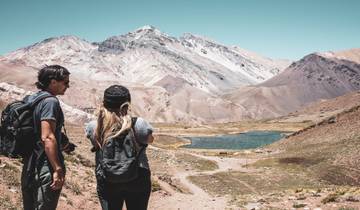
4 days
4-Day Mendoza Tour
- ✓ Comprehensive Mendoza tour
- ✓ Expert local guides included
- ✓ All accommodation arranged
- ✓ Transportation provided
4 days
Unique Mendoza Experience
- ✓ Comprehensive Mendoza tour
- ✓ Expert local guides included
- ✓ All accommodation arranged
- ✓ Transportation provided
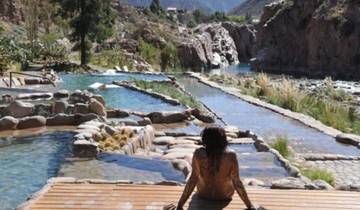
5 days
5-Day Mendoza Luxury Tour
- ✓ Comprehensive Mendoza tour
- ✓ Expert local guides included
- ✓ All accommodation arranged
- ✓ Transportation provided
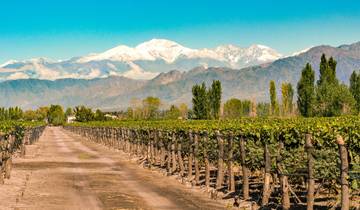
3 days
Mendoza Welcome Package (3 days)
- ✓ Comprehensive Mendoza tour
- ✓ Expert local guides included
- ✓ All accommodation arranged
- ✓ Transportation provided
Multi-day tour packages powered by TourRadar. Prices and availability subject to change.
Mendoza Wine Regions Overview 2026
Luján de Cuyo Wine Region 2026
Luján de Cuyo stands as Mendoza’s first officially recognized wine appellation and home to Argentina’s most prestigious Malbec production. Located just 20-30 minutes south of Mendoza city, this region concentrates historic bodegas established in the late 19th and early 20th centuries alongside modern facilities featuring cutting-edge architecture and tourism amenities. Vineyards span elevations from 900 to 1,100 meters, producing full-bodied Malbecs celebrated worldwide for their intensity and complexity.
Major wineries including Catena Zapata, Achaval Ferrer, Norton, and Luigi Bosca welcome visitors for tastings, tours, and gourmet experiences in Luján de Cuyo. The region’s accessibility from Mendoza city makes it ideal for half-day excursions or independent exploration by rental car or bicycle. First-time visitors to Mendoza often begin their wine education here, experiencing legendary producers before venturing to more remote regions.
Maipú Wine Region 2026
Maipú provides Mendoza’s most accessible wine tourism experience, with numerous wineries reachable by bicycle from rental shops in the town center. Located 15-20 minutes southeast of Mendoza city, Maipú offers a more casual atmosphere than Luján de Cuyo while maintaining excellent wine quality. The region produces outstanding Malbec, Bonarda, and olive oil, with many estates offering comprehensive tastings combining wines, olive oils, and gourmet products.
Popular Maipú wineries include Trapiche, López, Zuccardi (Finca A), and numerous smaller producers welcoming walk-in visitors without reservations. The bicycle wine route connecting multiple wineries has become iconic, allowing independent exploration at personal pace while enjoying vineyard scenery and avoiding driving concerns. Budget-conscious travelers find Maipú offers excellent value through lower tasting fees and casual dining options compared to premium-oriented regions.
Valle de Uco Wine Region 2026
Valle de Uco represents Mendoza’s most exciting wine frontier, with high-altitude vineyards planted at 1,000-1,500 meters producing elegant, refined wines increasingly acclaimed by international critics. Located 80-100 kilometers south of Mendoza city (90 minutes driving), Valle de Uco requires full-day dedication but rewards visitors with spectacular Andes backdrops, innovative architecture, and wines showcasing unique high-elevation characteristics.
The region encompasses three sub-zones—Tupungato, Tunuyán, and San Carlos—each producing distinctive expressions of Malbec, Chardonnay, and other varieties. Iconic wineries including Zuccardi Valle de Uco, Salentein, Andeluna, and The Vines of Mendoza combine world-class facilities with stunning locations. Valle de Uco wineries typically require advance reservations and charge premium tasting fees, reflecting their status as destination experiences rather than casual stops.
East Mendoza and San Rafael 2026
Eastern Mendoza’s lower-elevation vineyards produce larger quantities of value-oriented wines, with fewer tourism-focused facilities but authentic production experiences. San Rafael, located 230 kilometers south of Mendoza city, operates as an independent wine region with its own character, combining established bodegas with emerging boutique producers. Visitors seeking authentic, less commercialized wine experiences find East Mendoza and San Rafael provide genuine agricultural atmosphere without tourist infrastructure.
Getting to Mendoza in 2026
Flights to Mendoza 2026
Mendoza’s Governor Francisco Gabrielli International Airport (MDZ) receives domestic flights from Buenos Aires, Córdoba, and other Argentine cities alongside international connections from Santiago de Chile, São Paulo, and Lima. Buenos Aires flights operate 6-10 times daily with Aerolíneas Argentinas, LATAM, Flybondi, and JetSmart, with flight times of 1.5-2 hours. Round-trip fares range from $80-150 when booked 3-4 weeks ahead to $180-300 for last-minute purchases. Check Aerolíneas Argentinas, LATAM, and budget carrier websites for current rates as pricing fluctuates significantly.
International visitors often combine Mendoza with Chilean wine country via the 45-minute flight to Santiago. LATAM operates this route multiple times weekly, with fares of $150-350 round-trip providing efficient Andes crossing without lengthy border procedures. The scenic Paso Los Libertadores mountain crossing connects Mendoza to Santiago by bus (6-8 hours) for travelers preferring overland journeys.
Airport transfers to Mendoza city center cost $15-25 by taxi, $8-15 via rideshare, or $3-5 using public bus service. The 15-kilometer journey takes 20-40 minutes depending on traffic. Some hotels and wine tour operators offer complimentary airport transfers with advance booking.
Bus Travel to Mendoza 2026
Long-distance buses connect Mendoza to Buenos Aires and other Argentine cities through modern, comfortable services rivaling air travel for overnight journeys. The 12-14 hour Buenos Aires route operates with multiple companies including Andesmar, Cata, and Central Argentino, departing from Retiro Terminal. Semi-cama service with reclining seats, meals, and entertainment costs $40-60 one-way. Cama suite service with fully flat seats, privacy curtains, and enhanced service runs $80-140 one-way.
Connections to other Argentine destinations include: Córdoba (10 hours, $35-70), San Juan (2.5 hours, $10-25), Bariloche (18 hours, $70-130), and Santiago de Chile (6-8 hours, $25-60 pending border conditions). The Mendoza bus terminal, located centrally on Avenida Videla, provides easy access to accommodations and city attractions.
Driving to Mendoza 2026
Self-driving to Mendoza from Buenos Aires follows Ruta Nacional 7 through La Pampa province and San Luis, covering 1,050 kilometers in 11-13 hours. The route offers generally good road conditions with limited services requiring advance fuel planning. Rental cars in Buenos Aires cost $40-80 per day including insurance, with one-way drop-off fees of $100-200 for Mendoza returns.
Renting cars in Mendoza provides optimal wine country exploration flexibility. Airport and city center rental locations offer vehicles from $35-70 per day with standard insurance. Compact cars suffice for paved wine routes, while SUVs enhance comfort for mountain excursions and unpaved vineyard roads. International drivers need valid home country licenses and credit cards for deposits.
Getting Around Mendoza Wine Country 2026
Organized Wine Tours 2026
Group wine tours provide the most popular method for exploring Mendoza’s wine regions without driving concerns. Full-day tours visiting 3-4 wineries with lunch cost $80-150 per person, including transportation, guide services, tastings, and typically one meal. Half-day tours covering 2-3 wineries run $50-90 per person. Premium small-group tours with enhanced winery access and gourmet experiences charge $150-300 per person.
Private wine tours offer customized itineraries, flexible timing, and personalized attention for $200-400 per vehicle (accommodating up to 4 passengers) for full-day experiences. Private guides provide deeper wine education, insider access, and ability to adjust plans based on interests. Booking through hotel concierges, local operators like Trout & Wine or Mendoza Wine Camp, or platforms like Viator ensures quality experiences.
Bicycle Wine Touring 2026
The Maipú wine route has achieved legendary status among bicycle wine tourists, with flat terrain connecting multiple wineries within easy cycling distance. Bike rental shops like Mr. Hugo and Bikes and Wines provide bicycles ($15-25 per day), maps, and route recommendations. A typical cycling day visits 3-5 wineries over 20-30 kilometers of mostly paved roads.
Cycling combines wine tasting with exercise, scenic enjoyment, and cost savings compared to organized tours. Riders must manage pace carefully—tasting wine while cycling requires moderation and water consumption. E-bikes ($30-45 per day) assist riders preferring reduced exertion or planning longer routes. The bicycle wine experience works best for visitors comfortable with casual cycling and self-directed exploration.
Rental Cars in Mendoza 2026
Rental cars provide maximum flexibility for exploring multiple wine regions and combining wine visits with mountain excursions. Daily rates of $35-70 include basic insurance, with CDW supplements adding $10-20 daily. Compact cars handle Luján de Cuyo and Maipú routes easily, while Valle de Uco’s distances and occasional gravel roads favor mid-size vehicles or SUVs.
Wine country driving requires designated driver discipline—most visitors alternate driving days with touring days or use rental cars for non-wine exploration while booking tours for tasting days. GPS navigation works reliably throughout wine regions, with Google Maps providing accurate winery directions. Gasoline costs approximately $1.20-1.60 per liter in 2026.
Taxis and Rideshare 2026
Taxis and Uber/Cabify connect Mendoza city to nearby wine regions affordably for visitors preferring not to drive. A taxi to Maipú wineries costs $15-25 one-way, while Luján de Cuyo destinations run $20-35. Round-trip arrangements with waiting time cost $60-100 depending on duration, providing flexible alternatives to organized tours for small groups.
Rideshare apps work in Mendoza city center but availability decreases in rural wine areas. Pre-arranging return transportation or exchanging driver contact information ensures reliable returns from wineries. Some wineries assist with taxi arrangements for departing guests.
Accommodation in Mendoza 2026
Budget Accommodation Options 2026
Hostels in Mendoza city center charge $12-25 per night for dormitory beds and $30-50 for private rooms. Locations along Avenida San Martín and near Plaza Independencia provide walking access to restaurants, transportation, and nightlife. Hostel Independencia, Banana Hostel, and Break Point Hostel offer reliable budget options with social atmospheres and tour booking assistance.
Budget hotels and guesthouses throughout Mendoza charge $40-70 per night for private rooms with ensuite bathrooms and breakfast included. The 4th and 5th sections of central Mendoza concentrate affordable options within walking distance of attractions. Apartment rentals through Airbnb and local platforms cost $35-60 per night for studio and one-bedroom units enabling self-catering.
Mid-Range Hotels 2026
Three and four-star hotels in Mendoza city range from $80-150 per night with amenities including swimming pools, restaurants, and reliable service standards. Park Hyatt Mendoza represents the city’s premier luxury option at $200-350 per night, while Diplomatic Hotel, Huentala Hotel, and Mod Hotel offer excellent mid-range value at $100-180 per night. Central locations provide easy access to wine tour departures and evening dining.
Wine region lodges and boutique hotels offer immersive vineyard accommodation at $120-250 per night. Properties in Luján de Cuyo and Chacras de Coria combine wine country atmosphere with proximity to wineries and restaurants. These locations sacrifice city convenience for romantic vineyard settings and reduced travel times to tasting appointments.
Luxury Wine Country Lodging 2026
Luxury vineyard resorts provide ultimate Mendoza experiences with on-site wineries, gourmet restaurants, and Andes views. Cavas Wine Lodge, Entre Cielos, and The Vines Resort charge $400-800+ per night for exclusive accommodations, private vineyard experiences, and world-class dining. These properties attract discerning travelers seeking comprehensive luxury combining accommodation, wine, and gastronomy.
Valle de Uco concentrates Mendoza’s most spectacular luxury properties, with Bodega Salentein’s guest house, Casa de Uco, and emerging boutique properties offering high-altitude wine country immersion. Rates of $300-600+ per night reflect exclusive locations, limited availability, and premium service standards. Booking 2-3 months ahead secures availability during harvest season and holiday periods.
Mendoza Costs and Budget Planning 2026
Daily Budget Breakdown 2026
Budget travelers explore Mendoza wine country for $80-120 per day in 2026. A typical budget day includes: hostel breakfast included, picnic lunch supplies $8-12, casual dinner with wine $15-25, bicycle rental or public transportation $5-15, winery tastings (3-4 venues) $15-30, and miscellaneous $5-10. Total daily costs: $48-92 per person (excluding accommodation $12-50).
Mid-range visitors spend $150-250 per day in 2026 for comfortable experiences. A typical mid-range day includes: hotel breakfast included, winery lunch $25-40, restaurant dinner with wine $40-60, organized wine tour or rental car $30-50, premium tastings and experiences $25-50, and miscellaneous $15-25. Total daily costs: $135-225 per person (excluding accommodation $80-150).
Luxury travelers budget $400-700+ per day in 2026 for exclusive experiences. A typical luxury day includes: gourmet hotel breakfast $20-35, winery dining experience $80-120, fine restaurant dinner $100-180, private tour with premium access $100-150, exclusive tastings and purchases $100-200, and miscellaneous $30-50. Total daily costs: $430-735 per person (excluding accommodation $200-600).
Wine Tasting Costs 2026
Winery tasting fees in Mendoza range from free (rare) to $50+ for premium experiences in 2026. Basic tastings of 3-4 wines cost $8-20 at most wineries, with fees often waived with bottle purchases. Reserve tastings featuring aged and premium selections run $20-40. Icon wine tastings at prestigious producers like Catena Zapata, Achaval Ferrer, and Zuccardi charge $30-60 for access to top-tier wines. Check winery websites for current tasting fees as pricing varies by producer.
Tour and tasting combinations at major wineries cost $25-50, including guided vineyard and cellar tours with structured tastings. Gourmet experiences pairing wines with food courses run $50-100. Blending workshops, vertical tastings, and winemaker experiences command premium pricing of $80-150. Advance reservations are essential for premium experiences and recommended for all Valle de Uco visits.
Restaurant and Dining Costs 2026
Dining in Mendoza offers exceptional value compared to international wine regions. Casual restaurants serve quality meals for $12-25 per person, while mid-range establishments with extensive wine lists charge $25-50. Fine dining at acclaimed restaurants like Azafrán, 1884 Francis Mallmann, and Maria Antonieta costs $60-120 per person including wine pairings.
Winery restaurants provide memorable experiences at competitive prices. Lunch at prestigious bodega restaurants ranges from $40-80 per person for multi-course meals with wine pairings. The combination of vineyard settings, quality cuisine, and integrated wine service creates exceptional value compared to equivalent experiences in Napa Valley, Tuscany, or Bordeaux. Reservations are essential at popular winery restaurants, especially during harvest season.
Best Time to Visit Mendoza 2026
Harvest Season (February-April 2026)
Harvest season delivers Mendoza’s most dynamic wine tourism experience, with wineries actively processing grapes, hosting harvest festivals, and offering behind-the-scenes production access. February through April brings warm weather (20-30°C), grape-laden vines, and energetic winery atmospheres. The Vendimia Festival in early March features grape queen coronations, parades, theatrical performances, and celebrations throughout the region.
Harvest visits require advance planning as accommodation prices peak and popular wineries book fully. Reservations made 6-8 weeks ahead secure availability at preferred properties and experiences. The investment rewards visitors with experiences impossible during other seasons—grape sorting participation, fermentation tank access, and winemaker interactions during their busiest and most exciting period.
Spring Season (September-November 2026)
Spring offers excellent conditions with moderate temperatures (15-25°C), blooming landscapes, and reasonable pricing before peak season begins. Vineyards display fresh green growth as new vintage development begins, creating photogenic landscapes under clear Andes views. Tourist crowds remain manageable, allowing flexibility in reservations and spontaneous exploration.
October and November provide optimal balance of weather, activity, and value. Accommodation rates run 15-25% below harvest season peaks, and winery availability improves significantly. Wine releases from previous vintages continue, and tasting rooms operate at relaxed pace compared to harvest intensity.
Summer Season (December-February 2026)
Summer brings Mendoza’s hottest weather (25-35°C), with midday temperatures making outdoor activities uncomfortable. However, long evenings enable vineyard dinners, outdoor concerts, and al fresco experiences impossible during cooler months. Argentine holidays in January create domestic tourism peaks with elevated prices and reduced availability.
Summer visitors should schedule wine activities for mornings and late afternoons, reserving midday hours for air-conditioned restaurants, siestas, or pool time. Evening events and nighttime dining become highlights of summer visits. Accommodation with pools and air conditioning becomes essential rather than optional.
Winter Season (June-August 2026)
Winter offers lowest prices and smallest crowds but reduced winery activity and cooler temperatures (5-18°C). Many wineries maintain abbreviated hours or require advance appointments. However, wine country’s beauty persists through dormant vineyards, snow-capped Andes backdrops, and intimate tasting room experiences.
Winter combines well with ski vacations at Las Leñas or other resorts, with wine country visits flanking mountain days. Thermal spring resorts near Mendoza provide winter-appropriate activities. Budget travelers find excellent value during June-August, accepting weather limitations for significant savings.
Andes Adventures from Mendoza 2026
Aconcagua Provincial Park Excursions 2026
Aconcagua Provincial Park protects the Western Hemisphere’s highest peak (6,962 meters) and offers accessible day trips from Mendoza. Full-day excursions to the park entrance and Horcones Lagoon base camp viewpoint cost $80-150 per person including transportation, guide, and park fees. Views of Aconcagua’s south face reward visitors without requiring mountaineering experience or equipment.
Trekking permits for entering beyond the viewpoint area require advance booking through the provincial park system and range from $100-800+ depending on route and duration. Day hiking to Confluencia Camp (permits required) provides deeper wilderness experience for fit visitors seeking more than roadside viewing. Full climbing expeditions require 15-20 days and specialized operators.
High Mountain Road Trip 2026
The Ruta 7 high mountain corridor connects Mendoza to the Chilean border through spectacular Andean landscapes, with Puente del Inca, Las Cuevas, and Cristo Redentor viewpoints accessible as day trips. Full-day tours covering this route cost $60-120 per person, visiting natural bridge formations, abandoned railway stations, and border monument viewpoints.
Independent driving allows flexible stops at scenic viewpoints, though winter conditions (June-September) may close higher elevations. The 200-kilometer round trip passes through multiple ecological zones, from desert lowlands to alpine environments. Clear weather days reveal extraordinary mountain panoramas impossible to photograph adequately.
Adventure Activities 2026
White-water rafting on the Mendoza River operates year-round, with Class II-III rapids accessible to beginners and Class IV sections for experienced rafters. Half-day rafting trips cost $60-100 per person including equipment and transportation. Full-day combinations with ziplines, rappelling, or horseback riding run $120-180.
Horseback riding through vineyard landscapes and foothill terrain costs $50-100 for half-day excursions and $100-180 for full-day rides including asado lunch. Multi-day horseback expeditions into Andes backcountry cost $200-400+ per day for complete wilderness experiences. Paragliding from Cerro Arco offers aerial Mendoza views for $80-150 per tandem flight.
Planning Your Mendoza Visit 2026
Sample 4-Day Mendoza Itinerary 2026
Day 1: Arrival and Maipú Exploration
Arrive Mendoza, settle into accommodation, afternoon bicycle wine tour through Maipú visiting 3-4 wineries. Dinner at traditional parrilla. Bicycle rental $20, tastings $15-25, dinner with wine $25-35. Total day cost: $60-80 per person (excluding accommodation).
Day 2: Luján de Cuyo Premium Experience
Full-day organized tour through Luján de Cuyo visiting prestigious bodegas including Catena Zapata or Achaval Ferrer. Gourmet winery lunch included. Evening cooking class or dinner in Chacras de Coria. Tour with lunch $120-150, dinner $40-60. Total day cost: $160-210 per person (excluding accommodation).
Day 3: Valle de Uco Journey
Full-day excursion to Valle de Uco visiting Zuccardi, Salentein, or The Vines Resort. Spectacular high-altitude vineyards and Andes panoramas. Return via sunset views. Organized tour $130-180 or private tour $200-300 (split among passengers). Total day cost: $130-180 per person (excluding accommodation).
Day 4: Andes Adventure and Departure
Morning high mountain excursion to Puente del Inca and Aconcagua viewpoints. Return to Mendoza for final shopping and lunch. Airport transfer for departure. Mountain tour $70-110, lunch $20-30, airport transfer $15-25. Total day cost: $105-165 per person (excluding accommodation).
4-Day Total: $455-635 per person (excluding accommodation and flights)
Booking Strategies for Mendoza 2026
Reserve accommodation 4-6 weeks ahead for standard visits and 8-12 weeks ahead for harvest season (February-April). Popular wineries including Catena Zapata, Zuccardi Valle de Uco, and Salentein require reservations 2-4 weeks in advance; smaller producers often accommodate shorter notice. Luxury restaurant reservations at 1884 Francis Mallmann and similar establishments need 1-2 weeks advance booking.
Book flights early for harvest season travel, when Buenos Aires-Mendoza routes experience peak demand. Rental car reservations made 2-3 weeks ahead ensure vehicle availability and competitive rates. Wine tour operators accept bookings through email, WhatsApp, and online platforms—confirming arrangements 48 hours before ensures smooth experiences.
Essential Mendoza Travel Tips 2026
Wine Touring Etiquette 2026
Respect winery appointment times as late arrivals disrupt carefully scheduled tours. Tip guides and servers 10-15% for quality service. Purchase bottles from wineries you particularly enjoy—direct support sustains quality tourism experiences. Pace consumption carefully when visiting multiple wineries; use spittoons without embarrassment for professional tasting approach.
Practical Considerations 2026
Carry cash for smaller wineries and vendors not accepting cards. Sunscreen and hats prove essential under intense Mendoza sun. Comfortable shoes facilitate vineyard walks and cellar tours. Bring layers for cool morning and evening temperatures contrasting warm afternoons. Download offline maps before wine region exploration where cellular service varies.
Health and Safety 2026
Tap water is safe throughout Mendoza city and most wine regions. Altitude (800-1,500 meters) rarely affects visitors but may increase alcohol impact—pace consumption accordingly. Medical facilities in Mendoza city meet international standards. Travel insurance covering medical evacuation provides peace of mind for adventure activities and remote area visits.
Frequently Asked Questions About Mendoza 2026
Is Mendoza safe for tourists in 2026?
Mendoza ranks among Argentina’s safest destinations for tourists in 2026. Wine regions present minimal crime risk, and city center areas frequented by visitors maintain good security. Standard precautions apply: secure valuables, use registered taxis or rideshare apps, and avoid displaying expensive items. Wine country’s relaxed atmosphere and tourism infrastructure create welcoming environments for international visitors.
Do I need to speak Spanish in Mendoza wine country in 2026?
English suffices at major wineries, upscale restaurants, and organized tours throughout Mendoza. Staff at tourism-oriented establishments typically speak conversational English. Smaller wineries and local restaurants may require basic Spanish or translation apps. Learning basic wine terminology in Spanish enhances experiences and demonstrates respectful engagement with local culture.
Can I visit Mendoza wineries without a car in 2026?
Absolutely. Organized tours, bicycle rentals in Maipú, and taxi services enable comprehensive wine exploration without personal vehicles. Budget travelers often combine bicycle touring with organized excursions to distant regions. Rideshare apps work in Mendoza city, though reliability decreases in rural areas. Planning transportation in advance ensures smooth experiences regardless of driving preferences.
How much should I budget for wine purchases in Mendoza 2026?
Winery-direct purchases offer excellent value, with quality bottles starting at $8-15 and reserve wines at $25-50. Icon wines from prestigious producers range $80-200+. Budget $50-100 for casual purchases and $200-500 for serious collecting. Wine shipping services help transport purchases home, though carrying allowances in luggage provide most economical export method for limited quantities.
What should I pack for Mendoza wine country in 2026?
Pack layers for variable temperatures, comfortable walking shoes for vineyard tours, sun protection (hat, sunscreen, sunglasses), and smart-casual attire for upscale winery dining. Wine-appropriate clothing means no shorts at fine dining establishments, though casual dress works throughout most venues. Bring a small daypack for tours and purchases, and camera for spectacular landscapes.
Is tipping expected at Mendoza wineries in 2026?
Tipping 10-15% at sit-down winery restaurants follows standard practice. For winery tours, tips of $3-5 per person reward excellent guides though remain optional. Organized tour guides appreciate 10-15% tips for full-day services. Private drivers and guides expect similar percentages. Cash tips in pesos are preferred throughout wine country.
Can I combine Mendoza with Chilean wine country in 2026?
Mendoza pairs excellently with Chilean wine regions via the dramatic Andes crossing. Flights to Santiago take 45 minutes, while scenic bus routes traverse mountain passes in 6-8 hours. A comprehensive Argentina-Chile wine itinerary might include 4-5 days in Mendoza, 3-4 days in Chile’s Colchagua or Maipo valleys, connected through Santiago. Border crossings remain straightforward for most nationalities in 2026.
What’s the difference between Luján de Cuyo and Valle de Uco wines?
Luján de Cuyo’s warmer temperatures (900-1,100 meters elevation) produce fuller, richer Malbecs with ripe fruit character and approachable tannins. Valle de Uco’s cooler high-altitude sites (1,000-1,500 meters) yield more elegant wines with brighter acidity, aromatic complexity, and aging potential. Neither style is superior—personal preferences and food pairing intentions guide choices. Visiting both regions reveals the remarkable diversity within Mendoza’s compact wine country.