
Marrakech to Fez 2026: Best Routes & Stops Along the Way
Key Takeaways
- Two Primary Routes: Imperial Highway (500km, 8-9 hours direct) offers historical cities and flat terrain, while Middle Atlas Mountain Route (550km, 10-11 hours) provides spectacular scenery and cooler temperatures
- Strategic Stop Selection: Three-stop itinerary allows comprehensive experience—Beni Mellal, Azrou, and Ifrane transform long journey into cultural adventure worth 3-4 days exploration
- Transportation Flexibility: Direct buses cost $18-22 (8-9 hours), while multi-stop grand taxi routing costs $35-50 total with maximum flexibility for overnight stays at interesting locations
- Optimal Timing: Spring (March-May) and autumn (September-November) provide ideal weather for mountain routes, while direct summer travel faces intense heat but enables atlas forests appreciation
- Budget Planning: Three-day journey with two overnight stops costs $120-180 per person including transportation, accommodation, meals, and activities—excellent value for transforming transit into destination
- Cultural Immersion: Route showcases Morocco’s diversity from imperial architecture to Berber villages, cedar forests to Middle Atlas peaks, colonial French towns to traditional souks
Introduction: Transforming Transit Into Journey 2026
The 500-kilometer journey between Morocco’s two greatest imperial cities—Marrakech in the south and Fez in the north—represents far more than simple geographical transition. This route crosses diverse landscapes spanning palm oases and agricultural plains, Middle Atlas mountains and cedar forests, colonial-era French towns and traditional Berber communities, revealing Morocco’s remarkable cultural and ecological diversity in concentrated form. Rather than viewing this connection as obstacle between destinations, savvy travelers in 2026 transform the Marrakech-Fez journey into multi-day adventure highlighting stops that independently justify extended visits.
This comprehensive route guide examines both direct and scenic alternatives, comparing transportation options from budget buses to flexible grand taxi combinations, analyzing must-stop destinations worth overnight stays, and providing detailed itineraries with accurate cost projections. Whether you’re racing between imperial cities on tight timeline or embracing slow travel philosophy with mountain detours, understanding route options empowers strategic decisions maximizing cultural immersion while respecting budget constraints and schedule realities.
The proliferation of transportation choices in 2026—improved bus networks, established grand taxi routes, emerging rideshare options—provides unprecedented flexibility for independent travelers. Simultaneously, increased tourism to Middle Atlas destinations like Ifrane and Azrou has expanded accommodation and dining options without overwhelming these communities’ authentic character. This guide navigates these developments, offering practical planning advice grounded in current conditions rather than outdated guidebook information.
People Also Ask About Marrakech to Fez Travel 2026
How long does it take to travel from Marrakech to Fez in 2026?
Direct buses require 8-9 hours via Imperial Highway covering 500km through Rabat and Meknes. The scenic Middle Atlas route takes 10-11 hours direct, though most travelers break this journey with overnight stops. Grand taxis complete the direct route in 7-8 hours with fewer stops than buses. Driving yourself takes 8-10 hours depending on route selection and stop frequency. Most travelers find 3-4 day journeys with 2-3 overnight stops transform transit into rewarding cultural experience—Beni Mellal (first night), Azrou or Ifrane (second night) allows comfortable pacing with substantial time exploring each destination. This multi-day approach costs $40-60 more than direct transit but delivers value through destinations worth visiting independently.
What is the cheapest way to get from Marrakech to Fez in 2026?
CTM and Supratours direct buses cost $18-22, representing the most economical option for travelers prioritizing price over flexibility. Check ctm.ma and supratours.ma for current official rates. Regional bus companies charge $15-18 but with variable comfort and reliability. Shared grands taxis cost $25-30 per person for direct routing but allow strategic stops—four travelers sharing grands taxis between Marrakech-Beni Mellal ($8), Beni Mellal-Azrou ($10), and Azrou-Fez ($10) pays $28 each with maximum flexibility. Budget travelers combining overnight bus travel with daytime exploration optimize both time and money, though overnight buses provide less comfort than daytime alternatives for similar prices.
Is it worth stopping between Marrakech and Fez in 2026?
Multi-day journeys with strategic stops provide significantly richer experiences than direct transit, transforming obligatory travel into destination highlights. Beni Mellal offers budget accommodation ($12-18), beautiful kasbah ruins, and authentic non-touristy Morocco atmosphere. Azrou’s cedar forests host Barbary macaque populations, while Ifrane’s French colonial architecture and alpine atmosphere contrast dramatically with stereotypical Morocco imagery. Meknes, though slightly off the direct route, delivers imperial city grandeur with fraction of Marrakech or Fez tourist crowds. Three-day journeys cost $40-60 more than direct transit but deliver experiences worth far more than the marginal expense—many travelers consider these stops among trip highlights.
What are the must-see stops between Marrakech and Fez in 2026?
The five essential stops include: Beni Mellal for Ain Asserdoun springs, kasbah ruins, and authentic market atmosphere; Azrou for cedar forests with wild Barbary macaques and traditional souk; Ifrane for striking French colonial architecture and alpine environment nicknamed “Morocco’s Switzerland”; Meknes for imperial city architecture, Volubilis Roman ruins access, and budget-friendly atmosphere; and Immouzer Kandar for mountain scenery and traditional Berber culture. Travelers with 3-4 days select 2-3 of these destinations based on interests—nature lovers prioritize Azrou and Ifrane, history enthusiasts choose Meknes and Beni Mellal, while those seeking authentic cultural immersion favor Beni Mellal and Immouzer Kandar. Each stop deserves 1-2 nights for proper appreciation.
Extended multi-day tours – 5+ days
Featured Marrakesh Multi-Day Tour Packages
3 days
Marrakesh 3-Day Discovery Tour
- ✓ Comprehensive Marrakesh experience
- ✓ Expert local guides included
- ✓ All accommodation included
- ✓ Transportation provided

5 days
Marrakesh 5-Day Highlights Experience
- ✓ Comprehensive Marrakesh experience
- ✓ Expert local guides included
- ✓ All accommodation included
- ✓ Transportation provided
7 days
Marrakesh 7-Day Cultural Journey
- ✓ Comprehensive Marrakesh experience
- ✓ Expert local guides included
- ✓ All accommodation included
- ✓ Transportation provided
10 days
Marrakesh 10-Day Complete Adventure
- ✓ Comprehensive Marrakesh experience
- ✓ Expert local guides included
- ✓ All accommodation included
- ✓ Transportation provided
Multi-day tour packages powered by TourRadar. Prices and availability subject to change.
Essential Planning Information 2026
Best Time to Travel This Route in 2026
Spring months (March-May) provide optimal conditions for mountain route travel with mild temperatures (60-75°F/15-24°C), blooming wildflowers in cedar forests, and clear mountain visibility. Autumn (September-November) offers comparable conditions with golden foliage in Middle Atlas forests and comfortable temperatures throughout the route. Summer (June-August) brings intense heat on Imperial Highway (95-105°F/35-40°C in cities) but pleasant mountain temperatures (70-80°F/21-27°C) making cedar forests attractive escapes. Winter (December-February) sees occasional snow in Middle Atlas requiring road condition monitoring, though lower altitudes remain accessible with cooler temperatures (45-65°F/7-18°C) ideal for imperial city exploration.
Peak tourism season (October-November and March-April) increases accommodation demand in popular stops like Ifrane and Azrou requiring advance booking 1-2 weeks ahead. Low season (January-February and June-July) provides excellent rates and availability but compromises weather conditions on certain route sections. Most travelers find March-May and September-October optimal for balancing pleasant weather, manageable crowds, and reasonable accommodation availability.
Visa and Documentation Requirements for 2026
No special documentation is required for Marrakech-Fez travel beyond initial Morocco entry visa (automatic 90-day tourist visa for US, Canadian, European, UK, and Australian passport holders). Keep passport accessible during bus journey for occasional checkpoint verification, though most routes involve minimal security screening. International driving permits are required for self-drive options, valid for one year from issue date and obtained through AAA (US) or equivalent automobile associations. Car rental requires valid driver’s license, credit card for deposit, and minimum age 21-25 depending on rental company policies.
Luggage Considerations and Storage
Buses provide underneath luggage compartments with weight limits 20-25kg per passenger, adequate for typical backpacking or moderate luggage. Tag bags clearly and verify luggage loading as occasional mix-ups occur at multi-stop routes. Grands taxis accommodate moderate luggage in trunk space, though excessive bags may require negotiating for reduced passenger capacity. Accommodation in Beni Mellal, Azrou, and Ifrane accepts luggage storage for day trips enabling you to explore unencumbered after checking in. Left luggage facilities exist at major bus stations ($2-3 daily) though reliability varies—use accommodation storage whenever possible rather than bus station alternatives.
Route Options Overview 2026
Imperial Highway: Direct Coastal Route
The Imperial Highway (Route N8/N1) follows Morocco’s historical administrative corridor connecting all four imperial cities—Marrakech, Rabat, Meknes, and Fez—along 500km of well-maintained highway. This route passes through agricultural heartland with olive groves, wheat fields, and citrus plantations dominating landscapes, offering flat terrain with consistent road conditions year-round. Major cities along this route—Casablanca (250km from Marrakech), Rabat (580km), and Meknes (60km before Fez)—provide logical break points for multi-day journeys, though heavy traffic around Casablanca adds 1-2 hours during rush periods.
This route excels for travelers prioritizing historical imperial architecture, fastest transit times, year-round reliability regardless of weather, and access to Morocco’s administrative centers and coastal cities. However, landscapes remain relatively monotonous with limited natural scenery beyond agricultural plains. The Imperial Highway serves CTM and Supratours bus routes, shared grands taxis, and represents the most straightforward self-drive option with clear signage and frequent service stations.
Middle Atlas Mountain Route: Scenic Highland Journey
The Middle Atlas route diverges east from Marrakech toward Beni Mellal, then north through Khenifra, Azrou, and Ifrane before descending to Fez—approximately 550km with significant elevation changes reaching 2,000m in certain sections. This route showcases Morocco’s remarkable ecological diversity from semi-arid plains to cedar forests, alpine lakes to mountain passes, providing spectacular scenery justifying slower travel pace. Road conditions vary from excellent highways near major towns to narrower mountain roads requiring careful driving, with occasional snow closures December-February above 1,500m elevation.
Mountain route advantages include dramatic scenery, cooler summer temperatures, opportunities to observe Barbary macaques and other wildlife, visits to Berber villages and traditional communities, and access to hiking trails in cedar forests. Disadvantages involve longer travel times, weather-dependent road conditions, fewer transportation options (no direct bus service, requiring grand taxi combinations), and higher fuel costs for self-drive due to mountainous terrain. This route rewards travelers prioritizing natural beauty over efficient transit, those interested in Morocco beyond historical cities, and anyone seeking cooler temperatures during hot summer months.
Hybrid Routing: Combining Best Elements
Savvy travelers design hybrid routes incorporating coastal and mountain elements, such as Marrakech → Beni Mellal (mountain approach) → Meknes (imperial highway) → Fez, or Marrakech → Casablanca (imperial highway) → detour to Ifrane (mountain) → Fez. These combinations require careful transportation planning but deliver diverse experiences within single journeys. Hybrid routing works best for travelers with flexible schedules, comfort with complex grand taxi arrangements, or self-drive capability enabling spontaneous route adjustments. The additional planning complexity rewards those seeking maximum diversity within the Marrakech-Fez corridor.
Transportation Methods & Costs 2026
Direct Bus Services
CTM and Supratours operate direct Marrakech-Fez buses departing multiple times daily (typically 7 AM, 10 AM, 2 PM, 9 PM) costing $18-22 for the 8-9 hour journey. Check official websites for current pricing and book 1-2 days ahead during peak season to guarantee seats. Buses feature air conditioning, reclining seats, underneath luggage storage, assigned seating, and rest stop breaks every 2-3 hours at service areas with cafes and bathrooms. Overnight buses (9 PM departure) combine transportation with accommodation savings, arriving Fez around 6 AM, though sleep quality varies significantly with individual tolerance for bus sleeping and road noise levels.
Regional bus companies like ALSA and TransGhazala charge $15-18 for similar routes but with variable comfort standards, older vehicles, less reliable schedules, and challenging booking for non-Arabic speakers. Budget travelers comfortable with uncertainty save $3-5 per journey, though the marginal savings rarely justify compromised reliability when CTM/Supratours prices already represent excellent value. Bus stations in both cities locate outside medinas requiring petit taxi transit ($2-4) to reach accommodation, adding to total journey cost.
Shared Grands Taxis: Maximum Flexibility
Grands taxis connect Marrakech-Fez through multi-leg routing typically involving 2-4 transfers at intermediate cities. Common routings include: Marrakech → Beni Mellal ($8-10, 2.5 hours) → Azrou ($12-15, 3 hours) → Fez ($8-10, 1.5 hours) for total $28-35 over 7-8 hours actual driving time plus waiting periods for full taxis. Alternative routing via Meknes: Marrakech → Casablanca ($15-18, 3 hours) → Meknes ($12-15, 3 hours) → Fez ($3-5, 1 hour) totaling $30-38. Grands taxis depart when full (6 passengers) creating variable waiting times from immediate (busy routes during daytime) to 1-2 hours (less popular routes or early morning/evening).
Grand taxi advantages include departure point flexibility (can often start from closer to accommodation than bus stations), ability to request stops at specific destinations along route, faster travel times due to fewer stops than buses, and luggage loading convenience without restrictive compartments. Disadvantages involve waiting time unpredictability, cramped seating (typically 3 passengers in back row designed for 2), driver smoking tolerance required on some vehicles, and route planning complexity for multi-leg journeys. Private grand taxi hire costs 6× shared prices ($180-210 Marrakech-Fez direct) becoming viable for 4-5 travelers when divided per-person.
Train Services and Limitations
No direct train connects Marrakech and Fez, requiring multi-leg journey via Casablanca: Marrakech → Casablanca ($8-12, 3.5 hours) → Fez ($10-15, 4 hours) totaling $18-27 over 8-9 hours including connection wait time (typically 1-3 hours in Casablanca). This routing offers no time or cost advantages over direct buses while adding complexity of luggage management during Casablanca transfer. However, travelers already planning Casablanca visits find trains comfortable and reliable, with first-class upgrades ($12-18 additional) providing substantial comfort improvement for long journeys. Book tickets online at oncf.ma or purchase at stations on travel day.
Self-Drive Car Rental
Car rental costs $35-50 daily for economy vehicles with unlimited mileage, manual transmission, and basic insurance through major agencies (Europcar, Hertz, Budget). Add $15-25 daily for automatic transmission, GPS navigation, or comprehensive insurance coverage. Fuel costs approximately $50-70 for Marrakech-Fez journey depending on route and vehicle efficiency. Total self-drive cost reaches $90-140 for single day direct travel or $140-200 for 3-day journey including rental extension and additional fuel for detours. Self-drive becomes cost-effective for groups of 3-4 travelers splitting expenses, providing ultimate flexibility for stops, photography, and schedule adjustments. International driving permits are required, driving occurs on right side of road, and highway tolls total $8-12 for direct routes.
Imperial Highway Route: Classical Journey 2026
Marrakech to Casablanca Section
The 240km Marrakech-Casablanca segment represents Morocco’s busiest highway with excellent road conditions, clear signage, and frequent rest areas. Buses cover this section in 3-3.5 hours with one rest stop, while grands taxis complete it in 2.5-3 hours. Limited stopping opportunities exist along this agricultural corridor, though El Jadida (100km west of Casablanca) offers Portuguese fortress coastal city worth 2-3 hour detour. This section provides straightforward transit rather than destination experiences, best completed as single journey unless specifically interested in coastal diversions.
Casablanca: Optional Urban Stop
Morocco’s economic capital offers Hassan II Mosque ($13 entry for guided tours), oceanfront Corniche dining, and modern urban atmosphere contrasting with imperial city ambiance. Budget accommodation costs $18-28 for private rooms in city center or Corniche neighborhoods. Most Marrakech-Fez travelers skip Casablanca as neither architecture nor cultural offerings match imperial cities, though those interested in contemporary Morocco, Art Deco architecture, or beach promenades justify 1-2 night stops. Hassan II Mosque tours run hourly 9 AM-5 PM daily except Friday mornings, providing North Africa’s most spectacular religious architecture for non-Muslim visitors.
Casablanca to Rabat Section
The 90km Casablanca-Rabat segment along Atlantic coast takes 1-1.5 hours by bus or train, with frequent service throughout the day. Rabat, Morocco’s administrative capital, offers Hassan Tower, Chellah ruins, Kasbah des Oudayas, and royal palace exterior viewing at more relaxed pace than tourist-heavy Marrakech or Fez. Budget accommodation costs $15-22, meals $12-18 daily, with excellent medina exploring and Bouregreg river valley walks. Rabat justifies 1-2 night stops for travelers interested in Morocco’s governmental heart and prefer smaller imperial city atmosphere. Train service between Casablanca and Rabat runs every 30-60 minutes costing $3-5.
Rabat to Meknes Section
The 140km Rabat-Meknes route traverses agricultural plains in 2-2.5 hours by bus or train. Meknes, the smallest imperial city, provides Bab Mansour gate, Moulay Ismail mausoleum, royal stables, and convenient base for Volubilis Roman ruins visits ($20-25 day trip including transportation and entrance). Accommodation costs $12-18 for budget riads, meals average $10-15 daily, with authentic medina atmosphere and minimal tourist pressure compared to Marrakech or Fez. Meknes justifies 1-2 nights for history enthusiasts, those seeking quieter imperial architecture experience, or travelers wanting Volubilis access without Fez accommodation prices. Meknes-Fez buses run hourly costing $3-5 for the 60km, 1-hour journey.
Complete Imperial Highway Timeline
Direct Imperial Highway journey: Marrakech → Casablanca (3.5 hours) → Rabat (1.5 hours including brief stop) → Meknes (2.5 hours) → Fez (1 hour) totaling 8-9 hours actual travel time plus rest stops. Multi-stop three-day itinerary: Day 1 Marrakech to Rabat (4.5 hours), explore Rabat afternoon and evening. Day 2 full day Rabat, evening bus to Meknes (2.5 hours). Day 3 Meknes morning, Volubilis day trip, afternoon to Fez (1 hour). This pacing allows meaningful imperial city exploration while progressing toward Fez destination.
Mountain Route via Middle Atlas 2026
Marrakech to Beni Mellal: Gateway to Mountains
The 210km Marrakech-Beni Mellal route transitions from arid plains to agricultural oases in 3-3.5 hours by grand taxi ($8-10 per person) or self-drive. Beni Mellal sits at Middle Atlas foothills providing first mountain views and significantly cooler temperatures than Marrakech. Key attractions include Ain Asserdoun springs cascading through terraced gardens, Kasbah Ras el-Ain ruins overlooking the city, authentic souk atmosphere with minimal tourist infrastructure, and Ouiouane National Park access for hiking and wildlife observation. Budget accommodation costs $12-18 for private rooms, meals $10-15 daily, with friendly local atmosphere and comfortable infrastructure.
Beni Mellal justifies overnight stay for those seeking authentic non-touristy Morocco experience, natural attractions beyond imperial architecture, or breaking long mountain journeys into comfortable segments. The city receives few Western tourists despite considerable charm, meaning you’ll encounter genuine Moroccan hospitality without commercial tourism pressures. Grands taxis to northern destinations (Khenifra, Azrou) depart from grand taxi station requiring $2-3 petit taxi from accommodation areas.
Beni Mellal to Azrou: Cedar Forest Exploration
The 180km Beni Mellal-Azrou section climbs through Middle Atlas mountains reaching maximum elevations near Khenifra before descending into cedar forests surrounding Azrou—approximately 3-4 hours by grand taxi ($12-15 per person) with spectacular mountain scenery throughout. Road conditions remain good with paved highway, though mountain curves require careful driving. This section passes several Berber villages and provides glimpses into traditional mountain agriculture and pastoral practices. Midway stop at Khenifra adds historical interest with French Foreign Legion fort and riverside location.
Azrou, population 50,000, serves as commercial center for surrounding Berber communities with large Tuesday souk attracting villages from surrounding mountains. Cedar forests begin 5km south of town with guaranteed Barbary macaque sightings along main road (arrive 8-10 AM for best wildlife activity). Budget accommodation costs $12-18, meals $12-16 daily, with several cafes and basic restaurants. Azrou provides authentic Middle Atlas experience without Ifrane’s artificial atmosphere, though limited English spoken and tourism infrastructure remain basic. Azrou justifies 1-2 nights for nature enthusiasts, those interested in traditional Berber culture, or travelers seeking cedar forest access without Ifrane premium pricing.
Azrou to Ifrane: Morocco’s Switzerland
The 17km Azrou-Ifrane connection takes 20-30 minutes by grand taxi ($2-3 per person) through cedar forests with continued macaque sightings. Ifrane presents jarring contrast with alpine architecture, manicured gardens, European-style planning, and clean streets earning “Morocco’s Switzerland” nickname. Built by French in 1920s-30s as mountain resort for colonial administrators, Ifrane maintains distinct character with Al Akhawayn University (English-language institution) contributing young, educated atmosphere. Lion statue roundabout, Lake Dayet Aoua (3km south), and surrounding forest trails provide activities beyond architectural appreciation.
Accommodation costs $20-30 for budget options (higher than similar quality elsewhere due to limited supply and domestic tourism demand), meals $15-20 daily. Ifrane justifies overnight stop for those fascinated by unexpected Morocco contrasts, seeking cool alpine environment during summer heat, or interested in contemporary Moroccan elite vacation patterns. However, budget travelers often prefer Azrou’s authentic atmosphere and lower costs, visiting Ifrane as day trip. Ifrane-Fez grands taxis ($8-10 per person, 1.5 hours, 65km) complete the mountain route descent into Fez plains.
Complete Mountain Route Timeline
Direct mountain routing: Marrakech → Beni Mellal (3.5 hours) → Azrou (4 hours) → Fez (1.5 hours) totaling 9 hours driving time plus grand taxi waiting periods and brief stops, typically completing over 10-11 hours total. Recommended three-day itinerary: Day 1 Marrakech to Beni Mellal (morning departure), afternoon Ain Asserdoun and kasbah exploration, evening souk visit. Day 2 morning Beni Mellal to Azrou (3-4 hours), afternoon cedar forests and macaque observation, evening Azrou souk and town exploration. Day 3 morning Azrou cedar forests or Ifrane day trip, afternoon to Fez (1.5-2 hours). This pacing allows relaxed mountain appreciation without exhausting travel days.
Must-Stop Destinations Along the Way 2026
Beni Mellal: Oasis City Authenticity
Beni Mellal offers genuine non-touristy Morocco experience with substantial infrastructure preventing discomfort or safety concerns common in smaller towns. Ain Asserdoun springs provide natural beauty with cascading waterfalls, gardens, and picnic areas popular with Moroccan families during weekends. The kasbah ruins perched above the city offer panoramic views spanning agricultural plains to High Atlas mountains—free access with small tips for unofficial guides optional. Daily souk near grand taxi station reveals authentic market atmosphere with vegetables, fruits, meat, spices, and household goods rather than tourist crafts.
Ouiouane National Park 15km north provides hiking opportunities with Barbary sheep, wild boar, and bird species in protected environment—access requires private transportation or tour arrangement through accommodation ($20-30 per person including transport and guide). Budget riads cluster in ville nouvelle (new town) with comfortable rooms, hot water, and friendly hosts charging $12-18 nightly. Restaurant options remain limited to local cafes serving tagines $5-8 and grilled meats $6-10, with no tourist-oriented establishments meaning authentic pricing and flavor. Beni Mellal rewards those seeking Morocco beyond tourist circuits, comfortable with French/Arabic-only communication, and interested in how Moroccans actually live beyond medina tourist zones.
Azrou: Gateway to Cedar Forests
Azrou’s primary attraction is immediate access to Middle Atlas cedar forests hosting North Africa’s remaining Barbary macaque populations. Drive or arrange transportation 5km south on Midelt road where macaques congregate along roadside—early morning (7-9 AM) provides best viewing before midday heat drives primates deeper into forests. These endangered monkeys show remarkable comfort around humans though feeding is discouraged for conservation reasons. Photography opportunities abound with cedar trees providing dramatic backdrops. Local “guides” appear offering services for $5-10, useful for finding best viewing spots and understanding macaque behavior.
Tuesday souk represents Morocco’s most authentic mountain market with Berber communities from surrounding villages selling produce, livestock, crafts, and household goods. The souk sprawls across several blocks with clear local rather than tourist orientation—excellent cultural immersion with photography requiring sensitivity and permission. Azrou’s small medina offers carpet workshops where you can observe traditional weaving techniques without aggressive sales pressure. Accommodation includes basic but clean hotels ($12-16) and guesthouses ($14-18) with English-speaking staff increasingly common due to growing adventure tourism. Cafes and restaurants serve standard Moroccan fare $10-15 daily with limited variety but consistent quality.
Ifrane: Alpine Contrast
Ifrane’s surreal alpine architecture—chalet-style buildings, peaked roofs, manicured gardens—creates Morocco’s most unexpected cityscape. Built by French colonial administration as mountain retreat, the city maintains European character with wide boulevards, flower gardens, and absence of medina chaos. Lion statue roundabout provides iconic photo opportunity commemorating last wild Atlas lion killed nearby in 1940s. Dayet Aoua lake 3km south offers walking trails, picnic areas, and winter ice skating when temperatures drop below freezing December-February.
Al Akhawayn University contributes international atmosphere with English-speaking students, modern cafes, and cosmopolitan ambiance unusual in Middle Atlas towns. Walking tours explore architectural heritage, French colonial planning principles, and contemporary Moroccan elite vacation patterns—free self-guided or $15-20 with local students providing historical context. Cedar forests surrounding Ifrane mirror those near Azrou with additional hiking trails and less crowded macaque viewing. Winter sports potential exists with limited skiing at Michlifen resort 17km south, though facilities remain basic compared to European standards.
Ifrane justifies visits for those fascinated by Morocco’s colonial history, seeking sharp contrast with imperial city architecture, or needing cool summer refuge during July-August heat. Budget travelers often find better value in nearby Azrou while day-tripping to Ifrane, though photography enthusiasts and architecture buffs consider overnight stays worthwhile. Accommodation costs $20-30 for budget hotels with European-style amenities including reliable hot water, heating, and wifi—comfort levels exceed similar budget elsewhere in Morocco.
Meknes: Understated Imperial Glory
Meknes suffers unfair neglect as tourists rush between Marrakech and Fez, yet delivers imperial architecture, authentic medina atmosphere, and exceptional budget value. Bab Mansour gate ranks among Morocco’s most spectacular with elaborate tile work and imposing scale. Moulay Ismail mausoleum allows non-Muslim visitors into courtyard (free admission, modest dress required) displaying fine zellige work and cedar ceilings. Royal stables once housed 12,000 horses during Moulay Ismail’s reign—the massive vaulted ruins convey imperial ambitions scaled beyond typical comprehension.
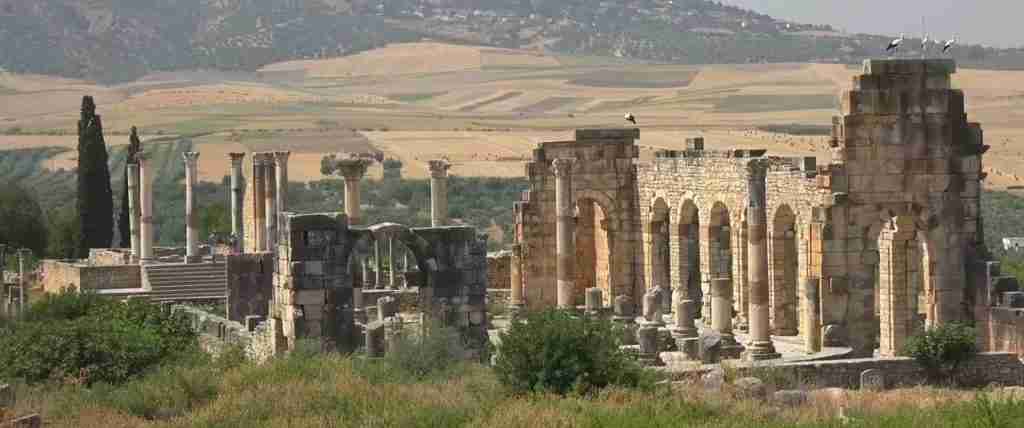
Meknes medina provides more manageable navigation than Fez with less aggressive merchants and fewer tourists creating comfortable exploration conditions. Souks sell everyday goods alongside tourist crafts, enabling observation of authentic commercial activity. Budget riads cost $12-18 with breakfast, comparable quality to Marrakech or Fez equivalents but 30% cheaper. Volubilis Roman ruins 30km north reached by grand taxi day trip ($20-25 including waiting time) showcase North Africa’s most impressive Roman remains—extensive mosaics, capitol, basilica, triumphal arch set among rolling wheat fields.
Meknes rewards history enthusiasts, budget travelers seeking imperial architecture without tourist pressure, and those wanting convenient Volubilis access. Overnight stays allow evening medina exploration, leisurely breakfast, and morning Volubilis visit before afternoon Fez journey (1 hour by bus or grand taxi). The city receives a fraction of Marrakech or Fez visitors despite comparable architectural significance, meaning you’ll experience authentic imperial Morocco without crowds or hassles.
Sample Itineraries 2026
Speed Route: One-Day Direct Transit
Early morning bus departure Marrakech 7-8 AM arriving Fez 3-5 PM same day. Budget accommodation in Marrakech $15, breakfast $2, bus ticket $18-22, snacks during journey $3-5, petit taxi to Fez accommodation $3, dinner in Fez $7. Total day cost: $48-54 per person.
This maximizes destination time over transit appreciation, suitable for travelers with limited schedules, those who’ve previously experienced Moroccan countryside, or budget travelers minimizing accommodation nights. The 8-9 hour journey passes quickly with landscape watching, reading, or sleep. However, you’ll miss Middle Atlas beauty, authentic smaller cities, and opportunities for unique experiences impossible in major tourist centers. This routing works best during shoulder season when neither Marrakech departure nor Fez arrival feels rushed by darkness.
Imperial Highway Three-Day Classical Route
Day 1: Morning Marrakech to Rabat (4.5 hours, $15 bus). Accommodation $18 budget riad. Afternoon Hassan Tower, Chellah ruins, kasbah exploration (free-$2). Dinner $8 local restaurant. Total day cost: $43 per person (excluding Marrakech accommodation).
Day 2: Full day Rabat exploring medina, gardens, river valley walks (free). Lunch $6 menu du jour. Evening bus to Meknes (2.5 hours, $8). Accommodation $15 budget riad. Dinner $7 tagine. Snacks $3. Total day cost: $39 per person.
Day 3: Morning Meknes medina and Bab Mansour ($0). Volubilis day trip $25 (grand taxi and entrance). Lunch included in day trip. Afternoon bus to Fez (1 hour, $4). Snacks $2. Total day cost: $31 per person (excluding Fez accommodation).
Three-day total: $113 per person plus Marrakech and Fez accommodation. This routing delivers three imperial cities in comfortable pacing, includes Roman ruins, and maintains budget discipline. However, natural scenery remains limited and mountain environments are completely missed. Suitable for history-focused travelers, those interested in Morocco’s administrative heritage, or travelers continuing to Tangier via northern cities.
Mountain Scenic Four-Day Nature Route
Day 1: Morning Marrakech to Beni Mellal (3.5 hours, $10 grand taxi). Accommodation $15 budget guesthouse. Lunch $6 local cafe. Afternoon Ain Asserdoun springs, kasbah ruins (free). Dinner $8 restaurant. Snacks $3. Total day cost: $42 per person (excluding Marrakech accommodation).
Day 2: Morning Beni Mellal to Azrou (3-4 hours, $14 grand taxi). Accommodation $14 budget hotel. Lunch $5 en route. Afternoon cedar forests and macaque observation (free, optional guide $10). Dinner $7 tagine. Snacks $3. Total day cost: $53 per person.
Day 3: Morning extended cedar forest exploration or optional Ifrane day trip ($3 grand taxi round-trip, additional $8-12 for lunch). Afternoon Azrou souk and town exploration (free). Dinner $7. Snacks $3. Total day cost: $36 per person (staying Azrou) or $47-51 (Ifrane day trip).
Day 4: Morning departure Azrou to Fez (1.5 hours, $10 grand taxi). Lunch $6 first meal in Fez. Afternoon settling into Fez. Snacks $2. Total day cost: $18 per person (excluding Fez accommodation).
Four-day total: $149-154 per person plus Marrakech and Fez accommodation. This routing prioritizes natural beauty over historical architecture, provides wildlife encounters, showcases Morocco’s ecological diversity, and offers cooler temperatures during summer months. Suitable for nature enthusiasts, photographers seeking dramatic landscapes, families interested in wildlife, or travelers seeking Morocco beyond urban environments. However, transportation requires more planning with grand taxi combinations and limited English-speaking guides available in smaller towns.
Hybrid Five-Day Comprehensive Route
Day 1: Marrakech to Beni Mellal as described above. Accommodation $15, meals $17, transport $10. Total: $42 per person (excluding Marrakech accommodation).
Day 2: Beni Mellal rest day for Ouiouane National Park hiking ($25 organized tour) or kasbah/springs extended exploration (free). Accommodation $15, meals $15. Total: $55 per person with tour, $30 without.
Day 3: Beni Mellal to Meknes via agricultural plains route (requires private grand taxi or self-drive, approximately $40-50 per vehicle divided among passengers, or bus routing via Casablanca adding 4-5 hours). Accommodation $15 Meknes, meals $15, transport $13 (per person shared grand taxi). Total: $43 per person.
Day 4: Meknes Volubilis day trip as described above. Total: $31 per person (excluding Fez accommodation).
Day 5: Early Meknes to Azrou ($15 grand taxi, 1.5 hours), morning cedar forests, lunch in Azrou $6, afternoon to Fez ($10 grand taxi). Total: $31 per person (excluding Fez accommodation).
Five-day total: $202-227 per person plus Marrakech and Fez accommodation. This ambitious routing combines mountain scenery with imperial cities, natural attractions with historical sites, providing comprehensive Morocco experience in single corridor. Requires significant flexibility, comfort with complex transportation arrangements, and acceptance of long travel days. Rewards travelers seeking maximum diversity, those with generous time budgets, or adventurous types who transform routing challenges into journey highlights.
Budget Planning for Your Journey 2026
Accommodation Cost Analysis
Budget accommodation along Marrakech-Fez routes ranges $12-18 nightly in smaller cities (Beni Mellal, Azrou) to $15-25 in larger cities (Rabat, Meknes, Casablanca if stopping). Ifrane commands premium $20-30 due to limited budget options and domestic tourism demand. Hostel dormitories where available (primarily Rabat, Meknes) cost $8-12 per bed. Multi-night stays in single location enable negotiated 10-15% discounts. Accommodation represents 30-40% of daily budget, making strategic destination selection crucial for overall journey economics. Budget travelers prioritizing savings over alpine experience stay in Azrou rather than Ifrane, visit Meknes rather than Casablanca, and select smaller cities where identical comfort costs significantly less than tourist-heavy destinations.
Food and Dining Budgets
Daily food costs average $12-18 across route destinations with breakfast $2-3 (street food or cafe), lunch $5-8 (local restaurant or cafe menu), dinner $6-9 (tagine or grilled meat), snacks $2-3 (fruit, juice, nuts). Smaller cities offer better value with authentic local establishments, while larger cities include more expensive tourist-oriented restaurants easily avoided through local cafe selection. Market shopping for breakfast supplies and snacks reduces costs $3-5 daily—particularly useful during multi-day stays enabling bulk purchases. Restaurant tipping remains modest $0.50-1 for basic cafes, $2-3 for nicer establishments. Mint tea breaks throughout the day cost $0.50-1 each, adding $1-3 daily but providing essential cultural engagement and rest opportunities.
Transportation Cost Summaries
Direct bus Marrakech-Fez costs $18-22 representing baseline. Mountain route grand taxi combination costs $32-39 (Marrakech-Beni Mellal $10 + Beni Mellal-Azrou $14 + Azrou-Fez $10) but enables strategic stops worth far more than $10-17 marginal expense. Imperial highway routing via Casablanca-Rabat-Meknes combines buses $15 Marrakech-Casablanca + $3 Casablanca-Rabat + $8 Rabat-Meknes + $4 Meknes-Fez totaling $30 with strategic imperial city stops. Self-drive costs $35-50 daily rental plus $50-70 fuel totaling $85-120 for direct journey or $140-200 for 3-4 day trip including accommodation nights—viable for 3-4 travelers splitting costs.
Activity and Attraction Expenses
Major paid attractions en route include Hassan II Mosque Casablanca $13, Volubilis ruins $7, and Meknes royal sites $5-7 total. Cedar forest macaque observation remains free though optional guides cost $5-10. Most route attractions are free—Beni Mellal springs and kasbah, Azrou souk, Rabat Hassan Tower exterior, city medinas, and natural landscapes. Budget $15-30 for paid attractions across multi-day journeys plus $20-25 for Volubilis day trip if pursuing that option. Activity costs represent 10-20% of total journey expenses, easily controlled through free attraction prioritization.
Total Journey Cost Comparisons
One-day direct transit: $48-54 per person including transportation, meals en route, destination transfers. Three-day Imperial Highway route: $113 per person plus accommodation nights 1-2. Four-day Mountain Scenic route: $149-154 per person plus accommodation nights 1-3. Five-day Hybrid route: $202-227 per person plus accommodation nights 1-4. Add Marrakech final night and Fez first night accommodation to all scenarios. The $40-60 cost difference between direct and multi-day options represents exceptional value for transforming transit into destination experiences—most travelers consider strategic stops among trip highlights worth far more than marginal expenses.
Booking & Logistics 2026
Advance Booking Requirements
Direct buses benefit from 1-2 day advance booking during peak season (October-November, March-April) guaranteeing seats and preferred departure times. Book through CTM and Supratours websites accepting international credit cards. Off-season (January-February, June-August) allows same-day walk-up purchasing with available seats on most departures. Accommodation in smaller destinations (Beni Mellal, Azrou) rarely requires advance booking except during Moroccan holiday periods (Eid festivals, summer weekends). Rabat, Meknes, and Ifrane benefit from 3-5 day advance booking during peak season, easily arranged through Booking.com or Hostelworld. Volubilis day trips require no advance booking—arrange morning of travel with grands taxis at Meknes station.
Communication and Language
French provides universal communication along both routes with Arabic second language. English speakers find variable success—more common in tourist-oriented establishments (Meknes, Ifrane) but limited in Beni Mellal and Azrou. Learn basic French phrases for transportation, accommodation, and meals enabling independent navigation. Google Translate offline mode (download French and Arabic language packs) provides emergency communication backup. Younger Moroccans increasingly speak English, particularly in cities with universities or tourism infrastructure. Transportation hubs display French/Arabic dual signage with occasional English in major bus stations.
Safety and Health Considerations
Routes pose minimal safety concerns with standard precautions applicable to any international travel. Road accidents represent primary risk—chose reputable bus companies with good safety records (CTM, Supratours) and avoid overnight buses if uncomfortable with highway night driving. Mountain route winter travel requires weather monitoring with occasional snow closures above 1,500m December-February—verify road conditions with accommodation hosts or transportation providers before departure. Water quality varies—bottled water ($0.50-1) provides safest option, though Morocco’s tap water after settling (letting sediment sink) causes few issues for most travelers. Basic travel insurance covering medical emergencies and transportation disruption costs $30-60 for two weeks, $60-120 for one month—essential protection for budget travelers who cannot absorb unexpected costs.
Luggage Management Strategies
Multi-day journeys benefit from packing strategies minimizing luggage weight and volume. Carry-size backpacks (40-50L) accommodate 3-5 day clothing and essentials while fitting underneath bus seats or in grand taxi trunks without difficulties. Leave non-essential items in Marrakech or Fez accommodation if planning same-city returns, reducing journey luggage burden. Compression bags reduce clothing volume significantly. Small day packs separate from main luggage enable accommodation check-in followed by hands-free exploration. Most riads accept luggage storage for day trips, though larger hotels vary in policies—verify upon check-in. Avoid valuable items in checked bus luggage, keeping electronics and documents in cabin bags under your control.
Connectivity and Digital Resources
Morocco SIM cards (Maroc Telecom, Orange, Inwi) cost $10-15 for 10-20GB data valid one month, purchased at airports or major city phone shops requiring passport presentation. Data coverage remains good along major routes but variable in mountain areas between towns. Download offline maps (Maps.me, Google Maps offline mode) for navigation backup. Bus company apps (CTM) enable schedule checking and seat booking, though website interfaces work equally well. Accommodation booking apps (Booking.com, Hostelworld) provide offline reservation access essential for showing confirmations without data connection. Photography enthusiasts bringing substantial camera equipment should verify accommodation security and inquire about safe storage options.
Frequently Asked Questions About Marrakech to Fez Travel 2026
Can I break the Marrakech to Fez journey with day stops rather than overnight stays?
Yes, though logistics become complex. Grand taxi routing enables specific destination stops—request driver wait 1-2 hours while you explore (negotiate additional $10-15 waiting fee) then continue to next destination. This works for brief stops at Beni Mellal springs, Azrou cedar forests, or Ifrane photo opportunities without overnight accommodation costs. However, you’ll miss evening and morning destination exploration, local market experiences, and authentic community rhythms only visible through extended stays. Most travelers find overnight stops deliver far better value, transforming transit into destination experiences worth the marginal accommodation expense. Day stops work best for travelers with very tight schedules or those who’ve previously visited stop destinations and want quick revisits.
Is the Marrakech-Fez route safe for solo female travelers in 2026?
Yes, with standard precautions applicable throughout Morocco. Bus travel provides greatest comfort with assigned seating and social atmosphere discouraging harassment. Grand taxis require more vigilance—sitting in front passenger seat reduces cramped back-row discomfort and provides easier driver communication. Accommodation in budget riads and guesthouses poses minimal concerns when selected through reviewed platforms (Booking.com, Hostelworld). Smaller cities like Beni Mellal and Azrou deliver more conservative atmospheres with less aggressive merchant behavior than Marrakech or Fez. Modest dress (covering shoulders and knees), confident demeanor, and polite-but-firm boundary setting address most unwanted attention. Solo female travelers report fewer problems on this route compared to coastal cities or Sahara desert tours where gender dynamics sometimes prove more challenging.
What’s the best route for summer travel avoiding heat?
Middle Atlas mountain route provides natural air conditioning with temperatures 15-20°F (8-12°C) cooler than plains cities. July-August sees Marrakech and Fez reaching 95-105°F (35-40°C) while Azrou and Ifrane remain comfortable 75-85°F (24-29°C). Cedar forests offer shaded hiking, higher elevations provide temperature relief, and mountain accommodation often lacks air conditioning because it’s genuinely unnecessary. This routing transforms summer liability into advantage—you’re actively seeking mountains while most travelers avoid them. However, heat remains unavoidable during Marrakech departure and Fez arrival days. Consider overnight buses departing Marrakech 9 PM arriving Beni Mellal 12:30 AM (if services exist) eliminating daytime heat exposure, or very early morning departures (6-7 AM) before temperature peaks.
Can I use this route to access Sahara desert tours?
Yes, though requires route modifications. From Beni Mellal or Azrou, grands taxis connect to Er-Rachidia ($25-35, 4-6 hours) providing access to Merzouga and Erg Chebbi dunes. Alternatively, Midelt (between Azrou and Er-Rachidia) offers budget accommodation and serves as logical overnight stop breaking Marrakech-Merzouga journey into comfortable two-day routing. This combination enables: Marrakech → Beni Mellal (day 1) → Azrou (day 2) → Midelt (day 3) → Merzouga (day 4) for 3-day desert tour → return to Fez via Er-Rachidia and Ifrane. Total journey requires 7-8 days but delivers comprehensive Morocco experience combining imperial cities, mountains, and desert. Budget $250-350 for this extended routing including all transportation, accommodation, and 3-day desert tour.
Are there any UNESCO World Heritage sites along these routes?
Volubilis Roman ruins (30km north of Meknes) hold UNESCO World Heritage designation, representing North Africa’s most complete Roman city remains. The site features remarkable floor mosaics, capitol, basilica, triumphal arch, and house ruins set among rolling agricultural landscapes. Entrance costs $7 with grand taxi day trips from Meknes totaling $20-25 including waiting time and entrance. Additionally, while not directly on Marrakech-Fez routes, the historic medinas of both Marrakech and Fez themselves hold UNESCO designation, making this corridor connect two World Heritage sites with third site (Volubilis) positioned conveniently between. Meknes medina is also UNESCO-listed, providing three heritage sites within single imperial city stop. This heritage density rewards culturally-focused travelers prioritizing historical architecture and archaeological significance.
What’s the luggage allowance on buses and grands taxis?
Buses allow one main bag (20-25kg limit) in underneath compartment plus one cabin bag (backpack or small roller). Exceeding weight limits rarely triggers enforcement though extremely oversized luggage may incur $5-10 surcharges. Grands taxis accommodate reasonable luggage in trunk space—one large backpack or suitcase per passenger plus small day bag typically fits without issues. However, four passengers with maximum luggage may find tight quarters, sometimes negotiating reduced passenger capacity (3-4 passengers instead of full 6) for comfort. Excess luggage (surfboards, bicycle, extensive photo equipment) requires private taxi hire or creative problem-solving. Most budget travelers with single backpack or roller suitcase face zero luggage issues on either transport mode. Fragile items ride safer in cabin bags where you maintain control rather than trusting underneath compartments or taxi trunks.
Can I do this journey during Ramadan without issues?
Yes, with minor adjustments. Transportation schedules remain unchanged during Ramadan. Restaurant availability during daytime drops significantly as many establishments close from dawn to sunset, requiring planning for breakfast and lunch supplies from markets or supermarkets before travel days. Bus rest stops serve drinks and snacks but full meals become limited until evening. Grand taxi drivers often fast but continue normal work—avoid eating/drinking in their vehicles as courtesy. Iftar (sunset fast-breaking meal) creates festive atmosphere in all destinations with special evening meals worth experiencing. Accommodation in budget establishments continues normally with breakfast often served slightly later than usual. Overall, Ramadan transforms rather than prevents route travel—expect cultural richness increase with community celebrations but plan food logistics more carefully than standard months.
What photography opportunities are best along these routes?
Mountain route offers superior photography with cedar forests providing dramatic landscapes, Barbary macaques enabling wildlife shots, Ifrane delivering unexpected alpine architecture contrasts, and Middle Atlas peaks creating stunning backgrounds. Golden hours (7-9 AM, 5-7 PM) illuminate mountain scenery beautifully. Imperial Highway route emphasizes architectural photography—Meknes Bab Mansour gate, Volubilis Roman ruins, Rabat Hassan Tower. Smaller cities (Beni Mellal kasbah, Azrou souk) provide authentic market and street photography opportunities without Marrakech/Fez tourist crowds. Landscape photographers prioritize mountain route, architecture enthusiasts choose imperial highway, while street photographers find excellent opportunities on either routing. Bring telephoto lens (70-200mm) for macaque photography, wide angle (16-35mm) for architecture and landscapes, and fast prime (35mm or 50mm f/1.8) for market and street shooting in variable light conditions.
Are there vegetarian food options along these routes?
Yes, excellent options exist throughout. Moroccan vegetable tagines (carrots, potatoes, zucchini, turnips with preserved lemon and olives) cost $5-7 at any restaurant. Couscous with vegetables appears every Friday with generous portions. Lentil or chickpea soups (harira) provide protein-rich options. Markets sell fresh fruits, vegetables, bread, olives, and cheese enabling meal assembly. However, many “vegetable” dishes include meat stock or small meat pieces requiring clarification when ordering—learn “bidun lahm” (without meat) and “ana nabati” (I’m vegetarian) phrases. Smaller cities offer fewer restaurant options overall but vegetable tagines remain universal. Vegan travelers face greater challenges requiring more careful restaurant selection and market-based meals. Overall, vegetarians navigate Marrakech-Fez routes easily with adequate options maintaining budget while experiencing authentic Moroccan cuisine.
Should I exchange money before traveling between cities?
Withdraw cash in Marrakech before departure if taking multi-day route, as ATM availability varies in smaller destinations. Beni Mellal has multiple ATMs though occasional technical issues occur. Azrou has limited ATMs with variable reliability. Ifrane has several functioning ATMs serving university students. Meknes and Rabat offer extensive ATM networks. Budget $150-200 cash for 3-4 day journey covering accommodation, meals, local transport, and small purchases. Bus tickets can be purchased with cards online or in cash at stations. Grand taxis require cash exclusively. Credit cards work in some accommodation (primarily through Booking.com prepayment) but many budget riads remain cash-only. Carrying excess cash poses security concerns—withdraw moderate amounts ($100-150) at intervals rather than large sums creating theft targets.