
Manuel Antonio Wildlife Guide 2026: Monkeys, Sloths & More
Key Takeaways:
- Three-toed sloths appear 70-80% of mornings along cecropia tree corridors on Sloth Trail and Cathedral Point Trail between 7-10 AM
- Three monkey species inhabit the park: white-faced capuchins (seen daily 90%+ visits), mantled howlers (heard 60% visits), and endangered squirrel monkeys (spotted 20-30% visits)
- Professional naturalist guides increase rare species sighting success from 40% to 85-90% using high-powered spotting scopes and expert tracking knowledge
- Over 350 bird species include scarlet macaws (flying overhead 70% mornings), toucans (fruiting trees 50% frequency), and mangrove hummingbirds (coastal trails 80% encounters)
- Green iguanas bask on beaches and low branches daily while Jesus Christ lizards sprint across trails 60-70% of morning visits
- Best wildlife photography occurs 7-9 AM with overcast light reducing harsh shadows and golden hour 5:30-6:30 AM delivering warm tones for dramatic compositions
Planning Your Manuel Antonio Wildlife Experience in 2026
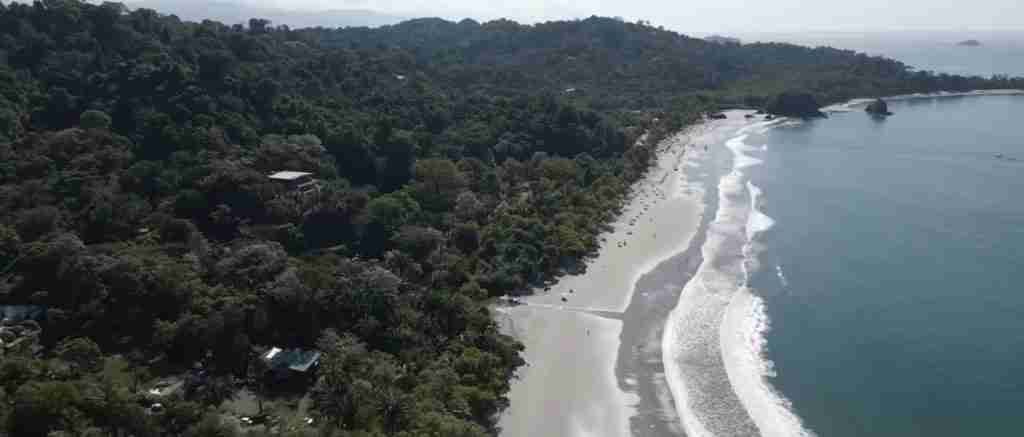
Manuel Antonio National Park protects one of Central America’s most concentrated wildlife populations, compressing extraordinary biodiversity into just 1,983 acres of tropical rainforest and coastal habitat. This remarkable density creates the world’s most accessible destination for observing three-toed sloths, multiple monkey species, vibrant tropical birds, and diverse reptiles within comfortable hiking distances on well-maintained trail systems.
The park’s unique geography combines lowland Pacific rainforest with pristine beaches, creating habitat transition zones where forest species meet coastal wildlife. These ecotones concentrate animal activity as creatures from both ecosystems overlap, delivering exceptional observation opportunities along beach-forest interfaces. The compact terrain allows visitors to encounter dozens of species during single morning visits without extensive jungle trekking.
Wildlife viewing success at Manuel Antonio depends critically on timing, observation techniques, and understanding animal behavior patterns. Morning hours 7-10 AM capture peak activity when animals feed actively after cooler night temperatures. Professional naturalist guides with spotting scopes transform casual park visits into comprehensive wildlife documentaries, locating camouflaged sloths, identifying distant bird species, and explaining ecological relationships that contextualize observations.
The park’s conservation success maintains healthy populations of species threatened elsewhere in Costa Rica, including the critically endangered Central American squirrel monkey (tití) with fewer than 1,500 individuals remaining nationwide. Observing wildlife at Manuel Antonio directly supports protection programs while providing unforgettable encounters with rainforest species in their natural habitat.
People Also Ask About Manuel Antonio Wildlife 2026
What animals can you see at Manuel Antonio in 2026?
Manuel Antonio protects three-toed sloths, two-toed sloths, white-faced capuchin monkeys, mantled howler monkeys, Central American squirrel monkeys (tití), green iguanas, basilisk lizards (Jesus Christ lizards), white-nosed coatis, agoutis, raccoons, and over 350 bird species including scarlet macaws, toucans, pelicans, frigatebirds, and mangrove hummingbirds. Marine life includes sea turtles, dolphins, and occasional humpback whales offshore during migration seasons July-November and December-April. Poison dart frogs, tree frogs, and various snake species inhabit forest understory.
How much do wildlife guides cost at Manuel Antonio in 2026?
Professional certified naturalist guides charge $25-35 per person for 2.5-3 hour wildlife observation tours in groups of 2-6 people, or $50-75 per person for private individual tours in 2026. Check current rates as pricing may vary by season and guide experience level. Guide fees include high-powered spotting scopes and wildlife identification expertise but exclude park entrance ($18 adults). Extended 4-5 hour tours with specialized bird watching or photography focus cost $40-50 per person.
When is the best time to see wildlife at Manuel Antonio in 2026?
The optimal wildlife viewing window occurs 7-10 AM when nocturnal animals settle into visible rest positions and diurnal species begin active morning feeding. Early arrival at 7 AM park opening ensures coolest temperatures, smallest crowds, and highest animal activity levels. Three-toed sloths appear most frequently during this morning window when they reposition in cecropia trees. Dry season December-April provides slightly better overall visibility, though wildlife viewing remains excellent year-round during early morning hours.
Do you need a guide to see wildlife at Manuel Antonio in 2026?
Professional guides are not mandatory but increase rare species sighting success from approximately 40% to 85-90% through expert knowledge of animal locations and high-powered spotting equipment. First-time rainforest visitors, families with children, photographers seeking optimal shots, and anyone wanting educational interpretation benefit significantly from guide investment. Experienced wildlife observers with quality binoculars can successfully spot major species like sloths and capuchin monkeys independently, especially on return visits.
Extended multi-day tours – 5+ days
Featured Costa Rica Multi-Day Tour Packages

3 days
Costa Rica 3-Day Discovery Tour
- ✓ Comprehensive Costa Rica experience
- ✓ Expert local guides included
- ✓ All accommodation included
- ✓ Transportation provided

5 days
Costa Rica 5-Day Highlights Experience
- ✓ Comprehensive Costa Rica experience
- ✓ Expert local guides included
- ✓ All accommodation included
- ✓ Transportation provided

7 days
Costa Rica 7-Day Cultural Journey
- ✓ Comprehensive Costa Rica experience
- ✓ Expert local guides included
- ✓ All accommodation included
- ✓ Transportation provided
10 days
Costa Rica 10-Day Complete Adventure
- ✓ Comprehensive Costa Rica experience
- ✓ Expert local guides included
- ✓ All accommodation included
- ✓ Transportation provided
Multi-day tour packages powered by TourRadar. Prices and availability subject to change.
Three-Toed Sloth Observation Strategies 2026
Identifying Three-Toed Sloths in 2026
Three-toed sloths (*Bradypus variegatus*) represent Manuel Antonio’s most sought-after wildlife species, recognized by their characteristic three claws per limb, round face with perpetual smile appearance, and slow deliberate movements. These cryptic mammals measure 18-24 inches in body length, weigh 8-11 pounds, and display greenish-tinged fur from symbiotic algae growth that provides camouflage in tree canopies.
The species lives exclusively in trees, descending to ground level only once weekly for bathroom needs. Their extremely slow metabolism requires minimal food intake, allowing them to survive on nutrient-poor cecropia leaves that constitute 95% of their diet. This specialized diet restricts them to cecropia tree corridors that concentrate along Manuel Antonio’s trail system, creating predictable observation locations.
Three-toed sloths differ from two-toed species through facial structure, claw count, and activity patterns. Three-toed individuals maintain diurnal schedules with morning and afternoon active periods, while two-toed sloths demonstrate nocturnal behavior. The three-toed face appears rounder and friendlier, while two-toed sloths display more pig-like snouts. Both species inhabit Manuel Antonio but three-toed sloths appear far more frequently during daytime visits.
Best Sloth Viewing Locations 2026
The Sloth Trail (Sendero El Perezoso) earns its name from consistently high three-toed sloth concentrations, particularly along the section between park entrance and Cathedral Point. Morning surveys 7-9 AM reveal sloths in this zone 70-80% of days, resting in cecropia tree forks 20-40 feet above ground. The trail’s mature cecropia trees provide ideal sloth habitat with abundant food sources and safe resting positions.
Cathedral Point Trail sections near the beach-forest transition zones host active sloth populations that feed on coastal cecropia trees during morning hours. The elevated trail position allows eye-level viewing of sloths in nearby tree canopies, eliminating extreme upward viewing angles. Multiple viewing platforms along this trail provide stable positions for extended observation and photography.
Professional guides locate sloths through subtle visual cues invisible to untrained observers – slight branch movements, unnatural shapes in tree forks, and distinctive leaf consumption patterns that indicate recent feeding. Their spotting scopes magnify distant sloths into detailed close-up views, revealing facial features, claw structure, and algae-covered fur textures. Without guides, visitors walk past 60-70% of present sloths that remain undetected.
Sloth Behavior and Photography Tips 2026
Three-toed sloths maintain remarkably consistent daily routines: feeding 8-10 AM after dawn, resting 10 AM-2 PM during midday heat, brief afternoon feeding 2-4 PM, and settling into night positions 4-6 PM. This predictability allows strategic timing for observation, with morning feeding periods offering the most dynamic behavior as sloths slowly reach for new leaves and reposition within trees.
Photographing sloths requires patience, stability, and appropriate equipment. Telephoto lenses in the 200-400mm range capture frame-filling portraits from safe observation distances. Image stabilization becomes essential as long focal lengths magnify camera shake. Cloudy conditions provide ideal lighting, eliminating harsh shadows that obscure facial details. Morning overcast 8-10 AM delivers perfect soft light for sloth photography.
Approach sloths quietly without sudden movements or loud noises that cause stress. Maintain 2+ meter distance as required by park regulations. Sloths display remarkable tolerance to respectful observers, continuing normal behavior when visitors observe quietly. Flash photography is prohibited as it disturbs wildlife – rely on natural light and higher ISO settings in shaded canopy conditions.
Monkey Species Identification and Viewing 2026
White-Faced Capuchin Monkeys 2026
White-faced capuchin monkeys (*Cebus capucinus*) dominate Manuel Antonio’s primate population, appearing on 90%+ of park visits due to their boldness, intelligence, and beach-foraging behavior. These medium-sized monkeys measure 12-18 inches in body length with equally long prehensile tails, display distinctive white face masks contrasting with black body fur, and weigh 6-9 pounds as adults.
Capuchin troops of 10-20 individuals patrol all four beaches daily, arriving 8-11 AM to search for fallen fruit, investigate crab holes, and opportunistically seek human food scraps despite feeding prohibitions. Their remarkable intelligence manifests through tool use – rocks for opening shellfish, sticks for extracting insects – and complex social hierarchies with dominant males controlling troop movements.
The species demonstrates little fear of humans, approaching within 10-15 feet of beach visitors and exhibiting bold curiosity about bags, backpacks, and food containers. Never feed capuchins as this creates aggressive behavior, nutritional problems from inappropriate human food, and reinforces dangerous proximity to people. Park rangers enforce feeding prohibitions strictly with potential expulsion for violations.
Best capuchin viewing occurs at Manuel Antonio Beach and Espadilla Sur Beach during morning hours when troops systematically patrol shorelines. Watch for vocalizations – chattering calls indicate troop communication – and tree movement as groups travel through canopy corridors. Capuchins provide endless entertainment through playful juvenile behavior, grooming sessions, and acrobatic branch-to-branch leaps.
Mantled Howler Monkeys 2026
Mantled howler monkeys (*Alouatta palliata*) create Manuel Antonio’s most distinctive soundtrack with their deep resonant howls audible up to 3 miles away. These large monkeys measure 20-28 inches in body length, weigh 12-22 pounds, and display solid black coloring with distinctive golden-brown fringe along flanks that gives them their “mantled” name. Males produce the famous howling vocalizations through enlarged hyoid bones in their throats.
Howlers maintain more sedentary lifestyles than capuchins, resting 70-80% of daylight hours in high canopy positions while slowly digesting leaf-based diets. Their lower energy requirements allow survival on abundant but nutrient-poor leaves, contrasting with capuchins’ fruit-based diets that require active foraging. This difference creates distinct viewing patterns – howlers appear stationary in trees while capuchins actively move through territories.
Dawn and dusk vocalizations mark territorial boundaries, with male howlers producing thunderous calls 6-8 AM and 4-6 PM. The sound resembles roaring wind through a tunnel, creating eerie atmospheric effects in the rainforest. Hearing howlers occurs on 60% of visits, while actually observing them requires patient scanning of high canopy positions where they rest almost motionlessly.
Professional guides locate howlers through vocalization tracking and knowledge of preferred resting trees. Once located, howlers remain in the same general area for hours, allowing extended observation. Photography challenges include extreme height (40-80 feet), dense foliage obstructions, and minimal movement. Early morning or late afternoon golden hour light penetrates canopy better than harsh midday sun.
Central American Squirrel Monkeys 2026
Central American squirrel monkeys or tití (*Saimiri oerstedii*) represent Manuel Antonio’s rarest primate species with critically endangered status and fewer than 1,500 individuals remaining in wild populations restricted to two small regions: Manuel Antonio and Corcovado. These diminutive monkeys measure just 10-12 inches in body length, weigh 1.5-2.5 pounds, and display distinctive “Roman helmet” black cap markings with white faces and orange-gold backs.
Tití troops of 20-40 individuals move rapidly through middle and lower canopy levels, foraging for insects, spiders, and small fruits in hyperactive coordinated groups. Their small size, quick movements, and preference for dense vegetation create challenging observation conditions compared to larger monkey species. Spotting success rates measure 20-30% for independent visitors, increasing to 50-60% with professional guides who know recent troop locations.
The species faces habitat loss, predation, and limited genetic diversity challenges that threaten long-term survival. Manuel Antonio’s population represents approximately 600-800 individuals, making every sighting significant for conservation awareness. Tití observations occur most frequently along Punta Catedral Trail and interior forest sections away from beach areas where capuchins dominate.
Observing tití requires patience, quiet movement, and attention to subtle signs like branch shaking from rapid group travel and high-pitched chirping vocalizations. Once located, troops move continuously while foraging, requiring observers to follow discreetly without disrupting natural behavior. Photography demands fast shutter speeds (1/500 second minimum) to freeze motion of these energetic primates.
Bird Watching Strategies for 2026 Manuel Antonio Visits
Signature Bird Species 2026
Scarlet macaws (*Ara macao*) reign as Manuel Antonio’s most spectacular bird species, displaying brilliant red plumage with blue and yellow wing feathers measuring 32-36 inches in total length including long tail feathers. These massive parrots fly in mated pairs or small family groups, calling loudly with distinctive harsh squawks audible half-mile distances. Morning flights 7-9 AM bring macaws overhead 70% of days during dry season, slightly less frequently during green season.
The species mates for life and requires large tree cavities for nesting, making habitat conservation essential for population maintenance. Macaws feed on hard nuts and fruits, using powerful beaks to crack open seeds other species cannot access. Watch for them flying between forest canopy and coastal almond trees that produce favored food sources. Perched birds allow excellent photography opportunities when discovered in fruiting trees.
Keel-billed toucans and chestnut-mandibled toucans inhabit park forests, their massive colorful bills unmistakable when spotted in fruiting trees. These fruit-eating birds measure 18-22 inches in length, hopping between branches while feeding on berries, small fruits, and occasional insects. Their distinctive croaking calls announce presence before visual detection. Toucans appear 50% of morning visits along interior forest trails.
Brown pelicans patrol coastlines constantly, diving for fish just offshore and resting on beach rocks between feeding sessions. These large seabirds measure 42-54 inches in length with 6.5-foot wingspans, executing spectacular headfirst plunge dives from 30-60 feet heights to catch fish. Pelican observations occur 95%+ of beach visits, making them reliable subjects for coastal bird photography.
Hummingbird and Small Bird Species 2026
Mangrove hummingbirds (*Amazilia boucardi*) represent a Costa Rica endemic species with limited range, making Manuel Antonio sightings particularly valuable for bird listers. These small 4-inch hummingbirds display bronze-green upperparts and white underparts, feeding at flowering trees along coastal trails. Their rapid wingbeats (50-80 beats per second) create characteristic humming sounds that announce their presence.
Blue-gray tanagers, palm tanagers, and summer tanagers add vibrant colors to forest canopy, traveling in mixed-species feeding flocks that also include warblers, flycatchers, and other small passerines. These feeding flocks create sudden bursts of bird activity as 20-30 individuals of multiple species move through forest sections together, providing excellent observation opportunities as different species reveal themselves sequentially.
Motmots, trogons, and woodpeckers occupy mid-story forest positions, their distinctive calls helping with identification before visual confirmation. Rufous motmots display spectacular long tail feathers with racket-shaped tips, while black-throated trogons show brilliant yellow underparts. Learning bird vocalizations dramatically improves detection rates as many species remain hidden in dense vegetation while calling frequently.
Professional Bird Watching Guides 2026
Specialized bird watching guides with comprehensive species knowledge and expertise in bird calls cost $40-50 per person for 3-4 hour focused bird observation tours in 2026. Check current rates as pricing may vary by guide experience and tour length. These specialists identify species by call alone, locate secretive birds in dense vegetation, and provide detailed ecological information about behavior, migration patterns, and conservation status.
Bird guides carry high-quality spotting scopes (20-60x magnification) that reveal plumage details impossible to see with naked eyes or standard binoculars. Setting up scopes on distant perched birds allows extended observation and photography through scope eyepieces using smartphone digiscoping techniques. This equipment access justifies higher guide costs compared to general wildlife tours.
Optimal bird watching timing runs 6:30-10 AM when bird vocalizations peak and feeding activity reaches maximum levels. Afternoon bird watching 3-5 PM provides secondary observation windows as species feed before evening roost. Hiring specialized bird guides makes sense for serious birders seeking to maximize species counts, photographers wanting optimal bird shots, and anyone interested in detailed avian ecology education.
Reptile and Amphibian Encounters 2026
Green Iguana Observation 2026
Green iguanas (*Iguana iguana*) appear daily throughout Manuel Antonio, basking on beaches, tree branches, and trail-side rocks to regulate body temperature in the tropical heat. These impressive lizards measure 4-6 feet in total length including whip-like tails, weigh 8-17 pounds as adults, and display green coloration that fades to brownish-gray with age. Males develop large dewlaps (throat fans) and pronounced spinal crests.
The species demonstrates remarkable tree-climbing abilities despite large size, ascending to high canopy positions to feed on leaves, flowers, and fruits. Beach populations concentrate on Manuel Antonio Beach and Espadilla Sur Beach where they bask on sand during morning hours 8-11 AM before retreating to shade as temperatures climb. Their tolerance of humans allows close approach for photography opportunities.
Green iguanas swim competently, often entering ocean waters to escape threats or move between coastal areas. Observing swimming iguanas provides unexpected wildlife moments as these seemingly terrestrial lizards paddle efficiently with powerful tails propelling them through waves. Breeding season January-March brings increased male territorial behavior with head-bobbing displays and color intensification.
Jesus Christ Lizards and Other Reptiles 2026
Common basilisk lizards, nicknamed “Jesus Christ lizards” for their ability to run across water surface, sprint along trails and dart through understory 60-70% of morning visits. These medium-sized lizards measuring 20-30 inches including tail display green-brown coloring with distinctive head crests on males. When startled, they bolt on hind legs toward water, sometimes executing their famous water-running escape across pond surfaces.
The water-running ability depends on rapid foot movements (20 steps per second) that create air pockets preventing sinking, combined with lightweight bodies and specialized toe structures. This remarkable adaptation works only for juveniles and small adults – larger individuals sink immediately. Observing successful water-running requires quick reflexes and luck as the behavior lasts only 2-3 seconds before basilisks resume normal swimming.
Snake encounters occur less frequently but include non-venomous species like boa constrictors (seen occasionally sunning on branches) and venomous fer-de-lance and eyelash vipers (extremely rare, requiring expert identification). All snakes maintain protected status – observe from safe distances without approaching or harassing. Professional guides recognize venomous species and ensure safe observation protocols.
Poison Dart Frogs and Amphibians 2026
Strawberry poison dart frogs (*Oophaga pumilio*) inhabit forest floor leaf litter, their brilliant red coloring with blue legs creating striking contrast against brown substrate. These tiny frogs measure just 0.75-1 inch in length, making detection challenging despite bright warning coloration. Professional guides with trained eyes spot these cryptic amphibians 40-50% of tours, while independent visitors rarely notice them.
The species produces mild skin toxins that defend against predators but pose no danger to humans through casual observation. Their common name derives from indigenous peoples’ historical use of more toxic relatives for blowgun dart poison – Manuel Antonio’s population produces relatively weak toxins. Never handle any amphibians as human skin oils damage their permeable skin and stress sensitive animals.
Red-eyed tree frogs, glass frogs, and various toad species increase visibility during green season when rain triggers breeding activity and vocalization. Night walks (not offered within park boundaries but available at nearby private reserves) reveal amphibian diversity impossible to observe during daytime visits. Rainy afternoons bring frogs out of hiding, creating unexpected trail encounters during May-November wet season.
Marine Wildlife Observation 2026
Sea Turtle Encounters 2026
Olive ridley sea turtles and hawksbill sea turtles feed in Manuel Antonio’s coastal waters, occasionally surfacing near swimmers and snorkelers at Manuel Antonio Beach and Escondido Beach. These marine reptiles measure 2-3 feet in shell length, surfacing to breathe every 4-5 minutes while feeding on seagrass and algae. Patient snorkelers swimming along rocky reef areas encounter turtles 15-20% of visits during early morning calm conditions.
Sea turtle nesting occurs occasionally on Espadilla beaches during July-November peak nesting season, though most significant nesting happens on more remote Pacific beaches. Observing nesting turtles requires extreme caution to avoid disturbing the process – maintain 15+ foot distances, eliminate lights including camera flashes, and remain completely quiet. Park rangers coordinate any nesting observations to ensure proper protocols.
Marine turtles face severe conservation challenges including fishing net entanglement, plastic ingestion, and nesting beach development. Every sighting represents a conservation success story as populations slowly recover from historical overharvesting. Report turtle sightings to park rangers who maintain population monitoring records contributing to regional conservation assessments.
Dolphins and Whales 2026
Bottlenose dolphins patrol coastal waters year-round, traveling in pods of 5-20 individuals that occasionally approach close to shore. Beach observers spot dolphin fins 30-40% of visits when scanning ocean horizons, especially during early morning calm conditions. The dolphins feed on fish schools that concentrate near rocky outcrops, creating predictable observation areas at both ends of Espadilla Sur Beach.
Humpback whales migrate past Manuel Antonio during two annual seasons: July-November (Southern Hemisphere population) and December-April (Northern Hemisphere population). These massive marine mammals breach, tail slap, and blow visible spouts 1-3 miles offshore. Lucky beach observers witness whale activity 10-15% of visits during peak migration months August-September and January-February.
Dedicated whale watching boat tours from Quepos Marina increase sighting success to 70-80% during peak migration seasons, departing early morning for 3-4 hour offshore excursions at $75-95 per person. These tours combine whale watching with dolphin encounters, seabird observation, and occasional sailfish or manta ray sightings. Booking whale tours complements park visits for comprehensive marine wildlife experiences.
Professional Guide Services Analysis 2026
Guide Cost-Benefit Evaluation 2026
Standard naturalist guides charging $25-35 per person for 2.5-3 hour tours deliver substantial value through dramatically improved wildlife sighting success rates. Independent visitors typically spot 6-10 species during park visits, while guided tours average 25-35 species identifications including sloths, multiple monkey types, 15-20 bird species, and various reptiles. The spotting scope access alone justifies costs by revealing camouflaged wildlife invisible to naked eyes.
Private guides at $50-75 per person provide personalized pacing, unlimited questions, specialized interests accommodation, and flexible timing. Solo travelers, couples seeking intimate experiences, serious photographers needing specific shots, and anyone with specialized interests (birds, photography, conservation) benefit most from private guide investment. Group tours work well for families and budget-conscious travelers comfortable with standard itineraries.
Guide quality varies significantly – seek certified naturalist guides registered with Costa Rica tourism board (ICT) rather than unlicensed individuals offering cheaper services at park entrance. Established operators like Manuel Antonio Expeditions, Oceans Unlimited, and Green Iguana Tours maintain professional standards, equipment quality, and biological knowledge that unlicensed guides cannot match. Advance booking through reputable operators ensures quality experiences.
When to Skip Professional Guides 2026
Return visitors who completed initial guided tours gain sufficient knowledge to successfully spot major species independently on subsequent visits. The educational value of first guided experiences teaches observation techniques, animal signs, and prime locations that transfer to future independent exploration. Many visitors optimize budgets by hiring guides for first park visits, then returning independently with newly acquired skills.
Experienced wildlife observers comfortable with binocular use, field guide species identification, and patient scanning successfully locate sloths, capuchin monkeys, and common bird species without guide assistance. These individuals sacrifice rare species encounters (squirrel monkeys, poison dart frogs, secretive birds) but observe abundant wildlife while maintaining independent flexibility. Quality binoculars (8×42 or 10×42 configuration) become essential equipment for effective independent viewing.
Budget travelers allocating funds to extended Costa Rica trips may skip Manuel Antonio guides while hiring specialists at destinations with more difficult wildlife (Corcovado, Tortuguero, cloud forests). This strategy concentrates guide investment where it provides maximum marginal benefit. Manuel Antonio’s abundant conspicuous wildlife allows reasonable independent success compared to remote rainforest locations.
Wildlife Photography Techniques 2026
Essential Camera Equipment 2026
Telephoto zoom lenses in the 100-400mm range provide ideal focal lengths for wildlife photography, capturing frame-filling portraits of distant animals without disturbing natural behavior. Image stabilization becomes critical for handheld shooting, compensating for camera shake magnified by long focal lengths. Full-frame cameras deliver better low-light performance than crop sensors, important for shaded rainforest conditions.
Mirrorless cameras offer advantages over DSLRs through silent shooting modes that avoid startling wildlife with mirror slap sounds, faster autofocus for tracking moving animals, and lighter weight reducing fatigue during extended hiking. Sony, Canon, and Nikon mirrorless systems all provide excellent wildlife capabilities. Bring extra batteries as tropical humidity and intensive use drain power quickly.
Smartphone photography produces surprisingly good results when combined with professional guide spotting scopes using digiscoping techniques. Holding phone cameras against scope eyepieces captures magnified wildlife images suitable for social media sharing and trip documentation. This approach eliminates carrying heavy camera gear while still obtaining quality wildlife photographs.
Optimal Lighting and Timing 2026
Overcast conditions during 8-10 AM morning hours provide ideal wildlife photography lighting, eliminating harsh shadows that obscure facial details and creating even illumination across subjects. Cloud cover acts as nature’s softbox, wrapping light around animals for pleasing tonal ranges. Avoid midday sun 11 AM-2 PM when extreme contrast creates blown highlights and blocked shadows.
Golden hour light 5:30-6:30 AM (before park opens) and 5-6 PM (before closure) delivers warm orange-red tones for dramatic atmospheric shots. However, wildlife activity decreases during these periods compared to mid-morning optimal viewing times, creating tradeoffs between dramatic light and animal behavior. Serious photographers balance both factors by visiting multiple days.
Green season cloudy conditions actually benefit wildlife photography compared to harsh dry season sun, despite general preference for dry season weather. The consistent overcast provides all-day photographic opportunities rather than brief golden hour windows. Rain creates challenges but brief morning clear periods between showers offer excellent shooting conditions with dramatic storm-light effects.
Behavioral Photography Tips 2026
Capturing behavior rather than static portraits elevates wildlife photography from documentation to storytelling. Anticipate actions by watching animal body language – sloths reaching for leaves, monkeys grooming, birds about to take flight. Continuous shooting modes capture action sequences that freeze decisive moments impossible to time manually. Burst rates of 8-10 frames per second provide excellent action coverage.
Environmental portraits showing animals within habitat context tell richer stories than tight close-ups eliminating backgrounds. Include forest canopy, beach settings, or feeding trees to establish sense of place. These images communicate ecosystem relationships better than isolated subject shots. Use wider focal lengths (70-200mm) for environmental storytelling versus tight 400mm+ headshots.
Respect wildlife by maintaining required 2-meter distances, avoiding flash photography, and never baiting or calling animals for better shots. Professional guides ensure ethical observation practices. Wildlife photography demands patience – sitting quietly while animals approach naturally produces better images than chasing fleeing subjects. Slow, predictable movements avoid spooking wildlife.
Conservation and Ethical Wildlife Viewing 2026
Wildlife Feeding Prohibition 2026
Feeding wildlife, particularly capuchin monkeys, creates severe problems including nutritional deficiencies from inappropriate human food, aggressive begging behavior toward future visitors, and loss of natural foraging skills essential for survival. Park regulations strictly prohibit all wildlife feeding with enforcement through fines, warnings, and potential expulsion from the park.
Monkeys fed by humans develop dependence on handouts rather than natural food sources, leading to malnutrition as processed foods lack required nutrients. Aggressive food-seeking behavior escalates until monkeys snatch bags, bite tourists, and invade beach areas in overwhelming numbers. These problems already exist at Manuel Antonio due to years of illegal feeding despite prohibition efforts.
Never leave food unattended on beaches or picnic areas as monkeys steal unguarded items immediately. Secure all food in closed bags, eat quickly with items firmly held, and properly dispose of waste in provided containers. Rangers monitor beaches for feeding violations – cooperate with enforcement as it protects long-term wildlife health and visitor safety.
Minimum Distance Requirements 2026
Park regulations require 2-meter (6.5-foot) minimum distance from all wildlife including monkeys, sloths, and other species. This separation protects animals from stress, prevents disease transmission between humans and wildlife, and ensures visitor safety from bites, scratches, or defensive behavior. Rangers enforce distance rules through verbal warnings and intervention when necessary.
Telephoto lenses eliminate temptation to approach closely for better photographs – quality equipment produces excellent images from safe respectful distances. Resist urges to touch or pet seemingly docile sloths or iguanas as handling causes stress and transfers potentially harmful bacteria or oils from human skin. Wild animals deserve observation without harassment.
Capuchin monkeys demonstrate boldness that some visitors misinterpret as friendliness or invitation for interaction. These wild animals remain unpredictable with powerful bites capable of serious injury when they feel threatened or excited. Maintain distance, avoid direct eye contact which primates interpret as aggression, and never reach toward or attempt to touch monkeys.
FAQ: Manuel Antonio Wildlife Viewing 2026
What is the best time of day to see wildlife at Manuel Antonio?
Early morning 7-10 AM delivers optimal wildlife viewing when nocturnal animals settle into visible positions and diurnal species begin active feeding. Arriving at 7 AM park opening ensures coolest hiking temperatures, smallest crowds, and peak animal activity. Three-toed sloths appear most frequently during this window, capuchin monkeys patrol beaches, and bird activity reaches maximum levels. Afternoon 3-5 PM provides secondary viewing opportunities though midday heat reduces overall activity.
Can you see sloths without a guide?
Yes, three-toed sloths appear 70-80% of mornings along Sloth Trail and Cathedral Point Trail, though spotting them independently requires trained observation skills and patience. Professional guides increase sloth sighting success from 40% to 90% through expert knowledge of locations and spotting scope equipment. First-time visitors benefit significantly from guides, while return visitors with acquired skills successfully spot sloths independently using quality binoculars.
Are the monkeys dangerous at Manuel Antonio?
White-faced capuchin monkeys demonstrate boldness but become dangerous only when fed by humans or harassed. Never feed monkeys, maintain 2-meter minimum distance, secure food in closed bags, and avoid direct eye contact. Monkeys fed by tourists develop aggressive food-seeking behavior including bag-snatching and biting. Respectful observation from proper distances allows safe wildlife viewing. Report aggressive monkey behavior to park rangers immediately.
What birds can you see at Manuel Antonio?
Over 350 bird species inhabit the park including scarlet macaws (70% sighting rate during morning hours), keel-billed toucans, brown pelicans, frigatebirds, mangrove hummingbirds, blue-gray tanagers, motmots, and trogons. Professional bird watching guides identify 40-60 species during focused morning tours. Early morning 6:30-10 AM delivers peak bird activity when feeding and vocalization reach maximum levels. Fruiting trees concentrate multiple species creating excellent observation opportunities.
Can you swim with sea turtles at Manuel Antonio?
Yes, olive ridley and hawksbill sea turtles feed in coastal waters with occasional encounters during snorkeling at Manuel Antonio Beach and Escondido Beach. Turtles surface to breathe every 4-5 minutes while feeding on seagrass. Sighting success measures 15-20% of early morning snorkeling sessions along rocky reef areas. Maintain respectful distances (6+ feet), never chase or touch turtles, and snorkel calmly to avoid disturbing their natural behavior.
Do you see wildlife during rainy season?
Yes, wildlife viewing remains excellent during May-November green season despite afternoon rain showers. Morning hours 7-10 AM stay dry 80% of days, providing peak viewing windows before rain arrives 2-4 PM. Wildlife activity continues during light rain as animals must feed regardless of weather. Green season actually increases amphibian visibility (frogs, poison dart frogs) and reduces crowds by 50%, creating more intimate wildlife encounters. Bring rain gear for afternoon showers.
What should you bring for wildlife watching?
Essential wildlife viewing equipment includes quality binoculars (8×42 or 10×42 magnification), camera with telephoto lens (100-400mm range), field guide for species identification, reusable water bottle, insect repellent with DEET, and lightweight breathable clothing in neutral colors. Bring rain gear during green season and waterproof bags for electronics. Professional guides provide spotting scopes, eliminating need to bring your own optical equipment. Wear closed-toe athletic shoes suitable for trail hiking.
How close can you get to wildlife?
Park regulations require 2-meter (6.5-foot) minimum distance from all wildlife to protect animals from stress and prevent disease transmission. Telephoto lenses capture excellent photographs from respectful distances without approaching closely. Capuchin monkeys sometimes approach humans voluntarily when seeking food – resist feeding and maintain distance. Sloths high in trees remain naturally distant (20-40+ feet), requiring binoculars or spotting scopes for quality viewing.
Is wildlife viewing better in dry season or rainy season?
Wildlife viewing quality remains consistent year-round with optimal morning timing (7-10 AM) delivering excellent encounters regardless of season. Dry season December-April offers slightly better overall visibility and comfortable all-day hiking, though higher crowds reduce intimate experiences. Green season May-November brings fewer visitors, 40% lower accommodation rates, and excellent morning viewing despite afternoon rain. Both seasons deliver high-quality wildlife experiences with proper timing and preparation.
Can you see poison dart frogs at Manuel Antonio?
Yes, strawberry poison dart frogs inhabit forest floor leaf litter throughout the park. These tiny 0.75-1 inch bright red frogs with blue legs remain cryptic despite warning coloration. Professional guides spot poison dart frogs 40-50% of tours through trained observation skills, while independent visitors rarely detect them. Green season increases frog activity and visibility compared to dry season. Never handle frogs as human skin oils damage their permeable skin.