
Mantua Museums & Galleries 2026: Ultimate Cultural Guide
Mantua punches far above its weight as a cultural destination. Inscribed as a UNESCO World Heritage Site in 2008 alongside Sabbioneta, this city of roughly 50,000 residents holds one of the greatest concentrations of Renaissance art and architecture in northern Italy. From Mantegna’s Camera degli Sposi inside the Palazzo Ducale to Giulio Romano’s psychedelic Sala dei Giganti at Palazzo Te, a focused 2026 visit delivers extraordinary cultural depth at a fraction of the cost — and crowds — of Milan or Venice.
Key Takeaways
- Palazzo Ducale 2026 price increase: The Ducal Palace raised its full ticket to €18 (including Camera degli Sposi and Castello di San Giorgio) from January 13, 2026, up from €15. The new system also splits entry between two separate doors — Piazza Castello for the Castello/Camera degli Sposi route and Piazza Sordello for Corte Vecchia/Corte Nuova. A free downloadable audioguide now comes with every ticket.
- Mantova + Sabbioneta Card saves significantly: The €25 card (valid 72 hours) covers 12+ sites including Palazzo Te (€15), Palazzo Ducale Corte Vecchia (€11), Museo Diocesano (€10), Teatro Bibiena (€3), and more. Buying the four main sites individually costs €46; the card represents a 46% saving even before the bonus sites. Note: Camera degli Sposi requires a €7 supplement even for cardholders.
- Two palaces, one incredible circuit: Palazzo Ducale and Palazzo Te sit roughly 1.5 km apart and together deliver the full arc of Gonzaga ambition — Mantegna’s trompe-l’oeil court painting at one end, Giulio Romano’s theatrical Mannerism at the other. Allow three hours for Palazzo Ducale and two hours for Palazzo Te.
- Budget travelers spend €55–105 per person daily (two sharing a budget B&B), rising to €120–200 per person daily for mid-range comfort (two sharing a 3-star hotel), and €215–370 per person daily for luxury (two sharing a 4-star). Mantua costs significantly less than comparable Italian art cities.
- Mantua is an easy day trip from Verona (40 minutes by regional train), Milan (1 hour 40 minutes), or Modena (40 minutes). Overnight stays allow proper museum immersion without rushing.
- Free entry every first Sunday of the month at all Italian state museums, including Palazzo Ducale — plan accordingly for peak season crowds on those dates.
People Also Ask About Mantua Museums 2026
How much does it cost to visit Mantua’s museums in 2026?
The two flagship museums charge €18 for Palazzo Ducale (full experience including Camera degli Sposi, from January 2026) and €15 for Palazzo Te. Together they cost €33 individually. The Mantova + Sabbioneta Card at €25 covers both plus ten additional sites over 72 hours, making it the better value for multi-museum visits. Budget travelers who buy the card and visit three or four museums on a single day pay €7–12 per museum on average. Mid-range visitors spending two days should budget €120–200 per person daily including accommodation (two sharing), meals, and admissions.
What is the best museum in Mantua to visit in 2026?
Palazzo Ducale is the most historically significant: over 500 rooms, the legendary Camera degli Sposi with Mantegna’s revolutionary illusionistic ceiling, and Pisanello’s rediscovered Arthurian cycle frescoes make it one of Italy’s most important museum complexes. That said, Palazzo Te offers the more dramatic single-room experience — the Sala dei Giganti surrounds visitors in a floor-to-ceiling illusion of collapsing architecture that remains unlike anything else in Renaissance painting. First-time visitors should prioritize Palazzo Ducale; return visitors often find Palazzo Te the more electrifying experience.
Is the Mantova + Sabbioneta Card worth buying in 2026?
Yes for any visitor spending more than one day in Mantua. The card costs €25 for 72 hours and covers free admission to 12 museums and monuments in Mantua plus the Sabbioneta museums. Buying just Palazzo Ducale (€11 Corte Vecchia route), Palazzo Te (€15), Museo Diocesano (€10), and Teatro Bibiena (€3) individually totals €39 — already saving €14 with the card. Adding Camera degli Sposi requires a €7 supplement even with the card, bringing the full Palazzo Ducale experience to €32 all-in (card + supplement), versus €18 alone without card. The card is essential value for cultural visitors doing the full circuit.
How many days do you need to see Mantua’s museums in 2026?
Two days covers the essential circuit: Palazzo Ducale (half-day), Palazzo Te (two hours), Teatro Scientifico Bibiena (45 minutes), and the Museo Diocesano (one hour). Three days allows a more leisurely pace, including the MACA collections at Palazzo San Sebastiano, Casa del Mantegna, Palazzo d’Arco, and a half-day excursion to UNESCO-listed Sabbioneta. Day-trippers from Verona or Milan can see Palazzo Ducale and Palazzo Te in a single long day, but will miss Mantua’s remarkable secondary museums and its exceptional evening atmosphere.
Extended multi-day tours – 5+ days
Featured Mantua Multi-Day Tour Packages
3 days
Mantua 3-Day Discovery Tour
- ✓ Comprehensive Mantua experience
- ✓ Expert local guides included
- ✓ All accommodation included
- ✓ Transportation provided

5 days
Mantua 5-Day Highlights Experience
- ✓ Comprehensive Mantua experience
- ✓ Expert local guides included
- ✓ All accommodation included
- ✓ Transportation provided

7 days
Mantua 7-Day Cultural Journey
- ✓ Comprehensive Mantua experience
- ✓ Expert local guides included
- ✓ All accommodation included
- ✓ Transportation provided
10 days
Mantua 10-Day Complete Adventure
- ✓ Comprehensive Mantua experience
- ✓ Expert local guides included
- ✓ All accommodation included
- ✓ Transportation provided
Multi-day tour packages powered by TourRadar. Prices and availability subject to change.
Why Mantua’s Museums Deserve Your 2026 Visit
Few Italian cities deliver cultural density so efficiently. Mantua’s historic centre is compact enough to walk from one end to the other in twenty minutes, yet it holds two of the most significant Renaissance palace complexes in Italy, a Baroque scientific theatre that Mozart performed in at age thirteen, a neoclassical palace with Egyptian-themed rooms, and a medieval rotunda church that pre-dates most of the Gonzaga glory by centuries.
The Gonzaga family ruled Mantua from 1328 to 1707, transforming a strategic outpost on the Mincio river into one of the leading cultural courts of Europe. They attracted Mantegna as court painter (and arguably the greatest Italian artist of the fifteenth century), employed Giulio Romano as chief architect, gave Monteverdi a platform that changed the history of opera, and assembled art collections of staggering quality — most of which dispersed across Europe when the dynasty ended, making what remains all the more precious.
The UNESCO designation in 2008 recognised Mantua alongside Sabbioneta as an “exceptional testimony of urban, architectural and artistic realization of the Renaissance” under criteria (ii) and (iii) — the interchange of human values and the testimony to a distinctive civilization. The inscription formalized what students of Italian art had long understood: that this small city is an open-air encyclopaedia of the Italian Renaissance, rivalling and in some respects exceeding what Florence or Venice offer within a fraction of the footprint.
For 2026 specifically, the Palazzo Ducale has restructured its visit system, raising prices modestly but improving the flow considerably. The old single-entrance model has been replaced with two dedicated entry points, allowing simultaneous access to different parts of the complex and reducing the bottlenecks that frustrated visitors at the Camera degli Sposi approach. A free downloadable audioguide now accompanies every ticket. These changes make the 2026 visit experience measurably better organized than in previous years.
Palazzo Ducale in 2026: The Heart of Gonzaga Culture
The Palazzo Ducale is not a building. It is a city within a city: a sprawling accretion of structures built and rebuilt across four centuries of Gonzaga rule, comprising more than 500 rooms, 15 internal courtyards, a castle, private apartments, formal state rooms, gardens, and what was once one of the greatest art collections ever assembled under a single family’s patronage.
Tickets and Entry System 2026
From January 13, 2026, the Palazzo Ducale operates two separate entry circuits, each with its own dedicated entrance and exit:
- Castello di San Giorgio / Camera degli Sposi route: Enter and exit from Piazza Castello. Full ticket €18 (includes Camera degli Sposi admission and free downloadable audioguide). Reduced €2 for EU citizens aged 18–25.
- Corte Vecchia / Corte Nuova route: Enter and exit from Piazza Sordello. Ticket €11 (free audioguide included). Reduced €2 for EU citizens aged 18–25.
- Museo Archeologico Nazionale: Autonomous entry from Piazza Sordello.
- Mantova + Sabbioneta Card holders access the Corte Vecchia route at no additional charge; Camera degli Sposi requires a €7 supplement on top of the card.
- Free entry for children under 18, EU citizens under 18, teachers, certified guides, and visitors with disabilities.
- First Sunday of every month: All Italian state museums, including Palazzo Ducale, offer free entry. Booking (optional, €1 fee) is recommended on free Sundays during spring and autumn.
Opening hours run Tuesday to Sunday, 8:15 to 19:15, with last entry at 18:45. The museum closes every Monday. Pre-booking via Vivaticket is strongly recommended from April through October and mandatory for large groups year-round. Check current scheduling details at the official site mantovaducale.beniculturali.it before your visit in 2026.
The Camera degli Sposi: Mantegna’s Revolutionary Masterpiece
The Camera degli Sposi (Room of the Married Couple, also called Camera Picta — the Painted Room) is arguably the most important single room in Italian Renaissance painting outside the Sistine Chapel. Completed by Andrea Mantegna between 1465 and 1474, it represents the first fully illusionistic interior decoration in Western art: painted architectural elements, fictional tapestries, and a remarkable oculus in the ceiling through which a cloud-filled sky appears to open up above the viewer, with putti peering down from the balustrade as if about to drop an orange.
The two main walls depict Ludovico II Gonzaga and his family in scenes from court life — the Meeting scene and the Court scene — with servants, dogs, and horses rendered with unprecedented naturalism. Mantegna’s signature appears in a Latin inscription above a doorway. The room’s decorative programme was the first in Europe to represent identifiable contemporary individuals with portraits rather than types, inaugurating a tradition that would define Renaissance court painting for generations.
The capacity limit at the Camera degli Sposi (30 visitors every 10 minutes as of January 2026, up from 26) means timed-entry slots sell out weeks in advance during peak season. Book the earliest available slot on arrival in Mantua rather than leaving it for your last morning.
Beyond the Camera degli Sposi: The Rest of the Ducal Complex
Most visitors prioritize the Camera degli Sposi and leave — a significant mistake. The rest of the Palazzo Ducale repays sustained exploration. The Pisanello cycle in the Sala dei Principi contains the rediscovered fragments of a vast Arthurian tournament fresco, only uncovered in 1969 under layers of plaster. The figures of knights, ladies, and horses painted around 1430 in the International Gothic style are remarkable survivors from a lost visual world. The Sala di Manto and surrounding rooms preserve ceiling paintings by Mantegna’s workshop alongside later Baroque contributions. The Camera degli Sposi itself is reached through the Castello di San Giorgio, a fourteenth-century fortress built by the Gonzaga that forms one wing of the sprawling complex.
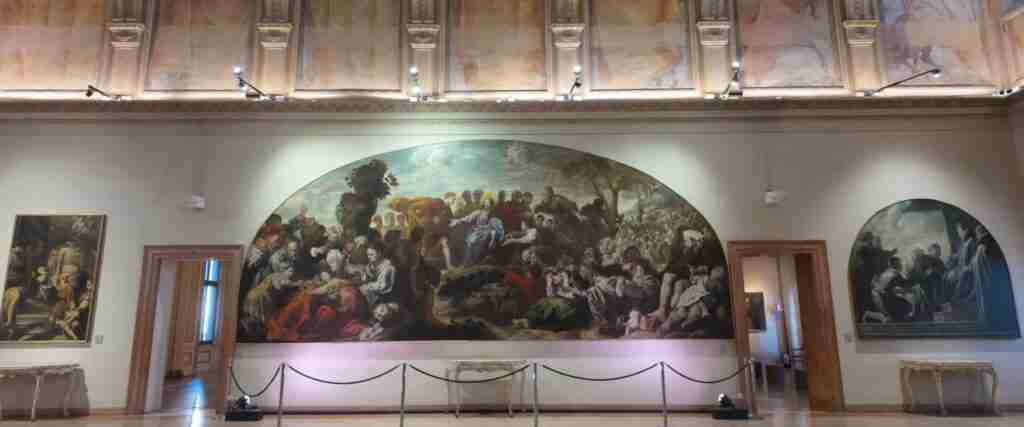
Rubens’ “La Famiglia Gonzaga in Adorazione della Trinità,” a monumental canvas painted during the artist’s Italian years, is among the palace’s most celebrated paintings alongside Domenico Fetti’s “Moltiplicazione dei pani e dei pesci.” The palace’s garden spaces, including the Giardino dei Semplici, offer breathing space between the intense interior galleries.
A complete visit covering both the Castello/Camera degli Sposi route and the Corte Vecchia/Corte Nuova route takes three to four hours at a comfortable pace. The audioguide (included with the ticket from 2026) is genuinely helpful for contextualising the palace’s complex building history.
Palazzo Te in 2026: Giulio Romano’s Mannerist Vision
Palazzo Te stands roughly 1.5 kilometres south of Palazzo Ducale, just beyond the historic centre — close enough to walk in fifteen minutes or reach by bicycle in five. Built between 1524 and 1534 by Giulio Romano for Federico II Gonzaga as a suburban pleasure villa for entertaining, the palace represents the most complete surviving expression of Mannerist architecture and decoration in Italy. The name derives from “Tejeto,” the name of one of the islands that formerly occupied this site in the marshlands around the city.
Tickets and Opening Hours 2026
Palazzo Te’s ticket system covers multiple venues simultaneously. The standard full ticket at €15 grants access to Palazzo Te itself, the MACA collections at Palazzo San Sebastiano, and the Tempio Leon Battista Alberti — valid for three months from the date of first use, which is remarkably generous. Reduced admission is €11 for visitors over 65, groups of 15–25, Mantova residents, and holders of various partner cards including TCI, FAI, and ACI memberships. Youth aged 12–18 and university students pay €7. A family ticket covering up to two adults and three children costs €40.
A combined ticket covering Palazzo Te, MACA, Tempio Alberti, and the Sonnabend Collection costs €20. Opening hours: Monday 13:00–19:30 (winter 18:30), Tuesday to Sunday 9:00–19:30 (winter 18:30). The ticket office closes one hour before the museum. Book tickets online at centropalazzote.it or at the door. Booking is recommended but not always essential outside high summer.
The Four Essential Rooms
The Sala dei Giganti (Room of the Giants) is Palazzo Te’s climax and one of the most extraordinary rooms in all European art. Giulio Romano and his workshop covered every surface — walls, ceiling, floor borders — with a continuous panorama of the Fall of the Giants, the mythological battle in which Jove defeats the Titans who challenged Olympus. The ceiling appears to collapse inward. Rock faces crash down. Giants writhe under crushing stone. The entire room creates a disorientating, immersive environment that would have been terrifying by torchlight and remains physically overwhelming in daylight. There is no safe corner where the eye can rest undisturbed — the effect was calculated and deliberate. It remains unlike anything else in the Renaissance tradition.
The Camera di Amore e Psiche (Room of Cupid and Psyche) presents a very different register: an explosion of erotic mythological scenes, wine, celebration, and the wedding feast of Cupid and Psyche spread across walls and ceiling in a riot of color. Federico II’s favourite horses appear as life-size portraits in the Sala dei Cavalli, their veins and musculature rendered with extraordinary naturalism against a background of trompe-l’oeil architecture. The Sala delle Aquile (Room of the Eagles) provides a more austere antechamber, its eagle stuccos framing imperial imagery that reinforces Federico’s political ambitions alongside his artistic ones.
The Permanent Collections and Sonnabend Collection
The upper-floor rooms of Palazzo Te house the civic museum collections. The Gonzaga numismatic collection contains 595 coins and 62 medals. The Arnoldo Mondadori donation presents paintings assembled by the publishing magnate and donated to the museum by his heirs in 1974. The Egyptian and Mesopotamian antiquities collections, though modest, add an unexpected dimension to the visit. The Sonnabend Collection — accessible via the combined €20 ticket — presents works by major American conceptual and minimal artists including Gilbert & George and Robert Rauschenberg, donated to the city by collector Ileana Sonnabend. It forms a striking and somewhat surreal counterpoint to the Renaissance frescoes one floor below.
Secondary Museums and Galleries of Mantua 2026
Beyond the two flagship palaces, Mantua’s secondary museum circuit rewards exploration out of all proportion to the time and money it requires. Several of these institutions are included in the Mantova + Sabbioneta Card and cost effectively nothing for card-holders.
MACA — Mantova Collezioni Antiche and Tempio Leon Battista Alberti
The MACA (Mantova Collezioni Antiche — Mantua Ancient Collections) occupies Palazzo San Sebastiano, positioned on the axis between Palazzo Ducale and Palazzo Te. The permanent display presents four thematic sections covering Gonzaga-era materials, numismatics, the Mondadori donation, and ancient objects. Entry is covered by the Palazzo Te ticket (valid three months) and by the Sabbioneta Card. The adjacent Tempio Leon Battista Alberti is a Renaissance church designed by the great architect-theorist Alberti beginning in 1460. As the resting place of the Gonzaga court and site of important funerary monuments, it serves as a quiet postscript to the more exuberant palace interiors.
Teatro Scientifico Bibiena
The Teatro Scientifico Bibiena is one of the most perfectly preserved Baroque theatres in Europe and a place of particular musical pilgrimage: in 1769, the thirteen-year-old Wolfgang Amadeus Mozart performed here during his Italian tour and wrote to his father that it was the most beautiful theatre he had ever seen. Built between 1767 and 1769 by the Parma architect Antonio Galli Bibiena, the theatre’s characteristic bell-shaped auditorium with staggered boxes produces exceptional acoustics and an intimate visual drama that no photograph captures adequately.
Admission is €3 full, €1.50 reduced. Opening hours: Tuesday to Friday 10:00–13:00 and 15:00–18:00; Saturday, Sunday, and holidays 10:00–18:00. Closed Monday, December 25, and January 1. Note that the theatre hosts concerts and events and occasionally closes to visitors on performance days, particularly Sunday afternoons — check schedules at the Infopoint (0376 288208) or call the theatre directly (0376 327653) before visiting. The Sabbioneta Card includes free entry.
Palazzo d’Arco
Palazzo d’Arco is Mantua’s most undervisited major attraction. The neoclassical palace of the noble d’Arco family, built around an older structure between 1784 and 1805, contains the fully preserved furnishings and collections of an aristocratic Lombard household over several centuries — a time-capsule of domestic life rather than a formal museum installation. The Zodiac Room (Sala dello Zodiaco) in the tower of the original fifteenth-century building contains a remarkable sequence of frescoed months and their associated zodiacal signs, attributed to Giovanni Maria Falconetto around 1520 and among the best-preserved astrological fresco cycles of the Renaissance period.
The collection includes antique furniture, porcelain, silverware, prints, paintings (including a significant portrait collection), scientific instruments, and an atmospheric kitchen with original implements. Admission is approximately €10 full. Opening hours: Wednesday to Sunday 9:30–12:00 and 15:00–17:30; groups by appointment Monday and Tuesday. The Sabbioneta Card includes free entry.
Museo Diocesano Francesco Gonzaga
The Museo Diocesano Francesco Gonzaga houses the religious art collection of the Mantuan diocese, presented in the former convent attached to the church of Sant’Andrea. The collection includes liturgical objects, reliquary crosses, embroideries, altarpieces, and devotional paintings from the city’s churches, several from Gonzaga commissions. The museum’s jewel is the collection of reliquaries associated with the Gonzaga family’s devotion to the Blood of Christ — a tradition connecting Mantua to one of the most politically important relic veneration cycles of the Renaissance. The blood relic’s housing and its associated art objects are among the most extraordinary examples of late medieval goldsmith work in northern Italy.
Admission is €10 full, €6 reduced for visitors over 65, youth aged 14–18, and groups of 15 or more. Free under 14. Opening hours: Wednesday to Sunday 9:30–12:00 and 15:00–17:30. Sabbioneta Card holders enter free. Website: museodiocesanomantova.it.
Casa del Mantegna
The Casa del Mantegna is the house Andrea Mantegna built for himself beginning in 1476, on land given to him by Ludovico II Gonzaga as part of his court appointment. The building is a remarkable architectural document: from the outside, a severe cubic mass with no concession to display. From within, an extraordinary circular courtyard — the defining element of the entire structure — that inscribes a cylinder within a cube and achieves a spatial complexity that exceeds most contemporary domestic architecture. The circular courtyard, with no precedent in Renaissance domestic buildings, may have been designed by Mantegna himself and reflects the same geometrical speculations evident in Leon Battista Alberti’s theoretical writings.
Today the building serves as an exhibition space for temporary shows focusing on contemporary art and architectural photography. It opens in conjunction with exhibitions and for specific events, with a variable schedule. Opening hours and admission costs vary by exhibition — check the Comune di Mantova website or contact the Infopoint (0376 288208) before visiting. Included in the Sabbioneta Card when open. The courtyard alone rewards a brief detour.
Museo Tazio Nuvolari
Mantua’s most surprising museum celebrates not Renaissance painting but one of the twentieth century’s greatest racing drivers: Tazio Nuvolari, born in Castel d’Ario (near Mantua) in 1892. Nuvolari was revered as the greatest Italian racing driver of his era — Enzo Ferrari called him the greatest driver of all time — and the museum in his honour occupies a modest but well-organized space in the city centre. The collection includes racing suits, trophies, a famous gold tortoise given to Nuvolari by D’Annunzio, and memorabilia documenting his victories at the Mille Miglia, the Targa Florio, and the 1935 German Grand Prix, which stands as one of the most legendary individual drives in motorsport history. Included in the Sabbioneta Card.
Torre dell’Orologio and Palazzo della Ragione
The Torre dell’Orologio (Clock Tower) and Palazzo della Ragione anchor Piazza delle Erbe, the medieval heart of Mantua. The Palazzo della Ragione served as the city’s court building from the thirteenth century and is among the most complete examples of Lombard communal Gothic civic architecture. The Torre dell’Orologio’s astronomical clock, installed in 1473 and showing the positions of the sun and moon through the zodiac alongside the hour, is one of the oldest functioning astronomical clock faces in Italy. Entry to both structures and the attached Museo del Tempo is included in the Sabbioneta Card.
Mantova + Sabbioneta Card 2026: Is It Worth Buying?
The Mantova + Sabbioneta Card is the single most important practical decision for museum visitors. At €25 for 72 hours (€13 for youth aged 12–17 when accompanied by a full-price adult), it offers free entry to twelve museums and monuments in Mantua and the museums of Sabbioneta, plus discounts at partner restaurants and shops, and free travel on APAM urban and extraurban buses including the route to Sabbioneta.
What the Card Covers in Mantua
- Palazzo Ducale Corte Vecchia (equivalent to the €11 ticket)
- Palazzo Te (equivalent to the €15 ticket)
- Museo Archeologico Nazionale di Mantova
- Museo Diocesano Francesco Gonzaga (€10 value)
- Museo MACA and Tempio Leon Battista Alberti
- Museo di Palazzo d’Arco (€10 value)
- Palazzo della Ragione and Torre dell’Orologio
- Teatro Scientifico Bibiena (€3 value)
- Casa del Mantegna (when open for exhibitions)
- Museo Tazio Nuvolari
- Musei di Sabbioneta
Important Camera degli Sposi note: The card covers the Palazzo Ducale Corte Vecchia route (equivalent to the €11 ticket). To visit the Camera degli Sposi and Castello di San Giorgio, cardholders pay a €7 supplement. This is separate from the card and must be purchased at the Palazzo Ducale ticket office. Budget €32 total (€25 card + €7 supplement) if you want both the full Palazzo Ducale experience and all other card-included sites.
The Value Calculation
For a visitor spending two days in Mantua and visiting the four main paid sites (Palazzo Ducale Corte Vecchia €11, Palazzo Te €15, Museo Diocesano €10, Teatro Bibiena €3), the individual total is €39 versus €25 for the card — an immediate saving of €14. Adding Palazzo d’Arco (€10) and the Torre dell’Orologio, the individual cost climbs to approximately €56 versus the same €25 card, a saving of 55%. For any visitor planning two or more museum days in Mantua, the card pays for itself before lunch on day one.
The card is sold at Palazzo Ducale, Palazzo Te, and the Mantua tourist information offices. Purchase the card before your first museum visit rather than at individual ticket desks, since the 72-hour clock begins at first use. For groups of more than 15 with the card wishing to visit Palazzo Te, pre-booking via email ([email protected]) is required.
Museum Admission Costs in Mantua 2026
All prices are in euros (EUR). Mantua is in the Eurozone; no currency conversion applies for visitors from the euro area.
- Palazzo Ducale with Castello di San Giorgio and Camera degli Sposi: €18 full, €2 reduced (EU youth 18–25), free under 18 and for EU youth under 18. Includes free downloadable audioguide.
- Palazzo Ducale Corte Vecchia / Corte Nuova only: €11 full, €2 reduced (EU youth 18–25). Includes free downloadable audioguide.
- Camera degli Sposi supplement for cardholders and pass-holders: €7.
- Palazzo Te (includes MACA and Tempio Alberti, valid 3 months): €15 full, €11 reduced (65+, groups of 15–25, Mantova residents, TCI/FAI/ACI members), €7 youth (12–18 and university students), free under 12. Family ticket (max 2 adults + 3 children, max 5 people): €40.
- Palazzo Te + Sonnabend Collection combined: €20.
- Teatro Scientifico Bibiena: €3 full, €1.50 reduced (school-age pupils).
- Museo Diocesano Francesco Gonzaga: €10 full, €6 reduced (65+, youth 14–18, groups 15+), free under 14.
- Palazzo d’Arco: approximately €10 full, €8 reduced (FAI/ACI members and groups).
- Mantova + Sabbioneta Card: €25 full (72 hours), €13 for youth 12–17 (with full-price adult). Sold at Palazzo Ducale, Palazzo Te, and tourist information offices.
- Free entry: First Sunday of every month at all Italian state museums including Palazzo Ducale (optional €1 booking fee). Year-round free entry at the Rotonda di San Lorenzo and Piazza delle Erbe.
Guided tours of Palazzo Te depart every Saturday, Sunday, and public holiday at 10:15, 11:15, 15:15, and 16:15, costing €8 per person in addition to admission (check official scheduling at centropalazzote.it).
Daily Budget Planning for Mantua Museums in 2026
All figures are per person, per day, assuming two people sharing hotel accommodation. Hotel rates are divided by two before being added to individual costs. Budget tier daily ranges reflect the spread between a low-spending day (free sites, self-catering, budget accommodation) and a high-spending day (paid major museums, restaurant meals).
Budget Traveler: €55–105 Per Person Daily
Budget travelers staying in a B&B or two-star guesthouse (rooms €55–80 per night) pay €28–40 per person for accommodation when sharing. A coffee and cornetto at a bar counter costs €3–4; a fixed-price lunch at a tavola calda runs €9–12; a trattoria dinner with house wine reaches €15–22 per person. Meals total approximately €29–43 daily. Mantua’s entire historic centre is walkable; the bus is optional and costs €1.50–2 per ride if needed at all. Budget attractions range from free (Rotonda di San Lorenzo, Piazza Sordello, the lake promenades) to €3–18 on paid-museum days. Accommodation €28–40, meals €29–43, transport €0–5, attractions €0–18: total approximately €55–105 per person daily (two sharing a budget hotel).
Mid-Range Traveler: €120–200 Per Person Daily
Mid-range visitors in three-star hotels (rooms €90–140 per night) pay €45–70 per person for accommodation when sharing. Breakfast at a café or included with the hotel costs €10–15; a lunch at a proper trattoria with wine reaches €18–28; a sit-down dinner at a restaurant specialising in traditional Mantuan cuisine runs €30–45 per person. Meals total approximately €58–88 daily. Transport adds €3–10 (occasional bus or bicycle rental). Museum days at the main sites cost €15–33 depending on whether the day includes Palazzo Ducale (€18), Palazzo Te (€15), or secondary venues (€3–10). Accommodation €45–70, meals €58–88, transport €3–10, attractions €15–33: total approximately €120–200 per person daily (two sharing a mid-range hotel).
Luxury Traveler: €215–370 Per Person Daily
Luxury visitors in four-star hotels (rooms €150–250 per night) pay €75–125 per person for accommodation when sharing. Upscale dining in Mantua remains significantly less expensive than in larger Italian cities: dinner for two with wine at one of the city’s Michelin-recommended trattorias runs €60–100 per person. Full-day museum visits with private guided tours of Palazzo Ducale (from €110 per group in Italian) and Palazzo Te add €25–45 per person to the daily total. Accommodation €75–125, meals €110–180, transport €5–20, attractions €25–45: total approximately €215–370 per person daily (two sharing a luxury hotel).
Trip Total Estimates
For a two-day Mantua visit (the minimum for a meaningful museum circuit): budget travelers can expect €110–210 per person for two days; mid-range travelers €240–400; luxury travelers €430–740. For a three-day visit including a Sabbioneta day trip: budget €165–315; mid-range €360–600; luxury €645–1,110. These figures exclude transport to Mantua from your arrival city.
Three-Day Mantua Museum Itinerary 2026
This itinerary assumes a mid-range budget and purchase of the Mantova + Sabbioneta Card at €25. It is designed to maximise cultural value while leaving time to absorb the city’s remarkable urban fabric.
Day 1: The Ducal Palace and the Heart of the City
Arrive at Palazzo Ducale by 8:45 to secure your Camera degli Sposi time slot before they sell out for the day. Pay the €7 Camera degli Sposi supplement at the Castello entry point (Piazza Castello). Allow 90 minutes for the Castello/Camera degli Sposi circuit. Take a break in Piazza Sordello and then re-enter via Piazza Sordello for the Corte Vecchia/Corte Nuova route, using your Sabbioneta Card. This adds another 60–90 minutes. Lunch at a café in Piazza delle Erbe or Via Broletto (€12–18 per person). Afternoon: a 20-minute walk to Teatro Scientifico Bibiena (card entry, free) for a 45-minute visit; then cross Piazza delle Erbe to the Torre dell’Orologio and Palazzo della Ragione (card entry, free). Evening: dinner at one of the osterie in the Rigoletto quarter for €20–35 per person, with tortelli di zucca and risotto alla pilota as mandatory local dishes. Day cost (Palazzo Ducale Camera supplement €7, meals approximately €40–55, miscellaneous €5): approximately €50–70 per person on top of card and accommodation.
Day 2: Palazzo Te and the Civic Collections
Dedicate the morning to Palazzo Te (card entry, free, 9:00 opening). Allow two hours for the main floor frescoes; consider adding the permanent Gonzaga collections and the Sonnabend Collection (€5 additional with card, or covered by the €20 combined ticket). Lunch near Palazzo Te or return to the centre. Afternoon: Palazzo d’Arco (card entry, free; 15:00–17:30 afternoon opening), where the Zodiac Room alone justifies the visit. Finish at the Museo Diocesano Francesco Gonzaga (card entry, free; close at 17:30). The Museo Tazio Nuvolari provides a lighter counterpoint to the Renaissance intensity if you have residual afternoon energy. Evening: the lakeside promenades near Porta Molina reward a sunset walk before dinner. Day cost (meals approximately €40–55, miscellaneous €5): approximately €45–60 per person on top of accommodation.
Day 3: Sabbioneta and Hidden Mantua
Sabbioneta lies 30 kilometres southwest of Mantua. The Sabbioneta Card covers bus transport and free admission to all Sabbioneta museums. The town is a Gonzaga-planned “ideal city” from the 1550s–1580s, built within hexagonal walls, with a colonnaded main street, a small but perfectly formed theatre (the Teatro all’Antica by Vincenzo Scamozzi, 1588–1590, a direct precursor of the Teatro Olimpico in Vicenza), and a ducal palace that makes up in completeness what it lacks in scale. Morning bus from Mantua’s main APAM stops; two to three hours in Sabbioneta; return for lunch. Afternoon in Mantua: Casa del Mantegna (if exhibitions running, check in advance) and a visit to the Basilica of Sant’Andrea, Leon Battista Alberti’s great church begun in 1472 and completed posthumously, whose nave barrel vault became one of the defining models of Renaissance ecclesiastical space — free to enter. Day cost (meals approximately €35–50, bus covered by card, miscellaneous €5): approximately €40–55 per person on top of accommodation.
Practical Visiting Tips for Mantua Museums in 2026
Booking Strategy for the Camera degli Sposi
The Camera degli Sposi operates timed entry with 30 visitors allowed every 10 minutes. During April, May, June, September, and October — Mantua’s peak cultural season — time slots sell out days or weeks in advance. Book via vivaticket.com or the official Palazzo Ducale site (mantovaducale.beniculturali.it) as soon as dates are confirmed. If you arrive without a pre-booked slot, go directly to the Castello ticket window (Piazza Castello) at opening time (8:15) and ask for the earliest available slot that day.
Museum Opening Day Patterns
Palazzo Ducale closes Monday. Palazzo Te closes Tuesday. Plan accordingly: with both major museums closed on different days, a two-day schedule easily covers one major palace per day. Teatro Bibiena occasionally closes to the public on Sundays when concerts are scheduled — always telephone ahead (0376 327653) if Sunday is your only available day. Palazzo d’Arco operates afternoon-only hours on weekdays (15:00–17:30) and morning plus afternoon on weekends.
Getting Between Museums
The entire historic centre of Mantua is walkable. Palazzo Ducale to Palazzo Te takes 15–20 minutes on foot via Via Acerbi. Bicycle rental is widely available (Ridemovi bikesharing operates throughout the centre) and covers the same route in five minutes. The APAM navetta (shuttle bus) to Palazzo Te runs from the centre and is included with the Sabbioneta Card. Free parking is available at Piazzale Montelungo and Viale Montello for drivers approaching from the south.
Photography and Practical Matters
Photography without flash is permitted in most Palazzo Ducale rooms; the Camera degli Sposi strictly prohibits photography and enforces this rule actively. Palazzo Te permits photography throughout. Audio guides in English are available at major sites; the Palazzo Ducale’s free downloadable audioguide (included from 2026) is available via QR code at the entrance. Museum gift shops at both Palazzo Ducale and Palazzo Te carry academic publications, exhibition catalogues, and reproduction prints of high quality.
Best Time to Visit Mantua’s Museums in 2026
Spring (April–May): Peak Season
April and May bring Mantua’s finest weather: mild temperatures, long evenings, and the city’s markets, festivals, and piazza life at full flow. The Palazzo Ducale and Palazzo Te both operate full opening hours. Crowds are moderate by Italian standards — Mantua never approaches the visitor density of Venice or Florence — but the Camera degli Sposi books up weeks in advance during these months. The Festivaletteratura literary festival in September and the spring Settimana della Cultura (Culture Week) in April both bring additional cultural events to the city’s calendar.
Summer (June–August): Hot But Manageable
Summer brings heat — Mantua sits in the Po Valley humidity band that makes July and August uncomfortable by midday — and longer museum hours extending to 19:30. The city attracts more Italian tourists in summer than international visitors. Museums offer relief from the heat; the Teatro Bibiena and the Palazzo Ducale’s stone interiors stay noticeably cool. Book Camera degli Sposi tickets well in advance. The free-entry first Sunday rule draws significant crowds in summer months.
Autumn (September–October): Optimal
September and October are the optimal museum months. Temperatures drop to comfortable levels (18–24°C), the summer crowds recede, the Festivaletteratura literary festival (September) animates the piazzas, and the first-weekend harvests and food markets in the surrounding countryside add gastronomic incentive to the cultural visit. Museum waiting times are shorter, and hotel rates dip from summer peaks.
Winter (November–March): Off-Season Value
Winter in Mantua is grey and foggy — the Po Valley autumn mist that made Virgil’s verse melancholy persists through February — but the cultural programme continues without pause. Hotel rates reach their annual lows (rooms from €55 per night), restaurants are less rushed, and the museums empty to the point where a solo visitor can stand in the Camera degli Sposi with the Mantegna frescoes essentially to themselves. The Palazzo Ducale’s Christmas and Epiphany programming draws Italian families but rarely reaches saturation. The Piazza delle Erbe Christmas market is modest compared to northern European equivalents but atmospheric.
Seasonal Price Variations
Hotel prices in Mantua follow a mild seasonal curve. Three-star rooms average €80–100 per night in winter (November–March), €100–130 in spring and autumn, and €120–160 in peak summer (July–August), with premium weekends occasionally exceeding these ranges. Museum admission prices are fixed year-round regardless of season. Restaurant prices are stable, though set-lunch menus (fixed two-course meals for €12–18) are more widely available on weekday lunches year-round than in high summer when many trattorias switch to à la carte service.
Getting to Mantua in 2026
Mantua sits at the intersection of several important regional rail lines in the Lombardy–Veneto border zone.
From Verona: The most frequent connection. Regional trains run roughly every hour and take 35–45 minutes. The Verona–Mantova route is served by Trenitalia regional trains from Verona Porta Nuova station. Journey cost approximately €5–8 one-way. Verona Porta Nuova also connects to the high-speed rail network from Milan and Rome, making Verona an efficient interchange point.
From Milan: A direct regional train from Milano Centrale to Mantova takes approximately 1 hour 40 minutes with one or two changes (at Cremona or Piadena). The fastest service runs via Cremona. Journey cost approximately €10–16 one-way. From Milano Porta Garibaldi and Milano Lambrate there are additional services. Check trenitalia.com for current schedules as routing via Piadena or Cremona affects total journey time.
From Modena and Bologna: The A22 motorway makes Mantua easily accessible by car from Modena (exit Mantova Sud or Mantova Nord). By train from Modena, regional services run via Suzzara and take approximately 50 minutes. Bologna connects via Modena or via Ferrara.
Nearest airports: Verona Catullo (VRN) is the most convenient international airport, 35 km away. Milan Bergamo (BGY), Milan Malpensa (MXP), and Milan Linate (LIN) are 90–120 minutes away by combined train/connection. Bologna Marconi (BLQ) is approximately 90 minutes by car. There is no direct airport bus service to Mantua; train connections via Verona or Milan city centres are the practical options.
Within Mantua: The entire historic centre is compact and best navigated on foot. Palazzo Te lies 1.5 km from Palazzo Ducale — a 15-minute walk or 5-minute bicycle ride. Free parking exists at Piazzale Montelungo and Viale Montello. The historic centre operates a limited traffic zone (ZTL) — hotels inside the ZTL can arrange day passes for guests arriving by car.
Where to Stay Near Mantua’s Museums in 2026
Mantua’s accommodation supply is smaller than its cultural significance would suggest, which keeps prices moderate relative to comparable Italian art cities and means properties in the historic centre book up quickly during peak season.
Budget Options (€55–80 Per Room)
Budget accommodation in Mantua centres on B&Bs, guest rooms in historic apartments, and two-star hotels near the train station. Hotel Italia, Hotel Leon d’Oro, and the Albergo Bianchi Stazione cluster around the station area (10–15 minutes’ walk from Palazzo Ducale) and represent reliable, no-frills options at the lower end of the market. Several private B&Bs within the ZTL historic centre offer rooms at €55–75 per night in a neighbourhood where the cultural experience begins the moment you step outside. Budget travelers sharing a double room pay €28–40 per person per night in this category.
Mid-Range Options (€90–140 Per Room)
The three-star tier in Mantua punches above its price point. Hotel Broletto, steps from Piazza Sordello and Palazzo Ducale, occupies a historic building with characterful rooms at a central location rare in Italian cities at this price range. Hotel Casa Poli is a design-oriented boutique hotel in a nineteenth-century palazzo, with 32 rooms, a garden courtyard, and a notably thoughtful breakfast, priced around €120–150 per night. The Grand Hotel San Lorenzo near Piazza Broletto offers terraced views over the city’s roofline and free bicycle lending — practical for the Palazzo Te circuit. Mid-range guests sharing a double room pay €45–70 per person per night.
Luxury Options (€150–250 Per Room)
Luxury accommodation in Mantua is more limited than in larger cities. The Rechigi Hotel in the historic centre is the most consistently reviewed four-star property, with rooms from €130–180 per night and a central position. For guests prioritising exceptional design and service over broad choice, the Palazzo Castiglioni Luxury Suites and the Scaravelli Residenza offer boutique suite-format accommodation at premium prices, €180–250 per room. Several agriturismi in the surrounding countryside — 15–30 minutes from the city centre by car — offer elegant rural alternatives with pools and Gonzaga-landscape views at four-star prices. Luxury guests sharing a double room pay €75–125 per person per night.
Booking Advice for 2026
Book mid-range and luxury properties in Mantua at least two months in advance for visits during April, May, September, and October. The city’s limited hotel supply means last-minute bookings in peak season often result in paying near-luxury prices for budget-tier rooms. The Festivaletteratura literary festival (the opening week of September) fills the city entirely — plan well in advance or expect to base yourself in Verona or Brescia and commute in.
Hidden Gems and Specialist Venues in Mantua 2026
The Sabbioneta Card’s roster of included venues reveals a longer tail of Mantua’s cultural life than the two flagship palaces suggest.
The Rotonda di San Lorenzo is the oldest surviving building in Mantua: a round church built in the eleventh century, modelled on the Church of the Holy Sepulchre in Jerusalem and preserving fragmentary Byzantine-influenced frescoes from the twelfth century. Entry is free. It stands in the middle of Piazza delle Erbe and is so understated that visitors walking through the square often mistake it for a garden enclosure.
The Galleria Storica dei Vigili del Fuoco (Historical Fire Brigade Gallery) occupies a wing of a historic building near the centre and chronicles the history of fire-fighting in Mantua from the Gonzaga period to the twentieth century — an eccentric but unexpectedly engaging small museum, particularly for visitors with children.
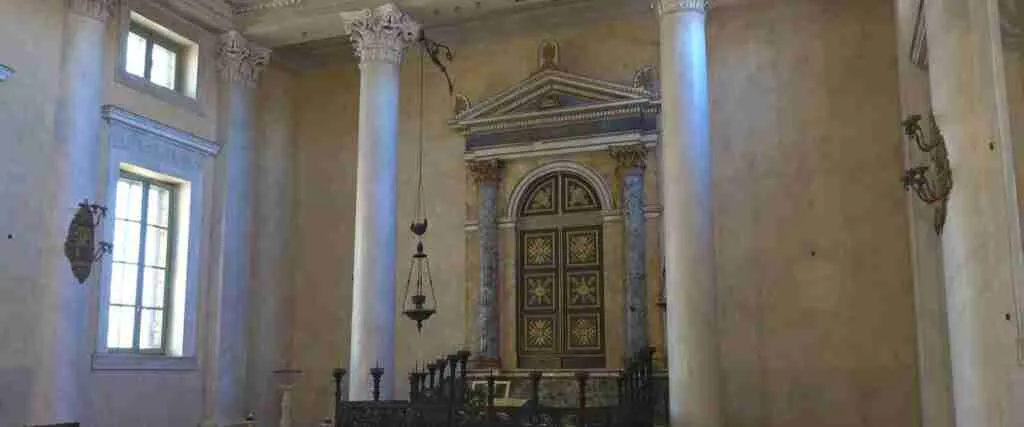
The Sinagoga Tempio Norsa is the surviving Jewish synagogue in the historic ghetto quarter near Piazza Concordia. Mantua’s Jewish community dates from the twelfth century; the Gonzaga granted them significant freedoms and protections that made Mantua a regional centre of Jewish intellectual life. The synagogue preserves remarkable wooden furnishings and holds limited opening hours; contact the Jewish community of Mantua in advance.
The Museo della Gazzetta celebrates the Gazzetta dello Sport, Italy’s pink-paper sports newspaper, which traces its origins to Mantua in 1896. The museum occupies a small space in the city centre and documents a century of Italian cycling, football, and athletic culture through original papers, photographs, and memorabilia — a cultural document as revealing in its way as any Renaissance fresco.
Outside the city walls, the Lago di Mezzo boat circuit offers a one-hour guided boat tour of the three lakes that surround Mantua, providing the reverse view — the city’s celebrated skyline seen from the water — that the Gonzaga saw daily from their apartments. Tour boats depart from the Lungolago, near the harbour. Prices run approximately €8–12 per person and are not included in the Sabbioneta Card.
Visiting Mantua’s Museums with Families, Solo Travelers, and Groups in 2026
Families with Children
Mantua works well for families, partly because the combination of genuine spectacle (the Sala dei Giganti is among the most physically exciting rooms a child will ever stand in) and manageable distances removes the exhausting between-attraction logistics that plague family visits to larger cities. The Palazzo Ducale offers educational family tours on weekends (book via the Palazzo Ducale website or call 049 2010262); Palazzo Te runs a dedicated Scuola di Palazzo Te programme for children and families including practical art workshops, available on selected weekends throughout the year.
Children under 18 enter Palazzo Ducale free. Children under 12 enter Palazzo Te free. The family ticket at Palazzo Te (€40 for up to 2 adults + 3 children) saves money versus individual adult admissions when children are outside the free-entry age range. The Mantova + Sabbioneta Card provides youth admission at €13 for ages 12–17 (with a full-price adult), covering the full circuit at significant saving. Bicycle hire and the lakeside promenades provide outdoor decompression between museums.
Solo Travelers
Solo travelers in Mantua benefit from the city’s natural walkability and the absence of mass-tourist congestion that makes solo visits to Venice or Florence logistically complicated. The main additional cost consideration is accommodation: without a room-sharing partner, solo travelers pay the full room rate. A solo mid-range traveler in a three-star hotel at €100 per night pays approximately €100 for accommodation versus the two-sharing figure of €45–70. Budget solo accommodation in shared dorms or single rooms in B&Bs runs €40–55 per night. The camera degli Sposi time-slot system is well-suited to solo visits, with individual entry more easily accommodated than large group bookings.
Evening Mantua is peaceful and safe for solo walkers. The aperitivo tradition is strong; bars around Piazza delle Erbe and Via Broletto serve spritz and local wines with free cicchetti from 18:00 onward. A solo traveler can spend an entire cultural evening moving between aperitivo bars for €6–10 all-in.
Groups
Groups of 15 or more require advance booking at both Palazzo Ducale and Palazzo Te. For Palazzo Ducale, the call centre (049 2010262) handles group reservations. For Palazzo Te, email [email protected] with group size, preferred date, and any guide requirements. Groups with the Sabbioneta Card must also contact Palazzo Te by email before arriving. Guided tours of Palazzo Ducale cost €110 per group in Italian and €120 per group in other languages (plus individual admission costs per person). Guided tours of Palazzo Te depart on set schedules (Saturday, Sunday, and holidays at 10:15, 11:15, 15:15, 16:15) for €8 per person extra. Private group tours outside standard hours are available by arrangement.
Frequently Asked Questions About Mantua Museums 2026
What are Palazzo Ducale’s opening hours in 2026?
Palazzo Ducale opens Tuesday to Sunday, 8:15 to 19:15 (last entry 18:45). It closes every Monday. The museum also closes on January 1 and December 25. The free-entry first Sunday of each month still applies; optional advance booking costs €1 on free-entry days. From January 13, 2026, the museum uses two separate entry doors: Piazza Castello for the Castello di San Giorgio/Camera degli Sposi circuit, and Piazza Sordello for the Corte Vecchia/Corte Nuova circuit.
Can I visit both Palazzo Ducale and Palazzo Te in one day?
Yes, comfortably, if you prioritize efficiently. Start at Palazzo Ducale at opening (8:15) with a pre-booked Camera degli Sposi slot and allow two to three hours. Walk to Palazzo Te (15–20 minutes) and spend two hours on the main-floor frescoes. This fills a morning and early afternoon, leaving time for a secondary museum or the lakeside promenades. Buying the Mantova + Sabbioneta Card covers both major palaces; add the €7 Camera degli Sposi supplement at the Palazzo Ducale ticket desk.
Does the Mantova + Sabbioneta Card include Camera degli Sposi?
Not automatically. The card covers free entry to the Palazzo Ducale Corte Vecchia route (the €11 equivalent ticket). To visit the Camera degli Sposi and Castello di San Giorgio, cardholders pay a €7 supplement at the Piazza Castello entrance. This is separate from the card fee and must be purchased at the ticket desk. The total cost of the card plus Camera degli Sposi supplement is €32 — still less than buying Palazzo Te (€15) and Palazzo Ducale full (€18) separately at €33, before the other 10+ included sites are considered.
Are Mantua’s museums accessible for visitors with disabilities?
Accessibility varies by building. Palazzo Ducale has lifts and ramps installed in parts of the complex but the historic building’s multi-level structure means some sections remain inaccessible to wheelchair users — call 0376 352100 in advance to plan a feasible route. Palazzo Te is largely single-storey and offers good wheelchair access throughout the main frescoed floor. The Teatro Bibiena and Palazzo d’Arco have limited accessibility due to their historic staircase configurations. Visitors with the Disability Card (carta della disabilità) and their companion enter many sites free of charge.
What is the best restaurant district near Mantua’s museums?
The dense network of streets between Piazza delle Erbe and Via Carlo Poma — within five minutes’ walk of Palazzo Ducale — concentrates the highest density of traditional mantovana trattorias. For Palazzo Te visitors, the area between Via Te and Piazzale Vittorio Veneto has several lunch options near the museum entrance, including the Chalet Te at Piazzale Vittorio Veneto. Mantua’s signature dishes are tortelli di zucca (pasta stuffed with pumpkin, amaretti, and mostarda), risotto alla pilota (risotto with pork sausage), agnoli in brodo (meat-filled pasta in broth), and sbrisolona (a crumbly almond-cornmeal cake). A trattoria meal with two courses and house wine runs €20–35 per person at mid-range establishments.
Is there free Wi-Fi in Mantua’s museums?
Free Wi-Fi is not a standard feature in Mantua’s museums. The more useful connectivity option for visitors is the Palazzo Ducale’s free audioguide, which is downloaded via QR code at the museum entrance using your own mobile data connection — a brief download before entry. Italian mobile networks (TIM, Vodafone, WindTre) provide excellent 4G coverage throughout the city. Free Wi-Fi is available at many bars and cafés in the city centre.
How far is Sabbioneta from Mantua, and is it worth the trip?
Sabbioneta is approximately 30 kilometres southwest of Mantua, reachable by APAM bus (included free with the Sabbioneta Card, journey approximately 50 minutes) or by car (30 minutes via the SP343). It is unequivocally worth the trip for any visitor with a genuine interest in Renaissance urbanism. Sabbioneta is the only surviving example of a complete Renaissance “ideal city” built from scratch — Vespasiano Gonzaga Colonna designed every street, every building, and every monument within a single 30-year burst of construction from the 1550s to the 1590s. The Teatro all’Antica (1588–1590) by Vincenzo Scamozzi, built three years after the Teatro Olimpico in Vicenza, is the smallest and best-preserved Renaissance theatre in Italy. Allow three to four hours for the full Sabbioneta circuit.
Are there any permanent Mantegna works in Mantua besides the Camera degli Sposi?
Yes. Palazzo Ducale holds several additional works by or attributed to Mantegna’s workshop, including ceiling painting fragments and studies. The MACA collections at Palazzo San Sebastiano (included in the Palazzo Te ticket) preserve material connected to the Gonzaga patronage under which Mantegna worked. Mantegna’s house — Casa del Mantegna — is open for temporary exhibitions and its remarkable circular courtyard design is attributed to the artist himself. For Mantegna’s portable panel paintings and altarpieces (the Berlin Presentation, the Paris Crucifixion, the San Zeno altarpiece in Verona), visitors must travel to other collections; Mantua retains the most important architectural commission of his career in the Camera degli Sposi and the building he designed for himself.
What are the must-see temporary exhibitions at Mantua’s museums in 2026?
Palazzo Te maintains an active international exhibitions programme at its Centro Internazionale d’Arte e di Cultura, hosting two or three major shows annually covering art from the Renaissance through the contemporary period. The Palazzo Ducale schedules exhibitions in the Atrio degli Arcieri and other temporary spaces throughout the year. For current exhibitions and schedules, check the official museum websites: mantovaducale.beniculturali.it for Palazzo Ducale and centropalazzote.it for Palazzo Te. The Mantua tourist information at the Palazzo della Ragione can also advise on current programming.
What is the best museum pass option for a day trip to Mantua?
For a single-day visitor who wants to see both Palazzo Ducale (full experience) and Palazzo Te, the most cost-effective approach depends on whether you want the Camera degli Sposi. Without Camera degli Sposi: Palazzo Ducale Corte Vecchia (€11) + Palazzo Te (€15) = €26 individually — barely more than the €25 card and covering fewer sites, so the card is marginally better value even for one-day visits. With Camera degli Sposi: individual cost is €18 + €15 = €33; the card route is €25 card + €7 Camera supplement = €32. The card saves €1 over individual entry and covers all additional museums at no extra cost. For any day-tripper visiting more than two sites, the Sabbioneta Card is the right choice.