Luxor Hidden Gems Guide: Secret Sites Beyond the Famous Temples
Key Takeaways:
- Lesser-known tombs in the Theban Necropolis contain exceptional artwork rivaling famous sites with minimal crowds
- Traditional craftsman neighborhoods preserve ancient techniques for alabaster carving, pottery, and textile weaving
- Secret viewpoints across the Nile offer spectacular photography opportunities away from tourist concentrations
- Forgotten archaeological sites reveal ongoing discoveries and provide intimate connections to ancient Egyptian civilization
- Local villages maintain authentic cultural traditions and welcoming interactions beyond commercial tourist areas
Discovering Luxor’s Authentic Character
Beyond the monumental temples and royal tombs that define Luxor’s international reputation lies a rich tapestry of hidden treasures that reveal the city’s authentic character and ongoing connection to its ancient past. These secret sites, forgotten monuments, and living traditions offer travelers profound experiences unavailable in guidebook standard itineraries. The hidden gems of Luxor encompass archaeological wonders that receive minimal visitor attention despite exceptional preservation, traditional neighborhoods where ancient crafts continue through family lineages spanning millennia, and natural landscapes that provide perspectives on the Nile Valley’s timeless beauty without tourist infrastructure intrusion.
Understanding Luxor’s hidden treasures requires recognizing that the famous sites represent only a fraction of the area’s archaeological wealth. The Theban Necropolis contains over 500 documented tombs spanning three millennia, yet fewer than 20 receive regular visitor traffic. Ancient Thebes functioned as Egypt’s religious and political capital for 1,500 years, generating layers of monuments, settlements, and sacred spaces that modern excavations continue uncovering. The concentration of archaeological attention on major royal sites has left countless significant monuments in relative obscurity, creating opportunities for discerning travelers to experience Luxor’s heritage without crowds, queues, or commercial pressures.
The concept of hidden gems in Luxor extends beyond archaeological sites to encompass living cultural traditions that maintain connections to pharaonic civilization. Traditional alabaster workshops in Qurna village employ carving techniques unchanged since ancient times, creating vessels using methods depicted in tomb paintings. Pottery studios near the Nile produce cooking vessels following designs documented in archaeological excavations. Textile weavers continue patterns and techniques that connect directly to ancient Egyptian weaving traditions. These living traditions provide insights into ancient Egyptian daily life that complement the monumental archaeology of temples and tombs.
People Also Ask About Luxor Hidden Gems
What are the most underrated tombs in Luxor’s West Bank?
The Tombs of the Nobles in Sheikh Abd el-Qurna contain extraordinary artwork depicting daily life in ancient Egypt with exceptional detail and color preservation. Tomb of Nakht (TT52) features vivid agricultural scenes, banquet preparations, and bird hunting expeditions in papyrus marshes rendered with remarkable artistic sophistication. The paintings reveal intimate details of ancient Egyptian society, including clothing styles, musical instruments, food preparation methods, and social hierarchies. Tomb of Menna (TT69) showcases agricultural administration scenes with detailed depictions of farming techniques, harvest celebrations, and land surveying methods that provide comprehensive insights into ancient Egyptian economy and social organization.
Tomb of Userhat (TT56) contains hunting scenes of exceptional quality, including a famous depiction of the tomb owner hunting in papyrus marshes surrounded by wildlife rendered with naturalistic accuracy. The tomb’s banquet scenes feature female musicians and dancers captured in dynamic poses that demonstrate the ancient artist’s observational skills and technical mastery. Tomb of Ramose (TT55) represents a transitional moment in Egyptian art history, combining traditional relief carving with experimentation in naturalistic portraiture influenced by the Amarna period artistic revolution. The tomb remains unfinished, providing rare insights into ancient Egyptian artistic processes and workshop organization.
Where can travelers experience authentic local culture in Luxor?
Qurna village on the West Bank preserves traditional Nubian-influenced architecture and continues ancient crafts through family workshops that welcome visitor interactions. The village’s alabaster carvers maintain techniques documented in ancient Egyptian tomb paintings, transforming blocks of calcite alabaster into translucent vessels using hand tools and abrasive sand. Visitors can observe the complete carving process from raw stone selection through final polishing, learning how ancient Egyptians created the alabaster vessels found in tombs throughout the Theban Necropolis. The craftsmen demonstrate traditional assessment methods for stone quality, carving techniques for creating vessel interiors without modern tools, and polishing methods that produce the characteristic translucent finish.
The agricultural villages along the West Bank canal system maintain farming practices connected to ancient Egyptian traditions, including traditional irrigation methods, crop rotation patterns, and seasonal agricultural cycles synchronized with Nile flood patterns despite modern Aswan High Dam regulation. Village women continue traditional bread baking in dome ovens identical to those depicted in ancient tomb reliefs, using dough preparation methods and baking techniques unchanged for millennia. Local markets in these villages provide authentic experiences of Egyptian village life, with seasonal produce, traditional foods, and social interactions occurring without tourist industry modification.
What secret viewpoints offer the best photography in Luxor?
The hills above the Valley of the Queens provide spectacular panoramic views of the Theban Necropolis, Nile Valley, and Luxor’s East Bank temples without the crowds concentrated at the more famous Valley of the Kings viewpoint. The elevation gain requires moderate hiking but rewards photographers with compositions encompassing the complete sacred geography of ancient Thebes, including the relationship between royal mortuary temples, agricultural lands, and the Nile River. Dawn photography from these viewpoints captures the transformation of the landscape as sunlight gradually illuminates the temples and the agricultural plain while the western hills remain in shadow, creating dramatic atmospheric effects.
The rooftop terraces of traditional houses in Qurna village offer intimate perspectives on daily life in the Theban Necropolis combined with views across the Nile Valley to Luxor Temple and Karnak. These private viewpoints provide opportunities for photographing the juxtaposition of ancient monuments and modern village life, capturing how contemporary Egyptians maintain cultural continuity in a landscape dominated by pharaonic heritage. The eastern shore of the Nile south of Luxor Temple features quiet embankment areas where photographers can capture reflections of West Bank monuments in the river without tourist boat traffic or commercial development, particularly effective during the golden hour before sunset.
Which archaeological sites in Luxor receive minimal visitor attention?
The Temple of Seti I at Qurna represents one of ancient Egypt’s best-preserved mortuary temples with exceptional relief carving and nearly complete architectural elements, yet receives only a fraction of the visitor numbers concentrated at nearby Medinet Habu or the Ramesseum. The temple’s relief work demonstrates the highest quality of 19th Dynasty artistic achievement, with detailed religious scenes, offering processions, and divine interactions carved with exceptional precision. The temple’s relative obscurity allows visitors to study the reliefs without time pressure or crowd interference, discovering subtle details of religious iconography and artistic technique.
The Tombs of the Artisans at Deir el-Medina showcase the burial customs and artistic traditions of the craftsmen who constructed the royal tombs in the Valley of the Kings. These relatively small tombs contain vibrant paintings depicting the artisans’ own funeral preparations, religious beliefs, and daily life activities with a personal character distinct from royal tomb decoration. The site’s village ruins reveal the complete community organization of ancient Egyptian workers, including house layouts, administrative buildings, and social structures that provide rare insights into non-royal life in pharaonic Egypt.
Extended multi-day tours – 5+ days
Featured Luxor Multi-Day Tour Packages
5 days
Luxor: 5-Day Nile Cruise to Aswan with Balloon Ride
- ✓ Comprehensive Luxor tour
- ✓ Expert local guides included
- ✓ All accommodation arranged
- ✓ Transportation provided
3 days
Amazing 3-Days 2-Nights Nile Cruise Aswan to Luxor with Edfu and Kom Ombo Tours
- ✓ Comprehensive Luxor tour
- ✓ Expert local guides included
- ✓ All accommodation arranged
- ✓ Transportation provided
5 days
5 Days 4 Nights Cruise from Luxor to Aswan
- ✓ Comprehensive Luxor tour
- ✓ Expert local guides included
- ✓ All accommodation arranged
- ✓ Transportation provided
5 days
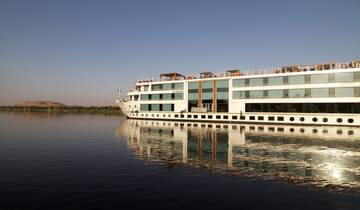
Private: 5-Days Luxury Nile Cruise Luxor To Aswan with sightseeing
- ✓ Comprehensive Luxor tour
- ✓ Expert local guides included
- ✓ All accommodation arranged
- ✓ Transportation provided
Multi-day tour packages powered by TourRadar. Prices and availability subject to change.
Lesser-Known Tombs and Archaeological Treasures
The Sheikh Abd el-Qurna necropolis contains the densest concentration of decorated private tombs in ancient Egypt, with over 400 documented burial chambers carved into the hillside overlooking the Nile Valley. These tombs belonged to high officials, priests, scribes, and administrators who served the pharaohs during the New Kingdom, spanning the 18th through 20th Dynasties. The tomb decorations prioritize scenes of daily life, agricultural activities, administrative duties, and family relationships rather than the purely religious focus of royal tombs. This emphasis on secular activities provides comprehensive documentation of ancient Egyptian society, economy, and cultural practices unavailable in royal monuments.
Tomb of Sennefer (TT96), known as the Tomb of the Vineyards, features a unique ceiling decoration with painted grape vines creating the impression of sitting beneath a vineyard arbor. The irregular ceiling surface, following the natural rock contours, enhances this three-dimensional effect as the painted vines appear to grow across the space. The tomb belonged to the Mayor of Thebes during Amenhotep II’s reign, and its decoration demonstrates the high artistic standards available to elite officials. The burial chamber contains exceptional preservation of original colors, with vibrant yellows, reds, blues, and greens maintaining their intensity after 3,400 years.
The tomb’s entrance corridor and antechamber feature traditional funerary scenes including the Opening of the Mouth ceremony, funeral procession, and offerings presentations. The representations of Sennefer and his wife Meryt demonstrate portraiture conventions of the mid-18th Dynasty, with idealized features, elaborate wigs, and fine linen garments indicating social status. The tomb’s exceptional state of preservation results from its location deep within the hillside and limited historical disturbance, allowing modern visitors to experience the space much as ancient mourners encountered it during funeral ceremonies.
Tomb of Rekhmire (TT100) belonged to the Vizier of Upper Egypt under Thutmose III and Amenhotep II, the highest administrative position in ancient Egypt outside the royal family. The tomb’s extensive wall decorations document the vizier’s administrative responsibilities, including tax collection, judicial proceedings, foreign tribute reception, and construction project supervision. The famous tribute scenes depict delegations from Nubia, Syria-Palestine, Crete, and Punt presenting exotic goods including animals, precious materials, and luxury items. These scenes provide crucial evidence for ancient Egyptian international relations, trade networks, and the geographic extent of pharaonic influence during the New Kingdom imperial expansion.
The tomb’s workshop scenes depict craftsmen creating objects for the royal household and temple workshops, including jewelry making, metalworking, woodworking, leather working, and stone carving. These representations document ancient Egyptian technological capabilities and workshop organization with exceptional detail, showing specific tools, manufacturing processes, and quality control procedures. The agricultural scenes illustrate the complete farming cycle from plowing through harvest, including irrigation techniques, crop storage methods, and administrative oversight of agricultural production. The tomb’s length extends 30 meters into the hillside, with ceiling height gradually increasing toward the rear to compensate for the upward slope of the bedrock, creating unusual architectural proportions.
Tomb of Khaemhat (TT57) features some of the finest relief carving in the entire Theban Necropolis, with scenes executed in raised relief rather than the painted plaster more common in private tombs. The tomb belonged to the Royal Scribe and Overseer of Granaries under Amenhotep III, and its decoration reflects the artistic sophistication of the late 18th Dynasty. The banquet scene in the transverse hall depicts guests at a feast with unprecedented detail in costume, jewelry, hairstyles, and social interactions. Female musicians and dancers appear in dynamic poses with transparent garments revealing body forms beneath, demonstrating the artistic confidence of Amenhotep III’s reign.
The tomb’s agricultural scenes show estate management activities including cattle inspection, granary supervision, and crop assessment with careful attention to hierarchical relationships between officials, scribes, and workers. The representations of grain storage, measurement, and record keeping provide evidence for ancient Egyptian accounting methods and bureaucratic organization. The tomb suffered damage during the Amarna period when images of the god Amun were deliberately defaced, visible in systematic erasure of the deity’s name and image throughout the decoration. The subsequent restoration during the Ramesside period attempted to repair this damage, creating a palimpsest effect that reveals religious and political transformations during the late 18th Dynasty.
Hidden Monuments and Forgotten Temples
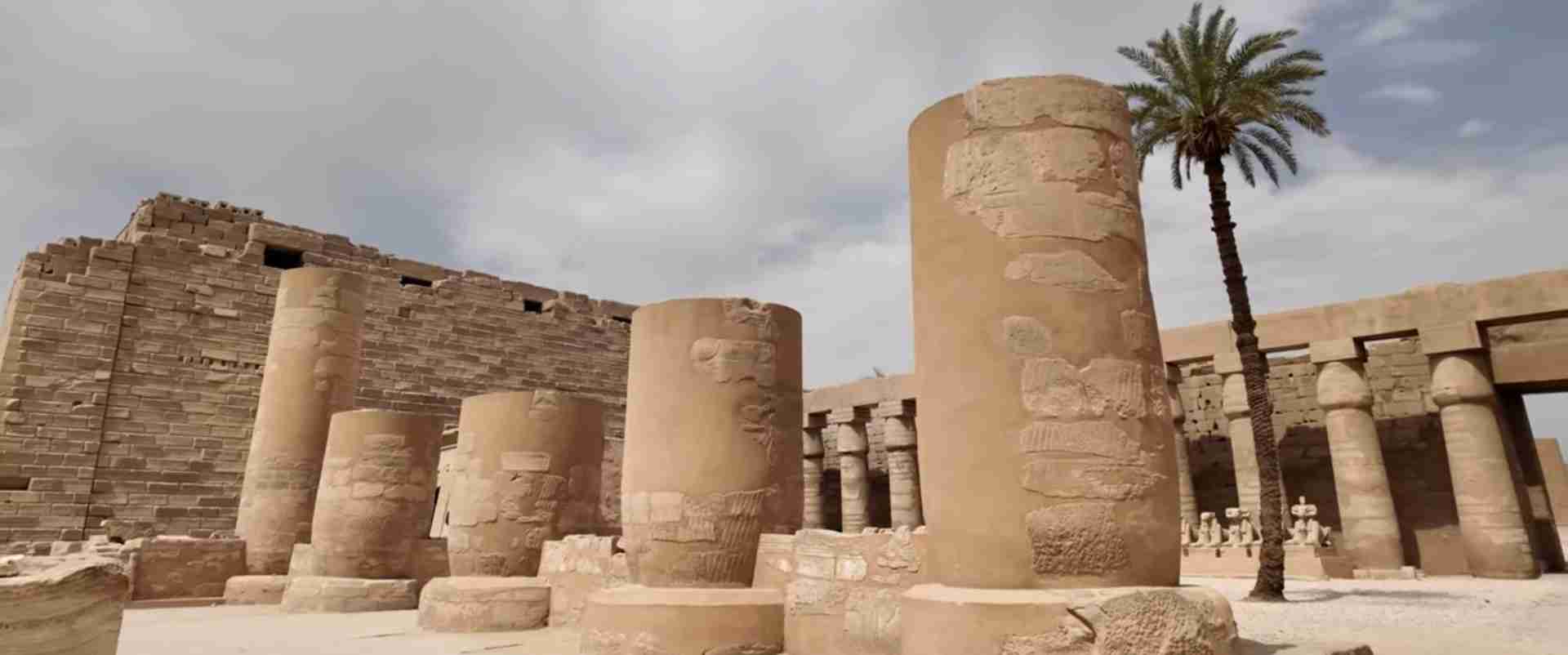
The Temple of Khonsu at Karnak represents one of the best-preserved complete temple structures from pharaonic Egypt, yet receives minimal visitor attention compared to the nearby Great Hypostyle Hall and main Amun temple. Ramesses III constructed this temple for Khonsu, the moon god and son of Amun and Mut within the Theban triad. The temple demonstrates the standard Egyptian temple plan in complete form: entrance pylon, open courtyard with columned porticoes, hypostyle hall, offering halls, and sanctuary. The relief decoration throughout the temple maintains excellent preservation, with original colors visible on many surfaces and detailed religious scenes depicting offering rituals, divine processions, and pharaonic legitimation ceremonies.
The temple’s architectural features include subtle design refinements that demonstrate sophisticated Egyptian engineering knowledge. The slight inward inclination of walls and columns creates optical corrections that make the structures appear perfectly vertical despite their actual geometry. The column capitals in the hypostyle hall display multiple plant forms including papyrus and lotus motifs with detailed botanical accuracy in the carved stone. The sanctuary contains the original stone barque shrine that held the sacred boat of Khonsu during religious processions, one of the few such shrines surviving in original position.
The Temple of Ptah at Karnak occupies the northern section of the temple complex, dedicated to the creator god of Memphis who maintained importance throughout Egyptian history despite Thebes’ religious dominance. The temple’s modest scale and location away from the main processional axis result in minimal tourist traffic, allowing detailed examination of its unusual architectural features and religious significance. The temple contains several chapels and chambers added by different pharaohs across the New Kingdom and later periods, creating an architectural palimpsest that documents evolving religious practices and royal patronage patterns.
The temple’s relief decoration includes rare representations of Ptah in his classic form as a mummiform figure holding a was-scepter combining the symbols of power, life, and stability. The walls document various pharaohs making offerings to Ptah, demonstrating the continued importance of Memphis’ creator deity in Theban religious practice. Small side chambers contain cryptographic texts and religious inscriptions that provided limited access to esoteric knowledge available only to initiated priesthood. The temple’s connection to Memphis theological traditions within Thebes’ Amun-dominated religious landscape reveals the theological complexity and regional integration of ancient Egyptian religion.
The Temple of Amenhotep Son of Hapu occupies a unique position in Egyptian temple architecture as a mortuary shrine dedicated to a deified administrator rather than a pharaoh. Amenhotep Son of Hapu served as the chief architect and administrator under Amenhotep III, overseeing massive construction projects including the king’s mortuary temple and Luxor Temple expansions. The unprecedented honor of a personal mortuary temple and posthumous deification reflects his exceptional status and contributions. The temple’s remains include fragmentary reliefs and architectural elements that document the veneration of this historical figure who achieved divine status through wisdom and administrative excellence.
The site’s current state, with scattered architectural fragments and partially excavated foundations, provides insights into how ancient sites appear before modern conservation and reconstruction efforts. Visitors can observe archaeological processes as excavations continue revealing additional features and artifacts. The temple’s location between the Ramesseum and Medinet Habu places it within the concentration of royal mortuary temples but outside the standard tourist circuit, allowing contemplative exploration of the ruins without time pressure or crowds. The site demonstrates how ancient Egyptian society recognized exceptional achievement with religious honors normally reserved for royalty, revealing social mobility and meritocratic elements within the hierarchical pharaonic system.
Traditional Craftsman Workshops and Living Heritage
The alabaster workshops of Qurna village maintain direct technical continuity with ancient Egyptian stone carving traditions documented in archaeological evidence and tomb reliefs. The craftsmen work calcite alabaster quarried from the same geological formations used in pharaonic times, transforming raw stone into translucent vessels using hand tools and techniques essentially unchanged for millennia. The carving process begins with stone selection, where experienced craftsmen assess internal structure, color consistency, and translucency potential through examination and tapping to hear the stone’s resonant qualities. Selection criteria include absence of internal fractures, uniform color distribution, and appropriate grain structure for carving thin-walled vessels.
The shaping process employs copper chisels and wooden mallets for rough forming, followed by progressively finer abrasive techniques for surface refinement and interior hollowing. Creating hollow interiors without modern rotary tools requires remarkable skill and patience, using copper drills charged with abrasive sand to gradually remove material while maintaining even wall thickness. The craftsmen demonstrate ancient techniques for creating vessels with walls thin enough to transmit light while maintaining structural integrity, knowledge transmitted through apprenticeship across generations. The final polishing employs successively finer abrasives to achieve the characteristic translucent surface that distinguished ancient Egyptian alabaster work.
Workshop visits provide opportunities to observe complete production sequences from raw stone to finished vessels, understanding the time investment and technical skill required for creating pieces comparable to those found in ancient tombs. The craftsmen welcome discussions of their techniques, historical connections to pharaonic traditions, and the challenges of maintaining traditional methods in contemporary markets. Many workshops allow visitors to attempt basic carving techniques under guidance, providing tactile understanding of the material properties and tool control required for alabaster working. The experience connects directly to ancient Egyptian economic and artistic traditions, revealing how craft knowledge transfers across millennia through practical apprenticeship rather than written documentation.
Traditional pottery workshops in the agricultural villages along the West Bank canal system continue producing utilitarian vessels using techniques and forms documented in archaeological excavations spanning ancient Egypt’s 3,000-year civilization. The potters work local Nile silt clay, forming vessels on kick-wheels powered by foot motion that represents the primary wheel technology throughout ancient Egyptian history. The vessel forms include bread molds, cooking pots, water jars, and storage containers that correspond directly to types recovered from archaeological sites and depicted in tomb paintings. The firing process employs traditional updraft kilns heated with agricultural waste and animal dung, achieving temperatures sufficient for functional ceramic without the higher temperatures of glazed pottery traditions.
The pottery workshops demonstrate how ancient Egyptian daily life objects were produced, distributed, and used within household and agricultural contexts. The potters explain how different clay preparation methods, vessel shapes, and firing techniques produce ceramics suitable for specific purposes including cooking, water storage, grain storage, and food serving. The vessels’ functional designs reflect accumulated knowledge of material properties, heat transfer, liquid seepage prevention, and structural requirements developed through millennia of trial and refinement. Observing contemporary potters working with traditional methods provides insights into ancient Egyptian technology, economic organization, and the material culture that supported pharaonic civilization beyond the monumental stone architecture preserved in temples and tombs.
Textile workshops in villages near Qurna maintain traditional weaving techniques using floor looms similar to those depicted in ancient tomb paintings and documented in archaeological textile finds. The weavers work cotton and linen fibers, creating fabrics with traditional patterns including geometric designs, striped compositions, and color combinations connected to ancient Egyptian aesthetic traditions. The weaving process demonstrates fundamental textile technology including fiber preparation, spinning, natural dyeing, and loom operation that provided the foundation for ancient Egyptian clothing, household textiles, and ritual fabrics. The weavers explain how different weave structures create fabrics suitable for various purposes, from lightweight linen for clothing in hot climate to heavy textiles for tent fabric and floor coverings.
Secret Viewpoints and Natural Landscapes
The ridge above the Valley of the Queens provides one of Luxor’s most spectacular panoramic views, encompassing the entire Theban Necropolis from the Valley of the Kings to Deir el-Bahri with the Nile Valley and Luxor’s East Bank temples visible in the distance. The viewpoint requires a moderate hike from the Valley of the Queens parking area, following a partially marked trail that gains approximately 150 meters elevation over one kilometer. The trail passes through the limestone formations that characterize the Theban Hills, with geological features including erosion patterns, fossil formations, and rock structures that provide context for understanding how ancient Egyptians selected tomb locations based on geological considerations.
The viewpoint’s elevation and western position create optimal conditions for photography during late afternoon and sunset, when light illuminates the East Bank temples while the West Bank monuments enter shadow, creating dramatic atmospheric contrast. The perspective reveals the sacred geography of ancient Thebes, with the spatial relationships between royal tombs, mortuary temples, agricultural lands, and the Nile River visible as an integrated landscape rather than isolated archaeological sites. The viewpoint allows understanding how ancient Egyptians conceptualized the West Bank as the realm of the dead, with tombs hidden in mountain valleys and mortuary temples positioned at the desert edge marking the boundary between the realm of the living and the eternal resting place of the dead.
The hills above Deir el-Medina provide alternative viewpoints with more challenging access but spectacular perspectives on the workers’ village and the broader Theban Necropolis. The elevated position reveals the village’s complete layout including residential areas, administrative buildings, and the surrounding wall that defined the community’s boundary. The viewpoint demonstrates the village’s strategic location between the Valley of the Kings and the Valley of the Queens, allowing the artisan community to access both royal necropoleis without requiring extensive daily travel. The hills’ dramatic erosion patterns create striking geological formations that provide foreground interest for landscape photography while demonstrating the environmental challenges of human settlement in this arid desert landscape.
The eastern bank of the Nile south of Luxor Temple offers quiet riverfront areas where the modern city’s density decreases and agricultural landscapes dominate. These locations provide opportunities for photographing West Bank monuments reflected in the Nile without the commercial development concentrated in central Luxor. The agricultural fields between the river and the modern road create traditional landscape compositions with palm groves, crop fields, and irrigation channels in the foreground and the Theban Hills forming the background. Dawn photography from these locations captures the daily transformation as sunlight gradually illuminates the West Bank monuments while agricultural activities begin in the fields, connecting contemporary life to the timeless agricultural cycles that sustained pharaonic civilization.
The corniche promenade north of Karnak Temple extends through less developed areas where local residents walk and socialize away from tourist concentrations. The riverfront in these areas provides perspectives on the Nile as a living river supporting contemporary Egyptian life rather than merely as a scenic backdrop for ancient monuments. Sunset photography from these locations can capture the warm light on the water with felucca sails silhouetted against the sky, providing images that emphasize the Nile’s continuing cultural importance. The relative absence of tourist infrastructure allows authentic interactions with local residents using the riverfront for recreation, socializing, and relaxation.
Archaeological Sites Beyond Standard Routes
The ruins of Malkata Palace complex sprawl across the desert southwest of Medinet Habu, representing Amenhotep III’s massive royal residence and the administrative center of his later reign. The palace complex covered approximately 30 hectares, including royal apartments, administrative buildings, audience halls, workshops, storage facilities, and support structures for the massive household required by pharaonic court operations. The site receives minimal visitors despite its significance as one of ancient Egypt’s best-preserved palace complexes, offering insights into royal daily life, court organization, and domestic architecture unavailable in temples and tombs that dominate public archaeological attention.
The palace’s mudbrick walls survive to considerable height in some areas, allowing visitors to understand spatial organization, room functions, and architectural features of royal residential architecture. The remains include decorated pavements with painted designs showing marsh plants, fish, and waterfowl that reflected the palace’s position near the artificial harbor and pleasure lake constructed for royal recreation. Wall paintings fragments discovered during excavations revealed vibrant decorative schemes including geometric patterns, floral designs, and figural compositions that adorned palace interiors. The site demonstrates how ancient Egyptian mudbrick architecture created impressive structures for residential and administrative purposes despite lacking the permanence of stone temple construction.
Excavations at Malkata have revealed extensive evidence of palace daily life including pottery, tools, food remains, and administrative records written on ostraca and papyri. These finds document palace economic organization, royal household provisioning, craft production, and administrative procedures. The wine jar labels discovered at the site provide evidence for ancient Egyptian viticulture, including vineyard locations, wine types, vintage years, and quality classifications. The palace’s workshops produced luxury goods for royal use and diplomatic gifting, including fine jewelry, decorative objects, and ceremonial items created by specialized craftsmen working under palace administration.
The site’s remote location and minimal tourist infrastructure provide authentic archaeological experiences without modern intrusions. Visitors can explore the extensive ruins without time pressure or guided tour constraints, discovering architectural details, construction techniques, and spatial relationships through personal observation. The desert setting reveals how ancient sites appear before conservation and reconstruction efforts, with architectural features gradually emerging from windblown sand and the natural erosion processes that have affected abandoned structures for 3,300 years. The experience provides perspectives on archaeological preservation challenges and the ongoing work required to study and protect ancient Egyptian heritage.
The mortuary temple of Merenptah occupies the desert plain between the Ramesseum and Amenhotep III’s mortuary temple, representing one of the last great royal mortuary temples constructed in the Theban Necropolis. Merenptah, the 13th son of Ramesses II who inherited the throne late in life, built this temple during the early 19th Dynasty’s later phase. The temple’s architecture followed the standard mortuary temple plan but incorporated stone blocks and architectural elements appropriated from earlier monuments, a common practice during the Ramesside period when quality building stone became increasingly scarce. The site contains impressive architectural elements including massive column bases, gateway fragments, and relief carving demonstrating continued artistic quality despite the period’s economic challenges.
The temple’s historical significance extends beyond its architectural merit through the famous Merenptah Stele discovered at the site, which contains the earliest known reference to “Israel” in ancient Egyptian texts. The stele, now in the Egyptian Museum in Cairo, documents Merenptah’s military campaigns in the Levant and provides crucial evidence for the historical context of the Hebrew Bible’s exodus narratives. The temple site continues producing archaeological discoveries during ongoing excavations, revealing additional inscriptions, statuary, and architectural features that document late Ramesside period political history and religious practices.
Local Villages and Authentic Cultural Experiences
The agricultural villages along the West Bank’s canal system maintain traditional rural Egyptian lifestyles connected to farming cycles, seasonal patterns, and community structures that preserve cultural continuity with ancient practices. These villages operate outside tourist infrastructure, with daily life organized around agricultural work, local markets, family structures, and community celebrations that follow patterns established over millennia. Visiting these villages provides insights into Egyptian rural culture, social organization, and the agricultural traditions that have sustained Nile Valley civilization from pharaonic times through contemporary periods. The villages welcome respectful visitors interested in authentic cultural exchange rather than commercial tourism transactions.
Village architecture demonstrates traditional building techniques using mudbrick and agricultural materials to create homes adapted to the hot, arid climate. The houses feature thick walls for thermal insulation, small windows to minimize heat gain, roof terraces for evening socializing and sleeping during hot seasons, and internal courtyards that provide private outdoor space while maintaining shade. The building methods represent knowledge accumulated through generations of experience with local materials, climate conditions, and social needs. The architectural forms demonstrate continuity with ancient Egyptian domestic architecture documented in archaeological excavations, revealing how fundamental design principles remain constant across millennia when addressing similar environmental and social requirements.
Village markets provide authentic experiences of local Egyptian commerce, social interaction, and food culture beyond the tourist-oriented shops and restaurants in Luxor. The markets sell seasonal agricultural produce from local farms, including vegetables, fruits, grains, and animal products reflecting the region’s agricultural capacity. Traditional foods including fresh-baked bread, local cheeses, dates, and prepared dishes demonstrate Egyptian culinary traditions adapted to local ingredients and preferences. The market social environment includes bargaining interactions, social conversations, and community news exchange that reveal the market’s function as a social institution beyond simple economic transactions.
Agricultural activities in the villages follow seasonal cycles synchronized with crop requirements, water availability, and traditional farming calendars that maintain connections to ancient Egyptian agricultural practices despite modern irrigation infrastructure replacing annual flood dependence. The primary crops include wheat, corn, sugar cane, vegetables, and fodder crops for animal feed. Farmers employ traditional hand cultivation methods for many crops, using tools and techniques that demonstrate continuity with ancient farming practices documented in tomb paintings and archaeological evidence. The irrigation systems utilize the canal network constructed during the 20th century but operate according to water allocation patterns and distribution schedules that reflect traditional collective management of water resources.
Village social structures maintain extended family networks, community mutual support systems, and traditional gender role divisions that organize daily life and economic activities. The communities celebrate religious festivals, weddings, and lifecycle events with traditional ceremonies that include music, dancing, feast preparation, and community participation. These celebrations provide opportunities for visitors to observe Egyptian cultural traditions in authentic contexts, though access requires invitation and cultural sensitivity. The villages’ maintenance of traditional practices despite modernization pressures demonstrates the resilience of cultural identity and the value communities place on continuity with ancestral traditions.
Sunset and Sunrise Locations for Photography
The West Bank agricultural fields between the Ramesseum and Habu Temple provide spectacular foreground opportunities for photographing the Theban monuments during golden hour lighting. The fields create traditional landscape compositions with crops, irrigation channels, and palm groves in the foreground while the temples and the Theban Hills form the background under warm evening light. The agricultural activities during late afternoon, including farmers working fields and animals returning from grazing, add human elements that connect contemporary life to the timeless agricultural traditions depicted in ancient tomb paintings. Access to these locations requires respecting agricultural operations and private property while finding positions that offer clear sightlines to the monuments.
The banana plantations along the West Bank’s canal system create unique photography opportunities with the large leaves providing tropical foreground elements contrasting with the desert mountains and ancient temples. The plantation pathways offer walking routes through the agricultural landscape with changing perspectives on the monuments as the path winds through the fields. Late afternoon light filtering through the banana leaves creates dappled lighting effects that add visual interest to compositions while the warm light on distant temples provides atmospheric background elements. The plantations demonstrate the Nile Valley’s agricultural productivity and the dramatic landscape contrast between the irrigated farmland and the surrounding desert.
The riverbank opposite Luxor Temple offers optimal sunrise photography positions with the temple and the West Bank monuments illuminated by early morning light. The east bank position allows photographing the temple’s western facade and obelisk with warm sunrise light while the Nile provides foreground water elements and potential for reflection photography during calm conditions. Morning river traffic including fishing boats and feluccas adds activity and human elements to compositions. The location requires early arrival to establish position before sunrise, with the transformation from pre-dawn blue hour through sunrise providing extended photography opportunities as light conditions change.
The corniche between Karnak Temple and Luxor Temple provides evening photography opportunities with the setting sun illuminating the monuments’ eastern facades. The promenade allows walking between locations to find optimal composition positions as the light changes during the extended golden hour. The riverfront location includes feluccas sailing past, river cruise ships, and local boat traffic that can be incorporated into compositions for environmental context. The position allows photographing both temples from different angles, creating variety within a single photography session while the consistent warm evening light maintains continuity across the image series.
The hills above Deir el-Bahri provide elevated viewpoints for photographing Hatshepsut’s mortuary temple during the transformation from sunrise through mid-morning as sunlight progressively illuminates the temple’s terraces and colonnades. The elevated position allows photographing the temple’s relationship to the cliff face and the architectural integration with the natural landscape. The changing light creates dramatic shadows and highlights that reveal architectural details and spatial relationships between the temple’s architectural elements. The viewpoint requires hiking to elevated positions above the temple, following paths through the desert landscape that provide multiple composition opportunities during the ascent.
Forgotten Monuments and Restoration Projects
The Temple of Monthu at Medamud, located eight kilometers northeast of Luxor, represents one of ancient Egypt’s most significant provincial temples dedicated to the war god who held importance throughout Egyptian history. The site served as a major religious center during the Middle Kingdom, with construction continuing through the Ptolemaic period. The temple’s remains include fragmentary architecture, relief carving, and inscriptions that document the deity’s worship and the site’s religious significance. The location outside Luxor’s primary tourist circuit results in minimal visitors, allowing contemplative exploration of the ruins and observation of ongoing archaeological work without crowds or commercial intrusions.
The temple’s archaeological significance extends beyond its religious functions through evidence of connections to broader Egyptian religious networks, international trade relationships, and political developments across Egypt’s long pharaonic history. Excavations have revealed extensive deposits of offering materials including pottery, faience objects, and votive items that document popular religious practices and the temple’s economic role in regional society. The site contains inscriptions documenting historical events, royal building programs, and priestly activities that provide evidence for political and religious developments during periods with limited textual documentation from other sources.
The Temple of Tod, located 20 kilometers south of Luxor, contains one of ancient Egypt’s most remarkable archaeological discoveries—the Tod Treasure of silver vessels, lapis lazuli, and other exotic materials deposited during the Middle Kingdom. The treasure’s foreign origins demonstrate extensive international trade networks connecting Egypt with the Aegean, Near East, and Central Asia during the early second millennium BCE. The temple itself contains architectural elements from multiple periods, including Middle Kingdom foundations, New Kingdom expansions, and Ptolemaic modifications that document the site’s continuous religious importance across 2,000 years. The remote location and minimal tourist infrastructure provide authentic archaeological experiences for visitors interested in exploring lesser-known monuments beyond Luxor’s primary sites.
The ongoing restoration work at various West Bank monuments provides opportunities to observe archaeological conservation methods and the technical challenges of preserving ancient structures. The restoration projects employ traditional materials and techniques compatible with original construction methods, including limestone consolidation, mudbrick conservation, and painted surface preservation. Visitors can observe conservators working on specific projects, learning about the scientific analysis, documentation procedures, and intervention strategies employed in professional archaeological conservation. The restoration work demonstrates the ongoing commitment required to preserve Egypt’s heritage for future generations and the international cooperation involving Egyptian archaeologists, foreign research institutions, and conservation specialists.
Off-Season and Early Morning Experiences
Visiting Luxor’s monuments during early morning hours before the tour groups arrive provides dramatically different experiences compared to mid-day visits during peak traffic periods. The sites open at 6:00 AM during summer season, allowing visitors to explore major monuments including Karnak Temple and the Valley of the Kings with minimal crowds and optimal lighting conditions. The early morning atmosphere, with cool temperatures and soft angled light, creates contemplative conditions for experiencing the monuments without the rush and noise of large group tours. The reduced visitor presence allows time for detailed observation of relief carving, architectural features, and spatial relationships without pressure to maintain group pace or avoid obstructing other visitors’ photography.
Summer season visits to Luxor, typically considered off-season due to high temperatures, provide significant advantages including reduced accommodation costs, smaller crowds at major sites, and opportunities for more personalized experiences with guides and service providers. The heat requires appropriate preparation including early morning site visits, midday breaks, and evening activities, but rewards visitors willing to adapt schedules with nearly private access to monuments that receive overwhelming crowds during winter high season. The summer months offer opportunities to experience Luxor’s authentic character beyond the tourist industry peak season operations, with local life more visible and visitor infrastructure operating at relaxed pace.
The shoulder seasons of April-May and September-October provide optimal conditions combining moderate temperatures with reduced tourist numbers compared to winter peak season. These periods allow comfortable full-day site visits without extreme heat while maintaining the crowd advantages of off-peak travel. The natural lighting during these months offers excellent photography conditions with the sun angle providing good illumination without the harsh contrast of summer midday light. The accommodation availability and pricing during shoulder seasons allow flexibility for extending stays or upgrading room categories at costs significantly lower than high season rates.
UNESCO World Heritage Context
Ancient Thebes with its Necropolis achieved UNESCO World Heritage inscription in 1979 as one of the first Egyptian sites recognized for outstanding universal value. The inscription encompasses the Karnak and Luxor temple complexes on the East Bank and the extensive mortuary temples and necropoleis of the West Bank, representing one of humanity’s most concentrated assemblages of monumental architecture and artistic achievement. The UNESCO recognition acknowledges the sites’ documentation of ancient Egyptian civilization’s political power, religious sophistication, artistic capabilities, and technological achievements during the New Kingdom period when Thebes functioned as Egypt’s capital and the administrative center of a territorial empire extending from Nubia through the Levant.
The World Heritage designation carries responsibilities for protection, conservation, and management of the sites to ensure their preservation for future generations. The Egyptian government works with international organizations, research institutions, and conservation specialists to develop and implement protection strategies addressing threats including groundwater infiltration, tourist pressure, urban development, and environmental degradation. The management challenges reflect the complexity of preserving ancient monuments within a living city, balancing heritage protection requirements with contemporary development needs and tourism economic importance.
FAQ: Luxor Hidden Gems
What makes the Tombs of the Nobles special compared to royal tombs?
The Tombs of the Nobles contain detailed scenes of daily life, agricultural activities, crafts, and social interactions that provide comprehensive documentation of ancient Egyptian society beyond the purely religious focus of royal tombs. The artwork depicts banquets, hunting expeditions, farming operations, workshop activities, and family relationships with exceptional detail and color preservation. The nobles’ tomb decorations prioritized documenting their earthly achievements and social status, creating historical records of ancient Egyptian economy, technology, and cultural practices unavailable in royal monuments.
How can visitors access traditional craftsman workshops in Qurna?
Traditional workshops in Qurna welcome visitors interested in observing ancient craft techniques including alabaster carving, pottery production, and textile weaving. The workshops operate as family businesses with craftsmen happy to demonstrate their techniques and explain historical connections to pharaonic traditions. Visitors can walk through Qurna village and look for workshop signs, or arrange visits through local guides who maintain relationships with craftsmen families. Respectful interest and genuine curiosity about traditional techniques result in welcoming interactions and opportunities to observe complete production processes.
Which viewpoints offer the best sunset photography in Luxor?
The West Bank agricultural fields between the Ramesseum and Medinet Habu provide spectacular foreground opportunities with crops and palm groves framing the temples under warm evening light. The corniche between Karnak and Luxor Temple offers riverfront positions for photographing the monuments’ eastern facades during golden hour. The hills above the Valley of the Queens provide panoramic views encompassing the entire Theban Necropolis with the Nile Valley and East Bank temples visible in the distance. Each location offers distinct compositional opportunities and atmospheric effects during the extended golden hour before sunset.
What archaeological sites near Luxor receive minimal tourist attention?
The Temple of Seti I at Qurna contains exceptional relief carving and nearly complete architecture with only minimal visitor traffic despite its outstanding preservation and artistic quality. The Malkata Palace complex southwest of Medinet Habu covers 30 hectares of mudbrick ruins documenting Amenhotep III’s royal residence with minimal tourist presence. The mortuary temple of Merenptah between the Ramesseum and Amenhotep III’s temple offers impressive architecture and historical significance without the crowds concentrated at more famous monuments. These sites provide opportunities for contemplative exploration without time pressure or tourist infrastructure interference.
How do traditional villages preserve ancient Egyptian cultural practices?
Agricultural villages along the West Bank canal system maintain farming techniques, irrigation methods, and crop cycles connected to ancient Egyptian agricultural traditions despite modern infrastructure. Traditional craftsmen continue alabaster carving, pottery production, and textile weaving using techniques documented in archaeological evidence and tomb paintings. Village architecture employs mudbrick construction methods and climate-adapted designs representing continuity with ancient Egyptian domestic building traditions. The villages maintain extended family structures, community mutual support systems, and traditional social organization patterns that preserve cultural practices across generations.
What is the best time for visiting Luxor’s hidden gems?
Early morning hours before 9:00 AM provide optimal conditions for visiting lesser-known sites with minimal crowds, cool temperatures, and excellent lighting for photography. Summer season offers reduced tourist numbers and lower accommodation costs for visitors willing to adapt schedules around high afternoon temperatures. Shoulder seasons of April-May and September-October combine moderate temperatures with fewer crowds than winter peak season. Off-season visits allow more personalized experiences at sites and workshops without the rush and commercial intensity of high season tourism operations.
Which tombs in the Theban Necropolis have the best-preserved paintings?
Tomb of Sennefer (TT96) maintains exceptional color preservation with vibrant yellows, reds, blues, and greens in its famous grape vine ceiling decoration. Tomb of Nakht (TT52) contains vivid agricultural scenes and banquet preparations with remarkable artistic sophistication and color intensity. Tomb of Menna (TT69) showcases farming and administration scenes with detailed color work surviving 3,400 years. These tombs benefit from locations deep within the hillside that protected paintings from environmental exposure and limited historical disturbance that damaged more accessible monuments.
How can visitors experience authentic local culture in Luxor?
Exploring agricultural villages along the West Bank canal system provides insights into traditional rural Egyptian life beyond tourist areas. Visiting local markets offers authentic experiences of Egyptian commerce, food culture, and social interaction without commercial tourism modification. Observing craftsmen in traditional workshops reveals living connections to ancient techniques and technologies. Respectful engagement with local residents in village settings, markets, and community spaces creates opportunities for cultural exchange and understanding beyond superficial tourist encounters. Hiring local guides from West Bank communities supports authentic cultural interactions while benefiting local economies directly.
What forgotten temples deserve more visitor attention?
The Temple of Khonsu at Karnak represents one of ancient Egypt’s best-preserved complete temple structures with exceptional relief carving and original architectural elements including the stone barque shrine. The Temple of Ptah in the northern Karnak complex demonstrates unusual architectural features and documents Memphis theological traditions within Thebes. The Temple of Seti I at Qurna contains relief work of the highest 19th Dynasty artistic quality with nearly complete architectural preservation. These monuments provide complete temple architecture and decoration without the crowds concentrated at more famous sites.
Which archaeological sites show ongoing excavation work?
The Malkata Palace complex southwest of Medinet Habu continues revealing additional architectural features and artifacts during ongoing excavations documenting Amenhotep III’s royal residence. The mortuary temple of Merenptah produces archaeological discoveries including inscriptions, statuary, and architectural elements documenting late Ramesside period history. Various conservation projects at West Bank monuments allow observation of archaeological methods, scientific analysis, and restoration techniques employed in professional heritage preservation. Ongoing excavations provide opportunities to understand archaeological processes and the ongoing work required to study and protect ancient Egyptian heritage.