
Luxor Art Collections Guide: Masterpieces from Ancient Thebes
Key Takeaways
- Karnak Temple Complex houses the world’s largest collection of monumental statuary and relief carvings from the New Kingdom period, spanning 2,000 years of artistic evolution
- Luxor Museum showcases exceptional pieces including the Amenhotep III cache, perfectly preserved painted limestone statues, and the reconstructed Amenhotep IV Wall
- Valley of the Kings tomb paintings represent the pinnacle of Ancient Egyptian funerary art, with vivid colors and sophisticated iconographic programs preserved for over 3,000 years
- Temple of Hatshepsut reliefs demonstrate unprecedented artistic innovation in depicting royal propaganda and divine birth narratives through architectural integration
- Mummification Museum collections reveal the artistic dimensions of funerary practices through decorated sarcophagi, canopic jars, and painted cartonnage masks
- Artistic techniques evolved from Old Kingdom restraint through Middle Kingdom naturalism to New Kingdom grandeur, reflecting theological and political transformations
Understanding Luxor’s Artistic Heritage
Ancient Thebes preserved the most comprehensive collection of monumental art in the ancient world, spanning three millennia of continuous artistic production. The city served as Egypt’s religious and political capital during the New Kingdom (1550-1077 BCE), when artistic patronage reached unprecedented levels under powerful pharaohs and wealthy priesthoods. Unlike Memphis or Alexandria where urban development destroyed ancient monuments, Luxor’s temples and tombs remained largely intact, preserving their original artistic programs.
The artistic collections visible in Luxor encompass multiple distinct traditions. Temple art focused on depicting divine-royal relationships through colossal statuary and relief carvings integrated into architectural spaces. Tomb art developed separate conventions for representing the afterlife journey through painted scenes and decorated funerary equipment. Royal workshop production created luxury items demonstrating technical mastery in precious materials. Each artistic tradition followed specific canonical rules governing proportion, color symbolism, and iconographic meaning.
Luxor’s artistic significance extends beyond aesthetic achievement to preserve complete theological systems and historical narratives. Temple walls function as three-dimensional textbooks recording religious rituals, military campaigns, and royal genealogies. Tomb paintings document daily life, agricultural practices, and social hierarchies with ethnographic precision. The sheer volume and preservation quality make Luxor irreplaceable for understanding Ancient Egyptian civilization through visual culture.
The collections demonstrate remarkable chronological depth. Remains from the Middle Kingdom (2055-1650 BCE) show early artistic experimentation at Karnak. The 18th Dynasty (1550-1292 BCE) witnessed artistic revolution under Hatshepsut, Thutmose III, and Akhenaten. The 19th Dynasty (1292-1189 BCE) under Seti I and Ramesses II produced the most grandiose monumental art. The 20th Dynasty (1189-1077 BCE) maintained traditional standards despite political decline. Later periods including Kushite, Ptolemaic, and Roman rule added distinctive artistic layers.
People Also Ask About Luxor Art Collections
What makes Luxor’s art collections unique among ancient Egyptian sites?
Luxor preserves the most complete integration of art and architecture in the ancient world. Unlike museum collections where objects are decontextualized, Luxor’s art remains in situ within its original sacred and funerary spaces. The Karnak Temple Complex displays art evolving over 2,000 years within a single continuously expanded monument. The Valley of the Kings contains tomb chambers where painted programs maintain their liturgical relationships to sarcophagi and mummy placement. Temple pylons at Luxor and Medinet Habu show colossal relief carvings in their intended outdoor viewing contexts.
The chronological range surpasses any other site. Middle Kingdom chapels at Karnak demonstrate early artistic experimentation. The 18th Dynasty introduced unprecedented naturalism and innovation. The 19th Dynasty perfected monumental grandeur. The 25th Dynasty Kushite rulers commissioned archaizing art reviving Old Kingdom styles. Ptolemaic additions show Greek-Egyptian artistic fusion. This layered artistic history provides unparalleled insight into how Egyptian art responded to political, religious, and cultural changes.
Preservation conditions exceed most ancient sites. Egypt’s arid climate protected painted surfaces from moisture damage. Many tomb chambers remained sealed until modern archaeological discovery, preserving colors with startling vibrancy. Temple reliefs, though weathered, retain sufficient detail for iconographic analysis. The Luxor Museum conserves key pieces under controlled conditions while maintaining connection to their original contexts through detailed provenance documentation.
Who created the artistic masterpieces at Luxor’s temples and tombs?
Specialized artisan workshops operated under royal and temple patronage, organized into hierarchical production systems. The “Place of Truth” (Set Maat) at Deir el-Medina housed the skilled workers who created the Valley of the Kings tombs. These communities included master draftsmen (sesh-qed), painters, sculptors, and plasterers working in multi-generational family traditions. The village remains provide detailed records of artistic production through ostraca (inscribed pottery fragments) documenting work assignments, material deliveries, and workshop organization.
Master artists enjoyed respected social positions. Chief sculptors like Bak and Men, who worked under Akhenaten, left signed works and biographical inscriptions celebrating their artistic achievements. The “Overseer of All the King’s Works” held cabinet-level status coordinating massive artistic projects. Royal architects like Senenmut under Hatshepsut and Amenhotep son of Hapu under Amenhotep III achieved legendary status for their artistic vision.
Workshop organization followed rigid apprenticeship systems. Young artists learned canonical proportions, iconographic conventions, and technical procedures through copying exercises. Grid systems ensured consistency across multiple hands working on large-scale projects. Senior artists created preliminary sketches and supervised execution. Quality control inspections checked adherence to religious requirements and artistic standards. This systematic approach enabled production of massive temple decoration programs maintaining stylistic coherence.
How do art historians interpret the symbolism in Luxor’s artistic programs?
Iconographic analysis decodes the sophisticated symbolic systems embedded in temple and tomb art. Color carried precise meanings: blue represented the heavens and Nile, green symbolized regeneration and Osiris, red indicated dangerous desert forces, gold expressed divine essence. Scale conveyed hierarchical importance: pharaohs dominate scenes towering over smaller officials and enemies. Orientation mattered: rightward movement represented proper cosmic order, leftward suggested chaos or reversal.
Gesture and posture communicated specific ritual actions and divine relationships. The pharaoh’s raised arm striking enemies proclaimed military victory and cosmic restoration of order (maat). Prostration before deities demonstrated proper human-divine hierarchy. Offering gestures with extended palms showed reciprocal exchange between earthly and divine realms. Hand-to-mouth feeding gestures in tomb scenes expressed wishes for eternal sustenance in the afterlife.
Composite programs create sophisticated theological narratives. The Luxor Temple wall sequences depict the divine birth of Amenhotep III through carefully orchestrated scenes showing Amun’s impregnation of the queen mother, gestation, birth, presentation to gods, and royal legitimation. The Valley of the Kings tomb chambers present the sun god’s nightly underworld journey through the twelve hours of darkness, with the deceased pharaoh accompanying Ra’s barque to achieve resurrection at dawn. These multi-room programs required viewers to physically traverse sacred spaces following prescribed ritual paths.
What artistic techniques did Ancient Egyptian artists use in creating Luxor’s monuments?
Relief carving employed two distinct techniques with different visual effects. Raised relief (bas-relief) involved cutting away background stone to leave images projecting from the surface, creating dramatic shadows ideal for exterior temple walls receiving direct sunlight. Sunk relief (intaglio) carved images into stone surfaces below the original plane, protecting details from weathering while maintaining visibility in bright Egyptian sunlight. Karnak’s Hypostyle Hall combines both techniques with raised relief on interior columns and sunk relief on exterior walls.
Painting techniques used mineral and organic pigments mixed with binding media applied over prepared plaster surfaces. Artists began with red ochre sketches establishing compositions using grid systems ensuring proper proportions. Black ink outlines defined final contours. Pigment application followed hierarchical sequences: yellow ochre and red ochre for skin tones (yellow for women, red for men), Egyptian blue for lapis lazuli effects, green from malachite for vegetation, white from gypsum for clothing. Final details added hieroglyphic inscriptions and jewelry embellishments.
Sculptural production involved multiple specialized craftsmen. Stone roughing-out crews used copper chisels and dolerite pounders to extract basic forms from limestone or sandstone blocks. Master sculptors refined surfaces with increasingly fine copper and bronze tools. Polishers achieved smooth finishes using abrasive sand and stone rubbers. Painters added finishing details and hieroglyphic texts. The largest statues required coordinated teams working simultaneously on different sections to maintain proportional accuracy.
Extended multi-day tours – 5+ days
Featured Luxor Multi-Day Tour Packages
3 days
Luxor 3-Day Discovery Tour
- ✓ Comprehensive Luxor experience
- ✓ Expert local guides included
- ✓ All accommodation included
- ✓ Transportation provided

5 days
Luxor 5-Day Highlights Experience
- ✓ Comprehensive Luxor experience
- ✓ Expert local guides included
- ✓ All accommodation included
- ✓ Transportation provided
7 days
Luxor 7-Day Cultural Journey
- ✓ Comprehensive Luxor experience
- ✓ Expert local guides included
- ✓ All accommodation included
- ✓ Transportation provided

10 days
Luxor 10-Day Complete Adventure
- ✓ Comprehensive Luxor experience
- ✓ Expert local guides included
- ✓ All accommodation included
- ✓ Transportation provided
Multi-day tour packages powered by TourRadar. Prices and availability subject to change.
Karnak Temple Complex: The World’s Largest Open-Air Museum
The Karnak Temple Complex preserves over 2,000 years of continuous artistic production in the world’s largest religious monument. The site covers 200 acres containing the temples of Amun-Ra, Mut, and Montu, connected by processional ways lined with ram-headed sphinxes. The Great Temple of Amun-Ra features the spectacular Hypostyle Hall with 134 massive columns covered in relief carvings and hieroglyphic inscriptions totaling over 58,000 square feet of decorated surfaces.
The Hypostyle Hall represents the pinnacle of New Kingdom architectural sculpture. The twelve central columns rise 69 feet with papyrus capitals symbolizing the primordial marsh where creation began. The remaining 122 columns support massive architraves carved with royal cartouches and offering scenes. Seti I and Ramesses II commissioned the decoration, creating one of history’s largest collaborative artistic projects. Interior walls show raised relief of exceptional quality depicting offering rituals and festival processions. Exterior walls present military campaigns in sunk relief including the famous Battle of Kadesh scenes.
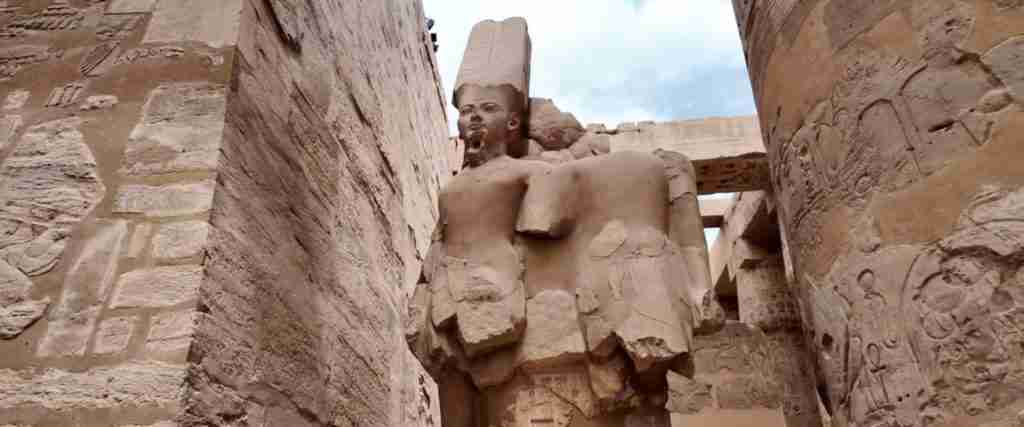
The Sacred Lake precinct contains exceptional sculpture collections. The Cachette Court discovered in 1903 yielded 751 stone statues and 17,000 bronze figurines buried during Ptolemaic period clearances of earlier temple accumulations. These pieces span two millennia from Middle Kingdom to Ptolemaic period, documenting evolving sculptural styles. Many statues now reside in Cairo’s Egyptian Museum, but key pieces remain at Karnak including colossal striding statues of Tutankhamun flanking the entrance to the Hypostyle Hall.
The Festival Hall of Thutmose III showcases 18th Dynasty architectural innovation. The hall’s “tent-pole” columns create unique interior effects. The Botanical Garden reliefs on side chambers present meticulous natural history documentation showing exotic plants and animals Thutmose III brought from his Syrian campaigns. These reliefs demonstrate Egyptian artists’ observational accuracy when depicting unfamiliar subjects outside conventional iconographic formulas.
The temple pylons preserve monumental relief cycles. The First Pylon’s south tower shows Ramesses II’s Nubian campaigns with detailed battle scenes and prisoner processions. The Seventh Pylon built by Thutmose III displays early 18th Dynasty artistic refinement in its war reliefs. The Eighth Pylon contains exceptionally well-preserved offering scenes with original paint traces. Walking through successive pylons reveals chronological artistic evolution from Middle Kingdom restraint through New Kingdom grandeur to Ptolemaic archaism.
Luxor Museum: Curated Excellence from Ancient Thebes
The Luxor Museum presents carefully selected masterpieces from Theban temples and tombs in a modern museum setting with exceptional lighting and interpretation. The collection emphasizes aesthetic quality over encyclopedic coverage, allowing detailed appreciation of individual pieces. The museum’s compact size enables thorough exploration in 2-3 hours while maintaining direct connection to the monuments’ original contexts visible from the museum’s Nile-side windows.
The Amenhotep III cache forms the museum’s crown jewel. In 1989 archaeologists discovered 26 exceptional statues buried in the Luxor Temple courtyard during ancient renovations. These pieces demonstrate 18th Dynasty sculptural mastery at its zenith. The standing statue of Amenhotep III in red granite shows idealized royal portraiture with subtle naturalism in facial features. The painted limestone statue preserves vivid colors showing the king in jubilee regalia. The quartzite head displays supreme technical achievement in working one of Egypt’s hardest stones.
The reconstructed Amenhotep IV (Akhenaten) Wall provides rare insight into the Amarna Period artistic revolution. This massive talatat wall from Karnak’s Aten Temple shows early Amarna style with elongated figures, intimate royal family scenes, and naturalistic plant motifs. The reconstruction reveals how thousands of small stone blocks fit together creating coherent artistic programs. Akhenaten and Nefertiti appear in revolutionary poses including kissing scenes and family moments unprecedented in Egyptian royal art.
The Tutankhamun collection features exceptional pieces from the famous tomb. The calcite double statue shows the king and his ka (spiritual double) in a sophisticated theological representation. The gilded wooden statues of Tutankhamun and Amun display exquisite craftsmanship in gold leaf application over gesso-covered wood. These pieces remain in Luxor rather than Cairo, strengthening the museum’s West Bank narrative connections.
The New Kingdom royal mummy room displays mummies of several pharaohs including Ahmose I, Ramesses I, and Seti I in climate-controlled cases with respectful presentation. The mummies demonstrate the artistic dimensions of mummification including painted cartonnage masks, wrapped linen patterns, and body positioning. The accompanying funerary equipment shows the integration of art and death ritual including decorated coffins, canopic jars, and amulets.
The museum’s sculpture hall presents chronological artistic development. Middle Kingdom pieces show the period’s characteristic stern realism in royal portraiture. The 18th Dynasty collection demonstrates increasing naturalism and idealization. The 19th Dynasty pieces exhibit monumental grandeur and technical virtuosity. Late Period works reveal archaizing tendencies reviving Old Kingdom and Middle Kingdom styles. This chronological arrangement enables direct comparison of artistic evolution across Egyptian history.
Valley of the Kings: Underground Galleries of Funerary Art
The Valley of the Kings contains 63 discovered tombs whose painted decoration represents Ancient Egypt’s most sophisticated funerary art. The royal tombs transform underground chambers into cosmic diagrams mapping the sun god’s nightly journey through the underworld. The deceased pharaoh accompanies Ra’s solar barque, confronting demons, passing judgment, and achieving regeneration through union with Osiris. These elaborate programs required teams of artists working for years to complete ambitious iconographic schemes.
The tomb of Seti I (KV17) preserves the valley’s finest artistic achievement. The 446-foot tomb descends through multiple chambers decorated with unprecedented completeness and quality. The ceiling astronomical diagrams map constellations with mathematical precision. The Book of Gates scenes show detailed underworld geography with labeled demons and protective deities. The sarcophagus chamber features exceptional raised relief work with translucent calcite allowing internal lighting effects. Giovanni Belzoni’s 1817 discovery found colors so fresh that early drawings show no signs of deterioration.
Tutankhamun’s tomb (KV62), though small, contains unique artistic treasures. The burial chamber’s north wall shows the Opening of the Mouth ceremony performed on the mummified king, presenting rare depictions of actual funerary rituals. The golden shrine walls preserve complete text and illustration versions of the Amduat, the Book of What Is in the Underworld. The treasury room’s painted wooden shrines demonstrate miniature architectural art with gilded decoration and hieroglyphic prayers. The tomb’s intact state preserves the intended relationships between art, architecture, and funerary equipment.
The tomb of Nefertari (QV66) in the nearby Valley of the Queens surpasses even royal tombs in artistic quality. Painted plaster reliefs combine raised relief technique with brilliant mineral pigments creating jewel-like surfaces. Nefertari appears in flowing linen garments with intricate pleating details. The ceiling stars sparkle against deep blue backgrounds. The goddess figures demonstrate graceful poses and sensitive facial expressions. UNESCO’s conservation project restored the paintings to their original glory after salt crystallization damage.
The tomb of Ramesses VI (KV9) offers exceptional accessibility for artistic study. The tomb’s straight-axis plan allows natural light to penetrate deeply, illuminating the extensive decoration. The astronomical ceiling shows the sky goddess Nut stretched across the vault with the sun’s journey mapped along her body. The Book of Caverns on the walls depicts the underworld’s geography with unprecedented topographical detail. The color preservation demonstrates the full palette of Egyptian painting including rare purple tones.
The tomb of Ay (KV23) preserves unique artistic elements. The burial chamber contains the only complete Valley of the Kings hunting scene, showing Ay in marshlands pursuing birds and fish in a paradisiacal afterlife setting. This unusual inclusion of earthly pleasures in royal tomb art suggests Ay’s non-royal origins before ascending to pharaoh. The twelve baboon figures representing the twelve hours of night demonstrate sophisticated symbolic integration of time and space.
Temple of Hatshepsut: Architectural Art Integration
The Temple of Hatshepsut at Deir el-Bahari presents revolutionary artistic innovation in integrating relief sculpture with monumental architecture. The three-tiered temple carved into the Theban cliffs creates a dramatic backdrop for extensive relief programs narrating Hatshepsut’s divine birth, trading expedition to Punt, and temple construction. The architect Senenmut designed the complex as a unified artistic statement blending building and decoration into seamless visual experience.
The Punt colonnade preserves Egypt’s most detailed ethnographic art. The reliefs show the African kingdom of Punt with naturalistic depictions of beehive huts, exotic animals, and local inhabitants including the notably obese Queen Ati. Egyptian ships loaded with myrrh trees, ebony, gold, and ivory demonstrate commercial exchange documentation. The artistic precision in rendering foreign subjects without conventional Egyptian stylization provides invaluable ethnographic evidence while showcasing artists’ observational capabilities.
The Birth colonnade presents sophisticated theological propaganda through visual narrative. Sequential scenes show the god Amun visiting Queen Ahmose, the conception and pregnancy, the divine birth witnessed by deities, and presentation to the gods establishing Hatshepsut’s divine legitimacy. The artistic challenge of depicting divine conception required innovative iconography showing Amun and Ahmose holding hands while the ankh symbol of life passes between them. This diplomatic solution maintained theological claims while respecting decorum.
The upper terrace sanctuary preserves exceptional relief quality. The offering chapel walls show Hatshepsut making offerings to Amun with exquisite detail in ritual objects, hieroglyphic prayers, and decorative patterns. The chapel of Anubis maintains remarkable color preservation with deep blues, bright yellows, and rich reds appearing as fresh as modern paint. The astronomical ceiling in the sanctuary shows star patterns and protective vultures with wings spread across the vault.
The Osiride pillars demonstrate innovative royal portrait sculpture. The colossal statues of Hatshepsut as Osiris combine traditional mummiform god iconography with royal facial features. The question of whether Hatshepsut was depicted with male or female characteristics in these statues reveals artistic negotiation of her unprecedented female kingship. Some statues show feminine features, others masculine attributes, suggesting artists struggled with representing a female pharaoh within male-dominated iconographic traditions.
Medinet Habu: Ramesses III’s Artistic Legacy
The Mortuary Temple of Ramesses III at Medinet Habu preserves the best-preserved New Kingdom temple decoration. The massive complex includes defensive walls with towers, royal palace remains, and extensive relief programs documenting Ramesses III’s military campaigns and religious activities. The exceptional preservation state allows detailed study of artistic techniques, color application, and iconographic programs.
The First Pylon presents colossal war reliefs. The exterior walls show Ramesses III smiting enemies before Amun in traditional pharaonic victory iconography. The south tower depicts the Battle of the Sea Peoples with detailed naval combat scenes showing Egyptian and enemy ships engaged in close combat. The artistic rendering of this unprecedented threat from Mediterranean invaders required innovation in representing naval warfare absent from earlier Egyptian art. The relief provides crucial historical documentation of this pivotal Late Bronze Age conflict.
The Festival Calendar on the interior walls documents Egypt’s religious calendar with unprecedented completeness. Each day’s festivals, offerings, and rituals receive detailed textual and visual documentation. The artistic program combines hieroglyphic text listing offerings with illustrated scenes showing priests performing rituals. This integration of text and image creates a comprehensive religious encyclopedia preserved in stone. Modern Egyptologists rely on these records for understanding ancient Egyptian religious practice.
The Syrian war reliefs demonstrate narrative art development. Sequential scenes show campaign progression from royal departure through enemy fortification sieges to triumphal return with prisoners and booty. The artistic convention of showing simultaneous actions in single compositions required innovative spatial organization. Cities appear as fortified rectangles with defenders on walls while attackers scale ladders and batter gates. The defeated enemies show ethnic characteristics including distinctive costumes, hairstyles, and weapons.
The palace facade preserves exceptional painted decoration. The “Window of Appearances” where the pharaoh appeared to reward officials retains original paint showing multicolored geometric patterns, floral borders, and hieroglyphic cartouches. The ceramic tile decoration with blue and turquoise glazed patterns demonstrates luxury architectural finishing. The integration of painted plaster, carved stone, and ceramic tiles reveals the full richness of New Kingdom palace decoration usually lost through destruction.
Mummification Museum: Art of Death Preparation
The Mummification Museum presents art specifically created for funerary purposes, revealing death ritual’s artistic dimensions. The collection emphasizes objects beyond typical museum presentations, focusing on how artistic expression served religious functions in preparing the deceased for afterlife existence. The displays demonstrate that death preparation involved sophisticated artistic production creating objects of genuine aesthetic merit while fulfilling theological requirements.
The sarcophagus collection spans multiple periods and social classes. Royal cartonnage coffins feature gilded faces with inlaid eyes creating lifelike appearances. The painted decoration includes protective spells, divine scenes, and offering lists rendered in exquisite miniature detail. Non-royal coffins show regional artistic variations with different color palettes, hieroglyphic styles, and iconographic programs. The anthropoid coffin development from Middle Kingdom rectangular forms through New Kingdom human-shaped examples to Late Period elaborate nesting sets reveals artistic evolution responding to theological changes.
The canopic jars demonstrate functional art serving bodily preservation. The four jars with stoppers shaped as protective sons of Horus stored the mummified organs. Artists created these jars in various materials including calcite, limestone, and faience with painted decoration and hieroglyphic inscriptions identifying the protected organ and invoking divine guardianship. The artistic quality ranges from simply carved examples to elaborately painted masterpieces depending on the deceased’s wealth and status.
The amulet collection reveals miniature art production. Faience amulets molded into protective symbols received glazing in vivid blues, greens, and turquoises. The heart scarab amulets feature carved undersides with Chapter 30B of the Book of the Dead ensuring the heart wouldn’t testify against the deceased during judgment. The artistic challenge of rendering complex hieroglyphic texts on thumbnail-sized surfaces demonstrates technical mastery. Gold amulets hammered into elaborate shapes show precious metal working expertise.
The painted cartonnage masks present idealized portraiture. These linen and plaster masks covered mummy faces creating eternally youthful representations. The painting technique built up multiple thin layers creating smooth surfaces for final detail work. Gold leaf application on faces expressed divine essence. Wigs rendered in detailed painted patterns represented elaborate hairstyles. Broad collar necklaces painted across the chest displayed multicolored beadwork patterns. The artistic ideal emphasized eternal youth and beauty rather than realistic portraiture.
Temple of Luxor: Sacred Art in Urban Context
The Temple of Luxor functioned as the southern sanctuary for the annual Opet Festival when the Theban Triad traveled from Karnak in ceremonial procession. The temple’s artistic program emphasizes divine kingship theology and festival rituals. Unlike Karnak’s accumulated history, Luxor presents a coherent artistic vision primarily from Amenhotep III’s 18th Dynasty construction with significant 19th Dynasty additions by Ramesses II.
The Colonnade Hall contains the Opet Festival reliefs showing the ceremonial procession in exceptional detail. The priests carry sacred barques containing cult statues while musicians, dancers, and offering bearers accompany the procession. The artistic rendering of crowd scenes with overlapping figures creates unprecedented spatial depth. The hieroglyphic captions identify specific rituals and participants providing comprehensive festival documentation. Recent cleaning revealed original paint traces showing the polychrome splendor now lost from most temple surfaces.
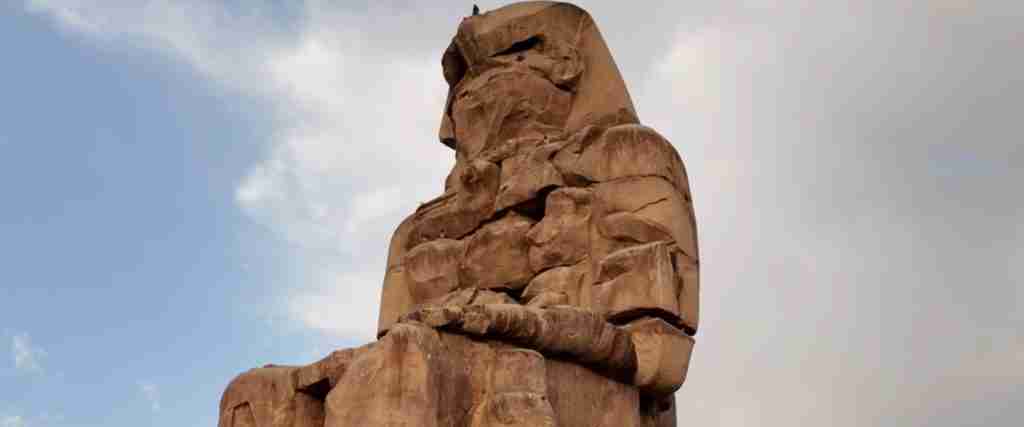
The Court of Ramesses II demonstrates 19th Dynasty monumental sculpture. Colossal seated statues flank the entrance showing Ramesses II enthroned in eternal divine kingship. The striding statues around the courtyard present ideal royal physique with muscular torsos and confident poses. The raised relief decoration on courtyard walls depicts offering scenes with technical precision in rendering ritual implements, food offerings, and hieroglyphic prayers. The artistic program transforms architectural space into theological statement of royal-divine relationship.
The birth room reliefs parallel Hatshepsut’s Deir el-Bahari program but with distinct artistic character. The scenes showing Amenhotep III’s divine conception and birth use more restrained compositions emphasizing theological correctness over dramatic narrative. The god Khnum fashions the royal child and ka on his potter’s wheel in a famous scene demonstrating Egyptian concepts of simultaneous body-soul creation. The artistic challenge of depicting divine creation processes required sophisticated theological knowledge integrated with visual storytelling.
The sanctuary preserves Alexander the Great’s contribution to Luxor’s artistic legacy. The Macedonian conqueror had the sanctuary rebuilt with reliefs showing himself as pharaoh making offerings to Egyptian gods. The artistic style blends Greek sculptural naturalism with Egyptian iconographic conventions. Alexander appears in traditional pharaonic regalia but with distinctive facial features reflecting Hellenistic portrait conventions. This cultural fusion art represents Egypt’s Ptolemaic period when Greek rulers adopted pharaonic legitimation strategies.
Conservation and Artistic Preservation
Modern conservation efforts address deteriorating conditions threatening Luxor’s artistic heritage. Multiple factors endanger the art including salt crystallization from groundwater rising through porous sandstone and limestone, tourist humidity and touching damage, air pollution from modern development, and structural instabilities threatening painted surfaces. International organizations including UNESCO, the Getty Conservation Institute, and national Egyptian authorities coordinate sophisticated preservation programs.
The Valley of the Kings faces particular challenges. Tourist breathing raises chamber humidity levels accelerating salt formation that destroys painted plaster surfaces. The Supreme Council of Antiquities implemented rotation systems closing some tombs periodically for rest and conservation. Recent projects installed climate control monitoring systems tracking temperature, humidity, and airborne particulates. Replica tombs under development would redirect tourist pressure while allowing continued access to artistic masterpieces through high-fidelity reproductions.
Temple conservation addresses stone deterioration and structural stability. The Karnak Open Air Museum conserves architectural fragments with relief decoration removed from their original locations. These pieces receive specialized treatment including desalination processes, consolidation of crumbling stone, and protective coatings. Documentation programs create detailed 3D scans and photogrammetric records ensuring digital preservation even if physical objects deteriorate. These records enable scholarly study while reducing handling of fragile originals.
Pigment analysis reveals ancient painting techniques and supports conservation. Modern spectroscopy identifies mineral compositions of ancient paints guiding restoration work. Analysis distinguishes original ancient paint from modern restoration attempts, some misguided early efforts having applied inappropriate materials. Understanding original binding media and application techniques informs conservation strategies. Research programs partner Egyptian and international institutions advancing scientific art conservation methodologies.
Studying Luxor’s Artistic Heritage
Academic study of Luxor’s art employs multiple methodological approaches. Art historical analysis examines stylistic development, iconographic programs, and aesthetic qualities. Archaeological context establishes dates, patronage, and original functions. Epigraphic study decodes hieroglyphic inscriptions revealing dedicatory texts, religious spells, and historical records. Technical analysis investigates materials, tools, and production techniques. This multidisciplinary approach reveals art’s integration with religious, political, and social systems.
Major research institutions maintain ongoing Luxor documentation projects. The University of Chicago’s Epigraphic Survey has recorded Theban temples since 1924, producing scholarly publications with detailed drawings and photographs. The French-Egyptian Centre operates at Karnak conducting comprehensive archaeological and architectural studies. Polish teams work at Deir el-Bahari. German institutes focus on the West Bank necropolises. These long-term projects accumulate invaluable detailed documentation supporting worldwide scholarly research.
Digital humanities revolutionize Luxor art accessibility. High-resolution photography and 3D scanning create virtual reconstructions enabling detailed study without site access. Online databases compile images, translations, and bibliographies supporting remote research. Virtual reality applications allow immersive exploration of decorated spaces with scholarly annotations. These technologies democratize access to Luxor’s artistic heritage while generating research tools exceeding traditional documentation capabilities.
Comparative studies situate Luxor’s art within broader ancient Mediterranean contexts. Egyptian influence on Greek archaic sculpture becomes evident through stylistic analysis. Syrian and Mesopotamian artistic exchanges appear in 18th Dynasty innovations. Nubian artistic traditions inform 25th Dynasty style. Greco-Roman period art shows cultural fusion processes. These comparative approaches reveal Egypt’s artistic interactions with surrounding civilizations while highlighting distinctive Egyptian aesthetic principles.
FAQ About Luxor Art Collections
Are photography and sketching allowed in Luxor’s art collections?
Photography regulations vary by location. The Luxor Museum prohibits all photography to protect objects and control reproduction rights. Most Valley of the Kings tombs ban photography to prevent flash damage to painted surfaces, though some tombs allow non-flash photography with paid permits. Karnak and other outdoor temples permit photography for personal use without flash. Sketching receives greater tolerance with most locations allowing hand-drawn copies for personal study. Professional photography and publication require special permits from the Supreme Council of Antiquities.
What artistic training did Ancient Egyptian artists receive?
Artists learned through formalized apprenticeship systems within hereditary workshop communities. Young artists began training around age 10 studying basic drawing, proportion systems, and iconographic conventions. Apprentices copied masterworks developing technical skills while absorbing canonical styles. Advanced training introduced sculpture techniques, painting procedures, and hieroglyphic writing. Master artists specialized in specific media like stone carving, painting, or metalwork. The Deir el-Medina community records show apprentices worked alongside masters for decades before achieving independent master status.
How did political changes affect artistic styles at Luxor?
Artistic style closely tracked political transformations. The Amarna Period under Akhenaten revolutionized art with naturalistic innovations emphasizing intimate royal family scenes and Aten solar disk worship. Post-Amarna restoration under Tutankhamun and Horemheb rejected these innovations returning to traditional forms. The 19th Dynasty Ramesside kings commissioned grandiose monumental art asserting imperial power. Third Intermediate Period political fragmentation reduced artistic production scale. The 25th Dynasty Kushite pharaohs sponsored archaizing art reviving Old and Middle Kingdom styles asserting cultural legitimacy. Ptolemaic rulers blended Greek and Egyptian artistic traditions.
What materials did artists use creating Luxor’s monumental art?
Sculpture utilized locally quarried Theban limestone and sandstone with granite and quartzite imported from Aswan for elite pieces. Artists employed copper chisels, bronze saws, and dolerite pounding stones for carving. Painting pigments came from mineral sources: yellow and red from ochres, blue from azurite and Egyptian blue (synthetic calcium copper silicate), green from malachite, black from carbon. Organic binding media including plant gums and animal glues fixed pigments to prepared plaster surfaces. Gold leaf hammered to extreme thinness covered wood and stone elements. Precious stones like lapis lazuli embellished elite works.
Can visitors purchase reproductions of Luxor’s art?
Licensed reproduction vendors operate at major sites selling papyrus paintings, carved reliefs, statuary reproductions, and jewelry based on ancient designs. Quality varies dramatically from crude tourist items to museum-quality replicas. The Luxor Museum shop offers excellent authorized reproductions including catalog publications, postcard sets, and selected jewelry. Serious collectors should seek licensed dealers guaranteeing legal provenance and quality craftsmanship. Original ancient art faces strict export prohibitions with severe penalties for antiquities trafficking. Legitimate purchases require verification of modern manufacture.
How do scholars date undated artistic works at Luxor?
Multiple dating methodologies establish chronology for undated pieces. Stylistic analysis compares artistic conventions, proportional systems, and iconographic details to securely dated works establishing relative chronology. Paleographic study examines hieroglyphic writing styles evolving over time. Archaeological context associates objects with dated architectural phases or sealed deposits. Historical references to known rulers or events provide terminus post quem dates. Scientific analysis including carbon-14 dating of organic materials or thermoluminescence dating of ceramics provides absolute dates. Convergent evidence from multiple methods achieves reliable chronological placement.
What is the significance of the grid system in Egyptian art?
The grid system ensured proportional accuracy and stylistic consistency across multiple artists and projects. Artists divided surfaces into squares corresponding to standardized body proportions measured in “fists” (palm width units). Standing figures occupied 18 squares from feet to hairline with specific features aligned to grid positions: knee at 6th square, elbow at 12th, shoulders at 16th. Seated figures used modified 14-square systems. This mathematical approach enabled large workshops to collaborate on extensive projects maintaining visual harmony. The system also communicated canonical ideal proportions expressing Egyptian aesthetic philosophy emphasizing eternal order over naturalistic variation.
How did Ancient Egyptian artists achieve color vibrancy that survives millennia?
Mineral pigments provided exceptional stability compared to organic dyes. Egyptian blue, a synthetic pigment invented around 3000 BCE, proved particularly durable maintaining brilliant color. Artists prepared surfaces carefully with multiple plaster layers creating smooth stable painting grounds. The pigment binding media, likely plant gums or egg tempera, created durable adherent films. Egypt’s dry climate prevented moisture damage destroying organic binders and pigments in other environments. Protected tomb chambers sealed from air circulation and light exposure preserved colors with remarkable freshness. Temple reliefs exposed to sunlight faded but retained sufficient color for reconstruction.
What role did women play in creating Luxor’s artistic heritage?
Documentary evidence for female artists remains limited, though women certainly participated in craft production. Tomb paintings show women weaving elaborate textiles requiring sophisticated artistic design skills. Women appear in workshop scenes preparing pigments, though actual painting attribution remains uncertain. The title “Overseer of Weavers” held by elite women indicates supervisory roles in textile art production. Royal women including Hatshepsut and Nefertari commissioned major artistic projects exercising significant patronage power. The preserved record emphasizes male artists, but modern scholars recognize documentation bias likely obscures women’s artistic contributions.
How do contemporary artists respond to Luxor’s ancient artistic legacy?
Modern Egyptian artists engage ancient Theban art through multiple strategies. Some contemporary artists directly reference pharaonic imagery incorporating hieroglyphs, gods, and royal figures into modern compositions exploring national identity. Others abstract ancient formal principles including frontality, hierarchical scale, and profile/frontal combination creating innovative hybrid aesthetics. Cultural heritage debates question appropriation versus inspiration in using ancient motifs. Museums and cultural institutions sponsor contemporary art exhibitions in dialogue with ancient collections fostering creative engagement with Egypt’s artistic heritage.