
Luxembourg Travel Guide 2026: Ultimate Planning Resource
Luxembourg City stands as Europe’s most unexpected treasure, where medieval fortifications meet European Union headquarters, and where all public transport comes completely free. This compact capital delivers UNESCO World Heritage architecture, Michelin-starred dining, and dramatic gorge landscapes within walking distance of each other. Whether you’re exploring underground casemates that earned the city its “Gibraltar of the North” nickname or savoring the multilingual café culture that defines modern Luxembourg, this guide equips you with everything needed for an exceptional 2026 visit.
Key Takeaways
- Budget Planning 2026: Budget travelers spend €90-145 per person daily (two sharing budget accommodation), mid-range visitors invest €165-280 per person daily (two sharing mid-range hotels), and luxury travelers enjoy €340-510 per person daily (two sharing upscale hotels). Weekly stays range €630-1,015 for budget comfort, €1,155-1,960 for mid-range experiences, and €2,380-3,570 for luxury indulgence.
- Free Public Transport Revolution: Luxembourg eliminated all public transport fares nationwide in March 2020, covering buses, trams, trains, and even the funicular railway at zero cost for residents and tourists alike. This unprecedented policy saves travelers €50-80 weekly compared to other European capitals and makes exploring the entire Grand Duchy remarkably affordable.
- UNESCO World Heritage Excellence: The Old Quarters and Fortifications earned UNESCO inscription in 1994 for exceptional strategic military architecture spanning five centuries. The Bock and Pétrusse Casemates, Chemin de la Corniche, and layered defensive systems represent one of Europe’s most sophisticated fortress complexes.
- Compact Geographic Advantage: Luxembourg City measures just 51 square kilometers, making virtually every major attraction accessible within 30 minutes by free public transport or 60 minutes on foot. Day trips to Vianden, Echternach, and the Mullerthal region depart hourly on free trains, expanding exploration without transportation costs.
- Multilingual Accessibility: Luxembourgish serves as the national language, but French and German function as administrative languages, and English fluency reaches 80% in the capital. Restaurant menus, museum exhibits, and tourist information appear in multiple languages, eliminating communication barriers for international visitors.
- Optimal Visit Timing 2026: May through September delivers ideal weather (15-25°C) for fortress exploration and gorge hiking, though accommodation costs peak €160-290 per room nightly. October through April offers dramatic cost reductions (€100-200 per room nightly) with crisp autumn colors or festive Christmas markets compensating for cooler temperatures.
People Also Ask About Luxembourg Travel 2026
How much does Luxembourg cost per day in 2026?
Luxembourg costs €90-145 per person daily for budget travelers (two sharing budget hotels), €165-280 per person daily for mid-range visitors (two sharing mid-range hotels), and €340-510 per person daily for luxury experiences (two sharing upscale hotels). These totals include accommodation divided by two occupants, three meals, zero transportation costs due to free public transport, and attraction admission. Budget travelers stay in hostels or budget hotels (€90-140 per room), eat at casual restaurants and prepare some meals, and focus on free attractions. Mid-range travelers select comfortable three-star hotels (€160-250 per room), dine at bistros and mid-range restaurants, and visit paid museums and casemates. Luxury visitors choose four and five-star properties (€320-450+ per room), experience Michelin-starred dining, and book private tours and premium experiences.
Is Luxembourg expensive for tourists in 2026?
Luxembourg ranks among Europe’s pricier capitals for accommodation and dining, but free nationwide public transport significantly reduces overall costs compared to Paris, London, or Zurich. Hotel rooms average €140-290 nightly for mid-range properties, positioning Luxembourg alongside Amsterdam and Copenhagen. However, zero transportation expenses save €50-80 weekly versus cities charging €30-50 for weekly transit passes. Restaurant meals cost €20-60 per person at mid-range establishments, comparable to other Western European capitals. Strategic planning mitigates expenses: visiting October through April reduces accommodation costs 30-40%, many museums charge just €5 admission or offer free entry, and the compact geography eliminates expensive taxi transfers.
How many days do you need in Luxembourg in 2026?
Luxembourg City merits three full days for comprehensive exploration, allowing one day for UNESCO Old Town and fortress sites, one day for museums and cultural attractions, and one day for Grund district and valley walks. Adding two days enables rewarding excursions to Vianden Castle, Echternach Abbey, and Mullerthal Trail hiking, all accessible via free trains. First-time visitors should allocate minimum two nights (three days including arrival/departure), while those seeking in-depth cultural immersion and regional exploration benefit from four to five nights. The free public transport network makes day trips remarkably efficient, expanding possibilities without requiring additional accommodation bookings or rental car expenses.
What is the best month to visit Luxembourg in 2026?
May and September represent optimal months for Luxembourg visits in 2026, delivering pleasant weather (16-22°C), moderate crowds, and reasonable accommodation rates (€140-220 per room nightly). May brings spring blooms, extended daylight hours, and the popular Luxembourg Museum Days event (May 16-17) offering free museum admission nationwide. September provides comfortable temperatures for fortress exploration, autumn colors beginning in surrounding forests, and post-summer crowd reductions while weather remains reliable. June through August offer warmest temperatures (20-25°C) but bring peak accommodation costs (€180-290 per room nightly) and maximum tourist volumes at major attractions like Bock Casemates. December through February deliver festive Christmas markets and lowest hotel rates (€100-180 per room nightly) but require preparation for cold weather (0-6°C) and reduced daylight hours.
Extended multi-day tours – 5+ days
Featured Western Europe Multi-Day Tour Packages
3 days
Western Europe 3-Day Discovery Tour
- ✓ Comprehensive Western Europe experience
- ✓ Expert local guides included
- ✓ All accommodation included
- ✓ Transportation provided
5 days
Western Europe 5-Day Highlights Experience
- ✓ Comprehensive Western Europe experience
- ✓ Expert local guides included
- ✓ All accommodation included
- ✓ Transportation provided
7 days
Western Europe 7-Day Cultural Journey
- ✓ Comprehensive Western Europe experience
- ✓ Expert local guides included
- ✓ All accommodation included
- ✓ Transportation provided
10 days
Western Europe 10-Day Complete Adventure
- ✓ Comprehensive Western Europe experience
- ✓ Expert local guides included
- ✓ All accommodation included
- ✓ Transportation provided
Multi-day tour packages powered by TourRadar. Prices and availability subject to change.
Introduction: Planning Your Luxembourg Adventure 2026
Luxembourg defies easy categorization. This diminutive Grand Duchy occupies just 2,586 square kilometers, yet punches dramatically above its weight in cultural richness, architectural significance, and economic influence. The capital, Luxembourg City, functions simultaneously as a medieval fortress town and a modern financial hub, where 13th-century ramparts overlook contemporary European Union institutions. Perched dramatically atop sandstone cliffs with the Alzette and Pétrusse valleys carving deep gorges below, the city’s topography shaped its military importance and continues defining its extraordinary character today.
The strategic location that made Luxembourg “the Gibraltar of the North” transformed the city into a fortress laboratory where Spanish, French, Austrian, and Prussian military engineers competed to build Europe’s most impregnable defenses. Those centuries of fortification left 17 kilometers of underground casemates, three rings of ramparts, and architectural layers spanning Gothic to Art Nouveau periods. When the fortress was largely dismantled between 1867 and 1883, demolition crews preserved enough defensive works to create a unique urban landscape where parks occupy former military zones, pedestrian promenades trace old rampart lines, and dramatic cliff faces reveal engineering marvels carved into bedrock.
Modern Luxembourg balances this fortress heritage with cosmopolitan contemporary culture. As one of the European Union’s three capitals, the city hosts thousands of international civil servants, bankers, and diplomats representing over 170 nationalities. This diversity manifests in restaurant scenes offering cuisine from Portuguese to Thai, art galleries showcasing international contemporary works, and cafe conversations flowing effortlessly between Luxembourgish, French, German, and English. The city’s compact scale makes this multiculturalism approachable rather than overwhelming. Within 30 minutes, visitors transition from underground casemates to modern art museums, from traditional winstubs serving Luxembourgish specialties to Michelin-starred restaurants pushing culinary boundaries.
The 2026 visit comes at a particularly advantageous moment. Luxembourg’s free public transport policy, now established for six years, has matured into a seamlessly functioning system making every corner of the Grand Duchy accessible at zero cost. The tram network expanded significantly in recent years, connecting Luxembourg Airport directly to the city center and major business districts. Post-pandemic tourism recovery has stabilized, bringing visitor numbers back to manageable levels without the overwhelming crowds that plague Venice or Barcelona. Hotel supply increased with several new properties opening in 2024-2025, improving availability and rate competition. Cultural programming expanded with new permanent exhibitions at MUDAM (Grand Duke Jean Museum of Modern Art) and rotating shows at Villa Vauban.
Luxembourg offers genuine value despite its reputation for expensive prices. Free transport eliminates a major budget category entirely. The compact geography means exploring primarily on foot, avoiding taxi expenses that drain wallets in sprawling cities. Many premier attractions including the National Museum of History and Art, Natural History Museum, and spectacular Chemin de la Corniche viewpoint charge zero admission. UNESCO sites like the Bock Casemates, while ticketed, cost just €11 compared to €30-40 fortress admissions in Prague or Edinburgh. Strategic timing around museum free days and the annual Museum Days weekend (May 16-17, 2026) maximizes cultural experiences while minimizing costs.
This guide provides comprehensive 2026 planning resources organized around practical decision-making. Budget breakdowns detail realistic daily costs across three spending tiers with accommodation properly divided by occupants, meal expenses reflecting actual restaurant ranges, and attraction costs verified from official sources. Accommodation sections compare neighborhoods by character and price point, helping visitors select locations matching their priorities. Transportation chapters explain the free public transport system thoroughly, ensuring travelers maximize this remarkable benefit. Attraction coverage prioritizes efficient routing and strategic timing recommendations. Sample itineraries demonstrate how to structure stays ranging from quick weekend visits to week-long comprehensive explorations.
The approach emphasizes independent exploration rather than organized tours. Luxembourg’s small scale, excellent English signage, comprehensive public transport, and safe environment make self-guided travel straightforward and rewarding. The free Mobiliteit.lu app provides real-time transport schedules and route planning in multiple languages. Well-marked walking trails connect major sites. Restaurants welcome walk-in diners without reservations except at top-tier establishments. This independence allows flexibility to linger at compelling sites, adjust plans based on weather, and discover personal favorites rather than following rigid tour schedules.
Luxembourg rewards visitors who engage beyond surface tourism. The city’s multi-layered history emerges not from passive observation but from walking rampart paths that trace former military perimeters, descending into casemates that sheltered 35,000 people during sieges, and exploring Grund district where working-class neighborhoods evolved into bohemian enclaves. The contemporary culture reveals itself in conversations with locals who seamlessly code-switch between three languages, at markets where Portuguese immigrants sell traditional pastéis de nata alongside Luxembourgish bouneschlupp, and in bars where European civil servants debate policy over Belgian Trappist ales and French wines.
Weather patterns in 2026 follow typical northwestern European cycles with important planning implications. Summer months (June through August) deliver warmest temperatures averaging 20-25°C but bring peak tourist volumes and maximum accommodation costs. Spring (April-May) and autumn (September-October) provide more comfortable exploration conditions with temperatures around 15-20°C, moderate crowds, and better hotel availability. Winter visits (November-March) offer dramatic cost savings with rooms averaging €100-180 nightly compared to €180-290 in summer, though travelers must prepare for cold temperatures (0-6°C), potential rain, and reduced daylight hours limiting evening exploration.
The surrounding Grand Duchy extends Luxembourg’s appeal far beyond the capital. Vianden Castle ranks among Europe’s finest medieval fortresses, spectacularly positioned above a picturesque valley town accessible via free one-hour train rides. Mullerthal Region delivers dramatic sandstone formations and forest hiking trails that justify its “Little Switzerland” nickname. Echternach combines abbey heritage with riverside charm. Moselle Valley vineyards produce exceptional Rieslings and Crémants available for tasting at family wineries. Every destination connects through the free public transport network, making day trips logistically simple and financially negligible.
This guide serves visitors across the experience spectrum. First-time travelers receive clear orientation on must-see attractions, efficient routing suggestions, and budget guidelines preventing overspending. Return visitors discover deeper dives into specialized interests from Art Nouveau architecture to contemporary art scenes, from Luxembourgish wine culture to hiking trail networks. Business travelers appreciate practical information on combining work commitments with cultural exploration during limited free time. All readers benefit from current 2026 pricing verified through official sources, accommodation options spanning budget to luxury tiers, and realistic time estimates based on actual attraction visits rather than optimistic guidebook claims.
Understanding Luxembourg Costs in 2026
Luxembourg’s cost structure diverges from typical European capitals in significant ways that smart planning leverages advantageously. Accommodation and dining rank among the continent’s priciest, with hotel rooms averaging €140-290 nightly for mid-range properties and restaurant meals costing €40-60 per person at comfortable establishments. However, free nationwide public transport eliminates transportation budgets entirely, saving €50-80 weekly compared to cities charging €30-50 for transit passes. Attraction admission remains surprisingly affordable, with major museums charging just €5 and many cultural sites offering free entry. Understanding these patterns enables strategic allocation of resources toward memorable dining experiences and comfortable lodging while minimizing unavoidable expenses.
The accommodation market presents the most significant budget challenge. Luxembourg City faces chronic hotel shortages driven by high business travel demand, European Union functions, and limited urban land for development. This supply constraint keeps rates elevated even during low season. Budget hotels and hostels charge €90-140 per room nightly, mid-range three-star properties ask €160-250 per room, and upscale hotels command €320-450+ per room. These rates apply to basic accommodations without premium features. Sharing rooms between two travelers becomes essential for cost management, reducing per-person accommodation expenses to €45-70 for budget tier, €80-125 for mid-range, and €160-225 for luxury options.
Dining costs vary dramatically by venue selection. Casual cafes and ethnic restaurants serve meals for €12-25 per person, making lunch particularly affordable when targeting plat du jour specials that local workers favor. Traditional bistros and brasseries charge €30-50 per person for dinner with wine. Upscale establishments and Michelin-starred restaurants demand €75-150+ per person before beverages. Grocery stores provide self-catering options at European-standard prices, with bread costing €2-4, cheese averaging €8-15 per kilogram, and prepared foods ranging €5-12. Strategic meal planning balances restaurant experiences against self-prepared breakfasts or picnic lunches in Pétrusse Valley parks.
The free public transport system represents Luxembourg’s most remarkable cost advantage. All buses, trams, and second-class trains operate at zero fare throughout the entire country since March 2020. This applies equally to residents and tourists without registration requirements or validity limitations. Visitors simply board vehicles without purchasing tickets, validating passes, or worrying about fare zones. First-class train upgrades cost €6 for day passes, relevant only for travelers seeking quieter compartments on longer regional routes. This transport model eliminates typical city exploration expenses while enabling spontaneous day trips to Vianden, Echternach, or Mullerthal at no marginal cost beyond attraction admission.
Attraction pricing follows modest patterns despite Luxembourg’s general expense reputation. The Bock Casemates, arguably the city’s premier attraction, charge €11 admission compared to €30-40 fortress tickets in Prague or Edinburgh. Pétrusse Casemates cost €13 following recent renovations and enhanced lighting installations. Major museums including National Museum of History and Art, National Museum of Natural History, and Lëtzebuerg City Museum charge just €5 admission, with some offering Thursday evening free access or combined tickets. Villa Vauban and MUDAM fall into similar €5-10 ranges. Many significant sites including Chemin de la Corniche, Notre-Dame Cathedral, Pfaffenthal Panoramic Elevator, and Constitutional Square charge zero admission.
Seasonal price fluctuations create substantial planning opportunities. Summer high season (June through August) drives hotel rates 40-60% above winter levels, with mid-range rooms escalating from €140 to €220 nightly. Shoulder seasons (April-May and September-October) offer moderate pricing around €160-200 per room while maintaining pleasant weather and full attraction operations. Winter months (November through March) deliver dramatic savings with rates dropping to €100-180 per room nightly, though visitors must prepare for cold weather and shorter daylight hours. Restaurant prices remain relatively stable year-round, making seasonal accommodation savings the primary cost variable.
Hidden costs rarely surprise visitors in Luxembourg compared to destinations notorious for resort fees, tourist taxes, or service charges. Hotel rates typically include all taxes and fees in quoted prices. Restaurants incorporate service charges in menu prices, making tipping optional rather than mandatory, though rounding up bills or adding 5-10% for exceptional service represents common practice. Public restrooms occasionally charge €1 but appear far less frequently than in Germany or Netherlands. Museum admission prices include all exhibits without premium sections requiring additional payment. Credit cards work universally without transaction fees at point of sale, though travelers should verify their home bank’s foreign transaction policies.
Value maximization strategies prove essential for budget-conscious travelers. Luxembourg Card provides attractive economics for intensive sightseeing schedules, covering unlimited free public transport (already free for everyone), free admission to over 60 museums and attractions, and discounts on cultural activities. One-day cards cost approximately €13-15, two-day cards €21-25, and three-day cards €28-32, representing excellent value for visitors planning multiple paid attraction visits. Museum Days weekend (May 16-17, 2026) offers free admission to 40+ museums nationwide, making this the year’s best weekend for cultural exploration. Supermarket shopping for breakfast items and picnic lunches reduces daily meal costs €15-25 compared to full restaurant dining.
Currency considerations favor advance planning. Luxembourg uses the Euro, eliminating exchange complications for travelers from Eurozone countries. Non-Euro visitors find competitive exchange rates at banks and ATMs throughout the city, with minimal fees at most machines. Credit card acceptance reaches nearly universal levels at hotels, restaurants, and attractions, making large cash holdings unnecessary. Some small vendors, cafes, and market stalls prefer cash payments, suggesting carrying €50-100 for incidental purchases. Dynamic currency conversion at point of sale should be declined, as choosing Euro billing rather than home currency conversion typically saves 3-5% on transaction costs.
Accommodation Options Luxembourg 2026
Luxembourg City’s accommodation market reflects the capital’s dual character as business hub and tourist destination, resulting in professional service standards but limited budget-friendly options. The hotel landscape divides between modern business properties catering to European Union employees and banking professionals, heritage buildings converted into boutique hotels within the Old Town, and chain establishments clustered near the airport and train station. Understanding neighborhood characteristics, seasonal availability patterns, and realistic cost expectations proves essential for securing suitable lodging that balances location, comfort, and budget constraints.
The Old Town (Ville Haute) delivers prime tourist positioning with UNESCO World Heritage architecture, fortress sites, and major cultural attractions within walking distance. Hotels here occupy historic buildings, often featuring exposed stone walls, vaulted ceilings, and period architectural details integrated with modern amenities. Rates reflect premium locations, starting €180-250 per room nightly for three-star properties and reaching €350-500+ for upscale boutique hotels. Properties like Hotel Le Place d’Armes and Hotel Parc Beaux Arts exemplify this category, offering fortress views, central Place d’Armes proximity, and immediate access to restaurant districts. Limited room counts mean advance reservations become essential, particularly May through September when business and tourist demand overlap.
Gare (train station district) provides practical alternatives balancing accessibility with moderate pricing. Located 15-20 minutes walking from Old Town attractions, this area hosts numerous three-star business hotels charging €140-220 per room nightly. Free tram service connects directly to the city center every 10 minutes, making the slightly peripheral location negligible for transport purposes. Hotels like Ibis Styles Luxembourg Centre Gare and Christophe Colomb target business travelers with efficient rooms, reliable wifi, and breakfast buffets suited for quick departures. The neighborhood offers abundant restaurant options from Portuguese taverns to Asian eateries, reflecting immigrant communities serving the broader city.
Kirchberg district represents Luxembourg’s modern face, hosting European Union institutions, contemporary architecture, and several notable museums including MUDAM and Philharmonie. Hotels here cater primarily to diplomatic and business visitors, offering spacious rooms, conference facilities, and professional service at €160-280 per room nightly for mid-range properties. Location suits travelers prioritizing EU institutions over Old Town charm, though excellent tram connections provide 15-minute access to historic sites. Properties like Sofitel Luxembourg Europe and NH Luxembourg exemplify this category, delivering reliable comfort with limited personality but convenient positioning for business meetings and modern cultural attractions.
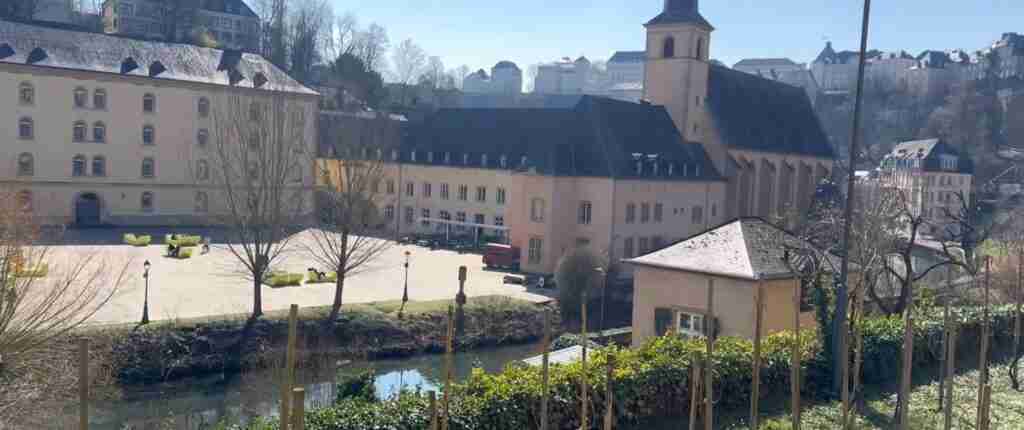
Grund and Clausen neighborhoods nestle in valley floors beneath fortress cliffs, offering atmospheric locations with fewer accommodation options. These historic working-class districts evolved into bohemian enclaves featuring restaurants, bars, and art galleries along narrow cobbled lanes beside the Alzette River. Limited hotels exist here, with most lodging consisting of serviced apartments and vacation rentals. Those available provide unique character and immediate access to valley walks, Chemin de la Corniche views from below, and evening dining scenes. Rates align with Old Town properties (€180-280 per room nightly) given desirable positioning and restricted supply.
Budget accommodation options remain scarce relative to demand. Luxembourg City Youth Hostel, positioned spectacularly in Pfaffenthal valley with panoramic fortress views, offers the city’s most affordable beds at €35-45 per person in shared dormitories and €80-120 for private rooms. This modern facility features excellent common areas, self-catering kitchens, and direct access to hiking trails and the Pfaffenthal Panoramic Elevator connecting to the upper city. Budget hotel chains like Ibis Budget Luxembourg Sud and Ibis Budget Luxembourg Aéroport charge €90-140 per room nightly but locate in peripheral areas requiring 20-30 minute bus rides to central attractions. These properties suit price-conscious travelers willing to sacrifice prime location for substantial cost savings.
Seasonal availability patterns create notable booking challenges. June through September represents peak season when business travel, tourist demand, and European Union scheduling converge. Hotels frequently sell out weeks in advance during this period, with remaining availability commanding premium rates €20-60 above shoulder season levels. April-May and September-October provide better booking flexibility with rates €10-30 lower than summer peaks. November through March offers easiest availability and most attractive pricing, with room rates dropping €40-80 compared to high season, though visitors must prepare for cold weather and reduced daylight hours limiting evening exploration.
Serviced apartments and vacation rentals supplement traditional hotel options, particularly for stays exceeding three nights or travelers requiring kitchen facilities. These accommodations appear throughout the city, with concentrations in Gare, Kirchberg, and residential neighborhoods surrounding the center. One-bedroom apartments cost €100-180 nightly, two-bedroom units €150-280 nightly, offering space and self-catering capability at rates comparable to or below equivalent hotel rooms. Platforms like Airbnb, Booking.com, and Homeaway list extensive inventory, though confirming free cancellation policies and reading recent reviews proves essential given variable property conditions and host responsiveness.
Booking strategies significantly impact both cost and availability outcomes. Direct hotel website reservations often match or beat third-party platform rates while providing more flexible cancellation policies and potential room upgrade opportunities. Comparison shopping across Booking.com, Hotels.com, and direct hotel sites identifies best available rates, with price differences sometimes reaching €20-40 per night for identical rooms. Many properties offer breakfast-included rates €15-25 above room-only pricing, representing reasonable value given breakfast costs €12-20 at cafes. Advance booking six to eight weeks ahead secures broadest selection and competitive rates, though last-minute deals occasionally emerge for unsold inventory during slower periods.
Luxury accommodation seekers find several exceptional properties delivering premium experiences. Le Royal Hotels & Resorts Luxembourg combines historic elegance with modern refinement in central Old Town location, offering rooms from €380-550 nightly with fortress views, spa facilities, and Michelin-starred dining. Sofitel Luxembourg Le Grand Ducal provides contemporary luxury near European Court of Justice, charging €320-480 per room with sophisticated design and comprehensive business amenities. These properties cater to travelers prioritizing exceptional comfort, prime locations, and high-touch service over budget considerations.
Transportation Guide Luxembourg 2026
Luxembourg revolutionized urban mobility in March 2020 by eliminating all public transport fares nationwide, creating the world’s first country with completely free mass transit. This unprecedented policy extends to buses, trams, trains, and funicular railway across the entire Grand Duchy, applying equally to residents and international visitors without registration requirements or validity restrictions. Understanding how to leverage this remarkable system maximizes exploration efficiency while eliminating a major expense category that drains budgets in other European capitals.
The Luxembourg City tram represents the network’s crown jewel, connecting Luxembourg Airport through Kirchberg European Quarter and Gare district to city center attractions. Opened in 2017 and expanded significantly since, the tram operates modern, accessible vehicles running every 4-10 minutes during peak hours and every 15-20 minutes during off-peak periods. Route T1 serves most visitor destinations including MUDAM, Philharmonie, Place de l’Étoile, and Gare Centrale. Simply board through any door without tickets, validations, or payment interactions. Digital displays announce upcoming stops in multiple languages, while announcements ensure travelers recognize key destinations.
Bus services blanket the capital and surrounding regions through extensive route networks operating approximately 5:30 AM to midnight daily, with reduced weekend and holiday schedules. Routes 1, 16, and 18 connect major tourist areas including Grund, Clausen, and Kirchberg. Night buses operate Friday and Saturday evenings until 3 AM for late diners and entertainment seekers. The Mobiliteit.lu smartphone app provides real-time schedules, route planning, and service alerts in English, French, and German, making navigation straightforward for visitors unfamiliar with the network. Buses feature priority seating, wheelchair accessibility, and luggage space accommodating standard suitcases.
Luxembourg’s national train network (CFL) enables effortless day trips throughout the Grand Duchy at zero cost. Second-class trains to Vianden (via Ettelbruck, then free bus), Echternach, Moselle wine villages, and Mullerthal region depart Luxembourg Gare Centrale hourly or bi-hourly throughout the day. Journey times rarely exceed 60 minutes, making virtually the entire country accessible for day excursions without accommodation changes. Trains feature comfortable seating, restrooms, and luggage racks. First-class upgrades cost €6 for day passes, relevant only for travelers seeking quieter compartments on longer routes. International trains to Germany, Belgium, and France require standard ticketing, though free domestic transport reaches borders where international services begin.
The Pfaffenthal Panoramic Elevator provides spectacular vertical transport connecting Pfaffenthal valley to Plateau du Saint-Esprit in the upper city. This glass elevator ascends 71 meters in 64 seconds, offering fortress views during the brief journey. Operating daily 6 AM to 1 AM at no charge, it eliminates the steep climbing that otherwise separates lower and upper city districts. The elevator accommodates strollers, wheelchairs, and bicycles, serving both tourist and commuter functions. Adjacent observation platforms deliver stunning photo opportunities of fortress walls, Alzette valley, and Grund district spreading below.
Walking remains the most rewarding transportation method for exploring Luxembourg City’s compact center. The Old Town, fortress sites, major museums, and commercial districts concentrate within a roughly two-kilometer radius easily covered on foot. Well-maintained sidewalks, comprehensive pedestrian signage in multiple languages, and relatively flat terrain in upper city areas facilitate comfortable walking even for visitors with moderate mobility limitations. The Wenzel Circular Walk provides a spectacular 5-kilometer route circumnavigating the Old Town along fortress ramparts and valley paths, requiring approximately 2-3 hours at leisurely pace with photo stops.
Bicycle infrastructure expanded substantially in recent years, with protected lanes and bike-sharing systems encouraging two-wheeled exploration. Vel’oh bike-sharing stations appear throughout the city, offering 24-hour access for €1.50 per day plus usage fees starting €0.50 per half hour. Free public transport often proves more convenient for point-to-point travel given frequent service and weather protection, but bicycles excel for riverside valley rides, park exploration, and sunny-day touring. Several shops rent quality touring bikes for €15-25 daily, providing options for extended Moselle Valley or Mullerthal Trail excursions.
Taxis and rideshare services supplement free public transport for late-night returns, heavy luggage transfers, or reaching peripheral locations not served by bus routes. Taxis charge metered rates approximately €2 base fare plus €2 per kilometer, making typical €15-25 fares for cross-city trips. Uber operates in Luxembourg City with pricing generally matching traditional taxi rates. Airport transfers via taxi cost €25-35 to city center, though free bus line 16 provides identical service during daytime hours. Taxis become most relevant for evening returns from Grund restaurants after bus service reduces frequency, or for travelers with mobility limitations making walking difficult.
Rental cars make little economic or practical sense for Luxembourg City exploration given free public transport, compact geography, limited parking, and expensive rental rates averaging €45-70 daily. However, cars provide advantages for exploring rural Luxembourg at personalized paces, accessing remote Mullerthal Trail hiking trailheads, or visiting multiple wine cooperatives in single days. Major agencies (Europcar, Avis, Hertz, Sixt) operate at Luxembourg Airport and Gare district with standard European rental terms requiring valid driver’s licenses and credit cards. Gas prices average €1.60-1.80 per liter, parking costs €2-4 hourly in city center garages, and highway tolls don’t exist within Luxembourg.
Accessibility features throughout Luxembourg’s transport network accommodate travelers with mobility limitations, strollers, and wheelchairs. All trams offer level boarding, wheelchair-designated spaces, and audio-visual stop announcements. Many buses feature low floors and ramps, though older vehicles on some routes present access challenges. The Pfaffenthal Elevator provides fully accessible vertical transport. Luxembourg Gare Centrale offers elevator access to all platforms. Sidewalks in newer city districts feature curb cuts and smooth surfaces, while Old Town cobblestones and steep valley paths present occasional difficulties. The Luxembourg City Tourist Office provides detailed accessibility information for specific attractions and routes.
Cross-border connections make Luxembourg an excellent base for broader regional exploration. Free trains reach German border towns where Deutsche Bahn services continue to Trier (90 minutes total, €15-20 for German portion). Belgian trains serve Brussels (3 hours, €25-35). French TGV services connect to Paris (2 hours 10 minutes, €45-90 depending on booking timing). FlixBus operates budget coach services to Amsterdam, Frankfurt, and other European cities from €15-30, though journey times exceed train options. These connections position Luxembourg within easy reach of major European destinations for weekend extensions or multi-country itineraries.
Old Town and Fortress Heritage 2026
Luxembourg’s UNESCO World Heritage Old Town represents one of Europe’s most remarkable preserved fortress complexes, where five centuries of military architecture created a layered defensive system nicknamed “Gibraltar of the North.” The strategic position overlooking Alzette and Pétrusse river gorges attracted fortification investments from Spanish, French, Austrian, and Prussian powers, each adding sophisticated defensive works to an already formidable site. Though largely dismantled between 1867 and 1883 following Luxembourg’s neutrality declaration, remaining fortress remnants integrate spectacularly with the historic city, creating unique landscapes where rampart parks, cliff-edge promenades, and underground casemates define Luxembourg’s essential character.
The Bock Casemates penetrate deep into sandstone cliffs forming the original fortress foundation laid by Count Siegfried in 963. These underground galleries expanded dramatically during 17th and 18th century Spanish and Austrian occupations, eventually reaching 23 kilometers of interconnected tunnels carved through solid rock. Visitors explore approximately 17 kilometers of passages along multiple levels, descending through narrow staircases connecting defensive positions, artillery chambers, and garrison quarters that once sheltered 35,000 soldiers and civilians during sieges. Admission costs €11 for adults (check official site for current rates), with tickets purchased at the Montée de Clausen entrance or Luxembourg City Tourist Office. The casemates operate daily 9:45 AM to 5:00 PM with timed entry every 15 minutes, requiring approximately 45 minutes for self-guided exploration.
Archaeological exhibits within the Bock Casemates reveal medieval foundations predating visible fortress works. The crypt displays remnants from Count Siegfried’s original 10th-century castle, foundation walls from subsequent medieval expansions, and artifacts excavated during 20th-century archaeological investigations. Interactive displays explain fortress evolution through Spanish, French, and Austrian periods, showing how each power adapted existing defenses to contemporary military technology. The galleries emerge at multiple viewpoints overlooking Grund district, Alzette valley, and the massive stone bridge spans connecting fortress sectors across deep ravines.
The Pétrusse Casemates represent Luxembourg’s newest major attraction following extensive 2023 renovations incorporating cutting-edge lighting installations and scenographic presentations. These galleries burrow beneath Constitution Square and the southern fortress perimeter, stretching approximately 1,000 meters through multiple levels. Advanced LED systems create atmospheric lighting effects highlighting geological formations, historical graffiti from soldiers stationed underground, and architectural details in carved stone ceilings. Admission costs €13 for adults following the recent enhancements. Entry occurs at the Place de la Constitution pavilion with identical timed scheduling to Bock Casemates, requiring 45-60 minutes for complete exploration.
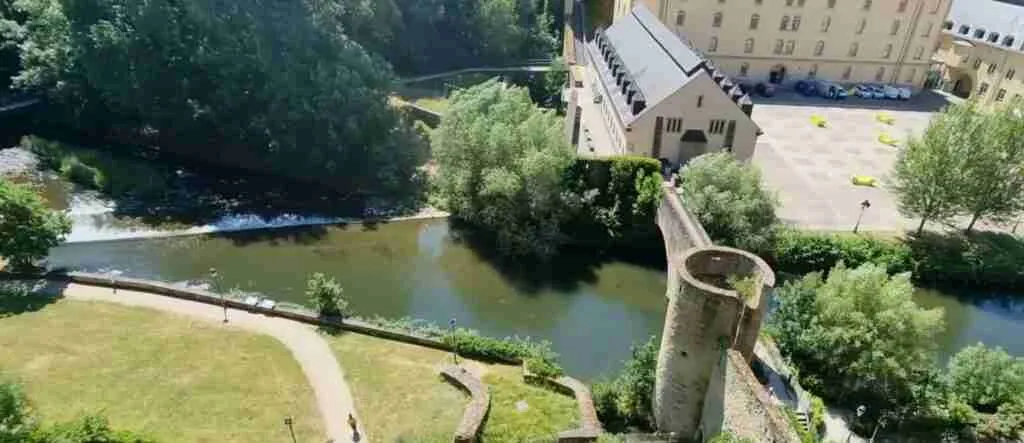
Chemin de la Corniche traces the southern rampart line along cliff edges 70 meters above the Alzette River, earning designation as “Europe’s most beautiful balcony” through spectacular panoramic views. This pedestrian promenade stretches nearly one kilometer from Bock promontory to Citadelle du Saint-Esprit, offering constantly changing perspectives on Grund district’s medieval rooftops, the towering Viaduc spans, and Luxembourg’s dramatic topography. Completely free to access at all hours, the Corniche allows flexible exploration timing unconstrained by admission tickets or operating schedules. Multiple staircases descend to Grund district below, creating circular walk opportunities that descend through fortress levels before climbing back via different routes.
The Viaduc represents 19th-century engineering bridging Pétrusse valley with elegant stone arches rising 45 meters above the valley floor. Constructed 1859-1861 to improve communication between fortress sectors, this structure demonstrates transition from military to civilian urban planning as Luxembourg evolved beyond fortress status. The viaduct carries vehicle traffic and pedestrian sidewalks connecting upper city districts, with central spans offering vertiginous views into Pétrusse valley parks below. Walking across requires steady nerves given height and exposure, but delivers memorable urban landscape perspectives available nowhere else in Luxembourg.
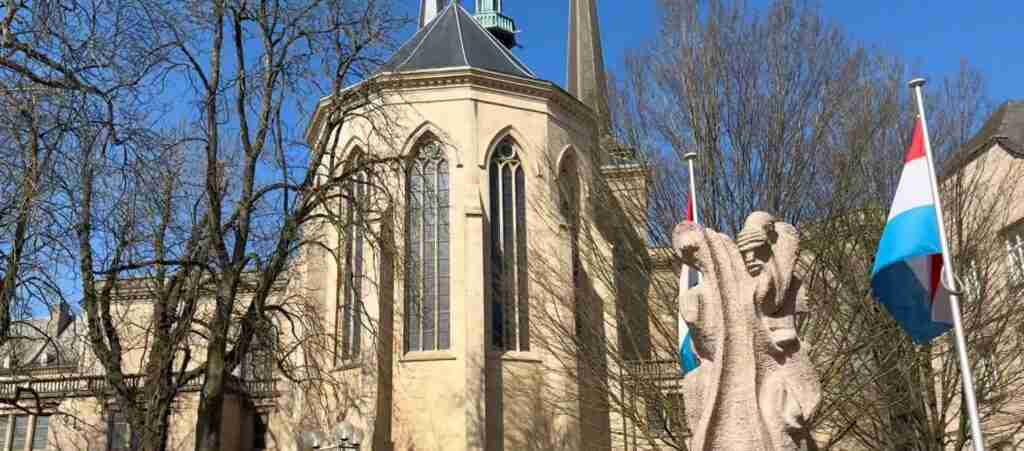
Constitution Square (Place de la Constitution) anchors the southern fortress perimeter with the Gëlle Fra (Golden Lady) monument commemorating Luxembourg’s World War I volunteers. The square provides sweeping views across Pétrusse valley to Adolphe Bridge and Gare district beyond. The recently renovated underground Pétrusse Casemates entrance occupies one corner, while the rest remains open plaza space popular for evening strolls and photo opportunities. Street musicians often perform here during summer months, adding soundtrack to fortress appreciation. The entirely free public space welcomes visitors continuously, serving as natural starting point for Corniche walks or casemates descents.
The Three Towers (Dräi Tierm) survive as Luxembourg’s oldest defensive structures, dating from approximately 1050 and serving continuous military functions until fortress dismantlement. These cylindrical stone towers anchored the eastern fortifications, later integrated into expanded bastion systems. Currently closed to interior access, they remain visible from rampart walks and valley viewpoints as distinctive landmarks marking where Luxembourg’s fortress story began a millennium ago. The towers appear particularly photogenic when viewed from lower Grund district, rising dramatically above intervening cliff faces and medieval buildings clinging to rocky slopes.
Fort Thüngen (Three Acorns) represents the northern fortress sector, recognizable by its distinctive three acorn-topped turrets. Built 1732-1733 during Austrian occupation, the fort defended approaches from the Kirchberg plateau before later conversion into barracks and storage facilities. Extensively restored in recent decades, Fort Thüngen now houses Museum Dräi Eechelen documenting Luxembourg’s fortress history and path to independence. Museum admission costs €5 and includes excellent multimedia presentations explaining defensive system evolution, daily garrison life, and political context surrounding Luxembourg’s transformation from fortress to sovereign nation. Combined fortress and museum visits typically require 90 minutes for thorough exploration.
The Wenzel Circular Walk connects major fortress sites through a spectacular 5-kilometer route requiring 2-3 hours at leisurely pace with photo stops. Beginning near the Bock, this marked path descends through casemate levels, follows valley floor trails along the Alzette River through Grund district, climbs back via staircases and ramps through Pfaffenthal, and returns along upper rampart promenades. Excellent multilingual signage explains fortress features, historical events, and architectural details encountered along the route. The free self-guided experience delivers comprehensive fortress appreciation without admission costs, though combining it with paid casemates entry enriches understanding of underground defensive networks described in trail markers.
Strategic visiting timing maximizes fortress site appreciation while managing crowds and optimizing photography. Weekday mornings before 11 AM find Bock and Pétrusse Casemates quietest, allowing unhurried exploration and better photography within underground chambers. Late afternoon light (4-7 PM during summer months) enhances Chemin de la Corniche views as western sun illuminates Grund buildings across the valley. Early evening visits to Constitution Square (7-9 PM June through August) deliver beautiful golden hour lighting on fortress walls and monuments while avoiding midday heat and crowds. Winter visits reduce tourist numbers substantially but require preparation for cold underground casemate temperatures hovering around 10°C year-round regardless of surface conditions.
Museums and Cultural Attractions 2026
Luxembourg’s cultural scene punches well above its compact size, delivering world-class modern art collections, comprehensive historical exhibitions, and specialized museums covering natural sciences, military heritage, and contemporary photography. The remarkably affordable admission structure makes cultural exploration accessible even on tight budgets, with major institutions charging just €5 and several significant museums offering completely free entry. Strategic planning around Thursday evening hours, Museum Days weekend, and combined ticketing maximizes cultural experiences while minimizing costs.
MUDAM (Grand Duke Jean Museum of Modern Art) commands Kirchberg plateau in a spectacular I.M. Pei-designed building completed 2006. The fortress-inspired contemporary architecture features dramatic skylights flooding galleries with natural light, while the collection emphasizes post-1960 international contemporary art with particular strength in installation, video, and new media works. Rotating exhibitions bring major international artists to Luxembourg alongside presentations of Luxembourg and regional creators. Admission costs €7 for permanent collection and temporary exhibitions, with free entry first Wednesday evenings each month. The museum operates Tuesday-Sunday 10 AM-6 PM, Wednesday until 9 PM. Plan minimum 90 minutes for meaningful engagement with current exhibitions and signature collection works.
National Museum of History and Art (Musée National d’Histoire et d’Art) occupies four interconnected historic houses in Old Town, presenting Luxembourg’s comprehensive story from prehistoric settlement through contemporary periods. Archaeological sections display Gallo-Roman artifacts, medieval crafts, and Renaissance works, while upper floors transition to fine arts collections featuring Flemish, Dutch, and French paintings spanning 15th through 21st centuries. The contemporary art wing showcases Luxembourg artists within broader European contexts. Admission costs €5 and includes access to all permanent and temporary exhibitions. Thursday evenings 6-9 PM offer free admission for all visitors. Operating hours run Wednesday-Monday 10 AM-6 PM, Thursday until 9 PM. Comprehensive visits require approximately 2 hours given extensive permanent collections.
The Lëtzebuerg City Museum occupies restored medieval townhouses near the Old Town center, documenting Luxembourg City’s thousand-year urban evolution. Innovative multimedia presentations explain fortress development, demographic changes, architectural heritage, and contemporary urban challenges. Underground sections connect to medieval house foundations and partial casemate passages, adding archaeological dimensions to historical narratives. Combined ticketing with Villa Vauban costs €5, representing excellent value when visiting both museums. The museum operates Tuesday-Sunday 10 AM-6 PM, Thursday until 8 PM. Plan 60-90 minutes for thorough exploration of permanent and temporary exhibitions.
Villa Vauban art museum presents 17th through 21st century European paintings in an elegant neoclassical villa surrounded by municipal park. The permanent collection emphasizes Dutch Golden Age masters, French Impressionists, and Luxembourg artists from 19th and 20th centuries. Temporary exhibitions rotate quarterly, typically focusing on single artists or thematic presentations exploring specific periods or movements. The €5 admission includes both permanent collection and current temporary exhibitions, with combined Lëtzebuerg City Museum tickets available. Operating hours run Wednesday-Monday 10 AM-6 PM, Friday until 9 PM. The intimate scale allows meaningful engagement in 60 minutes, though exhibition depth may inspire longer visits.
National Museum of Natural History (Natur Musée) delivers engaging science education through interactive exhibits covering geology, ecology, and Luxembourg’s natural environments. The zoology galleries display taxidermy specimens from worldwide ecosystems, while local ecology sections examine Luxembourg’s forests, rivers, and agricultural landscapes. A dramatic slide provides entertaining descent from upper floors to ground level, particularly popular with children. Admission costs €5 for adults with significant family discounts. The museum operates Tuesday-Sunday 10 AM-6 PM. Family visits typically extend 90 minutes given interactive elements encouraging hands-on exploration. The central location near Grand Ducal Palace makes it easily combined with Old Town sightseeing.
Museum Dräi Eechelen occupies restored Fort Thüngen, presenting Luxembourg’s fortress history and journey to independence through sophisticated multimedia exhibitions. Interactive displays explain military engineering evolution, daily garrison life, and political dynamics surrounding Luxembourg’s contested sovereignty. The three distinctive acorn-topped turrets house exhibition spaces, while ramparts provide fortress views toward Kirchberg and upper city. Admission costs €5 and represents the most comprehensive fortress-focused museum complementing casemates visits. Operating hours run Tuesday-Sunday 10 AM-6 PM. Plan 90 minutes for thorough engagement with permanent exhibitions and seasonal temporary shows.
Casino Luxembourg – Forum d’Art Contemporain presents cutting-edge contemporary art in a converted former casino building. The program emphasizes emerging artists, experimental practices, and installations specifically created for the distinctive architectural spaces. Exhibitions rotate every 8-12 weeks, making multiple visits during extended Luxembourg stays worthwhile for contemporary art enthusiasts. Admission costs €5-7 depending on exhibitions. Operating hours run Tuesday-Sunday 11 AM-7 PM, Thursday until 9 PM. Visit duration varies based on exhibition content, typically 45-90 minutes for single exhibition programs.
The Family of Man photography exhibition occupies Clervaux Castle approximately 60 kilometers north of Luxembourg City, accessible via free train and bus connections in 90 minutes total travel time. This legendary collection, assembled by Luxembourg-born photographer Edward Steichen for New York’s Museum of Modern Art in 1955, presents 503 photographs by 273 photographers from 68 countries exploring universal human experiences. Recognized on UNESCO’s Memory of the World Register since 2003, the exhibition delivers profound emotional impact through humanistic post-war photography addressing themes of love, birth, work, death, and peace. Admission costs €5, operating Tuesday-Sunday 10 AM-6 PM. The powerful exhibition merits minimum 90 minutes, easily justifying the day trip investment for photography enthusiasts and anyone moved by humanistic visual storytelling.
Strategic timing maximizes cultural value while managing costs. Luxembourg Museum Days (May 16-17, 2026) provide free admission to over 40 museums nationwide, making this weekend the year’s premier cultural opportunity. Thursday evenings deliver free admission at National Museum of History and Art (6-9 PM) and extended hours at other institutions. First Wednesday monthly brings free MUDAM admission. Combined ticketing between Lëtzebuerg City Museum and Villa Vauban saves €5 compared to separate admissions. Planning cultural visits around these opportunities reduces costs substantially while ensuring access to Luxembourg’s finest collections and exhibitions.
Dining and Luxembourg Cuisine 2026
Luxembourg’s dining scene reflects the nation’s multilingual character and international population, presenting exceptional quality across diverse cuisines from traditional Luxembourgish specialties to contemporary fusion, from Portuguese immigrant favorites to Michelin-starred innovation. The capital hosts over 170 nationalities, manifesting in restaurant diversity that rivals cities many times larger. Understanding price structures, reservation requirements, and strategic dining timing enables visitors to experience Luxembourg’s culinary richness across budget constraints while avoiding tourist traps concentrated around major attractions.
Traditional Luxembourgish cuisine emphasizes hearty meat dishes, freshwater fish, and French-influenced preparations reflecting the country’s position between Germanic and Romance culinary traditions. Judd mat Gaardebounen (smoked pork collar with broad beans) represents the national dish, typically served with boiled potatoes and mustard sauce for €20-28 at traditional restaurants. F’rell am Rèisleck (fried river trout in Riesling cream sauce) showcases Luxembourg’s Moselle River heritage and local white wines, costing €24-32 at quality establishments. Bouneschlupp, a hearty green bean soup with bacon and potatoes, appears as €8-12 starter at bistros and brasseries. Gromperekichelcher (potato fritters) serve as popular street food and appetizers for €6-10 at markets and casual venues.
The restaurant pricing structure follows clear patterns across establishment categories. Casual cafes, brasseries, and ethnic restaurants serve lunch for €12-20 per person, with plat du jour specials often delivering excellent value around €15 including main course, side, and sometimes beverage. Traditional bistros and mid-range restaurants charge €25-40 per person for dinner with wine, offering comfortable atmospheres and reliable quality. Upscale dining experiences command €50-80 per person before beverages, delivering refined preparations and more extensive wine selections. Luxembourg’s Michelin-starred restaurants (the city hosts 10 starred establishments) require €90-180 per person for tasting menus, placing them among Europe’s most expensive but also most accomplished fine dining venues.
Strategic lunch planning delivers substantial savings given many restaurants’ plat du jour offerings targeting local workers. These daily specials typically appear on chalkboards rather than printed menus, presenting soup or salad, main course with sides, and occasionally dessert or coffee for €14-18. Arriving between noon and 1:30 PM ensures fullest selection before popular dishes sell out. Restaurants in Gare district and around the Grand Rue commercial area particularly emphasize lunch specials given concentration of office workers. This timing allows experiencing quality restaurants at dinner prices 40-50% lower than evening menus.
Portuguese influence appears prominently throughout Luxembourg’s dining landscape, reflecting significant Portuguese immigration during 20th century industrial development. Authentic Portuguese taverns cluster in Gare district and Hollerich neighborhood, serving bacalhau (salt cod) preparations for €16-24, grilled sardines for €14-18, and hearty cozido stews for €18-26. These family-run establishments deliver generous portions, warm atmospheres, and prices notably lower than French or contemporary restaurants. Many offer excellent wine selections featuring Portuguese Vinho Verde and Douro reds at €20-35 per bottle, providing alternatives to pricier French and Luxembourg wines.
The Grund district evolved into Luxembourg’s premier evening dining destination, where narrow cobbled streets and riverside locations create atmospheric settings for international cuisines. Italian trattorias serve fresh pasta and wood-fired pizzas for €16-28, Asian fusion restaurants present inventive combinations for €18-32, and contemporary bistros experiment with global influences at €22-38 per entree. Weekend evenings (Friday-Saturday) require reservations at popular establishments given limited table counts, while weekday dining allows more walk-in flexibility. The picturesque valley setting justifies slightly elevated prices compared to equivalent restaurants in upper city districts, with Alzette River views and medieval architecture providing memorable backdrops.
Bakeries and cafes throughout Luxembourg City offer excellent breakfast and light meal options at modest costs. Traditional croissants cost €2-3, pain au chocolat €3-4, and substantial sandwiches on quality bread €6-9. Local specialties include Kachkéis (cooked cheese spread) sandwiches for €5-7 and various tart and quiche preparations for €4-6. Coffee quality generally exceeds expectations given Luxembourg’s proximity to French and Italian coffee cultures, with espresso-based drinks costing €3-5. Assembling breakfast from bakeries rather than hotel buffets saves €10-15 per person daily, with quality often surpassing standard hotel offerings.
Supermarket shopping enables significant savings for visitors with apartment accommodations or willingness to prepare picnic lunches. Auchan, Delhaize, and Cactus supermarket chains operate locations throughout the city, selling bread for €2-4, cheese €8-15 per kilogram, charcuterie €12-20 per kilogram, and prepared salads €5-8. Luxembourg produces excellent Crémant sparkling wines available for €8-15 per bottle at supermarkets, representing remarkable value compared to €28-45 restaurant markups. Pétrusse Valley parks and rampart gardens provide scenic picnic settings, making self-catered lunches pleasant experiences rather than budget compromises.
Luxembourg’s wine culture merits dedicated attention given exceptional Moselle Valley production. The narrow strip along Luxembourg’s eastern border produces outstanding Rieslings, Pinot Gris, and Crémant sparkling wines rivaling better-known Alsace and German Mosel regions. Wine bars in Old Town and Grund districts offer tasting flights for €12-18, allowing exploration of multiple producers and grape varieties. Bottles at wine-focused restaurants start €28-45, with premium selections reaching €80-150. Direct visits to Moselle wine cooperatives (accessible via free trains) provide tasting room experiences for €5-10, with bottle purchases around €10-20 representing exceptional value for quality achieved.
Reservation requirements vary significantly by venue and timing. Michelin-starred restaurants require bookings weeks or months in advance, particularly for weekend dinners during high season. Popular Grund establishments benefit from reservations Friday and Saturday evenings, though weekday walk-ins often succeed. Casual cafes, brasseries, and ethnic restaurants generally accommodate walk-in diners throughout the week. The Luxembourg City Tourist Office provides reservation assistance for visitors without multilingual capabilities, though many restaurants maintain English-language websites with online booking systems.
Tipping practices follow European norms with service charges typically included in menu prices, making additional tipping optional rather than mandatory. Rounding up bills or adding 5-10% for exceptional service represents common practice without obligation. Some locals leave small change (€1-3) on tables, while others simply round €28 bills to €30. Credit cards function universally at established restaurants, though smaller cafes and ethnic eateries sometimes prefer cash payments. Asking for split checks creates minimal difficulties given Luxembourg’s cosmopolitan service standards and familiarity with international visitor expectations.
Day Trips from Luxembourg 2026
Luxembourg’s free nationwide public transport network transforms the entire Grand Duchy into accessible day-trip territory, enabling exploration of medieval castles, abbey towns, vineyard villages, and dramatic hiking trails without transportation costs beyond free trains and buses. The compact national geography positions virtually every destination within 90 minutes of the capital, making morning departures and evening returns straightforward while eliminating accommodation expenses. These excursions reveal Luxembourg’s diversity beyond the capital fortress, from fairy-tale Vianden Castle to the sandstone formations of “Little Switzerland” and Moselle wine country.
Vianden ranks among Europe’s most spectacular medieval castles, commanding a hilltop above a picturesque valley town 60 kilometers north of Luxembourg City. The restored fortress dates from 11th through 14th centuries, presenting remarkably intact defensive works, residential quarters, and chapel spaces across multiple building phases. Interior restoration completed in recent decades recreated period furnishings, weapons displays, and architectural details based on historical documentation and archaeological evidence. Castle admission costs €10 for adults (verify current rates on official site), operating daily 10 AM-6 PM March through October with reduced winter hours. Combined with the valley town’s medieval streets, riverside walks, and chairlift to hilltop viewpoints, Vianden justifies full-day visits departing Luxembourg at 9 AM and returning around 6 PM.
Transportation to Vianden requires a two-stage journey utilizing the free train and bus network. Trains depart Luxembourg Gare Centrale hourly for Ettelbruck (35 minutes), where free bus 570 continues to Vianden (additional 25 minutes). Return journeys follow identical routing with coordinated schedules ensuring minimal connection waits. The complete round-trip costs zero using standard second-class services. The scenic train route follows the Alzette River valley through pastoral landscapes and small towns, making the journey itself worthwhile even before reaching Vianden. Weekend and summer schedules provide most frequent service, with hourly departures accommodating flexible timing.
Echternach combines abbey heritage, medieval old town charm, and Mullerthal Trail hiking access 35 kilometers east of the capital. The Benedictine Abbey, founded 698 AD by Anglo-Saxon missionary Willibrord, represents one of Luxembourg’s most historically significant religious sites. While the original Romanesque basilica suffered destruction during French Revolutionary conflicts, the current 18th-century reconstruction presents impressive Baroque architecture and houses Willibrord’s marble tomb attracting pilgrims since medieval times. The abbey museum costs €7 admission, documenting manuscript illumination traditions and religious art production that made Echternach a medieval cultural center. Town exploration, lakeshore walks, and abbey plaza areas remain free, providing substantial experience even without museum entry.
Free trains reach Echternach from Luxembourg in 50 minutes with hourly departures, making half-day or full-day visits straightforward. The compact town center concentrates medieval architecture, abbey complex, and marketplace within easy walking radius. Restaurants serve lunch for €15-25 per person, with cafes offering pastries and light meals for €8-14. Combining Echternach’s cultural sites with afternoon hiking into adjacent Mullerthal Trail sections creates rewarding full-day experiences. Return trains operate until evening, allowing dinner in Echternach or back in Luxembourg City depending on preference.
Mullerthal Region (“Little Switzerland”) delivers Luxembourg’s finest hiking through dramatic sandstone rock formations, moss-covered forests, and narrow gorges 40 kilometers northeast of the capital. The Mullerthal Trail network encompasses 112 kilometers of marked paths divided into three main routes plus extensive connector trails. Day visitors typically target shorter sections accessible from Echternach, Berdorf, or Beaufort, covering 8-15 kilometers in 3-5 hours at moderate pace. Signature features include narrow rock passages requiring sideways navigation, towering stone walls draped with ferns and moss, wooden stairways ascending cliff faces, and viewpoints over forested valleys stretching toward German borders.
Trail access requires no fees, though printed trail maps available from tourist offices cost €3-5. Basic hiking footwear with ankle support proves essential given rocky terrain, uneven surfaces, and occasional muddy sections after rain. Weather checking before departure prevents unpleasant experiences, as trails become slippery and less enjoyable during wet conditions. Spring (April-May) brings wildflowers and fresh green foliage, autumn (September-October) delivers spectacular color, and summer provides longest daylight hours though higher temperatures make early starts advisable. Free trains to Echternach plus local buses to trailheads enable car-free hiking access, with buses operating hourly during summer months and reduced winter frequencies.
Moselle Valley vineyards stretch along Luxembourg’s southeastern border facing Germany across the river, producing exceptional Rieslings, Pinot Gris, Auxerrois, and Crémant sparkling wines. The narrow valley concentrates over 40 wineries within 42 kilometers between Schengen and Wasserbillig, creating wine tourism infrastructure accessible via free trains to Remich, Wormeldange, or Grevenmacher. Family-run operations offer tasting room visits for €5-10, typically including four to six wines with knowledgeable presentations about vineyard practices, grape varieties, and vintage characteristics. Bottles purchase directly from producers costs €10-25, representing outstanding value compared to restaurant markups.
Wine route cycling provides popular warm-weather exploration methods, with relatively flat riverside paths connecting villages and vineyards over 40 kilometers. Bike rentals in Remich or Grevenmacher cost €15-20 daily for quality touring bikes, with some cooperatives offering free bicycle use for tasting room visitors. The Moselle also supports river cruises departing Remich and Grevenmacher for €15-25 per person on two-hour scenic voyages past vineyard slopes and historic villages. These cruises operate April through October with multiple daily departures during summer months, providing relaxing alternatives to active cycling or hiking.
Schengen village occupies symbolic importance as the birthplace of European open borders, where 1985 agreements eliminated internal frontier controls among signatory nations. The European Museum Schengen documents this historic achievement through multimedia exhibitions explaining passport-free travel development, European integration processes, and ongoing border management challenges. Museum admission costs €5, operating Tuesday-Sunday 10 AM-6 PM. The compact village, riverside walks, and historic sites fill half-day visits easily combined with Moselle wine tasting at nearby cooperatives. Free trains reach Remich (20 minutes from Luxembourg), where buses continue to Schengen village (additional 15 minutes).
Clervaux occupies a dramatic northern valley 70 kilometers from Luxembourg City, known primarily for housing The Family of Man photography exhibition in the medieval castle. This legendary collection, described in the Museums section above, justifies dedicated day trips for photography enthusiasts and anyone moved by humanistic visual storytelling. Beyond the exhibition, Clervaux offers Benedictine Abbey visits, Battle of the Bulge Museum documenting December 1944 combat, and valley hiking trails. Free trains reach Clervaux in 90 minutes from Luxembourg with bi-hourly service, making full-day visits feasible though requiring early departures around 8-9 AM to maximize time at destination.
Combining multiple destinations in single day trips rarely succeeds given public transport timing and attraction operating hours. Focusing each excursion on one primary destination with complementary nearby sites proves more rewarding than rushing between disconnected locations. Vianden merits full days given castle visit duration and valley town appeal. Echternach combines productively with short Mullerthal hikes. Moselle wine routes work best as leisurely full-day cycling or multi-stop tasting itineraries. Attempting Vianden morning and Echternach afternoon results in unsatisfying rushed experiences at both destinations while wasting substantial time on trains and connections.
Practical Planning Information 2026
Luxembourg’s compact size, excellent infrastructure, and multilingual environment create remarkably straightforward travel logistics, yet understanding specific operational details, cultural norms, and seasonal patterns enables smoother experiences and better resource allocation. From weather preparation to communication strategies, from safety awareness to money management, these practical considerations transform basic visits into confident, well-executed explorations.
Weather patterns follow northwestern European cycles with maritime influences creating moderate temperatures and regular precipitation throughout the year. Summer months (June through August) deliver warmest conditions averaging 18-25°C, though occasional heat waves push temperatures toward 30°C for brief periods. Rain occurs approximately 12-15 days monthly year-round, making waterproof layers essential regardless of season. Spring (April-May) and autumn (September-October) range 12-20°C with spectacular foliage and comfortable outdoor conditions. Winter months (November-March) bring cold temperatures averaging 0-6°C with occasional snow, short daylight hours (8-9 hours in December-January), and persistent dampness requiring warm, waterproof outerwear. Underground casemates maintain constant 10°C year-round, making light jackets advisable even during summer surface visits.
Packing strategies should emphasize layers and weather adaptability over fashion concerns. Comfortable walking shoes prove essential given cobblestone streets throughout Old Town and significant elevation changes between upper and lower city districts. Rain jackets or compact umbrellas prevent disrupted sightseeing during inevitable showers. Spring and autumn visits require medium-weight jackets or fleeces for morning and evening comfort. Summer travelers need sun protection including hats and sunscreen for exposed rampart walks and valley hiking. Winter visitors should pack insulated coats, warm hats, gloves, and waterproof boots given cold, damp conditions. Business travelers find Luxembourg maintains European formal standards, with restaurants and cultural venues expecting smart casual dress rather than shorts and athletic wear.
Language dynamics reflect Luxembourg’s unique trilingual identity, with Luxembourgish serving as national language while French and German function as administrative languages taught from primary school. English proficiency reaches approximately 80% in Luxembourg City, particularly among younger generations and service industry workers. Restaurant menus, museum exhibits, and tourist information appear routinely in French, German, and English. Mastering basic French or German phrases enhances interactions, though English speakers rarely encounter communication barriers at hotels, restaurants, attractions, or transport hubs. Outside the capital, German becomes increasingly dominant moving north while French strengthens southward toward France.
Safety levels in Luxembourg rank among Europe’s highest, with violent crime rates well below European Union averages and petty theft relatively uncommon even in tourist areas. Standard urban precautions apply: securing valuables in hotel safes, maintaining awareness in crowded areas, and avoiding isolated locations late at night. The Old Town, Grund district, and major tourist areas maintain safe atmospheres throughout evenings, with well-lit streets and regular pedestrian traffic until midnight or later during summer months. Emergency services respond rapidly, with police (113), ambulance (112), and fire (112) accessible via standard European emergency numbers. Pharmacies identified by green cross symbols appear throughout the city, with rotating 24-hour emergency pharmacy information posted at all locations.
Health and medical services meet excellent European standards, with modern hospitals, well-equipped clinics, and multilingual medical staff accommodating international patients. European Health Insurance Card (EHIC) holders from EU countries receive treatment under reciprocal arrangements, though purchasing supplemental travel insurance proves advisable for comprehensive coverage. Non-EU visitors should verify travel insurance includes adequate medical coverage and potential evacuation expenses. Pharmacies sell familiar over-the-counter medications, though specific brands may differ from home markets. Tap water quality exceeds European Union standards, making bottled water purchases unnecessary except for personal preference. COVID-19 protocols evolve continuously; checking current requirements before travel prevents entry complications or unexpected restrictions.
Money management benefits from Luxembourg’s Euro currency alignment, eliminating exchange complications for Eurozone visitors. ATMs appear frequently throughout the city, typically charging €2-5 withdrawal fees from foreign cards. Credit cards function universally at hotels, restaurants, and established shops, though smaller cafes, bakeries, and market vendors may prefer cash. Carrying €50-100 cash covers incidental purchases while avoiding excessive amounts risking loss or theft. Currency exchange offices cluster near Gare Centrale and airport with competitive rates, though ATM withdrawals typically deliver better exchange rates than commercial exchange counters. Dynamic currency conversion at point-of-sale should be declined, as selecting Euro billing rather than home currency conversion saves 3-5% on transaction costs.
Mobile connectivity and internet access reflect Luxembourg’s advanced telecommunications infrastructure. Most US and Canadian phones work on European GSM networks with international roaming enabled, though verifying roaming charges prevents bill shock from unexpected data usage. European SIM cards purchased at Luxembourg Airport or Gare district electronics shops cost €10-25 for multi-gigabyte data plans valid across EU countries. Free wifi appears at most hotels, many cafes and restaurants, Luxembourg Gare Centrale, and municipal buildings including Luxembourg City Tourist Office. The Mobiliteit.lu public transport app requires minimal data for route planning and schedule checking, though downloading city maps for offline use eliminates data requirements entirely.
Shopping opportunities emphasize quality over quantity given Luxembourg’s small retail sector and high prices. Grand Rue and surrounding Old Town streets host international fashion brands, jewelry shops, and specialty boutiques selling Luxembourg-made products. The Kirchberg shopping district offers modern commercial centers with mainstream retailers. Auchan hypermarket near the airport provides comprehensive grocery and household goods at reasonable prices. Luxembourg produces limited distinctive souvenirs, with quality options including local wines and Crémants (€10-25 bottles from producers), artisanal chocolates (€15-35 for quality boxes), and pottery from regional artisans. Markets including Place Guillaume II Saturday morning market sell fresh produce, flowers, and limited crafts, offering atmospheric shopping experiences though relatively few souvenirs.
Accessibility infrastructure serves travelers with mobility limitations through comprehensive ramps, elevators, and adapted facilities at major attractions. All trams feature level boarding and wheelchair-designated spaces. Many buses offer low floors and ramps, though some older vehicles present access challenges. The Pfaffenthal Panoramic Elevator provides fully accessible vertical transport between city levels. Luxembourg Gare Centrale includes elevator access to all platforms. Bock and Pétrusse Casemates present inherent accessibility limitations given underground passages, narrow staircases, and uneven surfaces carved through rock. Museum facilities generally meet modern accessibility standards with ramps, elevators, and adapted restrooms. The Luxembourg City Tourist Office provides detailed accessibility information for specific sites and routes upon request.
Electrical systems follow European standards with 230-volt, 50-hertz current and Type C/F plugs featuring two round pins. North American devices require both voltage converters (for non-dual-voltage items) and plug adapters, with universal travel adapters costing €8-15 at electronics shops and airport retailers. Modern electronics including phone chargers, laptops, and camera batteries typically accept 100-240 volt input, requiring only plug adapters without voltage conversion. British visitors need only plug adapters for Continental European sockets. Purchasing adapters before travel proves cheaper than airport convenience purchases, though Luxembourg’s electronics retailers stock comprehensive adapter selections for forgotten items.
Sample Luxembourg Itineraries 2026
Luxembourg’s compact geography and efficient free public transport enable rewarding experiences ranging from quick weekend introductions to comprehensive week-long explorations. These sample itineraries balance major attractions with neighborhood discovery, cultural depth with outdoor activities, and structured planning with flexibility for spontaneous diversions. All assume two-person travel sharing accommodation as referenced in budget calculations throughout this guide, with daily costs reflecting realistic expenses rather than artificially minimized budgets excluding essential spending categories.
Three-Day First-Time Visitor Itinerary (Friday-Sunday)
Day 1 – Old Town and Fortress Heritage: Begin at Constitution Square viewing Pétrusse valley and Adolphe Bridge, then walk Chemin de la Corniche for dramatic cliff-edge rampart views. Descend via staircases to Grund district for coffee and pastries at riverside cafe (€8-12). Return to upper city via Pfaffenthal Panoramic Elevator, then explore Bock Casemates including archaeological crypt and underground galleries (€11 admission, 45 minutes). Lunch at traditional bistro featuring Luxembourgish specialties (€18-25). Afternoon visits National Museum of History and Art covering Luxembourg’s comprehensive cultural evolution (€5 admission, 90 minutes). Late afternoon walking tour explores Grand Ducal Palace exterior, Notre-Dame Cathedral, and Place Guillaume II. Dinner in Grund district at casual restaurant (€25-35 per person). Day cost approximately €75-95 per person: accommodation €80-110, breakfast €8-12, lunch €18-25, coffee €5-8, dinner €25-35, attractions €16, transport €0.
Day 2 – Museums and Cultural Depth: Morning tram ride to Kirchberg for MUDAM modern art museum visit (€7 admission, 90 minutes exploring contemporary collections). Walk through European Quarter viewing EU institutions and contemporary architecture. Lunch at Kirchberg cafe (€15-22). Afternoon returns to Old Town via tram for Villa Vauban art museum and Lëtzebuerg City Museum combined visit (€5 combined admission, 2 hours total). Late afternoon explores shopping along Grand Rue and relaxes in municipal park. Evening experiences Grund district dining and nightlife at mid-range restaurant (€35-50 per person including wine). Day cost approximately €85-110 per person: accommodation €80-110, breakfast €8-12, lunch €15-22, dinner €35-50, attractions €12, transport €0.
Day 3 – Valley Exploration and Vianden Castle: Depart Luxembourg 9 AM via free train to Ettelbruck, connecting to Vianden (90 minutes total travel). Explore Vianden valley town, ride chairlift to hilltop viewpoint (€8 round-trip), tour Vianden Castle (€10 admission, 90 minutes). Lunch at valley restaurant (€18-28). Afternoon explores medieval streets, riverside walks, and Victor Hugo House if time permits. Return trains depart Vianden 5-6 PM, arriving Luxembourg around 7 PM. Light dinner at Luxembourg cafe or picnic supplies from supermarket (€12-18). Day cost approximately €70-95 per person: accommodation €80-110, breakfast €8-12, lunch €18-28, dinner €12-18, attractions €18, transport €0.
Three-Day Total: Accommodation €240-330 (three nights at €80-110 per room, divided by two), meals €165-240, attractions €46, transport €0. Total approximately €230-310 per person for comprehensive three-day introduction covering major fortress sites, premier museums, and signature day trip to Vianden.
Five-Day Comprehensive Exploration Itinerary
This expanded itinerary builds on the three-day framework above with additional days exploring Echternach/Mullerthal hiking and Moselle Valley wine country. Days 1-3 follow identical structure to the First-Time Visitor itinerary above.
Day 4 – Echternach and Mullerthal Trail: Morning free train to Echternach (50 minutes). Visit Benedictine Abbey and museum (€7 admission, 60 minutes). Lunch at Echternach restaurant (€18-26). Afternoon hikes Mullerthal Trail section from Echternach through dramatic sandstone formations (10 kilometers, 3 hours, free). Return train arrives Luxembourg around 6:30 PM. Dinner at casual restaurant (€22-32). Day cost approximately €75-100 per person: accommodation €80-110, breakfast €8-12, lunch €18-26, dinner €22-32, attractions €7, transport €0.
Day 5 – Moselle Valley Wine Route: Morning train to Remich (35 minutes), rent bicycles (€18 per person for quality touring bikes). Cycle Moselle wine route visiting three wine cooperatives for tastings (€5-8 per tasting, total €20-25), purchase bottles for evening enjoyment (€15-25). Picnic lunch with supplies from Remich bakery and market (€12-18). Afternoon continues cycling to Grevenmacher, optional river cruise (€20 if desired), return train to Luxembourg. Evening prepares apartment dinner with purchased wines and Luxembourg specialties from delicatessen (€15-20 per person). Day cost approximately €90-120 per person: accommodation €80-110, breakfast €8-12, lunch €12-18, dinner €15-20, wine purchases €15-25, bike rental €18, tastings €20-25, transport €0.
Five-Day Total: Accommodation €400-550 (five nights at €80-110 per room, divided by two), meals €260-370, attractions €93-118, transport €0, bicycle rental €18. Total approximately €385-520 per person for comprehensive exploration covering fortress heritage, cultural institutions, hiking adventures, and wine country immersion.
Weekend Budget-Conscious Itinerary
Day 1: Self-guided fortress walking following free Wenzel Circular Walk (5 kilometers, 2-3 hours) covering Bock promontory, valley descents, Grund exploration, and rampart returns. Picnic lunch with supermarket supplies in Pétrusse Valley park (€8-12). Afternoon visits free attractions including Chemin de la Corniche, Notre-Dame Cathedral, Constitutional Square, and Pfaffenthal Elevator. Dinner at Portuguese tavern (€16-22). Day cost approximately €50-70 per person: accommodation €45-60, breakfast from bakery €5-8, lunch €8-12, dinner €16-22, attractions €0, transport €0.
Day 2: Thursday arrival enables free National Museum of History and Art visit 6-9 PM (normally €5, free Thursday evenings). Morning explores Grand Rue shopping and municipal parks. Lunch at cafe plat du jour special (€14-18). Afternoon visits Natural History Museum (€5) and relaxes in parks. Evening museum visit followed by casual dinner (€18-25). Day cost approximately €55-75 per person: accommodation €45-60, breakfast €5-8, lunch €14-18, dinner €18-25, attractions €5, transport €0.
Weekend Total: Accommodation €90-120 (two nights at €45-60 per person sharing budget hotel), meals €75-105, attractions €5, transport €0. Total approximately €85-115 per person for budget-focused weekend emphasizing free attractions, Thursday museum evening, and strategic meal planning.
Frequently Asked Questions About Luxembourg Travel 2026
Is Luxembourg worth visiting for a weekend trip?
Luxembourg delivers exceptional weekend value combining UNESCO World Heritage fortress sites, world-class museums, and dramatic gorge landscapes concentrated within walking distance. The free nationwide public transport eliminates a major expense category, while compact geography prevents time wasted on lengthy transfers between attractions. A two-day weekend covers Old Town and fortress highlights, major museums, Grund district exploration, and valley walks without rushed pacing. Strategic timing around Thursday evening free museum admission and focus on zero-cost attractions like Chemin de la Corniche, Notre-Dame Cathedral, and rampart promenades maximizes experiences while minimizing costs. Budget travelers spend €85-115 per person for comprehensive weekend visits including budget accommodation, three restaurant meals daily, and selected attraction admissions.
What is the Luxembourg Card and is it worth buying in 2026?
The Luxembourg Card provides unlimited free admission to over 60 museums and attractions plus free public transport (already free for everyone) for one, two, or three consecutive days. Cards cost approximately €13-15 for one day, €21-25 for two days, and €28-32 for three days, with family options covering two adults and children. Value depends entirely on attraction visit intensity. Visiting Bock Casemates (€11), National Museum (€5), Natural History Museum (€5), Villa Vauban (€5), and MUDAM (€7) in two days totals €33 admission without the card versus €21-25 with card, generating €8-12 savings. However, many premier attractions charge just €5 or offer free admission, reducing card value for selective visitors. The card proves most worthwhile for three-day stays visiting numerous paid attractions, families with children benefiting from group rates, and visitors targeting premium experiences like Vianden Castle requiring paid admission.
How much should I budget for a week in Luxembourg in 2026?
Weekly Luxembourg budgets range €630-1,015 for budget comfort, €1,155-1,960 for mid-range experiences, and €2,380-3,570 for luxury indulgence, all calculated per person assuming two sharing hotel rooms. Budget travelers staying in hostels or budget hotels (€90-140 per room nightly), eating mix of casual restaurants and self-prepared meals, focusing on free or low-cost attractions, and utilizing free public transport spend €90-145 per person daily. Mid-range visitors selecting three-star hotels (€160-250 per room), dining at bistros and mid-range restaurants, visiting paid museums and attractions, and occasionally using taxis spend €165-280 per person daily. Luxury travelers choosing four and five-star properties (€320-450+ per room), experiencing Michelin-starred dining, booking private tours, and staying in premium accommodations invest €340-510 per person daily. These totals include accommodation properly divided by two occupants, three meals daily, attraction admission, and all transport.
Can you get by speaking only English in Luxembourg?
English functions effectively throughout Luxembourg City given approximately 80% English proficiency among residents, particularly younger generations and service industry workers. Hotels, restaurants, museums, and tourist attractions routinely employ English-speaking staff, with multilingual menus, exhibits, and information materials standard practice. The free Mobiliteit.lu public transport app operates in English, eliminating navigation complications. Outside the capital, German becomes increasingly important moving north while French strengthens southward, though major tourist destinations maintain English accessibility. Learning basic French or German phrases enhances interactions and demonstrates cultural respect, but English speakers rarely encounter situations preventing successful communication or access to services. Business travelers find English functions as working language in European Union institutions and financial sectors headquartered in Luxembourg.
What are the best free things to do in Luxembourg?
Luxembourg offers substantial free experiences beginning with all public transport including buses, trams, trains, and the Pfaffenthal Panoramic Elevator operating at zero cost. The Chemin de la Corniche rampart promenade delivers spectacular cliff-edge views completely free at all hours. Walking the Wenzel Circular Walk covers 5 kilometers of fortress sites, valley trails, and architectural heritage without admission charges. Notre-Dame Cathedral presents impressive Gothic architecture and stained glass with free entry. Constitutional Square and municipal parks throughout the city provide scenic relaxation spaces. Several major museums including National Museum of History and Art offer Thursday evening free admission 6-9 PM. The May 16-17 Museum Days weekend delivers free admission to over 40 museums nationwide. Valley walks through Grund and Pfaffenthal districts explore atmospheric cobbled streets at no cost. Observation platforms and fortress viewpoints throughout the city provide photography opportunities without tickets. These substantial free offerings enable rewarding visits even on minimal budgets.
Is Luxembourg safe for solo travelers?
Luxembourg ranks among Europe’s safest destinations for solo travelers, with violent crime rates well below European Union averages and petty theft relatively uncommon even in tourist areas. The compact city center, well-lit streets, and regular pedestrian traffic create safe environments for walking alone throughout evenings. Free public transport eliminates risks associated with late-night taxi arrangements or walking from distant parking. Hotel and hostel security meets high standards, with electronic key card access and staff presence providing reassurance. Solo female travelers report minimal harassment compared to other European capitals, with respectful public interactions and strong social norms discouraging unwanted attention. Standard urban precautions apply including securing valuables, maintaining awareness in crowded areas, and trusting instincts regarding uncomfortable situations. The multilingual environment and high English proficiency reduce communication barriers that sometimes create vulnerability for solo travelers in less cosmopolitan destinations. Emergency services respond rapidly with multilingual capability handling tourist needs effectively.
When is the cheapest time to visit Luxembourg?
November through March represents Luxembourg’s least expensive period, with hotel rates dropping 30-50% below summer peaks as business travel declines and tourist demand decreases. Mid-range hotels charging €220-290 per room during July-August fall to €120-180 in January-February, creating substantial savings for cold-weather tolerant travelers. Flight prices to Luxembourg Airport similarly decrease during winter months, with round-trip fares from major European cities often €50-100 lower than summer equivalents. Restaurant prices remain stable year-round, though some establishments offer winter prix-fixe menus providing additional value. The November and early December period before Christmas markets begin delivers absolute lowest prices, while late December through early January sees modest increases as festive market visitors arrive. Trade-offs include cold temperatures averaging 0-6°C, short daylight hours limiting late-afternoon exploration, potential rain and occasional snow, and some attractions operating reduced hours. October and March shoulder months offer compromise positions with moderate weather and pricing 15-25% below summer peaks.
How do I get from Luxembourg Airport to the city center?
Free bus line 16 connects Luxembourg Airport directly to Gare Centrale (train station) and city center in approximately 25-30 minutes with departures every 10-15 minutes during daytime hours (5:30 AM-midnight approximately) and every 30 minutes during early morning and late evening. Simply board without tickets or payment as with all Luxembourg public transport. The bus stops at terminal arrival level with clear signage directing travelers to the stop. Taxis cost €25-35 for identical journeys, relevant primarily for late-night arrivals after bus service ends, travelers with excessive luggage, or those with mobility limitations making bus boarding difficult. The recently extended tram line now reaches the airport, providing additional free option with similar journey times and frequencies to bus service. Rental cars prove unnecessary for Luxembourg City exploration given free public transport and compact walkable geography, though they provide value for rural Luxembourg touring or multi-country road trips.
What should I pack for Luxembourg in different seasons?
Summer visits (June-August) require lightweight clothing for 18-25°C temperatures, but pack rain jacket or compact umbrella given frequent showers averaging 12-15 days monthly. Comfortable walking shoes prove essential for cobblestone streets and fortress exploration. Sun protection including hat and sunscreen prevents discomfort during exposed rampart walks. Evening temperatures sometimes drop to 12-15°C, making light sweater or jacket advisable for outdoor dining. Spring and autumn shoulder seasons (April-May, September-October) demand layers accommodating 12-20°C variability, with medium-weight jacket or fleece for mornings and evenings, waterproof outer layer for inevitable rain, and versatile pants suitable for both restaurant dining and outdoor walking. Winter months (November-March) necessitate insulated coat for 0-6°C temperatures, warm hat, gloves, and scarf for exposed fortress sites and valley walks, waterproof boots managing cold, damp conditions, and thermal base layers for extended outdoor exploration. Year-round essentials include comfortable walking shoes (cobblestones destroy inappropriate footwear), power adapter for Continental European outlets (Type C/F), and light jacket for underground casemate visits maintaining constant 10°C regardless of surface conditions.
Are credit cards widely accepted in Luxembourg?
Credit cards function universally at Luxembourg hotels, established restaurants, museums, chain stores, and major attractions without transaction minimums or surcharges. Visa and Mastercard acceptance approaches 100% at formal businesses, while American Express works at larger establishments but faces occasional rejection at smaller venues. Contactless payment systems operate throughout the city, with tap-to-pay terminals standard at virtually all card-accepting merchants. However, some smaller cafes, bakeries, ethnic restaurants, and market vendors prefer cash payments, suggesting carrying €50-100 for incidental purchases. ATMs appear frequently throughout the city, typically charging €2-5 withdrawal fees from foreign cards with competitive exchange rates generally superior to commercial currency exchange offices. Dynamic currency conversion at point-of-sale should be declined when offered, as selecting Euro billing rather than home currency conversion saves 3-5% on transaction costs. Notifying credit card companies before international travel prevents fraud alerts blocking legitimate Luxembourg purchases.