Lucerne Budget Guide 2026: Complete Travel Cost Breakdown
Lucerne combines medieval charm with dramatic Alpine scenery, offering travelers everything from lakeside promenades to cogwheel mountain railways. Switzerland’s reputation for expense holds true here, yet strategic planning transforms this Central Swiss gem into an accessible destination across all budget tiers. Understanding accommodation patterns, leveraging supermarket meals, and maximizing Swiss Travel Pass benefits unlock significant savings while experiencing authentic Swiss culture.
Key Takeaways About Lucerne Costs 2026
- Budget-Conscious Travelers 2026: Hostels and budget hotels combined with supermarket meals keep costs manageable at $105-210 per person daily, assuming two sharing accommodation, with weekly trips running $735-1,470.
- Mid-Range Comfort 2026: Three-star hotels, sit-down restaurant meals, and included museum passes create balanced experiences at $305-490 per person daily for couples sharing rooms, with week-long visits totaling $2,135-3,430.
- Luxury Experiences 2026: Five-star lakefront properties, fine dining at Michelin-quality establishments, and private mountain excursions deliver premium Swiss experiences at $655-1,100 per person daily, with weekly costs reaching $4,585-7,700.
- Swiss Travel Pass Value 2026: The 3-day consecutive pass costs CHF 283 ($350) and covers unlimited trains, buses, boats, city transport in 90+ towns, free entry to 500+ museums, and 50% discounts on mountain railways including Mount Pilatus.
- Peak vs Off-Peak Pricing 2026: Summer months (June-August) command 40-60% premiums on accommodation compared to winter, with mid-range hotels ranging CHF 250-400 ($305-490) in peak season versus CHF 180-280 ($220-345) in low season.
- Mountain Excursion Costs 2026: Mount Pilatus Golden Round Trip tickets cost CHF 119.50 ($147) at full price but only CHF 42 ($52) with Swiss Travel Pass discounts, making the pass worthwhile for active itineraries including mountain experiences.
People Also Ask About Lucerne Budget 2026
How Much Does Lucerne Cost Per Day in 2026?
Lucerne costs $105-210 per person daily for budget travelers staying in hostels or budget hotels with two sharing rooms, eating supermarket meals, and prioritizing free attractions. Mid-range visitors spending $305-490 daily enjoy comfortable three-star hotels, restaurant dining, and comprehensive museum access with Swiss Travel Pass benefits. Luxury travelers investing $655-1,100 daily experience five-star lakefront properties, fine dining, and private guided mountain excursions. These figures assume two people sharing hotel accommodation, with room rates divided by two before adding individual meal, transport, and activity costs.
Is Lucerne More Expensive Than Zurich in 2026?
Lucerne and Zurich present nearly identical cost structures in 2026, with both cities ranking among Switzerland’s most expensive destinations. Mid-range hotel rooms average CHF 250-400 ($305-490) nightly in both cities during peak season. Restaurant meals cost CHF 25-40 ($30-49) for lunch and CHF 35-55 ($43-68) for dinner across both locations. Lucerne offers slight advantages through smaller size reducing local transport needs, more concentrated free attractions within walking distance, and competitive hostel pricing starting CHF 50-75 ($61-92) for dormitory beds. The Swiss Travel Pass equalizes transport costs between cities, making overall budgets comparable for similar travel styles and accommodation choices.
What’s the Best Money-Saving Strategy for Lucerne in 2026?
Purchase the Swiss Half Fare Card for CHF 150 ($185) immediately upon arrival, providing 50% discounts on all trains, buses, boats, and most mountain railways for one month. Combine this with strategic supermarket shopping at Coop and Migros chains, where complete picnic lunches cost CHF 12-17 ($15-21) versus CHF 25-40 ($30-49) for restaurant meals. Book accommodation in Kriens or outlying suburbs rather than Lucerne Old Town, saving 20-30% on nightly rates while remaining within 10-15 minutes by public transport. Time visits for shoulder seasons (April-May or September-October) when hotel rates drop 30-40% below summer peaks, weather remains pleasant for mountain excursions, and attractions operate full schedules without peak-season crowds pressing against capacity.
How Much Should I Budget for a Week in Lucerne in 2026?
Budget travelers need $735-1,470 per person for week-long Lucerne stays in 2026, covering hostel accommodations with two sharing budget hotels, supermarket-based meals supplemented by occasional budget restaurants, public transport via day passes, and selective free or low-cost attractions. Mid-range travelers require $2,135-3,430 weekly for comfortable three-star hotels with two sharing rooms, mix of restaurant and self-catered meals, Swiss Travel Pass coverage, and comprehensive museum and mountain railway access. Luxury visitors allocate $4,585-7,700 for five-star lakefront properties, exclusively restaurant dining including fine establishments, private transportation, and premium guided mountain experiences. These weekly figures multiply daily ranges by seven, maintaining the per-person basis with two sharing hotel accommodation throughout.
Extended multi-day tours – 5+ days
Featured Lucerne Multi-Day Tour Packages
6 days
6 Days Trip to Switzerland
- ✓ Comprehensive Lucerne tour
- ✓ Expert local guides included
- ✓ All accommodation arranged
- ✓ Transportation provided

5 days
Grand Tour of Switzerland – 5 Days
- ✓ Comprehensive Lucerne tour
- ✓ Expert local guides included
- ✓ All accommodation arranged
- ✓ Transportation provided
7 days
Golf + Wellness Retreat Switzerland Edition 7 Days / 6 Nights
- ✓ Booking needs min. 2 travelers
6 days
SWISS GLACIERS, CHEESE AND CHOCOLATE
- ✓ Comprehensive Lucerne tour
- ✓ Expert local guides included
- ✓ All accommodation arranged
- ✓ Transportation provided
Multi-day tour packages powered by TourRadar. Prices and availability subject to change.
Understanding Lucerne Travel Costs in 2026
Switzerland consistently ranks among Europe’s most expensive destinations, and Lucerne upholds this reputation while delivering exceptional value through world-class infrastructure, immaculate public spaces, and unmatched natural beauty. The Swiss franc (CHF) remains strong against major currencies, with approximate exchange rates around CHF 1 = $1.23 in 2026 (check current official rates as currency markets fluctuate). Unlike many European cities where budget strategies sacrifice experience quality, Lucerne’s efficient systems and transparent pricing allow cost-conscious travelers to access the same attractions, transportation networks, and scenic viewpoints as luxury visitors. The differential lies primarily in accommodation comfort levels, dining venue choices, and guided versus independent exploration approaches.
Lucerne occupies a unique position as Central Switzerland’s tourism gateway, serving as the launching point for Mount Pilatus, Mount Rigi, and Lake Lucerne boat excursions. This strategic location concentrates both opportunity and expense, with accommodation prices reflecting premium demand for limited Old Town properties and restaurants capitalizing on captive tourist audiences. Understanding the city’s cost structure empowers travelers to make informed decisions about where to allocate budgets for maximum satisfaction. A CHF 37 ($45) Swiss Museum of Transport admission delivers six hours of interactive exhibits across massive indoor and outdoor spaces, while the CHF 5 ($6) Chapel Bridge walk provides equally memorable experiences at no cost. Strategic allocation rather than blanket spending defines successful Lucerne budget management.
The seasonal pricing swing in Lucerne exceeds most European destinations, with summer commanding 40-60% premiums over winter rates. This dramatic variation stems from weather-dependent mountain railway operations, which close cogwheel trains during snow season, concentrating demand into the May-October window when all attractions operate. Mid-range hotels charging CHF 350 ($430) nightly in July drop to CHF 220 ($270) in February, identical rooms with identical amenities but different demand patterns. Savvy travelers leveraging shoulder seasons (April-May, September-October) capture 70-80% of peak-season experiences at 60-70% of peak-season costs, with operational mountain railways, pleasant hiking weather, and reduced crowds enhancing rather than diminishing the experience.
Currency considerations significantly impact Lucerne budget planning. Switzerland maintains the Swiss franc rather than adopting the euro, requiring currency exchange for most visitors. Credit cards offer favorable exchange rates with typical 1-3% foreign transaction fees (check your specific card terms), while currency exchange booths at airports and train stations charge 5-8% spreads between buy and sell rates. ATM withdrawals using debit cards typically deliver competitive rates with flat fees around $5 per transaction, making larger withdrawals more economical than frequent small ones. The Swiss embrace cashless payment, with contactless cards accepted universally from trams to mountain restaurants, reducing the need to carry large cash amounts. Budget accordingly for these conversion costs, particularly when comparing prices across different information sources that may quote figures in various currencies.
Accommodation Costs in Lucerne 2026
Lucerne accommodation spans from CHF 50 ($61) hostel dormitory beds to CHF 700+ ($860+) per night five-star lakefront suites, with location, amenities, and seasonal timing driving significant price variations. The Old Town commands premium rates for proximity to Chapel Bridge, Lion Monument, and lakefront promenades, while neighborhoods like Kriens, Emmen, and Horw offer identical quality at 20-30% lower costs with 10-15 minute public transport connections to central attractions. Understanding these geographic price gradients allows strategic accommodation placement that optimizes both budget and convenience.
Budget Accommodation Options 2026
Hostel dormitory beds in Lucerne start CHF 50-75 ($61-92) per person nightly, with established properties like Barabas Hostel (converted jailhouse), TheLab capsule hotel, and Bellpark Hostel offering modern facilities, lockers, communal kitchens, and social atmospheres. These rates include linens and basic breakfast at many properties, delivering complete overnight solutions without hidden costs. Private hostel rooms sleeping two cost CHF 120-180 ($147-220) total, splitting to CHF 60-90 ($74-110) per person, providing budget hotel comfort at hostel prices. Most Lucerne hostels maintain high cleanliness standards exceeding many European two-star hotels, with security measures, luggage storage, and English-speaking staff standard across properties.
Budget hotels in the CHF 120-180 ($147-220) per room range cluster in neighborhoods surrounding the Old Town, offering private bathrooms, basic breakfast buffets, and quiet environments without hostel social dynamics. Properties like ibis budget Luzern City, Hotel Rothaus, and similar establishments provide clean, functional rooms with WiFi, comfortable beds, and proximity to public transport stops. Sharing these rooms between two travelers generates CHF 60-90 ($74-110) per person nightly costs, bridging the gap between hostel dormitories and mid-range hotels. Some budget properties include access to communal kitchens or refrigerators, enabling supermarket-based meal preparation that compounds daily savings significantly.
Seasonal variation affects budget accommodation less dramatically than mid-range and luxury tiers, with hostel rates remaining relatively stable year-round and budget hotels showing 15-20% winter discounts versus 40-60% swings at higher tiers. July and August represent peak pricing even in budget categories, while November through March (excluding Christmas/New Year weeks) deliver optimal value. Booking windows matter less for budget properties, which maintain consistent pricing whether reserved six months or six days ahead, unlike dynamic pricing models employed by mid-range and luxury hotels.
Mid-Range Accommodation Experiences 2026
Mid-range three-star hotels charging CHF 250-400 ($305-490) per room nightly dominate Lucerne’s accommodation landscape, offering ensuite bathrooms, breakfast buffets featuring Swiss specialties, in-room amenities like minibars and coffee makers, and professional concierge services. Properties including Hotel Waldstätterhof, Cascada Boutique Hotel, Hotel Continental Park, and similar establishments balance Old Town proximity with reasonable pricing. These rates assume two people sharing, generating CHF 125-200 ($154-245) per person nightly costs. Peak summer months push rates toward the range’s upper end, while shoulder seasons deliver savings without compromising service quality or facility standards.
Location choices within mid-range pricing create experience variations without cost differences. Old Town properties maximize walking access to Chapel Bridge, Jesuit Church, and lakefront promenades but face noise from restaurant terraces and tour groups congregating through evening hours. Accommodations in Kriens (10 minutes by bus) or along the lake’s eastern shore provide quieter environments, mountain views from room windows, and evening tranquility while maintaining easy public transport access to central attractions. Many travelers prefer these peripheral locations for multi-night stays, using Lucerne as a base for day trips to Mount Pilatus, Mount Rigi, and Engelberg where peaceful evenings aid morning departures for mountain excursions.
Breakfast inclusion varies significantly across mid-range properties, with some including elaborate Swiss buffets featuring local cheeses, cured meats, bircher muesli, and fresh bread in base rates, while others charge CHF 20-30 ($24-37) supplements. Calculate total costs when comparing properties, as included breakfast saves CHF 15-25 ($18-30) per person daily versus café alternatives. Weekend rates often exceed weekday pricing by 20-30% at business-oriented hotels like those near the train station, while leisure-focused lakefront properties maintain consistent seven-day pricing. Advance booking at mid-range hotels secures 10-15% savings compared to last-minute rates, with cancellation policies typically allowing free changes until 48 hours before arrival.
Luxury Accommodation Indulgence 2026
Five-star luxury hotels charging CHF 450-700+ ($550-860+) per room define Lucerne’s premium accommodation sector, with properties like Hotel Schweizerhof Luzern, Hotel des Balances, Art Deco Hotel Montana, and The Hotel Lucerne Autograph Collection delivering uncompromising service, Michelin-starred restaurants, spa facilities, and commanding lake or mountain views. Splitting these rates between two guests generates CHF 225-350 ($275-430) per person nightly costs. Summer peak season pushes rates above CHF 600 ($735) regularly, while winter months enable negotiated rates around CHF 400 ($490) for identical suites. These properties target travelers prioritizing experience quality over budget concerns, with personalized concierge services arranging private mountain guides, helicopter transfers, and exclusive dining reservations.
Luxury hotels differentiate through location and ambiance rather than service quality, which remains uniformly excellent across the tier. Lakefront properties like Schweizerhof command premiums for direct water views and private terraces, while hillside hotels like Montana trade waterfront positioning for elevated vantage points overlooking the entire city and lake basin. Room categories span from CHF 450 ($550) standard doubles to CHF 1200+ ($1470+) suites with separate living areas, marble bathrooms with soaking tubs, and butler services. Most luxury properties include extensive breakfast buffets, afternoon tea services, and evening turndown with Swiss chocolates as standard rather than supplemental charges.
Booking strategies for luxury accommodations differ from mid-range approaches, with direct property bookings often delivering better rates than third-party platforms due to loyalty program benefits, complimentary room upgrades, and flexible cancellation terms. Many luxury hotels offer package deals bundling accommodation with spa treatments, gourmet dinners, or mountain excursion tickets at combined rates below individual component purchases. Off-season luxury travel provides exceptional value, with February and November delivering 40-50% discounts while maintaining full service levels, heated pools, and comprehensive breakfast spreads. Travelers flexible with timing access luxury experiences at mid-range budgets during strategic low-demand windows.
Alternative Accommodation Strategies 2026
Vacation rental apartments through platforms like Airbnb or VRBO cost CHF 150-300 ($185-370) nightly for one-bedroom units sleeping two to four guests, generating CHF 75-150 ($92-185) per person costs when fully occupied. These rentals include full kitchens enabling supermarket-based meal preparation, washing machines for extended stays, and separate living spaces providing more room than hotel equivalents. Kriens and residential neighborhoods surrounding the Old Town offer the best apartment values, with properties featuring balconies overlooking mountains or lake views at prices below central hotel rooms. Multi-night minimum stays (typically 3-5 nights) make apartments ideal for week-long visits rather than brief overnight stops.
Staying in nearby towns like Stans, Hergiswil, or Meggen reduces accommodation costs by 30-40% while maintaining easy access to Lucerne via frequent train connections included in Swiss Travel Pass coverage. Hotel rates in these communities reflect local rather than tourist pricing, with comfortable three-star properties charging CHF 180-250 ($220-305) per room instead of Lucerne’s CHF 300-400 ($370-490) for comparable quality. This strategy works particularly well for travelers planning extensive day trips to mountain destinations, as these towns position equally well for excursions while offering evening tranquility absent in tourist-heavy Lucerne center.
Mountain huts and Alpine lodges around Lucerne provide unique overnight experiences at CHF 80-150 ($98-185) per person including dinner and breakfast. Properties like those on Mount Rigi or along hiking routes combine accommodation with authentic Swiss mountain culture, communal dining with fellow hikers, and sunrise views from elevated positions. These stays require advance booking during summer months and physical capability to reach locations accessible only by mountain railway or hiking trail. While not suitable for entire Lucerne visits, incorporating one or two mountain hut nights reduces overall accommodation costs while adding distinctive experiences unavailable in valley hotels.
Food and Dining Costs in Lucerne 2026
Swiss restaurant pricing reflects high labor costs, premium ingredient quality, and strong local purchasing power, making dining out expensive by international standards. A simple lunch at a Lucerne café costs CHF 25-40 ($30-49), while evening restaurant meals range CHF 35-55 ($43-68) per person before drinks. Strategic meal planning combining supermarket purchases, select restaurant experiences, and bakery quick bites enables travelers across all budget tiers to enjoy Swiss cuisine without breaking daily spending limits. Understanding where locals eat versus tourist-focused establishments reveals significant savings opportunities while maintaining or improving food quality.
Budget Dining Strategies 2026
Coop and Migros supermarket chains operate multiple Lucerne locations including flagship stores at the train station, offering comprehensive grocery selections at prices substantially below restaurant equivalents. Breakfast provisions cost CHF 5-8 ($6-10) per person daily, covering fresh bread or croissants at CHF 1.50-2.50 ($2-3), yogurt or müesli at CHF 2-3 ($2.50-4), fruit at CHF 2-3 ($2.50-4), and coffee or juice around CHF 1-2 ($1.25-2.50). These same items purchased at hotel breakfast buffets or cafés run CHF 15-25 ($18-30), tripling costs without improving quality or quantity.
Lunch assembly from supermarket deli counters delivers complete meals for CHF 12-17 ($15-21) including sandwiches at CHF 7-10 ($9-12), salads at CHF 5-8 ($6-10), drinks at CHF 2-3 ($2.50-4), and dessert at CHF 2-3 ($2.50-4). Both Coop and Migros maintain hot food sections offering prepared meals like pasta, curry, or quiche at similar prices, providing warm options beyond cold sandwiches. Picnicking along the lakefront, in Schwanenplatz, or at free park spaces transforms grocery purchases into pleasant dining experiences with million-dollar views at fast-food prices. This approach cuts lunch costs by 50-60% versus sit-down restaurant alternatives while often delivering fresher, healthier options.
Budget restaurant meals focus on ethnic establishments rather than traditional Swiss venues, with Indian, Thai, Vietnamese, and Turkish restaurants offering main courses at CHF 15-25 ($18-30) including rice or naan. Made in Sud serves Italian dishes under CHF 20 ($24), earning local recommendations for authentic quality at accessible prices. Fast food options including McDonald’s, Burger King, and Subway charge CHF 12-17 ($15-21) for combo meals, comparable to grocery prices without requiring preparation. University cafeterias near Lucerne institutions serve simple hot meals at CHF 12-15 ($15-18), open to public visitors willing to venture slightly off tourist paths. Budget travelers combining one supermarket meal and one budget restaurant meal daily maintain CHF 27-42 ($33-52) food costs, leaving room for occasional treats like Swiss chocolate or gelato at CHF 5-8 ($6-10).
Mid-Range Restaurant Experiences 2026
Mid-range dining in Lucerne centers around casual restaurants serving Swiss specialties, Italian cuisine, and international options at CHF 25-40 ($30-49) for lunch and CHF 35-55 ($43-68) for dinner per person excluding drinks. Traditional Swiss dishes like cheese fondue run CHF 28-35 ($34-43), rösti with various toppings cost CHF 22-30 ($27-37), and schnitzel with sides range CHF 30-40 ($37-49). Restaurants along Reuss River and in Old Town alleys like Parterre, Restaurant Schiff, and Ammos Greek Restaurant balance quality preparation with reasonable pricing by local standards. These venues include bread service, generous portions requiring no appetizers, and professional table service in pleasant atmospheres.
Wine and beverage selection significantly impacts mid-range dining costs, with house wines by the glass running CHF 8-12 ($10-15), bottles starting CHF 40-60 ($49-74), beer at CHF 6-8 ($7-10) for 300ml, and soft drinks at CHF 4-6 ($5-7). Tap water remains free in Switzerland unlike many European countries, providing the only complimentary beverage option. A typical mid-range dinner for two including one main dish each, one shared appetizer, two alcoholic drinks, and coffee totals CHF 130-170 ($160-210) before tips. Switzerland includes service charges in listed prices, making additional tipping optional rather than expected, though rounding up bills or adding 5-10% for exceptional service follows local practice.
Lunch specials at mid-range restaurants deliver dinner-quality food at 20-30% lower prices, with many establishments offering fixed-price menus Monday through Friday at CHF 20-28 ($24-34) including soup or salad, main course, and coffee. These deals target local business crowds rather than tourists, appearing primarily at restaurants away from Chapel Bridge and lakefront promenades. Travelers scheduling main meals at lunch and lighter suppers from supermarkets or bakeries stretch mid-range budgets further while maintaining regular restaurant experiences. Sunday brunch buffets at hotels cost CHF 40-60 ($49-74) per person but provide unlimited access to hot and cold dishes, pastries, and beverages for three-hour sittings that can replace both breakfast and lunch.
Fine Dining and Luxury Options 2026
Upscale Lucerne restaurants charge CHF 50-75 ($61-92) for lunch and CHF 75-120 ($92-147) for dinner featuring refined preparations, sommelier wine services, and elegant lakefront or historic building settings. Establishments like Restaurant Balances, Prisma at Hotel Schweizerhof, and lakefront venues at luxury hotels showcase seasonal Swiss ingredients in contemporary presentations. Tasting menus run CHF 120-180 ($147-220) for five to seven courses, often including wine pairings at supplemental CHF 60-90 ($74-110). These experiences target travelers prioritizing culinary excellence as vacation centerpieces rather than functional fuel stops.
Michelin-starred dining near Lucerne includes restaurants in nearby resort towns commanding CHF 200-350 ($245-430) per person for complete tasting menu experiences with wine pairings, valet parking, and multi-hour service. While Lucerne city proper lacks Michelin stars as of 2026, several establishments deliver equivalent quality at slightly lower prices. Reservations require advance booking, particularly for weekend dinners and during summer peak season when demand exceeds capacity. Dress codes remain relatively relaxed by European standards, with smart casual attire acceptable at most venues though jackets appreciated at top-tier establishments.
Hotel restaurants at five-star properties provide luxury dining without venturing beyond accommodation, with breakfast buffets included in premium room rates featuring made-to-order eggs, local charcuterie, artisanal bread, and champagne. À la carte dinners at these venues cost CHF 60-100 ($74-122) for main courses, positioning slightly below standalone fine dining establishments while maintaining high quality standards. Bar and lounge services offer lighter options like charcuterie boards at CHF 35-50 ($43-61) or gourmet sandwiches at CHF 25-35 ($30-43), providing alternatives to full multi-course dinners.
Local Food Markets and Specialty Purchases 2026
Saturday morning markets along the Reuss River sell local cheeses, cured meats, fresh produce, honey, and baked goods at prices below supermarkets, supporting regional farmers while securing authentic Swiss ingredients. Aged Gruyère and Emmentaler cost CHF 25-35 ($30-43) per kilogram, regional sausages run CHF 15-25 ($18-30) per kilogram, and fresh bread at CHF 4-8 ($5-10) per loaf rivals any bakery. These markets operate April through October, concentrating local color and shopping opportunities into weekend mornings when most travelers remain in Lucerne rather than embarking on day trips.
Chocolate purchases range from supermarket brands like Frey at CHF 2-4 ($2.50-5) per 100-gram bar to artisanal chocolatiers charging CHF 8-15 ($10-18) for equivalent quantities. Läderach chocolate shop at the train station offers fresh-made pralines and truffles at premium but not excessive pricing around CHF 6-10 ($7-12) per 100 grams. Purchasing chocolate as gifts requires calculating Swiss customs allowances for home countries, as quantities exceeding limits face import duties that can double effective costs. Supermarket chocolate provides excellent quality for personal consumption, reserving artisanal purchases for gifts where packaging presentation matters.
Swiss wine from Valais, Vaud, and Ticino regions appears primarily in restaurants and specialty wine shops rather than standard supermarkets, with bottles starting CHF 25-40 ($30-49) at retail. Many Swiss wines remain relatively unknown internationally despite high quality, making them interesting discoveries for wine enthusiasts. Beer selection includes major brands like Feldschlösschen and Calanda at CHF 2-3 ($2.50-4) per 500ml bottle in supermarkets, climbing to CHF 6-8 ($7-10) at restaurants. Local microbreweries around Lucerne produce craft beers available at specialty shops for CHF 4-7 ($5-9) per bottle, offering alternatives to mass-market options.
Transportation Costs and Strategies 2026
Swiss public transportation operates with legendary efficiency, combining trains, buses, boats, and mountain railways into integrated networks where connections arrive within minutes of each other and delays rarely exceed 60 seconds. This infrastructure excellence comes at premium prices when purchasing individual tickets, but comprehensive passes transform transportation from budget burden into unlimited freedom. Understanding pass economics versus single-ticket approaches determines whether transport becomes a traveler’s largest or most efficient expense category in Lucerne planning.
Swiss Travel Pass Benefits and Costs 2026
The Swiss Travel Pass provides unlimited travel on SBB trains, PostBuses, lake boats, and city trams and buses in 90+ Swiss towns including comprehensive Lucerne coverage, plus free admission to 500+ museums, plus 50% discounts on most mountain railways. The 3-day consecutive pass costs CHF 283 ($350), 4-day pass CHF 327 ($400), 8-day pass CHF 439 ($540), and 15-day pass CHF 630 ($775) in second class. First class costs 60% more, delivering marginal comfort improvements that rarely justify premium pricing. These passes pay for themselves after approximately three intercity train trips or one mountain excursion combined with city transport, making them economically sound for active itineraries.
Swiss Travel Pass coverage includes Mount Pilatus with 50% discount, reducing the CHF 119.50 ($147) Golden Round Trip to CHF 42 ($52), plus Mount Rigi with 50% discount, plus complete Lake Lucerne boat services, plus unlimited Lucerne city buses eliminating all local transport planning. The included Swiss Museum Pass covers Museum of Transport admission (regular CHF 37 / $45), Rosengart Collection, Glacier Garden, and six additional Lucerne museums that would individually total CHF 100+ ($122+). Travelers planning mountain excursions, museum visits, and day trips to nearby cities like Zurich, Bern, or Interlaken find Swiss Travel Passes deliver both convenience and savings compared to accumulating single tickets.
The Swiss Travel Pass Flex variant costs the same price but allows travel on any chosen days within one month rather than consecutive days, suiting travelers who plan rest days between active sightseeing or who combine Lucerne stays with multi-day hiking where no transport occurs. Calculate total planned travel days before selecting consecutive versus flex options, as most visitors underestimate actual movement. A typical week-long Lucerne itinerary includes: arrival day train from Zurich, Mount Pilatus day trip, Mount Rigi day trip, Engelberg excursion, Bern day trip, local Lucerne buses daily, and departure day trains, totaling 7-8 transport days that justify consecutive pass purchases over flex alternatives.
Swiss Half Fare Card Alternative 2026
The Swiss Half Fare Card costs CHF 150 ($185) for one month and provides 50% discounts on all trains, buses, boats, and mountain railways without including museum access or unlimited city transport. This option suits travelers taking fewer than four intercity trips, avoiding mountain excursions, or combining driving days with public transport. Calculate total anticipated transport costs, multiply by 50%, and compare against Swiss Travel Pass prices to determine optimal choice. Visitors renting cars for portions of their stay but using trains for airport connections and specific day trips often find Half Fare Cards more economical than full travel passes.
Half Fare Card benefits extend beyond stated one-month validity through ongoing discounts for Swiss residents, but tourists should treat the one-month window as firm. The card activates upon first use rather than purchase date, providing flexibility for travelers buying cards before arrival then starting validity when first needed. Purchase locations include all Swiss train stations, online through SBB website, or at Zurich Airport immediately upon landing. The physical card arrives by mail within days for advance online purchases or issues immediately at station counters.
City Transport Options in Lucerne 2026
Lucerne city buses and trams operate on zone-based pricing, with single tickets costing CHF 2.50-5 ($3-6) depending on zones crossed and 24-hour day passes at CHF 9-13 ($11-16) covering unlimited rides. Most tourist attractions fall within Zone 10 (city center), keeping single-ride costs at CHF 2.50 ($3). Day passes become economical after three trips, common for itineraries combining Old Town morning exploration with afternoon Museum of Transport visits and evening returns from outlying dinner locations. Purchase tickets through ZVB mobile app, ticket machines at stops (accepting cash and cards), or onboard from drivers (exact change recommended).
Walking covers substantial Lucerne territory, with 15-20 minutes connecting train station to Lion Monument, 10 minutes from Chapel Bridge to Jesuit Church, and 25-30 minutes for complete lakefront promenade loops. Many travelers find buses unnecessary for Old Town exploration, reserving public transport for trips to Museum of Transport (15 minutes by Bus 6 or 8), Kriens Pilatus cable car base station (10 minutes by Bus 1), or evening returns from restaurants in residential neighborhoods. The compact city center and pedestrian-friendly streets make walking both practical and pleasant, reducing transport costs to zero for entire days focused on central attractions.
Bicycle rentals through PubliBike or Nextbike cost CHF 5-8 ($6-10) per 30 minutes with subscription rates around CHF 40-60 ($49-74) monthly, providing alternatives to buses for flat lakefront routes. The city maintains dedicated bike lanes along major streets and lakeside paths, though steep hills into neighborhoods like Kriens challenge casual cyclists. E-bikes address grade concerns at CHF 8-12 ($10-15) hourly or CHF 50-70 ($61-86) daily, popular for exploring surrounding valleys and lakefront communities. Most rental stations cluster near the train station and lakefront, with mobile apps showing real-time bike availability at each dock.
Taxis and Rideshare Services 2026
Lucerne taxis charge CHF 6-8 ($7-10) flagfall plus CHF 3.50-4.50 ($4-5.50) per kilometer, with typical Old Town to train station trips running CHF 15-20 ($18-24) and airport transfers to Zurich costing CHF 200-250 ($245-305). These premium prices reflect Switzerland’s high labor costs and position taxis as emergency backup rather than routine transport. Uber operates in Lucerne with prices similar to traditional taxis, offering payment convenience through the app but no significant cost savings versus licensed cabs.
Shared ride services and pre-booked private transfers from Zurich Airport to Lucerne cost CHF 50-80 ($61-98) per person in shared vans or CHF 180-250 ($220-305) for private cars seating up to four passengers. These services appeal to travelers arriving with substantial luggage, elderly companions, or late-night flights missing convenient train connections. Booking 48 hours ahead secures confirmed pricing and guaranteed pickup, eliminating uncertainty of finding available taxis during peak arrival periods. Most hotels arrange transfer services at competitive rates, worth comparing against independent booking platforms.
Boat Transportation on Lake Lucerne 2026
Lake Lucerne navigation company (SGV) operates passenger boats connecting Lucerne to lakeside towns including Alpnachstad (Mount Pilatus base), Vitznau (Mount Rigi), Weggis, and Brunnen with frequencies every 1-2 hours during summer and reduced winter service. Single fares range CHF 15-40 ($18-49) depending on distance, with Lucerne to Alpnachstad costing CHF 32 ($39) one-way. Swiss Travel Pass covers all lake boat routes completely, transforming scenic cruises from expensive add-ons into included transportation doubling as sightseeing experiences. Even without travel passes, boat segments combined with mountain excursions create memorable round-trip circuits like the Mount Pilatus Golden Round Trip.
First-class boat tickets cost 50-70% premiums over second class, delivering dedicated forward lounge access, waiter service for beverages and light meals, and cushioned seating versus basic benches. Most travelers find second class entirely adequate for 45-90 minute journeys, reserving first class for special occasions or extended cruises. Sunset cruises and themed dinner boats operate during summer months at premium pricing CHF 50-90 ($61-110) including meals and entertainment, popular for anniversary or celebration occasions. These require advance booking as capacity limits particularly during peak July-August season.
Attraction and Activity Costs in Lucerne 2026
Lucerne blends free attractions like Chapel Bridge, Lion Monument, and lakefront promenades with premium paid experiences including mountain excursions, museums, and guided tours. Admission prices reflect Switzerland’s high operating costs but deliver exceptional quality, cleanliness, and English-language information rivaling any global destination. Strategic pass utilization and free attraction prioritization enable travelers across all budget tiers to access comprehensive Lucerne experiences without defaulting to expensive admissions for every activity.
Free Attractions Worth Prioritizing 2026
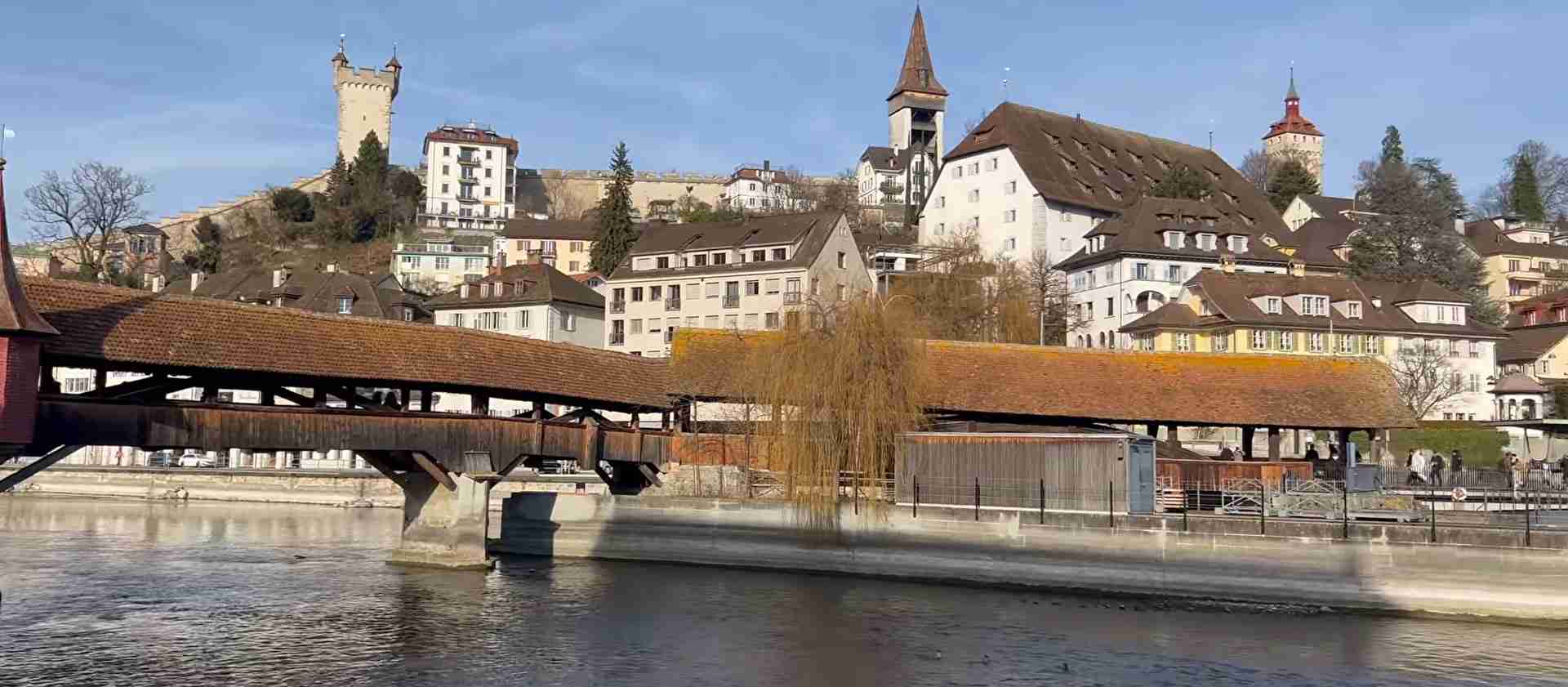
Chapel Bridge (Kapellbrücke) and Water Tower form Lucerne’s iconic image, accessible 24 hours daily at no charge for walking the covered wooden bridge dating to 1333. Interior paintings depicting Lucerne’s history fill triangular roof panels, though many are reproductions following 1993 fire damage. Adjacent Spreuer Bridge offers similar covered walkway experience with Dance of Death painting series, equally photogenic and less crowded than Chapel Bridge. Both bridges connect Old Town to modern Lucerne across Reuss River, providing practical transport routes alongside sightseeing value.
Lion Monument (Löwendenkmal) commemorates Swiss Guards who died defending French King Louis XVI during 1792 French Revolution, carved into natural rock face in quiet park setting. The sculpture impresses through sheer scale and emotional expression, consistently rated among world’s most moving monuments. Visiting requires 5-minute walk from train station or Old Town center, with surrounding gardens providing peaceful rest spots away from commercial bustle. Mark Twain famously called it “the most mournful and moving piece of stone in the world,” a reputation that holds today. No admission fee applies, no opening hours restrict access, and minimal crowds outside midday tour group arrivals ensure quality photo opportunities.
Jesuit Church presents baroque splendor in twin-spired waterfront building constructed 1666-1677, featuring elaborate interior frescoes, marble columns, and ornate altar work. Services occur regularly but visits outside religious times welcome tourists for self-guided exploration. The church anchors Reuss River views from multiple angles, appearing in countless Lucerne photographs. Neighboring Franciscan Church offers gothic contrast with simpler aesthetic and medieval origins, worth brief visits when passing. Both churches maintain free admission, requiring only respectful behavior and modest dress during active services.
Old Town (Altstadt) wandering delivers hours of free entertainment through narrow cobblestone lanes, painted building facades, historic fountains, and covered arcades housing shops and cafés. Key squares including Weinmarkt, Hirschenplatz, and Kornmarkt preserve medieval character with restored buildings now housing restaurants, galleries, and boutiques. The preserved city walls along Musegg Wall offer towers accessible for climbing, providing elevated city views without admission charges. Tuesday and Saturday morning markets along the Reuss bring local color, fresh produce, and crafts during peak season, supplementing grocery shopping with atmospheric wandering.
Museum Admission Costs 2026
Swiss Museum of Transport charges CHF 37 ($45) adult admission in 2026 (check official site for current official rates as pricing may vary), covering Switzerland’s most-visited museum with indoor and outdoor exhibits spanning trains, planes, automobiles, boats, space exploration, and communication technology. Additional attractions including Planetarium, Filmtheatre IMAX, and Swiss Chocolate Adventure cost CHF 18 ($22) each, often bundled at slight discounts. Plan 4-6 hours for thorough exploration, with interactive exhibits engaging children and transport enthusiasts equally. Located 15 minutes by bus from train station, accessible via Routes 6 and 8. Swiss Travel Pass covers admission completely, eliminating CHF 37 ($45) per person from daily budgets.
Museum of Art Lucerne features modern and contemporary works plus rotating temporary exhibitions in KKL building adjacent to train station, charging CHF 20 ($24) for combined permanent and special exhibition access. The Rosengart Collection showcases 20th-century masters including Picasso, Klee, and Cézanne in intimate two-story gallery setting at CHF 18 ($22) standard admission. Glacier Garden combines natural geological formations with mirror maze and tower viewing platform at CHF 15 ($18). Historic Museum Luzern and Nature Museum charge CHF 10 ($12), offering local cultural and natural history perspectives. Swiss Museum Pass (included free with Swiss Travel Pass) covers all mentioned museums except Transport Museum Planetarium/IMAX supplements, transforming potential CHF 80+ ($98+) in admissions into included benefits.
Richard Wagner Museum occupies the composer’s former villa on Lake Lucerne’s shore, displaying manuscripts, instruments, and period furnishings at CHF 12 ($15) admission. Bourbaki Panorama presents massive 1881 circular painting depicting French army’s Swiss border crossing, housed in dedicated round building at CHF 12 ($15). Both appeal to specific interest audiences rather than general tourists, with English information available but less comprehensive than major museums. Consider visiting only if particular enthusiasm matches themes, as general Lucerne tourists find better value at Transport Museum or simply enjoying free attractions.
Mountain Excursion Pricing 2026
Mount Pilatus Golden Round Trip combines boat from Lucerne to Alpnachstad, world’s steepest cogwheel railway (48% grade) to 2132-meter summit, cable car descent to Fräkmüntegg, gondola to Kriens, and bus return to Lucerne at combined ticket price CHF 119.50 ($147) for complete circuit. Swiss Travel Pass holders pay only CHF 42 ($52) for the mountain sections, as boats and buses are completely included. The Silver Round Trip substitutes train for boat at CHF 94.20 ($116) full price or CHF 42 ($52) with pass discount. Summit facilities include restaurants, observation platforms, and short hiking trails, with 2-4 hours typical visit duration. Operating season runs May-October with weather-dependent closures during storms. Reserve cogwheel railway seats online during peak season to avoid waiting.
Mount Rigi reaches 1797 meters via cogwheel trains from Vitznau or Arth-Goldau, plus cable car from Weggis, with round-trip tickets CHF 72 ($88) from lakeside bases. Swiss Travel Pass provides 50% discount to CHF 36 ($44), plus free boat connections from Lucerne to Vitznau included in pass coverage. Rigi offers more extensive hiking trail networks than Pilatus, appealing to walkers who want multi-hour alpine rambles rather than brief summit stops. The “Queen of the Mountains” nickname reflects gentle terrain suitable for families with young children or elderly travelers avoiding exposed cliff areas. Winter operations include skiing, sledding, and snowshoeing, though summer hiking season draws larger visitor numbers.
Mount Titlis near Engelberg (45 minutes from Lucerne by train) costs CHF 94 ($115) round-trip for cable cars reaching 3238-meter glacier environment, with Swiss Travel Pass discounts to CHF 47 ($58). The Rotair cable car rotates 360 degrees during ascent, providing panoramic views without needing to change position. Summit facilities include Europe’s highest suspension bridge, glacier cave, snow park, and restaurants, justifying higher admission versus lower mountains. Titlis maintains year-round operations unlike seasonal Pilatus access, making it reliable choice during shoulder season visits. Engelberg village itself offers charming lunch stops and additional cable car options for non-summit visitors.
Guided Tours and Activities 2026
Walking tours of Lucerne Old Town cost CHF 25-40 ($30-49) per person for 2-hour guided circuits covering Chapel Bridge, Lion Monument, churches, and market squares with English-speaking guides providing historical context and local stories. Many free walking tours operate on tip-based models, requesting CHF 10-20 ($12-24) gratuities at conclusion while technically charging no fixed admission. These free options deliver similar content to paid tours with less guaranteed quality control, as guide earnings depend entirely on participant satisfaction and generosity. Book paid tours through hotels or tourist office for confirmed English schedules and professional credentials.
Lake Lucerne sunset cruises combine 1.5-2 hour boat rides with three-course dinners at CHF 75-120 ($92-147) per person depending on menu selection and boat class. These operate May-September with frequent departures during peak July-August season and limited shoulder season service. The experience delivers dramatic mountain sunset views across water while enjoying Swiss cuisine, though dinner quality ranges from good to excellent rather than fine dining standards. Premium first-class options reach CHF 150-200 ($185-245) with expanded menus and champagne service. Reserve minimum 48 hours ahead for desired dates, longer during peak season.
Private guided mountain excursions with certified Alpine guides cost CHF 400-600 ($490-735) for full-day trips serving 1-4 participants, covering transport, guide services, and route planning customized to fitness levels and interests. These services appeal to travelers wanting off-beaten-path experiences beyond standard tourist routes or those requiring technical guidance for via ferrata climbing, glacier hiking, or peak ascents. Swiss Alpine Club and local guide services arrange bookings minimum one week ahead, with English-speaking guides standard for international clients. Consider this luxury option only if specific mountaineering goals exceed capabilities of self-guided excursions on established tourist routes.
Sample Budget Breakdowns for Lucerne 2026
Translating general cost ranges into concrete daily examples helps travelers visualize actual expenses and identify personal budget tier alignment. The following breakdowns assume two people sharing hotel accommodation, with per-person figures reflecting divided room costs plus individual meal, transport, and activity expenses. All amounts rounded to nearest CHF 5 or $5 for practical budgeting, as travelers don’t plan to the centime and prices change annually anyway.
Budget Traveler Daily Breakdown 2026
Budget travelers prioritizing affordability over comfort typically spend as follows per person daily in Lucerne: hostel dormitory bed or budget hotel with two sharing CHF 50-75 ($61-92), breakfast from supermarket pastries and coffee CHF 5-8 ($6-10), lunch from Coop deli sandwiches and fruit CHF 12-17 ($15-21), dinner from budget ethnic restaurant or supermarket prepared meals CHF 15-25 ($18-30), city transport day pass or equivalent single rides CHF 5-10 ($6-12), one low-cost attraction or museum CHF 0-20 ($0-24). Total daily costs per person range $105-210, assuming two sharing accommodation where applicable.
A typical budget week in Lucerne allocates 7 nights accommodation $425-645 (dormitory beds $425-645 or budget hotel split $520-770 total ÷ 2 people = $260-385 each), meals $275-425, local transport $40-85, attractions and activities $140-170 combining free sights with selective paid museums, miscellaneous sundries and snacks $50-75. Weekly total per person: $735-1,470. This budget accommodates one major mountain excursion using discounted tickets, multiple museum visits, daily restaurant meals, and comfortable hostel or basic hotel nights while maintaining discipline on non-essential spending.
Money-saving tactics enabling budget travel success include: staying in hostels with kitchen access for breakfast preparation, shopping at Coop/Migros rather than convenience stores, timing major meals at lunch when specials offer 20-30% savings versus dinner, walking extensively rather than defaulting to buses for short distances, prioritizing free attractions like Chapel Bridge and Lion Monument over paid museums, purchasing Swiss Half Fare Card if planning multiple intercity trips but avoiding expensive mountain railways, carrying refillable water bottles to avoid CHF 4-6 ($5-7) bottled water purchases, and visiting during shoulder seasons when accommodation drops 20-30% below summer peaks.
Mid-Range Traveler Daily Breakdown 2026
Mid-range travelers balancing comfort and value typically allocate: three-star hotel with two sharing CHF 250-400 ($305-490) total ÷ 2 = CHF 125-200 ($154-245) per person, included hotel breakfast or café alternative CHF 12-20 ($15-24), lunch at casual restaurant CHF 25-40 ($30-49), dinner at mid-range Swiss or international restaurant CHF 35-55 ($43-68), transportation via Swiss Travel Pass prorated daily or local transit and intercity trips CHF 20-30 ($24-37), museums and attractions leveraging Swiss Travel Pass benefits or selective admissions CHF 30-50 ($37-61). Daily total per person: $305-490, maintaining two sharing accommodation throughout.
A week-long mid-range Lucerne stay budgets: accommodation 7 nights $1,075-1,715 (hotel rooms $2,150-3,430 total ÷ 2 people = $1,075-1,715 each), meals $615-985, Swiss Travel Pass or equivalent transport $245-260 (8-day pass $540 or combination of passes/individual tickets), attractions beyond Swiss Travel Pass coverage $125-175, miscellaneous shopping and contingency $175-295. Weekly per-person total: $2,135-3,430. This tier delivers comfortable three-star hotels in convenient locations, mix of restaurant and occasional self-catered meals, comprehensive museum access, and one to two mountain excursions with Swiss Travel Pass optimization.
Mid-range value optimization includes: booking hotels 30-60 days ahead for best rates, purchasing Swiss Travel Pass to maximize included museums and transport versus accumulating individual tickets, scheduling main restaurant meals at lunch for 20-30% savings versus dinner, mixing upscale and casual dining rather than exclusively mid-range venues, using included hotel breakfasts to full advantage when offered, timing visits for shoulder seasons achieving 30-40% accommodation savings while maintaining full attraction access, and leveraging Swiss Travel Pass 50% mountain railway discounts for Pilatus and Rigi excursions that would otherwise consume significant portions of daily budgets.
Luxury Traveler Daily Breakdown 2026
Luxury travelers prioritizing premium experiences allocate: five-star hotel with two sharing CHF 450-700 ($550-860) total ÷ 2 = CHF 225-350 ($275-430) per person, included hotel breakfast buffet or upscale café brunch CHF 25-40 ($30-49), lunch at quality restaurant or hotel venue CHF 50-75 ($61-92), dinner at fine dining establishment CHF 75-120 ($92-147), private transportation or first-class trains and taxis CHF 50-80 ($61-98), premium mountain excursions and private guides CHF 120-250 ($147-305). Daily per-person costs: $655-1,100, consistently maintaining two sharing accommodation model.
Luxury weekly budgets encompass: accommodation 7 nights $1,925-3,010 (hotel rooms $3,850-6,020 total ÷ 2 people = $1,925-3,010 each), meals $1,280-2,015, first-class Swiss Travel Pass or private transportation $350-560, premium activities including private guides and exclusive experiences $1,030-2,100, luxury shopping and spa treatments $0-1,000 depending on personal interest. Weekly total per person: $4,585-7,700. This level accesses Switzerland’s finest hotels, Michelin-quality dining, private transportation eliminating logistical concerns, and exclusive mountain experiences beyond standard tourist routes.
Luxury value creation focuses on experience quality rather than cost minimization: selecting hotels based on lake views, historic character, or spa facilities matching personal priorities, booking signature restaurants requiring advance reservations, arranging private guides for customized mountain experiences, utilizing concierge services for restaurant reservations and activity coordination, considering helicopter transfers for unique mountain access, and timing visits to coincide with cultural events or festivals adding distinctive elements. Shoulder season luxury travel maintains service quality while reducing accommodation costs 30-40%, stretching budgets toward additional experiences rather than merely lowering expenditure.
Day Trip Cost Analysis from Lucerne 2026
Lucerne serves as Central Switzerland’s tourism hub, positioning within easy reach of Zurich, Bern, Interlaken, Engelberg, and numerous mountain destinations. Day trip economics vary dramatically depending on Swiss Travel Pass ownership, with pass holders accessing most destinations at no additional cost while independent travelers face substantial per-trip expenditures. Understanding these cost structures helps decide between Lucerne-based touring versus multi-city accommodation approaches distributing nights across regions.
Mount Pilatus Day Trip Budget 2026
Mount Pilatus Golden Round Trip costs CHF 119.50 ($147) including boat, cogwheel railway, cable car, gondola, and bus segments completing full circuit from Lucerne. Swiss Travel Pass holders pay only CHF 42 ($52) as boats and buses are included with only mountain sections requiring payment. Add CHF 20-35 ($24-43) for summit restaurant lunch or CHF 10-15 ($12-18) for brought picnic supplies from supermarket. Total day cost: $171-190 without pass, $76-95 with Swiss Travel Pass. The 6-8 hour excursion delivers Switzerland’s steepest cogwheel railway, dramatic summit views across Lake Lucerne and Alps, and unique round-trip experience combining multiple transport modes. Operating May-October weather permitting, with advance seat reservations recommended during July-August peak season.
Zurich Day Trip Budget 2026
Zurich train tickets from Lucerne cost CHF 25 ($30) one-way standard fare, totaling CHF 50 ($61) round-trip or CHF 25 ($30) with Swiss Half Fare Card. Swiss Travel Pass covers train travel completely. Zurich attractions including Swiss National Museum charge CHF 10 ($12), Kunsthaus art museum CHF 16 ($19), and Fraumünster church (with Chagall windows) CHF 5 ($6). Lunch at casual Zurich restaurant runs CHF 25-35 ($30-43). Total day costs: $112-135 without pass, $61-80 with pass or half-fare card. The 45-minute train connection enables comfortable day exploration of Switzerland’s largest city, financial district, Bahnhofstrasse shopping, and Old Town historical areas. Return trains operate every 30 minutes until late evening.
Interlaken and Jungfrau Region Day Trip 2026
Lucerne to Interlaken trains cost CHF 32 ($39) one-way or CHF 64 ($78) round-trip, reduced to CHF 32 ($39) with Swiss Half Fare Card and free with Swiss Travel Pass. Jungfraujoch tickets from Interlaken reach CHF 215 ($265) round-trip, the most expensive mountain excursion in Switzerland, with 25% Swiss Travel Pass discount to CHF 161 ($198). Alternative lower-cost destinations include Grindelwald or Lauterbrunnen valley walks requiring only train tickets. Lunch in Interlaken costs CHF 20-35 ($24-43). Total day range: $100-340 depending on mountain selection. The 2-hour train journey each direction plus mountain excursion times create 10-12 hour days best suited for early departures and evening returns.
Engelberg and Mount Titlis Day Trip 2026
Engelberg trains from Lucerne operate hourly at CHF 15 ($18) one-way or CHF 30 ($37) round-trip, halved with Swiss Half Fare Card and free with Swiss Travel Pass. Mount Titlis cable cars cost CHF 94 ($115) round-trip with 50% Swiss Travel Pass discount to CHF 47 ($58). Lunch at Engelberg village or Titlis summit runs CHF 20-40 ($24-49). Total day budget: $81-155 depending on pass ownership. The 45-minute train connection plus 3-4 hour mountain visit fits comfortably into single days, with Engelberg village offering additional monastery visits, shops, and restaurants for extending stays beyond minimum mountain times. Year-round Titlis operations provide reliability versus seasonal Pilatus access.
Seasonal Price Variations in Lucerne 2026
Understanding Lucerne’s dramatic seasonal pricing swings enables strategic visit timing that captures 70-80% of peak-season experiences at 60-70% of peak-season costs. Weather patterns, mountain railway operations, and crowd levels fluctuate throughout the year, creating distinct windows where various priorities align favorably. The conventional peak season simplification of “summer expensive, winter cheap” oversimplifies Lucerne’s nuanced patterns deserving deeper analysis.
Peak Season Economics: June-August 2026
Summer peak season encompasses June through August when mountain railways operate full schedules, weather delivers reliable sunshine for outdoor activities, and European vacation patterns concentrate demand into compressed windows. Hotel rates reach annual highs, with mid-range properties charging CHF 350-450 ($430-550) versus CHF 250-300 ($305-370) during shoulder periods for identical rooms. Budget accommodation shows smaller but meaningful 15-25% premiums, and luxury hotels command CHF 600-800 ($735-985) compared to winter’s CHF 400-550 ($490-675). Restaurant pricing remains relatively stable year-round, though outdoor terrace seating commands small premiums and popular venues fill early requiring reservations.
Peak season advantages justifying premium costs include: guaranteed mountain railway operations without weather cancellations, extended daylight hours enabling 6 AM-9 PM activity schedules, warmest water temperatures for lake swimming, maximum boat service frequencies, widest restaurant and attraction operating hours, and assured English-language tour availability. Disadvantages include: crowded Chapel Bridge and Lion Monument with difficult photography, sold-out mountain railway seats requiring advance reservations, longer queues at Museum of Transport and popular restaurants, and reduced spontaneity as advance booking becomes necessary rather than optional. July and August represent the apex, with early June and late August offering slight moderation in both crowds and prices while maintaining most peak-season benefits.
Shoulder Season Opportunities: April-May and September-October 2026
Shoulder seasons deliver optimal value propositions, maintaining 70-80% of summer’s operational benefits while charging 60-70% of summer’s prices. Mid-range hotels drop to CHF 220-320 ($270-395), luxury properties to CHF 380-520 ($465-640), and budget options show marginal 5-10% reductions given their already compressed pricing. Mountain railways typically operate May-October, covering all shoulder season dates except early April when some systems remain closed from winter. Weather patterns prove more variable than summer stability but deliver frequent sunshine interspersed with rain days requiring flexible activity planning.
April-May offers: spring flower blooms in Alpine meadows, snow-capped mountain views without heavy tourist crowds, hotel availability without advance booking requirements, and pleasant temperatures for walking tours (15-20°C / 59-68°F). September-October delivers: autumn foliage coloring valleys and mountainsides, harvest season with fresh local produce at markets, warm afternoon temperatures (12-18°C / 54-64°F), and crisp morning air perfect for photography. Both periods face rain probabilities around 40% versus summer’s 30%, requiring contingency indoor plans for museum days but rarely causing multi-day disruptions. Savvy travelers time visits to shoulder seasons, capturing authentic experiences while accommodations and restaurants serve locals rather than tourist masses.
Winter Realities: November-March 2026
Winter transforms Lucerne from mountain gateway into cultural city destination, as cogwheel railway closures shift focus toward museums, Christmas markets, and urban exploration. Accommodation costs plummet 40-50% below summer peaks, with mid-range hotels available CHF 180-280 ($220-345) and luxury properties dropping to CHF 350-500 ($430-615). These dramatic reductions enable budget upgrades, where summer budget travelers access mid-range properties and summer mid-range budgets unlock luxury experiences. Restaurant pricing remains consistent year-round, making food costs’ budget proportion increase as accommodation shrinks.
Winter attractions include: Christmas markets (late November-December) featuring mulled wine, handicrafts, and festive atmosphere, Fasnacht carnival (February-March) with parades and celebrations, reduced museum crowds allowing leisurely exhibit exploration, and Mount Rigi winter sports including sledding and snowshoeing as alternative to summer hiking. Mount Pilatus cogwheel railway closes November-April, but cable car access from Kriens continues weather permitting for winter panoramas. Lake Lucerne boats reduce frequencies dramatically, some routes suspending service entirely, while city buses maintain full schedules. Indoor attractions like Museum of Transport, Rosengart Collection, and Old Town exploration work identically in winter versus summer, shifting activity balance from outdoor mountain excursions toward urban cultural experiences.
Winter trade-offs requiring consideration include: shortened daylight hours (8:30 AM-5 PM in December versus 5:30 AM-9:30 PM in June), cold temperatures averaging 0-5°C (32-41°F) with occasional snow in city center, limited mountain railway access eliminating many signature excursions, and reduced restaurant/shop operating hours particularly in tourist-focused establishments. Travelers prioritizing culture over mountains, flexible with weather-dependent planning, and willing to accept constrained mountain access find winter delivers exceptional value with authentic local atmosphere absent during tourist-heavy summer months.
Money-Saving Strategies for Lucerne 2026
Switzerland’s expensive reputation intimidates budget-conscious travelers, yet strategic approaches unlock substantial savings without sacrificing experience quality. The key differentiates between universal Switzerland expenses (labor costs, import taxes, high wages) and tourist-specific premiums (prime location markups, convenience charges, lack of research). Understanding where costs are immutable versus flexible enables targeted optimization efforts maximizing impact on total budgets.
Accommodation Optimization Tactics 2026
Book Lucerne accommodation 30-90 days ahead for optimal pricing, as dynamic hotel algorithms increase rates as availability tightens and decrease rates if rooms remain empty beyond optimal booking windows. Track prices over several days using comparison sites’ alert functions, purchasing when rates dip rather than accepting first-discovered prices. Consider neighborhoods outside Old Town center like Kriens (10 minutes by bus) or communities across the lake where identical hotel quality costs 20-30% less than waterfront locations. Many travelers overvalue Old Town proximity given Lucerne’s compact size and excellent public transport, sacrificing significant savings for marginal convenience.
Multi-night stays often trigger discounted per-night rates, with 7-night bookings commanding 10-15% reductions versus nightly accumulations at many hotels. Inquire about extended stay discounts directly with properties even if not advertised on booking platforms. Loyalty program memberships deliver benefits beyond points accumulation, including room upgrades, late checkout, and breakfast inclusion at chains where non-members pay supplements. Free loyalty programs require minimal effort to join before booking, delivering immediate value without ongoing commitments.
Alternative platforms beyond standard booking engines include: apartment rentals for groups splitting costs across 3-4 people, hotel auction sites offering opaque bookings where specific property reveals after payment but rates drop 30-40% below published prices, and last-minute apps selling unsold inventory at deep discounts for flexible travelers without advance commitments. Time flexibility enables maximum accommodation savings, as travelers committed to specific dates pay whatever markets demand while those comparing multiple visit windows select optimal pricing periods.
Food and Dining Cost Reduction 2026
Master supermarket shopping at Coop and Migros, Switzerland’s dominant chains offering comprehensive groceries at prices substantially below restaurants. Build breakfast from CHF 5-8 ($6-10) covering pastries, yogurt, fruit, and coffee versus hotel buffet supplements at CHF 20-30 ($24-37) or café meals at CHF 15-25 ($18-30). Picnic lunches assembled from deli counters cost CHF 12-17 ($15-21) versus sit-down restaurant meals at CHF 25-40 ($30-49), doubling food quantity while halving expenditure. Many travelers resist supermarket strategies thinking they sacrifice experience, yet lakefront picnics with Swiss bread, cheese, and chocolate deliver more memorable meals than generic tourist restaurant fare at triple the cost.
Lunch specials at mid-range restaurants provide dinner-quality food at 20-30% savings, with fixed-price menus including soup or salad, main course, and coffee for CHF 20-28 ($24-34) Monday-Friday. Schedule major restaurant meals at midday, shifting dinners toward lighter supermarket-based options reversing conventional eat-light-lunch/heavy-dinner patterns. Sunday brunch buffets at hotels cost CHF 40-60 ($49-74) but replace both breakfast and lunch over three-hour sittings, improving per-meal economics for hearty eaters planning light evening snacks.
Avoid tourist-trap restaurants along Chapel Bridge, lakefront promenades, and Schwanenplatz where captive audiences enable 30-50% price premiums over equivalent quality establishments three blocks inland. Ask hotel staff or locals for neighborhood restaurant recommendations rather than defaulting to obvious Old Town venues. Ethnic restaurants consistently deliver better value than traditional Swiss establishments, with Indian, Thai, Italian, and Turkish venues offering main courses at CHF 15-25 ($18-30) versus CHF 30-45 ($37-55) for comparable portions at Swiss restaurants. Quality often exceeds Swiss food given immigrant communities’ authenticity motivations.
Transportation and Pass Strategy 2026
Calculate total planned transportation expenses before purchasing Swiss Travel Passes or Half Fare Cards rather than defaulting to passes assuming they deliver savings. Travelers staying entirely in Lucerne with one mountain excursion, minimal intercity trips, and walking-focused Old Town exploration often spend less buying individual tickets than purchasing passes. Conversely, active itineraries including Pilatus, Rigi, Zurich day trip, and Interlaken excursion quickly justify Swiss Travel Pass purchases through included museums and mountain railway discounts beyond transport savings.
Swiss Half Fare Cards cost CHF 150 ($185) for one month, providing middle ground between full travel passes at CHF 283+ ($350+) and accumulating single tickets. This option suits travelers taking 3-5 intercity trips without extensive mountain excursions, driving portions of visits, or combining Switzerland stays with other countries where passes provide no value. Purchase cards upon arrival rather than advance online ordering unless immediate Zurich Airport train connections require discounts preventing CHF 60+ ($74+) full-fare expenditures before accessing cheaper purchase options.
Walk extensively rather than defaulting to buses for distances under 20 minutes, saving CHF 2.50-5 ($3-6) per ride accumulating to CHF 15-30 ($18-37) daily for five prevented trips. Lucerne’s compact Old Town, flat lakefront paths, and pedestrian-friendly streets make walking practical and pleasant, delivering free sightseeing and exercise while eliminating transport costs. Reserve buses for Museum of Transport trips, evening returns from distant restaurants, or luggage-laden movements between accommodation and train station.
Attraction and Activity Optimization 2026
Prioritize free attractions consuming full days before paying for museums or guided tours. Chapel Bridge, Lion Monument, Jesuit Church, Old Town wandering, Musegg Wall towers, lakefront promenades, and public parks deliver comprehensive Lucerne experiences at zero cost. Add one or two paid attractions matching specific interests rather than attempting complete museum circuit exhaustion. Swiss Museum of Transport justifies CHF 37 ($45) for transport enthusiasts planning 4-6 hour visits, but travelers with passing interest in mobility waste money and time better allocated elsewhere.
Swiss Travel Pass transforms museum economics by including 500+ venues, effectively reducing marginal costs to zero once pass is purchased for transportation. This switches decision frameworks from “is this museum worth CHF 20 ($24)?” to “do I want to spend time here?” with only opportunity costs rather than direct expenses at stake. Pass holders visit museums freely, exploring briefly before moving along if exhibits disappoint versus non-pass holders feeling pressure to extract admission value through extended stays.
Mountain excursions represent travelers’ largest discretionary expenses, with Pilatus, Rigi, and Titlis tickets consuming CHF 80-120 ($98-147) at standard rates. Select one signature mountain matching personal priorities rather than attempting comprehensive alpine circuit collection. Pilatus offers steeper cogwheel railway and dramatic summit position, Rigi delivers superior hiking options with gentler terrain, Titlis provides glacier environment at highest elevation. Swiss Travel Pass 50% discounts reduce these costs to CHF 40-60 ($49-74), making multiple excursions economically feasible. Balance mountain expenditures against travel style preferences, as city-focused travelers gain little from expensive summit tickets while outdoor enthusiasts consider them trip centerpieces.
Hidden Costs and Budget Surprises in Lucerne 2026
First-time Switzerland visitors encounter expenses beyond obvious accommodation, meals, and attractions, with small charges accumulating into meaningful budget impacts. Understanding these hidden costs during planning prevents budget overruns and enables accurate total trip cost projections. Swiss transparency culture means few genuinely hidden charges exist, but numerous small expectations differ from other European destinations where travelers may assume free services or lower costs.
Restaurant Service and Tipping 2026
Swiss restaurants include service charges in menu prices, making additional tipping optional rather than expected. Bills show final prices encompassing food, VAT, and service without presenting separate line items. Locals round up bills or add 5-10% for exceptional service, but zero additional payment is socially acceptable for standard experiences. This differs significantly from American 15-20% tipping norms, delivering budget relief once understood. Tourist-heavy restaurants may present card payment terminals with preset tip percentages hoping for unaware tourist additions, but simply decline these suggestions without social penalty. The included service means advertised restaurant prices reflect actual payments, unlike American contexts where listed prices require 20%+ additions.
Public Restroom Charges 2026
Public toilets at train stations and major tourist sites typically charge CHF 1-2 ($1.25-2.50) per use, collecting fees through turnstile coin slots or attendant payments. These facilities maintain cleanliness levels justifying small charges, but travelers accustomed to free public restrooms experience surprise when encountering payment requirements. Budget 1-2 daily restroom visits at CHF 1-2 ($1.25-2.50) each, adding CHF 15-30 ($18-37) weekly to sundry expenses. Restaurants and museums offer free facilities for customers, making strategic restroom stops during meal breaks or museum visits minimize paid usage. Carry CHF 1-2 coins specifically for this purpose, as attendants rarely break larger bills.
Luggage Storage and Locker Fees 2026
Lucerne train station operates coin-operated lockers charging CHF 5-10 ($6-12) per day depending on locker size, useful for day trip luggage storage when checking out of accommodation morning before evening train departures. Hotels typically provide free luggage storage for guests’ departure days, eliminating this cost with proper planning. Left luggage services at major stations offer alternatives to lockers at similar pricing with extended storage periods and oversized item capacity. Budget conscious travelers schedule accommodation checkout times matching train departures or coordinate early check-ins at subsequent destinations, avoiding luggage management complications.
Mountain Restaurant Premium Pricing 2026
Summit restaurants at Mount Pilatus, Mount Rigi, and similar destinations charge 30-50% premiums over valley equivalent meals, with simple sandwiches running CHF 15-18 ($18-22) versus CHF 8-12 ($10-15) in town, and hot meals reaching CHF 30-45 ($37-55) versus CHF 20-30 ($24-37) at Lucerne restaurants. These premiums reflect supply logistics hauling ingredients via cable car rather than gouging captive audiences, though prices still shock unprepared visitors. Bring supermarket picnics in backpacks, consuming personal food at designated areas while purchasing beverages supporting establishments without full meal costs. Most mountain restaurants tolerate personal food consumption if customers purchase drinks, though official policies vary by venue.
Hotel City Tax and Tourist Fees 2026
Lucerne hotels collect mandatory tourist taxes of CHF 2.50-5 ($3-6) per person nightly, added to bills as separate line items beyond advertised rates. These municipal charges fund tourism infrastructure, information services, and marketing programs benefiting all visitors. Some booking platforms include taxes in total prices while others add them at checkout, creating comparison confusion. Review final prices including all taxes and fees when evaluating accommodation options, as apparent savings may evaporate once full charges appear. City taxes apply regardless of booking method or loyalty status, making them unavoidable costs requiring budget accommodation.
Budget Planning for Different Traveler Types 2026
One-size-fits-all budget recommendations overlook critical variations between solo travelers, couples, families, and groups, each facing distinct economic dynamics and opportunity sets. Understanding type-specific considerations enables more accurate planning than generic advice assuming universal application across diverse travel configurations. The following guidance addresses unique factors affecting each category’s Lucerne budget construction.
Solo Traveler Budget Considerations 2026
Solo travelers face accommodation challenges as hotel room rates remain largely fixed whether occupied by one or two guests, effectively doubling per-person costs versus couples sharing. A CHF 250 ($305) hotel room splits to CHF 125 ($154) per person for couples but costs solo travelers the full CHF 250 ($305), immediately increasing daily budgets by CHF 125 ($154). Hostels partially address this through per-bed dormitory pricing at CHF 50-75 ($61-92), positioning solo hostel rates competitively against couple’s split hotel costs. Some hotels offer small single room discounts of 10-20% below double occupancy rates, worth requesting during booking even if not advertised.
Solo dining presents both challenges and opportunities, with restaurant portions sized for hearty appetites creating waste or overfeeding, yet fixed menu prices generating no solo discounts. Supermarket purchasing enables single-serving selection impossible at restaurants, improving food cost control. Solo travelers potentially achieve lowest daily food costs through complete supermarket reliance, purchasing exact quantities needed without sharing pressures toward restaurant visits. Swiss Travel Passes deliver identical value whether traveling solo or coupled, as passes price per person rather than per pair, making transportation costs equivalent across configurations.
Solo travelers miss group activity discounts requiring 2+ participants, pay full private guide rates without splitting costs, and face single supplement charges on some tour packages. Conversely, solo flexibility enables maximum spontaneity, accommodation last-minute deals targeting single rooms, and nimble restaurant selection fitting solo dining situations. Budget approximately $155-280 daily for mid-range solo travel accounting for unshared accommodation and single-serving meal purchases, compared to couples’ $140-245 per person splitting rooms.
Couple and Partner Budget Dynamics 2026
Couples benefit from Switzerland’s strongest economic advantage: hotel room sharing dividing costs equally. A CHF 300 ($370) mid-range room generates CHF 150 ($185) per person costs, creating natural efficiency unavailable to solo travelers. This sharing extends to rental cars, guided tours with per-vehicle pricing, and grocery purchases buying meal quantities matching consumption. Couples traveling together access lower per-person costs than solo travelers across nearly every budget category, making Switzerland more accessible economically than reputation suggests when optimizing two-person dynamics.
Dining flexibility allows couples to share appetizers, split expensive main courses, and order complementary dishes tasting both options. Many restaurants implicitly price portions for sharing, delivering excessive quantities for solo diners but appropriate amounts when divided between two. Wine and beverage orders split costs while delivering full enjoyment, unlike solo consumption where single glasses create incomplete experiences versus bottles wasted. These dining efficiencies compound daily, saving CHF 15-30 ($18-37) versus equivalent solo expenditure for similar food quantities.
Couples face synchronization challenges requiring accommodation to both preferences, potentially increasing costs if one partner demands luxury while the other accepts budget accommodations. Communication during planning establishes mutual priorities, balancing high-end and economical experiences rather than gravitating toward either extreme. Partners share luggage capacity, potentially consolidating into single bags and avoiding checked baggage fees on flights, though this minor benefit pales beside accommodation and dining advantages. Budget approximately $140-245 per person daily for mid-range couple travel with full room splitting, representing optimal economic efficiency among all traveler configurations.
Family Travel Budget Adjustments 2026
Families with children navigate complex accommodation economics, as many Swiss hotels charge by room rather than occupants, allowing children to share parent rooms at minimal cost. Family rooms or suites accommodating 4-5 people cost CHF 350-500 ($430-615), splitting to CHF 88-125 ($108-154) per person. Alternative apartment rentals with separate bedrooms and kitchens often deliver superior family value versus hotel rooms, enabling supermarket meal preparation and separate sleeping spaces. Families should prioritize accommodation with kitchen facilities, as restaurant meals for four persons at CHF 25-40 ($30-49) each total CHF 100-160 ($122-196) versus CHF 30-50 ($37-61) for equivalent home-prepared meals.
The Swiss Family Card provides free public transport for children under 16 when traveling with parents holding Swiss Travel Passes or other valid tickets, eliminating substantial child transport costs. This benefit makes family Swiss Travel Pass purchases particularly economical, as adults pay standard rates while children ride free on all trains, buses, boats, and included mountain railways. Museum admissions typically discount children by 50% or offer free entry under age 6-12, reducing attraction costs below adult equivalents. Mount Pilatus and mountain excursions apply family discounts through combination tickets, saving 20-30% versus individual adult purchases multiplied by family size.
Family travelers require child-appropriate activities justifying admission costs, making Museum of Transport with interactive exhibits more suitable than art museums lacking engagement for young visitors. Many Lucerne attractions including Chapel Bridge, Lion Monument, lakefront parks, and playground areas deliver free entertainment matching children’s attention spans better than expensive guided tours. Budget approximately $90-175 per person daily for mid-range family travel with four sharing accommodation and meals, benefiting from economies of scale unavailable to smaller configurations. Food costs dominate family budgets given multiple growing appetites, making supermarket strategies and apartment kitchen access crucial for containing expenditures.
Group Travel Economics 2026
Travel groups exceeding 10 participants qualify for organized discounts at many attractions, hotels, and restaurants, with savings reaching 20-30% below individual rates. Mount Pilatus, Swiss Museum of Transport, and major museums offer group pricing requiring advance coordination and single-payment processing. Hotels provide reduced per-room rates for block bookings, particularly during off-season when filling multiple rooms attracts attention. These discounts partially offset coordination complexity, as managing group logistics, synchronizing preferences, and accommodating varying budgets challenge even experienced organizers.
Restaurant reservations for large groups enable negotiated fixed-price menus below à la carte equivalents, with venues preferring guaranteed large parties versus uncertain individual bookings. Groups should coordinate one restaurant representative handling reservations and payments, simplifying Swiss restaurant expectations for unified bills rather than American-style individual checks. Private guided tours and bus charters become economically viable for groups, with costs divided across numerous participants generating lower per-person rates than individual tour purchases. A CHF 600 ($735) private guide splitting among 12 people costs CHF 50 ($61) each versus CHF 40 ($49) joining public tours, delivering customized experiences for marginal premiums.
Group accommodation in vacation rentals, Alpine lodges, or hostel group rooms reduces per-person costs below hotel rates while providing communal spaces for socialization. A rental apartment sleeping 6-8 people costs CHF 400-600 ($490-735) nightly, generating CHF 50-100 ($61-122) per person versus CHF 150-250 ($185-305) at hotels. Groups must balance these savings against coordination complexity, as unanimous agreement on timing, activities, and spending proves elusive among diverse participants. Successful group travel establishes clear budget parameters during planning, allocates specific coordination roles, and maintains flexibility accommodating subgroup variations rather than requiring constant unity. Budget approximately $85-180 per person daily for mid-range group travel with 8+ participants optimizing shared accommodations and coordinated activities.
Lucerne Budget Guide Summary 2026
Switzerland’s reputation for extraordinary expense contains truth but exaggerates reality through inadequate planning and tourist-trap concentration. Lucerne costs $105-210 per person daily for budget travelers sharing accommodation and prioritizing supermarket meals and free attractions. Mid-range visitors spending $305-490 daily access comfortable three-star hotels, restaurant dining, and comprehensive museum and mountain railway experiences. Luxury travelers investing $655-1,100 daily enjoy five-star lakefront properties, fine dining, and private guided excursions. These ranges assume two people sharing hotel rooms throughout, with accommodation costs divided by two before adding individual meal, transport, and activity expenses.
Strategic timing leverages shoulder seasons (April-May, September-October) when hotel rates drop 30-40% below summer peaks while mountain railways operate full schedules and weather remains pleasant. Swiss Travel Pass purchases at CHF 283 ($350) for 3-day passes deliver comprehensive transport coverage, free museum entry to 500+ venues, and 50% mountain railway discounts that quickly exceed pass costs through eliminated individual tickets. Supermarket shopping at Coop and Migros reduces food costs by 50-60% versus restaurant equivalents while often improving meal quality through fresh local products. Neighborhood accommodation in Kriens or lakeside communities saves 20-30% versus Old Town properties while maintaining 10-15 minute public transport access to central attractions.
Weekly budgets encompass $735-1,470 for budget travel, $2,135-3,430 for mid-range comfort, and $4,585-7,700 for luxury experiences, each maintaining consistent per-person calculations with two sharing accommodation. These figures reflect comprehensive costs including lodging, meals, local and intercity transport, attraction admissions, and one to two mountain excursions. Successful Lucerne budget management prioritizes experiences matching personal interests rather than attempting exhaustive activity lists, leverages included Swiss Travel Pass benefits for museums and mountain discounts, balances restaurant meals with supermarket provisions, and times visits to shoulder seasons capturing peak-season experiences at off-peak prices. Switzerland rewards planning over spontaneity, research over assumption, and strategic thinking over reflexive spending.
Frequently Asked Questions About Lucerne Costs 2026
Do I Need Swiss Francs or Can I Use Euros in Lucerne?
Lucerne operates on Swiss francs (CHF) as official currency, though many tourist-focused businesses accept euros at unfavorable exchange rates typically 10-15% worse than official rates. Credit cards deliver optimal exchange rates with 1-3% foreign transaction fees, while ATM withdrawals provide competitive conversion with flat fees around $5 per transaction. Budget travelers should withdraw larger CHF amounts reducing per-transaction costs rather than frequent small withdrawals. Most restaurants, hotels, and shops accept contactless card payments, minimizing cash requirements to small purchases at markets or street vendors.
Are Lucerne Prices Higher Than Other Swiss Cities in 2026?
Lucerne and Zurich present nearly identical pricing structures, both ranking among Switzerland’s most expensive cities. Geneva commands slight premiums above Lucerne for accommodation and dining due to international organization presence and French border proximity. Bern offers marginally lower costs reflecting capital city status without resort town premiums, though differences remain subtle at 5-10% below Lucerne rather than dramatic savings. Basel, Lausanne, and other major Swiss cities maintain comparable pricing to Lucerne across accommodation, dining, and attraction categories. Mountain resort towns like Zermatt, St. Moritz, and Grindelwald exceed Lucerne costs by 20-40% during ski season and summer peaks.
How Much Should I Budget for One Week in Lucerne in 2026?
Budget travelers require $735-1,470 per person weekly, covering hostel or budget hotel accommodation with two sharing, supermarket-dominant meals supplemented by occasional restaurants, public transport via day passes, and selective free or low-cost attractions. Mid-range visitors allocate $2,135-3,430 for comfortable three-star hotels, balanced restaurant and self-catered dining, Swiss Travel Pass coverage, and comprehensive museum plus mountain excursion access. Luxury travelers budget $4,585-7,700 for five-star lakefront properties, exclusively restaurant dining including fine establishments, private transportation, and premium guided experiences. All figures maintain per-person calculations with two sharing hotel accommodation throughout, as room rates divided by two before adding individual expenses.
Is the Swiss Travel Pass Worth Buying for Lucerne Visits in 2026?
Swiss Travel Pass purchases prove worthwhile for travelers planning one or more mountain excursions plus intercity day trips within 3-8 day visit windows. The 3-day pass costs CHF 283 ($350), covering unlimited trains, buses, boats, city transport, 500+ museum admissions, and 50% mountain railway discounts. A single Mount Pilatus excursion at CHF 42 ($52) with pass versus CHF 119.50 ($147) without saves CHF 77.50 ($95), plus Museum of Transport admission saves CHF 37 ($45), plus Lucerne-Zurich round-trip trains save CHF 50 ($61), totaling CHF 164.50 ($202) in savings exceeding pass cost. Travelers staying entirely in Lucerne without mountain trips or day excursions find passes deliver less value than individual ticket purchases.
Can I Save Money Staying Outside Lucerne Old Town in 2026?
Accommodation in neighborhoods like Kriens, Horw, or lakeside communities saves 20-30% versus Old Town properties while maintaining 10-15 minute public transport connections to central attractions. Mid-range hotels charging CHF 250-300 ($305-370) in peripheral areas offer equivalent quality to CHF 350-450 ($430-550) Old Town properties, generating CHF 100-150 ($122-185) nightly savings for couples splitting rooms. Public transport frequency ensures minimal inconvenience, with buses operating every 10-15 minutes during daytime hours. Many travelers prefer quieter residential neighborhoods for evening relaxation versus Old Town restaurant noise and tourist crowds. This strategy works particularly well for multi-night stays using Lucerne as a base for day trips to mountains and other cities.
What’s the Cheapest Way to Get from Zurich Airport to Lucerne in 2026?
Direct trains from Zurich Airport to Lucerne operate hourly, taking 70 minutes at standard fare CHF 32 ($39) one-way or CHF 16 ($20) with Swiss Half Fare Card. Swiss Travel Pass covers the route completely. Purchasing Half Fare Card immediately upon airport arrival (available at station ticket counters) saves CHF 16 ($20) on the airport-Lucerne leg, with remaining card validity useful for subsequent Lucerne-area travel. Shared shuttle vans cost CHF 50-80 ($61-98) per person with advance booking, suitable for travelers with substantial luggage or late-night arrivals missing convenient train connections. Private car services run CHF 180-250 ($220-305) for up to four passengers, economical for groups splitting costs but excessive for solo travelers.
Do Restaurants in Lucerne Expect Tips in 2026?
Swiss restaurants include service charges in menu prices, making additional tipping optional rather than expected. Locals typically round up bills or add 5-10% for exceptional service, but zero additional payment carries no social stigma for standard experiences. Credit card payment terminals may present preset tip percentage options, but declining these without adding tips is socially acceptable. Service staff receive living wages through included charges rather than depending on tips for income, fundamentally differing from American restaurant economics. Budget planning should use advertised menu prices as final costs without adding 15-20% supplements assumed in other countries.
Are There Free Attractions in Lucerne Worth Visiting in 2026?
Chapel Bridge, Lion Monument, Jesuit Church, Old Town wandering, Musegg Wall towers, lakefront promenades, and public parks provide full-day free entertainment matching or exceeding paid attraction quality. Chapel Bridge walks deliver Lucerne’s most iconic photography opportunity, Lion Monument ranks among Switzerland’s most moving memorials, and Jesuit Church presents baroque architecture rivaling any paid venue. Tuesday and Saturday morning markets add local color during peak season. These free attractions enable comprehensive Lucerne experiences without admission charges, particularly valuable for budget travelers allocating limited funds toward select paid museums or mountain excursions matching specific interests.
How Much Does Food Cost Per Day in Lucerne in 2026?
Budget travelers spending $39-61 daily prioritize supermarket meals at Coop or Migros, with breakfast pastries and coffee $6-10, lunch from deli counters $15-21, and dinner from budget restaurants or prepared supermarket meals $18-30. Mid-range visitors allocating $88-141 daily split between hotel or café breakfast $15-24, casual restaurant lunch $30-49, and mid-range restaurant dinner $43-68. Luxury travelers spending $183-288 daily enjoy upscale hotel breakfast buffets $30-49, quality restaurant lunch $61-92, and fine dining dinner $92-147. Beverage costs add substantially when ordering wine or cocktails at restaurants, with house wine glasses $10-15 and cocktails $15-22. Water remains free at Swiss restaurants, providing the only complimentary beverage option beyond tap water at accommodations.
Should I Visit Lucerne in Peak Season or Shoulder Season in 2026?
Shoulder seasons (April-May, September-October) deliver optimal value, maintaining 70-80% of summer’s operational benefits while charging 60-70% of summer’s prices. Mountain railways operate full schedules May-October, covering all shoulder dates. Hotel rates drop 30-40% below July-August peaks, with mid-range properties $270-395 versus $430-550 in peak season. Weather proves more variable than summer stability but delivers frequent sunshine, with rain probabilities around 40% versus 30% in peak months. Crowds thin dramatically, eliminating Chapel Bridge photography queues, mountain railway advance reservation requirements, and restaurant booking necessities. Travelers prioritizing value over weather guarantees find shoulder seasons superior, capturing authentic experiences while avoiding tourist mass concentration typical of peak summer months.