
The East Midlands’ Hidden Peak: Lower Dove Valley Historic Driving Itinerary 2026
While the Peak District’s iconic dales absorb their annual summer gridlock, a quieter corridor of extraordinary heritage runs south from Derby along the River Dove’s lower reaches — connecting a cave-carved hermitage, a Norman castle undergoing a celebrated revival, and one of England’s finest late-seventeenth-century country houses. This 2026 itinerary plots a tactical circuit along the A50 and A52 corridors, bypassing highland congestion entirely while delivering three heritage stops of genuine architectural and historical weight within a single well-paced day.
Key Takeaways
- The Lower Dove Valley circuit covers roughly 62–72 miles of driving from Derby, using the A52 eastbound and the A50/A515 westbound corridors to sidestep Peak District traffic entirely.
- Dale Abbey offers free access to a Grade I-listed Premonstratensian arch and a Scheduled Ancient Monument hermit’s cave — two of Derbyshire’s most undervisited medieval survivals.
- Tutbury Castle is in active redevelopment under new operator Bespoke Inns in 2026; verify its current opening status before visiting, as it remains in transition from a multi-year closure.
- Sudbury Hall (now officially branded as The Children’s Country House at Sudbury) charges £22 per adult (£24.20 with Gift Aid) for access to the hall, museum, and garden; National Trust members enter free.
- Budget day-trippers (packed lunch, no paid admissions) can complete the full circuit for approximately £10–£15 per person when sharing a car; a full mid-range day including Sudbury Hall and a pub lunch runs £50–£65 per person.
People Also Ask About Lower Dove Valley 2026
How long does the Lower Dove Valley driving circuit from Derby take in 2026?
Allow a full seven to eight hours for a comfortable circuit. Driving time between the three stops totals approximately one hour and forty-five minutes to two hours across 62–72 miles, but each site rewards unhurried exploration: Dale Abbey alone warrants ninety minutes to take in the hermit’s cave, the ruins arch, and the peculiar church. Add lunch in Tutbury village and an afternoon session at Sudbury Hall, and the circuit fills comfortably from 9:30 AM to 5:30 PM. Early starts in summer 2026 are advisable on Bank Holiday weekends, when the A50 itself can back up around the Uttoxeter junction.
What does Sudbury Hall cost to enter in 2026?
The National Trust’s admission for the full Sudbury Hall experience — hall, Museum of Childhood, and garden — is £22 per adult and £11 per child aged five to seventeen, with under-fives free (check the official website for current rates). With Gift Aid, these rise to £24.20 and £12.10 respectively, with a family ticket (two adults, up to three children) costing £55 or £60.50 with Gift Aid. National Trust members enter free at all times. The car park is free for all visitors and sits approximately 300 metres from the main entrance. Note that from late June through the end of August 2026, a government-introduced temporary VAT reduction means the price you pay at the till may be lower than the advertised rate — worth checking on arrival.
Is Tutbury Castle open to visitors in 2026?
Tutbury Castle is in a significant period of transition in 2026. The castle closed to regular public admission in mid-2024 following the retirement of its long-serving curator; the Duchy of Lancaster subsequently undertook a £1.2 million conservation programme to protect the medieval fabric. In December 2025, the Duchy announced Bespoke Inns — a Derbyshire-based hospitality group — as the new operator, with plans for a café, restaurant, farm shop, and events space within the castle grounds. As of August 2026, public opening remains limited to specific preview and community events; a Community Open Day is scheduled for 12 September 2026. Check tutburycastle.com for the latest access information before making the castle a centrepiece of your route — the village and its Norman priory church remain fully accessible regardless.
How do I avoid Peak District congestion on a Derbyshire day out in 2026?
The key is to treat the A50 dual carriageway as your primary lateral axis. Running west from Derby to Uttoxeter and beyond toward Stoke-on-Trent, the A50 travels through the Dove Valley lowlands entirely below the Peak District’s southern moorland escarpment — bypassing the notorious honeypot pinch points at Dovedale, Bakewell, and Matlock. For this itinerary, you exit Derby eastbound on the A52 to reach Dale Abbey first, then re-join the A52/A50 interchange to sweep west along the dual carriageway to Tutbury and Sudbury. This routing avoids the A6, the A515 north of Sudbury, and the A619/A623 approaches entirely. Even on the busiest summer Saturdays, the A50 typically flows freely between Derby and Uttoxeter.
Extended multi-day tours – 5+ days
Featured Coventry Multi-Day Tour Packages
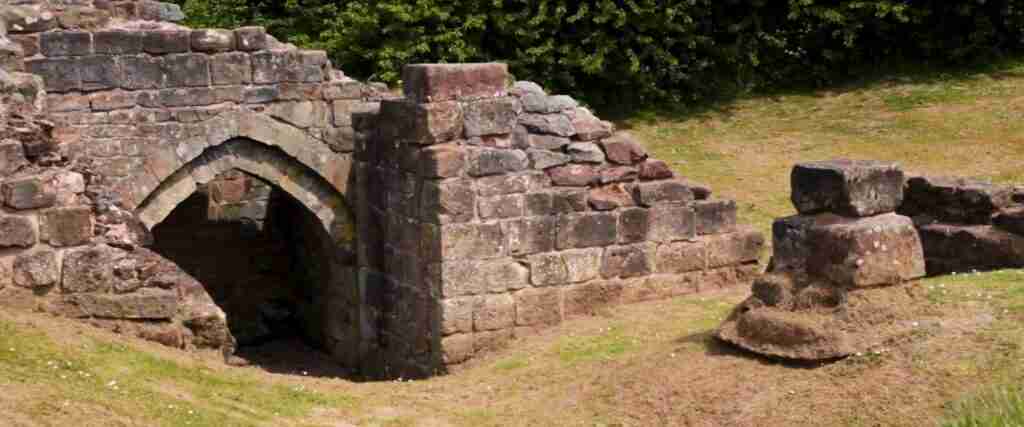
3 days
Coventry 3-Day Discovery Tour
- ✓ Comprehensive Coventry experience
- ✓ Expert local guides included
- ✓ All accommodation included
- ✓ Transportation provided
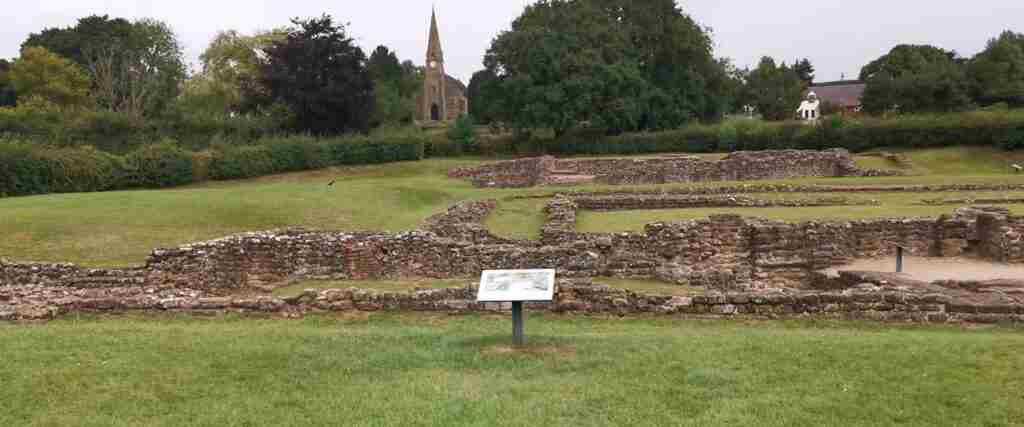
5 days
Coventry 5-Day Highlights Experience
- ✓ Comprehensive Coventry experience
- ✓ Expert local guides included
- ✓ All accommodation included
- ✓ Transportation provided
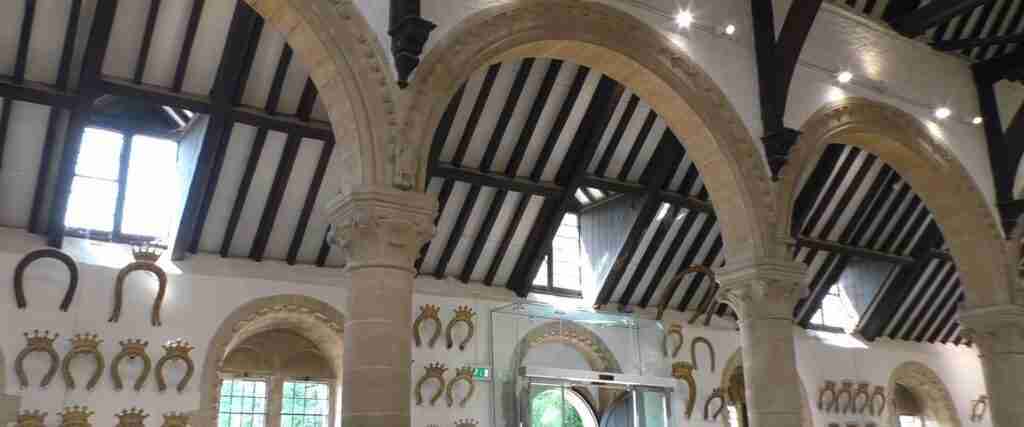
7 days
Coventry 7-Day Cultural Journey
- ✓ Comprehensive Coventry experience
- ✓ Expert local guides included
- ✓ All accommodation included
- ✓ Transportation provided
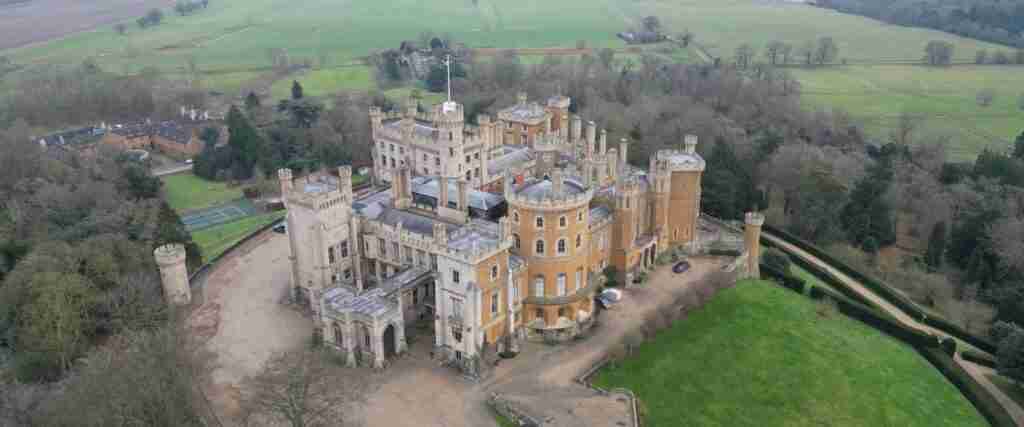
10 days
Coventry 10-Day Complete Adventure
- ✓ Comprehensive Coventry experience
- ✓ Expert local guides included
- ✓ All accommodation included
- ✓ Transportation provided
Multi-day tour packages powered by TourRadar. Prices and availability subject to change.
Why the Lower Dove Valley Makes Strategic Sense in 2026
Derby occupies an unusually advantageous position in the East Midlands heritage landscape. It sits at the convergence of three major road corridors — the A38 north-south spine, the A52 east-west connector toward Nottingham, and the A50/A516 dual carriageway westward through the Dove Valley toward Stoke-on-Trent — and these corridors make it an effective base for threading between heritage sites that otherwise seem widely dispersed on the map. To the north and northwest, the Peak District National Park offers extraordinary scenery but chronic visitor pressure, particularly in peak season. The B5054 through Hartington, the single-carriageway approaches into Dovedale, and the A6 through Matlock all suffer severe weekend congestion from May through September.
Derby itself warrants brief contextualisation as the circuit’s hub. It is a city of considerable industrial and cultural heritage — the Silk Mill on the Derwent, now the Museum of Making, is considered one of the earliest purpose-built factories in the world and forms part of the Derwent Valley Mills UNESCO World Heritage Site. The city’s cathedral and its Joseph Wright of Derby collection offer a rich evening programme for visitors staying overnight. But for the purposes of this itinerary, Derby functions primarily as a transport interchange: a hub that makes all three valley destinations reachable within tolerable driving time, and a base with sufficient accommodation variety — from budget hotel chains near the station to mid-range boutique properties in the Cathedral Quarter — to suit most traveller profiles.
This itinerary makes a deliberate strategic choice: instead of heading into the highlands, it turns east then southwest
, tracking the lowland Dove Valley through a sequence of heritage sites that are historically rich, topographically accessible, and — by comparison with the national park honeypots — remarkably quiet. The three stops on this circuit span a remarkable historical arc from the twelfth century to the late seventeenth: a cave-dwelling hermit tradition that preceded an abbey later dissolved by Henry VIII; a Norman motte-and-bailey reborn in 2026 as a hospitality-led attraction; and a Restoration-period country house of exceptional craftsmanship now stewarded by the National Trust as a destination for family visitors and architectural enthusiasts alike.
The Dove itself is the thread connecting all three sites. The river forms the county boundary between Derbyshire and Staffordshire through most of its length, and the heritage sites clustered along its lower reaches — between its junction with the River Trent and its origins in the southern Peak — reflect the layered occupation of this contested borderland across a thousand years. This circuit explores the lower valley segment, where the river has carved a broader floodplain and the landscape softens from gritstone moorland to the rolling red-brick country of the East Midlands fringe.
Navigating the A50/A52 Corridors in 2026
The tactical logic of this circuit rests on understanding two roads. The A52 exits Derby city centre eastbound, initially passing through the urban fringes before crossing the M1 near Bramcote and continuing toward Nottingham. For this itinerary, you need only the western section of the A52: leave Derby via the Pentagon Island interchange, follow the A52 east for approximately five miles to the Borrowash/Stanley junction area, then turn south on the A6096 or equivalent minor roads to reach Dale Abbey. The village lies in a shallow sandstone valley southeast of Kirk Hallam; follow signs for Dale or Dale Abbey — the lane narrows quickly, confirming that you are navigating the secondary road network as intended.
For the return leg from Dale Abbey to the A50 corridor, you have two practical options. The most straightforward retraces the A6096 north and re-joins the A52 westbound through Derby, then picks up the A516 or A38 south to the A50 at the Findern/Willington interchange. This adds seven to eight minutes of suburban driving but keeps navigation simple. Alternatively, from Dale Abbey it is possible to thread south via Stanton-by-Dale and Sandiacre to the A6005 and join the A50 without re-entering Derby’s inner ring — a useful shortcut on days when the Pentagon interchange is congested, though it requires comfort with unsigned agricultural lanes.
The A50 itself — a dual carriageway of consistently high capacity between Derby and Uttoxeter — is the backbone of the western half of the circuit. From its eastern interchange with the A38 at Findern, the A50 runs west-southwest through Etwall, Hilton, and Hatton before descending toward the Dove valley floor at Tutbury. Exit at the A511 Uttoxeter Road junction for Tutbury, then follow brown tourist signs into the village. Sudbury Hall lies a further nine miles southwest along the A515 from its junction with the A50 near Sudbury village, at the road’s crossing of the railway and minor watercourses that feed the Dove.
Secondary lane navigation is unavoidable but rewarding on this circuit. Dale Abbey’s approach roads are single-track for the final quarter-mile; passing places are adequate but drivers of larger vehicles should note that agricultural traffic moves through the lanes throughout the day. The lanes between Tutbury and the A515 south of the village are similarly narrow but well-surfaced. The A515 itself is a good-quality B-road standard route from the Sudbury junction through to Ashbourne, and presents no navigational difficulty. Altogether, the route requires a minimum of three route inputs on a sat-nav: Derby city centre as start, Dale Abbey village as first waypoint, Tutbury Castle as second waypoint, and Sudbury Hall (DE6 5HT) as the final destination before the return to Derby via A515 north and A50 east.
1-Day Tactical Itinerary from Derby
The following sequence — Dale Abbey first, Tutbury second, Sudbury Hall third — is deliberate. Dale Abbey’s free-access ruins suit an early-morning visit when the light enters the standing arch from the east and the woodland around the hermit’s cave is cool. Tutbury’s village attractions, café options, and the Norman priory church fill the midday hours while the castle’s new operator settles into 2026 operations. Sudbury Hall, with its structured opening from 10:30 (hall) and 10:00 (museum and garden), is best visited in the afternoon when family crowds are typically lighter and the café less overrun. Depart Derby by 9:00 AM to complete all three stops comfortably before closing time.
Stop 1: Troglodytic Monasticism at Dale Abbey
Dale Abbey village, six miles northeast of Derby in the borough of Erewash, takes its name from an institution that has largely returned to the earth. The ruins of the Premonstratensian abbey are visible from the village lane as a single dramatic survivor: the great arch of the chancel’s east window, rising alone from a grassed field, its gritstone ashlar framing a view of open sky where once a complete monastic church stood. Historic England’s listing describes it as having “a finely moulded arch and indications of geometrical tracery, similar probably to Newstead Abbey and the Angel choir at Lincoln.” The late-thirteenth-century date of the surviving masonry places it in a moment of high ambition for a community that had known several false starts.
The history of religious settlement at Dale reaches back well before the standing arch. By the early twelfth century — the sources disagree on precise dates, but somewhere in the 1120s to 1130s — a baker from Derby reportedly had a vision in which the Virgin Mary instructed him to seek out a valley called Depedale and live there in solitary prayer. Finding the location (in a sandstone valley thick with woodland and watered by small streams), he excavated a dwelling directly from the cliff face — a practice known in Christian tradition as troglodytic monasticism, the deliberate adoption of cave-dwelling as a form of radical withdrawal from the world. This cave, the Hermit’s Cave, survives to the present day as a Scheduled Ancient Monument. Measuring approximately six yards by three, it has a doorway, two windows, a peephole, and a carved niche for a light. The sandstone surfaces carry centuries of accumulated graffiti alongside the cave’s original functional details.
The hermit’s dwelling attracted first attention and then patronage. Local tradition holds that a Norman knight, Ralph Fitz-Geremund, discovered the hermit’s fire while hunting in the surrounding woods and, moved by the austerity of his life, granted him the site of the hermitage and the tithe of a nearby mill. Whether this account is precisely accurate or belongs to the category of foundation legend that medieval institutions regularly elaborated is not verifiable from surviving documentation — it should be taken as tradition. What is better documented is the complex sequence of monastic communities that followed. A group of Augustinian canons from Calke Priory attempted settlement at Deepdale from around 1145, built a church, and were later expelled — the sources suggest on account of undisciplined hunting in the royal forest. Premonstratensian canons from Tupholme Abbey in Lincolnshire then attempted to establish themselves, found the land too poor, and were recalled. A further group from Welbeck Abbey, brought by William de Grendon around 1194–1196, also struggled with poverty.
The community finally stabilized around 1199 to 1204, when a more secure foundation with adequate land endowment enabled a proper Premonstratensian abbey to take root. The Premonstratensians — also called Norbertines or White Canons — followed the Rule of St Augustine as adapted by Norbert of Xanten in the early twelfth century. Their English houses tended toward austerity and rural isolation, and Dale, formally constituted as an independent abbey by the early thirteenth century, represented a modest but genuine establishment. It had twenty-five canons in 1345 and was surrendered to the Crown in 1538 or 1539 with the abbot and sixteen canons, eleven of whom were still receiving pensions as late as 1553. The dissolution left the building fabric to be quarried for local construction, and the great arch’s survival — a fragment of the east chancel wall above the transept footings — owes something to its sheer scale rendering it impractical to dismantle cleanly.
Alongside the ruins stands All Saints Church, Dale, one of the more extraordinary vernacular survivals in English ecclesiastical architecture. Dating from the mid-twelfth century and measuring just 26 by 25 feet, it is physically joined to an adjoining farmhouse — the two buildings sharing a roofline and separated internally by a partition wall. The church is still in active use. The hermit’s well, visible in the churchyard, is another tangible link to the site’s earliest phase of religious occupation. Behind the church, a short woodland path descends to the Hermit’s Cave, the route well-signed and the surface generally navigable in ordinary walking shoes, though steep steps approach the cave from above — an alternative lower path along the woodland edge avoids them.
The surviving arch itself merits architectural attention beyond its romantic silhouette. Historic England’s listing describes the fabric as “rubble gritstone and ashlar” of the late thirteenth century, with moulding detail that draws comparison to Newstead Abbey in Nottinghamshire and to the Angel Choir at Lincoln Cathedral — the most elaborate Gothic interior programme in England at that moment. The tracery pattern visible in the upper spandrels of the arch, now fragmentary, belonged to the Geometrical Gothic tradition: intersecting circles and foils arranged within a pointed frame, the same vocabulary being elaborated simultaneously in the great cathedrals. That a modest Premonstratensian house in Derbyshire should be aspiring to Lincoln-Cathedral-level tracery details in its east window is a measure of the ambition — and the financial commitment — of its patrons in the late-thirteenth-century building phase. The footings of the chancel walls and transepts remain partly legible at ground level, allowing the visitor who takes a moment to read the ground to reconstruct the cross-shaped plan of the vanished building.
All Saints Church deserves its own paragraph. At 26 by 25 feet, it is among the smallest functioning churches in England, and its physical arrangement — sharing a roofline with an adjoining farmhouse, the two structures separated by a plastered internal partition — is unique in the Anglican communion. The building’s form results from the abbey’s dissolution: the small chapel that had served the hermitage community survived because it was directly bonded to the farmhouse built from abbey materials, making separation impractical. Inside, the furnishings include a three-decker pulpit, box pews, and a gallery — a complete pre-Victorian interior of considerable rarity, preserved almost accidentally by the church’s obscurity. A medieval fresco fragment has been recorded on the north wall. The church holds regular Sunday services and is generally unlocked for visitors during daylight hours; a donation box inside receives contributions toward the building’s maintenance.
For 2026 visitors, access to the ruins, the arch, the church, and the hermit’s cave is entirely free.
There is no visitor centre at the ruins themselves; the Gateway Centre (a former Methodist chapel on the village’s main street, known simply as The Village) operates as a community space and serves refreshments on Sunday afternoons. The Carpenters’ Arms pub at the far end of the village offers morning coffee and bar snacks through the week. Roadside parking is available on the approach lane; DE7 4PP is the most useful postcode for navigation, bringing you to the village pub and the informal pull-in that serves as the main parking area.
Allow at minimum ninety minutes for a proper visit: the arch field, the church interior (check for opening, usually unlocked), the woodland path to the cave, and a brief pause at the well. Serious architectural enthusiasts and historians will easily spend two hours. The site rewards quiet reflection: the flat-bottomed valley, the beech and oak woodland above the cave, and the absence of commercial infrastructure give Dale Abbey an atmosphere that even well-known Yorkshire abbeys — Rievaulx, Fountains — cannot replicate in summer.
Stop 2: Escarpment Fortifications at Tutbury Castle
Tutbury Castle occupies one of the most commanding defensive positions in the East Midlands: a natural gypsum and alabaster promontory at the northwest corner of Tutbury village, rising steeply above the River Dove’s floodplain with panoramic views east toward the Derbyshire hills and west across the lowland plain of Staffordshire. The castle’s topographic logic is immediately apparent from its approach — the hill on which it sits is the most prominent landform for miles in every direction, and its natural defensibility explains why the site has been occupied, in various forms, since prehistoric times. The castle as a recognizable fortification is first recorded in 1071, among the new strongholds built by the Norman conquerors to assert authority across the Midlands after the Conquest.
The castle’s principal medieval patrons were the Ferrers family, Earls of Derby, who held the honour of Tutbury from the Conquest through the thirteenth century. The Ferrers built substantially on the Norman motte-and-bailey foundation, constructing the great hall whose ruins still define the summit of the escarpment. The honour of Tutbury — a feudal landholding of considerable extent across the East Midlands — was one of the largest in England, and the castle at its centre served as the administrative and symbolic focus of a territory spanning parts of Derbyshire, Staffordshire, Nottinghamshire, and Leicestershire. When the Ferrers forfeited their honours following the Barons’ War of 1264–1267, Tutbury passed to Edmund of Lancaster and thereafter into the estates of the Duchy of Lancaster, which it remains today under the ownership of King Charles III. John of Gaunt, Duke of Lancaster, carried out significant works at the castle in the fourteenth century; the gateway that bears his name is among the most clearly datable medieval fabric at the site.
The medieval and Tudor history of Tutbury Castle is substantial, and the site’s most famous chapter concerns Mary Queen of Scots
, who was held here on four separate occasions between 1569 and 1585 as a prisoner of Elizabeth I. During her periods of captivity at Tutbury, which she reportedly found one of the most disagreeable of her various English places of detention — the castle sitting low in a damp river valley, she wrote, and exposed to cold and drafts — Mary became entangled in the plotting that ultimately led to her execution at Fotheringhay Castle in 1587. The castle subsequently saw action during the English Civil War before falling to Parliamentary forces in 1646 following a siege, after which it was slighted. The Civil War phase of Tutbury’s history was decisive for the physical character of the site visitors see today. The castle held for the Royalist cause, its prominent hilltop position and stone curtain wall making it a defensible strongpoint in the Midlands conflict. Parliamentary forces placed it under siege in 1646; the garrison eventually surrendered, and the castle was subsequently slighted — systematically demolished to prevent its future use as a military fortification. The slighting accounts for the ruined character of the site: what survives is what proved too massive or too deeply founded to demolish quickly, including substantial sections of the curtain wall, the South Tower, the shell of the Great Hall, and John of Gaunt’s gateway arch. The ruins that survive include fragments of the medieval curtain wall, the South Tower, the Great Hall, and John of Gaunt’s gateway — structures of genuine historical gravity even in their ruined state.
In 2026, however, visitors encounter Tutbury Castle at a moment of significant transition. The castle closed to regular public admission in mid-2024 following the retirement of Lesley Smith, the long-serving curator whose personal stewardship of the site had defined its visitor offer for decades. The owner, the Duchy of Lancaster, subsequently invested approximately £1.2 million in conservation works to protect and stabilise the scheduled monument’s fabric. In December 2025, the Duchy announced a new operational partnership with Bespoke Inns, a Derbyshire-based hospitality group known for several well-regarded venues in the region, with plans to transform the castle grounds into a destination combining historic access with a new café, restaurant, farm shop, and events space. The new operation was expected to open in 2026.
As of August 2026, the full public opening remains in development. Bespoke Inns was conducting a Community Open Day on 12 September 2026, offering local residents and visitors a first look at the plans and the restored grounds. Check tutburycastle.com for the most current status, including whether the new café and restaurant are operational before your visit. If the grounds are not yet open for walk-in access, the castle exterior and its commanding hillside position can be appreciated from the village approach roads and from the churchyard of the Priory Church of Saint Mary the Virgin, which sits at the castle’s foot and is entirely open.
That priory church, Saint Mary the Virgin, deserves extended attention in its own right. One of the finest Norman buildings in Staffordshire, it retains a west doorway of exceptional elaboration — five orders of carved decoration including beak-head ornament, chevron moulding, and figurative capitals — which dates from the mid-twelfth century. The church formed part of a Benedictine priory associated with the castle’s original Ferrers lords; the nave and west front survive from this Norman foundation, though the building was partially rebuilt in subsequent centuries. Entry is free and the building is generally open during daylight hours.
Tutbury village itself is a rewarding midday stop regardless of the castle’s access status. The main street running uphill toward the castle gate is lined with antique dealers, independent shops, and a cluster of traditional public houses. The Dog and Partridge Hotel on the High Street serves bar lunches; The Leopard, a short walk from the village centre, is another well-regarded option. If the Bespoke Inns café within the castle grounds is operational, it offers an unusual opportunity to eat within the medieval fortification’s precincts.
Parking in Tutbury is straightforward: there is a village car park (free) close to the main street and a second small car park adjacent to the castle approach road. The nearest railway station — Tutbury and Hatton — is approximately a ten-minute walk from the castle, served by East Midlands Railway on the Crewe to Derby Community Rail line, making Tutbury one of the few stops on this itinerary reachable without a car.
Stop 3: Stuart-Era Craftsmanship at Sudbury Hall
Sudbury Hall — officially branded by the National Trust as The Children’s Country House at Sudbury since a recent visitor-experience relaunch — stands on the south side of the village of Sudbury at the junction of the A50 and A515, approximately nine miles southwest of Tutbury along the A515. The hall is one of the outstanding examples of late-seventeenth-century English domestic architecture: a Grade I-listed country house built primarily between the 1660s and around 1700 by George Vernon, who inherited the estate at twenty-five and devoted the following decades to constructing a house that would both display and consolidate his family’s position in the Derbyshire gentry.
George Vernon’s building campaign at Sudbury is particularly interesting from an architectural-historical perspective because it was conducted over several decades and documents the evolution of English taste through the Restoration period. Vernon inherited the estate in the 1660s and worked on the building continuously until approximately 1700, meaning the house encapsulates both the early Restoration enthusiasm for Dutch-influenced brickwork and deep eaves, and the maturer English Baroque approach to interior decoration that characterised the final decades of the seventeenth century. The exterior, in locally sourced red brick with stone dressings, has a formal symmetry that owes something to Pratt and May’s influence on English domestic design, while the interior was enriched over successive decades as Vernon accumulated the resources to commission increasingly ambitious craftwork. The Vernon family remained at Sudbury until 1967, when the eighth Baron Vernon gave the house to the National Trust along with its contents — ensuring that the original collection, furniture, and interior decoration are substantially intact.
What makes Sudbury Hall architecturally extraordinary is the exceptional quality of its interior craftsmanship.
The decoration belongs to the tradition of the English Restoration — the period following the return of Charles II in 1660 — during which the country’s wealthiest builders competed in the elaborateness of their plasterwork ceilings, carved woodwork, and mural painting. At Sudbury, the Long Gallery retains a ceiling of swirling high-relief plasterwork and a sequence of family portraits extending its entire length. The Great Staircase, recently restored to its former function after more than forty years out of use, is one of the most architecturally dramatic spaces in National Trust care: open-well, carved and gilded, with bold tread-end scrollwork and painted panels in the stairwell. The drawing room displays wood carvings in the manner of Grinling Gibbons, whose naturalistic limewood work — drops of fruit, flowers, and game — became the defining ornamental mode of the late Stuart interior. Whether the Sudbury carvings are by Gibbons himself or by craftsmen working in his tradition, the NT documentation is careful to attribute them to the “manner” rather than the workshop with certainty — they represent the finest surviving work of the type outside London’s major royal and church commissions.
The National Trust acquired the property in 1967. In recent years the trust has repositioned Sudbury’s visitor offer toward families, housing the National Trust Museum of Childhood in the service wing. The museum occupies eight galleries and explores changing conceptions of childhood through toys, dress, educational materials, and interactive installations spanning several centuries. The programming in summer 2026 includes a temporary exhibition on children’s fashion from the past 150 years, a marble run installation, and a Victorian classroom experience — supplementing the permanent galleries. Children of all ages engage readily with the museum’s format, while the hall itself rewards adult visitors comfortable in a historic house context.
The garden at Sudbury is more intimate than those of comparable National Trust houses: a historic parterre with structured planting, lakeside walks, and access to a boathouse, bluebell wood, and outdoor play areas within the parkland. The Coach House café serves seasonal food and drinks; a second-hand bookshop occupies the stableyard alongside a coffee van during school holidays. Dogs are welcome in the grounds and garden on leads; the hall and museum are assistance-dogs-only.
Opening times for 2026: the hall opens at 10:30, with last entry one hour before the 17:00 close; the garden, museum, and café open at 10:00. Admission for the full experience — hall, museum, and garden — is £22 per adult and £11 per child (five to seventeen) without Gift Aid, or £24.20 and £12.10 with Gift Aid. A family ticket covers two adults and up to three children at £55 (£60.50 with Gift Aid). National Trust members enter free; check the official website for current prices as a temporary government VAT reduction ran from late June to 1 September 2026. Free parking is available in the National Trust car park approximately 300 metres along Main Road from the property entrance; the sat-nav postcode is DE6 5HT.
Budget at least two to two and a half hours at Sudbury Hall to do justice to both the hall and the museum, plus time in the garden and café. On Bank Holiday weekends the car park can fill by mid-afternoon; arriving by 13:30 after a Tutbury lunch gives comfortable lead time before the 16:00 last entry to the hall.
Budget Planning for Your 2026 Lower Dove Valley Circuit
This circuit has an unusually generous budget profile because two of its three main sites are free to enter: Dale Abbey requires no admission whatsoever, and Tutbury Castle’s grounds (when open) have historically charged very modest fees. Only Sudbury Hall levies a full heritage-house admission. For a pair of travelers sharing a car, the structure looks like this:
Fuel costs: The full circuit covers approximately 62–72 miles depending on urban navigation and detours. Shared between two people, fuel runs to roughly £5–£7 per person at current petrol prices.
Admissions: Dale Abbey is free; Tutbury Castle exterior access is free regardless of the main attraction’s operational status, and the village’s Norman priory church is free; Sudbury Hall charges £22 per adult without Gift Aid. National Trust members pay nothing at Sudbury.
Food and drink: A packed lunch, flask of coffee, and roadside snack costs £5–£8 per person. A pub lunch in Tutbury village (two courses, drink) runs £18–£25 per person at established village pubs. The Sudbury Hall café adds £6–£10 per person for tea, cake, or light snacks.
Three tiers emerge from these components. Budget travelers — packed lunch, no Sudbury Hall interior, parking at all three sites free — spend approximately £10–£15 per person for the full day. Mid-range visitors — Sudbury Hall admission, pub lunch in Tutbury, café stop at Sudbury — spend approximately £50–£65 per person. National Trust members replace the £22 Sudbury admission with zero, bringing a mid-range day in the same dining configuration to approximately £30–£40 per person. For NT members visiting regularly, membership pays for itself in fewer than three days at properties of this admission level.
Hidden costs are minimal on this circuit. All car parks are free (Dale Abbey village layby, Tutbury village car park, Sudbury NT car park). There are no timed-entry requirements or advance booking fees at any site currently. If Tutbury Castle’s new café and event spaces open during your visit, expect comparable pricing to Bespoke Inns’ other Derbyshire venues — coffee at around £3.50–£4.50, light meals at £12–£18.
Parking, Access, and Road Logistics in 2026
Parking is free and uncomplicated at all three sites. At Dale Abbey, the Carpenters’ Arms pub car park on The Village (DE7 4PP) provides informal visitor parking, and roadside pull-ins near the ruins gate are available for short stays. Arrive early in school holidays to secure a space nearest the ruins, as the lane has limited width for vehicle passing.
In Tutbury, the village car park on Duke Street provides free parking within easy walking distance of both the castle approach and the priory church. During peak summer weekends when events are hosted in the castle grounds, an overflow car park on the lower approach road is sometimes managed by stewards; the castle’s own small car park on Castle Street may have restricted access during works. Allow five minutes for the uphill walk from the village car park to the castle gate.
Sudbury Hall’s National Trust car park on Main Road (DE6 5HT) is free for all visitors and well-signed from the A515. The car park is approximately 300–500 metres from the property entrance, with a “wiggly path” through the grounds connecting the two. An accessible vehicle drop-off zone is available closer to the entrance for visitors with mobility requirements; call 07767 670005 on arrival for the buggy service from the car park. The car park has electric vehicle charging points — useful for EV drivers completing the circuit.
Road surfaces throughout the circuit are in good condition on the A-road and dual-carriageway sections. The lane approaches to Dale Abbey and some of the secondary routes between Tutbury and the A515 are single-track; these are entirely normal for rural Derbyshire and Staffordshire, but visitors towing caravans or driving wide vehicles should plan for passing maneuvers. The narrow lane into Dale village from the A6096 requires particular care on busy weekend mornings.
Extending Your 2026 Dove Valley Drive
The Lower Dove Valley contains further heritage sites that can extend the circuit for visitors with a second day or a particularly early start. Several deserve brief mention:
Hanbury and the Fauld Crater (southeast of Tutbury, off the B5017) present one of England’s most unusual industrial heritage landscapes — the site of the 1944 RAF ammunition store explosion, which remains the largest non-nuclear explosion on British soil and left a crater visible in the farmland. The Fauld memorial site is freely accessible and combines twentieth-century military history with an eerie landscape of considerable power. Allow forty-five minutes from Tutbury.
Rolleston-on-Dove (three miles east of Tutbury via the B5017) is a handsome estate village notable for the Church of St Mary, which retains Norman fabric and a medieval tower, and for the surrounding parkland of the former Rolleston Hall — now largely gone but still partly legible in the village layout. The Spread Eagle pub in the village provides a further dining option to that in Tutbury itself.
Kedleston Hall (five miles northwest of Derby on the A52 and A38 spur) is a National Trust property of the first rank: a neoclassical mansion by Robert Adam, begun in 1759 for the Curzon family and representing the fullest surviving expression of Adam’s early English work. Kedleston lies just outside the Lower Dove Valley proper, but it makes a natural pairing with Sudbury Hall for visitors comparing English country house traditions across a century of architectural change. NT admission applies; check current prices at the official website.
The Amber Valley Heritage Corridor, accessible north from the A38 out of Derby, offers Wingfield Manor ruins (a Grade I-listed medieval fortification where Mary Queen of Scots was also held — offering a thematic link to Tutbury) and the historic textile mills at Belper and Milford, part of the Derwent Valley Mills UNESCO World Heritage Site. This requires a separate day or a very long one, but the Tutbury Mary QoS connection makes the thematic extension genuinely rewarding for history enthusiasts.
Derby city centre itself, if you are overnighting, deserves an evening visit. The Cathedral Church of All Saints is a Perpendicular Gothic structure of considerable quality; the Derby Museum and Art Gallery holds an exceptional collection of Joseph Wright of Derby paintings — Wright being the Enlightenment painter who made the industrial Midlands his subject matter with unique conceptual ambition. Admission to the museum is free.
Best Season for the 2026 Circuit
This is a circuit that performs well across most of the year, though with distinct seasonal emphases. Late spring and early summer (May and early June) offer the best combination of long daylight hours, mild temperatures, relatively moderate crowds at Sudbury Hall, and the bluebells that carpet Hermit’s Wood at Dale Abbey — the latter appearing typically from mid-April to late May and making the woodland walk to the cave a seasonal highlight in its own right. Weekday visits in May are particularly rewarding: Sudbury Hall opens at full programme but attracts families primarily at weekends.
July and August bring Sudbury Hall’s Summer of Play programming, which enriches the visit for families with children but increases crowd density significantly on weekends and Bank Holidays. The Sudbury Hall car park can fill by 14:00 on peak days; arriving before midday is strongly recommended. Tutbury’s events calendar — if the castle’s new operator has its events programme running — may add medieval re-enactments or community festivals during summer weekends, making a serendipitous enhancement if your dates align.
Autumn (September and October) suits heritage and architecture enthusiasts best. The crowds thin sharply after school returns in September; the Dove Valley landscape turns spectacularly in October; and the light quality is excellent for the Dale Abbey ruins arch, which photographs most dramatically when it frames an atmospheric mid-October sky. Check Sudbury Hall’s reduced autumn opening hours before visiting: some properties move to weekend-only opening in autumn, and Sudbury’s schedule for October 2026 should be confirmed on the NT website.
Winter access is more restricted: Sudbury Hall operates reduced hours and may close for portions of January and February. Dale Abbey’s ruins are accessible year-round, weather permitting, but the woodland path to the hermit’s cave can be slippery and is not recommended in icy conditions. Tutbury village’s pubs and the priory church remain good reasons to visit even in winter, particularly around Christmas when the village market is active.
Getting to Derby in 2026
Derby city centre serves as the logical base for this circuit, whether as a day trip hub from the city itself or as an overnight base for visitors from further afield. By rail, Derby station is well-connected from London St Pancras via East Midlands Railway (approximately one hour thirty-five minutes on fast services); from Birmingham New Street via CrossCountry (approximately forty minutes); from Nottingham (twenty-five minutes); and from Sheffield and Leeds via CrossCountry. The station sits close to the city centre, and car hire is available from agencies operating near the station.
By road, Derby is accessible from the M1 at junction 28 (A38 northbound) or junction 25 (A52 westbound from the Nottingham direction). From Birmingham, the A38 northbound or M1/A50 combination provides straightforward access. From the north, the A6 from Sheffield and the A514 from the M1 junction 24 are the standard approaches.
Accommodation in Derby for those using it as an overnight base spans budget chains (Premier Inn at multiple locations, Travelodge near the railway station) through mid-range hotels (Jurys Inn Derby, Cathedral Quarter Hotel) to boutique options in the Cathedral Quarter. Booking in advance is advisable for school holiday periods and when Derby County have home fixtures. For visitors preferring to base themselves closer to the western end of the circuit, Uttoxeter has several B&B options, and the villages between Tutbury and Sudbury occasionally offer self-catering lets through national platforms.
Frequently Asked Questions
What is the best order to visit the three stops on the Lower Dove Valley circuit in 2026?
Dale Abbey first, Tutbury second, Sudbury Hall third is the recommended sequence, and it is logistically as well as experientially optimal. Starting east of Derby at Dale Abbey means leaving the city in light morning traffic; the ruins and hermit’s cave suit an early, quiet visit before the village stirs. Moving west through or around Derby to Tutbury hits the village at lunchtime, when the pubs are serving and the castle’s new café (if operational) is open. Arriving at Sudbury Hall in the early afternoon gives you the full session before 16:30 last entry to the hall, and the café is at its most settled. Reversing the order pushes Dale Abbey to early evening, when the ruins are beautiful but the hermit’s cave path becomes difficult in fading light.
Is Dale Abbey worth visiting in 2026?
For anyone with an interest in medieval history, monastic architecture, or unusual ecclesiastical survivals, Dale Abbey is emphatically worth visiting — and it costs nothing. The standing arch is among the most evocative monastic ruins in the East Midlands, its isolation in an open field making it feel genuinely remote despite being ten minutes from suburban Derby. The hermit’s cave is a Scheduled Ancient Monument of remarkable preservation, and All Saints Church — sharing a roof with a working farmhouse — is one of the strangest and most intimate ecclesiastical buildings in England. The cumulative heritage density of the site rewards curiosity. It will not replace Rievaulx or Tintern for sheer scale, but its near-total lack of tourist infrastructure is, for many visitors, exactly the point.
When will Tutbury Castle reopen fully in 2026?
As of August 2026, a full public reopening date had not been formally announced. Bespoke Inns took on the operational lease from the Duchy of Lancaster in late 2025 following a £1.2 million conservation programme, with plans for a café, restaurant, farm shop, and events programme. Community and preview events are occurring from September 2026 — including an open day on 12 September — and the new offer is expected to roll out progressively through autumn 2026 and into 2027. Check tutburycastle.com for the latest news before making Tutbury’s interior access a non-negotiable part of your plan; the village and priory church are fully rewarding alternatives while the castle’s new chapter unfolds.
Does Sudbury Hall have free parking in 2026?
Yes. The National Trust car park at Sudbury Hall (DE6 5HT) is free for all visitors — National Trust members and non-members alike. It is located approximately 300 metres along Main Road from the property entrance, with a signed walking route through the grounds to the visitor entrance. Designated accessible parking spaces and wide family spaces are available within the main car park. An electric vehicle charging point is available at the car park, which is useful for EV drivers completing the circuit from Derby. On peak summer weekends, the car park can fill by mid-afternoon; arriving before 13:30 is advisable.
What roads connect Derby to Tutbury and Sudbury in 2026?
The core routing uses the A52 and A50 corridors. From Derby city centre, the A52 eastbound carries you toward Dale Abbey (turn south at the A6096 or equivalent junction after approximately five miles). To reach Tutbury, return to the A52 and use it westbound through Derby before joining the A516 or A38 southbound to the A50 dual carriageway; follow the A50 westbound and exit at the A511 Uttoxeter Road junction for Tutbury. For Sudbury Hall, continue on or return to the A50 to the A515 junction south of Tutbury, then follow the A515 south for approximately nine miles to Sudbury village. Both the A50 and A52 are dual carriageway standard throughout the relevant sections and consistently faster than any alternative routing north into the Peak District.
Are there good pubs or restaurants near Tutbury Castle in 2026?
Tutbury village has a good concentration of options within easy walking distance of the castle gate. The Dog and Partridge Hotel on High Street serves traditional bar lunches and has outdoor seating. The Leopard is another village-centre pub with well-reviewed food. The Crafty Café on the high street is a lighter option for coffee and cakes. If the Bespoke Inns café within the castle grounds is operational during your visit, it offers an atmospheric alternative within the historic precincts — check the castle’s website for confirmed trading hours. For more substantial dining, Burton upon Trent is eight miles south and offers a wider range of restaurants, though a Tutbury pub lunch is generally the most time-efficient choice within the circuit’s schedule.
Can I do this driving circuit without a car in 2026?
Partially, but not comfortably as a single-day circuit. Tutbury and Hatton railway station (East Midlands Railway, Crewe to Derby line) puts you within a ten-minute walk of Tutbury Castle and the priory church, making Tutbury accessible by train from Derby (twenty-five to thirty minutes). Sudbury Hall is reachable from Tutbury by the 401 bus service (approximately ten minutes), which also connects from Burton upon Trent and Uttoxeter. Dale Abbey, however, has limited public transport — the Y3 Ilkeston Flyer from Derby operates on certain days — and the village’s rural lane approach makes it difficult to reach efficiently by public transit without significant walking. A car or bicycle is strongly recommended for the full three-stop circuit; alternatively, combine the two western stops (Tutbury and Sudbury) by rail and bus, and treat Dale Abbey as a separate cycle or drive excursion from Derby on a different day.
What is the Museum of Childhood at Sudbury Hall?
The National Trust Museum of Childhood at Sudbury Hall occupies the service wing of the house and presents the history of childhood in Britain across several centuries through eight galleries. It combines archival material, period artefacts, and hands-on interactive installations: visitors can experience a replica Victorian schoolroom, explore an evocation of a chimney sweep’s working life, and engage with archive film and toy collections from various decades. The summer 2026 programme adds a temporary exhibition on the evolution of children’s fashion over 150 years and an upcycled marble run installation by Wild Rumpus. The museum is included in the standard Sudbury Hall admission and is genuinely entertaining for adult visitors as well as children. It is the reason the National Trust has rebranded the property as The Children’s Country House at Sudbury, though Sudbury Hall remains the property’s well-established historical name.
What is the Hermit’s Cave at Dale Abbey?
The Hermit’s Cave at Dale Abbey is a Scheduled Ancient Monument: a small dwelling hewn directly from the sandstone cliff face in Hermit’s Wood, behind All Saints Church in the village. By tradition, it was excavated in the early twelfth century by a baker from Derby who, having experienced a vision of the Virgin Mary directing him to the valley then known as Depedale, wished to live there in solitary prayer as a religious recluse. The cave measures approximately six yards by three and incorporates a doorway, two windows, a peephole, and a carved niche for a light — the functional necessities of a long-term cave dwelling. The exterior surfaces carry centuries of graffiti accumulated alongside the cave’s original carved details. Access is via a short woodland path from the church, with steep steps from above or a gentler lower route along the woodland edge. The cave is freely accessible; there is no charge and no managed entry.
What other Dove Valley heritage sites can I add to the circuit in 2026?
The most natural additions at the southern end of the circuit are Rolleston-on-Dove (Norman church and estate village, five minutes from Tutbury), the Fauld Crater memorial near Hanbury (the site of a major 1944 RAF ammunition explosion, freely accessible off the B5017), and the medieval parish church at Doveridge (a pleasant village between Tutbury and Uttoxeter with a churchyard yew of considerable age). For a second day extension, Wingfield Manor ruins in the Amber Valley — another site associated with the imprisonment of Mary Queen of Scots — creates a compelling thematic arc with Tutbury. Kedleston Hall, Robert Adam’s great neoclassical house northwest of Derby, makes a contrasting architectural pairing with Sudbury Hall for visitors interested in comparing English country house traditions across a century’s stylistic shift.lower-dove-valley-historic-driving-itinerary-2026-map