Liverpool Museums & Galleries 2026: Ultimate Cultural Guide
Liverpool hosts one of Britain’s most impressive concentrations of free museums and world-class galleries, from National Museums Liverpool’s seven venues across the city to specialized collections celebrating everything from football heritage to contemporary photography. The city’s cultural institutions blend maritime history, musical legacy, and cutting-edge contemporary art into experiences that rival London’s offerings without the capital’s admission fees. Whether exploring Renaissance masterpieces at the Walker Art Gallery or tracing the Beatles’ journey at dedicated music museums, Liverpool’s 2026 museum landscape delivers extraordinary depth across every interest.
Key Takeaways About Liverpool Museums & Galleries 2026
- Free National Museums Network: Seven National Museums Liverpool venues offer completely free admission including Museum of Liverpool, World Museum, Maritime Museum, Walker Art Gallery, International Slavery Museum, Sudley House, and Lady Lever Art Gallery, all open Tuesday through Sunday 10am-5pm with no advance booking required.
- Beatles & Music Heritage: Liverpool features multiple music-focused museums in 2026 including the Beatles Story at Royal Albert Dock, Liverpool Beatles Museum on Mathew Street, and British Music Experience at the Cunard Building covering 70+ years of British popular music history beyond just the Fab Four.
- Temporary Tate Location: Tate Liverpool operates from RIBA North at Mann Island throughout 2026 with free admission and reduced gallery space while the iconic Royal Albert Dock building undergoes major redevelopment, offering two galleries plus family activities daily 10am-5:50pm.
- Football Museum Excellence: The LFC Museum at Anfield showcases Liverpool Football Club’s 130+ year history including all six European Cups and nineteen league titles through interactive exhibitions, with museum-only admission available separately from stadium tours for visitors focused solely on the collection.
- Waterfront Concentration: The UNESCO-listed Royal Albert Dock and adjacent Pier Head area concentrates major museums within a ten-minute walk including Beatles Story, Maritime Museum, Museum of Liverpool, and British Music Experience, creating an efficient cultural quarter perfect for comprehensive day visits.
- University Collections: The University of Liverpool operates two exceptional free museums often overlooked by visitors—Victoria Gallery & Museum in a stunning Victorian Gothic building showcasing art and natural history, and Garstang Museum of Archaeology featuring Egyptian mummies and Near Eastern artifacts from early 20th-century excavations.
People Also Ask About Liverpool Museums & Galleries 2026
How much do Liverpool museums cost in 2026?
Seven National Museums Liverpool venues including Museum of Liverpool, World Museum, Maritime Museum, Walker Art Gallery, International Slavery Museum, Sudley House, and Lady Lever Art Gallery offer completely free admission with no advance booking required. Tate Liverpool at RIBA North maintains free entry during its temporary location period. Music-focused museums charge admission: Beatles Story costs approximately £18-22 for adults, British Music Experience charges £19 adults when pre-booked online (£21 at door), and Liverpool Beatles Museum requires paid entry. The LFC Museum charges separate admission for museum-only access while combined stadium tour and museum packages cost £25 adults and £16 children when pre-booked. Western Approaches HQ Museum charges £15 per adult. Check official websites for current rates as pricing may vary.
Which Liverpool museums are open on Mondays in 2026?
National Museums Liverpool venues close Mondays, operating Tuesday through Sunday 10am-5pm throughout 2026. Tate Liverpool at RIBA North opens daily including Mondays from 10am-5:50pm. The Beatles Story and British Music Experience typically open daily including Mondays with limited exceptions for Christmas Day and Boxing Day, though hours may vary seasonally. The LFC Museum at Anfield opens daily except match days, Christmas Day, New Year’s Day, and April 15th. Visitors planning Monday museum visits should focus on Tate Liverpool, music museums, and specialist venues rather than the National Museums Liverpool network.
Where is Tate Liverpool located in 2026?
Tate Liverpool operates from a temporary location at RIBA North, Mann Island throughout 2026 while the iconic Royal Albert Dock building undergoes comprehensive redevelopment. The temporary space at Mann Island sits between the Strand and Museum of Liverpool, approximately three minutes’ walk from the closed Albert Dock location. RIBA North houses two smaller galleries plus a family activity area and gift shop, offering significantly reduced exhibition space compared to the full Albert Dock building. The temporary venue maintains Tate Liverpool’s commitment to free admission and accessibility while the main building transforms its historic warehouse spaces. Visitors should navigate to Mann Island rather than Royal Albert Dock when planning 2026 visits.
Can you visit multiple Liverpool museums in one day in 2026?
Liverpool’s concentrated museum geography makes multi-venue days highly practical in 2026. The Royal Albert Dock and Pier Head waterfront cluster five major museums within a ten-minute walk: Museum of Liverpool, Maritime Museum, Beatles Story, International Slavery Museum, and British Music Experience. A typical efficient day combines two to three National Museums Liverpool venues (all free, Tuesday-Sunday 10am-5pm) with one paid attraction. Visitors can comfortably experience Museum of Liverpool plus Maritime Museum in one morning, then Beatles Story or British Music Experience in the afternoon. The Walker Art Gallery sits fifteen minutes’ walk from the waterfront in the city center Cultural Quarter, pairing well with World Museum directly opposite. Tate Liverpool’s temporary RIBA North location sits adjacent to Museum of Liverpool. Strategic planning around the shared 10am opening and 5pm closing times for National Museums Liverpool maximizes time efficiency.
Extended multi-day tours – 5+ days
Featured Liverpool Multi-Day Tour Packages
2 days
Essential England (7 destinations)
- ✓ Comprehensive Liverpool tour
- ✓ Expert local guides included
- ✓ All accommodation arranged
- ✓ Transportation provided
6 days
6 Day London And Liverpool By Train
- ✓ Comprehensive Liverpool tour
- ✓ Expert local guides included
- ✓ All accommodation arranged
- ✓ Transportation provided

6 days
England in a Week (Classic, Winter)
- ✓ Comprehensive Liverpool tour
- ✓ Expert local guides included
- ✓ All accommodation arranged
- ✓ Transportation provided
4 days
Anfield Stadium&LFC Liverpool Experience
- ✓ Comprehensive Liverpool tour
- ✓ Expert local guides included
- ✓ All accommodation arranged
- ✓ Transportation provided
Multi-day tour packages powered by TourRadar. Prices and availability subject to change.
Introduction: Liverpool’s Cultural Landscape in 2026
Liverpool’s museum and gallery network represents one of Britain’s most significant cultural concentrations outside London, distinguished by an unusual combination of world-class collections and predominantly free admission. The city’s maritime prosperity from the 18th and 19th centuries funded exceptional art acquisitions and civic institutions, while 20th-century musical heritage and sporting excellence generated specialized museums celebrating Liverpool’s global cultural impact. In 2026, this legacy manifests through approximately fifteen major museums and galleries spanning art, history, music, science, maritime heritage, and social justice narratives.
The National Museums Liverpool network anchors the cultural offering with seven free-admission venues: Museum of Liverpool chronicles the city’s development from medieval port to modern metropolis; World Museum combines natural history, archaeology, and planetarium experiences; Merseyside Maritime Museum documents Liverpool’s shipping dominance and Titanic connections; Walker Art Gallery houses Britain’s finest art collection outside London; International Slavery Museum confronts Liverpool’s role in the transatlantic slave trade; Sudley House preserves a Victorian merchant’s private art collection in its original domestic setting; and Lady Lever Art Gallery in Port Sunlight displays Pre-Raphaelite masterpieces and decorative arts. All seven operate Tuesday through Sunday 10am-5pm with no advance tickets required.
Beyond the National Museums Liverpool network, Tate Liverpool’s temporary 2026 residence at RIBA North maintains the city’s contemporary art presence during the Albert Dock building’s multi-year redevelopment. The relocation reduces exhibition space significantly but preserves free access to rotating displays from Tate’s modern and contemporary collection alongside RIBA’s architectural archives. The temporary galleries complement Liverpool’s established contemporary photography scene centered on Open Eye Gallery, the UK’s longest-running photography venue founded in 1977.
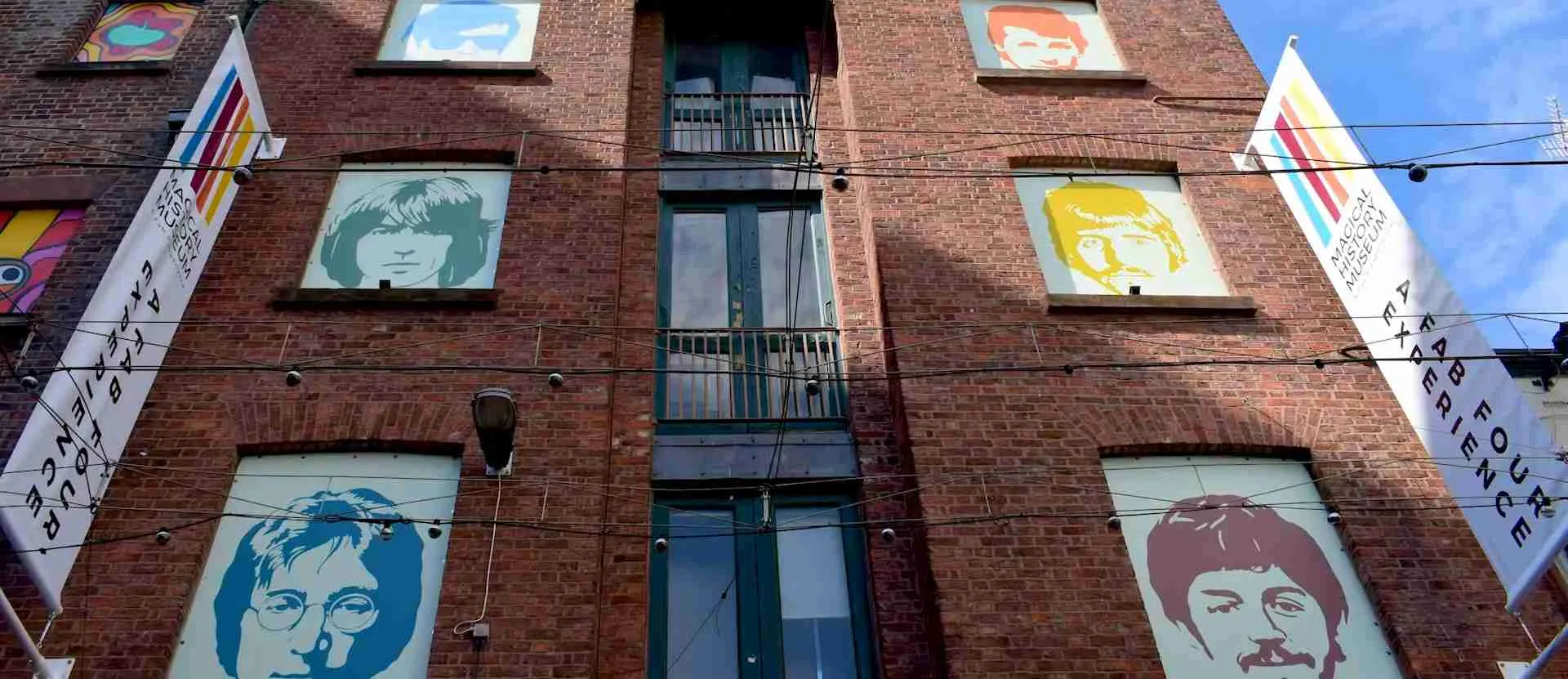
Liverpool’s music museums cluster around two distinct Beatles-focused attractions: the Beatles Story at Royal Albert Dock offers comprehensive chronological exhibitions covering the band’s Liverpool origins through global fame and individual solo careers, while Liverpool Beatles Museum on Mathew Street displays over 1,000 authentic items in a Grade II listed building opposite the Cavern Club. The British Music Experience expands beyond Beatles heritage to celebrate 70+ years of British popular music from 1945 onward through costumes, instruments, and interactive exhibits at the Cunard Building. These paid attractions complement the free music heritage sites scattered across the city center.
Football heritage manifests through the LFC Museum at Anfield Stadium, documenting Liverpool Football Club’s 130+ year history through trophy displays, memorabilia, and interactive exhibits. The museum operates independently from stadium tours, allowing cultural visitors to explore the collection without necessarily experiencing the full Anfield tour. Everton Football Club maintains a separate heritage collection at Goodison Park, though at smaller scale than the LFC facility.
Specialist museums round out Liverpool’s 2026 cultural landscape: Western Approaches HQ preserves the secret World War II command bunker where Atlantic convoy operations were coordinated; Victoria Gallery & Museum at the University of Liverpool combines art, natural history, and scientific instruments in a magnificent Victorian Gothic building; Garstang Museum of Archaeology displays Egyptian and Near Eastern artifacts from early 20th-century University excavations. These venues attract fewer casual tourists than the waterfront museums but reward visitors seeking depth in specific subjects.
The city’s museum geography concentrates heavily around the UNESCO-listed waterfront between Royal Albert Dock and Pier Head, where five major venues sit within 500 meters. This concentration makes Liverpool exceptionally walkable for cultural visitors, with most museums accessible via pleasant waterfront promenades rather than separate transit journeys. The city center Cultural Quarter around William Brown Street places World Museum and Walker Art Gallery opposite each other, while residential museums like Sudley House and specialist venues like Western Approaches require deliberate trips beyond the central zones.
Liverpool’s 2026 museum scene reflects significant recent investment alongside ongoing challenges. The Museum of Liverpool, opened 2011 at a cost exceeding £70 million, represents modern museum design with interactive technology and family-friendly spaces. The British Music Experience relocated to Liverpool in 2017 after closing its London O2 location, bringing national recognition to the city’s music credentials beyond Beatles tourism. Conversely, Tate Liverpool’s temporary displacement to RIBA North demonstrates the maintenance realities of historic buildings adapted as museums, with the Albert Dock refurbishment expected to continue into 2027.
Admission policies distinguish Liverpool’s museums sharply: National Museums Liverpool’s seven venues and Tate Liverpool maintain completely free entry as national institutions, while music-focused museums and football attractions operate commercially with standard adult admissions ranging £15-25. This creates a two-tier system where visitors can construct entirely free cultural days focusing on art, history, and maritime heritage, or budget £40-60 per person for comprehensive music and football experiences. The free venues deliver sufficient quality and variety that Liverpool competes favorably with London’s museums despite lacking national museum density.
The city’s 2026 cultural calendar layers temporary exhibitions onto permanent collections, with National Museums Liverpool hosting touring shows alongside collection displays. The Walker Art Gallery’s program typically includes one to two major art exhibitions annually, while Museum of Liverpool features social history exhibitions addressing contemporary Liverpool issues. The Beatles Story refreshes displays around anniversary dates, and British Music Experience rotates temporary exhibitions celebrating specific artists or movements. Checking current exhibitions before visiting maximizes the experience beyond permanent displays.
National Museums Liverpool Network 2026
National Museums Liverpool operates seven free-admission museums across the city and outlying areas, all sharing Tuesday through Sunday 10am-5pm operating hours and closed Mondays throughout 2026. The network represents one of Britain’s largest regional museum groups, managing collections spanning fine art, decorative arts, maritime history, social history, natural sciences, and world cultures. No advance booking is required for any National Museums Liverpool venue—visitors simply arrive during operating hours and enter directly.
Museum of Liverpool anchors the waterfront at Pier Head in a distinctive modern building opened 2011, devoted entirely to Liverpool’s history, people, and global significance. The museum occupies three floors examining Liverpool’s development from medieval settlement through Industrial Revolution prosperity to 20th-century decline and recent regeneration. Ground floor galleries explore Liverpool’s geography and early history; first floor exhibitions address the city’s maritime economy, music heritage, and sport; top floor displays examine Liverpool people’s daily lives across different eras. Signature exhibits include the Lion locomotive from 1838, one of the world’s oldest surviving steam engines; an immersive recreation of the Overhead Railway that circled Liverpool’s docks until 1956; and the People’s Republic gallery examining Liverpool’s radical political traditions.
The museum’s Liverpool Soundtrack exhibition spans multiple floors, tracing the city’s music from sea shanties through music hall to the Merseybeat explosion and beyond. Unlike dedicated Beatles museums, this section contextualizes the Fab Four within Liverpool’s broader musical culture including Cilla Black, Frankie Goes to Hollywood, and contemporary artists. Interactive elements allow visitors to remix tracks and explore how Liverpool’s geography and demographics influenced musical development. The Football Fever gallery celebrates Liverpool and Everton’s histories through trophies, kits, and memorabilia, offering free access to football heritage that rivals paid stadium museums in scope if not depth.
World Museum occupies a grand neoclassical building on William Brown Street in Liverpool’s Cultural Quarter, combining natural history, physical sciences, archaeology, and world cultures under one roof. The five-floor museum houses approximately one million objects across diverse collections. The natural history galleries feature impressive dinosaur skeletons, taxidermy specimens from Victorian expeditions, and a vivarium housing live reptiles and insects. The Ancient Egypt gallery displays mummies, funerary objects, and everyday items from pharaonic civilization. World cultures galleries examine African, Oceanic, and Asian societies through artifacts, textiles, and ceremonial objects.
The museum’s planetarium operates separately from general admission with timed shows requiring advance booking and charging £7 adults, £5 children for 25-minute programs exploring astronomy and space science. The aquarium in the Natural World gallery allows visitors to observe tropical fish, though on a modest scale compared to dedicated aquarium facilities. The museum excels at presenting diverse subjects within a single visit—families can experience dinosaurs, Egyptian mummies, and butterflies sequentially without moving between buildings. The top-floor café offers views across the city and reasonable refreshment prices.
Walker Art Gallery, directly opposite World Museum on William Brown Street, houses the national collection of fine and decorative arts for northern England. Often called “the National Gallery of the North,” the Walker’s collection spans European art from 1300 to the present, with particular strengths in Italian Renaissance painting, Dutch Golden Age works, Victorian narrative painting, and modern British art. Signature works include Simone Martini’s “Christ Discovered in the Temple,” one of Britain’s finest early Italian paintings; Rembrandt’s “Self Portrait as a Young Man”; Pre-Raphaelite masterpieces by Millais, Rossetti, and Burne-Jones; and modern British art by Hockney, Freud, and Hirst.
The gallery’s Victorian painting collection represents Britain’s most comprehensive outside London, showcasing the narrative, historical, and genre paintings that dominated 19th-century taste. The sculpture gallery features works from the Renaissance through Rodin to Henry Moore. Decorative arts galleries display ceramics, furniture, and metalwork demonstrating changing styles across centuries. Temporary exhibitions occupy dedicated spaces, with recent years featuring major shows on Impressionism, Lucian Freud, and contemporary photography. The Walker’s free admission makes world-class art accessible without London’s competitive crowding or timed entry systems.
Merseyside Maritime Museum occupies historic dock warehouses at Royal Albert Dock, exploring Liverpool’s relationship with the sea across multiple themed galleries. The Titanic and Liverpool gallery examines the city’s connections to the doomed liner—White Star Line operated from Liverpool, Titanic was registered in the city, and many crew members lived in Liverpool neighborhoods. Displays include photographs, personal effects, and survivor testimonies alongside technical explanations of the ship’s construction and sinking.
The Emigration gallery chronicles Liverpool’s role as Britain’s primary emigration port, through which nine million people departed for North America, Australia, and other destinations between 1830 and 1930. Interactive displays allow visitors to search passenger records and explore typical emigrant experiences from different eras. The Seized! gallery addresses customs and contraband enforcement, displaying confiscated items from contemporary border operations alongside historical smuggling techniques. Maritime Liverpool galleries trace the port’s development through models, paintings, and artifacts. The museum’s working displays of ship models, navigation instruments, and maritime technology appeal particularly to families and those interested in engineering.
International Slavery Museum, housed within the Maritime Museum building at Royal Albert Dock, addresses Liverpool’s central role in the transatlantic slave trade with unflinching historical honesty. Three main galleries examine Life in West Africa before European contact, the Middle Passage and enslavement experience, and legacies of slavery in contemporary society. The museum acknowledges Liverpool merchants’ dominance of the British slave trade during the 18th century, when Liverpool ships carried approximately 1.5 million enslaved Africans across the Atlantic.
Displays include shackles, branding irons, and other implements of enslavement alongside African art and cultural objects demonstrating sophisticated pre-colonial societies. Personal narratives from enslaved people humanize the historical statistics. The Legacy gallery examines ongoing racism and discrimination, connecting historical slavery to contemporary social justice issues. The museum provokes discomfort deliberately—Liverpool’s prosperity was built partly on this trade, and the institution refuses to sanitize or minimize that reality. Visitors seeking comprehensive Liverpool history should include this essential but challenging museum.
Sudley House in the Mossley Hill suburb, approximately four miles south of the city center, preserves the private art collection of Victorian shipping magnate George Holt within his former residence. The Georgian mansion displays Pre-Raphaelite paintings, 17th-century Dutch and Flemish works, and 18th-century British portraits in period room settings. The collection includes works by Turner, Gainsborough, Landseer, and Millais among others. The domestic setting distinguishes Sudley from gallery museum displays—paintings hang in the drawing rooms, libraries, and bedrooms where the Holt family originally enjoyed them.
The house and gardens offer insights into prosperous Victorian merchant life beyond the artworks themselves. Original furniture, decorative objects, and architectural features remain in situ. The experience feels more like visiting a wealthy relative’s home than touring a museum. Sudley’s location beyond central Liverpool reduces visitor numbers compared to waterfront venues, creating quieter viewing conditions ideal for contemplating individual works. Accessibility via public transport requires planning—buses from Liverpool city center take 25-30 minutes to reach Mossley Hill.
Lady Lever Art Gallery in Port Sunlight, approximately six miles from Liverpool city center, displays the exceptional collection assembled by industrial magnate William Lever in a purpose-built gallery opened 1922. The neoclassical building houses Britain’s finest Pre-Raphaelite collection outside Birmingham alongside Chinese ceramics, Wedgwood pottery, and classical sculpture. Pre-Raphaelite works include major paintings by Rossetti, Millais, Burne-Jones, and Ford Madox Brown displayed in galleries designed specifically for their scale and lighting requirements.
The decorative arts collection emphasizes 18th-century British furniture and Wedgwood ceramics, reflecting Lever’s personal collecting interests and his business as founder of Lever Brothers (later Unilever). Chinese export porcelain displays demonstrate the global trade networks that enriched Liverpool and enabled such collecting. The gallery building itself represents Edwardian museum architecture at its finest, with elaborate plasterwork, mosaic floors, and carefully controlled natural lighting. Port Sunlight village surrounding the gallery was built by Lever for his factory workers, creating a complete planned community that remains largely intact. Visiting Lady Lever Art Gallery combines museum experience with social history exploration of this model industrial village.
All National Museums Liverpool venues feature cafés (quality varies), accessible facilities, and family-friendly programming including activity backpacks, handling collections, and school holiday events. The shared Tuesday-Sunday schedule creates planning considerations—visitors spending Monday in Liverpool should focus on Tate Liverpool or paid music museums rather than National Museums Liverpool venues. The shared 5pm closing time provides sufficient hours for comprehensive visits without evening access. Photography is permitted throughout National Museums Liverpool for personal use without flash.
Music Museums & Heritage Sites 2026
Liverpool’s music museum landscape in 2026 centers on three major paid attractions celebrating the city’s popular music heritage, supplemented by free heritage markers and sites throughout the city center. These venues range from Beatles-focused exhibitions to comprehensive surveys of British popular music across seven decades.
The Beatles Story occupies purpose-built spaces at Royal Albert Dock and a secondary location at Pier Head, offering the world’s largest permanent Beatles exhibition. Admission includes both locations and costs approximately £18-22 for adults in 2026 (check official website for current rates as pricing may vary), with reductions for children, seniors, students, and families. Tickets include multilingual audio guides available in twelve languages, providing narration from John Lennon’s sister Julia Baird. Pre-booking online is strongly recommended as the attraction operates timed entry slots to manage capacity.
The Albert Dock exhibition follows a chronological path through Beatles history beginning with their Liverpool childhoods and early influences. Recreated environments include the Casbah Coffee Club where the band honed their skills, Hamburg’s red-light district clubs where they developed as performers, and the Cavern Club where Brian Epstein discovered them. Abbey Road Studios recreations allow visitors to pose at the mixing desk and crossing. The exhibition progresses through Beatlemania, the band’s studio evolution, individual solo careers, and lasting legacy. Authentic artifacts include John Lennon’s glasses, original instruments, handwritten lyrics, and stage costumes.
The Pier Head location focuses on John Lennon’s solo career and his life in New York, examining his peace activism and artistic partnerships with Yoko Ono. This secondary space receives less visitor traffic than Albert Dock, offering quieter contemplation of Lennon’s post-Beatles work. Combined, the two locations require approximately 2-3 hours for thorough exploration at a comfortable pace. The Beatles Story operates daily except Christmas Day and Boxing Day, with hours varying seasonally—typically 10am-5pm or 10am-6pm depending on season.
The attraction’s strength lies in comprehensive storytelling that contextualizes the Beatles within Liverpool’s geography and culture. Unlike simple memorabilia displays, the exhibitions explain how Liverpool’s port culture, Irish immigration, American musical influence via transatlantic sailors, and working-class aspirations shaped the band’s development. Interactive elements include a Yellow Submarine installation, vinyl listening stations, and video footage of rare performances. The Fab4 Store sells official Beatles merchandise, while Fab4 Café serves Beatles-themed refreshments. Accessibility features include lift access to all areas, though a 2026 note indicates the Albert Dock entrance lift requires refurbishment with timing not yet confirmed.
Liverpool Beatles Museum on Mathew Street operates independently from the Beatles Story, occupying a Grade II listed building opposite the Cavern Club in the heart of Beatles heritage territory. This museum houses one of the world’s largest privately-owned Beatles collections with over 1,000 authentic items across three floors. The collection emphasizes genuine artifacts owned and used by the Beatles rather than reproductions or general 1960s memorabilia. Displays include original instruments from the Hamburg era, John Lennon’s Sgt. Pepper medals, the white cello from Magical Mystery Tour, and Paul McCartney’s bass amplifier.
Personal items feature prominently: handwritten letters between band members, unseen footage of rehearsals and performances, and clothing worn during specific concerts or recording sessions. The museum’s location on Mathew Street places it at the epicenter of Beatles tourism—visitors can tour the museum then walk across to the Cavern Club within thirty seconds. The three-floor layout requires stair climbing with no lift access, limiting accessibility for those with mobility challenges. Admission pricing varies; check the official website for current rates. The museum opens daily with hours typically 10am-5pm or 10am-6pm.
British Music Experience occupies the Cunard Building at Pier Head, celebrating British popular music from 1945 to present day through the UK’s only museum dedicated specifically to this subject. Admission costs £19 for adults when pre-booked online, £21 for walk-up purchases, £18 for students and seniors, and £11.50 for children aged 5-15 (check official site for current pricing as rates may vary). Children under 5 enter free. Family tickets covering two adults and two children cost £49.50 when pre-booked. All tickets include annual pass validity—visitors can return multiple times within one year from purchase date, excellent value for those spending extended periods in Liverpool or making repeat visits.
The museum organizes content chronologically through zones examining specific eras in British music evolution: 1945-1962 covers jazz, skiffle, and rock and roll’s early British adoption; the 1960s British Invasion receives extensive treatment; 1970s punk and progressive rock; 1980s new wave and synth-pop; Britpop and rave culture of the 1990s; and 21st-century grime, indie, and electronic music. Each zone features costumes, instruments, and personal items from defining artists: Freddie Mercury stage outfits, David Bowie’s Ziggy Stardust costumes, Spice Girls platform shoes, Noel Gallagher’s Union Jack guitar, and contemporary artist materials.
Interactive exhibits distinguish the British Music Experience from static displays. The Gibson Interactive Studio allows visitors to play drums, guitar, bass, and keyboards with instruction modules. Dance the Decades offers motion-capture technology teaching twelve iconic British dance styles from different eras. The Vocal Booth lets visitors record themselves singing classic British songs with vocal coaching. These hands-on elements appeal particularly to families and younger visitors, making the museum entertaining beyond historical interest. The experience typically requires 1.5-2.5 hours for thorough exploration including interactive participation.
The museum opens daily between March 30 and September 6, 2026 throughout school holidays, then switches to Wednesday through Sunday operation during quieter periods. Hours run 10am-5pm with last admission at 3:45pm. The Grade II listed Cunard Building location adds architectural interest—the museum occupies historic spaces within the former headquarters of Cunard shipping line. The Star Café and Bar on the ground floor serves food and drinks without requiring museum admission, while the Merch Store sells music-related gifts, vinyl, and books. Audio guides are available free for pre-booked tickets or £3 for walk-up purchases, offered in eight languages including British Sign Language.
Beyond these major paid attractions, Liverpool’s free music heritage includes the Cavern Club on Mathew Street (live music venue, not museum, with admission charges for performances), Strawberry Field (National Trust site with exhibition about John Lennon’s childhood inspiration), and Penny Lane street signs attracting Beatles pilgrims. The Cavern Quarter around Mathew Street concentrates Beatles-themed bars, shops, and photo opportunities. St. Peter’s Church in Woolton, where John Lennon and Paul McCartney first met at a church fete July 6, 1957, maintains free access and commemorative information boards. Mendips (John Lennon’s childhood home) and 20 Forthlin Road (Paul McCartney’s childhood home) require National Trust bookings and operate limited hours.
Music museum visitors should consider geographic clustering when planning 2026 itineraries. Beatles Story at Royal Albert Dock sits within 300 meters of British Music Experience at Pier Head—these two venues combine naturally in a single morning or afternoon. Liverpool Beatles Museum on Mathew Street requires a fifteen-minute walk from the waterfront or brief transit journey, positioned in the city center Cultural Quarter. Enthusiasts can experience all three music museums in a single long day, though this creates intensive Beatles/music focus without broader cultural variety.
Tate Liverpool & Contemporary Art 2026
Tate Liverpool operates from a temporary location at RIBA North, Mann Island throughout 2026 while the iconic Royal Albert Dock building undergoes comprehensive redevelopment expected to complete in 2027. The temporary venue offers significantly reduced exhibition space compared to the full Albert Dock facility but maintains Tate’s commitment to free admission and contemporary art programming.
RIBA North provides two small galleries on separate floors connected by stairs and lift, plus a dedicated family activity area, shop, and café. The ground floor gallery typically displays a curated selection from Tate’s modern and contemporary collection alongside material from RIBA’s architectural archives, creating dialogues between visual art and architectural design. The first floor gallery hosts temporary exhibitions exploring specific artists, movements, or themes from Tate’s holdings. Exhibition rotation occurs more frequently than typical museum programs given the limited display space—checking current shows before visiting ensures awareness of specific content available during any particular 2026 period.
Free admission continues at the temporary location with no advance booking required. Visitors simply arrive during operating hours—daily 10am-5:50pm including Mondays, distinguishing Tate Liverpool from National Museums Liverpool’s Monday closures. The extended daily access makes Tate Liverpool particularly valuable for visitors whose Liverpool itineraries fall on Mondays when other major museums close.
The family area features art materials, books, games, and display boards for children’s artwork, maintaining Tate’s commitment to engaging young visitors even in reduced circumstances. Free family activity sessions run regularly, with expanded programming during school holidays. The sessions typically involve creative workshops responding to current exhibitions, drawing activities, and collaborative projects. All ages participate together rather than age-segregated groups.
The temporary café maintains Tate’s food quality standards with breakfast, lunch, and afternoon tea service including fresh soups, toasties, pastries, and hot drinks. Prices match typical museum café levels—coffee £3-4, lunch items £6-9, cakes £4-5. The café operates cashless payment only via card or contactless methods. The shop sells art books, exhibition catalogues, homeware, posters, and prints including Liverpool-specific items like the Colours of Liverpool collaboration with local design studio Dorothy and David Shrigley’s humorous designs. Shop access does not require museum entry—visitors can purchase items without seeing exhibitions.
The Mann Island location sits between the Strand and Museum of Liverpool, approximately 200 meters from the closed Albert Dock Tate building. Visitors should navigate specifically to Mann Island rather than Royal Albert Dock to avoid confusion. The RIBA North entrance faces the waterfront with clear signage. Accessibility features include step-free ground floor access, a lift to first floor galleries, and an accessible toilet on the first floor. The nearest Changing Places facility is located at Museum of Liverpool.
Tate Liverpool’s temporary status creates both limitations and opportunities. The reduced space eliminates the sweeping gallery halls and warehouse architecture that distinguished the Albert Dock experience. Major touring exhibitions that require extensive space cannot be accommodated during 2026. Visitors familiar with the full Tate Liverpool from previous years will find the RIBA North offering modest by comparison. However, the intimate scale allows closer engagement with individual works, the collaboration with RIBA brings fresh perspectives on art and design intersections, and the continued free admission preserves access to international contemporary art for Liverpool residents and visitors.
The Albert Dock redevelopment aims to reveal original warehouse features, improve accessibility, and create enhanced visitor facilities. When Tate Liverpool returns to the dock in 2027 or beyond, the building will offer improved infrastructure while maintaining the industrial architecture that made the original conversion successful. The temporary displacement represents investment in long-term quality rather than permanent downsizing.
Beyond Tate Liverpool, the city’s contemporary art scene includes Open Eye Gallery on the waterfront, dedicated to photography and lens-based media. Open Eye has operated since 1977 as Britain’s longest-running photography gallery, presenting cutting-edge work from international and local photographers through rotating exhibitions. Admission is free with Tuesday-Sunday operating hours. The gallery occupies a purpose-designed space at Mann Island adjacent to Tate Liverpool’s temporary location, creating a contemporary art cluster. Open Eye’s program emphasizes documentary photography, photojournalism, and experimental techniques rather than commercial or celebrity photography.
Commercial galleries in the Baltic Triangle and Ropewalks districts supplement the institutional offerings with contemporary art for sale. These spaces host monthly First Friday events when galleries coordinate late openings with receptions, though participation varies by individual venue and season. The FACT (Foundation for Art and Creative Technology) building on Wood Street presents media art, experimental film, and digital culture through exhibitions and screenings, operating as a hybrid arts center and cinema with some free exhibitions alongside ticketed film programs.
Football Museums: LFC & Everton Heritage 2026
Liverpool’s two major football clubs operate museum facilities celebrating their respective histories, with Liverpool Football Club maintaining the city’s most comprehensive football heritage attraction while Everton offers more modest provisions.
The LFC Museum at Anfield Stadium showcases Liverpool Football Club’s 130+ year history through newly reimagined interactive exhibitions opened in recent years. The museum operates independently from stadium tours, allowing visitors interested solely in the collection to access exhibits without experiencing the full Anfield tour. Museum-only admission provides entry to all exhibition spaces including the trophy room housing all six European Cups, nineteen league title trophies, and numerous domestic cup wins. Pre-booked museum-only tickets typically cost less than combined tour packages (check official website for current museum-only and tour+museum pricing as rates vary).
The museum layout guides visitors chronologically through LFC history from the club’s 1892 founding through early successes, the dominant 1970s-80s era under Bill Shankly, Bob Paisley, and Joe Fagan, the difficult 1990s-2000s period without league titles, and the 2019-20 Premier League championship that ended the thirty-year wait. Nine themed spaces examine different aspects of club heritage: Origins explores the founding and early decades; The Boot Room celebrates the coaching dynasty that dominated European football; Anfield Roar examines the famous Kop stand and supporter culture; This Is Anfield displays the iconic sign that players touch before matches; Champion Moments highlights defining victories; and The Boom Room features an immersive audiovisual experience of match day atmosphere.
Interactive elements include audio guides narrating exhibits through headphones, video interviews with legendary players and managers, and hands-on displays allowing visitors to test football skills. The trophy room places all major silverware together for the first time, creating impressive visual impact from the sheer quantity of success. Temporary exhibitions rotate through dedicated spaces—the 2024-25 season “Champions” exhibition celebrating the Premier League title continued into 2026 in adapted form. Photography is permitted throughout the museum for personal use.
The museum operates daily except home match days, Christmas Day (December 25), New Year’s Day (January 1), and April 15 (Hillsborough memorial). Hours run 10am-5pm with last admission at 4pm on non-match days. On match days, final admission occurs one hour before kickoff with varying times depending on fixture scheduling. Visitors planning match day visits should verify hours carefully against the fixture calendar. The LFC Retail Store adjacent to the museum opens 9am-5pm Monday-Saturday and 10am-4pm Sundays, operating independently from museum access.
Combined stadium tour and museum packages provide fuller Anfield experiences. These self-paced tours include museum access plus behind-the-scenes stadium areas: press conference room, players’ tunnel with the This Is Anfield sign, home dressing room, managers’ dugout, and photography opportunities pitch-side from the Kop and Main Stand. Audio guides narrate the tour route in thirteen languages. Combined tour and museum admission costs approximately £25 adults and £16 children under 16 when pre-booked online, with £2 per ticket surcharge for walk-up same-day purchases (verify current pricing as rates may vary). Family tickets covering two adults and two children offer value at approximately £65. Tours run every hour 10am-3pm with 90-minute duration.
Premium experiences include Legends Q&A sessions where former players share anecdotes and answer questions, followed by stadium tour and museum access. These special events occur on select dates throughout 2026 with participants like Mark Lawrenson, John Aldridge, Phil Thompson, and Steve McMahon. Tickets include signed souvenir guidebooks. The Anfield Experience packages add food, drinks, and meeting opportunities to standard tours. Special occasion bookings allow birthday celebrations and group events with customized elements.
Anfield’s location approximately two miles northeast of Liverpool city center requires deliberate travel planning. Stanley Park Car Park provides parking with charges applying. Public transport options include buses from Liverpool ONE station (25-30 minutes) or taxis from the city center (10-15 minutes, approximately £8-12). Walking from central Liverpool takes 35-45 minutes. Visitors combining Anfield with waterfront museums should allow transit time and avoid assuming walkable connections.
Everton Football Club’s heritage collection at Goodison Park operates on smaller scale than the LFC Museum. The Everton Museum and Tour provides access to club history through memorabilia displays and stadium tour elements. Goodison Park, opened 1892 as England’s first purpose-built football stadium, offers architectural and historical interest beyond the modern facilities typical of newer grounds. The stadium faces uncertain future as Everton plans relocation to a new waterfront stadium at Bramley-Moore Dock, potentially opening 2024-25 season. This impending move creates transition period where Goodison tours may expand or contract depending on development timelines.
Everton tour and museum admission typically costs £15-18 for adults with reductions for children and seniors (verify current rates through official channels). Tours operate on more limited schedules than Anfield, often weekends only or specific weekdays, with advance booking essential. The collection includes trophies from Everton’s nine league championships and five FA Cup victories, plus memorabilia from notable players and managers throughout the club’s 1878-present history. Goodison’s traditional architecture—stands retain names like Gwladys Street End and Bullens Road Stand—provides period atmosphere that newer stadiums cannot replicate.
Football museum visitors should recognize these venues appeal primarily to supporters or those with strong football interest rather than casual cultural tourists. The LFC Museum achieves professional museum standards with thoughtful curation and interactive engagement. Everton’s offering provides authentic heritage in a historic setting but at smaller institutional scale. For cultural visitors prioritizing Liverpool’s art, maritime, and music museums, football heritage represents optional rather than essential programming.
Specialist & University Museums 2026
Liverpool’s specialist museums address focused subjects from World War II history to Egyptian archaeology, generally attracting dedicated enthusiasts rather than mass tourism but delivering exceptional depth within their domains.
Western Approaches HQ Museum preserves the secret underground command bunker from which Allied forces coordinated Atlantic convoy operations during World War II. Located beneath Exchange Buildings in Liverpool city center, the facility operated 1941-1945 as the nerve center for protecting supply ships from German U-boat attacks. The museum occupies the original bunker spaces with period furnishings, equipment, and displays recreating the wartime environment. Admission costs £15 per adult in 2026 (check official website as pricing may vary), with reductions for children, seniors, and concessions.
Visitors descend into the bunker’s interconnected rooms including the main operations room with its large plotting table where ship positions were tracked, communications rooms housing period radio and telephone equipment, cipher rooms where coded messages were processed, and the Commander-in-Chief’s office and sleeping quarters. The atmospheric setting—underground rooms with low ceilings, narrow corridors, and period lighting—conveys wartime tension effectively. Mannequins in period uniforms and recorded sound effects enhance immersion. Information panels explain convoy system mechanics, U-boat threat evolution, and specific operations coordinated from this location.
The Battle of the Atlantic proved decisive in World War II’s outcome—Britain’s survival depended on Atlantic convoys delivering food, fuel, and materials despite U-boat attacks that sank thousands of ships. Western Approaches HQ’s role in coordinating convoy routing, escort deployment, and anti-submarine operations contributed significantly to Allied victory. The museum contextualizes Liverpool’s wartime experience beyond the bombing damage (Liverpool ranked Britain’s second-most bombed city) to strategic importance as command center.
The bunker environment creates accessibility challenges. Visitors must negotiate stairs to enter and exit—no lift access exists. The rooms, designed for military efficiency rather than public circulation, feature low ceilings, narrow passages, and period furniture placement. Those with mobility limitations or claustrophobia may find the environment difficult. The museum operates Wednesday-Sunday with seasonal hour variations—typically 10am-4pm or 10am-5pm. Booking ahead is recommended though not always required except during peak periods. Photography is permitted. The museum sits above ground level in Exchange Buildings, central Liverpool, easily walkable from major attractions.
Victoria Gallery & Museum (VG&M) occupies a magnificent Victorian Gothic building on the University of Liverpool campus, combining art collections, natural history specimens, and scientific instruments. The building itself, designed by Alfred Waterhouse and opened 1892, merits attention for architectural quality—the grand staircase, decorative tilework, and period features create spectacular Victorian institutional atmosphere. Admission is free with Tuesday-Sunday opening hours 10am-5pm.
The art collection emphasizes 19th and 20th-century British painting with works by Lucian Freud, J.M.W. Turner, and Dante Gabriel Rossetti among others. The galleries occupy the building’s upper floors with natural light through large windows. Decorative arts include ceramics, furniture, and metalwork demonstrating design evolution. The natural history collection features geological specimens, fossils, and taxidermy from University teaching collections assembled over 150+ years. Scientific instrument displays showcase apparatus used in University research from Victorian era onward, including early microscopes, astronomical equipment, and physics demonstration devices.
Temporary exhibitions rotate through dedicated spaces, often highlighting specific artists from the collection or thematic surveys. The VG&M hosts University graduation ceremonies and special events alongside museum operations, occasionally affecting gallery access—checking before visiting confirms availability. The building’s location on Brownlow Hill places it near the city center but beyond the concentrated waterfront museum zone, approximately ten minutes’ walk from William Brown Street’s Walker Art Gallery and World Museum. The café serves light refreshments. Accessibility features include a lift to upper floors, though some gallery areas require stair access.
Garstang Museum of Archaeology, also operated by the University of Liverpool, displays Egyptian, Sudanese, and Near Eastern artifacts from excavations conducted by Professor John Garstang in the early 20th century. The compact museum occupies teaching spaces within the School of Histories, Languages and Cultures building, presenting material primarily for academic purposes but welcoming public visitors. Admission is free with limited opening hours—typically afternoons Tuesday-Friday during term time, with closures during University vacation periods.
The Egyptian collection includes mummies, funerary objects, pottery, and daily life artifacts from sites across Egypt. The Sudanese material derives from Garstang’s excavations at Meroë and other Nubian locations, representing one of Britain’s significant collections of material from this region. Near Eastern holdings feature pottery, seals, and artifacts from Palestine excavations. The displays follow academic museum conventions with systematic organization by site and period rather than dramatic storytelling approaches typical of public museums.
The museum’s teaching collection status means exhibits emphasize archaeological context and scholarly interpretation over entertainment value. Information panels assume visitor familiarity with archaeological terminology and chronological systems. This creates more demanding viewing experience than public museums but rewards those seeking serious archaeological content. Photography policies vary—verify current rules on arrival as academic collections sometimes restrict imaging.
Access requires navigating University campus with its multiple buildings and internal signage. The museum occupies the third floor of the Abercromby Square building, accessed via stairs or lift. Term-time scheduling means potential closures during Easter, summer, and Christmas breaks—checking University vacation dates before planning visits prevents wasted journeys. The museum sits approximately fifteen minutes’ walk from city center, accessible via the same routes reaching Victoria Gallery & Museum.
These specialist venues suit visitors seeking depth in specific subjects or architectural interest beyond conventional museum experiences. Western Approaches HQ delivers immersive World War II history unavailable elsewhere in Liverpool. Victoria Gallery & Museum combines Victorian architecture with diverse collections in quieter setting than waterfront attractions. Garstang Museum provides authentic archaeological scholarship. None compete with National Museums Liverpool or music museums for visitor numbers, creating contemplative environments for focused exploration.
Waterfront Museum Quarter 2026
Liverpool’s UNESCO-listed waterfront between Royal Albert Dock and Pier Head concentrates five major museums within a compact pedestrian-friendly zone, creating Britain’s most walkable museum quarter outside central London. This geographic clustering makes multi-venue cultural days highly efficient without transit planning or lengthy walks between attractions.
Royal Albert Dock anchors the southern end of the museum quarter. This Grade I listed Victorian warehouse complex, opened 1846 and revolutionary in its cast-iron and brick fireproof construction, fell into dereliction by the 1970s before comprehensive restoration during the 1980s transformed it into cultural and leisure destination. The dock’s atmospheric cobbled quays, historic warehouses, and waterfront location create distinctive setting for multiple attractions housed within the converted buildings.
Merseyside Maritime Museum occupies the most historic position at the dock’s northwest corner in original warehouse buildings designed for cargo storage and handling. The museum’s vertical layout across multiple warehouse floors preserves historic architectural features—cast-iron columns, wooden beam ceilings, and large goods hoists—integrated into exhibition design. Windows overlooking the dock waters connect displays to the maritime environment they document. Free admission and Tuesday-Sunday 10am-5pm hours match National Museums Liverpool network standards.
International Slavery Museum shares the same building as the Maritime Museum, accessed via shared entrance and vertical circulation. The integration acknowledges the inseparable connection between Liverpool’s maritime prosperity and involvement in the slave trade. Visitors can easily combine both museums in a single visit—the shared building allows seamless transitions between maritime commerce and its human cost. The combined facility typically requires 2-3 hours for thorough exploration of both collections.
The Beatles Story occupies separate warehouse spaces at the opposite (southern) end of Royal Albert Dock. The chronological exhibition flow guides visitors through interconnected rooms within the warehouse structure, with the original brick walls and industrial beams providing atmospheric backdrop to Beatles history displays. Admission fees (approximately £18-22 adults, check official site for current rates as pricing may vary) and timed entry distinguish this from the free Maritime/Slavery museums. The Pier Head secondary Beatles Story location sits 400 meters north along the waterfront, accessed via pleasant quayside walk.
Tate Liverpool’s permanent home at Royal Albert Dock remains closed throughout 2026 for redevelopment, with temporary operations at RIBA North on Mann Island. When Tate Liverpool returns to the dock (expected 2027), the reopened building will restore the waterfront museum quarter’s contemporary art component. The closure disrupts the established four-museum Royal Albert Dock cluster that previously offered art, maritime history, slavery heritage, and Beatles culture in immediate proximity.
Museum of Liverpool occupies a distinctive modern building at Pier Head, the waterfront’s northern end. Opened 2011, the building’s contemporary architecture contrasts deliberately with the Victorian warehouses of Royal Albert Dock 400 meters south. The structure’s cantilevered upper floors and extensive glazing create dramatic street presence while allowing harbor views from interior galleries. Free admission and National Museums Liverpool operating hours (Tuesday-Sunday 10am-5pm) make this easily combinable with nearby attractions.
British Music Experience operates from the Grade II listed Cunard Building at Pier Head, adjacent to Museum of Liverpool. The Cunard Building, completed 1917 as headquarters for the Cunard shipping line, forms part of the “Three Graces” landmark buildings defining Liverpool’s historic waterfront alongside the Royal Liver Building and Port of Liverpool Building. Paid admission (£19 adults pre-booked, check official site as pricing may vary) and daily opening hours distinguish British Music Experience from surrounding free museums. The Cunard Building’s position makes it walkable within minutes from Museum of Liverpool.
Tate Liverpool’s temporary location at RIBA North on Mann Island sits between Pier Head and Royal Albert Dock, literally between Museum of Liverpool and the closed Tate building. This positioning maintains Tate’s waterfront presence during redevelopment. Open Eye Gallery occupies the same Mann Island development, creating a contemporary art cluster within the broader museum quarter. Both Tate Liverpool temporary galleries and Open Eye Gallery offer free admission.
The waterfront museum quarter’s compact geography enables efficient cultural itineraries. A typical comprehensive day might combine: morning at Museum of Liverpool (free, 2 hours), waterfront walk to Royal Albert Dock (5 minutes), Maritime Museum and International Slavery Museum (free, combined 2-3 hours), lunch break at dock cafés or restaurants, afternoon at Beatles Story (paid, 2 hours), then British Music Experience (paid, 2 hours). This ambitious schedule covers five major venues in approximately 8-9 hours including breaks. More relaxed pacing reduces to three museums plus adequate viewing time and meals.
Alternative combinations emphasize free venues: Museum of Liverpool, Maritime Museum, International Slavery Museum, Tate Liverpool temporary galleries, and Open Eye Gallery create entirely cost-free day requiring no admission charges. Budget-conscious visitors can experience substantial cultural programming without any museum admission expenses, allocating funds instead to food, transport, and other Liverpool experiences.
The waterfront’s pedestrian environment makes navigation straightforward. Wide promenades connect all venues with clear sightlines—visitors standing outside Museum of Liverpool can see Royal Albert Dock’s warehouse buildings and orient accordingly. Signage marks major attractions. The flat terrain suits those with mobility limitations better than hilly city center geography. Weather exposure becomes consideration during rain or wind—the promenades offer minimal shelter between buildings. Royal Albert Dock’s covered colonnades around the warehouse perimeter provide some protection, but transitions between venues occur in open conditions.
Dining options concentrate around Royal Albert Dock where restaurants, cafés, and pubs occupy converted warehouse spaces around the dock perimeter. Choices range from chain restaurants to independent cafés, with outdoor terrace seating during suitable weather. Prices match typical tourist area levels—lunch £10-18 per person, coffee £3-4. Museum cafés within individual venues offer alternatives: Museum of Liverpool café, Maritime Museum café, Beatles Story Fab4 Café, and British Music Experience Star Café all serve meals and refreshments without requiring museum admission in most cases. Pack lunches can be consumed on outdoor benches and seating areas along the promenades.
Public toilets are available within museums and in public facilities at Royal Albert Dock. Accessibility features vary by building—modern Museum of Liverpool and RIBA North offer comprehensive accessible design, while converted warehouse museums adapt historic structures with varying success. Lifts access most gallery levels in converted buildings, though some Victorian staircases remain necessary for reaching certain spaces.
The waterfront location places museums approximately fifteen minutes’ walk from Liverpool Lime Street train station and city center shopping districts. James Street and Moorfields stations on the Merseyrail network sit closer at approximately five minutes’ walk. Bus services from Liverpool ONE bus station reach the waterfront in similar times. This positioning makes the museum quarter accessible as part of broader Liverpool itineraries without requiring dedicated cultural travel days separate from other city experiences.
City Center Cultural Quarter Museums 2026
Liverpool’s Cultural Quarter around William Brown Street concentrates institutions serving primarily educational and artistic purposes, creating formal civic museum presence distinct from the waterfront’s maritime and popular culture focus. The quarter occupies elevated ground east of the city center’s commercial core, approximately ten minutes’ walk from Lime Street station.
Walker Art Gallery and World Museum face each other across William Brown Street, both housed in impressive neoclassical buildings forming part of a planned Victorian cultural complex. This deliberate architectural grouping—the buildings also include Central Library, County Sessions House, and Wellington’s Column—represents civic ambition to provide cultural and educational facilities matching Liverpool’s commercial prosperity. The ensemble creates monumental setting lacking at the converted industrial buildings dominating waterfront museum areas.
Walker Art Gallery anchors the west side of William Brown Street in a Greek Revival building opened 1877 then substantially extended in the 1930s. The original galleries feature elaborate plasterwork, mosaic floors, and top-lit exhibition spaces designed specifically for fine art display. Modern extensions add contemporary gallery environments while maintaining visual harmony with the Victorian core. The building itself rewards architectural attention beyond the artworks it contains—the grand entrance hall, processional staircases, and period decoration demonstrate Victorian cultural seriousness.
The gallery’s collection spans seven centuries of European art with particular emphasis on British painting from the 18th through 20th centuries. Italian Renaissance paintings occupy galleries displaying works by Simone Martini, Ercole de’ Roberti, and others from the pre-1500 period. Dutch Golden Age holdings include works by Rembrandt, Frans Hals, and lesser-known masters demonstrating 17th-century Netherlands’ artistic sophistication. British 18th-century galleries feature portraits by Gainsborough, Reynolds, and Ramsay alongside genre scenes and early landscape painting.
The Victorian galleries constitute the Walker’s signature strength, presenting Britain’s finest regional collection of 19th-century narrative, historical, and genre painting. Pre-Raphaelite works by Millais, Rossetti, Burne-Jones, and Ford Madox Brown showcase this movement’s meticulous technique and literary subjects. Academic Victorian painters like Lawrence Alma-Tadema, Frederic Leighton, and Edward Poynter demonstrate the period’s classical revival and technical virtuosity. Social realist works address urban poverty, moral narratives, and contemporary life. These paintings, often dismissed by modernist critics, receive respectful presentation acknowledging their historical significance and popular appeal.
Modern British art galleries advance through early 20th-century movements to contemporary work. The collection includes pieces by Henry Moore, Barbara Hepworth, David Hockney, Lucian Freud, and Damien Hirst among others. Sculpture galleries feature works from Renaissance bronzes through Rodin to contemporary installations. Decorative arts displays present ceramics, furniture, and metalwork demonstrating changing design approaches across centuries. The Craft and Design Gallery examines 20th-century developments in applied arts.
Temporary exhibitions occupy dedicated ground floor galleries, mounting 1-2 major shows annually. Recent years have featured exhibitions on Impressionism, Lucian Freud, and other significant artists or movements. Exhibition quality matches major London galleries, benefiting from Tate’s network relationships and National Museums Liverpool’s resources. Temporary exhibitions sometimes charge admission while permanent collections remain free—check current status when planning visits.
The Walker operates Tuesday-Sunday 10am-5pm matching National Museums Liverpool’s network schedule, with Monday closures. Free admission applies to permanent collections. The building features step-free ground floor access with lift service to upper galleries. A café serves refreshments. The gift shop sells exhibition catalogues, art books, and reproduction prints. School groups and families receive dedicated programming during term time and holidays. Photography is permitted in permanent collection galleries for personal use without flash.
World Museum directly opposes the Walker across William Brown Street in another substantial neoclassical building, creating the Cultural Quarter’s institutional core. The museum combines natural history, archaeology, world cultures, and physical sciences under one roof across five floors. This encyclopedic scope reflects Victorian educational philosophy emphasizing comprehensive knowledge across disciplines rather than specialized focus.
Ground floor galleries address natural history through taxidermy specimens, skeleton displays, and habitat dioramas. The dinosaur gallery features impressive skeletons including Tyrannosaurus rex cast and other Mesozoic specimens. Bug House presents live insects, arachnids, and other invertebrates in naturalistic enclosures—tarantulas, leaf-cutter ants, giant millipedes, and stick insects demonstrate arthropod diversity. The aquarium houses tropical fish, though on modest scale compared to dedicated aquarium facilities. These natural history displays appeal particularly to families with children, creating high visitor traffic especially during school holidays.
First floor archaeology galleries examine Ancient Egypt, Greece, Rome, and prehistoric Britain through artifacts, sculptures, and contextual displays. The Egypt gallery features mummies, funerary objects, hieroglyphic inscriptions, and everyday items demonstrating pharaonic civilization’s complexity. Greek and Roman galleries present pottery, sculpture, coins, and architectural fragments. British archaeology addresses Stone Age, Bronze Age, Iron Age, and Roman Britain through excavated materials. Information panels explain archaeological methods, dating techniques, and historical interpretation approaches.
World cultures galleries on upper floors examine African, Oceanic, Asian, and American societies through ethnographic collections assembled largely during British Empire expansion. Displays include textiles, ceremonial objects, weapons, domestic items, and artworks demonstrating cultural diversity. Contemporary curatorial practice increasingly acknowledges colonial contexts in which many objects were acquired, addressing repatriation debates and cultural sensitivity issues affecting European ethnographic collections. The galleries provide windows into non-European societies while wrestling with historical legacies of imperial collecting.
The planetarium operates separately from general museum admission, requiring timed show tickets costing £7 adults, £5 children for 25-minute astronomy programs. Shows run throughout the day with varying themes exploring planets, stars, space exploration, and cosmology. Advanced booking is recommended especially during weekends and holidays when shows sell out. The planetarium occupies the building’s top floor with dome screen creating immersive environment for astronomical visualization.
Physical sciences galleries examine topics from early scientific instruments through industrial applications to contemporary research. Interactive displays encourage hands-on exploration of physics, chemistry, and engineering principles. The galleries suit families and school groups more than adult visitors seeking sophisticated scientific content. The museum’s educational mission emphasizes inspiring young people’s scientific interest through accessible presentations rather than advancing specialist knowledge.
World Museum operates Tuesday-Sunday 10am-5pm with Monday closures matching National Museums Liverpool standards. Free admission applies except for planetarium shows. The building’s five floors connect via lifts and grand central staircase featuring elaborate ironwork and decorative details. Accessibility features include step-free entrance and lift access to all floors. The café on an upper floor provides refreshments and city views. The shop sells natural history books, science toys, and museum-themed merchandise. Photography is permitted in most galleries.
The Cultural Quarter’s museum offerings create deliberate contrast with waterfront attractions. Where waterfront museums emphasize Liverpool’s specific maritime and popular culture heritage, Cultural Quarter institutions provide universal education across art, natural sciences, archaeology, and world cultures. The Walker Art Gallery and World Museum address visitors seeking traditional museum experiences—contemplating Renaissance paintings or examining dinosaur skeletons—rather than Liverpool-specific narratives.
The quarter’s elevated position and formal architecture reinforce this difference. The William Brown Street buildings announce civic pride and cultural aspiration through Greek Revival columns, grand staircases, and monumental proportions. These structures contrast sharply with Royal Albert Dock’s converted warehouses and Museum of Liverpool’s contemporary design. The architectural formality suits the collections’ educational seriousness and artistic excellence.
Visitor demographics differ between Cultural Quarter and waterfront museums. The Walker Art Gallery attracts art enthusiasts, students, and contemplative viewers seeking quiet engagement with fine art. World Museum serves primarily families with children during holidays and weekends, school groups during term time, and specialist visitors (naturalists, archaeologists) seeking specific collection areas. These audiences overlap minimally with Beatles pilgrims and football tourists dominating waterfront traffic. The different visitor bases create varied atmospheres—Cultural Quarter museums feel more scholarly and less touristic than waterfront counterparts.
Practical considerations affect Cultural Quarter visits. The fifteen-minute walk from waterfront museum zone to William Brown Street requires modest effort and time. Visitors cannot casually wander between waterfront and Cultural Quarter museums as they can between venues within either zone. This separation means most itineraries concentrate on one area per day rather than mixing locations. The Cultural Quarter lacks the waterfront’s restaurant and café density—dining options cluster around Lime Street station and city center rather than immediate museum vicinity. Museum cafés provide refreshments but limited meal options compared to waterfront choices.
The Cultural Quarter represents Liverpool’s Victorian cultural ambitions made permanent in stone and collections. The museums here feel more like London’s great institutions—British Museum, National Gallery, Victoria & Albert Museum—than the maritime and music museums defining Liverpool’s popular tourist image. This makes them essential for comprehensive Liverpool cultural understanding but often secondary in practice to more distinctive waterfront attractions in visitor itineraries.
Planning Your Liverpool Museum Visits 2026
Strategic planning maximizes Liverpool’s museum opportunities while managing time, admission costs, and geographic logistics across the city’s cultural landscape. Several key considerations shape effective museum itineraries.
The Monday closure of all seven National Museums Liverpool venues creates immediate scheduling constraint. Visitors in Liverpool only on Mondays must focus on Tate Liverpool’s temporary RIBA North location (open daily), music museums (Beatles Story, British Music Experience, Liverpool Beatles Museum typically operate daily), LFC Museum (daily except match days), and specialist venues with Monday hours. This eliminates free options like Museum of Liverpool, World Museum, Walker Art Gallery, and Maritime Museum from Monday itineraries, forcing either paid attraction focus or non-museum activities.
Multi-day visitors should dedicate Tuesday-Sunday days to National Museums Liverpool venues to access free collections, reserving Mondays (if applicable) for paid music and football museums or non-cultural activities. Single-day visitors arriving Tuesday-Sunday enjoy maximum museum choice across both free and paid venues. Those with flexible travel dates should avoid Monday-only Liverpool stays if museum visiting constitutes primary purpose.
Budget allocation depends heavily on free versus paid venue priorities. An entirely free museum day combining Museum of Liverpool, Maritime Museum, International Slavery Museum, Walker Art Gallery, and Tate Liverpool temporary galleries delivers substantial cultural programming at zero admission cost beyond food and travel. Conversely, a music-focused day covering Beatles Story (approximately £18-22 per adult), British Music Experience (£19 adult), and LFC Museum tour (approximately £25 adult) totals £60-70 per person in admission fees alone. Mixed itineraries balance free National Museums Liverpool with one paid attraction creating £15-25 per person admission costs.
Families face steeper paid admission accumulation. Beatles Story family tickets (2 adults + 2 children) cost approximately £50-60. British Music Experience family tickets cost £49.50 pre-booked. LFC combined tour and museum family packages cost approximately £65. A family experiencing all three attractions faces £165-175 total admission costs. Strategic selection of 1-2 paid attractions combined with free museums controls family budgets better than attempting comprehensive paid venue coverage.
Geographic clustering guides efficient itinerary construction. The waterfront museum quarter enables multi-venue days without transit: Museum of Liverpool + Maritime Museum + International Slavery Museum + Beatles Story creates logical geographic flow along the dock. Cultural Quarter pairing of Walker Art Gallery + World Museum works similarly well. Combining waterfront and Cultural Quarter venues requires factoring the fifteen-minute walk and potential directional backtracking. Residential museums (Sudley House) and peripheral venues (Lady Lever Art Gallery, Anfield) demand dedicated travel time and work better as half-day excursions than multi-venue stops.
Time allocation per museum varies substantially. Museum of Liverpool requires 1.5-2.5 hours for comprehensive viewing; World Museum needs similar duration to cover five floors adequately; Walker Art Gallery deserves 2-3 hours to engage properly with major works; Beatles Story occupies 2-2.5 hours across both locations; British Music Experience spans 1.5-2.5 hours including interactive participation; Maritime Museum and International Slavery Museum combined demand 2-3 hours; LFC Museum alone takes 45-90 minutes while combined stadium tour extends to full 90-minute tour plus museum time. Realistic daily itineraries accommodate 2-3 substantial museums with meal breaks rather than attempting 5-6 venues through hurried viewing.
Timed entry requirements affect planning minimally. National Museums Liverpool and Tate Liverpool temporary galleries require no advance booking—visitors arrive during operating hours and enter directly. Beatles Story operates timed entry slots requiring online pre-booking or same-day kiosk purchase, though capacity rarely sells out except peak summer weekends. British Music Experience recommends advance booking for guaranteed entry times but accepts walk-ups subject to capacity. LFC Museum and stadium tours use timed slots requiring booking. These booking requirements create coordination challenges for those preferring spontaneous museum visiting but prevent crowding and queuing frustrations.
Seasonal variation impacts experience quality. Summer months (June-August) bring peak tourism creating larger crowds at major attractions, longer queues at paid venues, and more crowded gallery spaces. School holiday periods (Easter, summer, October half-term, Christmas) increase family visitor numbers particularly at World Museum, Museum of Liverpool, and football museums. Winter months (November-February) offer quieter museums with easier viewing conditions and reduced competition for timed entry slots, though weather conditions make outdoor waterfront walks between venues less pleasant. Spring (March-May) and autumn (September-October) provide moderate crowds and reasonable weather for museum visiting.
Weather considerations affect museum planning given Liverpool’s Atlantic climate bringing frequent rain and wind. The waterfront museum quarter exposes visitors to weather during transitions between buildings—Royal Albert Dock’s covered colonnades provide some shelter but cannot eliminate exposure entirely. Cultural Quarter museums concentrate in closer proximity with less outdoor transition time. Rainy day itineraries emphasizing single large museums (World Museum’s five floors, comprehensive Walker Art Gallery viewing) minimize outdoor exposure compared to multi-venue waterfront circuits requiring repeated dock crossings.
Physical accessibility varies across Liverpool’s museums. Modern purpose-built facilities (Museum of Liverpool, British Music Experience at Cunard Building) provide comprehensive accessible design with step-free entry, lifts to all floors, accessible toilets, and clear circulation. Converted historic buildings (Maritime Museum, Walker Art Gallery, Tate Liverpool’s eventual Albert Dock return) achieve good accessibility through retrofit measures including lifts and ramps, though some limitations persist in Victorian structures. Residential museums (Sudley House) in period buildings face inherent constraints. Underground facilities (Western Approaches HQ) cannot accommodate wheelchair access. The LFC Museum and stadium tour include stairs and walking making mobility assistance challenging in some areas.
Photography policies permit personal photography throughout most Liverpool museums without flash. National Museums Liverpool venues, Walker Art Gallery, Tate Liverpool, and most specialist museums allow photography for non-commercial purposes. Temporary exhibitions sometimes restrict photography—signage indicates specific policies. Flash photography harms artworks and manuscripts so remains prohibited even where general photography is permitted. Commercial photography and filming require advance permission. Video recording policies vary—check individual museum guidelines. Social media sharing is generally acceptable for personal posts using museum photos.
Food and refreshment planning affects museum day logistics. Most major museums operate cafés: Museum of Liverpool café serves meals and drinks; World Museum café provides similar offerings; Walker Art Gallery café serves lighter refreshments; Beatles Story’s Fab4 Café themes menu around Beatles references; British Music Experience’s Star Café operates independently from museum admission. Quality and value vary—museum cafés generally charge premium prices (£8-12 lunch items, £4-5 pastries) but provide convenience. Royal Albert Dock area offers numerous restaurants and cafés around the dock perimeter providing alternatives to museum options. Cultural Quarter has fewer immediate dining choices requiring walks to Lime Street or city center.
Museum shops present variable quality and interest. Walker Art Gallery shop excels for art books, exhibition catalogues, and quality reproductions. Museum of Liverpool shop emphasizes Liverpool-themed items and local interest books. Beatles Story’s Fab4 Store stocks extensive official Beatles merchandise. British Music Experience shop sells music-related books, vinyl, and gifts. World Museum shop focuses on natural history and science items appealing to children. Quality ranges from thoughtful curated selections to standard tourist merchandise depending on venue and management priorities.
Museum Passes & Discount Strategies 2026
Liverpool’s museum admission landscape creates specific financial planning considerations given the combination of free National Museums Liverpool venues, paid music and football attractions, and various discount schemes. Understanding available savings mechanisms helps visitors optimize cultural budgets.
No comprehensive Liverpool museum pass exists bundling all major attractions at discounted rates. Unlike cities with unified tourist cards covering multiple paid museums, Liverpool’s free National Museums Liverpool network reduces demand for such products—seven major museums charge nothing, eliminating the cost basis that makes museum passes valuable in cities where leading institutions all charge admission. The paid attractions (Beatles Story, British Music Experience, LFC Museum, Liverpool Beatles Museum) operate independently without coordination on bundled ticketing.
Individual attraction discounts favor advance online booking over walk-up purchases. Beatles Story pricing structure incentivizes pre-booking though specific price differences vary—checking the official website confirms current online versus door rates. British Music Experience charges £19 adults for advance online booking versus £21 for same-day purchases at the venue, creating £2 savings per ticket through planning ahead. The annual pass validity included with British Music Experience admission (tickets remain valid one year from purchase for unlimited returns) provides exceptional value for extended Liverpool stays or repeat visits. LFC Museum and stadium tour packages add £2 per ticket surcharge to walk-up same-day purchases, rewarding advance planning with modest savings.
Family ticket structures at paid attractions deliver meaningful savings versus purchasing individual adult and child tickets. Beatles Story family tickets covering two adults and two children cost approximately £50-60 compared to roughly £70-80 for separate individual tickets at standard adult and child rates. British Music Experience family tickets at £49.50 pre-booked save approximately £15-20 versus individual ticket purchases. LFC combined tour and museum family packages at approximately £65 similarly provide family savings. Families visiting multiple paid attractions should verify family ticket availability and pricing at each venue given the substantial cumulative savings potential.
Senior, student, and youth discounts vary by attraction. British Music Experience offers £18 admission for seniors and students versus £19 standard adult, a modest discount. Some attractions provide more substantial concession pricing—verify specific rates when booking. Youth discounts typically apply to ages 16-25 or university students with valid ID. Senior discounts generally begin at age 60 or 65 depending on venue policy. Always carry appropriate ID documentation when claiming concession rates.
Blue Light Card holders (emergency services personnel and NHS staff) receive discounts at several Liverpool attractions. The Beatles Story offers 20% discount to Blue Light Card members when booking online using code BLTBS24, though this cannot combine with family ticket or other promotional offers. British Music Experience and some other venues extend similar Blue Light recognition. Defence Discount Service members may access equivalent reductions. These discounts acknowledge public service contributions while reducing admission costs for eligible professionals and their families.
Tesco Clubcard Reward Partner vouchers are accepted at Beatles Story for admission payment. Voucher codes entered during online checkout convert Tesco Clubcard points into Beatles Story admission at enhanced exchange rates compared to standard Clubcard redemption. British Music Experience previously participated in similar schemes though current status should be verified. These supermarket loyalty integrations appeal to families already accumulating Clubcard points through grocery shopping, transforming routine purchases into museum admission funding.
Group booking discounts apply at most paid attractions for parties of 10 or more. British Music Experience explicitly offers reduced group rates when booking 10+ tickets. Beatles Story provides group pricing for organized tours and educational visits. The LFC Museum and stadium tours accommodate group bookings with pricing concessions. Groups should contact venues directly rather than booking individual tickets online to access group rates and coordinate logistics for large party visits.
Educational group visits receive specialized pricing and programming at National Museums Liverpool venues and some paid attractions. School groups visiting museums for educational purposes access free guided tours, curriculum-linked programs, and teaching resources at National Museums Liverpool. Paid attractions often extend educational discounts or dedicated school programming. Teachers planning educational visits should contact museum learning departments well in advance to arrange specialized programming and verify group admission policies.
Credit card or bank membership benefits occasionally include museum discounts. Some premium credit cards provide 2-for-1 dining or attraction offers that may encompass Liverpool museums. Bank account premium packages sometimes include attraction discounts. These benefits vary by provider and change frequently—checking current cardholder benefits before Liverpool visits might reveal applicable museum savings. The discounts typically apply to paid attractions rather than already-free National Museums Liverpool venues.
Tourism promotion codes and seasonal offers appear periodically. Beatles Story sometimes runs promotional periods with 2-for-1 offers or percentage discounts during quieter seasons. British Music Experience may offer limited-time reductions. LFC Museum occasionally provides special offers during January or other low-demand periods. These promotions typically advertise through social media, email marketing to past visitors, or tourism websites. Checking attraction social media pages and signing up for email newsletters before visiting may reveal time-limited savings opportunities.
The National Art Pass, a paid annual membership supporting Art Fund, provides benefits at some Liverpool museums. The pass grants free entry to temporary exhibitions at participating venues and discounts at museum shops. Walker Art Gallery sometimes charges for major temporary exhibitions, making Art Pass valuable for accessing these shows free. The pass costs £85 annually for adults or £155 for two adults, worthwhile only for visitors attending multiple temporary exhibitions across the year at various UK museums. Liverpool-only visitors rarely justify Art Pass cost unless combining with broader UK museum touring.
Free museum day strategies maximize cultural experiences without admission costs. A day combining Museum of Liverpool (free), Maritime Museum (free), International Slavery Museum (free), Walker Art Gallery (free permanent collection), Tate Liverpool temporary galleries (free), and Open Eye Gallery (free) delivers six venues spanning social history, maritime heritage, fine art, contemporary art, and photography at zero admission cost. Adding free University museums (Victoria Gallery & Museum, Garstang Museum) expands options further. Strategic free museum focus creates comprehensive Liverpool cultural experiences accessible to all budgets.
Mixed free-paid strategies balance budget consciousness with specialized interests. Visitors particularly interested in Beatles heritage but budget-limited might choose one music museum (Beatles Story or British Music Experience) rather than all available options, allocating the £18-22 admission to their primary interest while exploring free museums for broader cultural context. Football enthusiasts might prioritize LFC Museum while experiencing free Maritime Museum and Museum of Liverpool for Liverpool history without football focus. This selective paid admission approach provides specialized content while containing costs through extensive free venue visits.
Budget planning should account for non-admission costs even at free museums. Museum café meals, gift shop purchases, transport between venues, and paid special experiences (World Museum planetarium £7) accumulate beyond admission tickets. A realistic free museum day budget includes £15-25 per person for food, drinks, and incidental purchases even with zero admission charges. Paid museum days require budgeting admission costs plus similar additional expenses, potentially reaching £40-60 per person total when combining admission fees, meals, and transport.
Accessibility & Family-Friendly Features 2026
Liverpool’s museums demonstrate varying levels of accessibility and family accommodation reflecting differences in building age, institutional resources, and visitor demographic priorities. Understanding specific venue capabilities helps visitors with accessibility requirements or young children plan successful museum experiences.
Physical accessibility varies significantly across Liverpool’s museum landscape. Modern purpose-built Museum of Liverpool exemplifies comprehensive accessible design with step-free ground floor entrance, lifts serving all three floors, wide circulation spaces accommodating wheelchairs and mobility scooters, accessible toilet facilities on multiple levels, and tactile elements incorporated into some exhibits. The building was designed from inception with universal access principles, avoiding the retrofit compromises affecting older structures. British Music Experience at the Cunard Building similarly provides good accessibility through the Grade II listed building’s adapted spaces, with lift access to galleries and accessible facilities.
Victorian museum buildings achieve accessibility through adaptation with varying success. Walker Art Gallery and World Museum feature step-free entrances, lift access to upper gallery floors, and accessible toilets, though some gallery areas within the historic structures present challenges. The buildings’ formal layouts with grand staircases as primary circulation routes required adding modern lifts to supplement original access patterns. Converted warehouse museums at Royal Albert Dock (Maritime Museum, International Slavery Museum) incorporate lifts and ramps into the historic structures, though original industrial architecture designed for cargo handling rather than public circulation creates inherent constraints.
Tate Liverpool’s temporary RIBA North location provides step-free ground floor access and lift service to first floor galleries within the modern building. When Tate Liverpool returns to the redeveloped Royal Albert Dock building, improved accessibility represents a stated design goal for the refurbishment. Residential museums like Sudley House face greater accessibility limitations given Victorian domestic architecture with narrow doorways, stairs between floors, and period room arrangements not easily adapted without compromising historic authenticity.
Specialist facilities underground at Western Approaches HQ present fundamental accessibility barriers. The wartime bunker requires stair descent for entry and exit with no alternative lift access possible given the underground nature of the historic spaces. Low ceilings, narrow corridors, and period room arrangements create additional navigation challenges. Visitors with mobility limitations cannot access this museum, representing an unfortunate but unavoidable constraint of the historic site’s nature. The museum’s website clearly states these limitations to prevent wasted journeys.
Wheelchair loan services exist at major museums. Tate Modern (parent organization for Tate Liverpool) provides wheelchair borrowing at the London venues with advance booking; verify if this extends to the temporary Liverpool location. World Museum and other National Museums Liverpool venues can arrange wheelchair or walker loans when contacted in advance—24 hours’ notice is requested. The LFC Museum mentions wheelchair availability. These loan services prevent visitors from needing to transport their own equipment, though advance reservation ensures availability.
Mobility scooter borrowing requires advance booking at museums offering this service. Some visitors prefer scooters over wheelchairs for longer museum visits. Availability varies by venue—larger museums like World Museum are more likely to provide scooters than smaller institutions. The requirement for prior scooter driving experience protects both visitors and museums from accidents. Museums typically limit scooter loans to those genuinely needing mobility assistance rather than simply preferring not to walk.
Blue Badge parking at museums reflects Liverpool’s broader Blue Badge parking provisions. Museum of Liverpool area includes Blue Badge spaces near the waterfront. The Cultural Quarter around William Brown Street provides limited Blue Badge parking given the dense urban environment. LFC Museum at Anfield offers dedicated accessible parking spaces in Stanley Park Car Park requiring advance booking—twelve spaces exist, accessed via Park Street, with visitors entering via the South Entrance approximately 30-60 meters from parking. Advance reservation prevents arriving to find accessible spaces occupied.
Changing Places facilities provide enhanced accessible toilet provision for visitors with complex care needs. Museum of Liverpool features a Changing Places toilet on the ground floor, representing the nearest such facility to several waterfront museums. Tate Modern in London maintains Changing Places facilities; the temporary Tate Liverpool location’s closest Changing Places is at Museum of Liverpool. World Museum may provide similar enhanced facilities—verify current provision as installations expand across UK museums. Standard accessible toilets exist at all major museums but lack the hoists, changing benches, and space that Changing Places facilities offer.
British Sign Language interpretation and Deaf access varies by museum. Some museums provide BSL-interpreted tours on scheduled dates or by advance arrangement. The British Music Experience audio guide includes British Sign Language as one of eight available language options, unusually strong provision for a smaller museum. Major National Museums Liverpool venues increasingly offer BSL resources and can arrange BSL interpretation for groups booking in advance. Captioning on video content within exhibitions has become more standard practice, though older exhibits may lack this feature.
Visual accessibility support includes tactile exhibits, audio descriptions, and large print materials at leading museums. Museum of Liverpool incorporates some tactile elements allowing visitors with visual impairments to experience exhibits through touch. Audio guides at Beatles Story and British Music Experience serve partially-sighted visitors by providing verbal content supplementing visual displays. Some museums produce large print gallery guides and labels on request. The comprehensiveness of visual accessibility provisions varies significantly—purpose-designed recent exhibitions incorporate these features more consistently than older displays.
Autism-friendly provisions and sensory considerations receive growing attention from Liverpool museums. Quiet hours, sensory maps identifying potentially overwhelming spaces, and advance information allowing autistic visitors to prepare for visits improve accessibility for neurodivergent audiences. Some museums offer social stories describing what to expect during visits. Availability of these resources varies—Museum of Liverpool and larger National Museums Liverpool venues lead this provision, while smaller museums may offer more limited support. Contacting museums directly before visiting allows discussion of specific needs and available accommodations.
Family-friendly facilities across Liverpool museums include baby changing spaces, nursing rooms, and family toilets. All major museums provide baby changing facilities, typically in or adjacent to accessible toilets. Some museums designate specific family toilet provision with features supporting parents with young children. Nursing mothers can breastfeed anywhere within museums (legally protected in UK), with some venues offering dedicated quiet spaces for privacy if preferred. Pushchair/stroller access is generally good in modern museums, adequate but sometimes constrained in converted historic buildings, and limited in residential museums with narrow doorways.
Children’s programs and family activities vary by museum mission and target audiences. Museum of Liverpool excels at family provision with interactive exhibits designed for children, activity backpacks available at admissions desks for self-guided family exploration, dedicated children’s gallery spaces, and regular family activity sessions during school holidays. World Museum similarly emphasizes family audiences through natural history displays appealing to children, the Bug House live insects, hands-on science galleries, and planetarium programs designed for various age groups from young children upward.
The Beatles Story includes Discovery Zone spaces specifically for children with creative activities, dress-up opportunities, and age-appropriate interactive elements. British Music Experience features extensive interactive components (instrument playing, dance studios, vocal booths) that function as de facto family activities even without being specifically child-focused. These music museums recognize that Beatles and British music heritage appeals to multiple generations, with interactive elements engaging children while parents explore memorabilia and exhibitions.
Walker Art Gallery provides family activity backpacks and trails guiding children through collections, plus dedicated family events during holidays. The more contemplative art gallery environment suits older children and teenagers better than very young children who may find extended fine art viewing challenging. World cultures and archaeology sections at World Museum appeal to children through exotic objects and ancient civilizations. Maritime Museum’s ships, navigation instruments, and Titanic displays similarly engage young visitors more successfully than some museum content.
School holiday programming across National Museums Liverpool includes drop-in creative sessions, workshops, performances, and special activities designed for families. These free sessions (typically Tuesday-Sunday during school holidays matching regular museum opening patterns) provide structured activities beyond self-guided exploration. Themes relate to current exhibitions or collection highlights. No booking is required for most drop-in sessions—families simply arrive during advertised times and participate. Some specialist workshops require advance booking and may charge fees to cover materials.
Educational resources for teachers planning school visits exist across Liverpool museums. National Museums Liverpool provides curriculum-linked programs, pre-visit materials, and post-visit activities supporting teachers in connecting museum experiences to classroom learning. The museums employ dedicated learning staff developing age-appropriate programs from early years through secondary education. Booking school visits in advance ensures appropriate group sizes, secures dedicated educator support, and allows coordination with other school groups to prevent overcrowding. Educational visits are free at National Museums Liverpool venues.
Best Times to Visit Liverpool Museums 2026
Strategic timing of Liverpool museum visits influences crowd levels, viewing conditions, temporary exhibition availability, and overall experience quality. Understanding seasonal patterns, weekly rhythms, and daily crowd flows helps visitors optimize their museum time.
Annual seasonal patterns show pronounced summer peak tourism June through August when Liverpool receives maximum domestic and international visitors. Major waterfront museums (Museum of Liverpool, Maritime Museum, Beatles Story, British Music Experience) experience heaviest crowding during these months. Gallery spaces fill, queues develop at paid attractions’ admission points, and viewing paintings or exhibits requires navigating around other visitors. The Beatles Story’s timed entry system manages capacity but cannot eliminate crowding within the exhibition spaces themselves. Summer warmth makes waterfront museum hopping pleasant for outdoor transitions between venues, though this advantage doesn’t offset the crowding drawbacks for those prioritizing quiet contemplation.
School holiday periods beyond summer create secondary peak periods: Easter break (late March or April depending on Easter date), October half-term (late October), and Christmas holidays (mid-December through early January). These weeks bring British families to Liverpool museums, particularly venues with strong children’s appeal like World Museum, Museum of Liverpool with its interactive elements, and Beatles Story’s Discovery Zone. The British Music Experience’s hands-on interactive studios attract school holiday family crowds. National Museums Liverpool offers additional drop-in activities during school holidays, deliberately drawing families with children but consequently increasing visitor numbers.
Winter months November through February (excluding Christmas holiday weeks) represent Liverpool’s quietest museum period. Reduced tourism, minimal school groups during term time, and northern England’s climate creating less appeal for seaside visits all contribute to lower visitor numbers. Museums feel spacious, viewing conditions become optimal, and paid attractions rarely approach capacity. The Beatles Story, British Music Experience, and LFC Museum all experience reduced demand. Walker Art Gallery and World Museum provide contemplative environments during winter weekdays. The trade-off involves Liverpool’s Atlantic climate bringing frequent rain, strong winds, and short daylight hours making outdoor waterfront walks between museums less pleasant. Indoor museum focus suits winter conditions well, but transitions between venues require weather-appropriate clothing.
Shoulder seasons—spring (March-May excluding Easter) and autumn (September-October excluding half-term)—offer moderate crowds with reasonable weather. April, May, September, and early October provide good museum visiting conditions without extreme summer crowding or winter weather challenges. Temperatures remain comfortable for walking between waterfront museums. Visitor numbers fall between summer peaks and winter troughs. These months represent optimal compromise for those seeking uncrowded museums without winter weather exposure.
Weekly patterns show Monday as exceptional given National Museums Liverpool’s closure across all seven venues. This eliminates free options including Museum of Liverpool, World Museum, Walker Art Gallery, Maritime Museum, International Slavery Museum, Sudley House, and Lady Lever Art Gallery from Monday itineraries. Tate Liverpool’s temporary RIBA North location opens Mondays, as do most paid music museums (Beatles Story, British Music Experience, Liverpool Beatles Museum) and LFC Museum. Monday becomes paid-attraction day or non-museum day rather than free museum opportunity.
Tuesday through Thursday represent optimal weekdays for uncrowded museum visiting during term time. School groups visit museums primarily mid-week but in manageable numbers that don’t overwhelm gallery spaces. Casual visitors cluster toward weekends, making Tuesday-Thursday quieter. Walker Art Gallery on Wednesday morning during February exemplifies ideal quiet conditions—few visitors, excellent viewing access to major works, contemplative atmosphere. Similar conditions apply to World Museum, Museum of Liverpool, and waterfront venues during mid-week non-holiday periods.
Friday sees increasing visitor numbers as weekenders begin arriving and locals start leisure activities. Saturday and Sunday bring peak weekend crowds, particularly to family-oriented museums like World Museum and Museum of Liverpool. The Beatles Story experiences steady weekend traffic throughout the year. British Music Experience attracts weekend crowds drawn by interactive activities. Walker Art Gallery receives Saturday afternoon art enthusiasts. Weekend museum visiting remains manageable except during peak summer months when crowds approach capacity at major venues, but falls short of Tuesday-Thursday’s uncrowded conditions.
Daily timing within operating hours affects crowd encounters. Most Liverpool museums open 10am with early morning (10-11:30am) offering freshest viewing before crowds build. Dedicated museum visitors and serious enthusiasts tend to arrive early, while casual tourists and families often reach museums after 11:30am or noon. Mid-afternoon (2-4pm) brings peak daily traffic as various visitor types overlap—early arrivals still present, afternoon arrivals entering, families with school-age children free from morning commitments. Final admission hour (4pm for 5pm closures, 3:45pm for British Music Experience) creates rushed atmosphere as staff prepare closing but allows quiet viewing for those comfortable with abbreviated visits.
Lunch timing coordination optimizes museum days. Eating lunch 12-1pm creates mid-day museum absence during a relatively quiet period, returning to museums 1-2pm when others are eating. Conversely, late lunch 2-3pm avoids peak museum café crowding when most visitors eat, though this means viewing galleries during busy afternoon hours. Museum café crowding peaks 12:30-1:30pm weekdays, extending 12-2pm weekends and holidays. Bringing packed lunches and eating outdoors (weather permitting) or in museum public seating areas avoids café queues entirely.
Temporary exhibition schedules influence optimal timing for specific museums. Walker Art Gallery mounts 1-2 major exhibitions annually, typically running 3-4 months each. Exhibition opening weeks draw enthusiasts and press attention creating increased traffic, while final weeks before closing attract procrastinators. Mid-exhibition periods (weeks 5-10 of 12-16 week runs) offer better viewing. Tate Liverpool’s temporary galleries rotate more frequently given limited space, with new shows every 2-3 months. Beatles Story refreshes displays around Beatles-related anniversaries. British Music Experience hosts temporary exhibitions celebrating specific artists or movements. Checking current exhibitions before visiting ensures seeing desired content and potentially avoiding or embracing exhibition-driven crowds.
Special events create short-term crowd surges. Museum of Liverpool hosts evening events, talks, and performances bringing additional visitors beyond regular gallery users. Walker Art Gallery presents exhibition-related lectures and family events. British Music Experience features live music sessions and special programming. These events enrich museum offerings but create temporary crowding. Checking event calendars identifies both opportunities (attend interesting programming) and potential avoidance (skip dates with major events if seeking quiet gallery time).
Weather influence on museum visiting patterns deserves recognition in Liverpool’s maritime climate. Heavy rain drives visitors indoors, increasing museum traffic on wet days versus dry days in same season. Sunny weekend days in summer draw people to outdoor activities, beaches, and parks, reducing museum crowds below typical weekend levels for that season. The waterfront museums particularly experience weather-driven fluctuation—sunny days send people to outdoor waterfront activities rather than indoor museums despite the museums’ waterfront locations. This creates paradoxical optimal conditions: pleasant weather outside correlates with quieter museums inside as people choose outdoor activities.
Major Liverpool events affect museum visiting patterns indirectly. Football match days at Anfield or Goodison Park bring fans to Liverpool but don’t typically drive museum traffic—supporters focus on match attendance rather than cultural tourism. Music festivals and concerts at Liverpool venues create similar patterns. Grand National horse racing at Aintree draws visitors to Liverpool but doesn’t correlate with museum attendance. These events do increase overall city visitor numbers, affecting accommodation availability and restaurant crowding, creating spillover impacts on museum visits for those combining events with cultural days.
Museum Dining & Shopping Options 2026
Liverpool’s museums offer varying food service and retail shopping experiences reflecting different institutional missions, visitor demographics, and building configurations. Understanding these options helps visitors plan meals, secure refreshments, and identify quality merchandise beyond standard tourist products.
Museum of Liverpool’s café occupies ground floor space with harbor views through extensive glazing. The menu emphasizes hot and cold drinks (coffee £3-4, tea £2.50-3), sandwiches and toasties (£6-8), soups (£5-7), salads (£7-9), and cakes and pastries (£3.50-5). The café operates cashless payment only via card or contactless methods. Seating capacity accommodates approximately 60-80 people with additional outdoor terrace seating during suitable weather. The café maintains museum operating hours, Tuesday-Sunday 10am-5pm, with food service typically ending 30 minutes before closing. Quality matches standard museum café expectations—reliable but unremarkable, reasonably fresh preparation, premium pricing reflecting captive market. The harbor views constitute the café’s primary attraction beyond sustenance.
World Museum café sits on an upper floor with city views across Liverpool. The menu follows similar patterns to Museum of Liverpool—coffee, tea, sandwiches, soups, cakes—at comparable prices £3-8 per item. The café’s position several floors above ground level creates quieter environment than ground-floor alternatives. Families with children frequent this café given World Museum’s strong family appeal. The café provides welcome respite during multi-floor museum visits, allowing visitors to refuel mid-visit without leaving the building. Service quality and food standard match typical museum café provision.
Walker Art Gallery café operates more modestly than the larger science and history museums’ facilities, reflecting the gallery’s more contemplative visitor demographic and limited building footprint for café expansion. Refreshments focus on hot drinks, cold drinks, pre-packaged snacks, and limited light food items. This reduced offering suits art gallery visiting patterns where visitors typically spend 2-3 hours maximum rather than all-day visits requiring substantial meals. The café provides adequate refreshment for mid-visit breaks without attempting restaurant-level meal service.
Maritime Museum café at Royal Albert Dock integrates into the museum building with dock-side positioning. The waterfront location creates appealing setting though the café itself offers standard museum refreshment provision. Prices, menu range, and quality align with other National Museums Liverpool cafés. The café’s integration with International Slavery Museum in the same building means serving visitors to both museums. The Royal Albert Dock location places the café amid numerous commercial restaurants and cafés around the dock perimeter, creating competition and alternatives unavailable to museums in less restaurant-dense areas.
Beatles Story’s Fab4 Café at Royal Albert Dock and Pier Head locations theme décor and naming around Beatles references while serving standard café fare. Coffee £3-4, sandwiches £7-9, cakes £4-5, following typical museum café pricing patterns. The Beatles theme extends to menu item names rather than fundamentally altering food offerings. The Cavern Club-inspired design at Albert Dock creates atmospheric environment with brick archways and music-themed decoration. The Pier Head café emphasizes river views. Both locations operate during museum hours with food service ending before closing time. The cafés welcome non-museum visitors without requiring admission tickets, generating revenue from Royal Albert Dock general traffic beyond Beatles Story ticket holders.
British Music Experience’s Star Café & Bar occupies ground floor space in the Cunard Building’s former first-class passenger lounge, trading on the Grade II listed building’s architectural grandeur. The fully licensed café-bar serves breakfast, lunch, afternoon tea, alcoholic beverages, and light meals. The menu exceeds simple museum café offerings with freshly prepared food, reasonable portions, and more sophisticated options than coffee and sandwiches. Prices reflect this enhanced provision—£8-14 for lunch items, £5-7 for cakes and pastries, alcoholic drinks £4-7. The café-bar operates independently from museum admission, allowing public access without British Music Experience tickets. Opening hours extend beyond museum times during some periods, creating evening venue potential. Sunday Sessions feature live acoustic artists, and Sunday Album Playback events celebrate classic albums. The venue functions as destination café beyond museum refreshment facility.
Tate Liverpool’s temporary café at RIBA North maintains Tate’s food quality standards despite reduced gallery space. The café serves breakfast (pastries, toast, yogurt), lunch (soups, toasties, salads), afternoon tea (cakes, scones), and full coffee bar service. Prices match museum café norms £3-9 for items. The café operates cashless only. Tate cafés across the network emphasize food quality above typical museum refreshment standards, sourcing fresh ingredients and offering seasonal menu variation. The compact RIBA North space limits seating compared to the full Tate Liverpool café at Royal Albert Dock, but maintains quality commitments. The café welcomes visitors without museum admission.
Royal Albert Dock’s restaurant concentration creates dining alternatives to museum cafés within 50-200 meters of waterfront museums. Choices range from chain restaurants (Zizzi, Maray) to independent cafés, pubs, and bistros. Outdoor terraces around the dock perimeter provide alfresco dining during suitable weather. Lunch prices at dock restaurants typically run £12-20 per person for mains and drinks, substantially above museum café toasties and soup but offering fuller meal experiences. The dining variety allows visitors to escape museum cafés while remaining within the museum quarter geography. Peak lunch hours (12:30-1:30pm) create waits at popular venues—arriving 12pm or after 2pm avoids queues.
Cultural Quarter around William Brown Street and World Museum offers limited immediate dining compared to Royal Albert Dock density. The nearest restaurant concentration sits around Lime Street station approximately 300 meters away. This creates practical challenges for visitors wanting substantial meals without leaving the Cultural Quarter museums. The World Museum café provides only realistic on-site option. Visitors planning Cultural Quarter museum days should either accept museum café provision, pack lunches, or factor time for walks to restaurant areas.
Museum gift shops vary dramatically in quality, merchandise selection, and appeal beyond obligatory museum visits. Walker Art Gallery shop excels among Liverpool museums, offering carefully curated art books covering collection strengths (Pre-Raphaelites, Victorian painting, modern British art), exhibition catalogues from current and past shows, quality reproduction prints of collection highlights, art-themed homeware and stationery, and children’s art books and activities. The shop functions as legitimate bookshop for art enthusiasts rather than simple souvenir outlet. Prices reflect specialist art publishing costs but deliver appropriate quality. The shop welcomes browsers without museum admission pressure.
Museum of Liverpool shop emphasizes Liverpool-specific content: local history books, Liverpool photography collections, maritime heritage publications, music heritage items, and Liverpool-themed gifts and souvenirs. The merchandise connects directly to museum collections and exhibitions rather than generic tourist products. Children’s sections offer educational toys and books about Liverpool history. The shop serves local residents seeking Liverpool interest books alongside tourists wanting meaningful souvenirs. Quality and curation exceed typical tourist shop standards while acknowledging souvenir market realities.
World Museum shop targets family audiences and children heavily, reflecting museum demographics. Natural history books, dinosaur toys, science kits, Bug House-related merchandise, space and astronomy items, and children’s educational products dominate. Adult selections emphasize popular science and natural history titles. The shop resembles science museum shops globally—predictable inventory but reliable quality for children’s gifts and educational purchases. Pricing follows standard museum shop patterns with premium charged for convenience and association.
Beatles Story’s Fab4 Store claims one of the world’s largest official Beatles merchandise collections. The sprawling shop sells everything Beatles-related: CDs and vinyl including reissues and compilations, t-shirts and clothing with Beatles imagery and logos, posters and prints, books covering Beatles biography and music, memorabilia replicas, novelty items, home décor, and specialized collector items. Prices range from £5 postcards to £100+ limited edition merchandise. The shop welcomes visitors without Beatles Story admission, generating revenue from Royal Albert Dock foot traffic. Beatles enthusiasts seeking official licensed merchandise rather than generic Beatles souvenirs find comprehensive selection. Quality varies by product category—clothing and books generally reliable, novelty items more variable.
Liverpool Beatles Museum shop on Mathew Street offers similar Beatles merchandise at smaller scale than Fab4 Store. The shop emphasizes authentic memorabilia and collector items alongside standard souvenirs. Proximity to Cavern Club creates concentrated Beatles shopping district where multiple shops compete. Quality and authenticity vary—serious collectors should verify provenance of claimed “authentic” items. Casual souvenir buyers find ample choices without requiring specialist knowledge.
British Music Experience Merch Store sells music-related books, vinyl records, music biographies, British music history titles, branded merchandise, and gift items celebrating British popular music beyond Beatles focus. The shop’s breadth across seven decades of British music creates more diverse inventory than Beatles-specific outlets. Vinyl selection includes new releases alongside classic reissues. Music book selection emphasizes British artists and movements. The shop operates independently from museum admission, welcoming music enthusiasts. Quality focuses on legitimate music products rather than tourist novelties.
LFC Museum shop (The LFC Store) sells official Liverpool Football Club merchandise: replica kits and training wear, scarves and hats, souvenirs and gifts, books about club history, DVDs of classic matches, and specialized collector items. Non-supporters may find limited appeal in club-branded merchandise. Supporters access comprehensive official product range. The shop operates beyond museum hours (9am-5pm Monday-Saturday, 10am-4pm Sundays) serving Anfield visitors regardless of museum or tour participation. Prices reflect official licensing and club branding premium.
Museum shop policies regarding bags, payment methods, and visitor access vary slightly. Most shops welcome all visitors regardless of museum admission, generating revenue from passing foot traffic. Payment methods increasingly emphasize contactless and card payments with some venues operating cashless only. Purchases requiring wrapping or special handling receive appropriate assistance. Returns and exchanges follow standard retail policies though proof of purchase requirements may be strict. Large purchases can often be held at shop or museum coat check for collection after completing museum visits, preventing carrying shopping through galleries.
Frequently Asked Questions About Liverpool Museums 2026
Do I need to book Liverpool museums in advance in 2026?
National Museums Liverpool’s seven venues (Museum of Liverpool, World Museum, Walker Art Gallery, Maritime Museum, International Slavery Museum, Sudley House, Lady Lever Art Gallery) and Tate Liverpool’s temporary RIBA North location require no advance booking—visitors arrive during operating hours and enter directly with free admission. Paid music museums operate differently: Beatles Story uses timed entry requiring online pre-booking or same-day kiosk ticket purchase, though capacity rarely sells out except peak summer weekends; British Music Experience recommends advance booking but accepts walk-ups subject to availability; Liverpool Beatles Museum typically welcomes walk-ups. LFC Museum and stadium tours require advance booking for specific time slots. Booking ahead for paid attractions guarantees entry at preferred times and often secures online discounts versus walk-up pricing.
Can you visit Liverpool museums for free in 2026?
Seven National Museums Liverpool venues offer completely free admission: Museum of Liverpool, World Museum, Walker Art Gallery, Merseyside Maritime Museum, International Slavery Museum, Sudley House, and Lady Lever Art Gallery. Tate Liverpool’s temporary location at RIBA North maintains free admission. Open Eye Gallery (photography) charges no entry fee. University of Liverpool museums (Victoria Gallery & Museum, Garstang Museum of Archaeology) provide free access. These free venues deliver comprehensive cultural programming spanning art, natural history, maritime heritage, social history, and contemporary photography without any admission costs. Music-focused museums (Beatles Story, British Music Experience, Liverpool Beatles Museum) and football attractions (LFC Museum) charge admission ranging £15-25 adults. Visitors can construct entirely free museum days focusing on National Museums Liverpool and other free venues, or budget for one or two paid specialist attractions alongside free museum visits.
Which Liverpool museum is best for children in 2026?
World Museum excels for children through natural history galleries featuring dinosaur skeletons, the Bug House displaying live insects and arachnids, aquarium with tropical fish, planetarium shows (£7 adults, £5 children, requires separate booking), and hands-on science galleries encouraging interactive exploration. Museum of Liverpool offers strong family appeal through interactive exhibits about Liverpool history, activity backpacks for self-guided exploration, dedicated children’s spaces, and free family activity sessions during school holidays. The Beatles Story includes Discovery Zone with creative activities, dress-up opportunities, and age-appropriate interactive elements. British Music Experience features extensive hands-on activities including playing instruments in the Gibson Interactive Studio, Dance the Decades motion-capture dance teaching, and recording in vocal booths—these interactive elements engage children while parents explore music history. The Maritime Museum’s ships, navigation instruments, and Titanic displays appeal to children interested in maritime topics. Age considerations matter: very young children (under 5) engage most with World Museum’s natural history and Museum of Liverpool’s interactive elements; school-age children (6-12) enjoy broader range including music museums’ interactive features; teenagers appreciate Walker Art Gallery’s art and music heritage sites.
How much time do you need at Liverpool museums in 2026?
Time requirements vary substantially by venue and visitor interests. Museum of Liverpool requires 1.5-2.5 hours for comprehensive viewing covering three floors of Liverpool history and culture. World Museum needs similar 2-2.5 hours to experience five floors spanning natural history, archaeology, world cultures, and science adequately, plus 25 minutes additional for planetarium shows if attending. Walker Art Gallery deserves 2-3 hours for proper engagement with major art collection spanning seven centuries. Beatles Story occupies 2-2.5 hours across Albert Dock and Pier Head locations. British Music Experience spans 1.5-2.5 hours including interactive participation beyond simple exhibition viewing. Maritime Museum and International Slavery Museum combined demand 2-3 hours given shared building and interconnected narratives. LFC Museum alone takes 45-90 minutes while combined stadium tour extends experience to 90-minute tour plus additional museum time totaling 2.5-3 hours. Realistic daily itineraries accommodate 2-3 substantial museums with meal breaks rather than attempting 5-6 venues through hurried viewing. Visitors seeking thorough rather than superficial engagement should allow longer times approaching upper ends of these ranges. Those comfortable with selective viewing focusing on highlights rather than comprehensive coverage can reduce times by 30-40 percent.
Where should I start if visiting Liverpool museums for the first time in 2026?
First-time visitors seeking comprehensive Liverpool cultural introduction should begin with Museum of Liverpool, which provides foundational understanding of the city’s history, geography, economy, culture, and global significance across well-designed modern galleries. This free venue requires no advance planning and sits centrally at Pier Head within easy walk of other waterfront museums. After Museum of Liverpool establishes Liverpool context, visitors can pursue specific interests: maritime heritage via Maritime Museum and International Slavery Museum (same building, free admission); Beatles heritage via Beatles Story (paid admission, requires booking); art via Walker Art Gallery in Cultural Quarter (free, fifteen minutes’ walk); contemporary art via Tate Liverpool temporary galleries at RIBA North (free, adjacent to Museum of Liverpool). This Museum of Liverpool–first approach creates logical knowledge progression from general Liverpool history to specialized subjects. Alternative starting points suit different priorities: art enthusiasts might begin with Walker Art Gallery; Beatles fans can start directly at Beatles Story; families with children might prioritize World Museum’s natural history and planetarium. However, Museum of Liverpool’s comprehensive scope, free admission, waterfront location, and modern accessible design make it the optimal first-time visitor starting point for those without predetermined specialist interests.
Are Liverpool museums open on Sundays in 2026?
National Museums Liverpool’s seven venues (Museum of Liverpool, World Museum, Walker Art Gallery, Maritime Museum, International Slavery Museum, Sudley House, Lady Lever Art Gallery) open Sundays 10am-5pm matching their Tuesday-Saturday schedule—these museums close Mondays only. Tate Liverpool’s temporary RIBA North location opens Sundays 10am-5:50pm. Music museums (Beatles Story, British Music Experience, Liverpool Beatles Museum) typically operate Sundays with hours matching other days, though seasonal variations may apply. LFC Museum opens Sundays 10am-4pm except when Anfield hosts matches or special events. University museums (Victoria Gallery & Museum, Garstang Museum) generally close Sundays. Most Liverpool museums maintain Sunday operations making weekend visits fully viable, though some venues reduce Sunday hours (LFC Store 10am-4pm Sundays versus 9am-5pm weekdays). Always verify specific venue Sunday hours before visiting as individual institutions may vary schedules, but expect major attractions to welcome Sunday visitors throughout 2026.
Can I take photos in Liverpool museums in 2026?
Photography policies permit personal non-commercial photography throughout most Liverpool museums without flash, which damages artworks and manuscripts. National Museums Liverpool venues (Museum of Liverpool, World Museum, Walker Art Gallery, Maritime Museum, International Slavery Museum, Sudley House, Lady Lever Art Gallery), Tate Liverpool, and University museums generally allow photography for personal use in permanent collection galleries. Temporary exhibitions sometimes restrict photography—signage indicates specific policies for special shows. The Beatles Story, British Music Experience, Liverpool Beatles Museum, and LFC Museum permit photography for personal purposes. Flash photography remains prohibited across all venues given conservation concerns. Video recording policies vary by museum—some permit short personal videos, others restrict video entirely. Commercial photography and filming require advance permission and often involve fees. Professional equipment (tripods, lighting) typically needs authorization even for personal projects. Social media sharing of personal museum photos is generally acceptable. Always check visible signage upon entering galleries as policies may vary between permanent and temporary spaces within the same museum. When in doubt, ask museum staff about photography permissions rather than assuming. The fundamental principle: personal photos without flash are usually fine in permanent galleries; respect signage indicating restrictions in special exhibitions or sensitive collection areas.
Which Liverpool museums cover Beatles history in 2026?
Three major museums address Beatles heritage from different perspectives. The Beatles Story at Royal Albert Dock (paid admission approximately £18-22 adults, check official website for current rates) offers the most comprehensive Beatles-specific exhibition following chronological narrative from Liverpool childhoods through global fame, Beatlemania, studio evolution, individual solo careers, and lasting legacy across two locations (Albert Dock main exhibition plus Pier Head focusing on John Lennon’s solo work and New York years). Liverpool Beatles Museum on Mathew Street (paid admission, rates vary) emphasizes authentic artifacts owned by the Beatles including original instruments, clothing, and personal items across three floors in a Grade II listed building opposite the Cavern Club. British Music Experience at Cunard Building (paid admission £19 adults pre-booked) places the Beatles within broader context of British popular music 1945-present, examining their role in the 1960s British Invasion alongside other artists and movements. Museum of Liverpool (free admission) includes Beatles content within its broader Liverpool Soundtrack exhibition examining the city’s complete musical heritage rather than focusing exclusively on the Fab Four. These venues complement free Beatles heritage sites including Strawberry Field (National Trust, exhibition about John Lennon’s childhood inspiration), Penny Lane street signs, the Cavern Quarter around Mathew Street, and St. Peter’s Church Woolton (where Lennon and McCartney met). Serious Beatles enthusiasts can experience all paid Beatles museums in a single intensive day, while casual fans might choose Beatles Story as primary paid attraction supplemented by free Museum of Liverpool Beatles section and heritage sites.
What museums are near Liverpool Lime Street station in 2026?
Walker Art Gallery and World Museum sit approximately 400 meters (five minutes’ walk) from Liverpool Lime Street station in the William Brown Street Cultural Quarter. Exit Lime Street station via main entrance, cross St George’s Place, continue along William Brown Street—both museums occupy grand neoclassical buildings facing each other across the street. St George’s Hall (historic concert hall and former courthouse, periodic public access) sits adjacent. This Cultural Quarter concentration makes Walker Art Gallery and World Museum the most accessible major museums from Lime Street for visitors arriving by train without using local transport. The waterfront museum cluster (Museum of Liverpool, Maritime Museum, Beatles Story, British Music Experience) requires approximately fifteen minutes’ walk from Lime Street descending toward the river, or brief bus journey, or short walk to James Street or Moorfields Merseyrail stations serving the waterfront area. Tate Liverpool’s temporary RIBA North location sits approximately twelve minutes’ walk from Lime Street toward the waterfront. LFC Museum at Anfield requires bus journey or taxi approximately 2 miles northeast of Lime Street—not walkable distance. Victoria Gallery & Museum (University of Liverpool) sits approximately ten minutes’ walk from Lime Street on Brownlow Hill. Lady Lever Art Gallery and Sudley House require dedicated transport beyond central Liverpool. Visitors with limited time or mobility constraints benefit from focusing on Cultural Quarter museums (Walker, World Museum) immediately accessible from Lime Street rather than attempting waterfront venues requiring additional transit.
Are there any World War II museums in Liverpool in 2026?
Western Approaches HQ Museum preserves the secret underground command bunker where Allied forces coordinated Atlantic convoy operations during World War II, located beneath Exchange Buildings in Liverpool city center. Admission costs £15 per adult (check official website as pricing may vary) with reductions for children and concessions. The facility operated 1941-1945 as nerve center for protecting supply ships from German U-boat attacks, with the museum occupying original bunker spaces featuring period furnishings, equipment, and displays recreating wartime environment. Visitors descend into interconnected rooms including main operations room with plotting table tracking ship positions, communications rooms, cipher rooms, and Commander-in-Chief’s office and sleeping quarters. The atmospheric underground setting conveys wartime tension effectively. The museum operates Wednesday-Sunday with seasonal hours typically 10am-4pm or 10am-5pm. Accessibility limitations exist given underground location requiring stair access without lift alternative. Merseyside Maritime Museum at Royal Albert Dock (free admission) includes World War II content within broader maritime history coverage, examining Liverpool’s experience as Britain’s second-most bombed city and the port’s strategic importance. Museum of Liverpool (free admission) addresses World War II Liverpool through social history perspective examining civilian experiences, evacuation, rationing, and post-war reconstruction. These free venues supplement Western Approaches HQ’s specialized military operations focus with broader wartime context.