Lisbon UNESCO World Heritage Guide: Belém Monuments Legacy
Key Takeaways
- Dual UNESCO Inscription: Tower of Belém and Jerónimos Monastery received joint World Heritage designation in 1983 as exceptional testimony to Portuguese maritime expansion and cultural exchange
- Manueline Architecture: Both monuments exemplify unique Portuguese late-Gothic style incorporating maritime motifs, exotic botanical elements, and sophisticated stone carving techniques
- Age of Discovery Symbol: The monuments commemorate Vasco da Gama’s 1498 voyage to India, representing pivotal moment when Portuguese navigation opened direct maritime trade between Europe and Asia
- Outstanding Universal Value: Recognition based on architectural innovation, historical significance, and cultural exchange demonstrated through decorative programs incorporating global influences
- Conservation Excellence: Continuous preservation efforts maintain structural integrity and artistic features while allowing public access to these fragile 500-year-old monuments
Introduction: Lisbon’s Global Heritage Significance
Lisbon’s Belém waterfront district preserves two of Portugal’s most iconic monuments that earned UNESCO World Heritage recognition for their exceptional testimony to a pivotal period in global history. The Tower of Belém and Jerónimos Monastery stand as architectural masterpieces of the Manueline style while serving as physical embodiments of Portugal’s maritime expansion during the Age of Discovery. These monuments witnessed Portugal’s transformation from a small European kingdom into a global maritime empire that connected continents through navigation, trade, and cultural exchange that fundamentally altered world history.
The UNESCO designation in 1983 acknowledged the monuments’ Outstanding Universal Value across multiple criteria. They represent masterpieces of human creative genius through architectural innovation and decorative sophistication that created distinctively Portuguese artistic expression. They bear exceptional testimony to the Age of Discovery when Portuguese navigators established direct sea routes connecting Europe, Africa, Asia, and South America. They exemplify significant exchange of human values across cultures, demonstrated through decorative programs incorporating motifs from four continents into coherent artistic visions.
Understanding Lisbon’s UNESCO heritage requires examining the historical context that produced these monuments, the architectural innovations they represent, the cultural exchanges they document, and the conservation challenges involved in preserving 500-year-old structures while maintaining public access. This guide explores the World Heritage significance of both monuments, their connections to Portuguese maritime history, the artistic and technical achievements they demonstrate, and their continuing relevance as symbols of Portugal’s global historical role and cultural identity.
People Also Ask About Lisbon UNESCO Heritage
Why did UNESCO designate Lisbon monuments as World Heritage?
UNESCO recognized the Tower of Belém and Jerónimos Monastery as exceptional testimony to Portuguese maritime expansion and the Age of Discovery that transformed global connections. The monuments demonstrate Outstanding Universal Value through their architectural innovation in the Manueline style, which created uniquely Portuguese artistic expression combining late-Gothic structural systems with decorative programs incorporating maritime motifs and exotic elements from Africa, Asia, and South America. The UNESCO inscription acknowledged their significance as physical symbols of the period when Portuguese navigation established first direct maritime connections between Europe and distant continents, fundamentally altering patterns of trade, cultural exchange, and global interactions.
What makes the Manueline style architecturally significant?
Manueline architecture represents Portugal’s unique contribution to late-Gothic artistic development, creating national style that expressed maritime identity and global connections through innovative decorative programs. The style incorporates nautical imagery including rope motifs, anchors, armillary spheres, and ships alongside exotic botanical elements and marine creatures encountered during Portuguese voyages. The technical sophistication demonstrates exceptional stone carving mastery, with intricate details executed in limestone that achieved unprecedented complexity. Manueline buildings integrate structural Gothic elements with Renaissance proportions and decorative abundance that creates distinctively Portuguese aesthetic sensibility rather than following standard European architectural development patterns.
How do the monuments connect to Vasco da Gama?
Jerónimos Monastery was founded by King Manuel I specifically to commemorate Vasco da Gama’s successful 1498 voyage establishing the sea route to India, representing Portugal’s breakthrough achievement in global navigation. The monastery’s construction began shortly after Gama’s return, funded partly through taxes on spices and trade goods from the new maritime routes. Vasco da Gama’s tomb resides in the monastery church, positioned near the entrance where his remains receive honor appropriate to his historical significance. The Tower of Belém stands at the departure point where Portuguese navigators including Gama embarked on voyages, serving as both defensive fortification and symbolic gateway between Portugal and the maritime empire built through their discoveries.
What cultural exchanges do the monuments represent?
The decorative programs throughout both monuments document extensive cultural exchanges between Portugal and distant regions accessed through maritime expansion. The stone carvings incorporate exotic animals including elephants, rhinoceros, and various tropical species that Portuguese explorers encountered in Africa and Asia. The architectural details feature botanical elements representing plants from different continents, demonstrating Portuguese awareness of global biodiversity decades before systematic scientific study emerged. The integration of Eastern decorative influences alongside Western artistic traditions shows cultural synthesis resulting from direct contacts established through trade networks. These elements transform the monuments into stone records documenting the expansion of European geographical knowledge and cultural horizons during the 15th-16th centuries.
Extended multi-day tours – 5+ days
Featured Lisbon Multi-Day Tour Packages
3 days
Lisbon 3-Day Discovery Tour
- ✓ Comprehensive Lisbon experience
- ✓ Expert local guides included
- ✓ All accommodation included
- ✓ Transportation provided
5 days
Lisbon 5-Day Highlights Experience
- ✓ Comprehensive Lisbon experience
- ✓ Expert local guides included
- ✓ All accommodation included
- ✓ Transportation provided
7 days
Lisbon 7-Day Cultural Journey
- ✓ Comprehensive Lisbon experience
- ✓ Expert local guides included
- ✓ All accommodation included
- ✓ Transportation provided
10 days
Lisbon 10-Day Complete Adventure
- ✓ Comprehensive Lisbon experience
- ✓ Expert local guides included
- ✓ All accommodation included
- ✓ Transportation provided
Multi-day tour packages powered by TourRadar. Prices and availability subject to change.
UNESCO Inscription History and Criteria
The 1983 World Heritage Designation
Portugal submitted the Tower of Belém and Jerónimos Monastery for UNESCO World Heritage consideration in 1983, shortly after ratifying the World Heritage Convention that established international cooperation for protecting cultural and natural heritage of Outstanding Universal Value. The nomination represented Portugal’s commitment to heritage conservation and recognition that these monuments possessed significance transcending national boundaries. The International Council on Monuments and Sites (ICOMOS) evaluated the nomination, conducting thorough analysis of the monuments’ historical significance, architectural qualities, authenticity, and conservation status before recommending inscription.
The UNESCO World Heritage Committee inscribed both monuments jointly under the title “Monastery of the Hieronymites and Tower of Belém in Lisbon” during their seventh session. The inscription acknowledged that the monuments together form a coherent ensemble representing Portugal’s maritime Age of Discovery and the Manueline architectural style that expressed this historical period through innovative artistic language. The committee’s decision emphasized the monuments’ role in documenting global cultural exchanges initiated through Portuguese navigation and their architectural significance as masterpieces of European late-Gothic development adapted to distinctively Portuguese cultural context.
Outstanding Universal Value Assessment
The UNESCO inscription recognized the monuments’ Outstanding Universal Value based on multiple criteria from the Convention’s evaluation framework. The primary basis involved Criterion III: the monuments bear exceptional testimony to a cultural tradition or civilization that fundamentally altered human history. The Portuguese maritime expansion represented pivotal transformation in global connections, establishing direct maritime routes between Europe and Asia that bypassed Islamic intermediaries controlling overland trade routes. This achievement opened new patterns of global trade, cultural exchange, and political relationships that shaped subsequent centuries of world history.
Criterion VI further supported the inscription: the monuments are directly associated with events and ideas of outstanding universal significance. The Age of Discovery fundamentally changed European understanding of world geography, demonstrating that maritime navigation could connect distant continents previously known only through fragmentary accounts or legend. The Portuguese achievements in navigation, cartography, and ship design enabled subsequent European maritime expansion, creating interconnected global trade networks and cultural contacts that defined the early modern period. The monuments physically embody this historical transformation through their commemorative functions and symbolic programs.
The architectural excellence represented additional consideration under Criterion I: the monuments represent masterpieces of human creative genius. The Manueline style demonstrated innovative fusion of Gothic structural principles with Renaissance proportions and exotic decorative elements drawn from global sources. The technical mastery visible in stone carving, particularly the intricate ornamental programs covering both buildings’ exteriors and interiors, achieved unprecedented complexity and sophistication. The architectural innovations influenced Portuguese building practices throughout the empire, with Manueline elements appearing in churches, fortifications, and civic buildings from Goa to Macau to Brazil.
Tower of Belém: Maritime Fortress and Symbol
Historical Context and Construction
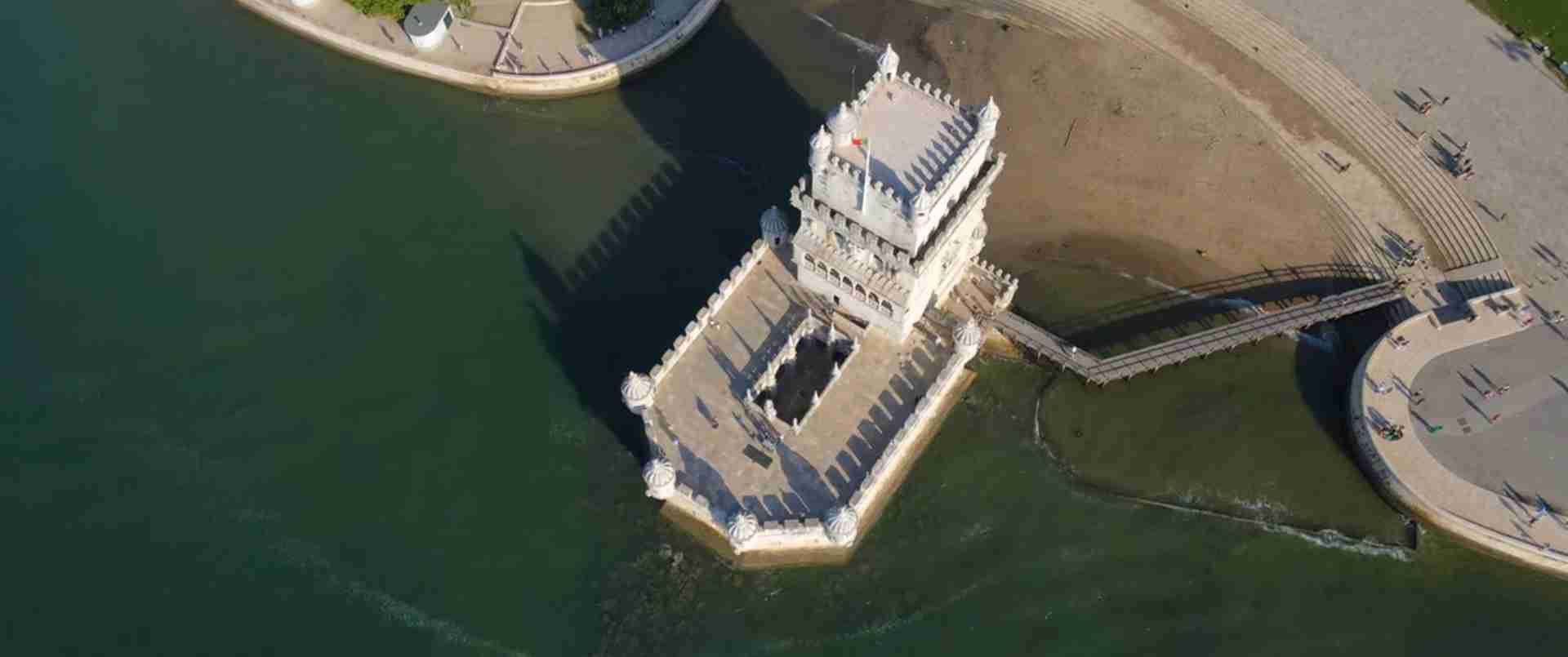
The Tower of Belém was constructed between 1514 and 1519 under the direction of Francisco de Arruda, a military architect who had worked in Morocco designing fortifications for Portuguese North African territories. King Manuel I commissioned the tower as part of defensive system protecting Lisbon’s harbor entrance, positioned strategically where the Tagus River narrows before opening to the Atlantic Ocean. The tower served dual functions as military fortification equipped with artillery positions and ceremonial gateway marking the departure point for maritime expeditions to Africa, Asia, and South America.
The construction timing reflects Portugal’s confident imperial posture during the reign of Manuel I, when profits from Asian spice trade and African gold mining funded ambitious architectural projects celebrating Portuguese maritime achievements. The tower’s innovative design integrated defensive requirements with symbolic programs glorifying navigation and Portugal’s Christian identity. The structure combined medieval castle elements including crenellated parapets and corner turrets with Renaissance proportions and Manueline decorative programs that transformed a military building into an artistic statement about Portuguese power and cultural sophistication.
Architectural Features and Manueline Decoration
The tower’s five-story structure rises from a hexagonal bastion positioned originally in the Tagus River, with water surrounding the base before land reclamation during subsequent centuries changed the site’s relationship to the waterline. The limestone construction demonstrates exceptional stone carving quality, with virtually every surface decorated with maritime motifs, religious symbols, royal emblems, and exotic natural elements. The famous southern façade features intricate rope motifs carved in stone, representing nautical heritage through architectural language. The royal coat of arms with Manuel I’s personal symbol, the armillary sphere, dominates the composition, asserting royal patronage and connecting the building to Portuguese navigation achievements.
The cloister loggia on the upper level represents one of the tower’s most distinctive features, opening the fortress to riverfront views through delicate stone arcades that seem inconsistent with military function but enhance the building’s ceremonial character. The corner turrets incorporate Moorish architectural influences acquired through Portuguese presence in North Africa, demonstrating cultural exchange and architectural adaptation that characterized Portuguese imperial experience. The interior spaces balance defensive functionality with decorative sophistication, including the governor’s room with elaborate rib vaulting and the chapel dedicated to Our Lady of Safe Homecoming, where departing sailors prayed for protection during dangerous voyages.
Symbolic and Ceremonial Functions
Beyond military purposes, the Tower of Belém functioned symbolically as Portugal’s gateway to maritime empire, the last Portuguese landmark departing navigators saw and the first structure welcoming returning expeditions. The tower witnessed departures of fleets carrying soldiers, missionaries, and colonists to Portuguese territories across four continents. Returning ships loaded with spices, silk, precious metals, and exotic goods from Asia and Africa passed the tower entering Lisbon’s harbor, bringing wealth that financed Portugal’s golden age during the 16th century. The tower’s presence sanctified these departures and arrivals, connecting Portuguese maritime enterprise with divine approval through the building’s religious imagery and the chapel where navigators sought spiritual protection.
The decorative program incorporates specific symbolic elements that reinforce these meanings. The rhinoceros carved on the western bastion represents Portugal’s connections with Asia and awareness of exotic animals, based on an actual rhinoceros that arrived in Lisbon in 1513 as gift from Sultan of Gujarat to King Manuel I. The crocodile and other exotic creatures carved into stonework document Portuguese explorers’ encounters with unfamiliar fauna from tropical regions. These elements transformed the tower into visual encyclopedia of Portugal’s expanding geographical knowledge and physical testimony to maritime discoveries that brought Portugal into contact with previously unknown regions and species.
Jerónimos Monastery: Spiritual and Cultural Monument
Foundation and Royal Patronage
King Manuel I founded the Monastery of Santa Maria de Belém in 1501 to commemorate Vasco da Gama’s successful voyage to India and provide spiritual support for Portugal’s maritime enterprise through monastic prayers and religious observances. The site previously held a small chapel where Prince Henry the Navigator spent his final years contemplating Portuguese maritime destiny. The new monastery represented royal patronage on unprecedented scale, with construction costs funded through the “pepper tax” – a five percent levy on spices and trade goods from Asia that generated enormous revenues as Portuguese control of Indian Ocean trade routes matured.
Construction continued throughout the 16th century under multiple architects including Diogo de Boitaca, João de Castilho, and Diogo de Torralva, each contributing distinctive elements while maintaining overall Manueline character. The monastery’s exceptional scale and architectural sophistication demonstrated Portugal’s wealth and cultural ambitions during its golden age. The Hieronymite monks who inhabited the monastery provided spiritual services to the royal family and prayers for souls of those who died during maritime expeditions, creating direct connection between monastic religious life and Portugal’s imperial enterprise. The monastery became national pantheon, housing tombs of Portuguese monarchs, national heroes including Vasco da Gama, and significant cultural figures including poet Luís de Camões.
Church Architecture and Decorative Program
The monastery church represents one of European architecture’s supreme achievements, with soaring vaulted ceilings supported by remarkably slender columns that create unprecedented sense of vertical space and ethereal lightness. The three-nave design spans 55 meters in length with uniform height across all naves, creating unified interior space rather than traditional hierarchy between central and side aisles. The stellar vaulting creates elaborate patterns across the ceiling, with ribs meeting at complex nodes decorated with heraldic shields and floral bosses. The limestone construction allows natural light to illuminate the interior through tall windows, creating luminous atmosphere that enhances the spiritual character of the space.
The decorative program combines religious imagery with maritime and royal symbolism, creating synthesis that expresses Portugal’s identity as Catholic maritime empire. The main portal features complex sculptural program with religious scenes surrounded by botanical and maritime motifs executed with extraordinary detail and technical mastery. The interior surfaces display carved decoration incorporating rope motifs, armillary spheres, royal emblems, and exotic plants that reference Portuguese global connections. The tomb of Vasco da Gama occupies position of honor near the entrance, with elaborate carved surround celebrating his achievements and asserting his significance to Portuguese national identity. The monuments to King Manuel I and other monarchs display similar sophistication, transforming the church into visual argument for divine approval of Portuguese maritime enterprise.
Cloister: Manueline Architectural Masterpiece
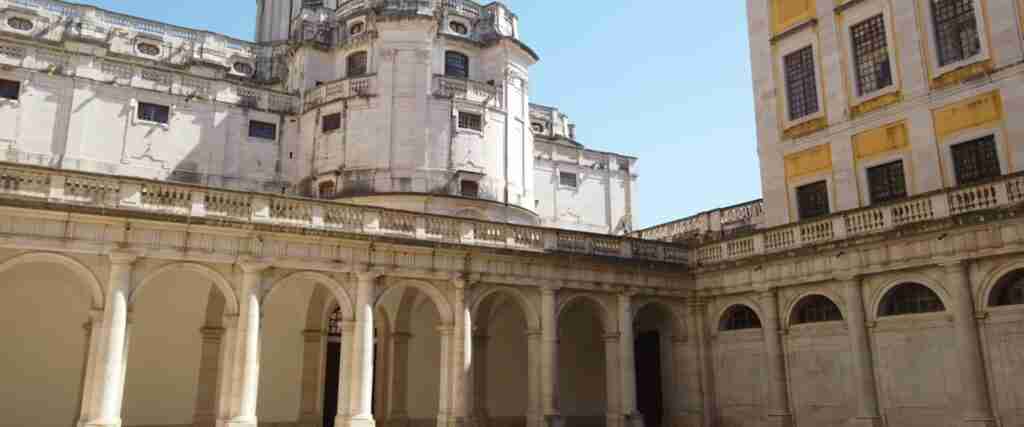
The monastery cloister represents the supreme achievement of Manueline architecture, with two stories of delicate arcades creating contemplative space of exceptional beauty and architectural sophistication. The lower level features innovative design where each bay contains unique decorative treatment while maintaining overall compositional harmony, demonstrating remarkable design complexity and stone carving mastery. The columns incorporate twisted designs, botanical capitals, and intricate surface decoration that transforms structural elements into ornamental features. The upper level adds lighter arcades with even more elaborate decoration, creating vertical progression that enhances spatial experience and demonstrates architectural understanding of how to modulate scale and ornament across multiple levels.
The cloister spaces served multiple functions within monastic life, providing circulation routes between different monastery buildings, outdoor spaces for contemplation and religious processions, and architectural framework expressing Hieronymite spiritual ideals through material beauty. The corner structures housing fountains and staircases receive special architectural treatment with elaborate vaulting and decorative programs. The refectory, chapter house, and other monastic spaces opening off the cloister maintain high architectural quality throughout, demonstrating consistent attention to design excellence across the entire complex. The integration of structural innovation, decorative sophistication, and functional planning creates architectural ensemble that influenced Portuguese building practices for centuries.
Cultural Exchange and Global Connections
Decorative Elements from Four Continents
The monuments’ decorative programs document extensive cultural exchanges resulting from Portuguese maritime expansion, incorporating elements from Europe, Africa, Asia, and South America into coherent artistic visions. The exotic botanical species carved throughout both buildings represent plants encountered during Portuguese voyages, including species from tropical Africa, Indian subcontinent, Southeast Asian islands, and Brazilian Atlantic coast. These elements demonstrate Portuguese awareness of global biodiversity and reflect efforts to document and understand natural history of newly accessed regions. The incorporation of unfamiliar plants into religious and royal architecture shows how Portuguese culture absorbed and integrated experiences from maritime empire into national artistic traditions.
Animal imagery similarly reflects global connections, with carved representations of elephants, rhinoceros, crocodiles, and various tropical species that Portuguese explorers encountered in Africa and Asia. These depictions served partly documentary functions, recording visual information about unfamiliar fauna for Portuguese audiences who would never travel to distant continents. The animals also functioned symbolically, representing exotic wealth and geographical knowledge that Portuguese navigation provided. The presence of these creatures alongside traditional European architectural iconography creates visual synthesis demonstrating how Portuguese culture adapted to incorporate experiences from global maritime enterprise.
Architectural Influences and Adaptations
The Manueline style itself demonstrates cultural exchange through architectural adaptation, incorporating Moorish influences from Iberian Islamic tradition alongside Gothic structural principles and Renaissance proportional systems. The twisted columns, elaborate surface decoration, and integration of multiple architectural languages reflect Portuguese exposure to diverse building traditions through Mediterranean trade contacts and North African territorial possessions. The technical innovations in stone vaulting show awareness of engineering developments from multiple European regions, adapted to Portuguese aesthetic preferences and construction practices.
The architectural legacy extended throughout Portuguese maritime empire, with Manueline elements appearing in buildings from Goa to Macau to Brazil. Portuguese architects and builders carried these design principles to distant territories, creating architectural connections across global Portuguese network. Local adaptations incorporated regional materials, climate responses, and indigenous building traditions while maintaining recognizable Portuguese character. This architectural diffusion demonstrates how cultural exchange operated bidirectionally, with Portuguese traditions spreading globally while Portuguese architecture absorbed influences from diverse sources.
Conservation and Heritage Management
Preservation Challenges and Solutions
Maintaining 500-year-old limestone monuments requires continuous conservation efforts addressing natural weathering, structural stresses, and impacts from millions of annual visitors. The limestone construction proves vulnerable to atmospheric pollution, acid rain, and biological growth that degrades carved surfaces and threatens long-term structural integrity. Conservation teams employ sophisticated monitoring systems tracking moisture levels, structural movement, and surface deterioration patterns to guide intervention strategies. Cleaning programs carefully remove biological growth and pollutant deposits without damaging historic stonework, using techniques developed specifically for treating limestone with intricate carved decoration.
Structural conservation addresses earthquake damage, settlement patterns, and stresses from aging construction materials. The 1755 Lisbon earthquake caused significant damage to both monuments, requiring extensive repairs and reinforcement that became part of their complex construction history. Modern conservation approaches respect historical repair work while introducing contemporary structural reinforcement techniques where necessary to ensure public safety. The integration of new materials and traditional construction methods requires careful planning to maintain authenticity while achieving conservation objectives and allowing continued public access.
Balancing Access and Preservation
The monuments receive millions of visitors annually, creating management challenges around controlling impacts while fulfilling educational missions and cultural tourism roles. Visitor management strategies include timed entry systems, capacity limits, and designated circulation routes that prevent overcrowding and minimize wear on sensitive architectural features. Conservation monitoring tracks impacts from visitor presence, including localized wear patterns, microclimate changes from body heat and respiration, and physical contact with historic surfaces. These assessments inform management decisions about access restrictions, protective measures, and visitor education programs.
Digital documentation initiatives create comprehensive records of the monuments’ current condition using laser scanning, photogrammetry, and other technologies that capture detailed three-dimensional information. These records support conservation planning, enable virtual experiences for researchers and public audiences, and create permanent documentation should future damage occur. The digital archives also support scholarly research, educational programming, and public engagement initiatives that extend the monuments’ cultural significance beyond physical visitation.
UNESCO Recognition and National Identity
Symbols of Portuguese Heritage
The Tower of Belém and Jerónimos Monastery function as national symbols representing Portuguese historical achievements and cultural identity. Their images appear on currency, stamps, tourism materials, and official representations of Portugal to international audiences. The monuments embody particular aspects of national character that Portuguese people identify as distinctive: maritime heritage, navigation achievements, global connections, and cultural sophistication expressed through artistic excellence. School curricula incorporate study of the monuments and the historical periods they represent, ensuring successive generations develop understanding of their significance to national history and identity.
The UNESCO recognition validates Portuguese assertions about the monuments’ global significance, providing international acknowledgment that these buildings possess meaning beyond national boundaries. The World Heritage designation positions Portugal within international heritage community, creating connections with other nations whose historic places receive similar recognition. This international validation enhances national pride while encouraging continued commitment to conservation and heritage protection as responsibilities extending beyond Portuguese interests to encompass humanity’s shared cultural legacy.
Contemporary Relevance and Interpretation
Modern interpretation of the monuments addresses complex historical legacies, acknowledging that the Age of Discovery that they commemorate involved colonization, slavery, and exploitation alongside geographical exploration and cultural exchange. Contemporary heritage management confronts these difficult historical aspects, developing educational programs that present balanced perspectives on Portuguese maritime expansion and its global impacts. This interpretive approach recognizes that outstanding universal value includes responsibility to address historical complexity honestly rather than presenting simplified celebratory narratives.
The monuments continue evolving in meaning as Portuguese society reassesses its historical relationship with former colonies and acknowledges lasting impacts of colonialism. This ongoing dialogue demonstrates that World Heritage sites remain dynamic rather than static, with their significance reinterpreted by successive generations addressing contemporary concerns while preserving physical structures. The challenge involves honoring architectural achievement and historical significance while acknowledging problematic aspects of the historical context that produced these monuments.
FAQ: Lisbon UNESCO World Heritage
How many UNESCO World Heritage sites does Lisbon have?
Lisbon contains two UNESCO World Heritage inscriptions: the joint designation of the Tower of Belém and Jerónimos Monastery (inscribed 1983) and the cultural landscape of Sintra (inscribed 1995) in the municipality northwest of central Lisbon. The city additionally contains protected areas within the broader Lisbon region including prehistoric rock art sites and other cultural heritage locations that may receive future consideration for World Heritage status. Portugal possesses seventeen total World Heritage sites across the country, with Lisbon’s monuments representing some of the earliest Portuguese inscriptions on the World Heritage List.
Can you visit both UNESCO monuments in one day?
Both monuments occupy the Belém waterfront district within walking distance of each other, making combined visits straightforward with proper planning. Touring Jerónimos Monastery’s church and cloister requires 60-90 minutes for thorough exploration including time to appreciate architectural details and decorative programs. The Tower of Belém visit takes 45-60 minutes exploring all levels from artillery platform to upper terraces. Walking between monuments requires 10-15 minutes along the waterfront, with additional time available for exploring other Belém attractions including the Monument to the Discoveries and Belém Cultural Center. Morning arrivals provide best experiences avoiding peak afternoon crowds that pack both locations during high season.
What architectural style characterizes Lisbon’s UNESCO monuments?
The monuments exemplify Manueline architecture, Portugal’s distinctive late-Gothic style that flourished during King Manuel I’s reign (1495-1521). The style combines Gothic structural systems with Renaissance proportions while incorporating elaborate decorative programs featuring maritime motifs (ropes, anchors, coral), royal emblems (armillary spheres, Manuel’s personal symbol), exotic natural elements (tropical plants and animals), and innovative stone carving techniques. Manueline architecture represents Portugal’s unique contribution to European architectural development, expressing national identity through artistic innovation rather than following standard late-Gothic evolution seen elsewhere in Europe. The style influenced Portuguese building practices throughout the empire across four centuries.
Why do the monuments feature exotic animals and plants?
The decorative programs incorporate animals and botanical elements from Africa, Asia, and South America that Portuguese navigators encountered during maritime expeditions establishing trade routes and colonial territories. These exotic elements served documentary functions, recording visual information about unfamiliar species for Portuguese audiences. They also demonstrated Portuguese geographical knowledge and global connections, asserting Portugal’s role accessing distant regions unknown to other European powers. The incorporation of these elements into religious and royal architecture shows cultural synthesis where Portuguese traditions absorbed experiences from maritime empire. The decorative choices transformed buildings into stone records documenting expansion of European awareness about global biodiversity and distant lands.
How did the 1755 earthquake affect the UNESCO monuments?
Both monuments survived the catastrophic 1755 Lisbon earthquake that destroyed approximately 85% of the city’s buildings, though they sustained significant damage requiring extensive repairs. Jerónimos Monastery’s structure proved resilient due to solid construction and location on relatively stable ground outside areas experiencing worst liquefaction effects. The Tower of Belém’s strategic location near the river mouth and robust military construction helped it withstand earthquake forces and subsequent tsunami waves. Post-earthquake repairs incorporated 18th-century construction techniques and materials that became part of the monuments’ complex building history. Conservation efforts today must address both original 16th-century construction and historic repair work from multiple periods.
What role did spice trade play in the monuments’ construction?
King Manuel I funded Jerónimos Monastery construction partly through the “pepper tax” – a five percent levy on spices and other trade goods from Portuguese Asian territories that generated enormous revenues as Portugal dominated Indian Ocean spice routes. The direct sea connection to India established by Vasco da Gama bypassed Islamic intermediaries controlling overland spice routes, allowing Portugal to purchase spices directly from source and sell them in European markets at substantial profits. These revenues financed ambitious architectural projects including the monastery, demonstrating how commercial success from maritime enterprise funded cultural achievements. The connection between spice wealth and architectural patronage makes the monastery physical manifestation of Portugal’s economic power derived from Asian trade.
Who designed the UNESCO monuments?
Francisco de Arruda, a military architect experienced in North African fortress construction, designed the Tower of Belém (1514-1519). Multiple architects contributed to Jerónimos Monastery across its extended construction period: Diogo de Boitaca initiated work as master builder (1501-1517), João de Castilho succeeded him and created the exceptional cloister (1517-1540s), and Diogo de Torralva completed later phases in mannerist style. This succession of architects created stylistic evolution within the monastery while maintaining overall Manueline character. The collaborative nature of construction across decades produced architectural complexity and richness impossible in projects completed quickly under single designer, demonstrating how major monuments develop through contributions from multiple creative talents.
How does UNESCO monitor the monuments’ conservation?
Portugal submits periodic reports to UNESCO documenting the monuments’ conservation status, management practices, and any threats to their Outstanding Universal Value. UNESCO advisory bodies including ICOMOS review these reports and conduct site visits assessing conservation conditions and management effectiveness. The World Heritage Committee examines reports from all inscribed properties and may request additional information, recommend management improvements, or in extreme cases consider placing sites on the List of World Heritage in Danger if serious threats emerge. This monitoring system creates international accountability for heritage protection while providing technical expertise and support for conservation challenges requiring specialized knowledge or resources beyond national capacities.
What makes the monastary cloister architecturally exceptional?
The Jerónimos cloister represents Manueline architecture’s supreme achievement through innovative design where each bay receives unique decorative treatment while maintaining overall harmony, demonstrating extraordinary design complexity and stone carving mastery. The lower arcade features twisted columns, botanical capitals, and intricate surface decoration transforming structural elements into ornamental features. The upper level adds lighter arcades with even more elaborate decoration creating vertical progression that modulates scale and ornament across multiple levels. The technical accomplishment visible in the carved stonework, including deep undercutting and fine detail preservation in limestone, demonstrates exceptional craftsmanship. The spatial experience combines functional monastery circulation with contemplative beauty expressing Hieronymite spiritual ideals through material excellence.
How do contemporary historians view Portuguese maritime expansion?
Modern historical scholarship acknowledges the Portuguese Age of Discovery’s complex legacy including both remarkable navigation achievements and negative impacts from colonization, slavery, and exploitation. Contemporary interpretation recognizes that maritime expansion enabled cultural exchanges, geographical knowledge advancement, and economic connections while simultaneously causing tremendous suffering through forced labor systems, cultural destruction, and colonial domination lasting centuries. Responsible heritage management at the UNESCO monuments addresses this complexity through balanced educational programs presenting multiple perspectives rather than simplified triumphalist narratives. This approach honors architectural achievement and historical significance while acknowledging problematic aspects of the period that produced these monuments, demonstrating how World Heritage sites serve as platforms for honest engagement with difficult historical legacies.