Leeds Budget Guide 2027: Complete Travel Cost Breakdown & Free Things to Do
Leeds punches far above its weight for value — five world-class free museums, a Victorian market still setting the benchmark for street food, and hotel prices that put London to shame all sit within a compact, walkable city centre that rewards visitors who look beyond the obvious. This guide breaks down exactly what a visit costs in 2027, tier by tier, from budget dormitory nights to luxury suites at the Dakota or The Queens Hotel, with verified transport fares, admission prices, and dining costs so you can plan confidently before you arrive.
Key Takeaways
- Budget travelers can enjoy Leeds for approximately £50–90 per person daily ($65–115) — two sharing a budget hotel — by focusing on the city’s exceptional portfolio of free world-class attractions and eating at Kirkgate Market.
- Mid-range travelers spending £115–185 per person daily ($150–240) can stay in four-star city-centre hotels, dine at acclaimed restaurants, and include a day trip to Harrogate or York without any financial stretch.
- Luxury visitors investing £235–400 per person daily ($305–520) at properties such as the Dakota Leeds or The Queens Hotel unlock first-class spa dining, private heritage tours, and Yorkshire’s finest tasting menus.
- The MCard DaySaver Bus (£5 per day, $7) covers all West Yorkshire buses with a single ticket — it is the most effective single budget move available to any visitor and pays for itself after two standard journeys.
- Leeds is home to several internationally significant free museums — the Royal Armouries Museum, Leeds Art Gallery, Henry Moore Institute, and Leeds City Museum — making a culturally rich itinerary achievable at near-zero admission cost.
- A two-person weekend break (two nights, two days) costs approximately £100–180 per person ($130–230) at budget tier and £230–370 ($300–480) at mid-range — significantly less than comparable weekends in London or Edinburgh.
People Also Ask About Leeds Budget 2027
How much does a day in Leeds cost in 2027?
A day in Leeds costs approximately £50–90 per person ($65–115) at the budget level, £115–185 per person ($150–240) at mid-range, and £235–400 per person ($305–520) at luxury — all figures assume two travelers sharing a hotel room and include accommodation, meals, transport, and attractions. Budget visitors keep costs low by leaning on Leeds’s unusually generous roster of free museums and the £5 MCard DaySaver bus pass. Mid-range travelers add four-star hotel comfort, restaurant meals, and one or two paid heritage sites per day. All USD figures use an approximate rate of £1 = $1.30; check a currency converter before travel as rates fluctuate.
What are the best free things to do in Leeds in 2027?
The Royal Armouries Museum is the standout free attraction — a nationally funded museum housing one of the world’s great arms and armour collections across five themed galleries, free on every day it opens. Leeds Art Gallery and the adjacent Henry Moore Institute, both on The Headrow, represent two more world-class free venues covering painting from Victorian masters through to contemporary work and an internationally renowned sculpture research center. Leeds City Museum on Millennium Square tells the story of the city from the Ice Age to the present at no charge. Beyond museums, Kirkstall Abbey’s Cistercian ruins are free to wander, Roundhay Park covers 250 acres at no cost, and the Victoria Quarter’s ornate Victorian arcades can be browsed without spending a penny.
Where is the cheapest place to stay in Leeds in 2027?
The most affordable city-centre beds in Leeds in 2027 are found at branded budget chains — the ibis budget Leeds Centre Crown Point Road, easyHotel Leeds, and Travelodge Leeds Central typically run £40–60 per room per night off-peak, rising to £65–85 during busy periods. Premier Inn properties cluster around the city centre and usually sit in the £55–75 range. For travelers willing to stay a mile from the centre, guesthouses and smaller hotels in Headingley (the university and cricket suburb, well served by buses) regularly undercut city-centre rates by 20–30%. Self-catering serviced apartments — useful for stays of three nights or more — run £85–130 per night and include kitchen facilities that significantly reduce food costs.
How do I get to Leeds cheaply in 2027?
By rail, LNER operates regular services between London King’s Cross and Leeds with a journey time of approximately two hours; advance fares booked weeks ahead regularly start from £15–25 each way, compared to walk-on anytime returns that can exceed £100. Check nationalrail.co.uk for current advance pricing. From Manchester, Northern Rail connects the two cities in under an hour, with advance fares from around £7–12 each way. Budget airlines serve Leeds Bradford Airport (LBA) from a handful of UK and European destinations, though the airport is 8 miles northwest of the city — the 737 bus runs to the city centre for around £4. Once in Leeds, the MCard DaySaver Bus (£5 per day) makes getting around inexpensive.
Extended multi-day tours – 5+ days
Featured Yorkshire Multi-Day Tour Packages
3 days
Yorkshire 3-Day Discovery Tour
- ✓ Comprehensive Yorkshire experience
- ✓ Expert local guides included
- ✓ All accommodation included
- ✓ Transportation provided
5 days
Yorkshire 5-Day Highlights Experience
- ✓ Comprehensive Yorkshire experience
- ✓ Expert local guides included
- ✓ All accommodation included
- ✓ Transportation provided
7 days
Yorkshire 7-Day Cultural Journey
- ✓ Comprehensive Yorkshire experience
- ✓ Expert local guides included
- ✓ All accommodation included
- ✓ Transportation provided

10 days
Yorkshire 10-Day Complete Adventure
- ✓ Comprehensive Yorkshire experience
- ✓ Expert local guides included
- ✓ All accommodation included
- ✓ Transportation provided
Multi-day tour packages powered by TourRadar. Prices and availability subject to change.
Understanding Leeds Travel Costs in 2027
Leeds is the UK’s third-largest city by population and its biggest outside London and Birmingham, yet it consistently ranks as one of the most affordable major urban destinations in the country. Hotel prices in 2027 run roughly 40–50% below central London rates for equivalent quality. A pint of cask ale in a city-centre pub, the cultural barometer many travelers use, typically costs £4–5 ($5–7) — a fraction of London or Edinburgh prices. Restaurant meals in the mid-range tier average £25–40 per person ($33–52) for two courses with a drink, and the city’s public transport network, anchored by the West Yorkshire MCard system, is significantly cheaper to navigate than London’s Oyster-based equivalents.
Leeds also benefits from a civic investment in free culture that is unusual even among UK cities. The decision to keep the Royal Armouries, Leeds Art Gallery, Henry Moore Institute, and Leeds City Museum all free to enter effectively eliminates a major cost category that dominates budgets in heritage-heavy cities like Oxford or Stratford-upon-Avon, where high admission charges at the main attractions can add £20–40 per person to a daily spend. A visitor who focuses their first day entirely on free institutions in Leeds can spend almost nothing beyond transport and food.
The one caveat for 2027 planning is seasonal volatility. Leeds hosts the UK’s largest camping music festival — Leeds Festival — at Bramham Park in late August, and that single week can push hotel rates across the city to two or three times their normal levels. Yorkshire Cricket matches at Headingley during the summer also drive price spikes in the LS6 and nearby areas. Book accommodation at least two months ahead for late August, and six to twelve months ahead for Test cricket weekends.
The comparisons below all use pound sterling (GBP) as the primary currency, with approximate US dollar figures in parentheses based on a rate of roughly £1 = $1.30. Always confirm the current exchange rate on a live converter before travel, as rates shift.
Accommodation Costs in Leeds 2027: Budget to Luxury
Accommodation is the single largest variable in a Leeds trip budget. Hotel prices swing widely between a midweek January night (bottom of the range) and a bank holiday weekend in August (top), so the figures below reflect typical rates across a normal visiting year — not peak-season extremes. All daily budget calculations in this guide assume two adults sharing one room and divide the room rate equally between them before summing per-person daily costs.
Budget Accommodation in Leeds 2027: £50–75 per Room
The practical floor for a clean, centrally located private room in Leeds is around £50 per night off-peak. The ibis budget Leeds Centre Crown Point Road is consistently the most affordable city-centre chain option, running £40–55 ($52–72) in quieter periods and £55–75 ($72–98) around events. easyHotel Leeds offers similarly stripped-back rooms — functional but clean — in the £45–65 ($59–85) range. Premier Inn and Travelodge both have city-centre and near-city locations from around £55–80 ($72–104), usually including free WiFi and reasonably comfortable beds.
For travelers who prioritize value over central location, the Headingley area approximately two miles north of the city centre offers smaller independent guesthouses and B&Bs from £45–65 ($59–85) per room, all served by frequent bus routes directly to the city centre. The 51, 56, and 57 First Bus services connect Headingley to Leeds city centre in 15–20 minutes.
Serviced self-catering options at the budget-ish end — Roomzzz Leeds City is a good example — typically start around £85–110 ($111–143) per studio apartment. These are not budget in the pure sense, but a couple using the kitchenette to prepare breakfasts and occasional simple dinners can reduce their overall food spend enough to make the total cost competitive with a budget hotel plus restaurant meals.
Mid-Range Hotels in Leeds 2027: £90–145 per Room
The Novotel Leeds Centre, Clayton Hotel Leeds, DoubleTree by Hilton Leeds City Centre, and Leeds Marriott Hotel all cluster between £90 and £145 ($117–189) per room in typical periods. This tier delivers reliably comfortable rooms, on-site restaurants and bars, gym access, and locations within ten minutes’ walk of the train station and Millennium Square. The Clayton and Novotel both have particularly high guest satisfaction scores for the price point. The Holiday Inn Express Leeds City Centre — slightly below this tier at £70–100 ($91–130) — is worth considering for travelers who want recognizable facilities without paying fully mid-range rates.
Weekend rates at mid-range hotels in Leeds can drop below weekday rates, particularly from October through April, because the city’s hotel market is significantly driven by business travel Monday through Thursday. A Friday-to-Sunday stay at the DoubleTree Hilton or Radisson Blu will often cost less than the equivalent Monday-to-Wednesday nights.
Luxury Hotels in Leeds 2027: £155–260 per Room
The Dakota Leeds on Russell Street is the most talked-about luxury option in the city — a dark, intimate boutique property with exceptional food and an intimate bar that has won a loyal following among design-conscious travelers. Rooms typically run £160–220 ($208–286) per night. The Queens Hotel on City Square, a 1930s landmark with a grand interior and extensive function spaces, offers a different kind of luxury — more classic Yorkshire grandeur — at £155–210 ($202–273). The Radisson Blu Leeds and Malmaison Leeds City Centre both sit in a similar price bracket and offer strong food and beverage programs.
For those seeking resort-style facilities outside the city centre, the Oulton Hall Hotel, Spa & Golf Resort approximately eight miles from Leeds city centre provides a full countryside hotel experience from £130–200 ($169–260) per night, with spa access, golf, and formal dining on-site.
Serviced Apartments and Self-Catering 2027
Serviced apartments are particularly good value for longer stays or traveling with children. The Jubilee by Supercity Aparthotels and Quebecs Luxury Aparthotel both offer central Leeds apartments from £85–130 ($111–169) per night — comparable to mid-range hotel rates but with kitchens that reduce food spend substantially. The Chambers on Park Place offers higher-end aparthotel suites from £100–160 ($130–208) and is consistently rated exceptional by guests. Airbnb listings across the city range from £50 ($65) for a private room in a shared flat to £150+ ($195+) for a full apartment in the city centre.
Food and Dining Costs in Leeds 2027
Leeds has one of the most diverse and underrated food scenes outside London. The city’s large student population, strong South Asian communities, and recent wave of independent restaurant openings have created a landscape where a genuinely excellent meal is available at almost any price point. Kirkgate Market — the anchor of any budget eating strategy — is one of the best food markets in England.
Budget Dining in Leeds 2027: £20–38 per Day
Kirkgate Market on Vicar Lane is the essential destination for budget eating. Stalls selling fresh bread, cheese, charcuterie, olives, and hot food produce excellent lunches for £5–8 ($7–10) per person. The indoor market has cafe-style traders serving full breakfasts from £4–6 ($5–8) — among the best-value breakfasts in any major UK city. Trinity Kitchen in the Trinity Leeds shopping centre rotates a collection of street food traders offering globally inspired meals typically in the £7–10 ($9–13) range for lunch. Independently-owned sandwich shops and cafes throughout the city centre serve freshly made sandwiches and light lunches for £5–7 ($7–9).
For evening meals at the budget end, the city’s pub food tradition remains strong and good-value. Most city-centre pubs serve main courses from £10–16 ($13–21) — a Sunday roast at a traditional Leeds pub is often the best-value sit-down meal available at any tier. South Asian restaurants in the Harehills and Chapeltown areas, serving some of the most authentic Pakistani and Bangladeshi cooking in the north of England, offer main dishes from £8–13 ($10–17). The Belgrave Music Hall & Canteen on Cross Belgrave Street is a laid-back food hall with street food vendors and reasonable prices popular with a younger crowd.
Mid-Range Dining in Leeds 2027: £45–72 per Day
The mid-range dining scene in Leeds centers on several distinct areas. The Calls, a former warehouse district along the south bank of the River Aire, houses a concentration of independent restaurants in beautifully converted Victorian buildings — expect to pay £25–40 ($33–52) per person for two courses with a glass of wine. Restaurants in this area frequently make best-of-Leeds shortlists; the quality is consistently high and the settings are atmospheric. The Victoria Quarter — the ornate Victorian arcade designed by Frank Matcham — houses Harvey Nichols Leeds with its brasserie-level restaurant offering two-course lunches for £18–25 ($23–33) that represent genuinely good value for the quality.
The Northern Quarter around New Briggate and the Merrion Quarter are home to a growing cluster of independent neighbourhood restaurants serving globally influenced menus. Budget a typical £28–45 ($36–59) per person for a full dinner with drinks at a well-reviewed independent in these areas. Bundobust on Vicar Lane — a hugely popular vegetarian Indian street food and craft beer bar — is the notable mid-range exception: excellent food at lower-than-mid-range prices, typically £15–22 ($20–29) per person all-in.
Fine Dining in Leeds 2027: £80–160+ per Day
Leeds has developed a credible fine dining scene for a city outside London. Several restaurants hold or have held Michelin recognition, and the city regularly appears in national food guides. At this tier, budget £60–95 ($78–124) per person for a tasting menu or full fine dining experience, plus £20–35 ($26–46) for wine pairing. Crafthouse at the top of Trinity Leeds offers striking views over the city alongside its modern European menu and consistently features in Leeds’s best restaurant rankings. Fine dining in Leeds is typically 25–35% less expensive than comparable restaurants in London for equivalent cooking standards — a meaningful saving for serious food travelers.
Drinks and Nightlife Costs in Leeds 2027
A pint of cask ale at a traditional Leeds pub costs £4–5 ($5–7); craft beer bars charge £5–7 ($7–9) per pint. Cocktails at city-centre bars run £9–14 ($12–18). A glass of house wine at a mid-range restaurant is typically £6–9 ($8–12). The main nightlife strip around Call Lane and the student-heavy Headingley area adds a further layer of late-night bars and clubs where cover charges of £5–12 ($7–16) apply after 10–11pm on weekends. Pre-drinking at supermarket prices and arriving before the cover-charge window is a standard student-district strategy for keeping evening costs low.
Getting Around Leeds 2027: Transport Costs and Options
Leeds city centre is compact and walkable — the walk from Leeds station to the Royal Armouries Museum is around 15 minutes, and most city-centre attractions sit within 20 minutes on foot of each other. Transport costs only become significant for trips to outer-city attractions such as Roundhay Park, Kirkstall Abbey, or Harewood House. The West Yorkshire MCard system governs almost all bus and train ticketing.
MCard DaySaver Bus: £5 per Day ($7)
The MCard DaySaver Bus is the cornerstone of affordable transport in Leeds. At £5 ($7) for a full day of unlimited travel across all bus services in West Yorkshire, it covers the city centre, Headingley, Roundhay, Kirkstall, Horsforth, and essentially every outer district a visitor might want to reach. It is available on the MCard Mobile App (slightly cheaper for regular users buying carnets) or at bus station travel centres. For any day where you plan two or more bus journeys, the DaySaver pays for itself over individual tickets. Check the MCard website at wymetro.com for the latest pricing, as fares may have changed for 2027.
Single Bus Fares and City Buses
For occasional bus use, single fares across West Yorkshire are capped at £2.50 ($3) per adult journey under West Yorkshire’s Mayor’s Fares scheme — a policy that makes individual trips significantly cheaper than in London. The Leeds CityBus routes (including Service 5, which links the bus and rail stations to the city centre) operate on the same ticketing system. All MCard tickets are accepted across multiple operators, so you are not locked into one bus company’s network.
Rail within West Yorkshire
Leeds City Station is a major Northern rail hub with frequent services throughout West Yorkshire. Harrogate is 35 minutes away, York around 25 minutes, Bradford 20 minutes, and Wakefield 15 minutes — all on trains that run several times per hour. Off-peak rail tickets within West Yorkshire (valid after 9:30am Monday–Friday and all day weekends) are bundled into WY DaySaver Bus and Rail products through MCard. A West Yorkshire DaySaver combining bus and rail typically costs around £10–16 ($13–21) depending on zones — significantly better value than buying individual rail tickets for a day of multi-destination exploration.
Trains to Leeds from Other UK Cities
LNER operates regular high-speed services between London King’s Cross and Leeds, with a journey time of approximately two hours. Advance fares booked well ahead start from around £15–25 ($20–33) each way; last-minute walk-on anytime singles can reach £80–120 ($104–156). Northern Rail and TransPennine Express connect Manchester to Leeds in under an hour (advance fares from approximately £7–12 one way). Booking through nationalrail.co.uk and buying the cheapest advance tickets releases two to three months in advance is by far the most effective way to reduce travel costs. The 16–25 Railcard (£35 per year) saves a third on most rail fares for eligible travelers.
Taxis, Uber, and Ride-Share
Licensed black cabs in Leeds typically charge a flagfall of around £3 plus roughly £1.50–2 per mile — a short cross-city journey of 2–3 miles runs approximately £7–12 ($9–16). Uber and similar apps operate across Leeds and are generally 15–25% cheaper than licensed taxis for most city-centre journeys. Late-night surge pricing on Friday and Saturday from 11pm through 2am can push ride-share fares 50–100% above base rate; factor this into nightlife budgets.
Cycling in Leeds 2027
Leeds has expanded its cycle infrastructure significantly in recent years, and the West Yorkshire Cycle Hire scheme (e-bikes available across docking stations in the city centre) allows short journeys at low cost. Check the MCard App or the West Yorkshire Combined Authority’s cycling pages for current hire rates, which typically run around £1–2 per 30-minute hire. Cycling is most practical for flat city-centre routes; the hills north and west of the centre make walking or busing a more realistic choice for leisure visitors.
Free Things to Do in Leeds 2027
Leeds’s free-culture offering is exceptional by any standard. Five major publicly funded institutions, several significant heritage sites, two large parks, and a remarkable collection of Victorian commercial architecture combine to fill a full three-day visit without any admission charge whatsoever. The free attractions are not second-tier consolation prizes; several rank among the best of their type in Britain.
Royal Armouries Museum: World-Class Weapons and Armour, Free
The Royal Armouries Museum on Armouries Drive is the centrepiece of any Leeds cultural itinerary and one of the finest specialist museums in Britain, covering arms and armour from ancient times to the modern era across five themed galleries. The five floors explore War, Tournament, Self Defence, Hunting, and Oriental arms, with the collections relocated from the Tower of London when the museum opened in 1996. Highlights include a set of armour belonging to Henry VIII — one of the most recognisable objects in British museum collections — and an extraordinary Mughal elephant armour from the seventeenth century — a very rare surviving example of a type that dressed battle elephants in the Mughal imperial court. Allow at least three hours; serious visitors commonly spend a full day. The museum is open Tuesday through Sunday and entrance to the permanent collection is always free. A café and gift shop operate within the building and are worth factoring into the budget separately.
Leeds Art Gallery: Victorian to Contemporary British Art, Free
Leeds Art Gallery occupies a Grade II listed building on The Headrow that opened in 1888 and has been collecting ever since. The permanent collection spans Victorian narrative painting, pre-Raphaelite work, early modernism, and post-war British art, and includes significant works by artists including Atkinson Grimshaw — the Leeds-born painter whose atmospheric nocturnal city scenes are particularly associated with the city — alongside examples by Lucian Freud, Frank Auerbach, and David Hockney. Access is free; temporary exhibitions, which tend to be of high quality and bring major loans from national collections, are also frequently free though some charge a small admission. The gallery connects directly to the Henry Moore Institute next door, making a natural combined visit.
Henry Moore Institute: International Sculpture Research, Free
The Henry Moore Institute sits immediately alongside Leeds Art Gallery and represents something unusual: a world-leading research centre for sculpture that also operates as a free public gallery. The institute runs a year-round programme of temporary exhibitions covering historic and contemporary sculpture, frequently presenting works rarely seen in the UK. A public library and archive specialising in sculpture is open to visitors. The institute carries the name of Henry Moore, born in Castleford just southeast of Leeds in 1898, who became one of the most significant sculptors of the twentieth century. Moore established the Henry Moore Foundation during his lifetime; after his death in 1986 the Foundation created the Institute in 1993 to promote sculpture research and public access to the art form. Entry to galleries and library is free.
Leeds City Museum: From Woolly Rhinos to Modern Leeds, Free
Leeds City Museum on Millennium Square opened in its current form in 2008, occupying the Victorian Mechanics’ Institute building. Its galleries take a broad approach: natural history exhibits including the partial skeleton of a woolly rhinoceros found in a Leeds quarry, an Egyptian mummy collection, displays on Roman Leeds, interactive galleries for children, and changing exhibitions on the city’s industrial and cultural history. It is an accessible, family-friendly museum that repays a couple of hours and is entirely free. The museum is central to Millennium Square, which in itself is a pleasant open public space hosting seasonal events including Christmas markets and outdoor cinema screenings.
Kirkstall Abbey: Twelfth-Century Cistercian Ruins, Free
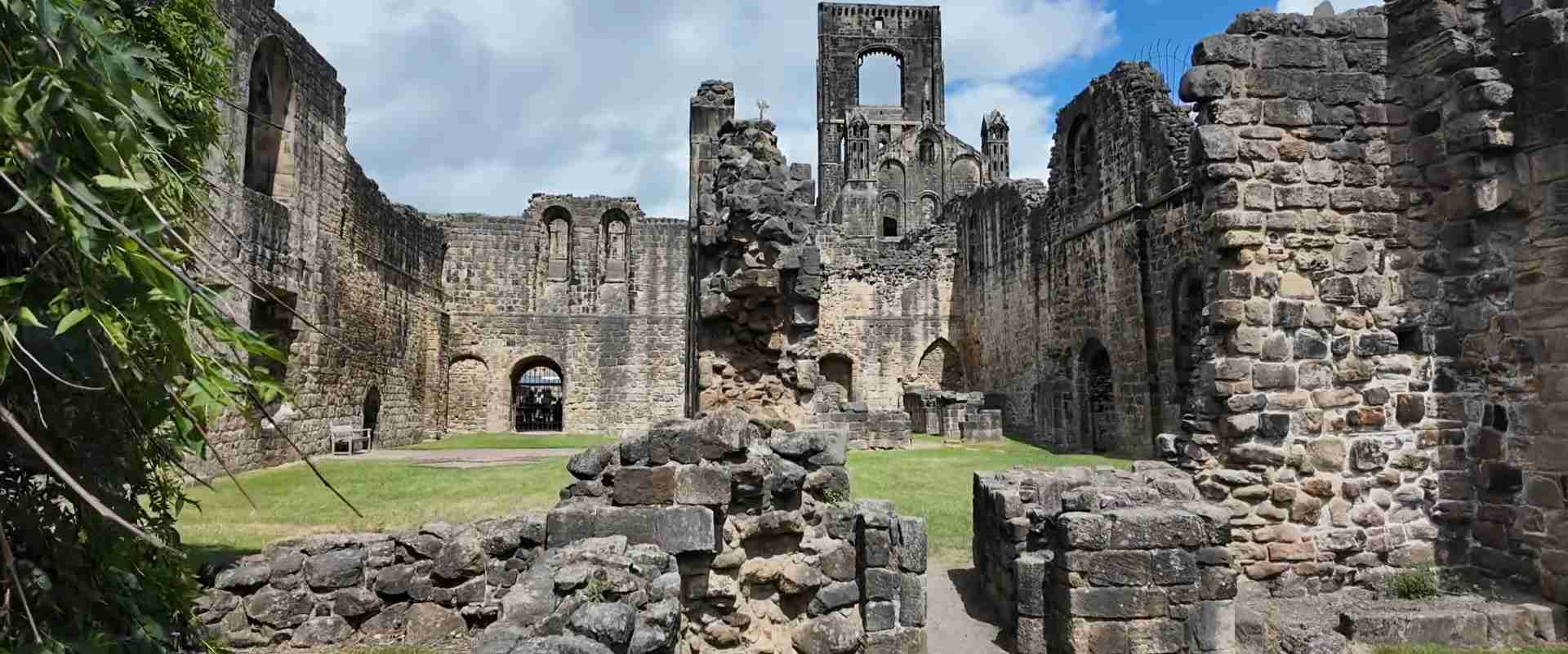
Kirkstall Abbey stands in riverside parkland approximately three miles west of the city centre — accessible by bus (several First Leeds routes serve Kirkstall) or by cycling the riverside path. Founded in 1152 by Cistercian monks who migrated from Barnoldswick in Lancashire after several years of hardship, Kirkstall is among the most complete and evocative Cistercian abbey ruins in Britain. The church nave, tower, cloisters, and chapter house survive to substantial heights and are freely accessible on foot. The parkland setting on the south bank of the River Aire makes Kirkstall a natural destination for a picnic-and-explore half-day that costs nothing beyond transport. The adjacent Abbey House Museum occupies the former guesthouse and charges separate admission; the abbey ruins themselves are free. Check the Leeds Museums and Galleries website for any current opening hour variations.
Roundhay Park: 250 Acres of Lakeside Parkland, Free
Roundhay Park in north Leeds is one of the largest urban parks in Europe at approximately 250 acres, encompassing two lakes, formal gardens, woodland walks, a mansion house, a café, and sports facilities across its broad extent. The Waterloo Lake is an elegant centrepiece for a morning’s walk and the parkland beyond it feels genuinely rural despite being within a 20-minute bus ride of the city centre. Tropical World, housed within the park estate, is a tropical butterfly and animal house that may charge a small separate admission fee — check the Leeds Museums and Galleries website for current pricing before visiting. The park itself, including all its walking routes, is always free.
The Victoria Quarter: Leeds’s Finest Victorian Arcades, Free
The Victoria Quarter on Briggate is the best Victorian shopping arcade complex in England outside the Galleria in Milan, which is itself a different scale. The Victorian arcades — County Arcade (1900), designed by theatre architect Frank Matcham, and Cross Arcade — feature extraordinarily ornate terracotta exteriors, decorated tilework floors, and glass canopies that create a light-filled interior shopping street of genuine architectural drama. The adjacent Thorntons Arcade, opened on Briggate in the 1870s, is one of the best-preserved Victorian Gothic shopping arcades in northern England, with striking cast-iron detailing and a colourful clock mechanism that has been a Leeds landmark for generations. Entry to all arcades is free; Harvey Nichols occupies part of the Quarter at its own prices. Walking through to admire the architecture costs nothing and is genuinely one of Leeds’s great experiences.
Leeds Corn Exchange: Cuthbert Brodrick’s Victorian Masterpiece, Free
The Leeds Corn Exchange on Call Lane (1864) is a Grade I listed circular domed building designed by Cuthbert Brodrick — the Hull-born architect who spent his most productive decades in Leeds and was also responsible for Leeds Town Hall and the Mechanics’ Institute (now Leeds City Museum). The exterior dome and the intricate cast-iron interior structure are architectural highlights of Victorian England. The building now houses independent shops, food outlets, and market traders, and is free to enter. The best time to visit is weekend lunchtime when a concentration of street food vendors makes it a lively and atmospheric place to eat cheaply.
Kirkgate Market: Europe’s Largest Covered Market, Free to Browse
Kirkgate Market on Vicar Lane is, by the official Leeds Council account, one of the largest covered markets in Europe and a functioning, beloved institution of Leeds daily life rather than a tourist-polished recreation of one. The market traces its origins to a medieval charter and has occupied its current magnificent Victorian and Edwardian market hall since the late nineteenth century. Marks & Spencer opened its first Penny Bazaar in a stall at Kirkgate Market in 1884, and a plaque commemorates the spot. Eight hundred-plus traders operate across indoor and outdoor sections selling fresh produce, fabric, clothing, household goods, hot food, crafts, and virtually everything else. Entry is free; spending is optional and inexpensive. The food stalls along the indoor perimeter produce some of the best-value hot meals in the city.
Granary Wharf and the Canal Basin, Free
Granary Wharf at the south end of Leeds station is a regenerated canal basin at the head of the Aire & Calder Navigation — once the beating heart of Leeds’s industrial trade, now a pleasant mix of canal-side bars, independent restaurants, and street art installations that are free to explore. The Dark Arches (vaulted brick arches beneath Leeds station that border the basin) form a dramatic industrial backdrop for weekend street markets and events. Walking south along the canal towpath from Granary Wharf is free and passes through a succession of attractive waterside spaces.
Parks, Green Spaces, and Walking Routes, Free
Beyond Roundhay Park, Leeds offers several other significant free green spaces. Golden Acre Park and Botanical Gardens, approximately six miles north of the city centre in Bramhope, features an ornamental lake, woodland, and formal gardens with a good café. Adel Woods connects to Golden Acre and provides semi-ancient woodland walking with wildlife including foxes, deer, and woodland birds. The Meanwood Valley Trail runs approximately seven miles north from Woodhouse Moor (close to the university district) through the Meanwood Valley to Golden Acre Park, passing the seven-arch Victorian railway viaduct and several interesting heritage points along the way — a free day’s walking with real countryside character within a city boundary.
Paid Attractions and Activities in Leeds 2027
Not everything worthwhile in Leeds is free. A handful of major heritage properties charge admission, and the prices are generally reasonable for the quality on offer.
Temple Newsam House and Estate: £10 Adult ($13)
Temple Newsam is a Tudor-Jacobean country house set within a 1,500-acre estate on the southeastern edge of Leeds, approximately five miles from the city centre. The house is described as one of the finest country houses in the north of England and holds an extensive collection of decorative arts — furniture, silver, ceramics, and textiles — that ranks among the most important in Britain outside the Victoria and Albert Museum. The estate is also notable as the birthplace of Henry Stuart, Lord Darnley, who married Mary Queen of Scots in 1565. Adult house admission is £10 ($13), children (3–15) £4.40 ($6), and a family ticket (two adults and up to three children) costs £24.50 ($32). The Home Farm and Play Barn within the estate charge separately at £9 ($12) per adult, with a joint house-and-farm ticket at £17.10 ($22). Grounds are extensive and freely accessible; the admission fee covers the house interior. Check the official Leeds Museums and Galleries website (museumsandgalleries.leeds.gov.uk) before visiting, as the house operates on pre-booked and guided tours only for certain periods. The Rooftop and Cellar Experience guided tour runs April through September at £25 ($33) including general admission and offers exclusive access to areas not normally open to visitors.
Harewood House: £25 Adult ($33)
Harewood House sits 8 miles north of Leeds in West Yorkshire parkland designed by Capability Brown, and the house itself was built between 1759 and 1771, designed jointly by John Carr and Robert Adam — an exceptional collaboration that produced one of England’s finest Georgian interiors. The house contains significant collections of art and furniture, including pieces commissioned directly from Thomas Chippendale, who was born in nearby Otley. General adult admission of approximately £25 ($33) covers the house, gardens, adventure playground, and grounds — the ticket price verified for 2026, likely carrying a small increase into 2027 (check harewood.org for the current 2027 price). The estate also hosts a busy events calendar including food festivals, craft fairs, and cultural performances, some of which offer combined house-and-event tickets. Getting there without a car requires either a taxi (approximately £15–20 from Leeds city centre, $20–26) or a bus to Harewood village with a short walk — check Transdev/First Bus routes for the current service. Budget at least three hours for a full visit; the grounds and walled garden alone justify the admission for garden enthusiasts.
Other Paid Experiences and Activities in Leeds 2027
Abbey House Museum in Kirkstall, occupying the former guesthouse of Kirkstall Abbey, charges admission to its galleries covering Victorian Leeds street life — check the Leeds Museums and Galleries website for current adult prices, which were in the £6–8 ($8–10) range in recent years. The Leeds Industrial Museum at Armley Mills, housed in a substantial surviving Victorian woollen mill, similarly charges admission for its exhibitions on the textile industry and industrial heritage. Armley Mills is free on the first Monday of each month. Headingley Cricket Ground (home of Yorkshire Cricket) sells match tickets across a wide range of prices; international Test matches and county fixtures can command £15–80+ ($20–104+) depending on the match and seat category. The city’s theatre scene, anchored by Leeds Playhouse on Quarry Hill and the Grand Theatre & Opera House on New Briggate, offers a wide programming range — tickets from £12 ($16) for community productions to £80+ ($104+) for major touring productions. Both venues have substantial concession schemes for students, young people, and benefit claimants.
Complete Daily Budget Breakdowns for Leeds 2027
The following breakdowns use the per-person, per-day format with two adults sharing one hotel room. Hotel costs are divided by two before inclusion. All totals are independently calculated and cross-checked.
Budget Daily Breakdown (Two Sharing Budget Hotel)
Budget hotel room per person (two sharing a £50–75 room): £25–38. Breakfast at a market café or Kirkgate stall: £0–8. Lunch from market stalls or a sandwich shop: £7–12. Dinner at a pub or informal restaurant: £12–18. Transport (MCard DaySaver Bus): £5–6. Paid attractions (optional; many are free): £0–5. Total: approximately £50–90 per person daily ($65–115). Budget visitors who eat well at Kirkgate Market, stick to free museums, and use the bus day ticket can routinely hit the lower end of this range, even in the city centre.
Mid-Range Daily Breakdown (Two Sharing Mid-Range Hotel)
Mid-range hotel room per person (two sharing a £90–145 room): £45–73. Breakfast at a hotel café or independent café: £8–12. Lunch at a brasserie or casual restaurant: £12–20. Dinner at a restaurant in The Calls or Northern Quarter: £25–40. Transport (bus DaySaver plus occasional taxi): £8–15. Paid attractions or entry fees: £15–25. Total: approximately £115–185 per person daily ($150–240). Mid-range travelers typically visit one or two paid attractions per day alongside a mix of free museums, balancing budget across the stay.
Luxury Daily Breakdown (Two Sharing Luxury Hotel)
Luxury hotel room per person (two sharing a £155–260 room): £78–130. Hotel or high-end café breakfast: £18–30. Upscale restaurant lunch: £30–50. Fine dining dinner with wine: £60–95. Private transport, taxis, or car hire daily cost: £25–45. Heritage admission, tours, or activity experiences: £25–50. Total: approximately £235–400 per person daily ($305–520). The luxury tier in Leeds compares very favourably with London or Edinburgh equivalents — equivalent experience in London would typically cost 40–60% more.
Sample Leeds Itineraries with Cost Breakdowns 2027
Two-Day Budget Weekend in Leeds 2027
A two-day budget weekend — Friday evening arrival through Sunday afternoon departure — costs approximately £100–180 per person ($130–230) including two nights’ accommodation and all meals and transport.
Day One: Free museums and city centre. Arrive Friday evening at an ibis budget or Premier Inn; check in and head to Kirkgate Market or a local pub for dinner (budget: £12–18 for food, £4–6 for a pint). Saturday morning: Royal Armouries Museum (free; allow three hours). Lunch at Kirkgate Market (£7–10). Afternoon: Leeds Art Gallery and Henry Moore Institute (both free). Dinner at a city pub or informal restaurant (£12–18).
Day Two: Kirkstall and the Victorian arcades. Sunday morning: bus to Kirkstall Abbey (MCard DaySaver covers the journey; free grounds). Late morning: walk back toward the city or bus from Kirkstall. Lunch at Corn Exchange food vendors (£7–10). Afternoon: Victoria Quarter arcade stroll (free), Kirkgate Market browse (free). Head home.
Accommodation: two nights at £55–70/room = £110–140 per room = £55–70 per person. Transport: two MCard DaySavers (£5 each) = £10. Food: approximately £60–95 over two days. Attractions: free or near-free. Total: approximately £125–175 per person — comfortably inside the £100–180 range.
Three-Day Mid-Range Visit to Leeds 2027
A three-day mid-range stay costs approximately £345–555 per person ($450–720) including three nights’ accommodation and all daily costs.
Day One: Arrival and city exploration. Check into the Novotel or Clayton Hotel. Morning: walk the Victoria Quarter and Corn Exchange. Lunch at a Northern Quarter restaurant (£12–18). Afternoon: Royal Armouries Museum (free). Evening: dinner in The Calls (£30–45).
Day Two: Harewood House day trip. Take a taxi or bus to Harewood House (admission £25 per adult). Lunch in the house café (£12–18). Return afternoon: Leeds Art Gallery and Henry Moore Institute (free). Dinner: mid-range restaurant (£30–45).
Day Three: Kirkstall and Roundhay. Morning bus to Kirkstall Abbey (free grounds). Kirkgate Market lunch (£10–12). Afternoon: bus to Roundhay Park (free). Dinner: restaurant in Chapel Allerton (£25–40). Check out following morning.
Accommodation: three nights at £110–135/room = £330–405 = £165–203 per person. Transport: three DaySavers (£15) plus Harewood taxi (£20–30 split between two = £10–15 per person) = £25–30. Food: approximately £120–180 total. Attractions: Harewood £25. Total: approximately £335–438 per person — within the £345–555 calculated range (the sample skews toward the lower end due to Harewood being the only paid attraction).
Five-Day Luxury Leeds Experience 2027
Five full days in Leeds at the luxury tier costs approximately £1,175–2,000 per person ($1,530–2,600) including five nights’ accommodation and all daily expenditure.
Five nights at the Dakota Leeds or Queens Hotel (£160–220/room/night): £800–1,100 per room = £400–550 per person. Meals over five days at fine dining and upscale restaurant level: £500–750 per person. Transport including taxis and a private day-trip car hire: £125–200. Paid attractions (Harewood, Temple Newsam rooftop experience, a day at Headingley cricket, theatre at Leeds Playhouse): £100–150. Total: approximately £1,125–1,650 per person — toward the mid-to-lower end of the five-day luxury range, reflecting the five-day calculation of £235–400/day.
Seasonal Price Variations in Leeds 2027
Hotel prices in Leeds follow a seasonal pattern shaped primarily by business travel demand, festival events, and cricket. Understanding these patterns is essential for anyone with flexibility on travel dates.
January through March represents the lowest-price window across all hotel tiers. Business travel drops significantly after the first two weeks of January and does not recover strongly until March. Budget rooms regularly fall to £35–50 ($46–65) per room during this window; mid-range properties can drop to £70–95 ($91–124). The tradeoff is weather — West Yorkshire winters are frequently grey and damp, though the free museums provide full rainy-day agendas.
April through June sees a steady rise as spring arrives, conference season picks up, and leisure travel increases. Hotel rates return to the mid-range of their typical bands. This is among the best periods to visit for those combining reasonable prices with good weather probability — Yorkshire spring can be beautiful.
July and August are peak months. Leisure demand rises, festival events multiply across the city, and the Leeds Festival in late August is the single most disruptive event in the Leeds hotel calendar. The festival draws approximately 75,000–90,000 attendees to Bramham Park, but accommodation demand spreads across the entire city. Mid-range hotels in the festival week commonly charge two to three times their normal rates. Book at least three to four months in advance for late-August visits and expect no meaningful discounts. Yorkshire Cricket matches at Headingley (particularly any international fixtures) drive similar spikes in the LS6 and Headingley postcode areas.
September and October offer the best overall value-to-quality ratio in the calendar year. Summer pricing retreats, the city retains its green warmth into October, and student freshers’ arrivals in late September bring a lively energy to Headingley and the city centre without driving up hotel prices. This is arguably the ideal season for a first visit to Leeds.
November and December see a return to low leisure demand and low prices, partly offset in December by the Christmas market period. Leeds hosts a city-centre Christmas market from late November that draws visitors from across the region and can fill city-centre hotels on market weekends — book ahead for Friday and Saturday nights in December if central accommodation is the priority.
Hidden Costs and Fees in Leeds 2027
A well-planned Leeds trip will encounter very few surprise costs, but several are worth factoring into your budget before arrival.
Parking. Leeds city centre operates a pay-and-display or multi-storey car parking system across dozens of facilities. City-centre multi-storey parking typically runs £4–8 ($5–10) for four hours and £10–18 ($13–23) for a full day. Visitors arriving by car should either book a hotel with parking included or plan to park and walk or use public transport from a peripheral location. The three Leeds Park and Ride sites (Stourton, Elland Road, and Temple Green) charge a flat £5 ($7) for a return bus journey that drops directly in the city centre, with free car parking at all three sites — a considerably better option than city-centre parking for day visitors arriving by car.
Booking fees and pre-booking requirements. Temple Newsam House requires pre-booking for certain periods, and some tour formats add a booking fee. Check the official website rather than third-party booking platforms to avoid unnecessary surcharges.
Late-night transport. After 11pm on Friday and Saturday nights, ride-share surge pricing routinely doubles or triples standard rates. Budget a £15–25 ($20–33) taxi fare for any late-night journey from the city centre, or plan the evening around areas within walking distance of your accommodation.
Event-specific premium pricing. Some restaurants and bars add service charges — always confirm whether the service charge is included or expected separately. Fine dining restaurants in Leeds typically add a 12.5% discretionary service charge to bills. Hotel dining rooms frequently charge more for identical dishes than the same hotel’s nearby restaurant competitors.
Optional guided experiences. Free museums sometimes offer guided tours for a small supplement. Temple Newsam’s Rooftop and Cellar Experience (£25 including general admission) is the best example — a genuinely excellent add-on, but one to budget for separately. Harewood House’s gardener-led tours similarly add to the base admission price.
Money-Saving Strategies for Leeds 2027
The following approaches produce the most meaningful savings across a typical Leeds visit.
Use the MCard DaySaver Bus from day one. At £5 per day ($7), the DaySaver pays for itself the moment you take a second bus journey. Load it via the MCard Mobile App rather than buying on the bus to access the most flexible carnet pricing for longer stays.
Eat at Kirkgate Market for at least one meal daily. The indoor market’s food traders serve breakfast from around £4 ($5) and hot lunches from £6–8 ($8–10). Over three or four days, eating one market meal daily compared to a restaurant saves £25–40 ($33–52) per person without sacrificing quality — the market food is genuinely excellent.
Book trains to Leeds well in advance. The difference between an advance LNER ticket and a walk-on anytime single can be £50–70 ($65–91) each way for the London–Leeds route. Setting a reminder for tickets to open (typically around ten to twelve weeks before travel) and booking the moment they appear is the highest-value single action for visitors travelling from London.
Visit Harewood and Temple Newsam midweek. Both properties are quieter Tuesday through Thursday and the visitor experience is significantly better. The houses feel more intimate without weekend crowds, and guides are more accessible.
Get an Art Fund card if you travel frequently. The Art Fund membership (approximately £72 per year for adults) gives free entry to over 800 museums and galleries, discounts at many others, and half-price entry to major exhibitions. For frequent UK museum visitors, it repays itself quickly, though for a single Leeds visit it is only worthwhile if you plan to visit several charged-entry exhibitions.
Check brewery tap rooms rather than bars for beer. Several Leeds craft breweries including North Brewing Co. operate tap rooms close to the city centre where pints of fresh beer can be significantly cheaper than in bars that add a retail markup. These change periodically, so check current openings before visiting.
Look for lunch menus at mid-range restaurants. Many of Leeds’s better restaurants offer two- or three-course set lunch menus at £15–25 ($20–33) that represent dramatically better value than equivalent dishes at dinner. Crafthouse and similar establishments frequently offer lunch deals that bring otherwise-expensive dining within range of mid-tier budgets.
Leeds on a Budget for Different Traveler Types 2027
Solo Travelers in Leeds 2027
Solo travelers face the standard challenge of paying a full room rate for single occupancy — most Leeds hotels add a solo premium of £10–25 ($13–33) over the shared-double rate, meaning the per-person daily cost for solo visitors is somewhat higher than the shared figures given throughout this guide. A solo budget traveler at an ibis budget or easyHotel can expect to pay £45–70 ($59–91) for their room rather than the shared-room figure of £25–38. The upside is that solo travel in Leeds is genuinely enjoyable — the Royal Armouries is as compelling alone as in company, the city’s café culture rewards solitary reading and people-watching, and the pub scene is friendly enough that striking up conversations is easy. Solo visitors should budget approximately £65–110 per day ($85–143) at the budget tier.
Couples in Leeds 2027
Couples are the baseline for this guide’s calculations — sharing a room produces the best per-person value at every tier. A mid-range weekend for two sharing a Novotel or Clayton room and splitting all costs falls comfortably in the £115–185 per person daily range at mid-range, potentially lower if the couple eats one or two meals at budget-tier options like Kirkgate Market and spends museum-heavy days rather than attraction-entry-heavy ones.
Families with Children in Leeds 2027
Leeds is unusually good for family travel on a budget. The Royal Armouries Museum is a genuinely child-captivating experience across multiple floors — the Hall of Steel (a dramatic floor-to-ceiling display of armour and weapons) consistently impresses children of all ages, and the museum’s family activity programme runs free events. Leeds City Museum offers hands-on interactive exhibits designed for children and is entirely free. Temple Newsam’s Home Farm and Play Barn combination is an excellent full-day activity for families with young children: adult admission to the farm and play barn is £9 ($12), child admission also £9, and the family ticket (2 adults + up to 3 children) for farm and play barn costs £28.75 ($37) — strong value for a full outdoor day in a working farm environment. Family budgets should calculate the joint Temple Newsam house-and-farm family ticket at £47.95 ($62) for the full estate experience. Roundhay Park, as a free 250-acre park with lakes and extensive space for children to run, is a no-cost half-day for any family visit. Leeds also has several soft play and indoor activity venues for wet-weather days — check Visit Leeds (visitleeds.co.uk) for current family listings.
Best Neighborhoods to Stay in Leeds by Budget 2027
Leeds’s hotel stock concentrates in the city centre, but several outer neighbourhoods offer cheaper accommodation with good transport connections back to central attractions.
Leeds City Centre: Best for All Budgets, Premium for Location
The city centre — roughly bounded by the ring road, the River Aire to the south, and the Inner Loop to the north and east — contains most of the budget chain hotels, all of the luxury properties, and the highest concentration of restaurants and nightlife. Everything in central Leeds is walkable from a city-centre hotel. The downsides are noise (particularly on Friday and Saturday nights near the main entertainment strip on Call Lane and the lower Briggate area) and slightly higher hotel prices than immediately outer suburbs. For a first visit or a short stay, the city centre is the right base at every budget tier.
Headingley: Best for Budget and Mid-Range, Great Pub Scene
Headingley, approximately two miles north of the city centre on the A660 Otley Road, has been transformed by decades of student occupation (Leeds University and Leeds Beckett University both feed into the area) into a neighbourhood with an excellent and affordable pub, café, and restaurant scene alongside lower hotel prices. Guesthouses and smaller hotels here typically run £40–65 ($52–85) per room — significantly cheaper than comparable quality in the city centre. The trade-off is a 20-minute bus journey into the centre, but the 51, 56, and 57 First Bus services run every few minutes at peak times. Headingley is also immediately adjacent to Headingley Cricket Ground, making it the natural base for cricket visitors.
Chapel Allerton: Trendy, Affordable, Neighbourhood Character
Chapel Allerton approximately three miles north of the city centre is a leafy, prosperous suburb popular with young professionals and known for independent restaurants, wine bars, and a strong neighbourhood identity. It lacks city-centre hotel provision but offers Airbnb and guesthouse options at competitive prices. Restaurants here — many of Leeds’s most-reviewed independents have migrated to or started in Chapel Allerton — represent genuinely excellent value compared to city-centre equivalents. Bus links to the city centre run frequently. Worth considering for longer stays where neighbourhood atmosphere is a priority.
Kirkstall and Burley: Close to the Abbey, Lower Prices
Kirkstall and neighbouring Burley sit approximately two miles west of the city centre along the Kirkstall Road A65 corridor. Accommodation here is primarily budget guesthouses and small hotels at £40–60 ($52–78) per room, and the area’s main draw is proximity to Kirkstall Abbey. The canal towpath runs east from Kirkstall directly into the city centre and makes for a pleasant 40-minute walk to Granary Wharf on fine days. Bus services are frequent and the journey takes 15–20 minutes.
Day Trips from Leeds 2027: Cost Overview
Leeds’s position at the heart of Yorkshire makes it an exceptional base for day trips. The train connections in particular are among the best in northern England.
York Day Trip from Leeds 2027
York is approximately 25 minutes from Leeds by train on a service that runs several times per hour, with off-peak return tickets typically costing £8–15 ($10–20) depending on booking time and the specific train. York offers its own suite of free and paid museums: the York Minster requires admission (around £14 adult, $18, check current prices at yorkminster.org), and the Yorkshire Museum and York Art Gallery both charge admission (check yorkmuseumstrust.org.uk for current prices), while the York Museum Gardens — the beautiful public grounds surrounding the Yorkshire Museum — are free to stroll through. The National Railway Museum — the largest railway museum in the world and genuinely one of the great free museums in England — makes a York day trip exceptionally cost-effective for families and anyone with an interest in transport history. A full York day trip on a mid-budget, including return train, museum admissions, lunch, and incidentals, typically runs £30–55 per person ($39–72).
Harrogate Day Trip from Leeds 2027
Harrogate is 35 minutes from Leeds by train, with off-peak returns from approximately £8–14 ($10–18). The spa town’s main free attractions include the Turkish Baths complex (exterior viewing and café, though the baths themselves charge for entry), the Valley Gardens, the Royal Horticultural Society’s Harlow Carr Gardens (RHS membership or admission of approximately £14 adult, $18), and the town’s excellent independent café and tea room culture. Harrogate is particularly pleasant as a half-day trip from Leeds — the train frequency and journey time make it ideal for a morning departure with an early afternoon return. A Harrogate day trip with RHS Harlow Carr entry, lunch, and train typically costs £30–45 per person ($39–59).
Bradford and Saltaire Day Trip from Leeds 2027
Bradford is 20 minutes from Leeds by train (off-peak returns from around £5–8, $7–10) and offers two excellent free attractions: the Cartwright Hall Art Gallery in Lister Park — the city’s principal art museum, free and housing a good collection of Victorian and South Asian art — and the National Science and Media Museum in the city centre, one of the best free museums in the north of England and a particularly compelling destination for families. Bradford is also the self-declared curry capital of the UK, and its South Asian restaurant district around Manningham Lane and the city centre offers some of the most authentic and least expensive Pakistani and Bangladeshi cooking in England — a main dish at a Bradford curry house can be £8–12 ($10–16), approximately half the equivalent price in London. Saltaire, the Victorian model village inscribed as a UNESCO World Heritage Site in 2001, sits just north of Bradford on the same rail line from Leeds. Saltaire’s attractions — the Victorian Italianate textile mill, the David Hockney Gallery at 1853 Gallery (currently free), and the riverfront parkland — are easily combined with Bradford into a full-day excursion.
Frequently Asked Questions About Leeds Budget Travel in 2027
Is Leeds an expensive city to visit in 2027?
Leeds is one of the most affordable major cities in the UK for visitors, with hotel prices, restaurant costs, and transport fares all running significantly below London and Edinburgh equivalents. Budget travelers can have a genuinely rewarding cultural experience for £50–90 per person daily ($65–115), particularly because Leeds maintains a strong portfolio of free world-class museums that eliminate the admission-charge burden that drives up costs in Oxford, Bath, or Stratford-upon-Avon. Even mid-range travelers at £115–185 per person daily ($150–240) will find their money stretches considerably further than in London or Edinburgh.
What is the best value area to stay in Leeds in 2027?
For pure value combined with convenience, Headingley is the best area for budget and mid-range visitors. Hotel and guesthouse rates run 20–30% below equivalent city-centre properties, the pub and café scene is excellent, and frequent bus services bring the city centre within 20 minutes. For visitors who need maximum walkability to all central attractions, budget chain hotels in the city centre — particularly the ibis range on Marlborough Street or Crown Point Road — represent the best combination of central position and low price. Self-catering apartments in the city centre, such as those offered by Roomzzz or Supercity Aparthotels, offer the best overall value for stays of three nights or more when kitchen facilities reduce daily food spend.
How much does accommodation cost in Leeds in 2027?
Budget hotel rooms (ibis, easyHotel, Premier Inn, Travelodge) typically run £50–75 ($65–98) per room per night in normal periods, rising to £75–90 ($98–117) around major events. Mid-range hotels (Novotel, Clayton, Holiday Inn, Leeds Marriott) sit at £90–145 ($117–189) per room for most of the year. Luxury properties including the Dakota Leeds, The Queens Hotel, and DoubleTree by Hilton Leeds City Centre charge £155–260 ($202–338) per room. All these figures refer to a double room for two people; solo travelers typically pay 10–25% above the double rate for single occupancy rather than the full double rate. August Bank Holiday weekend and Leeds Festival week are exceptions where all tier prices can double or more — always book months in advance for these dates.
What is the cheapest way to get around Leeds in 2027?
The MCard DaySaver Bus at £5 per day ($7) is the most cost-effective transport solution for most visitors. It covers all bus operators across West Yorkshire on one ticket, eliminates the need to buy individual tickets, and saves money immediately on any day with two or more journeys. For city-centre movement, walking is faster than any bus for most journeys within the Inner Loop. For occasional single trips, the Mayor’s Fares scheme caps adult bus singles at £2.50 ($3) across West Yorkshire — considerably lower than equivalent fares in London. Cycling using the West Yorkshire Cycle Hire scheme (check current rates via the MCard app) is viable on flat city-centre routes. Taxis are reasonable by UK standards at £7–12 ($9–16) for short city journeys but should be budgeted separately for any evening use when ride-share surge pricing applies.
Are there any free museums in Leeds?
Yes — Leeds has an unusually strong collection of free museums. The Royal Armouries Museum, one of the national collection museums relocated from the Tower of London, is always free to enter. Leeds Art Gallery on The Headrow is free, as is the adjacent Henry Moore Institute. Leeds City Museum on Millennium Square is free. These four institutions alone could fill two full days of serious museum-going at no admission cost. The Thwaite Mills watermill occasionally offers free entry on specific dates — check the Leeds Museums and Galleries website (museumsandgalleries.leeds.gov.uk) for current event schedules. Kirkstall Abbey ruins are free to visit on foot; the separate Abbey House Museum adjacent charges admission.
What should I absolutely not miss for free in Leeds in 2027?
The Royal Armouries Museum is the non-negotiable first choice — several hours at minimum, and genuinely world-class at any level of interest in history. The Victoria Quarter arcade on Briggate is a second unmissable free experience — the Frank Matcham-designed County Arcade (1900) is one of the most beautiful Victorian commercial interiors in Britain and is simply walked through at no cost. Kirkgate Market at lunchtime on a Saturday is a third: the largest covered market in Europe, full of food, character, and extraordinary bargain eating. Kirkstall Abbey at any time of day with reasonable weather provides the kind of romantic medieval ruin atmosphere that would be behind an entrance gate in most other cities. These four together cost nothing but transport and can structure a genuinely memorable 48-hour visit.
How much does food cost in Leeds in 2027?
Food costs in Leeds run substantially below London equivalents across all tiers. Budget meals — full breakfast at a market stall (£4–6, $5–8), a hot lunch from Kirkgate Market or a sandwich shop (£6–10, $8–13), and a pub dinner (£12–18, $16–23) — average £22–34 per person daily ($29–44). Mid-range dining — café breakfast (£8–12), restaurant lunch (£12–20), and a full dinner with drinks (£25–40) — totals approximately £45–72 per person daily ($59–94). Fine dining at the top end — hotel or high-end breakfast (£18–30), upscale lunch (£30–50), tasting-menu dinner with wine (£80–125 per person) — reaches approximately £128–205 per person daily ($166–267). A pint of real ale in a Leeds pub is typically £4–5 ($5–7), coffees £2.80–4.50 ($4–6).
Is Harewood House worth the £25 admission in 2027?
For most visitors, yes — Harewood House justifies its admission well. The combination of one of England’s finest Georgian interiors (the Robert Adam–designed state rooms remain among the best in England), extensive Capability Brown gardens, the adventure playground for families, and the surrounding parkland provides a full day’s worth of material for the price. The Thomas Chippendale furniture collections — Chippendale was born in nearby Otley, and Harewood holds more documented Chippendale pieces than any other house — are an internationally significant attraction in their own right. The gardens alone, including the walled garden and the Himalayan garden, represent strong value for garden enthusiasts. The house also runs a lively events calendar (food festivals, concerts, art fairs) that can add further value to a visit. Verify the current 2027 adult price at harewood.org before booking, as prices may have increased slightly from the 2026 figure of £24.95 ($32).
How do I get to Leeds from London as cheaply as possible?
Book LNER advance tickets as early as possible — the London King’s Cross to Leeds route opens advance fares approximately twelve weeks before departure, and the cheapest singles (from around £15–25 one way, $20–33) sell out quickly. Traveling midweek, outside 7–9am and 4–7pm, typically produces lower advance prices than Friday afternoon or Sunday evening departures. National Express coach services from London Victoria Bus Station to Leeds City Centre take 3.5–4.5 hours but can be significantly cheaper than rail — check nationalexpress.com for promotional fares that occasionally undercut £10 each way. Megabus also serves the route from London. Domestic flights from London airports to Leeds Bradford Airport are available but rarely cheaper than advance rail when total cost (airport transfers at both ends, baggage fees, check-in time) is factored in. The most cost-effective combination for most visitors is booking LNER advance rail and buying an MCard DaySaver Bus on arrival in Leeds.
What hidden costs should I budget for in Leeds in 2027?
City-centre parking is the most frequently overlooked cost for visitors arriving by car: expect £10–18 ($13–23) for a full day in a multi-storey, which adds up quickly over several days. The Park and Ride option (£5 per person return, $7, with free car parking at Stourton, Elland Road, or Temple Green) is a considerably better choice for driving visitors and puts you near the city centre without the parking expense. Late-night ride-share surging on Friday and Saturday nights (11pm–2am) can push a short taxi journey from £10 to £20–25 ($13 to $26–33) — budgeting £20 ($26) per late-night journey is prudent. Service charges at mid-range and fine-dining restaurants are usually 12.5% discretionary and add meaningfully to dinner bills; always check whether service is included when the menu price is quoted. Temple Newsam pre-booking fees apply for some guided tours; and some free museum exhibitions in Leeds are ticketed separately from the permanent collection — check specific exhibition pages before assuming free entry covers everything in the building.