Leaning Tower of Pisa Tickets & Climbing Tips 2026: Complete Booking Guide
The Leaning Tower of Pisa stands as one of Italy’s most recognizable monuments, drawing over one million visitors annually to witness its iconic 3.97-degree tilt. Climbing the 251 marble steps to the top requires advance ticket reservations, strict timing adherence, and awareness of specific visitor requirements that determine whether you can access this UNESCO World Heritage Site.
Key Takeaways
- Tower tickets cost €20 in 2026 with timed entry slots every 30 minutes, strictly enforced with no refunds for late arrivals
- Children under 8 are prohibited from entering the tower; visitors aged 8-17 must be accompanied by an adult
- Advance booking up to 90 days ahead through the official opapisa.it website guarantees access during peak seasons
- All bags including small purses must be deposited at the mandatory cloakroom before climbing
- Opening hours extend to 10:00 PM during summer evenings (June 17-August 31, 2026)
- Cathedral access is included free with any ticket purchase, though tower entry requires separate timed reservation
People Also Ask About Leaning Tower of Pisa Tickets 2026
How much do Leaning Tower of Pisa tickets cost in 2026?
Tower tickets cost €20 per person in 2026 with no reduced-price options available except for disabled visitors with certified documentation. The ticket includes free entry to the Cathedral of Santa Maria Assunta, though cathedral-only access costs €5 for independent entry. Combination tickets covering six monuments (Baptistery, Camposanto, Sinopie Museum, Opera del Duomo Museum, Cathedral, and temporary exhibitions) cost €11 separately, bringing the total to €27 when purchased with tower access. Third-party booking platforms charge €25-30 with added service fees, though the official Opera della Primaziale Pisana website at opapisa.it offers the standard €20 rate without markup.
Can I buy Leaning Tower tickets on the day of my visit in 2026?
Same-day tickets at the on-site ticket office in Piazza del Duomo are available subject to capacity limits, though this approach carries significant risk during high season (April-October 2026). The tower operates on strict timed entry slots with limited daily capacity, often selling out hours or days in advance during peak periods. Travelers arriving without advance reservations during summer 2026 frequently encounter 4-6 hour wait times for available slots, or complete unavailability forcing them to skip the tower climb entirely. The official booking system opens 90 days before the visit date, and slots for popular times (9:00 AM-12:00 PM and 4:00 PM-7:00 PM) typically fill within 2-3 weeks during July and August.
What is the best time to climb the Leaning Tower in 2026?
Early morning slots (8:30 AM-10:00 AM) during April-May and September-October 2026 offer the optimal combination of smaller crowds, comfortable temperatures, and excellent lighting for photography from the top. Summer evening slots during the extended hours period (June 17-August 31) allow climbs until 10:00 PM, providing dramatic sunset views over Pisa though with higher crowds. Winter morning visits (November-February 2026) guarantee the smallest crowds but limited hours (9:00 AM-6:00 PM) and occasional closure due to weather. Avoid midday slots (12:00 PM-3:00 PM) in summer when temperatures inside the marble structure can reach 35°C (95°F) with no air circulation.
Are there age or physical fitness requirements for climbing the tower in 2026?
The Opera della Primaziale Pisana enforces a strict minimum age of 8 years old by year-end 2026 for tower entry, with identification verification required at entrance. Children aged 8-17 must be accompanied by an adult throughout the entire climb. No specific fitness requirements exist, though the 251-step climb on narrow, worn marble stairs with a 30-minute time limit challenges visitors with cardiovascular conditions, joint problems, or mobility limitations. The tower lacks elevators, rest areas, or air conditioning, and the disorienting tilt creates balance difficulties. Staff recommend against climbing for pregnant visitors, those with recent surgeries, or anyone experiencing dizziness or breathing difficulties.
Extended multi-day tours – 5+ days
Featured Pisa Multi-Day Tour Packages
3 days
Pisa 3-Day Discovery Tour
- ✓ Comprehensive Pisa experience
- ✓ Expert local guides included
- ✓ All accommodation included
- ✓ Transportation provided
5 days
Pisa 5-Day Highlights Experience
- ✓ Comprehensive Pisa experience
- ✓ Expert local guides included
- ✓ All accommodation included
- ✓ Transportation provided

7 days
Pisa 7-Day Cultural Journey
- ✓ Comprehensive Pisa experience
- ✓ Expert local guides included
- ✓ All accommodation included
- ✓ Transportation provided

10 days
Pisa 10-Day Complete Adventure
- ✓ Comprehensive Pisa experience
- ✓ Expert local guides included
- ✓ All accommodation included
- ✓ Transportation provided
Multi-day tour packages powered by TourRadar. Prices and availability subject to change.
Introduction: Planning Your Leaning Tower Visit in 2026
The Leaning Tower of Pisa represents one of the world’s most peculiar architectural achievements, a 56.67-meter freestanding bell tower that began tilting during construction in the 12th century due to soft clay soil incapable of supporting its 14,500-ton weight. Originally conceived as the campanile for Pisa’s cathedral, the tower’s construction spanned 199 years (1173-1372) across multiple interruptions that inadvertently saved the structure from collapse by allowing soil compression between building phases. The tower closed to visitors from 1990-2001 for critical stabilization work that reduced the lean from 5.5 degrees to the current 3.97 degrees, ensuring structural integrity for centuries while preserving its famous tilt.
Visiting the tower in 2026 requires navigating a complex ticketing system designed to manage over one million annual visitors while protecting the medieval structure. The Opera della Primaziale Pisana, the institution managing Pisa’s cathedral complex, limits tower access to strict 30-minute timed slots with maximum group sizes of 30-40 people. This system creates intense competition for desirable time slots, particularly during the April-October high season when advance booking becomes essential rather than optional.
The climbing experience itself presents unique challenges beyond typical monument visits. The 251 marble steps, worn smooth by centuries of foot traffic, spiral up the tower’s hollow interior with varying degrees of steepness corresponding to construction phases. The pronounced tilt creates a disorienting sensation where walls appear to lean away, requiring visitors to brace against surfaces for balance. The physical exertion of climbing in a confined space without ventilation, combined with strict bag prohibition and time limits, demands preparation beyond what most travelers anticipate for a standard tourist attraction.
This guide provides comprehensive information for successfully booking and climbing the Leaning Tower in 2026, from understanding ticket types and pricing strategies to practical advice for the physical climb and maximizing your time at Piazza dei Miracoli. Whether you’re a solo traveler seeking the perfect photography angle, a family managing children’s age requirements, or a first-time visitor navigating the booking system, these insights ensure a smooth experience at Italy’s most iconic tilted monument.
Understanding Leaning Tower Tickets and Pricing 2026
The Leaning Tower of Pisa operates under a standardized pricing structure in 2026 that applies uniformly across all seasons, with tickets costing €20 per person through the official Opera della Primaziale Pisana website (opapisa.it). This rate includes timed entry to climb the tower and complimentary access to the Cathedral of Santa Maria Assunta, though the cathedral requires a separate free ticket even when visiting only the church. The pricing model eliminates seasonal variations, student discounts, and senior reductions, creating a straightforward €20 standard for all adult and child visitors aged 8 and above.
Standard Tower Ticket (€20)
The basic tower ticket grants access to climb the 251 marble steps during your reserved 30-minute time slot. The ticket price covers entry to the tower structure only, with the cathedral visit included as a bonus rather than requiring additional payment. Visitors receive a physical ticket upon arrival at Piazza del Duomo after presenting their confirmation email or voucher, with entry permitted only at the exact time printed on the ticket. The €20 rate applies whether booking 90 days in advance or purchasing same-day tickets at the on-site office, though availability constraints make advance booking the practical choice during high season.
Third-party booking platforms including GetYourGuide, Viator, and Tiqets charge €25-30 for tower tickets, adding €5-10 service fees to the official €20 rate. These platforms offer identical access with no skip-the-line advantage over official tickets, as all tower visitors enter through the same timed slot system regardless of booking source. The higher prices sometimes include downloadable audio guides or packaged itineraries with other Pisa attractions, though these additions rarely justify the markup when the official website provides the same access at lower cost.
Combination Tickets for Multiple Monuments 2026
Visitors planning to explore beyond the tower can purchase combination tickets covering the five additional monuments in Piazza dei Miracoli. The six-monument combination ticket costs €11 and includes the Baptistery of St. John, Camposanto (monumental cemetery), Sinopie Museum, Opera del Duomo Museum, Cathedral, and current temporary exhibitions. When purchased separately from the tower ticket, the total reaches €27 (€20 tower + €11 combination) for comprehensive access to the entire complex.
The combination ticket operates on a flexible timeline, remaining valid for one year from the purchase date for all monuments except the tower, which requires the specific timed entry. This flexibility allows visitors to explore the Baptistery, museums, and cemetery at their own pace either before or after their tower climb, spreading the visit across multiple days if desired. Individual monument tickets cost €3-5 each when purchased separately, making the €11 combination ticket a value option for anyone visiting three or more sites.
Cathedral-Only Access
The Cathedral of Santa Maria Assunta maintains free admission for all visitors, though entry requires a ticket regardless of cost. Visitors who purchase any monument ticket (tower, combination, or individual site) receive cathedral access automatically included. Those wishing to visit only the cathedral without climbing the tower or entering other monuments can obtain a free cathedral ticket at the ticket office or reserve one for €5 through the online booking system. The €5 online reservation fee primarily serves to manage crowd flow and guarantee entry during peak hours rather than representing a true admission charge.
Cathedral access operates without timed entry restrictions unlike the tower, allowing visitors to enter at any point during operating hours once they possess a valid ticket. This flexibility makes the cathedral an ideal addition to tower climbs, particularly for groups with mixed interest levels where some members prefer to skip the strenuous tower climb while still experiencing the complex’s architectural highlights.
School Groups and Special Rates
Educational groups of 10 or more students accompanied by teachers receive reduced pricing for monuments excluding the tower. The school group rate provides single-monument access for €3 per student or complete six-monument access for €6 per student, significantly below the standard €11 combination ticket. Tower access for school groups maintains the standard €20 rate with no reductions available, as the age restriction (minimum 8 years old) and safety concerns prevent volume discounting for the climb itself.
Groups must provide a numbered attendance list in Italian or English to the ticket office to qualify for educational rates. The supervising adults pay standard rates rather than benefiting from student pricing, though one teacher typically receives complimentary access per 10 students depending on group composition and advance coordination with the Opera administration.
Free Admission Categories
Free tower admission applies exclusively to visitors with certified disabilities accompanied by one helper, upon presentation of valid disability certification in Italian or English. The free access policy extends to all monuments in the complex, not just the tower, though advance coordination via email to [email protected] at least 5 days before the visit date is required. Due to high demand and limited capacity, free disability access slots are typically restricted to early morning (before 10:00 AM) or late afternoon (after 6:00 PM) time periods depending on seasonal closing times.
Children under age 8 receive no alternative free admission, as they are completely prohibited from entering the tower for safety reasons rather than charged standard rates. The Opera della Primaziale Pisana enforces this age restriction through identification verification, requiring families to present passports or ID cards proving children’s birth dates before allowing entry.
How to Book Leaning Tower Tickets 2026
Booking Leaning Tower tickets in 2026 requires accessing the official Opera della Primaziale Pisana website at opapisa.it, the only authorized source for direct ticket sales without markup fees. The booking system opens 90 days before the visit date at 00:00 GMT, with popular time slots during summer months (June-August) filling within 2-3 weeks of becoming available. The booking process requires selecting specific date, time slot, number of visitors, and providing payment via Visa or Mastercard in euros only, with confirmation arriving as a PDF attachment via email within 15 minutes of purchase completion.
Step-by-Step Official Website Booking Process
Navigate to opapisa.it/en/tickets/buy/ and select “Tower” from the monument options. The calendar interface displays availability for the next 90 days, with green dates indicating slots available, yellow dates showing limited availability, and red dates marking sold-out days. Click your preferred date to view available time slots displayed in 30-minute increments throughout the operating hours for that specific date.
Select your desired time slot, keeping in mind that all visitors must arrive exactly at the printed time with no grace period for late arrivals. The system requests the number of adult tickets (ages 8+) and confirms that children under 8 cannot be accommodated. After quantity selection, proceed to the payment screen where you enter credit card details through the secure Banca Sella-Fabrick payment portal. The transaction processes in euros regardless of your card’s home currency, with your bank handling the conversion at standard exchange rates.
Upon successful payment, the system generates a confirmation email containing your e-ticket PDF attachment. This PDF includes a unique booking reference number, your selected date and exact time slot, the number of tickets purchased, and a barcode for entry validation. Save this PDF to your phone or print physical copies, as you must present it at the on-site ticket office in Piazza del Duomo to exchange for physical entry tickets before your scheduled time slot.
Important Booking Considerations and Restrictions
The booking system enforces several critical restrictions that affect visit planning. First, tickets are non-refundable under all circumstances, including late arrival, personal emergencies, or weather conditions. The Opera della Primaziale Pisana maintains this strict policy due to the limited daily capacity and high demand, meaning a €20 ticket becomes worthless if you miss your time slot by even 5 minutes. This inflexibility requires building significant buffer time into your Pisa itinerary to account for potential transportation delays.
Second, the system prohibits modifications to existing bookings once confirmed. Changing your date or time requires canceling the original reservation (which provides no refund) and purchasing entirely new tickets subject to availability. During high season, this often proves impossible as alternative slots are already sold out, effectively forcing visitors to proceed with their original booking regardless of changed circumstances.
Third, customers using AT&T email accounts frequently report not receiving confirmation emails due to compatibility issues with the Opera’s email system. The website specifically warns AT&T users to provide alternative email addresses (Gmail, Outlook, Yahoo) to ensure ticket delivery. Check spam/junk folders within 30 minutes of booking completion, and contact the ticket office immediately via phone or email if the confirmation doesn’t arrive, as resolving email issues on the day of visit often proves too late.
Alternative Booking Through Third-Party Platforms
Third-party booking platforms including GetYourGuide, Viator, Tiqets, and Musement offer Leaning Tower tickets with added service fees ranging from €5-15 above the official €20 rate. These platforms provide English-language customer service, flexible cancellation policies (typically 24 hours before visit date), and combined packages bundling tower tickets with guided tours or transportation from Florence. The primary advantage centers on convenience and support rather than price savings, as the tower entry experience remains identical whether booked through official or third-party channels.
Tour packages frequently include skip-the-line language in marketing materials, creating confusion about access advantages. The Leaning Tower operates exclusively on timed entry slots with maximum group sizes regardless of booking source, meaning no true skip-the-line option exists. All visitors, whether booking official tickets or expensive tour packages, enter at their designated 30-minute slot through the same entrance queue. The “skip-the-line” terminology typically refers to bypassing the on-site ticket office line by pre-booking, not receiving priority tower access over other pre-booked visitors.
Guided tour packages priced at €40-60 per person provide value primarily through the educational component and streamlined logistics rather than tower access itself. Tours include expert commentary about the tower’s history, construction challenges, and tilting mechanics while exploring Piazza dei Miracoli before the tower climb. Tour companies handle all ticket coordination, meeting points, and timing logistics, eliminating the stress of navigating the booking system for first-time visitors unfamiliar with Italian websites or language barriers.
Booking Strategy for Peak Season 2026
Visitors planning trips during the high season (April-October 2026) should book tower tickets immediately upon reaching the 90-day advance window. Monitor the booking calendar starting 91-92 days before your intended visit date, and complete the reservation the moment your preferred date becomes available. Popular time slots between 9:00 AM-12:00 PM and 4:00 PM-7:00 PM sell out within 10-14 days during July and August, particularly for weekend dates.
Build flexibility into your Pisa visit by considering less popular time slots if your primary choices are unavailable. Early morning slots (8:30 AM-9:00 AM) and late afternoon slots (after 7:00 PM during extended summer hours) typically maintain availability longer than midday options. Winter visits (November-February) offer abundant availability even with minimal advance booking, though shorter operating hours (9:00 AM-6:00 PM) and potential weather closures require monitoring official announcements closer to travel dates.
Travelers combining Pisa with other Tuscan destinations should book tower tickets before finalizing accommodation reservations or train schedules. The inflexible, non-refundable nature of tower tickets makes them the anchor point around which to build your broader itinerary rather than attempting to fit tower access into pre-existing travel plans. Once you secure your preferred time slot, arrange Florence-Pisa transportation, accommodation, and other activities around that fixed 30-minute window.
Opening Hours and Seasonal Variations 2026
The Leaning Tower of Pisa operates year-round in 2026 with seasonal hour adjustments reflecting tourism patterns and daylight availability. Understanding these variations helps optimize visit timing for weather, crowd levels, and photography conditions at different times throughout the year.
Spring Season Operating Hours (March-May 2026)
Spring hours transition from winter schedules through progressive expansion. March maintains 9:00 AM-7:00 PM daily hours, while April-May extend to the summer schedule of 8:30 AM-8:30 PM. The earlier opening time (8:30 AM vs. 9:00 AM) provides a narrow window for capturing morning light on the white marble tower before crowds intensify around 10:00 AM. The 8:30 PM closing allows evening visits during lengthening spring daylight, though the last entry slot typically falls around 8:00 PM to ensure all visitors complete their 30-minute climb before closure.
Spring represents optimal visit timing for combining comfortable temperatures (15-23°C / 59-73°F), manageable crowds, and extended hours. April and early May precede the peak summer tourist surge while benefiting from the extended summer operating schedule, creating ideal conditions for photography and leisurely exploration of the broader Piazza dei Miracoli complex beyond just the tower.
Summer Peak Season Hours (June-August 2026)
Summer 2026 brings maximum operating hours with the tower open daily 8:30 AM-8:30 PM as the baseline schedule. Special extended evening hours from June 17-August 31 allow tower climbs until 10:00 PM, providing sunset viewing opportunities from the top during the longest days. The evening extension caters to travelers seeking to avoid midday heat while experiencing the tower under dramatic twilight conditions, with the marble facade glowing gold during the hour before sunset.
Summer represents the highest-demand period requiring advance booking 30-60 days ahead for preferred time slots. Temperatures inside the marble tower structure can reach 35°C (95°F) during midday hours (12:00 PM-3:00 PM) with no ventilation or air conditioning, making early morning (8:30 AM-10:00 AM) or evening slots (after 7:00 PM) more comfortable for the physical exertion of climbing 251 steps. The extended evening hours during late June through August provide the most pleasant summer climbing conditions with temperatures dropping to 25-28°C (77-82°F) and dramatic lighting for photography.
Autumn Transition Hours (September-October 2026)
September maintains 9:00 AM-7:00 PM hours daily, while October returns to 9:00 AM-6:00 PM as daylight decreases. The autumn shoulder season combines several advantages: reduced crowds compared to summer peak, comfortable temperatures averaging 18-25°C (64-77°F) in September and 13-20°C (55-68°F) in October, and good availability for booking with only 7-14 days advance notice typically required for preferred slots.
October specifically offers excellent conditions for photography with softer autumn light, reduced haze compared to summer humidity, and dramatic cloud formations providing varied backgrounds. The shorter operating hours limit time slot options but concentrate visitor flow into a narrower window, occasionally creating denser crowds during the 9:00 AM-11:00 AM peak entry period for day-trippers from Florence and Lucca.
Winter Low Season Hours (November-February 2026)
Winter months operate on abbreviated schedules with the tower open 9:00 AM-6:00 PM daily. The reduced hours reflect decreased tourism demand and earlier sunset times, though the tower rarely closes for weather unless extreme wind conditions threaten safety. Winter visits offer the quietest crowds of the entire year, with same-day ticket availability common even without advance booking, and small group sizes creating more intimate climbing experiences with less congestion on the narrow spiral staircase.
Temperature considerations cut both ways during winter. Interior tower temperatures can drop to 8-12°C (46-54°F) in January and February, requiring warm layers for the climb, though the lack of humidity and visitor body heat makes the cooler environment more comfortable for physical exertion than summer’s oppressive heat. Rain represents the primary weather disruption risk, with Pisa averaging 8-10 rainy days per month during November-January, though the tower remains open during light rain with only severe storms forcing temporary closures.
Holiday and Special Closure Dates 2026
The Leaning Tower operates with reduced hours on major Italian holidays including Christmas Day (December 25) and New Year’s Day (January 1), typically opening 10:00 AM-5:00 PM rather than the standard schedule. These limited hours accommodate skeleton staff while allowing holiday visitors to access the monument, though advance booking becomes essential as the compressed schedule creates higher slot competition.
Occasional special closures occur for maintenance, restoration work, or major civic events. The official opapisa.it website publishes closure announcements at least 2-4 weeks in advance under the “News” section, allowing visitors with advance bookings to receive notification and rebooking assistance. Past closures have affected specific dates for events like the Giro d’Italia cycling race passing through Pisa, with access restrictions to the monumental area requiring alternative entry routes or temporary schedule adjustments.
Age Requirements and Visitor Safety Rules 2026
The Opera della Primaziale Pisana enforces strict age-based access restrictions and safety protocols designed to protect both visitors and the medieval structure. Understanding these requirements before booking prevents disappointment and wasted ticket costs for families with young children or travelers unaware of the physical demands.
Minimum Age Requirement: 8 Years Old
Children must have reached their 8th birthday by December 31, 2026 to enter the Leaning Tower, with staff verifying ages through passport or identification document inspection at the entrance. This policy excludes all children aged 7 and under regardless of height, maturity, or parental supervision, creating a hard cutoff that applies universally. Families attempting to bring children who appear close to age 8 face mandatory ID verification, with entry denied if the child hasn’t reached the qualifying age by year-end 2026.
The age restriction stems from safety concerns specific to the tower’s unique characteristics. The pronounced tilt creates balance and orientation challenges that young children struggle to manage, particularly on the smooth, worn marble stairs where adult visitors already report disorientation and need to brace against walls for stability. The narrow stairwell leaves no room for carrying or closely supporting small children, and the 30-minute time limit prevents the slower pace young children would require. Staff cannot make exceptions even for tall, athletic 7-year-olds or children who have climbed similar monuments elsewhere, as the policy applies uniformly without discretion.
Parents planning Pisa visits with children under 8 should prepare alternative activities during the tower climb time slot. The Cathedral, Baptistery, and Piazza dei Miracoli grounds welcome visitors of all ages, allowing one parent to climb while another supervises young children at ground level. The Campo dei Miracoli provides grassy areas where children can play and photograph the tower from classic angles while waiting, making the exclusion more manageable than at monuments without child-friendly surroundings.
Supervision Requirements for Minors Aged 8-17
Children and teenagers aged 8-17 must be accompanied by an adult (age 18+) throughout the entire tower climb. The supervising adult must purchase a separate ticket and climb simultaneously with the minor, remaining within immediate proximity on the narrow staircase rather than climbing independently at different times or waiting at the base. This requirement prevents unaccompanied groups of teenagers from accessing the tower even if they hold valid tickets, as at least one adult per minor group must participate.
Family groups with multiple children aged 8-17 can have one adult supervise several minors, though the practical limit depends on the adult’s ability to maintain visual contact and provide assistance if needed on the cramped spiral staircase. Groups larger than 4-5 children with a single adult often struggle with the supervision requirement, as children spread out on the stairs beyond the adult’s direct view and reach. The Opera recommends at least one adult per 2-3 children for effective supervision, particularly with younger children in the 8-10 age range who may need more assistance navigating the disorienting tilt.
Physical Fitness and Health Considerations
While no formal fitness test or medical clearance is required, the Opera della Primaziale Pisana explicitly warns that the climb is not recommended for visitors with cardiovascular disorders, muscular conditions, joint problems, or recent surgeries. The 251-step climb on uneven marble stairs within a 30-minute window demands sustained cardiovascular effort without rest areas or opportunities to pause and recover. The lack of air circulation causes interior temperatures to rise, particularly during summer when the enclosed marble structure traps heat.
The tower’s tilt creates unique physical challenges beyond standard stair climbing. The floor slopes noticeably, forcing climbers to adjust their gait and balance continuously rather than maintaining normal walking mechanics. This asymmetric movement pattern stresses ankles, knees, and hip joints differently than level stairs, causing unexpected fatigue in travelers who consider themselves fit but haven’t trained for tilted surfaces. Many visitors report feeling dizzy or disoriented, particularly those prone to motion sickness or vertigo, as the visual tilt conflicts with the body’s equilibrium system.
Pregnant visitors receive strong discouragement from attempting the climb due to the combination of cardiovascular demands, balance challenges, and lack of emergency medical facilities within the tower. Similarly, visitors recovering from injuries, managing chronic conditions like asthma or heart disease, or taking medications affecting balance or blood pressure should consult physicians before booking tickets, as the refund policy offers no recourse if you discover mid-climb that the physical demands exceed your capabilities.
Wheelchair Accessibility and Mobility Limitations
The Leaning Tower of Pisa is not wheelchair accessible due to its historic construction without elevators or ramps. Visitors requiring wheelchairs, walkers, or canes cannot access the interior staircase, with no alternative accommodation available. The narrow spiral stairs measure only 60-80 cm wide in sections, preventing even collapsible wheelchairs or mobility aids from navigating the route to the top.
Visitors with mobility limitations who can walk independently but struggle with stairs face significant challenges from the 251-step climb with no landings or rest areas. The stairs vary in height and depth throughout the structure, creating irregular step patterns that increase fall risk for those with limited lower body strength or balance issues. The smooth marble surface, polished by centuries of foot traffic, provides minimal traction even with proper footwear, further complicating navigation for anyone with gait instability.
The broader Piazza dei Miracoli complex offers wheelchair-accessible alternatives including the Cathedral, parts of the Baptistery, and outdoor viewing areas where visitors can appreciate the tower’s architecture from ground level. The Opera administration can arrange disabled visitor accommodations for accessible monuments by contacting [email protected] at least 5 days before the visit, though these services apply to the cathedral and museums rather than the tower itself which remains physically inaccessible regardless of advance planning.
What to Bring and Leave Behind: Bag and Security Rules 2026
The Leaning Tower enforces strict bag restrictions requiring all visitors to check bags, purses, and personal items at the mandatory cloakroom before climbing. Understanding what you can and cannot bring prevents last-minute scrambling at the entrance and ensures compliance with security protocols designed to protect both visitors and the monument.
Mandatory Bag Check Requirements
All bags, backpacks, purses, and handbags regardless of size must be deposited at the free cloakroom facility located at the base of the tower before entering. This policy applies even to small clutch purses or crossbody bags that visitors might normally carry on tours, as the narrow spiral staircase and tilted walking surface make any carried items potential balance hazards. The cloakroom operates as a mandatory service rather than optional convenience, with staff refusing tower entry to anyone attempting to bring bags of any kind.
The cloakroom accepts bags up to standard luggage size, though visitors arriving in Pisa with large suitcases or full-size backpacks from train stations should utilize Pisa Centrale station’s left luggage service before traveling to Piazza del Duomo. The tower cloakroom, while free, focuses on daypack-size bags rather than full travel luggage, and the facility can become overcrowded during peak hours when multiple tour groups arrive simultaneously creating bag check delays.
After depositing your bag, you receive a numbered claim ticket that you must present to retrieve your belongings after descending from the tower. The cloakroom operates on an honor system with minimal security screening of bag contents, though staff prohibit checking valuable electronics, jewelry, or large amounts of cash. The facility provides basic supervision rather than secure vault storage, meaning visitors assume responsibility for loss or theft of items left in bags, though actual incidents remain extremely rare due to the monitored environment and limited public access.
Permitted Items You Can Carry
Visitors can carry small personal items that fit in pockets including phones, wallets, passports/ID documents, and prescription medications. Cameras without bags or cases are permitted, allowing photography throughout the climb and from the top viewing platform. Eyeglasses and sunglasses can be worn or carried in shirt pockets, as can small items like lip balm, tissues, or keys that fit completely in clothing pockets.
The key distinction centers on pocket-fit items versus anything requiring a bag or container. A phone in your pocket passes, but a phone in a small purse does not, even if the purse could theoretically fit in a large jacket pocket. This seemingly arbitrary distinction reflects safety concerns about items potentially falling from the tower’s upper levels, as the railings contain gaps where dropped objects could fall to the ground level below endangering visitors in the piazza.
Security Screening Process
All visitors pass through security screening using handheld metal detectors before accessing the tower staircase. The screening detects metal objects including phones, keys, belt buckles, and jewelry, with security staff using the devices to identify potential prohibited items rather than for general security theater. The metal detectors do not affect pacemakers or medical implants according to Opera documentation, though visitors with such devices should inform security staff before screening begins.
The security process typically takes 2-3 minutes per visitor, though groups of 30-40 people entering simultaneously can create 10-15 minute queues at the base of the tower even after presenting tickets. This security delay occurs after the official time slot begins, meaning your 30-minute climbing window includes the security screening time rather than starting afterward. Visitors arriving precisely at their scheduled time slot should account for this screening duration, as the strict 30-minute limit counts from your entry time through security rather than from when you begin ascending stairs.
Photography Equipment Policies
Cameras and phones are permitted throughout the climb and at the top of the tower for photography. Professional camera equipment including DSLRs with attached lenses can be carried, though camera bags must be checked at the cloakroom. This creates a practical challenge for photographers carrying multiple lenses or accessories, as switching lenses becomes impossible once inside the tower, forcing photographers to choose a single lens before entering.
Tripods, monopods, selfie sticks, and stabilization equipment are prohibited inside the tower due to space constraints on the narrow staircase. The ban applies regardless of equipment size, as even small tabletop tripods could obstruct passage for other visitors in the confined spiral stairwell. Photographers must rely on handheld shooting techniques or rest cameras against the tower’s railings and walls for stability, with the marble surfaces actually providing decent support for long exposures if you have a cloth or small pad to protect your camera (which must fit in your pocket).
Food, Beverages, and Other Restrictions
No food or beverages are permitted inside the Leaning Tower, with water bottles requiring cloakroom check-in regardless of size. This restriction applies even during summer heat when interior temperatures can reach 35°C (95°F), as the 30-minute climb duration and lack of consumption areas make eating or drinking impractical anyway. Visitors should hydrate thoroughly before their scheduled time slot and wait until after descending to drink water, particularly during summer visits when dehydration risk increases.
Smoking, vaping, and chewing gum are prohibited throughout the monument complex including the tower, grounds, and cathedral. Baby strollers cannot be brought into the tower even if folded, requiring parents with young children under 8 (who cannot enter anyway) to leave strollers with the adult who waits outside. Service animals for visitors with disabilities are the only animals permitted in the Piazza dei Miracoli complex, with all pets prohibited regardless of size or carrier bags.
The Climbing Experience: What to Expect Inside the Tower 2026
Climbing the Leaning Tower of Pisa presents a unique physical and sensory experience that differs significantly from other Italian monument visits. Understanding the actual mechanics of the climb, the disorienting effects of the tilt, and practical challenges helps set realistic expectations and prepare for the experience.
The 251-Step Marble Staircase
The tower’s spiral staircase consists of 251 marble steps worn smooth by nearly 900 years of foot traffic since the structure’s completion. The steps vary in height and depth throughout the climb, reflecting different construction phases across the tower’s 199-year building period. Early sections feature relatively uniform steps measuring 18-22 cm in height, while later sections show irregularities where builders compensated for the developing tilt, creating steps that range from 15-28 cm with unpredictable depth variations.
The staircase width narrows from approximately 80 cm at the base to 60 cm in upper sections, requiring single-file traffic in the tightest areas. This constriction creates flow challenges when descending visitors encounter ascending groups, forcing both parties to press against the walls to allow passage. The lack of handrails in many sections requires using the walls themselves for balance and support, with the cool marble providing good grip points for steadying yourself against the disorienting tilt.
The marble surface, polished glassy-smooth by millions of footsteps, provides minimal traction especially in rainy conditions when moisture tracked from outside creates slippery patches. Proper footwear becomes critical for safety, with rubber-soled shoes offering far better grip than leather soles or smooth fashion footwear. High heels are explicitly discouraged and prove genuinely dangerous on the irregular, tilted steps where even athletic visitors report needing to brace against walls for stability.
The Physical Sensation of the Tilt
The tower’s 3.97-degree lean creates a pronounced physical sensation that affects every visitor differently. As you ascend the spiral staircase, the walls appear to lean away from you on one side while pressing inward on the other, creating a visual-vestibular conflict where your eyes perceive tilt while your inner ear equilibrium system expects level surfaces. This sensory mismatch causes disorientation in most visitors, manifesting as mild dizziness, balance uncertainty, or a sensation similar to walking on a gently rocking boat.
The tilt effect intensifies as you climb higher, with the lean becoming more pronounced in upper sections where the tower’s deviation from vertical reaches maximum. Many visitors instinctively lean against the walls on the “downhill” side, using the marble surface to counteract the sensation of falling toward the low side. The narrow staircase amplifies these effects by limiting your field of view to immediate surroundings rather than providing distant visual references that could help your brain calibrate the true orientation.
Individual responses to the tilt vary widely based on sensitivity to motion and spatial disorientation. Visitors prone to seasickness or vertigo often experience stronger effects, while those with good balance and spatial awareness may notice the tilt only mildly. The good news is that the sensation, while universal, rarely proves severe enough to prevent completion of the climb, with staff reporting that less than 1-2% of visitors abandon the ascent due to disorientation. The key to managing the effect involves accepting the tilted sensation rather than fighting it, moving slowly, and maintaining wall contact for both physical and psychological stability.
Interior Chambers and Bell Tower Levels
The climb progresses through seven distinct levels corresponding to the tower’s floor structure, with each level offering brief respite from the continuous staircase climbing. These semi-circular chambers provide space to step aside from the stair traffic, catch your breath, and look out through arched openings at different heights. Staff members station themselves on several levels to provide assistance, answer questions, and monitor visitor safety, offering reassurance particularly for travelers struggling with the disorientation or physical exertion.
The top level, approximately 56 meters (184 feet) above the piazza, houses the tower’s seven bells, each tuned to a different musical note. The largest bell weighs 3,600 kg (nearly 4 tons) and dates to 1655, though the bells no longer ring in regular use to prevent vibration damage to the structure. Visitors can approach the bells for close-up examination and photography, with interpretive information explaining each bell’s history, casting date, and musical note. The bell chamber provides more spacious areas than the staircase below, allowing groups to spread out rather than remaining in single file.
Views from the Top and Photography Opportunities
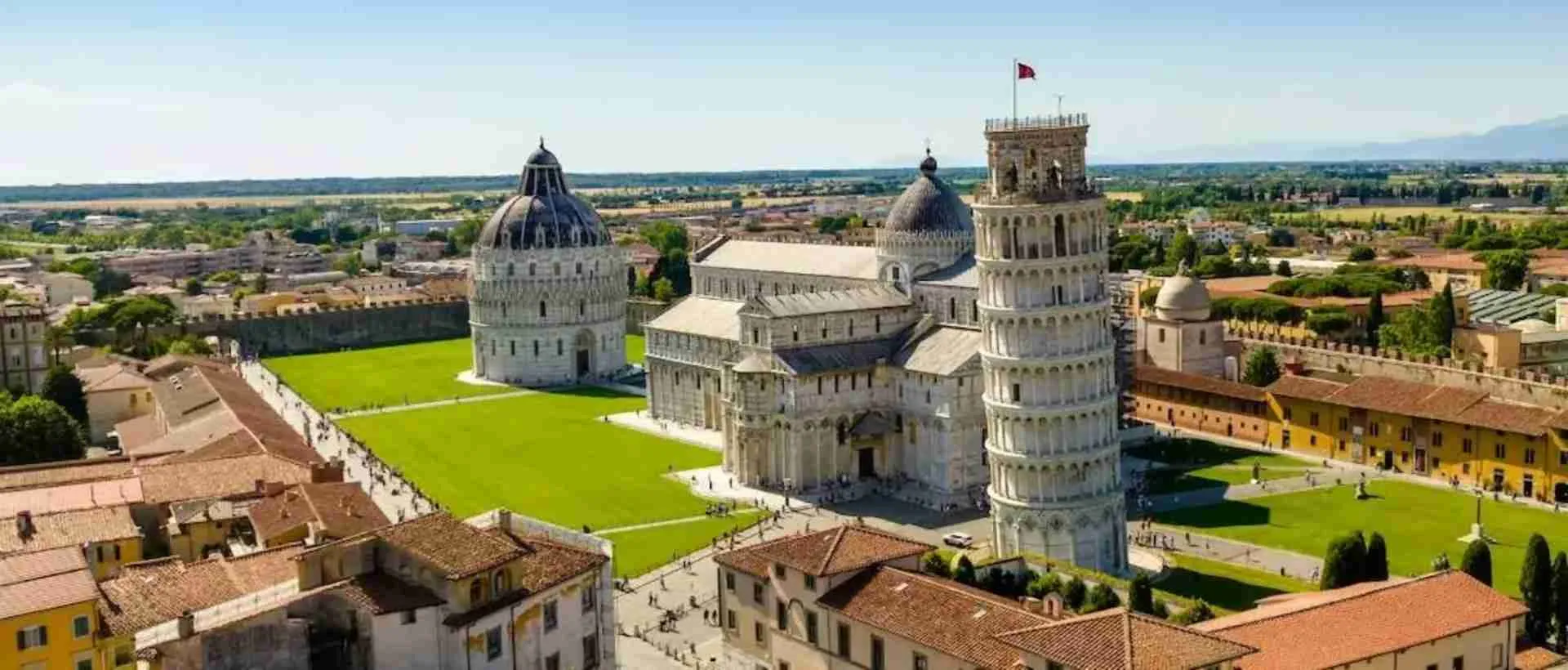
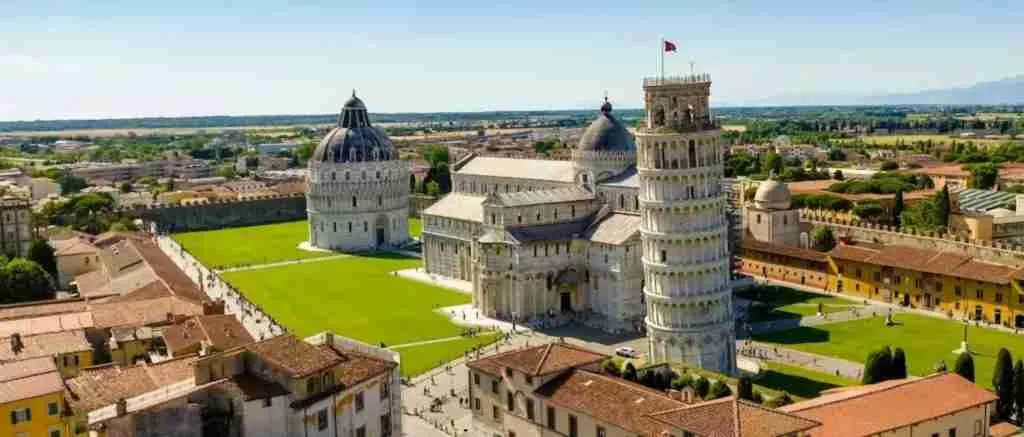
The tower’s top viewing platform offers 360-degree panoramic views of Pisa and the surrounding Tuscan countryside through columned archways that frame different perspectives. Looking down into Piazza dei Miracoli provides the classic birds-eye view of the Cathedral, Baptistery, and Camposanto arranged on the emerald grass below, with the white and gray marble structures creating striking geometric patterns from this elevated vantage point.
To the north, views extend across Pisa’s historic center toward the Arno River, revealing the city’s medieval street grid and the Sant’Antonio neighborhood. Westward views capture the university district and modern Pisa stretching toward the coast, while southern and eastern perspectives show Tuscan hills rising in the distance, with the Apuan Alps visible on clear days approximately 50 km away. The elevated position also reveals the true extent of the tower’s lean, as looking straight down from the top shows ground-level features offset by several meters from the base directly below, making the tilt visually dramatic in ways that ground-level observation cannot match.
Photography from the top presents both opportunities and challenges. The columned archways frame compositions beautifully but require careful positioning to avoid including the arch tops in your frame if you want unobstructed skyline shots. The marble columns provide stable surfaces for resting cameras when shooting long exposures or panoramas, though the constant movement of other visitors means you must work quickly before someone walks into your frame. Shooting through the archways during midday summer sun creates harsh shadows, while morning and evening light provides softer, more flattering illumination for landscape photography.
Time Management During Your 30-Minute Slot
The strict 30-minute time limit begins when you pass through security screening at the tower base, not when you actually start climbing stairs. A typical breakdown allocates 2-3 minutes for security screening, 8-12 minutes for the ascent depending on fitness level and crowding, 8-10 minutes at the top for viewing and photography, and 6-8 minutes for the descent. This leaves minimal buffer time, meaning you cannot linger extensively at the top if you hope to avoid being rushed by staff who enforce the time limit strictly.
Visitors struggling with the climb or stopping frequently for photos may find the ascent alone consumes 15-18 minutes, leaving only 5-10 minutes at the top before staff remind you that your slot is expiring and descending visitors from the next time slot need access. The descent typically proceeds faster than ascent despite requiring equal caution on the slippery marble, as gravity assists and the psychological pressure of having already completed the climb reduces hesitation.
Strategic time management involves moving steadily during ascent without excessive photo stops on the stairs themselves, saving photography for the top viewing platform where you have better light, composition options, and space to work without blocking other climbers. The interior staircase offers limited photographic interest anyway due to poor lighting and narrow quarters, while the top provides all the dramatic views worth capturing. If you’re visiting with companions, coordinate who photographs what subjects to avoid duplicate efforts and maximize your limited time.
Cathedral and Piazza dei Miracoli Access 2026
The Leaning Tower represents only one component of the larger Piazza dei Miracoli (Square of Miracles) complex, a UNESCO World Heritage Site encompassing multiple monuments that create one of medieval Europe’s most spectacular architectural ensembles. Understanding access to the broader complex enhances the tower visit by providing context and additional exploration opportunities.
Cathedral of Santa Maria Assunta Free Access
The Cathedral of Santa Maria Assunta welcomes all visitors free of charge, though entry requires obtaining a free ticket either online or at the site. Tower ticket holders receive automatic cathedral access included with their tower reservation, while visitors skipping the tower can request free cathedral-only tickets at the ticket office or reserve them online for €5 (the fee covers administrative costs rather than true admission). The cathedral operates without timed entry restrictions, allowing visitors to enter at any point during operating hours once they possess a valid ticket.
Cathedral hours vary from tower hours, with the church opening to visitors only from 10:00 AM regardless of season, while closing times match the general monument schedule. The delayed morning opening accommodates religious services and clergy activities, creating a window where early tower climbers (8:30 AM-10:00 AM slots) cannot immediately combine their visit with cathedral touring. This scheduling quirk requires visitors booking the earliest tower slots to either return to the cathedral later or adjust their tower timing to allow same-visit cathedral access.
The cathedral interior showcases Romanesque architecture with Pisa’s distinctive banded marble patterns, Byzantine mosaics, and the famous pulpit by Giovanni Pisano considered one of Gothic sculpture’s masterworks. The massive nave extends 100 meters with Corinthian columns dividing five aisles, while the coffered ceiling displays golden decorations against white and blue backgrounds. Visiting the cathedral provides essential architectural context for understanding the tower, as the bell tower was designed to complement the cathedral’s Romanesque aesthetic rather than standing as an independent structure.
Baptistery of St. John Guided Demonstrations
The Baptistery of St. John, the largest baptistery in Italy with a 54-meter diameter, requires a separate ticket included in the €11 combination monument pass. The circular structure features remarkable acoustics that guides demonstrate several times daily by singing sustained notes that resonate for 15-20 seconds in the domed interior. These acoustic demonstrations occur approximately every 30 minutes during operating hours, with exact timing varying based on visitor flow and guide availability.
The Baptistery interior contains the elaborate marble pulpit by Nicola Pisano (Giovanni’s father), widely considered the first major work of Italian Gothic sculpture. The octagonal baptismal font dates to 1246 and features intricate relief carvings depicting biblical scenes related to baptism and salvation. The combination of architectural grandeur, acoustic phenomena, and sculptural masterworks makes the Baptistery arguably equal to the tower itself in artistic and historical significance, though it receives far less attention from quick-visit tourists focused solely on the leaning bell tower.
Camposanto Monumentale Cemetery
The Camposanto (monumental cemetery) wraps around the northern edge of Piazza dei Miracoli with cloistered arcades containing Roman sarcophagi, medieval tombs, and frescoes that survived partial destruction during World War II bombing. The cemetery, built in 1277, traditionally housed earth brought from Golgotha (the hill where Jesus was crucified) creating sacred ground for Pisan nobility and clergy burials. While much of the original fresco cycle was lost to Allied bombing in 1944, restored fragments and sinopia (preparatory drawings) demonstrate the artistic achievements that made the Camposanto one of Europe’s most important medieval burial sites.
The Camposanto operates with special evening hours during summer 2026 (June 17-August 31), remaining open until 10:00 PM with free access for visitors holding tower tickets for time slots after 7:30 PM. This paired admission creates an opportunity to combine late tower climbs with cooler evening cemetery exploration, avoiding midday heat while experiencing the complex’s more contemplative spaces under atmospheric twilight conditions.
Museums: Opera del Duomo and Sinopie
The Opera del Duomo Museum houses artwork, sculptures, and treasures removed from the cathedral, baptistery, and other monuments for conservation. The collection includes Giovanni Pisano’s original sculptures from the cathedral facade, liturgical objects spanning six centuries, and detailed explanations of the complex’s construction techniques and artistic patronage. The museum operates only during temporary exhibitions, with the current Giovanni Pisano exhibition running December 13, 2025 through March 8, 2026, after which the museum may close until the next exhibition begins.
The Sinopie Museum displays the preparatory drawings (sinopie) for the Camposanto frescoes, discovered during post-WWII restoration work when damaged frescoes were removed from walls revealing the underlying sketches. These red-pigment drawings demonstrate Renaissance artistic techniques and provide insight into how master artists planned large-scale compositions. The museum occupies a medieval hospital building across from the baptistery, creating a quieter alternative to the main monuments for visitors interested in artistic process and historical conservation.
Exploring the Piazza Grounds
The expansive grass lawns surrounding the monuments create the “Square of Miracles” effect, with emerald turf contrasting against brilliant white marble structures. Visitors can walk on designated paths around the perimeter but must stay off the central grass areas which remain protected for landscape maintenance. The open layout allows photography from countless angles, with the tower, cathedral, and baptistery forming different geometric relationships depending on photographer position.
The northwest corner near the Camposanto provides the classic angle for photography with all three major structures (tower, cathedral, baptistery) aligned in a single frame. The southern lawn area offers the famous perspective for “holding up the tower” tourist photos, where forced perspective makes it appear you’re supporting the leaning structure with your hands. While these cliché photos may seem overly touristy, the actual compositional challenge of aligning your position, the tower’s tilt, and the camera angle provides surprising entertainment, with many visitors spending 15-30 minutes perfecting their shot.
Transportation and Logistics for Your Tower Visit 2026
Reaching the Leaning Tower from various starting points in Tuscany requires understanding Pisa’s transportation infrastructure and planning logistics around your strict time slot appointment. The city’s compact historic center makes ground-level navigation straightforward once you arrive, though train schedules, bus routes, and parking constraints affect different approaches.
Arriving from Florence by Train
Regional trains connect Florence Santa Maria Novella station to Pisa Centrale approximately every 30-60 minutes throughout the day, with journey times of 60-75 minutes depending on the specific service. Standard regional trains cost €9.20 per person one-way and require no advance booking, as you can purchase tickets at station machines or counters up until departure. The frequent service provides flexibility for matching train timing to your tower reservation, though building in buffer time protects against delays or missed connections.
High-speed Freccia trains also serve the Florence-Pisa route in approximately 50 minutes for €15-20 per person depending on booking timing and class. These premium trains require advance reservations with assigned seating, offering guaranteed space during peak travel times when regional trains may be crowded. The time savings (10-15 minutes) rarely justify the price premium unless you’re combining the Pisa visit with longer Freccia travel to other destinations like Rome or Milan where the high-speed benefits become more significant.
From Pisa Centrale station, the Leaning Tower lies approximately 1.6 km north through the city center, requiring a 20-25 minute walk or a 10-minute bus ride. The walk follows a straightforward route along Corso Italia and Via Santa Maria, passing through Pisa’s medieval core with shops, cafes, and historic buildings. Bus line LAM Rossa (Red Line) provides direct service from the station to Piazza dei Miracoli for €1.50 per person, departing every 10 minutes during daytime hours. The bus saves time and energy particularly valuable when returning to the station after climbing the tower, though the walking route offers more cultural immersion and photo opportunities.
Day Trips from Lucca, Livorno, and Other Tuscan Cities
Lucca sits only 20 km northeast of Pisa with regional trains connecting the cities in 30 minutes for €3.60 per person. This proximity makes Pisa an easy half-day addition to Lucca-based itineraries, with morning tower visits allowing afternoon return to Lucca for wall-top cycling and historic center exploration. The train frequency (every 30-60 minutes) provides flexibility for timing around tower reservations without extensive advance planning.
Livorno, Tuscany’s primary port city, connects to Pisa via regional trains in 15-20 minutes for €2.70 per person, making it the closest major city to Pisa. Cruise passengers docking in Livorno frequently take the short train journey for quick tower visits, though the challenge involves timing visits around ship schedules and the inflexible tower time slots. Missing your cruise ship departure due to delayed tower visits or transportation issues creates far more serious problems than missing a standard train connection, requiring conservative buffer time allocation.
Siena lies approximately 90 km south of Pisa without direct train service, requiring either bus connections or private transportation. The bus journey takes 2-3 hours with at least one transfer, making Pisa day trips from Siena marginally practical but requiring full-day commitment. Travelers basing themselves in Siena typically visit Pisa en route to or from Florence rather than as isolated day trips, as the transportation time reduces available Pisa exploration time to compressed levels incompatible with enjoying the full monumental complex.
Arriving by Car and Parking Strategies
Driving to Pisa provides flexibility but introduces parking challenges in the historic center where most streets are restricted to residents only or pedestrianized completely. The closest parking to Piazza dei Miracoli sits approximately 300-500 meters away at Parcheggio Torre (Via Pietrasantina) or Parcheggio Pietrasantina (Via Pietrasantina), charging €2.00 per hour or €15-20 for full-day parking. These lots fill quickly during high season mornings (9:00 AM-11:00 AM), requiring early arrival or willingness to walk from more distant parking areas.
Free street parking exists in residential zones approximately 800-1200 meters from the tower, requiring 15-20 minute walks to reach Piazza dei Miracoli. The Via Bonanno Pisano area northeast of the monumental complex offers free spaces with fewer restrictions, though availability varies dramatically based on day of week and season. Local parking enforcement actively tickets vehicles in restricted zones, with fines typically €40-80 for violations, making it essential to understand parking signage even if it appears spaces are available.
GPS navigation to “Piazza dei Miracoli” or “Torre di Pisa” often routes drivers into restricted zones with limited turn-around space, creating unnecessary stress. Instead, navigate to specific parking facilities by name (Parcheggio Torre or Parcheggio Pietrasantina) to arrive at legal parking without encountering ZTL (limited traffic zone) barriers that fine vehicles lacking resident permits. The parking operators provide clear signage and payment machines accepting both cash (coins only) and credit cards, though the coin-only restriction for some machines requires carrying €5-10 in small denominations.
Timing Your Arrival Before Your Reserved Time Slot
The inflexible tower time slots demand careful arrival planning accounting for transportation variability, ticket office procedures, bag check requirements, and security screening. Visitors should aim to reach Piazza del Duomo at least 45-60 minutes before their scheduled tower time to allow adequate buffer for unexpected delays, locate the ticket office, exchange vouchers for physical tickets, check bags, and reach the tower base without rushing.
The ticket office (Biglietteria) sits in the northeast corner of the piazza in a separate building from the tower itself, requiring 3-5 minutes to walk between the two locations once you have tickets in hand. During peak season, ticket office queues can extend 15-20 minutes even for visitors with advance reservations who only need to exchange vouchers for physical tickets rather than purchasing tickets outright. This queue time, combined with bag check and security screening, easily consumes 20-30 minutes between arriving at the piazza and actually beginning your tower climb.
Missing your time slot by even 5 minutes results in denied entry with no refund and no opportunity to reschedule for a later slot that day. The Opera staff enforce this policy strictly because the timed slot system exists specifically to manage visitor flow and prevent overcrowding in the tower’s narrow interior. Allowing late arrivals would cascade delays through subsequent time slots, creating problems for hundreds of other visitors. This unforgiving policy means conservative time buffers represent prudent planning rather than excessive caution, particularly when relying on public transportation subject to delays or arriving by car in unfamiliar parking situations.
Photography Guide: Capturing the Leaning Tower 2026
Photographing the Leaning Tower of Pisa presents unique challenges and opportunities based on the structure’s tilt, the surrounding monumental complex, and varying light conditions throughout the day. Understanding optimal camera angles, lighting situations, and creative composition techniques helps capture the icon effectively rather than reproducing the same cliché shots millions of other visitors make.
Classic Ground-Level Perspectives and the Famous “Holding Up the Tower” Shot
The classic forced-perspective photo where you appear to hold up the leaning tower requires specific positioning on the southern lawn approximately 40-60 meters from the tower base. The exact spot varies based on camera focal length and subject height, but the general location sits on the main pedestrian path connecting the ticket office area to the cathedral facade. The key involves aligning your outstretched hands with the tower’s lean so the forced perspective makes it appear you’re supporting the structure.
Achieving the effect demands patience and coordination between photographer and subject. The subject must position themselves at the correct distance where their raised hands appear tower-height in the frame, then the photographer must crouch low to create the upward angle that strengthens the illusion. Both parties must adjust positions iteratively, with the photographer providing guidance about whether hands need to move higher, lower, left, or right to achieve convincing alignment. Most successful attempts require 5-10 minutes of trial, error, and refinement, making this simple-looking shot surprisingly time-consuming to execute well.
While this tourist-classic photo may seem cliché, the creative challenge provides entertainment and the resulting images often become visitors’ favorite souvenirs despite (or because of) their playful nature. Variations on the theme include appearing to push the tower upright, pulling it down with a rope, or multiple people working together in elaborate arrangements. The key to elevating these shots above complete cliché involves creative poses, unusual angles, or incorporating other monuments (cathedral, baptistery) into more complex compositions.
Architectural Photography: Emphasizing the Tilt and Marble Details
Serious architectural photography requires different approaches than tourist snapshots. The northwest corner of the piazza provides the optimal position for capturing the tower, cathedral, and baptistery aligned in a single frame, with the three structures’ geometric relationships creating powerful compositions. Wide-angle lenses (16-35mm on full-frame cameras) capture the full architectural ensemble, while standard focal lengths (35-70mm) isolate individual structures with better perspective control and detail resolution.
Emphasizing the tower’s tilt requires careful vertical orientation to create visual tension between the leaning structure and the frame’s true vertical edges. Positioning the tower off-center in your composition with negative space on the “falling” side enhances the lean’s visual impact compared to centered compositions where the tilt appears less dramatic. Including the cathedral or other vertical reference elements in the same frame provides explicit contrast showing that the tower leans while other structures stand vertical, making the tilt photographically clear rather than ambiguous.
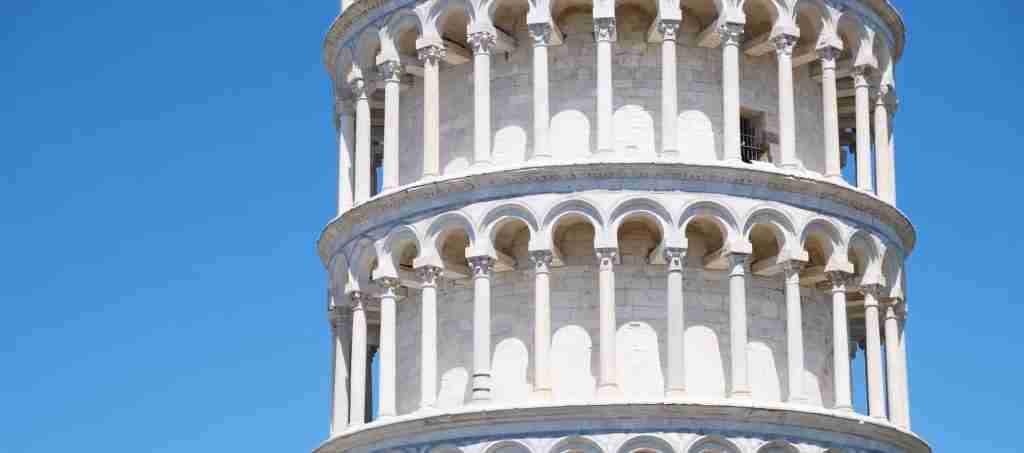
The marble facade’s banded pattern and columned arcades offer rich detail photography opportunities requiring longer lenses (70-200mm) to compress perspective and emphasize the ornamental elements. The different construction phases visible in varying marble colors and column styles create visual interest when isolated from the broader structure. Early morning or late afternoon light rakes across the facade at low angles, creating shadows that accentuate the relief carvings and architectural details invisible under flat midday illumination.
Lighting Conditions Throughout the Day
Morning light (7:00 AM-10:00 AM) illuminates the tower’s west facade with warm, low-angle sunlight that emphasizes the marble’s cream and white tones while creating long shadows that dramatize the tilt. The Cathedral faces east, receiving beautiful morning light on its facade, while the tower remains partially shadowed on its east side. Photographers shooting the full architectural ensemble from the northwest corner benefit from balanced light across all structures, avoiding the harsh shadows and bright highlights that complicate exposure during midday.
Midday light (11:00 AM-3:00 PM) creates the least favorable conditions for tower photography, with overhead sun producing flat, harsh illumination that washes out the marble’s subtle color variations and creates unattractive shadows under architectural elements. The white and cream marble reflects bright sunlight intensely, creating exposure challenges where the tower becomes overexposed while the grass and surrounding elements remain properly exposed. This time period works better for interior cathedral visits and museum exploration than outdoor photography.
Late afternoon and evening light (4:00 PM-sunset) provide the most dramatic photography conditions, with golden hour illumination casting warm tones across the marble and creating long shadows that enhance architectural depth. The tower’s west facade glows brilliantly during the hour before sunset, while the east side falls into rich shadow providing dramatic contrast. The extended summer hours (until 10:00 PM) during June-August 2026 allow tower climbs during golden hour and blue hour, creating unique opportunities for photography from the top under atmospheric twilight conditions unavailable during standard operating hours.
Blue hour (15-30 minutes after sunset) transforms the piazza into a dramatically different environment, with the marble structures glowing white against deepening blue skies. The tower’s exterior lighting system activates shortly after sunset, illuminating the facade with warm-toned spotlights that create beautiful ambience for night photography. Long exposures (1-4 seconds at f/8, ISO 400) capture the lit tower against twilight skies, though a tripod becomes essential for sharp results, and bringing a tripod requires checking it at the bag cloakroom if you plan to climb the tower.
Photography from the Top: Composition and Technical Challenges
The top viewing platform’s columned archways create natural framing elements for compositions but also introduce challenges by partially blocking views and creating difficult lighting contrasts between shaded interior spaces and bright exterior scenes. Shooting through the archways requires exposing for the exterior view, accepting that the columns will appear as dark silhouettes framing your composition. This silhouette approach actually enhances many images by providing clear foreground framing that guides viewer attention toward the background elements.
Wide-angle lenses (16-35mm) capture the broader Pisa cityscape and surrounding Tuscan landscape in single frames, while standard zooms (24-70mm) allow tighter compositions isolating specific neighborhoods or distant mountains. The elevated perspective reveals geometric patterns in the piazza below, with the cathedral, baptistery, and cemetery creating architectural compositions impossible to appreciate from ground level. Shooting straight down at the monumental complex below demonstrates the tower’s lean dramatically, as ground-level features appear offset several meters from the tower’s base directly beneath your viewing position.
Technical challenges include managing bright ambient light reflecting off white marble surfaces while maintaining detail in shadow areas. High dynamic range techniques (bracketing exposures for later HDR processing) help capture the full tonal range, though the constant movement of other visitors on the platform makes precise bracketing difficult without a tripod. Alternatively, expose for highlight detail in the bright marble and accept some shadow blocking, as the dramatic Tuscan light creates high-contrast scenes that rarely suit flat, evenly-lit processing anyway.
Money-Saving Strategies and Budget Planning 2026
While the €20 tower ticket represents a fixed cost with no discount opportunities, strategic planning around the broader Pisa visit can minimize overall expenses while maximizing experiences within the monumental complex and surrounding city.
Combination Ticket Value Analysis
The €11 six-monument combination ticket (Baptistery, Camposanto, Sinopie Museum, Opera del Duomo Museum, Cathedral, temporary exhibitions) provides clear value for visitors planning to explore beyond just the tower. Individual monument tickets cost €5 each when purchased separately, meaning the combination ticket breaks even after visiting just 2-3 additional monuments and saves €14-19 if you visit all six. The one-year validity from purchase date creates flexibility for spreading visits across multiple Pisa trips if you’re staying in Tuscany for extended periods.
For quick-visit travelers on day trips from Florence or cruise passengers with limited time, the combination ticket often provides poor value despite the per-monument savings. Realistically visiting the tower, cathedral, and perhaps one additional monument (Baptistery or Camposanto) consumes 2-3 hours, which many day-trippers cannot spare without sacrificing time in Florence or other destinations. In these cases, purchasing only the €20 tower ticket and accepting free cathedral access provides sufficient Pisa experience without paying €11 for monuments you won’t have time to visit.
Free and Low-Cost Pisa Experiences
The cathedral itself remains free with any ticket purchase, providing access to one of Italy’s finest Romanesque churches at no incremental cost beyond your tower ticket. The cathedral visit can easily consume 30-45 minutes for visitors interested in architecture, art, and religious history, offering substantial value included with your tower admission. The piazza grounds remain completely free for walking, photography, and people-watching, with the emerald lawns and white marble monuments creating spectacular environments without entry fees.
Wandering Pisa’s historic center along the Arno River, through the university district, and into the medieval neighborhoods costs nothing but provides authentic local atmosphere beyond the tourist-focused monumental complex. The Borgo Stretto pedestrian shopping street features medieval arcades, local shops, and cafes where prices remain lower than in the immediate Piazza dei Miracoli area. The Lungarno promenades along both Arno banks offer beautiful walks with historic palaces, churches, and bridges creating picturesque scenes throughout the compact city center.
Food and Dining Budget Strategies
Restaurants immediately surrounding Piazza dei Miracoli charge premium prices targeting tourists, with pasta dishes typically €12-18 and pizza €10-14 compared to €8-12 for pasta and €7-10 for pizza in neighborhoods 500+ meters from the tower. Walking 10 minutes toward Pisa Centrale station or into residential areas north of the monumental complex reveals neighborhood trattorias and pizzerias serving identical food quality at 30-40% lower prices than tourist-zone establishments.
Picnicking on the Piazza dei Miracoli lawns is prohibited by park regulations, but the gardens along the medieval walls northwest of the Camposanto welcome visitors for outdoor dining. Purchasing bread, cheese, salumi, and fruit from Pisa’s covered market (Mercato Vettovaglie) or supermarkets near the station costs €5-8 per person for substantial lunch portions, saving €10-15 per person compared to restaurant meals. This approach works particularly well for families with children where restaurant dining costs escalate quickly with multiple meals.
Transportation Cost Optimization
Regional trains from Florence to Pisa Centrale cost €9.20 per person one-way with no advance booking required, providing flexibility without commitment. The frequent service (every 30-60 minutes) means you can catch any train rather than paying premium prices for Freccia high-speed reservations that save only 10-15 minutes on this short route. Purchasing tickets at station machines rather than through third-party apps or websites avoids booking fees and allows last-minute schedule adjustments if tower visit timing shifts.
The LAM Rossa bus from Pisa Centrale station to Piazza dei Miracoli costs €1.50 per person compared to taxis charging €10-15 for the same journey. While the bus takes slightly longer (10 minutes vs. 5-7 minutes by taxi), the €8.50-13.50 savings per person becomes significant for couples or families. The 20-25 minute walk between station and tower costs nothing while providing cultural immersion and exercise, making it the optimal choice for budget travelers with time flexibility.
Visiting with Children: Family-Specific Considerations 2026
Family visits to the Leaning Tower require special planning around the age restrictions, child-specific needs during the climb, and managing mixed-age groups where some children can climb while younger siblings cannot.
Managing the Age 8 Minimum Requirement
The strict age 8 minimum creates challenges for families with children spanning the age cutoff. Parents with an 8-year-old eligible to climb and a 6-year-old prohibited from entering must either split up with one parent climbing while the other supervises the younger child outside, or skip the tower entirely rather than separating the family. The prohibition applies absolutely regardless of the younger child’s size, maturity, or prior experience climbing monuments, making exceptions impossible even in cases where parents judge their 7-year-old capable of handling the experience.
The alternative involves treating the tower climb as a solo or couples activity scheduled while younger children participate in different activities elsewhere. Many families visiting Pisa as a day trip from Florence designate tower climbing as a parent-only experience, with children under 8 staying with grandparents, travel companions, or trusted tour guides during the 45-60 minute tower visit window. This approach requires advance coordination and comfortable family dynamics, as leaving young children with other parties may not suit all family structures or travel styles.
For families where tower climbing represents a non-negotiable priority, planning Pisa visits for when all children meet the age requirement becomes necessary. This might mean delaying Tuscan travel until younger siblings reach age 8, creating multi-year gaps between siblings’ first tower climbs, or accepting that the family will need to make multiple Pisa trips across different years to ensure all children experience the climb when age-eligible.
Preparing Children Aged 8-12 for the Physical Experience
Children in the minimum age range (8-10 years old) often struggle with the tower’s physical demands more than adults, as their shorter leg length makes the irregular step heights more challenging and their developing vestibular systems react more strongly to the disorienting tilt. Parents should prepare children for the experience by explaining that the tower will feel strange to climb, that they may need to use their hands to steady themselves against walls, and that the sensation of leaning is normal and safe rather than indicating the tower is actually falling.
Proper footwear becomes especially critical for children, as the smooth marble stairs prove genuinely slippery under sneakers with worn soles or fashion shoes with minimal grip. Athletic shoes with good rubber tread provide optimal traction, while sandals, flip-flops, or dress shoes create unnecessary slip hazards. Children should test their shoes on stairs at home or in hotel stairwells before the Pisa visit, ensuring they can navigate steps confidently without slipping or losing footing.
The 30-minute time limit creates pressure that some children find stressful, particularly those who prefer exploring at their own pace without adult hurrying. Booking less competitive time slots (winter low season, early morning, or late afternoon in summer) reduces crowding and creates more relaxed environments where children can climb at comfortable paces without constantly moving aside for other visitors. Avoid peak midday summer slots where heavy visitor traffic creates congestion on the narrow staircase, forcing children to navigate both physical challenges and social pressure from impatient climbers behind them.
Activities for Children Under 8 While Parents Climb
Children excluded from the tower due to age restrictions can remain productively occupied in Piazza dei Miracoli’s open areas under supervision of the non-climbing parent or another responsible adult. The expansive grass lawns provide space for running, playing, and active recreation within sight of the tower, allowing children to burn energy while waiting. The famous forced-perspective photography (pretending to hold up the tower) entertains children for 15-30 minutes as they experiment with different poses and creative interpretations of the classic shot.
The Cathedral welcomes children of all ages with free admission, providing 20-30 minutes of exploration for families interested in introducing children to religious architecture and art. The massive interior impresses young visitors with its scale and grandeur, while the golden ceiling decorations, mosaic artwork, and ornate pulpit provide visual interest beyond what many children expect from “boring churches.” The free admission and lack of time restrictions make the cathedral an ideal holding activity where children can explore at their own pace without pressure or cost concerns.
The Baptistery offers the acoustic demonstration phenomenon that fascinates children when guides sing sustained notes that resonate for 15-20 seconds in the domed space. This interactive, sensory experience engages children more effectively than static architectural viewing, and the demonstrations occur frequently enough (approximately every 30 minutes) that families can plan visits around catching at least one performance. The combination ticket requirement (€11 for access beyond free cathedral entry) makes this more expensive than free piazza activities but provides genuine entertainment value for families with time to explore beyond just the tower.
Accessibility and Special Needs Accommodations 2026
The Leaning Tower’s medieval construction limits accessibility for visitors with disabilities, though the Opera della Primaziale Pisana provides accommodations within the constraints of historic preservation and structural realities.
Wheelchair and Mobility Impairment Access
The tower interior remains completely inaccessible for wheelchair users due to the 251-step marble staircase with no elevator or alternative access route. Visitors requiring wheelchairs, walkers, or significant mobility assistance cannot enter the tower structure regardless of advance arrangements or special accommodations. The narrow spiral staircase (60-80 cm wide) physically prevents wheelchair passage, and the historic structure cannot be modified for accessibility without destroying the medieval fabric that makes it a protected UNESCO World Heritage Site.
Wheelchair users can access the broader Piazza dei Miracoli grounds, cathedral, and portions of other monuments with varying levels of accommodation. The cathedral provides ramps and accessible entrances allowing wheelchair users to enter and view much of the interior, though some elevated areas and the crypt remain inaccessible. The Baptistery offers ground-level access to the interior, allowing wheelchair users to experience the acoustic demonstrations and view the Pisano pulpit, though upper gallery levels remain accessible only via stairs.
Visitors with mobility limitations who can walk short distances with assistance but cannot manage 251 steps should honestly assess their capabilities before purchasing non-refundable tower tickets. The climb demands sustained exertion without rest areas or opportunities to pause and recover, with the smooth marble surface and disorienting tilt creating additional challenges beyond simple step-climbing. Many visitors who successfully navigate stairs in daily life find the tower’s unique demands exceed their abilities, losing the €20 ticket cost when forced to abandon the climb partway up.
Visual and Hearing Impairments
Blind and low-vision visitors can climb the tower with sighted companions providing guidance and description, though the experience centers heavily on visual elements (views from top, seeing the architectural details, photography) that translate poorly to non-visual engagement. The tactile experience of climbing within the tilted structure and feeling the marble surfaces provides some sensory interest, but the tower offers limited interpretive materials in braille or audio format that would create rich experiences for blind visitors independent of visual elements.
Deaf and hard-of-hearing visitors face no significant barriers to tower access beyond the general absence of visual signage explaining historical and architectural details during the climb. The primarily self-guided nature of the visit means no audio information is required, though the lack of informational placards throughout the staircase leaves all visitors (deaf and hearing alike) without substantive educational content during the actual climb. The staff welcome briefing at the base includes basic historical information that deaf visitors miss without interpretation, though this represents minor information loss rather than critical access barrier.
Free Admission for Disabled Visitors and Required Documentation
Visitors with certified disabilities receive free tower admission accompanied by one helper at no charge, upon presentation of official disability certification in Italian or English to the ticket office. The free admission policy applies to all monuments in the complex, not just the tower, creating opportunities for disabled visitors to explore the full architectural ensemble without financial barriers. The Opera della Primaziale Pisana requires advance coordination via email to [email protected] at least 5 days before the intended visit date, allowing staff to arrange appropriate accommodations and schedule access during less crowded time slots.
Available time slots for disability free admission typically concentrate in early morning (before 10:00 AM) or late afternoon (after 6:00 PM) periods to reduce crowding and provide more comfortable environments for visitors who may need extra time or special assistance. This scheduling restriction means disabled visitors cannot necessarily visit during preferred middle-of-day time slots, requiring flexibility around the limited windows when special access can be accommodated within the tower’s capacity constraints.
Weather Considerations and Seasonal Visit Planning 2026
Weather patterns throughout Pisa’s year significantly affect tower visit comfort, photography conditions, and overall experience quality despite the tower remaining open during most weather events.
Summer Heat Management (June-August)
Pisa’s summer temperatures regularly reach 30-35°C (86-95°F) during midday hours, with the marble tower interior amplifying heat through solar radiation absorbed by white stone surfaces. The enclosed staircase lacks ventilation and air circulation, creating oppressive conditions during midday summer climbs when interior temperatures can exceed exterior ambient temperatures by 5-10°C. The physical exertion of climbing 251 steps in these conditions causes sweating, dehydration, and exhaustion in visitors unaccustomed to hot-weather exertion.
Strategic timing mitigates summer heat challenges substantially. Early morning slots (8:30 AM-10:00 AM) before the marble absorbs full solar heating provide the coolest summer climbing conditions, with interior temperatures typically 24-28°C (75-82°F) compared to 32-38°C (90-100°F) during afternoon peaks. Evening slots during the extended summer hours (after 7:00 PM) benefit from cooling temperatures as the sun drops, though the marble retains stored heat into early evening, making true relief come only after 8:00 PM.
Hydration becomes critical for summer visits, though water bottles cannot be carried during the tower climb itself, requiring thorough hydration before your scheduled time slot. Drink 500-750ml of water in the 30-60 minutes before your tower reservation, and carry water to consume immediately after descending. Many visitors underestimate how much fluid they lose through sweating during the enclosed, hot-weather climb, experiencing headaches, fatigue, or mild heat exhaustion in the hours following their tower visit due to inadequate hydration practices.
Winter Weather and Rain Considerations (November-February)
Winter brings cooler temperatures averaging 8-15°C (46-59°F) with increased rainfall, though the tower operates during light to moderate rain with only extreme storms forcing closures. Rain creates slippery conditions on the marble staircase where the smooth stone becomes genuinely treacherous when wet, requiring extra caution and slow, deliberate movement. The lack of handrails in many sections makes wet-weather climbing more challenging, as you must rely on wall contact for balance without the security of grab bars or railings.
Winter’s shorter daylight hours (sunrise approximately 7:30 AM, sunset around 5:00 PM in December) limit photography opportunities from the top, with the 9:00 AM-6:00 PM operating hours providing only a narrow window for good natural light. Morning climbs (9:00 AM-11:00 AM) capture softer light though from lower sun angles that create longer shadows, while afternoon slots face the challenge of the sun setting during or shortly after your visit, limiting the quality viewing time at the top before light fades.
The positive aspects of winter visits—minimal crowds, easy booking availability, lower accommodation prices in Pisa—often outweigh the weather inconveniences for travelers prioritizing uncrowded experiences over perfect conditions. The winter low season creates opportunities to climb the tower with only 10-15 other visitors in your time slot compared to the maximum 40-person groups during summer, providing more space, less waiting, and quieter environments for contemplation and photography.
Optimal Weather Windows: Spring and Fall
April-May and September-October represent ideal weather windows combining comfortable temperatures (15-25°C / 59-77°F), moderate rainfall probabilities, and extended daylight hours without summer’s oppressive heat. Spring particularly offers clear skies following winter’s heavier precipitation, with April and May averaging 6-7 rainy days per month compared to November’s 10-11 days. These shoulder seasons provide the best balance of pleasant climbing conditions, good photography light, and manageable crowds before or after the peak summer surge.
September extends summer’s excellent weather into early autumn with warm temperatures (20-27°C / 68-81°F) and generally dry conditions, though occasional thunderstorms affect late afternoon and evening hours. October introduces autumn’s cooler temperatures (15-22°C / 59-72°F) and increased rainfall but offers beautiful soft light for photography and the psychological comfort of climbing in crisp air rather than summer heat. The fall color changes in surrounding Tuscan landscapes add seasonal beauty to views from the tower’s top, with hillside vegetation creating varied patterns compared to summer’s uniform green.
Frequently Asked Questions About Leaning Tower Tickets and Visits 2026
What happens if I arrive late for my reserved tower time slot?
Late arrivals receive no accommodation regardless of reason, with entry denied even for delays of 5-10 minutes beyond your scheduled time. The non-refundable ticket policy means you lose the €20 cost entirely with no rebooking options for later that day or future dates. The Opera della Primaziale Pisana enforces this strict policy to maintain the timed entry system’s integrity and prevent cascade delays affecting subsequent visitor groups. Build substantial buffer time (45-60 minutes before your slot) into arrival planning to account for transportation delays, ticket office queues, bag check procedures, and navigation to the tower base.
Can I change my tower booking date or time after purchasing tickets?
Modifications to existing bookings are not permitted through the official booking system, requiring cancellation of the original reservation (which provides no refund) followed by purchasing new tickets subject to availability. Third-party booking platforms (GetYourGuide, Viator) sometimes offer flexible cancellation policies allowing changes up to 24 hours before visit dates, though these platforms charge €25-30 per ticket compared to the official €20 rate. If schedule changes seem possible, book through third-party sources despite higher costs to maintain flexibility, or wait until schedule solidifies before purchasing official non-refundable tickets.
How much time should I allocate for the complete tower visit including waiting and climbing?
Allocate 90-120 minutes total from arriving at Piazza dei Miracoli to completing your tower visit and being ready for next activities. This timeline includes 15-20 minutes for ticket office voucher exchange, 10 minutes walking to the tower, 5-10 minutes for bag check, 5 minutes for security screening, 30 minutes for the timed climb itself, 10 minutes collecting checked bags after descending, and buffer time for unexpected delays or slow queues. Tight schedules compressing this timeline below 90 minutes risk creating stress and rushed experiences where you cannot fully enjoy the climb or views from the top.
Are there lockers or bag storage facilities if I’m traveling with luggage?
The tower’s mandatory cloakroom accepts daypacks and standard-size bags but isn’t designed for large luggage storage. Travelers arriving in Pisa with suitcases or large backpacks should use Pisa Centrale train station’s left luggage service (deposito bagagli) which charges approximately €6 per bag for up to 5 hours or €12 for 5-12 hours. Store large items at the station before traveling to Piazza dei Miracoli, bringing only essential daypack items that can be quickly checked at the tower cloakroom. The station luggage office operates daily with extended hours accommodating most train arrival and departure patterns.
Can I bring a baby or toddler in a carrier while climbing the tower?
Babies and toddlers under age 8 are prohibited from entering the tower regardless of how they’re carried, applying to infants in front carriers, back carriers, slings, or wraps just as strictly as walking children. The safety regulations make no distinction between carried infants and independently mobile children, excluding anyone under 8 from the tower completely. Parents visiting with infants or toddlers must arrange for one parent to stay outside with the young child while the other climbs, or skip the tower climb entirely and focus on the child-friendly cathedral and piazza areas accessible to all ages.
Is the tower climb safe for pregnant visitors?
The Opera administration specifically recommends against tower climbing for pregnant visitors due to the sustained cardiovascular exertion, balance challenges from the pronounced tilt, and lack of emergency medical facilities within the narrow staircase. While no formal prohibition prevents pregnant visitors from climbing, the physical demands and risks of falls on slippery marble stairs create genuine safety concerns particularly in second and third trimesters. Pregnant visitors should consult physicians before booking and honestly assess their fitness levels, accepting that the non-refundable ticket policy offers no recourse if you decide the climb seems too risky after purchasing tickets.
Are guided tours better than independent visits?
Guided tours priced at €40-60 provide value primarily through educational content and logistical coordination rather than tower access advantages, as all visitors (guided and independent) enter through the same timed slot system without skip-the-line benefits. Tours include expert commentary about the tower’s history, construction challenges, tilting mechanics, and cultural significance while exploring Piazza dei Miracoli before the tower climb. Independent visitors receive no interpretive information during the self-guided climb beyond brief staff remarks at the base, potentially missing historical and architectural insights that tours provide. Choose guided tours if you value educational depth and prefer structured experiences with expert guidance, but select independent tickets if you prioritize flexibility, lower costs, and self-paced exploration.
What’s the best time of day to visit for photography?
Early morning (8:30 AM-10:00 AM) and late afternoon/evening (5:00 PM-sunset) provide optimal lighting conditions for tower photography, with low-angle sunlight creating warm tones on the white marble and long shadows emphasizing architectural depth. Morning light illuminates the tower’s west facade while the cathedral receives beautiful light on its east face, creating balanced exposures for compositions including both structures. Evening light produces the most dramatic conditions with golden hour glow transforming the marble and extended summer hours (until 10:00 PM June 17-August 31) allowing climbs during spectacular twilight conditions. Avoid midday (11:00 AM-3:00 PM) when harsh overhead light creates flat, unflattering illumination that washes out the marble’s subtle color variations.
Can I visit other Piazza dei Miracoli monuments on the same day as my tower climb?
Yes, the tower ticket includes free cathedral access usable same-day or any time before it expires, while combination monument tickets (€11 covering Baptistery, Camposanto, museums) remain valid for one year from purchase allowing same-day or future visits. The flexible timing means you can structure your Piazza dei Miracoli exploration around your fixed tower time slot, visiting the cathedral and other monuments before or after your climb based on operating hours and personal preferences. Most visitors allocate 2-4 hours total for comprehensive complex exploration including tower climb, cathedral visit, and one to three additional monuments, making it practical to experience the full architectural ensemble in a single visit.
Do I need to print tickets or can I show them on my phone?
Digital tickets displayed on smartphones are accepted at the ticket office for voucher exchange, though printing physical copies provides backup if your phone battery dies or screen damage prevents displaying the confirmation. The ticket office produces physical entry tickets regardless of how you present your booking confirmation, as the actual tower entry requires scanning a paper ticket with barcode rather than digital verification. Carrying both digital and printed copies provides maximum security against losing access due to technology failures, though most visitors successfully use phone-displayed confirmations without issues.