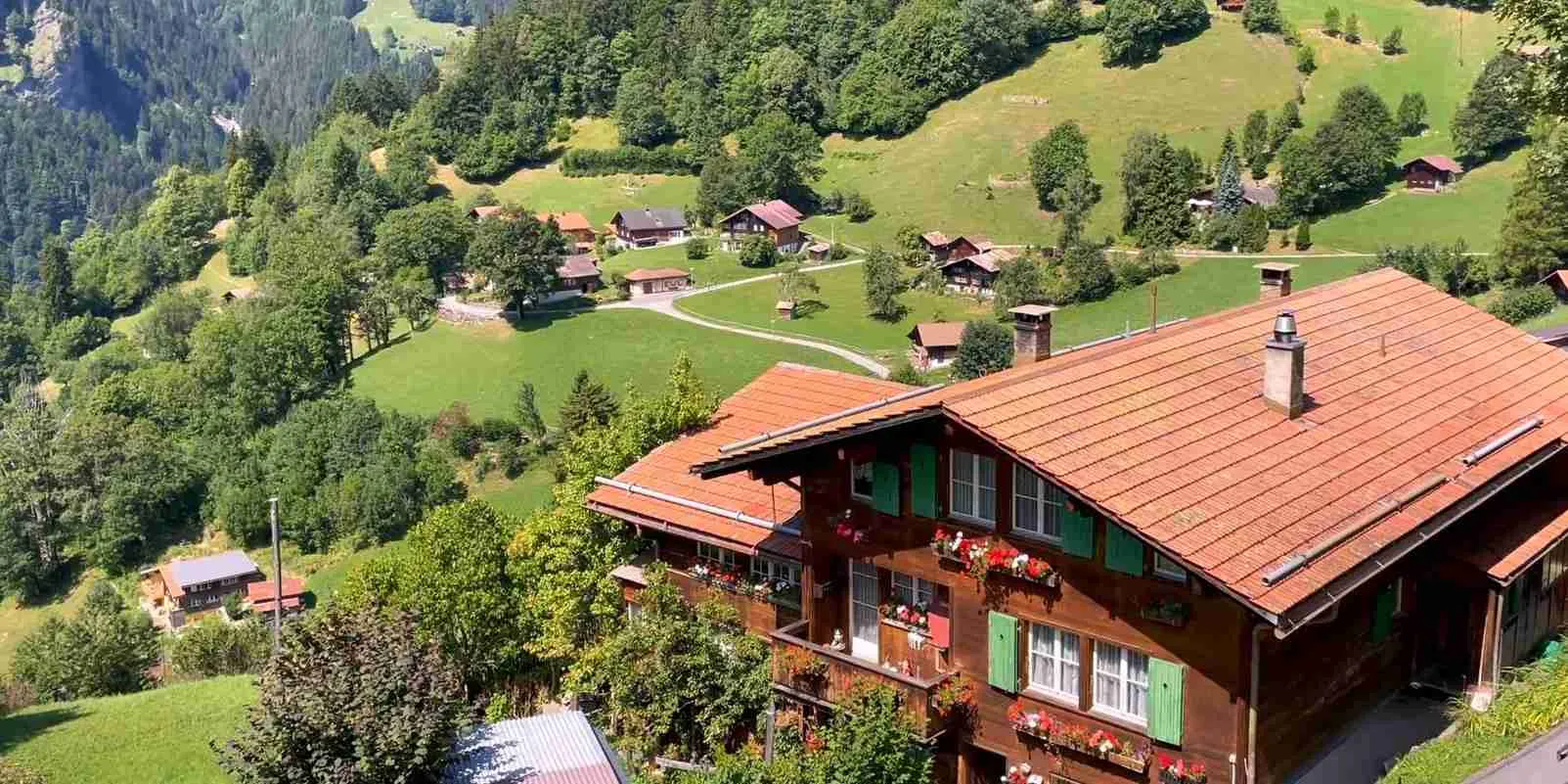
Lauterbrunnen Day Trip from Interlaken 2026: Travel Planning Guide
Lauterbrunnen Valley lies just twenty minutes from Interlaken by train, offering immediate access to Switzerland’s most dramatic alpine scenery with seventy-two waterfalls cascading down vertical cliffs, car-free mountain villages perched on ledges above the valley floor, and direct connections to the Jungfrau region’s most spectacular viewpoints. This comprehensive guide provides all transportation logistics, attraction costs, optimal routes, and practical strategies for maximizing a single day exploring one of Switzerland’s most accessible yet spectacular destinations.
Key Takeaways for Your Lauterbrunnen Day Trip 2026
- Budget-Conscious Valley Exploration 2026: A focused valley floor itinerary costs CHF 60-70 ($65-80) per person, covering round-trip train transportation from Interlaken, Trümmelbach Falls admission, Staubbach Falls visit, and valley floor lunch while experiencing Europe’s only accessible glacier waterfalls inside a mountain plus free waterfall viewing throughout the dramatic U-shaped glacial valley.
- Mid-Range Mountain Village Access 2026: Adding cable car access to car-free Mürren village increases daily costs to CHF 95-120 ($105-130) per person, including all valley attractions plus spectacular ridge-top village exploration with Eiger, Mönch, and Jungfrau panoramas, traditional chalet architecture, and optional hiking trails along the clifftop path overlooking Lauterbrunnen Valley.
- Premium Schilthorn Summit Experience 2026: The complete alpine experience including Schilthorn summit costs CHF 205-245 ($225-265) per person, covering round-trip transportation, valley waterfalls, cable car ascent to 2,970-meter summit with revolving Piz Gloria restaurant from the James Bond film, 360-degree panoramic viewing platform, Birg Thrill Walk suspended cliff path, and mountain dining.
- Transportation Frequency and Convenience 2026: Trains depart Interlaken Ost for Lauterbrunnen approximately every 20 minutes from early morning through late evening with sixty-plus services daily, making spontaneous departure timing practical without advance reservations, while cable car connections to mountain destinations operate every 30 minutes throughout the day with coordinated transfers minimizing wait times.
- Seasonal Waterfall Dynamics 2026: Trümmelbach Falls operates April through early November only with peak water volume occurring June through August when glacial meltwater reaches maximum flow, while winter months see dramatically reduced waterfall activity throughout the valley as glaciers remain frozen, making spring through early autumn the optimal period for waterfall-focused visits.
- Swiss Travel Pass Value Analysis 2026: The Swiss Travel Pass provides free train transportation Interlaken to Lauterbrunnen plus free cable car access to Grütschalp and Mürren, reducing daily costs by CHF 44-50 ($48-55) for travelers visiting multiple Swiss destinations, though the pass offers no discount at privately-owned Trümmelbach Falls and provides only 50% discount on Schilthorn cable cars rather than full coverage.
People Also Ask About Lauterbrunnen Day Trips 2026
Is One Day Enough for Lauterbrunnen from Interlaken in 2026?
Yes, one day provides sufficient time for a comprehensive Lauterbrunnen Valley experience from Interlaken. The 20-minute train journey allows departure as early as 6 AM and return as late as 11 PM, providing fifteen hours of potential exploration time. A focused valley floor itinerary visiting Trümmelbach Falls, Staubbach Falls, and the village takes 4-5 hours. Adding Mürren village via cable car extends the day to 6-7 hours. Including Schilthorn summit requires 8-9 hours total. Most visitors find 6-8 hours ideal, allowing morning departure around 8-9 AM and evening return around 5-7 PM with comfortable pacing throughout the day.
How Much Does a Lauterbrunnen Day Trip Cost from Interlaken in 2026?
Daily costs range CHF 60-70 ($65-80) for budget valley exploration, CHF 95-120 ($105-130) for mid-range experience including Mürren village access, and CHF 205-245 ($225-265) for premium Schilthorn summit experience. The budget tier includes round-trip train transportation CHF 24-26 ($26-28), Trümmelbach Falls admission CHF 18 ($20), and valley lunch CHF 18-28 ($20-30). Mid-range adds Grütschalp-Mürren cable car and train CHF 20-24 ($22-26) plus upgraded dining CHF 35-50 ($38-55). Premium tier substitutes full Schilthorn cable car access CHF 115-130 ($125-140) with mountain restaurant dining CHF 50-70 ($55-75).
What’s the Best Route from Interlaken to Lauterbrunnen Valley Attractions in 2026?
Take the train from Interlaken Ost to Lauterbrunnen station, departing approximately every 20 minutes with 22-minute journey time. From Lauterbrunnen station, walk 5 minutes to Staubbach Falls viewpoint, then either walk 45-50 minutes or take bus 141 for 10 minutes to Trümmelbach Falls. For Mürren access, two routes exist: the scenic route via cable car to Grütschalp then mountain train to Mürren takes 16 minutes total, while the dramatic alternative via bus to Stechelberg then steep cliff cable car takes 25 minutes but offers more spectacular waterfall views during ascent.
Can You Visit Jungfraujoch and Lauterbrunnen in the Same Day from Interlaken in 2026?
Combining both destinations in one day is physically possible but creates rushed experiences that sacrifice the unique qualities of each location. Jungfraujoch requires minimum 5-6 hours including 2-hour round-trip train journey and summit exploration, while meaningful Lauterbrunnen Valley exploration needs 4-6 hours. The combined 10-12 hour requirement eliminates flexible pacing and forces attraction triage. Most travelers find dedicating separate full days to each destination provides substantially more rewarding experiences, allowing unhurried waterfall viewing, optional hiking, extended mountain time, and strategic timing for optimal lighting and crowd avoidance.
Extended multi-day tours – 5+ days
Featured Interlaken Multi-Day Tour Packages

3 days
Interlaken 3-Day Discovery Tour
- ✓ Comprehensive Interlaken experience
- ✓ Expert local guides included
- ✓ All accommodation included
- ✓ Transportation provided

5 days
Interlaken 5-Day Highlights Experience
- ✓ Comprehensive Interlaken experience
- ✓ Expert local guides included
- ✓ All accommodation included
- ✓ Transportation provided

7 days
Interlaken 7-Day Cultural Journey
- ✓ Comprehensive Interlaken experience
- ✓ Expert local guides included
- ✓ All accommodation included
- ✓ Transportation provided

10 days
Interlaken 10-Day Complete Adventure
- ✓ Comprehensive Interlaken experience
- ✓ Expert local guides included
- ✓ All accommodation included
- ✓ Transportation provided
Multi-day tour packages powered by TourRadar. Prices and availability subject to change.
Introduction: Switzerland’s Most Dramatic Glacial Valley One Train Ride from Interlaken
Lauterbrunnen Valley represents Switzerland’s most accessible concentration of spectacular alpine scenery, lying just twenty-two minutes from Interlaken Ost station by frequent direct train service. The U-shaped glacial valley stretches ten kilometers from Zweilütschinen to Stechelberg, flanked by vertical limestone cliffs rising 300 meters that funnel seventy-two waterfalls down sheer rock faces into the valley floor. This extraordinary concentration of falling water, accessible mountain villages, and immediate proximity to major Jungfrau region attractions makes Lauterbrunnen the natural first mountain destination for visitors based in Interlaken.
The valley’s geological drama stems from Ice Age glacial erosion that carved the distinctively flat-bottomed valley with near-vertical walls, creating ideal conditions for the spectacular waterfall displays visible from the valley floor. Staubbach Falls drops 297 meters in a single free-falling plume visible from anywhere in the valley, while Trümmelbach Falls channels glacial meltwater from the Eiger, Mönch, and Jungfrau through ten spectacular cascades carved inside the mountain itself. These represent Europe’s only glacier waterfalls accessible inside a mountain, draining twenty-four square kilometers of glacier-covered terrain with flows reaching 20,000 liters per second during peak meltwater periods.
Transportation infrastructure developed specifically to access this alpine environment provides remarkably convenient connections from Interlaken. The Bernese Oberland Railway operates sixty-plus trains daily between Interlaken Ost and Lauterbrunnen with twenty-minute frequency during peak hours, while multiple cable car and mountain railway routes ascend from the valley floor to car-free villages including Mürren, Wengen, and connections toward Jungfraujoch. This infrastructure density creates flexible itinerary options ranging from 4-hour focused valley explorations to 10-hour comprehensive mountain experiences, all achievable as comfortable day trips from Interlaken.
Planning considerations for 2026 include ongoing Schilthorn cable car modernization with temporary construction visibility but full operational service, seasonal Trümmelbach Falls closure November through March when glacial meltwater ceases, and strategic timing recommendations favoring morning departures when lighting illuminates the eastern cliff face and afternoon crowds remain lighter at primary attractions. Weather patterns in this alpine environment prove more volatile than Interlaken’s lake-influenced climate, with valley fog possible during early mornings and afternoon thunderstorms common during summer months, making flexible departure timing and backup indoor options valuable planning elements.
The valley’s role as gateway to the greater Jungfrau region means many visitors encounter Lauterbrunnen as a transfer point rather than destination, missing the valley’s own substantial attractions. This guide focuses specifically on maximizing Lauterbrunnen Valley’s unique offerings as a standalone day trip destination, providing complete logistics for independent travelers, detailed cost breakdowns across budget tiers, optimal route sequencing, and strategic recommendations for weather-dependent timing decisions throughout 2026.
Understanding Lauterbrunnen Valley Geography and Access Points 2026
Lauterbrunnen Valley extends ten kilometers south from its northern confluence at Zweilütschinen where the White Lütschine and Black Lütschine rivers merge, terminating at the southern valley head near Stechelberg. The valley floor maintains remarkably consistent width of approximately 400 meters between cliffs rising 300-400 meters vertically on both sides, creating the distinctive U-shaped profile characteristic of glacially-carved valleys. This narrow floor concentrates all transportation infrastructure, accommodation, and primary access points along a single main road and parallel hiking paths.
Four primary access elevations define the valley’s vertical transportation structure. The valley floor at 800 meters elevation hosts Lauterbrunnen village, Trümmelbach Falls entrance, Staubbach Falls base, and the main transportation corridor. First elevation at 1,500-1,600 meters includes car-free villages Mürren and Wengen perched on opposing clifftops, accessible only by cable car and mountain railway. Mid-mountain stations including Grütschalp, Winteregg, and Birg at 1,900-2,700 meters serve as transfer points and viewpoint destinations. Summit elevations including Schilthorn at 2,970 meters represent the valley’s highest accessible points via cable car infrastructure.
The valley’s eastern wall supports the Wengernalp Railway route connecting Lauterbrunnen to Wengen and eventually Kleine Scheidegg, serving primarily hikers and skiers rather than day-trippers focused on valley attractions. The western wall hosts the more relevant infrastructure for Lauterbrunnen day trips: the Grütschalp cable car and BLM mountain railway to Mürren, plus the Stechelberg cable car system ascending directly to Mürren, Birg, and Schilthorn. These western routes provide the classic Lauterbrunnen Valley viewing angles with unobstructed sight lines toward the Jungfrau massif.
Waterfall distribution concentrates along both cliff faces with the most accessible and spectacular examples positioned at the valley’s northern end near Lauterbrunnen village. Staubbach Falls on the western wall stands immediately adjacent to the village center with 5-minute walking access from the train station. Trümmelbach Falls sits 3 kilometers south of the village, requiring either 45-minute valley floor walk or 10-minute bus ride to reach. Additional named waterfalls including Mürrenbach, Spisbach, and numerous unnamed seasonal cascades become visible during cable car ascents and valley floor walks.
Understanding this geographic structure clarifies itinerary sequencing decisions. Northern valley attractions including Lauterbrunnen village, Staubbach Falls, and the Grütschalp cable car station cluster within 10-minute walking radius. Southern valley destinations including Trümmelbach Falls and the Stechelberg cable car base require deliberate transportation south from Lauterbrunnen village. Most efficient routing visits northern attractions first upon arrival, moves south to Trümmelbach Falls mid-morning or early afternoon, then either returns north to Grütschalp cable car or continues south to Stechelberg cable car depending on whether Mürren or Schilthorn represents the chosen mountain destination.
Train Transportation from Interlaken to Lauterbrunnen 2026
The Bernese Oberland Railway operates direct train service between Interlaken Ost station and Lauterbrunnen with exceptional frequency throughout the day. Trains depart approximately every 20 minutes during peak morning and afternoon periods with slightly reduced frequency during midday and evening hours, providing sixty-plus daily services in each direction. This frequency eliminates advance booking requirements and allows spontaneous departure timing based on weather conditions, personal schedule preferences, or same-day itinerary modifications.
Journey time averages 20-22 minutes covering approximately 11 kilometers with stops at Wilderswil and Zweilütschinen before reaching Lauterbrunnen terminal station. The route follows the Black Lütschine river valley, gradually ascending from Interlaken’s lake-level 565 meters to Lauterbrunnen’s 800-meter elevation through increasingly dramatic alpine terrain. Train cars feature large windows suitable for photography and valley viewing, with optimal seating on the right side of the train when traveling toward Lauterbrunnen for best waterfall and cliff views during the final approach.
Standard second-class tickets cost CHF 12-13 ($13-14) one-way or CHF 24-26 ($26-28) round-trip when purchased through Swiss Federal Railways online platforms, ticket machines at stations, or SBB mobile application. First-class tickets cost approximately 75% more but provide minimal additional value on this short journey given the limited onboard time. Ticket machines accept major credit cards, Swiss francs, and euros, though change returns only in Swiss francs. Purchasing round-trip tickets provides no discount compared to separate one-way purchases, offering flexibility for travelers uncertain about return timing.
Swiss Travel Pass holders travel free on this route, representing one of the pass’s most valuable inclusions given the high frequency of this connection for visitors exploring the Jungfrau region. Half Fare Card holders pay 50% of standard fares or CHF 6-7 ($7) one-way. Regional passes including the Berner Oberland Pass and Jungfrau Travel Pass also provide free travel on this segment, making these multi-day passes particularly valuable for visitors planning extensive Jungfrau region exploration.
First morning trains depart Interlaken Ost around 5:30-6:00 AM, enabling early-morning waterfall photography during optimal light conditions and ahead of tour group arrivals. Final evening trains return from Lauterbrunnen around 10:30-11:00 PM, providing generous daylight hours during summer months plus evening flexibility. Most day-trippers find 8:00-9:00 AM departures optimal, arriving in Lauterbrunnen between 8:30-9:30 AM when attractions open and morning light illuminates the eastern cliff face. Return departures between 5:00-7:00 PM balance full-day exploration against comfortable evening timing.
Platform locations at both stations require minimal navigation. Interlaken Ost station designates specific platforms for Lauterbrunnen trains with clear signage in German, French, English, and Italian. The platforms lie adjacent to the main station building with elevator and stair access. Lauterbrunnen station serves as the route terminus, meaning all arriving trains stop at the single platform before returning to Interlaken. The compact station building houses ticket windows, small café, and clearly marked exits toward the village center, Staubbach Falls, and cable car stations.
Train composition typically includes two coupled units that separate at Zweilütschinen junction, with one unit continuing to Lauterbrunnen and the other proceeding to Grindelwald. Electronic displays and conductor announcements in multiple languages clearly indicate which cars serve Lauterbrunnen, though travelers boarding at Interlaken Ost need not worry since both units travel together until Zweilütschinen. During peak season, additional trains may run as separate services to each destination rather than coupled units.
Lauterbrunnen Village Orientation and Free Valley Floor Attractions 2026
Lauterbrunnen village occupies the valley floor at the northern end of the dramatic glacial valley, serving as the primary service center and transportation hub for surrounding mountain destinations. The compact village extends along a single main street approximately 800 meters long, lined with hotels, restaurants, grocery stores, outdoor equipment shops, and tour operator offices. This concentrated layout places all essential services within easy walking distance of the train station, eliminating navigation complexity for day visitors.
From the train station, the village center lies immediately to the right while the Grütschalp cable car station sits directly ahead, visible from the platform. Most services including ATMs, pharmacies, tourist information, and larger restaurants cluster along the 300-meter stretch between the station and the church, making this the functional village core. The main street continues south beyond the village center as the valley floor road toward Stechelberg, transforming into a scenic walking path popular with hikers and casual strollers seeking waterfall views.
Staubbach Falls stands as the valley’s most photographed waterfall and most accessible attraction, located 5 minutes’ walk from the train station. The 297-meter single-drop waterfall plunges from the western cliff directly beside the village, creating a distinctive free-falling veil of water visible from anywhere in the northern valley. The waterfall takes its name from “Staub” meaning dust or spray, referencing how strong winds can atomize the falling water into mist that drifts across the valley floor during high-volume periods.
Approaching Staubbach Falls requires walking south from the train station along the main street approximately 400 meters to the church, then following clearly marked paths toward the waterfall base. The walk traverses flat terrain suitable for all mobility levels, though the final approach to the waterfall itself involves some uneven ground. The base viewing area offers close-range photography opportunities with the full 297-meter drop visible, while the middle and upper village provide distance perspectives capturing the waterfall’s relationship to the surrounding cliffs.
Behind-the-waterfall access exists via a hiking trail that ascends beside the falls, passing through a rock gallery carved into the cliff that allows walking partially behind the falling water. This trail adds 15-20 minutes to the visit and involves significant stair climbing unsuitable for young children or those with mobility limitations. Free hiking poles available at the trail entrance assist with the ascent. The behind-the-falls perspective proves most dramatic during high-water periods in June and July when spray completely obscures the trail, creating an immersive experience within the waterfall itself.
The village church with its distinctive spire represents Lauterbrunnen’s most photographed composition, positioning the white church tower against Staubbach Falls backdrop with surrounding meadows and cliff walls framing the scene. This viewpoint lies along the main street approximately 5 minutes south of the station, accessible to all visitors without hiking. Optimal photography timing occurs during morning hours when eastern light illuminates both church and waterfall, though the composition remains striking throughout the day.
Valley floor walking paths extend south from the village toward Stechelberg, following the relatively flat terrain beside the main road. These paths provide continuous waterfall viewing opportunities with multiple cascades visible along both eastern and western cliff faces during the 45-50 minute walk to Trümmelbach Falls. The paths remain accessible year-round though winter snow may require appropriate footwear, while spring through autumn conditions typically allow regular walking shoes. Most visitors walk from the village to Trümmelbach Falls then return via bus, reserving energy for waterfall exploration rather than the return walk.
Trümmelbach Falls: Europe’s Only Accessible Glacier Waterfalls Inside a Mountain 2026
Trümmelbach Falls represents the valley’s most unique attraction, channeling glacial meltwater from the Eiger, Mönch, and Jungfrau through ten spectacular cascades carved inside the mountain itself. These qualify as Europe’s only glacier waterfalls accessible inside a mountain, draining twenty-four square kilometers of glacier and snow-covered terrain. During peak meltwater periods in July and August, flow rates reach 20,000 liters per second carrying up to 20,000 tonnes of glacial debris annually through the narrow rock channels.
The attraction sits 3 kilometers south of Lauterbrunnen village near Stechelberg, accessible via two primary methods. Walking the valley floor path from Lauterbrunnen takes 45-50 minutes along relatively flat terrain following clear signage, offering continuous waterfall viewing during the approach. PostBus route 141 operates every 20-30 minutes from Lauterbrunnen train station to the Trümmelbachfälle stop, requiring 10 minutes’ ride time. Bus fares cost CHF 5 ($5) one-way, though Swiss Travel Pass and regional passes provide free bus transportation.
Admission to Trümmelbach Falls costs CHF 18 ($20) for adults and CHF 8 ($9) for children ages 6-15 in 2026, with children under 6 not permitted entry for safety reasons. The ticket booth operates April through early November only, closing during winter months when glacial meltwater ceases and internal ice formation makes the passages unsafe. Operating hours run 9:00 AM-5:00 PM April through June and September through November, extending to 8:30 AM-6:00 PM during peak July-August season. No advance reservations are required or accepted, with tickets sold on first-come basis at the entrance.
The falls receive no Swiss Travel Pass discount despite the pass covering transportation to the site, since Trümmelbach operates as a privately-owned attraction rather than a public transportation facility. This represents one of the region’s few major attractions completely exempt from pass benefits, making it a consistent cost element across all budget levels. The Jungfrau Travel Pass provides a small discount reducing adult admission by approximately CHF 2 ($2).
Inside the mountain, a tunnel lift transports visitors 100 meters vertically to the upper cascade levels, eliminating the need to climb stairs during ascent. From the lift exit, visitors walk up through several additional cascade levels reaching falls 7-10, then descend past all ten cascades on the return route. The complete circuit requires 45-60 minutes depending on photography time and crowd density. Metal stairs, walkways, and viewing platforms throughout provide secure access, though surfaces remain perpetually wet from spray requiring appropriate footwear.
The environment inside Trümmelbach proves dramatically different from typical waterfall viewing. Enclosed passages amplify the water’s thunderous roar to levels requiring raised voices for conversation. Spray fills the air creating high humidity despite the cool 8-10°C ambient temperature maintained year-round inside the mountain. Lighting installed throughout illuminates the cascades and carved rock channels, though the overall environment remains dim compared to outdoor conditions. These factors create a visceral experience impossible to replicate at any outdoor waterfall.
Each of the ten cascade levels offers distinct characteristics. Lower falls 1-3 feature wider pools where water briefly calms between drops. Middle falls 4-6 demonstrate the erosive power that carved these channels, with swirling patterns and smooth rock indicating millennia of glacial meltwater flow. Upper falls 7-10 show the most dramatic volume and force, particularly during afternoon hours when maximum glacial melt reaches the falls. The uppermost cascade demonstrates where meltwater first enters the mountain from the surface glaciers above.
Safety restrictions prohibit children under age 4 from entering Trümmelbach Falls due to the loud environment, wet surfaces, multiple stairs, and confined spaces. Strollers cannot access the attraction, though free luggage storage exists near the entrance. Dogs also remain prohibited. The attraction proves unsuitable for anyone with significant mobility limitations despite the lift access, since substantial stair climbing occurs between cascade levels. Visitors with claustrophobia may find the enclosed passages challenging, though the main route maintains adequate width and ceiling height for comfortable movement.
Photography inside Trümmelbach requires camera settings accommodating low light, high humidity, and water spray. Fast shutter speeds of 1/125 second or faster freeze the water motion showing individual droplets and spray patterns, while slower speeds of 1-2 seconds create the classic silky water effect. Higher ISO settings of 1600-3200 compensate for dim lighting. Weatherproof cameras or protective cases prove valuable given the constant spray. Most visitors find phone cameras adequate for documentary photos though specialized equipment produces superior results.
Optimal visiting times favor early morning immediately after 9:00 AM opening or late afternoon 3:00-4:00 PM when tour groups have typically departed. Midday hours particularly during July and August see maximum crowd density making the narrow passages congested. Early visits benefit from maximum daylight hours remaining for other valley attractions, while late visits capture peak meltwater flow. Weather independence makes Trümmelbach an ideal bad-weather option when outdoor attractions prove less appealing.
The Trümmelbach complex includes a cafe and souvenir shop at the entrance level plus outdoor picnic areas with valley views. Restrooms exist at the entrance though none inside the falls themselves. Free parking accommodates drivers though most day-trippers arrive via bus or walking. The walk from the bus stop to the ticket booth requires approximately 3 minutes along a paved path with minimal elevation change.
Cable Car Access to Mürren Village 2026
Mürren stands as the Lauterbrunnen Valley’s most accessible car-free mountain village, perched at 1,638 meters on the valley’s western cliff edge. The traditional alpine village of 450 residents offers classic Swiss mountain architecture, unobstructed Jungfrau massif views, and serves as the base station for Schilthorn cable cars. Two distinct routes connect Lauterbrunnen Valley to Mürren, each offering different scenery and travel experiences though both reach the village in similar timeframes.
The northern route via Grütschalp provides the classic scenic approach. From Lauterbrunnen train station, an underground passage leads directly to the Grütschalp cable car valley station visible immediately upon exiting the train platform. The large-capacity cable car carries 100 passengers per trip, departing twice hourly during morning and evening periods and four times hourly during midday peak hours. The 4-minute ascent climbs 700 meters from Lauterbrunnen’s 800-meter valley floor to Grütschalp’s 1,500-meter elevation, offering unobstructed views across the valley toward Wengen and the Jungfrau massif.
At Grütschalp, passengers transfer immediately to the Lauterbrunnen-Mürren mountain railway, with synchronized schedules minimizing wait times. The narrow-gauge railway traverses 4 kilometers along the cliff edge through alpine meadows and past multiple waterfall viewing angles during its 12-minute journey. Optimal seating places passengers on the valley-facing left side when traveling from Grütschalp to Mürren, where continuous Lauterbrunnen Valley views and distant Jungfrau perspectives define the experience. The train makes one intermediate stop at Winteregg, a popular restaurant destination surrounded by hiking trails.
Combined Lauterbrunnen to Mürren via Grütschalp requires 16 minutes riding time plus typically 5-10 minutes total waiting time for connections, making the complete journey 20-25 minutes. This route operates year-round except for brief spring and autumn maintenance periods. In 2026, extended engineering works closure affects this route for specific dates that travelers should verify before travel. During these periods, the southern route via Stechelberg provides the only Mürren access.
Pricing for the Grütschalp route runs CHF 10-12 ($11-13) one-way or CHF 20-24 ($22-26) round-trip, covering both cable car and train segments. Swiss Travel Pass holders travel entirely free on this route, making it exceptionally valuable for pass holders. Half Fare Card holders pay 50% of standard fares. The Jungfrau Travel Pass also provides free travel on this complete route.
The southern route via Stechelberg offers more dramatic scenery at the cost of an additional transportation segment. From Lauterbrunnen village, PostBus route 141 travels 10 minutes to Stechelberg at the valley’s southern terminus. Bus fares cost CHF 5 ($5) one-way, though Swiss Travel Pass and regional passes cover this segment. At Stechelberg, the valley station for Schilthorn cable cars also serves as the Mürren access point.
The cable car from Stechelberg to Mürren ascends the nearly vertical cliff face in dramatic fashion, offering spectacular views down into the valley and across to multiple waterfalls during the steep ascent. The route includes a brief transfer at Gimmelwald, a smaller village at mid-elevation, with carefully synchronized cable car schedules creating seamless connections. Total riding time from Stechelberg to Mürren requires approximately 15 minutes with the Gimmelwald transfer, making the complete journey from Lauterbrunnen to Mürren via Stechelberg approximately 25-30 minutes including bus ride.
Pricing for the Stechelberg route runs CHF 12 ($13) one-way or CHF 24 ($26) round-trip covering cable car segments only, plus separate bus fare for the Lauterbrunnen to Stechelberg connection. Swiss Travel Pass holders ride the bus free but pay full price for the Stechelberg cable car since this segment does not enjoy pass coverage. The northern Grütschalp route thus proves more economical for pass holders, though the southern route offers superior scenery for visitors willing to pay the additional cost.
Most efficient routing for day trips incorporates both routes as a circular journey. Ascending via one route and descending via the other provides varied scenery and perspectives while avoiding redundancy. The most popular combination ascends via the dramatic Stechelberg cliff cable car, explores Mürren, then descends via the scenic Grütschalp railway and cable car. This sequence saves the most spectacular views for the morning ascent when lighting typically proves optimal, then concludes with the comfortable railway descent requiring no altitude adjustment concerns.
Mürren village exploration requires 1-2 hours for thorough appreciation. The car-free main street lined with traditional chalets, hotels, and restaurants extends approximately 500 meters from the Grütschalp railway station at the north end to the Schilthorn cable car station at the south end. Most visitors walk the main street, photograph the Eiger-Mönch-Jungfrau panorama from multiple viewpoints, visit the church, explore side streets, and potentially enjoy refreshments at one of several restaurants offering terrace seating with mountain views.
The village maintains year-round population and services, operating as both summer hiking base and winter ski resort. Summer visitors find all restaurants and most hotels open with full service. The compact layout means nowhere in Mürren sits more than 5 minutes’ walk from the cable car stations, eliminating concerns about village navigation or time management for brief visits.
Schilthorn Summit and Piz Gloria Experience 2026
Schilthorn at 2,970 meters represents one of Switzerland’s most accessible high-altitude viewpoints, famous for its 360-degree panorama encompassing over 200 mountain peaks and its role as filming location for the 1969 James Bond film “On Her Majesty’s Secret Service.” The summit lies directly above Mürren, accessible exclusively by cable car through two intermediate stations at Birg and beyond. For day-trippers from Interlaken, Schilthorn represents the maximum feasible altitude and experience level achievable within a single day’s timeframe.
Cable cars operate from Mürren to Schilthorn via Birg approximately every 30 minutes throughout the day, with first ascents around 7:30-8:00 AM and final descents around 5:00-5:30 PM. Journey time from Mürren to Schilthorn requires 15 minutes total with a brief transfer at Birg mid-station. The cable cars feature large windows providing continuous viewing during the dramatic ascent through progressively alpine environments from Mürren’s meadows to Schilthorn’s year-round snow and ice fields.
Pricing structures for Schilthorn depend on starting elevation. From Lauterbrunnen valley floor via Stechelberg, complete round-trip tickets cost CHF 115 ($125) covering all cable car segments from Stechelberg through Gimmelwald, Mürren, and Birg to Schilthorn summit and return. From Mürren, round-trip tickets cost CHF 91 ($100) eliminating the lower valley segments. Swiss Travel Pass holders receive 50% discount on the Mürren to Schilthorn segment, paying CHF 46 ($50) round-trip rather than full price, though they receive no discount on the valley floor segments below Mürren. Half Fare Card holders pay 50% across all segments.
Ongoing modernization work through 2026 affects the Schilthorn cable car system as part of the multi-year SCHILTHORNBAHN 20XX project. While all routes remain fully operational throughout 2026, construction materials and equipment may be visible at some stations and along portions of the route. The final Birg to Schilthorn segment underwent replacement in early 2025, while station renovations continue through 2026. These improvements do not significantly impact the visitor experience beyond occasional temporary closures of specific station facilities.
Birg mid-station at 2,677 meters offers substantial attractions independent of the Schilthorn summit. The Thrill Walk provides a suspended walkway along the cliff face featuring glass floor sections, steel grates, and a final rope bridge spanning a void with 200-meter vertical drop to the glacier below. This attraction requires no additional fee beyond the cable car ticket and operates weather permitting. The Birg station also includes an à-la-carte restaurant, rooftop terrace, and gift shop. Most visitors allocate 30-45 minutes exploring Birg during either ascent or descent.
At Schilthorn summit, the Piz Gloria revolving restaurant occupies the building constructed specifically for the James Bond film. The circular restaurant completes one full rotation every 45 minutes, providing continuously changing 360-degree views without requiring visitors to move from their seats. Restaurant service operates throughout the day offering breakfast, lunch, and afternoon refreshments with pricing reflecting the high-altitude location at CHF 35-70 ($38-75) per person for main courses. Reservations prove unnecessary for lunch during most periods though prime window tables may be occupied during peak midday hours.
The Bond World exhibition occupies several levels within the summit building, featuring original props, costumes, and multimedia presentations about the film’s production at this location. Famous scenes including the helicopter landing, clifftop fight sequences, and the revolving restaurant interior were all filmed at Schilthorn. The exhibition requires no additional fee beyond the cable car ticket and typically occupies 20-30 minutes for thorough viewing.
The outdoor summit platform surrounding the building provides 360-degree viewing opportunities independent of the restaurant. Clear weather reveals Mont Blanc to the southwest at 110 kilometers distance, the Bernese Alps spanning the immediate vicinity, and the German Black Forest visible to the north. Interactive viewing panels identify visible peaks and their elevations. The platform experiences significant wind at most times given the exposed 2,970-meter elevation, making windproof layers essential even during summer months.
Weather conditions at Schilthorn prove substantially more severe than valley floor conditions, with temperatures typically 15-20°C cooler than Lauterbrunnen and wind speeds significantly higher. Summer valley temperatures of 25°C translate to 5-10°C at the summit, while winter valley temperatures of 0°C correspond to -15 to -20°C at altitude. Year-round snow and ice cover portions of the summit area. These conditions require appropriate clothing regardless of valley weather, with windproof and waterproof outer layers recommended for all visits.
Visibility proves crucial for Schilthorn value. Clear conditions provide the spectacular panoramas justifying the significant cable car cost, while fog or low clouds completely obscure views making the ascent pointless beyond the Bond exhibition. Weather forecasts prove more reliable for Schilthorn than for many alpine destinations given its prominence and exposure. Most visitors check current webcam images available on the Schilthorn website before committing to the ascent, with flexibility to substitute Mürren village exploration or valley floor activities if summit visibility appears poor.
Altitude effects at 2,970 meters remain minimal for most visitors given the rapid cable car ascent providing insufficient time for significant acclimatization issues. Sensitive individuals may experience mild headache or shortness of breath, though serious altitude sickness proves rare at this elevation. The rapid descent via cable car quickly resolves any symptoms. Visitors with known altitude sensitivity might consider remaining at Birg’s 2,677-meter elevation rather than ascending the final segment to Schilthorn summit.
Time allocation for complete Schilthorn experience including Birg and summit requires 2.5-3 hours minimum from Mürren, consisting of 30-minute round-trip cable car time, 30-45 minutes at Birg, and 60-90 minutes at Schilthorn summit depending on whether visitors dine at Piz Gloria or simply explore the viewing platform and Bond exhibition. Combined with 1 hour in Mürren village and 30 minutes for valley floor cable car connections, a complete day incorporating Schilthorn totals 4.5-5.5 hours mountain time plus valley floor activities.
Optimal Day Trip Itineraries by Budget Tier 2026
Three distinct itinerary approaches serve different budget levels and experience priorities, ranging from focused valley floor exploration to comprehensive summit experiences. Each itinerary assumes day-trip structure from Interlaken with morning departure and evening return, allowing 6-9 hours in Lauterbrunnen Valley depending on chosen activities and pacing preferences.
Budget Valley Exploration Itinerary (CHF 60-70 / $65-80 per person)
This itinerary maximizes waterfall experiences and valley scenery while minimizing transportation costs by remaining on the valley floor. Depart Interlaken Ost around 8:30 AM, arriving Lauterbrunnen 8:50 AM. Walk 5 minutes from the station to Staubbach Falls for morning photography when eastern light illuminates the falls. Allocate 20-30 minutes capturing various viewing angles and optionally ascending the behind-the-falls trail if conditions and fitness permit.
Return to the main street and walk south along the valley floor path toward Trümmelbach Falls, departing around 9:30 AM. The 45-50 minute walk provides continuous waterfall viewing along both cliff faces with numerous photography stops. Arrive Trümmelbach Falls around 10:30 AM, ahead of midday tour groups. Purchase CHF 18 ($20) admission and spend 45-60 minutes exploring all ten cascade levels inside the mountain. The relatively early timing ensures lighter crowds and maximum comfort on the narrow interior passages.
Exit Trümmelbach Falls around 11:45 AM and walk to the nearby bus stop. Take PostBus 141 back to Lauterbrunnen village, arriving around 12:00 noon. Lunch at budget-friendly options along the main street includes bakery sandwiches CHF 8-12 ($9-13), takeaway pizza slices CHF 6-8 ($7-9), or seated service at valley floor restaurants CHF 18-28 ($20-30) for main courses. Many visitors purchase supplies at the Coop grocery store near the station for picnic lunches in the meadows near Staubbach Falls.
Afternoon options include revisiting Staubbach Falls for different lighting angles, exploring additional valley floor walks discovering lesser-known waterfalls along side paths, or simply relaxing in the meadows observing the mountain scenery. The church plaza offers excellent seating areas for casual afternoon time. Depart Lauterbrunnen between 3:00-5:00 PM depending on energy levels and schedule flexibility, arriving Interlaken Ost by 3:30-5:30 PM.
This itinerary’s total costs include round-trip train CHF 24-26 ($26-28), Trümmelbach Falls admission CHF 18 ($20), bus return from Trümmelbach CHF 5 ($5), and lunch CHF 18-28 ($20-30), totaling CHF 65-77 ($71-85) per person. The one-way bus fare represents the only discretionary transport cost, savable by walking both directions though this adds 90 minutes to the day and may prove tiring before Trümmelbach Falls exploration.
Mid-Range Mürren Village Experience (CHF 95-120 / $105-130 per person)
This itinerary adds the distinctive car-free mountain village experience and spectacular ridge-top perspectives while maintaining moderate costs. Depart Interlaken Ost around 8:00 AM, arriving Lauterbrunnen 8:20 AM. Walk immediately to the Grütschalp cable car station, ascending to Grütschalp then transferring to the mountain railway reaching Mürren around 8:45 AM. Early arrival provides uncrowded village exploration and optimal morning light on the Jungfrau massif.
Spend 60-90 minutes exploring Mürren village, walking the main street, photographing classic alpine architecture against mountain backdrop, and visiting viewpoints at both the northern and southern village ends. The church area provides particularly photogenic compositions. Depending on timing and preference, enjoy mid-morning coffee or refreshments at one of the village cafes with terrace seating, budgeting CHF 8-15 ($9-17) for beverages and pastries.
Depart Mürren around 10:30 AM via the dramatic Stechelberg cable car route, experiencing the steep cliff descent and multiple waterfall views impossible to see from the valley floor. The cable car deposits visitors at Stechelberg around 10:45 AM. Walk 3 minutes to Trümmelbach Falls entrance, arriving around 10:50 AM. Purchase admission CHF 18 ($20) and spend 45-60 minutes exploring the glacier waterfalls inside the mountain.
Exit Trümmelbach Falls around 12:00 noon and take PostBus 141 to Lauterbrunnen village, arriving 12:10 PM. Lunch at mid-range restaurants along the main street offers CHF 25-40 ($27-44) main courses with valley or waterfall views from terrace seating. Menu options include traditional Swiss dishes, international cuisine, and lighter options suitable for afternoon activities ahead.
After lunch, walk to Staubbach Falls spending 20-30 minutes at the base and optionally ascending the behind-the-falls trail. The afternoon timing provides different lighting compared to morning conditions, with the western wall receiving direct sun during afternoon hours. Additional time permits casual valley floor exploration, visiting the church plaza, or shopping at outdoor equipment stores if needed for evening activities back in Interlaken.
Depart Lauterbrunnen between 3:00-4:30 PM, arriving Interlaken Ost by 3:30-5:00 PM with full afternoon remaining for other activities. Total costs include round-trip train CHF 24-26 ($26-28), Grütschalp-Mürren cable car and train CHF 10-12 ($11-13) one-way, Stechelberg cable car CHF 12 ($13) one-way, Trümmelbach Falls admission CHF 18 ($20), bus from Trümmelbach CHF 5 ($5), mid-morning refreshments CHF 8-15 ($9-17), and lunch CHF 25-40 ($27-44), totaling CHF 102-128 ($112-140) per person.
Premium Schilthorn Summit Experience (CHF 205-245 / $225-265 per person)
This comprehensive itinerary incorporates the complete altitude experience from valley floor to 2,970-meter summit, requiring extended timeframe and substantial cable car investment. Depart Interlaken Ost around 7:30 AM, arriving Lauterbrunnen 7:50 AM. Walk immediately to Staubbach Falls for 15-20 minutes of early-morning photography when light first reaches the valley floor and crowds remain absent.
Return to the station and take PostBus 141 to Stechelberg, departing around 8:30 AM and arriving 8:40 AM. Purchase round-trip Stechelberg-Schilthorn cable car ticket CHF 115 ($125) and board the 9:00 AM cable car. The ascent through Gimmelwald, Mürren, and Birg reaches Schilthorn summit around 9:30 AM, ahead of midday crowd peak and during optimal morning light conditions.
Spend 90-120 minutes at Schilthorn summit exploring the Bond World exhibition, walking the outdoor viewing platform capturing 360-degree panoramas, and optionally dining at Piz Gloria revolving restaurant. Breakfast service ends around 11:00 AM while lunch service begins 11:30 AM, with most visitors on this itinerary opting for lunch given the timing. Budget CHF 35-55 ($38-60) for main courses plus beverages.
Depart Schilthorn summit around 11:00-11:30 AM, stopping at Birg mid-station during descent. Spend 30-45 minutes exploring the Thrill Walk suspended walkway, rooftop terrace, and additional viewing angles from this 2,677-meter elevation. The Thrill Walk proves most comfortable during midday hours when the sun warms the steel and rope elements.
Continue descent to Mürren, arriving around 12:30-1:00 PM. Spend 30-45 minutes walking the village main street and photographing alpine architecture, though extended time proves unnecessary given the morning summit experience provided superior viewing angles. Depart Mürren around 1:30 PM via the Grütschalp railway and cable car route, varying the descent from the morning Stechelberg ascent.
Arrive Lauterbrunnen around 1:50 PM and walk south along valley floor to Trümmelbach Falls, or alternatively take the bus for CHF 5 ($5) to conserve energy. Arrive Trümmelbach Falls around 2:30 PM, purchase admission CHF 18 ($20), and spend 45-60 minutes exploring the glacier waterfalls. The afternoon timing means less ideal crowds but more dramatic meltwater flow compared to morning conditions.
Return to Lauterbrunnen village via bus or walking, arriving around 4:00 PM. Depending on remaining energy and schedule, either depart immediately for Interlaken or spend 30-45 minutes relaxing in the village before departure. Evening trains from Lauterbrunnen between 4:30-5:30 PM arrive Interlaken Ost by 5:00-6:00 PM.
Total costs include round-trip train CHF 24-26 ($26-28), Schilthorn round-trip from Stechelberg CHF 115 ($125), Grütschalp-Mürren descent CHF 10-12 ($11-13), Trümmelbach Falls admission CHF 18 ($20), Piz Gloria lunch CHF 35-55 ($38-60), and optional Trümmelbach bus CHF 5 ($5), totaling CHF 207-241 ($227-264) per person. This itinerary requires 9-10 hours from Interlaken departure to return, making it suitable only for travelers comfortable with extended day-trip durations.
Weather Considerations and Seasonal Timing 2026
Lauterbrunnen Valley’s alpine environment creates weather patterns substantially more dynamic than Interlaken’s lake-influenced climate located just 11 kilometers away. The valley’s enclosed U-shape with 300-meter vertical walls channels weather systems creating distinct microclimates that require independent weather assessment rather than assuming Interlaken conditions will match. Understanding these patterns and seasonal variations proves essential for optimizing day trip timing and managing expectations throughout 2026.
Spring conditions from March through May demonstrate the season’s highest weather volatility. Early spring often sees complete valley snow cover through late March with winter-like temperatures and significant avalanche activity on surrounding slopes. By April, valley floor snow typically melts though substantial snowpack remains at higher elevations. May brings increasing reliability of clear conditions though afternoon thunderstorms become possible. Critically, Trümmelbach Falls typically remains closed until early-to-mid April when sufficient glacial meltwater begins flowing, making April the earliest practical month for complete valley exploration.
Waterfall activity during spring proves dramatically lower than summer conditions. The glaciers above the valley remain largely frozen through May, limiting meltwater production to sunny afternoon periods only. Staubbach Falls may reduce to a trickle during cool spring periods, while Trümmelbach Falls shows substantially reduced volume compared to summer maximum flows. Visitors prioritizing dramatic waterfall displays should recognize spring visits trade lower water volume for reduced crowds and greener valley floor conditions as alpine meadows emerge from winter dormancy.
Summer conditions from June through August provide the most reliable weather and maximum waterfall activity. Daily high temperatures at valley floor typically reach 20-25°C with overnight lows around 10-15°C, though high-elevation cable car destinations remain significantly cooler requiring appropriate layering. Clear morning conditions prove most common, with afternoon thunderstorm development possible particularly during July and August. These storms typically build between 2:00-4:00 PM, producing brief intense rainfall that usually clears by evening.
Waterfall flow peaks during summer when maximum glacial meltwater reaches the valley. Trümmelbach Falls achieves its spectacular maximum flow of 20,000 liters per second during warm July and August afternoons when glaciers above melt most actively. Staubbach Falls and all 72 valley waterfalls demonstrate their most dramatic displays during these months. The trade-off involves peak crowds at all attractions particularly during July and early August when European vacation season concentrates visitors.
Autumn conditions from September through early November demonstrate the season’s most stable weather patterns with lower humidity reducing afternoon thunderstorm frequency. September often provides the year’s most pleasant conditions with comfortable temperatures, reliable clear weather, and substantially reduced crowds compared to summer months. Early autumn maintains adequate glacial meltwater for dramatic waterfall displays, though volumes gradually decrease as September progresses into October.
Late autumn from mid-October through early November sees declining waterfall activity as glaciers begin freezing and meltwater production decreases. Trümmelbach Falls typically closes in early November regardless of specific weather conditions, ending the glacier waterfall season. Valley floor conditions remain accessible through autumn though increasing precipitation probability and early snowfall potential require flexible planning. First snowfall typically occurs in the valley during late October or November, though accumulation at valley floor elevation proves inconsistent.
Winter conditions from December through February see Lauterbrunnen Valley transform into a ski resort base with year-round residents joined by winter sports enthusiasts. Valley floor remains accessible year-round via the Interlaken train, but Trümmelbach Falls closes completely and waterfall activity throughout the valley reduces dramatically as frozen glaciers produce minimal meltwater. Staubbach Falls may freeze entirely during cold periods or reduce to barely visible trickle. Winter day trips focus on mountain village access for skiing rather than waterfall viewing, representing a completely different experience than summer valley exploration.
Morning weather patterns typically demonstrate the day’s most stable conditions. Valley fog occasionally forms during overnight hours, usually burning off by 8:00-9:00 AM to reveal clear conditions above. This fog phenomenon occurs most frequently during autumn months with calm conditions and temperature inversions. Early departure from Interlaken around 7:30-8:00 AM allows arrival during fog clearance, optimizing photography timing as the valley transitions from misty to clear conditions.
Afternoon weather evolution requires monitoring particularly during summer months. Clear morning conditions provide no guarantee of sustained clear weather, with clouds typically building on surrounding peaks between noon and 2:00 PM. These clouds may remain at summit elevations without affecting valley floor visibility, or may descend into the valley producing precipitation. Schilthorn summit visibility proves particularly volatile, with morning clear conditions frequently degrading to obscured views by mid-afternoon even when valley floor weather remains acceptable.
Real-time weather assessment tools prove essential for day trip decisions. The Schilthorn website maintains live webcams showing current summit conditions and visibility, updating every few minutes. Swiss meteorological service MeteoSwiss provides detailed forecasts specific to the Lauterbrunnen region including hourly precipitation probability and cloud ceiling predictions. These resources enable informed decisions about whether to commit to high-cost cable car ascents or substitute lower-elevation alternatives when summit visibility appears questionable.
Flexible itinerary design accommodates weather variability. Structuring day trips with multiple conditional decision points rather than rigid pre-committed plans allows real-time adaptation. Primary decisions include whether to ascend to Schilthorn based on current summit visibility, whether to visit Trümmelbach Falls immediately or defer until weather clears, and whether to extend valley floor time or abbreviate the visit based on deteriorating conditions. This flexibility requires accepting that some elements may be skipped rather than forcing suboptimal experiences during poor weather.
Clothing and equipment recommendations vary substantially by season and planned activities. Summer valley floor exploration requires only light layers, sun protection, and rain jacket for afternoon thunderstorm possibility. Adding Mürren or Schilthorn elevations necessitates windproof outer layer and warm mid-layer regardless of valley conditions given the 15-20°C temperature differential. Spring and autumn conditions demand more substantial cold-weather gear with winter-weight layers appropriate for April and late October periods. Waterproof hiking boots prove valuable year-round given wet conditions inside Trümmelbach Falls and potential trail conditions behind Staubbach Falls.
Dining Options and Budget Strategies 2026
Lauterbrunnen Valley offers dining options spanning budget takeaway to premium mountain restaurants, with pricing reflecting both quality level and elevation. Understanding the available options and strategic timing enables controlling food costs while maintaining satisfying meals throughout the day trip. The valley’s concentrated tourist economy means dining costs exceed typical Swiss valley prices though remain below exclusive resort destinations like Zermatt or St. Moritz.
Valley floor budget options cluster along Lauterbrunnen village main street within 5-minute walk of the train station. The Coop grocery store near the station provides the most economical meal solution with sandwich materials CHF 8-12 ($9-13) for complete lunch, plus beverages, snacks, and fresh fruit at standard Swiss grocery pricing. Pre-made sandwiches available in the store’s refrigerated section cost CHF 6-9 ($7-10) each. The grocery store operates extended hours including Sundays, unusual for Swiss grocery stores and particularly convenient for day-trippers.
Bakeries along the main street offer takeaway sandwiches CHF 8-12 ($9-13), pastries CHF 3-6 ($3-7), and pizza slices CHF 6-8 ($7-9). These represent efficient solutions for travelers prioritizing speed and cost over sit-down dining experiences. Most bakeries also offer coffee and other beverages for takeaway consumption in the valley’s numerous meadows and public seating areas near waterfalls and the church plaza.
Casual restaurants at valley floor elevation provide seated service with main courses ranging CHF 18-28 ($20-30) for standard offerings including pasta dishes, Swiss specialties like rösti, burgers, and salads. Many establishments operate outdoor terraces during warm months offering waterfall or mountain views while dining. Service standards align with typical Swiss casual dining with efficient but not elaborate table service. Most restaurants accept major credit cards though some smaller establishments may prefer cash.
Mid-range valley restaurants elevate the dining experience with main courses CHF 25-40 ($27-44) featuring more refined preparations, traditional Swiss specialties including fondue and raclette during appropriate seasons, and expanded wine and beverage selections. These establishments typically occupy more atmospheric buildings with better views or more interesting architectural features. Reservation proves unnecessary for lunch during most periods though prime terrace tables may be occupied during peak summer season.
Mürren village dining reflects the mountain elevation and car-free village atmosphere with somewhat elevated pricing compared to valley floor. Casual mountain restaurants offer main courses CHF 28-45 ($30-49) with terrace seating providing spectacular Jungfrau massif views during clear weather. The elevated costs reflect higher operating expenses in car-free locations requiring all supplies transported via cable car. Coffee and refreshments run CHF 6-12 ($7-13) making mid-morning breaks relatively affordable even at altitude.
Schilthorn summit dining at Piz Gloria revolving restaurant represents the premium dining option with main courses CHF 35-55 ($38-60) and breakfast service CHF 28-38 ($30-42). The pricing reflects the spectacular 2,970-meter elevation, 360-degree revolving views, James Bond film history, and significant costs operating a summit restaurant requiring all supplies helicoptered to the location. Menu options range from traditional Swiss dishes to international cuisine with vegetarian alternatives available. Reservations prove unnecessary for most periods though lunch service during peak summer hours occasionally fills window seating.
Beverage costs throughout the valley follow Swiss norms with tap water typically provided free at restaurants when requested, though many establishments encourage bottled water purchases CHF 4-7 ($4-8). Coffee costs CHF 4-7 ($4-8) depending on preparation style and location elevation. Beer runs CHF 6-9 ($7-10) for standard Swiss lagers. Wine by the glass costs CHF 8-14 ($9-15) with full bottles available at restaurants equipped for extended dining.
Strategic meal timing optimizes both cost and experience quality. Early lunch around 11:30 AM-12:00 PM at valley floor restaurants avoids midday crowds providing better table selection and more attentive service. Late lunch around 1:30-2:00 PM at Piz Gloria post-morning summit exploration similarly avoids the noon rush of tour groups. Packing snacks from Interlaken’s larger grocery stores before departure eliminates need for expensive mountain snack purchases, with items like energy bars, fruit, and trail mix easily transported.
Picnic strategies prove viable for budget-conscious travelers willing to sacrifice sit-down dining comfort. Multiple scenic picnic locations exist throughout the valley including meadows near Staubbach Falls, benches along the valley floor walking paths, and designated rest areas near Trümmelbach Falls. The valley’s relatively flat terrain and numerous access points make picnicking practical unlike some alpine destinations requiring extensive hiking to reach suitable locations. Weather independence proves limited since outdoor dining becomes uncomfortable during precipitation, making this strategy most reliable during summer months with stable conditions.
Special dietary requirements receive variable accommodation depending on establishment size and sophistication. Vegetarian options appear on most menus throughout the valley with multiple choices typically available. Vegan options prove more limited particularly at smaller establishments, though advanced communication with restaurants can usually secure suitable meals. Gluten-free awareness has increased throughout Swiss tourism with many restaurants now offering gluten-free alternatives, though options remain more limited than major urban centers. Travelers with severe allergies should communicate requirements clearly in German, French, or English depending on staff language capabilities.
Swiss dining customs relevant for day-trippers include typical lunch service hours running 11:30 AM-2:00 PM at most establishments, with more flexible timing at casual spots. Tipping practices in Switzerland differ from American norms with service already included in menu prices, though rounding up the bill or adding 5-10% for exceptional service remains appreciated. Table sharing may occur at busy mountain restaurants during peak periods, standard practice in Swiss alpine establishments where space proves limited.
Photography Opportunities and Optimal Timing 2026
Lauterbrunnen Valley ranks among Switzerland’s most photographed landscapes, offering compositions ranging from iconic wide valley shots to intimate waterfall details. Understanding optimal timing, ideal viewpoints, and technical approaches maximizes photographic results from the day trip. The valley’s north-south orientation and dramatic vertical relief create distinct lighting patterns that evolve substantially throughout the day, making timing decisions crucial for specific photographic goals.
The classic valley composition captures Lauterbrunnen church with white spire positioned against Staubbach Falls backdrop with surrounding meadows and cliff walls framing the scene. This viewpoint lies along the main street approximately 400 meters south of the train station at the meadow edge before reaching the church itself. Optimal timing occurs during morning hours from 8:00-11:00 AM when the eastern cliff face and Staubbach Falls receive direct sunlight while the church remains in balanced light. Afternoon conditions from 2:00-5:00 PM provide different character with the western cliff wall fully illuminated though Staubbach Falls may fall into shadow depending on season and specific timing.
Staubbach Falls itself offers multiple distinct photographic approaches. The base perspective looking upward emphasizes the 297-meter single-drop height with the narrow waterfall appearing to emerge from the cliff edge far above. Wide-angle lenses from 16-35mm capture the full height within the frame while including surrounding cliff context. This perspective works throughout the day though morning light from 8:00-10:00 AM provides most even illumination. The middle-distance perspective from the church plaza approximately 300 meters distant shows the waterfall’s relationship to the valley setting, working well with standard 24-70mm zoom lenses. Long-distance perspectives from the opposite valley wall via Wengen cable car provide telephoto opportunities compressing the waterfall against its cliff background.
Behind-the-falls photography from the rock gallery trail creates dramatic perspectives looking through the falling water toward the valley beyond. This specialized viewpoint requires hiking the trail beside the falls, accessible during summer months only when snow and ice clear from the path. Optimal conditions occur during high-water periods in June and July when spray completely envelops the trail, though these same conditions make camera equipment protection essential. Waterproof camera housings or at minimum weather-sealed bodies with lens hoods prove necessary. The limited light inside the rock gallery requires higher ISO settings of 800-1600 or tripod support for slower shutter speeds.
Trümmelbach Falls inside the mountain presents unique technical challenges combining low ambient light, high humidity, constant spray, and narrow spaces restricting tripod use. Camera settings require balancing multiple competing factors. Fast shutter speeds of 1/125 second or faster freeze water motion showing individual spray droplets and dramatic turbulence, while slower speeds of 0.5-2 seconds create smooth flowing water effects. The dim interior lighting demands high ISO settings typically 1600-3200 when hand-holding cameras. Most smartphones produce acceptable results though dedicated cameras with larger sensors demonstrate superior performance in these extreme conditions.
Waterproof protection proves essential for Trümmelbach photography. Weather-sealed cameras and lenses resist spray exposure better than unsealed equipment, though even sealed equipment benefits from lens hoods and occasional wiping with microfiber cloths. Waterproof camera bags protect equipment during transport between cascade levels. For non-waterproof equipment, clear plastic bags with holes cut for lens and controls provide basic protection, though image quality suffers slightly from shooting through plastic. The most pragmatic approach involves shooting quickly during brief periods between spray surges, then protecting equipment until the next shooting opportunity.
Cable car photography during ascents to Grütschalp, Mürren, or Schilthorn requires preparation before boarding. Window seats prove essential with valley-side positioning providing optimal viewing angles. The cable cars’ large windows allow photography through glass, though some image quality degradation occurs from reflections and glass imperfections. Pressing lenses against glass minimizes but does not eliminate these issues. The brief 4-15 minute journey durations create time pressure requiring preset camera settings rather than adjusting settings mid-ascent. Shutter speeds of 1/500 second or faster minimize motion blur from cable car movement.
Mürren village photography emphasizes the car-free traditional architecture against spectacular Jungfrau massif backdrop. The main street provides numerous compositions pairing weathered wooden chalets with distant snow-covered peaks. Morning hours from 8:00-11:00 AM offer best light on the mountain backdrop when the Eiger, Mönch, and Jungfrau receive full direct sunlight. Afternoon light from 2:00-5:00 PM illuminates the village chalets more attractively though the mountains may fall partially into shadow. The southern village end near the Schilthorn cable car station offers elevated perspectives looking across the village toward the massif.
Schilthorn summit photography at 2,970 meters presents 360-degree panoramic opportunities with over 200 visible peaks during clear conditions. The outdoor viewing platform surrounding the Piz Gloria building provides unrestricted access without window reflections or indoor limitations. Wide-angle lenses capture expansive panoramas showing the scale of surrounding peaks, while telephoto lenses isolate distant features including Mont Blanc visible 110 kilometers southwest during exceptional clarity. Optimal timing depends on photographic goals: morning hours provide best light on the eastern Jungfrau massif, afternoon light favors western views toward the Matterhorn region, while midday overhead sun creates harsh shadows but maximum color saturation in the sky.
Altitude effects on equipment prove minimal at Schilthorn elevation though battery performance decreases slightly in cold conditions. Carrying spare batteries in inside pockets where body heat maintains temperature extends shooting time. The extreme exposure at summit elevation creates wind challenges requiring secure camera grip and protected lens changing if swapping lenses. Most photographers find a single versatile zoom lens like 24-105mm or 24-120mm adequate for Schilthorn summit work, eliminating lens change requirements in the harsh environment.
Drone photography faces strict regulations throughout Switzerland’s alpine regions. Most areas surrounding Lauterbrunnen Valley fall within restricted airspace due to proximity to the Kleine Scheidegg helicopter rescue base and the valley’s high tourist traffic density. Drone operations require permits from Swiss aviation authorities and property owner permissions, with violations carrying substantial fines. The dramatic cliffs and waterfalls that make the valley photogenic also create dangerous flying conditions with unpredictable wind patterns. Most visitors find conventional photography provides sufficient results without drone complications.
Post-processing approaches for valley photography typically involve relatively minimal adjustments given the inherently dramatic subject matter. Slight contrast increases enhance the cliff textures and waterfall definition. Shadow recovery tools lift detail in the darker cliff faces while preserving highlight information in the bright waterfalls. Saturation adjustments should remain subtle since the natural environment already provides strong visual interest without artificial enhancement. Black and white conversions prove effective for emphasizing the valley’s dramatic vertical relief and cliff textures when color adds little information to the composition.
Practical Tips and Common Mistakes to Avoid 2026
Successful Lauterbrunnen day trips balance ambition against time and energy constraints while avoiding common planning errors that compromise the experience. Understanding frequently encountered mistakes and strategic solutions improves outcomes substantially, particularly for first-time visitors unfamiliar with Swiss alpine conditions and transportation systems.
The most common planning error involves attempting excessive itinerary density, particularly combining Lauterbrunnen with additional destinations like Jungfraujoch or Grindelwald in a single day. While physically possible using efficient transportation connections, this approach eliminates the relaxed pacing that makes alpine experiences memorable. Rushing between destinations transforms mountain visits into box-checking exercises rather than immersive experiences. The solution involves accepting that one destination thoroughly explored provides more satisfaction than multiple destinations superficially visited. Dedicating the complete day to Lauterbrunnen Valley and connected elevations produces substantially better results than fragmenting time across disparate locations.
Weather assessment errors stem from checking Interlaken conditions and assuming identical weather in Lauterbrunnen Valley. The 11-kilometer distance and 235-meter elevation difference between Interlaken and Lauterbrunnen create surprisingly different conditions, with the valley frequently experiencing rain or fog while Interlaken remains clear, or vice versa. The solution requires checking weather forecasts specifically for Lauterbrunnen rather than regional forecasts covering the broader Interlaken area. Real-time webcams showing current valley conditions provide more reliable information than forecasts, particularly for making same-day cable car ascent decisions.
Inadequate weather preparation for high-elevation destinations represents another frequent mistake. Visitors dressed appropriately for valley floor conditions arrive at Schilthorn summit completely unprepared for the 15-20°C temperature differential and significant wind exposure. This forces abbreviated summit visits or resort to purchasing expensive outerwear at mountain shops. The solution involves layering systems allowing adjustment between valley and summit conditions, carrying windproof and waterproof outer layers in backpacks even when valley conditions appear perfect, and accepting slightly heavier pack weight as reasonable preparation cost.
Swiss Travel Pass value calculations occasionally produce errors when travelers assume the pass covers all mountain transportation in the region. While the pass provides excellent value for many routes, important exceptions include the Stechelberg cable car to Mürren which receives no coverage, and Schilthorn cable cars which receive only 50% discount rather than full coverage. Travelers counting on complete pass coverage for these routes face unexpected expenses at ticket windows. The solution requires researching specific pass coverage before travel, budgeting for segments requiring additional payment, and comparing pass value against à la carte ticket costs for the specific itinerary planned.
Trümmelbach Falls timing mistakes occur when visitors arrive during peak midday hours facing substantial crowds and lines, or conversely arrive near closing time with insufficient remaining access time. The falls’ relatively compact interior passages become congested when tour groups arrive simultaneously, reducing the experience quality. The solution involves early-morning visits immediately after 9:00 AM opening when crowds remain minimal, or late-afternoon visits after 3:00 PM when tour groups have departed but adequate time remains for thorough exploration before closing.
Footwear choices frequently prove inadequate for the conditions encountered. Visitors wearing sandals, flip-flops, or dress shoes face denied entry to Trümmelbach Falls where wet surfaces and stairs require proper footwear, or struggle with the uneven terrain behind Staubbach Falls. The solution involves wearing closed-toe walking shoes with basic tread suitable for wet surfaces as minimum standard, with proper hiking boots providing better support for extended valley floor walks or optional trail hiking.
Cash availability problems arise despite increasing credit card acceptance in Switzerland. Some smaller establishments particularly bakeries and snack vendors still operate cash-only or impose minimum purchase requirements for card transactions. The valley’s limited ATM availability compared to urban centers means running out of cash creates inconvenience. The solution involves carrying adequate Swiss francs cash from Interlaken’s more numerous ATMs before beginning the day trip, budgeting approximately CHF 50-100 ($55-110) per person in cash for incidental purchases, tips, and smaller vendors.
Photography time allocation errors stem from underestimating how long quality photography requires at each location. Visitors budget 15-20 minutes at Staubbach Falls then discover optimal compositions and lighting angles need 45-60 minutes for thorough coverage. This creates cascade effects throughout the itinerary forcing rushed subsequent activities. The solution involves generous time allocations for photographic priorities, identifying which locations matter most photographically, and accepting that comprehensive coverage requires sacrificing other activities rather than rushing all locations inadequately.
Cable car transfer confusion occurs particularly at Grütschalp where passengers must exit the cable car from Lauterbrunnen and board the mountain train to Mürren. First-time visitors occasionally remain in the cable car expecting it to continue or wander the platform uncertain about next steps. The solution involves understanding transfer requirements before travel, following the crowd which invariably knows the correct route, and noting that the short walking distance between cable car and train platforms at Grütschalp makes missed connections nearly impossible despite the transfer requirement.
Altitude sickness overreaction represents another common error, with visitors attributing normal exertion fatigue or mild headache to altitude effects at elevations where serious altitude issues rarely occur. Schilthorn’s 2,970-meter elevation proves too low for significant altitude sickness in healthy individuals, though mild effects like slight breathlessness remain possible. The solution involves recognizing that most symptoms attributed to altitude actually stem from dehydration, inadequate breakfast, or normal physical exertion, and addressing these factors rather than assuming altitude causes every discomfort.
Lunch timing mistakes create problems when visitors plan late lunch at Piz Gloria after noon ascents, arriving during peak tour group crowds when tables fill completely or require extended waits. The revolving restaurant’s limited seating capacity cannot accommodate unlimited simultaneous visitors. The solution involves either early lunch around 11:30 AM ahead of the main crowd wave, or late lunch around 2:00 PM after tour groups depart, or accepting that summit lunch may be unavailable requiring adjustment to valley floor dining plans.
Equipment loss or damage from waterfall spray represents preventable problems at Trümmelbach Falls. Visitors carrying unprotected phones or cameras expose expensive equipment to constant spray throughout the interior passages. Even weather-resistant devices face damage risk from sustained moisture exposure in the 100% humidity environment. The solution involves waterproof cases for phones, weather-sealed cameras with protective hoods for lenses, and plastic bags for sensitive electronics, plus microfiber cloths for periodic wiping of lens elements and screens.
Return transportation timing errors occur when visitors plan last-minute departures without accounting for train frequency. While trains run approximately every 20 minutes during peak hours, gaps extend to 60 minutes during certain evening periods. Missing the intended train creates extended waits or forces rushed final activities. The solution involves checking actual departure times rather than assuming constant frequency, building 30-minute buffer before planned departure, and accepting that occasional early departure proves preferable to stressed rushing or extended platform waits.
Swiss Travel Pass and Regional Pass Optimization 2026
Various multi-day passes provide different value propositions for Lauterbrunnen day trips depending on broader Switzerland travel plans and specific itinerary details. Understanding exact coverage and limitations enables informed purchasing decisions and maximum pass value extraction. The passes’ complex coverage rules create potential for both substantial savings and costly misconceptions requiring careful analysis before commitment.
The Swiss Travel Pass represents Switzerland’s most comprehensive transportation pass, providing unlimited travel on the entire Swiss Federal Railways network plus most lake boats, urban transit systems, and many mountain railways. For Lauterbrunnen day trips, the pass covers the complete Interlaken to Lauterbrunnen train journey, the Lauterbrunnen to Grütschalp cable car, the Grütschalp to Mürren mountain railway, and the PostBus throughout the valley. These inclusions eliminate CHF 44-50 ($48-55) in à la carte transportation costs for travelers visiting valley floor plus Mürren village.
Swiss Travel Pass limitations become crucial for higher-elevation destinations. The Stechelberg cable car receives no coverage, requiring full fare payment of CHF 12 ($13) one-way or CHF 24 ($26) round-trip. The Schilthorn cable cars from Mürren provide only 50% discount rather than free coverage, meaning pass holders pay CHF 46 ($50) round-trip Mürren-Schilthorn rather than the full CHF 91 ($100) fare. Trümmelbach Falls receives no discount since it operates as a private attraction rather than a transportation facility. These limitations mean pass holders still incur CHF 64-82 ($70-90) in additional costs for comprehensive valley exploration including Schilthorn.
Swiss Travel Pass value calculations depend entirely on broader Switzerland itinerary plans. The pass costs CHF 272 ($300) for three consecutive days or CHF 341 ($375) for four consecutive days in second class, with first class approximately 65% more expensive. The Lauterbrunnen day trip savings of CHF 44-50 ($48-55) represent only 16-18% of the three-day pass cost, meaning the pass proves economical only when other travel days generate similar or greater savings. Visitors planning Jungfraujoch, Zermatt, Lucerne, or Geneva trips likely achieve pass value, while those remaining primarily in Interlaken find à la carte tickets more economical.
The Half Fare Card presents an alternative costing CHF 120 ($132) for one month validity and providing 50% discount on virtually all Swiss public transportation including segments where the Swiss Travel Pass offers no discount. For Lauterbrunnen day trips, the Half Fare Card reduces costs approximately CHF 50-70 ($55-77) depending on specific itinerary, making it economical for travelers planning multiple mountain excursions across Switzerland but lacking sufficient daily travel volume to justify the full Swiss Travel Pass.
The Jungfrau Travel Pass functions as a regional pass covering the broader Jungfrau area including Interlaken, Lauterbrunnen, Grindelwald, and connected mountain destinations. The pass provides unlimited travel on all covered routes for three to eight consecutive days at costs ranging CHF 230-370 ($252-406) depending on duration and season. For Lauterbrunnen specifically, the pass covers identical routes as the Swiss Travel Pass including the Interlaken train, Lauterbrunnen to Grütschalp cable car, and Mürren mountain railway, plus provides 50% discount on Schilthorn cable cars and small discounts at some attractions including Trümmelbach Falls.
The Jungfrau Travel Pass proves most valuable for visitors planning extensive Jungfrau region exploration across multiple days. Single-day Lauterbrunnen visits generate insufficient value to justify the pass independently, but travelers also visiting Jungfraujoch, Grindelwald First, Schynige Platte, and Harder Kulm across three to four days achieve substantial savings. The pass also includes free museum entry throughout the region and discounts at various restaurants, adding incremental value beyond pure transportation savings.
The Berner Oberland Pass covers a broader geographic area than the Jungfrau Travel Pass, extending coverage to Gstaad, Adelboden, and the entire Bernese Oberland region. The pass provides similar Lauterbrunnen Valley coverage as the Jungfrau Travel Pass plus free Schilthorn access representing significant additional value. Pass costs run CHF 280-425 ($307-466) for three to ten consecutive days. For travelers planning extensive Bernese Oberland exploration, this pass often proves most economical, though single-destination visitors find it excessive.
Pass purchase timing and validation require understanding. All passes begin validity at midnight on the chosen start date and end at midnight on the final date, meaning activation for a Lauterbrunnen day trip effectively dedicates one complete pass day regardless of actual usage hours. Passes purchased online arrive via email as e-tickets scannable from smartphones, eliminating physical ticket collection requirements. Paper passes purchased at train stations require showing to conductors when requested, while e-tickets undergo similar spot-check validation.
Children ages 6-15 travel free when accompanied by a parent holding a valid Swiss Travel Pass or Swiss Family Card, representing substantial family value. The free Swiss Family Card available at train station ticket counters enables this benefit, though parents must request it specifically rather than receiving it automatically. Families of four with two adults and two children save effectively double the adult pass value since children incur no additional transportation costs.
Pass value optimization strategies for Lauterbrunnen day trips include activating passes on days involving maximum travel value such as Jungfraujoch visits where à la carte tickets exceed CHF 200 ($220) per person, using the pass-free segments from Interlaken to Lauterbrunnen on activation days, and clustering high-cost mountain railway trips on pass-valid days while saving lower-cost activities for non-pass days. This strategic scheduling maximizes savings relative to pass cost.
The comparison becomes arithmetic: total à la carte costs for all planned transportation versus pass costs plus any remaining uncovered segments. For a Lauterbrunnen day trip from Interlaken including Mürren and Schilthorn, à la carte costs run CHF 155-175 ($170-192) covering trains, cable cars, and bus transportation. A Swiss Travel Pass reduces this to CHF 46 ($50) for the Schilthorn discount segment only, saving CHF 109-129 ($120-142) per person. If this Lauterbrunnen day represents the sole mountain excursion during a Switzerland visit, the CHF 272 ($300) three-day pass costs more than it saves. Adding a Jungfraujoch day trip saving an additional CHF 100-120 ($110-132) brings total savings to CHF 209-249 ($230-273), approaching but not exceeding pass costs. A third mountain excursion to Schynige Platte or Harder Kulm pushing total savings above CHF 280 ($307) finally justifies the pass purchase.
The conclusion for most Lauterbrunnen day-trippers involves à la carte tickets purchased as needed unless broader Switzerland travel plans independently justify pass purchase. Single-destination visitors from Interlaken save money buying individual tickets, while multi-destination travelers visiting three or more major mountain excursions across Switzerland benefit from pass coverage. The middle ground of two significant mountain trips proves marginal with outcomes depending on specific destinations and pass type chosen.
Frequently Asked Questions: Lauterbrunnen Day Trips from Interlaken 2026
Can I visit both Lauterbrunnen waterfalls and Jungfraujoch in one day from Interlaken in 2026?
While physically possible, combining both destinations creates an exhausting and rushed experience that sacrifices the unique qualities of each location. Jungfraujoch requires minimum 5-6 hours including the 2-hour round-trip train journey from Lauterbrunnen plus summit exploration time. Meaningful Lauterbrunnen Valley experience including Trümmelbach Falls, Staubbach Falls, and basic village exploration needs 4-5 hours. The combined 9-11 hour requirement eliminates flexible pacing, forces rapid transitions between locations, and typically results in abbreviated experiences at both destinations. Most travelers find dedicating separate full days to Jungfraujoch and Lauterbrunnen provides substantially more satisfying results, allowing unhurried waterfall viewing, optional hiking, strategic timing for optimal photography, and recovery time between major activities.
Is Lauterbrunnen Valley accessible year-round from Interlaken, including winter months in 2026?
The valley floor remains accessible throughout winter with regular train service from Interlaken, but the experience differs dramatically from summer conditions. Trümmelbach Falls closes completely from November through March when frozen glaciers produce no meltwater, eliminating the valley’s primary paid attraction. Staubbach Falls and other valley waterfalls reduce to minimal trickles or freeze entirely during cold periods. Snow covers the valley floor during winter though the main village and walking paths receive regular clearing. Cable car access to Mürren and Schilthorn continues winter operation serving the ski season, meaning winter visits focus on snow sports and mountain village experiences rather than waterfall viewing. Summer visitors seeking the classic waterfall displays should plan visits between April and October when Trümmelbach operates and glacial meltwater creates dramatic cascades throughout the valley.
Do I need advance reservations for trains, cable cars, or Trümmelbach Falls in 2026?
No advance reservations are required or accepted for any Lauterbrunnen day trip components. Trains from Interlaken to Lauterbrunnen operate approximately every 20 minutes without seat reservations or capacity limits. Cable cars to Grütschalp, Mürren, and Schilthorn similarly operate on walk-up basis with sufficient frequency and capacity to accommodate demand except during rare peak periods. Trümmelbach Falls sells tickets on first-come basis at the entrance with no advance booking system. This walk-up structure provides maximum scheduling flexibility, allowing same-day weather-dependent decisions and spontaneous itinerary adjustments. The only scenario where capacity constraints might arise involves Piz Gloria restaurant during peak summer lunch hours when the limited seating may fill completely, though even this rarely requires advance dining reservations and simply means choosing alternative meal timing or locations if necessary.
How physically demanding is a Lauterbrunnen day trip for travelers with limited mobility in 2026?
Physical demands vary substantially depending on chosen activities and mobility levels. Basic valley floor exploration proves accessible to most visitors, with the Lauterbrunnen train station to Staubbach Falls walk requiring just 5 minutes of flat paved terrain. Trümmelbach Falls presents moderate challenges with multiple stairs between cascade levels despite the lift eliminating initial ascent, making it unsuitable for wheelchair users or those with significant stair-climbing limitations. The behind-Staubbach-Falls trail involves substantial stair climbing inappropriate for limited mobility. Cable car access to Mürren and Schilthorn requires only brief walking between cable car stations with elevator access at most locations, though Mürren village itself involves hills between northern and southern ends. Travelers using wheelchairs or walking aids should focus on valley floor destinations including Staubbach Falls viewpoint, skipping Trümmelbach Falls interior and behind-the-falls trails while still achieving satisfying valley experience.
What happens if weather deteriorates during my Lauterbrunnen day trip in 2026?
Weather changes in alpine environments occur frequently, requiring flexible response strategies rather than rigid itinerary adherence. Light rain proves manageable for most activities with appropriate waterproof layers, actually enhancing waterfall drama through increased flow volume. Heavy rain makes outdoor activities unpleasant though Trümmelbach Falls remains accessible as a covered attraction providing 45-60 minutes of weather-independent waterfall viewing. Fog occasionally obscures mountain views making high-elevation cable car ascents pointless, though the fog often remains confined to valley floor while elevations above enjoy clear conditions. Check real-time Schilthorn webcams before committing to expensive summit ascents during questionable weather. Strategic responses include adjusting itinerary sequence to prioritize weather-sensitive activities during clearer periods, substituting lower-cost valley activities for expensive summit ascents during poor visibility, or abbreviating the visit and returning to Interlaken earlier rather than forcing suboptimal experiences during persistently poor conditions.
Are there luggage storage options in Lauterbrunnen for day-trippers carrying bags in 2026?
Lauterbrunnen train station provides coin-operated luggage lockers suitable for backpacks and small rolling bags, though availability proves limited during peak summer season when lockers fill early. The lockers accept Swiss francs coins with pricing around CHF 5-8 ($5-9) for day storage depending on locker size. No staffed left-luggage service exists. Hotels in Lauterbrunnen sometimes accommodate bag storage for day visitors for small fees though this service targets their own guests primarily. Most day-trippers from Interlaken carry only daypacks with layers, cameras, and snacks rather than full luggage, eliminating storage requirements. Travelers arriving via longer train journeys with substantial luggage should consider storing bags at Interlaken Ost or Interlaken West stations which offer more extensive locker facilities, then continuing to Lauterbrunnen with just daypacks for the valley exploration.
Can I see Lauterbrunnen’s seventy-two waterfalls in one day from Interlaken in 2026?
While Lauterbrunnen Valley claims seventy-two waterfalls, most remain small seasonal cascades visible only from specific vantage points or during peak meltwater periods. A single day allows visiting the valley’s most spectacular and accessible waterfalls including Staubbach Falls as the most dramatic single-drop waterfall, Trümmelbach Falls as the unique glacier waterfall system inside the mountain, and viewing numerous smaller cascades along valley floor walks and cable car ascents. Attempting to photograph or visit all seventy-two individual falls proves impractical and unrewarding since many lack defined viewpoints or trail access. The realistic goal involves experiencing the valley’s range of waterfall types from the 297-meter Staubbach Falls free-fall to the thundering glacial power of Trümmelbach Falls inside the mountain, plus observing the overall concentration of cascades that makes the valley distinctive, rather than cataloging every individual waterfall.
How much does a complete Lauterbrunnen experience cost from Interlaken in 2026 including all major attractions?
Comprehensive experience including valley floor and Schilthorn summit costs CHF 205-245 ($225-265) per person assuming round-trip train from Interlaken CHF 24-26 ($26-28), Schilthorn round-trip cable car from valley floor CHF 115-130 ($125-140), Trümmelbach Falls admission CHF 18 ($20), and mountain dining CHF 50-70 ($55-75). This premium tier provides maximum altitude experience, all primary waterfalls, mountain village access, and 360-degree summit panoramas. Budget-conscious alternatives eliminating Schilthorn reduce costs to CHF 95-120 ($105-130) for mid-range experience including Mürren village, or CHF 60-70 ($65-80) for valley floor focused exploration. These ranges assume two travelers sharing accommodation in Interlaken as their base, with solo travelers facing identical costs since day trip expenses occur per-person rather than per-room. Families benefit from Swiss Travel Pass family coverage allowing children to travel free, substantially reducing total family costs.
What time should I depart Interlaken to maximize my Lauterbrunnen day trip in 2026?
Optimal departure timing depends on specific itinerary priorities. Photography-focused visitors should depart Interlaken Ost around 7:00-7:30 AM, arriving Lauterbrunnen by 7:30-8:00 AM when morning light first illuminates the valley and crowds remain minimal at Staubbach Falls and other viewpoints. General sightseeing visitors find 8:30-9:00 AM departures ideal, arriving around 9:00-9:30 AM when Trümmelbach Falls opens and cable cars begin frequent service while avoiding rushed early morning preparation. Late starters can depart around 10:00-10:30 AM and still achieve satisfying 5-6 hour valley experiences, though morning light opportunities pass and crowds increase at primary attractions. Return timing proves flexible with trains operating until 10:30-11:00 PM, though most day-trippers find 5:00-7:00 PM return departures appropriate after 7-9 hours of valley exploration, arriving back in Interlaken with evening time remaining for dinner and other activities.
Is Lauterbrunnen Valley suitable for young children and families from Interlaken in 2026?
Lauterbrunnen proves exceptionally family-friendly with multiple attractions suitable for various ages and energy levels. The valley floor walks on flat terrain accommodate strollers between the station and Staubbach Falls, allowing even very young children easy waterfall access. Trümmelbach Falls admits children age 4 and older, providing dramatic experiences that engage school-age children though the loud environment, stairs, and dim passages may overwhelm some younger visitors. Cable car rides to Mürren captivate children with dramatic ascents and mountain village exploration, while Schilthorn summit offers Bond World exhibition appealing to older children and teenagers. Families should plan more conservative itineraries than adult-only groups given children’s reduced stamina and attention spans, focusing on two or three major activities rather than attempting comprehensive valley coverage. The Swiss Travel Pass family coverage allowing children to travel free makes Lauterbrunnen particularly economical for families compared to per-person ticket costs. Most family visitors find Lauterbrunnen less exhausting than higher-altitude destinations like Jungfraujoch while still providing memorable mountain experiences accessible to elementary-age children and older.