
Lake District Travel Guide 2027: Ultimate Planning Resource
England’s most celebrated national park rewards every kind of traveller — the fell-walker plotting a ridge traverse, the literary pilgrim retracing Wordsworth’s footsteps, the family looking for lake cruises and cream teas, the couple seeking a country house spa with views across the water. This guide assembles the practical intelligence you need for a 2027 visit: verified costs from accommodation and transport to attractions, honest seasonal advice, the best bases for different priorities, and the hidden charges that routinely catch first-timers off guard.
Key Takeaways
- Daily travel costs in 2027 range from £65–100 per person for budget travellers sharing a basic room, £110–180 at mid-range, and £215–365 for luxury spa-hotel comfort — with approximate USD equivalents of $85–125, $140–230, and $275–465 respectively, all assuming two people sharing accommodation.
- The national park itself charges no admission; key paid attractions include Hill Top, Beatrix Potter’s farmhouse (approximately £15–17 per adult in 2024–25 — check the National Trust website for 2027 pricing), and the Ullswater Steamers return cruise between Glenridding and Pooley Bridge, priced at approximately £19–20 per adult in the 2024–25 season.
- Stagecoach’s North West Explorer bus pass offers the most cost-effective way to get around without a car: £12.50 per adult for a single day, £28 for three days, and £37 for seven days; individual journeys were capped at £3 per leg through March 2027 under the DfT fare-cap scheme — check current pricing for later in 2027.
- The finest windows for a visit are late May to mid-June — lush, relatively uncrowded, and at its greenest — and September to early October, when autumn colour arrives and accommodation prices soften after the summer peak.
- The five most practical bases are Windermere-Bowness (best transport links and widest accommodation choice), Ambleside (central for walkers), Grasmere (quieter, rich in heritage), Keswick (gateway to the northern fells), and Glenridding (doorstep of Ullswater and Helvellyn).
- The Lake District was inscribed as a UNESCO World Heritage Cultural Landscape in July 2017, recognised for 5,000 years of pastoral farming, the birth of the conservation movement, and a literary and artistic heritage inseparable from figures including William Wordsworth and Beatrix Potter.
People Also Ask About the Lake District 2027
How much does a trip to the Lake District cost per day in 2027?
Daily costs vary considerably depending on accommodation and travel style. Budget travellers sharing a basic guesthouse or hostel room can manage on roughly £65–100 per person per day: a room costing £60–90 divided between two people (£30–45 per person), simple meals of around £20–30, a Stagecoach North West Explorer bus pass at roughly £12–15, and a free walk or modest attraction. Mid-range travellers sharing a comfortable three- or four-star hotel or B&B room at £100–160 per night spend approximately £110–180 per person daily, including meals at pub and restaurant level (£35–55) and a transport and attraction allowance. Luxury visitors sharing a spa-hotel room at £200–380 per night should budget £215–365 per person daily. A full week costs approximately £455–700 at the budget level, £770–1,260 at mid-range, and £1,505–2,555 for luxury travel. USD conversions are approximate; always check current exchange rates.
When is the best time to visit the Lake District in 2027?
Late May through mid-June is widely regarded as the optimal window: the landscape is vivid green after spring rain, wildflowers line the paths, the fell-tops are clear, and visitor numbers have not yet peaked. The school summer holidays — mid-July through August — bring the heaviest crowds and the highest accommodation prices, particularly in Windermere and Ambleside; those who must travel in peak summer should book accommodation and Hill Top entry tickets several months in advance. September through early October offers a compelling alternative: autumn colour transforms the wooded shores of Derwentwater and Ullswater, temperatures remain mild enough for comfortable walking, and prices are noticeably lower than in August. Winter — November through February — delivers dramatic skies and near-empty fells, but daylight hours are short, many attractions reduce their hours, some smaller hotels close for refurbishment, and higher mountain roads can become difficult or impassable in snow and ice.
How do I get around the Lake District without a car in 2027?
The Lake District is served by one of England’s most comprehensive rural bus networks. The Stagecoach North West Explorer day pass — £12.50 per adult, £28 for three days, £37 for seven — provides unlimited travel across all Stagecoach services in the region. Scenic routes include the Lakesider 599 (Bowness to Grasmere via Ambleside, every 20 minutes in summer), the Honister Rambler 77/77A (Keswick through Honister Pass to Buttermere), the Borrowdale Bus 78 (Keswick to Seatoller), and the Lakes Connection 555 (Kendal to Keswick via Ambleside, at least hourly). Boat services complete the picture: Windermere Lake Cruises link Bowness, Ambleside Waterhead, Brockhole, and Lakeside, while Ullswater Steamers connect Glenridding, Howtown, and Pooley Bridge — enabling the classic fell-walk-one-way-boat-back itinerary. The branch railway from Oxenholme Lake District station to Windermere runs throughout the day, and combined bus-and-boat tickets are available from Stagecoach for Ullswater, Windermere, Coniston, and Derwentwater.
Which Lake District towns are best to base yourself in for 2027?
The right base depends on your priorities. Windermere and Bowness-on-Windermere offer the widest accommodation range, the main railway terminus, and the hub for Windermere Lake Cruises — convenient but busy in summer. Ambleside, three miles north of Windermere, suits walkers and families: it sits at the junction of several major valleys, has excellent bus connections, and retains a genuine town character with gear shops, cafés, and restaurants. Grasmere, five miles further north, is smaller and calmer, with the strongest Wordsworth associations, the famous gingerbread shop, and a charming lake just a ten-minute walk from the village. Keswick commands the northern half of the park, with direct access to Skiddaw, the Borrowdale valley, the shores of Derwentwater, and a lively market-town atmosphere. Glenridding, at the foot of Ullswater, is the natural base for Helvellyn and the Ullswater Steamers, though accommodation options are fewer and the village is smaller; nearby Penrith provides wider choice with easy connections into the park.
Extended multi-day tours – 5+ days
Featured Uk Lake District Multi-Day Tour Packages
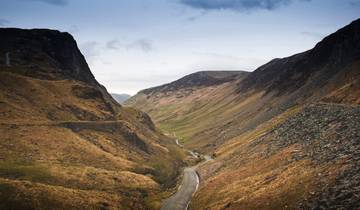
3 days
From Manchester: 3 Day Lake District Explorer
- ✓ Comprehensive Uk Lake District tour
- ✓ Expert local guides included
- ✓ All accommodation arranged
- ✓ Transportation provided

7 days
Literary Walking in the Lake District
- ✓ Comprehensive Uk Lake District tour
- ✓ Expert local guides included
- ✓ All accommodation arranged
- ✓ Transportation provided

3 days
From Edinburgh: 3 Day The Lake District Explorer
- ✓ Comprehensive Uk Lake District tour
- ✓ Expert local guides included
- ✓ All accommodation arranged
- ✓ Transportation provided
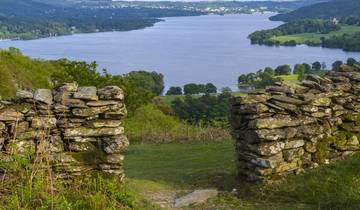
3 days
Lake District From Edinburgh – 3 days
- ✓ Comprehensive Uk Lake District tour
- ✓ Expert local guides included
- ✓ All accommodation arranged
- ✓ Transportation provided
Multi-day tour packages powered by TourRadar. Prices and availability subject to change.
The Lake District: England’s Finest National Park
The Lake District occupies the north-western corner of Cumbria and covers approximately 2,362 square kilometres (912 square miles), making it the largest national park in England. Its landscape is the product of ancient geological forces and glacial erosion: a central dome of hard volcanic rock — the Borrowdale Volcanics — gives rise to the highest fells, while softer rocks in the north produce the rounded slopes characteristic of Skiddaw and Blencathra. During the last Ice Age, glaciers carved the characteristic U-shaped valleys, scooped out the lake basins, and deposited the drumlins and moraines that lend the lower ground its rolling texture.
Despite carrying the word “lake” in its name, the Lake District contains only one body of water formally designated a lake: Bassenthwaite Lake, in the north-west. The other major stretches of water are known as “waters” (Coniston Water, Esthwaite Water, Thirlmere), “meres” (Windermere, Grasmere, Rydal Mere, Blelham Tarn), or tarns — the smaller, higher mountain pools that punctuate the fells in their hundreds. Windermere, stretching approximately 18 kilometres from Ambleside Waterhead to Newby Bridge and reaching widths of up to 1.6 kilometres, is England’s largest natural lake and the social and commercial heart of the southern park. Ullswater, 12 kilometres long and winding through three distinct reaches flanked by high fells, is widely considered the most dramatic; Derwentwater, ringed by wooded islands and overlooked by the Borrowdale fells, the most intimate; Coniston Water, at 8.7 kilometres, perhaps the most melancholy in its beauty.
The fells — the Lake District’s vernacular term for its open upland — include England’s highest mountain, Scafell Pike, at 978 metres (3,209 feet) above sea level. The Scafell massif also contains Scafell (964m), England’s second highest peak. Helvellyn (950m), accessible from both Glenridding and Thirlmere, is the most frequently climbed of the high fells; its dramatic eastern arêtes, Striding Edge and Swirral Edge, are among the most celebrated scrambling routes in England. Skiddaw (931m), north of Keswick, offers a more straightforward ascent on good paths. Great Gable (899m), rising above Wasdale Head, holds a particular place in climbing history and in the heart of the Fell and Rock Climbing Club, which has held a memorial service on its summit on Remembrance Sunday each year since 1924.
Alfred Wainwright’s seven-volume Pictorial Guides to the Lakeland Fells, published between 1955 and 1966, catalogued 214 summits now collectively known as the Wainwrights. Completing all 214 has become a long-term ambition for devoted fell-walkers; many do so over decades of repeat visits. Wainwright himself expressed a wish for his ashes to be scattered on Haystacks — a rugged fell above Buttermere — and they were, cementing the connection between his memory and the landscape he spent a lifetime mapping in meticulous pen-and-ink.
The Lake District was designated a national park in 1951 and received UNESCO World Heritage Site inscription in July 2017, at the 41st session of the World Heritage Committee in Kraków, Poland. Uniquely among England’s national parks, it was inscribed not primarily as a natural landscape but as a Cultural Landscape — a living environment shaped by human activity over millennia. The UNESCO citation recognises five millennia of pastoral farming that created the characteristic field patterns, drystone walls, farmsteads, and commons visible today; the park’s central role in the birth of the global conservation movement; and a literary and artistic heritage of exceptional depth.
The conservation story is inseparable from the Lake District’s identity. It was here, in the late nineteenth century, that Hardwicke Rawnsley, Octavia Hill, and Robert Hunter co-founded the National Trust in 1895, driven in large part by the threat that railway expansion and speculative development posed to the Lake District’s landscape. Today the National Trust owns or manages substantial portions of the park, including fell land, farms, and properties such as Hill Top, Dove Cottage’s garden, Tarn Hows, and Wray Castle.
The literary heritage begins with William Wordsworth, born in Cockermouth in 1770, whose engagement with the Lake District landscape shaped English Romanticism and the way Western culture has understood wild landscape ever since. Wordsworth lived at Dove Cottage in Grasmere from 1799 to 1808 — years that produced some of his most celebrated poetry — before moving, via Allan Bank and the Old Rectory, to Rydal Mount, between Grasmere and Ambleside, where he remained until his death in 1850. Samuel Taylor Coleridge, Robert Southey, and Thomas De Quincey all maintained close connections with the Lake District during the same period, and De Quincey himself took over the tenancy of Dove Cottage after the Wordsworths departed. The poem now known informally as “The Daffodils” was composed in 1804, inspired in part by a walk Wordsworth and his sister Dorothy took along the shore above Gowbarrow Park on Ullswater in April 1802 — an event Dorothy recorded in detail in her Grasmere journal.
A century later, Beatrix Potter brought international attention of a different kind. Having found success with her illustrated tales of Peter Rabbit and his contemporaries, Potter purchased Hill Top farmhouse in Near Sawrey in 1905 with the proceeds from her books. Over the following decades she became a serious Herdwick sheep farmer and landowner, buying up farms and fell land with the deliberate intention of preserving them from development. On her death in 1943, she left the property — along with several thousand acres of farmland and numerous farm buildings — to the National Trust, contributing significantly to the protected landscape visitors see today. The Beatrix Potter Gallery in Hawkshead, which had displayed original Potter watercolours, closed permanently; her artwork is now displayed in a dedicated exhibition at Hill Top itself.
John Ruskin, the great Victorian art critic and social thinker, spent the last 28 years of his life at Brantwood, a house on the east shore of Coniston Water, from 1872 until his death in 1900. Brantwood is today a museum and cultural centre open to the public, with an outstanding garden and views across the water. Arthur Ransome, best known for the Swallows and Amazons children’s novels, drew on Windermere, Coniston Water, and the surrounding fells for his fictional topography; readers continue to make dedicated pilgrimages to the lake shores that inspired his books.
The traditional industries of the Lake District have shaped both its landscape and its culture. Herdwick sheep farming remains central to the ecology of the high fells: Herdwick ewes and their lambs are the characteristic figures on the open ground above 400 metres, their grazing patterns maintaining the close-cropped grassland that defines the fell aesthetic. Slate quarrying, particularly in the Langdale and Honister valleys, has a history stretching back centuries; Honister Slate Mine, at the head of Honister Pass, remains in operation and offers underground tours and via ferrata climbing experiences. The slate from which many of the region’s distinctive grey-green farm buildings are constructed is the same material raised from these ancient seams.
Understanding Lake District Travel Costs in 2027
The Lake District National Park charges no general admission. Entry to the open fell land, the lakeshores, and the many rights of way threading the valleys is free. What costs money is accommodation, transport, meals, parking, and access to specific managed attractions and heritage sites. Understanding where the costs concentrate — and where they can be avoided — is the key to budgeting accurately.
Accommodation is the largest single expense and varies enormously by location, season, and type. Peak-season (July–August) prices in Windermere, Ambleside, and Grasmere run noticeably higher than in shoulder months; spring and autumn offer the best value without sacrificing weather reliability. Windermere and Bowness are the most expensive areas; Keswick offers a slightly broader spread of mid-range options; villages such as Coniston, Hawkshead, and Patterdale are generally cheaper but more limited in choice.
Transport within the park is well-priced if you use the bus network wisely. The Stagecoach North West Explorer pass is the single most cost-effective tool for car-free visitors, and the DfT-capped £3 maximum for any single bus journey makes spontaneous travel genuinely affordable. Lake cruises add a modest but worthwhile additional cost: Windermere Lake Cruises and Ullswater Steamers both offer good value, particularly when combined with a walk (take the boat one way, walk the other). Car-driving visitors face parking charges at most popular spots: National Trust car parks charge non-members by the hour or day, pay-and-display machines are widespread in towns, and some remote valley car parks charge £5–12 or more per day.
Attractions divide neatly into free and paid. The majority of what makes the Lake District distinctive — the walks, the fells, the lakeshores, the stone circles, the waterfalls, and the village streets — costs nothing. Paid attractions are mostly heritage properties (Hill Top, Dove Cottage and Wordsworth Museum, Rydal Mount, Brantwood) and commercial experiences (lake cruises, the Honister Slate Mine underground tour, the Lakeside and Haverthwaite Steam Railway). National Trust membership, which covers free entry to all NT-managed properties and free parking at NT car parks, can pay for itself quickly if you visit multiple sites.
Meals range from packed lunches bought at a village shop (the most economical option on walking days) to traditional pub fare at mid-range prices to ambitious restaurant cooking at the upper end. Cumbrian food traditions — Cumberland sausage, Herdwick lamb, Borrowdale tea bread, and the renowned Sarah Nelson’s Grasmere Gingerbread — are woven into the region’s culinary identity and available at a range of price points. Sticky toffee pudding appears on menus throughout the Lake District, associated by local tradition with the county, though its exact origins are a matter of some friendly regional debate.
Where to Stay in the Lake District in 2027
Accommodation options span the full spectrum from youth hostel bunks to luxury spa suites, with practically every point in between represented. Booking well ahead — ideally three to six months for summer peak, one to two months for shoulder seasons — is strongly advisable; the most popular properties in Windermere, Grasmere, and Keswick fill quickly, and Hill Top’s timed-entry tickets often sell out weeks in advance during July and August.
Budget Accommodation in the Lake District 2027
Youth Hostels Association (YHA) hostels provide the most reliable budget base. The Lake District has a strong concentration of YHA properties, including well-positioned hostels in Ambleside, Keswick, Elterwater, and Borrowdale, among others. Dorm-bed prices are typically £20–35 per person per night depending on season and property; private rooms within YHA hostels, where available, cost more but remain below B&B rates. YHA membership costs a modest annual fee and brings discounted nightly rates. Independent hostels and camping barns fill similar niches. Basic guesthouses and budget B&Bs — typically family-run properties without a full breakfast service or with self-service options — are available from approximately £60–90 per room per night, translating to £30–45 per person when two are sharing. Campsites throughout the national park offer another budget option during the warmer months; the Lake District has numerous well-equipped sites, though wild camping — other than on the high fells away from habitation, using leave-no-trace principles — requires landowner permission on most enclosed ground.
Mid-Range Accommodation in the Lake District 2027
This is the broadest and most populated tier. Comfortable B&Bs with en-suite rooms and full cooked breakfast — the backbone of Lake District tourism — typically charge £90–160 per room per night, with the breakfast inclusion representing genuine value. Three- and four-star hotels, country inns, and converted country houses range from approximately £140–180 per room per night in the mid tier, often rising during peak summer and bank holiday weekends. Most mid-range hotels include a restaurant or at minimum a bar for evening meals, which reduces the need to hunt for dinner on wet or cold nights. Self-catering cottages — an increasingly popular choice for groups and families — start from around £100–130 per night for a two-person property and offer the flexibility of a kitchen, which helps control meal costs on longer stays.
Luxury Accommodation in the Lake District 2027
The Lake District hosts some of England’s finest country-house hotels and spa retreats. Rooms at top-tier spa hotels range from approximately £200–400 per room per night, with the upper end of the market running higher still for lake-view suites and premium weekend packages. Many luxury properties sit in exceptional positions — on the shores of Windermere, above Ullswater, or deep in a valley — and include full-service spa facilities, fine-dining restaurants, and extensive grounds. At this level, included breakfast and sometimes dinner (half-board) are common, altering the daily meal budget significantly. Demand is high and availability limited; booking six months or more ahead for summer is not unusual for the most sought-after properties.
Getting to the Lake District in 2027
The Lake District sits in the north-west corner of England, broadly accessible from the M6 motorway and served by direct rail services from London, Manchester, and other major cities.
By Train in 2027
The main rail gateway is Oxenholme Lake District station, served by Avanti West Coast trains from London Euston (journey time approximately 2.5–3.5 hours depending on service) and from Manchester Piccadilly (approximately 1.5 hours). At Oxenholme, a branch line operated by Northern Rail connects to Windermere station in approximately 20 minutes — the only direct rail access into the national park itself. Train fares vary enormously by booking lead time: advance fares from London to Windermere can be as low as £40–80 return per person when purchased weeks or months ahead; walk-up fares are considerably higher. Booking through National Rail and checking Avanti West Coast’s website directly tends to yield the best prices. A Senior or 16–25 Railcard delivers a third off most fares. Those approaching from the north — Edinburgh, Glasgow, or Newcastle — can travel via Carlisle and Penrith (for Ullswater access) or change at Lancaster.
By Car in 2027
Most visitors arrive by car, and the motorway network makes the Lake District reasonably accessible: London is approximately 280 miles and four to five hours via the M1 and M6; Manchester is approximately 75 miles and 1.5 hours via the M6; Edinburgh approximately 155 miles and 2.5 hours. The national park is entered most conveniently at Junction 36 (for Kendal and the southern lakes) or Junction 40 (for Penrith and the northern and eastern lakes) of the M6. Once inside the park, roads narrow considerably, and traffic in the core tourist areas — particularly around Windermere, Ambleside, and Grasmere — can back up significantly during peak summer weekends and bank holidays. Parking charges apply almost universally at popular spots. Hiring a car from Windermere or Penrith is practical for those arriving by train.
By Coach in 2027
National Express and other coach operators serve Kendal, Penrith, and occasionally Windermere from London, Manchester, and other major cities. Journey times are longer than by train — typically five to seven hours from London — but fares are generally cheaper, often £20–40 return if booked in advance. Megabus also serves the corridor. Coaches are a practical option for budget travellers with flexible schedules and plenty of baggage.
Getting Around the Lake District in 2027
The combination of Stagecoach bus services and the lake cruise networks makes the Lake District remarkably accessible without a car — arguably the most enjoyable way to travel, since roads can be slow and parking stressful during busy periods.
Stagecoach Buses in 2027
Stagecoach operates the backbone of the Lake District’s public transport. The North West Explorer pass — £12.50 per adult per day, £28 for three days, £37 for seven — provides unlimited travel across the network and is available without pre-booking (simply pay on the bus or via the Stagecoach app). Single journeys were capped at £3 per leg under the DfT fare-cap scheme, confirmed through March 2027; check the Stagecoach website for pricing applicable to your travel dates later in 2027.
Key routes for visitors include:
- 555 Lakes Connection — the spine of the valley, running between Kendal (and Oxenholme station), Ambleside, Grasmere, and Keswick at least hourly throughout the day.
- 599 Lakesider — Bowness-on-Windermere to Grasmere via Windermere, Troutbeck Bridge, and Ambleside; runs every 20 minutes in summer, with later journeys in the evening.
- 77/77A Honister Rambler — a spectacular circular route from Keswick through Borrowdale, over Honister Pass, around Buttermere and Whinlatter, returning to Keswick; operates May to October.
- 78 Borrowdale Bus — Keswick to Seatoller, with open-top double-decker operation in summer; runs every half-hour at peak times.
- 508 — Penrith to Patterdale via Pooley Bridge and Glenridding, through the Ullswater valley.
Lake Cruises in 2027
Windermere Lake Cruises operates year-round services from Bowness-on-Windermere, Ambleside Waterhead, and Lakeside. The Freedom of the Lake ticket — valid for 24 hours’ unlimited travel on all routes — was priced at £21 per adult in the 2022–23 season; prices will have changed for 2027, so check the official Windermere Lake Cruises website before booking. Individual routes are also available. The Red Cruise (Bowness–Brockhole–Ambleside Waterhead–Bowness) is the most useful for walkers based in Windermere who want to walk north and return by boat. The Yellow Cruise (Bowness–Lakeside) connects with the Lakeside and Haverthwaite Steam Railway at the southern end of the lake. Combined tickets — cruise plus steam railway, cruise plus the Windermere Jetty Museum — are available at discounted bundled prices.
Ullswater Steamers operates daily services (except Christmas Eve and Christmas Day) between Glenridding, Howtown, and Pooley Bridge, with an additional Aira Force shuttle from Glenridding in the main season. The return cruise between Glenridding and Pooley Bridge was priced at approximately £19 per adult in the 2024–25 season; a combined Ullswater Steamer cruise and Stagecoach bus day ticket was available for approximately £17.50 per adult — particularly good value for those arriving by bus from Penrith. The classic Ullswater day out takes the steamer from Glenridding to Howtown, walks the superb Ullswater Way path along the eastern shore back to Patterdale or Glenridding (approximately seven miles, four to five hours), and returns by the afternoon steamer if legs permit.
The Windermere Vehicle Ferry crosses Windermere from Ferry Nab in Bowness to Far Sawrey, connecting the B5285 road to Hawkshead and Hill Top. The crossing takes approximately ten minutes and carries cars, cycles, and foot passengers; pedestrian fares were approximately £1.10 per crossing — check current ferry pricing before travel. This crossing is practically essential for those visiting Hill Top by bus from Bowness.
Cycling in the Lake District in 2027
Cycling can be an excellent way to explore the lower valleys, though the high passes (Kirkstone, Honister, Hardknott, Wrynose) are extremely steep and challenging. Several dedicated cycling routes follow quieter roads: the Windermere Valley cycleway, the Whinfell Forest trails near Penrith (now Grizedale Forest trails near Hawkshead for mountain biking), and the C2C (Sea to Sea) route passes through the northern fells. Bike hire is available in Windermere, Ambleside, and Keswick, with electric bikes increasingly available for those daunted by the gradients. Ullswater Steamers and some other lake services carry bicycles for a small additional charge, enabling one-way cycling routes.
Top Attractions and Experiences for 2027
Free Attractions and Walks in 2027
The overwhelming majority of what makes the Lake District exceptional is free. Fell walking is the defining activity: routes range from gentle lakeside strolls to full-day ridge traverses requiring navigation skills, waterproofs, and sturdy boots. Well-known introductory walks include the ascent of Loughrigg Fell above Ambleside (360m, two to three hours), the Helm Crag horseshoe above Grasmere, the Catbells ridge above Derwentwater (451m, two to three hours from Hawse End), the walk around Tarn Hows, and the straightforward lakeside circuit at Grasmere. For confident walkers, the Striding Edge approach to Helvellyn (approximately eight to ten miles round trip from Glenridding, six to eight hours) is among the most celebrated mountain days in England.
Castlerigg Stone Circle, just east of Keswick, is one of England’s earliest stone circles, with approximately 40 standing stones arranged on an elevated plateau with panoramic fell views; it dates to around 3000 BCE and is maintained by the National Trust with no entry charge. Hardknott Roman Fort (Mediobogdum), perched dramatically above the head of Eskdale near the summit of Hardknott Pass, is a remarkably well-preserved Roman garrison fort from the second century, again free to visit though reached only by a narrow, very steep single-track road that demands careful driving. Aira Force, a dramatic 20-metre waterfall in a wooded gorge above Ullswater (National Trust, car parking applies for non-members), is an easy one-mile walk from the car park. Friars Crag, a short walk from Keswick boat landings, offers what Ruskin described as one of the three finest views in Europe — looking out across Derwentwater to the Borrowdale fells — and takes no more than thirty minutes at an easy pace.
Tarn Hows, managed by the National Trust, is a picturesque tarn (mountain lake) above Hawkshead, encircled by a two-mile accessible path through woodland with views across the water to the Langdale Pikes. Parking for non-NT-members applies, but entry to the tarn and walk is free. Orrest Head, a twenty-minute uphill walk from Windermere station, gives a panoramic first view of the central Lake District and is often described as the ideal way to begin any visit.
Paid Heritage Attractions in 2027
Hill Top, near Near Sawrey, is Beatrix Potter’s seventeenth-century farmhouse, kept by the National Trust in the condition she left it, complete with her furniture, china, and personal possessions. The house is small and timed entry is mandatory — book online well ahead of your intended visit, as slots in summer sell out weeks in advance. Adult admission was approximately £15–17 in 2024–25; check the National Trust website for 2027 pricing. National Trust members enter free. The garden, inspired by Potter’s own design, is lovely in summer. Original Beatrix Potter watercolours are now on display within Hill Top following the permanent closure of the Beatrix Potter Gallery in Hawkshead.
Dove Cottage and Wordsworth Museum in Grasmere offers guided tours of the cottage as it was during Wordsworth’s tenancy (1799–1808), followed by access to the newly redeveloped Wordsworth Museum, which houses manuscripts, journals, letters, and artwork from the Romantic period. The museum was significantly refurbished in recent years and includes interactive elements alongside the archive collection. Adult admission was approximately £12–16 in the most recently confirmed pricing — check the Wordsworth Grasmere website for current 2027 rates. The adjacent viewing station gives panoramic views across Grasmere vale.
Rydal Mount, between Grasmere and Ambleside, is the house Wordsworth occupied from 1813 until his death in 1850. Unlike Dove Cottage, it remains in the ownership of the Wordsworth family and has been open to the public since 1970. The gardens, which Wordsworth himself designed, are exceptional and give a strong sense of how he understood landscape as an extension of poetry. Adult admission was approximately £8–10 in recent seasons — check the Rydal Mount website for 2027 pricing.
Brantwood, John Ruskin’s lakeside home above Coniston Water, is reached by car (narrow road, limited parking) or by the Coniston Launch from Coniston village. The house displays Ruskin’s art, books, and personal collections; the gardens are elaborate and extend across several terraces above the water. Adult admission applies — check the Brantwood website for current pricing. The Coniston Launch itself (check current fares) offers a beautiful approach across the water.
Honister Slate Mine, at the head of Honister Pass between Borrowdale and Buttermere, offers underground mine tours, via ferrata climbing routes on the surrounding crags, and a slate shop. The approach road over Honister Pass is one of the most dramatic drives in England. Tour pricing and availability should be checked directly with the mine.
The Windermere Jetty Museum, on the western shore of Windermere accessible by boat from Bowness, tells the history of boat-building and lake travel through an impressive collection of steam launches, sailing yachts, and motor craft; combined tickets with Windermere Lake Cruises are available.
Walking Routes and Fell Access in 2027
Fell access in the Lake District operates under the open-access provisions of the Countryside and Rights of Way Act 2000, which gives walkers the legal right to roam on designated open access land — including most of the high fells — without needing to follow formal paths. This distinguishes the Lake District from many other regions and is one reason the fell-walking experience feels particularly free. Maps (Ordnance Survey Explorer OL4, OL5, OL6, and OL7 cover the park at 1:25,000 scale) are essential for high-fell days; navigation in poor visibility can be challenging even on popular routes. The Coast to Coast walk, designed by Wainwright, begins at St Bees on the Cumbrian coast and passes through the central Lake District before continuing east through the Yorkshire Dales to Robin Hood’s Bay — a 192-mile route tackled by many long-distance walkers each year.
Dining and Food in the Lake District 2027
The Lake District’s food scene has developed considerably over the past two decades, with a growing number of restaurants drawing on outstanding local ingredients — Herdwick lamb, fell-bred beef, freshwater char from the lakes, and produce from Cumbrian farms. Alongside serious restaurant cooking, the traditional pub lunch remains central to the Lake District experience, offering warming soups, hearty pies, and the ubiquitous Cumberland sausage at accessible prices.
Budget dining is most economically managed through self-catering (where accommodation allows), buying packed lunches from village shops or bakeries, and reserving restaurant meals for evenings. A deli sandwich, a Grasmere gingerbread round, and an apple make a cheap and satisfying fell lunch. Village tearooms serve cream teas, toasted teacakes, and light lunches at around £8–15 per person. A pub main course — typically a pie, a Cumberland sausage with mash, a burger, or a lamb dish — costs approximately £14–22 at mid-range establishments. Most pubs also offer a lunchtime sandwich or jacket potato menu at lower prices.
Mid-range restaurant dining — a two-course dinner at a Lake District restaurant with a wine list, many of which work directly with local producers — costs approximately £30–50 per person including a glass or two of wine. A number of village pubs have elevated their food offering significantly and offer meals approaching restaurant quality at pub prices. Grasmere, Hawkshead, Ambleside, and Keswick all have concentrations of decent independent restaurants and cafés.
Fine dining, often within country-house hotels, costs £60–90 or more per person for a tasting menu or multi-course dinner with wine; some establishments are among the finest restaurants in the north of England.
Local food traditions worth seeking out include: Grasmere Gingerbread — the recipe guarded by Sarah Nelson’s shop since 1854, unique in its crumbly, spicy texture and unlike any other gingerbread in England; Cumberland sausage — a coiled pork sausage with a mild, herby seasoning, made and sold throughout Cumbria; Herdwick lamb and mutton — now appearing on menus well beyond the county, the Herdwick flavour is distinctive and often cited by chefs as exceptional; char — an Arctic char that inhabits the deep, cold lakes (particularly Windermere and Ullswater) and appears occasionally on restaurant menus as a local delicacy; and Borrowdale tea bread, a rich fruit loaf made with tea-soaked fruit.
Lake District 2027 Budget Breakdown by Traveller Type
The following daily estimates are per person, assuming two people sharing one room. Each accommodation figure represents the per-person nightly share of a double or twin room. USD conversions are approximate; check current rates before travel.
Budget Travellers in the Lake District 2027
Budget travellers staying in hostel dorms or very basic guesthouses, making their own lunches, and relying on bus passes and free walks can visit the Lake District for approximately £65–100 per person per day ($85–125). This breaks down as: accommodation £30–45 per person (a room at £60–90 per night shared between two); meals £20–30 (self-catering breakfast, packed lunch, pub meal or takeaway in the evening); transport £12–15 (Stagecoach day pass); attractions £5–12 (mostly free walks, with occasional paid entry). A seven-night budget trip costs approximately £455–700 per person ($580–890), excluding travel to the Lake District. Solo travellers should note that single rooms, where available, typically cost more than half a double room, reducing the per-person efficiency of single travel; budget approximately £100–130 per night for a basic single room.
Mid-Range Travellers in the Lake District 2027
Mid-range travellers in a comfortable B&B or three- to four-star hotel, eating in pubs and restaurants, and allowing for two or three paid attractions per day should budget approximately £110–180 per person per day ($140–230). Components: accommodation £50–80 per person (a room at £100–160 per night shared between two); meals £35–55 (pub lunch plus café or restaurant dinner); transport £12–20 (Explorer bus pass with occasional lake cruise); attractions £15–25 (one or two paid heritage sites or cruises). Seven nights at mid-range costs approximately £770–1,260 per person ($980–1,600). A five-night mid-range trip, including advance train fares from a major city (estimated £60–100 return), accommodation for five nights, and the costs above, comes to approximately £585–940 per person in total — check your own costs against this framework based on actual accommodation and transport bookings.
Luxury Travellers in the Lake District 2027
Luxury travellers sharing a spa-hotel room at £200–380 per night, dining at the hotel restaurant plus one or two outside meals daily, using hire cars or private transfers, and including premium experiences should allow approximately £215–365 per person per day ($275–465). Components: accommodation £100–190 per person (a room at £200–380 per night shared between two); meals £65–95 (hotel breakfast included in many cases, fine-dining dinner); transport £25–40 per day (hire car share or private transfers); premium experiences and attractions £25–40. A week at the luxury level costs approximately £1,505–2,555 per person ($1,910–3,245). Many luxury hotel packages (half-board, spa access included) alter the component breakdown significantly; compare all-inclusive package prices against the à la carte costs above when assessing value.
Sample 5-Day Lake District Itinerary for 2027
This itinerary assumes a mid-range budget, travel by train from a major city, and a base in Windermere or Ambleside. It covers the southern and central lake district in five full days with one arrival and one departure day flanking them.
Day One — Arrival and First Glimpse of the Lake
Arrive at Windermere station (train from London Euston or Manchester Piccadilly; book in advance for best fares). Check into accommodation in Windermere town or Bowness. The afternoon is well spent on Orrest Head — a twenty-minute uphill walk from Windermere station that delivers a panoramic first view across the lake to the central fells — followed by a gentle stroll down to the Bowness waterfront. A short cruise on Windermere Lake Cruises’ Islands (Blue) Cruise from Bowness is an ideal gentle introduction to the lake; check on-the-day availability at the pier. Dinner at a Bowness or Windermere restaurant. Indicative activity spend today: £0–25 (optional cruise).
Day Two — Ambleside, Rydal, and Grasmere
Take the 599 bus from Bowness to Ambleside (Explorer pass covers this). In Ambleside, walk to Stock Ghyll Force — a 22-metre waterfall in a wooded gorge a short walk from the centre, free to visit. Continue by bus (or on foot along the scenic Rydal Road path, approximately four miles) to Rydal village. Visit Rydal Mount, Wordsworth’s home and garden (adult admission approximately £8–10; check 2027 pricing). Continue the short distance to Grasmere. Visit Dove Cottage and Wordsworth Museum (adult admission approximately £12–16; check 2027 pricing); allow at least two hours. Try the famous gingerbread from Sarah Nelson’s shop opposite the church. Dinner in Grasmere before returning by bus. Indicative activity spend today: £20–30 per person (two heritage sites); transport covered by Explorer pass.
Day Three — Hill Top and Windermere Cruise
Take the 599 bus to Windermere, then the Windermere vehicle ferry from Ferry Nab in Bowness to Far Sawrey (approximately £1.10 per pedestrian). From Far Sawrey it is a short walk — or a ride on the seasonal Mountain Goat 525 bus service — to Near Sawrey and Hill Top. Entry is by timed ticket only, pre-booked online (adult approximately £15–17 in 2024–25; check National Trust website for 2027 pricing; NT members free). After visiting Hill Top and its garden, take the Mountain Goat bus to Hawkshead to explore the medieval village and the old Grammar School where Wordsworth was educated. Return by bus to Bowness and, with time and energy, take a Windermere Lake Cruises afternoon cruise — the Freedom of the Lake ticket gives all-day access; check 2027 pricing at the official website. Indicative activity spend today: £18–25 per person (Hill Top + ferry); plus cruise if purchased.
Day Four — Ullswater and Aira Force
Take the 555 bus to Penrith, then the 508 bus into the Ullswater valley to Glenridding or Pooley Bridge (or purchase a combined Stagecoach and Ullswater Steamers day ticket). From Glenridding, strong walkers might ascend Helvellyn via Striding Edge — one of the finest mountain days in England, approximately eight to ten miles and six to eight hours, requiring good navigation and experience of exposed scrambling. Those preferring a more relaxed day can take the Ullswater Steamers from Glenridding to Howtown (approximately one hour; return cruise approximately £19 per adult in 2024–25), then walk the seven-mile Ullswater Way path south along the eastern shore back towards Glenridding — a magnificent lakeside walk with views across the water to the western fells. Include a walk to Aira Force waterfall, near the Aira Force National Trust car park, either from the road or as part of the steamer route (the Aira Force shuttle from Glenridding is available in season). Return by bus. Indicative activity spend today: £19–20 per person (steamer return); Helvellyn is free.
Day Five — Keswick and Derwentwater
Take the 555 bus to Keswick. Explore the market town — the Keswick Museum, the independent shops of the main street, the pedestrianised Packhorse Court — before heading to the lake. The Keswick Launch operates a circular service around Derwentwater throughout the year, calling at seven landing stages; a full circular cruise takes about an hour. Take the launch to Hawse End landing stage and ascend Catbells (451m, approximately two to three hours round trip), one of the most rewarding shorter fell days in the Lake District, with outstanding views across Derwentwater and beyond. Alternatively, the walk from Keswick boat landings to Friars Crag and along the lakeshore to Crosthwaite is flat, beautiful, and takes only ninety minutes. Return by bus and prepare for departure the following day. Indicative activity spend today: £12–15 per person (Derwentwater launch); Catbells and Friars Crag are free.
Best Time to Visit the Lake District in 2027
Choosing the right season can make a significant difference to the quality of a Lake District visit — in terms of both experience and cost.
Spring (March–May) is increasingly favoured by visitors who want to avoid summer crowds. March can be cold and wet, with snow still possible on the higher fells, but April and May bring improving conditions: the landscape is at its most vivid green, lambs fill the lower fields, and the footpaths are far less crowded than in the summer peak. Late May is arguably the finest single month of the year, combining good walking weather, long days, manageable crowds, and accommodation prices that have not yet reached their summer peak. Bluebells in the valley woodlands are at their finest in early May.
Summer (June–August) is peak season, with the fullest timetables for buses and lake cruises, the longest daylight hours (sunset past 10pm in midsummer), and the warmest temperatures for lake swimming and outdoor dining. June is generally the best summer month — beyond the typical bank holiday weekend and before the school holidays. July and August are the most crowded and most expensive months, with car parks filling by 9am on fine days at popular spots, long queues at café-restaurants, and Hill Top’s timed entry tickets selling out weeks in advance. Those with children who must travel in school holidays should book everything — accommodation, Hill Top tickets, train tickets — as far ahead as possible.
Autumn (September–October) is the choice of many experienced Lake District visitors. Visitor numbers drop noticeably after the first week of September, accommodation prices soften, and the autumn colours — particularly along the shores of Derwentwater and Ullswater, and in the Borrowdale and Langdale woodlands — can be spectacular from mid-October. Weather is more variable than in summer, and the days are shorter, but settled high-pressure periods deliver some of the clearest, calmest weather of the year, with outstanding visibility on the high fells. November marks a sharp drop in visitors; the landscape takes on a more austere character that many find deeply appealing, though some smaller businesses reduce hours or close.
Winter (November–February) is the quietest period. Accommodation prices are at their lowest, and the Lake District in snow or frost has a particular beauty. However, daylight is limited (sunset before 4pm in December), some mountain roads — particularly Hardknott and Kirkstone passes — become impassable, and a number of smaller hotels, B&Bs, and cafés close for the season. Walks remain enjoyable at lower elevations; the high fells in winter require full mountain equipment and experience. Christmas and New Year are exceptions: popular areas fill quickly, prices spike, and the atmosphere is festive.
Money-Saving Strategies for the Lake District in 2027
National Trust membership is the single most powerful cost-saving tool for Lake District visitors planning multiple days at the region’s heritage sites. Adult annual membership costs were approximately £80–90 per person (check current pricing at the National Trust website). A single pair of adults visiting Hill Top (approximately £15–17 each), parking at several National Trust car parks (saving £5–12 per day at multiple sites), and visiting other NT properties can recover the cost of membership in a long weekend. NT members also gain free parking at all NT car parks throughout England, Wales, and Northern Ireland — a significant saving at the Lake District’s most popular sites.
Use the bus network. The Stagecoach North West Explorer multi-day pass at £28 for three days or £37 for seven represents exceptional value when set against the cost of car parking (typically £5–12 per day at major sites plus further charges in towns). For most itineraries covering Windermere, Ambleside, Grasmere, Keswick, and Ullswater, the bus network is entirely adequate, and travelling by bus reduces the stress of congested car parks and narrow roads.
Book trains in advance. Avanti West Coast advance fares from London Euston to Windermere can be less than £40 each way when purchased months ahead. Walk-up fares on the same trains can be three or four times higher. Setting a booking date in the diary and using a Railcard brings further savings.
Focus on free attractions. The majority of the Lake District’s finest experiences cost nothing: fell walking, lakeside paths, waterfalls, stone circles, Roman forts, and viewpoints are all free of charge. A week of walking in the Lake District can be structured with paid heritage sites filling just one or two days and free landscape filling the rest.
Pack a lunch. Café prices in tourist hotspots are significantly higher than in most English towns. A packed lunch bought at a village shop or supermarket before setting out saves £10–15 per person per day compared with café lunches. Good delis exist in Ambleside, Keswick, and Grasmere for more interesting picnic ingredients.
Travel in the shoulder seasons. As detailed in the seasonal section above, accommodation prices in September and October are meaningfully lower than in August, while the weather and landscape can be equally rewarding. A mid-range B&B that costs £150 per room in August may be £110–120 in September — a saving of £20–40 per person per night over a five-night stay that rapidly adds up.
Self-catering. For groups or those staying four or more nights, a self-catering cottage reduces both per-person accommodation costs and overall meal costs. The Lake District has an extensive range of holiday cottages; booking directly with owners (rather than always through agencies) can yield modest savings.
Walk-one-way, boat-the-other. The classic Lake District itinerary of walking a fell or valley path in one direction and returning by lake cruise — particularly on Ullswater (Glenridding to Howtown on foot, steamer back) or Windermere (Ambleside Waterhead to Bowness by cruise after walking the ferry path) — means paying only for a one-way cruise rather than a return, while the walk itself is free.
Hidden Costs and Practical Considerations for 2027
Parking charges are the most frequently overlooked expense for car-driving visitors. National Trust car parks throughout the park charge non-members by the hour or day, with charges typically ranging from £5 to over £12 for a full day at popular sites (Tarn Hows, Aira Force, Langdale, and Elterwater among them). Town and village car parks in Windermere, Ambleside, Grasmere, Keswick, and Coniston apply pay-and-display charges. An informal guide to the Lake District’s parking charges notes they can exceed £11 per day at some sites. NT membership eliminates these charges at National Trust-operated car parks — a meaningful additional benefit.
Hill Top’s pre-booking requirement is a genuine constraint, not merely a recommendation. The house is tiny — capacity per timed slot is very limited — and during July and August, tickets typically sell out two to four weeks or more ahead. Visit the National Trust website well before your trip to check availability and book; without a ticket, you cannot enter the house, and there is no provision for walk-up entry during busy periods. Those with NT membership still need to book a timed slot.
Weather gear is non-negotiable in the Lake District. The region receives some of the highest annual rainfall in England — Seathwaite in Borrowdale is among the wettest inhabited places in the country. Waterproof clothing (jacket and trousers) and sturdy waterproof footwear are essential for any fell walking above valley level, regardless of the season and regardless of what the morning forecast says. Those who arrive underprepared will face either a wet and miserable time on the fells or the need to purchase gear from one of the outdoor shops in Ambleside or Keswick at full retail price. If you do not own adequate gear, factor this purchase into your budget or look at second-hand or hire options.
Traffic and road conditions deserve realistic expectations. The core Lake District road network was not designed for 21st-century tourist volumes. On summer bank holidays and fine weekends, the A591 through Ambleside and Grasmere can queue for hours; car parks fill by mid-morning; and the single-track roads to popular trailheads (Langdale, Borrowdale, Coniston) become very congested. The case for using buses — or for arriving early and returning late — is strongest on summer weekends.
Mobile and internet coverage is patchy across much of the national park. While towns and major villages have reasonable 4G coverage, remote valleys, high fells, and many car parks do not. Download offline maps (Ordnance Survey, AllTrails, or Komoot) before entering the park. Emergency calls (999 or 112) can usually connect even where data does not. The Stagecoach app requires connectivity; screenshots of relevant timetables before departing Wi-Fi zones are sensible.
Refreshments on lake cruises are sold at onboard prices, which carry a premium. Bringing a flask of hot drink and some snacks is a worthwhile economy, especially on the longer Windermere or Ullswater routes. Dogs travel free on Ullswater Steamers (conditions apply); check Windermere Lake Cruises’ policy.
The Windermere vehicle ferry is a vital link for western-shore access (Hill Top, Sawrey, Wray Castle) but can queue at busy times. Foot passengers (approximately £1.10 per crossing) have priority boarding in most circumstances; vehicles may queue significantly longer. If catching a timed bus from Far Sawrey to Hill Top, allow extra time for ferry delays in summer.
Frequently Asked Questions About the Lake District 2027
How much spending money do I need for a week in the Lake District in 2027?
The total cost for a week in the Lake District depends on your accommodation and travel style. At the budget level — hostel or basic guesthouse, self-catered lunches, bus passes, and mostly free walks — a week costs approximately £455–700 per person ($580–890), not including your travel to the Lake District. Mid-range travellers in a comfortable B&B or hotel, eating out for most meals, and including several paid attractions should budget approximately £770–1,260 per person ($980–1,600) for seven nights. Luxury visitors should allow £1,505–2,555 per person ($1,910–3,245) or more for the week. All these figures assume two people sharing accommodation and are based on 2024–25 verified data; check current accommodation and transport prices when planning your specific trip.
Is the Lake District National Park free to visit in 2027?
Yes — entering the Lake District National Park itself is free, and the majority of the landscape (fells, lakeshores, woodland, and rights of way) can be enjoyed at no cost. The open-access provisions of the Countryside and Rights of Way Act 2000 give walkers the legal right to roam on most of the high fell land. What is charged for is parking at managed car parks (typically £5–12 or more per day for non-NT-members), entry to specific heritage attractions such as Hill Top, Dove Cottage and Wordsworth Museum, Rydal Mount, and Brantwood, and services such as lake cruises and guided tours. Bus travel has a small cost, easily mitigated with a Stagecoach Explorer pass. A well-planned visit can experience the finest landscape, walks, and scenery without spending a penny on admission.
Do I need a car to visit the Lake District in 2027?
You do not need a car; indeed, for many visitors the combination of train and bus travel is more enjoyable and less stressful. Train access to Windermere is direct from London Euston (via Oxenholme Lake District) and from Manchester Piccadilly; the Stagecoach North West Explorer pass at £12.50 per adult per day then provides excellent connectivity between towns and lakesides. Most major attractions are accessible by bus or lake cruise, and the classic walked itineraries — particularly on Ullswater and Windermere — are designed around public transport. A car offers useful flexibility for early morning starts, access to remote valleys (Wasdale, Eskdale, Ennerdale), and carrying camping or walking equipment without restriction, but it also brings parking costs, road congestion, and the very real limitation that both driver and passenger cannot comfortably enjoy a lakeside pub lunch.
What are the best villages to visit in the Lake District in 2027?
Grasmere combines exceptional Wordsworth heritage with a pretty lake and a small, walkable village centre; the gingerbread shop is a genuine landmark. Hawkshead, reached by ferry or bus from Windermere or Ambleside, is among the most characterful of the Lake District villages — a medieval maze of white-washed buildings, narrow alleyways, and the old Grammar School where Wordsworth was educated. Coniston, at the northern end of Coniston Water, is associated with John Ruskin, Donald Campbell’s water-speed record attempts, and Arthur Ransome’s topography; the village pub and access to the Old Man of Coniston make it a rewarding base. Borrowdale — reached from Keswick along the shores of Derwentwater — is a gloriously green valley with several excellent walking bases. Pooley Bridge, at the northern end of Ullswater, is a quiet, charming village well-suited as a base for the Ullswater area.
How do I visit Hill Top in 2027?
Pre-booking timed-entry tickets online is essential. Visit the National Trust website (nationaltrust.org.uk) and book your preferred date and time slot well ahead of your visit — several weeks minimum during July and August. Without a timed ticket, you cannot enter the house. Tickets in 2024–25 cost approximately £15–17 per adult; check current National Trust pricing for 2027. NT members enter free but must still book a timed slot. Getting there without a car: take the Windermere vehicle ferry from Ferry Nab in Bowness to Far Sawrey (approximately £1.10 per foot passenger), then walk (approximately 1.5 miles uphill, thirty minutes) or catch the seasonal Mountain Goat 525 bus service to Near Sawrey. The bus guarantees entry if you have a bus ticket but not a house timed slot; you still need to book the timed entry online.
Are there discounts available for visiting the Lake District in 2027?
Several discount schemes are worth knowing about. National Trust membership (approximately £80–90 per adult per year in recent seasons — check current prices) covers free entry to all NT properties including Hill Top and free parking at NT car parks; it can pay for itself in a long weekend of active visiting. Stagecoach multi-day bus passes (three-day £28, seven-day £37 per adult) save significantly over daily pass purchases. English Heritage membership is less relevant for the Lake District (EH properties are fewer here than in other regions) but covers Hardknott Roman Fort. Train Railcards (16–25, Senior, Two Together, Family) deliver a third off most rail fares. The Stagecoach and Ullswater Steamers combined boat-and-bus ticket (approximately £17.50 per adult in the most recent season) offers good value over buying separately. YHA membership brings discounted hostel rates throughout the year.
What walking gear do I need for the Lake District in 2027?
For low-level lakeside and valley walks — including most of the routes accessible from Windermere, Ambleside, and Keswick — comfortable walking shoes with some grip, a waterproof jacket, and layers for warmth are sufficient. For fell walking above 400 metres — including all the named summits — waterproof footwear (walking boots with ankle support), waterproof trousers, insulating layers, hat, and gloves are necessary at all times of year; conditions on the high fells can change rapidly and dramatically. A map and compass (and the ability to use them) are essential for any route that leaves well-marked paths. A headtorch, basic first aid kit, emergency whistle, and a fully charged mobile phone are all standard fell-walking equipment. Outdoor gear shops in Ambleside and Keswick stock everything needed if you arrive unprepared, though prices are full retail.
Can I wild camp in the Lake District in 2027?
Wild camping — camping outside designated campsites, on open land, without prior permission — operates in a complex legal and practical environment in the Lake District. Open access land (the fells and moorland covered by the Countryside and Rights of Way Act 2000) does not automatically include a right to camp; camping rights are separate from access rights. In practice, low-impact wild camping on the high fells — arriving late, departing early, leaving no trace, and camping in small groups well away from habitation and enclosed farmland — has long been tolerated by the National Trust and National Park Authority, who acknowledge the tradition, provided campers follow the low-impact code rigorously. Fires are strongly discouraged; portable camp stoves should be used instead. Camping on enclosed farmland or private land always requires explicit permission from the landowner. Several dedicated camping barns and bothy-style shelters provide basic overnight accommodation at low cost for walkers on multi-day routes.
How far is the Lake District from London in 2027?
The Lake District is approximately 280 miles (450 km) from London by road, reached via the M1 and M6 motorways. The drive takes approximately 4.5–6 hours depending on traffic, with the worst delays typically occurring on summer Friday afternoons on the M6 between Birmingham and Manchester, and on the M6 Toll alternative. By train, Avanti West Coast services run from London Euston to Oxenholme Lake District station in approximately 2.5–3.5 hours (fastest services stop at Oxenholme without calling at other intermediate stations), with a connecting Northern Rail service to Windermere adding a further 20 minutes. Advance-booked train travel is typically faster and less stressful than driving, particularly during school holiday periods when motorway and Lake District road traffic is at its most intense.
What food and drink should I try in the Lake District in 2027?
Several local food traditions are worth seeking out. Grasmere Gingerbread, sold from Sarah Nelson’s tiny stone shop beside Grasmere churchyard, is a unique confection — crumbly rather than soft, spiced in a way that sets it apart from all other gingerbreads, made to a recipe guarded since 1854. Cumberland sausage appears on pub and café menus throughout the county; it is coiled rather than linked, generously seasoned with pepper and herbs, and best with proper mash and onion gravy. Herdwick lamb, from the fell sheep that define the Lake District landscape, has a distinctive gamey richness and appears on better pub and restaurant menus. Sticky toffee pudding, served warm with toffee sauce and cream or custard, is found on nearly every dessert menu and associated by long local tradition with the county, whatever the true history of its invention. The Lake District also has a growing number of small independent breweries and distilleries; Cumbrian real ales — notably from breweries in Keswick and Ulverston — are well worth exploring at the region’s many traditional pubs.