
Lagos Algarve 3-Day Itinerary 2026: First-Time Visitor Guide
Lagos combines golden limestone cliffs, turquoise Atlantic waters, and authentic Portuguese character in Portugal’s western Algarve. This three-day itinerary balances iconic attractions with local discoveries, practical budget guidance across all spending levels, and insider tips to maximize your first visit to one of Europe’s most captivating coastal destinations in 2026.
Key Takeaways
- Budget Planning 2026: Expect €60-105 per person daily for budget travelers, €170-265 for mid-range comfort, and €370-590 for luxury experiences. Three-day totals range from €180-315 budget to €1,110-1,770 luxury, assuming two sharing accommodation.
- Best Season to Visit: May through September 2026 offers warmest weather and full activity availability, though June and September provide optimal balance of pleasant temperatures, smaller crowds, and reasonable accommodation prices compared to peak July-August rates.
- Must-Experience Activities: Ponta da Piedade cave exploration by boat (€20-26), sunset viewing from clifftop viewpoints, kayaking through golden grottos (€38-42), and wandering the historic Old Town’s cobbled streets remain Lagos’ defining experiences.
- Transportation Essentials 2026: Lagos is highly walkable with most attractions within 2km of the center. Local ONDA buses cost €1.60 per ride for beach access. Faro Airport connections via train (€8) or direct Aerobus (€17) make arrival straightforward.
- Accommodation Strategy: Book central Old Town or Marina locations for walkability to restaurants and nightlife. Budget hostel dorms start €12-18 nightly, mid-range hotels €80-120 per person sharing, luxury properties €175-275 per person sharing.
- Hidden Gem Discovery: While crowds flock to Dona Ana Beach, locals favor quieter Praia do Camilo for swimming and Praia da Luz for family-friendly spaces. Early morning hours (before 9 AM) transform even popular beaches into peaceful retreats.
People Also Ask About Lagos 3-Day Itinerary 2026
How Much Does a 3-Day Trip to Lagos Cost in 2026?
A three-day Lagos visit in 2026 costs €180-315 per person for budget travelers, €510-795 for mid-range comfort, and €1,110-1,770 for luxury experiences. Budget travelers staying in hostel dorms and eating at local taverns spend €60-105 daily per person. Mid-range visitors choosing 3-star hotels and quality restaurants invest €170-265 daily per person. Luxury travelers in 5-star properties with fine dining experiences spend €370-590 daily per person. All figures assume two people sharing accommodation, with hotel costs divided equally. Peak season July-August pushes upper range limits, while May-June and September-October offer better value within these brackets.
What Are the Must-See Attractions in Lagos for First-Time Visitors?
First-time visitors should prioritize Ponta da Piedade’s dramatic cliff formations and sea caves, best experienced via small boat tour (€20-26) that navigates directly into golden limestone grottos. The historic Old Town within ancient fortification walls preserves authentic Portuguese character through cobbled streets, Igreja de Santo António’s baroque splendor, and waterfront dining along the marina. Dona Ana Beach provides iconic postcard scenery with towering rock stacks framing turquoise waters, while Praia do Camilo requires descending wooden stairs for more intimate swimming coves. The clifftop walk from Ponta da Bandeira lighthouse to Ponta da Piedade delivers panoramic Atlantic views without crowds or costs.
Is 3 Days Enough Time to Experience Lagos Properly?
Three days provides sufficient time to experience Lagos’ essential highlights while maintaining a relaxed Mediterranean pace. Day one covers the historic center, fort, and marina area. Day two focuses entirely on coastal exploration through boat tours, beach time, and clifftop walks. Day three allows flexibility for either Benagil Cave excursion, Sagres day trip, or deeper neighborhood discovery within Lagos itself. Travelers seeking comprehensive Western Algarve coverage including Sagres, Lagos, and Tavira would benefit from five to seven days total. However, three focused days in Lagos delivers satisfying first-visit experience encompassing beaches, caves, history, and local culture without feeling rushed.
What’s the Best Way to Get Around Lagos in 2026?
Walking serves as primary transportation within Lagos center, with most restaurants, shops, and Old Town attractions concentrated within 1km radius. ONDA local buses (€1.60 single fare) connect central areas to beaches including Porto de Mós, Meia Praia, and Praia da Luz, running approximately every 30-50 minutes during peak season. Taxis charge €4 starting fare plus €0.93 per kilometer, making short trips reasonable for groups. Uber and Bolt operate reliably in Lagos with typical rides across town costing €5-8. Bicycle and scooter rentals (€10-25 daily) suit active travelers preferring self-guided coastal exploration. Boat tours depart from Lagos Marina, eliminating transportation needs for cave and coastal excursions.
Extended multi-day tours – 5+ days
Featured Algarve Multi-Day Tour Packages
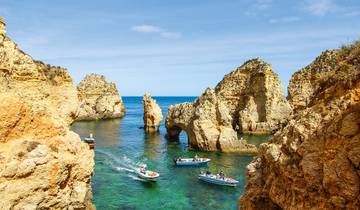
4 days
Algarve Discovery Tour
- ✓ Booking needs min. 2 travelers

8 days
Walking in Portugal – Remote Coastal Trails
- ✓ Comprehensive Algarve tour
- ✓ Expert local guides included
- ✓ All accommodation arranged
- ✓ Transportation provided
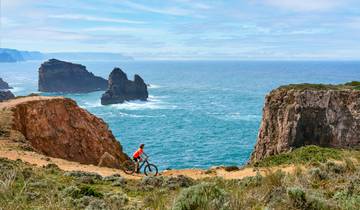
7 days
Costa Vicentina: Natural Park self-guided bike tour
- ✓ Comprehensive Algarve tour
- ✓ Expert local guides included
- ✓ All accommodation arranged
- ✓ Transportation provided
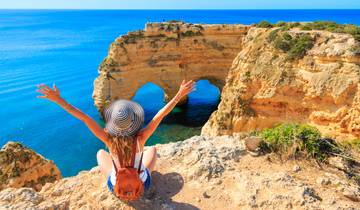
7 days
Algarve – a holiday full of wine
- ✓ Comprehensive Algarve tour
- ✓ Expert local guides included
- ✓ All accommodation arranged
- ✓ Transportation provided
Multi-day tour packages powered by TourRadar. Prices and availability subject to change.
Introduction to Lagos: Western Algarve’s Coastal Gem
Lagos occupies a distinctive position along Portugal’s southern coast where dramatic geology meets authentic cultural preservation. Unlike the resort-dominated stretches of the central Algarve, Lagos maintains its fishing village roots and historic Portuguese character while offering sophisticated tourist infrastructure. The town’s natural harbor sheltered Age of Discovery expeditions in the 15th century, and those maritime traditions persist today through working fishing boats sharing marina space with modern yachts and tour operators.
The defining feature of the Lagos coastline stretches between Praia do Pinhão and Praia da Luz: towering golden limestone cliffs sculpted by Atlantic waves into arches, tunnels, grottoes, and isolated coves. Ponta da Piedade represents the geological showcase where centuries of erosion created a labyrinth of sea caves and rock formations accessible only by small boat or kayak. This concentrated stretch of dramatic coastline, combined with calm turquoise waters perfect for swimming, establishes Lagos as one of Europe’s most photogenic beach destinations.
The historic center preserves its Moorish street layout within partially intact fortification walls. Cobbled lanes wind between whitewashed buildings with traditional azulejo tile work, opening onto small plazas where locals gather at outdoor cafés. Igreja de Santo António showcases baroque excess with its gilded woodwork interior, while the adjacent municipal museum chronicles the region’s maritime history. The waterfront promenade connects the historic fort, modern marina, and beachfront restaurants in a seamless pedestrian experience that encourages evening strolls and sunset watching.
Lagos appeals to diverse travel styles. Budget backpackers fill social hostels in the Old Town, drawn by affordable Portuguese taverns serving grilled fish and cheap craft beer. Young families appreciate gentle swimming beaches like Meia Praia’s expansive sand stretch and Praia da Luz’s protected bay. Couples seeking romantic escapes find boutique hotels, clifftop sunset spots, and quality dining ranging from traditional seafood restaurants to contemporary fusion cuisine. Adventure travelers have multiple daily departures for cave kayaking, coasteering, surfing, and boat tours.
This three-day itinerary framework accommodates various budgets while covering Lagos’ essential experiences. Day One introduces the town itself through historic sites, local markets, and marina exploration. Day Two focuses entirely on the coastal highlights that define Lagos: boat tours through Ponta da Piedade caves, beach time at iconic spots, and clifftop walks. Day Three offers flexibility for either extended exploration to Benagil Cave, day trip to Sagres’ dramatic headlands, or deeper discovery of Lagos’ neighborhood beaches and local life. The structure allows personalization while ensuring no first-time visitor misses the signature Lagos experiences that justify the journey to Portugal’s southwest corner.
Understanding Lagos Geography and Layout 2026
Lagos divides into distinct zones that shape accommodation choices and daily navigation. The Old Town (Centro Histórico) occupies the original walled city between Praça Gil Eanes and the ancient fortifications, characterized by narrow pedestrian streets, traditional architecture, and concentrated dining and shopping. This historic core provides maximum walkability to cultural sites, marina, and central beaches while offering authentic Portuguese atmosphere through residential neighborhoods rather than resort-style development.
The Marina quarter stretches along the waterfront east of the Old Town, featuring modern development including apartment complexes, waterfront restaurants, and the central marina where boat tours depart. This area delivers convenience for water activities and evening dining with marina views, though accommodations typically cost more than equivalent properties in the Old Town. Walking between Marina and Old Town requires just five to ten minutes along the scenic riverside promenade.
Lagos’ famous beaches spread along the coastline in both directions from the center. West of town, a series of small coves nestle between limestone cliffs: Praia da Batata (adjacent to the fort), Praia dos Estudantes, Praia do Pinhão, Dona Ana Beach, and Praia do Camilo form a connected stretch accessible via clifftop boardwalks and stairways. These beaches deliver the iconic Lagos coastal scenery with dramatic rock formations and golden cliffs, though limited sand area means crowding during peak summer. East of Lagos, Meia Praia extends for four kilometers as a broad sandy beach with consistent gentle surf, favored by families and long-distance walkers.
Porto de Mós and Praia da Luz represent more distant beach neighborhoods, each with its own small town character. Porto de Mós sits 3km west of central Lagos beyond Ponta da Piedade, offering a broader sandy beach popular with surfers and locals seeking space away from tourist concentrations. Praia da Luz occupies a protected bay 6km west, functioning almost as a separate town with its own accommodations, restaurants, and family-friendly beach atmosphere. Both connect to Lagos center via ONDA local bus service.
The train and bus stations sit on the eastern edge of the compact center, about 800 meters from the Old Town’s main plaza. This 10-minute walk crosses the pedestrian bridge over the Bensafrim River, delivering arrivals directly into the historic core. Faro Airport lies 90km east, connected by direct Aerobus service (€17, 1 hour 55 minutes) or regional train via Faro city (€8, 1 hour 45 minutes total). Lisbon sits 280km north, requiring either direct express bus (€12-20, 3 hours 40 minutes) or train connection through Tunes junction (€24, 4 hours 10 minutes).
Understanding this layout informs accommodation strategy. First-time visitors prioritizing cultural immersion and walkability choose Old Town properties within 500 meters of Praça Gil Eanes. Those emphasizing beach access and willing to use buses might select Porto de Mós or Meia Praia locations. Marina apartments suit travelers wanting modern amenities and waterfront dining convenience. Budget backpackers concentrate in Old Town hostels where social atmosphere and central location outweigh space constraints. Regardless of base neighborhood, Lagos’ compact scale means no destination exceeds 2km walk from the central plaza, and local buses fill gaps for beach access beyond comfortable walking distance.
Day 1 in Lagos 2026: Historic Center and Marina Discovery
Morning: Old Town Exploration and Market Experience
Begin your Lagos experience in Praça Gil Eanes, the town’s social hub where locals and visitors converge throughout the day. This central plaza features outdoor cafés perfect for breakfast while observing Portuguese daily life unfold. Order a pastel de nata (custard tart) with espresso at one of the traditional cafés ringing the square, spending approximately €3-5 for this quintessential Portuguese breakfast combination.
From the plaza, enter the Old Town’s labyrinth of cobbled lanes via Rua 25 de Abril or Rua Direita. These main pedestrian arteries preserve the Moorish street pattern with narrow passages designed to provide shade during hot summer months. Whitewashed buildings display traditional azulejo tilework, wrought-iron balconies overflow with flowering plants, and small shops occupy ground floors selling everything from fresh produce to artisan crafts. Resist the urge to rush this morning wander; Lagos’ charm reveals itself gradually through architectural details, unexpected plazas, and glimpses of daily neighborhood life.
Igreja de Santo António commands attention near Praça Infante Dom Henrique. This baroque church, rebuilt after the 1755 earthquake, presents an austere exterior that contrasts dramatically with its interior excess. Gilded woodwork covers every surface in the Portuguese baroque tradition, with carved angels, fruit garlands, and religious scenes creating an overwhelming sensory experience. The adjacent Municipal Museum shares the church entrance (€3 combined admission) and displays archaeological finds, maritime artifacts, and regional history chronologies. Allocate 45 minutes total for both church and museum exploration.
If visiting on Saturday morning, detour to the Lagos Market (Mercado Municipal) near the bus station. Local vendors sell fresh fish, regional cheeses, fruits, vegetables, and traditional handicrafts in this covered market hall functioning since 1924. Even without purchasing, the market provides cultural immersion and photographic opportunities while supporting local commerce. Market activity peaks between 8 AM and noon.
Midday: Ponta da Bandeira Fort and Beach Introduction
Walk south through the Old Town toward the waterfront, emerging at the 17th-century Ponta da Bandeira Fort guarding Lagos’ harbor entrance. This small fortress (€2 admission) offers rooftop rampart views across the marina and bay while interior exhibits detail the fort’s military history and Lagos’ role in Age of Discovery maritime expeditions. The fort visit requires just 30 minutes but provides historical context and excellent photography angles.
Adjacent to the fort, Praia da Batata forms Lagos’ most accessible beach, reached via a short stairway descent from the promenade. This small sandy cove nestles between protective rock formations, offering calm waters ideal for a quick swim or beach introduction before lunch. While Praia da Batata lacks the dramatic scenery of Lagos’ western beaches, its central location and gentle conditions make it perfect for testing water temperature and beach logistics.
For lunch, explore the restaurants lining Rua da Barroca and Rua Lançarote de Freitas near the Old Town’s southern edge. Traditional Portuguese taverns serve grilled fresh fish, seafood rice, and regional specialties at reasonable prices. Budget travelers find excellent value at local spots like A Forja (€10-15 per person), while mid-range diners appreciate the atmosphere and quality at restaurants like Casa do Prego (€15-25 per person). Most establishments display daily catch selections at entrance counters, allowing visual menu navigation even without Portuguese language skills.
Afternoon: Marina Walk and Clifftop Boardwalk Discovery
After lunch, follow the waterfront promenade east toward the Lagos Marina. This modern development hosts restaurants, bars, and boat tour operators along the waterfront, while rows of yachts and fishing boats fill the protected harbor. The marina walkway extends to the far end of the complex, providing views back toward the Old Town and surrounding hills. This represents a pleasant hour’s stroll with numerous photo opportunities and bench seating for rest breaks.
Return westward past Praia da Batata to discover the clifftop boardwalk system connecting Lagos’ signature beaches. Wooden walkways with protective railings follow the cliff edge westward through a succession of viewpoints overlooking Dona Ana Beach, Praia do Pinhão, and eventually Ponta da Piedade in the distance. The initial section from Batata Beach to Dona Ana requires about 15 minutes’ walking, with regular stairways descending to beach level for closer inspection or swimming.
Dona Ana Beach appears on countless Algarve postcards for good reason: towering orange-gold limestone cliffs frame a small sandy cove where turquoise water laps against rock formations creating natural swimming pools. Descend one of the wooden stairways for beach-level appreciation. Arrive after 4 PM to avoid peak crowds, though expect company even during evening hours given the beach’s fame. Swimming conditions remain excellent here with protected water and sandy bottom entry.
Evening: Sunset and Dining in the Old Town
Return to the clifftop boardwalk well before sunset to claim viewing positions. The wooden walkways and clifftop benches between Dona Ana and Praia do Camilo provide unobstructed western views as the sun descends toward the Atlantic horizon. Lagos enjoys spectacular sunset displays most evenings, with golden hour light illuminating the limestone cliffs while casting long shadows across the ocean. This free evening entertainment draws locals and visitors alike; arrive 30-45 minutes before official sunset time for optimal positioning.
For dinner, explore the concentration of restaurants in the Old Town’s pedestrian core. Rua da Barroca, Rua 25 de Abril, and the lanes surrounding Praça Luís de Camões offer dozens of options spanning Portuguese traditional cuisine, international dishes, and contemporary fusion. Budget travelers find substantial meals at neighborhood taverns like Adega da Marina (€12-18 per person). Mid-range diners appreciate the rooftop terraces and quality Portuguese cooking at restaurants like Casa do Prego or Don Sebastião (€20-35 per person). Those seeking fine dining experiences should consider Avenida Restaurant at Lagos Avenida hotel, offering creative contemporary cuisine with marina views (€40-60 per person).
After dinner, Lagos’ Old Town reveals its evening character as outdoor bars and small clubs begin filling. Rua Cândido dos Reis, nicknamed “Bar Street” by locals, concentrates nightlife in a pedestrian alley where dozens of bars compete with outdoor seating, live music, and late hours. Whether seeking quiet drinks with marina views or social hostel atmosphere with international backpackers, Lagos accommodates various evening preferences within a compact, walkable area.
Day 1 Budget Summary Per Person
Budget approach covering breakfast, church admission, simple lunch, beach access, and dinner at local tavern totals approximately €30-45 per person excluding accommodation. Mid-range visitors adding fort entrance, quality lunch and dinner, plus evening drinks spend €55-80 per person. Luxury travelers choosing fine dining and premium wine service invest €95-135 per person for the day’s experiences. Transportation costs remain minimal as Day 1 requires only walking within the compact central area.
Day 2 in Lagos 2026: Coastal Wonders and Cave Exploration
Morning: Ponta da Piedade Boat Tour
Day Two focuses entirely on Lagos’ defining coastal attractions, beginning with a small boat tour through Ponta da Piedade’s sea caves and rock formations. Multiple operators depart from Lagos Marina between 9 AM and 6 PM, with tours lasting 60-75 minutes. Book the earliest departure possible (typically 9 or 9:30 AM) to experience the caves before tour boat proliferation and to capture optimal morning light illuminating the golden limestone from inside the grottos.
These specialized small boats, designed specifically for narrow cave navigation, carry 10-12 passengers and experienced captains who maneuver through tight passages inaccessible to larger vessels. The tour route explores the Cathedral Cave with its natural dome ceiling, threads through the Kitchen and Living Room formations, and navigates narrow tunnels connecting hidden coves. Captains provide multilingual commentary explaining geological processes, historical shipwreck stories, and local legends while positioning boats for photography within the caves.
Standard Ponta da Piedade cave tours cost €20-26 per person in 2026, with tickets available for direct purchase at marina kiosks or advance booking through platforms like GetYourGuide and Viator. Check current official rates as pricing may vary seasonally. Arrive at the marina 15 minutes before departure time for check-in and life jacket distribution. Bring cameras with protective cases, sunscreen, hats, and light jackets as cave interiors maintain cooler temperatures than open water.
Alternative morning options include kayak tours (€38-42 per person, 2-2.5 hours) that provide more intimate cave access and physical activity. These guided kayak expeditions depart from Praia do Pinhão or Praia do Camilo, allowing paddlers to enter smaller grottos impossible for motorized boats. Choose kayaking over boat tours if seeking active adventure and closer contact with the rock formations, though recognize physical effort required for 2+ hours of paddling.
Late Morning: Beach Time at Praia do Camilo
After returning from the boat tour around 10:30-11 AM, walk west along the clifftop boardwalk to Praia do Camilo. This small cove requires descending approximately 200 wooden steps carved into the cliff face, but rewards the effort with one of Lagos’ most beautiful swimming beaches. The descent keeps crowds moderate compared to easier-access beaches, while the intimate scale creates relaxed atmosphere even during peak summer weeks.
Praia do Camilo features a natural rock arch framing views toward Ponta da Piedade, golden sand beaches flanked by dramatic cliff walls, and crystal-clear water ideal for swimming and snorkeling. The protected cove creates gentle conditions suitable for families while providing sufficient depth for diving from rocks on the beach’s far side. Beach facilities include a small café-restaurant at the cliff top (accessible via the stairway) but no equipment rentals or lifeguard services on the beach itself.
Allocate 2-3 hours at Praia do Camilo for swimming, sunbathing, and beach relaxation. The morning hours provide optimal conditions before afternoon crowds arrive via tour groups. The beach café serves light lunches including sandwiches, salads, and grilled fish (€8-15 per person), or ascend the stairs to return to Lagos center for more substantial midday dining options.
Afternoon: Praia Dona Ana and Clifftop Walk
Continue beach exploration at nearby Dona Ana Beach, Lagos’ most photographed coastal location. Multiple stairway accesses from the clifftop boardwalk descend to this iconic cove where towering limestone stacks create dramatic natural frames for swimming areas. Dona Ana attracts significant crowds, particularly between noon and 4 PM when tour buses and day visitors concentrate here. Despite crowding, the beach merits inclusion for its spectacular scenery and excellent swimming conditions.
The beach extends in multiple directions around rock formations, creating semi-private swimming coves for those willing to navigate rocky sections. Wade through shallow passages or swim around larger rock stacks to discover quieter spaces. Natural tunnels and arches invite exploration, though watch tide levels and maintain awareness of wave patterns. Beach facilities include summer lifeguard stations and portable toilets near the main stairway access.
For a less crowded alternative, walk 10 minutes west to Praia do Porto de Mós. This broader, longer beach attracts surfers and locals seeking space away from tourist concentrations. Porto de Mós lacks the dramatic cliff scenery of Camilo and Dona Ana but compensates with ample sand area, consistent gentle waves, and beachfront restaurants. ONDA buses connect Porto de Mós with Lagos center (€1.60), eliminating the need to walk back if tired from sun and swimming.
Allocate the full afternoon for beach time, cliff exploration, and coastal appreciation. The combination of morning boat tour and afternoon beach hours provides comprehensive experience of Lagos’ signature coastal attractions without requiring a rushed pace. Bring adequate sunscreen, as the Atlantic sun reflects intensely off limestone cliffs and water surfaces. Beach restaurants and clifftop cafés provide refreshment options throughout the day, with prices ranging from €3-5 for drinks to €10-20 for full meals.
Evening: Lagos Marina Dining and Sunset Views
Return to accommodations for showers and rest before evening activities. The marina area transforms during evening hours as restaurants fill and boats return from day tours. Walk the marina promenade in late afternoon, watching fishing boats unload catches and yacht crews prepare for sunset sails. The waterfront benches and open plaza areas provide excellent sunset viewing opportunities with marina boats creating picturesque foreground elements.
The marina district concentrates numerous restaurants along the waterfront, many with outdoor terraces overlooking the boats and harbor entrance. Seafood naturally dominates menus here given the fishing port setting, with daily catch selections displayed at restaurant entrances. Budget-conscious diners find reasonable prices at traditional Portuguese restaurants slightly back from the waterfront premium positions (€12-20 per person). Mid-range visitors enjoy marina-view terraces at establishments like Avenida Restaurant or OI Bastard’s (€25-40 per person). Luxury dining options include tasting menus at fine-dining venues (€50-80+ per person).
After dinner, explore Lagos’ evening energy from a different perspective. The bars along Rua Cândido dos Reis maintain lively atmosphere but might feel repetitive after Day 1’s visit. Instead, consider a sunset boat cruise (€33-47 per person, 2 hours) departing around 6:30-7 PM from the marina. These evening sails include wine or prosecco while cruising past Ponta da Piedade during golden hour, providing different perspective on the formations explored by boat that morning. Alternatively, find quieter evening entertainment along the marina promenade where street musicians perform and waterfront cafés offer relaxed atmosphere away from bar street intensity.
Day 2 Budget Summary Per Person
Day 2 core costs include the morning boat tour (€20-26), beach café lunch (€10-15), beach time (free), and marina dinner (€15-40 depending on restaurant choice), totaling €45-80 per person excluding accommodation. Mid-range travelers adding kayak tours instead of boat tours, quality beachfront lunches, and marina dining with drinks spend €75-125 per person. Luxury visitors incorporating sunset cruises, private boat charters, and fine dining experiences invest €150-250 per person for comprehensive coastal exploration. Local bus fares add minimal cost (€1.60 per ride) if using public transport for Porto de Mós beach access.
Day 3 in Lagos 2026: Flexible Exploration Options
Day Three offers flexibility based on personal interests, energy levels, and whether previous days’ weather required schedule adjustments. Select among these three primary options, or create hybrid approaches combining elements from multiple itineraries.
Option A: Benagil Cave Excursion from Lagos
The Benagil Sea Cave, located 40km east of Lagos along the Algarve coast, represents one of Portugal’s most photographed natural wonders. This massive cathedral-like cavern features a collapsed roof creating a natural skylight that illuminates the golden sand beach inside the cave. Multiple tour operators in Lagos offer boat excursions to Benagil, typically departing Lagos Marina around 9 AM and returning by 1-2 PM.
Standard Benagil cave tours via speedboat or catamaran cost €40-52 per person for 2-2.5 hour excursions in 2026, with tickets available through marina operators or advance booking online. Check current official rates as seasonal pricing varies. Tours typically visit multiple caves along the route between Lagos and Benagil, including stops at Algar de Benagil, Praia da Marinha viewpoints, and smaller grottos. Some operators combine dolphin watching with cave tours (€47-70 per person), adding wildlife viewing opportunities though extending trip duration to 3 hours.
Boat tours enter Benagil Cave but typically do not land on the interior beach given boat size constraints and environmental protection measures. Kayak tours (€38-42 per person, departing from beaches near Benagil) provide the only legal access to actually step onto the cave’s interior sand beach, though these require physical fitness for 2+ hours of paddling. Independent swimming to Benagil Cave is prohibited due to boat traffic, strong currents, and safety concerns.
Return to Lagos by early afternoon with sufficient time for lunch in the Old Town and either beach relaxation or shopping before evening departure. Budget-conscious travelers should weigh the Benagil tour cost against extended time at Lagos’ own equally impressive Ponta da Piedade formations, which offer similar cave experiences without the additional expense.
Option B: Sagres Day Trip and Western Peninsula Exploration
Sagres occupies the southwestern tip of Portugal and Europe, where the continent ends at dramatic cliffs plunging into the Atlantic. This historic town served as Prince Henry the Navigator’s base for organizing Age of Discovery expeditions, and the location maintains an end-of-the-world atmosphere with powerful ocean winds, vast horizons, and minimal development. Sagres sits 32km west of Lagos, connected by bus service (approximately 1 hour) or easy rental car drive along coastal roads.
Key Sagres attractions include the massive Fortaleza de Sagres (€3 admission), a star-shaped fortress on the clifftop headland preserving 15th-century fortifications and offering panoramic ocean views. Inside the fortress, the Rosa dos Ventos (wind rose) stone compass and small chapel maintain connections to Prince Henry’s navigation school tradition. The fortress visit requires 1-2 hours for complete exploration including cliff edge walks and interpretation center exhibits.
Cape São Vicente (Cabo de São Vicente) lies 6km beyond Sagres, marking mainland Europe’s southwestern extremity. The red lighthouse perched on 75-meter cliffs creates iconic end-of-continent imagery, while the surrounding headland offers clifftop walks and sunset viewing positions. Small parking lot vendors sell souvenirs claiming “last Portuguese goods before America,” playing to the location’s geographic significance.
Beach options near Sagres include Praia do Tonel (popular with surfers), Praia da Mareta (more protected and family-friendly), and Praia do Beliche (dramatic setting beneath cliffs). All offer different character from Lagos’ limestone coves, with broader expanses of sand and more exposed ocean conditions creating consistent surf. Budget beach restaurant shacks serve grilled fish and Portuguese basics, while Sagres town itself provides limited dining options compared to Lagos’ variety.
Bus connections from Lagos to Sagres cost approximately €5-7 one-way with departures every 2-3 hours. Plan for 6-8 hours total including travel time, fortress visit, Cape São Vicente exploration, and beach or town time. Alternatively, rent a car (from €25-40 daily) for freedom to explore beaches and viewpoints between Lagos and Sagres at your own pace. Return to Lagos by evening for final dinner and packing.
Option C: Deeper Lagos Discovery and Local Experiences
Travelers preferring relaxed pace over intensive touring can dedicate Day 3 to deeper Lagos exploration. Begin with a morning at Meia Praia, Lagos’ longest beach stretching 4km east from the marina. This broad sandy expanse offers space even during peak summer, with consistent gentle waves ideal for swimming and walking. Beach clubs and restaurants dot the beachfront at regular intervals, providing refreshments and lunch options (€10-25 per person). ONDA buses connect Meia Praia with central Lagos every 30-50 minutes.
Alternatively, explore Praia da Luz, located 6km west in its own protected bay. This more family-oriented beach community offers different atmosphere from central Lagos, with white-sand beach, calm swimming conditions, beachfront promenade, and small-town Portuguese character. Luz functions almost as separate destination while remaining accessible via ONDA bus service (€1.60), making it viable for half-day beach excursions.
Return to Lagos center for afternoon shopping exploration. The Old Town’s pedestrian lanes contain artisan workshops selling cork products, traditional ceramics, Portuguese linens, and regional crafts. The municipal market, if not visited on Day 1, provides local atmosphere and opportunities to purchase dried fruits, nuts, regional cheeses, and vacuum-packed items suitable for travel. Shops typically close 1-2 PM for lunch breaks, reopening around 3 PM.
Consider a cooking class or wine tasting experience for afternoon cultural immersion. Several Lagos operators offer Portuguese cooking workshops (€40-60 per person, 3-4 hours) teaching traditional dishes like cataplana seafood stew, grilled sardines, or regional pastries. Wine tastings highlighting Algarve and Portuguese wines provide educational afternoon activities (€25-40 per person) at wine shops or hotel venues.
For active travelers, surfing lessons at Porto de Mós beach (€35-50 per person for 2-hour group lessons) or stand-up paddleboarding along the protected coastline (€30-45 per person including equipment) offer physical activities beyond beach lounging. Coastal walking trails extend both east and west from Lagos, with the clifftop route toward Ponta da Piedade lighthouse delivering changing perspectives on formations already experienced via boat and beach.
End your Lagos stay with a final dinner at a restaurant not yet visited, choosing from the concentration of options in the Old Town or marina area. Many restaurants display daily specials featuring the freshest catch from morning fish markets, making evening selections based on seasonal availability. The relaxed timing of Option C allows packing and travel preparations before evening flights or next-day departures.
Day 3 Budget Summary Per Person
Day 3 costs vary significantly based on chosen activities. Benagil cave tour option (€40-52), lunch (€10-20), and evening meal (€15-40) total €65-110 per person. Sagres day trip including bus transport (€10-14 round-trip), fortress admission (€3), lunch (€12-20), and dinner (€15-40) costs €50-80 per person. Local Lagos exploration with beach time, shopping, and restaurants totals €35-60 per person for relaxed day without major activity expenses. Additional optional activities like cooking classes, wine tastings, or water sports add €25-60 per activity per person.
Accommodation Recommendations by Budget Tier 2026
Budget Options: Hostels and Guesthouses (€12-40 per person nightly)
Lagos’ hostel scene concentrates in the Old Town with properties catering to international backpacker crowds. Sol a Sol Hostel occupies a historic building with dormitory beds from €12-18 per night, private rooms from €35-50, and strong social atmosphere including organized pub crawls and daily activities. The property’s central Rua Silva Lopes location positions guests steps from restaurants, bars, and beach access while maintaining some distance from Bar Street’s late-night noise.
Rising Cock Party Hostel, operating since 2004, explicitly targets the social backpacker market with dormitory beds €15-22 nightly and aggressive party programming. The hostel earned its name through reputation, making it inappropriate for travelers seeking quiet rest. However, those wanting guaranteed social interaction and nightly entertainment find exactly that atmosphere. Location in the Old Town’s pedestrian core provides walkability to all attractions.
For quieter budget accommodation, guesthouses like Our House and Sailor’s House offer private rooms with shared bathrooms from €30-40 per person per night in double occupancy. These family-run properties provide middle ground between hostel social chaos and hotel privacy, with basic but clean rooms, communal kitchens, and more mature guest demographics. Most include breakfast in rates, adding value for budget-conscious travelers.
Mid-Range Properties: Boutique Hotels and Central Locations (€80-120 per person nightly)
Three-star and boutique properties deliver comfort, central location, and personality without luxury price points. Lagos Avenida Hotel combines contemporary design with marina-edge positioning, offering rooms from €160-240 per night (€80-120 per person sharing) depending on season and view category. The property includes rooftop pool with ocean vistas, acclaimed Avenida Restaurant, and immediate access to waterfront promenade.
Marina Club Lagos Resort provides apartment-style accommodations with kitchen facilities, multiple pools, and spa amenities. Units range from studios to multi-bedroom apartments, priced €140-220 nightly for standard two-person occupancy (€70-110 per person). The resort sits adjacent to the marina with short walks to Old Town attractions while offering more space than traditional hotel rooms.
Boutique properties like Hotel Lagosmar in the Old Town preserve historic architecture while updating interiors with modern amenities. Rooms cost €140-200 per night (€70-100 per person sharing) with rooftop terraces providing ocean views and breakfast included. The Old Town location maximizes walkability to restaurants, cultural sites, and beaches while immersing guests in residential neighborhood atmosphere.
Luxury Accommodations: Five-Star Resorts and Premium Experiences (€175-275 per person nightly)
Cascade Wellness Resort Lagos represents the luxury tier, located slightly outside central Lagos with extensive grounds, multiple pools, full-service spa, and premium dining options. Standard rooms cost €350-450 per night (€175-225 per person), suites and villas €500-600+ (€250-300+ per person), with rates including breakfast buffets and wellness facilities access. The resort attracts couples and families seeking comprehensive amenities and resort-style vacation experiences.
Palmares Beach House Hotel at Palmares Golf Resort combines clifftop ocean views, minimalist design aesthetic, and Michelin-starred Al Sud restaurant. Rooms range €380-550 per night (€190-275 per person) with breakfast included, infinity pool access, and direct beach pathway. The property sits 4km west of Lagos center, requiring taxi or rental car for town access while providing exclusivity and golf course adjacency.
Tivoli Lagos Hotel occupies a central position near the marina with four-star-plus standards, spa facilities, courtyard pool, and Algarve-themed decor throughout public spaces. Standard rooms cost €240-380 per night (€120-190 per person) depending on season, with some rooms offering marina or ocean views. The hotel’s location balances convenience with quieter positioning slightly back from waterfront crowds.
Booking Strategy and Seasonal Considerations 2026
Lagos accommodation prices fluctuate significantly by season. July and August represent peak summer with highest rates and advance booking requirements. June and September offer optimal value within warm-weather months, with prices 20-30% below peak while maintaining pleasant temperatures and full activity availability. May and October extend the shoulder season with even better value and fewer crowds, though ocean temperatures cool and some tour operators reduce schedules.
November through March represents true off-season with rates 40-50% below summer peaks. Many hostels and budget properties close entirely, while remaining hotels offer significant discounts. Winter weather remains mild compared to northern Europe (daytime temperatures 15-18°C), making Lagos viable for walkers, culture seekers, and golfers, though swimming becomes less appealing and some restaurants maintain reduced schedules.
Book accommodations 2-3 months ahead for summer peak season, 4-6 weeks for shoulder months, and last-minute for winter stays. Direct booking with properties often yields better rates than third-party platforms for smaller boutique hotels and guesthouses, particularly when requesting email quotes for multi-night stays. Most properties include breakfast in rates, occasionally negotiable as rate reduction for those preferring café breakfasts in town.
Dining Guide: Budget to Luxury in Lagos 2026
Budget Dining: Authentic Local Taverns and Markets (€7-15 per meal)
Lagos preserves working-class Portuguese taverns serving local residents alongside savvy budget travelers. A Forja, nicknamed “the blue door restaurant” by locals, operates on a no-reservations policy with consistent queues outside its entrance. The restaurant specializes in perfectly grilled fresh fish selected from daily catch displays, served with potatoes and salad for €10-14 per person. Cash only, expect waits during dinner hours, and embrace the bustling authentic atmosphere.
Adega da Marina, one of Lagos’ largest traditional restaurants, serves generous portions of grilled meats, seafood rice, and Portuguese classics in a lively family-friendly environment. Most main dishes cost €12-18, portions often sufficient for sharing, and the restaurant maintains fast service despite crowds. Location near the marina makes it convenient for post-beach dining, though expect weekend waits without reservations.
The municipal market area contains small cafés and restaurants frequented by local workers, where lunch specials (prato do dia) include soup, main course, dessert, and drink for €12-14. These worker-oriented establishments close by 3 PM but offer unbeatable value and authentic Portuguese home cooking for midday meals. Ask locals for current recommendations as specific spots change over time.
Street food and casual options include Pearl Food Trailer on the marina pier, serving fresh oysters, prawns, and vinho verde from a retro trailer format (€5-12 for small plates). Numerous pastry shops (pastelarias) throughout the Old Town sell pastéis de nata, fresh bread, and regional sweets for €1-3, perfect for breakfast or afternoon snacks.
Mid-Range Dining: Quality Portuguese and International Cuisine (€20-40 per meal)
Casa do Prego earned popularity for creative Portuguese tapas and rooftop terrace atmosphere. The restaurant serves inventive small plates including cod ceviche, Algarve-style octopus, and contemporary interpretations of traditional dishes, with most tapas €6-12 and full meals totaling €20-30 per person including drinks. The rooftop setting provides sunset views and lively evening energy.
Jukebox Tapas & Meals occupies a small, often-packed space serving creative fusion tapas with Portuguese foundations. Owner Luís maintains a welcoming hosting style while the kitchen produces consistently excellent food. Menu changes seasonally based on fresh ingredients, prices run €18-28 per person for multiple tapas and drinks, and reservations via WhatsApp are essential given limited seating.
O Camilo operates at the clifftop above Praia do Camilo, serving fresh grilled fish and seafood with spectacular ocean and rock formation views. The restaurant’s terrace positioning makes it popular for lunch after morning beach time or sunset dinners. Fresh fish priced by weight typically costs €22-35 per person including sides, while the location adds premium to pricing compared to town center equivalents.
For international alternatives, Lagos offers diverse cuisines including quality pizza, Thai, Indian, Mexican, and burgers. Most international restaurants cluster in the Old Town’s pedestrian lanes, with meals averaging €15-30 per person. Quality varies significantly, so check recent reviews before committing to less-established venues.
Fine Dining: Michelin Quality and Special Occasions (€50-95 per meal)
Al Sud Restaurant at Palmares Beach House Hotel holds Michelin star status under chef Louis Anjos, who showcases Algarve ingredients through contemporary creative cuisine. Tasting menus cost €80-120 per person depending on courses selected, with wine pairings adding €40-70. The clifftop setting, impeccable service, and innovative compositions justify the investment for serious food enthusiasts. Advance reservations essential, particularly for sunset seating.
Avenida Restaurant at Lagos Avenida Hotel, while not Michelin-starred, delivers sophisticated contemporary Portuguese cuisine with marina views. Six-course discovery menu costs approximately €50 per person, lunch menus offer better value at €30-35, and á la carte selections with wine total €60-80 per person. Chef Roeland Klein maintains high standards and creative presentations in elegant surroundings.
For special occasion dining without tasting menu formality, Don Sebastião perpetuates Portuguese culinary traditions since 1979 in the Old Town’s historic center. The restaurant serves classic cataplana seafood stews, regional meat dishes, and traditional desserts in refined but accessible atmosphere. Expect €45-65 per person for three courses with quality wine, making it upscale-casual rather than formal fine dining.
Practical Dining Tips for Lagos 2026
Portuguese dining schedules run later than Northern European norms. Lunch service peaks 1-3 PM, many restaurants close 3-7 PM, and dinner service begins around 7:30 PM with peak crowds arriving 8:30-10 PM. Restaurants stay open past midnight during summer season, particularly on weekends. Most establishments display menus with prices outside, allowing inspection before entering.
Tipping expectations remain modest in Portugal. Service charges are typically included in bills; additional tips of 5-10% for good service are appreciated but not obligatory. Round up bills or leave small change for café service. Credit cards work at most restaurants above budget tavern level; budget establishments and market vendors often operate cash-only.
For peak season dining at popular mid-range and upscale restaurants, book 1-2 days ahead via phone, email, or messaging apps like WhatsApp. Budget taverns and casual spots operate first-come-first-served, requiring strategic timing (arrive before 8 PM) to avoid waits. Market lunch spots and worker cafés maintain earlier schedules, typically closing by 3 PM after lunch service ends.
Transportation in Lagos and Regional Connections 2026
Getting to Lagos: Airport and City Connections
Faro Airport serves as the Algarve’s primary gateway, located 90km east of Lagos. Multiple transportation options connect the airport with Lagos, varying by convenience, cost, and travel time. The direct Aerobus service (route 56) operates May through October with seven departures daily between 9:45 AM and 6:45 PM. Journey time runs 1 hour 55 minutes with intermediate stops at Albufeira, Lagoa, and Portimão. Single tickets cost €17 in 2026, purchased at airport ticket machines, from drivers (cash only), or via the Vamus mobile app.
Outside Aerobus operating season (November-April), connect via Faro city center using local bus 16 (€2.80, 20 minutes, every 30-50 minutes) from the airport to Faro bus or train station, then either Vamus intercity bus (€5-7, 1-1.5 hours) or regional train (€7.50, 1 hour 45 minutes including connection at Tunes) to Lagos. This public transport combination costs €10-12 total but requires managing connections and luggage transfers.
Taxis from Faro Airport to Lagos charge fixed rates around €90-110 depending on luggage quantity and time of day (20% surcharge applies 9 PM-6 AM). Private transfers arranged through companies like Yellow Fish cost from €80 when booked in advance, rising to €90-100 during peak season. These door-to-door options eliminate connection hassles and prove economical for groups of 3-4 travelers splitting costs.
Uber and Bolt operate in the Algarve with transfers from Faro Airport to Lagos typically costing €30-45 depending on demand and time of day. Availability and pricing fluctuate; check apps upon landing for current rates. Ride-sharing proves most reliable during daytime hours; late evening or early morning arrivals might find limited driver availability.
Lisbon connections to Lagos operate via train or bus. Comboios de Portugal trains depart Lisbon Oriente station for Tunes junction, where passengers transfer to regional trains continuing to Lagos. Total journey time runs 4 hours 10 minutes including connection, with tickets from €24 purchased online or at stations. The train journey offers comfort and scenic Alentejo countryside views through large windows and spacious seating.
Bus services between Lisbon and Lagos include Rede Expressos (€20, multiple daily departures, 3 hours 40 minutes) and FlixBus (€12-18, limited departures, 3 hours 40 minutes). Both operate direct services without connections, though buses make multiple stops in Algarve towns adding to journey duration. Book online for best prices and guaranteed seating during peak travel periods.
Getting Around Lagos: Local Transportation Options
Walking serves as primary transportation within Lagos center. The compact historic district measures roughly 1km across, with most hotels, restaurants, and cultural attractions concentrated within 15 minutes’ walk of Praça Gil Eanes. The marina lies 800 meters from the central plaza, accessible via level waterfront promenade. Beach access to Praia da Batata, Estudantes, and Pinhão requires just 5-10 minutes’ walk from the Old Town’s southern edge.
ONDA local buses connect Lagos center with outlying beaches and neighborhoods. Key routes include service to Porto de Mós beach, Meia Praia, and Praia da Luz, with buses departing approximately every 30-50 minutes during peak season. Single fares cost €1.60 purchased onboard with cash or card. Multi-day passes (3 days €12, 7 days €22) provide value for travelers planning extensive beach exploration. Bus stops display schedules; check current timetables at aonda.pt or vamus.pt.
Taxis in Lagos charge regulated metered rates starting at €4 plus €0.93 per kilometer. Most trips within Lagos town cost €5-10. The main taxi rank sits at Praça Gil Eanes, or call Lagos Taxi at +351 282 763 587. Trips to outlying beaches like Luz or Porto de Mós run €8-12 one-way. Night rates (9 PM-6 AM) add 20% surcharge to meter totals.
Uber and Bolt operate reliably in Lagos with typical in-town rides costing €5-8. Both apps function identically to international markets; drivers generally speak functional English and accept cashless payment through the apps. Availability remains good throughout daylight and evening hours, though early morning (before 7 AM) or very late night (after 2 AM) might see limited drivers.
Bicycle and scooter rentals suit active travelers comfortable navigating mixed traffic on roads without protected bike lanes. Several shops in the Old Town and near the bus station rent city bikes from €10-15 daily and electric scooters from €20-25 daily. Flat terrain around Lagos center makes cycling manageable, though narrow Old Town streets prohibit bikes in pedestrian zones. The coastal route west toward Porto de Mós offers scenic cycling with dedicated bike paths for portions.
Rental Cars: When They’re Worth Considering
Most first-time visitors accomplish Lagos exploration successfully without rental cars given the town’s walkability and adequate public transport connections. However, rental cars prove valuable for travelers planning extensive regional exploration, multiple beach visits beyond ONDA bus routes, or day trips to Sagres, Cape São Vicente, and inland Algarve towns.
Rental rates in Lagos start around €25-35 daily for compact cars during low season, rising to €40-60 daily in peak July-August. Local companies like Marina Car and Luzcar often undercut international brands while maintaining acceptable service standards. Pickup locations include Faro Airport (most convenient for immediate access) and Lagos town offices near the bus station. Insurance adds €5-10 daily; verify credit card coverage before purchasing redundant policies.
Parking in Lagos Old Town proves challenging during summer months with limited street spaces and pedestrian-only zones. Use the paid parking area at the bus station (€0.70-1.00 per hour) or marina parking areas. Hotels outside the historic center typically include parking; confirm availability when booking central Old Town properties. Meia Praia and Porto de Mós beaches offer free parking lots, though spaces fill rapidly during peak midday hours.
For travelers staying exclusively in Lagos with standard beach and tour priorities, skip the rental car expense and hassle. The compact town eliminates transport needs, boat tour operators provide coastal access, and ONDA buses cover major beaches. Only rent if planning extensive independent exploration or staying in accommodations far from the walkable center.
Money-Saving Strategies for Lagos 2026
Seasonal Timing for Maximum Value
Travel timing dramatically impacts Lagos costs across all categories. Peak summer July-August sees accommodation prices at their highest, restaurants maximally crowded (longer waits, rushed service), beaches packed, and boat tours running at capacity with advance booking required. The premium for peak season access delivers warmest guaranteed weather and full activity availability but sacrifices value and atmosphere.
June and September represent sweet spots for value-conscious travelers. Weather remains reliably warm (ocean temperatures comfortable for swimming, daytime air temperatures 24-28°C), all tour operators maintain full schedules, and accommodation prices drop 20-30% below peak without sacrificing availability or quality. Beach crowds moderate compared to July-August intensity, and restaurant reservations become easier to secure. Book 4-6 weeks ahead for decent selection at these optimal shoulder season timing.
May and October extend shoulder season further with even better value. Accommodation costs drop 30-40% below peak, restaurant prices may include off-season specials, and beaches feel almost private outside Portuguese holiday weekends. Trade-offs include cooler ocean temperatures (especially May mornings and October afternoons), occasional rain possibilities, and some tour operators running reduced schedules. Active travelers prioritizing hiking, cultural experiences, and value over guaranteed beach weather find these months excellent.
November through April represents true off-season with accommodation costs 50-60% below summer peaks. However, many hostels and budget properties close entirely, numerous restaurants maintain reduced hours or close for annual holidays, and boat tour operators significantly reduce departures or cease operations. Winter Lagos suits different traveler profiles: golf enthusiasts, walkers appreciating mild temperatures, and culture seekers willing to sacrifice swimming and water activities for dramatic cost savings.
Accommodation Savings Without Sacrificing Quality
Within any season, strategic accommodation choices dramatically impact daily budgets. Hostels deliver obvious savings through dormitory beds (€12-22 per night) or budget private rooms (€30-50 nightly). However, travelers seeking more privacy without hotel costs should investigate apartments and vacation rentals, particularly for stays exceeding three nights. Self-catering apartments cost €50-90 nightly (€25-45 per person for two), include kitchen facilities reducing dining expenses, and often provide more space than equivalent-price hotel rooms.
Book directly with properties when possible rather than through third-party platforms. Many boutique hotels, guesthouses, and small properties offer 5-10% discounts for direct reservations made via email or phone, plus flexibility on check-in/check-out times and potential upgrades. Third-party platforms charge properties 15-20% commission; some properties share portions of those savings with direct bookers.
Consider locations slightly outside the prime Old Town and marina zones. Properties 10-15 minutes’ walk from the central plaza often cost 20-30% less while remaining easily walkable to all attractions. The pedestrian bridge area near the train station, neighborhoods east of the marina, and residential streets north of the Old Town offer legitimate alternatives without requiring bus transportation or sacrificing safety.
Dining Strategies for Budget Control
Breakfast represents the easiest meal for budget management. Skip hotel breakfast buffets unless included in rates and instead patronize local cafés where pastéis de nata, coffee, and fresh orange juice cost €3-5 total. Market vendors sell fresh fruit, yogurt, and bread for picnic-style breakfasts at fraction of restaurant costs. Self-catering accommodations allow even cheaper breakfast preparation with supermarket supplies.
Lunch menus (menu do dia or prato do dia) at traditional Portuguese restaurants include soup, main course, dessert, and drink for €10-14, representing best value for substantial meals. Most lunch specials end by 3 PM; arrive before 1:30 PM for full selection. Worker-oriented restaurants near the market and bus station offer these lunch deals targeting local employees rather than tourists.
Share dishes at Portuguese restaurants where portions typically exceed single-person needs. Order one grilled fish (priced by weight), one seafood rice, salad, and sides to share between two diners, reducing individual costs while sampling multiple preparations. Portuguese dining culture accepts sharing; restaurants provide divided plates without issue.
Grocery shopping at larger supermarkets (Pingo Doce near the marina, Continente near the bus station) rather than tourist-oriented mini-marts saves 30-40% on drinks, snacks, and picnic supplies. Portuguese wine bottles cost €3-8 at supermarkets versus €15-25 marked up at restaurants. Self-catering one meal daily significantly reduces overall food budgets.
Activity and Tour Cost Management
Many of Lagos’ best experiences cost nothing. Clifftop walks, beach access, sunset viewing, and Old Town exploration require only time and comfortable shoes. The boardwalk system connecting beaches from Batata to Camilo provides hours of scenic walking with constantly changing perspectives on the dramatic coastline. Swimming beaches charge no entrance fees; bring your own equipment rather than renting beach chairs and umbrellas (€15-25 daily).
Compare tour prices among multiple operators before booking. Ponta da Piedade cave tours range from €20-26; Benagil excursions €40-52; kayak tours €38-42. Check prices directly at marina kiosks, through accommodation concierge services, and on platforms like GetYourGuide and Viator. Booking 1-2 days ahead often secures better prices than same-day marina walk-ups, though avoid excessive advance booking that locks in rates while eliminating flexibility.
Consider combining experiences rather than booking separate tours. Some operators offer combination Benagil cave plus dolphin watching excursions that cost less than booking both separately. Sunset cruises provide alternative perspective on Ponta da Piedade formations already experienced via boat tour, potentially duplicating scenery at additional expense. Evaluate whether multiple boat tours add genuine value or simply repeat similar experiences.
Free activities like the Saturday morning municipal market, Igreja de Santo António (€3 admission already minimal), clifftop viewpoint access, and neighborhood beach exploration fill itineraries without depleting budgets. The monthly calendar of free concerts, festivals, and cultural events varies by season; check local tourism office or websites like visitportugal.com for current schedules during your visit dates.
Practical Tips and Essential Information 2026
Weather and Packing Guidance by Season
Summer months June through September deliver reliably warm, dry weather with daytime temperatures 26-32°C, ocean temperatures 19-22°C, and minimal rainfall. Pack primarily summer clothing: shorts, t-shirts, swimwear, sandals, sun hat, and sunglasses. Bring one light sweater or long-sleeve shirt for evening air conditioning in restaurants or occasional breezy evenings. Sunscreen rated SPF 30+ is essential as the Atlantic sun reflects intensely off limestone cliffs and water. Reef-safe formulations protect marine environments in swimming areas.
Shoulder season May and September-October see temperatures 22-27°C with occasional cooler mornings and evenings. Pack layering options including light jacket, jeans or pants for evening, and closed-toe walking shoes in addition to summer basics. Rain remains infrequent but possible; include compact umbrella or light rain jacket. Ocean temperatures 17-20°C feel refreshing but tolerable for most swimmers.
Winter November-March brings mild temperatures 15-19°C, increased cloud cover, and higher rainfall probability. Pack layered clothing including sweaters, light waterproof jacket, jeans, and comfortable walking shoes. Swimming becomes less appealing though not impossible; Portuguese locals and hardy tourists still brave 15-17°C ocean temperatures. Winter Lagos suits active outdoor activities like hiking and cultural exploration rather than traditional beach vacations.
Language and Communication
Portuguese is the official language, though English comprehension in Lagos far exceeds most Portuguese destinations given the town’s international tourism focus. Restaurant menus typically include English translations, hotel staff speak functional to fluent English, and tour operators provide multilingual guides. Basic Portuguese phrases (“bom dia” for good morning, “obrigado/obrigada” for thank you, “por favor” for please) are appreciated but not essential for navigation.
The Lagos tourism office at Praça Gil Eanes provides free maps, current event calendars, and English-speaking staff to answer questions about activities, transportation, and dining. Most accommodations maintain 24-hour reception or accessible management for guest questions. Restaurant staff accommodate English menu explanations and dietary restrictions with patience despite language barriers.
Safety and Health Considerations
Lagos maintains low crime rates with standard European urban precautions sufficient. Pickpocketing occurs occasionally in crowded beach areas and Bar Street late nights; secure valuables, avoid displaying expensive electronics, and use hotel safes for passports and excess cash. Walking alone through Lagos at any hour poses minimal risk, though standard awareness of surroundings and avoiding intoxicated groups late night applies.
Ocean safety requires attention to warning flags displayed at beaches. Red flags prohibit swimming due to dangerous conditions; yellow flags indicate caution. Lifeguards staff major beaches May through September during daylight hours; swim only in guarded areas during staffed times. Rocky areas between beaches pose slip and fall risks when wet; wear proper water shoes when exploring tide pools or navigating rock formations.
The Centro de Saúde (health center) at Rua do Castelo dos Governadores provides non-emergency medical care during business hours. Hospital de Lagos (Rua Castelo dos Governadores, +351 282 770 100) offers 24-hour emergency services. European Health Insurance Cards (EHIC) cover EU citizens; others should verify travel insurance coverage before departure. Pharmacies (farmácias) throughout the Old Town dispense medications and provide basic medical advice; green cross signs mark locations.
Mobile Connectivity and WiFi
Nearly all accommodations provide free WiFi, from budget hostels to luxury hotels. Connection quality varies; larger properties typically maintain faster, more reliable networks than small guesthouses. Cafés throughout the Old Town advertise free WiFi for customers; password information typically displays near entrances or appears on receipts.
European mobile plans include Portugal in roaming packages. Travelers from outside Europe should verify international roaming costs with home carriers or purchase Portuguese SIM cards at shops near the bus station or in shopping centers. Data-only tourist SIM packages cost €10-20 for 5-10GB, sufficient for maps, messaging, and social media during a three-day visit. Major carriers include MEO, Vodafone, and NOS with shops in central Lagos.
Currency, ATMs, and Payment Methods
Portugal uses the Euro (€). ATMs (Multibanco) appear throughout Lagos in the Old Town, marina area, and shopping centers. Portuguese ATMs generally charge no withdrawal fees beyond those assessed by home banks. Withdraw larger amounts (€100-200) to minimize transaction fees rather than making multiple small withdrawals. ATMs offer English language options and clear instructions.
Credit and debit cards work at nearly all restaurants above budget tavern level, hotels, tour operators, and shops. Visa and Mastercard enjoy widest acceptance; American Express less commonly accepted. Budget taverns, market vendors, and some small shops remain cash-only; carry €50-100 cash for these situations. Portuguese ATMs reliably dispense €20 and €50 notes; request smaller denominations for easier transactions.
Tipping expectations remain modest. Service charges are included in restaurant bills; additional 5-10% tips for exceptional service are appreciated but not obligatory. Round up taxi fares or leave small change. Tour guides on boat excursions appreciate €2-5 tips per person for excellent service. Budget travelers need not feel pressured to tip beyond service charge already included in bills.
Sample 3-Day Budget Breakdowns by Travel Style 2026
Budget Traveler: Hostel Dorms and Local Taverns
Three-day Lagos experience focusing on authentic experiences, free activities, and budget accommodation totals approximately €180-315 per person. Daily budget breakdown per person runs €60-105 including hostel dormitory beds €15-22 nightly, breakfast at local cafés €5-8, lunch at worker restaurants €10-12, dinner at budget taverns €10-15, local bus transport €3-5, and one paid activity per day such as boat tour or beach lunch €15-25.
Budget travelers maximize free activities: clifftop walks, beach swimming, Old Town exploration, and sunset viewing. The paid Ponta da Piedade boat tour (€20-26) represents the budget itinerary’s signature splurge, justified by Lagos’ defining coastal experience. Benagil cave tours (€40-52) push budget limits; many budget travelers skip this excursion in favor of extended time at Lagos’ own cave formations. Evening entertainment centers on hostel social events, Bar Street happy hours, and marina promenade strolls rather than expensive restaurant dining.
Detailed three-day budget breakdown: Accommodation €45-66 total for three nights, meals €75-105 total for nine meals plus snacks, transportation €10-15 for local buses and one beach transfer, activities €20-40 for one boat tour and church admission, miscellaneous €20-30 for drinks and small purchases. The upper end of the budget range accommodates all signature experiences plus evening drinks; the lower end requires strict meal discipline and minimal activity splurges.
Mid-Range Traveler: Comfort Hotels and Quality Dining
Mid-range three-day Lagos visit costs approximately €510-795 per person assuming two sharing accommodation. Daily breakdown per person runs €170-265 including boutique hotel or 3-star accommodation €80-120 nightly per person, breakfast at hotel or quality café €10-15, lunch at mid-range restaurants €15-25, dinner at quality establishments €25-40, mixed transportation including taxis €8-15, and daily activities including boat tours and optional extras €30-50.
Mid-range travelers balance comfort with authentic experience. Accommodations provide private rooms, modern amenities, often including pools or terraces, and central locations. Dining explores both traditional Portuguese taverns (lunch) and contemporary fusion restaurants (dinner) without budget constraints limiting choices. All signature activities fit comfortably: Ponta da Piedade boat tour, beach club lunch with loungers, potential Benagil excursion, and sunset cruise options.
Detailed three-day mid-range breakdown: Accommodation €240-360 total for three nights, meals €150-240 total for restaurants at multiple tiers with wine, transportation €25-45 covering occasional taxis and bus rides, activities €90-150 including boat tour, potential Benagil trip, and beach club amenities. Mid-range budgets allow spontaneous decisions about activities, dining upgrades when restaurants appeal, and taxi convenience when walking feels burdensome after full beach days.
Luxury Traveler: Five-Star Properties and Fine Dining
Luxury three-day Lagos experience costs approximately €1,110-1,770 per person for two sharing accommodation. Daily breakdown per person runs €370-590 including five-star resort or luxury boutique hotel €175-275 nightly per person, hotel breakfast buffet or upscale café €20-30, lunch at quality restaurants or beach clubs €35-55, fine dining dinners €60-95, private transportation and taxis €20-35, and premium activities including private boat charters or exclusive tours €60-100.
Luxury travelers prioritize privacy, exclusivity, and elevated experiences. Accommodations deliver spa facilities, infinity pools, ocean views, and attentive service. Dining emphasizes Michelin-quality restaurants, local seafood specialists using premium ingredients, and wine selections highlighting Portuguese vintages. Activities upgrade to private boat charters for Ponta da Piedade cave exploration, sunset sailing experiences, premium spa treatments, and potentially helicopter tours of the Algarve coastline.
Detailed three-day luxury breakdown: Accommodation €525-825 total for resort stays, meals €345-540 total emphasizing fine dining and premium wines, transportation €60-105 covering taxis and private transfers, activities €180-300 including private boat charter, spa treatments, and premium tour options. Luxury budgets accommodate all experiences without compromise, multiple dining splurges, and spontaneous activity additions based on weather and mood.
Alternative Itineraries and Specialized Interests
Active Adventure Focus: Water Sports and Outdoor Activities
Adventure-oriented travelers should restructure the standard itinerary around Lagos’ extensive water sports opportunities. Day One introduces surfing lessons at Porto de Mós beach (€35-50 per person for 2-hour group lessons), with afternoon stand-up paddleboarding along protected coastline (€30-45 including equipment). Day Two focuses on kayak cave tour through Ponta da Piedade (€38-42) extending 2-2.5 hours, followed by coasteering excursion (€45-60) combining cliff jumping, swimming, and rock scrambling along the dramatic coastline.
Day Three options include scuba diving experiences (€60-90 for guided dives including equipment), extended kayak tours to Benagil Cave from coastal launch points (€38-50), or kitesurfing lessons at appropriate beaches (€80-120 for introductory sessions). Lagos accommodates intermediate and advanced participants in most activities; beginners receive patient instruction and gradual progression. All water sports operate May through October with reduced or ceased operations during winter months.
Culture and History Emphasis: Beyond Beaches
Culture seekers should expand beyond Lagos’ beach focus to encompass regional historical sites and authentic Portuguese experiences. Day One standard Lagos historic center exploration adds extended time at the Municipal Museum’s archaeological collections and maritime exhibits (€3 admission combined with Igreja de Santo António). Afternoon includes the Igreja da Santa Maria near the Old Town’s original square, displaying less ornate but historically significant architecture, and neighborhood walks through residential areas observing daily Portuguese life.
Day Two maintains one coastal boat tour for geological appreciation but emphasizes cultural immersion through Portuguese cooking class (€50-70 per person for 3-4 hour workshops teaching traditional dishes), wine tasting highlighting Algarve and Alentejo regional productions (€25-40 per person), and market visits for ingredient sourcing and vendor interactions. Day Three extends to Sagres for Henry the Navigator historical context at the Fortaleza de Sagres (€3 admission) and Cape São Vicente’s end-of-world atmosphere, returning via inland Algarve towns like Silves with its Moorish castle or Monchique mountain villages.
Family-Friendly Modifications with Children
Families with young children should adjust timing, activity choices, and accommodation for kid-appropriate experiences. Choose family-oriented beaches like Meia Praia or Praia da Luz over clifftop-accessed coves requiring stair navigation with strollers. Standard boat tours accommodate children (minimum ages vary by operator, typically 3-5 years), though shorter duration options prevent restlessness. Skip kayaking and extended hiking in favor of beach play, tide pool exploration, and playground visits at waterfront parks.
Accommodation in apartment-style properties with kitchen facilities allows flexible meal timing matching children’s schedules rather than adapting to Portuguese late dining hours. Self-catering breakfast and occasional dinners prevent child meltdowns in restaurants while reducing food costs. Many mid-range hotels offer family rooms or connecting accommodations, plus pools providing evening entertainment when children tire of sand and salt water.
Day Three flexibility becomes particularly important with children; gauge energy and interest levels before committing to Benagil or Sagres excursions requiring extended vehicle time. Lagos’ compact walkability and beach variety accommodate spontaneous itinerary adjustments when weather changes or children need rest days. Ice cream shops throughout the Old Town provide strategic bribery opportunities for continued exploration cooperation.
Day Trip Options from Lagos 2026
Benagil Cave and Eastern Algarve Coast
The Benagil Sea Cave represents the Algarve’s most photographed natural wonder, located approximately 40km east of Lagos near the town of Carvoeiro. Multiple tour operators offer boat excursions departing Lagos Marina, typically running 2-2.5 hours with prices €40-52 per person in 2026. Tours visit not only Benagil but also stop at additional caves along the route including smaller grottos near Praia da Marinha and the impressive sea caves at Algar Seco.
The Benagil Cave features a collapsed ceiling creating a natural skylight that illuminates the golden sand beach inside the cavern. Tour boats enter the cave but generally cannot land on the interior beach due to size constraints and environmental regulations. Kayak tours launched from nearby beaches provide the only legal way to actually step onto the cave’s interior sand, though these require 2+ hours of paddling and reasonable physical fitness.
When comparing Benagil tours with extended time at Lagos’ own Ponta da Piedade formations, recognize significant similarities. Both locations showcase golden limestone cliffs carved into dramatic caves, arches, and rock formations by Atlantic waves. Ponta da Piedade’s proximity to Lagos (accessible via short walk or 20-minute boat tour) offers comparable geological drama without additional transportation logistics or costs. Budget-conscious travelers can reasonably skip Benagil in favor of deeper Ponta da Piedade exploration without missing fundamentally different experiences.
Sagres and Cape São Vicente: Portugal’s Southwest Edge
Sagres occupies the southwestern corner of Portugal and Europe, where Henry the Navigator established his navigation school and organized Age of Discovery expeditions. The town sits 32km west of Lagos, connected via Vamus bus service (€5-7 one-way, approximately 1 hour) with departures every 2-3 hours. The journey follows coastal roads with ocean views and passes through small Algarve villages, making the bus ride itself scenic.
The massive Fortaleza de Sagres (€3 admission) sprawls across the clifftop headland, preserving 15th-century fortifications, the Rosa dos Ventos stone compass, and Henry’s chapel. The fortress perimeter walk delivers dramatic views across the Atlantic with waves crashing against cliffs 75 meters below. Allow 1-2 hours for complete fortress exploration including interpretation center exhibits detailing Henry’s navigation school and Portugal’s maritime expansion. The exposed headland experiences strong winds most days; bring layered clothing even during summer months.
Cape São Vicente (Cabo de São Vicente) lies 6km beyond Sagres at mainland Europe’s southwestern point. The red lighthouse marks the location, while clifftop walks and viewpoints emphasize the geographic significance and dramatic coastal scenery. Small vendors near the parking area sell tourist trinkets proclaiming “last goods before America” though these souvenirs lack authenticity. Sunset viewing from Cape São Vicente creates memorable experiences for those willing to arrange return transportation after dark; bus service concludes by early evening.
Sagres beaches including Praia do Tonel, Praia da Mareta, and Praia do Beliche offer different character from Lagos’ limestone coves. Broader sand expanses, more exposed ocean conditions, and consistent surf attract wave riders and families seeking space. The town itself maintains quiet, end-of-world atmosphere with limited development, simple Portuguese restaurants, and windswept charm. Budget day trippers can accomplish Sagres and Cape São Vicente exploration via bus connections, though rental cars provide flexibility for multiple beach stops and inland detours through Western Algarve countryside.
Monchique Mountains: Inland Algarve Discovery
The Serra de Monchique mountain range rises north of Lagos, offering dramatic contrast to coastal scenery through eucalyptus forests, cork oak groves, and traditional mountain villages. The historic spa town of Caldas de Monchique preserves thermal spring facilities used since Roman times, while Monchique village itself maintains authentic Portuguese mountain character with narrow cobbled streets, traditional handicraft shops, and local restaurants serving regional specialties like grilled chicken piri-piri and smoked sausages.
Fóia peak, the Algarve’s highest point at 902 meters elevation, delivers panoramic views spanning from the Atlantic coast to the Spanish border on clear days. The summit access road winds through scenic forest landscapes, with roadside vendors selling regional products including medronho fruit brandy, honey, and handicrafts. The mountain route from Lagos requires rental car or organized tour; no direct bus service operates to mountain destinations.
Day trip itineraries combining Monchique exploration with coastal stops at western beaches create diverse full-day experiences. Depart Lagos by 9 AM, spend morning climbing to Fóia summit and exploring Monchique village, enjoy lunch at traditional mountain restaurants (€12-18 per person), then return via coastal route stopping at Praia da Arrifana or Aljezur beach before reaching Lagos by evening. This inland-coastal combination provides relief from pure beach focus while showcasing Algarve’s geographic diversity.
Seasonal Events and Festivals Lagos 2026
Summer Festival Season: June Through September
Lagos’ cultural calendar peaks during summer months with multiple festivals, concerts, and events attracting both residents and visitors. The Lagos Jazz Festival typically occurs in July, bringing international and Portuguese jazz musicians for multi-day performances in outdoor venues. The Músicas do Mundo (Musics of the World) festival showcases global music traditions through concerts at various Old Town locations, usually scheduled late July or early August. Specific 2026 dates vary by year; check Lagos municipal website or tourism office for confirmed schedules.
Portuguese saints’ festivals animate neighborhoods throughout June with the Festas de Santo António (June 13), São João (June 24), and São Pedro (June 29). These traditional celebrations feature grilled sardines, street parties, and decorative displays in honor of patron saints. While these festivals maintain stronger presence in Lisbon and Porto, Lagos neighborhoods organize local versions with authentic Portuguese character and minimal tourist commercialization.
Beach sports tournaments including beach volleyball, soccer, and water sports competitions occur throughout summer months at Meia Praia and other suitable beaches. These events attract Portuguese athletes and create lively spectator atmosphere without admission charges. Evening concerts and DJ performances at beach clubs and marina venues provide nightlife options beyond standard bar scene, particularly popular with younger travelers and Portuguese visitors from other regions.
Off-Season Cultural Programming: October Through April
Lagos maintains reduced but consistent cultural programming during off-season months when international tourism decreases. The Centro Cultural de Lagos (Cultural Center) near the marina hosts theater performances, art exhibitions, film screenings, and classical music concerts targeting primarily Portuguese audiences. While events feature Portuguese language content, art exhibitions and musical performances transcend language barriers for culturally curious visitors.
Carnival celebrations occur in February or early March depending on the liturgical calendar, with Lagos organizing parades, costume competitions, and street parties. Portuguese Carnival maintains different character from Brazilian extravaganzas, emphasizing local participation, satirical floats, and neighborhood competitions rather than massive commercial productions. The festive atmosphere, traditional music, and authentic community celebrations provide cultural immersion rarely experienced by summer beach visitors.
Religious processions and celebrations mark Easter week (Semana Santa) with solemn ceremonies, traditional music, and decorative displays in churches and public spaces. While less dramatic than Spanish Semana Santa traditions, Portuguese Easter observances offer insight into Catholic religious culture’s continued significance in Portuguese society. Churches open for extended hours, special masses occur throughout the week, and traditional Easter pastries appear in bakeries.
Frequently Asked Questions About Lagos 3-Day Itinerary 2026
What’s the Ideal Number of Days to Spend in Lagos?
Three days provides sufficient time to experience Lagos’ essential highlights including historic center exploration, comprehensive beach and cave tours, and relaxed Mediterranean pace without feeling rushed. First-time visitors accomplish all signature experiences within a three-day framework while maintaining flexibility for weather adjustments or spontaneous discoveries. Travelers seeking comprehensive Western Algarve coverage including Sagres, Tavira, and inland destinations benefit from five to seven days total. However, three focused days in Lagos delivers satisfying introduction to the region’s coastal splendor, Portuguese culture, and natural beauty without requiring extended vacation time commitments.
Should I Rent a Car for Lagos or Use Public Transportation?
Most travelers accomplish Lagos exploration successfully without rental cars. The compact historic center requires only walking, local ONDA buses (€1.60 per ride) connect to major beaches, and boat tour operators provide coastal access from Lagos Marina. Taxis and Uber serve for occasional longer trips at reasonable costs. Rental cars prove valuable primarily for travelers planning extensive Sagres exploration, multiple inland day trips, or stays at properties far from walkable center. The combination of limited Old Town parking, adequate public transport coverage, and walkable scale makes car-free Lagos visits both feasible and often preferable. Consider renting for specific day trips rather than maintaining vehicles throughout entire stays.
What Are Lagos’ Hidden Gems That Most Tourists Miss?
While Dona Ana Beach attracts massive crowds, locals favor Praia do Camilo for superior swimming conditions, fewer tour groups, and more relaxed atmosphere despite requiring stairway descent. Early morning hours before 9 AM transform even popular beaches into peaceful retreats before day visitors and tour buses arrive. The clifftop walk extending beyond Ponta da Piedade toward the lighthouse delivers changing perspectives on the rock formations while avoiding boat tour crowds concentrated at the main viewing platforms. Saturday morning municipal market (Mercado Municipal) provides authentic cultural immersion and photographic opportunities that most tourists bypass in favor of beach time. Evening walks along the Bensafrim River’s eastern bank toward Meia Praia reveal residential Lagos away from tourist concentrations, with local cafés serving neighborhood residents and traditional shops preserving Portuguese character.
Can I Visit Lagos as a Day Trip from Other Algarve Towns?
Lagos functions reasonably as day trip destination from other Algarve locations, though transportation logistics reduce available sightseeing time. From Albufeira (45 minutes by bus, €7), Portimão (20 minutes, €4), or Faro (1 hour 45 minutes by train, €7.50), day visitors can experience essential Lagos highlights: morning boat tour through Ponta da Piedade caves, lunch in the Old Town, afternoon beach time at Dona Ana or Camilo, and evening return. However, this compressed schedule eliminates flexibility for weather adjustments, rushed meals reduce dining enjoyment, and evening atmosphere exploration becomes impossible with last bus departures around 7-8 PM. Lagos merits overnight stays to properly experience the town’s evening character, Mediterranean pace, and signature coastal attractions without transportation deadline pressure.
Is Lagos Suitable for Solo Travelers?
Lagos ranks among Europe’s most solo-traveler-friendly destinations, particularly for budget and mid-range travelers. The concentration of social hostels in the Old Town creates automatic communities of international backpackers, with organized pub crawls, group dinners, and daily activities facilitating immediate connections. Beach atmospheres encourage casual conversations, boat tour group settings provide natural socializing opportunities, and the compact walkable scale prevents isolated feelings. Female solo travelers report high comfort levels given the safe environment, friendly local culture, and significant presence of other solo visitors. Travelers seeking quieter solo experiences rather than hostel party atmosphere find boutique hotels, apartment rentals, and neighborhood cafés providing comfortable bases for independent exploration while maintaining sufficient tourist infrastructure for easy navigation and English language communication.
What Happens if Weather Disrupts My Lagos Plans?
Weather conditions in Lagos remain generally favorable May through October with warm temperatures and limited rainfall. However, occasional storms, strong winds, or rough seas can disrupt boat tours and water activities. Most boat tour operators maintain flexible rebooking policies, offering alternative departure times or full refunds for weather cancellations. The three-day itinerary structure provides sufficient flexibility to reschedule boat tours from Day Two to Day Three if morning conditions prove unsuitable. Alternative indoor activities during weather disruptions include extended museum visits, cooking classes, wine tastings, shopping in the Old Town, spa treatments at resort properties, and Portuguese film screenings at the cultural center. Many restaurants welcome extended lunch occupancy during rainy afternoons, allowing leisurely meals while waiting for weather improvements. Winter months see higher cancellation frequency for water activities; travelers visiting November through March should maintain flexible schedules and backup activity plans.
Are Lagos Beaches Safe for Swimming and Families?
Lagos beaches maintain high safety standards with lifeguard services at major locations during peak season (May-September, typically 10 AM-6 PM). Flag systems clearly indicate conditions: green flags signal safe swimming, yellow flags indicate caution, red flags prohibit water entry. Beaches like Meia Praia and Praia da Luz offer gentle conditions ideal for families with young children, featuring gradual depth increases, minimal currents, and sandy bottoms. The dramatic cliff-backed coves including Dona Ana and Camilo provide excellent swimming for confident swimmers but require supervision for children given rockier sections and depth variations. Wave conditions vary by weather and tidal patterns; consult lifeguards before entering unfamiliar beaches. Portuguese water quality standards maintain rigorous monitoring with regular testing; Lagos beaches consistently earn Blue Flag certifications indicating excellent water quality and facility standards.
What Portuguese Phrases Help Navigate Lagos?
Essential Portuguese phrases include “bom dia” (good morning), “boa tarde” (good afternoon), “boa noite” (good evening/night), “obrigado” if male or “obrigada” if female (thank you), “por favor” (please), “sim” (yes), “não” (no), “quanto custa” (how much does it cost), “a conta, por favor” (the bill, please), and “não falo português” (I don’t speak Portuguese). Most Lagos residents working in tourism speak functional English, making navigation possible without Portuguese fluency. However, attempting basic phrases demonstrates respect and often receives warm Portuguese responses. Restaurant menus typically include English translations, though learning food vocabulary enhances ordering: “peixe” (fish), “carne” (meat), “legumes” (vegetables), “vinho” (wine), “cerveja” (beer), “água” (water). Market vendors and neighborhood restaurant staff less commonly speak English; simple phrases and gestures facilitate communication successfully.
How Do I Handle Laundry During a Lagos Visit?
Most hotels and hostels offer laundry services, typically charging €5-10 per load for washing and drying. Self-service laundromats operate in Lagos near the bus station area, with wash-and-dry cycles costing €6-8 total per load including detergent. Apartment accommodations often include washing machines in units, allowing self-service laundry at no additional cost beyond water and electricity. Hand washing in hotel sinks serves for small items like swimwear and undergarments; Portugal’s warm, dry summer climate allows rapid line drying. Pack quick-dry fabrics and plan to wear swimwear multiple times between washes to minimize laundry needs during short three-day visits. Many travelers opt to handle laundry before or after Lagos stays in accommodations with better facilities rather than during the compressed three-day window.
Should I Book Boat Tours in Advance or Upon Arrival?
Boat tour booking strategy depends on season and flexibility preferences. Peak summer July-August benefits from 1-2 days advance booking via online platforms or accommodation assistance, ensuring specific departure times and avoiding sold-out situations. Shoulder season May-June and September-October allows successful walk-up booking at marina kiosks same day or day before, often at slightly discounted rates compared to advance online purchases. Winter months require verification that tour operators maintain active schedules before assuming availability. Balance advance booking security against weather flexibility; booking morning departures day-before or same-day allows evaluation of actual conditions rather than committing to tours multiple days ahead when weather might deteriorate. Compare prices among multiple operators before committing; marina kiosks, accommodation concierge services, and online platforms occasionally offer different rates for identical tours.