La Fortuna Night Tour 2026: Frogs, Sloths & Nocturnal Wildlife
Key Takeaways
- Night tours cost $45-65 per person in 2026, with premium wildlife experiences reaching $75-85 including specialized equipment and expert naturalist guides
- Tours run 5:30 PM-8:30 PM year-round, with rainy season (May-November) offering the highest wildlife activity and best frog-spotting opportunities
- Red-eyed tree frogs, glass frogs, poison dart frogs, sloths, kinkajous, and various snake species are regularly spotted during professional guided night walks
- Small group tours (maximum 8-10 people) provide superior wildlife viewing compared to large bus tours, with better lighting control and quieter movement
- Booking 3-5 days in advance during high season (December-April) secures preferred tour times and ensures availability with top-rated operators
- Essential equipment includes closed-toe waterproof shoes, rain jacket, insect repellent, and personal camera with flash capability for frog photography
Introduction to La Fortuna Night Wildlife Adventures 2026
La Fortuna’s rainforest transforms after sunset into one of Central America’s most spectacular nocturnal wildlife theaters, where the darkness reveals creatures rarely seen during daylight hours. The 2026 night tour season brings enhanced access to private reserves, improved trail systems, and increasingly professional naturalist guides who specialize in locating the region’s most sought-after nocturnal species including red-eyed tree frogs, glass frogs, eyelash vipers, and three-toed sloths.
The volcanic soil and consistent rainfall patterns surrounding Arenal Volcano create ideal habitat conditions for Costa Rica’s extraordinary amphibian diversity, with over 40 frog species inhabiting the forests around La Fortuna. Night tours provide the only practical opportunity to observe these creatures during their active periods, when red-eyed tree frogs emerge to hunt insects, glass frogs guard their eggs on leaves overhanging streams, and poison dart frogs navigate the forest floor. The experience combines wildlife observation with ecological education, as expert guides explain the complex rainforest relationships between predators, prey, and the delicate environmental conditions that support this biodiversity.
Beyond amphibians, La Fortuna’s night tours regularly encounter sleeping birds, hunting bats, foraging coatis, climbing kinkajous, and the occasional ocelot or margay. The tours operate year-round with consistent wildlife sightings, though rainy season months (May-November) offer the highest amphibian activity levels and the best conditions for encountering multiple frog species in a single evening. Tour operators maintain established relationships with private reserves and landowners, providing access to pristine habitats that remain largely undisturbed by daytime tourist traffic.
Planning your 2026 night tour requires understanding seasonal patterns, selecting appropriate tour operators, and preparing proper equipment for rainforest conditions. This guide provides comprehensive information about costs, timing, wildlife expectations, booking strategies, and practical preparation to ensure a successful nocturnal rainforest adventure.
People Also Ask About La Fortuna Night Tours 2026
What animals can you see on a La Fortuna night tour in 2026?
La Fortuna night tours consistently encounter red-eyed tree frogs, glass frogs, poison dart frogs (strawberry and green-and-black varieties), various tree frog species, eyelash vipers, fer-de-lance snakes, boa constrictors, three-toed and two-toed sloths, kinkajous, coatis, armadillos, opossums, sleeping toucans, motmots, and other birds, tarantulas, walking sticks, katydids, and occasionally ocelots or margays. The specific wildlife encountered varies by season, weather conditions, and luck, but professional guides maintain 95%+ success rates for spotting at least 3-5 frog species and multiple other nocturnal creatures during standard 2.5-3 hour tours.
Red-eyed tree frogs represent the most sought-after species, with males calling from vegetation near water sources throughout the rainy season. Glass frogs appear on leaves overhanging streams where they guard their egg masses. Sloths remain relatively stationary in tree canopies where guides locate them using spotlights. Snakes including eyelash vipers rest coiled on branches at eye level, perfectly camouflaged until illuminated by flashlights. The diversity of encounters depends partly on trail selection, habitat variety, and guide expertise in locating well-camouflaged species.
How much does a La Fortuna night tour cost in 2026?
Standard night tours cost $45-55 per person for group tours (8-12 people), while small group experiences (maximum 6-8 people) range $55-65 per person in 2026. Premium wildlife tours with specialized naturalist guides and extended duration cost $75-85 per person, including professional spotlights, field guides, and sometimes photographic assistance. Check tour operator websites for current rates as pricing varies by season and group size. Tours include transportation from La Fortuna hotels, professional naturalist guide, flashlights or headlamps, and sometimes rain ponchos. Photography-focused tours with lighting equipment and camera support reach $90-110 per person for 3.5-4 hour experiences.
Private tours for couples or families cost $150-200 total (2-4 people), providing flexible timing and customized wildlife focus based on interests. Children ages 4-12 receive 20-30% discounts with most operators. Combination packages pairing night tours with daytime activities (hanging bridges, waterfalls) offer modest savings of 10-15% compared to booking separately. Advance online booking through operator websites sometimes provides $5-10 per person discounts compared to last-minute hotel desk bookings.
What’s the best time of year for La Fortuna night tours in 2026?
May through November offers peak amphibian activity during Costa Rica’s rainy season, when red-eyed tree frogs breed most actively and overall frog diversity reaches its maximum. September and October provide the highest rainfall and most consistent frog sightings, with red-eyed tree frogs calling nightly and glass frogs guarding eggs throughout the forest. December through April (dry season) still produces excellent wildlife encounters with good frog diversity, though red-eyed tree frogs appear less frequently and overall amphibian activity decreases somewhat compared to wet season peaks.
Wildlife activity occurs year-round, with sloths, snakes, and mammals appearing consistently regardless of season. Rainy season tours benefit from increased insect activity that attracts more frogs and bats, while dry season tours offer more comfortable walking conditions with less mud and fewer mosquitoes. The transitional months of April-May and November-December combine elements of both seasons, with moderate rainfall supporting good wildlife activity while maintaining relatively comfortable trail conditions.
Do you need to book La Fortuna night tours in advance for 2026?
Booking 3-5 days in advance during high season (December-April, July-August) ensures availability with preferred tour operators and secures desired tour times (early evening vs. later departures). Top-rated small group tours with maximum 6-8 participants sell out 4-7 days ahead during peak periods, while standard larger group tours maintain better last-minute availability. Green season (May-June, September-November) allows booking 1-2 days in advance with consistent availability across most operators.
Online booking through operator websites provides guaranteed reservations and sometimes modest discounts of $5-10 per person. Hotel tour desks book same-day or next-day tours during low season, though operator selection may be limited. Photography-focused tours and private tours require advance booking of 5-10 days during high season due to limited daily capacity. Last-minute cancellations occasionally create same-day availability, but relying on this risks missing the experience entirely during busy periods.
Extended multi-day tours – 5+ days
Featured Costa Rica Multi-Day Tour Packages
10 days
Essential Costa Rica – Package with Manuel Antonio National Park
- ✓ Comprehensive Costa Rica tour
- ✓ Expert local guides included
- ✓ All accommodation arranged
- ✓ Transportation provided
10 days
Costa Rica Adventure
- ✓ Comprehensive Costa Rica tour
- ✓ Expert local guides included
- ✓ All accommodation arranged
- ✓ Transportation provided
9 days
Costa Rica Quest
- ✓ Comprehensive Costa Rica tour
- ✓ Expert local guides included
- ✓ All accommodation arranged
- ✓ Transportation provided
10 days
Essential Costa Rica – Package with Guanacaste
- ✓ Comprehensive Costa Rica tour
- ✓ Expert local guides included
- ✓ All accommodation arranged
- ✓ Transportation provided
Multi-day tour packages powered by TourRadar. Prices and availability subject to change.
Essential Planning Information for 2026 Night Tours
Current Costs and Pricing Breakdown 2026
Standard group night tours (8-12 participants) cost $45-55 per person for 2.5-3 hour experiences departing around 5:30 PM or 6:00 PM. Small group tours limiting participants to 6-8 people range $55-65 per person, providing better wildlife viewing opportunities through reduced noise and more personalized guide attention. Premium wildlife tours with extended duration (3.5-4 hours) and specialized naturalist guides cost $75-85 per person, including professional equipment and detailed ecological interpretation. Check operator websites for current official rates as pricing varies seasonally and by specific tour features.
Photography-focused night tours with lighting assistance and camera support cost $90-110 per person for 3.5-4 hour experiences, including advice on frog photography settings and composition. Private tours for 2-4 people range $150-200 total regardless of participant count, offering flexible timing and customized wildlife focus. Children ages 4-12 receive discounts of 20-30% with most operators, while children under 4 join free when sharing equipment with parents.
Additional costs include tips for guides ($10-15 per person for excellent service), optional professional wildlife photographs ($15-25 for digital files), and personal rain gear or boots if not provided by operator ($5-10 rental). Transportation from accommodations outside central La Fortuna adds $10-20 per person for properties beyond the standard pickup radius. Combination packages including night tours plus daytime activities (hanging bridges, waterfalls, hot springs) cost $95-140 per person depending on included experiences, offering 10-15% savings compared to booking separately.
Tour Schedule and Duration 2026
Night tours depart between 5:30 PM and 6:30 PM year-round, with exact timing adjusted seasonally to align with sunset and optimal wildlife activity periods. Standard tours run 2.5-3 hours including transportation time, with approximately 2 hours spent walking forest trails at slow wildlife-viewing pace. Extended premium tours last 3.5-4 hours, covering more terrain and additional habitats for increased species diversity.
Tours return to La Fortuna hotels between 8:30 PM and 9:30 PM depending on departure time and tour duration. Pickup from La Fortuna hotels begins 15-30 minutes before stated departure time, with exact schedules confirmed during booking or day-before confirmation calls. Some operators offer both early (5:30 PM departure) and late (7:00 PM departure) tours, with early tours providing more daylight transition period and late tours focusing entirely on full-darkness wildlife activity.
Walking pace remains slow and deliberate to allow careful observation and minimize disturbance to wildlife. Trails cover 1-2 kilometers total distance on relatively flat terrain with occasional gentle slopes. Frequent stops for wildlife observation, photographs, and guide interpretation result in actual walking time of 60-90 minutes distributed across the 2-3 hour tour period. No physical fitness requirements exist beyond ability to walk slowly on potentially muddy trails.
Wildlife Encounter Expectations 2026
Red-Eyed Tree Frogs and Other Amphibians
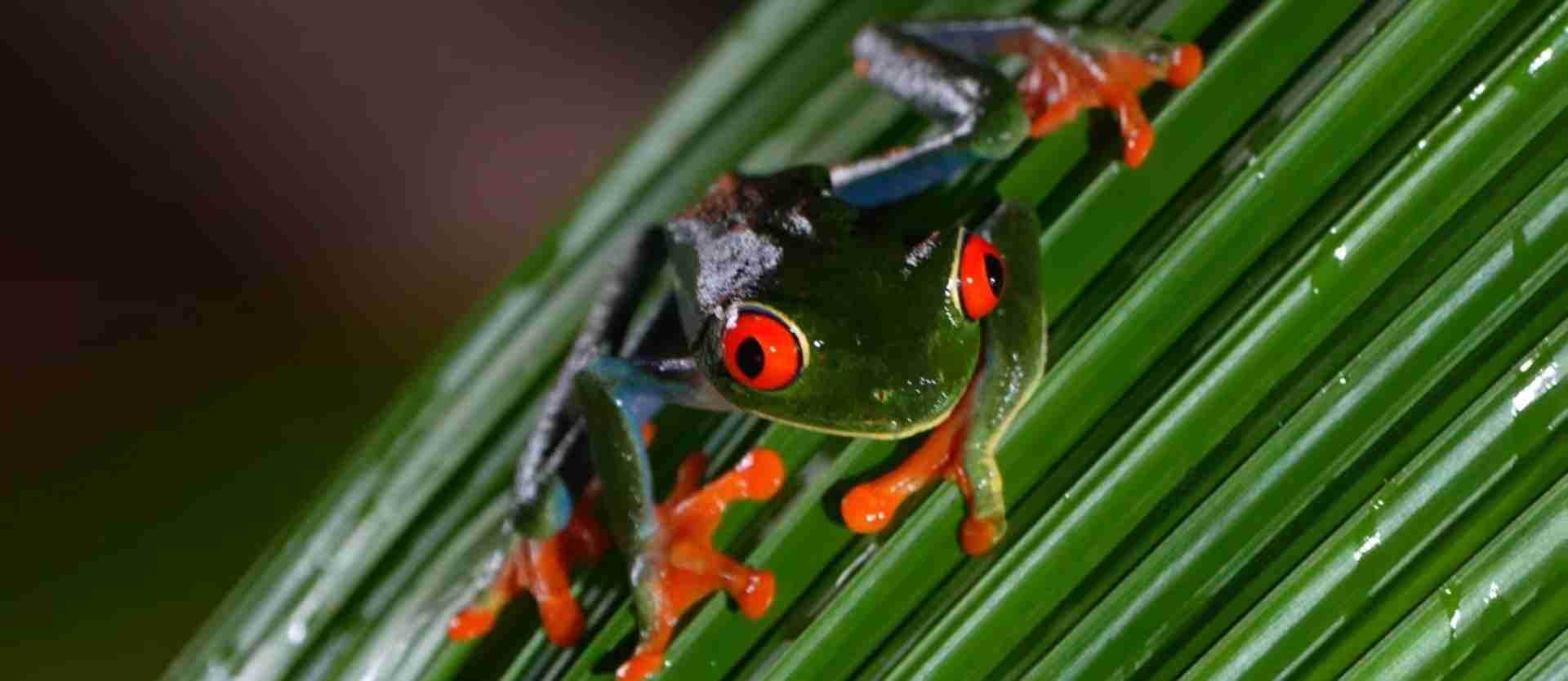
Red-eyed tree frogs represent the signature species for La Fortuna night tours, with males calling from vegetation near ponds, streams, and temporary water sources during rainy season breeding periods (May-November). These iconic frogs display vibrant green bodies, bright red eyes, blue-and-yellow striped sides, and orange feet, creating one of Central America’s most photographed amphibian species. Males reach 5-6 cm in length while larger females measure 7-8 cm. Guides locate calling males using sound and spotlight, often finding multiple individuals in proximity during peak breeding activity.
Glass frogs appear on leaves overhanging forest streams where males guard translucent egg masses. Their transparent ventral skin reveals internal organs including heart, liver, and egg development in females. Multiple glass frog species inhabit La Fortuna’s forests, with fleischmann’s glass frog and bare-hearted glass frog encountered most frequently. These small frogs (2-3 cm) require careful observation to locate against green foliage, but guides consistently find them on established territories along stream corridors.
Poison dart frogs including strawberry poison dart frogs (red, blue, or green color morphs) and green-and-black poison dart frogs actively forage on the forest floor during evening hours. While not as nocturnal as tree frogs, these diurnal species remain active into early evening and rest in accessible locations where guides locate them with flashlights. Strawberry poison dart frogs display remarkable color variation, with individual frogs ranging from solid red to blue to green depending on local population genetics.
Additional amphibian species regularly encountered include gaudy leaf frogs (brilliant green with red eyes and blue thighs), masked tree frogs, red-webbed tree frogs, milky frogs, and various rain frog species. Rainy season tours routinely encounter 5-8 different frog species in a single evening, while dry season tours typically find 3-5 species with emphasis on year-round residents rather than breeding specialists.
Sloths and Other Mammals
Three-toed sloths and two-toed sloths rest in tree canopies where spotlights reveal their positions during night tours. Sloths move minimally at night, making them relatively easy to observe once located, though finding them requires guide expertise in recognizing likely resting trees and subtle shape variations in foliage. Three-toed sloths appear more frequently on tours due to their preference for open canopy positions and characteristic rounded shape, while two-toed sloths tend toward denser vegetation where they blend more effectively.
Kinkajous actively forage in fruiting trees after dark, producing chattering vocalizations and displaying remarkable agility when moving through canopy branches. These nocturnal relatives of raccoons possess prehensile tails and large eyes adapted for night vision. Guides locate them by sound and by checking known fruiting trees along tour routes. Kinkajous show curiosity toward tour groups, sometimes approaching quite closely before continuing their foraging activities.
Coatis occasionally forage nocturnally, though they primarily operate during daylight hours. Night tours sometimes encounter them returning to sleeping trees or investigating fallen fruit. Armadillos root through leaf litter searching for insects, producing loud rustling sounds that guides recognize immediately. Opossums hang from branches using their prehensile tails or scurry across trails when startled. Agoutis and pacas, both large rodents, feed on seeds and fallen fruit during evening hours.
Bats represent the most diverse mammal group encountered, with multiple species hunting insects around lights or feeding on nectar from night-blooming flowers. Guides identify bat species by flight pattern, size, and behavior. Tent-making bats construct shelters from large leaves where they roost in small groups, providing excellent photographic subjects when guides locate their tents. The occasional ocelot or margay sighting represents exceptional luck, with these wild cats appearing perhaps once per 50-100 tours depending on location and season.
Reptiles and Insects
Eyelash vipers coil motionlessly on branches at eye level, their perfect camouflage broken only by spotlight illumination. These venomous pit vipers display yellow, green, or brown coloration depending on individual variation, with characteristic horn-like scales above their eyes. Guides maintain safe viewing distances of 2-3 meters while explaining viper ecology and defensive behavior. Eyelash vipers appear on approximately 60-70% of night tours, making them one of the more reliably encountered snake species.
Fer-de-lance snakes, another highly venomous species, rest along trails or in vegetation where guides carefully point them out from safe distances. These large pit vipers reach 1-2 meters in length and display brown patterning that blends perfectly with leaf litter. Professional guides emphasize safety protocols and proper snake awareness to prevent accidental encounters. Boa constrictors, non-venomous constrictors reaching 2-3 meters, sometimes rest coiled on branches or hunt rodents along forest edges.
Various other snake species including vine snakes, cat-eyed snakes, and tropical rat snakes appear less frequently but add to overall reptile diversity. Basilisk lizards sleep on branches overhanging water, displaying the distinctive head crests that give them their common name “Jesus Christ lizard” due to their ability to run across water surfaces. Sleeping anoles, geckos, and other small lizards rest on leaves and branches where guides spotlight them.
Insect diversity reaches spectacular levels during night tours, with giant katydids (10-15 cm long), walking sticks (up to 20 cm), tarantulas (10-12 cm leg span), and countless beetle and moth species encountered regularly. Bioluminescent click beetles produce greenish light from organs on their thorax, creating small moving lights in the darkness. Leafcutter ants continue their activities after dark, creating highways of leaf fragments being carried to underground fungus gardens. Guides explain complex ecological relationships between insects, plants, and the animals that prey on them.
Selecting the Best Night Tour Operator 2026
Top-Rated Tour Companies and Services
Desafio Adventure Company operates premium small-group night tours (maximum 8 participants) led by bilingual naturalist guides with biology or ecology backgrounds. Tours cost $65 per person and include professional spotlights, rain ponchos, and detailed wildlife interpretation focusing on ecology and conservation. Desafio maintains exclusive access to private reserves with minimal tourist traffic, increasing wildlife encounter opportunities. The company’s guides undergo continuous training in species identification and photographic assistance.
Anywhere Costa Rica provides standard and photography-focused night tours ranging $55-95 per person depending on group size and tour features. Photography tours include lighting assistance, camera setting advice, and extended time at wildlife sighting locations for optimal shots. Standard tours limit groups to 10 participants maximum, while photography tours restrict to 6 people for better shooting access. Tours depart at 5:30 PM year-round with hotel pickup included from central La Fortuna.
Ecoglide Arenal Park combines hanging bridge experiences with night tours, offering sunset-to-darkness transitions that capture both late-afternoon wildlife and fully nocturnal species. The package costs $75 per person including both activities, with guides transitioning from diurnal bird-watching to amphibian and mammal spotting as darkness falls. The private reserve trail system covers diverse habitats from primary forest to stream corridors, supporting exceptional species diversity.
Bogarin Trail, located just outside central La Fortuna, offers self-guided and guided night tour options through their private property. Guided tours cost $45 per person for 2-hour experiences, while self-guided access (flashlight rental included) costs $30 per person. The property features excellent frog habitat along streams and ponds, with red-eyed tree frogs appearing reliably during rainy season. The shorter distance from town reduces transportation time, allowing more walking time within the 2-hour tour window.
Arenal Oasis Wildlife Refuge provides night tours through regenerating forest and established gardens that attract diverse wildlife. Tours cost $50 per person including transportation and focus on accessible wildlife viewing suitable for families with children. The refuge maintains feeding stations that attract kinkajous, possums, and other mammals, ensuring consistent sightings alongside natural frog and insect encounters. Educational programs emphasize conservation and rainforest restoration efforts.
Comparing Group Sizes and Tour Styles
Small group tours (maximum 6-8 people) provide superior wildlife viewing through reduced noise, better lighting control, and more personalized guide attention. These tours cost $55-65 per person but deliver significantly higher quality experiences with longer observation time at each wildlife encounter and greater ability to ask questions and receive detailed answers from guides. Photographers particularly benefit from small groups where competition for shooting positions decreases and guides provide individual assistance with camera settings.
Standard group tours (8-12 people) offer economical options at $45-55 per person while maintaining reasonable wildlife encounter rates. Larger groups require more coordination and movement control, potentially reducing stealth and increasing wildlife disturbance. However, professional guides manage groups effectively, and many participants prefer the social atmosphere and shared excitement of larger groups. The economic advantage matters for budget travelers or families where per-person savings add up significantly across multiple participants.
Private tours for couples or families (2-4 people) cost $150-200 total, providing maximum flexibility in timing, pace, and wildlife focus. Guides customize experiences based on participant interests, spending more time on preferred species and accommodating photography or educational priorities. Private tours allow children to ask unlimited questions and families to move at comfortable paces without group pressure. The per-person cost decreases as group size approaches 4 people, making private tours economically competitive with small group options for parties of 3-4.
Photography-specialized tours (maximum 4-6 people) cost $90-110 per person but include professional lighting equipment, detailed camera setting assistance, and extended time at each wildlife encounter. Guides understand photography priorities including composition, lighting angles, and background selection. Tours often run longer (3.5-4 hours) to allow adequate photography time without rushing. These tours suit serious wildlife photographers with DSLR or mirrorless cameras rather than smartphone photographers or casual observers.
Best Times to Visit for 2026 Night Tours
Seasonal Wildlife Activity Patterns
May through November represents peak frog breeding season when red-eyed tree frogs call nightly and overall amphibian diversity reaches maximum levels. September and October provide the highest rainfall and most consistent red-eyed tree frog encounters, with males calling from multiple locations along streams and ponds. Glass frogs guard eggs throughout the rainy season, appearing predictably on leaves overhanging water. Poison dart frogs remain active year-round but show increased visibility during wet season when they spend more time in open foraging positions.
December through April (dry season) maintains good wildlife diversity despite reduced amphibian breeding activity. Red-eyed tree frogs appear less frequently, though resident populations still produce occasional sightings. Other frog species including rain frogs, masked tree frogs, and various tree frog species continue normal activity patterns. Mammals including sloths, kinkajous, and coatis show no seasonal variation in encounter rates. Snakes appear consistently year-round with slight increases during rainy season when prey activity peaks.
The transitional months of April-May and November-December combine moderate rainfall with comfortable walking conditions. April-May brings increasing frog activity as breeding season begins, while November-December maintains high amphibian diversity from breeding season with decreasing rainfall. These months offer optimal combinations of wildlife activity and comfortable touring conditions for visitors seeking balance between species diversity and physical comfort.
Monthly wildlife activity peaks: January-March (moderate amphibian diversity, excellent mammal viewing, comfortable conditions), April-May (increasing frog activity, transitional weather), June-August (high amphibian diversity, consistent rainfall, peak breeding), September-October (maximum frog diversity, heaviest rainfall, highest wildlife activity), November-December (excellent diversity, decreasing rainfall, transitional conditions).
Weather Considerations for 2026 Tours
Rainy season tours (May-November) encounter afternoon and evening rainfall on 60-80% of days, with rain typically arriving between 2:00 PM and 8:00 PM. Most night tours operate during or immediately after rain, as wildlife activity actually increases during and following precipitation. Rain gear becomes essential equipment, with quality rain jackets and waterproof pants necessary for comfort. Trails become muddy and slippery, requiring closed-toe waterproof boots for safe walking. The rain itself creates atmospheric ambiance and brings frogs to the surface where they become more visible.
Dry season tours (December-April) enjoy mostly clear evening weather with occasional showers, creating comfortable walking conditions with minimal mud. Temperatures remain warm (22-25°C in evenings) with moderate humidity compared to rainy season’s higher moisture levels. Trails stay drier and more stable, making walking easier and reducing equipment requirements. However, reduced rainfall means somewhat lower amphibian activity and fewer red-eyed tree frog encounters compared to wet season peaks.
Temperature ranges remain consistent year-round for evening tours, with typical conditions of 20-24°C (68-75°F) during tour hours. Humidity varies from 70-80% during dry season to 85-95% during rainy season. Light rain jackets provide sufficient warmth for cool moments, while breathable fabrics prevent overheating during humid conditions. No cold weather gear becomes necessary even during coolest months (December-January) when overnight temperatures may drop to 18-20°C but remain comfortable during tour hours.
Practical Preparation for 2026 Night Tours
Essential Equipment and Clothing
Footwear requirements include closed-toe waterproof hiking shoes or boots with good tread for muddy trail conditions. Running shoes or sneakers work during dry season but provide insufficient water protection during rainy season when trails become wet and muddy. Sandals or open-toe shoes are inappropriate and most tour operators refuse participants wearing inadequate footwear due to safety concerns regarding snake encounters and slippery surfaces. Bring extra socks for comfort during wet conditions.
Clothing layers include long lightweight pants (preferably quick-dry materials) to protect legs from vegetation, insects, and potential snake encounters. Long-sleeve shirts provide insect protection and guard against scratches from branches. Dark-colored clothing reduces insect attraction compared to bright colors or white fabrics. Rain jackets and rain pants become essential during rainy season, with quality waterproof-breathable fabrics providing comfort during humid conditions. Most tour operators provide rain ponchos if needed, but personal rain gear offers superior protection and comfort.
Personal items include insect repellent (25-30% DEET recommended), small backpack or bag for carrying personal items, water bottle (tours provide water but personal bottles ensure adequate hydration), and any prescription medications needed during the 3-hour tour period. Glasses or contact lenses should be worn as usual, with backup glasses in waterproof bag for emergencies. Eyeglass straps prevent loss during active wildlife spotting and photography.
Photography equipment for those bringing cameras includes flash capability for frog photography (built-in or external flash), extra batteries (cold and humidity drain batteries faster), and lens cleaning cloth in waterproof bag. Wide-angle to medium focal length lenses (24-70mm range) work best for most wildlife, while longer telephoto lenses (70-200mm) help for canopy subjects like sloths and birds. Tripods or monopods become cumbersome on muddy trails and most tour operators discourage them, though small tabletop tripods work for macro photography when appropriate. Waterproof camera bags or rain covers protect equipment during sudden showers.
Physical Requirements and Accessibility
Night tours require ability to walk 1-2 kilometers slowly on potentially muddy, uneven trails with occasional gentle slopes. No significant cardiovascular fitness becomes necessary due to slow walking pace with frequent stops. However, participants must manage stairs, uneven footing, and potentially slippery surfaces safely. Tours involve standing for extended periods during wildlife observation, with limited sitting opportunities along forest trails.
Age restrictions vary by operator, with most accepting children ages 4-5 and older who can walk independently and follow safety instructions. Some operators set minimum age at 6-8 years depending on trail difficulty and typical wildlife encounters. Children must remain calm and quiet during wildlife observation, making tours more suitable for children accustomed to nature experiences rather than very young children with limited attention spans or impulse control.
Accessibility for individuals with mobility limitations remains minimal, as most tours utilize natural forest trails without wheelchair access or significant accommodations for limited mobility. Some properties including Bogarin Trail offer relatively flat, well-maintained paths that accommodate moderate mobility limitations, but complete wheelchair accessibility doesn’t exist for standard night tour trails. Individuals with moderate mobility concerns should contact operators directly to discuss specific trail conditions and determine suitability.
Participants with vision or hearing limitations can enjoy tours with some accommodations. Visually impaired participants benefit from detailed verbal descriptions provided by guides, while wildlife sounds and tactile elements (touching leaves, feeling bark) add experiential dimensions beyond visual observation. Hearing-impaired participants can observe wildlife visually with guide assistance in locating subjects, though they miss vocalizations and auditory wildlife detection that hearing participants experience. Advance notification allows guides to prepare appropriate accommodations and communication strategies.
Sample 2026 Night Tour Itineraries
Standard Evening Wildlife Walk
5:15 PM: Hotel pickup from La Fortuna accommodations, with transportation to tour departure point at private reserve or nature property (15-20 minute drive). Guide provides orientation briefing covering safety protocols, wildlife expectations, and tour logistics during transportation.
5:45 PM: Trail entrance with equipment distribution (flashlights, rain ponchos if needed) and final safety briefing. Guide explains hand signals for quiet communication and procedures when wildlife is spotted. Group arrangements establish viewing order and photography protocols.
6:00 PM: Tour begins with slow walking pace, with guide using spotlight to scan vegetation, tree canopies, and forest floor. Initial encounters typically include insects, sleeping birds, and early-active frogs near trail entrance. Guide explains rainforest ecology and nocturnal animal adaptations during walking segments between wildlife sightings.
6:30 PM: First significant frog encounter with red-eyed tree frog or glass frog, depending on season and location. Group observes from 2-3 meters while guide provides detailed species information, ecological role, and conservation status. Photography time allocated for those with cameras, with guide assisting with lighting and composition as needed.
7:00 PM: Stream corridor segment with glass frog searching along vegetation overhanging water. Guide points out egg masses on leaves and explains male parental care behavior. Additional frog species including masked tree frogs and rain frogs encountered in streamside habitat.
7:30 PM: Canopy observation segment with sloth or kinkajou spotting in trees. Extended observation period as mammals move slowly or feed in fruiting trees. Guide explains mammal ecology, diet, and behavioral patterns. Snake encounter (eyelash viper or boa constrictor) from safe viewing distance with detailed information about species identification, venom (if applicable), and ecological role.
8:00 PM: Return walk toward trail exit with final wildlife encounters including tarantulas, walking sticks, and additional frog species. Guide continues interpretation and answers participant questions during walking segments.
8:30 PM: Return to vehicles with species summary and final questions. Transportation back to La Fortuna hotels arrives 8:45-9:00 PM. Total tour cost: $55 per person, flashlights included, transportation from hotel. Total evening cost: $55 per person plus tip $10-15 for guide.
Photography-Focused Extended Tour
5:00 PM: Early pickup for photography tour with extended duration and specialized equipment. Transportation to private reserve with diverse habitats and minimal light pollution for optimal photography conditions.
5:30 PM: Equipment briefing covering lighting techniques, camera settings (aperture, shutter speed, ISO), and flash photography for frogs and insects. Guide demonstrates proper lighting angles and background selection for quality wildlife images.
5:45 PM: Sunset-to-darkness transition period photographing landscape elements, silhouettes, and twilight wildlife including bats and early birds. Guide assists with exposure settings for challenging lighting conditions and explains techniques for capturing movement in low light.
6:30 PM: Full darkness photography beginning with frog species, with extended time (15-20 minutes) at each encounter for multiple angles, lighting experiments, and detailed shots. Guide provides lighting assistance with secondary flash or reflector to reduce harsh shadows and improve image quality.
7:30 PM: Macro photography segment focusing on insects including katydids, walking sticks, and spiders. Guide demonstrates techniques for depth of field control, focus stacking, and proper working distance. Participants practice different lighting approaches including diffused flash, off-camera flash, and natural light supplemented with flashlight.
8:15 PM: Mammal and reptile photography with sloths, kinkajous, or snakes, adjusting techniques for larger subjects and greater distances. Guide explains approaches for canopy photography, dealing with motion blur from moving subjects, and capturing behavioral moments rather than just portraits.
9:00 PM: Final photography opportunities with any additional wildlife encountered during return walk. Image review session with guide providing feedback on composition, technical execution, and suggestions for improvement.
9:30 PM: Return to vehicles and hotel transport arriving 9:45-10:00 PM. Tour cost: $95 per person including specialized lighting equipment, extended duration, photographic instruction. Evening cost: $95 per person plus tip $15-20 for excellent specialized service.
Family-Friendly Nature Experience
5:30 PM: Family tour pickup designed for children ages 5-12 with shorter duration and emphasis on accessible, non-threatening wildlife. Transportation to property with good trail infrastructure and predictable wildlife encounters.
5:50 PM: Child-oriented briefing explaining flashlight use, quiet walking, and excitement protocols when seeing interesting animals. Guide engages children with questions about what animals they hope to see and what they know about rainforest wildlife.
6:00 PM: Trail begins with insect observation including large katydids, walking sticks, and beetles that children can approach closely for observation. Guide explains insect adaptations, camouflage, and ecological roles using age-appropriate language and encouraging questions.
6:30 PM: Frog encounters with colorful poison dart frogs and red-eyed tree frogs, emphasizing beautiful colors and interesting behaviors. Guide explains why poison dart frogs display bright warning colors and demonstrates calling sounds made by male tree frogs during breeding season.
7:00 PM: Mammal observation with sloths or kinkajous in trees, allowing children extended viewing time and photograph opportunities with family cameras or smartphones. Guide shares interesting facts about sloth behavior, diet, and movement patterns that capture children’s imagination.
7:30 PM: Return walk with additional discoveries including sleeping birds, bats flying overhead, and final insect or frog encounters. Guide engages children with scavenger hunt elements, encouraging them to spot specific items or animals based on clues.
8:00 PM: Return to vehicles with child-friendly species summary and questions about favorite animals seen. Small rewards or certificates for participation encourage positive memories of wildlife experience. Transportation returns families to hotels by 8:15-8:30 PM for reasonable children’s bedtime. Tour cost: $45-55 per adult, $30-40 per child (ages 5-12), transportation and flashlights included. Family of four (2 adults, 2 children) total cost: $150-190 plus tip $10-15 for guide.
Booking and Reservations for 2026
Advance Booking Strategies
Book 3-5 days in advance during high season (December-April, July-August) to secure preferred tour operators and desired departure times. Small group tours (maximum 6-8 people) sell out 4-7 days ahead during peak periods, while standard tours maintain availability 2-3 days out. Photography tours and private tours require 5-10 days advance booking during busy seasons due to limited daily capacity and high demand from serious wildlife photographers.
Green season (May-June, September-November) allows more flexible booking with 1-2 days notice typically sufficient for most operators. Last-minute same-day or next-day bookings work during low season, though specific tour times or premium operators may be unavailable. Online booking through operator websites guarantees reservations and sometimes provides $5-10 per person discounts compared to hotel tour desk bookings which add commission fees.
Combination packages including night tours with daytime activities (hanging bridges, hot springs, waterfall tours) require advance booking to coordinate multiple experiences on preferred dates. These packages offer 10-15% savings compared to booking activities separately but reduce flexibility for date changes. Consider booking daytime activities for different days than night tours to avoid fatigue and allow adequate time for each experience.
Cancellation Policies and Weather Considerations
Most operators offer free cancellation up to 24-48 hours before tour departure, with full refunds or date changes available. Cancellations within 24 hours of departure typically incur 50% fees, while no-shows without notice forfeit full payment. Check specific operator policies during booking, as premium tours and private tours sometimes enforce stricter cancellation terms.
Weather-related cancellations initiated by operators due to dangerous conditions (lightning, extreme flooding) provide full refunds or alternative date options. Normal rain doesn’t constitute cancellation grounds, as tours operate during light-to-moderate precipitation when wildlife activity remains high. Participants who choose not to tour due to rain preferences forfeit payment unless booking included weather-guarantee provisions.
Flexibility in tour dates allows rescheduling around unfavorable conditions or unexpected events. During rainy season, booking multiple night options (early trip and late trip) provides backup opportunities if one tour experiences unusually poor conditions or limited wildlife encounters. Most operators accommodate date changes with 24+ hours notice depending on availability.
Money-Saving Strategies for 2026
Budget Optimization Approaches
Standard group tours (8-12 people) at $45-55 per person provide the most economical night tour option while maintaining professional guides and good wildlife encounter rates. Choose operators based near La Fortuna town to minimize transportation time and reduce costs associated with distant property access. Tours departing from Bogarin Trail or other town-adjacent properties cost $30-45 for shorter experiences that still deliver quality frog and wildlife sightings.
Green season visits (May-June, September-November) sometimes offer reduced tour rates of $5-10 per person compared to high season pricing, while simultaneously providing superior wildlife activity levels particularly for amphibian encounters. The combination of lower costs and better frog sightings makes rainy season visits economically and experientially advantageous for budget travelers prioritizing wildlife over comfort conditions.
Family discounts for children reduce per-person costs significantly, with kids ages 4-12 receiving 20-30% discounts. A family of four (2 adults, 2 children) pays $135-165 total for standard tours versus $180-220 if children paid full adult rates. Private tours at $150-200 total become economically competitive for families of 3-4 compared to paying individual rates on small group tours.
Combination packages bundling night tours with daytime activities save 10-15% compared to booking separately. A package including night tour + hanging bridges costs $75-85 per person versus $90-100 when booked individually. Consider operators offering multiple activity packages to maximize savings across your complete La Fortuna itinerary.
Direct Booking vs. Third-Party Platforms
Booking directly through operator websites provides best rates with savings of $5-10 per person compared to hotel tour desks which add commission fees. Direct booking also allows clear communication about specific needs (photography focus, accessibility concerns, child participants) ensuring operator can accommodate requirements. Email or phone contact with operators enables questions and customization impossible through third-party booking platforms.
Third-party platforms like Viator or GetYourGuide sometimes offer promotional discounts or package deals not available through direct booking, making comparison shopping worthwhile. However, verify total costs including all fees before booking, as some platforms add service charges that eliminate apparent savings. Read cancellation policies carefully, as third-party bookings may enforce stricter terms than direct operator bookings.
Hotel tour desks provide convenient booking with no advance research required, but costs typically run $10-20 higher per person due to commission structures. This premium may be worthwhile for travelers valuing convenience and immediate confirmation without internet research or email communication. Tour desk staff provide recommendations based on other guest experiences and can suggest operators matching specific preferences.
Safety and Wildlife Ethics 2026
Wildlife Observation Protocols
Maintain minimum 2-3 meter distance from all wildlife, never attempting to touch or handle animals regardless of apparent tameness. Red-eyed tree frogs and other amphibians possess sensitive skin that absorbs oils and chemicals from human hands, potentially causing harm or stress. Poison dart frogs derive toxins from their diet and pose minimal risk to humans, but handling them still causes stress and potential injury to the frogs themselves.
Follow guide instructions regarding wildlife approach distances, photography positions, and group movement patterns. Guides understand animal behavior and stress signals, positioning groups for optimal viewing while minimizing disturbance. If wildlife shows signs of distress (defensive postures, retreat behavior, alarm calls), guides move the group away immediately to prevent further stress.
Flash photography receives approval from guides for most species including frogs, insects, and sleeping birds, as research indicates minimal impact from occasional flash exposure. However, repeated flashing at the same individual animal becomes discouraged to prevent potential stress or disturbance. Guides coordinate photography to ensure each participant receives opportunity for shots while limiting total flash exposure to wildlife subjects.
Snake Safety and Awareness
Venomous snakes including eyelash vipers and fer-de-lance appear regularly on night tours, with guides identifying them from safe distances of 3-4 meters. Never approach snakes independently or attempt closer observation without guide supervision. Snakes remain motionless when spotted and pose no threat when observed from appropriate distances following guide instructions.
Watch footing carefully on trails, stepping only on clear surfaces visible in flashlight beam. Snakes rest on trails occasionally, and careful walking with awareness prevents accidental encounters. Closed-toe boots protect feet and ankles from potential defensive bites should accidental contact occur, though actual bite incidents remain extremely rare on professional guided tours.
If a snake is spotted, freeze immediately and alert the guide who will approach carefully to identify species and position the group for safe observation. Never attempt to touch, photograph from close range, or provoke responses from snakes. Guides carry appropriate safety equipment and training for managing snake encounters, and their instructions ensure participant safety throughout the observation period.
FAQ: La Fortuna Night Tours 2026
Are La Fortuna night tours safe for children?
Night tours are safe for children ages 5 and older who can follow instructions, walk independently, and remain calm around wildlife. Professional guides maintain safety protocols and monitor group movement carefully. Venomous snakes and other potentially dangerous wildlife are observed from safe distances (3-4 meters) with guide supervision. Children must wear closed-toe shoes and remain close to adults or guides at all times. Most operators welcome families and adjust tour content to age-appropriate levels while maintaining safety standards.
What happens if it rains during the night tour?
Tours operate during rain unless lightning or extreme conditions create safety concerns. Rain actually increases wildlife activity, particularly for frogs and amphibians that become more visible during and after precipitation. Tour operators provide rain ponchos if needed, though personal rain gear offers superior comfort. Trails become muddy during rain, making waterproof boots essential. Photography continues during light rain with camera protection, while heavy rain may pause tour temporarily until conditions moderate. Cancellations initiated by operators due to dangerous weather provide full refunds or alternative date options.
Do you need binoculars for night tours?
Binoculars are unnecessary for night tours as wildlife observation occurs at close range (2-10 meters) where naked eye viewing provides adequate detail. Guides use spotlights to illuminate subjects, making binoculars impractical in darkness. The tour focuses on amphibians, insects, and mammals at close distances rather than distant birds or canopy subjects requiring magnification. Camera with zoom capability proves more useful than binoculars for those wanting closer views of specific subjects.
Can you see red-eyed tree frogs year-round in La Fortuna?
Red-eyed tree frogs appear most reliably during rainy season (May-November) when males call nightly during breeding periods. Dry season (December-April) produces less frequent encounters though resident populations still generate occasional sightings. September and October provide highest probability of red-eyed tree frog encounters with near-daily sightings during peak breeding activity. Other frog species including glass frogs, poison dart frogs, and various tree frog species appear consistently year-round regardless of season.
What’s the difference between night tours and daytime wildlife tours?
Night tours focus on nocturnal species including frogs, snakes, sloths, kinkajous, and night-active insects largely invisible during daylight hours. Red-eyed tree frogs and glass frogs appear exclusively or primarily at night during active periods. Daytime tours emphasize birds, monkeys, iguanas, and other diurnal species. The wildlife lists show minimal overlap, making both day and night tours worthwhile for comprehensive rainforest experience. Night tours move slower with more focused observation of individual animals, while day tours cover more distance with broader habitat sampling.
Are night tours suitable for people with limited mobility?
Standard night tours require walking 1-2 kilometers on potentially muddy, uneven forest trails, limiting accessibility for individuals with significant mobility restrictions. Some properties including Bogarin Trail offer relatively flat, well-maintained paths that accommodate moderate mobility limitations, though complete wheelchair accessibility doesn’t exist. Contact tour operators directly to discuss specific mobility concerns and trail conditions. Private tours provide flexibility to adjust pace and distance based on participant capabilities within trail limitation constraints.
How many frog species can you see on a typical night tour?
Rainy season tours (May-November) typically encounter 5-8 different frog species during 2.5-3 hour walks, with exceptional nights reaching 10-12 species. Dry season tours (December-April) average 3-5 frog species with emphasis on year-round residents rather than seasonal breeders. Species diversity depends on habitat variety along tour route, current weather conditions, and guide expertise in locating camouflaged species. Red-eyed tree frogs, glass frogs, poison dart frogs, and various tree frog species appear most frequently across seasons.
What should I do if I lose my group during the night tour?
Stay in place immediately if separated from group, using flashlight to mark your position. Do not attempt to find the trail or navigate independently in darkness. Guides count participants regularly and notice missing members within minutes. Call out periodically to help guides locate you. Carry a whistle if available for signaling. Groups move slowly on established trails, making separation unlikely when participants maintain awareness and stay within designated group boundaries. Guides provide clear instructions at tour start about staying together and procedures if separation occurs.
Can you bring young children (under 5) on night tours?
Most operators set minimum ages of 4-6 years depending on tour difficulty and typical wildlife encounters. Very young children (under 4) may struggle with walking duration, impulse control around wildlife, and remaining quiet during observation periods. Private family tours offer more flexibility for younger children when parents can manage behavior and provide alternative activities if children become restless. Operators making exceptions for young children require parents to carry them when necessary and accept responsibility for behavior management throughout the tour.
What’s the best camera settings for frog photography at night?
Use flash for frog photography with settings around f/8-f/11 aperture, 1/160-1/250 shutter speed, and ISO 400-800 depending on flash power. Smaller apertures (f/11-f/16) increase depth of field for completely sharp frogs, while wider apertures (f/5.6-f/8) create softer backgrounds emphasizing subjects. Position flash slightly off-camera if possible to reduce harsh shadows and create more natural lighting. Macro lenses (60mm-105mm) work best for frame-filling frog portraits, while standard zooms (24-70mm) handle environmental shots showing frogs in habitat context. Shoot RAW format for maximum post-processing flexibility with color and exposure adjustments.