Batu Caves Guide: Hindu Temples in Limestone Cliffs
Rising 325 meters from the rainforest floor north of Kuala Lumpur, Batu Caves represents one of Southeast Asia’s most spectacular Hindu shrines where ancient limestone formations house elaborate temples dedicated to Lord Murugan. This sacred complex, centered within 400-million-year-old karst cliffs, serves as the focal point of Malaysia’s Tamil Hindu community and attracts over 1.5 million pilgrims annually during the Thaipusam festival, making it the largest Hindu pilgrimage site outside India.
Key Takeaways
- Geological Marvel: The limestone formations forming Batu Caves are 400 million years old, created during the Devonian period, making them among the oldest exposed karst landscapes in Southeast Asia
- Sacred Hindu Shrine: Dedicated to Lord Murugan (the Hindu god of war), the temple complex was established in 1891 by Tamil trader K. Thamboosamy Pillai and houses the world’s second-tallest Murugan statue at 42.7 meters
- Thaipusam Festival: The annual Tamil Hindu celebration draws 1.2 to 2.5 million devotees who perform kavadi rituals, including ceremonial body piercing and burden-carrying as acts of spiritual devotion and penance
- Biodiversity Hotspot: The cave system shelters 269 plant species, 21 bat species, and endemic creatures like the trapdoor spider Liphistius batuensis, representing critical limestone ecosystem biodiversity
- Heritage Status: Recognized as a Malaysian National Heritage Site since 2012, though not designated as a UNESCO World Heritage Site due to modern development encroachment around the sacred complex
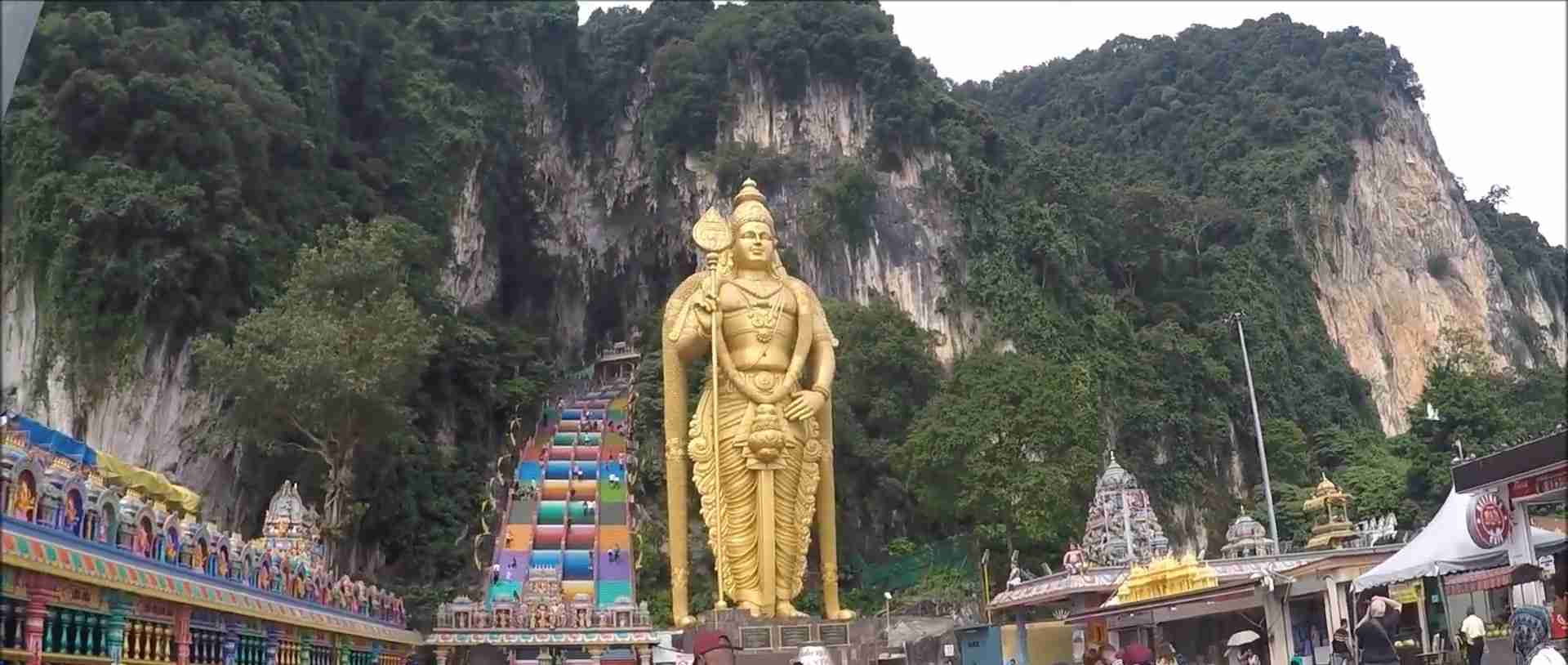
- Architectural Iconography: The 272 colorful concrete steps, vibrant rainbow-painted since 2018, lead to the Cathedral Cave with its 100-meter-high natural ceiling creating a divine architectural space
People Also Ask About Batu Caves
What Makes Batu Caves Sacred to Hindus?
Batu Caves holds profound religious significance as one of the most important Hindu temples dedicated to Lord Murugan outside India. The site’s sanctity derives from the main cave entrance’s natural resemblance to a vel (divine spear), which inspired K. Thamboosamy Pillai to establish a shrine here in 1891. According to Hindu mythology, Lord Murugan wielded this sacred spear to defeat the demon Surapadman, symbolizing the triumph of good over evil. The Tamil name Pathu malai (ten hills) reflects the spiritual importance of this limestone outcrop in Tamil Hindu tradition.
The caves serve as the focal point for Thaipusam, the annual festival commemorating Lord Murugan’s victory, where devotees undertake extreme acts of devotion including carrying ornate kavadis (ceremonial burdens) and performing vel piercing rituals. The presence of the 42.7-meter golden Murugan statue, consecrated shrines within the Cathedral Cave, and the continuous worship since 1892 have transformed Batu Caves into a living pilgrimage destination where spiritual practices dating back centuries remain vibrantly active.
How Old Are the Limestone Formations at Batu Caves?
The limestone formations comprising Batu Caves formed approximately 400 million years ago during the Devonian geological period. These ancient karst structures developed through the gradual accumulation of marine sediments when the region was submerged beneath a shallow tropical sea. Over millions of years, tectonic forces uplifted these sedimentary layers, while water percolation and chemical weathering carved the intricate cave systems visible today.
The 325-meter-tall mogote (isolated limestone hill) represents one of the oldest exposed limestone formations in the Malay Peninsula. Speleothems including stalactites, stalagmites, flowstones, and cave pearls formed through calcium carbonate deposition as water filtered through the limestone, creating spectacular natural sculptures within the caverns. Archaeological evidence indicates the caves provided shelter for the indigenous Temuan people (Orang Asli) for centuries before modern habitation, demonstrating their enduring geological stability.
Why Is There a Giant Golden Statue at the Entrance?
The magnificent 42.7-meter (140-foot) golden statue of Lord Murugan standing at the Batu Caves entrance was unveiled in January 2006 after three years of construction. Made from reinforced concrete and covered in 300 liters of gold paint requiring 1,550 cubic meters of concrete and 250 tons of steel bars, this monumental sculpture ranks as the second-tallest Murugan statue in the world (after a statue in Nepal) and the tallest statue of any kind in Malaysia.
The statue’s placement guards the sacred entrance to the Temple Cave, symbolizing Lord Murugan’s role as protector and divine warrior. His traditional iconography depicts him holding a vel (spear) in his right hand, representing the weapon gifted by his mother Parvati to defeat demons. The statue’s imposing presence welcomes the millions of pilgrims and visitors who ascend the 272 steps annually, serving as both a religious icon and an architectural landmark visible across the surrounding landscape. The gold coloring represents purity, divinity, and the radiant power associated with this beloved deity in Tamil Hindu tradition.
What Is the Thaipusam Festival at Batu Caves?
Thaipusam is a Tamil Hindu festival celebrated on the full moon day of the Tamil month of Thai (January-February) when the constellation Pusam reaches its highest position. At Batu Caves, this annual celebration has grown into the largest Thaipusam observance outside India, attracting 1.2 to 2.5 million devotees and spectators. The festival commemorates Lord Murugan’s receipt of the divine vel from his mother Parvati and his subsequent victory over the demon Surapadman.
The celebration centers on kavadi rituals, where devotees carry physical burdens as acts of penance, thanksgiving, or petition for divine assistance. Preparations include 48 days of vegetarian diet, fasting, celibacy, and prayer. The main procession begins at the Sri Mahamariamman Temple in Kuala Lumpur, with a 350-kilogram silver chariot carrying Murugan’s idol traveling 15 kilometers to Batu Caves. Devotees perform kavadi aattam (burden dance), carry ornate kavadis weighing up to 30 kilograms, and undergo vel piercing where skewers pierce tongues, cheeks, and skin. After ritual bathing in the Sungai Batu River, participants ascend the 272 steps to offer prayers and milk to Lord Murugan, completing their spiritual pilgrimage.
Extended multi-day tours – 5+ days
Featured Kuala Lumpur Multi-Day Tour Packages
7 days
7 Day Best of Kuala Lumpur Attractions
- ✓ Comprehensive Kuala Lumpur tour
- ✓ Expert local guides included
- ✓ All accommodation arranged
- ✓ Transportation provided
5 days
5 Days Through Malaysia: Experience KL, Malacca & Port Dickson
- ✓ Booking needs min. 2 travelers
3 days
Delights of Ipoh
- ✓ Booking needs min. 2 travelers

4 days
Wild Taman Negara Discovery – 4 days
- ✓ Comprehensive Kuala Lumpur tour
- ✓ Expert local guides included
- ✓ All accommodation arranged
- ✓ Transportation provided
Multi-day tour packages powered by TourRadar. Prices and availability subject to change.
Introduction to Batu Caves: Malaysia’s Sacred Limestone Sanctuary
Batu Caves stands as one of Southeast Asia’s most remarkable convergences of natural wonder and spiritual devotion, where 400-million-year-old limestone cliffs cradle an active Hindu temple complex that has served as a pilgrimage destination for over 130 years. Located just 13 kilometers north of Kuala Lumpur in Gombak, Selangor, this towering 325-meter karst formation rises dramatically from the tropical rainforest, its ancient caverns transformed into sacred spaces dedicated to Lord Murugan, the Tamil Hindu god of war and spiritual liberation.
The site’s name derives from “batu,” the Malay word for rock, while the Sungai Batu (Batu River) flows nearby, giving the locale its distinctive identity. In Tamil, the complex is known as Pathu malai (ten hills), reflecting the spiritual significance of the limestone outcrop. The indigenous Temuan people, a tribe of Orang Asli (Malaysia’s aboriginal inhabitants), used these caves as shelters for centuries before the arrival of Chinese guano miners in the 1860s and the eventual establishment of Hindu worship in the late 19th century.
Today, Batu Caves encompasses a complex cave system featuring four major cave formations with multiple interconnected chambers, spanning a network of 20 recognized caves. The Temple Cave (also called Cathedral Cave) forms the centerpiece, accessed via the iconic 272 rainbow-colored concrete steps that lead to a magnificent natural chamber with a 100-meter-high arched ceiling. Natural openings in the limestone roof allow sunlight to pour into the sacred space, creating an ethereal atmosphere that enhances the spiritual experience for the thousands of daily visitors and the millions who arrive during the annual Thaipusam festival.
The transformation of Batu Caves from a natural geological formation into one of the most important Hindu shrines outside India represents a unique cultural evolution. American naturalist William Hornaday brought international attention to the caves in 1878, but it was K. Thamboosamy Pillai, a prominent Tamil trader and community leader, who recognized the spiritual potential of the main cave entrance. Its resemblance to a vel (the divine spear of Lord Murugan) inspired him to establish a temple here in 1891, fundamentally changing the site’s destiny.
Beyond its religious importance, Batu Caves serves as a critical biodiversity hotspot. The limestone cave ecosystem supports 269 species of vascular plants including 56 calciphiles (calcium-loving species), 21 species of bats, and endemic creatures like the trapdoor spider Liphistius batuensis. The complex also provides habitat for long-tailed macaques, numerous cave-dwelling insects, and specialized flora adapted to the unique microclimate created by the limestone formations.
While designated as a Malaysian National Heritage Site in 2012, Batu Caves has not achieved UNESCO World Heritage status. The Malaysian Heritage Department determined that modern commercial developments surrounding the caves, including shops, parking facilities, and contemporary structures, compromise the site’s harmony with its 400-million-year-old natural environment and historical context. Despite this, the complex remains one of Malaysia’s most visited cultural attractions, drawing domestic worshippers and international tourists who come to witness the spectacular fusion of geological majesty, architectural devotion, and living religious practice.
Geological Formation and Natural History of Batu Caves
Batu Caves’ limestone formations originated approximately 400 million years ago during the Devonian period when the Malay Peninsula lay submerged beneath a warm, shallow tropical sea. Marine organisms including corals, mollusks, and other calcium-carbonate-secreting creatures accumulated their skeletal remains on the seafloor, gradually forming thick layers of sedimentary deposits that would eventually transform into limestone rock through compaction and chemical processes over geological time.
Tectonic activity associated with the collision of the Indian and Eurasian plates caused these ancient seabed deposits to uplift, exposing the limestone to tropical weathering conditions. The karst topography characteristic of Batu Caves developed through a process called karstification, where slightly acidic rainwater containing dissolved carbon dioxide percolated through fractures and fissures in the limestone. This chemical weathering gradually dissolved the calcium carbonate, enlarging cracks into tunnels and eventually carving the massive caverns visible today.
The 325-meter-tall mogote (isolated limestone hill) represents a classic tropical tower karst formation, where differential erosion removed softer surrounding rock while leaving the more resistant limestone core standing. This vertical limestone tower contains a complex network of interconnected cave systems, with 20 recognized caves including four major formations: the Temple Cave (Cathedral Cave), Dark Cave, Ramayana Cave, and Cave Villa. Each cave system developed at different levels corresponding to ancient water tables, creating a multi-story subterranean architecture.
Speleothem Formation and Cave Structures
The interior chambers of Batu Caves feature spectacular speleothems (cave formations) created through ongoing calcium carbonate deposition. As mineral-rich water drips from cave ceilings, it deposits calcite in concentric layers, forming hanging stalactites that grow downward at rates of approximately 0.1 to 10 millimeters per century depending on water flow and mineral concentration. Where drips hit the cave floor, corresponding stalagmites grow upward, occasionally meeting their descending counterparts to create complete columns.
Flowstones develop where thin sheets of water cascade down cave walls, leaving rippling curtains of calcite that resemble frozen waterfalls. Cave pearls form in shallow pools where calcite accretes around small nuclei (such as grains of sand), creating smooth, spherical deposits through constant water agitation. Scallops—curved erosional features on cave walls—indicate ancient water flow patterns, providing geologists with evidence of the cave system’s hydrological evolution.
The Cathedral Cave’s magnificent 100-meter-high arched ceiling represents one of Malaysia’s most impressive natural chambers. Natural openings in the limestone roof, created where surface weathering broke through to the cave below, allow tropical sunlight to penetrate the cavern, supporting unique plant communities adapted to the low-light, high-humidity environment. These light wells transformed what would have been completely dark chambers into naturally illuminated sacred spaces, contributing to the site’s appeal for religious establishment.
Biodiversity and Ecological Significance
Batu Caves functions as a critical biodiversity hotspot within the limestone hill ecosystems of the Malay Peninsula. The complex supports 269 species of vascular plants, with 56 species (21% of total flora) classified as calciphiles—plants specifically adapted to grow on calcium-rich limestone substrates. These specialized species include epiphytic orchids, ferns, and flowering plants that colonize limestone crevices and cave entrances where moisture and filtered light create favorable growing conditions.
The cave system hosts 21 bat species representing diverse ecological guilds including fruit bats, insectivorous bats, and cave-roosting specialists. These flying mammals play crucial ecosystem roles as pollinators, seed dispersers, and insect population regulators. Their guano (droppings) accumulates on cave floors, creating nutrient-rich substrates that support specialized cave fauna including a native cockroach species Pycnoscelus striatus that feeds exclusively on bat guano.
Endemic species found nowhere else on Earth include the trapdoor spider Liphistius batuensis, a primitive arachnid that constructs silk-lined burrows with hinged “trapdoors” to ambush prey. The Dark Cave system in particular shelters diverse cave-adapted invertebrates including haplotaxid worms, specialized beetles, flies, springtails, and other arthropods that evolved to thrive in the perpetual darkness and stable microclimate of deep cave environments.
Long-tailed macaques (Macaca fascicularis) have established troops around the cave complex, adapting to the constant human presence by becoming semi-dependent on visitor food offerings. While these intelligent primates add character to the site, they can be opportunistic, sometimes grabbing food or loose items from tourists. Additional vertebrate species include frogs, lizards, snakes, and numerous bird species that utilize cave entrances for roosting and nesting.
Historical Evolution: From Indigenous Shelter to Hindu Shrine
The earliest human occupation of Batu Caves dates to the indigenous Temuan people, a tribe of Orang Asli (Malaysia’s aboriginal inhabitants) who used the limestone caverns as temporary shelters long before modern settlement of the region. Archaeological evidence suggests these hunter-gatherers sought refuge in the caves during monsoon rains and possibly used them for ritual purposes, though extensive documentation of this pre-colonial period remains limited.
The first documented commercial exploitation of Batu Caves began in the 1860s when Chinese settlers recognized the economic value of guano (bat droppings) accumulated on cave floors. Rich in nitrogen, phosphorus, and potassium, guano served as valuable fertilizer for agricultural operations. Chinese miners systematically harvested these deposits, fundamentally altering the cave ecosystems and bringing the site into broader awareness within the colonial economy of British Malaya.
William Hornaday and International Recognition
American naturalist William Temple Hornaday visited Batu Caves in 1878 during his zoological expeditions through Southeast Asia. His written accounts and scientific documentation brought international attention to the limestone formations’ natural history significance, describing the caves’ geological features and biodiversity to Western scientific audiences. Hornaday’s reports helped establish Batu Caves as a site of natural history interest beyond its local context, though religious transformation would soon supersede scientific study as the site’s primary identity.
K. Thamboosamy Pillai and the Foundation of Hindu Worship
The transformation of Batu Caves into a Hindu shrine resulted from the vision of K. Thamboosamy Pillai (1850-1902), a prominent Tamil trader, community leader, and government contractor who had risen to become the acknowledged head of the Tamil community in British Malaya. Born in Singapore and educated at Raffles Institution, Thamboosamy came to Selangor in 1875, where he served in government positions before entering private business, eventually partnering with Chinese mining magnate Loke Yew in tin mining operations.
Thamboosamy recognized the spiritual needs of the growing Tamil workforce brought to Malaya for railway construction and public works. In 1873, he had already founded the Sri Mahamariamman Temple in Kuala Lumpur, initially as a family shrine that later opened to public worship. When he discovered Batu Caves in the 1880s, the main cave entrance’s natural shape—resembling a vel or divine spear wielded by Lord Murugan—inspired him to establish a shrine dedicated to this beloved Tamil deity.
In 1888, Thamboosamy installed a sacred vel within the main cave, marking the beginning of Hindu worship at the site. By 1891, he had formally established the Sri Subramaniar Swamy Temple (Subramaniar being another name for Murugan), complete with consecrated idols and religious infrastructure. This dedication transformed Batu Caves from a natural curiosity into a sacred destination for Tamil Hindus throughout Malaya.
Establishment of Thaipusam Celebrations
In 1892, Thamboosamy organized the first Thaipusam festival at Batu Caves, inaugurating an annual tradition that would grow into one of the largest Hindu celebrations outside India. Devotees carried kavadis (ceremonial burdens) and paal kudams (milk pots) from Kuala Lumpur to the cave temple, establishing the pilgrimage route still followed today. The festival’s spectacular displays of devotion—including body piercing, trance states, and elaborate kavadi structures—quickly attracted attention throughout British Malaya.
Thamboosamy’s promotion of Thaipusam at Batu Caves served multiple purposes: reinforcing Tamil Hindu cultural identity in a colonial diaspora context, creating a unifying focal point for the dispersed Tamil community, and establishing Murugan worship as central to Tamil religious life in Southeast Asia. His death in 1902 came just a decade after founding the Batu Caves temple tradition, but his legacy persisted through institutional structures that ensured the site’s continued religious importance.
Infrastructure Development and Accessibility Improvements
Initially, pilgrims reached the Temple Cave only by climbing the steep natural slope of the limestone hill, a challenging ascent that limited accessibility. In 1920, wooden steps were installed to facilitate access, making the pilgrimage somewhat easier for devotees of all ages and physical conditions. These timber stairs served for a decade before showing significant wear from constant use and tropical weathering.
In 1930, planners decided to replace the deteriorating wooden structure with permanent concrete stairs, positioning them on the southern side of the cave complex where the gradient proved most manageable. Construction completed in 1940, creating the 272 concrete steps that remain the primary access route to the Temple Cave. These stairs climb approximately 100 vertical meters, with each step representing a symbolic spiritual progression toward the divine shrine above.
In August 2018, the temple committee undertook a controversial beautification project, painting the 272 steps in vibrant rainbow colors with each section featuring different hues. This colorful transformation created one of Malaysia’s most photographed landmarks but also sparked debate among heritage authorities who felt the modern paint job compromised the site’s historical character. The Malaysian Heritage Department expressed concerns about changes made without proper approval, highlighting tensions between living religious practice and heritage conservation principles.
The Golden Murugan Statue
The most dramatic modern addition to Batu Caves came in 2006 with the unveiling of the colossal golden statue of Lord Murugan. This 42.7-meter (140-foot) monument required three years of construction, consuming 1,550 cubic meters of concrete, 250 tons of steel reinforcement bars, and 300 liters of gold paint. The project cost several million ringgit and involved sculptors and engineers working to create Malaysia’s tallest statue.
The statue depicts Lord Murugan in traditional iconography: standing in a powerful pose holding his divine vel (spear), with detailed ornamentation including his sacred crown, jewelry, and the peacock mount (vahana) at the base. The golden coloring symbolizes divine radiance and purity while ensuring visibility from great distances. The statue immediately became an iconic landmark, appearing in countless photographs and tourism materials representing both Batu Caves specifically and Malaysian cultural diversity more broadly.
Temple Cave: The Sacred Heart of Batu Caves
The Temple Cave, also called Cathedral Cave, represents the spiritual and architectural centerpiece of the Batu Caves complex. This massive natural chamber, accessed via the 272 colorful concrete steps, rises 100 meters from floor to ceiling, creating one of the most spectacular religious spaces in Southeast Asia. Natural openings in the limestone roof allow tropical sunlight to penetrate the cavern, illuminating the sacred shrines within and creating dramatic light effects that shift throughout the day.
The cave’s interior houses the Sri Subramaniar Swamy Temple dedicated to Lord Murugan, featuring multiple shrines, altars, and religious icons arranged within the natural rock formations. Devotees ascend the steep stairs barefoot as an act of respect and humility, pausing at intervals to rest while contemplating the spiritual significance of their pilgrimage. The climb itself becomes a meditative practice, with each step representing progress toward divine connection.
Architectural and Spiritual Features
Upon entering the Cathedral Cave, visitors encounter a vast limestone chamber where stalactites hang from the ceiling like natural cathedral spires while stalagmites rise from the floor. The main Murugan shrine occupies the most prominent position, decorated with flowers, incense, and offerings from devotees. Smaller shrines dedicated to other Hindu deities including Ganesha, Durga, and various manifestations of Shiva dot the cave walls, creating a comprehensive Hindu worship space.
The natural acoustics of the limestone chamber amplify chanting, prayers, and devotional music, creating an immersive auditory experience that enhances the spiritual atmosphere. During festivals, the cave resonates with the sounds of nadaswaram (traditional wind instruments), tavil (percussion), and thousands of voices reciting sacred verses. The combination of visual grandeur, acoustic resonance, and the palpable devotion of worshippers creates a multisensory religious experience unique to this geological setting.
Hindu priests maintain the shrines daily, performing abhishekam (ritual bathing of deities), arati (light offering ceremonies), and archana (prayer services) according to Tamil temple traditions. Devotees participate by offering coconuts (symbolizing ego dissolution), camphor (representing purity), and flowers (signifying devotion). During Thaipusam, the cave becomes a focal point for kavadi offerings, with devotees presenting their ceremonial burdens to Lord Murugan after completing their arduous climb.
The 272 Rainbow Steps
The ascent to the Temple Cave via the 272 steps represents both a physical and spiritual journey. Each step climbs approximately 36.8 centimeters vertically, creating a total elevation gain of roughly 100 meters from the base to the cave entrance. The steep incline challenges visitors’ stamina, particularly in Malaysia’s tropical heat and humidity, making the climb a test of physical endurance that mirrors the spiritual discipline required in Hindu practice.
The 2018 rainbow painting transformed these utilitarian concrete stairs into a vibrant spectacle, with colors transitioning through the spectrum from red at the bottom through orange, yellow, green, blue, and purple toward the top. While some view this as an inspired beautification celebrating the peacock (Lord Murugan’s mount, known for vibrant plumage), others consider it an unfortunate modernization that detracts from the site’s historical authenticity. The temple committee defended the project as an annual maintenance activity that attracts tourists while honoring Murugan through color symbolism.
Long-tailed macaques inhabit the stairway area, adding wildlife encounters to the ascent experience. These intelligent primates have learned to approach visitors for food, though authorities discourage feeding them as it promotes dependency and aggressive behavior. Visitors should secure loose items including bags, bottles, and cameras, as macaques occasionally grab objects that catch their attention.
Ramayana Cave: Hindu Epic in Sculpture
The Ramayana Cave presents a visual narrative of the ancient Hindu epic through elaborate sculptures and colorful artwork depicting scenes from Lord Rama’s legendary quest. This separate cavern system, requiring a modest entrance fee of RM 5 for all visitors, offers a more intimate and less crowded experience compared to the free-entry Temple Cave, making it attractive to those seeking deeper engagement with Hindu mythology beyond the main tourist routes.
The cave interior features dozens of life-sized and larger-than-life statues arranged in dioramas that tell the Ramayana story chronologically. Visitors encounter depictions of key episodes: Rama’s exile to the forest, Sita’s abduction by the demon king Ravana, the alliance with Hanuman and the monkey army, the construction of a bridge to Lanka, the great battle, and Rama’s eventual victory and return to Ayodhya. Psychedelic LED lighting illuminates the sculptures, creating dramatic visual effects that appeal to contemporary aesthetic sensibilities.
Notable Sculptural Elements
The cave entrance features a massive statue of Kumbhakarna, Ravana’s brother famous in Hindu mythology for his extraordinary sleeping habits. The sculpture humorously depicts attempts to wake this sleeping giant using arrows, cymbals, and various noisy instruments—a scene that delights visitors while illustrating a beloved episode from the epic. Inside the cave network, visitors can climb stairs to a shrine featuring a naturally occurring lingam (a stalagmite formation sacred in Shaivite tradition), representing the integration of natural cave features with religious iconography.
The Ramayana Cave serves important educational purposes, introducing visitors unfamiliar with Hindu mythology to one of the tradition’s foundational epics. For Hindu devotees, the sculptural tableaux provide focal points for meditation on dharmic principles illustrated through Rama’s example: righteousness, devotion, courage, and adherence to duty despite personal suffering. The cave thus functions simultaneously as tourist attraction, educational exhibit, and devotional space.
Cave Villa: Art Gallery and Controversial Animal Exhibits
The Cave Villa complex sits at the base of the main limestone hill, comprising the Art Gallery Cave and Museum Cave. This attraction charges separate admission fees: RM 15 for non-Malaysians and RM 7 for Malaysian citizens. The exterior features an ornamental koi pond with cascading water features and decorative landscaping, creating a pleasant approach to the cave entrance.
Inside, cave walls display vibrant paintings and sculptures depicting Hindu deities, mythological scenes, and religious iconography. The artwork covers available limestone surfaces in densely packed visual narratives, creating an immersive environment of religious imagery. For visitors interested in Hindu artistic traditions, the Cave Villa provides accessible examples of contemporary devotional art styles common in South Indian and Southeast Asian temple decoration.
Animal Welfare Concerns
Cave Villa has attracted significant controversy and negative reviews due to caged animals kept in conditions that many visitors and animal welfare advocates consider inadequate. Reports describe various wildlife including reptiles, birds, and small mammals confined in small enclosures within the cave environment. Numerous travel reviewers express regret at paying the entrance fee, feeling their money supports animal mistreatment rather than legitimate conservation or education efforts.
Ethical travelers increasingly avoid Cave Villa specifically because of these animal welfare issues, choosing instead to focus their visit on the Temple Cave, Ramayana Cave, and natural features of Batu Caves. Those who prioritize animal welfare should consider skipping this attraction entirely, as attendance financially supports practices many find objectionable. The contrast between the Cave Villa’s commercial approach and the authentic religious experience of the Temple Cave remains stark.
Dark Cave: Conservation and Eco-Tourism
The Dark Cave represents a different approach to Batu Caves’ resources, prioritizing conservation and environmental education over religious tourism. This extensive cave system extends deep into the limestone formation, creating a pristine underground ecosystem that has remained largely undisturbed by the religious and tourist development surrounding the Temple Cave.
Previously, the Malaysian Nature Society (MNS) managed educational conservation tours through the Dark Cave, offering visitors opportunities to observe unique cave-dwelling species in their natural habitat. The cave system shelters rare and endemic invertebrates including the trapdoor spider Liphistius batuensis, specialized beetles adapted to perpetual darkness, and extensive bat colonies that roost in the deepest chambers. The stable temperature, high humidity, and complete darkness create ideal conditions for these specialized cave fauna.
Current Closure and Future Plans
The Dark Cave has been closed to public access for several years, halting both conservation tours and adventure tours that previously operated. No official reopening date has been announced, though reports suggest the Malaysian Nature Society may be involved in redevelopment plans potentially connected to Visit Selangor Year 2025 tourism initiatives. Until an official announcement provides updated information, visitors should not expect Dark Cave access as part of their Batu Caves visit.
When operational, the Dark Cave offered 45-minute guided conservation tours focusing on cave ecology, geology, and the importance of limestone ecosystem preservation. These educational experiences provided valuable alternatives to purely religious or tourist-oriented visits, appealing to school groups, nature enthusiasts, and visitors interested in speleology and biodiversity conservation.
Thaipusam Festival: Living Hindu Tradition
Thaipusam represents the pinnacle of religious activity at Batu Caves, transforming the site annually into the largest Hindu festival celebration outside India. This Tamil festival honors Lord Murugan, commemorating his receipt of the divine vel (spear) from his mother Parvati and his subsequent victory over the demon Surapadman. The festival occurs on the full moon day of the Tamil month of Thai (typically January or February in the Gregorian calendar) when the star Pusam reaches its zenith.
At Batu Caves, Thaipusam attracts between 1.2 and 2.5 million devotees and spectators, creating one of Malaysia’s most spectacular cultural events. The celebration combines intense religious devotion with elaborate processions, traditional music, and ritual practices that visually demonstrate the depth of Tamil Hindu spiritual commitment. For three days surrounding the full moon, Batu Caves becomes the focal point of Malaysian Tamil identity and religious expression.
Preparation and Purification Rituals
Devotees preparing to carry kavadis or perform vel piercing undertake rigorous 48-day purification periods before Thaipusam. This intensive preparation includes strict vegetarian diet, abstaining from alcohol and tobacco, maintaining celibacy, daily cold-water bathing, sleeping on floors (renouncing comfort), and extensive prayer and meditation. Many devotees visit temples daily, recite mantras, and gradually train their bodies and minds for the physical and spiritual demands of the festival.
The fasting intensifies in the final days before Thaipusam, with many devotees consuming only one vegetarian meal daily. On Thaipusam eve, participants maintain complete fasts, entering the festival day in a state of physical emptiness believed to facilitate spiritual receptivity and divine connection. This preparation transforms the body into a purified vessel worthy of bearing sacred burdens and receiving Lord Murugan’s blessings.
The Silver Chariot Procession
Thaipusam festivities begin two days before the main event with the Silver Chariot procession from the Sri Mahamariamman Temple in Kuala Lumpur’s Chinatown. This ornate chariot, weighing 350 kilograms and crafted from precious metals, carries consecrated idols of Lord Murugan flanked by his consorts Valli and Deivanai. The procession travels approximately 15 kilometers (some sources cite 11 kilometers) from central Kuala Lumpur to Batu Caves, stopping at key temples along the route for ceremonies and offerings.
Thousands of devotees accompany the chariot, chanting prayers, playing traditional instruments including nadaswaram (wind instruments) and tavil (drums), and creating an atmosphere of collective devotion. The procession moves slowly, sometimes taking many hours to complete the journey as participants stop for ritual observances and to allow the entire community to witness Murugan’s symbolic arrival at his sacred abode in the limestone caves.
Kavadi Aattam: The Burden Dance
The central ritual of Thaipusam is kavadi aattam (burden dance), where devotees carry physical burdens as acts of penance, thanksgiving, or petition for divine assistance. The term “kavadi” derives from Tamil meaning “burden” or “sacrifice,” representing the devotee’s willingness to endure suffering to balance spiritual debts or seek blessings for loved ones in need of healing or divine intervention.
The simplest form of kavadi is the paal kudam (milk pot), where devotees—particularly women—balance sealed pots containing milk on their heads while walking barefoot to Batu Caves. This milk will be poured over the Murugan deity in the Temple Cave as a purifying offering. Other devotees carry tender coconuts, sugarcane stalks, or flower garlands as symbolic offerings requiring sustained physical effort during the pilgrimage.
Elaborate kavadis represent the most visually spectacular aspect of Thaipusam. These structures consist of semicircular wooden or steel frames attached to a cross-piece that balances on the devotee’s shoulders. Kavadis are decorated with peacock feathers (symbolizing Murugan’s mount), flowers, colored paper, gold leaf, and religious imagery. Some kavadis reach two meters tall and weigh up to 30 kilograms, requiring tremendous strength and endurance to carry, especially while climbing the 272 steps to the Temple Cave.
Vel Piercing and Mortification Practices
The most extreme expressions of Thaipusam devotion involve vel kavadi, where devotees pierce their skin with metal skewers and hooks as acts of ultimate surrender and spiritual transcendence. Small vel (miniature spears) pierce through cheeks, connecting one side of the face to the other, while longer skewers may pierce through tongues, preventing speech and enforcing meditative silence. Additional hooks attach to skin on the chest, back, and arms, sometimes supporting hanging fruits (especially limes) or connecting to the kavadi structure itself.
Contrary to what observers might expect, devotees report feeling little to no pain during piercing, attributing this to entering trance states (arul vaku) where divine energy flows through them, separating consciousness from physical sensation. Preparation through weeks of meditation, fasting, and prayer facilitates this altered state. Vibuthi (sacred ash) applied to piercing sites is believed to have antiseptic properties while also carrying spiritual significance as a substance blessed by Lord Shiva.
The piercing ritual symbolizes multiple theological concepts: the victory of spirit over flesh, Lord Murugan’s divine spear piercing the demon (representing ego and ignorance), and the devotee’s willingness to sacrifice comfort in pursuit of spiritual liberation. After completing their pilgrimage and offerings, priests remove the skewers, and devotees report the wounds heal remarkably quickly without significant scarring, a phenomenon they interpret as Lord Murugan’s blessing.
The Pilgrimage Journey
On Thaipusam morning, devotees gather at the base of Batu Caves before sunrise. Many have walked through the night from Kuala Lumpur, accompanying the silver chariot or following the traditional pilgrimage route. Before ascending the stairs, participants perform ritual ablutions in the Sungai Batu River, washing away impurities and preparing spiritually for the final approach to the temple.
The climb up the 272 steps, challenging under normal circumstances, becomes an extraordinary test of will for kavadi bearers, especially those pierced or carrying heavy structures. Family members and supporters accompany devotees, offering encouragement, water, and physical assistance. Some participants enter visible trance states, dancing rhythmically despite their burdens, swaying to drumbeats, or moving in ways that seem to transcend normal physical limitations. These manifestations of arul vaku (divine possession) are understood as moments when Lord Murugan’s energy flows directly through the devotee.
The ascent may take hours as the massive crowd moves slowly up the narrow stairway. Supporters massage tired legs, offer water to parched lips, carry chairs for rest stops, and chant “Vel, vel!”—invoking Murugan’s spear and its victorious power. The communal support system transforms the pilgrimage into a collective act of devotion where entire families participate in one member’s spiritual journey.
Temple Rituals and Completion
Upon reaching the Temple Cave, devotees present their kavadis at Murugan’s shrine. Priests pour the milk brought in paal kudams over the deity’s icon in abhishekam (sacred bathing), purifying the divine image while transferring the devotee’s offering to Lord Murugan. Those carrying elaborate kavadis circumambulate the shrine before priests ceremonially remove the structures and extract vel piercings, marking the fulfillment of vows.
Devotees break their fasts by consuming prasadam (blessed food offerings), particularly panchamrutam (a sweet mixture of five ingredients: milk, yogurt, honey, ghee, and sugar). This sacred meal transitions participants back to normal consciousness while sealing the spiritual benefits of their pilgrimage. Many devotees report profound emotional experiences at this moment—tears, joy, relief, and a sense of spiritual accomplishment after months of preparation and hours of physical ordeal.
Cultural Significance and Contemporary Practice
Thaipusam at Batu Caves serves multiple cultural functions beyond purely religious observance. For Malaysia’s Tamil community, the festival represents the most important annual expression of cultural identity, bringing together Tamils from across the country and international visitors from India, Singapore, Sri Lanka, and the global Tamil diaspora. The shared ritual creates powerful bonds of community solidarity and cultural continuity across generations.
The festival also functions as an intergenerational transmission mechanism, where young Tamils witness elders performing ancient rituals, learning the mythological narratives, and absorbing cultural values embedded in the practice. Children accompany parents on pilgrimages, gradually progressing from observers to participants, ensuring the tradition’s perpetuation despite modernization and secularization pressures affecting contemporary Malaysian society.
For non-Hindu observers, Thaipusam offers a window into living religious tradition where ancient practices continue with undiminished intensity. The spectacular visual elements—colorful kavadis, dramatic piercings, massive crowds, vibrant decorations—attract tourists and photographers, though visitors are expected to maintain respectful distance and avoid intrusive documentation that might disturb devotees’ spiritual concentration.
Cultural and Religious Significance of Lord Murugan
Lord Murugan holds special importance in Tamil Hindu tradition as the deity most closely associated with Tamil cultural identity. Also known as Kartikeya, Subrahmanya, or Skanda in different regional traditions, Murugan represents the divine warrior who defeated demons and protects devotees from evil forces both external and internal. Tamil literature, including ancient Sangam poetry, extensively celebrates Murugan’s exploits, establishing him as a distinctively Tamil deity whose worship defines Tamil Hindu practice.
According to Hindu mythology, Murugan was created by Lord Shiva to defeat the demon Surapadman, whose tyranny threatened cosmic order. Parvati (Shiva’s consort) fashioned the divine vel (spear) and granted it to Murugan, empowering him with the weapon needed to vanquish evil. During the cosmic battle, Murugan split Surapadman in two with his vel; the demon’s halves transformed into a peacock (mayil) and a rooster, which Murugan adopted as his mount and banner respectively.
Murugan Iconography and Symbolism
Traditional representations of Murugan depict a youthful, handsome deity with distinctive iconographic elements. He typically holds the vel (spear) in his right hand, symbolizing divine power to pierce ignorance and destroy evil. His mount, the peacock, represents beauty, pride transformed into devotion, and the destruction of harmful tendencies (as peacocks consume snakes). The rooster emblem signifies awakening and the call to spiritual vigilance.
Murugan is often shown with six faces (Shanmukha), representing comprehensive perception in all directions and the deity’s ability to see all aspects of reality simultaneously. His twelve arms hold various weapons and emblems, though simplified representations show him with two or four arms. He wears elaborate jewelry, a sacred thread (yajnopavita), and a crown befitting his status as divine warrior and protector.
In Tamil theology, Murugan represents several interrelated concepts: perpetual youth and vitality, martial prowess, philosophical wisdom (as guru to his father Shiva in some traditions), and the path to mukti (spiritual liberation). Devotees approach Murugan for assistance with life challenges, healing illnesses, overcoming obstacles, and achieving spiritual awakening. His temples, including Batu Caves, function as pilgrimage destinations where devotees seek blessings through intensive devotional practices.
The Six Abodes of Murugan
Tamil tradition identifies six primary arupadai veedu (abodes) where Murugan’s divine presence manifests most powerfully, all located in Tamil Nadu, India: Thiruparankundram, Thiruchendur, Palani, Swamimalai, Thiruthani, and Pazhamudircholai. These ancient temples form a pilgrimage circuit that devout Tamils aspire to complete during their lifetimes.
Batu Caves, while not one of the traditional six abodes, has become recognized as a major Murugan shrine for the Tamil diaspora in Southeast Asia. Some devotees refer to it as the seventh abode or as the primary Murugan temple outside India, highlighting its importance for Tamils living beyond their ancestral homeland. The establishment of Batu Caves temple enabled Tamil communities in Malaysia, Singapore, and the broader region to maintain direct spiritual connection with Murugan without requiring long pilgrimages to India.
Practical Visitor Information
Batu Caves welcomes visitors daily, operating from opening hours that vary slightly by source but generally run from 6:00 or 7:00 AM until 9:00 PM. As an active Hindu temple, the site remains open every day of the year including public holidays, though visiting during Thaipusam requires special preparation due to extreme crowding. The complex is located 13 kilometers north of central Kuala Lumpur in Gombak district, easily accessible by multiple transportation modes.
Entrance Fees and Costs
The main Temple Cave (Cathedral Cave) requires no entrance fee, making this spectacular natural and religious site freely accessible to all visitors regardless of economic means. This free access aligns with Hindu temple traditions that emphasize making sacred spaces available to devotees without financial barriers. However, other areas within the Batu Caves complex charge separate admission fees.
Ramayana Cave charges RM 5 entrance for all visitors regardless of nationality, providing access to the sculptural narrative of the Hindu epic within a separate cave system. Cave Villa requires RM 15 for non-Malaysian visitors and RM 7 for Malaysian citizens, though many travelers now avoid this attraction due to animal welfare concerns. The Dark Cave remains closed indefinitely with no current entrance fee structure.
Parking costs RM 2 for visitors arriving by private vehicle. Public restrooms are available near the parking area, though visitors should carry small change (RM 0.50-1) as some facilities charge nominal fees. Drinking water vendors operate around the site, selling bottled water typically priced RM 2-3, essential for visitors undertaking the challenging 272-step climb in tropical heat.
Transportation Access
The most economical and efficient transportation to Batu Caves is the KTM Komuter train, which runs directly from KL Sentral (Kuala Lumpur’s main transportation hub) to Batu Caves station. Trains depart hourly with increased frequency during rush hours, taking approximately 25-30 minutes with fares around RM 2.60-4.30 depending on origin station. The Batu Caves station sits directly opposite the temple complex entrance, requiring only a short walk across the road.
RapidKL bus 11 runs from Bangkok Bank stop near Central Market in central Kuala Lumpur to Batu Caves, providing an alternative public transport option at comparable cost to the train, though journey times vary depending on traffic conditions. For visitors staying in other parts of Kuala Lumpur, checking which KTM Komuter stations are closest to accommodations may provide convenient access without requiring travel to KL Sentral first.
Private transportation via Grab (Malaysia’s dominant ride-hailing app) typically costs RM 45-60 from central Kuala Lumpur depending on traffic and exact pickup location. This provides door-to-door convenience and air-conditioned comfort but costs significantly more than public transport. Visitors arriving during Thaipusam should avoid private vehicles entirely, as traffic congestion makes roads nearly impassable and parking becomes impossible; the train offers the only practical access during the festival.
Dress Code Requirements
As an active Hindu temple and sacred religious site, Batu Caves enforces modest dress codes strictly. All visitors—regardless of religious affiliation—must cover shoulders and knees before ascending the stairs to the Temple Cave. Tank tops, sleeveless shirts, short skirts, short shorts, and clothing revealing midriff or cleavage are prohibited. These requirements apply equally to men and women, though enforcement sometimes focuses more heavily on female visitors.
Visitors arriving in inappropriate clothing must rent or purchase covering garments before being permitted to climb the stairs. Sarongs and shawls are available for rent at the base of the steps, typically costing a few ringgit, or can be purchased from vendors operating around the site. Bringing appropriate clothing from accommodations avoids this expense and potential embarrassment.
Footwear choice involves personal preference balanced against practical concerns. While no formal requirement mandates barefoot climbing, many Hindu devotees ascend without shoes as a mark of respect and humility when approaching sacred spaces. The concrete steps can become very hot under direct tropical sun, making barefoot climbing uncomfortable for those with sensitive feet. Sandals or lightweight shoes that can be easily removed if desired offer practical compromise. During Thaipusam, barefoot ascent is standard practice for most devotees.
Best Times to Visit
For visitors seeking quieter, more contemplative experiences of Batu Caves’ religious and natural significance, weekday mornings before 9:00 AM offer optimal conditions. Arriving early avoids the largest tour groups, reduces exposure to intense midday heat, and allows more peaceful appreciation of the Temple Cave’s spiritual atmosphere. The ascent proves significantly easier in morning coolness compared to afternoon heat when temperatures regularly exceed 30°C (86°F).
Weekend visits and public holidays bring substantially larger crowds of domestic tourists and worshippers, creating more congested conditions on the stairway and within the Temple Cave. While this bustling atmosphere demonstrates the site’s living religious importance, it may detract from visitor enjoyment if seeking tranquil reflection or photography without crowds.
Thaipusam represents the ultimate extreme: an unparalleled cultural spectacle attracting 1-2 million people but creating extraordinarily challenging conditions for casual visitors. Those specifically interested in witnessing this remarkable festival should prepare for dense crowds, extensive waiting times, limited facilities, intense heat, and sensory overload from constant music, chanting, and visual stimulation. Arriving before sunrise (4:00-5:00 AM) positions visitors to witness dawn rituals before peak crowding. Those seeking to appreciate Batu Caves’ architecture, natural beauty, or day-to-day religious practice should specifically avoid the Thaipusam period.
Safety Considerations
The primary safety concern at Batu Caves involves the long-tailed macaques that inhabit the area around the steps and cave entrances. These intelligent primates have learned to associate humans with food sources and may approach visitors aggressively, especially if they observe people eating or carrying visible food items. Macaques can snatch bags, water bottles, cameras, sunglasses, and other objects that attract their curiosity, sometimes climbing on visitors or displaying threatening behaviors if they perceive food opportunities.
Visitors should secure all belongings tightly, avoid feeding macaques under any circumstances, and maintain distance if monkeys approach. Displaying open food near the steps virtually guarantees macaque attention. While macaque encounters rarely result in serious injuries, bites and scratches can transmit diseases and require medical attention. Observing these wild animals from safe distances allows appreciating their natural behaviors without encouraging problematic human-wildlife interactions.
The 272-step climb poses physical demands, particularly for visitors with cardiovascular conditions, knee problems, or limited fitness. The stairs are steep and uneven in places, with no elevator or alternative access to the Temple Cave. Taking the ascent slowly, pausing frequently to rest, staying hydrated, and avoiding climbing during the hottest parts of the day (11:00 AM-3:00 PM) helps prevent heat exhaustion or physical strain. Visitors should assess their capabilities honestly before committing to the climb.
Petty theft remains a concern in crowded tourist areas. Keeping valuables secured in front-facing bags, maintaining awareness of surroundings, and avoiding displaying expensive jewelry or electronics reduces theft risk. During major events like Thaipusam, the dense crowds create opportunities for pickpockets, requiring extra vigilance.
Rock Climbing at Batu Caves
Beyond its religious and tourist dimensions, Batu Caves serves as an important rock climbing destination with approximately 160 established routes on the limestone cliffs surrounding the cave complex. The Damai caves area on the northeastern side of the formation offers routes scattered across vertical and overhanging limestone faces rising to 150 meters, providing climbers with diverse challenges suitable for various skill levels.
Limestone climbing presents distinctive characteristics compared to granite or sandstone. The rock surface offers excellent friction and numerous pockets, edges, and solution holes created by water erosion, though limestone can be sharp on hands and requires careful footwork. The tropical climate means the rock remains dry during non-rainy periods, though humidity affects conditions and climbers should time visits to avoid afternoon thunderstorms common in Malaysia’s equatorial climate.
Access to climbing routes typically requires coordination with local climbing companies that organize guided trips including equipment rental, safety oversight, and route instruction for those unfamiliar with the area. Some routes require abseiling (rappelling) to access starting points, while spelunking trips explore cave systems beyond the main tourist areas. The combination of technical climbing challenges, spectacular limestone formations, and proximity to Kuala Lumpur makes Batu Caves attractive to both local and international climbing communities.
Conservation Challenges and Heritage Status
Batu Caves’ designation as a Malaysian National Heritage Site in 2012 recognized its cultural, religious, and natural significance, theoretically providing protective frameworks for the limestone formations, cave ecosystems, and historical temple structures. However, the site faces ongoing conservation challenges that complicate heritage management and have prevented UNESCO World Heritage designation despite periodic advocacy for such recognition.
Development Pressures and Aesthetic Conflicts
Modern commercial development surrounding Batu Caves creates what heritage authorities characterize as visual disharmony with the 400-million-year-old natural environment. Parking lots, souvenir shops, food stalls, concrete pathways, and contemporary structures encroach on the limestone formation’s base, compromising the aesthetic integration of ancient geological features with historical religious architecture. From certain angles, commercial infrastructure dominates views more than the limestone cliffs themselves.
The 2018 rainbow painting of the 272 steps exemplified tensions between living religious practice and heritage conservation principles. The temple committee viewed the vibrant colors as beautification honoring Lord Murugan through peacock-inspired hues, while heritage authorities considered it unauthorized alteration of a historically significant structure requiring approval under the National Heritage Act 2005. This conflict highlighted fundamental disagreements about who controls sacred spaces: religious communities maintaining living traditions or government authorities protecting historical authenticity.
UNESCO World Heritage Assessment
Malaysia’s National Heritage Department determined in 2013 that Batu Caves does not fulfill UNESCO World Heritage criteria, explicitly stating that the site meets none of the ten criteria required for inscription. The International Council on Monuments and Sites (ICOMOS) Malaysia noted that while Batu Caves might have qualified for World Heritage status 50 years ago when the natural setting remained largely pristine, contemporary developments around the site have compromised its “outstanding universal value.”
Key obstacles to UNESCO designation include: the commercial complex at the base; modern shops and parking facilities; lack of harmonious integration between contemporary structures and the historical grand staircase; and modifications like the rainbow painting undertaken without proper heritage approval. ICOMOS representatives emphasized that the “entire physical space and environment and historical buildings such as the grand staircase leading up to the cave temple are not in harmony with the entire site.”
The temple committee has publicly stated indifference toward UNESCO status, with chairman Tan Sri R. Nadarajah commenting that “UNESCO has deemed Batu Caves unfit for their heritage list. We do not need the heritage status.” This position partly reflects frustration that National Heritage designation brought no funding for maintenance while imposing regulatory requirements on temple activities. The committee prioritizes functional religious use and tourist attraction over heritage conservation constraints, creating ongoing governance conflicts.
Environmental Impact of Mass Tourism
The presence of 1.5-2.5 million annual visitors, concentrated heavily during Thaipusam and weekends, creates significant environmental stress on the cave ecosystems. Foot traffic erodes cave surfaces, disturbs bat colonies, and introduces pollutants including litter, food waste, and human waste from inadequate sanitation facilities. The macaque population’s semi-dependence on tourist feeding disrupts natural foraging behaviors and creates human-wildlife conflict.
Lighting installations within the Temple Cave, necessary for safety and religious ceremonies, disrupt the natural darkness critical for cave-adapted species. LED lights introduce artificial photoperiods affecting insects, spiders, and other invertebrates whose life cycles evolved in complete darkness. Noise from crowds, amplified music, and loudspeakers during festivals disturbs bat roosting and breeding patterns, potentially driving sensitive species to abandon traditional cave sites.
Conservation efforts face challenges balancing biodiversity protection with religious freedom and economic benefits from tourism. The Dark Cave’s closure for redevelopment potentially reflects recognition that pristine cave systems require limiting human access to prevent irreversible ecological damage, though official announcements have not clarified conservation motivations for the shutdown.
Frequently Asked Questions
Is Batu Caves a UNESCO World Heritage Site?
No, Batu Caves is not a UNESCO World Heritage Site. The Malaysian National Heritage Department determined in 2013 that the site does not meet UNESCO criteria due to modern commercial development surrounding the limestone formation and structures that are not in harmony with the historical and natural environment. Batu Caves is, however, designated as a Malaysian National Heritage Site, a separate status granted by the Malaysian government in 2012 recognizing its national cultural and natural significance.
How Long Does It Take to Climb the 272 Steps?
Most visitors climb the 272 steps to the Temple Cave in 15-25 minutes under normal conditions, though timing varies significantly based on fitness level, heat tolerance, and crowding. The steep concrete stairs gain approximately 100 meters of elevation, creating a moderately challenging ascent, particularly in Malaysia’s tropical heat and humidity. During Thaipusam or peak tourist hours, dense crowds can extend climbing time to 30-45 minutes or longer. Taking the descent slowly with careful footing prevents slips on potentially steep or uneven sections.
Can I Visit Batu Caves During Thaipusam if I’m Not Hindu?
Yes, non-Hindu visitors may observe Thaipusam festivities at Batu Caves, and many tourists specifically visit during the festival to witness this remarkable cultural spectacle. However, visitors must maintain respectful behavior: dress modestly covering shoulders and knees, avoid obstructing devotees performing rituals, ask permission before photographing individuals (particularly during piercing or trance states), and recognize that this is an intensely sacred event for participants, not merely a tourist attraction. Arriving early morning (before 7:00 AM) provides better viewing positions before peak crowding. Be prepared for extreme crowds, limited facilities, intense heat, and sensory intensity from constant drumming, chanting, and visual stimulation.
Are There Monkeys at Batu Caves?
Yes, troops of long-tailed macaques inhabit the Batu Caves area, particularly around the base of the steps and cave entrances. These intelligent primates have adapted to human presence and may approach visitors, sometimes aggressively if they observe food or objects of interest. Never feed the macaques, as this encourages dependency and aggressive behavior. Secure all belongings including bags, water bottles, cameras, and sunglasses, which macaques may grab. Maintain safe distance from monkeys and do not attempt to touch or interact with them. While macaque encounters rarely result in serious injury, bites and scratches require medical attention due to disease transmission risk.
How Much Time Should I Plan for Visiting Batu Caves?
A basic visit to the Temple Cave alone typically requires 1.5-2 hours including the ascent, time inside the cave exploring shrines and architectural features, and descent. Adding the Ramayana Cave extends the visit by 30-45 minutes. Those interested in detailed exploration of multiple caves, photography, and leisurely appreciation of the site should allocate 3-4 hours. During Thaipusam, visitors should plan for significantly longer periods due to extreme crowding and the time required to witness the full scope of festival activities.
What Is the Best Way to Get to Batu Caves from Kuala Lumpur?
The KTM Komuter train from KL Sentral to Batu Caves station offers the most efficient, economical, and reliable transportation, taking approximately 25-30 minutes with fares around RM 2.60-4.30. Trains run hourly with increased frequency during rush periods. The station sits directly opposite the temple complex entrance across the main road. This public transport option avoids traffic congestion and parking challenges while costing a fraction of private transportation alternatives. During Thaipusam, the train is essentially the only practical access method as roads become impassable and parking impossible.
Can People with Mobility Issues Access the Temple Cave?
Unfortunately, no wheelchair-accessible route exists to the Temple Cave, which requires climbing the 272 concrete steps to reach. No elevator, escalator (despite 2024 plans for future installation), or alternative entrance provides accessible entry. The steep stairs with uneven sections pose challenges even for visitors with minor mobility limitations. However, ground-level attractions including the area around the base, the Murugan statue, Cave Villa, and Ramayana Cave entrance (though it also involves some stairs) offer partial Batu Caves experiences without requiring the full ascent.
What Wildlife Lives in the Batu Caves Ecosystem?
Batu Caves supports remarkable biodiversity despite tourism pressure. The cave system shelters 21 bat species including fruit bats and insectivorous bats whose guano sustains specialized cave ecosystems. Endemic species like the trapdoor spider Liphistius batuensis (found nowhere else on Earth) inhabit the cave environment alongside diverse invertebrates including specialized beetles, flies, springtails, mites, scorpions, and native cockroaches adapted to cave conditions. The surrounding limestone formation hosts 269 vascular plant species with 56 calciphiles specifically adapted to calcium-rich substrates. Long-tailed macaques, frogs, lizards, snakes, and numerous bird species utilize the caves and cliff faces for roosting and nesting.
Why Did K. Thamboosamy Pillai Choose Batu Caves for a Temple?
K. Thamboosamy Pillai, a prominent Tamil trader and community leader, recognized the main cave entrance’s striking resemblance to a vel (divine spear), the sacred weapon of Lord Murugan given by the goddess Parvati to defeat demons. This natural formation echoing Murugan’s primary iconographic symbol appeared to Thamboosamy as divine indication that the caves should serve as a Murugan shrine. The impressive limestone formations created a naturally sacred atmosphere befitting temple establishment, while the cave’s proximity to Kuala Lumpur (where Thamboosamy had already founded the Sri Mahamariamman Temple) made it accessible to the growing Tamil workforce in British Malaya. The combination of symbolic geological features, natural grandeur, and practical accessibility convinced Thamboosamy that Batu Caves represented the ideal location to establish Southeast Asia’s premier Murugan pilgrimage destination.
What Makes the Limestone Formations Special Geologically?
Batu Caves’ limestone formations are approximately 400 million years old, dating to the Devonian geological period, making them among the oldest exposed karst landscapes in Malaysia and Southeast Asia. The 325-meter-tall mogote (isolated limestone tower) formed through marine sediment accumulation when the region was submerged beneath a tropical sea, followed by tectonic uplift and millions of years of tropical weathering that carved the intricate cave systems. The resulting speleothems—stalactites, stalagmites, flowstones, and cave pearls—represent spectacular examples of calcium carbonate deposition creating natural sculptures. The cave network’s multiple levels correspond to ancient water tables, while natural light wells (openings in the cave roof) create the dramatically illuminated Cathedral Cave chamber. This combination of extreme geological age, complex cave architecture, and active speleothem formation makes Batu Caves scientifically significant beyond its religious and cultural importance.