
Krakow UNESCO World Heritage Guide: Complete Historical & Cultural Significance
Krakow’s historic centre stands as one of Europe’s most significant urban heritage sites, recognized among the first twelve locations inscribed on the UNESCO World Heritage List in 1978. This extraordinary preservation of medieval urban planning, royal architecture, and centuries of cultural layering creates an unparalleled experience where Gothic spires, Renaissance courtyards, and Jewish heritage interweave across 149.65 hectares of protected cityscape.
Key Takeaways
- Krakow’s Historic Centre received UNESCO designation in 1978, making it one of the original twelve World Heritage Sites globally alongside Wieliczka Salt Mine
- The protected area encompasses three distinct zones: the medieval Old Town with Europe’s largest market square, the royal Wawel Hill complex, and the historic Jewish district of Kazimierz
- UNESCO Criterion (iv) recognizes Krakow as an outstanding urban architectural ensemble illustrating continuous development from the Middle Ages to present day
- The 2010 boundary modification added a 907.35-hectare buffer zone protecting the site’s visual integrity and historical context
- Jagiellonian University, founded in 1364, reinforces Krakow’s cultural significance as one of Europe’s oldest centers of learning and intellectual exchange
- Conservation efforts maintain the site’s authenticity through comprehensive legal protection combining national heritage registration, monument status, and UNESCO oversight
People Also Ask About Krakow UNESCO Heritage
What makes Krakow’s UNESCO designation historically significant?
Krakow’s 1978 inscription represents a landmark moment in heritage conservation, as it was among the first twelve sites ever recognized by UNESCO, alongside iconic locations like Yellowstone National Park, Galápagos Islands, and the Historic Centre of Quito. This pioneering designation established Krakow as a model for urban heritage preservation, demonstrating how medieval cities could maintain authenticity while functioning as modern cultural centers. The recognition honored Poland’s commitment to protecting its architectural legacy despite the devastation of World War II, when Krakow remarkably survived largely intact while other Polish cities suffered extensive destruction.
How does Krakow’s UNESCO site differ from other European historic centers?
Krakow’s exceptional preservation encompasses an unusually complete medieval urban layout, maintaining the original 1257 chartered city plan with minimal modern intrusion. Unlike many European cities that experienced substantial reconstruction or modernization, Krakow’s core retains authentic structures spanning seven centuries, from 13th-century fortifications to 18th-century baroque churches. The site uniquely integrates three culturally distinct areas—the Christian Old Town, the royal Wawel complex, and the Jewish Kazimierz quarter—creating a multifaceted heritage landscape that demonstrates religious and cultural coexistence. The Main Market Square, covering 40,000 square meters, remains Europe’s largest medieval town square in continuous use for commercial and social activities.
What architectural periods are represented in the UNESCO zone?
The UNESCO-protected area showcases an extraordinary architectural timeline spanning Gothic, Renaissance, Baroque, and Art Nouveau periods. The Gothic heritage dominates through St. Mary’s Basilica with its asymmetrical towers, the Franciscan and Dominican churches, and remnants of the 14th-century defensive walls. Renaissance architecture flourishes in the Cloth Hall’s 16th-century arcades and the Wawel Castle’s courtyard featuring Italian-influenced loggias designed by Francesco Fiorentino and Bartolomeo Berrecci. Baroque additions include St. Peter and Paul’s Church with its dramatic façade and the transformation of many Gothic interiors. Art Nouveau emerges in late 19th-century townhouses, particularly along Floriańska Street and around Planty Park, demonstrating the city’s continuous architectural evolution.
Why is Jagiellonian University part of the UNESCO recognition?
Jagiellonian University’s inclusion reinforces Krakow’s significance as a cultural and intellectual center of European importance. Founded in 1364 by King Casimir III the Great, it ranks among the oldest universities in continuous operation worldwide. Collegium Maius, the university’s 15th-century heart, exemplifies academic architecture with its Gothic courtyard and astronomical instruments collection. The institution’s impact on European thought, producing scholars like Nicolaus Copernicus and hosting centers of humanistic learning during the Renaissance, demonstrates Krakow’s role beyond architectural preservation. The university’s living tradition—with ceremonies, collections, and continued academic excellence—illustrates UNESCO’s concept of “intangible heritage” complementing the physical structures.
Extended multi-day tours – 5+ days
Featured Krakow Multi-Day Tour Packages
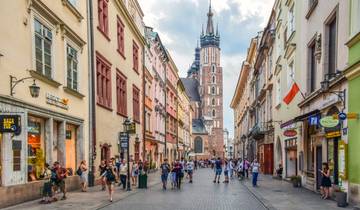
4 days
Krakow, Poland
- ✓ Comprehensive Krakow tour
- ✓ Expert local guides included
- ✓ All accommodation arranged
- ✓ Transportation provided
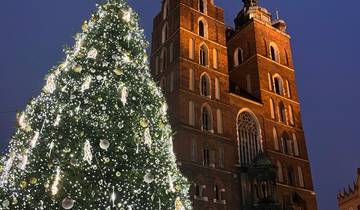
3 days
Christmas Spirit in Krakow
- ✓ Booking needs min. 2 travelers
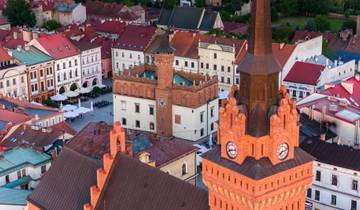
5 days
Journey into Polish History and Culture
- ✓ Comprehensive Krakow tour
- ✓ Expert local guides included
- ✓ All accommodation arranged
- ✓ Transportation provided
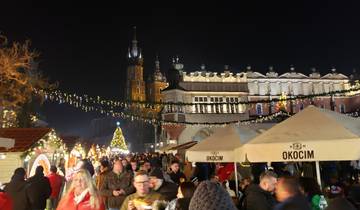
4 days
Krakow, Poland Christmas Markets
- ✓ Comprehensive Krakow tour
- ✓ Expert local guides included
- ✓ All accommodation arranged
- ✓ Transportation provided
Multi-day tour packages powered by TourRadar. Prices and availability subject to change.
Introduction: Understanding Krakow’s World Heritage Significance
The Historic Centre of Krakow represents an exceptional testimony to European urban civilization, where medieval planning principles, royal aspirations, and multicultural communities created one of the continent’s most coherent historical cityscapes. The UNESCO inscription recognizes not merely a collection of individual monuments, but an organic urban ensemble where streets, squares, churches, palaces, and houses interact to form a living chronicle of Central European history. This 149.65-hectare protected zone demonstrates remarkable continuity, maintaining the medieval street pattern established in the 13th century while accommodating successive architectural movements without destroying the fundamental character.
Krakow’s survival as an intact medieval city distinguishes it from many European capitals that experienced extensive wartime destruction or aggressive modernization. When Poland regained independence in 1918, and later when the Second World War ended, Krakow emerged as the nation’s most complete historical record, preserving architectural evidence of Poland’s golden age when the Jagiellonian dynasty ruled a vast Central European realm. The city served as Poland’s capital for five centuries until 1596, accumulating layers of royal patronage, ecclesiastical grandeur, and merchant prosperity that transformed a strategic river crossing into a cultural powerhouse.
The UNESCO designation in 1978 acknowledged this extraordinary preservation while establishing frameworks to protect the site for future generations. The inscription came during a pivotal moment when emerging conservation science met growing awareness of cultural heritage’s vulnerability. Krakow became a testing ground for urban conservation methodologies, balancing preservation with the needs of a functioning city of several hundred thousand residents. The success of this approach—maintaining authentic character while supporting contemporary urban life—has influenced heritage management practices worldwide.
Understanding Krakow’s UNESCO status requires recognizing three interconnected heritage zones that together create the site’s outstanding universal value. The medieval Old Town exemplifies chartered city planning at its finest, with the grid pattern radiating from the central market square. Wawel Hill represents royal and ecclesiastical power, where Gothic cathedral and Renaissance palace proclaim Poland’s former glory. Kazimierz embodies the Jewish cultural heritage that flourished here for five centuries, creating one of Europe’s most important centers of Jewish learning and commerce. These three elements—civic, royal, and multicultural—combine to illustrate the complexity of medieval European urban development.
The Three Components of Krakow’s UNESCO Site
The Medieval Old Town: Europe’s Largest Market Square
The Old Town’s foundation in 1257 under Magdeburg Law established the urban framework that persists today. Prince Bolesław V the Chaste granted this charter following the Mongol destruction of earlier settlements, creating a planned city with regular street patterns, designated market square, and allocated plots for merchants and craftsmen. The 200-meter by 200-meter Main Market Square formed the commercial and social heart, surrounded by a checkerboard of streets maintaining consistent right angles and block dimensions. This rational planning represented advanced medieval urbanism, facilitating commerce, defense, and civil administration.
The Cloth Hall dominates the square’s center, originating as a covered market in the 14th century and rebuilt in Renaissance style after a 1555 fire. Bartolomeo Berrecci designed the characteristic arcades with decorative attic featuring carved masks and grotesques, creating one of Poland’s finest Renaissance structures. The ground floor continues its medieval market function, housing souvenir stalls selling amber, textiles, and crafts, while the upper Gallery of 19th-Century Polish Art displays masterworks by Jan Matejko, Józef Chełmoński, and other national painters. This continuity of commercial use across seven centuries demonstrates the square’s enduring economic vitality.
St. Mary’s Basilica anchors the square’s northeastern corner with asymmetrical towers rising to different heights—the taller reaching 81 meters. Legend attributes this irregularity to two brothers who built competing towers, though practical explanations involve different construction phases and functions. The basilica’s interior astonishes with Veit Stoss’s monumental wooden altarpiece, completed in 1489 after twelve years of carving. This Gothic masterpiece depicts the Assumption of Mary through intricate polychrome figures, representing the largest Gothic altarpiece in the world and a supreme achievement of late medieval woodcarving. The famous bugle call from the taller tower sounds hourly, commemorating a legendary watchman killed by Mongol arrows while warning the city.
The defensive system surrounding the Old Town once comprised walls, towers, and a moat encircling the entire chartered area. Demolition in the 19th century created the green belt of Planty Park, but significant fragments survive, including the Florian Gate with its Gothic barbican—one of Europe’s best-preserved medieval defensive structures. The barbican’s massive circular form with seven turrets and 130 loopholes served as an advanced fortification protecting the main gate. Walking through these structures provides visceral connection to medieval defensive architecture, where thickness of walls and narrowness of passages reveal the constant threat of warfare.
Wawel Hill: Royal Power and National Identity
Wawel Hill rises above the Vistula River as Krakow’s political and spiritual center, where Polish kings were crowned, ruled, and buried for centuries. The limestone outcrop’s strategic position controlled river crossings and trade routes, making it a seat of power since the early Middle Ages. The architectural ensemble crowning the hill combines the Royal Castle and Cathedral, creating an integrated complex that evolved from Romanesque origins through Gothic, Renaissance, and baroque phases while maintaining overall coherence.
The Royal Castle underwent its greatest transformation under Renaissance kings who imported Italian architects to create a modern palace befitting Poland’s status as a major European power. The arcaded courtyard, completed in the 1530s, exemplifies Italian Renaissance architecture transplanted to Central Europe, with three tiers of loggias surrounding a square courtyard. Francesco Fiorentino and later Bartolomeo Berrecci designed these galleries with classical columns, carved capitals, and proportional harmony that contrasted dramatically with Gothic verticality. The State Rooms preserve Renaissance and baroque interiors, including the famous collection of Flemish tapestries commissioned by King Sigismund II Augustus, representing one of Europe’s finest Renaissance textile collections.
Wawel Cathedral serves as Poland’s coronation church and royal mausoleum, housing tombs of kings, queens, and national heroes in chapels representing every architectural period from Romanesque to modern. The Sigismund Chapel, designed by Bartolomeo Berrecci as a Renaissance funerary chapel for King Sigismund I, achieves perfection in its cubic proportions, golden dome, and sculptural decoration. Considered the purest example of Renaissance architecture north of the Alps, this chapel influenced ecclesiastical architecture throughout Central Europe. The cathedral treasury contains coronation regalia, royal insignia, and ecclesiastical treasures spanning centuries, while the Sigismund Bell in the tower—cast in 1520 and weighing nearly 13 tons—tolls only for major national occasions.
The Dragon’s Den cave at Wawel’s base connects the site to legendary origins predating historical records. According to folklore, a dragon terrorized the settlement until defeated by a clever trick, allowing the city’s foundation. This mythological layer adds narrative depth to the royal complex, linking ancient legends to historical power structures. Archaeological excavations reveal settlement on the hill dating to the Paleolithic period, demonstrating continuity of human presence spanning tens of thousands of years.
Kazimierz: The Historic Jewish Quarter
Kazimierz originated as an independent town founded in 1335 by King Casimir III the Great, who granted it charter rights and developed it as a strategic settlement controlling the Vistula’s eastern bank. The area maintained separate municipal status until incorporation into Krakow in 1800. King Casimir’s policies encouraged Jewish settlement, establishing protection and privileges that transformed Kazimierz into one of Europe’s most important Jewish cultural centers. By the 16th century, a distinct Jewish town emerged within Kazimierz, separated from the Christian sector by walls but functioning as an integrated community.
The architectural heritage reflects this dual Christian-Jewish character. The Christian sector centers on Corpus Christi Church, a Gothic basilica with spectacular stellar vaulting and baroque interior modifications. St. Catherine’s Church demonstrates the Gothic architecture favored by Augustinian monks, with soaring nave and distinctive tower. These churches established the Catholic presence while Jewish synagogues developed their own architectural traditions in the adjacent Jewish quarter.
Seven historic synagogues survived World War II destruction, representing four centuries of Jewish architectural development. The Old Synagogue, built in the 15th century and reconstructed after a 1557 fire, ranks among Europe’s oldest surviving Jewish religious buildings. Its fortress-like Gothic structure with buttresses and thick walls served defensive purposes while housing the community’s spiritual center. The interior, now a museum of Jewish history and culture, preserves the bimah, ark, and prayer halls that witnessed centuries of religious life. The Renaissance-era Remuh Synagogue continues active worship, maintaining continuity with the small Jewish community that reformed after World War II. The adjacent cemetery, dating from 1533, contains tombstones of renowned rabbis and scholars, including Moses Isserles, whose commentaries on Jewish law influenced religious practice throughout Europe.
The narrow streets of Kazimierz—Szeroka, Józefa, Meiselsa—retain the spatial character of the historical Jewish quarter, though the buildings house contemporary cafes, galleries, and cultural venues rather than the kosher butchers, ritual bathhouses, and study houses of the past. This transformation illustrates both the tragedy of the Holocaust, which destroyed the living Jewish community, and the contemporary revival of interest in Jewish heritage. The district serves simultaneously as a memorial to destroyed communities, a site of historical tourism, and a vibrant neighborhood attracting artists and young residents. This complex layering of memory, commemoration, and contemporary life makes Kazimierz a unique heritage landscape.
UNESCO Criterion (iv): Outstanding Urban Ensemble
The UNESCO World Heritage Committee inscribed Krakow under Criterion (iv), which recognizes “an outstanding example of a type of building, architectural or technological ensemble or landscape which illustrates a significant stage in human history.” This criterion acknowledges Krakow not for individual monuments, however magnificent, but for the collective achievement of the entire urban complex. The designation emphasizes how the city demonstrates the evolution of medieval urban planning, the adaptation of architectural styles across centuries, and the preservation of cultural landscapes embodying diverse communities.
The criterion particularly values Krakow’s illustration of continuous urban development from medieval foundation through successive historical periods without catastrophic rupture. Unlike cities rebuilt after wars or fires, Krakow maintained its essential character while incorporating new architectural languages. Gothic churches gained baroque interiors, Renaissance arcades adorned medieval markets, and Art Nouveau façades filled gaps in historic streets—each addition respecting existing urban fabric rather than replacing it. This accretion of architectural layers creates what UNESCO terms “historical authenticity,” where buildings and spaces truthfully represent their periods of creation and subsequent modifications.
The outstanding universal value also derives from Krakow’s role as an administrative and cultural capital where political power, ecclesiastical authority, academic learning, and commercial prosperity converged. This concentration of functions attracted the finest architects, artists, and craftsmen, producing architectural works of exceptional quality. The royal patronage that created Wawel Castle’s Renaissance courtyard, the merchant wealth that financed St. Mary’s altarpiece, and the ecclesiastical resources that built numerous churches combined to elevate Krakow’s architecture above provincial standards. The city became a cultural crossroads where Italian Renaissance, Germanic Gothic, and local traditions merged, creating a distinctive Central European architectural synthesis.
The criterion assessment recognizes how Krakow’s three integrated areas—Old Town, Wawel, and Kazimierz—collectively represent the complexity of medieval and early modern urban society. The planned merchant town demonstrates rational civic organization, the royal hill embodies sovereign power and national identity, and the Jewish quarter illustrates multicultural coexistence and intellectual achievement. Together, these elements provide comprehensive evidence of how European cities functioned as political, economic, cultural, and religious centers, offering insights applicable to understanding urbanism across the continent.
Architectural Heritage and Artistic Treasures
Gothic Architecture and Medieval Building Traditions
Krakow’s Gothic architecture spans two centuries of development, from the austere early Gothic of St. Francis Church to the elaborate late Gothic of St. Mary’s Basilica. The Franciscan church, built in the 13th century, exemplifies the order’s preference for simple, functional design with single nave, minimal decoration, and emphasis on preaching space. Later additions transformed the interior with Art Nouveau stained glass by Stanisław Wyspiański and Józef Mehoffer, creating a remarkable fusion of medieval structure and modern artistic expression.
The Dominican complex demonstrates Gothic monastic architecture, with church, cloister, and conventual buildings forming an integrated compound. The church’s nave reaches impressive height through pointed arches and ribbed vaulting, creating the soaring vertical emphasis characteristic of Gothic spirituality. Chapels added by noble families line the aisles, each representing the patron’s wealth and piety through elaborate tombs, altarpieces, and decorative programs. These funerary chapels demonstrate how Gothic churches functioned as social spaces where religious devotion, family prestige, and artistic patronage intersected.
St. Mary’s Basilica achieves Gothic ambition’s pinnacle through scale, decoration, and artistic treasures. The nave’s stellar vaulting creates a celestial canopy overhead, while tall windows flood the interior with colored light. Veit Stoss’s wooden altarpiece dominates the chancel, its intricate carving and polychrome painting representing the technical and artistic zenith of late Gothic woodwork. The altarpiece’s central panel depicts the Assumption of Mary with life-sized figures in dynamic poses, surrounded by wings showing scenes from Christ’s and Mary’s lives. When closed for Lent, the painted wings reveal a different iconographic program, demonstrating the altarpiece’s dual function as devotional focus and teaching tool.
Renaissance Transformation and Italian Influence
The Renaissance arrived in Krakow through royal patronage and Italian architects who brought classical principles to northern Europe. King Sigismund I the Old’s decision to rebuild Wawel Castle in modern style initiated this transformation, commissioning Francesco Fiorentino and later Bartolomeo Berrecci to create a Renaissance palace rivaling those of Florence or Rome. The arcaded courtyard they produced between 1507 and 1536 transplanted Italian architectural vocabulary—classical columns, proportional harmony, sculptural decoration—to a Gothic site, creating a synthesis of traditions.
The Cloth Hall’s reconstruction after the 1555 fire provided opportunity for comprehensive Renaissance redesign. The architect added the characteristic arcade along the building’s length and decorated the attic with grotesque masks and carved details drawing on Italian pattern books. These decorative elements—combining classical motifs with playful imagination—demonstrate how Renaissance design principles adapted to local contexts and materials. The building’s function as a commercial center received architectural expression through open arcades facilitating trade and creating covered walkways protecting merchants from weather.
The Sigismund Chapel represents Renaissance architecture’s purest expression in Krakow. Berrecci designed this funerary chapel for King Sigismund I with perfect cubic proportions, golden dome, and sculptural program that achieves classical balance and harmony. The interior decoration integrates architecture and sculpture seamlessly, with relief panels depicting biblical scenes and royal heraldry unified by consistent scale and style. This chapel influenced Central European church architecture for generations, establishing models for royal and aristocratic funerary monuments throughout Poland and neighboring regions.
Baroque Elaboration and Counter-Reformation
The baroque period transformed many Gothic churches through new altarpieces, painted ceilings, and decorative schemes responding to Counter-Reformation emphasis on emotional engagement and visual splendor. Jesuit architects introduced baroque principles through St. Peter and Paul’s Church, designed by Giovanni Battista Trevano between 1597 and 1619. The façade’s dramatic composition with columns, statues, and sculptural decoration creates theatrical entry sequence, while the elliptical interior with elaborate stuccowork demonstrates baroque spatial experimentation.
St. Anne’s Church, the Jagiellonian University’s collegiate church, received comprehensive baroque transformation in the late 17th century. Tylman van Gameren designed the interior decoration, creating a unified baroque ensemble with illusionistic ceiling frescoes, ornate altars, and sculptural programs that overwhelm Gothic structural simplicity. The barrel-vaulted nave provides ideal surface for painted decoration, while side chapels house baroque altarpieces with twisted columns, dramatic gestures, and rich gilding characteristic of the period’s aesthetic.
Cultural Significance and Living Heritage
Jagiellonian University and Intellectual Tradition
Jagiellonian University’s continuous operation since 1364 makes it one of Europe’s oldest educational institutions and a crucial component of Krakow’s cultural identity. King Casimir III the Great founded the university to provide educated administrators for the expanding Polish kingdom, establishing faculties of liberal arts, medicine, and law. Queen Jadwiga’s bequest in 1400 funded the theology faculty, transforming the institution into a comprehensive medieval university. The university attracted students from across Europe, creating an international scholarly community that enriched Krakow’s intellectual life.
Collegium Maius, the university’s administrative and teaching center from the 15th century, preserves authentic academic architecture with Gothic courtyard, lecture halls, and library. The building houses museum collections including medieval scientific instruments, astronomical devices, and early printed books that document the university’s scholarly achievements. The Jagiellonian Globe, created around 1510, represents one of the earliest globes depicting the Americas, demonstrating the institution’s engagement with contemporary geographical discoveries. Nicolaus Copernicus studied here in the 1490s, and while he developed his heliocentric theory later, the university’s emphasis on mathematical astronomy and classical texts provided foundation for his revolutionary thinking.
The university’s living tradition continues through ceremonies, academic programs, and cultural activities that connect historical roots to contemporary scholarship. The annual inauguration ceremony in October follows medieval customs, with professors processing in traditional robes through the Old Town to St. Anne’s Church. This continuity of academic ritual, combined with modern research excellence, illustrates how heritage institutions maintain relevance across centuries. The university’s presence shapes Krakow’s character as a city of learning, attracting students internationally and fostering cultural vitality through theaters, concerts, and intellectual discourse.
Intangible Heritage and Cultural Traditions
Krakow’s UNESCO significance extends beyond physical monuments to encompass intangible heritage—the living traditions, practices, and ceremonies that give meaning to historical spaces. Several Cracovian traditions appear on UNESCO’s Intangible Cultural Heritage list, recognizing their cultural value and need for safeguarding. The Krakow nativity scene tradition involves elaborate handmade cribs combining Gothic architectural forms with folk art decoration, displayed annually in competitions and exhibitions. These szopki demonstrate living craft tradition connecting historical architecture to contemporary artistic expression.
The Lajkonik parade, held annually in June, reenacts legendary events from the 13th-century Mongol invasions through costumed procession featuring a hobby horse rider collecting tributes from spectators. This folk tradition, while not historically accurate, creates community connection to medieval past through participatory ritual. The ceremony proceeds through the Old Town to the Main Market Square, transforming historical spaces into stages for cultural performance. Such traditions demonstrate how heritage sites function not as static museum pieces but as living environments where communities enact their cultural identity.
The musical tradition of the hourly bugle call from St. Mary’s tower represents another form of intangible heritage. The hejnał mariachi sounds four times hourly toward the cardinal directions, stopping abruptly in mid-phrase to commemorate the legendary watchman shot by Mongol arrows while warning the city. This daily ritual, broadcast nationally on radio, connects Krakow to the entire nation through sonic symbol. The tradition’s persistence across centuries, including the Communist period when many religious practices faced suppression, demonstrates cultural resilience and the power of heritage to maintain community identity.
Conservation and Management Challenges
Protection Framework and Legal Measures
The Historic Centre of Krakow operates under comprehensive legal protection combining international, national, and local frameworks. UNESCO World Heritage status requires Poland to maintain the site’s outstanding universal value through appropriate conservation, management, and monitoring. The National Heritage Board of Poland inscribes all significant buildings in the property on the National Heritage Register, providing statutory protection requiring permits for any alterations. The President of Poland designated the entire site as a Monument of History, Poland’s highest heritage protection category, adding another layer of legal safeguarding.
The 2010 boundary modification establishing a 907.35-hectare buffer zone addresses visual integrity concerns, protecting sight lines to Wawel Cathedral and controlling development that might diminish the historical setting. This buffer zone extends protection beyond the inscribed area, regulating building heights, materials, and architectural character in surrounding neighborhoods. The management plan coordinates multiple stakeholders—municipal government, heritage authorities, church administration, property owners—in implementing conservation priorities while accommodating urban functions.
Local regulations require conservation approval for any interventions affecting protected buildings, from façade cleaning to structural modifications. The Municipal Conservator of Monuments reviews proposed works, ensuring techniques respect historical materials and methods. This regulatory framework prevents inappropriate alterations while allowing necessary maintenance and adaptive reuse. The system balances preservation with practical needs, recognizing that buildings must function for contemporary uses to justify their conservation.
Adaptive Reuse and Contemporary Functions
Maintaining a living city within a heritage site presents constant challenges balancing preservation with contemporary needs. Unlike archaeological sites where time has stopped, Krakow’s Old Town houses residents, businesses, cultural institutions, and municipal offices requiring modern infrastructure, accessibility, and services. Successful heritage management requires enabling contemporary functions without compromising historical character—a delicate equilibrium demanding case-by-case evaluation.
The conversion of historical buildings to hotels, restaurants, museums, and shops demonstrates adaptive reuse supporting both conservation and economic vitality. Merchant houses become boutique hotels, aristocratic palaces house museums, and ecclesiastical buildings accommodate concert halls. These adaptive reuses generate revenue supporting building maintenance while making historical architecture accessible to broader publics. The key challenge involves implementing modern standards—fire safety, accessibility, climate control—without damaging historical fabric or destroying architectural character. Invisible interventions inserted behind historical façades, such as modern mechanical systems, climate control, and accessibility features, allow historical exteriors to maintain authenticity while interiors adapt to contemporary requirements.
Tourism management presents another conservation challenge, as the site’s fame attracts millions of annual visitors whose presence impacts the urban fabric. Foot traffic wears historical pavement, crowds stress infrastructure, and commercial pressures push residential uses from the center. The city addresses these impacts through traffic restrictions, pedestrianization, pavement renewal, and policies encouraging residential retention. Balancing tourism’s economic benefits with preservation of living community character requires ongoing policy adjustments and stakeholder dialogue.
Environmental Threats and Climate Adaptation
Environmental factors pose increasing risks to Krakow’s architectural heritage, particularly air pollution’s impact on stone, brick, and decorative elements. Industrial emissions and vehicle exhaust deposit acidic compounds on building surfaces, accelerating deterioration of limestone, sandstone, and mortar. Black crusts form on façades, obscuring architectural details and weakening material structure. Conservation programs address this through cleaning campaigns, protective treatments, and pollution reduction policies. The shift from coal heating to cleaner energy sources has improved air quality, demonstrating how environmental policy supports heritage conservation.
Climate change introduces new conservation challenges through increased precipitation, more severe storms, and temperature fluctuations affecting building materials. Flooding risks have increased along the Vistula, threatening structures near the river including parts of Kazimierz and Wawel’s lower elevations. The city invests in flood protection infrastructure while developing emergency response protocols for heritage sites. Rising groundwater levels affect foundation stability, requiring drainage improvements and structural monitoring. These environmental pressures demand proactive conservation strategies anticipating future conditions rather than merely responding to current damage.
Visitor Experience and Heritage Tourism
Understanding the UNESCO Site
Visitors approaching Krakow’s UNESCO site benefit from understanding its tripartite structure and the relationships between components. The Main Market Square provides the natural starting point, offering orientation to the medieval street grid and access to major monuments. The Cloth Hall’s souvenir stalls maintain centuries-old market traditions, while the surrounding townhouses, many with Gothic or Renaissance origins, demonstrate historical domestic architecture. St. Mary’s Basilica rewards entry with Veit Stoss’s altarpiece, though climbing the tower provides panoramic views revealing the city’s urban structure and the relationship between Old Town and Wawel.
The Royal Route connects the Market Square to Wawel Hill, following Grodzka Street through the university district past Collegium Maius, numerous churches, and aristocratic townhouses. This processional route, used historically for coronations and royal entries, creates narrative connection between civic and royal spaces. The street’s architecture represents every period from Gothic through Art Nouveau, providing architectural survey in compressed urban sequence. Churches along the route—St. Peter and Paul, St. Andrew, St. Giles—offer quiet respites from the busy thoroughfare while displaying baroque and Romanesque architecture.
Wawel Hill requires dedicated time for exploring the castle’s State Rooms, Renaissance courtyard, and Cathedral with its royal tombs and Sigismund Chapel. The cathedral alone merits extended visit, with each chapel presenting distinct architectural character and funerary monuments spanning Polish history. The castle collections include Renaissance tapestries, royal apartments with period furnishings, and armory displaying medieval weapons and armor. The hillside gardens and ramparts provide views across the Vistula to Kazimierz and modern neighborhoods beyond.
Kazimierz demands different interpretive approach, as the district’s significance lies partly in absence—the vanished Jewish community whose buildings and spaces survive but whose life was destroyed. The synagogues function primarily as museums and memorials rather than active religious centers, with the Old Synagogue’s exhibition documenting Jewish history and culture. Walking Kazimierz’s streets requires imagination to envision the bustling community of scholars, merchants, and craftsmen that populated these narrow lanes. Contemporary cafes, galleries, and cultural venues represent new layer of history, demonstrating urban evolution and heritage’s ongoing transformation.
Educational Opportunities and Cultural Programming
Krakow’s museums, guided tours, and cultural programs provide structured learning opportunities deepening understanding of the UNESCO site’s significance. The Rynek Underground Museum beneath the Market Square reveals archaeological layers from medieval Krakow, with excavated streets, marketplaces, and domestic spaces illustrating urban life across centuries. Interactive displays explain the chartered city’s foundation, trade networks, and daily activities of medieval merchants and craftsmen. This archaeological context enriches surface appreciation, connecting visible architecture to buried historical strata.
The Historical Museum of Krakow operates multiple branches in townhouses around the Market Square, each addressing different aspects of urban history. The exhibitions cover topics from medieval commerce to World War II occupation, using artifacts, documents, and multimedia presentations to explain historical developments. The museum’s educational programs serve schools, universities, and general visitors, providing expert interpretation of complex heritage.
Walking tours led by licensed guides offer thematic explorations of architecture, Jewish heritage, royal history, or artistic treasures. These guided experiences provide historical context and architectural analysis beyond what casual observation reveals. Specialized tours address topics like Art Nouveau architecture, underground passages, or wartime history, appealing to visitors with particular interests. The quality of interpretation significantly affects heritage appreciation, as expert guides reveal details, stories, and meanings that physical structures alone cannot communicate.
Krakow in the Network of World Heritage Sites
Krakow’s place among Poland’s seventeen UNESCO World Heritage Sites reflects the country’s rich cultural heritage and commitment to its preservation. The 1978 dual inscription—Krakow’s Historic Centre and nearby Wieliczka Salt Mine—launched Poland’s World Heritage presence, establishing conservation standards that influenced later designations. The salt mine’s proximity to Krakow creates opportunity for combined heritage tourism, with many visitors experiencing both sites during Krakow trips.
The nearby Auschwitz-Birkenau site, inscribed in 1979, represents heritage of entirely different character—memorial to genocide rather than celebration of cultural achievement. This proximity creates sobering juxtaposition, as visitors experience both humanity’s cultural accomplishments in Krakow and its capacity for systematic destruction at Auschwitz. The relationship between these sites underscores heritage’s complexity, encompassing triumph and tragedy, beauty and horror within the same cultural landscape.
Other UNESCO sites within Krakow’s region include Kalwaria Zebrzydowska’s pilgrimage park and the Wooden Churches of Southern Małopolska, extending heritage protection to rural areas and diverse building types. This network of protected sites demonstrates Poland’s cultural diversity, from urban ensembles to industrial monuments to rural sacred architecture. Krakow functions as the gateway to this heritage region, providing infrastructure and interpretation supporting exploration of surrounding UNESCO properties.
Internationally, Krakow participates in heritage networks connecting World Heritage Cities, sharing expertise on urban conservation challenges and management strategies. The city’s long experience balancing preservation with contemporary urban functions provides models for other heritage cities confronting similar issues. International cooperation facilitates knowledge exchange on topics like tourism management, climate adaptation, and community engagement in heritage conservation.
The Future of Krakow’s Heritage
Ensuring the Historic Centre of Krakow’s long-term preservation requires addressing emerging challenges while maintaining the site’s outstanding universal value. The 2023-2035 Management Guidelines establish strategic directions for the next decade, emphasizing sustainable tourism, climate resilience, community engagement, and heritage education. These guidelines recognize that successful conservation depends not merely on legal protection but on fostering public understanding and support for heritage values.
Digital technology offers new tools for heritage conservation and interpretation, from laser scanning creating precise architectural documentation to virtual reality enabling immersive historical experiences. These technologies support both conservation—providing detailed records for restoration work—and interpretation—allowing visitors to experience vanished historical contexts. The challenge involves implementing digital initiatives enhancing heritage understanding without diminishing the primacy of authentic physical experiences.
Community engagement initiatives recognize that heritage sites survive through local commitment and stewardship. Programs involving residents in heritage activities, from conservation volunteering to cultural festivals, build constituencies supporting preservation policies. Youth education programs cultivating heritage appreciation among younger generations ensure future conservation commitment. The intangible heritage traditions—nativity scenes, parades, ceremonies—provide participatory opportunities connecting communities to historical sites through active cultural practice rather than passive observation.
The ultimate measure of successful heritage conservation lies in maintaining the site’s significance for future generations while respecting its authenticity. Krakow’s continuing evolution as a living city, not a preserved museum, demonstrates that historical architecture can accommodate contemporary life without sacrificing character. The balance between preservation and adaptation, tradition and innovation, memory and progress defines the ongoing challenge of World Heritage management. Krakow’s experience over four decades since UNESCO inscription provides valuable lessons for heritage conservation worldwide, demonstrating that outstanding universal value can be sustained through committed stewardship, adaptive management, and recognition of heritage’s essential role in cultural identity.
Frequently Asked Questions
When was Krakow inscribed as a UNESCO World Heritage Site?
Krakow’s Historic Centre received UNESCO World Heritage designation in 1978 as one of the first twelve sites ever inscribed on the World Heritage List. This inaugural inscription, shared with iconic locations like Yellowstone National Park and the Galápagos Islands, recognized Krakow as a site of outstanding universal value requiring international protection. The 1978 designation included the medieval Old Town, Wawel Hill complex, and Kazimierz district. In 2010, UNESCO approved a minor boundary modification adding a 907.35-hectare buffer zone to protect the site’s visual setting and historical context.
What areas are included in the UNESCO-protected zone?
The protected 149.65-hectare property encompasses three interconnected areas representing different aspects of Krakow’s heritage. The Old Town includes the medieval chartered city founded in 1257, centered on Europe’s largest market square with its grid street pattern, historic townhouses, churches, and remnants of 14th-century fortifications. Wawel Hill contains the Royal Castle with its Renaissance courtyard and the Cathedral where Polish kings were crowned and buried. Kazimierz, founded in 1335, preserves both Christian churches and Jewish heritage including seven historic synagogues and the former Jewish quarter. These three areas together illustrate the complexity of medieval urban development combining civic, royal, and multicultural elements.
Can visitors access all parts of the UNESCO site?
The majority of the UNESCO site is freely accessible as public space, including streets, squares, parks, and church exteriors. The Main Market Square operates as an open public plaza without access restrictions. Many churches welcome visitors free of charge during non-service hours, including the Franciscan Church, Dominican Church, and St. Andrew’s Church. However, major attractions require paid admission: Wawel Castle’s State Rooms and Royal Private Apartments operate as museums with ticketed entry, St. Mary’s Basilica charges for interior access (though attending mass is free), and the Old Synagogue functions as a museum with admission fees. Some areas have restricted access, including active religious spaces during services and private courtyards in residential buildings. The Cloth Hall’s upper floor Gallery of Polish Art requires tickets, while the ground-floor market stalls are freely accessible.
How does UNESCO designation affect daily life in Krakow?
UNESCO designation imposes specific conservation obligations on property owners and municipal authorities while protecting the site’s heritage character. Any exterior modifications to buildings within the protected zone require approval from heritage conservation authorities, ensuring alterations respect historical character and materials. This regulatory framework prevents inappropriate renovations, demolitions, or new construction that would harm the site’s authenticity. For residents and business owners, these protections mean stricter building codes, longer approval processes for renovations, and requirements to use traditional materials and techniques. The designation also influences urban planning, with the buffer zone controlling building heights and development density in surrounding areas. Tourism generated by World Heritage status brings economic benefits through hospitality, retail, and cultural services, but also creates challenges including crowding, traffic, and commercial pressure on residential neighborhoods.
What conservation work is currently underway at the site?
Conservation of Krakow’s UNESCO site involves ongoing maintenance, restoration, and monitoring programs addressing various building types and deterioration causes. Stone conservation projects clean façades of historic buildings, removing pollution-related black crusts and applying protective treatments to slow future deterioration. Church interiors receive periodic restoration addressing painted decoration, sculpture, and architectural elements. The city implements pavement renewal programs replacing worn historical paving while preserving authentic materials where possible. Structural monitoring tracks foundation movement, wall stability, and roof condition to identify problems before serious damage occurs. Recent major projects included restoration of the Cloth Hall’s Renaissance attic and conservation of St. Mary’s Basilica’s exterior stonework. The National Fund for the Restoration of Historic Monuments provides grants supporting private owners’ conservation work on protected buildings.
How does Krakow compare to other European UNESCO historic centers?
Krakow distinguishes itself among European World Heritage cities through exceptional preservation of its original medieval urban layout with minimal modern intrusion. Unlike Prague, Vienna, or Florence, which experienced significant baroque or modern redevelopment, Krakow maintains its 13th-century street grid largely intact. The city’s survival of World War II without major destruction, unlike Warsaw which required extensive reconstruction, ensures authenticity of historical fabric. The integration of three distinct heritage zones—civic, royal, and Jewish—within a single UNESCO property creates unique cultural complexity not found in cities preserving only Christian heritage. The scale also differs; at 149.65 hectares, Krakow’s protected area encompasses a complete medieval city rather than a smaller historic core surrounded by modern development. The Main Market Square’s 40,000 square meters exceeds comparable European squares, maintaining its medieval dimensions and function.
What role does Jagiellonian University play in the UNESCO designation?
Jagiellonian University’s continuous operation since 1364 contributes significantly to Krakow’s outstanding universal value by demonstrating the city’s historical role as a center of learning and intellectual exchange. The university’s presence reinforces Krakow’s claim to European cultural significance, as its faculty and students participated in intellectual movements from Renaissance humanism to modern science. Collegium Maius, the university’s 15th-century core, provides architectural evidence of medieval academic life with its Gothic courtyard, lecture halls, and library. The building houses collections of scientific instruments, astronomical devices, and early books documenting scholarly achievements. The university’s continued academic excellence and cultural programming maintain Krakow’s identity as a university city, supporting cultural vitality through concerts, lectures, exhibitions, and scholarly events that animate the historical cityscape.
Are there threats to Krakow’s World Heritage status?
Krakow does not currently face threats serious enough to warrant placement on UNESCO’s List of World Heritage in Danger, though several challenges require ongoing management. Tourism pressure creates wear on historical pavements, crowds in narrow streets, and commercial pressure converting residential spaces to tourist services. The city addresses these impacts through traffic restrictions, capacity management at major monuments, and policies encouraging residential retention in the historic center. Air pollution from vehicles and heating systems accelerates deterioration of stone and brick, though pollution levels have decreased significantly since the transition from coal heating. Climate change poses emerging risks through increased flooding potential along the Vistula River and more severe weather events affecting historical structures. The comprehensive management framework, strong legal protections, and active conservation programs mitigate these threats, though continued vigilance and adaptive management remain essential.
How can visitors best experience Krakow’s UNESCO heritage?
Experiencing Krakow’s UNESCO site effectively requires several days to explore the three heritage zones and understand their interrelationships. Begin at the Main Market Square to appreciate the medieval urban layout, visit St. Mary’s Basilica for Veit Stoss’s altarpiece, and explore the Cloth Hall’s market and gallery. Take time walking the side streets radiating from the square to discover townhouses, churches, and courtyards that reveal the city’s architectural richness beyond the main monuments. Follow the Royal Route through the university district to Wawel Hill, allowing half a day for the castle and cathedral. Dedicate separate time to Kazimierz, walking the streets of the former Jewish quarter and visiting synagogues and the cemetery. Consider guided tours for specialized interpretation of architecture, Jewish heritage, or artistic treasures. Visit the Rynek Underground Museum for archaeological context, and attend concerts in historic churches to experience the spaces as living cultural venues. Avoid peak summer crowds if possible, as spring and fall offer more comfortable exploration with fewer visitors.
What is the significance of the 2010 buffer zone addition?
The 2010 boundary modification adding a 907.35-hectare buffer zone addresses the need to protect the UNESCO site’s visual setting and historical context from inappropriate development. Buffer zones serve crucial heritage management functions by controlling activities in areas surrounding inscribed properties that could affect their outstanding universal value. In Krakow’s case, the buffer zone regulates building heights, architectural character, and development density in neighborhoods adjacent to the historic center, preventing high-rise construction that would dominate sight lines to Wawel Cathedral or create jarring visual contrasts with historical architecture. The buffer zone also preserves green spaces like Planty Park that frame the historic center, maintaining the spatial relationship between the medieval core and its surroundings. This expanded protection recognizes that heritage sites exist within broader urban contexts, and effective conservation requires managing not only the inscribed area but also the surrounding landscape that provides its setting.