
Killarney Travel Guide 2026: Ultimate Visitor’s Guide to Ireland’s Southwest
Killarney stands as County Kerry’s tourism crown jewel, where Ireland’s first national park meets Victorian heritage and contemporary Irish hospitality. This comprehensive guide delivers everything needed to plan an extraordinary 2026 visit to this southwestern Irish town, from navigating the Lakes of Killarney to budgeting accommodation and dining across three distinct price tiers.
Key Takeaways for Killarney 2026
- Budget Planning 2026: Daily costs range €95-145 per person for budget travelers sharing accommodation, €185-255 for mid-range comfort, and €285-380 for luxury experiences, with hotels forming the largest expense category.
- Free National Park Access: Killarney National Park offers completely free admission across 10,000 hectares of lakes, mountains, and woodlands, though individual attractions like Muckross House charge €7-12 entry fees.
- Seasonal Price Variations 2026: Hotel rates peak in July averaging €310 per night, dropping to €187 in January, while shoulder months May-June and September-October balance favorable weather with lower prices.
- Compact Town Layout: Walking covers most town-center needs within 15 minutes, Ross Castle sits just 2.5 kilometers away, and bike rental at €20 daily provides excellent national park mobility.
- Victorian Heritage Meets Natural Beauty: The 1843 Muckross House, 15th-century Ross Castle, and pristine lake systems create Ireland’s most concentrated blend of architectural history and protected wilderness.
- Ring of Kerry Gateway: Killarney serves as the ideal base for the 179-kilometer Ring of Kerry scenic drive, Dingle Peninsula day trips, and Gap of Dunloe excursions.
People Also Ask About Killarney 2026
How much does a trip to Killarney cost in 2026?
A week in Killarney costs €665-1,015 per person for budget travelers sharing accommodation, €1,295-1,785 for mid-range comfort, and €1,995-2,660 for luxury experiences. Budget travelers utilize hostel dormitories or budget hotels at €99-145 per room, dine at casual cafes and self-cater for €40-50 daily, and selectively visit paid attractions while maximizing free national park access. Mid-range visitors choose €170-220 hotels, balance restaurant meals with casual dining for €60-80 daily, and participate in most paid attractions and some guided tours. Luxury travelers select €250-300 properties, enjoy fine dining at €90-120 daily, and book premium experiences including private tours and jaunting car rides.
What’s the best time to visit Killarney in 2026?
May through June and September through early October offer the best balance of weather, pricing, and crowd levels for Killarney visits in 2026. These shoulder months deliver average temperatures of 12-16°C, significantly fewer tourists than July-August peak season, and hotel rates 20-30% below summer peaks. July and August provide the warmest weather and longest daylight hours but bring peak hotel prices averaging €310 per night and crowded attractions. Winter months November through March see hotel rates drop to €150-200 nightly but face shorter days, frequent rain, and reduced attraction hours, with some sites closing entirely December through February.
Is Killarney National Park free to visit in 2026?
Killarney National Park offers completely free admission in 2026, with pedestrian access available 24 hours daily across 10,000 hectares of protected lakes, mountains, and woodlands. Individual attractions within the park charge separate admission, including Ross Castle at €5 for adults, Muckross House at €7, and Muckross Traditional Farms at €7, with combined house and farms tickets available for €12. The park’s walking trails, woodlands, lake viewpoints, and Muckross Abbey ruins remain entirely free. Parking at major access points including Ross Castle, Muckross House, Torc Waterfall, and Killarney House Gardens is also free in 2026.
How many days should I spend in Killarney in 2026?
Three to five days allows thorough exploration of Killarney and its surrounding attractions in 2026. A three-day itinerary covers the national park’s major sites including Ross Castle, Muckross House, Torc Waterfall, and Ladies View, plus one day for the Ring of Kerry drive. Five days adds the Gap of Dunloe excursion, Dingle Peninsula day trip, and time for leisurely national park exploration via hiking or biking. Weekend visitors can efficiently see core attractions in two days by focusing on the national park and town center, though this timeline requires selectivity and faster pacing.
Extended multi-day tours – 5+ days
Featured Killarney Multi-Day Tour Packages
3 days
Killarney 3-Day Discovery Tour
- ✓ Comprehensive Killarney experience
- ✓ Expert local guides included
- ✓ All accommodation included
- ✓ Transportation provided

5 days
Killarney 5-Day Highlights Experience
- ✓ Comprehensive Killarney experience
- ✓ Expert local guides included
- ✓ All accommodation included
- ✓ Transportation provided

7 days
Killarney 7-Day Cultural Journey
- ✓ Comprehensive Killarney experience
- ✓ Expert local guides included
- ✓ All accommodation included
- ✓ Transportation provided
10 days
Killarney 10-Day Complete Adventure
- ✓ Comprehensive Killarney experience
- ✓ Expert local guides included
- ✓ All accommodation included
- ✓ Transportation provided
Multi-day tour packages powered by TourRadar. Prices and availability subject to change.
Introduction to Killarney: Ireland’s Premier Southwest Destination in 2026
Killarney occupies an exceptional position in Irish tourism geography, functioning simultaneously as a compact town of approximately 15,000 residents and as the gateway to Ireland’s most visited national park. The town’s location at the northeastern edge of the Iveragh Peninsula places it within striking distance of the Ring of Kerry, the Dingle Peninsula, and the dramatic Atlantic coastline that defines County Kerry’s international reputation.
The establishment of Killarney National Park in 1932, created from the Muckross Estate gifted to the Irish state, transformed the area into Ireland’s first formal national park and earned UNESCO Biosphere Reserve designation in 1981. This 10,000-hectare protected area encompasses the three Lakes of Killarney (Lough Leane, Muckross Lake, and Upper Lake), the MacGillycuddy’s Reeks mountain range containing Ireland’s highest peaks, and ancient oak and yew woodlands supporting the country’s only native red deer herd.
Tourism infrastructure in Killarney developed substantially through the Victorian era when British and European visitors discovered the area’s romantic landscapes, leading to the construction of grand hotels and the Muckross House estate. This 19th-century tourism boom established patterns that continue in 2026, with the town now supporting over 180 restaurants, more than 40 hotels ranging from budget to five-star luxury, and extensive tour operations serving the Ring of Kerry and surrounding attractions.
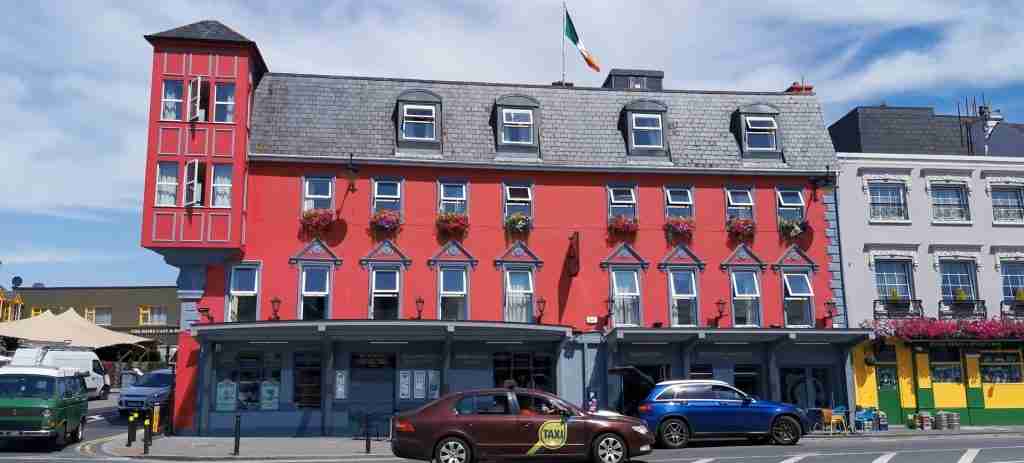
The town center concentrates along High Street, Main Street, and New Street, forming a compact commercial core measuring roughly 800 meters end to end. This walkable layout places virtually all restaurants, pubs, shops, and services within 10 minutes’ walk of any accommodation in the central area. The national park’s main access points at Killarney House Gardens and Ross Castle sit less than 2.5 kilometers from the town center, easily reachable on foot or by brief taxi ride.
Killarney’s role as the Ring of Kerry’s primary base town stems from its accommodation density, restaurant variety, and central position on the 179-kilometer scenic loop. The clockwise drive from Killarney proceeds through Killorglin, Glenbeigh, Cahersiveen, Waterville, Sneem, and Kenmare before returning, with Killarney offering the most extensive overnight infrastructure along the route. Day-trippers from Killarney also access the Dingle Peninsula 80 kilometers west and Cork City 85 kilometers east.
Understanding Killarney Costs in 2026
Accommodation represents 50-60% of total Killarney travel costs in 2026, making hotel selection the most significant budget decision. The town’s 40+ hotels span dramatic price ranges, from €99 nightly budget properties to €300+ luxury estates. Seasonal pricing creates equally significant variations, with July and August peak-season rates averaging €310 per night compared to €187 in January off-season. Booking three to four months ahead for summer travel typically secures rates 15-20% below last-minute prices.
Dining costs in Killarney range from €8-12 breakfast cafes to €35-50 fine dining entrees, with most mid-range restaurants charging €18-28 for mains. The town’s tourism orientation means restaurant density exceeds typical Irish towns of similar size, creating competitive pricing. Budget travelers can reduce food costs substantially through supermarket self-catering, with Tesco, Lidl, and SuperValu stores located within walking distance of central accommodations. Pub lunches at €12-16 offer better value than dinner menus at the same establishments.
Transportation within Killarney itself requires minimal expense, as the compact town center eliminates need for taxis or buses for most visitors staying centrally. Bike rental at €20 daily provides the most cost-effective national park exploration, covering the 6-kilometer distance to Muckross House and enabling access to lakeside trails closed to motor vehicles. Taxis operate on national maximum fares, with typical town-to-national-park trips costing €8-12. Traditional jaunting car rides (horse-drawn carriages) charge premium rates around €25 per person for national park tours.
Attraction costs remain modest compared to accommodation and dining. Killarney National Park admission is free, as is parking at all major access points and entry to Muckross Abbey ruins. Paid attractions include Ross Castle at €5 adult admission, Muckross House at €7, and Muckross Traditional Farms at €7, with combined tickets reducing total costs. Optional activities like boat tours (€17) and guided walking tours (€25-40) add value for visitors seeking structured experiences beyond self-guided exploration.
Accommodation Options and Costs in Killarney 2026
Killarney’s accommodation landscape divides clearly into four geographical zones, each offering distinct advantages and price points. The town center zone along High Street, Main Street, and New Street places guests within immediate walking distance of all restaurants and nightlife but typically commands premium rates and offers limited parking. The Muckross Road corridor running south toward the national park provides quieter settings with easier parking access at moderate price points. The outskirts area 2-4 kilometers from center trades convenient walking access for lower rates and free parking. The national park zone itself contains several properties directly within or adjacent to Killarney National Park, offering premium locations at corresponding prices.
Budget accommodation in Killarney centers on hostel dormitories at €20-35 per bed and budget hotels at €99-145 per room in 2026. Neptune’s Hostel and Killarney Railway Hostel offer dormitories with shared facilities near the train station, providing the lowest-cost option for solo travelers or groups comfortable with communal spaces. Budget hotels including Killarney Dromhall Hotel at €99-120 per room and Killarney Towers Hotel at €117-145 deliver private rooms with en-suite bathrooms, included breakfast, and leisure facilities at approximately half mid-range hotel rates. These properties typically sit 1-2 kilometers from town center, requiring brief taxi rides or 15-20 minute walks.
Mid-range hotels in the €170-220 nightly range dominate Killarney’s accommodation sector, offering the best balance of location, amenities, and value. The Killarney Plaza Hotel & Spa at €172-195 provides central Main Street location, indoor pool, spa facilities, and included breakfast. The Killarney Royal Hotel at €180-220 occupies a prominent College Street position with Victorian architecture, on-site restaurant, and modern room updates. The Killarney Avenue Hotel at €145-180 delivers slightly lower rates with comparable amenities in a quieter side-street location. These properties include parking, fitness facilities, and breakfast, making their total value competitive despite higher base rates.
Luxury accommodation exceeds €250 nightly, led by The Killarney Park at €280-340 for superior rooms and €400-550 for suites. This five-star property underwent major refurbishment in 2024, reopening in 2026 with redesigned rooms, three new food and beverage outlets, and extensively updated common areas. The property’s private garden setting adjacent to Killarney National Park, 67 individually decorated rooms, full-service spa, and Michelin Guide restaurant justify premium pricing. The Muckross Park Hotel & Spa similarly commands €250-300 for standard rooms and €350-500 for suites, offering direct national park access, individually designed rooms, and award-winning spa facilities.
Seasonal rate variations create significant savings opportunities in 2026. January through March off-season rates average 35-40% below July-August peaks, with many €200 summer properties available at €120-140 in winter months. April and October shoulder season pricing splits the difference, typically running 20-25% below peak rates while offering better weather than deep winter. November through February brings the lowest annual prices but shortest daylight hours and highest rainfall probability. Booking flexibility around school holiday periods (Easter week, July-August, Halloween week) can yield €40-60 nightly savings at the same property.
Dining and Food Costs in Killarney 2026
Killarney’s restaurant density reflects its tourism orientation, with more than 180 dining establishments serving a town of 15,000 residents. This concentration creates quality competition and ensures table availability even during peak summer months, though advance reservations remain advisable for highly-rated restaurants Friday through Sunday. The dining scene spans traditional Irish pubs serving boxty and stew to Asian fusion, Italian fine dining, and contemporary Irish cuisine using Kerry ingredients.
Budget dining centers on cafes, pub lunches, and supermarket self-catering in 2026. Murphy’s and Lir Cafe serve breakfast at €8-12 including full Irish plates, while lunch specials at pubs like The Laurels run €12-16 for substantial servings. Takeaway options including Quinlan’s Fish & Chips at €10-14 and various pizza and kebab shops at €8-16 provide economical dinner alternatives. Tesco and SuperValu supermarkets stock groceries for self-catering, with bread at €1-2, cheese at €3-5, and meal ingredients for two people typically totaling €15-25. Budget-conscious travelers spending €40-50 daily on food typically breakfast at cafes, lunch from supermarkets or cheap eateries, and alternate between budget restaurants and self-prepared dinners.
Mid-range dining at €60-80 daily allows restaurant meals for most or all occasions. Cronin’s Restaurant on College Street, operating since 1957, charges €18-28 for mains including Kerry chowder, Hereford sirloin steak, and seafood dishes. The Porterhouse on Plunkett Street delivers hearty Irish cooking at similar price points with crumbled brie starters at €9-12 and main courses €16-26. Bricin Restaurant specializes in traditional boxty (potato pancakes) at €18-24 per main course. The Mad Monk offers contemporary seafood with starters €10-15 and mains €22-32. Mid-range budgets typically allocate €12-18 for breakfast, €15-25 for lunch, and €30-45 for dinner including one alcoholic beverage.
Fine dining and luxury restaurant experiences operate at €90-120 daily per person. The Peregrine at The Killarney Park Hotel holds Michelin Guide recognition, with three-course dinners running €65-85 per person before wine. The restaurant emphasizes County Kerry ingredients in elegant preparations including locally-sourced seafood, grass-fed beef, and seasonal vegetables. Tan Yard offers upscale Irish cuisine with Manchego croquettes, beetroot risotto, and premium Hereford cuts at €25-42 per entree. Celtic Whiskey Bar & Larder provides craft cocktails and elevated Irish fare at comparable pricing. Luxury dining budgets include breakfast at hotel restaurants (€18-25), refined lunch venues (€25-35), and fine dining experiences (€50-75 before beverages).
Grocery pricing in Killarney supermarkets runs approximately 10-15% higher than Dublin due to transportation costs and tourism demand. A liter of milk costs €1.20-1.50, sliced bread €1.50-2.20, local Irish cheese €4-7 per 250g block, and fresh vegetables €2-4 per kilogram. Prepared sandwiches at supermarket delis cost €3.50-5.50, offering quick lunch solutions cheaper than cafe equivalents. Irish breakfast staples including rashers, sausages, black pudding, and eggs total €12-18 for ingredients serving four people two full Irish breakfasts.
Transportation Costs and Getting Around Killarney 2026
Walking serves most transportation needs within Killarney town center in 2026, with the compact layout placing all restaurants, shops, and pubs within 800 meters end-to-end distance. The train and bus station on Fair Hill sits 400 meters from Main Street, reachable in five minutes on foot from central hotels. Ross Castle and the national park’s northeastern entrance at Killarney House Gardens both lie within 2.5 kilometers of town center, representing 30-35 minute walks or 10-12 minute bike rides.
Bike rental at €20 daily provides the most economical and flexible national park transportation option. Killarney Bike Rental on Muckross Road offers standard bikes, helmets, locks, repair kits, pumps, and park maps for €20, with electric bikes available at €35 daily. The rental price includes unlimited mileage, allowing full-day national park exploration covering Ross Castle, Muckross House 6 kilometers south, Torc Waterfall 8 kilometers south, and various lake-circuit trails. The Muckross Road from town to Muckross House includes dedicated cycle paths for most of its length, though the initial section requires sharing roadway with motor traffic.
Taxis in Killarney operate on Ireland’s national maximum fare structure updated December 2024. Base fare starts at €3.80, with distance charges of €1.60 per kilometer during daytime hours and €1.90 per kilometer during night hours (8 PM to 8 AM). Typical journeys include town center to Ross Castle at €8-10, town center to Muckross House at €12-15, and town center to Torc Waterfall at €15-18. Taxis accommodate up to four passengers at no additional charge, making shared rides among travel groups more economical per person. Pre-booking through Killarney Tour & Taxi Service or similar operators ensures availability during peak summer months when demand exceeds supply.
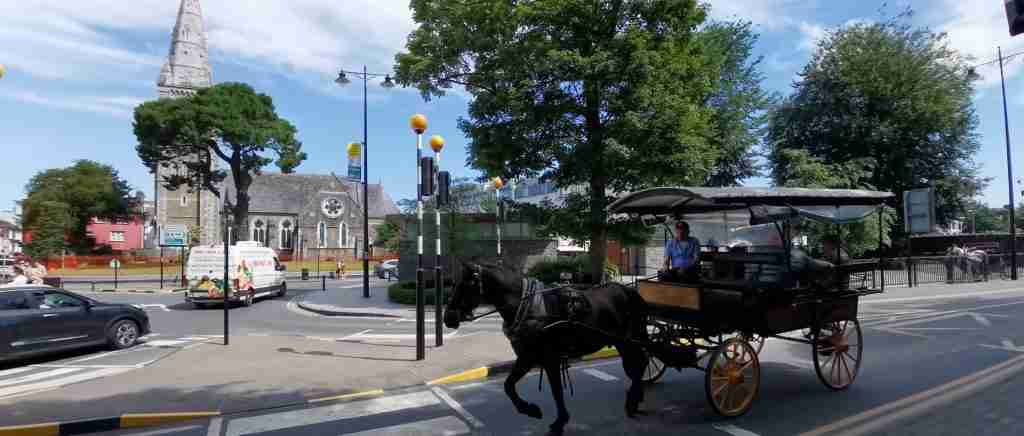
Traditional jaunting cars (horse-drawn carriages) offer experiential transportation at premium pricing around €25 per person for basic national park routes and €40-60 for extended Gap of Dunloe excursions. These Victorian-era carriages operate from stands near St. Mary’s Cathedral and The Killarney Plaza Hotel, with jarveys (drivers) providing historical commentary during rides. Standard routes cover Ross Castle, Muckross Abbey, and lake viewpoints over 60-90 minutes. While significantly more expensive than walking or biking, jaunting cars represent a quintessentially Irish experience and accommodate visitors preferring not to walk extensive distances.
Bus Éireann operates intercity service connecting Killarney to Cork (€16-22, 2 hours), Limerick (€18-24, 2.5 hours), Dublin (€28-36, 6 hours), and Galway (€24-30, 4.5 hours). Local buses including the Killarney Shuttle Bus circuit between town center, Ross Castle, Muckross House, and Torc Waterfall every 30-60 minutes during summer months at €3-5 per ride or €8-12 for day passes. These shuttles eliminate parking concerns and taxi costs for visitors without rental cars, though service frequency drops substantially outside June-August peak season.
Car rental from Killarney town or Kerry Airport provides maximum flexibility for Ring of Kerry and Dingle Peninsula exploration at €45-75 daily for economy vehicles and €80-120 for larger or automatic transmission options. Parking in Killarney town center costs €1-2 per hour at metered street spaces, with free parking available at hotels 1-2 kilometers from center. National park parking at Ross Castle, Muckross House, Torc Waterfall, and other access points remains free in 2026. The Ring of Kerry’s 179-kilometer clockwise circuit from Killarney requires 4-6 hours driving time plus stops, making day trips feasible with early departure.
Killarney National Park: Ireland’s Premier Protected Wilderness in 2026
Killarney National Park encompasses 10,000 hectares (approximately 25,000 acres) of mountains, lakes, woodlands, and moors along Ireland’s southwest coast, established in 1932 as the country’s first national park. The park’s three connected lakes—Lough Leane (Lower Lake) at 2,000 hectares, Muckross Lake (Middle Lake) at 680 hectares, and Upper Lake at 430 hectares—form the centerpiece of the protected area, surrounded by the Torc, Mangerton, and Purple Mountain ranges reaching elevations of 700-840 meters. UNESCO designated the park a Biosphere Reserve in 1981, recognizing its internationally significant oak and yew woodlands and Ireland’s only native red deer herd.
Free admission and 24-hour pedestrian access make Killarney National Park one of Ireland’s most accessible protected areas in 2026. The park maintains six primary vehicle access points with free parking: Killarney House Gardens at the northeastern edge near town center, Ross Castle on Lough Leane’s eastern shore, Muckross House and Gardens 6 kilometers south of town, Torc Waterfall 8 kilometers south, Dinis Cottage near the Meeting of the Waters, and Lord Brandon’s Cottage at the Gap of Dunloe’s southern terminus. These access points connect via walking trails, cycle paths, and limited roads creating multiple exploration routes.
The Knockreer Estate section between town center and Ross Castle offers the easiest introduction to the national park, with flat paved paths suitable for wheelchairs, strollers, and all fitness levels. The 2.5-kilometer walk from St. Mary’s Cathedral to Ross Castle follows Lough Leane’s shoreline through parkland and mature trees, providing lake views and red deer sightings. This section remains open 24 hours with free pedestrian access through gates opposite the cathedral, though vehicular access operates on restricted hours.
The Muckross-Dinis Loop Trail represents the park’s most popular cycling route, covering approximately 10 kilometers of largely flat terrain around Muckross Lake. Starting from Muckross House, the loop proceeds south toward Dinis Cottage at the Meeting of the Waters where Lough Leane, Muckross Lake, and Upper Lake converge. The route includes the Old Weir Bridge, Bricken Bridge, and lake viewpoints closed to motor vehicles, creating peaceful cycling conditions. Bike rental availability at town center (€20 daily) makes this loop accessible to visitors without vehicles.
Torc Waterfall, located 8 kilometers south of Killarney town off the N71 Ring of Kerry road, drops 20 meters through moss-covered rocks in the Owengarriff River. A short 200-meter paved path from the parking area leads to the falls’ base, making this one of the park’s most accessible highlights. More ambitious visitors can climb the steep trail ascending Torc Mountain from the waterfall, gaining 535 meters elevation over 3 kilometers to reach a summit with panoramic views across the lakes and MacGillycuddy’s Reeks. The mountain trail requires sturdy footwear and reasonable fitness, with 2-3 hours needed for the round trip.
Ladies View, positioned 19 kilometers southwest of Killarney town on the Ring of Kerry route, provides the park’s most photographed panorama. The viewpoint overlooks Upper Lake backed by the MacGillycuddy’s Reeks range, with the Gap of Dunloe visible to the north. Queen Victoria’s ladies-in-waiting famously stopped here during the 1861 royal visit, giving the location its name. A parking area accommodates cars and tour buses, with a cafe and craft shop operating during tourist season. The viewpoint sits directly on the Ring of Kerry scenic drive, making it a standard stop on clockwise circuit tours.
Ross Castle: 15th-Century Tower House on Lough Leane
Ross Castle occupies a strategic position on Lough Leane’s eastern shore 2.5 kilometers southwest of Killarney town center, representing one of Ireland’s best-preserved tower houses from the late medieval period. Built in the late 15th century as the stronghold of the O’Donoghue Ross clan, the castle consists of a four-story rectangular tower surrounded by a fortified courtyard (bawn) with flanking towers. The Office of Public Works extensively restored the structure in the late 20th century, furnishing the interior with period-appropriate reproductions representing 16th-17th century tower house living conditions.
Guided tours running 30-40 minutes operate February through November between 9:30 AM and 5:45 PM, with last admission at 5:00 PM. Adult admission costs €5 in 2026, with concession rates at €4 for seniors and students, and €13 family tickets covering two adults with up to four children (check official website for current rates as pricing may vary). Children under 12 enter free. Tours proceed through four levels connected by narrow spiral stone staircases with low headroom and uneven steps, making the interior unsuitable for wheelchair users, very young children, or visitors with mobility limitations. The ground floor exhibits weapons and armor, while upper levels show sleeping chambers, dining halls, and defensive positions.
The castle’s exterior and grounds remain accessible without tour participation, allowing visitors to photograph the lakeside tower, walk the shoreline paths, and explore the bawn walls without admission fees. The setting provides excellent photo opportunities morning through afternoon, with the tower reflected in Lough Leane during calm conditions. Red deer frequently graze the surrounding parkland, particularly early morning and evening. The walk from Killarney town center to Ross Castle covers 2.5 kilometers via Knockreer Estate in 30-35 minutes, following paved paths through the national park.
Boat tours to Innisfallen Island depart from the pier adjacent to Ross Castle, operating hourly during summer months at €17 per adult. These one-hour excursions circle Lough Leane, visiting the island containing 7th-century monastic ruins where the Annals of Innisfallen were compiled. The glass-covered boats provide sheltered viewing regardless of weather, with guides explaining the lake’s ecology, history, and white-tailed eagle reintroduction program. Combined castle-and-boat packages offer slight discounts versus separate purchases.
Muckross House, Gardens, and Traditional Farms
Muckross House occupies the Muckross Peninsula between Lough Leane and Muckross Lake, 6 kilometers south of Killarney town on the N71 Ring of Kerry road. Scottish architect William Burn designed the 65-room Victorian mansion for the Herbert family, completing construction in 1843 in Tudor Revival style. The Herberts undertook extensive landscape improvements prior to Queen Victoria’s 1861 visit, though the royal hospitality expenses contributed to the family’s eventual financial difficulties and the estate’s 1899 sale to American industrialist William Bowers Bourn. Bourn’s daughter Maud Vincent gifted the property to the Irish state in 1932, creating the foundation of Killarney National Park.
Guided tours operate March through October daily between 9:00 AM and 5:30 PM, with extended summer hours to 7:00 PM during July-August peak season. Adult admission costs €7 in 2026, with combined tickets for house and traditional farms at €12 offering best value for visitors planning both attractions (check official website for current rates as pricing may vary). Tours last approximately 50 minutes, proceeding through ground-floor reception rooms furnished with Victorian antiques, basement servants’ quarters demonstrating the domestic work required to operate a 19th-century mansion, and selected upper-floor bedrooms including Queen Victoria’s specially-prepared accommodations with ground-floor access and private fire escape due to her fear of fires.
The gardens surrounding Muckross House remain open year-round with free admission, independent of house tour tickets. The 16-hectare gardens contain extensive rhododendron and azalea collections peaking in May-June bloom periods, a rock garden constructed on natural limestone outcrops, water gardens with streams and pools, and the formal Sunken Garden featuring seasonal bedding displays. The Victorian Walled Garden operates as both historic landscape and working garden, with plants and produce sold to visitors during growing season. The arboretum includes exotic tree specimens from Southern Hemisphere origins, benefiting from the peninsula’s mild microclimate moderated by the surrounding lakes.
Muckross Traditional Farms, located on separate grounds 2 kilometers from the main house, recreate 1930s-1940s rural Kerry farming life across three working farms representing different economic scales. Small, medium, and large holdings demonstrate period-accurate agricultural practices using horse-drawn plowing, hand-milking, and pre-electrification techniques. Costumed interpreters demonstrate traditional crafts including blacksmithing, carpentry, and domestic work, while heritage animal breeds including Kerry Bog Ponies populate the farmyards. The farms charge separate €7 adult admission or accept the €12 combined ticket with Muckross House, operating the same March-October season with similar hours.
Free parking accommodates hundreds of vehicles directly adjacent to Muckross House entrance, with additional overflow parking during peak summer periods. The Garden Restaurant serves breakfast, lunch, and afternoon tea at moderate prices (€8-14 breakfast, €12-18 lunch), operating year-round regardless of house tour seasons. The Craft Centre adjacent to parking offers Irish-made goods including Muckross-branded items, with artisan demonstrations during peak tourist seasons.
Day Trips and Excursions from Killarney 2026
The Ring of Kerry represents Ireland’s most famous scenic drive, forming a 179-kilometer clockwise circuit around the Iveragh Peninsula that begins and ends in Killarney. The standard route proceeds west through Killorglin, south along the coast through Glenbeigh, Cahersiveen, Waterville, and Sneem, before turning northeast through Kenmare and returning to Killarney. Driving the complete circuit requires 4-6 hours without stops, though most visitors allocate full days to accommodate viewpoint stops, lunch breaks, and short walks. Key highlights include Rossbeigh Beach, Cahergall Stone Fort, Valentia Island, Skellig Ring coastal views, and Kenmare’s colorful shop-lined streets.
Tour coaches operate clockwise to avoid meeting oncoming coaches on the ring’s narrowest sections, establishing an unofficial convention that self-drive visitors often follow. Coach tours from Killarney cost €35-55 per person for full-day Ring of Kerry excursions with guide commentary and designated photo stops, eliminating navigation and parking concerns. Self-drive options allow flexible timing and extended stops at personal preference points, though require navigation of narrow single-track sections with passing places. Lunch stops typically occur in Waterville, Sneem, or Kenmare, with main courses at €14-24 in village restaurants.
The Gap of Dunloe, a narrow mountain pass between the MacGillycuddy’s Reeks and Purple Mountain ranges, provides one of Killarney’s most dramatic day excursions. The traditional approach combines jaunting car rides, walking, and boat returns in a circuit taking 5-7 hours total. Visitors take taxis or jaunting cars 13 kilometers west from Killarney to Kate Kearney’s Cottage at the Gap’s northern entrance, then either walk, bike, or take pony-trap rides through the 11-kilometer pass ascending to 240 meters elevation between towering cliff faces and past five small lakes. At the southern terminus Lord Brandon’s Cottage, boat services transport passengers across the three Lakes of Killarney back to Ross Castle, completing the circuit.
Complete Gap of Dunloe excursions cost €60-90 per person including jaunting car transport to Kate Kearney’s, pony trap through the Gap (or walking/biking), and boat return. Self-guided options reduce costs to €20-30 by substituting walking for pony traps and biking from Killarney instead of jaunting cars, though require moderate fitness for the 11-kilometer Gap traverse plus 13-kilometer ride to the entrance. The Gap remains open year-round but operates best April-October when boat services run reliably and weather cooperates more consistently.
Dingle Peninsula day trips from Killarney cover 80 kilometers each direction, requiring full days with early departures to maximize time in Dingle town and along Slea Head Drive. The route from Killarney proceeds northwest through Castlemaine and over Conor Pass (Ireland’s highest mountain pass at 456 meters), descending into Dingle town on Dingle Bay’s northern shore. Dingle town offers colorful shop streets, traditional pubs with daily traditional music sessions, and fishing harbor boat tours. The Slea Head Drive loops 50 kilometers around the peninsula’s western tip, passing Dunquin’s cliff-top views, Gallarus Oratory’s 12th-century stone church, and numerous beehive huts and ancient forts.
Organized Dingle Peninsula tours from Killarney cost €55-75 per person including transport, guide commentary, and Slea Head circuit, with departures typically 9:00-9:30 AM and returns 6:00-7:00 PM. Self-drive options allow more flexible timing but require navigating Conor Pass’s hairpin turns and steep grades, which can challenge nervous drivers. Lunch in Dingle town adds €15-25 per person at casual restaurants or €10-15 for fish and chips takeaway. The excursion suits visitors seeking coastal scenery, archaeological sites, and traditional Irish culture beyond Killarney’s lake-and-mountain landscape.
Complete Daily Budget Breakdowns for Killarney 2026
Budget travelers spending €95-145 per person daily share hostel dormitories or budget hotels, emphasize self-catering and casual dining, walk extensively or bike rent for national park access, and selectively visit paid attractions while maximizing free park areas. A typical budget day includes hostel bed or budget hotel share at €50-73 per person, supermarket breakfast at €5-8, packed lunch from grocery ingredients at €8-12, casual restaurant dinner at €15-22, walking and occasional bike rental or taxi at €0-10, and selective paid attraction entry at €5-12. Total daily spend ranges €95-145 per person assuming two sharing budget hotel accommodation.
Sample budget day itinerary: Hostel or budget hotel breakfast €5-8, walk to Killarney National Park entrance at Knockreer Estate, walk 2.5 kilometers to Ross Castle (€5 admission), packed lunch on Ross Castle grounds €8-12, walk or bike to Muckross Abbey (free), afternoon bike rental €20 shared between two people exploring Muckross Lake loop, casual dinner at pub €15-22, evening walk through town center. Total approximate costs: accommodation €50-73 per person, meals €30-42, transport €5-10, attractions €5. Daily total €95-130 per person.
Mid-range travelers spending €185-255 per person daily select €170-220 hotels, balance restaurant meals with some casual dining, utilize bike rentals and occasional taxis, and visit most paid attractions. A typical mid-range day includes hotel accommodation at €85-110 per person (two sharing), hotel or restaurant breakfast at €12-18, restaurant lunch at €15-25, quality restaurant dinner at €30-45, bike rental or taxi transport at €20-30, and most paid attractions including Muckross House, boat tours, or guided experiences at €20-35. Total daily spend ranges €185-255 per person with two sharing mid-range hotel.
Sample mid-range day itinerary: Hotel breakfast €12-18, taxi to Muckross House €12-15, Muckross House tour €7, Muckross Gardens exploration (free), Garden Restaurant lunch €15-20, afternoon bike rental €20 exploring lake trails, return bike and taxi to town €12, quality restaurant dinner with wine at Cronin’s or The Porterhouse €35-48, evening pub visit with pints €8-12. Total approximate costs: accommodation €85-110 per person, meals €70-88, transport €27-30, attractions €27. Daily total €210-255 per person.
Luxury travelers spending €285-380 per person daily book €250-300 hotels, enjoy fine dining experiences, use taxis and private tours freely, and participate in premium guided activities. A typical luxury day includes luxury hotel accommodation at €125-150 per person (two sharing), hotel restaurant breakfast at €18-25, refined lunch venue at €25-35, fine dining dinner at €50-75, liberal taxi use and private transport at €30-50, and premium experiences including private tours, jaunting cars, and all attractions at €40-60. Total daily spend ranges €285-380 per person.
Sample luxury day itinerary: Killarney Park Hotel breakfast €22, private guided national park tour €80 per person including transport, gourmet lunch at The Garden Restaurant €28-35, afternoon jaunting car ride €40, return to hotel for spa session €45, cocktails at hotel bar €15-20, fine dining at The Peregrine Michelin Guide restaurant €70-85, nightcap at hotel €12-15. Total approximate costs: accommodation €125-150 per person, meals €132-155, activities and transport €165-175. Daily total €430-480 per person (exceeding base luxury tier due to spa addition).
Sample Multi-Day Itineraries with Cost Breakdowns 2026
Three-day budget itinerary total costs approximately €285-390 per person assuming two sharing budget accommodation throughout. Day one covers town orientation and Knockreer Estate to Ross Castle walk (accommodation €50-73, meals €30-42, attractions €5, transport €0), totaling €85-120. Day two tackles Muckross area via bike rental covering Muckross House, lake loop, and Torc Waterfall (accommodation €50-73, meals €30-42, bike rental €10 shared, Muckross admission €7, lunch supplies €8), totaling €105-140. Day three executes budget Ring of Kerry approach via early bus to Killorglin, hitchhiking or local buses around partial ring, return evening (accommodation €50-73, meals €30-42, transport €15, no admission fees), totaling €95-130. Three-day total €285-390 per person.
Five-day mid-range itinerary total costs approximately €995-1,205 per person sharing mid-range hotels. Day one: Arrival, town exploration, Knockreer to Ross Castle walk, Ross Castle tour, boat tour to Innisfallen Island, restaurant dinner (accommodation €85-110, meals €70-88, attractions €22, transport €10), totaling €187-230. Day two: Muckross House tour, gardens, Traditional Farms, Torc Waterfall, bike rental lake circuit, quality dinner (accommodation €85-110, meals €70-88, attractions €32, bike €20, taxi €15), totaling €222-265. Day three: Organized Ring of Kerry coach tour with lunch included, upscale dinner in Killarney (accommodation €85-110, tour €50, meals €55-70), totaling €190-230. Day four: Gap of Dunloe full excursion including jaunting car, walk or pony trap through Gap, boat return, casual dinner (accommodation €85-110, Gap package €75, meals €50-65, transport €8), totaling €218-258. Day five: Leisurely morning, Ladies View drive, Kenmare lunch, afternoon shopping, farewell dinner (accommodation €85-110, meals €70-88, car rental share €25, attractions €0), totaling €180-223. Five-day total €995-1,205 per person.
Three-day luxury itinerary total costs approximately €1,255-1,415 per person sharing luxury accommodation. Day one: Killarney Park Hotel check-in, private half-day national park tour, spa treatment, fine dining at The Peregrine (accommodation €125-150, meals €132-155, private tour €120, spa €45), totaling €422-470. Day two: Breakfast, private Ring of Kerry tour with gourmet lunch stops, jaunting car experience, premium dinner (accommodation €125-150, meals €110-140, private tour €180, jaunting car €40), totaling €455-510. Day three: Leisurely breakfast, Gap of Dunloe luxury package with premium pony trap and private boat, afternoon at hotel, upscale farewell dinner (accommodation €125-150, meals €115-145, Gap luxury package €140), totaling €380-435. Three-day total €1,255-1,415 per person.
Seasonal Price Variations and Best Value Periods 2026
Hotel pricing in Killarney demonstrates pronounced seasonal fluctuation in 2026, with July peak-season rates averaging €310 per night compared to €187 in January off-season, representing 66% premium for summer bookings. This pattern reflects demand concentrated in school holiday periods when Irish, British, and European families travel simultaneously. Weekend rates exceed midweek throughout the year, with Friday-Saturday nights commanding €30-50 premiums over Tuesday-Wednesday even during winter months. Major holiday weekends including Easter, June Bank Holiday, and Halloween see further surcharges of €40-70 per night.
The shoulder season months of May, June, September, and early October offer the best balance of favorable weather and moderate pricing in 2026. May and early June deliver average high temperatures of 14-16°C, longer daylight hours extending past 9:00 PM by late June, and hotel rates 20-30% below July-August peaks. September through early October maintains similar temperatures, features autumn foliage in national park woodlands, and sees tourist numbers drop substantially after Irish school terms begin late August. Mid-range hotels averaging €220 in July typically charge €160-180 in May-June and September-October.
Deep summer months July and August provide warmest weather averaging 17-19°C highs, longest daylight hours from 5:30 AM to nearly 10:00 PM, and most reliable conditions for outdoor activities. However, these months also bring peak hotel pricing, crowded attractions requiring advance restaurant reservations, and coach tour congestion on the Ring of Kerry. Budget hotel rooms costing €120-145 in summer drop to €90-115 in shoulder months, representing €30-40 nightly savings across multi-day stays. Visitors flexible on timing save €200-300 on weeklong accommodation by shifting from August to early June or September.
Winter months November through March deliver the lowest annual hotel rates, with January-February bottom at 40% below peak summer pricing. A €220 July mid-range hotel room typically costs €130-140 in January-February, creating substantial savings for visitors tolerant of short days, frequent rain, and reduced attraction hours. Killarney National Park remains accessible year-round, though daylight restricts to 8:30 AM-5:00 PM in December-January. Ross Castle and Muckross House close entirely December-February, reopening late February or early March depending on weather. Restaurants and pubs operate normally through winter, as Killarney maintains year-round population unlike purely seasonal resort towns.
March and early April represent transitional pricing as spring approaches, with rates climbing from winter lows but remaining 25-35% below summer peaks. Easter weekend triggers temporary rate spikes to near-summer levels regardless of calendar date, as this major Irish holiday fills hotels across the country. Late October and November similarly transition downward, with rates dropping progressively after mid-October school return until reaching winter baseline by early November. Weather in these transitional months varies considerably, with March potentially wet and cold while November brings shorter days but sometimes mild temperatures.
Money-Saving Strategies for Killarney 2026
Accommodation represents the single largest savings opportunity through strategic booking and flexibility. Properties offering prepaid rates discounted 10-15% below standard flexible rates reward advance planning, though require non-refundable payment 30-90 days before arrival. Booking directly with hotels rather than through intermediary sites occasionally yields additional discounts or breakfast inclusion, as hotels avoid commission fees. Shoulder-season visits in May-June or September-October reduce hotel costs 20-30% below July-August while maintaining favorable weather. Staying 2-3 kilometers from town center at properties like Killarney Towers or Dromhall Hotel saves €40-70 nightly versus central locations, requiring brief taxis or 20-minute walks.
Self-catering reduces food costs 50-60% compared to full restaurant dining. Tesco and SuperValu supermarkets near town center stock breakfast ingredients for €8-12 per person versus €12-18 restaurant breakfasts, packed lunch supplies for €6-10 versus €15-22 cafe lunches, and dinner ingredients for €12-18 versus €25-40 restaurant mains. Hostel and some hotel accommodations include basic kitchen facilities enabling cooking, though budget hotels often limit this to breakfast areas. Purchasing wine and beer at supermarkets (€8-14 per bottle versus €6-9 per glass in restaurants) substantially reduces beverage costs for evening meals.
Free national park access eliminates attraction costs for nature-focused visitors. Killarney National Park’s 10,000 hectares, Muckross Abbey ruins, Torc Waterfall approaches, Ladies View, and Knockreer Estate require zero admission fees. The complete Muckross-Dinis Loop Trail, Ross Castle exterior and grounds, and Killarney House Gardens similarly cost nothing. Visitors allocating more time to free walking and cycling than paid indoor attractions save €20-40 daily on admission fees. Free walking tour maps available at tourist information points guide self-paced exploration without paid guide services.
Bike rental at €20 daily shared between two people (€10 per person) provides economical all-day national park transportation accessing Muckross House, lake circuits, and Torc Waterfall. This compares favorably to taxis at €12-18 each direction or jaunting cars at €40-60 for limited routes. The 20-kilometer daily riding required to cover major sites suits moderate fitness levels, with flat lake-circuit paths posing no difficulty. Walking eliminates even bike rental costs but requires more time commitment, with town center to Muckross House representing 6 kilometers requiring 70-80 minutes each direction.
Combined attraction tickets reduce admission costs at Muckross properties, with house and farms combined tickets at €12 versus €14 separate purchases. Irish Heritage Cards providing unlimited admission to Office of Public Works sites including Ross Castle cost €40 annually for adults, paying for themselves after eight site visits across Ireland. Families with children benefit from family tickets at Ross Castle (€13 for two adults plus up to four children) versus €20-25 individual adult admissions. Many restaurants offer early-bird dinner menus with three courses at €25-32 versus €40-55 regular dinner pricing, requiring 5:30-6:30 PM seating but delivering identical food quality.
Hidden Costs and Fees to Consider in Killarney 2026
Hotel parking fees apply at some central properties charging €5-12 nightly for on-site or nearby parking access. The Killarney Plaza Hotel, Killarney Royal Hotel, and other Main Street properties have limited parking and may charge, while properties on Muckross Road and town outskirts typically include free parking. Street parking in town center costs €1-2 per hour at metered spaces operating Monday-Saturday 9:00 AM-6:00 PM, with free parking evenings and Sundays. Killarney National Park maintains free parking at all access points including Ross Castle, Muckross House, and Torc Waterfall.
Tourism fees and service charges occasionally appear as separate line items on accommodation bills, though these remain less common in Ireland than continental Europe. Some hotels add €2-3 per person per night tourism fees to support destination marketing, while others incorporate these into base rates. Restaurant service charges of 10-12% apply primarily at upscale establishments, always itemized separately on bills when added. Casual restaurants and pubs typically include service in menu prices, with tipping entirely optional. Card payment fees have largely disappeared following European regulation, though some smaller merchants impose €5-10 minimums for card transactions.
Tour and activity costs sometimes exclude admission fees advertised separately. Gap of Dunloe packages at €60-90 may or may not include the boat return portion, requiring verification when booking. Ring of Kerry coach tours universally include transport and guide but exclude lunch stops and attraction admissions. Jaunting car rates quote per-person prices but may add €5-10 charges for additional passengers beyond standard carriage capacity. Clarifying total inclusive costs when booking prevents surprise charges.
Irish tipping customs differ from American expectations, with 10% considered generous for good service rather than obligatory. Taxi drivers appreciate rounding up fares (€18 fare rounded to €20) but expect no percentage tips. Hotel porters receive €1-2 per bag for assistance. Restaurant bills sometimes include discretionary service charges of 10-12%, making additional tipping unnecessary. When service charges appear, simply paying the total without adding more tip is completely acceptable. Pub table service requires no tipping, though leaving small change is appreciated.
Alcohol pricing in Ireland includes high excise taxes making drinks expensive, with pints of Guinness or lager costing €5.50-7.00 in Killarney pubs and €7-9 in hotel bars. A visitor averaging two pints daily adds €11-14 to daily spending, totaling €75-100 weekly. Wine by glass runs €7-10, with bottles in restaurants marked up substantially from retail (€35-60 restaurant versus €10-18 supermarket for equivalent quality). Budget-conscious drinkers purchase supermarket alcohol for hotel consumption or limit pub visits to one or two evenings rather than nightly drinking.
Visiting Killarney with Specific Traveler Types 2026
Families with children find Killarney exceptionally accommodating, with family-room hotels including Killarney Towers and Gleneagle Hotel offering pools and play areas alongside comfortable multi-bed accommodations. The national park’s flat paved paths suit strollers and young walkers, while Ross Castle tours and Muckross Traditional Farms engage children through costumed interpreters, heritage animals, and hands-on history. The Gap of Dunloe boat return and jaunting car rides provide break variety for children less interested in sustained walking. Family tickets at attractions reduce costs, with Ross Castle charging €13 for two adults plus up to four children versus €20 individual adult admissions. Kid-friendly restaurants including chain options and casual pubs with children’s menus operate throughout town center.
Solo travelers benefit from Killarney’s safety, compact walkability, and hostel social environments supporting independent exploration. Neptune’s Hostel and Railway Hostel offer dormitory beds at €20-35 nightly, substantially lower than €99-145 private hotel rooms solo travelers pay full price for versus couples splitting costs. Organized coach tours to Ring of Kerry and Dingle Peninsula provide social interaction opportunities and eliminate rental car costs that penalize solo drivers. The national park’s extensive trail network enables solitary hiking with complete safety during daylight hours. Solo dining at pub counters or casual restaurants feels comfortable in Ireland’s social culture, avoiding the awkwardness solo diners sometimes encounter elsewhere.
Senior travelers appreciate Killarney’s accessibility features and senior pricing. Concession rates at Ross Castle (€4 versus €5 adult), Muckross House, and coach tours reduce costs for visitors over 60-65, with Irish Heritage Cards for seniors providing additional savings. The national park’s paved flat paths accommodate reduced mobility better than mountainous hiking regions, while jaunting cars and boat tours substitute for strenuous walking. Hotels including The Killarney Park and Killarney Plaza offer ground-floor rooms and elevator access eliminating stair climbing. Taxi availability supports visitors preferring not to walk 2-3 kilometer distances. Note Ross Castle’s interior tour requires climbing 70 spiral stone steps unsuited to mobility limitations.
Wheelchair users and mobility-impaired visitors find mixed accessibility across Killarney attractions. Killarney National Park’s Knockreer Estate and portions of Muckross Gardens provide paved wheelchair-accessible paths with minimal gradients. Muckross House offers elevator access to upper floors and courtesy wheelchairs for interior use, making it Kerry’s most accessible historic property. Ross Castle’s exterior and grounds accommodate wheelchairs, though the interior tower tour’s narrow spiral staircases exclude wheelchair access entirely. Modern hotels including Killarney Plaza and Killarney Towers maintain accessible ground-floor rooms and common areas. Town center’s compact layout and paved sidewalks support wheelchair navigation, though some older restaurant buildings lack accessible facilities.
Practical Tips and Essential Information for Killarney 2026
Weather preparation determines comfort levels in Killarney’s maritime climate characterized by frequent rain, moderate temperatures, and rapidly changing conditions. Waterproof jackets prove essential year-round, as brief showers occur even during summer months. Layered clothing accommodates temperature swings from cool mornings to warm afternoons, with temperatures rarely exceeding 20°C even in peak summer or dropping below freezing in winter. Sturdy waterproof walking shoes with ankle support suit national park trails better than casual sneakers, as paths become muddy during and after rain. Packing compact umbrellas supplements rain jackets for town walking.
Banking and currency needs center on euros, with ATMs widely available throughout town center at Bank of Ireland, AIB, and post office locations. Most restaurants, hotels, and shops accept major credit cards (Visa, Mastercard) without transaction fees following European regulation, though some traditional pubs and small establishments remain cash-only. Carrying €50-100 cash covers pub drinks, casual meals, and attraction admissions at smaller sites. Currency exchange services at banks offer better rates than airport exchanges, though ATM withdrawals typically provide most favorable rates overall. Tipping remains entirely optional at standard Irish levels of 10% for good service or rounding up taxi fares.
Mobile connectivity throughout Killarney operates on Irish networks Vodafone, Three, and Eir, with 4G coverage in town and major national park areas. EU visitors use domestic phones without roaming charges following EU regulations, while international visitors should verify roaming costs or purchase Irish SIM cards at €10-20 with data allowances. Free WiFi operates in most hotels, cafes, and restaurants, enabling connectivity without mobile data consumption. The Killarney tourist information office at Beech Road provides free WiFi alongside maps and booking assistance.
Luggage storage services operate at Killarney train station for day visitors or travelers with afternoon departures wanting morning exploration time. Lockers cost €5-8 per day depending on size, eliminating need to carry bags during final-day sightseeing. Some hotels offer free luggage storage for guests after checkout, particularly if late afternoon or evening departures occur. This service suits travelers taking final-day Ring of Kerry coach tours or Gap of Dunloe excursions before evening trains or flights.
Safety in Killarney poses minimal concerns, with violent crime exceptionally rare and property crime limited to occasional opportunistic theft from unattended vehicles or bags. Standard precautions including locked hotel rooms, secured rental cars, and attended belongings in public areas suffice. Walking national park trails alone during daylight hours presents no safety issues, though informing hotel staff of hiking plans provides prudent precaution. Emergency services dial 112 or 999, connecting to Garda (police), ambulance, or fire services. The local Garda station operates on New Road near town center.
Booking advance reservations becomes essential for summer visits (June-August) when hotel availability tightens and popular restaurants fill early. Muckross House tours accommodate walk-up visitors but can reach capacity during July-August afternoons, making morning visits preferable. Ross Castle never requires advance booking, as tours commence continuously throughout operating hours. Ring of Kerry and Dingle Peninsula coach tours benefit from advance booking ensuring guaranteed spaces, though often accommodate walk-up customers outside peak weeks. Restaurant reservations for dinner Friday-Sunday at popular venues including Cronin’s, The Porterhouse, and The Peregrine should be made 2-3 days ahead during summer, though casual lunch or weeknight dining rarely requires reservations.
Frequently Asked Questions About Visiting Killarney 2026
Can you visit Killarney National Park without a car in 2026?
Killarney National Park is entirely accessible without a car through walking, bike rental, taxis, and local shuttle buses. The park’s main entrance at Knockreer Estate sits 400 meters from town center, reachable in five minutes on foot. Ross Castle lies 2.5 kilometers away via paved paths, walkable in 30 minutes or reachable by €8-10 taxi. Bike rental at €20 daily enables access to Muckross House 6 kilometers south, Torc Waterfall 8 kilometers south, and lake-circuit trails closed to motor vehicles. Killarney Shuttle Bus operates summer routes between town center, Ross Castle, Muckross House, and Torc Waterfall at €3-5 per ride. Organized tours including Gap of Dunloe packages and coach excursions eliminate all car needs while providing guide commentary and structured itineraries.
What’s the difference between Killarney town and Killarney National Park?
Killarney town is a settlement of approximately 15,000 residents centered on High Street and Main Street, containing hotels, restaurants, shops, and services in a compact 800-meter core area. Killarney National Park is a 10,000-hectare protected wilderness area beginning at the town’s southwestern edge, encompassing the three Lakes of Killarney, surrounding mountains, ancient woodlands, and historical sites including Ross Castle and Muckross House. The town serves as the primary accommodation and dining base for national park visitors, with the park entrance at Knockreer Estate located 400 meters from Main Street. Visitors can walk directly from town center hotels into the national park within 5-10 minutes, making Killarney town and park function as integrated destination rather than separate locations.
How difficult is cycling in Killarney National Park?
Cycling Killarney National Park’s main routes requires only moderate fitness, as the most popular circuits follow largely flat terrain around the lake systems. The Muckross-Dinis Loop covering approximately 10 kilometers maintains minimal elevation change, with paved or hard-packed gravel surfaces suitable for standard rental bikes. The route from town center to Muckross House gains roughly 30 meters over 6 kilometers, representing gentle gradients. More challenging routes exist for experienced cyclists, including ascents toward Gap of Dunloe or trails into the MacGillycuddy’s Reeks foothills. Electric bikes available at €35 daily rental eliminate difficulty concerns entirely, providing motor assistance on any inclines. Total distances for comprehensive national park exploration covering Ross Castle, Muckross circuit, and Torc Waterfall typically reach 20-25 kilometers, requiring 3-4 hours at casual pace including stops.
Are there good restaurants in Killarney for vegetarians and vegans in 2026?
Killarney restaurants increasingly accommodate vegetarian and vegan diets in 2026, with most establishments offering dedicated menu sections beyond basic salads. Cronin’s Restaurant provides vegetarian options including spinach and ricotta tortellini, while The Porterhouse serves vegetarian and lighter menu alternatives. Bricin Restaurant offers vegetarian boxty variations alongside meat-based traditional dishes. Asian restaurants including Khao provide extensive vegetarian Thai and Vietnamese options. For strict vegans, advance inquiry ensures adequate choices, as many vegetarian dishes contain dairy. The Caragh Restaurant and several cafes advertise specific vegan menu items. Supermarket self-catering provides fullest control, with Tesco and SuperValu stocking plant-based alternatives, fresh produce, and prepared vegan meals.
What should I pack for a week in Killarney in summer 2026?
Summer packing for Killarney requires waterproof layers despite June-August timing, as rain occurs frequently even during warmest months. Essential items include waterproof jacket with hood, compact umbrella, sturdy waterproof walking shoes or hiking boots, quick-dry pants or shorts, layering shirts accommodating 12-20°C temperature ranges, and sun protection for occasional clear days. Casual attire suits most restaurants, though upscale venues including The Peregrine prefer smart casual (collared shirts, no athletic wear). Daypack carries rain gear, water, snacks, and camera during national park exploration. Binoculars enhance wildlife viewing, particularly for spotting red deer and white-tailed eagles. Power adapters for Irish three-pin sockets enable charging European and international devices, with most hotels providing hairdryers eliminating need to pack these bulky items.
Can you swim in the Lakes of Killarney?
Swimming is technically permitted in Killarney’s three lakes, though cold water temperatures, lack of designated swimming areas, and absence of lifeguard supervision make this uncommon activity. Water temperatures rarely exceed 15-16°C even in peak summer, feeling quite cold for extended swimming. The lakes function as drinking water sources for surrounding areas, with swimming potentially impacting water quality. No formal swimming beaches, changing facilities, or safety infrastructure exists along the lakes. Visitors seeking swimming should consider hotel pools at properties including Killarney Plaza, Killarney Towers, and Gleneagle Hotel, which maintain heated indoor pools year-round. Ocean swimming at beaches along the Ring of Kerry including Rossbeigh Beach provides coastal alternatives 30-45 minutes from Killarney.
How far is Killarney from major Irish cities?
Killarney sits in Ireland’s southwest, with Cork City 85 kilometers (53 miles) east representing 1.5 hours driving via N22, Limerick 110 kilometers (68 miles) northeast at 1.5 hours via N21, Galway 190 kilometers (118 miles) north at 2.5-3 hours via N18 and N21, and Dublin 340 kilometers (211 miles) northeast at 3.5-4 hours via M7 and N21. Bus Éireann operates daily coach service connecting these cities at moderate fares, with Cork-Killarney costing €16-22, Limerick-Killarney €18-24, and Dublin-Killarney €28-36. Irish Rail serves Killarney station with connections through Mallow to Cork and Dublin, though this involves transfers and takes longer than direct coaches. Shannon Airport lies 95 kilometers (59 miles) north at 90 minutes drive, while Kerry Airport sits 15 kilometers (9 miles) north at 20 minutes, though Kerry Airport serves limited routes compared to Shannon or Cork Airports.
What’s the best way to do the Ring of Kerry from Killarney?
Organized coach tours provide the most stress-free Ring of Kerry experience from Killarney, costing €35-55 per person for full-day excursions with professional drivers navigating the route’s narrow sections, guide commentary explaining history and landmarks, and designated photo stops at major viewpoints. Tours depart Killarney 9:00-9:30 AM, returning 5:00-6:00 PM after circling the 179-kilometer route. Self-drive options offer maximum flexibility for extended stops and personal timing but require comfortable handling of single-track roads with passing places and meeting oncoming tour coaches. The conventional clockwise direction from Killarney through Killorglin and Cahersiveen avoids coach conflicts, as tours operate exclusively clockwise. Early 8:00 AM self-drive departures complete the circuit before peak afternoon coach traffic. Cycling the Ring of Kerry suits fit cyclists over 2-3 days, with Killorglin, Cahersiveen, and Kenmare offering accommodation breaks.
Is Killarney suitable for a romantic getaway in 2026?
Killarney provides excellent romantic getaway infrastructure through luxury hotels, fine dining, scenic landscapes, and couples’ activities. Five-star properties including The Killarney Park (€280-550 nightly) and Muckross Park Hotel & Spa (€250-500) offer individually designed rooms, spa facilities, and elegant restaurants creating romantic atmospheres. The Peregrine restaurant’s Michelin Guide recognition delivers special-occasion dining, while intimate venues like Tan Yard and Celtic Whiskey Bar provide upscale date-night options. Jaunting car rides through the national park, private boat tours on Lough Leane, and sunset viewpoints at Ladies View offer romantic shared experiences. Couples’ spa treatments at luxury hotels and afternoon tea at Muckross House Garden Restaurant provide relaxation-focused activities. The compact town eliminates complex logistics, allowing couples to focus on experience rather than navigation.
What wildlife can you see in Killarney National Park?
Killarney National Park supports Ireland’s only native red deer herd, numbering approximately 1,000 individuals descended from post-Ice Age populations. These deer appear frequently in open parkland areas near Ross Castle, Muckross House grounds, and Knockreer Estate, particularly during early morning and evening hours. White-tailed eagles, reintroduced to Kerry in 2007 after 100-year absence, soar over the lakes with 2.4-meter wingspans, spotted regularly from boat tours and lake viewpoints. Common bird species include jays, robins, wrens, and various waterfowl including swans, ducks, and herons. The ancient oak woodlands support red squirrels, Irish hares, foxes, and badgers, though these remain more elusive than deer. Salmon and trout populate the lakes and rivers, visible during spawning runs. Rare Kerry slug, a colorful mollusk species endemic to southwest Ireland, inhabits the park’s limestone areas.