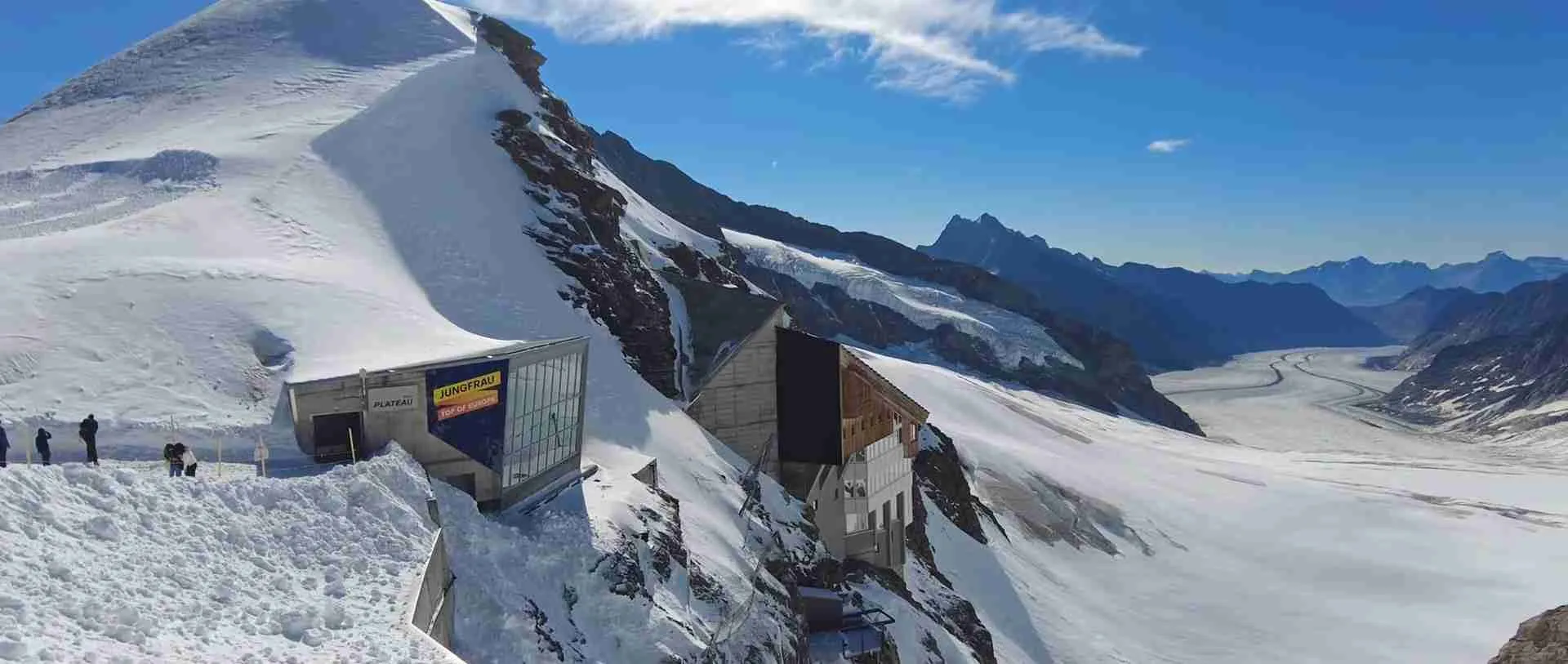
Jungfraujoch Day Trip from Zurich 2026: Complete Travel Planning Guide
Reaching Europe’s highest railway station from Zurich demands strategic planning across train connections, timing windows, and alpine weather patterns. The 8-hour round-trip journey traverses Switzerland’s most dramatic mountain scenery, delivering panoramic glacier views from 3,454 meters above sea level. Successful execution requires understanding ticket options, reservation protocols, and cost optimization strategies before departure day arrives.
Key Takeaways About Jungfraujoch Day Trips from Zurich in 2026
- Budget Range 2026: Economical day trips cost CHF 255-275 ($270-290) per person using Swiss Half Fare Card with supermarket meals. Mid-range experiences run CHF 270-340 ($285-360) per person mixing casual dining with pass discounts. Luxury excursions reach CHF 335-565 ($355-595) per person including premium dining and first-class travel options.
- Journey Duration: Complete round trips from Zurich require 8-10 hours total travel time, allocating 2-3 hours at the summit. Depart Zurich by 7:00 AM to reach Jungfraujoch before 11:00 AM crowds arrive, returning to Zurich by 6:00-8:00 PM depending on summit time spent.
- Route Options 2026: Two distinct paths reach the summit via Interlaken — the modern Eiger Express gondola from Grindelwald (45 minutes Grindelwald Terminal to summit) or the classic cogwheel route through Lauterbrunnen-Wengen-Kleine Scheidegg (90 minutes). Combining both routes captures maximum scenery variety.
- Mandatory Reservations: Seat reservations cost CHF 10 ($11) round trip per person and become mandatory May 1 through October 31, 2026. Book reservations simultaneously with tickets to guarantee departure times — trains operate every 30 minutes but reach capacity during peak morning hours.
- Weather Timing: Summit visibility peaks June through September with temperatures ranging -3°C to 3°C (27-37°F). Morning departures between 7:00-9:00 AM maximize clear sky probability before afternoon cloud buildup obscures panoramic views. Check live webcams before purchasing tickets during spring and autumn shoulder seasons.
- Included Attractions: All tickets grant access to Sphinx Observatory viewing platform, Ice Palace glacier sculptures, Alpine Sensation exhibition tunnel, and Glacier Plateau outdoor terrace. Snow Fun Park activities (zipline, sledding) require separate tickets and operate May 1 through October 18, 2026.
People Also Ask About Jungfraujoch Day Trips from Zurich 2026
How much does a Jungfraujoch day trip from Zurich cost in 2026?
Day trip costs from Zurich range CHF 255-565 ($270-595) per person depending on ticket strategy and dining choices. Budget travelers using Swiss Half Fare Card pay CHF 73 ($80) Zurich-Interlaken round trip plus CHF 131 ($145) Jungfraujoch ticket with seat reservation CHF 10 ($11), totaling CHF 214 ($236) for transportation alone. Adding supermarket meals CHF 30-40 ($33-44) brings daily totals to CHF 255-275 ($270-290) per person. Mid-range visitors with Half Fare Card or Swiss Travel Pass spend CHF 270-340 ($285-360) per person including casual restaurant dining. Swiss Travel Pass holders pay zero for Zurich-Interlaken segments but CHF 177 ($195) for Jungfraujoch access May-October. Luxury travelers combining first-class travel, Swiss Travel Pass Jungfraujoch supplement, and premium mountain dining reach CHF 335-565 ($355-595) per person for complete day experiences.
Can you visit Jungfraujoch from Zurich in one day in 2026?
Completing Jungfraujoch from Zurich as a day trip remains entirely feasible with proper timing execution. Direct trains from Zurich HB reach Interlaken Ost in 2 hours, with onward connections to Jungfraujoch requiring 90-120 minutes depending on route selection. Departing Zurich at 7:00 AM positions travelers at the summit by 10:30-11:00 AM, allowing 2-3 hours for observatory visits, Ice Palace exploration, and dining before descending. Return trains from Jungfraujoch departing 2:00-3:00 PM arrive back in Zurich by 6:30-8:00 PM. The compressed schedule eliminates Interlaken exploration but delivers full summit access within standard day-trip parameters. Travelers prioritizing relaxed pacing consider overnight stays in Interlaken or Grindelwald, converting the journey into a two-day experience with additional valley activities.
What’s the best route from Zurich to Jungfraujoch in 2026?
The optimal routing strategy combines both available paths for maximum scenic variety and photographic opportunities. Ascending via Grindelwald Terminal on the Eiger Express gondola delivers the fastest summit approach at 45 total minutes from Grindelwald, showcasing the dramatic Eiger North Face through panoramic gondola windows. Descending through Lauterbrunnen-Wengen-Kleine Scheidegg on classic cogwheel trains captures entirely different valley perspectives including Lauterbrunnen’s waterfall corridor. This combination route costs identical to single-path tickets but doubles landscape diversity. Pure speed prioritizers use Eiger Express both directions, while tradition-focused travelers select the Kleine Scheidegg cogwheel route ascending and descending. All routing permutations carry identical CHF 261 ($285) pricing May-October from Interlaken Ost, making path selection purely experiential rather than financial.
Do you need to book Jungfraujoch tickets in advance for 2026?
Advance ticket booking becomes mandatory rather than optional for May through October 2026 travel. Jungfrau Railways requires seat reservations on all Jungfraujoch-bound trains during this peak period, costing CHF 10 ($11) round trip and guaranteeing specific departure time slots. Without confirmed reservations, accessing summit trains becomes impossible regardless of ticket possession. Purchase tickets and reservations simultaneously through official channels to secure preferred morning departure windows before they reach capacity. April and November through early May permit same-day ticket purchases without reservations, though advance booking remains advisable during winter ski season and holiday periods when spontaneous crowds surge. Weather-dependent travelers booking conditionally should utilize flexible cancellation options offered through official channels, checking summit webcams morning-of-travel to verify visibility before final commitment.
Extended multi-day tours – 5+ days
Featured Zurich Multi-Day Tour Packages
6 days
6 Days Trip to Switzerland
- ✓ Comprehensive Zurich tour
- ✓ Expert local guides included
- ✓ All accommodation arranged
- ✓ Transportation provided

5 days
Grand Tour of Switzerland – 5 Days
- ✓ Comprehensive Zurich tour
- ✓ Expert local guides included
- ✓ All accommodation arranged
- ✓ Transportation provided
4 days
Switzerland 4-Day Tour: Alpine Classics (Jungfraujoch, Thermal Spa & Steep Funicular)
- ✓ Booking needs min. 2 travelers
6 days
SWISS GLACIERS, CHEESE AND CHOCOLATE
- ✓ Comprehensive Zurich tour
- ✓ Expert local guides included
- ✓ All accommodation arranged
- ✓ Transportation provided
Multi-day tour packages powered by TourRadar. Prices and availability subject to change.
Introduction: Planning Your Jungfraujoch Journey from Zurich in 2026
Switzerland’s “Top of Europe” stands as the culmination of 19th-century railway engineering ambition and 21st-century alpine tourism excellence. From Zurich’s urban landscape to Jungfraujoch’s glacial observatory requires navigating multiple transportation segments, understanding Swiss rail pass economics, and timing summit visits for optimal weather windows. The journey itself delivers as much value as the destination — cogwheel trains climbing through meadows, gondolas suspended over crevasses, tunnels carved through Eiger’s interior walls.
The 2026 travel season introduces mandatory reservation requirements for summer months, refined pricing structures across pass options, and infrastructure improvements reducing transfer times through the Eiger Express gondola system. Success demands pre-departure research into ticket permutations, weather pattern recognition, and cost optimization strategies that can reduce total expenses by 40% through strategic pass selection and dining choices.
This comprehensive guide addresses every decision point from initial ticket purchase through summit activities, return journey logistics, and budget management across three distinct spending tiers. Whether executing Switzerland’s signature excursion on backpacker economics or indulging in first-class comfort with premium mountain dining, understanding the complete cost-benefit landscape separates mediocre experiences from exceptional ones.
Understanding Transportation Routes to Jungfraujoch from Zurich in 2026
Reaching Jungfraujoch from Zurich requires connecting three distinct transportation segments: Zurich to Interlaken by intercity train, Interlaken to mountain base stations by regional rail, and final ascent to 3,454-meter summit via cogwheel railway or gondola. No single direct service exists — successful navigation depends on understanding transfer points, timing coordination, and route alternatives.
Zurich to Interlaken: First Segment Logistics
Direct InterCity trains depart Zurich HB for Interlaken Ost every hour from 5:19 AM through 7:02 PM, covering 92 kilometers in 2 hours. These modern double-deck trains traverse Lake Lucerne’s shoreline before climbing into Bernese Oberland valleys, offering continuously changing landscapes through oversized windows. Standard second-class tickets cost CHF 73 ($80) one way, while Swiss Half Fare Card holders pay CHF 36.50 ($40) and Swiss Travel Pass holders ride free. First-class upgrades add CHF 30-40 ($33-44) for additional legroom and quieter carriages.
Early morning departures prove essential for successful day trips. The 7:02 AM Zurich departure arrives Interlaken Ost 9:05 AM, connecting immediately to 9:13 AM Grindelwald trains or 9:35 AM Lauterbrunnen services. This timing positions travelers at Jungfraujoch by 10:30-11:00 AM before midday crowd peaks. Later Zurich departures compress summit time or force evening returns past 8:00 PM.
Interlaken operates two stations — Interlaken Ost (east) and Interlaken West — separated by 5 kilometers and 10 minutes rail time. All Jungfraujoch routes depart from Interlaken Ost exclusively, making this the critical transfer point. Direct Zurich trains terminate at both stations, but Ost connections prove more frequent and better coordinated with mountain services.
Route Option 1: Grindelwald via Eiger Express (Modern Fast Route)
From Interlaken Ost, regional trains reach Grindelwald Terminal in 35 minutes, with departures every 30 minutes throughout the day. The terminal serves as the base station for Eiger Express, a tricable gondola system completing the 2,300-meter ascent to Eiger Glacier station in 15 minutes. This engineering marvel opened in 2020, reducing traditional climbing time by 47 minutes while showcasing the Eiger North Face through floor-to-ceiling windows.
At Eiger Glacier station (2,320 meters elevation), passengers transfer to the Jungfrau Railway cogwheel train for the final 30-minute climb to Jungfraujoch summit. This segment passes through tunnels carved inside Eiger and Mönch mountains, with brief stops at Eigerwand and Eismeer stations offering viewing windows into rock walls and glacier ice. Total journey time Grindelwald Terminal to Jungfraujoch: 45 minutes.
The Eiger Express operates daily year-round except during maintenance closures April 20-24, 2026 and November 9-20, 2026. During these periods, alternative routing through Kleine Scheidegg remains available with slightly extended travel times.
Route Option 2: Lauterbrunnen-Wengen-Kleine Scheidegg (Classic Cogwheel Route)
Traditional routing from Interlaken Ost proceeds to Lauterbrunnen via regional train (20 minutes), then cogwheel railway ascending to Wengen village (15 minutes), continuing upward to Kleine Scheidegg pass (30 minutes). This 90-minute sequence climbs gradually through progressively higher alpine zones, passing waterfalls, mountain chalets, and flower meadows depending on season.
Kleine Scheidegg station (2,061 meters) serves as the final major transfer point, where Jungfrau Railway trains depart for the summit tunnel section. This historic route — Switzerland’s first mountain railway reaching such extreme elevation — maintains its original track alignment and gradient engineering from 1912 construction. The 50-minute climb from Kleine Scheidegg to Jungfraujoch includes the same Eigerwand and Eismeer viewing stops as the Eiger Express connection.
Total journey time Lauterbrunnen to Jungfraujoch via Wengen-Kleine Scheidegg: 90 minutes. This traditional path operates year-round except for seasonal maintenance: Wengen-Kleine Scheidegg line closes November 9 through December 4, 2026, while Grindelwald-Kleine Scheidegg cogwheel shuts October 26 through November 6, 2026.
Combination Routing Strategy (Maximum Scenic Value)
Experienced travelers optimize landscape diversity by combining both routes — ascending one path, descending the other. The recommended configuration sends travelers up via Grindelwald Eiger Express (faster, morning efficiency) and down through Lauterbrunnen-Wengen (relaxed afternoon pace, different valley perspectives). This strategy delivers Eiger North Face views, tunnel sections, Kleine Scheidegg alpine meadows, Lauterbrunnen waterfall valley, and Wengen village charm in a single comprehensive experience.
Ticket pricing remains identical regardless of route combination or direction chosen. Return tickets from Interlaken Ost to Jungfraujoch cost CHF 261.20 ($285) May-October regardless whether travelers ascend via Grindelwald, Lauterbrunnen, or mixed routing. This pricing parity makes path selection purely experiential rather than financial, encouraging visitors to maximize scenic variety through combination approaches.
Jungfraujoch Ticket Options and Pricing Strategy for 2026
Navigating Jungfraujoch ticket economics requires understanding multiple pass types, seasonal pricing variations, and strategic purchase timing. Standard tickets, Swiss rail passes, and specialized mountain passes each deliver different value propositions depending on broader Switzerland itinerary scope and travel duration. Check official sites for current rates as mountain railway pricing adjusts annually.
Standard Tickets from Interlaken (No Rail Pass)
Travelers without Swiss rail passes purchase point-to-point return tickets from Interlaken Ost to Jungfraujoch at CHF 261.20 ($285) per adult during May-October peak season, dropping to CHF 224.40 ($245) November-April off-peak period. These prices include all intermediate segments — Interlaken to Grindelwald or Lauterbrunnen, mountain railway transfers, and final summit access. Tickets grant same-day validity with unlimited route flexibility, permitting Grindelwald ascent and Lauterbrunnen descent combinations.
Seat reservations add CHF 10 ($11) per person round trip and become mandatory May 1 through October 31. During winter months, reservations remain optional but strongly recommended for first morning departures when ski groups fill carriages. Children under 6 travel free without tickets, while youth ages 6-15 receive 50% discounts when traveling with parents holding standard adult tickets.
Tickets purchased from Grindelwald Terminal or Lauterbrunnen stations rather than Interlaken Ost cost CHF 239.20 ($260) May-October, CHF 201.20 ($220) off-peak, reflecting the shorter journey segment. This pricing structure benefits overnight guests in mountain villages but offers minimal advantage for Zurich day-trippers requiring Interlaken connections regardless.
Swiss Half Fare Card Strategy
The Swiss Half Fare Card delivers 50% discounts on all rail segments including Jungfraujoch mountain railways, creating significant savings for multi-day Switzerland itineraries. The card costs CHF 120 ($130) annually and immediately reduces Interlaken Ost-Jungfraujoch returns to CHF 130.60 ($145) peak season, CHF 112.20 ($125) off-peak. Combined with halved Zurich-Interlaken fares (CHF 36.50 vs CHF 73), total transportation savings reach CHF 110-140 ($120-155) on a single Jungfraujoch day trip.
Break-even analysis proves straightforward: the card pays for itself after just two major Swiss journeys or one multi-destination trip combining Jungfraujoch with other mountain excursions. Travelers planning Schilthorn, Gornergrat, or Pilatus visits alongside Jungfraujoch realize immediate financial advantages through Half Fare Card purchase. One-month validity cards exist at reduced rates for shorter Switzerland stays.
The card does not eliminate seat reservation fees — the mandatory CHF 10 ($11) charge applies regardless of Half Fare Card possession. However, combined transportation savings of CHF 110+ far exceed the CHF 10 reservation cost, maintaining strong overall value proposition.
Swiss Travel Pass Coverage and Limitations
Swiss Travel Pass grants unlimited train, bus, and boat travel across Switzerland’s public transportation network, but Jungfraujoch presents unique limitations. The pass covers Zurich-Interlaken segments completely (zero additional cost) and provides 25% discounts on mountain railways rather than free access. Jungfraujoch tickets for pass holders cost CHF 177.20 ($195) May-October, CHF 148.60 ($160) off-peak — substantial reductions from standard CHF 261 pricing but not eliminating costs entirely.
Swiss Travel Pass economics favor travelers combining multiple destinations over single-focus Jungfraujoch trips. A 3-day pass costs CHF 250 ($275) and delivers free Zurich-Interlaken-Lucerne-Bern transportation plus 25-50% mountain railway discounts across numerous peaks. Visitors planning Jungfraujoch alongside Schilthorn, Rhine Falls, Lake Geneva steamers, and urban exploration realize strong value. Single-destination travelers focused exclusively on Jungfraujoch save more through Half Fare Card purchase.
Pass holders still pay the CHF 10 ($11) seat reservation fee. Unlike Half Fare Card’s pure discount approach, Swiss Travel Pass partially subsidizes mountain access while maintaining premium pricing for extraordinary engineering investments required at extreme elevations.
Jungfrau Travel Pass (Regional Multi-Day Option)
The Jungfrau Travel Pass delivers unlimited regional transportation across Interlaken, Grindelwald, Lauterbrunnen, and surrounding valleys for 3-8 consecutive days, with special pricing on Jungfraujoch access. Pass holders ride free on valley trains, buses, and cable cars to destinations like Grindelwald First, Schynige Platte, and Harder Kulm. Jungfraujoch requires a connecting supplement of CHF 63-75 ($69-82) rather than free access, but this remains significantly below standard ticket pricing.
Three-day passes cost CHF 240 ($260), positioning them ideally for travelers planning extended Jungfrau Region stays combining multiple mountain excursions, valley hiking, and village exploration. Zurich day-trippers gain no advantage from this regional pass as it excludes Zurich-Interlaken long-distance segments covered separately. The pass targets multi-day Interlaken-based visitors rather than single-excursion travelers departing from distant cities.
Booking Timing and Weather Contingency Planning
Advance ticket booking ensures seat reservation access during peak season but introduces weather risk — summit visibility can shift dramatically between purchase date and travel date. Official channels offer flexible cancellation options for tickets purchased online, permitting date changes up to departure time with minimal fees. This flexibility proves essential for weather-dependent travelers willing to adjust plans based on morning visibility forecasts.
Live webcams positioned at Jungfraujoch summit stream continuous video feeds accessible through official Jungfrau Railways websites. Checking these cameras the morning of potential travel dates reveals actual visibility conditions rather than relying on valley weather forecasts that often differ dramatically from summit conditions. Cloudy Interlaken mornings frequently accompany crystal-clear summit skies above the cloud layer, while perfectly sunny valley weather can correspond with summit cloud cover obscuring all panoramic views.
Budget travelers committed to specific dates regardless of weather conditions maximize savings through early purchase discounts. Flexibility-prioritizing visitors accept potential premium pricing on last-minute purchases in exchange for guaranteed optimal visibility. The trade-off between advance savings and weather certainty represents a personal risk tolerance calculation each traveler resolves differently.
Complete Day Trip Itinerary: Zurich to Jungfraujoch Return in 2026
Executing a successful Jungfraujoch day trip from Zurich requires precise timing coordination across multiple train segments, strategic summit activity sequencing, and realistic scheduling that accounts for crowds, weather variables, and physical acclimatization to 3,454-meter elevation. The following hour-by-hour framework maximizes experience quality while maintaining feasible return to Zurich.
5:30-7:00 AM: Pre-Departure Preparation and Zurich Station Arrival
Begin the day with substantial breakfast before departure — Zurich offers limited quality options near the station and prices prove significantly lower than mountain restaurants. Arrive Zurich HB station by 6:45 AM for the 7:02 AM Interlaken departure, allowing time for platform location and seat selection. Carry all necessary summit gear: insulated jacket (temperatures reach -10°C even July mornings), sunglasses (snow glare at elevation causes severe eye strain), sunscreen SPF 50+ (UV intensity doubles at 3,454 meters), water bottle (altitude dehydration accelerates rapidly), and energy snacks (summit restaurants charge premium prices).
Verify ticket validity and seat reservation confirmations before boarding. Second-class carriages fill quickly on popular travel days — early boarding secures window seats for optimal Lake Lucerne and Bernese Oberland scenery during the 2-hour journey. First-class passengers access quieter carriages with guaranteed seating and larger windows, but second-class delivers identical route views at significantly lower cost.
7:02-9:05 AM: Zurich HB to Interlaken Ost Scenic Railway
The InterCity train departs Zurich HB at 7:02 AM sharp — Swiss railways maintain legendary punctuality with average delays under 1 minute annually. The route follows Lake Zurich’s eastern shore before transitioning to Lake Lucerne views, climbing through forests into progressively higher mountain valleys. Brunig Pass crossing (1,008 meters) marks the transition from central Switzerland into Bernese Oberland alpine territory, with landscape character shifting from gentle hills to dramatic peaks.
Use this 2-hour segment for final summit research, photography preparation, and physical hydration. Altitude acclimatization begins through gradual elevation gain during the train journey — proper hydration during ascent significantly reduces altitude sickness risk upon reaching 3,454-meter summit elevation. Onboard bathrooms provide final comfortable facilities before mountain station limitations.
Arrival at Interlaken Ost occurs at 9:05 AM with immediate platform transfer to 9:13 AM Grindelwald regional train or 9:35 AM Lauterbrunnen service. Follow clear signage directing to Jungfrau Region platforms — Interlaken Ost operates as a major hub with multiple platform tracks requiring brief walking transfers.
9:13-10:30 AM: Mountain Base to Summit Ascent
Selecting Grindelwald routing (fastest option) places travelers aboard the 9:13 AM regional train reaching Grindelwald Terminal at 9:48 AM. Immediate transfer to Eiger Express gondola departs 10:00 AM, arriving Eiger Glacier station 10:15 AM. Final Jungfrau Railway cogwheel train departs Eiger Glacier 10:25 AM, arriving Jungfraujoch summit 10:55 AM. Total Interlaken Ost to summit: 1 hour 50 minutes.
Alternative Lauterbrunnen routing extends journey time to 2 hours 30 minutes but delivers different scenic perspectives. The 9:35 AM Interlaken-Lauterbrunnen train connects to 10:05 AM Wengernalp Railway ascending through Wengen village to Kleine Scheidegg (arrival 11:15 AM), with continuing Jungfrau Railway departures every 30 minutes. This traditional route emphasizes gradual alpine transition through progressively higher elevation zones rather than rapid gondola ascent.
During ascent, watch for dramatic landscape transitions: Grindelwald valley meadows give way to rocky alpine terrain, tree lines disappear above 2,000 meters, and permanent snow cover begins around Eiger Glacier elevation. The tunnel section through Eiger and Mönch mountains includes brief viewing stops at Eigerwand (9-minute halt for Eiger North Face windows) and Eismeer (5-minute halt for glacier overlooks). These stops remain included in journey time but add educational value through interpretive displays.
10:55 AM-2:00 PM: Summit Experience and Activity Sequencing
Arrival at Jungfraujoch summit station (3,454 meters) places travelers inside a complex carved partially into the mountain with multiple levels, restaurants, shops, and attraction access points. Initial orientation proves essential — comprehensive signage directs to major sites but facility layout confusion wastes valuable summit time. Prioritize activities in this sequence to optimize experience and minimize crowd conflicts.
Immediate destination: Sphinx Observatory viewing platform accessed via high-speed elevator from arrival level. This platform delivers 360-degree panoramic views encompassing Aletsch Glacier (Europe’s longest at 23 kilometers), Eiger-Mönch-Jungfrau massif, and distant Black Forest visibility on clear days. Morning hours between 11:00 AM and 12:30 PM offer optimal clarity before afternoon cloud buildup obscures views. Photographers secure positions along metal railings circling the observation deck — crowds peak 11:30 AM-1:00 PM but disperse afterward.
Descend from Sphinx to access Ice Palace, located one level below main station complex. This underground network of tunnels and chambers carved into living glacier ice maintains -3°C temperatures year-round, showcasing intricate ice sculptures including bears, penguins, and abstract forms. The palace requires 20-30 minutes for complete exploration, with non-slip floor mats essential due to naturally slippery ice surfaces. Bring the insulated jacket carried from Zurich — the palace temperature proves significantly colder than outdoor summit conditions.
Alpine Sensation tunnel connects Ice Palace to main facility complex, presenting historical exhibition covering Jungfrau Railway construction through immersive displays, period photographs, and multimedia presentations. This 250-meter corridor requires 15-20 minutes transit time and serves dual purposes: educational content and sheltered passageway between facility sections. Interactive stations allow children to engage with construction history through games and challenges.
Glacier Plateau outdoor terrace provides ground-level snow access for photographs, short walks, and direct glacier contact. The plateau extends several hundred meters from facility walls with marked safe walking zones — venturing beyond marked areas risks crevasse danger and requires mountaineering experience. Snow conditions remain consistent year-round at this elevation, permitting snowball creation and winter photographs even during July heat waves in valley towns.
Lindt Chocolate Heaven shop occupies prime real estate on the main level, offering Switzerland’s highest-elevation chocolate retail experience with exclusive “Top of Europe” product lines unavailable elsewhere. The interactive Maître Chocolatier exhibit demonstrates chocolate production at high altitude, explaining how low atmospheric pressure affects tempering processes. Prices reflect summit logistics costs — expect CHF 8-15 ($9-17) for standard chocolate bars that cost CHF 4-6 ($4-7) in valley supermarkets.
Snow Fun Park (seasonal May-October) operates separate from main facility complex, requiring outdoor access and separate ticket purchase CHF 30-45 ($33-50). Activities include glacier zipline (330-meter flight over crevasse fields), snow tubing, and traditional wooden sled runs. The park targets active adventure seekers willing to invest additional money and time beyond included attractions. Budget travelers skip this entirely, while luxury visitors consider it optional enhancement.
12:30-1:30 PM: Dining Options and Budget Management
Multiple restaurants operate at Jungfraujoch spanning price ranges from self-service cafeteria to sit-down dining with reservations. Crystal Restaurant offers highest elevation a la carte dining in Europe with mains CHF 35-65 ($38-72) featuring Swiss specialties and international cuisine. Bollywood Restaurant (operational April-October only) serves Indian buffet CHF 35-45 ($38-50). Aletsch self-service cafeteria delivers most affordable option with sandwiches CHF 12-18 ($13-20), soups CHF 10-15 ($11-17), and hot meals CHF 20-30 ($22-33).
Budget-conscious travelers maximize savings through packed lunches prepared at valley supermarkets before ascent. Coop and Migros stores in Interlaken or Grindelwald offer fresh sandwiches CHF 5-8 ($6-9), fruit, snacks, and beverages at 60% below summit pricing. Designated eating areas accommodate packed meals without restaurant purchase requirements, though outdoor Glacier Plateau seating proves more pleasant weather permitting.
All restaurants experience peak capacity 12:00-1:30 PM when converging tour groups and individual travelers create 30-45 minute wait times for tables. Arriving 11:30 AM or delaying until 2:00 PM eliminates queues entirely while maintaining food service availability. Reserve seating proves impossible — all restaurant operations function first-come-first-served during peak season.
2:00-2:30 PM: Descent Preparation and Final Summit Activities
Allow 30 minutes before planned departure for bathroom access, souvenir purchases, and final photography. Bathroom facilities on the main level remain open continuously but experience significant afternoon crowding — early afternoon timing proves optimal. The highest-elevation post office in Europe operates adjacent to main commercial area, offering unique “Top of Europe” postmarks on cards mailed from 3,454 meters. Postcards cost CHF 3-5 ($3-6) with postage included, creating memorable souvenirs sent directly from the summit.
Verify descent train departure times via digital displays throughout facility. Trains to Eiger Glacier (connecting to Grindelwald) and Kleine Scheidegg (connecting to Lauterbrunnen) depart every 30 minutes in alternating pattern. Peak afternoon departures 2:00-4:00 PM fill rapidly — seat reservation priority applies equally to descent journeys, though capacity constraints prove less severe than morning ascents.
2:30-5:00 PM: Summit to Interlaken Descent Journey
Selecting opposite route for descent maximizes landscape variety while maintaining identical timing to ascent. Travelers who ascended via Grindelwald Eiger Express descend through Kleine Scheidegg-Wengen-Lauterbrunnen for complete experience coverage. The 2:30 PM Jungfraujoch departure reaches Kleine Scheidegg at 3:20 PM, connecting to 3:35 PM Wengernalp Railway descending to Wengen (arrival 4:05 PM) and continuing to Lauterbrunnen (arrival 4:20 PM). Regional train from Lauterbrunnen reaches Interlaken Ost at 4:40 PM.
Alternative return via Grindelwald proves faster for travelers prioritizing early Zurich arrival. Descent to Eiger Glacier by cogwheel train (30 minutes) connects to Eiger Express gondola (15 minutes) reaching Grindelwald Terminal by 3:30 PM. Regional train Grindelwald-Interlaken Ost departs 3:48 PM arriving 4:23 PM, saving 15-20 minutes compared to Lauterbrunnen routing.
Late afternoon return journeys deliver different lighting conditions from morning ascent — photographers capture golden hour illumination on mountain faces impossible during morning blue light. Window seat selection proves equally important for descent as ascent, particularly on Lauterbrunnen route where afternoon sun angles illuminate waterfall sequences magnificently.
5:10-7:10 PM: Interlaken to Zurich Return and Arrival
Direct InterCity trains depart Interlaken Ost for Zurich HB at 5:10 PM (arrival 7:10 PM) and 6:10 PM (arrival 8:10 PM). The 5:10 PM connection proves optimal for day-trippers targeting reasonable Zurich dinner hour arrival while maintaining 2.5-hour summit duration. Selecting the 6:10 PM departure extends summit time to 3.5 hours but delays Zurich return past 8:00 PM, limiting evening dining and activity options.
The return journey offers opportunity for trip reflection, photograph organization, and rest after physical exertion at altitude. Many travelers experience fatigue following extended periods at 3,454 meters — the rapid descent to 400-meter Zurich elevation level compounds this effect through pressure changes. Light reading, music, or simple rest proves more advisable than attempting complex planning or work during return transit.
Arrival at Zurich HB by 7:10 PM or 8:10 PM permits connection to accommodations, dinner reservations, or evening activities within the city. The station area offers numerous dining options from casual cafeterias to formal restaurants spanning all budget ranges. Grocery stores remain open until 9:00 PM for travelers preparing own meals or seeking snack supplies.
Weather Patterns and Optimal Visiting Seasons for 2026
Jungfraujoch weather operates independently from valley conditions, creating frequent scenarios where sunny Interlaken mornings correspond with summit clouds or vice versa. Understanding seasonal temperature patterns, precipitation probability, and daily visibility cycles proves essential for scheduling visits that deliver promised panoramic experiences rather than white-out disappointment.
Summer Season: June Through August Peak Conditions
Summer months deliver most reliable weather windows with temperatures ranging -3°C to 3°C (27-37°F) at summit elevation and extended daylight hours maximizing usable visit duration. July peaks as warmest month with afternoon temperatures occasionally reaching 5°C (41°F), though mornings consistently remain below freezing regardless of valley heat. Clear sky probability exceeds 65% during summer months, substantially higher than spring or autumn shoulder seasons averaging 45-50% clarity.
Extended daylight from 5:30 AM sunrise through 9:00 PM sunset permits flexible departure timing without darkness concerns affecting descent safety or photography quality. Early morning departures still prove advisable for optimal visibility windows, but afternoon visits remain feasible for travelers unable to manage predawn Zurich departures. Tourist crowds peak during this period with trains reaching full capacity 11:00 AM-2:00 PM daily — advance seat reservations become absolutely mandatory rather than merely recommended.
Snow Fun Park operates full schedule May 1 through October 18, making summer the exclusive season for zipline and sledding activities beyond core observatory and Ice Palace attractions. Families with children find maximum activity variety during this window, though corresponding crowd levels require patience at popular installations.
Spring Shoulder Season: April Through May Transition Period
Spring presents mixed weather reliability with April averaging -7°C (19°F) and May warming to -2.5°C (27°F) at summit level. Clear day probability fluctuates around 50% with higher variability than stable summer patterns — spectacular crystal-clear panoramas alternate with multi-day cloud coverage periods. This unpredictability demands flexible scheduling and willingness to monitor weather forecasts closely before committing to specific travel dates.
Tourism volume drops 40% below summer peaks during April-May, eliminating most crowd-related frustrations at popular photo locations and restaurant queues. Hotels and valley accommodations reduce pricing 20-30% from summer rates while maintaining full service availability. Budget-conscious travelers willing to accept weather risk realize significant savings without sacrificing access to core summit attractions.
Valley landscapes transition from winter snow cover to spring bloom during this period, creating photographic opportunities combining snow-capped peaks with flowering meadows at lower elevations. This contrast proves impossible to capture during winter uniformly white landscapes or summer completely green valleys. Photographers specifically targeting this mixed-season aesthetic prefer late April through mid-May windows.
Autumn Shoulder Season: September Through October Golden Light
Autumn delivers similar weather reliability to spring with September maintaining summer-like conditions (0-3°C at summit) before October cooling toward winter patterns (-7°C average). Clear day probability remains around 55% through September, dropping to 45% during October as winter storm patterns begin influencing the region. The trade-off between moderate crowd levels and acceptable weather makes early autumn attractive for many visitors.
Larch forests throughout Jungfrau Region turn brilliant gold during late September and early October, creating stunning color contrasts against evergreen forests and snow-covered peaks. This foliage period lasts only 2-3 weeks annually before deciduous trees drop leaves, making timing essential for photographers seeking autumn palette captures. Valley hiking trails remain accessible throughout September with gradual snow line descent occurring through October.
Tourist volumes decline 35% below summer peaks during autumn months as European school terms resume and family travel diminishes. Adults traveling without children find significantly reduced crowds at summit facilities and improved restaurant availability without lengthy waits. Afternoon train capacity loosens considerably, often permitting walk-up boarding without advance reservations during September weekdays.
Winter Season: November Through March Snow Paradise
Winter transforms Jungfraujoch into pristine frozen wonderland with temperatures regularly dropping to -15°C (5°F) and occasional extremes reaching -20°C (-4°F) during January-February coldest periods. Clear sky probability improves to 60% during winter months as stable high-pressure systems settle over the Alps, delivering crisp visibility and razor-sharp distant horizon views impossible during humid summer months.
Shorter daylight hours constrain visit timing with December sunrise occurring 8:00 AM and sunset 4:30 PM, compressing available outdoor photography windows. Early morning Zurich departures become more critical during winter to maximize limited daylight summit hours. Snow accumulation reaches maximum depth during this season, creating picture-perfect postcard landscapes but also requiring more extensive cold-weather gear than summer visits.
Winter sports enthusiasts find optimal conditions during this period with nearby ski resorts operating full capacity and fresh snow regularly replenishing slopes. Combining Jungfraujoch summit visits with valley skiing delivers comprehensive alpine experience unavailable during summer hiking season. Regional hotels reduce rates 25-35% compared to summer peaks while many mountain restaurants operate limited hours or close entirely, reducing dining variety.
Daily Timing Windows and Cloud Formation Patterns
Regardless of season, morning hours between 8:00 AM and 12:00 PM deliver consistently better visibility than afternoon periods. Valleys heat during morning sun exposure, causing moisture evaporation that rises as air masses warm, forming afternoon clouds that obscure summit views by 2:00-4:00 PM. This pattern repeats with remarkable consistency during stable weather periods, making early summit arrival the single most reliable visibility optimization strategy.
Live webcams positioned at Jungfraujoch stream continuous feeds accessible through official Jungfrau Railways website, providing real-time visibility verification rather than relying on weather forecast predictions. Check these cameras the morning of travel to confirm actual conditions match forecasted patterns. Completely clouded webcam feeds indicate poor visibility days worth postponing for weather-flexible travelers, while crystal-clear streams confirm optimal conditions regardless of valley weather reports.
Temperature inversions occur frequently during winter months, creating scenarios where fog-shrouded valleys contrast with brilliant sunshine above cloud layers at summit elevation. Checking summit webcams reveals these conditions immediately — valley weather observations prove completely irrelevant for summit experience quality during inversion events. Travelers monitoring only valley forecasts miss spectacular summit conditions occurring simultaneously above the clouds.
Complete Cost Breakdown: Budget Planning for 2026 Jungfraujoch Day Trips
Understanding comprehensive day trip costs requires accounting for all transportation segments, ticket options, meal expenses, and optional activities beyond basic admission pricing. The following budget tier breakdowns provide realistic spending frameworks for economical, moderate, and premium experience levels from Zurich departure through return arrival.
Budget Tier: Economical Day Trip Strategy CHF 255-275 ($270-290)
Minimizing costs while maintaining full summit access requires strategic Swiss Half Fare Card purchase and self-catering meal preparation. The card costs CHF 120 ($130) valid for one year, delivering immediate value on this single excursion through 50% fare reductions across all segments. Round-trip Zurich HB to Interlaken Ost costs CHF 73 ($80) with Half Fare Card versus CHF 146 ($160) standard fare, saving CHF 73 before even reaching mountain railways.
Jungfraujoch tickets with Half Fare Card cost CHF 130.60 ($145) May-October peak season, reduced from standard CHF 261.20. Mandatory seat reservations add CHF 10 ($11) unavoidable expense. Total transportation: CHF 213.60 ($236) Zurich round-trip to summit and return.
Food costs minimize through supermarket preparation before departure. Coop or Migros breakfast supplies (bread, cheese, juice) cost CHF 5-8 ($6-9) versus CHF 15-25 ($17-28) cafe breakfast. Packed lunch ingredients (sandwich materials, fruit, snacks, beverages) total CHF 8-12 ($9-13) providing complete midday meal versus CHF 20-35 ($22-38) summit restaurants. Light dinner back in Zurich from supermarket ingredients costs CHF 10-15 ($11-17) rather than CHF 30-50 ($33-55) restaurant dining. Total daily food: CHF 30-40 ($33-44).
Summit activities remain free beyond admission — Sphinx Observatory, Ice Palace, Alpine Sensation, and Glacier Plateau require no additional payment. Skipping optional Snow Fun Park eliminates CHF 30-45 ($33-50) expense without reducing core experience quality. Souvenir budgeting remains discretionary — postcards from summit post office cost CHF 3-5 ($3-6) while chocolate purchases run CHF 8-20 ($9-22) depending on quantity.
Complete budget tier daily total: Transportation CHF 214 ($236), meals CHF 30-40 ($33-44), optional postcards CHF 5 ($6), totaling CHF 255-275 ($270-290) per person for full day experience. This tier sacrifices restaurant dining ambiance and premium chocolate shopping while maintaining identical summit access and activity participation as higher spending levels.
Mid-Range Tier: Comfortable Experience Balance CHF 270-340 ($285-360)
Balancing cost management with comfort upgrades permits casual restaurant dining and reduced meal preparation effort while maintaining reasonable overall spending. Swiss Half Fare Card or Swiss Travel Pass both serve this tier depending on broader Switzerland itinerary scope. Half Fare Card delivers better value for Jungfraujoch-focused trips, while Swiss Travel Pass excels for multi-destination travelers combining Jungfraujoch with Lucerne, Bern, and other cities.
Using Half Fare Card strategy: Zurich-Interlaken round trip CHF 73 ($80), Jungfraujoch ticket CHF 130.60 ($145), seat reservation CHF 10 ($11) totals CHF 213.60 ($236) transportation. Alternative Swiss Travel Pass approach eliminates Zurich-Interlaken costs (included in pass) but increases Jungfraujoch supplement to CHF 177.20 ($195) for 25% discount rather than Half Fare Card’s 50% reduction. Transportation range: CHF 187-214 ($205-236) depending on pass selection.
Mid-range dining balances quality and value through strategic meal timing. Zurich breakfast at hotel (often included) or cafe costs CHF 12-18 ($13-20) for complete morning meal. Summit lunch at Aletsch self-service cafeteria delivers hot food CHF 20-35 ($22-38) avoiding premium sit-down restaurant pricing. Coffee and snack at summit add CHF 10-15 ($11-17). Return evening meal in Interlaken or Zurich casual restaurant costs CHF 30-45 ($33-50). Total daily dining: CHF 70-115 ($77-127).
Optional activities remain discretionary with Snow Fun Park CHF 30-45 ($33-50) and souvenir chocolate purchases CHF 15-30 ($17-33) representing common mid-range indulgences. These additions prove completely optional — skipping them maintains lower tier spending while including them enhances experience for active families or chocolate enthusiasts.
Complete mid-range tier daily total: Transportation CHF 187-214 ($205-236), meals CHF 70-115 ($77-127), optional activities CHF 0-45 ($0-50), totaling CHF 270-340 ($285-360) per person. This tier delivers comfortable restaurant dining and reduced logistical complexity compared to budget self-catering while maintaining cost consciousness through strategic pass usage and mid-tier restaurant selection.
Luxury Tier: Premium Comfort Experience CHF 335-565 ($355-595)
Maximizing comfort and minimizing logistical concerns permits first-class travel, premium dining, and comprehensive activity participation without budget constraints driving decisions. Swiss Travel Pass First Class grants unlimited first-class rail access across Switzerland networks including Zurich-Interlaken segments, though mountain railways operate single-class systems making first-class upgrades irrelevant beyond valley portions.
First-class Swiss Travel Pass holders ride Zurich-Interlaken in premium carriages (zero additional cost as pass benefit) then purchase Jungfraujoch supplement CHF 177.20 ($195) plus seat reservation CHF 10 ($11). Total transportation: CHF 187 ($205) assuming existing pass ownership. Travelers purchasing dedicated first-class tickets specifically for Jungfraujoch day trips without broader pass needs spend CHF 140-180 ($155-200) Zurich-Interlaken first class plus standard Jungfraujoch ticket CHF 261 ($285), totaling CHF 411-451 ($455-495) transportation alone.
Premium dining embraces full restaurant service across all meals. Zurich hotel breakfast buffet or upscale cafe costs CHF 20-30 ($22-33) with comprehensive selection. Summit lunch at Crystal Restaurant sit-down service delivers Swiss specialties CHF 40-65 ($44-72) with panoramic dining room views. Coffee and dessert at Lindt Chocolate Heaven add CHF 15-25 ($17-28). Return dinner at quality Interlaken or Zurich restaurant costs CHF 60-90 ($66-100). Total luxury dining: CHF 140-215 ($155-237).
Snow Fun Park participation CHF 30-45 ($33-50) and generous chocolate shopping CHF 30-50 ($33-55) complete the luxury experience without budget restrictions limiting activity choices or souvenir purchases. Guided tour options available through third-party operators add CHF 100-150 ($110-165) for multilingual expert commentary throughout the journey, though independent travel using this guide delivers equivalent information without guide costs.
Complete luxury tier daily total: Transportation CHF 187-451 ($205-495) depending on pass ownership versus dedicated ticket purchase, meals CHF 140-215 ($155-237), activities and shopping CHF 60-100 ($66-110), totaling CHF 335-565 ($355-595) per person considering lowest (pass holder) to highest (dedicated first-class tickets) scenarios. This tier eliminates all budget considerations, focusing exclusively on comfort, convenience, and premium dining experiences throughout the day.
Activities and Attractions at Jungfraujoch Summit in 2026
Beyond the journey itself, Jungfraujoch summit facilities deliver diverse activities spanning observation platforms, ice exhibits, historical exhibitions, dining options, and seasonal outdoor adventures. Understanding attraction layout and optimal sequencing maximizes limited summit time while avoiding crowd bottlenecks at popular installations.
Sphinx Observatory: Europe’s Highest Viewing Platform
The Sphinx Observatory crowns the summit facility at 3,571 meters elevation, accessed via high-speed elevator from the main arrival level. The outdoor viewing platform encircles the observatory building, providing 360-degree unobstructed panoramas encompassing the Aletsch Glacier extending 23 kilometers southward, the Eiger-Mönch-Jungfrau massif forming the northern amphitheater, and distant horizons reaching Black Forest (Germany) and Vosges Mountains (France) on exceptionally clear days.
Morning hours between 10:00 AM and 12:30 PM deliver optimal visibility before afternoon cloud formation obscures views. Photographers position along metal railings at cardinal direction points — south-facing positions capture Aletsch Glacier in best light during morning hours, while north-facing angles showcase the Eiger North Face’s dramatic rock walls. The platform accommodates approximately 200 people comfortably, though summer peak hours compress this capacity creating dense crowds at prime photography locations.
Indoor observatory sections house meteorological stations and research equipment closed to public access, but interpretive displays explain high-altitude scientific research conducted continuously since 1931. These exhibits occupy the elevator waiting area, providing educational content during brief queue periods. Temperature on the outdoor platform typically runs 5-10°C colder than indoor facility spaces due to wind exposure — even travelers comfortable inside buildings require insulated jackets for extended platform time.
Ice Palace: Glacier Interior Exploration
Carved directly into living glacier ice beneath the summit facility, the Ice Palace maintains natural -3°C (27°F) temperature year-round without artificial refrigeration. The network of tunnels and chambers extends approximately 1,000 square meters, featuring intricate ice sculptures created by resident artists including life-size bears, penguins, birds, and abstract formations. Specialized LED lighting illuminates sculptures through the translucent ice, creating blue-glow atmospheric effects particularly photogenic for social media documentation.
The palace requires 20-30 minutes for complete exploration at comfortable walking pace. Floors consist of compacted ice with textured rubber mats providing traction, but surfaces remain inherently slippery requiring careful foot placement. Children particularly enjoy this attraction combining fairy-tale aesthetics with tangible glacier experience — parents supervise closely as ice walls and sculptures prove surprisingly fragile under physical contact despite appearing solid.
Temperature inside the palace drops significantly below outdoor platform conditions. The insulated jacket essential for Sphinx Observatory proves doubly critical here — prolonged exposure without proper layering causes rapid heat loss and discomfort. Most visitors complete palace exploration in two distinct phases: initial walkthrough capturing photos and general impressions, followed by targeted return to specific favorite sculptures for detailed photography without crowd interference.
Alpine Sensation: Historical Exhibition Tunnel
Connecting the Ice Palace to main facility complex, Alpine Sensation presents Jungfrau Railway construction history through immersive multimedia installations spanning 250 meters of carved tunnels. The exhibition chronicles engineering challenges faced during 1896-1912 construction period, when workers carved 7 kilometers of rail tunnel through solid Eiger and Mönch mountain interiors using primitive drilling equipment and explosives.
Interactive displays allow visitors to manipulate virtual drilling machines, review historical photographs documenting construction progress, and examine period tools and equipment used by railway workers. Audio guides available in eight languages provide detailed narration synchronized to exhibition zones, though self-guided exploration remains equally informative through comprehensive text panels and visual documentation. Children engage with hands-on interactive stations simulating tunnel boring and rock removal challenges.
The tunnel serves dual purposes: educational content delivery and climate-controlled transit corridor connecting separated facility sections. Walking the complete exhibition at moderate pace consumes 15-20 minutes, though railway history enthusiasts extend this to 30-40 minutes through detailed exhibit examination. Temperature inside remains comfortable stable 10-12°C (50-54°F), providing welcome respite between Ice Palace’s extreme cold and outdoor platform wind exposure.
Glacier Plateau: Outdoor Snow Access
The Glacier Plateau extends several hundred meters from facility exterior walls, offering ground-level glacier surface access for photographs, snow play, and limited walking. Marked safe zones indicate areas verified free of crevasse danger, while roped boundaries warn against venturing into unmarked territory requiring mountaineering expertise and equipment. Snow conditions remain consistent year-round at this elevation — visitors photograph themselves in snow during July heat waves, creating novelty summer snow documentation.
The plateau serves as primary location for classic “Swiss flag with mountain backdrop” photographs dominating social media feeds and postcards. Large Swiss flags positioned at strategic photo points permit tourists to create iconic souvenir images without requiring professional photography equipment. Morning light angles favor east-facing shots, while afternoon sun illuminates west-facing positions — photographers consult sun position before selecting optimal flag locations.
Active visitors engage in brief snow walks along marked paths extending up to 500 meters from facility walls. These walks require no special equipment beyond sturdy boots and warm clothing, though fresh snow conditions after recent storms demand vigilance regarding deeper accumulations potentially hiding uneven surfaces. Snowball fights and snow play remain popular family activities, though sustained physical exertion at 3,454-meter elevation proves more taxing than equivalent valley altitude activities.
Lindt Chocolate Heaven: Retail and Interactive Experience
Switzerland’s highest-elevation chocolate shop combines retail operations with interactive educational components explaining chocolate production at extreme altitude. The Maître Chocolatier exhibit demonstrates how reduced atmospheric pressure affects tempering processes, requiring modified techniques compared to sea-level chocolate production. Visitors observe virtual demonstrations explaining bean-to-bar processes before browsing extensive retail selections.
Exclusive “Top of Europe” product lines available solely at this location include commemorative tins, special altitude-specific formulations, and limited-edition seasonal offerings. Standard Lindt chocolate bars cost CHF 8-15 ($9-17) reflecting summit logistics premiums versus CHF 4-6 ($4-7) valley supermarket pricing for identical products. Premium gift boxes and specialty items range CHF 20-80 ($22-88) depending on size and contents.
Tasting samples offered at strategic points throughout the shop permit product evaluation before purchase commitment. These complimentary tastings prove popular with visitors managing tight budgets — sampling premium chocolates without purchasing delivers partial luxury experience at zero cost. Chocolate purchases make excellent portable souvenirs surviving return journey to Zurich without refrigeration requirements, unlike many Swiss specialty foods requiring cold chain maintenance.
Snow Fun Park: Seasonal Activity Area (May-October)
Operating exclusively during May 1 through October 18, 2026 season, Snow Fun Park delivers active outdoor adventures beyond passive observation activities dominating winter months. Separate ticket purchase required — CHF 30-45 ($33-50) per person depending on activity package selection. The park occupies dedicated glacier zone distinct from free-access Glacier Plateau areas, featuring professionally maintained activity infrastructure and safety supervision.
The Tyrolienne zipline represents headline attraction — 330-meter flight across crevasse fields delivers adrenaline rush and unique aerial glacier perspectives impossible from ground-level positions. Safety harness fitting and brief instruction precede launch, with professional operators managing all technical aspects. Minimum age 8 years and reasonable physical fitness required, though activity accessibility proves broader than extreme adventure perception suggests.
Traditional Swiss wooden sled runs descend 150-meter groomed tracks, accommodating all ages and fitness levels. Snow tubing lanes operate parallel to sled runs, offering modern inflatable alternatives to historic wooden sleds. Both activities include equipment rental within base ticket pricing. Multiple runs permitted within visit duration, though typical participants complete 3-5 descents before transitioning to other summit attractions or departing.
Families with children find strongest value proposition in Snow Fun Park — active youngsters particularly appreciate physical activities after observatory and Ice Palace passive observation experiences. Solo travelers and couples evaluate personal adventure interest against CHF 30-45 cost premium, with many opting to skip the park entirely while others consider it essential trip component. Budget constraints drive decisions here more than other summit choices given clear additional expense versus included attraction alternatives.
Practical Tips and Essential Information for 2026 Visitors
Beyond basic itinerary planning and budget calculation, numerous practical considerations affect comfort, safety, and overall experience quality during Jungfraujoch visits. Understanding altitude effects, packing requirements, crowd management strategies, and logistical details separates smooth enjoyable trips from uncomfortable challenging experiences.
Altitude Acclimatization and Health Considerations
Jungfraujoch’s 3,454-meter elevation exceeds altitude thresholds where most sea-level residents experience physiological effects from reduced atmospheric pressure and oxygen availability. Common symptoms include headaches, dizziness, shortness of breath during physical activity, and fatigue manifesting more severely than typical daily exertion. These effects prove temporary and resolve upon descent, but understanding mitigation strategies improves summit comfort significantly.
Hydration proves the single most effective altitude symptom prevention strategy. Drink water continuously during ascent and throughout summit stay, targeting 500ml hourly consumption versus normal 200-300ml typical valley hydration rates. The dry air at elevation accelerates moisture loss through respiration, while reduced atmospheric pressure increases dehydration rate independent of temperature. Carry refillable water bottles from Zurich — summit restaurant water costs CHF 5-8 ($6-9) per bottle versus free fountain water available throughout Swiss railway stations.
Minimize physical exertion during initial summit hours. Walk slowly, take frequent rest breaks, and avoid rushing between attractions during first 30-45 minutes at elevation. The body requires adaptation time to reduced oxygen availability — activities feeling effortless at valley elevation cause significant breathlessness at 3,454 meters until acclimatization occurs. Climbing stairs between facility levels proves particularly taxing; use elevators when available rather than testing endurance unnecessarily.
Individuals with heart conditions, respiratory issues, or blood pressure concerns should consult physicians before planning Jungfraujoch visits. The rapid elevation gain via train and gondola — ascending from 400-meter Zurich to 3,454-meter summit within 3 hours — eliminates gradual acclimatization periods typical of mountaineering expeditions. Most healthy adults experience no serious complications, but pre-existing conditions warrant medical consultation regarding altitude appropriateness.
Essential Clothing and Gear Requirements
Summit temperatures remain below freezing year-round regardless of valley heat waves, requiring comprehensive cold-weather gear even during peak summer months. The essential packing list includes insulated jacket (down or synthetic fill rated to -10°C minimum), insulated gloves or mittens (fleece or wool minimum, leather preferred for wind protection), warm hat covering ears completely, sturdy waterproof boots with ankle support and good traction, and sunglasses with UV400 protection minimum (snow glare causes severe eye strain and potential snow blindness without adequate protection).
Layering proves more effective than single heavy garments. Base layer thermal underwear, mid-layer fleece or wool sweater, and outer windproof jacket provide temperature regulation flexibility as conditions shift between outdoor platforms and indoor facility spaces. Indoor temperatures remain comfortable 15-18°C (59-64°F), making heavy jackets unnecessary inside but absolutely essential for outdoor platform time and Ice Palace visits.
Sunscreen SPF 50+ requires application before summit arrival and reapplication every 2 hours during extended outdoor time. UV radiation intensity doubles at 3,454-meter elevation compared to sea level, causing severe sunburn within 30-60 minutes without protection even during overcast conditions. Reflected snow glare amplifies UV exposure further — faces, necks, and ears prove particularly vulnerable to burns frequently overlooked by visitors focusing protection efforts on arms and legs.
Lip balm with SPF protection prevents painful chapping from combined cold, wind, and UV exposure. Small backpacks or daypacks carry all gear comfortably while maintaining hands-free mobility for photographs and rail grabs during train transfers. Avoid large luggage or rolling bags — trains and gondolas provide limited storage space and frequent transfers make wheeled luggage impractical burdens.
Photography Equipment and Smartphone Considerations
Modern smartphones deliver excellent photography results at Jungfraujoch without requiring dedicated camera equipment, though extreme cold affects battery performance significantly. Smartphone batteries drain 40-60% faster at -10°C temperatures compared to room temperature operation, often depleting completely within 90 minutes outdoor use versus typical 4-6 hour valley longevity. Carry portable battery packs and keep devices inside jacket pockets between photography sessions to maintain warmth and preserve charge.
Dedicated cameras perform better in cold conditions but require similar battery management. Bring spare batteries kept warm in inner jacket pockets, swapping them frequently to maintain charge availability. Memory cards prove vulnerable to cold-induced failures — format cards at room temperature before trip departure and avoid changing cards outdoors in extreme cold when possible. Camera lenses fog immediately when transitioning from outdoor cold to indoor warmth; allow 10-15 minutes acclimatization time before attempting indoor photography.
Panoramic photographs benefit from tripods, but airline baggage and train transfer logistics make tripod transport impractful for day-trippers. Most viewing platforms include sturdy railings serving as improvised camera supports for longer exposure shots. Smartphone panorama modes capture impressive wide-angle views without requiring specialized equipment — practice smooth panning technique before reaching summit to maximize success rate.
Crowd Management and Timing Optimization
Jungfraujoch attracts approximately 1 million visitors annually, with summer months concentrating 60% of this traffic into June-August 3-month window. Peak crowding occurs 11:00 AM-2:00 PM when morning tour groups from Interlaken and individual travelers from various origins converge simultaneously. Arriving before 10:30 AM or after 2:30 PM substantially reduces crowd density at photo locations, restaurant queues, and narrow Ice Palace tunnels.
The Sphinx Observatory viewing platform accommodates 200 people comfortably but regularly hosts 300-400 during peak hours, creating congested conditions at prime photography railings. Arriving early claims optimal positions before crowds build; alternatively, descending from summit after 2:30 PM often finds platforms emptier than morning departures. Patient visitors awaiting brief clearings at popular spots secure better photographs than rushing shots amid dense crowds.
Restaurants experience severe capacity constraints during lunch rush 12:00-1:30 PM. The Crystal Restaurant fills completely by 12:15 PM with 45-minute waits for tables, while even self-service cafeteria lines extend 20-30 minutes during peak periods. Eating before noon or after 2:00 PM eliminates waits entirely while maintaining full menu availability. Packed lunches consumed on the Glacier Plateau avoid restaurant crowds completely while delivering superior weather-dependent dining ambiance.
WiFi, Mobile Connectivity, and Communications
Free WiFi operates throughout Jungfraujoch facility complex via Jungfrau Railways network, providing adequate bandwidth for social media uploads, messaging, and basic web browsing. The network experiences congestion during peak visitor hours but maintains functional speeds for essential communications. Swiss mobile networks provide 4G coverage at the summit through dedicated equipment installations, ensuring reliable cellular service for calls and data access.
International visitors using data roaming should verify Switzerland coverage within their mobile plans — Swiss data rates outside EU roaming agreements prove expensive without advance data package purchases. Downloading offline maps, saving critical contact information, and capturing emergency numbers before departure prevents connectivity-dependent problems in worst-case network failure scenarios.
The summit post office provides unique communication opportunity through physical postcards bearing “Top of Europe” postmark stamps. These cards cost CHF 3-5 ($3-6) including postage and typically reach international destinations within 7-14 days. This analog communication method creates memorable souvenirs friends and family receive unexpectedly weeks after the visit, often proving more meaningful than instant digital photographs shared through social media.
Alternative Day Trip Options from Zurich in 2026
Travelers finding Jungfraujoch pricing excessive or weather conditions unfavorable explore alternative mountain excursions delivering comparable alpine experiences at different cost points and accessibility levels. Understanding available options permits flexible itinerary adjustments based on weather forecasts, budget constraints, or specific interest priorities.
Mount Pilatus via Lucerne: Lower Cost Summit Experience
Mount Pilatus near Lucerne reaches 2,132 meters elevation via the world’s steepest cogwheel railway (48% maximum gradient), delivering panoramic alpine views from significantly lower altitude than Jungfraujoch. Round-trip tickets from Lucerne cost CHF 72 ($79) standard fare, CHF 36 ($40) with Swiss Half Fare Card, representing 72% savings compared to Jungfraujoch while maintaining impressive mountain scenery. Total journey time from Zurich: 5-6 hours including Zurich-Lucerne train (1 hour) and Pilatus ascent/descent.
The lower elevation eliminates most altitude-related discomfort affecting Jungfraujoch visitors, while circular route combining cogwheel railway ascent and aerial cable car descent delivers varied transportation experiences. Summit facilities include restaurants, hiking trails, and children’s playground making Pilatus particularly family-friendly. Weather reliability improves at lower elevation with clearer sky days occurring more frequently than Jungfraujoch’s extreme height.
Pilatus delivers less dramatic “Top of Europe” prestige but compensates through accessibility, affordability, and reduced logistical complexity. Budget travelers allocating limited funds across multiple Swiss experiences often prioritize Pilatus over Jungfraujoch, reserving Jungfraujoch for future dedicated Switzerland trips with larger budgets.
Mount Rigi: Budget-Friendly Lake and Mountain Combination
Mount Rigi rising above Lake Lucerne delivers “Queen of the Mountains” scenic reputation without extreme elevation or extreme pricing. Round-trip cogwheel railway tickets cost CHF 72 ($79) standard, CHF 36 ($40) with Half Fare Card, matching Pilatus pricing while offering distinctly different landscape character. The 1,798-meter summit emphasizes rolling alpine meadows rather than glacier-dominated high peaks, appealing to hikers preferring accessible walking trails over extreme viewpoints.
Multiple ascent routes exist — cogwheel railway from Vitznau or Goldau, cable car from Weggis — permitting creative circular routing combinations. The flexibility supports leisurely full-day explorations combining lake steamers, mountain railways, and summit hiking without strict scheduling requirements. Hotel and restaurant facilities at Rigi Kulm summit accommodate overnight stays for travelers extending Zurich day trips into two-day alpine experiences.
Rigi particularly appeals to families with young children given manageable elevation, extensive hiking trail network at various difficulty levels, and playground facilities at summit. The mountain’s proximity to Zurich (2 hours total journey) permits later morning departures compared to Jungfraujoch’s required predawn timing, suiting families with children resistant to early wake-ups.
Schilthorn via Interlaken: Alternative Jungfrau Region Peak
The Schilthorn (2,970 meters) shares Jungfraujoch’s dramatic Bernese Oberland setting while delivering distinct perspectives emphasizing Eiger-Mönch-Jungfrau massif views from opposite valley side. Round-trip tickets from Interlaken cost CHF 105 ($115) standard, CHF 52.50 ($58) with Half Fare Card, representing 60% savings versus Jungfraujoch. The summit features Piz Gloria revolving restaurant (James Bond “On Her Majesty’s Secret Service” filming location) adding cinematic history to natural scenery.
Journey routing proceeds through Lauterbrunnen valley to Mürren via cable car, then cable car continuation to Schilthorn summit. Total journey time Interlaken to summit: 90 minutes. Weather patterns mirror Jungfraujoch with morning hours delivering optimal visibility, though slightly lower elevation sometimes maintains clearer skies when Jungfraujoch disappears into clouds. Thrill Walk installation at Birg station (intermediate stop) features glass floor sections and cliff-face walkways appealing to adventure seekers.
Budget-conscious Jungfrau Region visitors often combine Schilthorn with valley hiking rather than attempting Jungfraujoch, accepting modest summit height reduction in exchange for preserving funds for additional activities. The trade-off depends on individual priorities — iconic “Top of Europe” status versus budget optimization and broader activity diversity.
Extended Stay Options: Converting to Multi-Day Jungfrau Region Experience
While completing Jungfraujoch from Zurich as a day trip remains feasible, overnight stays in Interlaken or mountain villages convert rushed single-day excursions into relaxed multi-day alpine experiences. Understanding accommodation options, multi-day pass economics, and additional activity possibilities informs decisions between compressed day trips and extended explorations.
Interlaken Accommodation: Central Base Camp Strategy
Interlaken hotels span all budget ranges from hostel dormitories CHF 45-70 ($50-77) per bed to luxury properties CHF 400-800 ($440-880) per night. Mid-range hotels cost CHF 150-280 ($165-310) per night for double rooms, typically including breakfast and Interlaken Guest Card granting free local bus transportation. Location near Interlaken Ost station minimizes morning transfer time to Jungfraujoch departures, while Interlaken West positions travelers closer to Lauterbrunnen connections.
Overnight stays eliminate early morning Zurich departures, converting 7:00 AM Zurich alarm requirements into 8:30 AM leisurely Interlaken breakfast starts before 9:30-10:00 AM summit departures. This schedule flexibility particularly benefits families with children and travelers preferring relaxed pacing over rushed efficiency. Additional afternoon or evening hours permit Interlaken exploration, Lake Thun or Lake Brienz cruises, or Harder Kulm funicular sunset visits.
Two-night Interlaken stays support comprehensive Jungfrau Region exploration: Day 1 arrival and Interlaken orientation, Day 2 Jungfraujoch full-day excursion, Day 3 Schilthorn or valley activities before departure. This three-day framework eliminates all rushing while maintaining reasonable total trip duration for working professionals managing limited vacation days. Total costs increase CHF 300-600 ($330-660) per person through added accommodation and meals versus pure day-trip economics, but experience quality improvements justify added investment for many travelers.
Mountain Village Stays: Grindelwald, Lauterbrunnen, Wengen
Staying directly in mountain villages places travelers at Jungfraujoch base stations, reducing morning journey time by 30-45 minutes compared to Interlaken departures. Grindelwald and Lauterbrunnen offer car accessibility and extensive accommodation inventories spanning hotels, apartments, and chalets. Wengen prohibits cars entirely (access via cogwheel railway only), delivering authentic car-free alpine village atmosphere at cost of reduced flexibility.
Pricing varies by village and elevation. Lauterbrunnen valley floor hotels cost CHF 140-240 ($155-265) per night mid-range doubles, while Wengen elevation and car-free charm increases prices to CHF 180-320 ($200-355) equivalent categories. Grindelwald splits into village center and Terminal area — Terminal properties near Eiger Express station cost CHF 160-280 ($175-310) emphasizing location convenience over village character.
Mountain village stays particularly appeal to hiking enthusiasts planning multi-day trail explorations beyond single Jungfraujoch visits. Grindelwald First, Männlichen, and valley waterfall circuits become easily accessible from village bases, while Interlaken requires daily train connections adding time and cost. The trade-off balances reduced urban amenities (fewer restaurant choices, limited shopping) against enhanced alpine immersion and outdoor activity access.
Jungfrau Travel Pass Economics for Multi-Day Stays
The Jungfrau Travel Pass delivers unlimited travel on regional trains, buses, and mountain railways within Jungfrau Region boundaries for 3-8 consecutive days. Three-day passes cost CHF 240 ($265), five-day passes CHF 290 ($320), extending value through each additional day. Jungfraujoch access requires supplementary connecting ticket CHF 63-75 ($69-82) rather than unlimited free access, but regional transportation freedom eliminates calculation requirements for individual journey costs.
Break-even analysis compares pass cost against planned activities. Travelers planning Jungfraujoch (CHF 63 supplement), Grindelwald First (CHF 52 return), Schilthorn (CHF 65 return with pass discount), plus daily valley train connections quickly exceed CHF 240 three-day pass cost through separate ticket purchases. Single-focus visitors concentrating exclusively on Jungfraujoch without additional mountain excursions gain no advantage from pass purchase.
Pass benefits extend beyond pure cost calculation — psychological freedom from tracking individual journey expenses encourages spontaneous exploration and flexible schedule adjustments. Travelers discovering unexpected weather windows or interesting detours pursue opportunities without calculating financial implications, often resulting in richer experiences than rigid pre-planned itineraries.
Frequently Asked Questions About Jungfraujoch Day Trips from Zurich in 2026
Is Jungfraujoch worth visiting from Zurich as a day trip?
Jungfraujoch delivers Switzerland’s most iconic mountain railway experience and Europe’s highest-elevation observation platform, justifying the significant time and financial investment for most Switzerland visitors. The combination of dramatic Eiger North Face views, Aletsch Glacier panoramas, and unique railway engineering creates memorable experiences impossible to replicate elsewhere. Budget considerations prove the primary limitation — travelers spending CHF 255-565 ($270-595) per person for a single-day activity must weigh this against alternative uses of equivalent funds across broader Switzerland itineraries. Weather dependency introduces additional risk — cloudy summit conditions dramatically diminish experience value, making weather-flexible scheduling advisable when possible. Overall, Jungfraujoch ranks among Switzerland’s essential experiences for first-time visitors, while repeat travelers explore alternative peaks delivering strong value at lower costs.
How long should you spend at Jungfraujoch summit?
Allocate 2.5-3.5 hours at the summit for comfortable exploration of all major attractions without rushed pacing. This duration permits Sphinx Observatory platform visits (30-45 minutes including photograph time), Ice Palace exploration (20-30 minutes), Alpine Sensation exhibition transit (15-20 minutes), Glacier Plateau outdoor time (20-30 minutes), and dining or shopping (30-60 minutes). Visitors skipping restaurants or shopping compress visits to 2 hours minimum while still accessing core attractions. Families with children or photography enthusiasts extend stays to 4 hours capturing detailed images and permitting children’s pace through activities. The weather window timing proves more critical than duration — arriving before 11:00 AM and departing by 2:30 PM maximizes visibility probability regardless of exact hours spent at elevation.
Can you get altitude sickness at Jungfraujoch?
Altitude sickness symptoms including headaches, dizziness, and shortness of breath affect approximately 20% of visitors at 3,454-meter elevation, though severe cases requiring medical intervention occur rarely. The rapid ascent via train — climbing from 400-meter Zurich to 3,454-meter summit within 3 hours — eliminates gradual acclimatization periods reducing symptom severity. Most affected individuals experience only mild discomfort resolving within 30-60 minutes at elevation or immediately upon descent. Preventive measures include drinking 500ml water hourly, minimizing physical exertion during initial summit period, and avoiding alcohol before and during visits. Individuals with heart conditions, respiratory issues, or hypertension should consult physicians before planning trips. The symptoms prove temporary and pose minimal danger for healthy adults, though comfort level during visits may suffer without proper preparation.
What’s the difference between Swiss Travel Pass and Half Fare Card for Jungfraujoch?
Swiss Half Fare Card delivers 50% discounts on all rail segments including Jungfraujoch mountain railways, making it superior for Jungfraujoch-focused trips. The card costs CHF 120 ($130) annually and reduces Interlaken Ost-Jungfraujoch tickets to CHF 131 ($145) versus CHF 261 ($285) standard pricing. Swiss Travel Pass covers Zurich-Interlaken segments completely but provides only 25% mountain railway discounts, costing CHF 177 ($195) for Jungfraujoch access. Break-even analysis favors Half Fare Card for day-trippers focused primarily on Jungfraujoch, while Swiss Travel Pass benefits multi-destination travelers combining Jungfraujoch with Lucerne, Bern, and other cities accessed through unlimited pass travel. Neither pass eliminates the mandatory CHF 10 ($11) seat reservation fee during May-October. The decision depends on broader Switzerland itinerary scope rather than Jungfraujoch visit alone.
Is Jungfraujoch accessible for visitors with mobility limitations?
Jungfraujoch maintains complete wheelchair accessibility throughout all facilities including trains, gondolas, elevator access to Sphinx Observatory, Ice Palace pathways (though tight quarters and slippery surfaces present challenges), restaurants, and bathroom facilities. Advance notification to Jungfrau Railways staff ensures assistance during train boarding and transfers at intermediate stations. Wheelchair users transfer successfully through the journey with proper preparation, though Ice Palace narrow passages and elevation changes require attendant assistance for many visitors. The outdoor Glacier Plateau presents more significant accessibility challenges due to snow surface irregularities and lack of paved pathways, limiting wheelchair users primarily to facility interior spaces and observatory platform. Overall accessibility exceeds most mountain destinations but remains below urban accessibility standards due to inherent high-elevation environmental constraints.
What happens if weather is bad on my scheduled Jungfraujoch day?
Poor weather severely diminishes Jungfraujoch experience value as panoramic views represent the primary attraction — visiting during complete cloud cover essentially eliminates the core reason for undertaking the journey. Flexible cancellation policies through official booking channels permit date changes up to 24 hours before travel with minimal fees, allowing weather-dependent rescheduling. Check summit webcams the morning of scheduled travel to verify actual visibility conditions rather than relying solely on valley weather forecasts that often differ dramatically from summit reality. Cloudy Interlaken frequently accompanies clear summit skies above cloud layers, while sunny valleys sometimes correspond with summit fog. Travelers without schedule flexibility proceeding despite poor weather access Ice Palace and indoor attractions but miss dramatic views justifying premium pricing. Consider trip insurance covering weather-related cancellations if booking non-refundable accommodations or advance tickets.
Do you need to book Jungfraujoch tickets weeks in advance?
Advance booking becomes mandatory during May-October when seat reservations prove required, but weeks-ahead purchase remains unnecessary outside peak summer school holiday periods. Booking 3-7 days advance secures preferred departure times during typical summer weeks, while 1-2 days suffices during April-May and September-October shoulder seasons. December-April winter period permits same-day purchases without reservations except during Christmas, New Year, and Easter holiday weeks. Early morning departures fill first regardless of season — travelers preferring 8:00-9:00 AM trains gain most advantage from advance booking securing these optimal times before capacity limits trigger. Weather-dependent visitors sacrifice preferred time slots in exchange for waiting until forecast certainty, accepting available departure times matching clear visibility days. The trade-off balances schedule certainty against weather optimization based on individual trip flexibility and risk tolerance.
Can you drive to Jungfraujoch or park cars near the mountain?
No roads reach Jungfraujoch — railway access represents the exclusive transportation method. Travelers driving to the region park in valley towns (Interlaken, Grindelwald, Lauterbrunnen) with designated parking facilities CHF 15-30 ($17-33) daily. Grindelwald Terminal offers largest capacity parking adjacent to Eiger Express gondola station, while Lauterbrunnen parking situates near cogwheel railway base station. Car-free Wengen prohibits private vehicles entirely, accessible only via cogwheel railway from Lauterbrunnen. Visitors combining Jungfraujoch with broader Switzerland touring balance driving flexibility for multi-destination travel against railway-dependent mountain access requiring vehicle parking during summit excursions. Train-only travelers from Zurich avoid parking concerns entirely while surrendering road-trip flexibility for other Swiss destinations.
What’s the best route: ascending via Grindelwald or Lauterbrunnen?
Combining both routes maximizes scenic variety — ascend via Grindelwald Eiger Express for speed and Eiger North Face views, descend through Lauterbrunnen-Wengen for waterfall valley and traditional cogwheel experience. This combination strategy costs identical to single-route tickets but doubles landscape diversity and transportation variety. Pure speed prioritizers use Eiger Express both directions, completing summit access in 45 minutes versus 90 minutes traditional routing. Tradition-focused travelers preferring historic cogwheel railways over modern gondolas select Kleine Scheidegg routing ascending and descending. Weather considerations occasionally dictate routing — Eiger Express shuts during maintenance periods April 20-24 and November 9-20, 2026, forcing Kleine Scheidegg alternatives regardless of preference. The optimal choice combines both paths when schedule permits, experiencing complete transportation spectrum Switzerland’s mountain engineering delivers.
Is food expensive at Jungfraujoch summit restaurants?
Summit restaurants charge premium pricing reflecting extreme-elevation logistics costs — all food supplies arrive via the same trains carrying tourists, with limited refrigeration and storage capacity constraining inventory management. Crystal Restaurant a la carte mains cost CHF 35-65 ($38-72), while Bollywood buffet runs CHF 35-45 ($38-50). Self-service Aletsch cafeteria delivers most affordable option with sandwiches CHF 12-18 ($13-20) and hot meals CHF 20-30 ($22-33), still substantially above valley pricing for equivalent items. Coffee costs CHF 5-8 ($6-9) versus CHF 4-5 valley cafes. Budget travelers packing supermarket lunches from Interlaken or Grindelwald save CHF 20-40 ($22-44) per person while maintaining equivalent nutrition and satisfaction. Designated eating areas accommodate packed meals without restaurant purchase requirements, making self-catering logistically feasible despite social pressure toward restaurant dining.