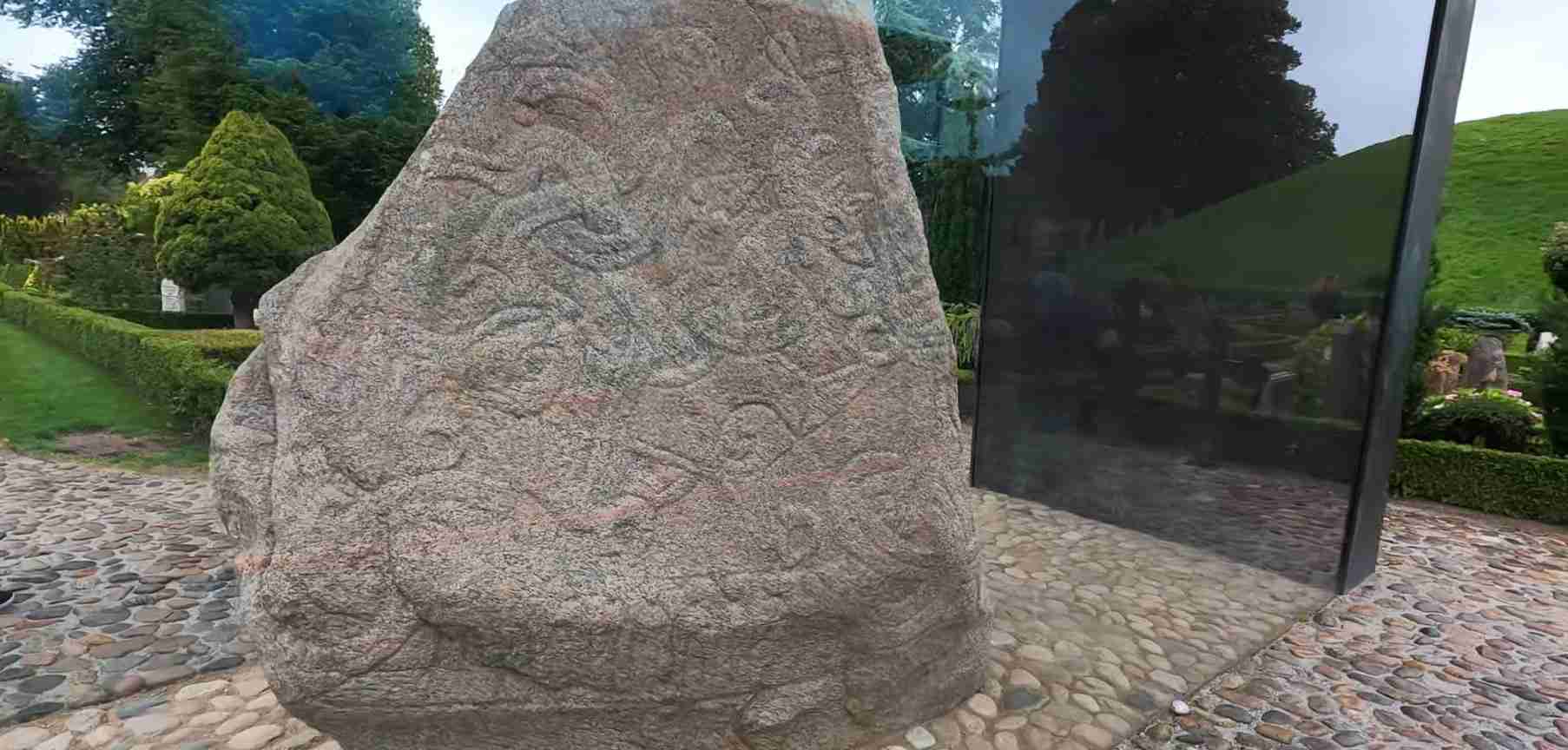
Jelling Stones & Viking Heritage: Denmark’s Birth Certificate
The Jelling Stones stand as Denmark’s most significant historical monuments, marking the transition from Viking paganism to Christianity and the birth of the Danish nation. These two massive runestones, erected in the 10th century by Harald Bluetooth and his father Gorm the Old, tell the story of Denmark’s transformation from a collection of Viking territories into a unified Christian kingdom that would shape Scandinavian history for centuries.
Key Takeaways
- UNESCO World Heritage Recognition: Designated in 1994 for exceptional historical significance as Denmark’s “birth certificate”
- Two Monumental Runestones: Gorm’s Stone (smaller, dedicated to Queen Thyra) and Harald’s Stone (larger, celebrating Christianization)
- Viking to Christian Transition: Document the pivotal moment when Denmark adopted Christianity and unified as a kingdom
- Unique Artistic Achievement: Harald’s Stone features the oldest representation of Christ in Scandinavia
- Royal Burial Complex: Part of a larger site including royal burial mounds and Denmark’s first stone church
- Living Cultural Heritage: The monuments remain central to Danish national identity and historical understanding
People Also Ask About Jelling Stones & Viking Heritage
Why are the Jelling Stones called Denmark’s birth certificate?
The Jelling Stones, particularly Harald Bluetooth’s larger stone, are considered Denmark’s “birth certificate” because they document the creation of Denmark as a unified Christian kingdom. Harald’s inscription states “King Harald ordered this monument made in memory of Gorm, his father, and in memory of Thyra, his mother; that Harald who won for himself all of Denmark and Norway and made the Danes Christian.” This text represents the first written assertion of Denmark as a unified nation and marks the official transition from paganism to Christianity around 965 CE. The stones transform abstract historical events into tangible proof of Denmark’s founding, making them uniquely important in Scandinavian history.
What makes Harald Bluetooth’s runestone artistically significant?
Harald Bluetooth’s runestone represents a groundbreaking achievement in Scandinavian art history. It features the oldest known depiction of Christ in Scandinavia, showing Jesus entangled in interlaced ribbon-like patterns characteristic of the Mammen style. The stone’s three sides display intricate carvings: runic inscriptions, a great beast (possibly representing the Viking world), and Christ (representing the new Christian era). This artistic fusion of pagan Viking artistic traditions with Christian iconography creates a visual representation of Denmark’s cultural transformation. The technical skill required to carve these detailed images on granite, combined with the symbolic importance of the imagery, makes it one of Northern Europe’s most significant early medieval artworks.
How do the two Jelling Stones differ in purpose and design?
The smaller stone, erected by Gorm the Old around 935 CE, is dedicated to his wife Queen Thyra and represents the pagan Viking tradition. It features a simple inscription and modest decoration. In contrast, Harald Bluetooth’s massive stone, raised around 965 CE, is dramatically larger and more ambitious. It bears inscriptions on all three sides, including runic text, elaborate animal ornament, and the revolutionary Christ image. While Gorm’s stone commemorates a queen within the pagan tradition, Harald’s stone proclaims political achievement, territorial conquest, and religious transformation. The progression from the smaller, simpler stone to the larger, more complex monument mirrors Denmark’s evolution from a Viking chiefdom to a Christian kingdom.
What other monuments make up the Jelling complex?
The Jelling Stones are the centerpiece of a larger royal monument complex that includes two large burial mounds (North and South mounds), the foundation of Denmark’s first stone church, and reconstructed wooden palisade. The North Mound, built by Gorm the Old, originally contained a royal burial chamber that was later emptied when Harald moved his father’s remains to the new stone church. The South Mound, raised by Harald, was never used for burial but served as a massive monument to power. The stone church foundation, discovered beneath the current Jelling Church, represents Denmark’s first Christian royal church. Together, these elements create a unique ensemble documenting the transition from Viking Age burial practices to Christian traditions.
Extended multi-day tours – 5+ days
Featured Denmark Multi-Day Tour Packages
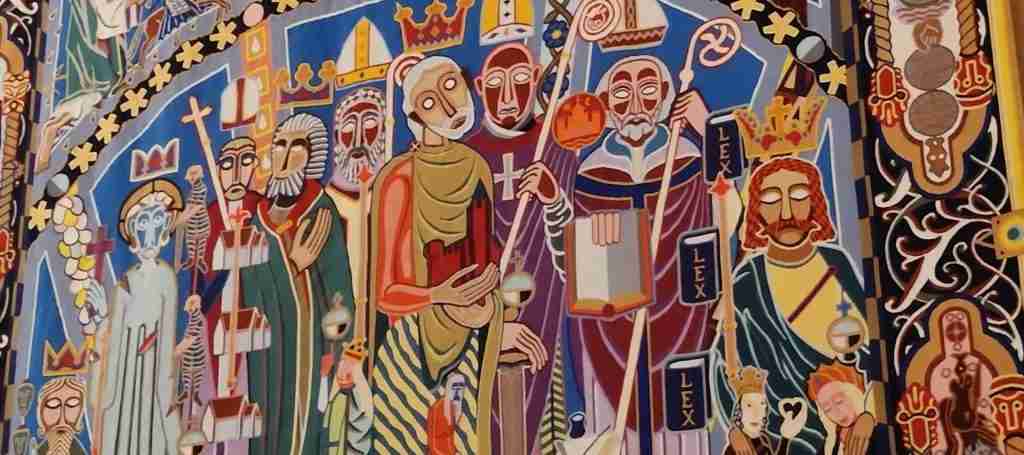
3 days
Denmark 3-Day Discovery Tour
- ✓ Comprehensive Denmark experience
- ✓ Expert local guides included
- ✓ All accommodation included
- ✓ Transportation provided
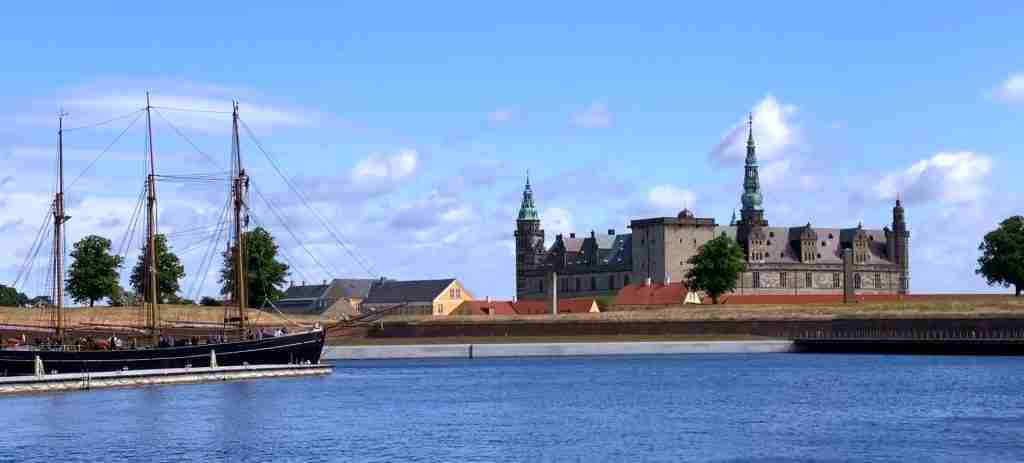
5 days
Denmark 5-Day Highlights Experience
- ✓ Comprehensive Denmark experience
- ✓ Expert local guides included
- ✓ All accommodation included
- ✓ Transportation provided
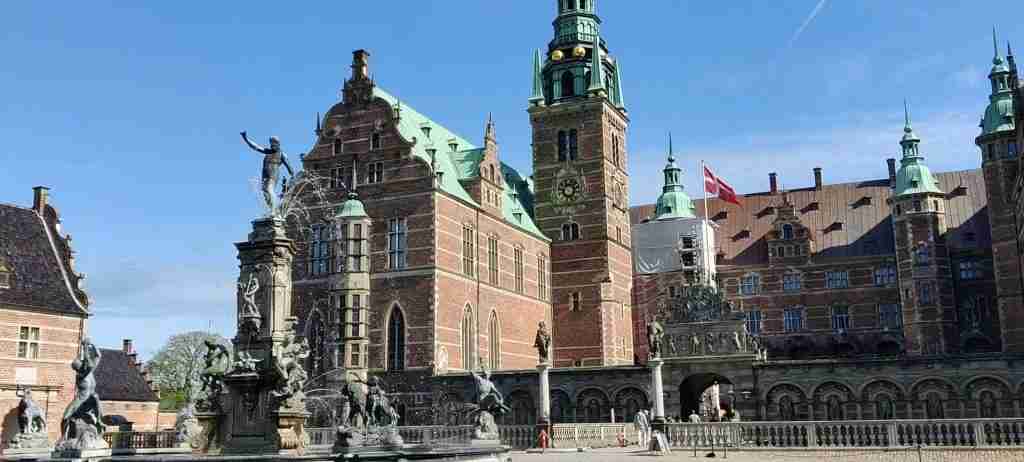
7 days
Denmark 7-Day Cultural Journey
- ✓ Comprehensive Denmark experience
- ✓ Expert local guides included
- ✓ All accommodation included
- ✓ Transportation provided
10 days
Denmark 10-Day Complete Adventure
- ✓ Comprehensive Denmark experience
- ✓ Expert local guides included
- ✓ All accommodation included
- ✓ Transportation provided
Multi-day tour packages powered by TourRadar. Prices and availability subject to change.
Introduction: Understanding Denmark’s Most Important Monument
In the small town of Jelling in central Jutland, two granite runestones stand as witnesses to one of history’s most significant cultural transformations. These are not merely ancient carvings on stone—they are Denmark’s founding documents, carved in runic script and intricate imagery that tells the story of how a collection of Viking territories became a unified Christian kingdom.
Designated as a UNESCO World Heritage site in 1994, the Jelling Monuments represent an exceptional testimony to pagan Nordic culture and its adaptation to Christianity. The complex includes the two famous runestones, two massive burial mounds, the foundation of Denmark’s first stone church, and evidence of elaborate wooden palisades that once surrounded the royal complex. Together, these elements create an archaeological ensemble unparalleled in Scandinavia.
The Jelling Stones’ importance extends far beyond their physical presence. They document the moment when oral Viking tradition met written Christian culture, when tribal alliances became a unified kingdom, and when Nordic paganism gave way to Christianity. For Denmark, these stones serve the same foundational role as the Declaration of Independence does for the United States or the Magna Carta for England—they mark the beginning of the nation as a defined political and cultural entity.
What makes the Jelling Stones particularly remarkable is their role as primary historical sources. Unlike many ancient monuments whose purpose and meaning must be inferred through archaeology, the Jelling Stones speak directly to us through their inscriptions. Harald Bluetooth’s stone explicitly states his achievements: winning all of Denmark and Norway and making the Danes Christian. This directness makes them invaluable not just as monuments, but as historical evidence of events that shaped Scandinavian history.
Historical Background: The Viking Age Royal Dynasty
Gorm the Old and the Pagan Kingdom
Gorm the Old, Denmark’s first historically documented king, ruled from approximately 936 to 958 CE from his seat at Jelling. The historical record about Gorm is sparse, and much of what we know comes from later chronicles and saga literature. However, his smaller runestone provides contemporary evidence of his reign and his devotion to Queen Thyra, described in later sources as “Denmark’s adornment.”
Gorm’s reign represented the height of pagan Viking power in Denmark. He consolidated control over Jutland and established Jelling as a royal power center. The massive North Mound he constructed served both as a statement of power and as preparation for his own burial in the Viking tradition. The burial chamber within, elaborately constructed of oak, contained grave goods typical of high-status Viking burials before it was later emptied and the remains moved to Christian burial.
The smaller runestone that Gorm erected shows the sophistication of pagan Viking memorial culture. While simpler than his son’s later monument, it demonstrates the importance of runic literacy and stone carving in memorializing the dead and asserting dynastic legitimacy. The stone’s message is straightforward: “King Gorm made this monument in memory of Thyra, his wife, Denmark’s adornment.”
Harald Bluetooth’s Christian Revolution
Harald Bluetooth inherited his father’s kingdom around 958 CE and transformed it into something unprecedented in Scandinavian history: a unified Christian kingdom with defined borders and centralized power. His reign, lasting until approximately 987 CE, marked the most dramatic period of change in Danish history.
The circumstances of Denmark’s Christianization remain debated by historians. While Harald’s stone declares he “made the Danes Christian,” the process was undoubtedly gradual and complex. Christian missionaries had been active in Denmark since the early 9th century, and there were likely Christian communities in Danish trading towns before Harald’s official conversion. However, Harald’s endorsement of Christianity as the royal religion, and his construction of churches and Christian monuments, made Christianity the dominant force in Danish culture.
Harald’s decision to adopt Christianity was both spiritual and political. Christianity offered access to European diplomatic and trade networks that had previously been closed to pagan rulers. It provided ideological justification for centralized monarchy, replacing the more egalitarian Viking tradition with concepts of divinely ordained kingship. The religion also offered sophisticated administrative tools through literacy and church organization that helped Harald consolidate his realm.
The construction of the great runestone around 965 CE celebrated these achievements. By placing his monument alongside his father’s stone, Harald created a dialogue between pagan past and Christian present, honoring tradition while proclaiming transformation. The stone’s placement between the church and the North Mound physically positioned it between the old and new religious traditions, making it a liminal monument that bridged two worlds.
The Jelling Dynasty’s Legacy
Harald Bluetooth’s reign established the foundation for the Danish medieval kingdom. His successor, Sweyn Forkbeard, would go on to conquer England, and Sweyn’s son Cnut the Great would rule an empire spanning Denmark, Norway, and England. This expansion was built on the unified kingdom and Christian identity that Harald established, documented in stone at Jelling.
The Jelling complex remained significant throughout the medieval period. Successive generations of Danish rulers looked to Jelling as the founding site of their kingdom. The church at Jelling, rebuilt several times, continued to stand on Harald’s original foundation, maintaining the connection between the medieval Danish state and its Viking Age origins.
The Monuments: Detailed Examination
Gorm’s Stone: The Pagan Memorial
The smaller of the two Jelling Stones stands approximately 1.2 meters high and is carved from reddish granite. Its inscription, running in a single line around the stone’s edge, reads: “King Gorm made this monument in memory of Thyra, his wife, Denmark’s adornment” (kurmR kunukR kaurþi kumbl þąusį aft þąurui kunu sinę tanmarkaR but).
The stone’s decoration is minimal compared to Harald’s later monument, featuring a simple ribbon design. This simplicity reflects both the pagan memorial tradition and the earlier stage of runestone artistry. The use of the title “king” (kunukR) is significant, representing one of the earliest uses of this term in Scandinavia and suggesting Gorm’s claims to supreme authority.
The description of Thyra as “Denmark’s adornment” has sparked scholarly debate. Later medieval sources, particularly Saxo Grammaticus’s Gesta Danorum, elaborate on Thyra’s significance, crediting her with defensive construction projects and wise counsel. While these later accounts may be embellished, the prominent memorial suggests Thyra held genuine political importance, possibly as a link between different regional ruling families.
Harald’s Stone: The Christian Monument
Harald Bluetooth’s runestone is one of the most impressive monuments from the Viking Age, standing approximately 2.4 meters high and covered in intricate carvings on all three sides. The stone is pyramidal in shape, tapering toward the top, a form that suggests ambition and monumentality.
The first side contains the runic inscription that serves as Denmark’s foundational text: “King Harald ordered this monument made in memory of Gorm, his father, and in memory of Thyra, his mother; that Harald who won for himself all of Denmark and Norway and made the Danes Christian” (haraltr kunukR baþ kaurua kubl þausi aft kurm faþur sin auk aft þąurui muþur sina sa haraltr ias saR uan tanmaurk ala auk nuruiak auk tani karþi kristna).
The second side features the great beast design, an intricate interlaced animal ornament characteristic of the Mammen style (named after a find at Mammen in central Jutland). This design shows a large predator, possibly a lion or dragon, entangled in ribbon-like bands. The beast may represent the pagan Viking world, or the power of the Viking king, adapted to Christian symbolism.
The third side displays the image that makes this stone unique: Christ entangled in interlaced bands. This representation shows Christ with outstretched arms in a crucifixion pose, but without the cross, standing upright and surrounded by the same ribbon-like patterns that characterize Viking art. This fusion of Christian subject matter with Viking artistic tradition creates a uniquely Scandinavian vision of Christianity, making the conversion appear as an adoption rather than an imposition.
The technical achievement of carving these detailed images into hard granite should not be underestimated. The precision of the runic text, the complexity of the interlaced patterns, and the clarity of the Christ figure all demonstrate sophisticated stone-working techniques. The pigments that once filled the carved channels, making the inscriptions and images stand out dramatically against the stone, have long since weathered away, but traces suggest the original appearance was much more vivid and colorful.
The Burial Mounds and Church Foundation
The two burial mounds at Jelling are among the largest in Denmark, each measuring approximately 70 meters in diameter and 11 meters in height. The North Mound, built by Gorm the Old, originally contained an elaborate burial chamber constructed of oak. Archaeological excavations in the 1820s and later investigations revealed that this chamber had been deliberately emptied in antiquity.
Historical interpretation suggests Harald Bluetooth removed his father’s remains from the pagan burial mound and reburied them in the newly constructed Christian church, creating a powerful statement about the transition from paganism to Christianity. This reburial would have been a deeply significant act, taking a pagan king from his Viking burial and giving him Christian rest, symbolically converting the dynasty’s past to align with its Christian present.
The South Mound, also built by Harald, presents an archaeological mystery. Excavations revealed it contains no burial chamber and was never used for interment. Instead, it appears to have been constructed purely as a monument, possibly representing Harald’s own future burial that never occurred, or serving as a symbolic representation of power and permanence.
Between the mounds lie the foundations of Harald’s stone church, discovered beneath the current Jelling Church. This foundation represents Denmark’s earliest known stone church, built around 965 CE at the same time as the great runestone. The church’s construction introduced Christian architectural traditions to Denmark, replacing earlier wooden structures with permanent stone buildings that would characterize Danish church architecture for centuries.
Archaeological evidence also reveals the presence of massive wooden palisades that once surrounded the entire complex. These palisades, consisting of large oak posts, created an enclosed sacred space that emphasized the site’s significance as a royal and religious center. The palisade’s form, particularly its V-shaped design, has no known parallels and remains a unique architectural feature.
Artistic and Cultural Significance
The Mammen Style and Viking Art
Harald’s runestone represents the pinnacle of the Mammen style, an artistic tradition named after a contemporaneous find of a decorated axe from Mammen in Jutland. This style, prevalent from approximately 960 to 1000 CE, is characterized by interlaced ribbon-like animals, often with spiral hips and foliate ornamentation. The style represents a transitional phase between earlier Viking animal ornament and later Scandinavian artistic traditions.
The beast on Harald’s stone exemplifies Mammen style characteristics. The animal’s body intertwines with ribbon-like bands, creating a complex pattern that fills the available space while maintaining clarity and balance. The spiral hip joint and the organic, flowing nature of the interlacing demonstrate the style’s sophistication. This artistic tradition would influence Scandinavian art well into the Christian period, showing how pre-Christian aesthetic traditions continued even as religious practice changed.
The Christ image represents an even more significant artistic achievement: the successful fusion of Christian iconography with Viking artistic traditions. Rather than simply copying Byzantine or Continental Christian art, the Jelling stone craftsmen created a uniquely Scandinavian vision of Christ. The figure maintains the interlaced, organic character of Viking art while clearly representing Christian subject matter. This synthesis made Christianity visually comprehensible within Viking aesthetic traditions, facilitating cultural acceptance of the new religion.
Runic Literacy and Communication
The inscriptions on both Jelling Stones demonstrate the importance of runic literacy in Viking Age Scandinavia. The runic alphabet (futhark) was not simply a writing system but carried magical and symbolic significance. The act of carving runes was believed to have power, making the runestones not just messages but active monuments that could influence the world.
The linguistic analysis of the Jelling inscriptions provides insights into Old Norse language during this transitional period. The texts show features of early Danish, including phonological changes that would distinguish Danish from other Scandinavian languages. The grammar and vocabulary reflect a society in transformation, with the incorporation of loan words and concepts from Christian Latin beginning to influence the native Germanic language.
The choice to use runic script rather than Latin for these foundational documents is significant. Harald could have commissioned Latin inscriptions, which would have aligned more closely with Christian European traditions. Instead, he chose to proclaim Denmark’s Christianity in the traditional runic script, maintaining cultural continuity even while announcing religious change. This decision reflects the complex negotiation between tradition and innovation that characterized Denmark’s conversion.
Religious Syncretism and Cultural Transition
The Jelling monuments exemplify religious syncretism—the blending of different religious traditions. The great runestone simultaneously honors pagan ancestors and proclaims Christian conversion. The reburial of Gorm from a pagan mound to a Christian church acknowledges both traditions. The artistic fusion of Viking ornament with Christian imagery creates a hybrid visual language.
This syncretic approach was likely essential to Christianity’s successful adoption in Denmark. Rather than demanding complete abandonment of cultural traditions, the Jelling monuments show Christianity being adapted to Scandinavian context. Ancestors could still be honored, artistic traditions could continue, and the new religion could be expressed in familiar forms. This adaptation made Christianity more acceptable to a population deeply rooted in pagan traditions.
The physical arrangement of the monuments also embodies this transition. The older, smaller stone stands before the newer, larger one, suggesting respect for the past while asserting the present. The church foundation stands near but not on top of the pagan mounds, acknowledging both traditions. The entire complex creates a sacred landscape that bridges two religious worlds, making the transition comprehensible and meaningful.
UNESCO World Heritage Designation
Criteria for Inscription
The Jelling Monuments were inscribed on the UNESCO World Heritage List in 1994 under criterion (iii): “to bear a unique or at least exceptional testimony to a cultural tradition or to a civilization which is living or which has disappeared.” The UNESCO committee recognized that the Jelling complex provides exceptional testimony to pagan Nordic culture in the Viking Age and its adaptation to Christianity in the 10th century.
The nomination emphasized several factors that make Jelling unique. First, the monuments represent a complete ensemble documenting a crucial historical transition, with elements from both pagan and Christian traditions preserved in situ. Second, the inscriptions on the runestones provide primary historical documentation of events that shaped Scandinavian history. Third, the artistic achievement represented by Harald’s stone, particularly the Christ image, marks a pivotal moment in Northern European art history.
The integrity of the site also contributed to its designation. Despite some disturbances from early archaeological investigations and the construction of successive churches on the site, the essential elements of the complex remain in their original positions. The burial mounds, though excavated, maintain their imposing presence. The runestones stand where they were placed in the 10th century. The church foundation, though beneath the current church, remains protected and documented.
Outstanding Universal Value
UNESCO’s concept of Outstanding Universal Value requires that a site be of exceptional importance transcending national boundaries. The Jelling Monuments meet this criterion through their documentation of a cultural transition relevant to European and world history. The conversion of Scandinavia to Christianity was part of the broader Christianization of Europe, and the Jelling Monuments provide the most complete archaeological and epigraphic record of how this process occurred.
The monuments also demonstrate universal themes: the transition from oral to written culture, the negotiation between tradition and change, the use of monumental art to establish political legitimacy, and the adaptation of foreign religious ideas to local cultural contexts. These themes resonate across different cultures and time periods, making the Jelling Stones relevant beyond their specific historical context.
The site’s influence on subsequent Scandinavian culture also contributes to its outstanding value. The Jelling Stones established a model for royal commemoration that influenced later medieval monuments throughout Scandinavia. They created an iconography of Danish Christian identity that persisted throughout the Middle Ages. They established Jelling as a symbolic center of Danish identity that continues to the present day.
Conservation and Management
The conservation of the Jelling Monuments presents ongoing challenges. The runestones, exposed to weather for over a thousand years, have suffered erosion that threatens the legibility of inscriptions and images. Conservation efforts have focused on stabilizing the stones without altering their appearance or historical authenticity.
In 2006, protective structures were built over both runestones. These glass shelters protect the stones from direct precipitation while allowing visitors to view them. The shelters represent a compromise between preservation and accessibility, ensuring the monuments can be experienced while minimizing further weathering.
The burial mounds require different conservation approaches. Maintaining the grass covering prevents erosion while the characteristic appearance is preserved. Periodic surveys ensure structural stability, and any necessary interventions follow archaeological principles to preserve evidence of original construction techniques.
The church foundation beneath Jelling Church remains protected but largely inaccessible. Documentation through archaeological reports and modern scanning technologies provides detailed records of the foundation without requiring physical access that might compromise its preservation.
The Jelling Complex as Sacred Landscape
Spatial Organization and Meaning
The arrangement of monuments at Jelling creates a carefully planned sacred landscape. The two burial mounds define a north-south axis, with the church foundation and runestones positioned between them. This spatial organization creates meaning through geometric relationships and symbolic positioning.
The church foundation’s placement is particularly significant. It sits between the mounds but slightly offset, creating a triangle with the three major elements (North Mound, South Mound, Church). The runestones stand before the church, facing east toward where the altar would have been located. This arrangement positions the stones as mediators between the pagan mounds and the Christian church, literally standing between two worlds.
The wooden palisade that once surrounded the complex created a defined sacred space, separating the royal religious center from the surrounding settlement. Archaeological evidence suggests this palisade had openings aligned with the cardinal directions, creating formal entrances that would have channeled movement through the sacred landscape according to ritual patterns.
The relationship between monuments also creates chronological layers. The North Mound represents Gorm’s pagan kingship. Gorm’s small stone marks the first stage of memorial culture. Harald’s church and great stone announce Christian transformation. The South Mound, empty and mysterious, points toward a future that was never realized. Together, these layers create a landscape that can be “read” as a narrative of dynastic and religious change.
The Site as Power Symbol
Beyond religious significance, the Jelling complex served as an assertion of royal power. The massive burial mounds required enormous labor investment, demonstrating the king’s ability to command resources and manpower. Each mound contains approximately 11,000 cubic meters of earth and turf, representing thousands of hours of labor by hundreds of workers.
The runestones, particularly Harald’s great stone, functioned as propaganda. The inscription’s claims of conquering “all of Denmark and Norway” may have been exaggerated—historical evidence suggests Harald’s control over Norway was limited and temporary. However, the stone’s purpose was not historical accuracy but rather establishing legitimacy through monumental assertion. By carving these claims in permanent stone, Harald created an unchangeable narrative of his achievements.
The church construction represented another power statement. Stone church building was rare in Scandinavia at this time, making Harald’s church a demonstration of access to resources, craftsmen, and architectural knowledge. The church aligned Denmark with Christian European civilization, visually declaring Denmark’s place among Christian kingdoms.
The entire complex functioned as a ritual center where royal power could be displayed and renewed. Royal ceremonies, religious observances, and diplomatic meetings at Jelling would have reinforced the connection between the dynasty, the site, and the kingdom. The monuments created a permanent setting for the performance of power that transcended individual rulers.
Modern Interpretation and Presentation
Jelling Experience Center (Kongernes Jelling)
The Kongernes Jelling visitor center, opened in 2016, provides modern interpretation of the site. The center uses multimedia exhibits, reconstructed settings, and interactive displays to explain the monuments’ significance and the historical context of Viking Age Denmark. The presentation emphasizes the dramatic nature of Denmark’s transition from paganism to Christianity and the central role Jelling played in this transformation.
A key feature is the recreation of the royal hall that would have stood at Jelling during Harald’s time. This reconstruction, based on archaeological evidence from the site, gives visitors a sense of Viking Age royal architecture and provides context for understanding the social world in which the monuments were created. The hall’s impressive scale demonstrates the resources and craftsmanship available to Viking Age kings.
The center also includes detailed replicas of the runestones with the carvings painted in historically accurate colors. These replicas show how the stones would have appeared when newly carved, making the inscriptions and images dramatically visible in ways the weathered originals no longer achieve. Visitors can understand both the stones’ current state and their original visual impact.
Interactive displays explain runic literacy, allowing visitors to compose their own runic inscriptions and understand how this writing system functioned. Other exhibits explore Viking Age burial practices, Christian conversion processes, and the historical context of Harald Bluetooth’s reign, providing the background knowledge needed to fully appreciate the monuments’ significance.
Archaeological Research and New Discoveries
Archaeological research at Jelling continues to yield new insights. Recent investigations using non-invasive techniques like ground-penetrating radar have revealed previously unknown features, including additional structures and evidence of earlier settlement phases beneath the visible monuments.
Studies of the burial chamber in the North Mound have provided detailed information about Viking Age royal burial practices. The oak chamber’s construction demonstrates sophisticated carpentry, and analysis of wood samples has allowed precise dating of its construction to around 958-959 CE, just before Gorm’s death. The chamber’s deliberate emptying, probably by Harald when he moved his father’s remains to the church, has been dated to around 965-970 CE, contemporary with the church construction and the great runestone.
Research on the palisade structure has revealed its construction required approximately 1,200 large oak posts, representing a massive timber investment. The palisade’s V-shaped form, unique among known Viking Age structures, suggests it may have served both practical defensive purposes and symbolic functions, perhaps representing a cosmic boundary between sacred and profane space.
Ongoing study of the runestones using advanced imaging techniques continues to reveal details worn away by weathering. Three-dimensional scanning and photogrammetry have documented every surface variation, creating permanent digital records that will aid future research and conservation efforts. These techniques have also identified traces of paint in protected crevices, confirming that the stones were originally brightly colored.
Jelling in Danish National Identity
The Jelling Stones occupy a unique place in Danish national consciousness. They appear on Danish passports, have inspired public art and architecture, and serve as symbols of Danish heritage in countless contexts. The phrase “Jelling Stones” immediately evokes Danish historical identity for most Danes, functioning much as the Declaration of Independence does for Americans.
This symbolic importance was reinforced during the 2012 celebrations of Queen Margrethe II’s 40th jubilee, when events at Jelling connected the contemporary monarchy to its historical roots. The connection to Harald Bluetooth, whose technological legacy (the Bluetooth wireless standard was named after him) bridges ancient and modern Denmark, further reinforces Jelling’s relevance to contemporary Danish identity.
Educational curriculum in Denmark ensures all students learn about the Jelling Stones, usually during primary school history lessons. School trips to Jelling are common, creating personal connections to the monuments for successive generations. This educational emphasis maintains the stones’ central place in Danish historical consciousness and national narrative.
The monuments also feature in debates about Danish cultural identity and immigration. Conservative voices sometimes invoke the Jelling Stones to argue for the Christian character of Danish culture, while others emphasize the monuments’ demonstration of Denmark’s historical experience with cultural transformation and religious change. These contemporary debates show the stones remain actively meaningful rather than merely historical.
The Jelling Stones in Comparative Perspective
Other Viking Age Royal Monuments
While the Jelling Stones are unique in their combination of historical documentation and artistic achievement, they can be understood within the broader context of Viking Age royal memorial culture. The Oseberg and Gokstad ship burials in Norway, though earlier than Jelling, demonstrate the importance of elaborate burial as royal commemoration. The Gamla Uppsala mounds in Sweden show similar investment in monumental burial, though without the documentary inscriptions that make Jelling so valuable.
Runestones are common throughout Scandinavia, with thousands surviving from the Viking Age and early medieval period. However, the vast majority are much smaller and simpler than Harald’s great stone. Most commemorate local landowners or warriors, not kings claiming conquest of entire kingdoms. The few other royal runestones, such as those at Hedeby (another of Harald Bluetooth’s monuments), lack the artistic sophistication and comprehensive inscriptions that make the Jelling stones exceptional.
The Rök Stone in Sweden, carved in the 9th century, is comparable to the Jelling Stones in length and complexity of inscription, but it consists primarily of memorial verse and mythological references rather than historical claims. The Kensington Runestone, if authentic (most scholars consider it a 19th-century forgery), would represent a Norwegian-American diaspora monument rather than a royal commission. No other Scandinavian runestone combines the Jelling stones’ royal authority, historical documentation, artistic achievement, and religious significance.
Conversion Monuments in European Context
The Jelling Stones can also be compared to conversion monuments from other European contexts. The Baptistry of St. John in Poitiers, France, marks Clovis’s conversion of the Franks to Christianity in the 6th century. The church at Sutton Hoo in England, built near the great pagan burial mounds, shows similar negotiation between pagan and Christian traditions in Anglo-Saxon England. The Temple of Garni in Armenia, dedicated as a Christian church but retaining its pagan classical architecture, demonstrates cultural continuity during religious change.
However, the Jelling Stones are unique among European conversion monuments in providing primary written documentation of the conversion event. Most other conversion sites are known from later written sources (often centuries later), making their historical interpretation dependent on literary sources that may be biased or inaccurate. The Jelling Stones speak directly from the moment of conversion, making them invaluable primary sources.
The artistic fusion achieved at Jelling—combining Christian iconography with indigenous artistic traditions—appears in other conversion contexts but rarely as successfully. The fusion of Celtic art with Christian themes in the Book of Kells shows similar cultural synthesis, but in manuscript rather than monumental form. The Jelling Stones’ achievement is particularly remarkable because it occurs in permanent public monuments rather than elite artistic objects, making the synthesis visible and meaningful to broader society.
Controversies and Interpretations
Dating and Chronology Debates
Despite the runestones’ explicit historical claims, aspects of their dating and the sequence of events they commemorate remain debated. The traditional chronology places Gorm’s death around 958 CE and Harald’s conversion around 965 CE, but some scholars argue for alternative timelines.
Dendrochronological analysis of the burial chamber in the North Mound confirms construction around 958-959 CE, supporting traditional dating of Gorm’s death. However, questions remain about when Harald actually converted to Christianity and constructed his monuments. Some historical sources suggest Harald was baptized in the 940s, raising questions about the traditional interpretation that his conversion and the monument construction were essentially simultaneous.
The claim that Harald “won for himself all of Denmark and Norway” is particularly controversial. Historical evidence for Harald’s control over Norway is limited, and most scholars believe his authority there was temporary and partial at best. This has led to debates about whether the inscription represents historical reality or political propaganda. The consensus view is that the inscription expresses Harald’s aspirations and claims rather than verified territorial control.
Religious Interpretation and the Christ Image
The identification of the figure on Harald’s stone as Christ, though generally accepted, is not absolutely certain. Some scholars have suggested alternative interpretations, including that it might represent Christ but in an unusual crucifixion pose, or even that it could represent a pagan deity adapted to Christian interpretation.
The lack of a cross in the image is particularly puzzling if it represents the crucifixion. However, the figure’s pose with outstretched arms and the inscription’s claim that Harald “made the Danes Christian” strongly support Christian interpretation. The image may represent Christ in majesty rather than Christ crucified, emphasizing triumphant Christianity rather than suffering—an interpretation that would align with royal propaganda purposes.
Questions also persist about the relationship between the beast and Christ images. Some interpret them as representing conflict between pagan and Christian worlds, others as complementary aspects of Harald’s power (temporal and spiritual), and still others as purely decorative elements without deep symbolic meaning. The integration of both into the Mammen style artistic tradition suggests complex cultural negotiation rather than simple replacement of one tradition by another.
The Empty Mound Mystery
The South Mound’s complete lack of burial remains one of Jelling’s most intriguing mysteries. Several theories have been proposed to explain this unusual feature. One suggestion is that Harald originally intended it for his own burial but was actually buried elsewhere, possibly in Roskilde where later Danish kings would be interred. Another theory proposes it was built as a monument to Harald’s claimed Norwegian conquests, representing authority over territory he did not control closely enough to be buried there.
A third interpretation suggests the mound served symbolic rather than practical purposes, perhaps representing the cosmos or functioning as a platform for ceremonies. The mound’s construction contemporary with the Christianization of Denmark raises questions about how quickly pagan burial practices were abandoned. The empty mound might represent a transitional monument, built in traditional form but left empty because Christian burial had become preferred.
Conservation Challenges and Future Prospects
Weathering and Erosion
The runestones face ongoing threats from weathering. Granite, though durable, erodes gradually over centuries. The inscriptions and images, carved in channels approximately 1-2 centimeters deep, are slowly becoming shallower and less distinct. Some portions of the inscriptions that were visible in 19th-century photographs have become illegible due to erosion.
The protective shelters installed in 2006 have slowed this process by preventing direct rainfall and reducing temperature fluctuations. However, they cannot completely halt natural weathering processes. Ongoing monitoring tracks changes in the stones’ condition, and periodic assessments evaluate the effectiveness of current protection measures.
Chemical weathering presents particular concerns. Granite composition includes minerals that oxidize or dissolve slowly in the presence of moisture and atmospheric pollutants. While Jelling’s relatively rural location reduces exposure to industrial pollutants, even natural weathering continues the gradual degradation process that has been occurring for over a thousand years.
Digital Preservation and Virtual Access
Recognizing that physical preservation cannot completely prevent eventual degradation, comprehensive digital documentation has become a priority. High-resolution 3D scanning has created detailed digital models of the runestones that capture every surface variation. These models serve multiple purposes: as permanent records of current condition, as baselines for measuring future changes, and as resources for research and education.
Virtual reality applications allow remote visitors to experience the monuments in simulated environments. These applications can show the stones in different states: as they appear today, as they might have looked when newly carved with bright pigments, or as they might appear in the future if current weathering trends continue. Such applications extend access to the monuments beyond those who can physically visit Jelling.
Digital models also enable research that would be impossible with the physical stones. Lighting simulations reveal how inscriptions and images would have appeared at different times of day or under different light conditions. Computer analysis of the carving techniques provides insights into the tools and methods used. Statistical analysis of runic letter forms aids in dating and attributing inscriptions. These digital approaches complement traditional archaeological and historical research methods.
Balancing Preservation and Access
Managing a UNESCO World Heritage site requires balancing preservation requirements with public access and interpretation. Too much visitor traffic can accelerate erosion through vibration, humidity changes from breathing, and accidental contact. However, restricting access undermines the educational and cultural purposes that justify preservation efforts.
Current management strategies at Jelling emphasize indirect experience. Visitors view the runestones from designated positions that maintain distance while providing clear views. Replicas at the visitor center allow close examination without threatening the originals. Digital resources extend access to global audiences. This multi-layered approach attempts to serve both preservation and accessibility goals.
Future management may require additional measures if weathering continues or visitor numbers increase significantly. Possibilities include further restricting physical access while improving virtual experiences, creating additional replicas for tactile engagement, or developing new protective technologies that better isolate the stones from environmental factors while maintaining visibility.
The Stones as Historical Sources
Epigraphic Evidence and Historical Method
The Jelling Stones’ inscriptions provide rare contemporary written evidence from 10th-century Scandinavia. Unlike later saga literature or foreign chronicles, which were written long after the events they describe and may contain errors or bias, the runestone inscriptions were carved during or immediately after the events they commemorate. This contemporaneity makes them invaluable primary sources despite their brevity and propagandistic purpose.
Historical method requires critical evaluation even of primary sources. The inscriptions must be understood as royal propaganda, designed to advance Harald’s political interests rather than provide objective historical records. Claims about conquering “all of Denmark and Norway” may exaggerate actual territorial control. The conversion of “the Danes” to Christianity was likely gradual and incomplete rather than the definitive event the inscription suggests.
However, even accounting for propaganda purposes, the inscriptions provide crucial evidence. They confirm Harald Bluetooth’s existence as a historical figure (corroborated by other sources but independently attested here). They document the approximate date of Denmark’s official Christianization. They reveal how Viking Age kings thought about power, legitimacy, and commemoration. They show the cultural importance of honoring ancestors even during religious transformation.
Complementary Sources and Historical Reconstruction
The Jelling inscriptions can be evaluated against other historical sources. Adam of Bremen, writing in the 1070s, provides an account of Denmark’s Christianization that generally corroborates the Jelling evidence while adding details about the process. Widukind of Corvey’s earlier account (960s) describes Harald Bluetooth’s baptism, though with details that may be legendary rather than historical.
Archaeological evidence from other sites provides context for understanding Jelling. Excavations at Hedeby, Harald’s major trading town, show evidence of both pagan and Christian practice during the period of transition. Excavations at Trelleborg and other ring fortresses built by Harald demonstrate his ability to mobilize resources for major construction projects, lending credibility to the monuments at Jelling.
Numismatic evidence—coins minted during Harald’s reign—shows Christian symbols alongside his name, corroborating the conversion claims. Some coins feature crosses, while others show more ambiguous symbols that might represent either Christian or pagan iconography, suggesting the religious transition was complex and gradual.
Later medieval sources, particularly the Jelling Chronicle (Chronicon Lethrense) and Saxo Grammaticus’s Gesta Danorum, elaborate on stories about Gorm and Harald but were written centuries after the events. These sources must be used cautiously, as they contain legendary material alongside potential historical information. However, they show how the Jelling monuments were remembered and interpreted in later medieval Danish culture.
FAQ: Frequently Asked Questions
How do I visit the Jelling Stones?
The Jelling Stones are located in the small town of Jelling in central Jutland, approximately 10 kilometers northwest of Vejle. The monuments stand in the churchyard of Jelling Church, which is freely accessible during daylight hours. The protective glass shelters over the stones allow year-round viewing. The Kongernes Jelling visitor center, located adjacent to the church, provides parking, facilities, and interpretive exhibits. The site is accessible by car via Route 18, or by train to Vejle followed by a local bus. Admission to the churchyard and runestones is free, while the visitor center charges an admission fee.
What is the best time of year to visit Jelling?
The Jelling Stones can be visited year-round, as the protective shelters ensure visibility regardless of weather. Summer (June-August) offers the warmest weather and longest daylight hours, making outdoor exploration most comfortable. However, this is also peak tourist season. Spring (April-May) and autumn (September-October) provide pleasant weather with fewer visitors. Winter visits offer a unique atmosphere, with the monuments appearing particularly dramatic against snow-covered mounds, though some visitor center features may have reduced hours. The annual Jelling Music Festival in late May provides additional cultural context, though it draws larger crowds.
Can I photograph the Jelling Stones?
Photography for personal use is permitted and encouraged at the Jelling Stones. The glass shelters may create reflections, so approaching from different angles helps minimize this issue. Early morning or late afternoon light, when the sun is at a lower angle, often provides the best conditions for photographing the carvings. Flash photography is permitted outdoors but may be restricted in the visitor center’s interior spaces. Professional or commercial photography may require advance permission from site management. Drone photography requires specific permission due to the site’s UNESCO status and proximity to the church.
Are there guided tours available at Jelling?
Guided tours are available through the Kongernes Jelling visitor center during the summer season (typically May-September). These tours, conducted in Danish and English, provide detailed explanation of the monuments’ historical significance, archaeological findings, and current research. Tours last approximately 90 minutes and include the runestones, burial mounds, church, and visitor center exhibits. Private group tours can be arranged in advance for groups of 15 or more. Audio guides in multiple languages are available for self-guided visits. Special thematic tours focusing on Viking Age culture, runic literacy, or medieval Christianity are occasionally offered.
What other Viking Age sites are near Jelling?
Several significant Viking Age sites are within day-trip distance from Jelling. The Viking Museum at Aarhus (approximately 60 kilometers northeast) displays artifacts from Viking Age Denmark and includes reconstructed buildings. The National Museum in Copenhagen (approximately 200 kilometers east) houses extensive Viking Age collections including weapons, jewelry, and runestones. Ribe, Denmark’s oldest town (approximately 70 kilometers west), preserves Viking Age street patterns and hosts the Viking Center, a living history museum. Fyrkat, a Viking ring fortress (approximately 120 kilometers north), demonstrates Harald Bluetooth’s military architecture. Lindholm Høje (approximately 130 kilometers north) features Scandinavia’s largest Viking Age burial ground.
Why is the Bluetooth wireless technology named after Harald Bluetooth?
The Bluetooth wireless technology standard was named after Harald Bluetooth in 1997 by Jim Kardach, an Intel engineer involved in developing the technology. The name references Harald’s historical role in uniting Denmark and Norway, as Bluetooth technology aims to unite different communication devices and protocols. The Bluetooth logo combines the runic letters “H” and “B” (Harald Bluetooth’s initials) in a symbol inspired by Viking Age design. This naming choice reflects the technology’s Scandinavian origins (developed by Ericsson in Sweden) and celebrates Nordic technological innovation. The association has increased global awareness of Harald Bluetooth and the Jelling Stones.
What happened to the treasure from Gorm’s burial chamber?
When Harald Bluetooth moved his father’s remains from the North Mound to the Christian church, he also removed any grave goods that had been buried with Gorm. No record exists of what these items were or what became of them. They may have been reburied with Gorm in the church, distributed as gifts, melted down for their precious metal content, or retained as dynastic treasures. The 1820s excavation of the burial chamber found no grave goods, only the empty oak chamber and evidence of deliberate removal. This absence frustrates archaeologists, as Viking Age royal burials typically contained valuable objects that would provide insights into elite material culture.
How accurate is Harald’s claim to have conquered Norway?
Harald Bluetooth’s claim to have “won for himself all of Denmark and Norway” is considered an exaggeration by most historians. Harald likely had influence over parts of southern Norway, particularly the Viken region (modern Oslo area), during the 970s. However, his control was contested and temporary. The Norwegian chieftain Håkon Sigurdsson maintained independence in northern and western Norway. Harald’s Norwegian authority probably lasted only a few years before local rulers reasserted independence. The runestone inscription represents political claims and aspirations rather than established territorial control. Such exaggerated claims were common in royal propaganda of the period, serving to assert legitimacy and discourage rivals.
What pigments were used to color the original carvings?
Analysis of trace pigments preserved in protected areas of the runestones reveals that red, white, and possibly black pigments were used to color the carvings. The red likely came from iron oxide (ochre), a common pigment in Viking Age Scandinavia. White probably derived from chalk or lime-based substances. Black may have been carbon-based (charcoal or soot). These pigments were mixed with binders (possibly animal fat or plant resins) to create paint that filled the carved channels, making the inscriptions and images dramatically visible against the gray granite. The pigments have weathered away from exposed surfaces over centuries, but modern analysis can detect microscopic traces. Reconstructions at the visitor center show how vividly colored the stones originally appeared.
Is the current Jelling Church the same one Harald built?
No, the current Jelling Church, dating from approximately 1100 CE, is not the same building Harald Bluetooth constructed. Harald’s church was smaller and entirely built of stone—a novelty in 10th-century Denmark where most churches were wooden. Archaeological excavations beneath the current church have revealed the foundation of Harald’s original church, showing it was approximately 21 meters long and 10 meters wide. The current church was built directly over and around this foundation, incorporating the same site but representing a much larger structure reflecting 12th-century church architecture. Successive renovations and expansions have altered the current church, but it continues to stand on the exact location Harald chose, maintaining the connection to Denmark’s Christian origins.