
Jackson Hole Budget Guide 2026: Complete Travel Cost Breakdown
Jackson Hole commands premium prices as one of America’s most exclusive mountain destinations, yet strategic planning transforms this Wyoming treasure into an achievable journey. Daily costs range from $140-195 per person for budget-conscious travelers sharing accommodations to $465-690 for luxury seekers, with mid-range visitors investing $285-420 per person daily. Understanding Jackson Hole’s cost structure—where accommodation and dining drive 70% of expenses—allows travelers to allocate resources wisely across seasons, from powder-perfect winter slopes to wildlife-rich summer valleys.
Key Takeaways About Jackson Hole Costs 2026
- Daily Budget Range Per Person 2026: Budget travelers need $140-195 per person daily (two sharing budget hotel), mid-range travelers spend $285-420 per person daily (two sharing mid-range hotel), luxury visitors invest $465-690+ per person daily (two sharing luxury hotel)
- Weekly Cost Estimates 2026: One-week Jackson Hole trips cost approximately $980-1,365 per person for budget travel, $2,000-2,940 for mid-range comfort, $3,255-4,830+ for luxury experiences
- Seasonal Price Swings 2026: Winter peak season (December-March) hotel rates reach $250-900 per room nightly, summer high season (June-August) commands $220-650, while shoulder seasons (April-May, September-November) drop to $120-350 offering 35-50% savings
- Accommodation as Largest Expense: Hotels consume 35-45% of total daily budgets, ranging from $50-100 per person (two sharing budget hotel) to $275-450 per person (two sharing luxury hotel)
- Dining Cost Reality 2026: Casual restaurant dinners for two cost $50-75, mid-range dinners run $100-150, upscale dining reaches $200-400, with grocery shopping offering 60% savings versus restaurant meals
- Grand Teton and Yellowstone Access 2026: National park entrance costs $35 per vehicle (7-day pass) or $80 for annual America the Beautiful Pass covering all US national parks
People Also Ask About Jackson Hole Budget 2026
How much does Jackson Hole cost per day in 2026?
Jackson Hole daily costs per person range $140-195 for budget travelers (two sharing budget hotel), $285-420 for mid-range travelers (two sharing mid-range hotel), and $465-690+ for luxury visitors (two sharing luxury hotel). Budget travelers staying in hostels ($45-60 per person) or budget hotels ($50-100 per person when sharing), eating mix of grocery meals and casual dining ($55-75 daily), using free START bus in-town and minimal car rental ($10-20 daily), and selecting free trails over paid attractions ($10-25 daily) achieve lower daily totals. Mid-range travelers in comfortable hotels ($125-225 per person sharing), dining at local restaurants ($95-135 daily), renting economy cars ($35-50 daily including fuel), and enjoying moderate activities ($30-50 daily) experience Jackson’s quality without luxury premiums. Luxury seekers in upscale properties ($275-450 per person sharing), fine dining ($120-180+ daily), private transportation ($40-60+ daily), and premium experiences ($60-100+ daily) access Jackson Hole’s exclusive offerings.
What’s the cheapest month to visit Jackson Hole in 2026?
April and November represent Jackson Hole’s most affordable months in 2026, with hotel rates dropping 40-55% below peak winter and summer pricing. April offers spring skiing at reduced lift ticket rates (including special $60 tickets April 9-12 for the resort’s 60th anniversary), shoulder-season hotel prices averaging $120-220 per room nightly, and minimal crowds despite variable weather mixing snow and sunshine. November delivers fall tranquility with hotel rates $130-250 per room nightly, Grand Teton access without summer congestion, and elk migration viewing at National Elk Refuge. Both months trade weather predictability and full facility operations for substantial savings—restaurants and tours may operate reduced schedules, some park roads close seasonally, and outdoor conditions require flexibility.
Are groceries expensive in Jackson Hole 2026?
Jackson Hole grocery prices run 15-25% above national averages but deliver 55-65% savings versus restaurant dining. Albertsons and Smith’s supermarkets charge $4-6 for gallon milk, $5-8 for dozen eggs, $6-9 for pound ground beef, $3-5 for loaf bread, and $4-7 for fresh produce items. Budget-conscious travelers spending $65-90 weekly on groceries for breakfast and lunch preparation save $120-180 weekly compared to restaurant equivalents—a family of four investing $25-35 in groceries for breakfast and packed lunches saves $40-60 daily versus $65-95 restaurant costs. Jackson’s two major supermarkets offer standard selections; specialty items, organic produce, and prepared foods command premium pricing reflecting resort town economics and remote mountain location logistics.
Do I need a car in Jackson Hole 2026?
Car necessity in Jackson Hole depends entirely on your itinerary and season. Winter visitors staying downtown or in Teton Village thrive without cars—free in-town START bus connects hotels and restaurants, $3 START bus runs hourly to Jackson Hole Mountain Resort, free resort shuttles serve Teton Village hotels, and concentrated winter activities cluster in walkable areas. Summer visitors exploring Grand Teton National Park, accessing trailheads, reaching remote dining options, or visiting multiple daily locations find cars essential—no public transportation serves national parks, trailhead access requires vehicles, restaurant choices expand dramatically with mobility, and Yellowstone day trips (65 miles north) demand personal transportation. Car rentals cost $35-60 daily for economy vehicles including fuel, while car-free strategies combining START bus ($3-10 daily), organized tours ($95-180 for full-day national park excursions), and strategic lodging location save $150-280 weekly for dedicated downtown or resort-based visitors.
Extended multi-day tours – 5+ days
Featured Park Yellowstone National Park Multi-Day Tour Packages

3 days
Park Yellowstone National Park 3-Day Discovery Tour
- ✓ Comprehensive Park Yellowstone National Park experience
- ✓ Expert local guides included
- ✓ All accommodation included
- ✓ Transportation provided
5 days
Park Yellowstone National Park 5-Day Highlights Experience
- ✓ Comprehensive Park Yellowstone National Park experience
- ✓ Expert local guides included
- ✓ All accommodation included
- ✓ Transportation provided
7 days
Park Yellowstone National Park 7-Day Cultural Journey
- ✓ Comprehensive Park Yellowstone National Park experience
- ✓ Expert local guides included
- ✓ All accommodation included
- ✓ Transportation provided
10 days
Park Yellowstone National Park 10-Day Complete Adventure
- ✓ Comprehensive Park Yellowstone National Park experience
- ✓ Expert local guides included
- ✓ All accommodation included
- ✓ Transportation provided
Multi-day tour packages powered by TourRadar. Prices and availability subject to change.
Introduction to Jackson Hole Travel Costs 2026
Jackson Hole occupies a unique position in American mountain tourism—simultaneously hosting Wyoming’s only commercial airport within a national park, commanding the highest average hotel rates in the Rocky Mountains, and delivering experiences ranging from world-class skiing to pristine wilderness exploration. The valley’s 60-mile length between the Teton Range’s dramatic eastern escarpment and the Gros Ventre Mountains creates a natural corridor where costs concentrate in two distinct zones: the Town of Jackson at the valley’s southern end and Teton Village twelve miles northwest at Jackson Hole Mountain Resort’s base.
Understanding Jackson Hole’s cost structure begins with recognizing its dual-season economy. Winter (December-March) transforms the valley into a ski destination where lift tickets, upscale dining, and premium accommodations drive pricing—Jackson Hole Mountain Resort’s 2,500 skiable acres and 4,139 vertical feet attract skiers willing to invest in world-class terrain. Summer (June-August) pivots to national park tourism as visitors flock to Grand Teton’s granite peaks, Yellowstone’s geothermal wonders, and Snake River’s rafting adventures. Spring (April-May) and fall (September-November) shoulder seasons offer dramatic savings but trade guaranteed snow conditions or peak summer weather for quieter trails and discounted rates.
The valley’s isolation influences every price point. Jackson Hole Airport (JAC) receives direct flights from thirteen cities but limited competition and Grand Teton National Park flight restrictions maintain elevated airfares. Ground transportation reflects mountain geography—twelve miles separate downtown Jackson from Teton Village, national park entrances lie 5-15 miles from town, and Yellowstone’s South Entrance sits 65 miles north. Groceries and goods travel hundreds of miles through mountain passes, adding 15-25% to retail costs compared to regional averages.
Jackson Hole rewards travelers who plan strategically across accommodation location, dining choices, transportation decisions, and activity selection. Budget-conscious visitors secure affordable lodging outside peak dates, prepare meals from groceries, utilize free public transit where available, and balance paid attractions with free national park access. Mid-range travelers invest in convenient hotel locations, enjoy local restaurant scenes, rent vehicles for flexibility, and participate selectively in guided activities. Luxury seekers access Jackson’s highest-tier properties, fine dining establishments, private transportation, and exclusive experiences while enjoying world-class natural settings.
Understanding Jackson Hole’s Seasonal Pricing Patterns 2026
Jackson Hole’s cost structure fluctuates dramatically across four distinct seasons, with accommodation rates serving as the primary pricing indicator that cascades through dining availability, activity scheduling, and overall visitor expenses.
Winter Peak Season Pricing (December 26-March 31, 2026)
Peak winter season commands Jackson Hole’s highest prices as powder seekers converge on Jackson Hole Mountain Resort’s legendary terrain. Hotels reach maximum rates: budget properties $140-210 per room nightly, mid-range hotels $320-550, luxury accommodations $650-1,200+. The Christmas-New Year’s period (December 26-January 2) represents the year’s absolute pricing apex with rooms booking months advance and rates climbing additional 25-40% above standard peak pricing.
Restaurants operate full schedules with reservations essential at popular establishments—dinner waits extend 45-90 minutes without bookings during 6:30-8pm prime dining hours. Jackson Hole Mountain Resort lift tickets cost $160-230 per day depending on advance purchase timing, with early online buyers securing 30-40% discounts versus walk-up window rates. Equipment rentals, ski lessons, and mountain dining add substantial costs: ski packages $40-75 daily, group lessons $150-200 per session, on-mountain lunch $18-30 per person.
February-March extends peak season pricing while offering superior snow conditions and slightly reduced crowds compared to holiday periods. Presidents’ Day weekend (February 16-19, 2026) creates a mini-peak with hotel rates matching Christmas week levels. Late March brings spring skiing conditions—warm afternoons, corn snow, extended daylight, and occasional powder storms—while maintaining elevated but moderately discounted rates from January-February peaks.
Summer High Season Pricing (June 1-August 31, 2026)
Summer transforms Jackson Hole from ski destination to national park gateway, maintaining high accommodation costs while shifting activity expenses from skiing to hiking, rafting, and wildlife viewing. Hotels remain expensive: budget options $120-180 per room nightly, mid-range properties $280-480, luxury lodges $580-900. July-August weekends reach capacity as families capitalize on school breaks, with Friday-Saturday nights commanding 15-25% premiums over midweek rates.
National park access costs $35 per vehicle for seven-day Grand Teton pass or $80 annual America the Beautiful Pass covering all US national parks—this pass pays for itself after three park visits and proves essential for travelers planning Yellowstone excursions or multiple Grand Teton days. Guided activities replace ski lift tickets as primary recreation expenses: half-day Snake River rafting $95-135 per person, horseback riding $85-145 for 2-4 hour rides, wildlife safari tours $125-185 per person, full-day Yellowstone excursions $180-250 per person.
Dining costs mirror winter season pricing but with expanded casual options. Food trucks, barbecue joints, and outdoor patios multiply dining choices beyond winter’s resort-heavy selection. Breakfast burrito carts offer $12-18 meals, pizza-by-the-slice spots provide $8-14 lunches, and picnic supplies from grocery stores enable budget-friendly national park dining with 60% savings versus restaurant purchases.
Spring Shoulder Season Savings (April 1-May 31, 2026)
April-May shoulder season delivers Jackson Hole’s steepest accommodation discounts—35-50% below peak winter rates—while presenting weather variability that ranges from powder snowstorms to 65-degree sunshine within single weeks. Hotels drop to attractive pricing: budget properties $85-140 per room nightly, mid-range hotels $160-300, luxury accommodations $320-550.
April extends ski season through mid-month with Jackson Hole Mountain Resort’s 60th anniversary celebration offering $60 lift tickets April 9-12, 2026—extraordinary value at 70% below regular pricing. Late April-May transitions to hiking season as lower elevation trails shed snow while Teton peaks maintain winter coverage. Grand Teton National Park Teton Park Road opens progressively through May, with full access typically achieved Memorial Day weekend. Some restaurants and tour operators close for “mud season” maintenance (mid-April through mid-May), reducing dining and activity options.
May represents optimal value for visitors prioritizing savings over guaranteed conditions. Wildlife viewing peaks as newborn elk, moose, and bison calves appear across valleys, spring wildflowers blanket meadows, and migrating birds return to wetlands. Crowds remain minimal—trailhead parking rarely fills, restaurant reservations prove unnecessary, and hotel availability stays strong through month’s end.
Fall Shoulder Season Opportunities (September 1-November 30, 2026)
September-November combines moderate weather, exceptional wildlife activity, and reduced pricing structures rivaling spring shoulder season savings. Hotels offer compelling values: budget options $90-150 per room nightly, mid-range properties $180-320, luxury lodges $350-600. September maintains summer-adjacent pricing through Labor Day before dropping substantially mid-month.
September delivers Indian summer conditions—warm days averaging 65-75 degrees, crisp nights, stable weather patterns, and golden aspen groves transforming hillsides. Grand Teton hiking remains excellent through month’s end before first significant snowfalls close high-elevation trails October-November. Elk rut dominates September-October as bull elk bugle across valleys during mating season—National Elk Refuge viewing areas provide free access to this spectacular natural phenomenon.
November marks Jackson Hole’s quietest month. Many restaurants close for seasonal breaks, tour operators conclude operations, and hotel occupancy plummets. Visitors willing to research operating hours and accept limited service find extraordinary value—hotels desperate for off-season revenue negotiate rates, available restaurants offer uncrowded dining, and national parks stand virtually empty. Weather turns decisively wintry by Thanksgiving with valley snow accumulation and mountain pass conditions requiring winter driving preparedness.
Accommodation Costs Across Budget Tiers 2026
Accommodation represents Jackson Hole’s largest single expense category, consuming 35-45% of typical daily budgets regardless of travel style. The valley’s limited lodging inventory—approximately 3,200 total rooms across hotels, motels, and vacation rentals—creates pricing power that hoteliers exercise aggressively during peak seasons while moderating substantially during shoulder periods.
Budget Accommodations in Jackson Hole ($100-200 Per Room Nightly)
Budget-tier Jackson Hole lodging concentrates in three property categories: hostels offering dormitory beds, independent motels along Highway 89 south of town, and aging hotels near downtown’s periphery. The Hostel (Jackson’s only true hostel) charges $45-75 for dormitory beds and $100-140 for private rooms, providing kitchen access, communal spaces, and social atmosphere attracting younger travelers and ski-season workers. Budget motels including Elk Refuge Inn, Virginian Lodge, and Wyoming Inn of Jackson Hole occupy the $120-200 nightly range during summer and shoulder seasons, climbing to $160-280 during winter peaks.
Budget properties sacrifice location convenience and modern amenities while delivering functional, clean accommodations. Expect basic rooms with dated furnishings, small bathrooms, minimal closet space, and parking lot aesthetics. Complimentary breakfast varies from continental offerings (pastries, cereal, coffee) to hot buffets with eggs and sausage. Free parking proves standard across budget hotels—a valuable inclusion given downtown Jackson’s metered street parking and hotel parking fees reaching $25-35 nightly at upscale properties.
Location presents budget lodging’s primary tradeoff. Highway 89 motels sit 2-4 miles from downtown Jackson requiring vehicle access or $3 START bus rides for restaurant and shopping access. Teton Village budget options remain scarce—the area caters predominantly to mid-range and luxury visitors. Budget-conscious travelers prioritizing ski access often choose downtown lodging with START bus commutes to Jackson Hole Mountain Resort over premium Teton Village proximity.
Mid-Range Hotels Balancing Value and Comfort ($250-450 Per Room Nightly)
Mid-range Jackson Hole hotels deliver contemporary comfort, convenient locations, and reliable service at pricing reflecting the valley’s tourism economy. Properties including Hotel Jackson, Rusty Parrot Lodge, Anvil Hotel, and Wyoming Inn of Jackson Hole charge $280-400 nightly during summer-winter high seasons, dropping to $200-320 during shoulder periods. These hotels occupy downtown Jackson locations within walking distance to Town Square restaurants, galleries, and shops.
Mid-range rooms average 350-450 square feet with king or two-queen bed configurations, modern bathrooms featuring rainfall showerheads, comfortable seating areas, and mountain-view windows. Standard amenities include complimentary wi-fi, flat-screen televisions, Keurig coffee makers, mini-refrigerators, and individual climate control. Many properties feature heated outdoor pools, hot tubs, fitness centers, and complimentary airport shuttles during winter season. The Rusty Parrot Lodge and similar boutique properties add fireplaces, luxury bedding, and spa services commanding rates toward the tier’s upper range.
Teton Village mid-range options including Teton Mountain Lodge condominiums and hotel rooms range $320-480 nightly with ski-in/ski-out access, full kitchens in condo units, and resort amenities including pools, hot tubs, restaurants, and ski valet services. These properties suit families and groups preparing occasional meals in-unit while maintaining resort convenience—grocery runs to Albertsons (12 miles to Jackson) prove worthwhile for breakfast supplies and lunch ingredients.
Luxury Accommodations Defining Premium Experiences ($550-900+ Per Room Nightly)
Jackson Hole’s luxury tier encompasses historic landmark hotels, modern boutique properties, and exclusive resort lodges commanding rates justified by exceptional service, prime locations, and curated experiences. Four Seasons Resort Jackson Hole charges $750-1,400+ nightly for rooms and suites with ski-in/ski-out access, spa facilities, multiple restaurants, and attentive concierge services. Hotel Jackson downtown offers boutique luxury at $580-950 nightly with rooftop hot tubs, Teton views, fireplace lounges, and walking access to Jackson’s finest restaurants.
Luxury rooms span 450-650 square feet as baseline configurations with suites reaching 1,200+ square feet. Expect designer furnishings, premium bedding with 400+ thread count linens, oversized soaking tubs, separate rainfall showers, heated bathroom floors, and private balconies. Technology includes smart televisions, Bluetooth speakers, bedside USB charging, and automated window treatments. Turndown service, daily housekeeping, complimentary bottled water, premium toiletries, and plush robes distinguish luxury accommodations from mid-range alternatives.
Luxury properties bundle services justifying premium rates: ski valets store and warm boots overnight, concierges secure impossible restaurant reservations, private car services provide airport transfers, and on-site restaurants deliver room service until late evening. Amangani Resort (southeast of Jackson with Teton views) represents ultra-luxury at $1,200-2,400+ nightly with infinity pool, full spa, fine dining, and Aman’s signature minimalist aesthetic and exceptional service standards.
Vacation Rentals and Alternative Lodging Options 2026
Vacation rentals via VRBO and Airbnb provide alternatives to traditional hotels, particularly for families and groups staying multiple nights and preparing meals in-unit. Downtown Jackson condos range $250-450 nightly for one-bedroom units, $400-650 for two-bedrooms, and $600-950 for three-bedrooms during high seasons. Teton Village condos command premiums: $350-550 one-bedrooms, $550-850 two-bedrooms, $850-1,400 three-bedrooms with ski access.
Vacation rentals deliver cost advantages for groups exceeding two people—a family of four paying $500 nightly ($125 per person) for two-bedroom condo with full kitchen versus $350-700 for two hotel rooms ($87-175 per person) while gaining meal preparation capability saving $120-180 daily on restaurant expenses. Cleaning fees ($150-300 per stay) and minimum night requirements (3-7 nights during peak periods) affect short-stay economics but disappear across week-long visits.
Location scrutiny proves essential with vacation rentals. “Jackson Hole” listings may occupy Wilson (6 miles northwest), Alpine (35 miles south), or Driggs, Idaho (42 miles west over Teton Pass)—verify exact locations before booking. Premium downtown Jackson addresses command 30-50% higher nightly rates than peripheral locations but eliminate daily vehicle dependency for dining and shopping access.
Food and Dining Expenses Across Budget Levels 2026
Jackson Hole’s dining scene spans from food trucks serving $12 breakfast burritos to white-tablecloth establishments charging $200-400 for couples’ dinners, with strategic meal planning differentiating budget-conscious from indulgent approaches to this significant expense category.
Budget Dining Strategies ($55-75 Per Person Daily)
Budget travelers spending $55-75 daily per person on food employ mixed strategies balancing grocery purchases, food trucks, casual spots, and selective restaurant splurges. Albertsons and Smith’s supermarkets provide breakfast supplies: $8 dozen eggs, $6 loaf bread, $7 pound bacon, $5 orange juice, $6 yogurt six-pack, $4 banana bunch yielding $25-35 breakfast groceries for 4-5 days. Lunch ingredients including deli meats ($8-11 per pound), cheeses ($7-10), bread, condiments, and fruit cost $30-45 supplying 4-5 packed lunches.
Food truck and casual breakfast options cluster around Jackson Town Square: Crepe Cafe serves $10-14 savory crepes, Pearl Street Bagels offers $8-12 bagel sandwiches, and Persephone Bakery delivers $7-11 pastries with excellent coffee $4-6. Lunch food trucks including smoking joints and taco stands charge $12-18 for filling plates. Budget dinners at casual spots like Pinky G’s Pizzeria ($18-26 for large pizzas serving 2-3), Thai Me Up ($14-22 entrees), and local burger joints ($12-18 including fries) provide sit-down restaurant experiences without mid-range pricing.
Budget daily breakdown: Grocery breakfast $6-10, food truck or packed lunch $12-18, casual restaurant dinner $22-32, coffee and snacks $8-12, two alcoholic drinks $14-18. Total daily range: $55-75 per person. Strategic grocery shopping for breakfasts and trail lunches while enjoying affordable casual dinners delivers satisfying eating without sacrificing Jackson Hole’s local food culture.
Mid-Range Dining Experiences ($95-135 Per Person Daily)
Mid-range diners spending $95-135 daily per person frequent Jackson’s excellent local restaurants while avoiding ultra-premium establishments. Breakfast at Harvest Natural Foods ($14-22 for bowls and scrambles), Cafe Genevieve ($16-24 for elevated comfort food including their famous pig candy bacon), or hotel restaurants ($18-28 for full breakfasts) starts days well. Lunch at Local Restaurant & Bar ($16-26 for sandwiches and salads), Snake River Brewing Company ($15-24 for burgers and brewery fare), or Lotus Cafe ($14-22 for organic health-focused plates) provides quality midday meals.
Dinner represents mid-range dining’s centerpiece with restaurants like The Kitchen ($28-42 entrees), Bin22 ($24-38 small plates designed for sharing), Roadhouse Pub & Eatery ($26-44 entrees with Town Square views), and Gather ($32-48 for seasonal American cuisine) delivering excellent food, local ingredients, and Wyoming hospitality without fine-dining formality or pricing. Add appetizers ($14-22), shared desserts ($12-16), and cocktails or wine ($12-18 per drink) for complete dining experiences totaling $65-95 per person including tax and tip.
Mid-range daily breakdown: Restaurant breakfast $18-26, restaurant lunch $22-32, restaurant dinner with drinks $45-65, coffee and afternoon snack $10-14. Total daily range: $95-135 per person. This approach samples Jackson’s restaurant diversity across meals while maintaining reasonable daily food budgets—couples dining mid-range spend $190-270 daily on food versus $110-150 for strict budget approaches or $240-360+ for luxury dining.
Upscale and Fine Dining Options ($120-180+ Per Person Daily)
Luxury diners investing $120-180+ daily per person access Jackson Hole’s finest restaurants where local ingredients, creative preparations, and exceptional wine lists justify premium pricing. Breakfast at The Handle Bar (Four Seasons) or Snake River Grill costs $24-38 for skillfully prepared dishes using regional products. Lunch at Piste Mountain Bistro (requires gondola ride to mountaintop) or The Granary at Spring Creek Ranch runs $32-52 per person with spectacular Teton views included.
Fine dining dinner experiences at Snake River Grill ($48-78 entrees plus $18-28 starters), Trio ($42-72 entrees for contemporary American), Il Villaggio Osteria ($38-62 for authentic Italian), or Glorietta Trattoria ($36-58 for upscale Italian) deliver memorable meals with wine pairings ($65-120 per person) and craft cocktails ($16-22 each). These establishments require reservations days or weeks advance during peak seasons and maintain dress codes discouraging extreme casual attire—collared shirts for men and comparable formality for women prove appropriate.
Luxury daily breakdown: Upscale breakfast $28-42, quality lunch $35-55, fine dining dinner with wine $75-110+, premium coffee and pastries $12-18. Total daily range: $120-180+ per person. This tier accesses Jackson Hole’s culinary pinnacle while recognizing that some exceptional meals reach $150-200 per person at top establishments with full wine pairings and multi-course tasting menus.
Grocery Shopping and Self-Catering Economics 2026
Grocery shopping delivers substantial savings for travelers preparing breakfasts, packed lunches, or occasional dinners in vacation rental kitchens. Albertsons (downtown Jackson at 105 Buffalo Way) and Smith’s (105 West Broadway) stock comprehensive selections at prices 15-25% above national averages but 55-65% below restaurant equivalents.
Weekly grocery budgets for self-catering travelers: Single person $65-90, couple $110-155, family of four $180-260. These figures assume breakfast daily, packed lunches 4-5 days weekly, and 2-3 prepared dinners weekly with remaining meals at restaurants. Staples cost: gallon milk $5-7, dozen eggs $6-8, loaf artisan bread $5-7, pound ground beef $7-10, rotisserie chicken $9-12, pasta pound $2-4, pasta sauce jar $4-7, salad greens $4-6, fresh vegetables $3-7 per pound, fruits $3-6 per pound, coffee pound $9-14.
Prepared foods sections offer convenience at moderate premiums: deli sandwiches $9-13, hot soup quart $8-12, fresh sushi rolls $11-16, ready-to-heat entrees $10-16 per serving. These options suit travelers without full kitchen access or time for meal preparation while maintaining costs well below restaurant dining.
Transportation Costs and Getting Around Jackson Hole 2026
Transportation decisions significantly impact Jackson Hole budgets, with choices ranging from free in-town buses to $45-60 daily car rentals plus fuel determining both costs and destination accessibility.
Free and Low-Cost Public Transportation Options
Southern Teton Area Rapid Transit (START Bus) provides Jackson Hole’s public transportation via multiple routes connecting key destinations. In-town routes serving downtown Jackson, hotels, grocery stores, and residential areas operate free with buses running every 20-30 minutes from 6am until 10:30pm daily. Town routes prove valuable for budget travelers staying downtown who need grocery store access, restaurant variety, and general mobility without vehicle expenses.
START Bus Route 22 connects downtown Jackson to Teton Village ($3 per ride, $6 daily unlimited pass) with departures every 30-60 minutes from early morning through late evening during winter ski season and reduced frequency during summer months. This route enables budget-conscious skiers to lodge downtown at lower rates while accessing Jackson Hole Mountain Resort without vehicle costs—riders save $35-55 daily car rental fees plus $25-35 Teton Village parking costs during peak ski days.
START Bus Airport Shuttle operates December-April ($10 per ride) connecting Jackson Hole Airport to downtown hotels and Teton Village accommodations. This seasonal service eliminates $25-45 private shuttle costs or $35-50 taxi/rideshare fees for winter visitors, though summer travelers face limited public airport options requiring private transportation.
Car Rental Economics and Practical Considerations
Car rentals deliver freedom and flexibility at daily costs ranging $35-60 for economy vehicles including fuel expenses. Jackson Hole Airport hosts Alamo, Avis, Budget, Enterprise, and National with on-site pickup, while Dollar, Hertz, and Thrifty operate downtown locations requiring complimentary shuttle from airport. Advance online bookings secure better rates than walk-up rentals—reserve 2-4 weeks ahead for $24-36 daily economy car rates versus $40-60 last-minute pricing.
Fuel costs add $8-15 daily depending on driving distances. Jackson’s gas stations charge $3.80-4.20 per gallon—elevated compared to Wyoming’s typically low fuel costs but reflecting mountain resort economics. Daily Grand Teton driving (30-50 miles roundtrip to various trailheads and viewpoints) consumes $6-10 fuel. Yellowstone day trips (130 miles roundtrip to Old Faithful) cost $18-25 fuel. Downtown Jackson errands and Teton Village ski commutes use $4-8 daily.
Parking considerations affect car rental value calculations. Downtown Jackson provides free street parking with 2-hour time limits throughout commercial areas—adequate for shopping and dining but inconvenient for extended stays. Hotel parking ranges from free at budget properties to $25-35 nightly at upscale downtown hotels. Teton Village charges $25-45 daily parking during peak ski days (December 26-January 2, February 13-March 22 weekends) with free parking off-peak periods and for carpools with four or more occupants.
Taxi, Rideshare, and Private Transportation Services
Taxi and rideshare services fill transportation gaps for travelers without rental cars needing point-to-point service. Uber and Lyft operate in Jackson Hole but with limited driver availability compared to major metropolitan areas—expect 10-20 minute wait times and surge pricing during peak hours. Airport to downtown Jackson taxi fares run $35-50, airport to Teton Village costs $50-70, downtown to Teton Village ranges $40-60.
Private shuttle services including A to B Transportation, Teton Mountain Taxi, and Jackson Hole Shuttle offer advanced reservations guaranteeing service reliability. Shared shuttle vans from airport cost $25-30 per person to Jackson or Teton Village destinations. Private sedans run $45-65 for up to 3 passengers, SUVs accommodate 4-6 passengers for $65-85, and private vans handle groups at $85-110. These services prove valuable for airport transfers when START Bus airport shuttle operates off-season or for early morning/late evening flights outside public transit hours.
When Cars Become Necessary Versus Optional
Car necessity correlates directly with intended activities and season. Winter visitors staying downtown or Teton Village with primary focus on skiing, downtown dining, and minimal national park exploration thrive without cars using START Bus and resort shuttles. Daily costs: $3-6 START Bus passes, $0 resort shuttles, walk to nearby restaurants and shops. Weekly savings versus car rental: $245-420 (rental) plus $56-105 (fuel) totaling $300-525 avoided expenses.
Summer visitors planning extensive Grand Teton exploration, Yellowstone day trips, trailhead access across valley, or multiple daily locations find cars essential. No public transportation reaches national park trailheads, scenic overlooks, or backcountry access points. Organized tours provide alternative access at premium costs: Grand Teton half-day tours $95-135 per person, full-day Yellowstone excursions $180-250 per person. Families of four comparing $520-1,000 for two daily tours versus $245-280 weekly car rental plus $65-90 fuel recognize vehicle economics favoring rental cars for multi-day park access.
Grand Teton and Yellowstone National Park Entry Costs 2026
National park access represents Jackson Hole’s exceptional value proposition—world-class natural attractions, extensive trail networks, and wildlife viewing opportunities at costs far below commercial ski resort or activity pricing.
Grand Teton National Park Entrance Fees and Passes
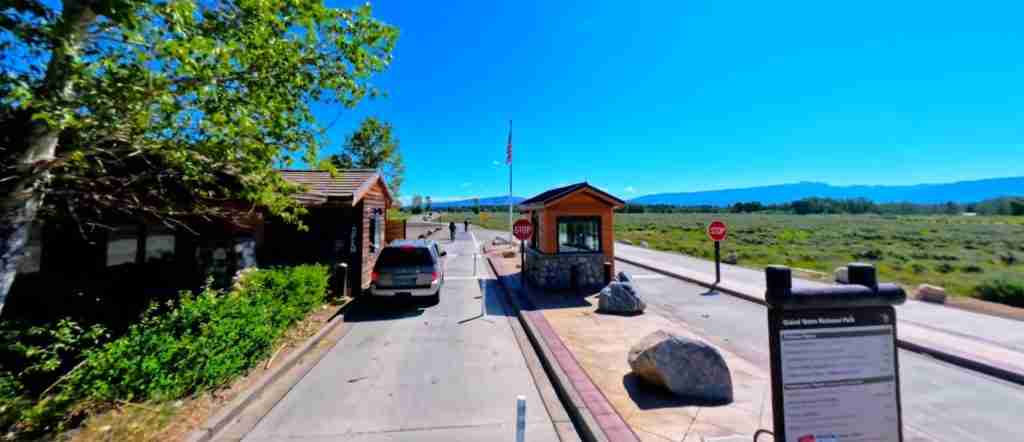
Grand Teton National Park charges $35 per private vehicle for seven-day access, $30 per motorcycle, or $20 per person entering on foot or bicycle. These fees cover unlimited park entry and exit during the seven-day validity period—visitors can drive scenic routes, access trailheads, and explore overlooks repeatedly without additional charges. Passes purchased at any Grand Teton entrance station (Moose, Moran, or Granite Canyon) include Yellowstone National Park access as the parks share ticketing systems.
America the Beautiful Annual Pass costs $80 and admits passholders plus all passengers in single vehicle to all US national parks, national forests, and federal recreation areas for twelve months from purchase. This pass achieves cost savings for visitors planning three or more national park days (3 × $35 = $105 individual entry fees versus $80 annual pass) or combining Jackson Hole trips with other national park visits throughout the year. Senior passes (age 62+) cost $20 annually or $80 lifetime, military passes remain free, and fourth-grade students receive complimentary annual passes through Every Kid Outdoors program.
International visitors face additional $100 per person surcharge (age 16+) beyond standard entrance fees at Grand Teton, Yellowstone, and nine other major US national parks effective January 2026. This policy raises international visitor costs substantially: family of four pays $35 vehicle entry plus $400 surcharge ($100 × 4 people) totaling $435 for seven-day access versus $35 for US residents. International annual passes cost $250 versus $80 for US residents.
Yellowstone National Park Access from Jackson Hole
Yellowstone National Park’s South Entrance lies 65 miles (90 minutes) north of Jackson via Highway 89/191/287 through Grand Teton National Park. The single entrance fee ($35 per vehicle, $20 per person on foot/bicycle) grants seven-day access to both parks utilizing shared ticketing. Visitors planning multiple Yellowstone days from Jackson Hole base benefit from seven-day validity avoiding repeat entry fees—three separate day trips spread across one week utilize single $35 vehicle pass.
Yellowstone’s primary attractions accessible from South Entrance include Old Faithful geyser (32 miles from entrance, 97 miles from Jackson), Grand Prismatic Spring (38 miles from entrance, 103 miles from Jackson), and Yellowstone Lake’s West Thumb Geyser Basin (21 miles from entrance, 86 miles from Jackson). Round-trip Yellowstone day trips from Jackson total 130-200 miles depending on destinations, requiring 3-5 hours driving time plus attraction visit durations. Fuel costs run $18-30 per day trip, making multi-day Yellowstone stays at park lodges or gateway towns (West Yellowstone, Gardiner) economically sensible for extensive park exploration.
Commercial Tour Entry Fees and Guided Park Access
Commercial tour operators charge separate entry fees beyond standard vehicle entrance costs. Grand Teton and Yellowstone assess $20 per person commercial tour entry (children 15 and under free) paid to park rangers at entrance stations. Tour companies include these fees in package pricing or collect them separately from participants—verify inclusion when booking. Guided half-day Grand Teton wildlife tours typically quote $95-135 per person including park entry fees, while full-day Yellowstone excursions run $180-250 per person with park fees included.
Travelers holding personal park passes can apply their pass value toward commercial tour entry fees by presenting passes (physical or digital) to tour guides who submit them at entrance stations. The National Park Service credits the pass amount against commercial entry fees, charging only the difference. Example: visitor with $80 America the Beautiful Pass joining $20 commercial tour pays $0 additional park entry as pass value exceeds commercial fee—though tour operators may structure pricing differently, so confirm credit policies when booking.
Winter Activities and Ski Season Expenses 2026
Winter activities dominate Jackson Hole’s December-March economy, with skiing costs representing significant budget line items for visitors accessing Jackson Hole Mountain Resort’s renowned terrain.
Jackson Hole Mountain Resort Lift Ticket Pricing 2026
Jackson Hole Mountain Resort lift tickets range $140-230 per day depending on purchase timing, date flexibility, and advance booking. Online advance purchases (minimum seven days pre-arrival) secure 30-40% discounts versus walk-up window rates—$140-175 advance pricing versus $200-230 walk-up during peak periods. Single-day tickets purchased online allow date changes with 48-hour notice, while walk-up tickets remain valid only for purchase date.
Multi-day ticket packages deliver per-day savings: two-day tickets $280-340 ($140-170 per day), three-day tickets $405-480 ($135-160 per day), four-day tickets $520-620 ($130-155 per day), five-day tickets $625-750 ($125-150 per day). These packages include rest days allowing skiers to spread skiing across week-long stays—five-day tickets valid for seven consecutive days enabling two non-skiing days for recovery, national park visits, or town exploration.
Special pricing opportunities reduce lift ticket costs further: April 9-12, 2026 closing weekend offers $60 tickets celebrating the resort’s 60th anniversary—71% discount versus typical pricing. Season pass holders from ANY other resort worldwide receive 50% lift ticket discounts during non-blackout periods (November 28-December 18, January 5-16, January 20-February 11, March 16-April 12) presenting $70-90 daily rates for passholders. Military personnel save 40% on daily tickets year-round with valid Department of Defense identification.
Ski Equipment Rentals and Lessons
Ski and snowboard rental packages cost $40-75 daily depending on equipment tier and advance booking. Sport packages (basic skis or snowboard, boots, poles/bindings) run $40-50 daily with 15% online advance booking discounts. Performance packages (higher-quality all-mountain equipment) cost $55-65 daily. Demo packages (current-season premium equipment) charge $65-75 daily, allowing testing of high-end gear before potential purchases.
Multi-day rental discounts accumulate: $110-130 for three days (sport package), $150-180 for five days, $220-280 for seven days representing 15-25% per-day savings versus single-day rates. Jackson Hole Sports in Teton Village and downtown Jackson, Teton Village Sports, and resort rental shops provide rental services with advance online reservations ensuring proper sizing and equipment availability during peak periods.
Ski and snowboard lessons through Jackson Hole Mountain Sports School range $150-200 per person for half-day group lessons (2-3 hours), $350-450 for full-day group instruction (5-6 hours), and $600-800 for private half-day lessons accommodating 1-3 people. First-time skier packages bundling beginner lift tickets, equipment rentals, and lessons cost $225-275 per person providing complete introduction to skiing at moderate savings versus à la carte component purchases.
Alternative Winter Activities and Budget-Friendly Options
Cross-country skiing and snowshoeing deliver winter mountain experiences at costs far below alpine skiing. Grand Teton National Park maintains groomed cross-country ski trails accessible free beyond standard park entry fees. Spring Gulch Road, Taggart Lake Trail, and Teton Park Road (closed to vehicles December-April) provide excellent terrain. Equipment rentals cost $25-35 daily for cross-country ski packages, $20-30 for snowshoe sets from Jackson outdoor shops including Skinny Skis and Teton Mountaineering.
National Elk Refuge Sleigh Rides operate December-March offering wildlife viewing of 5,000-7,000 elk wintering in the refuge adjacent to Jackson. Rides cost $35 adults, $28 seniors, $25 children ages 5-12, departing hourly 10am-4pm from the National Museum of Wildlife Art. These 45-minute horse-drawn sleigh journeys provide intimate elk encounters as herds surround sleighs while guides explain elk ecology and refuge management.
Ice skating at Town Square ice rink (December-February) costs $8 adults, $6 children including skate rentals—free skating with personal skates. Sledding hills throughout Jackson including Snow King Resort’s groomed runs and Cache Creek area deliver free winter fun requiring only sleds ($25-45 purchases at local outdoor shops or $15-25 daily rentals). These activities suit families seeking winter experiences beyond expensive ski resort days.
Summer Activities and Warm-Weather Recreation Costs 2026
Summer activities shift from skiing to national park exploration, water sports, wildlife viewing, and mountain recreation with costs ranging from free hiking to $250+ guided excursions.
Whitewater Rafting and Scenic Float Trips
Snake River rafting represents Jackson Hole’s signature summer activity with options spanning gentle scenic floats to Class III whitewater adventures. Scenic float trips through Grand Teton National Park cost $95-125 per person for 3-hour trips covering 13 miles with spectacular Teton views and wildlife viewing including bald eagles, ospreys, moose, and river otters. These trips suit all ages and experience levels, operating on calm water sections ideal for families, seniors, and photography enthusiasts.
Whitewater rafting trips down Snake River Canyon (south of Jackson) charge $95-135 per person for half-day adventures navigating Class II-III rapids including Lunch Counter, Kahuna, and Rope rapids. These 3-4 hour trips combine adrenaline with beautiful canyon scenery, requiring minimum ages 6-8 years depending on water levels and operator policies. Small boat trips in 4-6 person rafts increase excitement and guest participation at $110-145 per person, while larger 12-14 person rafts provide more stable platforms at standard $95-135 pricing.
Combination packages reduce per-activity costs: half-day whitewater rafting plus horseback riding $175-220 per person (10-15% savings versus separate bookings), full-day Yellowstone tour plus scenic float $240-290 per person, whitewater rafting plus wildlife safari $195-245 per person. Booking direct with outfitters versus through hotel concierges saves 10-20% commission markups while securing identical trips and guides.
Horseback Riding and Guided Trail Rides
Horseback riding through Jackson Hole valleys and foothills costs $85-145 per person for 2-4 hour guided trail rides. Heart Six Ranch, Mill Iron Ranch, and Goosewing Ranch operate rides departing multiple times daily from June through September. Two-hour rides ($85-105 per person) provide introductions to horseback riding with moderate trail terrain suitable for beginners. Four-hour rides ($125-145 per person) reach higher elevations, cross streams, and penetrate wilderness areas inaccessible to vehicles.
Dinner ride packages combining 2-3 hour horseback rides with cowboy-style steak dinners at remote camps cost $135-165 per person including meals. These evening rides (typically 5-8:30pm departures) deliver authentic Western experiences popular with families and groups seeking memorable activities beyond standard trail rides. Advanced reservations prove essential during July-August peak season as dinner rides limit group sizes to 20-30 people maintaining intimate camp atmospheres.
Wildlife Viewing Tours and Photography Safaris
Professional wildlife tours led by naturalist guides cost $125-185 per person for half-day excursions (4-5 hours) and $210-280 for full-day safaris (8-10 hours). These tours utilize specialized vehicles with panoramic windows, pop-up roofs for photography, and expert guides knowing wildlife locations across Grand Teton, National Elk Refuge, and surrounding valleys. Morning tours (5:30-10:30am departures) target peak wildlife activity hours when animals feed in open meadows. Evening tours (4-9pm) capture golden hour lighting and predator activity.
Wildlife tour participants see combinations of elk, bison, moose, pronghorn antelope, black bears, grizzly bears (occasional), coyotes, foxes, bald eagles, ospreys, sandhill cranes, and diverse waterfowl depending on season and locations visited. Spring (May-June) showcases newborn calves and fawns, summer (July-August) features abundant wildlife across valleys, and fall (September-October) highlights elk rut and bear feeding before hibernation. Photography-focused tours accommodate serious photographers with extended wildlife viewing stops and optimal lighting positioning.
Free and Low-Cost Summer Activities
Grand Teton National Park hiking delivers world-class mountain experiences at zero cost beyond park entrance fees. The park maintains 200+ miles of trails ranging from easy lakeside walks to strenuous alpine climbs. Jenny Lake Loop (7.5 miles round-trip) circles pristine alpine lake with Teton reflections, Hidden Falls and Inspiration Point (5 miles round-trip from Jenny Lake trailhead or 2 miles if using $10 round-trip boat shuttle) reveals cascading waterfall and valley panoramas, Taggart Lake (3 miles round-trip) provides family-friendly hiking through sagebrush and aspen groves.
Jackson town activities include free concerts at Town Square bandshell (summer Thursday evenings), free rodeo parades (Wednesday and Saturday during summer rodeo season), and free museum admission at National Museum of Wildlife Art (first Thursday monthly). Cache Creek Trail System north of Jackson offers free mountain biking, trail running, and hiking across 10+ miles of maintained trails. These activities enable budget-conscious travelers to experience Jackson Hole’s outdoor culture without expensive guided tours or commercial recreation fees.
Complete Daily Budget Breakdowns by Travel Style 2026
Comprehensive daily budget calculations reveal total per-person costs across accommodation, meals, transportation, and activities for budget, mid-range, and luxury travelers sharing accommodations.
Budget Travel Daily Costs ($140-195 Per Person)
Budget travelers minimizing expenses while accessing Jackson Hole’s core attractions spend $140-195 per person daily assuming two people sharing budget hotel accommodations. Accommodation costs $50-100 per person (two sharing $100-200 nightly budget hotel or hostel private room), meals $55-75 (grocery breakfast $8-12, food truck or packed lunch $12-18, casual restaurant dinner $22-32, coffee and snacks $10-15), transportation $10-20 (START bus passes $6-10, minimal car rental use or shared rental costs $0-10), attractions and activities $10-25 (free hiking and town activities most days, occasional affordable tour or equipment rental).
Weekly budget travel costs: $980-1,365 per person for seven days. Strategic approaches maximizing value include staying in budget hotels or hostels outside peak winter weeks, preparing breakfasts and packed lunches from groceries, utilizing free START bus in-town and walking when possible, focusing on free Grand Teton hiking and town activities while selecting 1-2 paid activities weekly (river float $95-125 or horseback ride $85-105), dining at food trucks and casual restaurants for dinners. This approach requires flexibility accepting peripheral hotel locations, self-catering effort, and activity limitations.
Mid-Range Comfort Daily Costs ($285-420 Per Person)
Mid-range travelers balancing comfort and value spend $285-420 per person daily sharing mid-range hotel accommodations. Accommodation costs $125-225 per person (two sharing $250-450 nightly mid-range hotel with convenient downtown or Teton Village location), meals $95-135 (restaurant breakfast $20-28, restaurant lunch $25-35, restaurant dinner with drinks $50-75, coffee and snacks $10-15), transportation $35-50 (car rental including fuel $35-45 or mixed car rental and START bus $40-50), attractions and activities $30-60 (national park entry allocated across days $5-10, one guided activity every 2-3 days averaged $25-50).
Weekly mid-range costs: $2,000-2,940 per person for seven days. This budget enables staying in quality downtown hotels or Teton Village condos with modern amenities, dining at Jackson’s excellent local restaurants three meals daily, renting economy car for national park access and exploration flexibility, and participating in 2-3 guided activities weekly such as river rafting ($95-135), wildlife tour ($125-185), or horseback riding ($85-145) while enjoying free hiking and town activities other days. Mid-range travelers experience Jackson Hole’s highlights without luxury premiums or budget constraints.
Luxury Experience Daily Costs ($465-690+ Per Person)
Luxury travelers accessing Jackson Hole’s premium offerings spend $465-690+ per person daily sharing luxury hotel accommodations. Accommodation costs $275-450 per person (two sharing $550-900+ nightly luxury hotel or resort with spa, concierge, fine dining, and exceptional service), meals $120-180+ (upscale breakfast $30-45, quality lunch $38-58, fine dining dinner with wine $80-120+, premium coffee and treats $15-20), transportation $40-60+ (car rental with premium vehicle or private car service $40-60+), attractions and activities $60-120+ (daily guided activities $60-100+, equipment rentals, spa services, special experiences).
Weekly luxury costs: $3,255-4,830+ per person for seven days. Luxury budgets support Four Seasons or Amangani resort accommodations, fine dining at Snake River Grill and Trio, private wildlife safari tours, private ski lessons, spa treatments, helicopter tours, and exclusive experiences beyond standard tourist activities. Some luxury travelers exceed these ranges significantly with private jets, ultra-luxury lodging ($1,200-2,400+ nightly), extensive wine collections at dinner, and fully customized private guiding.
Sample Itineraries with Verified Daily Costs 2026
Detailed multi-day itineraries demonstrate how budget tiers translate into actual Jackson Hole experiences with specific costs for accommodations, meals, transportation, and activities.
Budget-Conscious Three-Day Summer Adventure
Day 1 – Arrival and Jackson Orientation: START bus airport shuttle to budget hotel $10, check into Elk Refuge Inn (budget hotel south of town) $140 per room for two, grocery shopping for breakfast supplies and trail snacks $35, casual dinner at Pinky G’s Pizzeria $45 for two including tip, evening walk around Town Square $0. Day total per person: $115.
Day 2 – Grand Teton National Park Hiking: Grocery breakfast $6 per person, pack trail lunches $8 per person, drive to Jenny Lake trailhead using shared car rental ($40 daily rate split with travel companion) $20 per person, Grand Teton entrance fee $35 vehicle (split) $18 per person, hike to Hidden Falls and Inspiration Point $0, optional Jenny Lake boat shuttle $10 round-trip, return to Jackson for casual dinner at Thai Me Up $30 for two including tip, evening ice cream at Moo’s Gourmet $12 for two. Day total per person: $96-106.
Day 3 – Snake River Float and Departure: Hotel breakfast $0 (using grocery supplies), morning scenic float trip on Snake River with Barker-Ewing $110 per person including park entry, light lunch at Pearl Street Bagels $24 for two, afternoon hotel checkout and START bus to airport $10, return home. Day total per person: $132.
Three-day budget trip total: $343-353 per person, averaging $114-118 daily. This itinerary demonstrates budget travel accessing Jackson Hole’s highlights (national park hiking, river float, town dining) while minimizing costs through strategic lodging, grocery meals, shared transportation, and free activities.
Mid-Range Five-Day Winter Ski Vacation
Day 1 – Arrival: Private airport shuttle $30 per person to downtown Hotel Jackson, check into mid-range hotel $320 per room for two, dinner at Roadhouse Pub & Eatery $85 for two with drinks and tip, groceries for breakfast supplies $30. Day total per person: $213.
Day 2 – Jackson Hole Mountain Resort: Hotel breakfast using grocery supplies $6 per person, START bus to Teton Village $6 round-trip, advance-purchase lift ticket $160, mountain lunch at Corbet’s Cabin $25, après ski beer at Mangy Moose $8, START bus return to Jackson $0 (included in day pass), dinner at Bin22 tapas and wine $95 for two. Day total per person: $253.
Day 3 – Second Ski Day: Hotel breakfast $6, START bus to Teton Village $6, lift ticket $160 (multi-day package), rental ski upgrade $15 (switching to performance package), mountain lunch $25, après drinks $8, bus return $0, grocery store prepared dinner in hotel room $25 for two. Day total per person: $208.
Day 4 – Grand Teton Winter Wildlife Tour: Hotel breakfast $6, full-day wildlife safari tour including National Elk Refuge sleigh ride $240 per person (inclusive package), lunch included in tour $0, return to hotel late afternoon, dinner at Local Restaurant & Bar $75 for two with drinks. Day total per person: $284.
Day 5 – Final Ski Day and Departure: Hotel breakfast $6, START bus to Teton Village $6, lift ticket $160, mountain lunch $25, mid-afternoon return to Jackson via bus $0, hotel checkout, private shuttle to airport $30, return home. Day total per person: $227.
Five-day mid-range winter total: $1,185 per person, averaging $237 daily. This itinerary balances three quality ski days with winter wildlife tour while maintaining mid-range comfort through convenient hotel, restaurant dining, and efficient public transit to slopes.
Luxury Three-Day Summer National Park Experience
Day 1 – Arrival in Style: Private car service from airport to Four Seasons Resort $85 for two, check into deluxe mountain-view room $750 per room, welcome spa treatment (couples massage) $420 for two, dinner at The Handle Bar (resort restaurant) $180 for two with wine. Day total per person: $718.
Day 2 – Private Grand Teton Photography Safari: Resort breakfast buffet $70 for two, private full-day photography tour with naturalist guide $650 for two including gourmet picnic lunch, Grand Teton entrance $35 vehicle, afternoon return to resort for pool and hot tub relaxation $0, dinner at Snake River Grill (fine dining) $240 for two with wine pairings. Day total per person: $498.
Day 3 – Exclusive Activities and Departure: Resort breakfast $70 for two, morning private horseback ride at Spring Creek Ranch $320 for two, light lunch at The Granary with Teton views $110 for two, afternoon hotel checkout and private car to airport $85 for two, return home. Day total per person: $293.
Three-day luxury total: $1,509 per person, averaging $503 daily. This itinerary showcases luxury Jackson Hole through resort excellence, private guiding, fine dining, and exclusive experiences while accessing Grand Teton’s natural beauty with professional expertise.
Money-Saving Strategies and Budget Optimization Tips 2026
Strategic planning and tactical decisions reduce Jackson Hole costs substantially without sacrificing experience quality or destination access.
Shoulder Season Travel and Timing Advantages
Traveling April-May or September-November delivers immediate 35-50% accommodation savings compared to peak winter and summer seasons while maintaining reasonable weather and activity access. April spring skiing combines $60-140 lift tickets (versus $160-230 peak), hotel rates $85-210 per room (versus $180-400 peak), and reduced restaurant crowds. Late September extends summer hiking season with hotel prices dropping to $120-250 per room nightly after Labor Day.
Midweek visits (Sunday-Thursday arrivals) throughout all seasons save 15-25% on hotel rates versus Friday-Saturday nights. A Monday-Friday ski trip books hotels $220-350 per room versus $280-480 weekend rates for identical properties. Midweek restaurant reservations become easier, lift lines shrink noticeably, and town parking proves readily available.
Advance Booking and Early Purchase Discounts
Booking lift tickets online minimum seven days advance saves 30-40% versus walk-up window purchases—$140-175 advance versus $200-230 day-of pricing. Equipment rentals booked online save 15% versus in-store walk-up rates. Hotel reservations made 2-4 months ahead during peak seasons secure better rates and inventory before properties sell out or implement dynamic pricing increases as availability tightens.
Jackson Hole Mountain Resort’s season pass holder programs from ANY resort worldwide deliver 50% lift ticket discounts during non-blackout periods. Skiers holding $600-900 season passes at home resorts save $70-115 per Jackson Hole ski day (paying $70-90 versus $140-205 full rates) making Jackson trips economically attractive for serious skiers.
Grocery Shopping and Meal Preparation Economics
Preparing 50% of meals from groceries rather than dining exclusively at restaurants saves $350-600 per person weekly for couples. Grocery breakfast costs $6-10 per person versus $18-28 restaurant breakfast, packed trail lunches cost $8-12 versus $20-35 restaurant lunches. A week of grocery breakfasts and packed lunches totals $98-154 per person versus $266-441 restaurant equivalents—$168-287 weekly savings enabling splurge dinners at fine restaurants while maintaining overall budget discipline.
Vacation rentals with full kitchens justify premium $50-150 nightly costs over comparably-sized hotel rooms through meal preparation capabilities. Families of four preparing 60% of meals in rental units save $400-700 weekly on dining expenses compared to full restaurant reliance while gaining flexibility for early breakfast departures and late-night snack access.
Free Activities Maximizing National Park Access
Grand Teton National Park’s 200+ miles of hiking trails, scenic drives (Teton Park Road, Jenny Lake Scenic Drive, Signal Mountain Road), wildlife viewing areas, and visitor centers provide unlimited free recreation beyond $35 vehicle entry fee. Families spending three days hiking and exploring Grand Teton invest $35 total attraction costs versus $380-760 for three days of guided tours or paid activities—$345-725 savings while experiencing identical landscapes and wildlife through self-guided exploration.
Town of Jackson free activities including summer Thursday evening concerts, Town Square people-watching, National Museum of Wildlife Art free admission (first Thursday monthly), and Cache Creek Trail mountain biking/hiking cost zero while providing authentic local experiences. Combining free Grand Teton days with free town activities creates no-cost adventure days balancing weekly budgets against paid rafting, horseback, or ski days.
Hidden Costs and Fee Awareness 2026
Jackson Hole visitors encounter various fees and charges beyond obvious costs—anticipating these expenses prevents budget surprises and enables accurate trip planning.
Hotel Resort Fees and Parking Charges
Resort fees ranging $25-45 per room nightly affect upscale and luxury hotels including Four Seasons Resort ($45 nightly resort fee), Hotel Jackson ($30), and Teton Mountain Lodge ($35). These mandatory fees cover wi-fi, fitness center access, pool use, and hotel amenities but add $175-315 to weekly accommodation costs. Budget and mid-range hotels typically avoid resort fees—Elk Refuge Inn, Virginian Lodge, Wyoming Inn of Jackson Hole charge room rates only.
Downtown Jackson hotel parking costs $25-35 nightly at properties including Hotel Jackson and Rustic Inn. Street parking provides free alternatives with 2-hour limits requiring vehicle moves throughout day—impractical for overnight guests. Teton Village parking runs $25-45 daily during peak ski season but remains free during summer and off-peak winter periods. Budget hotels offer free parking lots as standard amenity.
Restaurant Gratuity and Service Charges
Wyoming restaurant tipping follows standard US conventions: 18-20% for good service, 20-25% for exceptional service at upscale establishments. Casual restaurants commonly suggest 18% minimum tips on credit card receipts. Some upscale restaurants add automatic 20% gratuity for parties of six or more—review bills carefully to avoid double-tipping. Bar service expects $1-2 per beer, $2-3 per cocktail, or 20% tab for extensive service.
Tour and activity gratuity norms: river rafting guides receive $15-25 per person for half-day trips, horseback riding guides earn $10-20 per person, full-day tour guides merit $20-40 per person. These gratuities remain optional but prove customary for satisfactory service—budget $15-30 per person daily during activity-intensive days for appropriate guide tipping.
National Park and Recreation Fees Beyond Entry Charges
Grand Teton backcountry camping permits cost $45 plus $25 per person (beyond first two people) for groups exceeding two campers. Jenny Lake boat shuttle charges $10 adults round-trip, $8 children reducing Hidden Falls hike from 5 miles to 2 miles—worthwhile for families with young children. Colter Bay Marina boat rentals cost $45-65 per hour for kayaks, canoes, and motorboats enabling lake exploration.
Jackson Hole Mountain Resort parking fees during peak ski days add unexpected $25-45 costs for drivers not carpooling with four or more occupants. Teton Village accommodation guests receive free parking, but day skiers using START bus or carpools avoid these charges entirely. Equipment storage lockers at resort cost $10-15 daily for secure ski/boot storage versus carrying gear between hotel and slopes.
Family Travel Considerations and Costs 2026
Family travel to Jackson Hole involves specific cost considerations around child pricing, family-friendly activities, and lodging configurations affecting total trip expenses.
Children’s Pricing Across Activities and Attractions
Jackson Hole Mountain Resort charges adult lift ticket prices for ages 15-64 ($140-230 daily), youth tickets ages 6-14 cost $105-155 (32% discount), seniors 65+ pay $145-185 (20% discount), and children 5 and under ski free with paying adult. Three-day family ski trip for two adults and two children (ages 8 and 11) costs $1,210-1,610 in lift tickets ($820-920 for two adults, $390-690 for two youth tickets) versus $1,120-1,840 if children required adult pricing.
River rafting trips charge adult rates ages 13+, children ages 6-12 receive 15-25% discounts ($75-105 versus $95-135 adult pricing), and children under 6 typically cannot participate due to safety requirements. Horseback riding admits riders age 6+ at adult pricing with minimum 60-pound weight requirements—younger children cannot participate. Wildlife tours welcome all ages with children under 12 often receiving 20-30% discounts.
Grand Teton and Yellowstone National Parks admit children under 16 free with paying adults—family vehicle pass ($35) covers two adults and all children regardless of family size. This policy saves $20-40 per child versus per-person entry fees at commercial attractions. National Elk Refuge sleigh rides charge $25 children ages 5-12 versus $35 adults—$10 savings per child.
Family Lodging Economics and Vacation Rental Advantages
Hotel room capacity limitations force families with children to book multiple rooms or suite accommodations increasing lodging costs. Standard hotel rooms accommodate maximum two adults and two small children using existing beds—families with teenagers or multiple children require two rooms doubling accommodation expenses from $250-450 to $500-900 nightly mid-range or connecting suites ($450-750 single suite versus two rooms).
Vacation rental condos and homes deliver superior family value providing separate bedrooms, full kitchens enabling meal preparation, laundry facilities, and living spaces at comparable or lower costs than multiple hotel rooms. Two-bedroom Teton Village condo ($550-850 nightly) houses family of four in comfort versus two hotel rooms ($640-900 total for two mid-range rooms) while adding kitchen saving $150-280 weekly on dining expenses. Three-bedroom Jackson vacation homes ($700-1,200 nightly) accommodate six people ($117-200 per person) versus three hotel rooms ($750-1,350 total, $125-225 per person) with meal preparation capability.
Age-Appropriate Activities and Budget-Friendly Family Fun
Free family activities around Jackson Hole include Town Square playground, Cache Creek hiking (easy trails accessible for children), Flat Creek wildlife viewing (roadside elk and birds), free town events (summer concerts, rodeo parades), and Grand Teton scenic drives stopping at overlooks and visitor centers. These no-cost options fill days between paid activities while maintaining children’s engagement.
Budget-friendly paid family activities: National Elk Refuge sleigh rides ($25-35 per person), Snake River scenic floats appropriate for ages 5+ ($95-125 adults, $75-105 children), Town Square ice skating ($8 adults, $6 children including rentals), Snow King Alpine Slide summer operation ($15-20 per ride), and Jackson Hole Playhouse dinner theater ($62 show-only, $125 dinner theater combined). These activities cost less than full-day ski passes or premium guided tours while providing memorable family experiences.
Solo Traveler Budget Considerations 2026
Solo travelers face unique cost challenges in Jackson Hole where accommodation pricing assumes double occupancy and activity costs remain fixed regardless of group size.
Single Supplement Costs and Solo Accommodation Strategies
Hotel rooms priced for double occupancy charge identical rates for single travelers—solo visitor paying $250-450 nightly mid-range hotel bears full room cost versus couples splitting $125-225 per person. This single supplement effectively doubles per-person accommodation costs: solo traveler $250-450 daily accommodation versus $125-225 for couple member. Weekly solo accommodation costs $1,750-3,150 versus $875-1,575 per person for couples.
Hostel dormitory beds eliminate single supplements through per-bed pricing: $45-75 nightly at The Hostel regardless of solo or coupled traveler status. Solo travelers comfortable with shared accommodations save $105-375 nightly versus private hotel rooms while gaining social environment connecting with fellow travelers. Private hostel rooms ($100-140 nightly) provide middle ground between dormitories and hotels at prices below mid-range hotels.
Vacation rental studios and one-bedroom condos designed for couples prove economically attractive for solo travelers willing to pay $200-350 nightly for full kitchen, separate living space, and hotel-room privacy alternative. These units cost less than many mid-range hotels while providing meal preparation capability saving $65-95 daily on dining expenses—weekly kitchen savings ($455-665) offset higher nightly accommodation costs versus budget hotels.
Group Tour Economics for Solo Participants
Guided tours charge per-person pricing benefiting solo travelers who avoid single supplements: river rafting $95-135, wildlife tours $125-185, horseback riding $85-145 regardless of solo or group participation. Solo travelers joining group tours pay identical rates to couples while often connecting with fellow participants for dining or additional activities reducing isolation challenges.
Private tours designed for couples charge total tour fees divided by participants—private wildlife photography tour $650 for two people costs solo traveler $650 versus $325 per person for couples. Solo travelers requesting private guiding should anticipate 100% cost burden or seek group tour alternatives delivering equivalent experiences at per-person rates.
Frequently Asked Questions About Jackson Hole Costs 2026
Is Jackson Hole more expensive than Aspen or Vail?
Jackson Hole commands comparable pricing to Aspen and Vail across accommodations, dining, and ski lift tickets while offering modestly lower costs in specific categories. Mid-range Jackson Hole hotels ($250-450 nightly) align with Aspen and Vail equivalents, though Jackson’s luxury tier ($550-900+) undercuts Aspen’s ultra-premium properties ($800-1,500+). Lift tickets run similar pricing: Jackson Hole $140-230, Vail $160-245, Aspen $160-255. Restaurant dining costs match across all three destinations with casual dinners $50-75 for two, mid-range $100-150, fine dining $200-400+. Jackson Hole provides superior value through free public transit (START bus) versus Aspen and Vail’s paid bus systems, and Grand Teton National Park access ($35 vehicle, unlimited seven-day recreation) versus costly commercial activities near other resorts.
Can you visit Jackson Hole on $100 per day?
Visiting Jackson Hole on $100 per person daily proves challenging but achievable through extreme budget discipline and strategic compromises. Hostel dormitory bed ($45-60 nightly) or camping ($30-40 including campsite fees and gear), grocery store meals exclusively ($25-35 daily for breakfast, lunch, dinner), free activities (Grand Teton hiking, town walking, free events), and zero paid transportation (walking, hitchhiking, extreme START bus use) reaches $100 daily target. This budget eliminates restaurant dining, paid activities (no rafting, horseback riding, guided tours), ski resort access, and most conveniences characterizing typical Jackson Hole experiences. Realistic minimum budget for meaningful Jackson Hole visit ranges $140-195 per person daily including budget hotel, mixed grocery-restaurant meals, minimal transportation costs, and selective free activities.
What’s included in a typical Jackson Hole vacation package?
Jackson Hole vacation packages through Jackson Hole Resort Reservations (JHRR) and tour operators typically bundle lodging, lift tickets, airport transfers, and activity discounts at 10-20% savings versus à la carte component purchases. Standard winter package includes three nights mid-range hotel or condo ($750-1,350 total), three-day lift tickets ($405-690 for two adults), round-trip airport shuttle ($50-80 for two), and discount vouchers for equipment rentals and dining. Expect package pricing $1,400-2,400 for two people versus $1,600-2,800 booking separately. Summer packages substitute national park tours, rafting trips, or horseback riding for lift tickets while maintaining lodging and transfer components. Packages prove most valuable during peak seasons when component scarcity drives individual pricing higher—shoulder season travelers often achieve better value booking components independently securing aggressive rate shopping.
Are groceries really that expensive in Jackson Hole?
Jackson Hole groceries cost 15-25% above US national averages but remain significantly less expensive than restaurant dining. Practical comparisons: gallon milk $5-7 Jackson versus $3.50-5 national average (30-40% premium), dozen eggs $6-8 Jackson versus $4-6 national (25-35% premium), loaf artisan bread $5-7 Jackson versus $3.50-5 national (30-40% premium). These premiums reflect Wyoming’s 4% state sales tax (lower than many states), remote mountain location transportation costs, and resort town economic factors. Grocery shopping still delivers massive savings versus restaurants: breakfast prepared from groceries costs $6-10 per person versus $18-28 restaurant breakfast (60-70% savings), packed lunch $8-12 versus $20-35 restaurant lunch (60-70% savings). A week of grocery breakfasts and packed lunches totals $98-154 per person saving $168-287 weekly versus restaurant equivalents.
Do I need winter tires or 4WD in Jackson Hole?
Winter driving in Jackson Hole requires either 4WD/AWD vehicles or front-wheel-drive cars with winter/snow tires plus chains for mountain pass driving and winter storm conditions. Jackson does not salt roads (environmental protection), creating slick conditions November-April requiring appropriate tires and cautious driving. Rental car companies provide winter-equipped vehicles during ski season but verify specific vehicle capabilities before booking—economy sedans may lack winter tire packages. Teton Pass (Highway 22 connecting Jackson to Idaho) and highway sections through Grand Teton mandate tire chains during severe weather regardless of vehicle type. Visitors uncomfortable with winter mountain driving should utilize START bus for in-town transport, resort shuttles for ski access, and organized tours for national park winter visits avoiding vehicle responsibility entirely.
What about tipping in Jackson Hole?
Jackson Hole tipping follows standard US service industry norms: restaurants 18-20% for good service, 20-25% for exceptional service at upscale establishments; bar service $1-2 per beer or 20% for cocktails; hotel housekeeping $3-5 per room night (left daily); hotel bellmen and valets $2-3 per bag; taxi and rideshare drivers 15-20%; airport shuttle drivers $2-3 per person for shared shuttles, $5-10 for private service. Activity guide tipping proves important: river rafting guides $15-25 per person half-day trips, horseback guides $10-20 per person, wildlife tour guides $20-40 per person full-day tours, ski instructors $20-40 for half-day lessons. Budget $20-40 per person daily for appropriate service tipping during activity-intensive Jackson Hole days.
Can you day trip to Yellowstone from Jackson Hole?
Yellowstone day trips from Jackson Hole prove feasible but demanding given 130-200 mile round-trip distances and 6-10 hour time commitments. South Entrance to Old Faithful spans 97 miles (2.5 hours one-way) limiting Old Faithful visits to 4-5 hour window before return drive. Grand Prismatic Spring adds another 6 miles (103 miles total from Jackson), Yellowstone Lake West Thumb sits closer at 86 miles from Jackson. Realistic single-day Yellowstone itineraries from Jackson visit 2-4 attractions spending 8-10 hours total (5-6 hours driving, 3-4 hours at sites). Organized full-day Yellowstone tours from Jackson ($180-250 per person) eliminate driving stress, provide expert guiding, and enable focused sightseeing versus self-drive navigation. Multi-day Yellowstone visits staying at park lodges or gateway towns (West Yellowstone, Gardiner) deliver superior park experiences avoiding daily long-distance commutes from Jackson base.
What’s the best way to save money skiing at Jackson Hole?
Maximum ski savings at Jackson Hole Mountain Resort combine advance online lift ticket purchases (30-40% discounts versus walk-up), season pass holder discounts from ANY other resort (50% off during non-blackout dates), midweek skiing (Monday-Thursday avoiding premium weekend rates), shoulder season timing (early December or late March), and downtown lodging with START bus commutes ($3 round-trip) versus expensive Teton Village proximity. Example: Skier holding Epic Pass from home resort books three weekday ski days in late March staying at downtown budget hotel ($120 nightly), purchasing advance discounted lift tickets with 50% passholder discount ($70-90 daily versus $160-230 regular), riding START bus to slopes ($3 daily), bringing own lunch ($8 packed from groceries versus $20-30 cafeteria). Total three-day costs: $630-750 including lodging, transportation, lift tickets, meals versus $1,100-1,500 typical costs booking without strategic optimization.
How much should I budget for a week in Jackson Hole?
Weekly Jackson Hole budgets range $980-1,365 per person for budget travel (two sharing budget hotels), $2,000-2,940 for mid-range comfort (two sharing mid-range hotels), and $3,255-4,830+ for luxury experiences (two sharing luxury hotels). These estimates include accommodation, all meals, transportation, national park entry, and selective activities appropriate to each budget tier. Budget week emphasizes hostel or budget hotel lodging, grocery meal preparation, free public transit, and free/low-cost activities. Mid-range week features comfortable hotels, restaurant dining, rental car, and 2-3 guided activities (rafting, wildlife tour, horseback riding). Luxury week delivers upscale resort accommodations, fine dining, private transportation, and daily premium activities. Solo travelers should add 50-75% to per-person budget estimates accounting for single accommodation supplements. Families with children benefit from vacation rentals with kitchens reducing per-person costs 15-25% through meal preparation and multi-bedroom efficiency.
Is September a good time to visit Jackson Hole budget-wise?
September represents Jackson Hole’s optimal value proposition combining summer weather remnants, peak fall wildlife activity, substantially reduced accommodation costs, and minimal crowds. Hotel rates drop 30-45% below peak summer pricing after Labor Day: mid-range properties fall from $280-480 nightly to $180-320, luxury hotels decline from $580-900 to $350-600. Restaurants operate full schedules without summer reservation difficulties, hiking trails remain snow-free and accessible, elk rut delivers spectacular wildlife viewing as bulls bugle across valleys, and aspen trees transform hillsides golden. September trades guaranteed high-summer weather (occasional rain or early snow possible mid-late month) for extraordinary value—travelers accepting minor weather variability enjoy world-class Jackson Hole experiences at 35% overall savings versus July-August visits while avoiding peak season congestion.