Isle of Skye Travel Guide 2026: Best Multi-Day Tours from Edinburgh & Top Sights
The Isle of Skye stands as Scotland’s most dramatic landscape, where jagged Cuillin peaks pierce Atlantic clouds above turquoise fairy pools and ancient castles guard misty lochs. Multi-day tours from Edinburgh unlock this rugged beauty through expertly guided journeys that weave together Highland history, geological wonders, and photogenic vistas that define Scotland’s wild northwest. This guide delivers verified 2026 pricing, tour operator comparisons, and detailed coverage of Skye’s essential attractions to transform your planning into an unforgettable Scottish adventure.
Key Takeaways
- Multi-Day Tour Investment 2026: Three-day Isle of Skye tours from Edinburgh range £245-400 ($310-510) per person, typically including two nights accommodation in Portree, transportation in small-group vehicles limited to 16 passengers, expert driver-guide services, and stops at Eilean Donan Castle, Loch Ness, and Glencoe en route
- Essential Skye Attractions: Old Man of Storr’s ancient landslip pinnacles, the Quiraing’s otherworldly mountain pass, Fairy Pools’ crystal waterfalls beneath the Cuillin Mountains, eight-century-old Dunvegan Castle (£18 entry for 2026), and Portree’s colorful harbor represent must-visit destinations accessible on all major tour itineraries
- Top Tour Operators 2026: Highland Explorer Tours, Haggis Adventures, Timberbush Tours, Heart of Scotland Tours, and Rabbie’s Tours dominate Edinburgh departures, each offering distinct small-group experiences with highly-rated driver-guides and flexible island itineraries responding to weather conditions
- Extended Tour Options: Four-day tours provide two full days exploring Skye rather than one, allowing visits to Neist Point lighthouse, Talisker Distillery, and additional hiking opportunities at moderate price increases to £320-480 ($410-610) per person, while five-day itineraries expand coverage to include Outer Hebrides or Scotland’s North Coast 500
- Independent Travel Alternative: Self-drive visitors renting vehicles from Edinburgh (£55-90 daily or $70-115) gain complete itinerary flexibility and can reduce per-person costs when traveling as couples or groups, though navigation of single-track roads and advance accommodation booking present additional planning requirements
- Seasonal Tour Availability: Most Edinburgh-Skye multi-day tours operate April through October 2026, with spring promotion codes offering 20-25% discounts for bookings made by May 29 and summer months (June-August) commanding premium pricing alongside peak accommodation rates and maximum visitor density at major attractions
People Also Ask About Isle of Skye 2026
How much does a 3-day Isle of Skye tour from Edinburgh cost in 2026?
Three-day Isle of Skye tours from Edinburgh cost £245-400 ($310-510) per person in 2026. Budget operators like Haggis Adventures start at £245 with hostel dormitory accommodation included, mid-range providers like Highland Explorer Tours charge £290-350 with guesthouse or bed-and-breakfast lodging, and premium small-group experiences reach £380-400 with upgraded accommodation and enhanced guiding. Check official websites for current rates as pricing varies seasonally. These tour prices include two nights accommodation in Portree, transportation throughout the three days, driver-guide services, and strategic stops at Highland landmarks including Eilean Donan Castle, Loch Ness, and Glencoe. Optional extras like Dunvegan Castle entry (£18), Loch Ness cruises (£22), and Jacobite Steam Train rides incur additional costs paid separately during the tour.
What are the must-see attractions on the Isle of Skye?
The Isle of Skye’s essential attractions include the Old Man of Storr (towering rock pinnacle formed by ancient landslip with one-hour hiking access from roadside parking), the Quiraing (dramatic mountain pass featuring otherworldly rock formations accessible via moderate hiking trails), Fairy Pools in Glen Brittle (series of crystal-clear waterfalls and turquoise pools beneath the Cuillin Mountains, free to visit), Dunvegan Castle (eight-century-old seat of Clan MacLeod, Scotland’s oldest continuously inhabited castle charging £18 adult entry for 2026), Portree (colorful harbor town serving as Skye’s capital with restaurants, shops, and accommodation options), Kilt Rock and Mealt Falls (coastal cliffs resembling tartan with waterfall plunging directly into the sea), Neist Point (westernmost point featuring lighthouse accessed via scenic clifftop walk), and Talisker Distillery (Skye’s famous whisky producer offering tours and tastings). Most three-day tours from Edinburgh include Old Man of Storr, Quiraing or Fairy Pools, and time in Portree, with additional sites depending on weather conditions and group preferences.
Is it better to take a tour or drive independently to the Isle of Skye in 2026?
Guided multi-day tours suit first-time Scotland visitors seeking hassle-free logistics, expert Highland storytelling, and social interaction with fellow travelers, while independent self-drive trips benefit experienced travelers prioritizing flexibility, extended stay durations, and customized itineraries. Tours eliminate navigation challenges on Skye’s narrow single-track roads, remove accommodation booking stress during peak season, and provide knowledgeable guides sharing history and adjusting plans for optimal weather conditions. Independent travel allows unlimited time at preferred locations, freedom to explore lesser-known areas beyond standard tour stops, and potential cost savings for couples or groups when splitting car rental (£55-90 daily) and accommodation expenses. Solo travelers and those without driving confidence find tours more economical and less stressful, while experienced road-trippers with specific photographic or hiking goals benefit from self-drive autonomy. Tours typically cover more ground efficiently across three days, while independent travelers can extend stays to four or five days for deeper immersion without schedule constraints.
When is the best time to visit the Isle of Skye in 2026?
April through May 2026 represents the optimal Isle of Skye visiting window, offering Scotland’s driest months with lower visitor numbers, moderate temperatures averaging 8-12°C (46-54°F), and extended daylight hours for evening exploration without peak summer crowds overwhelming major attractions like Old Man of Storr and Fairy Pools. June through August delivers warmest weather (12-16°C or 54-61°F) and maximum daylight (until 10 PM in midsummer) but coincides with highest accommodation rates, fully-booked tours, crowded parking areas at popular sites, and persistent midges (tiny biting insects) requiring repellent in humid conditions. September offers weather reliability comparable to spring with autumn colors beginning to emerge and reduced visitor density as schools resume, making it strong alternative for flexible travelers. October marks tour season’s end for most Edinburgh operators, with many three-day itineraries ceasing after early October 2026, though independent travelers can visit year-round accepting winter’s shortened daylight (8 AM to 4 PM), frequent rain and wind, and road closures during severe weather. Tours departing April-May 2026 qualify for promotional discount codes (20-25% savings) when booked by May 29 deadline.
Extended multi-day tours – 5+ days
Featured Edinburgh Multi-Day Tour Packages
2 days
2-day Outlander Tour (Small Group)
- ✓ Comprehensive Edinburgh tour
- ✓ Expert local guides included
- ✓ All accommodation arranged
- ✓ Transportation provided

3 days
Edinburgh Discovery Tour
- ✓ Comprehensive Edinburgh tour
- ✓ Expert local guides included
- ✓ All accommodation arranged
- ✓ Transportation provided
4 days
4 Day Islay Whisky Tour
- ✓ Comprehensive Edinburgh tour
- ✓ Expert local guides included
- ✓ All accommodation arranged
- ✓ Transportation provided
6 days
Best of Scottish Lochs, the Highlands, Edinburgh and Glasgow in 6Days (Partially-guided, Independent)
- ✓ Comprehensive Edinburgh tour
- ✓ Expert local guides included
- ✓ All accommodation arranged
- ✓ Transportation provided
Multi-day tour packages powered by TourRadar. Prices and availability subject to change.
Introduction
The Isle of Skye emerges from Scotland’s northwest Atlantic coast as a realm where geological drama meets Celtic mythology, where jagged Cuillin peaks rise above crystalline pools and ancient castles perch on rocky islands. This largest and northernmost of the Inner Hebrides has evolved from remote Highland outpost to Scotland’s most photographed destination, drawing visitors worldwide to landscapes shaped by volcanic forces, glacial erosion, and landslips creating formations found nowhere else on Earth. The island spans roughly 50 miles north to south, connected to the mainland since 1995 via the Skye Bridge, yet retains the isolated character that inspired centuries of Highland legends and continues to captivate modern travelers seeking Scotland’s most dramatic scenery.
Multi-day tours from Edinburgh have become the primary access method for international visitors and UK travelers alike, transforming the seven-hour journey into an expertly curated Highland experience. These organized itineraries solve multiple challenges simultaneously: navigation of unfamiliar single-track roads where passing places determine traffic flow, interpretation of Scotland’s complex geological and clan history, weather-responsive planning allowing guides to pivot toward clearer conditions when Atlantic storms sweep across the island, and accommodation booking during peak seasons when Portree’s limited lodging sells out months ahead. Tour operators concentrate departures in Edinburgh as Scotland’s capital provides the largest visitor base, excellent transport connections, and positioning that allows Highland exploration to begin immediately upon departure.
The standard three-day Edinburgh-Skye itinerary follows a time-tested route northward through the Cairngorms National Park, past Britain’s highest peak Ben Nevis, along the Great Glen beside Loch Ness, and across to Skye via Eilean Donan Castle. Two nights based in Portree provide stability for exploring the island’s dramatic northern peninsula (Trotternish Ridge) and western reaches (Neist Point, Dunvegan), with return journeys traversing Glencoe’s mountain passes. This circuit efficiently combines Highland Scotland’s greatest hits into 72 hours, though the compressed timeline requires accepting strategic sampling rather than comprehensive coverage. Extended four-day and five-day tours address this limitation by adding full exploration days on Skye or expanding geographic scope to include Outer Hebrides islands.
The Isle of Skye itself presents extraordinary geological diversity within compact geography. The Cuillin Mountains dominate the island’s southern half, comprising Britain’s most challenging mountaineering terrain with jagged gabbro and basalt peaks rising to 993 meters at Sgùrr Alasdair. The Trotternish Peninsula stretching north features the Old Man of Storr, Quiraing, and other formations created by massive landslips where layers of volcanic rock collapsed over softer sedimentary base, producing pillars, pinnacles, and otherworldly amphitheaters. Coastal areas alternate between vertical sea cliffs like Kilt Rock, sheltered bays hiding turquoise beaches, and rocky headlands like Neist Point where lighthouses guide Atlantic shipping. This landscape variety means weather conditions vary dramatically across short distances, with rain drenching western coasts while eastern areas enjoy sunshine, requiring flexible touring approaches.
Planning Isle of Skye visits for 2026 involves understanding seasonal dynamics affecting tour availability, pricing, and experience quality. The primary tour season runs April through October, with most Edinburgh operators ceasing departures by mid-October as daylight hours shorten and weather deteriorates. Spring months (April-May) offer promotional discounts of 20-25% when booking by late May deadlines, driest weather conditions reducing rain interference, and uncrowded attractions allowing unobstructed photography at iconic locations. Summer (June-August) delivers maximum warmth and longest daylight but commands premium pricing, requires advance booking to secure spots, and concentrates visitors at major sites where parking areas fill by 9 AM. Autumn (September-early October) balances moderate weather, reduced crowds, and favorable pricing as season winds down.
This comprehensive guide structures Isle of Skye planning around practical 2026 realities: verified tour operator pricing and offerings, detailed attraction coverage enabling informed itinerary decisions, transportation comparisons between guided tours and independent travel, accommodation strategies for peak season booking, and realistic expectations about what three to five days allow visitors to experience. The following sections examine specific tour options with pricing transparency, explore Skye’s must-visit locations with access details and timing recommendations, compare independent travel economics, and provide booking strategies ensuring successful Highland adventures. Whether joining a small-group tour from Edinburgh or crafting self-drive itineraries, understanding Skye’s geography, logistics, and seasonal patterns transforms aspirational planning into executable travel.
Understanding Multi-Day Skye Tours from Edinburgh 2026
Multi-day Isle of Skye tours departing Edinburgh operate as complete packages combining transportation, accommodation, guiding services, and strategic Highland routing into fixed-price offerings designed to maximize Scotland’s northwest highlights within limited timeframes. These tours address fundamental challenges facing independent travelers: the seven-hour driving distance between Edinburgh and Skye requires breaking journeys across two days with overnight stops, single-track roads dominating Highland routes demand confident navigation and passing-place etiquette, and Skye’s accommodation capacity constraints require advance booking during peak months when availability disappears. Tour operators solve these obstacles by securing bulk accommodation contracts in Portree months ahead, employing experienced driver-guides intimately familiar with Highland roads and weather patterns, and structuring itineraries that efficiently combine travel days with exploration opportunities.
The standard three-day format departing Edinburgh early morning (typically 8:00-8:30 AM) structures as follows: Day One travels north through Cairngorms National Park, stops at Highland landmarks like Glencoe valley and Ben Nevis, continues past Loch Ness for monster-spotting opportunities, and crosses to Skye via Eilean Donan Castle before reaching Portree by evening. Day Two dedicates entirely to Isle of Skye exploration, with itineraries varying by operator but commonly including Trotternish Ridge attractions (Old Man of Storr, Quiraing, Kilt Rock), time in Portree, and flexible additions based on weather conditions and group preferences. Day Three returns to mainland via morning Skye exploration if weather permits, traverses spectacular Glencoe mountain passes for photography stops, and arrives back in Edinburgh by early evening (6:00-7:00 PM). This structure maximizes Highland scenery exposure while accepting compressed timelines at individual locations.
Small-group sizing represents crucial differentiator among tour operators, with most Edinburgh-Skye tours capping participation at 16 passengers traveling in Mercedes Sprinter-style minibuses or similar comfortable vehicles. This passenger limit ensures every seat provides window views for Highland scenery observation, allows flexible stopping for photograph opportunities when entire group can disembark quickly, and maintains personal interaction between driver-guide and participants rather than impersonal coach tour dynamics. Premium operators further restrict group sizes to 8-12 passengers for more intimate experiences and enhanced flexibility. The small-group approach contrasts sharply with budget coach tours accommodating 40-50 passengers in full-size buses, where bathroom stops consume time, photography opportunities become chaotic, and individual preferences cannot influence itinerary adjustments.
Accommodation arrangements on three-day tours fall into three tiers reflecting overall tour pricing: budget tours include hostel dormitory beds in mixed-gender multi-share rooms (typically 6-8 beds per room) at Portree hostels, mid-range tours provide bed-and-breakfast or guesthouse accommodation in shared rooms (two people per room), and premium tours offer hotel rooms or upgraded guesthouses with ensuite facilities. Solo travelers joining tours typically pay single supplements ranging £30-70 per night when requesting private rooms rather than sharing, though budget operators may match solo travelers with same-gender roommates to avoid supplements. The two consecutive nights in Portree allow participants to unpack once, establish base, and explore the harbor town’s restaurants and pubs during free evening time.
Driver-guide expertise fundamentally shapes tour quality beyond simple navigation and transportation. Experienced Highland guides provide continuous commentary throughout journeys, sharing Scottish history from clan warfare and Jacobite rebellions to modern Highland culture, explaining geological processes creating Skye’s unique landscapes, identifying wildlife opportunities from red deer to sea eagles, and adjusting itineraries based on real-time weather information and traffic conditions. Many guides possess decades of Highland touring experience, memorize hundreds of traditional Scottish stories and songs for entertainment during drives, and maintain relationships with local business owners ensuring group access to less-crowded viewpoints or artisan workshops. Guide personality significantly impacts tour enjoyment, with reviews consistently highlighting exceptional guides as tour-defining elements.
Weather flexibility built into multi-day Skye tours acknowledges Scotland’s notorious climate variability, where Atlantic weather systems bring rapid changes from sunshine to rain within hours. Rather than rigid itineraries forcing visits to specific locations regardless of conditions, experienced guides monitor forecasts and adjust plans to chase clear weather. If Trotternish Ridge sits under clouds but western Skye enjoys sunshine, guides pivot toward Neist Point and Dunvegan areas. If morning rain threatens photography at Old Man of Storr, guides delay that stop until afternoon clearing. This adaptability maximizes quality experiences rather than checking boxes, though it means no two tours follow identical patterns even from the same operator. Participants should approach tours with flexible mindsets, trusting guide expertise over predetermined expectations.
Departure logistics for Edinburgh-based tours center on designated meeting points in the city center, typically Castle Terrace near Edinburgh Castle or similar central locations accessible via public transport. Most operators require check-in 15 minutes before stated departure times (usually 8:00-8:30 AM), closing check-in 5 minutes prior to departure to maintain schedule punctuality. Some tours offer Glasgow pickups approximately one hour after Edinburgh departure, routing through Loch Lomond before continuing north. Participants should confirm exact meeting locations with tour operators upon booking, as pickup points occasionally change based on construction or city events. Return arrivals in Edinburgh occur early evening (6:00-7:00 PM), allowing participants to catch onward trains or flights later that evening if necessary, though overnight Edinburgh accommodation provides less rushed transitions.
Luggage restrictions apply universally across multi-day Highland tours due to vehicle storage limitations, with one piece per person representing standard allowance. Most operators specify maximum dimensions and encourage soft-sided bags rather than hard-shell suitcases for flexible packing. Participants should pack for Scottish weather variability: waterproof jacket (essential), layers for temperature fluctuation, comfortable walking shoes with ankle support for uneven terrain at attractions, and backpack for carrying water, snacks, and cameras during day excursions. Portree accommodations typically lack elevators and feature stairs, making compact luggage practically advantageous beyond vehicle restrictions.
Best 3-Day Isle of Skye Tours 2026
Highland Explorer Tours operates highly-rated three-day Isle of Skye tours from Edinburgh starting at £290 per person for 2026, including two nights bed-and-breakfast accommodation in Portree, transportation in 16-passenger Mercedes minibuses, and expert driver-guide services. Check official website for current rates as seasonal variations apply. Their standard itinerary emphasizes Trotternish Ridge attractions (Old Man of Storr, Quiraing) with weather-responsive flexibility allowing guides to prioritize clearest conditions for photography. Optional Jacobite Steam Train rides and Dunvegan Castle visits can be added at booking, though Steam Train availability sells out early each season. Highland Explorer Tours distinguishes itself through guide quality, with multiple reviewers specifically naming exceptional guides and their storytelling abilities. The company offers promotional discount codes for early 2026 bookings, with “SPRING26” providing 20% savings when booking by May 29, 2026 for travel through October 31, 2026.
Haggis Adventures targets budget-conscious travelers and younger demographics with three-day Skye tours starting at £245 per person for 2026, representing the most economical Edinburgh-Skye multi-day option. This pricing includes hostel dormitory accommodation (mixed-gender, multi-share rooms), transportation, and guiding, but participants should budget additional costs for meals beyond included breakfasts. Haggis tours embrace energetic pacing and social atmosphere, attracting solo travelers and groups aged 18-35 predominantly, though older participants join regularly. Their “Skye High” tour runs April through October 2026, with promotional code “SAVE25” offering 25% discount when booking by May 29, 2026 for travel between April 1 and October 31, 2026. The company emphasizes environmental consciousness and community engagement, supporting rewilding projects at Dundreggan Centre included in itineraries.
Timberbush Tours offers mid-range three-day Isle of Skye experiences with accommodation flexibility, allowing participants to choose budget hotel (from £90 per person per night), guesthouse, or self-booked accommodation options. Tour pricing excludes accommodation when choosing self-booking, reducing base costs approximately £10 for travelers with existing Skye lodging or those preferring specific hotels. Timberbush distinguishes itself through comprehensive optional extras transparency, listing exact 2026 prices for additions like Dunvegan Castle entry (£18 adults, £15 concessions, £12 children), Eilean Donan Castle (£13 adults, £12 concessions), and Loch Ness cruises (£22 adults, £15 children). Their tours accommodate Glasgow pickups via Loch Lomond routing when sufficient Glasgow participants book, though Edinburgh-only departures route through Stirling as alternative. Departure point at Castle Terrace Edinburgh features convenient public transport access and clear signage.
Heart of Scotland Tours emphasizes intimate small-group experiences with maximum 16 passengers traveling in “Wee Red Bus” vehicles, fostering personal connections between guides and participants. Their three-day Skye itinerary prices similarly to Highland Explorer Tours (£280-320 range depending on season and accommodation choice), with particular attention to pacing that allows lingering at favorite locations rather than rushed checkpoint touring. Heart of Scotland’s itinerary includes Dunkeld village cathedral visit on Day One, providing morning coffee stop with historical context before entering Cairngorms National Park. The company’s website features detailed day-by-day breakdowns with photographs from each stop, allowing prospective participants to visualize experiences before booking. Two nights based in Portree’s harbor area provide walking access to town restaurants, shops, and evening pub culture.
Rabbie’s Tours operates premium small-group Highland experiences with maximum 16 passengers, earning consistent five-star reviews for guide expertise and vehicle comfort. Their three-day Isle of Skye tours typically cost £320-380 per person for 2026 depending on accommodation level and season, positioning at the higher end of Edinburgh operator pricing. This premium reflects Rabbie’s rigorous guide training program, newer vehicle fleet, and enhanced service standards including complimentary Wi-Fi and USB charging ports. Rabbie’s itineraries incorporate flexible weather-responsive planning while maintaining structured timing ensuring punctual Edinburgh returns. The company offers year-round departures including winter tours when most operators cease service, using adapted itineraries accounting for shortened daylight and weather constraints. Multiple departure times weekly during peak season provide booking flexibility for travelers with fixed Edinburgh dates.
Tour selection criteria for prospective participants should prioritize accommodation preferences, group size comfort levels, budget constraints, and desired social dynamics. Budget travelers comfortable with hostel dormitories and social atmosphere find Haggis Adventures offers exceptional value, while those preferring private rooms with ensuite facilities gravitate toward Heart of Scotland or Highland Explorer Tours. Solo travelers benefit from operators matching roommates to avoid single supplements, though paying premium for single room accommodation eliminates sharing with strangers. Review platforms including TripAdvisor and GetYourGuide consistently highlight guide quality as the single most significant factor in tour satisfaction, with exceptional guides transforming good tours into unforgettable experiences through storytelling, flexibility, and enthusiasm. Prospective participants should read recent reviews (within past 6-12 months) identifying specific guides by name and noting whether those guides remain with operators.
Booking timing for 2026 Isle of Skye tours from Edinburgh requires balancing early-bird promotional discounts against itinerary uncertainty. Most operators offer 20-25% savings for bookings made by late May 2026 for travel through October, creating incentives to commit early despite potential schedule changes. However, most also provide free cancellation up to 24-48 hours before departure, mitigating booking risks. Peak summer dates (July-August) sell out months in advance due to limited Edinburgh departure frequencies (typically 2-3 weekly departures per operator even in high season), while shoulder season (April-May, September-October) maintains availability closer to travel dates. Participants with fixed Edinburgh dates should book preferred operators immediately upon confirming travel, while those with flexibility can monitor availability and capture last-minute deals occasionally appearing when cancellations create openings.
4-Day and 5-Day Extended Tour Options 2026
Four-day Isle of Skye tours from Edinburgh expand the standard three-day format by adding a full second day on the island, addressing the primary criticism of three-day itineraries: insufficient time exploring Skye itself. These extended tours typically cost £320-480 ($410-610) per person for 2026, representing approximately £75-80 ($95-105) daily pricing when accommodation, transportation, and guiding are divided across the additional day. Check operator websites for current rates as pricing varies by season and accommodation level. The extra 24 hours allows visits to Skye’s western peninsula including Neist Point lighthouse (one of Scotland’s most photographed locations), Dunvegan Castle with extended tour time rather than rushed visits, Talisker Distillery for whisky tastings, and additional hiking opportunities at Fairy Pools or Quiraing without compressed schedules.
Four-day itinerary structures commonly follow this pattern: Day One matches three-day tours traveling Edinburgh to Portree via Highland landmarks; Day Two explores Trotternish Ridge attractions (Old Man of Storr, Quiraing, Kilt Rock) with full-day pacing allowing extended photography stops and moderate hikes; Day Three ventures to Skye’s western areas including Neist Point, Dunvegan Castle, and Coral Beach with opportunities for seal-watching boat trips or Talisker Distillery visits; Day Four returns to Edinburgh via Glencoe and southern Highlands. This structure eliminates the rushed feeling inherent in three-day tours where Day Two attempts covering all major Skye highlights in limited hours, instead spreading exploration across 48 hours. Three nights accommodation (two in Portree, one possibility in alternative Skye location depending on operator routing) provides more immersive island experience.
Premium four-day options from operators like MacLeod Heilan Tours specialize in luxury small-group experiences with maximum 6-8 passengers traveling in Mercedes V-Class or Ford Custom vehicles. These tours typically cost £450-550 per person for 2026, positioning significantly above standard four-day offerings but delivering enhanced personalization, exclusive vehicle use for small private groups, and guide flexibility responding to specific participant interests. Private tour pricing for exclusive vehicle use (not joining other travelers) ranges £1,800-2,400 total for groups of 4-6 passengers, becoming economical for families or friend groups. The luxury approach allows customizing itineraries toward photography, hiking, whisky distilleries, or clan heritage sites rather than following predetermined routes.
Five-day extended Isle of Skye tours expand geographic coverage beyond Skye itself, typically incorporating Outer Hebrides islands (Lewis, Harris) or Scotland’s North Coast 500 route segments. These comprehensive Highland experiences cost £480-680 ($610-870) per person for 2026, representing premium investment but delivering Scotland’s northwest coast diversity. Five-day itineraries commonly add destinations like Applecross Peninsula with its dramatic Bealach na Bà pass, Gairloch for whale-watching opportunities, or ferry crossings to Harris for white-sand beaches contrasting Skye’s dramatic mountains. Four nights accommodation spreads across multiple Highland locations (Portree, Ullapool, or Outer Hebrides depending on routing), requiring daily packing but exposing participants to varied Highland communities beyond tourist-focused Portree.
The Jacobite Steam Train option appears frequently in extended tour packages as additional experience rather than standard inclusion. This famous railway journey from Fort William to Mallaig crosses the Glenfinnan Viaduct featured in Harry Potter films, offering two-hour round-trip rides through spectacular West Highland scenery. Adding Jacobite Steam Train to Skye tours costs approximately £45-55 per person for 2026, with booking essential as limited seating sells out weeks or months ahead during peak season. Many operators indicate “We’ve reached capacity for Jacobite Steam Train this season” even early in booking cycles, requiring participants to book tours including Steam Train add-ons immediately upon deciding to include this experience. Alternative tours following the same railway route using regular ScotRail trains provide similar scenery without premium pricing or advance booking requirements.
Extended tour value propositions depend heavily on individual travel priorities and available time. Travelers with only one week in Scotland often question whether three versus four or five days on a Skye-focused tour justifies reduced time in Edinburgh, Glasgow, or other Scottish regions. Three-day tours maximize efficiency for visitors combining Skye with Edinburgh exploration and other Scottish destinations, allowing four nights in Edinburgh (two before tour, two after) within week-long Scotland visits. Four-day tours suit travelers prioritizing Skye as primary Scotland focus, willing to dedicate majority of limited vacation time to Highland immersion. Five-day tours appeal to visitors with 10-14 day Scotland itineraries seeking comprehensive northwest Highland coverage in single organized experience rather than assembling multiple shorter tours.
Seasonal considerations affect extended tour value differently than three-day options. Summer’s long daylight hours (sunset after 10 PM in June) maximize four and five-day tour value by allowing evening exploration after organized activities conclude, with participants enjoying Portree harbor walks, impromptu photography sessions at midnight twilight, or extended pub time without darkness limiting activities. Spring and autumn’s moderate daylight (sunset 7:00-8:30 PM) reduces extended-day advantages, though weather conditions often improve compared to summer’s higher rainfall in western Highlands. Winter four-day tours (November-March when offered) provide more realistic Highland experience pacing given short daylight hours (sunrise 8:30 AM, sunset 4:00 PM), preventing rushed checkpoint touring incompatible with limited light availability.
Tour Costs and What’s Included 2026
Standard three-day Isle of Skye tour packages from Edinburgh cost £245-400 ($310-510) per person for 2026, with pricing tiers reflecting accommodation quality, group size, operator reputation, and seasonal timing. Budget offerings at £245-270 include hostel dormitory accommodation in mixed-gender multi-share rooms, transportation in 16-passenger minibuses, driver-guide services, and strategic Highland routing. Mid-range tours priced £280-340 upgrade accommodation to bed-and-breakfasts or guesthouses with private or shared rooms (two people sharing), maintain small-group sizing of 12-16 passengers, and often include enhanced flexibility or additional optional experiences. Premium tours reaching £380-400 provide hotel-standard accommodation with ensuite facilities, may limit group sizes to 8-12 passengers for more intimate experiences, and typically employ operator’s most experienced senior guides. These prices represent starting points subject to seasonal variation, with summer peak (July-August) commanding premiums of 15-20% above shoulder season base rates.
Accommodation represents the largest variable component in tour pricing, with two nights lodging in Portree accounting for approximately 40-50% of total tour costs. Budget hostels charge operators roughly £25-35 per person per night for bulk-booked dormitory beds, while mid-range bed-and-breakfasts and guesthouses cost £45-65 per person per night (sharing double rooms), and hotel accommodation reaches £70-90+ per person per night. Breakfast inclusion varies: hostel tours typically exclude breakfast or provide basic continental options, bed-and-breakfast tours include full Scottish breakfast as standard, and hotel tours feature comprehensive breakfast buffets. Solo travelers requesting private rooms face single supplements of £30-70 per night above shared accommodation base pricing, though budget operators often match solo travelers with same-gender roommates avoiding supplements entirely.
Transportation costs embedded in tour pricing cover vehicle rental, fuel, insurance, and driver payment for approximately 900-kilometer round-trip journey Edinburgh to Skye and return. Modern Mercedes Sprinter-style minibuses accommodating 16 passengers cost operators roughly £200-300 daily in rental and fuel expenses, representing £12-20 per person daily when amortized across full vehicle. Driver-guide compensation reflects skilled professional services requiring commercial driving licenses, Highland road expertise, extensive historical and geological knowledge, and entertainment abilities maintaining group engagement throughout long driving days. Professional tour guides in Scotland typically earn £150-250 daily, translating to £9-16 per person across 16-passenger vehicle. Combined transportation and guiding costs thus represent approximately £20-35 per person daily, or £60-105 of three-day tour pricing.
Included tour elements beyond accommodation and transportation typically comprise strategic stops at Highland landmarks, though entrance fees to paid attractions rarely appear in base tour pricing. Standard inclusions on Edinburgh-Skye three-day tours encompass: photo stops at Glencoe valley viewpoints (free), exterior photography at Eilean Donan Castle (free, though £13 interior tours optional), Loch Ness views from Fort Augustus (free), stops at Old Man of Storr trailhead (free parking and hiking), Quiraing viewpoint access (free), time in Portree harbor (free), and various Highland photography locations. Tours specifically marketed as including certain attractions (Dunvegan Castle tours, distillery tours) incorporate these fees in upfront pricing, but most operators structure paid attractions as optional extras selected and paid separately during tours. This approach maintains base pricing competitive while accommodating diverse participant interests and budgets.
Optional extras available during Isle of Skye tours include Dunvegan Castle and Gardens entry (£18 adults, £15 concessions, £12 children for 2026 verified rates), Dunvegan Castle Gardens only (£16 adults, £13 concessions, £10 children), Eilean Donan Castle interior tours (£13 adults, £12 concessions, £7 children), Loch Ness boat cruises (£22 adults, £15 children), Jacobite Steam Train rides (£45-55 added to tour price at booking), and Talisker Distillery tours with tastings (£15-25 depending on tour level). Pre-booking these extras through tour operators when available typically provides no cost advantage over paying directly at venues, as operators receive no discounts for group bookings at most attractions. Participants should carry £50-80 cash or cards for optional extras if intending to visit paid attractions during tours, noting not all Highland venues accept card payments reliably.
Meal costs beyond included breakfasts require budgeting approximately £30-50 daily per person for lunch and dinner during three-day tours. Lunch stops typically occur at Highland towns offering choices from bakeries and cafes (£6-12 for sandwiches and soup) to sit-down pub meals (£12-18 for mains). Dinner in Portree ranges from fish and chips or pub meals (£12-20) to restaurant dining (£20-35 for mains), with most tours allowing 2-3 hours free time in Portree evenings for participant meal choices. Budget-conscious travelers can purchase lunch supplies at supermarkets in Fort Augustus or Portree, reducing daily food costs to £20-25 when combining grocery items with one restaurant meal. Upscale dining experiences at renowned establishments like Three Chimneys restaurant (frequently mentioned in guidebooks) require reservations weeks ahead and cost £60-90 per person for three-course dinners, representing splurge options for special occasions.
Hidden costs occasionally surprising tour participants include single supplements when traveling alone (£30-70 per night if requesting private room), tips for driver-guides (£5-15 per person for three-day tours represents standard appreciation for excellent service, though never obligatory), photo stops requiring modest parking fees (£3-5 at Fairy Pools car park), and travel to/from Edinburgh meeting points for participants staying outside city center. Participants should also budget for personal expenses like souvenirs, extra coffees during driving days, and potential emergency accommodation if weather forces tour cancellations or delays (rare but possible during severe winter storms). Travel insurance covering tour cancellations, medical emergencies, and evacuation provides valuable protection given Scotland’s remote Highland terrain and unpredictable weather.
Value assessment for Isle of Skye tours requires comparing all-inclusive tour pricing against independent travel costs for equivalent experiences. Renting vehicles in Edinburgh costs £55-90 daily ($70-115), requiring minimum two-day rental for Skye visits and incurring fuel costs of approximately £80-120 for round-trip Edinburgh-Skye-Edinburgh driving. Accommodation in Portree for independent travelers ranges £70-140 per person nightly when sharing double rooms at bed-and-breakfasts, or £40-60 per person for hostel beds. Two people traveling independently thus spend roughly £340-520 combined for two-day car rental, fuel, and two nights Portree accommodation before adding food, attraction entries, and navigation challenges. Organized three-day tours at £245-400 per person become economically competitive even for couples when factoring saved planning time, guide expertise value, included transportation, and stress-free logistics, while solo travelers find tours substantially cheaper than independent travel requiring full car rental costs and single accommodation rates.
Top Tour Operators Comparison 2026
Highland Explorer Tours positions itself as premium mid-range operator balancing quality experiences with reasonable pricing, earning consistent five-star reviews across TripAdvisor, GetYourGuide, and Google platforms. Their three-day Isle of Skye tours cost £290 per person for 2026 with bed-and-breakfast accommodation, positioning between budget hostels and luxury hotels. The company’s strength lies in guide selection and training, with reviewers frequently naming specific guides (Heidi, Connor, Paul, Ryan P) and attributing tour success directly to guide storytelling, flexibility, and enthusiasm. Highland Explorer Tours limits groups to 16 passengers maximum, uses newer Mercedes Sprinter minibuses with comfortable seating and large windows, and maintains strict adherence to sustainable tourism principles including supporting Highland conservation projects. Their booking platform offers transparent optional extras pricing, real-time availability calendars, and promotional discount codes (SPRING26 for 20% savings through May 29, 2026).
Haggis Adventures targets budget-conscious travelers and younger demographics (18-35 primarily though all ages welcome) with Scotland’s most affordable multi-day Highland tours. Their three-day Skye itinerary starts at £245 for 2026, undercutting competitors by £40-95 through hostel dormitory accommodation and stripped-down service model. This pricing includes mixed-gender multi-share dormitory beds (6-8 beds per room) in Portree hostels, breakfasts, transportation, and guiding, but requires participants to budget separately for lunches, dinners, and optional attraction entries. Haggis tours embrace social, energetic atmosphere appealing to solo travelers, gap year participants, and backpackers seeking community experiences rather than luxury comfort. Their guides skew younger than traditional Highland tour companies, offering contemporary perspectives alongside historical education. Haggis Adventures distinguishes itself through environmental consciousness, partnering with Trees for Life rewilding organization and including Dundreggan Rewilding Centre visits in standard itineraries. Promotional code SAVE25 provides 25% discount when booking by May 29, 2026 for travel April 1-October 31, 2026, reducing three-day tour costs to approximately £184 per person.
Timberbush Tours operates comprehensive small-group Scottish tour program with multiple Isle of Skye itinerary variations, including standard three-day tours, four-day extended options, and specialized seasonal offerings. Their three-day Skye tour allows accommodation flexibility: participants can select tour-provided budget hotels (£90+ per person per night additional), upgrade to guesthouses, or self-book preferred Portree lodging and pay reduced tour-only pricing. This flexibility appeals to travelers with specific accommodation preferences or those already planning extended Skye stays wanting guided tours for subset of visit. Timberbush distinguishes itself through operational transparency, publishing exact 2026 pricing for all optional extras months ahead, maintaining detailed departure point information with photographs and GPS coordinates, and offering clear cancellation policies with free cancellation up to 24 hours before departure on most bookings. Their vehicles accommodate maximum 16 passengers with guaranteed window seats, USB charging ports, and Wi-Fi when Highland mobile coverage permits.
Rabbie’s Tours represents premium end of Edinburgh-based small-group Highland touring, with three-day Isle of Skye experiences costing £320-380 per person for 2026 depending on accommodation level and season. This pricing reflects Rabbie’s rigorous guide training program requiring extensive Scottish history knowledge, driving skill certifications, and customer service standards exceeding typical tour operator requirements. Rabbie’s maintains youngest fleet among major operators, replacing vehicles every 3-4 years to ensure reliability and comfort. Their tours include complimentary Wi-Fi throughout vehicles, USB charging at every seat, and premium sound systems allowing guides to share Scottish music between commentary segments. Rabbie’s distinguishes itself through year-round departures including winter tours when most competitors cease operations, using adapted itineraries accounting for shortened daylight and weather constraints. Guide continuity remains high, with many Rabbie’s guides working exclusively with the company for years or decades, developing signature presentation styles and building followings among repeat customers.
Heart of Scotland Tours emphasizes intimate small-group experiences through “Wee Red Bus” vehicles capped at 16 passengers, fostering personal connections between guides and participants. Their three-day Skye tours cost £280-320 for 2026 with bed-and-breakfast accommodation in Portree, positioning competitively against Highland Explorer Tours and Timberbush. Heart of Scotland’s distinctive approach involves pacing prioritizing depth over breadth, allowing participants to linger at favorite locations rather than maintaining rigid checkpoint touring schedules. Their itineraries include thoughtful details like Dunkeld village cathedral visit for morning coffee and historical context, replacing generic motorway service station stops with memorable Highland locations. Guide quality remains consistently high based on review analysis, with particular emphasis on adapting to individual participant interests when group consensus emerges. Heart of Scotland’s website provides exceptional pre-booking information including detailed day-by-day itinerary breakdowns with photographs from every stop, allowing prospective participants to visualize experiences before committing.
Tour operator selection criteria should prioritize accommodation preferences, group size comfort, guide quality based on recent reviews, and operator responsiveness to booking inquiries. Prospective participants should search TripAdvisor and Google reviews from past 6-12 months (older reviews may reflect different guides, vehicles, or management), noting whether reviews mention specific guides by name and whether those guides remain with operators. Exceptional guides often earn mentions across dozens of reviews spanning years, indicating sustained excellence rather than one-off performances. Booking flexibility matters when travel dates remain uncertain, with operators offering free cancellation up to 24-48 hours before departure providing risk-free reservations. Participants should confirm exact accommodation standards through direct operator contact when reviews suggest variability, ensuring personal tolerance for hostel dormitories, shared bathrooms, or other cost-saving arrangements in budget options.
Customer service quality varies significantly among operators, with responsive booking teams, clear pre-departure communications, and problem-resolution capabilities distinguishing excellent companies from mediocre alternatives. Highland Explorer Tours and Rabbie’s Tours consistently receive praise for proactive communication including weather alerts, pickup time confirmations, and packing recommendations sent days before departures. Budget operators like Haggis Adventures maintain leaner support teams requiring email communication rather than phone availability, though response times typically occur within 24 hours. Participants should evaluate operator communication responsiveness during booking process, as companies failing to respond promptly to reservation inquiries often exhibit similar communication challenges when problems arise during tours. Reading one-star and two-star reviews alongside five-star praise reveals how operators handle complaints, cancellations, and unexpected challenges, providing insight into service culture beyond glossy marketing materials.
Old Man of Storr: Scotland’s Iconic Rock Formation
The Old Man of Storr dominates the Trotternish Peninsula as a 55-meter rock pinnacle rising dramatically from the hillside above Loch Leag, created by ancient landslip where volcanic rock layers collapsed over softer sedimentary base approximately 6,500 years ago. This towering formation accompanied by surrounding pinnacles and cliffs represents Scotland’s most photographed natural landmark after Edinburgh Castle, appearing on countless Highland tourism promotional materials, Instagram feeds, and Scottish travel documentaries. The distinctive rocky pillar emerges from talus slopes covered in grass and heather, creating striking silhouette against typically cloudy Skye skies, though clear days reveal Cuillin Mountains backdrop amplifying the drama. Sunrise photography attracts dedicated landscape photographers ascending in pre-dawn darkness, while general tourists visit throughout daylight hours making this Skye’s busiest attraction regardless of season.
Accessing Old Man of Storr viewpoints requires moderate hiking from roadside car park located along A855 road approximately 6.5 miles north of Portree. The main trail ascends steadily for 45-60 minutes covering 1.5 miles (2.4 kilometers) one-way, gaining 200 meters (656 feet) elevation through rocky, uneven terrain requiring sturdy footwear and moderate fitness. The path can be muddy even during dry periods due to Skye’s high rainfall and poor drainage on compacted trails, making waterproof hiking boots essential rather than trainers or casual shoes. The lower viewpoint before reaching the Old Man’s base provides excellent photography perspectives looking up at the pinnacle, while continuing to the rock formation’s base delivers close-up appreciation of geological scale and surrounding landscape panoramas. Hiking beyond the Old Man into the broader Storr plateau requires additional navigation skills and time, though rewarding adventurous hikers with solitude unavailable at the crowded main viewpoint.
Car parking at Old Man of Storr trailhead presents significant challenges during peak season (June-August) and favorable weather weekends, with the large parking area filling by 9:00 AM and remaining full until late afternoon. The car park accommodates approximately 250 vehicles across multiple terraced levels, representing substantial expansion from previous decades when overflow parking created roadside chaos. Current parking fees of approximately £3-5 apply year-round (exact rates and payment methods displayed at site), collected through automated pay-and-display machines accepting cards and coins. Early morning arrival (before 8:00 AM) guarantees parking during any season, providing additional benefits of sunrise photography opportunities, cooler temperatures for hiking, and relative solitude with fewer than 50 people on trail compared to 200+ during midday peaks. Multi-day tour groups typically visit Old Man of Storr during morning hours (9:00-11:00 AM) when guide experience suggests moderate crowding without overwhelming congestion.
Weather considerations profoundly impact Old Man of Storr experience quality, with low clouds frequently obscuring upper portions of the pinnacle and surrounding cliffs. Skye’s Atlantic weather systems bring rapidly changing conditions, where morning fog may clear to sunshine within hours or vice versa. Experienced tour guides monitor weather forecasts and postpone or advance Old Man of Storr visits based on predicted clearing times, maximizing likelihood of clear views rather than hiking into clouds yielding limited photography. Independent travelers should check weather apps like Met Office or yr.no providing detailed Skye forecasts including cloud base heights, wind speeds (often fierce at exposed viewpoint), and precipitation timing. Accepting that Skye weather remains inherently unpredictable, visitors should approach Old Man of Storr with flexible expectations, treating clear views as fortunate bonus rather than guaranteed outcome.
Photography at Old Man of Storr focuses primarily on the iconic formation itself, though surrounding landscape provides diverse composition options. Wide-angle lenses (16-35mm equivalent) capture the pinnacle within broader cliff context, emphasizing scale and geological drama. Telephoto lenses (70-200mm or longer) isolate the formation against sky or compress perspective showing relationships between foreground hikers and distant rock. Morning light (sunrise through mid-morning) provides warm directional illumination highlighting rock textures, while afternoon light creates silhouettes when positioned with pinnacle between camera and sun. Overcast conditions (frequent in Skye) produce soft, even lighting favorable for landscape photography, though reducing dramatic sky elements typical in Highland imagery. Foreground interest from heather, grasses, or streams enhances compositions beyond simple “pinnacle against sky” snapshots filling social media feeds.
Safety considerations at Old Man of Storr include steep dropoffs near viewpoint edges, slippery rocks when wet (constantly), exposure to high winds (always dangerous near cliffs), and rapid weather deterioration requiring preparedness. Hiking beyond main viewpoint into more technical terrain demands proper equipment including map, compass, and navigation skills, as cloud can descend within minutes eliminating visibility. Children require close supervision given unguarded cliff edges and temptation to scramble on rocks. Emergency services access to Old Man of Storr requires significant time given remote Highland location, making self-sufficiency and risk awareness essential. Standard hiking precautions apply: inform someone of plans, carry extra layers and food, bring fully-charged mobile phones (signal varies), and turn back if conditions deteriorate rather than pushing forward toward dangerous outcomes.
Alternative Trotternish Peninsula attractions provide options when Old Man of Storr faces poor conditions or excessive crowds. The Quiraing lies 15 miles north offering similar dramatic geology with massive landslip amphitheater, pinnacles, and scrambling opportunities. Kilt Rock viewpoint near Staffin showcases vertical basalt columns resembling tartan pattern with Mealt Falls plunging directly into the sea, accessible via short walk from car park. Brother’s Point on peninsula’s eastern tip delivers lesser-known coastal hiking with dinosaur footprint fossils visible at low tide. These alternatives allow guides to pivot away from clouded or crowded Old Man of Storr while maintaining geological and photographic interest, demonstrating experienced operator flexibility distinguishing quality tours from rigid checkpoint itineraries.
Quiraing: Dramatic Mountain Pass and Hiking
The Quiraing represents Trotternish Ridge’s most spectacular geological feature, comprising massive landslip amphitheater where towering cliffs, pinnacles, plateaus, and hidden valleys create otherworldly landscape unlike anything else in Scotland. This area formed through same landslip processes as Old Man of Storr but on vastly larger scale, with cliffs reaching 300 meters high and erosion features spanning several square kilometers. The name derives from Gaelic “Cuithe Raing” meaning “round fold” referencing enclosed grazing areas historically used for hiding livestock during clan warfare. Walking through the Quiraing feels like entering alien landscape from science fiction films, with rock formations jutting at impossible angles, narrow passages between towering walls, and sudden vistas opening onto surrounding countryside and distant Outer Hebrides islands on clear days.
Accessing the Quiraing requires driving narrow single-track roads climbing to high parking area at Flodigarry end (approach from Staffin) or walking longer lower approach from Uig side. The main parking area sits at approximately 270 meters elevation, providing immediate access to dramatic views even for non-hikers willing to walk 100 meters from vehicles. The Quiraing Loop represents the classic hiking route, circling the landslip amphitheater via 4-mile (6.4-kilometer) trail requiring 2-3 hours with moderate fitness and elevation gain of roughly 200 meters. The trail traverses varied terrain from maintained paths to loose scree slopes and steep sections requiring hands-on scrambling, making it unsuitable for casual footwear or unfit hikers. Spectacular viewpoints occur throughout the route, with particular highlights including The Needle (massive pinnacle), The Table (flat grass plateau hidden within cliffs), and numerous cliff-edge perspectives overlooking landslip formations below.
Road access to the Quiraing involves navigating one of Skye’s most dramatic single-track roads climbing switchbacks through multiple hairpin turns between Staffin and Uig. This route challenges nervous drivers with steep gradients, tight corners, and exposure to cliffs, though rewarding confident drivers with continuous scenic drama and absence of traffic congestion compared to main island roads. Passing places occur regularly, requiring adherence to Highland road etiquette: vehicles closest to passing place reverse to it, uphill traffic typically yields to downhill, and patience prevails over aggressive driving. Multi-day tour groups typically approach from Staffin side ascending switchbacks for maximum drama, though weather conditions may force guides to skip this route entirely when rain creates slippery surfaces or high winds threaten vehicle stability. Independent drivers should assess comfort with mountain driving before attempting Quiraing approach, as alternatives for reaching viewpoints do not exist.
Weather at the Quiraing varies dramatically even from conditions in nearby Portree, with elevation and exposure creating its own microclimate. High winds sweep the ridge relentlessly, making autumn and winter visits potentially dangerous when gusts reach 40-50 mph or higher. Cloud frequently sits at cliff-top level, obscuring upper formations while lower areas remain visible, though complete cloud cover eliminates virtually all scenic interest rendering visits pointless except as hiking exercise. Rain transforms trails into slippery, muddy channels within minutes given poor drainage on compacted paths and lack of vegetation stabilizing surfaces. Frost and ice persist into late spring and emerge early autumn at Quiraing’s elevation, creating hazardous conditions requiring winter hiking experience. Experienced tour guides check Quiraing-specific weather forecasts and road conditions before committing groups to visits, sometimes skipping entirely or substituting lower-elevation alternatives when conditions prove marginal.
Photography at the Quiraing rewards exploration beyond obvious viewpoints, with varied perspectives possible throughout the loop trail. Wide-angle lenses (16-24mm equivalent) capture landslip scale and cliff drama, while standard focal lengths (24-70mm) work well for isolated formations and hiking perspective shots. Telephoto lenses allow compressing distant layers of rock and emphasizing textures, though wind at exposed positions makes tripod stability challenging. Morning light illuminates cliff faces from east, providing warm tones and shadow definition, while afternoon and evening light creates backlighting situations requiring careful exposure management or embracing silhouette effects. Overcast days (frequent) produce moody atmospheric shots emphasizing the alien landscape qualities, while clear blue skies offer classic Highland scene appeal. Photographers should explore The Table area accessed via short scramble from main trail, providing unique elevated platform overlooking formations unavailable from standard viewpoints.
Hiking safety at the Quiraing requires acknowledging genuine risks including cliff edges without barriers, loose rock and scree slopes, exposure to sudden weather changes, and navigation challenges when clouds descend. The loop trail reaches cliff edges at multiple points where footing proves critical, making appropriate footwear non-negotiable. High winds create dangerous conditions near exposed edges where gusts can unbalance hikers, while rain-slicked rocks eliminate friction needed for secure footing on steep sections. Navigation skills become essential if cloud descends mid-hike, as trails disappear and cliffs lurk invisibly in fog. Groups should remain together rather than splitting up, maintain distance from cliff edges allowing buffer for slips or wind gusts, and turn back immediately if weather deteriorates significantly. Mobile phone coverage varies throughout the Quiraing, with signal unreliable for emergency calls, emphasizing self-sufficiency importance.
Time allocation for Quiraing visits depends entirely on hiking ambitions versus photography-only approaches. Non-hikers can appreciate basic viewpoints within 30 minutes of arriving at car park, walking gentle path to immediate cliff perspectives and photograph opportunities. Partial loop hiking to The Table and back requires 60-90 minutes for moderately fit visitors, capturing highlight areas without committing to full circuit. Complete loop hiking takes 2-3 hours depending on pace and photography stops, representing substantial time investment but delivering comprehensive Quiraing experience. Multi-day tours from Edinburgh typically allocate 60-90 minutes total including driving approach, providing time for photography and short walking but insufficient for full loop completion. Independent travelers can dedicate half-day or longer, combining Quiraing with nearby Staffin attractions or Flodigarry area exploration for comprehensive northern Skye experience.
Fairy Pools: Crystal Waters and Cuillin Views
Fairy Pools in Glen Brittle represent Skye’s most Instagram-famous natural feature, comprising series of crystal-clear waterfalls and turquoise pools fed by Cuillin Mountain streams. These waters flow over smooth bedrock creating natural wading and swimming opportunities, with the deepest pools reaching 2-3 meters depth and larger falls dropping 3-5 meters into plunge pools below. The startling water clarity and vibrant blue-green coloration result from glacial melt origins and rocky substrate minimizing sediment, while surrounding landscape of heather moorland backed by dramatic Cuillin peaks provides photogenic setting explaining the location’s social media popularity. The pools occur along River Brittle as it descends from Cuillin foothills toward sea, with the main concentration of photogenic features located 1-2 kilometers from car park along established trail.
Accessing Fairy Pools requires driving to Glen Brittle via minor roads branching west from A863 south of Sligachan, following signs toward Glen Brittle Beach and campsite. The dedicated Fairy Pools car park sits along roadside approximately 1.5 kilometers before reaching beach, charging £5 parking fee year-round through automated pay-and-display system accepting cards and coins. The walk from car park to first pools spans 20-30 minutes along relatively flat, well-maintained gravel path suitable for all fitness levels and appropriate for families with children. Continuing upstream past initial pools requires rock-hopping and scrambling over increasingly uneven terrain, with pools becoming less crowded but access more challenging as distance from car park increases. The trail continues several kilometers into Cuillin foothills for adventurous hikers, though most visitors concentrate at the main pools closest to car park.
Parking challenges at Fairy Pools exceed even Old Man of Storr during peak season and favorable weather, with car park filling by 8:00 AM on sunny summer days and remaining full until evening. The car park accommodates approximately 120 vehicles, wholly inadequate for visitor numbers attempting access during July-August high season and sunny weekends year-round. Overflow parking along roadside verges creates congestion and traffic hazards, with parking enforcement ticketing illegally parked vehicles regularly. Early morning arrival (7:00-8:00 AM) guarantees parking and provides additional benefits of morning light on Cuillin Mountains, cooler temperatures for walking, and relative solitude with fewer than 30 people at pools compared to 200+ during midday peaks. Late afternoon visits (after 4:00 PM) see reduced crowding as day-trippers depart, though photography light shifts toward backlit conditions less favorable for capturing pool colors.
Swimming and wading in Fairy Pools attracts brave visitors willing to endure frigid water temperatures rarely exceeding 12°C (54°F) even during summer peak, with winter temperatures dropping to 4-6°C (39-43°F). “Wild swimming” culture has grown significantly around Fairy Pools, with social media showcasing visitors submerging in turquoise waters beneath waterfalls. However, serious risks accompany these activities: cold water shock can cause cardiac arrest in susceptible individuals, slippery rocks create fall hazards, strong currents occur during high water periods, and hypothermia develops rapidly in unprotected swimmers. No lifeguards, safety equipment, or emergency services operate at Fairy Pools, making self-assessment of risks essential. Visitors should enter water gradually to assess cold tolerance, avoid submerging head to reduce cold shock risk, wear appropriate footwear protecting feet from sharp rocks, and limit exposure time to 10-15 minutes maximum even during summer. Parents should supervise children closely, as even shallow areas present drowning risks when cold water impairs movement.
Photography at Fairy Pools focuses primarily on waterfalls and pools with Cuillin Mountains backdrop, though varied compositions exist throughout the glen. Polarizing filters prove essential for reducing water surface reflections and enhancing pool color saturation, while neutral density filters enable long exposures smoothing water flow even during bright daylight. Wide-angle lenses (16-35mm) capture pools within mountain context, while standard focal lengths (24-70mm) isolate individual waterfalls and pool details. Morning light from east illuminates Cuillin peaks dramatically while leaving pools in shadow, creating exposure challenges requiring graduated neutral density filters or HDR techniques. Afternoon and evening light bathes pools directly but places mountains into shadow, necessitating compositional choices prioritizing foreground or background. Overcast days produce even lighting favorable for photographing pools themselves without harsh shadows or blown highlights, though reducing dramatic sky and mountain definition.
Seasonal considerations dramatically affect Fairy Pools experience quality and safety. Summer (June-August) brings maximum visitor density creating queues for popular pool photography spots, people wading in nearly every frame, and social atmosphere resembling theme park more than wilderness. Spring (April-May) and autumn (September-October) reduce crowds substantially while maintaining decent weather probability, representing sweet spots for photography and peaceful experiences. Winter visits (November-March) deliver solitude and dramatic Cuillin snow coverage but face severe weather risks including ice on trails, freezing rain, and dangerous river crossings during high water periods. Multi-day tours from Edinburgh include Fairy Pools weather-permitting, though guides frequently substitute Coral Beach, Neist Point, or other alternatives when conditions prove poor or crowds excessive. Independent travelers benefit from flexibility to visit during optimal conditions or return multiple times until weather cooperates.
Environmental impact concerns have emerged around Fairy Pools as visitor numbers overwhelm the site’s carrying capacity. Trail erosion widens the main path annually despite maintenance attempts, vegetation loss spreads as visitors seek alternative routes avoiding crowds, and litter accumulates despite cleanup efforts by volunteers and land managers. Swimming and wading disturb delicate aquatic ecosystems hosting rare invertebrates, while path widening damages surrounding moorland habitat. Responsible visitors should stay on established trails, carry out all trash including organic waste like banana peels, avoid trampling vegetation when seeking photography angles, and consider visiting less-famous Skye locations to distribute visitor pressure more evenly across the island. Supporting the small parking fee contributes to site management and maintenance, helping preserve this remarkable location for future generations.
Dunvegan Castle and Clan MacLeod Heritage
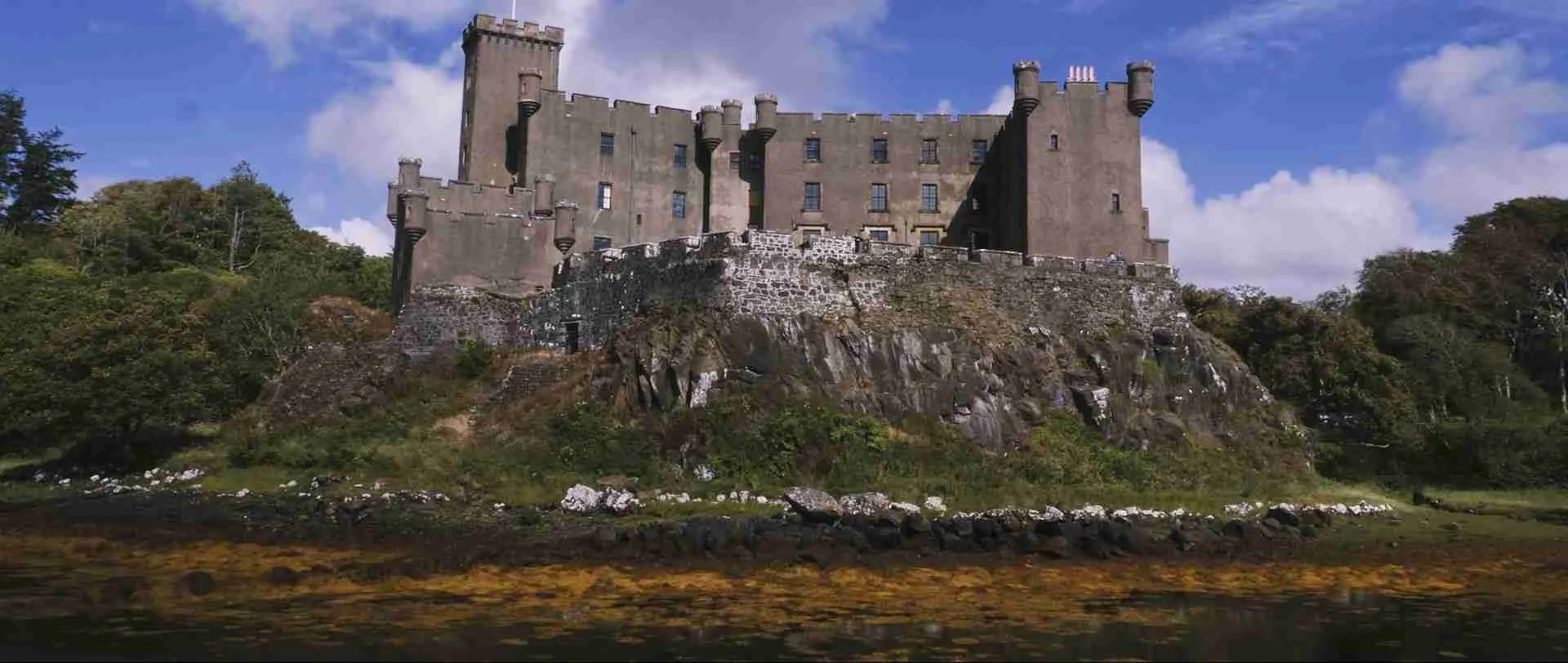
Dunvegan Castle stands as Scotland’s oldest continuously inhabited castle, serving as seat of Clan MacLeod chiefs for over 800 years since the 13th century. The fortress occupies rocky outcrop beside Loch Dunvegan on Skye’s western coast, originally accessible only by sea gate that protected against land-based attacks during medieval clan warfare period. Extensive additions across centuries created the current complex mixing medieval fortifications with Victorian mansion wings, while surrounding 5-acre gardens showcase formal parterres, woodland walks, and water gardens featuring stream-fed pools. The castle interior displays eight centuries of MacLeod family history through weapons, paintings, furniture, and clan artifacts including the famous Fairy Flag, a delicate silk banner dating to 4th-7th century Middle Eastern origins and attributed with protective powers in MacLeod legend.
Visiting Dunvegan Castle costs £18 for adults, £15 for concessions (seniors, students), and £12 for children aged 5-15, with children under 5 entering free, representing verified 2026 pricing. Check the official Dunvegan Castle website for current rates. These admission fees include castle interior tours, garden access, and parking, though boat trips to seal colonies incur additional charges (£10-12 for adults, £8-10 for children). The castle gardens-only ticket costs £16 adults, £13 concessions, £10 children, appealing to visitors interested in horticultural displays and outdoor walking without interior tour commitment. Opening hours extend approximately 10:00 AM to 5:00 PM during main season (April-October), with reduced winter hours or closure during November-March depending on annual scheduling. Last entry occurs 30-45 minutes before closing, allowing time for comprehensive castle exploration before staff closure procedures commence.
Castle interior tours follow one-way route through approximately 15 rooms across multiple floors, requiring 45-60 minutes for thorough exploration reading informational displays and examining artifacts. Highlights include the Drawing Room featuring 18th-century furnishings and family portraits, the Fairy Flag chamber displaying the sacred banner reportedly waved during three battles to ensure MacLeod victory, the Dungeon providing perspective on medieval castle defense and imprisonment, and various bedrooms, dining rooms, and clan heritage displays. Photography rules prohibit interior photography protecting both artifact preservation and MacLeod family privacy, though exterior and garden photography receives no restrictions. Audio guides included with admission provide room-by-room commentary explaining castle history, architectural development, and clan significance, available in multiple languages and highly recommended for visitors unfamiliar with Scottish clan system and Highland history.
Gardens at Dunvegan Castle showcase distinct sections developed across 200+ years of MacLeod landscaping efforts. The Round Garden features circular design with ornate water feature centerpiece surrounded by colorful perennial beds, the Walled Garden displays Victorian-era fruit and vegetable cultivation alongside decorative borders, and woodland walks follow Dunvegan River through native tree species including impressive rhododendron collections flowering spectacularly in May-June. The gardens provide peaceful walking for 30-60 minutes depending on pace and photographic interest, with benches positioned at scenic viewpoints allowing rest and contemplation. Garden accessibility varies, with main paths relatively flat and suitable for mobility-limited visitors, though woodland sections involve uneven terrain and steps. Spring and summer visits reward with maximum floral displays, while autumn color and winter garden structure offer seasonal variation for multiple visits.
Seal boat trips departing from Dunvegan Castle dock provide 20-30 minute excursions to Loch Dunvegan seal colony, approaching the marine mammals lounging on offshore rocks. These trips operate weather-permitting during main visitor season, departing regularly throughout afternoon hours subject to tide conditions and boat availability. Adult tickets cost £10-12, children £8-10, representing moderate additional expense beyond castle admission. The small boats accommodate 10-12 passengers, maintaining intimate wildlife viewing experiences without large tourist boat crowds. Seals tolerate boat approaches to approximately 20-30 meters before entering water, providing excellent photography opportunities with telephoto lenses (100-400mm range ideal). Wildlife guides explain seal biology, behavior, and conservation challenges during trips, adding educational value beyond simple viewing. Parents should assess children’s comfort with boats and potential mild seasickness before purchasing tickets, as rough water conditions occur when winds sweep across the loch.
Multi-day tours from Edinburgh include Dunvegan Castle as optional extra rather than standard itinerary inclusion, allowing participants to choose entry based on interest and budget. Tours typically allocate 1.5-2 hours at Dunvegan, sufficient time for castle interior exploration or garden walks but insufficient for comprehensive visits including both. Visitors must choose between focusing interior tour time versus garden exploration, or rushing both with abbreviated experiences. Independent travelers benefit from flexible time allocation, potentially dedicating 3-4 hours for thorough castle and garden visits plus seal boat trip. The castle cafe serves lunches, snacks, and beverages (£8-15 for main courses), providing convenient dining option though Portree’s wider restaurant selection lies only 25 minutes drive away. Gift shop sells clan-related merchandise, Scottish crafts, and guidebooks, with MacLeod family history publications available for visitors interested in deeper heritage research.
Reaching Dunvegan Castle requires driving approximately 25 minutes (20 kilometers) west from Portree along A850 and A863 roads, following clear signage directing visitors to castle entrance. Parking accommodates approximately 100 vehicles in paved lots immediately adjacent to ticket office and castle entrance, with parking included in admission price and rarely facing capacity issues even during peak season. The castle provides accessible facilities including disabled parking, wheelchair access to ground floor and gardens (though upper castle floors remain inaccessible), and accessible restrooms. Dunvegan village located 1 kilometer from castle offers additional dining options, accommodations, and services for visitors basing themselves in western Skye rather than Portree. The area provides strategic stopping point when exploring western peninsula attractions including Neist Point, Coral Beach, and Talisker Distillery, all accessible via minor roads radiating from Dunvegan.
Portree: Isle of Skye’s Colorful Harbor Capital
Portree serves as the Isle of Skye’s administrative capital and largest town, home to approximately 2,500 permanent residents with services, accommodations, dining, and cultural facilities supporting both local community and tourism economy. The town occupies sheltered position beside natural harbor where colorful houses climb hillsides surrounding the bay, creating the quintessentially photogenic scene appearing in countless Skye promotional materials. Portree’s Gaelic name “Port Rìgh” translates to “King’s Port” referencing 1540 visit by King James V attempting to pacify Highland clans, though modern Portree’s character derives more from Victorian fishing village expansion and 20th-century tourism development. The town functions as essential base for Isle of Skye visitors, providing accommodation concentration, restaurant variety, grocery shopping, fuel stations, banks, and medical services unavailable elsewhere on the island.
Portree Harbor represents the town’s visual centerpiece and primary attraction, where rows of pastel-painted houses in pink, yellow, blue, and white line the waterfront creating Instagram-famous scenery. The harbor operates as working fishing port alongside tourist destination, with fishing boats mooring beside pleasure craft and sea kayaks. Walking around the harbor takes 15-20 minutes following paved paths and sidewalks, with photography opportunities at every angle and lighting condition. The stone pier extending into harbor provides elevated perspective overlooking colorful house rows, while waterfront level delivers intimate cottage details and boat reflections in calm water. Optimal photography occurs during golden hours (sunrise and sunset) when angled light illuminates house facades, though overcast conditions produce evenly-lit scenes eliminating harsh shadows. Evening photography between May-August benefits from extended twilight lasting until 10:00-10:30 PM, allowing post-dinner harbor walks in beautiful light.
Accommodation in Portree ranges from budget hostels (£25-40 per person per night in dormitory beds) through mid-range bed-and-breakfasts and guesthouses (£70-110 per person sharing double rooms) to premium hotels (£90-140 per person). Booking ahead proves essential during peak season (June-August) when accommodation sells out weeks or months in advance, particularly for budget options and mid-range properties offering best value. Last-minute arrivals during summer often find no available rooms within 50 kilometers, forcing extended driving to Broadford, Sligachan, or mainland alternatives. Shoulder season (April-May, September-October) maintains reasonable availability when booking 2-4 weeks ahead, while winter sees ample vacancy and reduced rates. Portree accommodation quality varies significantly, with some bed-and-breakfasts offering exceptional hospitality and full Scottish breakfasts while others provide basic sleeping facilities. Reading recent TripAdvisor and Google reviews proves essential for avoiding disappointing properties, focusing on feedback from past 6-12 months reflecting current management and conditions.
Dining in Portree spans options from fish and chips takeaway (£8-12 for portions) and pub meals (£12-20 for mains) through casual restaurants (£15-25 mains) to upscale establishments (£25-40 mains) including fresh seafood specialists capitalizing on local fishing industry. Portree Fish Bar on harbor front serves classic fish and chips for takeaway or limited seating, while Caledonian MacBrayne (CalMac) Bar offers pub atmosphere with traditional Scottish dishes and local ales. The Granary serves wood-fired pizzas and casual fare in relaxed setting, while Scorrybreac restaurant delivers contemporary Scottish cuisine using Skye-sourced ingredients in intimate setting (reservations essential, booking weeks ahead recommended). Numerous cafes provide breakfast, lunch, and coffee throughout town center, including Cafe Arriba overlooking harbor and serving all-day breakfast, soups, and sandwiches. Grocery shopping options include Co-op supermarket for self-catering supplies, essential for budget travelers and those preferring picnic lunches for daytime excursions.
Portree serves as natural base for exploring Isle of Skye attractions radiating from the town in all directions: Old Man of Storr lies 6.5 miles north requiring 15-minute drive, Quiraing reaches 25 miles north via approximately 45-minute journey including single-track roads, Fairy Pools lie 25 miles south requiring 40-minute drive to Glen Brittle, Dunvegan Castle sits 25 miles west reached in 35 minutes, and Neist Point extends 35 miles west via 70-minute drive through narrow roads. This central positioning explains why multi-day tours base in Portree for two nights rather than moving between locations, allowing day-trip access to major attractions without luggage packing and accommodation changes. Independent travelers similarly find Portree optimal for stationary base, avoiding single-track road navigation in darkness when returning from dinner excursions or pub evenings.
Services available in Portree include fuel stations (essential for filling rental vehicles before exploring remote island roads), banks with ATMs (accepting international cards), pharmacies for basic medical supplies, and Portree Hospital providing accident/emergency services when mainland medical facilities lie hours away. Mobile phone coverage reaches most of Portree with 4G/5G service from major UK carriers, though signals weaken substantially when departing town toward island attractions. Visitors should download offline maps, accommodation confirmations, and essential information before traveling to areas lacking reliable connectivity. Portree Community Hospital at Viewfield Road provides minor injury treatment and emergency assessment, though serious cases require transfer to Broadford Hospital or mainland facilities via ambulance or air ambulance depending on severity and weather conditions.
Evening activities in Portree concentrate around harbor-area pubs offering live Scottish music sessions, particularly during summer months when tourism supports regular entertainment schedules. The Isles Inn, MacNabs Bar, and other harbor establishments feature traditional music Wednesday through Saturday evenings during peak season, providing authentic Highland cultural experiences beyond daytime sightseeing. Music quality varies from amateur sessions to professional musicians, with all ages welcome though atmosphere skews toward adults rather than families. Arriving by 8:00-8:30 PM secures seating before crowds fill venues, particularly on weekends. Portree cinema (Aros Centre) screens recent releases and occasional live event broadcasts, providing rainy-day entertainment options. Evening harbor walks remain popular year-round, with safe, well-lit waterfront paths allowing post-dinner strolls regardless of season.
Additional Must-See Isle of Skye Attractions
Neist Point lighthouse occupies the Isle of Skye’s westernmost promontory, perched dramatically on cliffs 300 feet above Atlantic waves where the Minch strait separates Skye from Outer Hebrides islands visible on clear days. The walk to the lighthouse from car park requires 30-40 minutes each way descending steep path with 200+ steps, challenging for return ascent but rewarding with spectacular coastal scenery and potential wildlife sightings including seals, dolphins, and minke whales during summer months. The lighthouse itself remains operational but closed to public entry, with the dramatic clifftop setting rather than building interior providing the attraction. Photography at Neist Point captures rugged coastline, basalt cliffs, and lighthouse against sea backdrop, particularly stunning during sunset when western light illuminates the scene spectacularly. The large car park accommodates tour groups and independent visitors, with no entry fees though 45-minute drive from Portree via narrow B884 road requires confident driving.
Kilt Rock and Mealt Falls create Trotternish Peninsula’s most easily accessed dramatic viewpoint, located roadside along A855 approximately 18 miles north of Portree. Vertical basalt columns forming the cliff face resemble pleated kilt pattern inspiring the name, while Mealt Falls plunges 90 meters directly from clifftop into the sea below creating one of Scotland’s few waterfall-to-ocean descents. A viewing platform constructed 2016 provides safe observation from fenced area, accessible via 100-meter walk from large car park accommodating coaches and multiple vehicles. The entire visit requires only 15-20 minutes for photography and observation, making this ideal quick stop on northern peninsula circuits. Free to visit, with no facilities beyond parking and viewpoint platform.
Coral Beach near Dunvegan delivers unexpected tropical appearance to Skye’s typically rocky coastline, featuring white “sand” composed of bleached coral-like algae (Lithothamnion calcareum) rather than traditional rock particles. The bright white beach contrasts strikingly against turquoise water and mountain backdrop, resembling Caribbean scenes except for Highland temperatures rarely exceeding 15°C (59°F) even in summer. Accessing Coral Beach requires 45-minute walk each way from Claigan car park along farm track and then rough trail, totaling 2.5 miles (4 kilometers) round-trip with minimal elevation change. The beach provides swimming opportunities for brave swimmers willing to endure cold water, tidal rock pools for children’s exploration, and unique landscape photography. Visiting during low tide maximizes accessible beach area and reveals tidal features, while high tide reduces beach to narrow strip. Parking at Claigan accommodates 20-30 vehicles, filling during peak season weekends when advance arrival ensures spaces.
Talisker Distillery stands as Skye’s most famous whisky producer, crafting distinctive peated single malt whisky since 1830 at Carbost village on western coast. Distillery tours provide 45-60 minute guided experiences explaining whisky production from malted barley through distillation and maturation, concluding with tastings of Talisker expressions. Standard tours cost £15 for adults including one tasting dram, while premium experiences range £25-45 featuring multiple expressions and more detailed production insights. Booking ahead proves essential, as tour capacity limits mean walk-in availability rarely exists during peak season. The distillery shop sells Talisker expressions including distillery-exclusive bottlings unavailable elsewhere, attracting serious whisky enthusiasts collecting special releases. Non-whisky-drinkers can visit shop and cafe without joining tours, with cafe serving lunches and refreshments in scenic waterside setting. Talisker lies 20 minutes drive from Dunvegan, 40 minutes from Portree, making western Skye day trips easily combine distillery visits with Dunvegan Castle or Neist Point.
Elgol village occupies isolated position on Strathaird Peninsula in southern Skye, offering spectacular Cuillin Mountain views across Loch Scavaig. The single-track B8083 road to Elgol provides 30-minute dramatic drive from main A851 road, with journey itself constituting an attraction through varied Highland scenery. Boat trips depart Elgol harbor to Loch Coruisk, an inland loch surrounded entirely by Cuillin peaks accessible only by boat or challenging mountain hiking. These wildlife cruises also visit Canna, Rum, and Eigg islands seeking seals, puffins, and occasionally whales during summer months. Elgol serves as popular photography location for Cuillin views during favorable weather, with morning light providing optimal illumination of mountain faces. The village offers minimal services beyond small cafe and boat booking office, functioning primarily as scenic destination rather than tourist infrastructure hub. Driving to Elgol and returning via same road consumes 2-3 hours minimum, making this suitable for dedicated day trips or independent travelers with flexible itineraries rather than compressed multi-day tour schedules.
Armadale Castle Gardens and Museum of the Isles occupy southern Skye (Sleat peninsula) accessible via ferry from Mallaig on mainland or road from Skye Bridge. While the castle itself remains romantic ruin following 1925 fire, the 20,000-acre estate features extensive woodland gardens with rhododendron collections, paths through mature trees, and Museum of the Isles exploring Highland culture and clan history particularly focused on Clan Donald heritage. Gardens provide 1-2 hours walking through varied landscapes from formal areas to wilder woodland, with seasonal interest spanning spring bulbs through autumn color. The museum delivers educational context helpful for visitors seeking deeper understanding of Highland clan system and Scottish culture beyond simple sightseeing. Cafe and gift shop provide refreshments and souvenirs, while Armadale village nearby offers additional services including ferry terminal for mainland connections. Southern Skye receives fewer visitors than northern peninsula and Portree areas, offering quieter experiences during peak season though requiring longer driving distances from central island base.
Independent Travel vs Guided Tours 2026
Independent self-drive travel to Isle of Skye provides complete itinerary flexibility, unlimited time at preferred attractions, spontaneous weather-chasing capabilities, and potential cost savings for couples or groups compared to organized tour expenses. Renting vehicles in Edinburgh costs £55-90 daily ($70-115) for economy to standard cars with manual transmission, rising to £90-130 daily for automatics or larger vehicles accommodating families. Multi-day rentals often provide discounted daily rates, with 4-5 day bookings reducing per-day costs by 10-15% compared to single-day rates. Fuel costs for Edinburgh-Skye round-trip journeys total approximately £80-120 depending on vehicle efficiency and current fuel prices (petrol £1.40-1.60 per liter range), covering roughly 900 kilometers driving. Two people sharing vehicle rental and fuel costs invest £160-250 combined for transportation before accommodation, meals, and attraction entries, comparing favorably against £490-800 combined (£245-400 per person) for equivalent three-day guided tour packages.
Independent travel challenges include navigating Highland single-track roads requiring passing-place etiquette and confidence, securing accommodation during peak season when popular properties book months ahead, route planning balancing distances against attraction density, and missing expert interpretation provided by knowledgeable tour guides. Single-track roads dominate Isle of Skye and approach routes, featuring narrow pavement width accommodating one vehicle with designated passing places every 100-200 meters. Drivers must assess oncoming traffic locations and reverse to nearest passing place when meeting vehicles, requiring patience and spatial awareness. Uphill traffic traditionally yields to downhill vehicles, though practical application depends on passing place proximity and driver courtesy. Some travelers find single-track roads stressful and intimidating, particularly when tour buses or delivery trucks appear around blind corners requiring rapid reversing. Others embrace single-track navigation as quintessential Highland driving experience, enjoying slower pace and scenic immersion compared to motorway monotony.
Accommodation booking for independent Skye visits requires advance planning extending 3-6 months for peak summer dates, when Portree and surrounding area properties sell out completely. Shoulder season (April-May, September-October) maintains reasonable availability booking 1-2 months ahead, while winter offers same-week booking opportunities at reduced rates. Independent travelers should secure Portree base accommodation first, then build daily itineraries around that foundation. Alternative strategies include booking multiple locations across Skye (Portree plus Dunvegan or Sleat) for variety and reduced driving distances, though requiring daily packing and unpacking. Budget-conscious independent travelers can utilize camping (numerous campsites across Skye charging £10-25 per pitch nightly) or motorhome travel (rental £80-150 daily from mainland depots), significantly reducing accommodation costs compared to hotels or even hostels.
Route planning for self-drive Skye visits benefits from understanding island geography and realistic distance calculations accounting for single-track roads reducing average speeds. Portree to Old Man of Storr requires only 15 minutes despite 6.5-mile distance, while Portree to Neist Point demands 70 minutes covering 35 miles via winding narrow roads. Independent travelers should plan maximum 2-3 major attractions daily allowing adequate time at each location rather than attempting comprehensive checklists requiring rushed visits. Weather monitoring gains importance when self-driving allows pivoting toward clear conditions, checking forecasts for specific Skye regions rather than island-wide predictions. Sunrise and sunset timing considerations affect photography opportunities, with summer extending usable light until 10 PM while winter compresses daylight to 8 AM-4 PM windows severely limiting daily activity possibilities.
Cost comparison between independent travel and guided tours reveals nuanced economic considerations beyond simple per-person daily rates. Two people traveling independently for three days (two nights Skye accommodation) invest approximately: £130-180 car rental (3 days), £90-110 fuel, £140-220 accommodation (£70-110 per person per night sharing), £90-150 meals (£30-50 daily per person), totaling £450-660 combined or £225-330 per person. This compares closely to £245-400 per person for organized three-day tours including similar components. Independent travel provides marginal savings for couples (£30-70 per person) while offering substantially greater flexibility, though requiring self-guided exploration without expert interpretation. Solo travelers face dramatically higher independent costs due to full car rental charges and single accommodation rates (typically £90-140 nightly), making organized tours with shared accommodation economically compelling at £245-400 versus £400-550+ independent travel for equivalent experiences.
Independent travel advantages extend beyond economics to intangible benefits including privacy, pace control, spontaneity, and personalized experiences. Couples or families traveling vehicles enjoy private conversations, music choices, and flexible meal timing without accommodating group consensus. Photographers benefit from unlimited time at locations during optimal light rather than scheduled 30-minute stops, while hikers can extend walks beyond tour-compatible distances. Spontaneous decisions to detour toward interesting sights, revisit favorite locations, or skip planned attractions due to weather become possible when driving independently. Accommodation choices span budget hostels through luxury hotels based purely on personal preference and budget rather than tour operator selections. These flexibility advantages particularly appeal to experienced travelers comfortable with navigation, spontaneous problem-solving, and self-guided exploration.
Guided tour advantages include stress-free logistics, expert Highland storytelling and history interpretation, social interaction with fellow travelers, and optimized routing maximizing efficient use of limited time. Professional driver-guides navigate single-track roads confidently while passengers enjoy scenery, eliminate parking challenges at overcrowded attractions through early arrival timing and guide knowledge of alternative parking, and adjust itineraries real-time based on weather forecasting and traffic reports. The continuous historical and geological commentary transforms drives between attractions into educational experiences rather than silent transit time, while evening accommodation in Portree allows travelers to enjoy pub atmosphere and meet other visitors rather than isolating in private lodging. Solo travelers particularly benefit from tour social dynamics, meeting fellow adventurers and potential travel companions rather than exploring alone. First-time Scotland visitors gain orientation and cultural understanding from guides, building confidence for future independent Highland travels.
Booking Tips and Seasonal Considerations 2026
Booking multi-day Isle of Skye tours from Edinburgh for 2026 travel requires understanding optimal timing balancing early-bird promotional discounts against itinerary uncertainty and weather unpredictability. Most major operators including Highland Explorer Tours, Haggis Adventures, and Rabbie’s Tours release 2026 inventory during autumn 2025, opening bookings 6-9 months before departure dates. Promotional discount codes offering 20-25% savings typically apply for bookings made by late May 2026 for travel through October 2026, incentivizing early commitment despite weather and schedule uncertainties. Highland Explorer Tours’ “SPRING26” code and Haggis Adventures’ “SAVE25” promotion exemplify this pattern, reducing standard £290-370 tours to £220-280 range when booking deadlines are met. These promotions create financial pressure to book early, though most operators simultaneously offer free cancellation up to 24-48 hours before departure, substantially reducing commitment risks.
Peak season bookings for July-August departures require particularly early action, as these summer months sell out 8-12 weeks ahead for popular operators maintaining limited weekly departure frequencies. Even smaller operators with multiple weekly departures fill summer tours completely by June, leaving late bookers facing limited choices or sold-out situations. Travelers with fixed Edinburgh arrival dates during summer peak should book tours immediately upon confirming travel plans, selecting preferred operator and tour type before availability disappears. Flexible travelers can monitor availability and occasionally capture cancellation openings or last-minute discounted seats appearing 1-2 weeks before departure when operators attempt filling partially-booked tours, though this strategy risks complete unavailability and should only be employed when alternative plans exist.
Shoulder season strategy (April-May, September-early October) provides more relaxed booking timelines while maintaining favorable weather probability and attraction accessibility. April-May delivers Scotland’s driest months statistically, reducing rain interference with outdoor activities and photography, while September offers summer’s warmth retention without peak crowding or pricing. Tours during these periods maintain availability 4-6 weeks before departure for most operators, allowing travelers to monitor long-range forecasts before committing. However, promotional discounts typically expire by late May, meaning bookings made June-August for September-October travel pay full rates despite lower seasonal demand. Optimal strategy involves booking April-May tours by late May deadline capturing 20-25% promotional savings, while September-October bookings made June-July achieve moderate discounts (10-15%) occasionally offered for shoulder season demand stimulation.
Weather considerations fundamentally affect Isle of Skye experience quality, though predicting conditions months ahead proves impossible despite seasonal averages. Summer (June-August) statistically receives higher rainfall than spring, particularly July experiencing wettest conditions, while offering warmest temperatures (12-16°C or 54-61°F average highs) and maximum daylight extending until 10:00-10:30 PM. Spring (April-May) provides driest conditions alongside cooler temperatures (8-12°C or 46-54°F) and moderate daylight (sunrise 6:00 AM, sunset 8:30-9:00 PM), balancing weather reliability against thermal comfort. Autumn (September-October) maintains summer warmth into September before cooling through October, with increasing rainfall as Atlantic storm systems strengthen. Winter (November-March) delivers shortest days (8 AM-4 PM), coldest temperatures (4-8°C or 39-46°F), frequent rain and wind, and highest cancellation risks when severe weather closes Highland roads or prevents safe touring.
Accommodation availability patterns independently affect booking strategies, with Portree properties selling out 3-6 months ahead during peak summer regardless of tour bookings. Independent travelers and those booking tours with self-arranged accommodation must secure Skye lodging before or simultaneously with tour bookings, as discovering sold-out accommodation after committing to tours creates significant problems. Tour packages including accommodation guarantee two nights lodging even when properties reach capacity, representing valuable insurance against booking challenges. Travelers combining guided tours with extended independent Skye stays (arriving days before tour departs or remaining after tour concludes) face split accommodation booking challenges: securing tour-duration lodging independently while ensuring property holds rooms through tour dates, or accepting accommodation changes mid-stay requiring moving between properties.
Cancellation and modification policies vary significantly among operators, requiring careful review before booking. Premium operators like Rabbie’s Tours and Highland Explorer Tours typically offer free cancellation up to 24-48 hours before departure with full refunds or rebooking options, providing maximum flexibility for travelers facing unexpected schedule changes or health issues. Budget operators may impose stricter policies with cancellation fees beginning 7-14 days before departure, though pandemic-era flexibility improvements remain common across industry. Travelers should specifically verify: cancellation deadline for full refunds, partial refund schedules for later cancellations, modification policies allowing date changes without penalties, and weather cancellation protocols when operator rather than participant cancels due to road closures or severe storms. Travel insurance covering tour cancellations for medical emergencies, family situations, or other covered reasons provides valuable protection, particularly for expensive bookings made months ahead.
Group size limitations represent hidden booking considerations affecting tour experience quality. Tours capped at 8-12 passengers deliver intimate experiences with easy guide interaction and flexible stopping for photographs, while 16-passenger maximum tours balance social dynamics against individual attention. Larger coach tours accommodating 40-50 passengers reduce per-person costs but sacrifice flexibility, personal guide interaction, and efficient loading/unloading at attractions. Booking earliest often secures smaller group tours before they fill and operators add larger-vehicle departures to accommodate demand. Travelers prioritizing intimate experiences should specifically confirm group sizes when booking, as some operators mix vehicle types across departure dates without clear indication of passenger counts in standard booking flows.
Special requirements including dietary restrictions, mobility limitations, or specific accommodation requests require direct operator communication before or immediately after booking. Vegetarian, vegan, and gluten-free meal options receive reliable accommodation at Skye restaurants and accommodations, though advance notification helps ensure breakfast provisions meet requirements. Mobility-limited travelers should discuss walking distances and terrain challenges with operators, as Isle of Skye attractions frequently involve uneven paths, steps, and steep slopes incompatible with wheelchairs or significant walking limitations. Some operators provide accessible tour modifications or customized private experiences accommodating specific needs, though requiring advance discussion rather than assumptions of standard tour compatibility. Solo travelers seeking shared-gender roommate matching to avoid single supplements should request this explicitly when booking, as automatic matching policies vary among operators and explicit communication ensures desired arrangements.
Frequently Asked Questions
How long should I spend on the Isle of Skye?
Three days represents the minimum duration allowing reasonable Isle of Skye exploration including major attractions Old Man of Storr, Quiraing, Fairy Pools, Dunvegan Castle, and Portree with time for weather flexibility and hiking at preferred locations. Multi-day tours from Edinburgh efficiently package three days including two full days on Skye plus travel days through Highland landmarks. Independent travelers benefit from extending stays to four or five days, providing additional time for Neist Point, Talisker Distillery, Elgol, and lesser-known locations while reducing rushed schedules. Comprehensive Skye exploration covering all peninsulas and major attractions thoroughly requires 5-7 days, though most visitors balance Skye against other Scottish destinations when planning limited vacation time. One-day Skye visits from Edinburgh or Inverness prove technically possible but deliver extremely compressed experiences with 12-14 hour tour days spent primarily driving rather than exploring.
Do I need a car to visit the Isle of Skye?
Vehicles provide essential transportation for independent Isle of Skye exploration, as public transport options remain extremely limited with infrequent buses connecting only major towns. Travelers without rental cars must join organized multi-day tours from Edinburgh or Inverness providing transportation, accommodation, and guiding, or face severely restricted movement capability once reaching Skye. Public buses operate Portree to Uig and Broadford routes several times daily during summer, insufficient for visiting dispersed attractions like Old Man of Storr, Quiraing, Fairy Pools, or Neist Point spread across island. Cycling offers alternative transport for exceptionally fit travelers comfortable with challenging climbs, persistent winds, and 50+ kilometer daily distances between attractions, though weather and single-track road hazards make this minority choice. Hitchhiking occasionally works during summer peak when tourist traffic increases, though represents unreliable and potentially unsafe transport method requiring backup plans when rides unavailable.
What should I pack for an Isle of Skye tour in 2026?
Essential Isle of Skye packing includes waterproof jacket (absolutely non-negotiable for Scottish Highland weather), multiple clothing layers from base thermals through fleece/sweaters accommodating temperature fluctuations and wind chill, waterproof trousers for hiking during rain, sturdy waterproof hiking boots with ankle support for uneven rocky terrain, comfortable walking shoes for Portree town exploration, small backpack for carrying water/snacks/cameras during day excursions, refillable water bottle, sun protection (sunscreen, sunglasses, hat) effective even during cloudy conditions, camera with extra batteries and memory cards for extensive photography opportunities, power bank for charging phones given limited charging access during full touring days, basic first-aid supplies including blister treatment for hiking, and midges repellent for summer visits (Avon Skin So Soft recommended by locals, standard repellents containing DEET also effective). Pack compact luggage given tour vehicle restrictions (one piece per person), using soft-sided bags rather than rigid suitcases. Portree accommodations typically lack elevators with stairs to upper floors, making lighter luggage practically advantageous.
When is the best weather on the Isle of Skye?
April and May deliver the Isle of Skye’s statistically driest weather with average rainfall 50-70mm monthly compared to July’s 80-100mm, though no season guarantees dry conditions given Scotland’s Atlantic climate. Spring months (April-May) balance relatively dry conditions with moderate temperatures (8-12°C or 46-54°F average highs), extended daylight hours (6:00 AM sunrise, 8:30-9:00 PM sunset by May), and reduced visitor numbers compared to summer peak. June through August offers warmest temperatures (12-16°C or 54-61°F) and maximum daylight lasting until 10:00-10:30 PM, but coincides with wettest conditions particularly July, highest accommodation rates, and peak crowding at major attractions. September provides favorable balance of summer’s warmth retention, improving weather as autumn strengthens, reduced tourist density, and lower pricing. Skye weather remains inherently unpredictable with Atlantic systems bringing rapid changes, meaning visitors during any season should prepare for rain, wind, and cloud alongside potential sunny intervals within same day.
Can I see the Northern Lights from the Isle of Skye?
The Northern Lights (Aurora Borealis) appear occasionally from the Isle of Skye during winter months (October-March) when geomagnetic activity proves sufficient, though Skye’s relatively southerly latitude (57°N) requires stronger solar storms than locations in Northern Scotland, Iceland, or Scandinavia. Viewing depends on three essential factors: strong geomagnetic activity (KP index 5+ typically necessary for Skye sightings), clear dark skies free of clouds and light pollution, and suitable viewing location away from Portree’s town lights. Winter visits offer best probability given longer darkness hours (4:00 PM-8:00 AM), though autumn (September-October) and spring (March-April) occasionally produce displays during major solar storms. Aurora alert apps and websites (AuroraWatch UK, Space Weather Live) provide real-time notifications when geomagnetic conditions support viewing, though clear sky requirements often prove limiting factor in cloudy Skye climate. Realistic expectations should acknowledge Northern Lights viewing as bonus possibility rather than reliable planned activity, with successful sightings requiring favorable conditions aligning unpredictably.
Are there midges on the Isle of Skye and how do I avoid them?
Midges (tiny biting insects approximately 2mm long) plague the Isle of Skye and broader Scottish Highlands primarily during summer months (June-September), with peak activity occurring humid, overcast, windless conditions typically morning/evening hours. These insects swarm in millions around humans and animals, delivering itchy bites causing significant discomfort though not transmitting diseases. Midge avoidance strategies include: visiting during windy weather when midges cannot fly effectively, exploring coastal and high-elevation locations where wind proves more reliable, wearing light-colored long-sleeve clothing and hats covering exposed skin, using effective repellents containing DEET or citriodiol (Avon Skin So Soft spray repeatedly recommended by Scottish locals), avoiding dawn/dusk outdoor activities when midge activity peaks, and planning indoor activities (castle tours, distillery visits, museum time) during still, humid periods. Midges prove less problematic in Portree town center due to urban environment and harbor breezes, though rural attractions like Fairy Pools and Old Man of Storr trails experience severe midge pressure during calm summer conditions. Spring (April-May) and autumn (October) visits largely avoid midge season, representing significant advantage for sensitive individuals.
What are the driving challenges on the Isle of Skye?
Isle of Skye driving challenges center primarily on single-track roads requiring passing-place navigation, with vehicles meeting head-on needing to reverse to nearest passing place allowing oncoming traffic to proceed. These narrow roads dominate Skye’s rural areas and approach routes, demanding patience, spatial awareness, confidence reversing significant distances, and courtesy determining which driver reverses. Highland etiquette favors uphill traffic having right-of-way over downhill, though practical application depends on passing place proximity. Additional challenges include: narrow roads with limited shoulders leaving minimal error margin, blind corners requiring reduced speeds and readiness to stop suddenly, livestock (sheep, cattle) wandering freely across unfenced roads, dramatic scenery creating distraction from driving attention requirements, and steep grades on mountain passes testing vehicle power and driver confidence. Wet weather increases hazards through reduced traction and visibility, while high winds particularly affect high-clearance vehicles. Automatic transmission vehicles ease navigation stress compared to manuals requiring frequent gear changes on hills. Drivers uncomfortable with these conditions should consider organized tours with professional drivers rather than rental car independence.
Can I visit the Isle of Skye as a day trip from Edinburgh?
Day trips from Edinburgh to Isle of Skye prove technically possible through organized tour operators but deliver extremely compressed experiences prioritizing journey over destination, with 12-14 hour tour days spending 10-12 hours driving and only 2-4 hours actually exploring Skye. These marathon tours depart Edinburgh at 5:30-6:30 AM for 3.5-hour drives to Skye, allow brief stops at 1-2 locations (commonly Portree and either Old Man of Storr or Eilean Donan Castle), then return through Glencoe arriving Edinburgh 7:00-9:00 PM exhausted. Day trip pricing typically reaches £50-70 per person, representing questionable value given minimal Skye time compared to multi-day alternatives. Edinburgh to Skye day trips suit travelers with extremely limited Scotland time prioritizing Highland scenery glimpses over substantive exploration, though nearly all participants report wishing they had booked multi-day tours after experiencing Skye’s compressed preview. Independent travelers should recognize seven-hour each-way driving makes same-day returns impractical and dangerous due to fatigue, requiring minimum overnight stop converting day-trip ambitions into two-day minimum itineraries.
How much does it cost to visit the Isle of Skye for three days?
Three-day Isle of Skye visits from Edinburgh cost £245-400 ($310-510) per person when booking organized multi-day tours including accommodation, transportation, and guiding. Budget options starting £245 provide hostel dormitory lodging and essential services, mid-range tours at £280-340 upgrade to bed-and-breakfast accommodation in shared rooms, while premium offerings reaching £380-400 deliver hotel-standard lodging and enhanced experiences. These tour costs require supplementing with meals beyond included breakfasts (£30-50 daily per person for lunch and dinner), optional attraction entries (Dunvegan Castle £18, Eilean Donan Castle £13, Loch Ness cruises £22), and personal expenses like souvenirs and extra activities. Total three-day investment including tour, meals, and typical attraction entries reaches £320-550 per person depending on accommodation level and dining choices. Independent travelers face similar costs when accounting for vehicle rental (£55-90 daily), fuel (£80-120 round-trip), accommodation (£70-110 per person nightly sharing), and meals, with couples achieving modest savings over tours while solo travelers pay substantially more due to undivided rental costs and single accommodation rates.
What wildlife can I see on the Isle of Skye?
Isle of Skye wildlife includes red deer grazing hillsides throughout the island (particularly visible during autumn rutting season when stags compete for mates), Atlantic grey seals hauling out on coastal rocks near Dunvegan and accessible via boat trips from castle dock, golden eagles and white-tailed sea eagles (Europe’s largest raptors) soaring above Cuillin Mountains and northern peninsula, otters fishing coastal areas and rivers though proving elusive and requiring patient observation, dolphins and porpoises occasionally visible from coastal viewpoints including Neist Point, minke whales appearing summer months in Minch strait between Skye and Outer Hebrides, mountain hares at high elevations changing coat color seasonally from brown summer to white winter, and puffins nesting on offshore islands accessible via boat tours from Elgol May through July. Red deer represent most reliably observed wildlife given large populations and daytime activity, while marine mammals require luck or dedicated boat trip investment. Bird watching attracts enthusiasts year-round with over 200 species recorded on Skye including seabirds, raptors, waders, and passerines. Wildlife photography demands telephoto lenses (300mm+ focal length), patience, and willingness to walk away from main tourist routes where human presence scares animals.