
India UNESCO World Heritage Sites: Complete Guide to 44 Extraordinary Sites
India stands among the world’s great custodians of human heritage, with 44 UNESCO World Heritage Sites spanning ancient cave temples, medieval forts, Mughal mausoleums, sacred rivers, and biodiversity hotspots of global importance. From the ethereal white marble of the Taj Mahal to the primordial rock art of Bhimbetka, from the wildlife-rich forests of Kaziranga to the living city of Ahmedabad, these inscribed sites collectively tell the story of one of humanity’s oldest and most complex civilizations.
Key Takeaways
- India has 44 UNESCO World Heritage Sites as of 2025 — 36 cultural, 7 natural, and 1 mixed — placing the country sixth globally in total inscriptions.
- The first four sites were inscribed simultaneously in 1983: Ajanta Caves, Ellora Caves, Agra Fort, and the Taj Mahal.
- The most recent addition is the Maratha Military Landscapes of India, a collection of 12 historic forts inscribed in July 2025.
- One site — Khangchendzonga National Park — holds the rare Mixed designation, recognized for both outstanding natural and cultural significance.
- India’s heritage spans more than 5,000 years of continuous civilization, from Indus Valley Harappan cities to 20th-century modernist architecture.
- Maharashtra leads all states with the highest number of World Heritage Sites, including the newly inscribed Maratha forts.
People Also Ask About India UNESCO World Heritage Sites
How many UNESCO World Heritage Sites does India have?
India has 44 UNESCO World Heritage Sites as of 2025. This includes 36 cultural sites, 7 natural sites, and 1 mixed site (Khangchendzonga National Park, recognized for both cultural and natural values). India ranks sixth in the world for total UNESCO inscriptions, after Italy, China, Germany, France, and Spain. The country’s first four sites were inscribed in 1983, and the most recent — the Maratha Military Landscapes — was added in July 2025.
What is the most recently inscribed UNESCO World Heritage Site in India?
The Maratha Military Landscapes of India became the country’s 44th UNESCO World Heritage Site in July 2025, inscribed during the 47th session of the World Heritage Committee in Paris. The site comprises 12 historic forts associated with the Maratha Empire — 11 in Maharashtra and 1 in Tamil Nadu — including iconic fortifications such as Raigad, Shivneri, Lohagad, Pratapgad, and Panhala. These forts showcase the sophisticated military architecture and strategic genius of the Maratha rulers during the 17th to 19th centuries.
Which was India’s first UNESCO World Heritage Site?
India’s first UNESCO World Heritage Sites were inscribed in 1983 during the seventh session of the World Heritage Committee. Four sites received simultaneous designation that year: the Ajanta Caves and Ellora Caves in Maharashtra (famous for their ancient Buddhist, Hindu, and Jain rock-cut architecture), Agra Fort in Uttar Pradesh (the formidable Mughal stronghold), and the Taj Mahal — arguably the world’s most famous monument of love. These four sites remain among India’s most visited heritage destinations.
Which Indian state has the most UNESCO World Heritage Sites?
Maharashtra holds the distinction of having India’s largest concentration of UNESCO World Heritage Sites. The state is home to the Ajanta Caves, Ellora Caves, Elephanta Caves, Victorian Gothic and Art Deco Ensembles of Mumbai, and the recently inscribed Maratha Military Landscapes (which includes 11 forts within the state). Uttar Pradesh follows closely with landmarks including the Taj Mahal, Agra Fort, and Fatehpur Sikri. Delhi is home to Humayun’s Tomb, Qutb Minar, and the Red Fort Complex.
Extended multi-day tours – 5+ days
Featured India Multi-Day Tour Packages
11 days
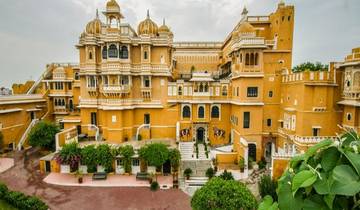
Taj Mahal and Wildlife with Royal Stay at Castles
- ✓ Comprehensive India tour
- ✓ Expert local guides included
- ✓ All accommodation arranged
- ✓ Transportation provided
8 days
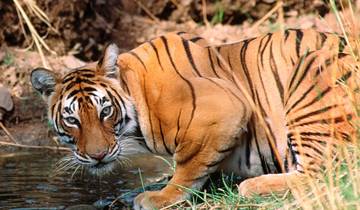
Golden Triangle Tour With Ranthambore With Luxury 4 Star Hotels Group/Private
- ✓ Comprehensive India tour
- ✓ Expert local guides included
- ✓ All accommodation arranged
- ✓ Transportation provided
5 days
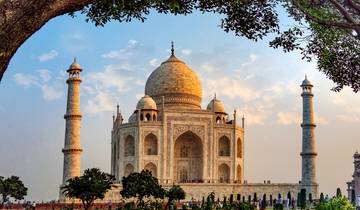
India's Top Selling Golden Triangle India Tour w/ Meals and Sunrise Taj Mahal
- ✓ Comprehensive India tour
- ✓ Expert local guides included
- ✓ All accommodation arranged
- ✓ Transportation provided
7 days
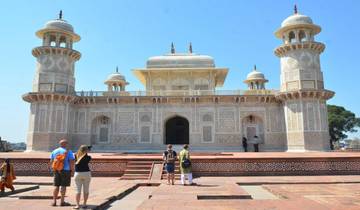
India Golden Triangle Tour
- ✓ Comprehensive India tour
- ✓ Expert local guides included
- ✓ All accommodation arranged
- ✓ Transportation provided
Multi-day tour packages powered by TourRadar. Prices and availability subject to change.
Introduction: India’s UNESCO Heritage Legacy
Few nations on earth can claim a heritage as deep, diverse, and continuously inhabited as India. With civilization stretching back more than five millennia — from the planned urban centers of the Indus Valley to the living spiritual traditions of Varanasi — India presents UNESCO with an almost overwhelming abundance of sites worthy of World Heritage recognition.
India ratified the UNESCO World Heritage Convention on November 14, 1977, and earned its first four inscriptions just six years later in 1983. Over the decades that followed, the list grew steadily: through the architectural masterworks of the Mughal Empire, the sacred landscapes of Buddhism, Hinduism, and Jainism, the colonial-era Victorian streetscapes of Bombay, and the ecological treasures of the Western Ghats and the Himalayan foothills. In 2025, with the inscription of the Maratha Military Landscapes, India reached the landmark of 44 World Heritage Sites.
What makes India’s UNESCO portfolio especially remarkable is its extraordinary range. A visitor moving through India’s heritage sites encounters the oldest surviving Buddhist university at Nalanda, the world’s most photographed building in the Taj Mahal, one-horned rhinoceroses in Kaziranga, prehistoric rock paintings at Bhimbetka dating back 30,000 years, and Le Corbusier’s modernist urban planning in Chandigarh. No other country presents such a sweep of human history and natural wonder compressed into a single national heritage framework.
This guide presents all 44 sites organized by category and region, providing context for their historical significance, UNESCO criteria, and what makes each unique within the global pantheon of protected heritage.
Cultural Heritage Sites: 36 Monuments, Cities & Sacred Landscapes
India’s 36 cultural World Heritage Sites span architectural traditions from prehistoric rock shelters to 20th-century modernist planning. They encompass the sacred geography of multiple world religions, the military and courtly arts of successive empires, and the living urban fabric of cities that have never ceased to be inhabited.
The Foundational Four: India’s 1983 Inscriptions
The Ajanta Caves in the Sahyadri Hills of Maharashtra represent one of the finest surviving examples of ancient Indian art. Carved into a horseshoe-shaped basalt cliff above the Waghora River, the 30 caves — excavated between the 2nd century BCE and 6th century CE — contain Buddhist paintings and sculptures of breathtaking quality. The naturalistic depictions of the Jataka tales (stories of the Buddha’s previous lives) demonstrate a mastery of form, narrative, and color that astonished the European officers who rediscovered the site in 1819. UNESCO inscribed Ajanta in 1983 under criteria i, ii, iii, and vi.
Sixty kilometers from Ajanta, the Ellora Caves represent an even more ambitious undertaking. Across 34 monasteries and temples excavated between the 6th and 11th centuries CE, the complex encompasses Buddhist, Hindu, and Jain sacred architecture — a remarkable testament to the religious coexistence and shared artistic traditions of medieval India. The centerpiece is the Kailasa Temple (Cave 16), a free-standing Hindu temple carved downward from a single basalt cliff — an engineering achievement without parallel in the ancient world. UNESCO inscribed Ellora in 1983.
Agra Fort — known locally as Lal Qila or the Red Fort of Agra — is the most powerful Mughal fortification in India. Originally constructed by Akbar the Great beginning in 1565, the red sandstone complex encloses palaces, mosques, and audience halls that evolved under successive emperors. It was from the Musamman Burj tower of Agra Fort that Shah Jahan, imprisoned by his son Aurangzeb, is said to have spent his final years gazing across the Yamuna River at the tomb he built for his beloved wife. UNESCO inscribed Agra Fort in 1983.
The Taj Mahal needs no introduction. Built between 1632 and 1648 by Emperor Shah Jahan as an eternal memorial to his wife Mumtaz Mahal, who died in childbirth, it stands as humanity’s most recognized monument of love. The central white marble mausoleum — its form perfectly reflected in the long rectangular pool of the chaharbagh garden — achieves a mathematical symmetry and luminous perfection that has moved visitors to speechlessness across four centuries. An estimated 7-8 million visitors arrive annually. UNESCO inscribed the Taj Mahal in 1983 under criteria i and ii.
Temple Architecture: From Dravidian Shores to Nagara Peaks
The Group of Monuments at Mahabalipuram (also known as Mamallapuram) in Tamil Nadu represents the earliest phase of classical Dravidian architecture. Dating to the 7th and 8th centuries CE under the Pallava dynasty, the coastal complex includes the Shore Temple — with its two-tiered shikhara rising above the Bay of Bengal — the famous Five Rathas (monolithic temple-chariots carved from single boulders), and the extraordinary bas-relief panel of Arjuna’s Penance, one of the largest open-air rock sculptures in the world. UNESCO inscribed the site in 1984.
The Sun Temple at Konark in Odisha (1984) is one of the greatest architectural achievements of medieval India. Built in the 13th century by King Narasimhadeva I of the Eastern Ganga dynasty, the temple was conceived as a colossal stone chariot for Surya, the sun god — its twelve pairs of intricately carved wheels measuring 3 meters in diameter and acting as accurate sundials. The temple’s erotic sculptural program on its outer walls remains among the most celebrated examples of sacred art in the Hindu tradition. Though the main shikhara collapsed centuries ago, the surviving jagamohana (assembly hall) and its surroundings convey the original grandeur of what 13th-century Arab travelers described as the “Black Pagoda.”
The Churches and Convents of Goa (1986) represent the most significant concentration of Portuguese colonial religious architecture in Asia. The Basilica of Bom Jesus — containing the mortal remains of St. Francis Xavier, the Jesuit missionary — the Se Cathedral (the largest church in Asia at the time of its construction), and surrounding convents and chapels in Old Goa collectively demonstrate the transplantation and adaptation of Baroque architectural principles in a tropical Asian setting during the 16th and 17th centuries.
Fatehpur Sikri (1986) in Uttar Pradesh is perhaps the most poignant of all Mughal sites. The Emperor Akbar built this new imperial capital entirely in red sandstone between 1569 and 1585, but abandoned it just 14 years later — possibly due to water scarcity — and it has been essentially uninhabited ever since. The result is the most complete and best-preserved Mughal palace complex in India, its colonnaded halls, private apartments, the magnificent Panch Mahal pavilion, and the enormous Buland Darwaza (Gate of Victory) preserved in almost pristine condition.
The Group of Monuments at Hampi (1986) in Karnataka preserves the ruins of Vijayanagara — the last great Hindu empire of medieval India, which at its 14th-16th century height was one of the world’s largest and wealthiest cities. The boulder-strewn landscape of granite hills contains more than 1,600 surviving monuments: the great Virupaksha Temple still actively worshipped, the Vittala Temple with its famous stone chariot and musical pillars, royal enclosures, elephant stables, stepped tanks, and market streets extending to the horizon.
Khajuraho (1986) in Madhya Pradesh represents the artistic pinnacle of the Chandela dynasty. Of the original 85 temples built between 950 and 1050 CE, 22 survive in varying states of preservation. Their elaborately carved exterior friezes — featuring celestial beings, warriors, elephants, and the celebrated mithuna (erotic) sculptures — exemplify Nagara temple architecture at its most exuberant. The sculptures have been interpreted as didactic, tantric, and celebratory, but their artistic virtuosity transcends any single explanation.
Elephanta Caves (1987), on an island in Mumbai Harbour accessible by ferry, house magnificent rock-cut Hindu sculpture created between the 5th and 8th centuries CE. The site’s crown jewel is the Trimurti — a 6-meter-high three-headed bust of Shiva representing his creation, preservation, and destruction aspects — widely considered among the greatest sculptures in world art.
The Great Living Chola Temples (1987, extended 2004) in Tamil Nadu encompass three extraordinary Dravidian temples: the Brihadeeswarar Temple at Thanjavur (built by Rajaraja I around 1010 CE), the Brihadeeswarar Temple at Gangaikonda Cholapuram (built by Rajendra I), and the Airavatesvara Temple at Darasuram. The Thanjavur temple’s vimana tower rises 65.8 meters and is topped by a single granite capstone weighing 80 tonnes — a construction achievement of staggering complexity for the 11th century. The temples are called “living” because active worship continues within them.
Pattadakal (1987) in Karnataka represents the culmination of early Chalukyan architecture and the point at which the two great traditions of Indian temple building — the Nagara style of the north and the Dravidian style of the south — were brought together and synthesized. The nine temples of Pattadakal, built between the 7th and 8th centuries, were royal coronation sites for Chalukya kings.
The Buddhist Monuments at Sanchi (1989) in Madhya Pradesh preserve the oldest stone structures in India. The Great Stupa at Sanchi — originally built by Emperor Ashoka in the 3rd century BCE and enlarged over subsequent centuries — is the most complete surviving Buddhist monument from ancient India. Its four elaborately carved gateways (toranas) depicting scenes from the life of the Buddha and the Jataka tales represent the earliest sculptural narrative program in Indian art.
Mughal Delhi and the Imperial Capital
Humayun’s Tomb (1993) in Delhi is recognized as the prototype for Mughal funerary architecture and the direct predecessor of the Taj Mahal. Built in 1570 by the Emperor’s wife Bega Begum, it was the first garden-tomb in the Indian subcontinent — its chaharbagh (four-quadrant garden) layout, double-domed chamber, and red sandstone and white marble inlay establishing the template that would reach its apogee in Agra a century later. The tomb complex also contains numerous subsidiary tombs, including that of the Emperor’s barber, demonstrating the democratic spatial generosity of Mughal funerary planning.
The Qutb Minar and its Monuments (1993) in Delhi represent the beginning of the Islamic architectural tradition in India. The soaring 72.5-meter minaret — the world’s tallest brick minaret — was begun by Qutb-ud-din Aibak after the Muslim conquest of Delhi in 1193 and completed by his successors. The adjacent Quwwat-ul-Islam Mosque (“the might of Islam”) was built using columns pillaged from demolished Hindu and Jain temples, creating a palimpsest of religious and political transformation visible in every capital and bracket.
The Mountain Railways of India (1999, extended 2005 and 2008) comprise three remarkable engineering achievements: the Darjeeling Himalayan Railway (built 1879-1881), climbing 2,134 meters through the foothills of the eastern Himalayas to the “Queen of Hill Stations”; the Nilgiri Mountain Railway in Tamil Nadu (1908), climbing the Blue Mountains using a unique rack-and-pinion system; and the Kalka-Shimla Railway (1903), crossing 103 tunnels and 800 bridges through the outer Himalayas to the former summer capital of British India.
The Mahabodhi Temple Complex at Bodh Gaya (2002) in Bihar marks the most sacred site in Buddhism — the precise location where Siddhartha Gautama attained enlightenment under the Bodhi tree around 500 BCE. The current temple, rising 55 meters above the site of the original structure, dates primarily to the 5th-6th centuries CE but has been continuously modified and restored over 1,500 years. The Vajrasana (Diamond Throne) diamond marks the exact spot of the Buddha’s enlightenment.
The Rock Shelters of Bhimbetka (2003) in Madhya Pradesh contain one of the world’s greatest concentrations of prehistoric art. Among more than 700 rock shelters in the Vindhya Hills, 400 contain paintings spanning from the Upper Paleolithic period — some 30,000 years ago — through the historical period. The site provides extraordinary evidence of continuous human habitation over 100,000 years, with evidence of stone age tool cultures, wild animals, hunting scenes, and eventually domestic subjects and decorative motifs evolving through successive millennia.
The Champaner-Pavagadh Archaeological Park (2004) in Gujarat represents a unique landscape combining prehistoric rock art, a hill fortress, and the only surviving pre-Mughal Islamic city in India. Champaner was captured and rebuilt by Sultan Mahmud Begada of Gujarat in 1484 and served briefly as the imperial capital before the Mughal conquest. Its congregational mosque and other Islamic monuments demonstrate the synthesis of Hindu and Islamic architectural elements that characterizes the Gujarat Sultanate style.
The Chhatrapati Shivaji Maharaj Terminus (formerly Victoria Terminus, 2004) in Mumbai is perhaps the world’s most photographed and beloved railway station. Built between 1878 and 1887 by the British architect F.W. Stevens, the building fuses High Victorian Gothic Revival architecture with elements drawn from Indian palace and temple architecture — pointed arches, flying buttresses, domed towers, stone carvings of animals, and an extraordinary profusion of ornamental detail. It continues to serve as a fully operational terminus for hundreds of trains and hundreds of thousands of passengers daily.
The Red Fort Complex (2007) in Delhi — the Lal Qila — served as the ceremonial and political center of Mughal power from its completion in 1648 until the end of Mughal rule in 1857. Shah Jahan built the fort as the centerpiece of his new capital Shahjahanabad; its massive red sandstone ramparts enclose palaces, halls of audience, gardens, and the Diwan-i-Khas (Hall of Private Audience) where the legendary Peacock Throne once stood. Today the Red Fort is the site of India’s national Independence Day celebrations each August 15.
The Jantar Mantar in Jaipur (2010) is the largest and best-preserved of five astronomical observatories built by Maharaja Jai Singh II in the early 18th century. Its nineteen instruments — built entirely of masonry without telescopes or other optical aids — measure time, predict eclipses, track stellar positions, and determine celestial altitudes with remarkable accuracy. The Samrat Yantra sundial, at 27 meters high, remains accurate to within two seconds.
The Hill Forts of Rajasthan (2013) comprise six imposing Rajput fortifications — Chittorgarh, Kumbhalgarh, Ranthambhore, Gagron, Amber, and Jaisalmer — that collectively represent the evolution of Rajput military and courtly culture between the 8th and 18th centuries. Chittorgarh, the largest fort in India, encompasses an entire city with palaces, temples, step-wells, and towers within its walls. Jaisalmer Fort remains one of the world’s few living fortified cities, with approximately 3,000 people still residing within its golden sandstone ramparts.
Rani-ki-Vav (2014) at Patiala in Gujarat is widely considered the finest stepwell in India and among the most extraordinary architectural achievements of the 11th century. Built by Queen Udayamati as a memorial to her husband King Bhimdev I, the inverted-temple stepwell descends seven levels into the earth through a sequence of pavilions, colonnaded corridors, and sculptural panels containing more than 500 principal sculptures and over 1,000 minor ones. It remained buried under silt for centuries and was only fully excavated in the 1980s.
The Archaeological Site of Nalanda Mahavihara (2016) in Bihar preserves the ruins of the ancient Nalanda university — one of the greatest centers of learning in the ancient world. At its height between the 5th and 12th centuries CE, Nalanda attracted students and scholars from across Asia, housing as many as 10,000 students and 2,000 teachers. Its library — the Dharmaganja — reportedly contained millions of manuscripts and took three months to burn when the site was sacked by Turkish forces around 1193 CE.
The Architectural Work of Le Corbusier (2016) — a transnational site shared with six other countries — includes in India the Capitol Complex at Chandigarh: the Assembly building, Secretariat, High Court, and Open Hand Monument that together constitute the master plan of the Punjab state capital designed by the Swiss-French architect from 1951. Chandigarh was the first planned city of independent India and remains the most significant realization of Le Corbusier’s urbanism at the scale of an entire city.
The Historic City of Ahmedabad (2017) was India’s first city to receive UNESCO World Heritage status. Founded in 1411 by Sultan Ahmed Shah, Ahmedabad preserves a remarkable concentration of traditional carved wooden domestic architecture within its medieval pols (residential neighborhoods). The city’s heritage encompasses mosques, temples, step-wells, and the distinctive urban fabric of the walled city, demonstrating six centuries of continuous occupation and architectural accumulation.
The Victorian Gothic and Art Deco Ensembles of Mumbai (2018) preserve two successive layers of colonial and modernist urban planning on and around the Oval Maidan, the city’s historic esplanade. The Victorian Gothic buildings — including the High Court, the University Library and Rajabai Clock Tower, and the Public Works Department buildings — were constructed during the latter half of the 19th century, their High Gothic forms adapted with tropical modifications including deep verandahs and covered walkways. The Art Deco apartment buildings and cinema facades lining Marine Drive and the Oval Maidan constitute the second-largest collection of Art Deco architecture in the world after Miami.
Jaipur City (2019) — the “Pink City” — is one of the most extraordinary planned cities in history. Founded in 1727 by Maharaja Jai Singh II on a rigorous grid plan derived from ancient Sanskrit planning texts (shilpa shastra), the city is remarkable for its geometrical precision, wide avenues, and the uniform terracotta-pink facade applied to buildings throughout the walled city. The distinctive color was originally applied in 1876 to welcome the Prince of Wales, but it became permanent and is maintained by law today.
Dholavira: A Harappan City (2021) on the island of Khadir Bet in the Rann of Kutch is one of the most significant archaeological sites of the Indus Valley Civilization. Occupied from approximately 3000 to 1500 BCE, Dholavira demonstrates sophisticated urban planning including a unique three-part city layout (Citadel, Middle Town, and Lower Town), an extraordinary water management system of reservoirs and drains, and signboards in the Indus script. It provides exceptional evidence of the planning and administrative capacity of this Bronze Age civilization.
The Kakatiya Rudreshwara (Ramappa) Temple (2021) in Telangana is a 13th-century Shaiva temple of exceptional craftsmanship built by General Recherla Rudra under the reign of the Kakatiya Empire. The temple is particularly celebrated for its “floating bricks” — lightweight hollow burnt bricks used for the shikhara tower that are buoyant enough to float on water, significantly reducing the structural load. The sandstone carvings of the temple’s outer walls, and especially the bracket figures of female dancers, are regarded as masterpieces of Kakatiya sculptural art.
The Sacred Ensembles of the Hoysalas (2023) comprise three 12th-13th century temples — Chennakeshava at Belur, Hoysaleshwara at Halebid, and Keshava at Somanathapura — that represent the apex of Hoysala temple architecture in Karnataka. The temples are built in a distinctive star-shaped plan (stellate plan) with every surface covered in extraordinarily dense and delicate stone carving arranged in horizontal bands. The detail and artistry of the carvings — depicting mythological narratives, elephants, horses, makaras, and celestial figures — surpass those of any other surviving medieval Indian temple complex.
Santiniketan (2023) in West Bengal is the educational and cultural ashram founded by the Nobel Laureate poet, philosopher, and educator Rabindranath Tagore. Established as an experimental open-air school in 1901 and developed into the Visva-Bharati University in 1921, Santiniketan represents Tagore’s vision of education as a process of holistic development rooted in nature, local culture, and the synthesis of Indian and global intellectual traditions. The campus buildings blend traditional Bengali, Mughal, and Western architectural elements in a distinctive style.
The Moidams — Mound-Burial System of the Ahom Dynasty (2024) in Assam preserves the royal burial mounds of the Ahom dynasty, which ruled the Brahmaputra Valley for nearly 600 years (1228-1826 CE). The Charaideo necropolis contains the moidams — earthen mounds encasing brick chambers containing the cremated or mummified remains of Ahom kings and nobles along with their belongings and attendants — demonstrating a funerary tradition of great antiquity and cultural specificity that parallels royal burial traditions in other world civilizations.
The Maratha Military Landscapes of India (2025) — the most recently inscribed site — encompasses 12 hill forts built and used by the Maratha Empire during the 17th to 19th centuries. The forts include Raigad (the capital of Chhatrapati Shivaji Maharaj), Shivneri (his birthplace), Lohagad, Pratapgad, Panhala, Sudhagad, Khanderi (a sea fort), Vijaydurg, Sindhudurg, Rajgad, Torna (the first fort Shivaji captured at age 16), and Gingee in Tamil Nadu. Together they embody the Maratha approach to military strategy, governance, and resistance against Mughal expansion, representing a defining chapter in Maharashtra’s — and India’s — national identity.
Natural Heritage Sites: Seven Ecological Treasures
India’s seven natural World Heritage Sites protect some of the most biologically important and visually spectacular landscapes in Asia. Together they encompass Himalayan alpine ecosystems, the world’s largest mangrove delta, subtropical grasslands hosting the last populations of several megafauna species, and a biodiversity hotspot recognized as one of the world’s eight most critical centers of biological diversity.
Kaziranga National Park (1985) in Assam protects the world’s largest population of the Indian one-horned rhinoceros (Rhinoceros unicornis) — over 2,600 individuals, representing approximately two-thirds of the global wild population. The park’s floodplain ecosystem along the southern bank of the Brahmaputra also supports the highest density of tigers of any protected area in the world, along with wild elephants, Gangetic river dolphins, and the world’s largest water buffalo population. Over 500 species of birds have been recorded.
Manas Wildlife Sanctuary (1985) in Assam is a biodiversity hotspot at the foothills of the Bhutan Himalayas, supporting critically endangered species including the golden langur, pygmy hog, hispid hare, and Assam roofed turtle. The sanctuary was listed as a World Heritage Site in Danger between 1992 and 2011 due to poaching and civil unrest but has since been successfully restored. It now serves as a buffer zone for the Manas Tiger Reserve and links corridors between Indian and Bhutanese protected areas.
Keoladeo National Park (1985) in Rajasthan is a constructed wetland — originally a hunting reserve for the Maharajas of Bharatpur — that has become one of the world’s most important bird sanctuaries. In winter, the park hosts tens of thousands of migratory waterfowl from Central Asia and Siberia, including Siberian cranes (now extremely rare), sarus cranes, painted storks, and open-billed storks. Over 370 species of birds have been recorded within its 29 square kilometers.
Sundarbans National Park (1987) in West Bengal protects the largest mangrove forest in the world, shared with Bangladesh (where the adjoining Sundarbans is separately inscribed as a World Heritage Site). The Indian Sundarbans encompasses approximately 1,330 square kilometers of tidal waterways, mudflats, and mangrove forest at the delta of the Ganges, Brahmaputra, and Meghna rivers. The park supports the largest population of Bengal tigers (Panthera tigris tigris) that has adapted to a semi-aquatic existence, swimming between islands and hunting at the tidal margins.
Nanda Devi and Valley of Flowers National Parks (1988, extended 2005) in Uttarakhand encompass two contrasting but complementary Himalayan landscapes. Nanda Devi (7,816 meters), India’s second-highest peak, forms the core of a biosphere reserve protecting high-altitude ecosystems rarely accessible to humans. The Valley of Flowers, discovered by mountaineers in 1931, is a high-altitude meadow that transforms during the monsoon season into a carpet of hundreds of Himalayan wildflower species, some endemic and several endangered.
The Western Ghats (2012) — a mountain chain running parallel to India’s west coast for 1,600 kilometers through Kerala, Tamil Nadu, Karnataka, and Maharashtra — is recognized by UNESCO as one of the world’s eight “hottest hotspots” of biological diversity. The region has a higher level of species endemism than almost anywhere else on earth: over 325 globally threatened plant, animal, and bird species are found here, including the lion-tailed macaque, Nilgiri tahr, and several hundred species of amphibians, many of which are found nowhere else. The inscribed area protects 39 separate sites totaling approximately 795,315 hectares.
The Great Himalayan National Park (2014) in Himachal Pradesh protects 905 square kilometers of high-Himalayan wilderness, encompassing elevations from 1,700 to 6,000 meters. The park’s ecosystems span subtropical broadleaved forests, temperate coniferous forests, alpine meadows, and high-altitude glaciers and snowfields. It supports snow leopards, Himalayan brown bears, blue sheep, and over 375 species of fauna, many of them globally threatened. The park serves as the headwaters for rivers supplying water to millions in the plains below.
The Mixed Site: Khangchendzonga National Park
Khangchendzonga National Park (2016) in the state of Sikkim holds the rare distinction of being India’s only Mixed World Heritage Site, inscribed for both its exceptional natural values and its profound cultural significance to the Sikkimese people. The park encompasses the world’s third-highest peak, Kangchenjunga (8,586 meters), along with a landscape of extraordinary biodiversity that includes snow leopards, red pandas, and over 550 species of birds. For the Sikkimese people — who regard the mountains, lakes, caves, and forests as sacred — the landscape is a beyul, a hidden sacred land blessed by the Buddhist master Guru Rinpoche (Padmasambhava) as a refuge. The inscription recognized that this intimate relationship between a human community and a natural landscape, expressed through ritual, narrative, and landscape management over centuries, meets the standard of Outstanding Universal Value.
Thematic Threads: How India’s Sites Connect
Examining India’s 44 UNESCO sites thematically reveals the deep continuity of certain cultural preoccupations across millennia. Water and its management appear repeatedly: from the sophisticated drainage systems of Dholavira (3000 BCE) to the extraordinary engineering of Rani-ki-Vav’s stepped well (11th century CE) to the tank systems of the Hoysala temples to the constructed wetland at Keoladeo. India’s sacred geography, too, is a persistent thread — Bodh Gaya, Sanchi, and the countless temples within heritage complexes reflect the consistent role of religious devotion in driving India’s greatest architectural achievements.
The theme of imperial ambition expressed through architecture connects the Mauryan Buddhist monuments at Sanchi to the Mughal sequence running from Agra Fort through Humayun’s Tomb, Fatehpur Sikri, and the Taj Mahal to the Red Fort. The colonial encounter generates its own architectural chapter: the Mountain Railways, Chhatrapati Shivaji Maharaj Terminus, and the Victorian and Art Deco ensembles of Mumbai all document the transformation of India’s built environment under British rule.
Regional architectural traditions also find powerful expression in the UNESCO list. The Dravidian temple tradition is represented from its earliest phase at Mahabalipuram through the Chola apogee at Thanjavur to the Hoysala refinement at Belur and Halebid to the Vijayanagara synthesis at Hampi. The Nagara tradition appears at Khajuraho, Konark, Pattadakal, and the Ramappa Temple. The synthesis traditions of the Deccan Sultanates emerge at Champaner-Pavagadh.
UNESCO Criteria: What Makes India’s Sites Outstanding
UNESCO inscribes sites based on ten criteria (i-x), of which a site must meet at least one. India’s sites are distributed across all ten criteria, reflecting the breadth of their significance. The Taj Mahal meets criteria i and ii — representing a masterpiece of human creative genius and an outstanding example of interchange of human values — while the Western Ghats meets criteria ix and x, representing outstanding examples of ongoing ecological and biological processes and critical habitats for biodiversity. Sites like Bhimbetka (criteria iii, v) and Nalanda (criteria iv, vi) testify to India’s role in the development of world civilization and thought.
The Mixed designation of Khangchendzonga reflects UNESCO’s growing recognition — formalized in guidelines updates from 1992 onwards — that the separation of “natural” and “cultural” heritage is often artificial, particularly in landscapes where indigenous communities have maintained intimate spiritual and practical relationships with their natural environment across centuries or millennia.
Conservation Challenges and Successes
India’s UNESCO sites face a range of conservation pressures common to heritage destinations worldwide: mass tourism, urban encroachment, inadequate infrastructure, insufficient funding, and the growing threat of climate change. The Taj Mahal has been subject to ongoing concerns about air pollution, river pollution, and the sheer volume of visitors — currently 7-8 million annually — straining its setting and fabric. The Archaeological Survey of India (ASI), which manages most of the country’s centrally protected monuments, operates with resources that advocates consider insufficient given the scale of the conservation challenge.
Two sites have previously been placed on UNESCO’s List of World Heritage in Danger. Manas Wildlife Sanctuary was listed between 1992 and 2011 due to militant activity, poaching, and the resultant collapse of wildlife populations, but was successfully removed following community reconciliation and ranger re-deployment. The Group of Monuments at Hampi was listed between 1999 and 2006 due to threats from increasing tourist infrastructure and new construction in the buffer zone; following India’s remedial measures, it was removed from the Danger List in 2006.
India has also made considerable progress in heritage documentation and community-based conservation. Several state governments — notably Kerala, Rajasthan, and Tamil Nadu — have developed sophisticated heritage tourism frameworks that channel visitor revenue into site conservation. The inscription of Ahmedabad as a World Heritage City in 2017 catalyzed the development of a comprehensive heritage management plan for the walled city that has become a model for other Indian historic cities.
India’s Tentative List and Future Inscriptions
India’s UNESCO Tentative List — the pool of sites formally proposed for future inscription — contained over 70 sites as of 2025, among the most extensive in the world. Notable sites on the list include the Sacred City of Varanasi (for which UNESCO has provided preparatory assistance and feasibility studies), the Group of Monuments at Mandu in Madhya Pradesh, the Cellular Jail in Port Blair (the infamous prison of the British colonial era in the Andaman Islands), and the Hoysala Sacred Ensembles of Belur and Halebid (subsequently inscribed in 2023, demonstrating that sites can move from tentative to inscribed relatively quickly when nominations are strong). In 2025, six new sites were added to the tentative list, including Kanger Valley National Park in Chhattisgarh, the Mudumal Megalithic Menhirs in Telangana, and the Ashokan Edict Sites along the Mauryan Routes.
State-by-State Summary
Maharashtra leads all Indian states with the most UNESCO inscriptions, primarily due to the Ajanta Caves, Ellora Caves, Elephanta Caves, Victorian and Art Deco Ensembles of Mumbai, and the Maratha Military Landscapes (including 11 of its 12 forts). Uttar Pradesh follows with the Taj Mahal, Agra Fort, and Fatehpur Sikri forming the world-famous Golden Triangle cluster, plus the Mountain Railways. Delhi contributes Humayun’s Tomb, Qutb Minar, Red Fort, and the Mountain Railways. Rajasthan adds the Hill Forts, Jantar Mantar, and Keoladeo National Park. Tamil Nadu preserves Mahabalipuram, the Chola Temples, Pattadakal’s influence, and the Gingee Fort of the Maratha Landscapes.
The northeastern states — long underrepresented — have made important recent contributions. Assam now holds Kaziranga, Manas, and the Moidams of the Ahom Dynasty. Sikkim’s Khangchendzonga became the only mixed site. These additions reflect UNESCO’s increasingly sophisticated engagement with the full diversity of India’s heritage, including traditions less visible to international visitors than the Mughal monuments of the Gangetic plain.
Frequently Asked Questions
What is the breakdown of India’s 44 UNESCO World Heritage Sites by type?
India’s 44 UNESCO World Heritage Sites comprise 36 cultural sites (monuments, cities, archaeological sites, and cultural landscapes), 7 natural sites (national parks and protected areas), and 1 mixed site. The mixed site is Khangchendzonga National Park in Sikkim, inscribed for both its exceptional natural ecology and its profound cultural and spiritual significance to the indigenous Sikkimese people. India ranks sixth globally in total UNESCO inscriptions.
Is the Taj Mahal India’s most visited UNESCO World Heritage Site?
Yes, the Taj Mahal in Agra is India’s most visited UNESCO World Heritage Site, attracting 7-8 million visitors annually. It is also among the most visited heritage sites in the world. The site is managed by the Archaeological Survey of India, and visitors are required to purchase tickets, with separate charges for Indian and foreign nationals. Photography is permitted in the gardens but regulated inside the main mausoleum.
Are any of India’s UNESCO sites transnational or shared with other countries?
Yes. The Architectural Work of Le Corbusier (inscribed 2016) is a transnational site shared between seven countries: France, Germany, Argentina, Belgium, Japan, Switzerland, and India. India’s component of this serial site is the Capitol Complex in Chandigarh, designed by Le Corbusier as the administrative center of the Punjab state capital after Indian independence. Additionally, the Sundarbans mangrove ecosystem is inscribed separately in both India (as Sundarbans National Park, 1987) and Bangladesh (as the Sundarbans, 1997).
Which of India’s UNESCO sites is the oldest in terms of historical age?
The Rock Shelters of Bhimbetka in Madhya Pradesh contain evidence of human occupation dating back approximately 100,000 years, with the oldest paintings estimated at 30,000 years of age — making them the oldest cultural heritage elements preserved at any of India’s UNESCO sites. Among the built monuments, Dholavira preserves the remains of a Harappan city inhabited from approximately 3000 BCE. The Buddhist Monuments at Sanchi include structures built under Emperor Ashoka in the 3rd century BCE.
What is the significance of the Maratha Military Landscapes, India’s most recently inscribed UNESCO site?
The Maratha Military Landscapes, inscribed in July 2025, comprise 12 hill forts associated with the Maratha Empire — a Hindu polity that emerged in the 17th century under Chhatrapati Shivaji Maharaj to challenge Mughal dominance and eventually control much of the Indian subcontinent. The forts represent not only military engineering of high sophistication but also a cultural and political identity of great contemporary significance to Maharashtra and India. Raigad Fort, where Shivaji was coronated as Chhatrapati in 1674, is particularly revered. The inscription is seen as global recognition of a chapter of Indian history with deep resonance for national consciousness.
How does India’s UNESCO list compare to other Asian countries?
Within Asia, China leads with 59 UNESCO World Heritage Sites (as of 2025), ranking second globally. India’s 44 sites place it considerably ahead of other major Asian nations including Japan (25 sites), Iran (27 sites), and Turkey (21 sites), reflecting India’s extraordinary depth of cultural and natural heritage. India’s 44 sites encompass a wider diversity of heritage types — from Indus Valley cities to Buddhist monasteries to Mughal palaces to 20th-century modernist planning — than any comparable national portfolio.
Can visitors enter all 44 UNESCO World Heritage Sites?
Most of India’s UNESCO sites are open to visitors, though conditions vary significantly. The major monument complexes managed by the Archaeological Survey of India — including the Taj Mahal, Agra Fort, Humayun’s Tomb, Red Fort, and the cave complexes — are accessible with purchased tickets. The natural heritage sites operate as national parks with entry permits and seasonal restrictions; some areas within Kaziranga and Manas require jeep safaris with authorized guides. The Maratha Military Landscapes forts vary in accessibility — Raigad and Pratapgad are easily visited, while others require trekking. Khangchendzonga requires a protected area permit obtainable through tour operators in Gangtok or Delhi.
What is the best way to see multiple UNESCO sites efficiently?
India’s UNESCO sites cluster naturally into several touring circuits. The Golden Triangle (Delhi-Agra-Jaipur) encompasses Humayun’s Tomb, Qutb Minar, Red Fort, Taj Mahal, Agra Fort, Fatehpur Sikri, Hill Forts of Rajasthan, Jantar Mantar, and Jaipur City — arguably the world’s most heritage-dense touring circuit. Maharashtra offers the cave triangle of Ajanta, Ellora, and Elephanta plus Mumbai’s colonial ensembles and the Maratha forts. Tamil Nadu’s temple circuit connects Mahabalipuram, Konark (with a side trip), and the Chola temples at Thanjavur. Karnataka’s Deccan heritage circuit links Hampi, Pattadakal, and Belur/Halebid. Planning these circuits with the Indian rail network — which directly serves most of these clusters — makes logical and economical travel possible.
What is India’s tentative UNESCO list and which sites might be inscribed next?
India’s UNESCO Tentative List — the official register of sites formally proposed for future inscription — contained over 70 sites as of 2025, one of the most extensive in the world. Among the most commonly cited candidates for near-term inscription are the Sacred City of Varanasi (for which UNESCO has conducted preparatory feasibility studies), the Cellular Jail on the Andaman Islands (a colonial-era prison of major historical significance for India’s independence movement), and the Delhi World Heritage City (a potential serial nomination encompassing Delhi’s layered heritage from multiple periods). Six new sites were added to the tentative list in 2025, including Kanger Valley National Park and the Mudumal Megalithic Menhirs.
How are India’s UNESCO sites protected and managed?
India’s centrally protected monuments — the majority of UNESCO-inscribed cultural sites — fall under the jurisdiction of the Archaeological Survey of India (ASI), established in 1861. ASI manages over 3,693 protected monuments and sites nationwide. The natural heritage sites are administered by the Ministry of Environment, Forest and Climate Change through the National Tiger Conservation Authority, the Wildlife Institute of India, and respective state forest departments. UNESCO’s World Heritage Committee provides guidance, capacity-building support, and in some cases emergency conservation funding. The Government of India has also drawn on the HRIDAY (Heritage City Development and Augmentation Yojana) scheme to develop heritage conservation and tourism infrastructure in cities including Mathura, Varanasi, Amritsar, and Ajmer.