Independence Hall Philadelphia UNESCO World Heritage Guide: Complete Historical & Cultural Heritage
Independence Hall stands as the birthplace of American democracy, a Georgian brick building in Philadelphia where the Declaration of Independence and United States Constitution transformed ideals of self-governance into foundational documents that shaped nations worldwide. Inscribed as a UNESCO World Heritage Site in 1979 among the earliest properties recognized for outstanding universal value, this modest structure witnessed debates and decisions that established principles of freedom and representative government continuing to influence constitutional frameworks across continents. This guide explores the architectural, historical, and cultural dimensions that earned Independence Hall its place among humanity’s most significant heritage sites.
Key Takeaways About Independence Hall UNESCO World Heritage Site
- Dual Historic Significance: Independence Hall served as the signing location for both the Declaration of Independence in 1776 and the United States Constitution in 1787, making it the only building where both foundational documents of American democracy were adopted.
- Early UNESCO Recognition: Designated a World Heritage Site in 1979 as part of the second annual group of inscriptions, Independence Hall achieved global heritage status under criterion (vi) for its association with events and ideas of outstanding universal significance to human history.
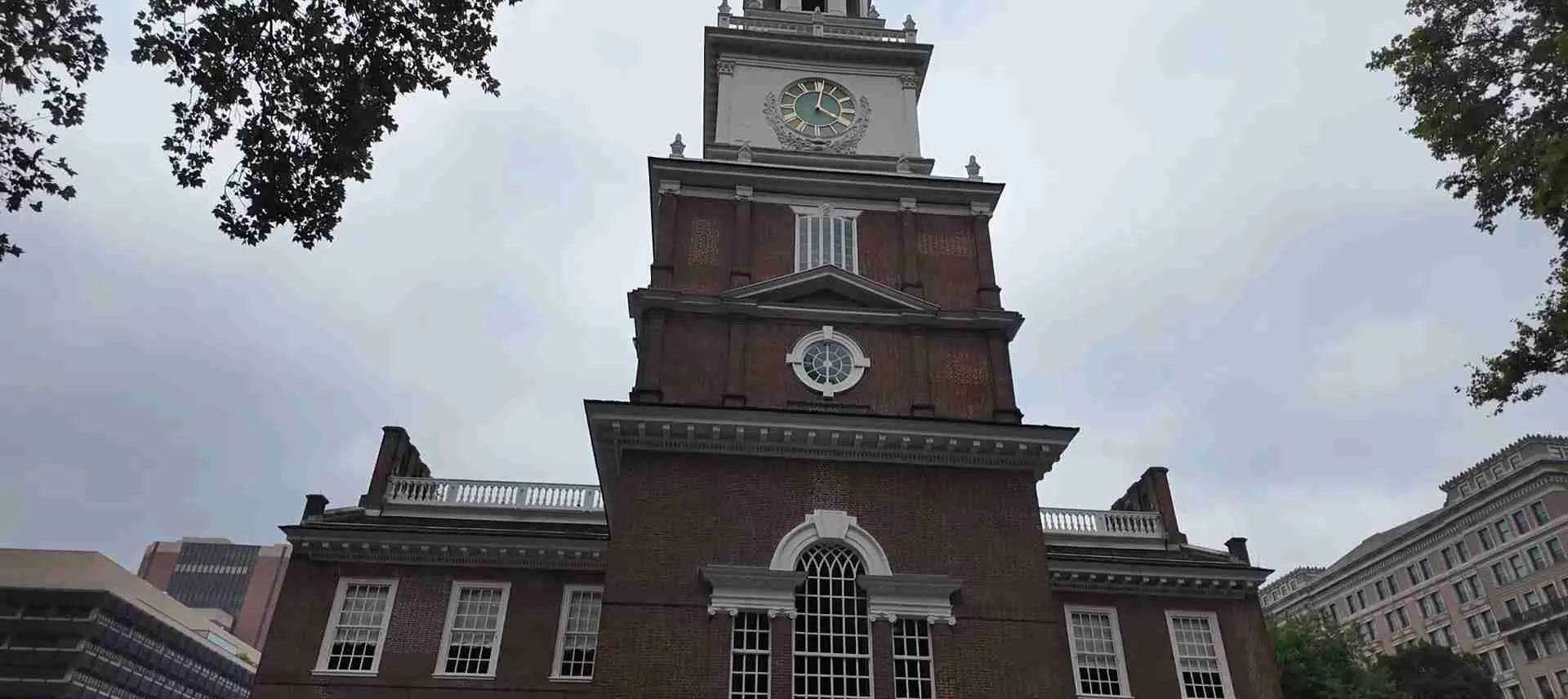
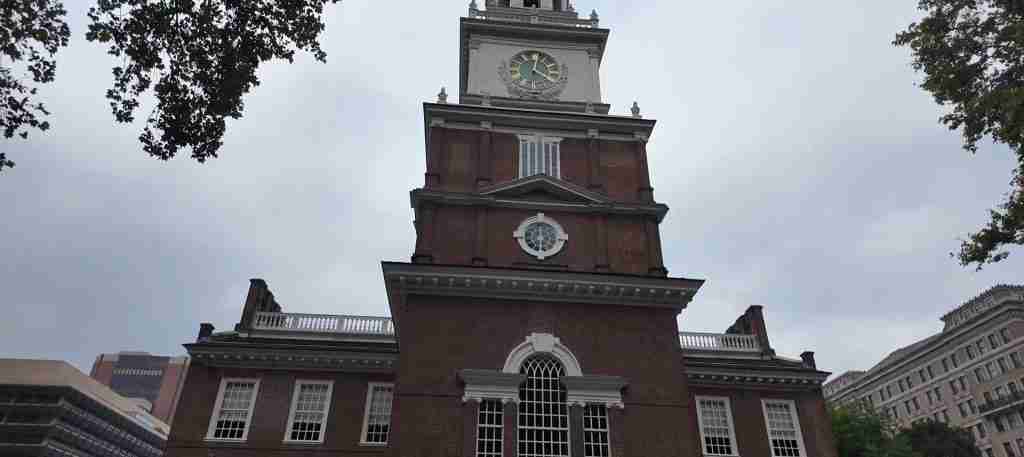
- Georgian Architectural Heritage: Designed by Andrew Hamilton and completed in 1753 as the Pennsylvania State House, the building exemplifies colonial Georgian architecture with its symmetrical red brick facade, 168-foot steeple, and carefully proportioned interior spaces that reflected Enlightenment ideals of order and balance.
- Constitutional Innovation: The Constitutional Convention debates held within the Assembly Room established the first written national constitution creating separated powers among executive, legislative, and judicial branches—a governmental framework subsequently adopted by numerous democratic nations.
- Liberty Bell Connection: The building’s tower originally housed the Liberty Bell from 1753 until the mid-19th century, with the bell’s inscription from Leviticus proclaiming liberty becoming synonymous with American independence and abolition movements.
- Living Heritage Site: Managed by the National Park Service as the centerpiece of Independence National Historical Park, Independence Hall undergoes continuous conservation to preserve original 18th-century fabric while welcoming visitors to experience the spaces where democratic governance took tangible form.
People Also Ask About Independence Hall Philadelphia UNESCO World Heritage
Why is Independence Hall a UNESCO World Heritage Site?
Independence Hall achieved UNESCO World Heritage designation in 1979 because it represents the physical location where universal principles of freedom, democracy, and self-governance were formally articulated in the Declaration of Independence and codified in the United States Constitution. The site’s Outstanding Universal Value rests not in architectural innovation but in its direct association with documents and ideas that profoundly influenced political thought worldwide. The Declaration’s assertion that governments derive legitimacy from consent of the governed challenged monarchical authority across continents, while the Constitution’s framework of separated powers, checks and balances, and federalism provided a reproducible model for democratic governance. UNESCO recognized that the debates, compromises, and decisions made within this building’s walls transcended national significance to become fundamental to humanity’s understanding of democratic principles and individual rights.
What important events happened at Independence Hall?
Independence Hall witnessed several pivotal moments in American and world history. The Second Continental Congress convened here from 1775 to 1783, appointing George Washington as Commander-in-Chief of the Continental Army in June 1775 and managing the Revolutionary War effort. On July 2, 1776, delegates voted for independence from Great Britain, with the Declaration of Independence formally adopted on July 4, 1776. Between May and September 1787, the Constitutional Convention met in secret sessions to draft the United States Constitution, which delegates signed on September 17, 1787. The building also housed all three branches of Pennsylvania’s colonial government and served as the meeting place for the Continental Congress during Philadelphia’s tenure as temporary national capital. Beyond these founding moments, the building witnessed debates over the Articles of Confederation and hosted numerous state legislative sessions that shaped early American governance.
How old is Independence Hall and who designed it?
Independence Hall was completed in 1753 following two decades of construction that began in 1732. The building was designed by lawyer and architect Andrew Hamilton, with master builder Edmund Woolley overseeing construction and later architect Robert Smith contributing to the steeple design. Hamilton drew inspiration from Georgian architectural principles popular in 18th-century Britain, creating a symmetrical structure that reflected Enlightenment values of proportion and order. The building originally served as the Pennsylvania State House, housing the colonial legislature, provincial council, and Supreme Court under one roof. Construction costs and timeline expanded significantly beyond initial projections, with the distinctive steeple and tower not completed until the 1750s. The building represents colonial American adaptation of British architectural traditions, executed with locally manufactured brick and imported materials that demonstrated Pennsylvania’s growing economic prosperity and political ambitions.
Can you visit Independence Hall and what can you see inside?
Independence Hall operates as a museum and active heritage site accessible to visitors through guided tours managed by the National Park Service. The tour route includes the Assembly Room where both the Declaration of Independence and Constitution were signed, featuring recreated period furnishings positioned as they would have appeared during the 1770s and 1780s, including the iconic green baize-covered table where delegates deliberated. Visitors also access the Supreme Court Chamber, which housed Pennsylvania’s highest court and later served as the United States Supreme Court from 1791 to 1800. The building displays original artifacts including the silver inkstand used to sign both founding documents, period furniture pieces, and interpretive materials explaining the constitutional debates. The tour emphasizes not only the architectural features but also the human stories of delegates who shaped democratic governance, including discussions of how principles of equality evolved through subsequent American history including abolition, women’s suffrage, and civil rights movements.
Extended multi-day tours – 5+ days
Featured Philadelphia Multi-Day Tour Packages
3 days
Philadelphia 3-Day Discovery Tour
- ✓ Comprehensive Philadelphia experience
- ✓ Expert local guides included
- ✓ All accommodation included
- ✓ Transportation provided
5 days
Philadelphia 5-Day Highlights Experience
- ✓ Comprehensive Philadelphia experience
- ✓ Expert local guides included
- ✓ All accommodation included
- ✓ Transportation provided
7 days
Philadelphia 7-Day Cultural Journey
- ✓ Comprehensive Philadelphia experience
- ✓ Expert local guides included
- ✓ All accommodation included
- ✓ Transportation provided
10 days
Philadelphia 10-Day Complete Adventure
- ✓ Comprehensive Philadelphia experience
- ✓ Expert local guides included
- ✓ All accommodation included
- ✓ Transportation provided
Multi-day tour packages powered by TourRadar. Prices and availability subject to change.
Introduction: Understanding Independence Hall’s Universal Significance
When UNESCO inscribes a site on the World Heritage List, the designation acknowledges properties possessing Outstanding Universal Value—significance that transcends national boundaries to represent shared human heritage worthy of collective protection. Independence Hall earned this recognition not for architectural splendor or construction innovation, but for its intimate connection to ideas and documents that fundamentally altered humanity’s understanding of legitimate governance and individual rights. Within the modest Georgian walls of what was originally Pennsylvania’s colonial legislature, a group of delegates articulated principles challenging centuries of monarchical rule and established a constitutional framework that continues influencing democratic movements worldwide.
The building’s significance operates on multiple interconnected levels. Historically, it served as the physical stage for debates that produced the Declaration of Independence and United States Constitution—two documents that rank among the most influential political texts in human history. The Declaration’s assertion that “all men are created equal” with inalienable rights including “Life, Liberty and the pursuit of Happiness” established revolutionary concepts about the relationship between citizens and government, declaring that political authority derives from consent of the governed rather than divine right or hereditary privilege. Though initially limited in application, these principles provided philosophical foundations for subsequent movements expanding rights to previously excluded populations including enslaved people, women, immigrants, and indigenous communities.
The Constitution drafted in Independence Hall’s Assembly Room created the world’s first written national constitution establishing separated governmental powers with checks and balances. The framers designed a federal system distributing authority between national and state governments while protecting individual liberties through a Bill of Rights added shortly after ratification. This constitutional architecture proved sufficiently flexible to accommodate evolving social norms and sufficiently resilient to survive civil war, economic depression, and profound demographic transformation. More than 100 countries subsequently adopted constitutions drawing inspiration from principles debated and codified within Independence Hall, making the building a tangible link to global constitutional democracy.
Architecturally, Independence Hall exemplifies colonial Georgian design adapted to American conditions. The symmetrical red brick facade, carefully proportioned windows, and elegant steeple reflect Enlightenment aesthetic principles valuing harmony, balance, and rational order—visual expressions of the same philosophical commitments that shaped the political documents created inside. The building’s preservation represents one of America’s earliest and most successful historic conservation efforts, establishing standards for restoration that influenced heritage protection nationwide.
The UNESCO designation recognizes that Independence Hall’s value extends beyond American national identity to represent a crucial moment in human political evolution. The building stands as physical evidence that governance based on written constitutions, separated powers, and protected individual rights can function successfully—a demonstration that inspired democratic movements from Latin America to Europe to Asia. Understanding Independence Hall requires examining not only what happened within its walls between 1775 and 1787, but also how those events continue resonating through contemporary struggles to implement democratic governance and protect human rights worldwide.
Colonial Origins and Construction History
Independence Hall’s story begins in 1729 when the Pennsylvania Provincial Assembly voted to construct a permanent legislative building to replace temporary meeting spaces that had served the colonial government since Philadelphia’s founding in 1682. The colony’s growing population, expanding economy, and increasing political sophistication demanded a structure reflecting Pennsylvania’s status as one of Britain’s most prosperous North American possessions. The Assembly allocated funds for a building housing not only the legislature but also the provincial Supreme Court and executive council, creating a consolidated seat of colonial governance.
The commission to design the Pennsylvania State House went to Andrew Hamilton, a prominent Philadelphia lawyer, merchant, and assembly member who had studied architecture and law in Britain. Hamilton conceived a Georgian structure following British architectural conventions popularized during the reigns of Kings George I and George II, characterized by symmetrical facades, classical proportions, and restrained ornament. The design balanced practical requirements for legislative chambers, courtrooms, and offices with symbolic aspirations reflecting Pennsylvania’s self-image as a successful proprietary colony founded on principles of religious tolerance and representative government established by William Penn.
Construction began in 1732 under master builder Edmund Woolley, a skilled carpenter and joiner who supervised craftsmen executing Hamilton’s design. The building’s red brick walls rose from locally manufactured materials, with Pennsylvania clay bricks bonded in Flemish bond pattern alternating headers and stretchers to create visual interest on the facade. Builders imported specialized materials including marble for interior details, glass for the large multipaned windows, and hardware from Britain. The construction timeline stretched beyond initial projections as the Assembly repeatedly appropriated additional funds to complete the ambitious project.
The building’s footprint measured 107 feet long and 45 feet wide, rising two full stories plus an attic level topped by a distinctive bell tower and steeple. The central tower component, originally designed as a four-story structure, underwent significant modifications during construction. Initial plans called for a simple cupola, but the design evolved to incorporate an elegant steeple ultimately reaching 168 feet above street level. This vertical element served both functional and symbolic purposes: housing the colony’s official bell and establishing visual prominence declaring Philadelphia’s importance among colonial cities competing for prestige and political influence.
The building’s interior arrangement reflected Georgian architectural conventions adapted to Pennsylvania’s governmental needs. The ground floor featured two principal rooms flanking a central hallway: the Assembly Room on the east accommodated the provincial legislature, while the Supreme Court Chamber on the west housed judicial proceedings. Smaller committee rooms and offices filled secondary spaces. The second floor initially housed the Provincial Council chamber and additional meeting rooms. This spatial organization physically manifested principles of balanced governance, with legislative, executive, and judicial functions housed within one structure but assigned distinct spaces reflecting their different constitutional roles.
Independence Hall achieved substantial completion in 1753, though construction and modification continued for decades afterward. The building cost significantly exceeded original estimates, ultimately requiring multiple supplemental appropriations totaling several thousand pounds sterling—a substantial sum demonstrating the Assembly’s commitment to creating an architectural statement worthy of Pennsylvania’s political and economic standing. The completed State House immediately became Philadelphia’s most prominent civic building, hosting not only governmental functions but also public celebrations, commemorations, and gatherings that established it as the symbolic center of colonial Pennsylvania.
The building’s architectural character embodied Enlightenment ideals increasingly influential in mid-18th-century British America. Georgian architecture’s emphasis on symmetry, proportion, and rational organization paralleled philosophical commitments to ordered governance based on reason rather than arbitrary authority. The State House’s design declared Pennsylvania’s alignment with progressive British political culture while asserting colonial ambitions for expanded self-governance within the empire. This same building, designed to serve colonial administration loyal to the British Crown, would ironically become the birthplace of American independence two decades after completion.
Revolutionary Transformation: From State House to Independence Hall
The Pennsylvania State House’s transformation into Independence Hall began when escalating tensions between Britain’s North American colonies and Parliament made the building a focal point of resistance organizing. As relations deteriorated following the French and Indian War, colonial leaders increasingly met in Philadelphia—centrally located among the thirteen colonies and possessing superior meeting facilities compared to other cities. The State House’s Assembly Room, designed for Pennsylvania’s legislature, provided spacious accommodations for inter-colonial conferences addressing shared grievances against British policies.
When the First Continental Congress convened in September 1774 to coordinate colonial response to Britain’s Coercive Acts punishing Massachusetts for the Boston Tea Party, delegates initially met in Carpenters’ Hall before moving to the State House for subsequent sessions. This gathering of representatives from twelve colonies established patterns of collaboration that would intensify as conflict approached. The delegates returned to Philadelphia in May 1775 for the Second Continental Congress, which convened at the State House just weeks after armed confrontations at Lexington and Concord had initiated military hostilities.
The Second Continental Congress transformed the State House into America’s de facto national capitol from 1775 through 1783. Meeting in the same Assembly Room where Pennsylvania’s legislature had conducted routine colonial business, delegates from thirteen colonies faced the extraordinary task of managing a revolutionary war while simultaneously creating governmental structures for an independent nation not yet formally declared. The Congress appointed George Washington as Commander-in-Chief of the Continental Army in June 1775, established a Continental Navy, authorized privateering against British shipping, negotiated foreign alliances, and managed military logistics for campaigns stretching from Quebec to Georgia.
The most consequential action occurred when Congress appointed a committee in June 1776 to draft a declaration justifying independence to international audiences and colonial populations divided over the wisdom of permanent separation from Britain. Thomas Jefferson, drawing on Enlightenment philosophy and colonial political traditions, composed prose declaring that “all men are created equal” and possessed unalienable rights including “Life, Liberty and the pursuit of Happiness.” When governments failed protecting these rights, Jefferson argued, people possessed authority to “alter or abolish” illegitimate rule and establish governance protecting their interests. On July 2, 1776, Congress voted for independence; on July 4, delegates approved Jefferson’s edited declaration; and through late July and August, representatives affixed signatures to the engrossed parchment formalizing separation from the British Empire.
The Assembly Room where delegates signed the Declaration embodied the revolutionary transition from colonial subordination to independent nationhood. The same chamber that had witnessed Pennsylvania legislators debating provincial concerns now hosted representatives claiming authority to dissolve political bonds with the world’s most powerful empire and establish a new nation founded on principles of popular sovereignty and natural rights. The building’s architecture had not changed, but its political meaning underwent revolutionary transformation as the State House became the birthplace of the United States.
Congress continued meeting at the State House through most of the Revolutionary War, though British military advances temporarily forced evacuation to Baltimore in winter 1776-1777 and to York, Pennsylvania during the British occupation of Philadelphia from September 1777 through June 1778. When Congress returned to Philadelphia after the British withdrawal, delegates resumed work in the State House, drafting and eventually ratifying the Articles of Confederation establishing formal governmental structures for the United States. The building witnessed the entire arc of revolutionary governance from initial resistance organizing through independence declaration through constitutional founding—an unmatched concentration of nation-building activity compressed into a single structure.
The signing of the Treaty of Paris formally ending the Revolutionary War in 1783 marked the conclusion of the State House’s wartime role as national capitol. Congress moved to other cities as the weak central government established under the Articles of Confederation struggled with debt, interstate commerce disputes, and security threats. The State House reverted primarily to Pennsylvania state government use, though it remained available for national purposes when needed. This temporary transition proved short-lived, as the building’s most consequential contribution to American history remained ahead when delegates would return in 1787 to address the Articles of Confederation’s inadequacies.
Constitutional Convention and the Creation of Fundamental Law
In May 1787, fifty-five delegates from twelve states reconvened at the State House in Philadelphia for the Constitutional Convention, officially charged with revising the Articles of Confederation to address weaknesses that had left the United States unable to regulate interstate commerce, pay war debts, or effectively manage foreign relations. The convention quickly moved beyond its mandate, deciding instead to create an entirely new constitutional framework establishing a stronger federal government while preserving state sovereignty within a carefully balanced federal system. These secret deliberations, conducted in the same Assembly Room where independence had been declared eleven years earlier, produced the world’s first written national constitution establishing separated governmental powers and protecting individual liberties.
The convention’s proceedings unfolded through a hot Philadelphia summer with delegates keeping windows closed despite oppressive heat to prevent eavesdropping—a dramatic contrast to the Declaration’s public reading from the State House steps. This secrecy reflected the delegates’ awareness that they were exceeding their instructions by proposing constitutional replacement rather than confederation amendment. Convention president George Washington presided from the chair as delegates debated fundamental questions about governmental structure, representation, federal-state relations, and the scope of national authority. James Madison’s detailed notes, not published until decades later, provide the primary record of arguments that shaped American constitutional design.
The delegates confronted immediate conflicts between large and small states over legislative representation. The Virginia Plan proposed representation based on population, advantaging larger states, while the New Jersey Plan called for equal state representation continuing the confederation model. Roger Sherman’s Connecticut Compromise resolved this impasse by creating a bicameral legislature: a House of Representatives apportioned by population and a Senate granting equal representation to each state. This compromise established principles of balanced representation that became central to American constitutional identity while providing a model for other federal systems managing regional diversity.
Beyond representation, delegates addressed the fundamental challenge of creating governmental power sufficient to govern effectively while preventing tyranny through structural safeguards. They designed separated legislative, executive, and judicial branches with overlapping authorities creating checks and balances preventing any single branch from dominating. The President could veto legislation, but Congress could override with supermajorities. The Senate confirmed presidential appointments and ratified treaties. The judiciary could review laws’ constitutionality. This architecture of separated powers sharing authority through intentional overlap represented constitutional innovation drawing on Enlightenment political philosophy, British constitutional traditions, and colonial experience with balanced government.
The Constitution’s federal structure divided authority between national and state governments, attempting to preserve state sovereignty while granting the central government powers necessary for effective governance. The federal government received enumerated powers including regulating interstate commerce, conducting foreign relations, maintaining military forces, and coining money. The Tenth Amendment, added shortly after ratification, explicitly reserved powers not delegated to the federal government to states or the people. This federal architecture required ongoing judicial interpretation and generated continuing political debate about appropriate balances between national and state authority—tensions still animating American constitutional discourse.
Delegate debates also addressed slavery, though the Constitution avoided using that term directly. Southern states demanded protections for the institution while northern states increasingly questioned slavery’s compatibility with revolutionary principles of equality and liberty. The resulting compromises included the Three-Fifths Clause counting enslaved people as three-fifths of a person for representation purposes, a twenty-year moratorium on congressional action against the international slave trade, and a fugitive slave clause requiring return of escaped enslaved people. These provisions reflected the convention’s prioritization of union over moral consistency, embedding contradictions between professed ideals and actual practices that would ultimately erupt in civil war seven decades later.
On September 17, 1787, thirty-nine delegates signed the completed Constitution in the State House Assembly Room, transmitting it to the states for ratification. The document emerged from complex compromises among delegates representing diverse regional interests, economic systems, and political philosophies. The Constitution established governmental structures that could function despite deep disagreements about particular policies—arguably its greatest innovation. Rather than requiring consensus on goals, the Constitution created processes for managing disagreement through representative institutions, separated powers, and structural checks preventing majority tyranny.
The Constitution’s ratification by the required nine states in 1788 and implementation in 1789 completed the State House’s role in American founding. The building had witnessed independence declaration, revolutionary war management, confederation creation, and constitutional founding—the full trajectory of American nation-building compressed into one structure. This constitutional achievement established Independence Hall’s Outstanding Universal Value recognized by UNESCO, as the document drafted in the Assembly Room provided a reproducible model for written constitutions establishing democratic governance that influenced national founding worldwide.
Georgian Architecture and Symbolic Design
Independence Hall’s architectural significance lies not in structural innovation but in how colonial Georgian design principles expressed evolving political ideals about ordered, balanced governance. The building exemplifies the Georgian style that dominated British and colonial architecture from approximately 1720 through 1780, named for the Hanoverian kings George I, II, and III who ruled Britain during this period. Georgian architecture drew inspiration from Italian Renaissance master Andrea Palladio’s interpretations of classical Roman building principles, emphasizing symmetry, proportion, mathematical relationships between architectural elements, and restrained classical ornament.
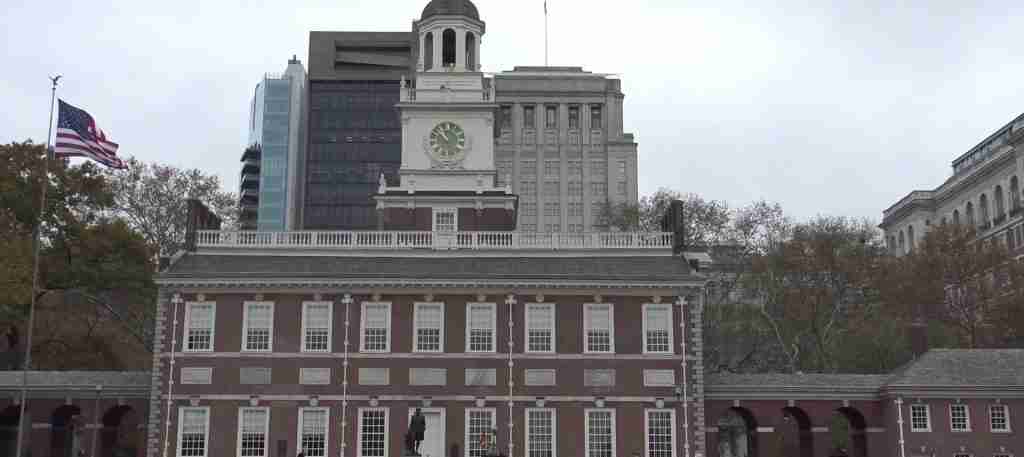
The State House facade presents textbook Georgian symmetry: a central axis running through the main entrance, steeple, and central hallway divides the building into mirror-image halves. Windows align in regular vertical columns separated by equal horizontal bands of brick. The door surround features classical pilasters, entablature, and pediment following Renaissance interpretations of ancient Greek and Roman temple fronts. This ordered arrangement reflects Enlightenment aesthetic commitments to rational design based on mathematical proportions and visual harmony rather than medieval irregularity or Baroque exuberance. The architecture visually declares alignment with progressive European culture valuing reason, order, and classical learning.
The building’s material palette speaks to colonial prosperity and craft traditions. The load-bearing walls rise from locally fired red brick laid in Flemish bond—a pattern alternating long stretcher bricks with short header bricks visible on the wall surface, creating textural interest while ensuring structural integrity. Craftsmen used lime mortar joints approximately one-half inch wide, carefully tooled to weatherproof the masonry and enhance the brickwork’s visual rhythm. The brick’s red-orange color provides warm tones contrasting with white-painted wood trim on windows, doors, and cornices. This red brick with white trim became iconic in American colonial architecture, establishing visual associations between Georgian design and revolutionary-era values.
The building’s fenestration demonstrates Georgian commitment to light and proportion. Large multi-paned windows with wooden muntins dividing glass into small lights provide abundant natural illumination for interior spaces while maintaining structural integrity. The windows’ proportions follow classical ratios, with heights approximately twice their widths creating vertical emphasis balanced by horizontal alignment across the facade. Glass quality and size improved significantly during the 18th century, making these large windows technically feasible while representing considerable expense—architectural statements declaring Pennsylvania’s prosperity and willingness to invest in public buildings reflecting colonial aspirations.
The State House’s most distinctive feature remains the central tower and steeple rising 168 feet above street level. This vertical element served multiple purposes: housing the building’s bell, providing a prominent landmark visible across Philadelphia, and establishing visual hierarchy declaring the structure’s civic importance. The tower’s design progresses through several stages: a brick base matching the main building’s height; a wooden belfry with arched openings allowing bell sound to project; and an elegant wooden spire crowned with a weather vane. The steeple’s proportions relate mathematically to the building’s width and height, maintaining Georgian emphasis on rational relationships between architectural elements.
The Assembly Room’s interior architecture combines functional requirements for legislative proceedings with aesthetic refinement appropriate to governmental dignity. The room measures approximately 40 feet by 40 feet with 20-foot ceilings—dimensions creating a cube proportioned according to classical ratios. Pine paneling painted light colors covers the lower walls, while white plaster finishes the upper walls and ceiling. Large windows on three sides flood the space with natural light essential for reading documents and conducting business before electric illumination. A fireplace provides winter heating. The room’s architectural restraint focuses attention on human activities and deliberations rather than elaborate decoration—design choices reflecting Enlightenment values privileging reason and discourse over hierarchical display.
The building’s overall design achieved what architectural historian Charles Peterson described as “dignified simplicity”—sufficiently refined to convey governmental authority without ostentatious expense that might offend Pennsylvania’s Quaker values emphasizing plainness and economy. This balance between dignity and restraint made the State House an appropriate setting for both colonial administration under British authority and revolutionary governance establishing republican values rejecting monarchical grandeur. The architecture’s flexibility allowed it to serve multiple political purposes while maintaining consistent aesthetic character.
Twentieth-century restoration efforts sought to return Independence Hall’s appearance to its 1776 configuration, removing 19th-century modifications and reconstructing original elements based on documentary evidence and archaeological investigation. These restorations established preservation standards influencing American heritage conservation while enabling visitors to experience spaces approximating the environment where delegates debated independence and constitutional governance. The building’s Georgian architecture thus serves dual purposes: representing 18th-century colonial design traditions and providing authentic settings for interpreting revolutionary-era history to contemporary audiences.
The Liberty Bell: Symbol and Separation
The State House bell tower originally housed the Liberty Bell from 1753 until the mid-19th century, establishing an intimate connection between building and symbol that shaped both objects’ meanings in American cultural memory. The bell was commissioned in 1751 to commemorate the 50th anniversary of Pennsylvania’s 1701 Charter of Privileges granting the colony representative government. The Pennsylvania Assembly ordered the bell from London’s Whitechapel Bell Foundry with instructions to cast it from bronze and include the inscription “Proclaim LIBERTY throughout all the Land unto all the Inhabitants thereof” from Leviticus 25:10—a biblical passage celebrating the Year of Jubilee when enslaved people gained freedom and debts were forgiven.
The bell arrived in Philadelphia in 1752 but cracked during initial testing, requiring recasting by local metalworkers John Pass and John Stow who melted down the original and recast it with modified bronze composition. The recast bell served primarily utilitarian purposes through its early decades, ringing to summon legislators to sessions, mark important events, and announce news to Philadelphia residents. The bell sounded when the Second Continental Congress convened in 1775, when the Declaration of Independence received public readings in July 1776, and during subsequent Revolutionary War commemorations. These associations with independence began the bell’s transformation from functional timepiece to revolutionary symbol.
The bell developed its distinctive crack—actually a series of hairline fractures—through decades of use, with the final major crack appearing in the 1840s when the bell rang for George Washington’s birthday commemoration. Various explanations attribute the cracking to flaws in the recasting process, metal composition, or simply the stresses of prolonged use. The crack ultimately silenced the bell, removing it from active service but paradoxically enhancing its symbolic power as abolitionists adopted it as an emblem of liberty’s fragility and the need for continued struggle to extend freedom to enslaved people. The crack transformed an impaired bell into a potent metaphor for broken promises and incomplete liberty.
Abolitionists’ appropriation of the “Liberty Bell” name in the 1830s connected the bell explicitly to slavery’s abolition rather than merely national independence. Anti-slavery publications featured the bell on mastheads, with its Leviticus inscription declaring liberty to all inhabitants reinterpreted as condemnation of slavery’s persistence in a nation proclaiming dedication to freedom. This symbolic repurposing gave the bell new political significance as reformers argued that genuine liberty required abolishing the institution contradicting America’s founding principles. The bell’s physical presence in Independence Hall linked abstract ideals of freedom to tangible artifacts witnesses could see and touch, strengthening arguments that revolutionary principles demanded slavery’s elimination.
The bell’s removal from Independence Hall’s tower to ground-level display began gradually in the 19th century as preservation concerns and growing visitation prompted protective measures. By the early 20th century, the bell had moved through several display locations before settling in a pavilion adjacent to Independence Hall, where it remained visible to visitors while protected from weather exposure and vandalism. The 2003 opening of the Liberty Bell Center, a purpose-built facility operated by the National Park Service, provided climate-controlled exhibit space interpreting the bell’s evolving meanings alongside its physical preservation.
The bell’s separation from Independence Hall created both challenges and opportunities for heritage interpretation. Physically removing the bell from its historic context in the building’s tower eliminated the authenticity of experiencing it in its original location. However, the dedicated Liberty Bell Center enabled expanded interpretation exploring the bell’s multiple meanings: colonial celebration of representative government, revolutionary symbol of independence, abolitionist icon condemning slavery, and global emblem of liberty appropriated by movements worldwide. The exhibit contextualizes how successive generations have reinterpreted the bell’s significance, demonstrating how heritage symbols acquire layered meanings through changing historical circumstances.
The Liberty Bell’s prominence in Independence Hall’s history illustrates UNESCO World Heritage principles recognizing that Outstanding Universal Value encompasses not only physical structures but also intangible associations and symbolic meanings attached to places. The bell’s inscription declaring liberty to all inhabitants anticipated principles articulated in the Declaration of Independence and continued animating struggles to expand rights to excluded populations. The bell’s journey from functional timepiece to revolutionary symbol to abolitionist icon to global freedom emblem parallels Independence Hall’s own transformation from colonial legislature to birthplace of American independence to UNESCO World Heritage Site representing universal democratic aspirations.
Preservation, Restoration, and Adaptive Heritage Management
Independence Hall’s preservation as a heritage site reflects evolving American attitudes toward historic conservation and the development of professional standards for restoring and managing historic structures. The building’s survival through two and a half centuries required repeated interventions addressing deterioration, changing uses, and shifting interpretive priorities. This preservation history established precedents influencing American heritage conservation while demonstrating challenges inherent in maintaining physical authenticity while accommodating contemporary visitor expectations and accessibility requirements.
The building’s early preservation arose from civic pride and patriotic associations rather than professional conservation principles not yet developed in the early 19th century. The City of Philadelphia purchased Independence Hall in 1818 when Pennsylvania’s state government relocated to Harrisburg, removing the structure from active governmental use and transforming it into a historic shrine and artifact repository. This municipal ownership protected the building from demolition or radical alteration but subjected it to modifications reflecting Victorian-era aesthetic preferences and functional requirements. Architect John Haviland undertook significant modifications in 1830, altering the tower’s design and installing spiral staircases that improved circulation but compromised historical authenticity.
By the late 19th century, Independence Hall had accumulated layers of modifications reflecting changing tastes and uses. Victorian-era renovations had painted over original woodwork, installed inappropriate light fixtures, and added decorative elements inconsistent with Georgian restraint. The building simultaneously served as historic site, artifact museum, and active government facility—multiple uses creating conflicting demands on the historic fabric. Growing awareness of preservation principles and increasing visitation focused attention on the need for systematic conservation addressing both structural deterioration and interpretive integrity.
A pivotal transformation began in the 1940s when the federal government, working with the City of Philadelphia, initiated comprehensive restoration to return Independence Hall to its 1776 appearance. This ambitious project, guided by the National Park Service and advised by historians, architects, and preservation specialists, established new standards for historic restoration in America. Researchers conducted extensive documentary analysis examining historical paintings, written descriptions, building accounts, and physical evidence to determine the building’s 18th-century appearance. This evidence-based approach prioritized historical accuracy over aesthetic preference or functional convenience—methodologies that became fundamental to American preservation practice.
The restoration project removed Victorian-era modifications, restored original color schemes based on paint analysis, reconstructed missing architectural elements using historical documentation, and returned interior spaces to their 18th-century configurations. The Assembly Room received particular attention, with conservators removing later additions, restoring original paneling and plasterwork, and installing reproduction furnishings positioned according to historical evidence. This restoration philosophy prioritized authenticity and educational value, accepting some discomfort and inconvenience to provide visitors with accurate historical experiences rather than romanticized or modernized interpretations.
Ongoing conservation addresses the inherent tensions between preservation and access. Independence Hall attracts visitors from worldwide, with visitation numbers sometimes exceeding what the historic structure can safely accommodate without accelerated deterioration. Climate control requirements for preserving original materials conflict with the building’s non-mechanized 18th-century construction lacking modern HVAC infrastructure. Security concerns following terrorist attacks and assassination attempts have necessitated screening procedures and barriers potentially compromising visitor experience and architectural integrity. The National Park Service continuously balances these competing demands, seeking approaches that preserve physical fabric while enabling public access to this democratically significant heritage site.
Contemporary conservation applies sophisticated monitoring technologies tracking environmental conditions, structural movement, and deterioration patterns. Conservators employ minimally invasive treatments using reversible materials and techniques that future conservators can modify or remove as knowledge advances. Regular inspection identifies maintenance needs before they become major restoration projects. This preventive conservation approach reflects international heritage management standards emphasizing ongoing stewardship over periodic crisis interventions.
The development of Independence National Historical Park surrounding Independence Hall created buffer zones protecting the building’s context and viewsheds. Urban redevelopment in the mid-20th century demolished 19th-century structures considered incompatible with colonial heritage interpretation, creating landscaped spaces approximating 18th-century urban patterns. These interventions remain controversial, with some historians criticizing the removal of later architectural layers that documented Philadelphia’s evolution, while others defend the clarified interpretation of the revolutionary period enabled by removing visual distractions. This debate reflects fundamental preservation questions about which historical periods merit emphasis and whether removing later additions to reveal earlier configurations represents legitimate restoration or historical falsification.
Independence Hall’s preservation demonstrates that heritage conservation involves continuous decision-making about authenticity, interpretation, access, and competing values. The building’s Outstanding Universal Value recognized by UNESCO obligates current generations to protect the structure’s physical integrity while enabling future generations to experience and reinterpret its significance. This responsibility requires sophisticated conservation science, adequate funding, professional expertise, and institutional commitment—resources not uniformly available globally, making Independence Hall’s successful preservation relevant to heritage management challenges worldwide.
Independence National Historical Park Context
Independence Hall functions as the centerpiece of Independence National Historical Park, a 55-acre urban park managed by the National Park Service encompassing numerous historic structures, archaeological sites, and modern interpretive facilities distributed across Philadelphia’s historic core. Established by federal legislation in 1948, the park protects the physical and historical context surrounding Independence Hall while interpreting the complex story of American founding through multiple perspectives and diverse voices. Understanding Independence Hall’s World Heritage significance requires recognizing its relationship to surrounding properties that collectively document Philadelphia’s role as colonial capital, revolutionary headquarters, and early American national capital.
The park includes over twenty historic buildings representing colonial, revolutionary, and early national periods. Congress Hall, immediately west of Independence Hall, housed the United States Congress from 1790 to 1800 during Philadelphia’s decade as temporary national capital. Here the Bill of Rights received ratification, President John Adams was inaugurated, and the Louisiana Purchase was debated—events extending the constitutional framework established in Independence Hall’s Assembly Room. The building’s proximity to Independence Hall enabled the seamless transition from constitutional creation to constitutional implementation, with legislators moving from one structure to another as they transformed theoretical governance principles into practical administration.
Old City Hall, east of Independence Hall, served as the United States Supreme Court from 1791 through 1800, establishing the federal judiciary’s foundational precedents interpreting the Constitution drafted next door. Chief Justice John Jay and his successors began defining judicial review principles and federal-state jurisdictional boundaries that shaped American constitutional development. The Supreme Court Chamber preserves the intimate scale where early constitutional interpretation occurred, contrasting dramatically with the modern Supreme Court building’s neoclassical grandeur. This physical proximity of legislative, executive, and judicial branches physically manifested the separated powers architecture central to American constitutional design.
The park’s Second Bank of the United States building, designed by William Strickland in Greek Revival style and completed in 1824, documents the transition from Georgian colonial architecture to the confident neoclassicism Americans adopted after establishing national independence. The building now houses the National Portrait Gallery’s collection of revolutionary-era portraits, providing visual documentation of the individuals who shaped events at Independence Hall. Seeing portraits of Washington, Franklin, Jefferson, and other founders alongside the spaces where they deliberated helps visitors connect abstract political principles to specific human personalities and relationships.
The President’s House Site, an outdoor exhibit adjacent to Independence Hall, confronts slavery’s presence in the birthplace of American liberty. Archaeological remains mark the location of the presidential residence occupied by George Washington from 1790 to 1797 during his presidency, where he housed nine enslaved individuals brought from Mount Vernon to serve the household. The exhibit interprets this painful contradiction between revolutionary rhetoric of equality and the reality of slaveholding by the nation’s first president, using archaeology and historical evidence to recover stories of enslaved people including Oney Judge, who successfully escaped bondage in 1796. This interpretation acknowledges that Independence Hall’s principles of liberty coexisted with slavery’s persistence, requiring visitors to grapple with American founding’s moral complexities.
Carpenters’ Hall, where the First Continental Congress met in 1774 before moving to Independence Hall, demonstrates the dense concentration of revolutionary sites within Philadelphia’s historic core. The Georgian building, constructed as a guild hall for the Carpenters’ Company of Philadelphia, provided meeting space facilitating inter-colonial coordination that culminated in independence declaration. Its proximity to Independence Hall enabled delegates to transition easily between venues as political circumstances evolved from protest to revolution to nation-building.
The Liberty Bell Center’s modern architecture contrasts intentionally with surrounding 18th-century structures, employing glass walls that provide views connecting the bell to Independence Hall across the street. This transparent design enables visitors to see the bell within its historical context while experiencing purpose-built exhibit spaces interpreting the bell’s evolving symbolic meanings. The center’s architecture embodies heritage interpretation principles valuing historical context alongside contemporary visitor experience, designing new construction that respects historic character without mimicking or competing with authentic period buildings.
The park’s Independence Visitor Center provides orientation, ticketing, and interpretive programs preparing visitors to meaningfully engage Independence Hall and related sites. The facility demonstrates that successful heritage tourism requires supporting infrastructure managing visitor flows, providing educational context, and addressing practical needs including restrooms, accessibility, and security screening. The center’s location outside the core historic area removes these functional requirements from sensitive heritage zones while enabling the National Park Service to control visitor experiences and communicate interpretive priorities before visitors enter Independence Hall itself.
Franklin Court, Benjamin Franklin’s Philadelphia home site, uses innovative archaeological interpretation displaying foundation remains beneath protective structures while providing museum exhibits exploring Franklin’s scientific, literary, and diplomatic achievements. The site demonstrates heritage interpretation strategies for locations where original buildings no longer survive but archaeological remains and historical documentation enable meaningful education about significant persons and events. Franklin’s home site connects to Independence Hall through Franklin’s participation in both the Declaration’s creation and the Constitutional Convention, personalizing the abstract political debates that occurred in public governmental spaces.
The park collectively interprets American founding as complex, contested, and ongoing rather than presenting a triumphalist narrative of inevitable progress. Exhibits acknowledge revolutionary ideals’ limited initial application, slavery’s entrenchment in American society, indigenous peoples’ dispossession, women’s exclusion from political participation, and the lengthy struggles required to extend constitutional protections to previously excluded populations. This interpretive approach recognizes that Independence Hall’s Outstanding Universal Value rests partly in how the principles articulated there inspired subsequent movements demanding that practice match rhetoric—an ongoing process rather than completed achievement.
UNESCO Inscription and Outstanding Universal Value
UNESCO inscribed Independence Hall on the World Heritage List in 1979 during the third session of the World Heritage Committee, which selected properties from nominations submitted by States Parties after the World Heritage Convention entered into force in 1975. Independence Hall achieved recognition under criterion (vi), which designates properties “directly or tangibly associated with events or living traditions, with ideas, or with beliefs, with artistic and literary works of outstanding universal significance.” This criterion applies specifically to sites whose primary value lies not in architectural merit or technical achievement but in their association with ideas and events that shaped human history.
The UNESCO designation acknowledges that Independence Hall represents the physical location where universal principles of democratic governance and individual rights received formal articulation in documents that influenced political thought worldwide. The Outstanding Universal Value statement emphasizes that while the Declaration of Independence and Constitution initially served American national purposes, the universal principles embedded in these documents transcended national boundaries to inspire democratic movements globally. The Declaration’s assertion that governments derive legitimacy from popular consent challenged monarchical and authoritarian rule across continents. The Constitution’s framework of written fundamental law, separated governmental powers, and protected individual liberties provided a reproducible model adapted by dozens of nations establishing democratic governance.
The 1979 inscription occurred early in the World Heritage Convention’s implementation, when the list contained fewer than 50 sites compared to over 1,100 currently inscribed. This early recognition acknowledged Independence Hall’s exceptional significance and reflected international consensus that the building’s association with democratic founding merited global heritage protection. The inscription joined Independence Hall with other early World Heritage Sites including Mont-Saint-Michel, the Galapagos Islands, and the historic center of Quito, establishing the range of natural, cultural, and historical properties meriting Outstanding Universal Value recognition.
Independence Hall’s Outstanding Universal Value rests on several interconnected dimensions. First, the building witnessed events directly producing the Declaration of Independence and United States Constitution—documentary evidence for principles of self-governance, popular sovereignty, and constitutional government that became foundational to modern democratic theory. These documents remain legally operative rather than merely historical artifacts, continuing to shape American governance while influencing constitutional design in nations ranging from Latin America to Eastern Europe to Africa. The building thus connects directly to living constitutional traditions globally.
Second, the universal principles articulated in Independence Hall challenged prevailing assumptions about legitimate political authority, asserting that governments exist to protect individual rights and derive authority from governed populations’ consent. These revolutionary concepts contradicted European monarchical traditions and colonial systems dominating the 18th-century world. The Declaration’s claims about equality, natural rights, and popular sovereignty provided philosophical foundations for subsequent democratic revolutions in France, Latin America, and elsewhere, establishing Independence Hall as a crucial node in the global spread of democratic governance.
Third, the Constitution’s architectural innovation—establishing written fundamental law superior to ordinary legislation and creating separated governmental powers with checks and balances—provided a practical mechanism for implementing democratic principles. The constitutional framework demonstrated that representative democracy could function effectively at scale, addressing skepticism that democratic governance would collapse into mob rule or tyranny. Over 100 nations subsequently adopted written constitutions drawing inspiration from American constitutional design, validating the universality of principles debated in Independence Hall’s Assembly Room.
The UNESCO inscription recognizes authentication through extensive documentation of Independence Hall’s association with these founding events. Historical records including congressional journals, delegates’ correspondence, contemporary newspaper accounts, and architectural evidence confirm the building’s role as the actual location where the Declaration and Constitution were debated, adopted, and signed. This documented authenticity distinguishes Independence Hall from sites with legendary or symbolic associations, providing verifiable evidence connecting physical place to historical events of universal significance.
The World Heritage designation carries responsibilities for conservation, public access, and ongoing interpretation. The United States, through the National Park Service’s management, commits to maintaining Independence Hall’s physical integrity, protecting it from threats including deterioration, natural disasters, and human damage. The inscription obligates regular monitoring and reporting to UNESCO’s World Heritage Committee, ensuring international oversight of conservation practices. This accountability mechanism helps protect the site against inadequate maintenance, incompatible development, or interpretive approaches that might diminish its universal significance.
Independence Hall’s World Heritage status enhances international recognition and tourism, drawing visitors from worldwide who understand the site’s significance extends beyond American national identity. The UNESCO designation communicates that Independence Hall represents shared human heritage relevant to all peoples regardless of nationality—a place where principles of freedom and democratic governance took tangible form and continue resonating through contemporary political struggles. This universal significance distinguishes Independence Hall from sites possessing primarily national or regional importance, elevating it to humanity’s collective patrimony worthy of international protection and respect.
Global Influence and Democratic Legacy
Independence Hall’s Outstanding Universal Value derives substantially from how principles articulated within its walls influenced constitutional development and democratic movements worldwide. The Declaration of Independence and Constitution provided both philosophical foundations and practical models that shaped governance structures far beyond American borders. Understanding this global influence requires examining how various nations and movements adapted, reinterpreted, and applied Independence Hall’s revolutionary principles to diverse cultural, political, and historical contexts.
The Declaration’s influence on the French Revolution demonstrates its immediate international impact. When French revolutionaries stormed the Bastille in 1789, just thirteen years after the Declaration’s signing, they drew inspiration from American assertions about natural rights and popular sovereignty. The Declaration of the Rights of Man and of the Citizen, adopted by France’s National Assembly in August 1789, echoed Jefferson’s prose declaring that “men are born and remain free and equal in rights.” Marquis de Lafayette, who fought alongside Americans in the Revolutionary War before returning to participate in France’s revolution, explicitly connected American and French struggles for liberty, sending Washington the key to the Bastille as symbol of freedom’s global expansion. This French adoption demonstrated that Independence Hall’s principles could inspire revolutions beyond their original context.
Latin American independence movements throughout the early 19th century drew heavily on American constitutional models. Revolutionary leaders including Simón Bolívar studied the Constitution drafted at Independence Hall as they designed governance structures for newly independent nations. Many Latin American constitutions adopted features including written fundamental law, separated powers, bicameral legislatures, and federalism dividing authority between national and provincial governments. While Latin American adaptations modified American models to address different social structures, political traditions, and economic systems, the constitutional architecture established at Independence Hall provided reference points for nations seeking alternatives to Spanish colonial rule and European monarchical systems.
The Constitution’s federal structure proved particularly influential for nations managing diverse populations across large territories. Switzerland, Germany, Canada, Australia, India, and numerous other countries adopted federal systems dividing powers between national and regional governments—constitutional designs drawing inspiration from American federalism’s successful balancing of unity and diversity. The principle that written constitutions should enumerate governmental powers while reserving undefined authority to constituent units influenced federal design globally, demonstrating that Independence Hall’s constitutional innovations addressed challenges extending beyond American circumstances.
Post-colonial African and Asian nations gaining independence after World War II frequently looked to American constitutional principles when designing governance structures. India’s Constitution, adopted in 1950, drew extensively on American models including judicial review, fundamental rights protections, and federal structures accommodating regional diversity. African nations including Nigeria, Kenya, and Ghana incorporated constitutional features including separated powers and written bills of rights influenced by American precedents. While these adaptations reflected local circumstances and often combined American elements with Westminster parliamentary traditions, Independence Hall’s constitutional legacy extended to decolonization movements worldwide.
The fall of communist regimes in Eastern Europe during 1989-1991 prompted another wave of constitutional founding influenced by American models. Nations including Poland, Hungary, Czech Republic, and Baltic states adopted new constitutions establishing democratic governance, separated powers, and protected rights—institutional designs drawing on constitutional principles articulated at Independence Hall two centuries earlier. These constitutions adapted American frameworks to parliamentary systems while incorporating human rights protections reflecting international law developments since 1787. This post-communist constitutional founding demonstrated that Independence Hall’s principles remained relevant to contemporary democratic transitions.
Beyond direct constitutional influence, the Declaration’s philosophical assertions about equality, natural rights, and popular sovereignty provided rhetorical resources for movements demanding expanded rights and challenging oppression. American abolitionists fighting slavery quoted the Declaration’s equality language to condemn the peculiar institution contradicting revolutionary principles. Suffragists demanding women’s voting rights invoked Declaration principles arguing that women possessed the same natural rights as men. Civil rights activists protesting racial segregation challenged America to fulfill the Declaration’s promise of equality. Martin Luther King Jr.’s “I Have a Dream” speech explicitly referenced the Declaration as a “promissory note” requiring redemption. These movements demonstrated that Independence Hall’s principles generated continuing obligations to expand rights and rectify exclusions contradicting founding ideals.
International human rights movements similarly drew inspiration from Independence Hall’s assertions about universal rights. The United Nations’ Universal Declaration of Human Rights adopted in 1948 echoes language and principles from the Declaration of Independence, asserting that “all human beings are born free and equal in dignity and rights.” Eleanor Roosevelt, who chaired the committee drafting the Universal Declaration, acknowledged American founding documents’ influence while working to establish rights protections transcending national sovereignty. This connection between Independence Hall’s historic documents and contemporary human rights frameworks demonstrates how 18th-century revolutionary principles continue shaping international law and global justice movements.
The global influence extends beyond formal constitutional structures to broader cultural associations between Independence Hall and democratic values. The building’s image appears in international media, educational materials, and political discourse as symbol representing democratic governance, freedom of expression, and constitutional government. When peoples in authoritarian nations protest demanding democratic reforms, they sometimes reference American founding principles articulated at Independence Hall as aspirational models. This symbolic influence—while less concrete than constitutional borrowing—demonstrates how Independence Hall functions as global heritage representing universal democratic aspirations rather than merely American national identity.
Contemporary Interpretation and Visitor Experience
Visiting Independence Hall involves encountering not only historic architecture and artifacts but also interpretive strategies communicating the site’s significance to diverse audiences with varying backgrounds, expectations, and relationships to American history. The National Park Service’s interpretation balances multiple objectives: protecting physical fabric, providing accurate historical education, acknowledging complex and contested aspects of American founding, enabling meaningful visitor experiences, and communicating the universal values justifying UNESCO World Heritage designation. This interpretive approach reflects evolving heritage management philosophy emphasizing inclusive narratives over triumphalist national mythology.
Access to Independence Hall requires timed entry tickets, either reserved in advance or obtained same-day from the Independence Visitor Center. This controlled access manages visitor flows protecting the historic structure from overcrowding while enabling the National Park Service to provide guided tours with interpretive rangers rather than self-guided visits. The ticketing system acknowledges that meaningful heritage interpretation requires limiting numbers and providing educational context—principles applicable to fragile heritage sites worldwide facing pressure from mass tourism potentially threatening conservation and visitor experience quality.
Tours begin with security screening addressing post-9/11 concerns about protecting high-profile national symbols from terrorist threats. These measures create tensions between access and security, with screening processes potentially diminishing visitor experiences through delays and restrictions. The National Park Service continually adjusts security protocols seeking approaches that protect the site while maintaining welcoming atmospheres appropriate to democratic heritage celebrating openness and popular sovereignty. This challenge illustrates broader tensions heritage managers face balancing preservation, security, and public access.
The interpretive tour route progresses through Independence Hall’s ground floor, focusing on the Assembly Room where both the Declaration and Constitution were signed. Rangers provide historical context explaining the political circumstances that brought delegates to Philadelphia, the debates and compromises that produced founding documents, and the individuals who shaped these events. The interpretation emphasizes that constitutional founding resulted from political negotiation among people with conflicting interests and ideologies rather than harmonious consensus—an approach acknowledging that democratic governance involves managing disagreement rather than eliminating it.
Recent interpretive shifts increasingly address the contradictions between revolutionary rhetoric and revolutionary reality, particularly regarding slavery’s persistence in a nation proclaiming commitment to equality and liberty. Rangers discuss how the Constitution included provisions protecting slavery despite revolutionary ideals, how some founders including Washington and Jefferson owned enslaved people while simultaneously articulating principles of natural rights, and how these contradictions generated continuing struggles to align American practice with American principles. This interpretation moves beyond celebratory narratives to acknowledge that Independence Hall’s significance includes not only founding achievements but also founding failures and incomplete applications of professed ideals.
The Supreme Court Chamber tour stop discusses the judicial branch’s role interpreting the Constitution drafted next door, explaining how federal courts evolved into powerful institutions shaping constitutional meaning through case-by-case adjudication. This interpretation helps visitors understand that the Constitution represents a living document continually reinterpreted to address circumstances the framers could not anticipate—a concept essential to understanding why principles articulated at Independence Hall remain relevant rather than fossilized as historical artifacts.
The National Park Service incorporates multiple historical perspectives into interpretation, featuring voices of people excluded from or marginalized by founding-era political structures including women, enslaved people, indigenous peoples, and working-class populations. This inclusive approach acknowledges that Independence Hall’s history encompasses not only elite white male founders but also diverse populations affected by the constitutional system created here. Rangers discuss how groups initially excluded from constitutional protections subsequently organized movements demanding rights expansions, demonstrating that democratic development represents ongoing processes rather than singular founding moments.
Special programs address specific audiences and themes beyond standard tours. School groups receive age-appropriate programming connecting Independence Hall to curriculum standards and civic education objectives. International visitors encounter interpretation emphasizing the universal principles and global influence justifying UNESCO World Heritage designation. Programs during Black History Month, Women’s History Month, and other commemorative occasions highlight connections between Independence Hall’s founding principles and specific communities’ struggles for recognition and rights. These specialized programs demonstrate that heritage sites possess multiple meanings requiring varied interpretive approaches for diverse audiences.
The Assembly Room’s furnishings—carefully researched reproductions positioned according to historical evidence—enable visitors to visualize the spaces where delegates deliberated. The green baize-covered table, Windsor chairs, and period-appropriate accessories create atmospheric authenticity enhancing visitors’ sense of connecting with historical events. However, interpretation acknowledges that these are recreations rather than original artifacts, maintaining distinctions between authentic historic fabric and later interventions—a transparency consistent with international heritage conservation ethics.
Digital resources including the National Park Service website, mobile applications, and virtual tours extend Independence Hall’s interpretive reach beyond physical visitors. These platforms provide detailed historical information, high-resolution imagery, documentary transcripts, and interactive educational activities enabling worldwide audiences to engage the site regardless of geographic location or mobility limitations. Digital interpretation raises questions about whether virtual experiences constitute adequate engagement with heritage sites or whether physical presence remains essential to meaningful heritage encounters—debates relevant to heritage accessibility and conservation worldwide.
The interpretation connects Independence Hall to broader Independence National Historical Park narratives exploring Philadelphia’s role as colonial capital, revolutionary headquarters, and early national capital. This contextual approach helps visitors understand that Independence Hall functioned as part of a larger urban environment rather than an isolated monument, with nearby buildings, streets, and neighborhoods contributing to the historical ecosystem that supported revolutionary activities. The park-wide interpretation demonstrates that understanding World Heritage Sites often requires examining not only inscribed properties but also surrounding contexts enabling their historical significance.
Conservation Challenges and Future Stewardship
Maintaining Independence Hall as a UNESCO World Heritage Site requires ongoing conservation addressing both anticipated deterioration patterns and unexpected challenges threatening the building’s physical integrity and interpretive authenticity. Contemporary heritage management recognizes that conservation represents continuous processes rather than occasional interventions, demanding sustained funding, professional expertise, scientific monitoring, and institutional commitment. Independence Hall’s conservation challenges illustrate issues facing historic structures worldwide as they balance preservation obligations with public access demands while confronting climate change impacts, limited resources, and evolving heritage management philosophies.
Structural stability concerns require constant vigilance monitoring the building’s 18th-century load-bearing brick walls, wooden floor systems, and roof framing. Independence Hall lacks the reinforced concrete or steel structural systems common in modern buildings, depending instead on masonry and timber construction vulnerable to moisture damage, insect infestation, and material fatigue from centuries of stress. The National Park Service employs sophisticated monitoring systems tracking structural movement, identifying early indicators of problems before they necessitate major interventions. Regular inspections by structural engineers and conservation architects ensure that any deterioration receives timely treatment preventing accelerated damage.
Climate control presents significant challenges for a building constructed without modern HVAC systems but housing in conditions requiring stable temperature and humidity to preserve historic fabric. Excessive moisture promotes wood rot, masonry deterioration, and biological growth including mold and insects. Temperature fluctuations cause materials to expand and contract, stressing historic components and accelerating deterioration. Installing climate control systems without compromising historic character or architectural integrity requires careful engineering concealing modern equipment while providing adequate environmental regulation. The Park Service balances conservation needs against visitor comfort, accepting some temperature variations to avoid intrusive mechanical systems that would damage historic fabric or visual authenticity.
Visitor impact constitutes both a conservation challenge and a management obligation. Independence Hall’s Outstanding Universal Value necessitates public access enabling worldwide audiences to experience spaces where democratic principles took form. However, thousands of annual visitors generate wear on historic floors, introduce moisture and pollutants, and create crowding potentially damaging fragile elements. The ticketing system limiting daily visitors represents one management response, though this solution creates access equity concerns potentially excluding people unable to secure advance reservations or visit during limited time windows. Finding sustainable balances between conservation and access requires ongoing adjustments as visitation patterns, conservation knowledge, and public expectations evolve.
Climate change introduces new conservation challenges including increased flooding risk from extreme precipitation, temperature fluctuations stressing historic materials, and heightened wildfire danger during drought periods. Philadelphia’s urban location in a coastal watershed makes Independence Hall vulnerable to storm surge and flooding potentially compromising building foundations and introducing destructive moisture. The National Park Service develops climate adaptation strategies including improved drainage, flood barriers, and emergency response protocols protecting the building during extreme weather while maintaining visitor access and architectural integrity under normal conditions. These adaptations demonstrate that climate change forces heritage managers to anticipate threats beyond traditional conservation challenges.
Biological threats including wood-boring insects, decay fungi, and plant growth damaging masonry require integrated pest management strategies minimizing pesticide use while protecting historic materials. Termites and powder post beetles threaten wooden structural members, while fungal growth promoted by moisture compromises timber strength. Regular monitoring identifies infestations early when less invasive treatments remain effective. The Park Service employs physical barriers, environmental controls managing moisture and temperature, and targeted pesticide applications only when necessary—approaches reflecting contemporary conservation emphasis on minimally invasive interventions using reversible techniques.
Security concerns following terrorist attacks and high-profile assassination attempts necessitate protective measures potentially conflicting with heritage character and visitor experience. Barriers preventing vehicular approach, security screening stations, surveillance systems, and armed protection provide necessary security while introducing visual and experiential elements absent from the historic period. Designing security measures that protect the site without transforming it into fortress-like installations requires balancing legitimate safety concerns against preservation values emphasizing accessibility and openness. This tension between security and heritage character affects numerous high-profile sites worldwide, with Independence Hall’s solutions potentially informing practices elsewhere.
Funding sustainability remains an ongoing challenge despite federal ownership and management. The National Park Service budget competes with numerous demands across over 400 park units, with Independence Hall’s needs balanced against conservation requirements, visitor services, scientific research, and interpretive programming at sites nationwide. Adequate conservation requires sustained financial commitments funding regular maintenance, specialist expertise, scientific monitoring, and emergency interventions when unexpected problems arise. Deferred maintenance resulting from inadequate funding creates escalating costs and increased risks, making preventive conservation more economical than crisis responses to advanced deterioration.
Interpretive evolution requires ongoing scholarship and public engagement ensuring that Independence Hall’s presentation reflects current historical understanding and addresses diverse audiences’ needs. Heritage interpretation represents not static narratives but dynamic processes incorporating new research, evolving social values, and expanded perspectives on historical events. The Park Service regularly reviews interpretive programs, updates exhibit content, and trains rangers in contemporary scholarship addressing previously marginalized voices and contested aspects of American founding. This interpretive flexibility acknowledges that heritage sites’ meanings evolve as societies reexamine their histories and relationships to founding principles.
The challenge of maintaining authenticity while enabling contemporary visitor experiences requires careful decision-making about what interventions serve conservation and interpretation without compromising historic character. Installing accessibility features including wheelchair ramps and elevators enables visitors with mobility limitations to experience Independence Hall but requires modifications to historic structures. Providing restrooms, climate control, lighting, and fire protection serves legitimate visitor needs and conservation requirements but introduces modern systems potentially compromising authenticity. Heritage managers navigate these tensions through design strategies minimizing visual impact, reversible interventions allowing future removal, and clear documentation distinguishing original fabric from later additions.
Independence Hall’s future stewardship depends on sustaining institutional capacity, professional expertise, adequate funding, and public support across changing political and economic circumstances. The National Park Service’s management provides stability and expertise, though federal agency priorities shift with changing administrations and budgets. Maintaining Independence Hall’s Outstanding Universal Value requires long-term commitments transcending short-term political cycles—an obligation extending to future generations who inherit responsibility for protecting humanity’s shared heritage. The building’s survival through two and a half centuries demonstrates that successful heritage conservation requires sustained stewardship rather than isolated interventions, with each generation building on predecessors’ work while addressing new challenges threatening irreplaceable heritage resources.
Frequently Asked Questions About Independence Hall
What makes Independence Hall different from other historic American buildings?
Independence Hall’s uniqueness lies in its direct association with both the Declaration of Independence and United States Constitution—the only building where both foundational documents of American democracy were debated, adopted, and signed. While numerous historic American structures possess architectural or historical significance, Independence Hall witnessed the specific moments when delegates transformed revolutionary ideas into formal documents establishing independent nationhood and constitutional government. The building’s UNESCO World Heritage designation under criterion (vi) acknowledges this exceptional association with events and ideas of outstanding universal significance. Unlike structures valued primarily for architectural merit or technical innovation, Independence Hall’s importance derives from the political debates and constitutional founding that occurred within its walls, making it irreplaceable as physical evidence of democratic principles’ articulation and implementation.
How long does a typical Independence Hall visit take?
Guided tours of Independence Hall itself typically last 30 to 45 minutes, covering the building’s ground floor including the Assembly Room and Supreme Court Chamber. However, a comprehensive visit to Independence National Historical Park encompassing Independence Hall and related sites requires significantly more time. Most visitors spend three to five hours exploring the Liberty Bell Center, Independence Visitor Center, Congress Hall, Old City Hall, the President’s House Site, and surrounding historic structures. Educational programs, special exhibitions, and nearby historic attractions including the National Constitution Center can extend visits to full days. First-time visitors benefit from beginning at the Independence Visitor Center to obtain orientation information and secure timed entry tickets before exploring the historical park. The concentrated geography of Philadelphia’s historic sites enables efficient visits, though meaningful engagement with the complex narratives presented requires allowing adequate time for reflection and learning beyond rushed tours.
Why is Independence Hall a UNESCO World Heritage Site but not other American founding-era buildings?
UNESCO World Heritage designation recognizes properties possessing Outstanding Universal Value—significance transcending national or regional importance to represent humanity’s shared heritage. Independence Hall achieved this status because it directly witnessed events producing documents that influenced global political development, not merely American national history. The Declaration of Independence and Constitution articulated universal principles about democratic governance, individual rights, and constitutional government that inspired constitutional founding and rights movements worldwide. Other important American founding-era structures including Mount Vernon, Monticello, and Federal Hall possess national significance but lack the direct association with documents and ideas that shaped international political thought. UNESCO’s criterion (vi) specifically addresses properties associated with events or ideas of outstanding universal significance, which Independence Hall uniquely satisfies among American founding-era buildings through its role in democratic governance’s global spread.
What happened to the original furniture and artifacts from Independence Hall?
Most original furnishings from Independence Hall’s revolutionary-era use disappeared or scattered to various collections during the 19th century when the building served multiple purposes including offices, meeting spaces, and artifact repository. Some original pieces survive in museum collections including the Pennsylvania State House’s original silver inkstand, now displayed in Independence Hall and used to sign both the Declaration of Independence and Constitution. The Windsor chairs visible in the Assembly Room represent careful reproductions based on historical documentation, positioned according to evidence about the room’s appearance during the Continental Congress and Constitutional Convention. The building’s 20th-century restoration required extensive research reconstructing probable arrangements and furnishings based on written descriptions, historical paintings, period furniture examples, and archaeological evidence. While the reproduction furnishings lack the direct historical connection of original artifacts, they enable visitors to visualize the physical environment where delegates worked, supporting educational objectives even as interpretive materials clarify their status as historically informed recreations rather than surviving originals.
How does Independence Hall relate to slavery and the contradiction between founding principles and practice?
Independence Hall embodies the profound contradiction between revolutionary rhetoric proclaiming equality and liberty and the reality of slavery’s entrenchment in American society. The Declaration of Independence drafted here asserted that “all men are created equal” while many delegates including Thomas Jefferson owned enslaved people. The Constitution included specific provisions protecting slavery: the Three-Fifths Clause counting enslaved people as three-fifths of a person for representation, a twenty-year moratorium preventing Congress from outlawing the international slave trade, and requirements for returning escaped enslaved people to bondage. These compromises reflected the Constitutional Convention’s prioritization of union over moral consistency, embedding contradictions that would ultimately erupt in civil war. Contemporary interpretation at Independence Hall and related sites including the President’s House acknowledges these failures, discussing how founding principles subsequently inspired abolition movements arguing that genuine liberty required eliminating the institution contradicting revolutionary ideals. This interpretive approach treats Independence Hall as representing both democratic achievements and incomplete applications of professed principles, with ongoing obligations to extend rights to populations initially excluded from constitutional protections.
What architectural style is Independence Hall and why was it chosen?
Independence Hall exemplifies Georgian architecture, the dominant British and colonial style from approximately 1720 through 1780, characterized by symmetrical design, classical proportions, and restrained ornament derived from Renaissance interpretations of ancient Roman building principles. Designer Andrew Hamilton chose Georgian style because it represented the progressive architectural fashion reflecting Enlightenment values of rational order, mathematical proportion, and classical learning—aesthetic commitments paralleling the political philosophy shaping Pennsylvania’s governance. The symmetrical red brick facade with regular window spacing, central tower, and classical door surround communicated Pennsylvania’s prosperity and cultural sophistication while aligning with British architectural traditions appropriate for a colonial government building. Georgian architecture’s emphasis on balance and proportion visually expressed Enlightenment ideals about ordered society based on reason rather than arbitrary authority—the same philosophical commitments that would later shape revolutionary political thought. The style’s flexibility allowed Independence Hall to serve both colonial administration and revolutionary governance, as the architecture proved adaptable to changing political purposes while maintaining consistent aesthetic character.
Can visitors access Independence Hall during special events or holidays?
Independence Hall maintains regular public access throughout most of the year, with guided tours operating daily subject to seasonal schedule variations and capacity limitations. However, the building occasionally closes for special events including official ceremonies, maintenance requirements, or security concerns. Fourth of July celebrations in Philadelphia typically involve increased crowds and modified access to accommodate ceremonies and events, requiring advance planning for visitors hoping to tour Independence Hall during Independence Day weekend. The building closes for major federal holidays including Thanksgiving, Christmas, and New Year’s Day. January and February offer relaxed ticket requirements with walk-up access available without advance reservations during these lower-visitation winter months. Visitors planning trips during summer peak season, school vacation periods, or significant anniversaries should reserve timed entry tickets well in advance through the National Park Service website. The Independence Visitor Center provides current information about closures, special event schedules, and ticket availability, serving as essential resources for visitors coordinating Independence Hall tours with other Philadelphia attractions.
What conservation challenges does Independence Hall face?
Independence Hall confronts multiple conservation challenges inherent to maintaining 18th-century structures while enabling contemporary visitor access. Structural stability requires ongoing monitoring of load-bearing brick walls and wooden structural members vulnerable to moisture damage, insect infestation, and material fatigue from centuries of use. Climate control presents difficulties for a building lacking modern HVAC systems but requiring stable temperature and humidity to preserve historic fabric. Visitor impact generates wear on historic floors and introduces moisture and pollutants, necessitating capacity limits balancing conservation with public access obligations. Climate change introduces heightened flooding risk, temperature extremes, and severe weather threatening the building’s integrity. Security concerns demand protective measures potentially conflicting with heritage character and visitor experience. Biological threats including wood-boring insects and decay fungi require integrated pest management protecting materials while minimizing pesticide use. Funding sustainability remains essential for preventive conservation and emergency interventions, with deferred maintenance creating escalating costs and increased risks. These challenges reflect broader issues affecting historic structures worldwide as they navigate preservation requirements, access demands, evolving threats, and limited resources.
How does Independence Hall’s World Heritage status affect its management?
UNESCO World Heritage designation obligates the United States to protect Independence Hall’s Outstanding Universal Value through conservation practices meeting international standards, regular monitoring, and reporting to UNESCO’s World Heritage Committee. This status creates accountability mechanisms ensuring professional management and adequate resource allocation protecting the site from neglect, inappropriate development, or interpretive approaches diminishing universal significance. The designation enhances international recognition, attracting visitors from worldwide who understand the site represents shared human heritage beyond American national identity. World Heritage status provides advocacy tools for conservation funding and protective regulations, strengthening arguments that the site merits sustained investment and careful stewardship. The inscription requires periodic state of conservation reports documenting management practices, conservation work, visitor impacts, and threats to Outstanding Universal Value, providing external oversight holding managers accountable to international heritage protection standards. However, the designation does not provide additional legal protections beyond existing federal and state laws, with the National Park Service retaining management authority subject to American preservation regulations rather than UNESCO enforcement powers.
What role did women play in the events at Independence Hall?
Women were systematically excluded from formal participation in the Continental Congress and Constitutional Convention, with revolutionary-era political culture restricting public governance roles to white male property owners. However, women contributed significantly to revolutionary efforts through activities including organizing boycotts of British goods, managing farms and businesses while men fought in the war, serving as nurses and camp followers supporting military operations, and participating in crowd actions protesting British policies. Women including Abigail Adams corresponded with delegates urging attention to women’s rights and interests, with Adams famously writing her husband John to “remember the ladies” during constitutional deliberations. The Declaration’s assertion that “all men are created equal” explicitly excluded women from equal political status, a contradiction that inspired subsequent women’s rights movements. The 1848 Seneca Falls Convention modeled its Declaration of Sentiments on the Declaration of Independence, adapting revolutionary rhetoric to demand women’s suffrage and equal rights. Contemporary interpretation at Independence Hall acknowledges women’s exclusion from founding-era politics while discussing how revolutionary principles subsequently enabled movements expanding rights to previously marginalized populations including women who achieved voting rights through the Nineteenth Amendment adopted in 1920.