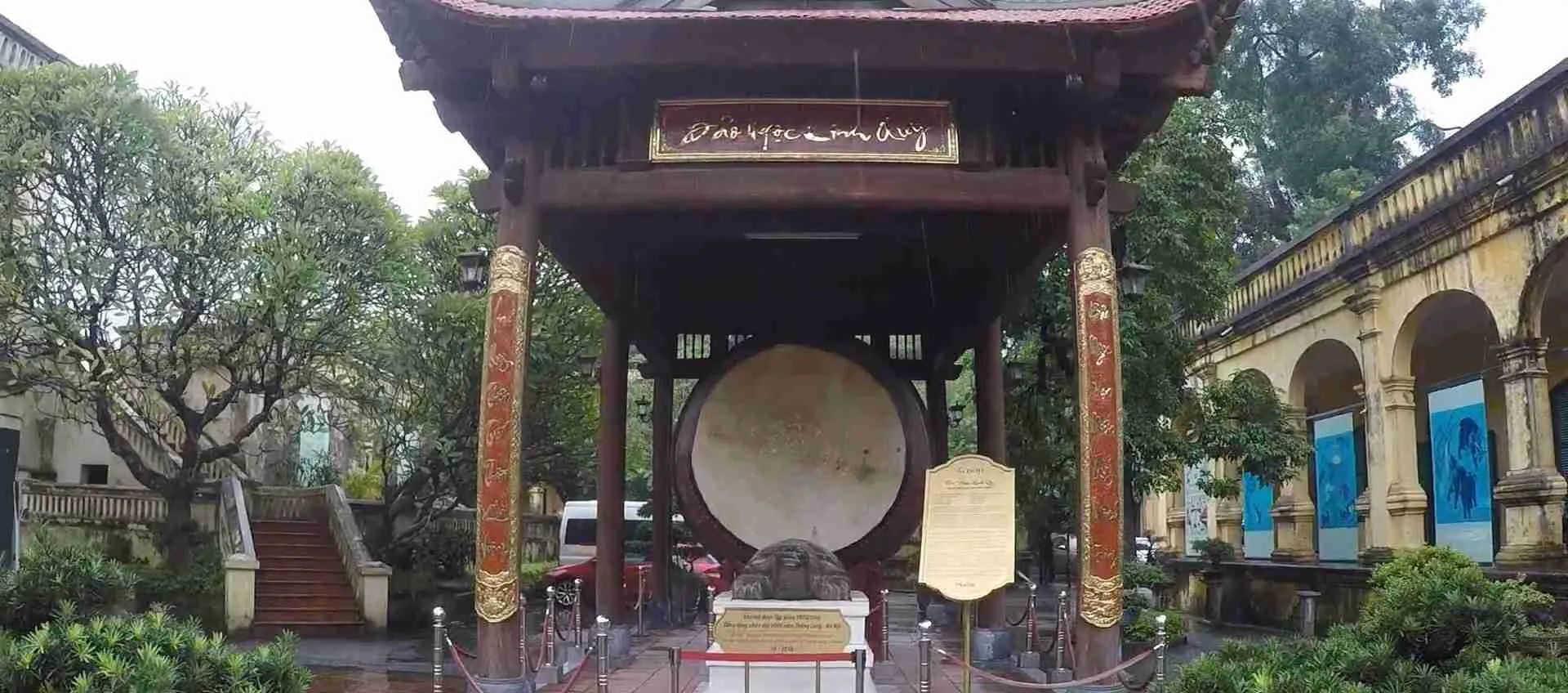
Imperial Citadel of Thang Long: UNESCO Hanoi Guide
The Imperial Citadel of Thang Long stands as Vietnam’s most continuous seat of political power, serving as the nation’s capital for nearly eight centuries while witnessing 13 consecutive centuries of regional governance from its 7th-century origins through modern times. This UNESCO World Heritage site in central Hanoi preserves archaeological layers spanning the Chinese Tang Dynasty through French colonial occupation, with standing monuments including the 33-meter Flag Tower, ceremonial dragon staircases of Kinh Thien Palace, and Southeast Asia’s largest excavated imperial archaeological site revealing palace foundations, ancient wells, and millions of artifacts that demonstrate the cultural synthesis between Chinese northern influence and Champa kingdoms to the south.
Key Takeaways
- UNESCO inscribed the Central Sector on July 31, 2010 under criteria (ii), (iii), and (vi) recognizing its role as a continuous political center for nearly 13 centuries and its unique cultural synthesis
- The site opens Tuesday through Sunday from 8:00 AM to 5:00 PM (closed Mondays), with entrance fees of 30,000 VND ($1.40) for adults, 15,000 VND for students, and free admission for children under 15
- Two distinct sections comprise the heritage property: the Hanoi Citadel area with standing Nguyen Dynasty monuments at 19C Hoang Dieu Street, and the archaeological excavation site at 18 Hoang Dieu Street covering 47,720 square meters
- Major surviving structures include Doan Mon Gate (main southern entrance), Hanoi Flag Tower (1805-1812), Kinh Thien Palace dragon staircases (1428-1467), and Hau Lau rear palace with French colonial modifications
- The 18 Hoang Dieu archaeological site represents Vietnam’s largest excavation area, revealing stratified palace remains, drainage systems, wells, lotus ponds, and artifacts from the 7th through 20th centuries
- Evening “Decoding the Imperial Citadel” tours provide laser-projection storytelling, performances on glass floors, and interactive archaeological puzzles unavailable during standard daytime visits
People Also Ask About Imperial Citadel of Thang Long
Why is the Imperial Citadel of Thang Long important to Vietnamese history?
The Imperial Citadel of Thang Long served as Vietnam’s capital and political center for nearly eight consecutive centuries from 1010 to 1789, hosting the royal courts of the Ly, Tran, and Le dynasties who governed the independent Dai Viet kingdom from this location. Its importance extends beyond mere duration: the site represents Vietnam’s declaration of independence from Chinese rule when Emperor Ly Thai To moved the capital from Hoa Lu to Thang Long in 1010, establishing the first truly independent Vietnamese imperial city. The citadel witnessed every major political transformation in Vietnamese history including dynastic succession, Mongol invasions, Chinese Ming occupation, French colonial conquest, Japanese wartime imprisonment, and Vietnamese Communist military command, making it the singular location where Vietnam’s complete political evolution can be traced through architectural and archaeological evidence. UNESCO recognition in 2010 formalized its outstanding universal value as one of the world’s oldest continuously functioning political centers, comparable to sites like the Forbidden City in Beijing but with even greater temporal depth spanning 13 centuries versus Beijing’s six.
What can visitors see at the Imperial Citadel of Thang Long today?
Visitors experience two distinct heritage areas: the above-ground Nguyen Dynasty monuments and the underground archaeological excavation site. Standing structures include the Flag Tower rising 33 meters with panoramic city views from its summit platforms, Doan Mon Gate’s five-arched entrance decorated with yellow glazed tiles and imperial motifs, the foundation and dragon-carved stone staircases of Kinh Thien Palace where emperors conducted ceremonies, Hau Lau rear palace housing concubines during royal periods and later converted to French colonial administrative offices, and the North Gate shrine honoring Vietnamese generals who resisted French invasion. The archaeological site at 18 Hoang Dieu displays excavated palace foundations arranged in clear chronological layers, ancient drainage channels demonstrating sophisticated hydraulic engineering, wells revealing construction techniques across dynasties, and gallery exhibitions showcasing roof tiles, ceramics, bronze coins, jade ornaments, and ritual objects spanning 13 centuries. Interactive displays include 3D mapping projections illustrating how complete palaces appeared atop preserved foundations, scale models reconstructing the three-ring citadel system of defensive walls, and artifact collections organized by dynastic period enabling visitors to trace stylistic evolution from Ly simplicity through Le elaboration.
How does Thang Long Citadel differ from Hue Imperial City?
The Imperial Citadel of Thang Long and Hue Imperial City represent different phases of Vietnamese imperial architecture with distinct historical roles and preservation states. Thang Long served as Vietnam’s capital for eight centuries (1010-1789) under the Ly, Tran, and Le dynasties, but the Nguyen Dynasty demolished most Ly and Tran structures when reconstructing the site in the early 19th century, followed by French colonial destruction of Nguyen buildings, leaving primarily archaeological remains with few standing structures. Hue Imperial City became the capital only from 1802-1945 under the sole Nguyen Dynasty, preserving relatively intact palace complexes, throne halls, royal libraries, and temple structures built in a unified Chinese-influenced architectural style within a 243-year period. Thang Long’s significance derives from temporal depth and continuous political function across multiple dynasties showing cultural evolution, while Hue represents the completeness and architectural coherence of a single dynasty’s vision executed over shorter duration. Visitors to Thang Long engage primarily with archaeological interpretation requiring imagination to visualize vanished palaces, whereas Hue offers immediate visual comprehension of imperial architecture through preserved buildings, making the sites complementary rather than redundant for understanding Vietnamese royal heritage.
Can you visit both the Citadel and archaeological site on the same ticket?
A single entrance ticket priced at 30,000 VND ($1.40) provides access to both the Hanoi Citadel monuments at 19C Hoang Dieu Street and the archaeological excavation site directly across the road at 18 Hoang Dieu Street, comprising the complete UNESCO World Heritage property designated as the Central Sector of the Imperial Citadel of Thang Long. The ticket remains valid throughout the site’s operating hours from 8:00 AM to 5:00 PM, enabling visitors to explore both sections at their own pace without time restrictions beyond closing time. Most visitors begin at the main Citadel entrance at 19C Hoang Dieu to see standing monuments including the Flag Tower and Doan Mon Gate before crossing to the archaeological site where excavated palace foundations and artifact galleries require 60-90 minutes for thorough exploration. The combined visit typically consumes 2.5-3.5 hours for comprehensive coverage including time to read interpretive signage, examine artifacts, watch multimedia presentations, and photograph both above-ground architecture and underground excavations, though visitors prioritizing specific interests such as archaeology or colonial military history can focus their time accordingly while still accessing both areas with the single admission.
Extended multi-day tours – 5+ days
Featured Hanoi Multi-Day Tour Packages

1 days
Ninh Binh Adventure: Hoa Lu, Trang An & Dancing Cave Day Tour
- ✓ Comprehensive Hanoi tour
- ✓ Expert local guides included
- ✓ All accommodation arranged
- ✓ Transportation provided

5 days
Awesome Northern Vietnam Tour To Hanoi – Halong – Ninh Binh
- ✓ Comprehensive Hanoi tour
- ✓ Expert local guides included
- ✓ All accommodation arranged
- ✓ Transportation provided
3 days
Hanoi Escape: Night Life, City Vibes & Bia Hoi Corner
- ✓ Comprehensive Hanoi tour
- ✓ Expert local guides included
- ✓ All accommodation arranged
- ✓ Transportation provided

2 days
Le Journey Luxury Cruise 2D1N w/ round trip private transfers from Hanoi
- ✓ Booking needs min. 2 travelers
Multi-day tour packages powered by TourRadar. Prices and availability subject to change.
Historical Foundations: From Chinese Fortress to Vietnamese Capital
The Imperial Citadel of Thang Long’s historical significance begins centuries before its formal establishment as Vietnam’s capital, with archaeological evidence revealing continuous fortification and political usage spanning 13 centuries from the Tang Dynasty Chinese protectorate through modern Vietnamese independence. Understanding this layered history requires examining three distinct phases: the pre-Thang Long Chinese period, the independent Vietnamese imperial era, and the post-capital colonial and modern transformations.
Chinese Tang Dynasty Foundations 7th-10th Centuries
The location’s strategic importance emerged during China’s Tang Dynasty administration of northern Vietnam as the Annan Protectorate, when the seat of Chinese colonial power occupied the area now comprising central Hanoi. General Gao Pian, after recapturing the protectorate from Nanzhao forces in 866, ordered construction of the Dai La Citadel on drained land reclaimed from the Red River Delta, establishing the architectural footprint that Vietnamese dynasties would later expand into Thang Long Imperial Citadel. Archaeological excavations at 18 Hoang Dieu Street uncovered foundation remnants, drainage systems, and artifacts from this 7th-9th century period, demonstrating that Chinese fortress builders selected this elevated location for its natural defensibility against river flooding and its command of transportation routes connecting the Red River Delta’s agricultural heartland with mountain passes to China.
The Chinese fortification system employed rammed earth construction techniques creating walls several meters thick, excavated moats for additional defense, and established the basic rectangular layout that subsequent Vietnamese dynasties maintained while modifying interior structures. Ceramic fragments, bronze coins, and architectural elements from this period show typical Tang Dynasty artistic styles including roof tiles with Chinese character inscriptions and decorative motifs reflecting Buddhist and Daoist influences, establishing patterns that Vietnamese rulers would later adapt into distinctively Vietnamese imperial aesthetics.
Ly Dynasty Establishment 1010-1225
Vietnamese independence culminated in 1010 when Emperor Ly Thai To relocated the capital from Hoa Lu (in present-day Ninh Binh Province) to the former Dai La Citadel, renaming it Thang Long meaning “Rising Dragon” after witnessing what court records describe as a golden dragon ascending from the Red River. This move represented more than administrative relocation: it signaled Vietnam’s transformation from a kingdom positioned defensively in mountain strongholds to a confident imperial power controlling the agriculturally rich Red River Delta. Construction of the new imperial citadel commenced immediately in late 1010 and completed in early 1011, establishing the three-ring defensive system that would characterize Thang Long for subsequent centuries.
The Ly Dynasty citadel employed a hierarchical spatial organization reflecting Confucian political philosophy and Chinese cosmological principles while incorporating indigenous Vietnamese architectural elements. The outermost ring, Kinh Thanh (Capital Citadel), enclosed civilian residential areas and served dual functions as urban fortification and flood control system, with walls positioned to direct Red River, To Lich River, and Kim Nguu River flows around the city. The middle ring, Hoang Thanh (Imperial Citadel), contained royal administrative offices, military compounds, and mandarin residences, separating governmental functions from civilian life. The innermost sanctuary, Tu Cam Thanh (Forbidden City), housed the emperor’s living quarters, royal consorts, and imperial family in absolute seclusion from public access, mirroring but predating Beijing’s similarly named Forbidden City by several centuries.
Ly Dynasty architectural achievements include sophisticated hydraulic engineering with large reinforced water channels approximately two meters wide that archaeological excavations reveal remain intact after 1,000 years, lotus ponds serving both aesthetic and practical water management purposes, and wooden palace structures whose column foundation pits enable modern archaeologists to calculate building dimensions and structural complexity. The dynasty’s Buddhist patronage manifested in temple construction within the citadel grounds, with surviving foundation evidence suggesting major religious structures occupied prominent positions integrating spiritual authority with temporal power in the imperial landscape.
Tran Dynasty Expansion 1225-1400
The Tran Dynasty inherited Thang Long Citadel through peaceful transition when the last Ly emperor abdicated in favor of Tran leadership, maintaining capital continuity while expanding and fortifying the existing imperial complex to address increased military threats including multiple Mongol invasion attempts. Tran rulers strengthened defensive walls, expanded palace compounds to accommodate growing bureaucratic administration, and constructed additional ceremonial spaces reflecting the dynasty’s military character shaped by successful resistance against Kublai Khan’s invasions in 1258, 1285, and 1287-1288.
Archaeological evidence from Tran period layers shows construction techniques evolved from earlier Ly methods, with larger foundation stones, more elaborate drainage systems suggesting increased hydraulic engineering sophistication, and ceramics displaying artistic styles that synthesized Chinese influence with distinctively Vietnamese decorative motifs. The dynasty’s emphasis on Confucian education led to establishment of scholarly compounds within the citadel where mandarins received training in classical texts, administrative procedures, and cultural arts, creating intellectual infrastructure that survived beyond the dynasty’s 1400 collapse to Ming Chinese occupation.
Le Dynasty Reconstruction 1428-1788
Following Vietnamese liberation from Ming occupation, Le Thai To established the Le Dynasty in 1428 and immediately undertook massive reconstruction of Thang Long Citadel, which Chinese forces had substantially damaged during their 20-year occupation. The Le reconstruction represented the citadel’s most ambitious architectural phase, creating the palatial structures whose foundations remain visible today and establishing the monumental scale that defined Vietnamese imperial architecture until the capital’s eventual transfer to Hue.
Kinh Thien Palace, begun in 1428 and completed under Le Thanh Tong, served as the citadel’s ceremonial heart where emperors received foreign envoys, conducted major state rituals, and proclaimed important edicts. The palace’s most celebrated surviving elements are the dragon-carved stone staircases leading to the throne platform, featuring two sophisticated dragon sculptures executed in bas-relief on green stone balustrades flanking the entrance steps. These 15th-century dragon carvings represent the pinnacle of Vietnamese stone sculpture, displaying sinuous bodies, detailed scale work, and dynamic poses that art historians consider masterworks of Vietnamese imperial art distinct from Chinese prototypes.
Le Dynasty architecture incorporated larger building scales than previous dynasties, with palace foundations measuring 57 meters long and 41.5 meters wide for Kinh Thien Palace alone, elevated 2.3 meters above ground level to emphasize the emperor’s elevated cosmic status. The dynasty standardized architectural protocols including roof tile colors (yellow glazed tiles reserved for imperial structures), building orientations (major halls facing south according to Chinese geomancy), and decorative motifs (dragons, phoenixes, and lotus flowers with specific symbolic meanings), creating visual coherence across the citadel complex that archaeological evidence suggests was rigorously maintained through the dynasty’s 360-year duration.
Post-Capital Decline 1789-1954
Thang Long’s role as Vietnam’s capital ended in 1789 when the Tay Son Dynasty moved the seat of power to Phu Xuan (modern Hue), reducing the ancient citadel to secondary provincial status. The Nguyen Dynasty, after defeating the Tay Son and establishing its own capital in Hue in 1802, demolished most remaining Ly, Tran, and Le palace structures during early 19th century reconstruction to assert dynastic legitimacy by erasing architectural memory of predecessor regimes. This deliberate destruction explains why so little above-ground architecture survives from Vietnam’s most culturally significant dynasties despite eight centuries of continuous imperial occupation.
French colonial occupation beginning 1873 inflicted additional destruction as colonial administrators demolished Nguyen Dynasty structures to construct military barracks, administrative offices, and European-style buildings that French architects considered more appropriate for colonial governance than “backward” Vietnamese palaces. The Flag Tower survived due to its utility as a military observation post, while most other structures succumbed to French modernization priorities that valued European architectural aesthetics over Vietnamese heritage preservation. Japanese forces used the citadel as a prison camp in March 1945, incarcerating over 4,000 French colonial soldiers in conditions of severe deprivation that left physical evidence archaeologists later excavated including makeshift prisoner workshops and burial sites.
Vietnamese Communist forces captured Hanoi in 1954 and immediately converted the citadel into Ministry of Defense headquarters, a military designation that closed the site to public access and inadvertently preserved archaeological deposits from urban development pressures that destroyed historical sites elsewhere in rapidly modernizing Hanoi. Military occupation continued until early 21st century, when Vietnam’s National Assembly planned new parliamentary buildings for the site, triggering the 2002-2004 excavations that revealed the extraordinary archaeological wealth ultimately leading to UNESCO World Heritage designation.
UNESCO World Heritage Inscription and Outstanding Universal Value
UNESCO’s World Heritage Committee inscribed the Central Sector of the Imperial Citadel of Thang Long-Hanoi on July 31, 2010 during its 34th session in Brasilia, Brazil, recognizing the site under three criteria that collectively establish its outstanding universal value for world cultural heritage. The inscription followed Vietnam’s 2009 designation of the citadel as a Special National Heritage Site and concluded a multi-year nomination process requiring extensive archaeological documentation, heritage management planning, and international expert evaluation of the site’s significance.
UNESCO Criterion (ii): Cultural Interchange and Influence
The Imperial Citadel of Thang Long demonstrates important interchange of human values in the development of architecture, technology, town planning, and landscape design specific to the Red River Delta region at the crossroads between northern Chinese influence and southern Champa Kingdom traditions. This cultural synthesis manifests in architectural elements combining Chinese cosmological principles (rectangular layouts, north-south axiality, hierarchical spatial organization) with indigenous Vietnamese adaptations including tropical climate responses, locally sourced materials, and decorative motifs reflecting Vietnamese mythology distinct from Chinese prototypes.
Archaeological evidence reveals this cultural exchange operated bidirectionally: Vietnamese craftsmen studied and adopted Chinese construction techniques, hydraulic engineering, and ceramic technologies while simultaneously developing distinctive Vietnamese artistic styles in roof tile decoration, stone carving, and palace ornamentation that later influenced neighboring Southeast Asian kingdoms. The citadel’s position controlling Red River trade routes facilitated material culture exchanges evidenced by excavated ceramics from China, Champa, and maritime Southeast Asian trading partners, demonstrating Thang Long’s role as a node in regional commercial and cultural networks extending far beyond Vietnam’s borders.
UNESCO Criterion (iii): Testimony to Cultural Tradition and Civilization
The citadel bears exceptional testimony to the cultural tradition of the Red River Delta and the Dai Viet civilization developed by Vietnamese dynasties over eight centuries of continuous capital occupation from 1010 to 1789. This testimony manifests in multiple forms: stratified archaeological deposits preserving construction phases across successive dynasties, standing architectural monuments representing different historical periods, and millions of artifacts documenting daily life, ceremonial practices, artistic achievement, and technological innovation throughout Vietnamese imperial history.
The site’s unique value derives from temporal depth combined with spatial concentration: whereas most world heritage sites preserve single periods or specific monument types, Thang Long encompasses 13 centuries of continuous political occupation compressed into 18.395 hectares, creating archaeological and architectural palimpsest where every excavation layer and standing structure contributes evidence about Vietnamese civilization’s evolution. UNESCO evaluators specifically noted that the citadel represents not merely a collection of old buildings but a living archaeological document where material evidence enables reconstruction of Vietnamese political systems, social hierarchies, economic organization, religious beliefs, artistic traditions, and technological capabilities across the full span of independent Vietnamese imperial history.
UNESCO Criterion (vi): Association with Events and Living Traditions
The Imperial Citadel of Thang Long associates directly with events and living traditions of outstanding universal significance in Vietnamese history. These associations include Emperor Ly Thai To’s 1010 proclamation of Vietnamese independence and capital relocation to Thang Long, the site’s role as command center during successful resistance against three Mongol invasions under the Tran Dynasty, the Le Dynasty’s reconstruction following liberation from Ming Chinese occupation, Vietnamese Communist military planning during the American War conducted from underground bunkers that remain preserved within the complex, and contemporary Vietnamese cultural identity formation referencing the citadel as the symbolic heart of continuous Vietnamese sovereignty.
Living traditions connected to the site include annual Lunar New Year incense-offering ceremonies honoring ancestors who defended Vietnamese independence from this location, educational programs introducing Vietnamese students to their imperial heritage through guided tours and archaeological participation activities, and ongoing scholarly research treating the citadel as Vietnam’s most important historical archive for understanding pre-modern Vietnamese civilization. The site’s symbolic significance for modern Vietnamese national identity satisfies criterion (vi)’s requirement for outstanding universal value through intangible cultural associations transcending mere architectural or archaeological merit.
Property Boundaries and Protection Zone
The UNESCO World Heritage property encompasses 18.395 hectares comprising two distinct sections: the Hanoi Ancient Citadel area with standing Nguyen Dynasty monuments where most visitors enter at 19C Hoang Dieu Street, and the Archaeological Site at 18 Hoang Dieu Street containing excavated palace foundations and artifact galleries. An additional 108-hectare buffer zone surrounding the property provides regulatory protection against urban development that could compromise the heritage site’s integrity, bringing total protected area to approximately 126 hectares within central Hanoi’s densely developed Ba Dinh District.
Legal protection derives from Vietnam’s Law on Cultural Heritage which designates the Central Sector as a Special National Heritage Site, the highest protection classification available under Vietnamese law requiring government approval for any modifications to structures, excavation activities, or landscape alterations within property boundaries. The buffer zone implements height restrictions on new construction, prohibits industrial development, and requires architectural review for building renovations ensuring new development harmonizes with the heritage site’s historical character. This multi-layered protection framework addresses UNESCO concerns about urban development pressures in central Hanoi potentially threatening the citadel’s setting and visual integrity.
Architectural Monuments and Standing Structures
Despite extensive destruction during Nguyen Dynasty reconstruction and French colonial occupation, several significant architectural monuments survive within the Imperial Citadel complex, providing tangible connections to Vietnam’s imperial past while demonstrating the diverse influences and periods that shaped Thang Long’s development. These standing structures span from early 19th century Nguyen construction through French colonial modifications, with earlier Ly, Tran, and Le architecture preserved only through archaeological foundations and scattered carved stone elements.
Hanoi Flag Tower: Symbol of Vietnamese Sovereignty
The Hanoi Flag Tower rises 33.4 meters from ground level, making it the citadel’s most prominent and recognizable monument serving as a symbol of both Hanoi city and Vietnamese national sovereignty. Nguyen Dynasty engineers constructed the tower between 1805 and 1812 during Emperor Gia Long’s reconstruction of the citadel following the Tay Son defeat, designing a structure combining military observation functions with symbolic representation of imperial power visible across the Red River Delta landscape.
The tower’s architectural composition consists of four distinct levels creating visual rhythm through alternating solid and open forms. The base measures 42 meters per side, constructed of massive brick masonry with walls nearly three meters thick ensuring structural stability for the height. A second level featuring arched openings in four cardinal directions lightens the composition while providing intermediate observation platforms. The third level repeats the arched motif at reduced scale, creating visual progression toward the tower’s crown. The cylindrical pillar surmounting the three square platforms supports Vietnam’s national flag at 33.4 meters elevation, maintaining the tower’s historical function as sovereignty marker through contemporary symbolism replacing imperial yellow banners with the red flag bearing yellow star of the Socialist Republic of Vietnam.
French colonial forces recognized the tower’s military utility and preserved it as an observation post and signal station while demolishing most surrounding Nguyen structures, inadvertently ensuring the monument’s survival through Vietnam’s tumultuous 20th century. The tower bears physical evidence of this history including bullet holes from French artillery strikes during the 1873 and 1882 attacks that colonial authorities later preserved as war memorials. Visitors can climb interior staircases to observation platforms offering panoramic views across central Hanoi, though the steep steps and limited lighting require reasonable fitness and caution.
Doan Mon Gate: Imperial Entrance and Ceremonial Threshold
Doan Mon Gate served as the citadel’s primary southern entrance, controlling access to the imperial compound and providing the ceremonial threshold through which officials, foreign envoys, and ceremonial processions entered the royal precinct. The Nguyen Dynasty constructed the existing structure in the early 19th century, though historical records indicate gates occupied this location throughout the Ly, Tran, and Le periods, suggesting continuity of function across successive architectural incarnations.
The gate’s architectural form consists of five arched openings arranged horizontally, with the central arch significantly larger than flanking passages reflecting hierarchical protocols determining who could use each entrance. The emperor alone passed through the central arch during ceremonial occasions, while mandarins of various ranks used the four side passages according to their bureaucratic positions. This spatial hierarchy materialized Confucian political philosophy where physical movement through architectural space reinforced social status and cosmic order linking the emperor’s mandate of heaven to terrestrial governance structures.
Yellow glazed roof tiles crown the gate structure, with ceramic color denoting imperial status since sumptuary laws reserved yellow for structures associated directly with the emperor. Decorative elements include carved stone lintels, ceramic roof ornaments depicting dragons and phoenixes, and inscribed panels identifying the gate’s name and construction date. French colonial modifications added brick reinforcement to original masonry, altered interior spaces for administrative offices, and modified roof structures, creating a palimpsest of Vietnamese and European construction techniques visible in careful architectural analysis.
Contemporary worship practices transformed parts of the gate into a shrine honoring Nguyen Tri Phuong and Hoang Dieu, two Vietnamese generals who commanded forces resisting French invasion in 1873 and 1882 before dying in battle defending Hanoi. Incense altars, votive offerings, and memorial plaques now occupy former guardhouses flanking the central passage, demonstrating how Vietnamese heritage preservation integrates historical architecture with living commemorative practices honoring anti-colonial resistance.
Kinh Thien Palace Foundations and Dragon Staircases
Kinh Thien Palace foundations represent the Imperial Citadel’s most archaeologically significant above-ground remains, preserving the base platform and ceremonial staircases of the Le Dynasty’s primary throne hall where emperors conducted state ceremonies, received tributary missions, and proclaimed major policy decisions. The palace served as the citadel’s symbolic and functional heart from its 1428 construction under Le Thai To through the capital’s 1789 abandonment, though Nguyen Dynasty demolition left only foundation elements and the celebrated dragon-carved stone staircases that UNESCO evaluators identified as exceptional examples of Vietnamese imperial art.
The foundation platform measures 57 meters long, 41.5 meters wide, and elevates 2.3 meters above surrounding ground level, creating a massive base that originally supported multi-story wooden palace structures housing the throne room, ceremonial chambers, and imperial reception halls. Archaeological investigation of the platform revealed sophisticated construction employing compacted earth cores faced with brick and stone, underground drainage channels preventing water accumulation that could destabilize foundations, and precisely engineered load-bearing calculations enabling the structure to support massive wooden pillars and heavy ceramic tile roofs for over 350 years before deliberate Nguyen destruction.
The dragon staircases flanking the platform’s southern approach represent Vietnamese stone carving at its artistic zenith, featuring two sinuous dragons executed in bas-relief on green stone balustrades that guided visitors’ ascent to the throne hall entrance. Each dragon displays extraordinary detail including individually carved scales, flowing whiskers, powerful clawed feet, and dynamic serpentine bodies suggesting movement frozen in stone. Art historians identify these 15th-century carvings as the finest surviving examples of Le Dynasty decorative sculpture, demonstrating Vietnamese artisans’ mastery of both technical stone-working skills and sophisticated artistic design creating emotionally compelling rather than merely decorative imperial imagery.
The dragons’ symbolic meaning operates on multiple levels reflecting Vietnamese cosmology and political philosophy. As mythological creatures controlling water, clouds, and rain, dragons represented the emperor’s cosmic responsibility ensuring agricultural prosperity through proper governance harmonizing human society with natural forces. The dragons’ ascending movement toward the throne hall symbolized the emperor’s mandate of heaven legitimizing his rule through celestial approval. Their paired arrangement flanking the central stairs suggested the emperor’s role mediating between opposing cosmic forces—yin and yang, heaven and earth, spiritual and temporal authority—creating universal harmony through wise governance conducted from the palace positioned at this cosmic and political center point.
Hau Lau Rear Palace: From Imperial Concubines to French Headquarters
Hau Lau, the Rear Palace, occupies the citadel’s northern section and survives as the most intact multi-story structure within the heritage property, though its current appearance reflects extensive French colonial modifications overlay original Vietnamese construction. The Nguyen Dynasty built the palace in the early 19th century to house imperial concubines and female servants attending the royal family, following traditional imperial compound organization that segregated women’s quarters from male-dominated governmental and ceremonial spaces.
The structure’s two-story form employs Chinese-influenced architectural elements including upturned roof eaves, decorative brackets supporting roof overhangs, and hierarchical spatial organization with more important rooms occupying elevated positions and northern orientations. Original Vietnamese construction used wooden post-and-beam framing filled with brick infill walls, ceramic tile roofing, and minimal fenestration reflecting gender seclusion customs requiring women’s living spaces remain visually isolated from external observation.
French colonial occupation transformed Hau Lau’s function and appearance when authorities converted the building into military headquarters and administrative offices. Colonial architects added brick colonnades creating covered walkways around the building’s perimeter, enlarged window openings improving ventilation and natural lighting for European occupants unaccustomed to Vietnamese climate, installed wooden staircases replacing original Vietnamese configurations, and painted facades in French colonial yellow highlighting the structure’s new administrative status. These modifications created the hybrid Vietnamese-French architectural character visible today, where traditional roof forms and spatial organization combine with European classical details and construction materials.
Restoration work in recent decades attempted to preserve both Vietnamese and French architectural layers rather than reconstructing hypothetical “authentic” Nguyen appearance, reflecting contemporary heritage philosophy valuing buildings as historical documents recording successive occupations and uses rather than static monuments frozen at single moments. Visitors can observe this multi-period construction through exposed structural elements, interpretive signage explaining architectural evolution, and preserved French-era modifications contrasting with nearby Vietnamese architectural elements.
North Gate and Memorial Shrine
The North Gate, also called Chinh Bac Mon, represents the only surviving gate from the Nguyen Dynasty’s citadel fortification system, constructed in 1805 as part of Emperor Gia Long’s comprehensive reconstruction following his dynasty’s establishment. The gate’s architectural form employs massive brick piers supporting heavy timber roof structures, with a single large arched passage allowing cart and pedestrian traffic between the citadel interior and northern suburban districts.
French artillery strikes during 1873 and 1882 attacks on Hanoi left visible damage on the gate’s masonry including shell holes and structural cracks that Vietnamese authorities preserved as physical evidence of anti-colonial resistance rather than repairing to pristine condition. This conservation decision reflects Vietnam’s post-independence heritage philosophy emphasizing historical authenticity including war damage over cosmetic restoration that would erase material evidence of French colonial violence against Vietnamese sovereignty.
The gate’s upper pavilion houses a shrine dedicated to Nguyen Tri Phuong and Hoang Dieu, the Vietnamese generals who commanded Hanoi’s defense during French attacks and died rather than surrender the city to colonial forces. The shrine features traditional altar arrangements with incense burners, votive offerings, memorial tablets inscribed with the generals’ biographies, and historical photographs documenting their military careers and final battles. Contemporary Vietnamese visitors frequently stop at the shrine during citadel tours to offer incense and pay respects to these national heroes, demonstrating how historical architecture serves living commemorative practices connecting present-day Vietnamese citizens with ancestors who defended independence from this location.
Archaeological Site at 18 Hoang Dieu Street: Excavating Vietnamese Imperial Life
The Archaeological Site at 18 Hoang Dieu Street represents Vietnam’s largest and most significant urban excavation, revealing stratified palace remains, infrastructure systems, and millions of artifacts spanning 13 centuries of continuous occupation from the 7th-century Chinese fortress through 20th-century Vietnamese military use. The excavation began in 2002 when Vietnam’s National Assembly planned new parliamentary buildings for this location, triggering archaeological surveys that quickly revealed extraordinary preservation of multi-period architectural foundations beneath the existing ground surface.
Discovery Context and Excavation History
The 18 Hoang Dieu site occupied a central position within the Forbidden City, the innermost ring of Thang Long’s three-tier fortification system where emperors, royal consorts, and imperial family members lived in seclusion from public view. This location’s continuous elite occupation from the Ly Dynasty through the Le Dynasty created deep archaeological deposits as each successive dynasty built new palaces atop predecessors’ structures, demolishing but not removing earlier foundations. The site’s military designation from 1954 through early 21st century inadvertently preserved these deposits from urban development that destroyed most other ancient Hanoi sites, creating the conditions enabling exceptional archaeological preservation despite centuries of surface-level modifications.
Archaeologists have excavated approximately 10,000 square meters of the 47,720 square meter site, revealing that only six percent of the total archaeological deposit has undergone scientific investigation. This limited excavation nonetheless produced extraordinary results including palace foundations from multiple dynasties, sophisticated drainage infrastructure demonstrating advanced hydraulic engineering, wells preserving construction techniques and water supply systems, lotus ponds serving aesthetic and practical purposes, and artifact collections numbering in the millions enabling detailed reconstruction of daily life, ceremonial practices, and material culture throughout Vietnamese imperial history.
Excavation methodology employs stratigraphic techniques removing deposits layer by layer, photographing and documenting each level before proceeding to earlier periods beneath, and preserving representative sections in situ for future researchers while selectively removing artifacts for laboratory analysis and museum curation. This approach created the visible multi-period archaeological landscape where visitors can observe palace foundations arranged chronologically, trace architectural evolution across centuries, and comprehend the site’s temporal depth through direct visual observation of stratified construction layers.
Ly Dynasty Architectural Foundations 11th-13th Centuries
Ly Dynasty remains occupy the deepest excavated levels, revealing palace foundations constructed with sophisticated techniques enabling long-term structural stability in the Red River Delta’s challenging geotechnical conditions where natural soils possess poor load-bearing capacity due to alluvial sedimentation and high water tables. Ly builders addressed these challenges through foundation systems combining compacted earth with wooden piling, creating engineered substrates capable of supporting heavy wooden palace structures whose column bases archaeologists identified through regular spacing patterns and distinctive construction pits.
Large water channels approximately two meters wide represent the Ly period’s most impressive engineering achievement, demonstrating advanced hydraulic design enabling effective drainage of seasonal flooding while maintaining year-round water supply for palace gardens and domestic use. These channels employed fired brick construction with waterproof mortar, precisely calculated gradients ensuring proper flow without erosion, and strategic positioning integrating with natural topography to maximize efficiency. Archaeological examination revealed the channels remain structurally sound after 1,000 years, testament to Ly engineering sophistication often underestimated in historical narratives emphasizing Chinese technological superiority.
Artifact collections from Ly levels include ceramics with simple glazing and decoration reflecting the dynasty’s Buddhist aesthetic emphasizing spiritual refinement over material luxury, bronze coins documenting economic systems and trade relationships, roof tiles with distinctive firing techniques enabling precise dating and provenance analysis, and jade ornaments suggesting ceremonial practices and elite gift exchange networks. These materials collectively demonstrate the Ly Dynasty’s cultural sophistication while revealing ongoing debates among archaeologists about the extent of Chinese versus indigenous Vietnamese influence on early imperial material culture.
Tran Dynasty Expansion and Fortification 13th-14th Centuries
Tran Dynasty architectural remains show expansion of palace complexes beyond Ly footprints, with larger building foundations suggesting increased bureaucratic administration requiring more governmental space and military fortification responding to Mongol invasion threats. Archaeological evidence includes foundation stones of greater dimensions than Ly period construction, suggesting Tran builders either possessed superior quarrying technology or deliberately chose monumental scale to project imperial power during the dynasty’s military conflicts with Yuan Dynasty China.
Defensive works from the Tran period include fortification walls, watchtowers, and military storage facilities archaeologists identified through distinctive construction techniques, spatial organization around defensive perimeters, and artifact assemblages including weapons, armor fragments, and military equipment. These features reflect the dynasty’s preoccupation with external security following repeated Mongol invasion attempts, demonstrating how military threats shaped architectural development within the supposedly civilian palace precinct.
Ceramic assemblages from Tran levels show stylistic evolution from Ly simplicity toward more elaborate decoration, with increased use of underglaze painting, polychrome glazes, and Chinese-influenced decorative motifs suggesting growing participation in regional trade networks and conscious emulation of Yuan Dynasty Chinese luxury goods. Archaeologists debate whether this stylistic shift represents Chinese cultural colonization of Vietnamese elites or sophisticated Vietnamese appropriation of Chinese prestige goods to enhance their own political legitimacy through material culture displays.
Le Dynasty Palatial Grandeur 15th-18th Centuries
Le Dynasty foundations represent the site’s most architecturally ambitious period, with palace platforms, ceremonial courtyards, and elaborate drainage infrastructure demonstrating the dynasty’s wealth and construction capabilities at their 15th-16th century zenith. The scale of Le construction surpasses earlier periods, with individual palace foundations measuring tens of meters in length and width, suggesting multi-story wooden structures of extraordinary size lost to Nguyen demolition and French colonial destruction.
Stone architectural elements from Le palaces include carved column bases with lotus motif decoration, elaborately worked threshold stones marking imperial doorways, and drainage covers carved with protective symbols preventing evil spirits from entering palace spaces through underground water channels. These decorative stones demonstrate Le artisans’ technical mastery and reveal religious beliefs integrating Buddhist, Daoist, and indigenous Vietnamese spiritual practices into imperial architecture’s symbolic program.
The Le period’s ceramic collections include Vietnamese blue-and-white porcelain rivaling Chinese prototypes in technical quality, demonstrating Vietnamese potters’ mastery of difficult cobalt underglaze techniques previously monopolized by Chinese manufacturers. These high-quality ceramics appeared both in palace contexts and broader archaeological deposits, suggesting Vietnamese ceramic production achieved export quality capable of competing in regional markets while satisfying domestic elite demand for luxury goods previously available only through Chinese imports.
Archaeological Galleries and Artifact Exhibitions
Climate-controlled galleries adjacent to excavation areas display carefully curated artifact selections representing the full chronological span of archaeological deposits, organized both chronologically by dynastic period and thematically by artifact type enabling visitors to trace stylistic evolution within specific material culture categories. Major exhibition themes include ceramic development across centuries, bronze working techniques and ritual vessel uses, architectural ornamentation demonstrating changing aesthetic preferences, and daily life reconstruction through household implements, personal ornaments, and utilitarian objects.
Interactive displays employ multimedia technologies including 3D computer reconstructions projecting complete palace structures atop preserved foundations, enabling visitors to visualize how excavated remains appeared when buildings stood intact. Touchscreen kiosks provide detailed information about specific artifacts, construction techniques, and historical contexts at depth levels exceeding what traditional labels accommodate. Scale models reconstruct the three-ring citadel system at urban scale, helping visitors comprehend spatial relationships between the excavation site, standing monuments, and the larger imperial city that modern Hanoi’s dense development obscures.
Ongoing excavation areas remain partially accessible through observation platforms enabling visitors to watch archaeologists conducting fieldwork, documenting finds, and processing artifacts. Interpretive signage explains excavation methodology, stratigraphic principles, and analytical techniques archaeologists employ to extract historical information from material remains. This public archaeology approach demystifies archaeological practice while emphasizing that the site represents living research rather than static museum displays, with new discoveries continuously refining scholarly understanding of Vietnamese imperial history.
Visiting the Imperial Citadel: Practical Information and Planning
Successful visits to the Imperial Citadel of Thang Long require understanding operational details, recommended routes through the complex site, seasonal considerations affecting visitor experience, and strategies for maximizing educational value from limited on-site interpretation compared to more extensively developed heritage sites elsewhere in Southeast Asia.
Hours, Admission, and Access Information
The Imperial Citadel of Thang Long opens Tuesday through Sunday from 8:00 AM to 5:00 PM, with Monday closures enabling maintenance activities and providing weekly respite for conservation staff managing visitor impacts. The 5:00 PM closing time represents final admission, with site staff beginning to clear areas around 5:15 PM and securing gates by 5:30 PM, requiring visitors to plan accordingly rather than attempting rushed late-afternoon visits that inadequate time prevents appreciating properly.
Entrance fees follow a three-tier pricing structure: 30,000 VND (approximately $1.40 USD based on current exchange rates) for adults regardless of nationality, 15,000 VND for Vietnamese students presenting valid identification, and free admission for children under 15 years of age. This modest pricing reflects Vietnamese cultural heritage policy prioritizing access over revenue maximization, enabling even budget-conscious travelers to visit without financial strain. Payment occurs at ticket booths located at the main entrance at 19C Hoang Dieu Street, with cash required as credit card infrastructure remains undeveloped at this heritage site despite modernization of Hanoi’s tourism facilities elsewhere.
The main entrance at 19C Hoang Dieu Street provides access to standing monuments including the Flag Tower and Doan Mon Gate, while the archaeological site at 18 Hoang Dieu Street across the road requires exiting the main citadel area and re-entering the excavation site, though the single admission ticket covers both locations. Visitors should retain tickets throughout their stay as staff periodically check admission at various site areas preventing unauthorized entry through secondary access points.
Recommended Visit Routes and Time Allocation
Comprehensive visits consuming 2.5-3.5 hours enable thorough exploration of both the Hanoi Citadel monuments and 18 Hoang Dieu archaeological site, reading interpretive signage, examining artifacts, watching multimedia presentations, and photographing architecture without rushing. Visitors with limited time can prioritize specific interests such as archaeology, colonial military history, or imperial architecture, completing abbreviated visits in 60-90 minutes though such brevity necessarily sacrifices comprehensive understanding of the site’s multi-layered significance.
The recommended route begins at the main entrance at 19C Hoang Dieu Street, proceeding through Doan Mon Gate to establish initial orientation within the former imperial compound. From Doan Mon, paths lead north toward the Flag Tower offering climbing opportunities for visitors comfortable with steep stairs and limited interior lighting, though the tower’s height enables dramatic photography of both the citadel complex and broader Hanoi cityscape justifying the physical effort required for ascent. After descending the Flag Tower, visitors should proceed to Kinh Thien Palace foundations to examine the celebrated dragon staircases and foundation platform while reading interpretive signage explaining Le Dynasty palatial architecture and ceremonial practices conducted from this location.
Following Kinh Thien Palace examination, the route continues north to Hau Lau rear palace displaying Vietnamese-French architectural synthesis, then circles to the North Gate shrine honoring Vietnamese generals who resisted French colonial invasion. This circuit through standing monuments typically consumes 60-90 minutes depending on individual interest levels, photography priorities, and whether visitors climb the Flag Tower or skip this optional element.
Exiting the main citadel area through Doan Mon Gate, visitors cross Hoang Dieu Street to the archaeological site entrance at 18 Hoang Dieu, where excavated palace foundations arranged chronologically enable visual comprehension of architectural evolution across dynasties. The archaeological site route follows raised walkways providing elevated perspectives on foundation remains, with interpretive signage identifying specific dynastic periods and explaining construction techniques. Climate-controlled galleries displaying artifacts and multimedia presentations typically hold visitors’ attention for 45-75 minutes, with time investment determined by individual interest in archaeological methodology, ceramic studies, and material culture analysis.
Guided Tours versus Self-Guided Exploration
The Imperial Citadel of Thang Long provides minimal English-language interpretation compared to more developed heritage sites, with interpretive signage offering basic information but lacking the detailed architectural analysis, historical contextualization, and cultural explanation that specialist guides provide. Visitors seeking deep understanding of the site’s significance, architectural development, and historical context benefit substantially from hiring professional guides who can explain complex historical narratives, point out easily-missed architectural details, and answer specific questions about Vietnamese imperial history, archaeology, and heritage conservation challenges.
Vietnamese tour guide associations offer licensed guides specializing in Hanoi heritage sites, bookable through hotel concierges, online tour booking platforms, or direct contact with guide associations. Guide fees typically range 300,000-500,000 VND ($13-22 USD) for 2-3 hour citadel tours, representing cost-effective investment for the educational value added through expert interpretation. Guides with archaeological backgrounds or advanced historical training command premium rates but provide insights unavailable from general tourism guides, particularly regarding excavation methodology, artifact interpretation, and scholarly debates about Vietnamese imperial culture.
Self-guided visits remain perfectly viable for visitors comfortable conducting independent research before arrival, reading available interpretive materials carefully, and accepting that some architectural details and archaeological contexts will remain incompletely understood without specialist explanation. Preparation strategies for self-guided visits include reviewing UNESCO’s official World Heritage site description available online, consulting general Vietnamese history sources covering the Ly, Tran, and Le dynasties, and downloading mobile applications offering supplementary information about Hanoi heritage sites if Vietnamese heritage authorities have developed such digital interpretation tools.
Special Programs and Evening Tours
The “Decoding the Imperial Citadel of Thang Long” evening program offers distinctive after-hours access combining theatrical lighting effects, multimedia storytelling, cultural performances, and interactive archaeological puzzles unavailable during standard daytime visits. These special programs operate on selected evenings rather than nightly schedules, requiring advance reservation through the citadel’s official website or authorized tour operators rather than walk-up participation at the gate.
Evening tour programming includes dramatically lit pathways through Doan Mon Gate creating atmospheric entrance experiences, glass floor panels installed over excavation areas enabling visitors to walk above archaeological deposits while viewing foundation remains directly beneath their feet, multimedia presentations projecting historical imagery and 3D palace reconstructions onto architectural surfaces, and laser-projection games challenging participants to identify significant artifacts and decode historical mysteries through clue-based activities. The programs conclude with lotus tea service in garden settings beneath ancient bodhi trees, providing contemplative conclusion to evening experiences while referencing Vietnamese Buddhist traditions associating lotus flowers with spiritual enlightenment.
Cultural performances during evening programs include traditional music concerts employing historical instruments, court dance recreations based on historical descriptions of imperial ceremonies, and water puppet theater presentations if scheduling permits. These performances aim to recreate atmospheric elements of imperial court culture while acknowledging that limited historical evidence prevents truly authentic reconstruction of ceremonies lost when Vietnamese imperial traditions ended with French colonial conquest and subsequent republican governance.
Photography Policies and Restrictions
Visitors may photograph freely throughout both the Hanoi Citadel monuments and archaeological site areas for personal, non-commercial purposes without additional fees beyond standard admission charges. Professional photography requiring tripods, artificial lighting equipment, or commercial usage rights requires special permission obtained from citadel management through formal application processes outlining intended uses, publication contexts, and compensation arrangements if applicable.
Drone photography remains prohibited throughout the heritage property due to flight safety concerns in central Hanoi’s crowded airspace, cultural heritage protection protocols preventing aerial impacts on fragile structures, and security considerations given the site’s proximity to governmental buildings and former military facilities. Violations of drone prohibitions result in equipment confiscation and potential fines under Vietnamese aviation regulations extended to heritage sites as restricted flight zones.
Seasonal Considerations and Weather Impacts
Hanoi’s climate significantly affects visitor comfort at the outdoor Imperial Citadel site, with seasonal weather patterns ranging from winter cool (December-February with temperatures 10-20°C) through spring pleasant conditions (March-May at 20-30°C), summer heat and humidity (June-August exceeding 30-35°C with 80-90% humidity), autumn comfortable temperatures (September-November at 20-28°C), creating distinct visiting experiences depending on travel timing.
Spring months March through May offer optimal conditions with moderate temperatures, lower humidity than summer, blooming flowers in citadel gardens, and clear skies enabling superior photography of architectural monuments and broader cityscape views from the Flag Tower. Autumn months September through November provide comparable comfort with cooler temperatures than spring and festival season cultural activities including Lunar New Year preparations if visits coincide with these celebrations.
Summer visits June through August challenge heat-sensitive visitors with oppressive humidity and temperatures frequently exceeding 35°C, requiring early morning arrivals before 9:00 AM or late afternoon visits after 4:00 PM to avoid peak heat periods. The citadel’s limited shade coverage across archaeological site viewing areas and Flag Tower climbing activities makes summer midday visits particularly uncomfortable, though indoor archaeological galleries provide air-conditioned respite where visitors can examine artifacts while avoiding outdoor heat.
Winter months December through February bring surprisingly cool conditions given Hanoi’s tropical latitude, with temperatures occasionally dropping to 10°C combined with drizzle creating damp, chilly conditions requiring light jackets and long pants. Vietnamese cultural norms expect modest dress at heritage sites regardless of temperature, discouraging shorts and sleeveless shirts even during hot weather, though practical visitor comfort needs balanced against cultural sensitivity make lightweight long pants and breathable shirts reasonable compromises.
Cultural Significance and Contemporary Heritage Conservation
The Imperial Citadel of Thang Long’s designation as UNESCO World Heritage transcends mere tourist attraction status, representing Vietnam’s commitment to heritage preservation, cultural education, and national identity formation through material connections to pre-colonial independence. Understanding contemporary heritage management approaches, conservation challenges, and the site’s role in Vietnamese cultural life provides essential context for interpreting the citadel’s ongoing significance beyond historical documentation.
Heritage Conservation Challenges and Restoration Priorities
Conserving the Imperial Citadel confronts multiple technical and financial challenges including stabilizing fragile archaeological foundations exposed to weathering after excavation, preventing vegetation growth damaging masonry structures, managing groundwater impacts on buried deposits, and balancing public access demands with preservation requirements limiting visitor numbers and restricting physical contact with vulnerable surfaces.
Restoration philosophy debates continue regarding appropriate interventions at multi-period sites where Vietnamese, French, and Japanese occupations created architectural palimpsests that simplistic “restoration” to single periods would destroy. Current approaches favor preserving evidence of all historical periods rather than removing French colonial modifications to hypothetically reconstruct “authentic” Vietnamese architecture, recognizing that colonial occupation represents legitimate if painful Vietnamese historical experience deserving documentation through preserved architectural evidence rather than erasure through selective restoration.
UNESCO approved research and restoration planning for Kinh Thien Palace, potentially enabling partial reconstruction of throne hall structures atop preserved 15th-century foundations using traditional construction techniques, materials, and craft knowledge transmitted through Vietnamese carpentry guilds. Such reconstruction raises methodological questions about archaeological evidence’s sufficiency for accurate restoration when written descriptions lack precise architectural specifications and surviving comparable buildings in other locations differ significantly in design details. These debates reflect broader international heritage conservation discussions about reconstruction’s legitimacy at archaeological sites versus preference for preserving ruins as tangible historical documents rather than creating modern interpretations of vanished structures.
Educational Programming and Public Engagement
The Thang Long-Hanoi Heritage Conservation Centre operates extensive educational programs introducing Vietnamese students to their imperial heritage through guided tours, archaeology participation activities, and experiential learning programs. The “I Explore Heritage” initiative brings thousands of Vietnamese students annually to the citadel for hands-on activities including mock archaeological excavation teaching stratigraphic principles, artifact handling sessions enabling tactile engagement with historical materials, and traditional craft workshops demonstrating historical construction techniques using period-appropriate tools and methods.
The “I Become an Archaeologist” program provides deeper engagement for students demonstrating particular interest in archaeological careers, offering multi-week summer programs where participants assist actual excavations under professional archaeologists’ supervision, learn laboratory processing techniques for cleaning and cataloging artifacts, and practice archaeological drawing, photography, and documentation methods. These programs address dual objectives of heritage education fostering cultural pride while recruiting next-generation Vietnamese archaeologists needed for ongoing excavation and conservation work at Thang Long and other sites nationwide.
Annual Ceremonies and Living Traditions
The Imperial Citadel hosts annual Lunar New Year incense-offering ceremonies honoring ancestors who defended Vietnamese independence from this location, drawing tens of thousands of Vietnamese visitors during the first week of Tet celebrations. These ceremonies reconstruct historical imperial rituals with contemporary adaptations, featuring traditional music performances, ceremonial processions through Doan Mon Gate following routes emperors traversed, and communal incense offerings at memorial altars honoring Ly Thai To and other dynasty founders whose decisions shaped Vietnamese history from this location.
Contemporary Vietnamese citizens’ participation in these ceremonies demonstrates the citadel’s ongoing cultural vitality as a site of living traditions rather than static museum preservation. Anthropologists studying these practices note how they enable modern Vietnamese to claim continuity with imperial ancestors while selectively appropriating historical traditions to contemporary contexts, creating invented traditions that feel authentically historical despite significant departures from actual imperial ceremonial practices lost when the last Vietnamese emperor abdicated in 1945.
Heritage Tourism Development and Economic Impacts
Vietnamese authorities target one million annual visitors to the Imperial Citadel, requiring infrastructure improvements including expanded parking facilities, multilingual interpretation materials, digital guide applications, and amenities like restrooms and refreshment facilities adequate for projected visitor numbers. These tourism development goals create tensions with heritage conservation objectives, as increased visitation accelerates deterioration of fragile surfaces, requires protective barriers limiting visitor interaction with monuments, and generates pressures for commercial development potentially compromising the site’s historical character.
Economic impact studies demonstrate heritage tourism generates substantial revenue for surrounding Ba Dinh District through visitor spending at hotels, restaurants, souvenir shops, and transportation services, creating local stakeholder interests in maximizing visitor numbers potentially conflicting with conservation professionals’ priorities limiting access to protect fragile resources. Balancing economic development and heritage preservation requires sophisticated management planning integrating carrying capacity studies, visitor flow patterns, seasonal access restrictions during vulnerable periods, and pricing structures potentially employing differential admission fees collecting additional revenue from international tourists while maintaining affordable access for Vietnamese citizens visiting their national heritage.
Frequently Asked Questions About Imperial Citadel of Thang Long
How long does it take to visit the Imperial Citadel of Thang Long?
Comprehensive visits to both the Hanoi Citadel monuments and archaeological site require 2.5-3.5 hours for thorough exploration including time to climb the Flag Tower, examine Kinh Thien Palace dragon staircases, explore Hau Lau rear palace, visit the North Gate shrine, cross to the archaeological site at 18 Hoang Dieu Street, walk through excavated palace foundations, and examine artifact galleries with multimedia presentations. Visitors prioritizing specific interests can complete abbreviated visits in 60-90 minutes by skipping optional elements like Flag Tower climbing or reducing time spent in archaeological galleries, though such brevity necessarily sacrifices comprehensive understanding of the site’s multi-layered historical significance spanning 13 centuries of continuous occupation. Photography enthusiasts should allocate additional time beyond minimum recommendations as the site’s diverse architectural periods, archaeological features, and changing light conditions throughout the day offer extensive photographic opportunities that rushed schedules prevent capturing properly.
Can you climb the Hanoi Flag Tower for city views?
Visitors can climb interior staircases within the Hanoi Flag Tower to observation platforms at approximately 25 meters elevation, providing panoramic views across central Hanoi including the Imperial Citadel complex, Ba Dinh Square, Ho Chi Minh Mausoleum, West Lake, and the cityscape extending to visible horizons limited only by atmospheric haze common in Hanoi’s humid subtropical climate. The climb requires reasonable fitness as steep narrow staircases with limited handrails and minimal interior lighting present challenges for visitors with mobility limitations, young children, or those uncomfortable with enclosed stairwells in historical structures lacking modern safety features. The observation platforms themselves offer adequate space for photography though crowding can occur when multiple tour groups arrive simultaneously, suggesting early morning visits or mid-afternoon timing avoiding peak tour bus schedules provides better viewing experiences. Weather significantly impacts visibility from the Flag Tower, with spring and autumn generally offering clearer skies than summer’s haze or winter’s occasional fog, making seasonal timing consideration worthwhile for visitors prioritizing photographic opportunities from this elevated vantage point.
Is the Imperial Citadel suitable for children and families?
The Imperial Citadel of Thang Long accommodates family visits though the site’s appeal varies significantly by children’s ages and interests. Younger children ages 5-10 often find the archaeological excavations, underground bunkers, and Flag Tower climbing adventures engaging through physical exploration and novelty rather than historical comprehension requiring maturity and background knowledge these ages typically lack. Teenagers ages 11-17 can appreciate the site’s historical significance if parents or guides provide contextual explanation connecting visible ruins to broader Vietnamese history narratives, though the limited dramatic intact architecture compared to sites like Hue Imperial City means Thang Long requires more imagination to visualize former palatial grandeur from preserved foundations and scattered architectural fragments. The site’s compact size and concentration of features within walkable distances suits families better than sprawling archaeological parks requiring extensive hiking, while shade limitations during hot weather and minimal playground facilities mean families should plan visits during comfortable temperature periods and supplement citadel tours with child-friendly activities elsewhere in Hanoi’s extensive tourism offerings. Educational programming including “I Explore Heritage” and “I Become an Archaeologist” specifically targets Vietnamese school groups, suggesting the heritage site actively welcomes young visitors and develops interpretation appropriate for children when families visit during program scheduling rather than standard public access times.
What makes Thang Long Citadel a UNESCO World Heritage site?
UNESCO inscribed the Central Sector of the Imperial Citadel of Thang Long-Hanoi on July 31, 2010 under criteria (ii), (iii), and (vi) recognizing the site’s outstanding universal value through three distinct justifications. Criterion (ii) acknowledges the citadel’s demonstration of important interchange of human values in architecture, technology, town planning, and landscape design specific to the Red River Delta region positioned at the crossroads between Chinese northern influence and Champa Kingdom southern traditions, creating a unique cultural synthesis visible in archaeological deposits and architectural elements combining Chinese cosmological principles with Vietnamese indigenous adaptations. Criterion (iii) recognizes the citadel as exceptional testimony to the cultural tradition of the Red River Delta and Dai Viet civilization developed across eight centuries of continuous capital occupation from 1010 to 1789, preserved through stratified archaeological deposits, standing monuments from multiple periods, and millions of artifacts enabling reconstruction of Vietnamese imperial political systems, social hierarchies, artistic achievements, and technological capabilities. Criterion (vi) acknowledges the site’s direct association with events and living traditions of outstanding universal significance including Emperor Ly Thai To’s 1010 proclamation of Vietnamese independence and capital relocation, successful resistance against Mongol invasions, Vietnamese Communist military planning during anti-American resistance, and contemporary cultural identity formation treating the citadel as symbolic heart of continuous Vietnamese sovereignty spanning over a millennium.
How does the archaeological site differ from the main citadel area?
The archaeological site at 18 Hoang Dieu Street and the main Hanoi Citadel monuments at 19C Hoang Dieu Street represent distinct but complementary heritage experiences within the UNESCO World Heritage property. The main citadel area displays above-ground architectural monuments including the Flag Tower, Doan Mon Gate, Kinh Thien Palace foundations, Hau Lau rear palace, and North Gate—primarily Nguyen Dynasty structures from the early 19th century with some earlier elements like the Kinh Thien dragon staircases surviving from the 15th-century Le Dynasty. These standing structures provide immediate visual comprehension of Vietnamese imperial architecture, though French colonial destruction means most buildings represent modified or reconstructed versions rather than pristine original construction. The archaeological site contains excavated palace foundations arranged in clear chronological layers visible from elevated walkways, sophisticated drainage infrastructure demonstrating engineering sophistication, wells preserving construction techniques, and climate-controlled galleries displaying millions of artifacts spanning the 7th through 20th centuries organized both chronologically and thematically. The archaeological site requires more intellectual engagement and historical imagination to interpret foundation remains and understand their significance through interpretive signage and artifact exhibitions, whereas the main citadel monuments provide more immediate aesthetic impact through intact architecture albeit from later periods than the site’s most historically significant Ly and Tran dynasties whose palaces survive only as archaeological foundations.
Are there English-speaking guides available at the citadel?
English-speaking professional guides specializing in Hanoi heritage sites can be hired through Vietnamese tour guide associations, hotel concierge services, online tour booking platforms, or direct contact with licensed independent guides, though the citadel itself does not maintain staff guides available for immediate hire at the entrance like some heritage sites offer. Guide fees typically range 300,000-500,000 VND ($13-22 USD) for 2-3 hour citadel tours, with guides possessing archaeological backgrounds or advanced historical training commanding premium rates justified by specialized knowledge enabling deeper explanation of excavation methodology, artifact interpretation, and scholarly debates about Vietnamese imperial culture unavailable from general tourism guides. Booking guides advance through reputable agencies ensures quality and prevents scams occasionally targeting tourists at heritage sites, while advance arrangement enables requesting guides with specific expertise matching visitor interests in architecture, archaeology, military history, or cultural heritage conservation. The citadel’s interpretive signage includes basic English translations though the depth and accuracy varies, with some panels offering detailed architectural analysis and historical context while others provide only minimal identification information, suggesting visitors seeking comprehensive understanding rather than superficial touristic photography benefit substantially from professional guide services supplementing limited on-site interpretation.
Can you visit the Imperial Citadel on a Monday?
The Imperial Citadel of Thang Long closes every Monday for weekly maintenance and conservation activities, making visits impossible on that day regardless of holiday status or special circumstances. This Monday closure pattern follows standard Vietnamese heritage site protocols providing regular maintenance periods without visitor impacts, enabling staff to conduct conservation inspections, perform minor repairs, clean surfaces and galleries, and restore visitor flow patterns disrupted by weekend crowds. Visitors discovering the Monday closure after arriving at the site can alternatively visit nearby attractions including the Vietnam Military History Museum directly adjacent to the citadel, Ho Chi Minh Mausoleum complex approximately one kilometer north (also closed Mondays), the Temple of Literature two kilometers south showcasing Vietnamese Confucian scholarly traditions, or exploring Hanoi’s Old Quarter approximately two kilometers east offering street markets, traditional architecture, and extensive culinary opportunities. Planning Hanoi itineraries should account for Monday closures at major heritage sites, scheduling citadel visits Tuesday through Sunday while reserving Mondays for activities unaffected by heritage site closures such as street food tours, cyclo rides, shopping excursions, or day trips to Ha Long Bay and Ninh Binh that operate daily without weekly closure patterns.
What should visitors wear to the Imperial Citadel?
The Imperial Citadel of Thang Long implements modest dress codes common at Vietnamese heritage sites, expecting visitors to cover shoulders and knees regardless of temperature or personal comfort preferences. Appropriate clothing includes lightweight long pants or knee-length skirts combined with t-shirts or blouses covering shoulders, acknowledging that breathable fabrics suitable for Hanoi’s heat and humidity enable modest coverage without causing discomfort during extended outdoor exploration. Tank tops, shorts above knee length, and transparent or revealing garments contradict both heritage site regulations and broader Vietnamese cultural norms respecting historical locations through conservative dress demonstrating cultural sensitivity beyond mere tourism. Comfortable walking shoes prove essential as the combined citadel and archaeological site exploration involves substantial walking on uneven surfaces, stairs, and elevated walkways where flip-flops or heeled shoes create safety risks and discomfort during multi-hour visits. Flag Tower climbing specifically requires closed-toe shoes with good traction as interior staircases feature steep angles and limited lighting where inadequate footwear increases falling risks. Hat and sunscreen protection matters during hot season visits given limited shade coverage across archaeological viewing areas and exposed citadel grounds where Vietnamese summer sun causes rapid sunburn for unprepared visitors spending multiple hours outdoors during midday periods.
How accessible is the site for visitors with mobility limitations?
The Imperial Citadel of Thang Long presents significant accessibility challenges for visitors with mobility limitations, as the heritage site developed before modern universal accessibility standards became Vietnamese construction requirements and historical preservation priorities limit retrofitting options at archaeologically sensitive locations. Wheelchair users can access some ground-level areas including portions of the archaeological site’s elevated walkways if assisted, though uneven historic paving, stairs without ramps, narrow doorways in historical buildings, and Flag Tower’s steep interior staircases prevent comprehensive site access for those unable to navigate stairs or traverse uneven surfaces independently. The archaeological galleries feature relatively accessible flat floors and wide aisles accommodating wheelchairs, though reaching these galleries requires navigating some exterior stairs unless staff can provide alternative access through service entrances upon request. Visitors with mobility limitations should contact citadel management before visiting to discuss specific accessibility needs and potential accommodations, as staff may provide assistance or suggest optimal routes maximizing accessible area coverage within the site’s inherent architectural constraints. The nearby Vietnam Military History Museum offers superior accessibility as a modern purpose-built facility, potentially making this adjacent attraction a better choice for visitors requiring wheelchair access while still experiencing heritage content related to Vietnamese military history intersecting with the citadel’s wartime functions.
Are there restaurants or cafes within the citadel complex?
The Imperial Citadel of Thang Long lacks restaurants or cafes within its heritage property boundaries, requiring visitors to exit the site for dining or refreshments at establishments in surrounding Ba Dinh District neighborhoods. Small beverage vendors occasionally operate near the main entrance selling bottled water, soft drinks, and simple snacks, though these informal vendors lack permanent facilities and may not always be available depending on time and season. The closest dining options occupy Hoang Dieu Street and surrounding blocks within 5-10 minutes walking distance, ranging from basic Vietnamese street food vendors selling pho, banh mi, and spring rolls to sit-down restaurants offering more extensive menus in air-conditioned comfort suitable for recuperating from summer heat or rainy weather. Visitors should plan citadel visits either before or after meal times, or be prepared to exit temporarily for dining then re-enter using the same admission ticket if time permits before the 5:00 PM closing. The lack of on-site dining facilities reflects heritage preservation priorities preventing commercial development within the UNESCO World Heritage property that could compromise archaeological deposits or alter the site’s historical character, though visitor amenity improvements under consideration may eventually include small cafes or refreshment kiosks positioned to minimize heritage impacts while addressing visitor comfort needs during extended site visits.