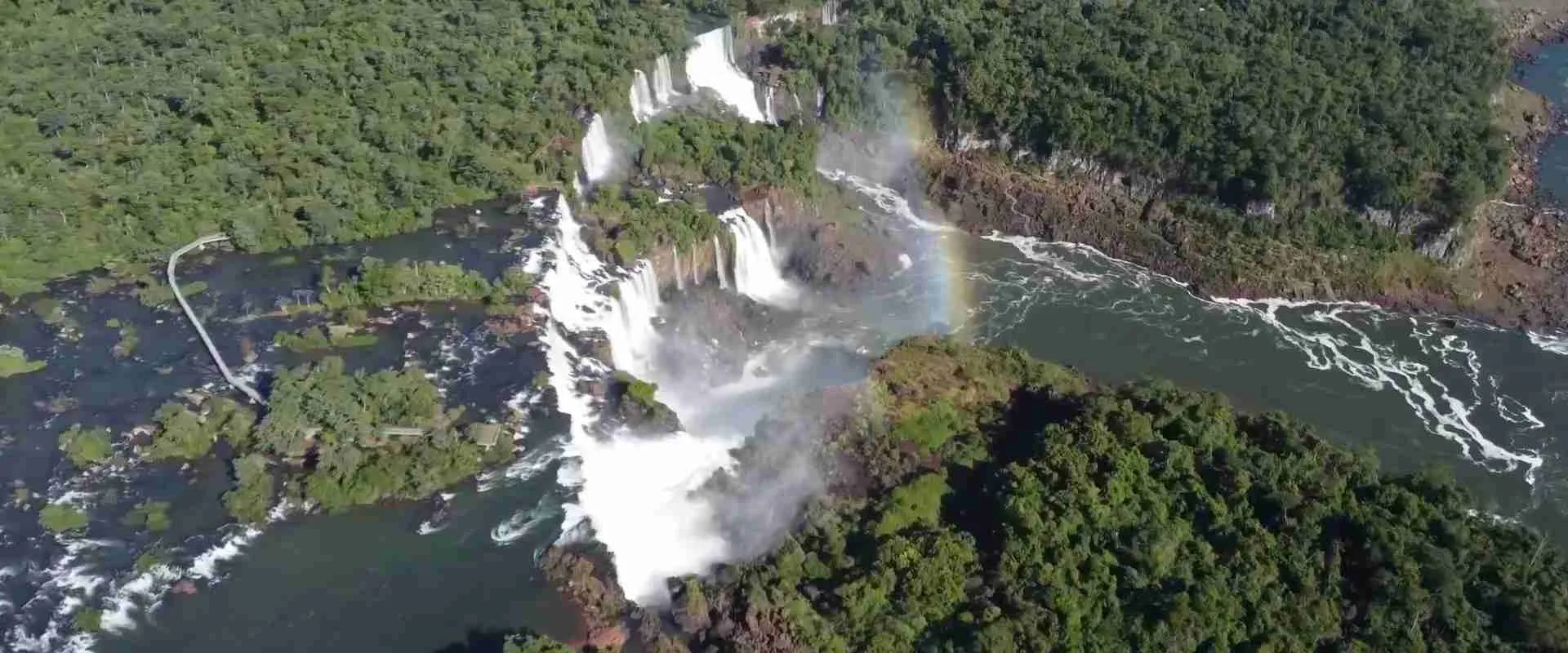
Iguazu Falls UNESCO World Heritage Guide: Conservation & Global Significance
Understanding Iguazu Falls’ World Heritage status enriches visitor experiences by revealing conservation contexts behind preserved landscapes and managed access systems. The designation represents global recognition of the site’s exceptional natural values and international commitment to ensuring future generations inherit these wonders intact. This comprehensive guide explores the designation process, selection criteria, conservation challenges, management strategies, and ongoing efforts maintaining Iguazu Falls’ World Heritage integrity in the face of contemporary environmental pressures.
Key Takeaways
- Iguazu Falls received UNESCO World Heritage designation in 1984 (Argentina) and 1986 (Brazil), recognized as Outstanding Universal Value for geological significance and biodiversity conservation
- The site meets UNESCO criteria VII (superlative natural phenomena) and X (biodiversity conservation), protecting 275 individual cataracts and 550,000 acres of Atlantic Forest
- Bi-national cooperation between Argentina’s Iguazú National Park and Brazil’s Iguaçu National Park creates unified protected landscape spanning international borders with coordinated management strategies
- Conservation efforts protect over 2,000 vascular plant species and critical habitat for 450 bird species, 80 mammal species, and numerous threatened species including jaguars and harpy eagles
- International recognition drives sustainable tourism practices serving 1.7 million annual visitors while maintaining ecological integrity through carrying capacity limits and infrastructure controls
- Ongoing threats including upstream hydroelectric development, agricultural expansion, and climate change require continuous monitoring and adaptive conservation strategies to preserve World Heritage values
Introduction: Understanding UNESCO World Heritage Status
Iguazu Falls stands among humanity’s most treasured natural wonders, protected under UNESCO World Heritage Convention as a site of Outstanding Universal Value worthy of preservation for all people across generations. The thundering cascades straddling the Argentina-Brazil border received international recognition in the mid-1980s, acknowledging both spectacular geological features and exceptional biodiversity conservation values. This World Heritage designation imposes legal protections, conservation obligations, and management standards that safeguard the falls and surrounding ecosystems from development pressures while facilitating sustainable visitor access.
The UNESCO World Heritage program identifies cultural and natural sites of exceptional importance to humanity’s collective heritage, establishing international frameworks for protection, management, and monitoring. Sites must demonstrate Outstanding Universal Value through meeting specific selection criteria, possess adequate boundaries and buffer zones that protect their integrity, and implement effective management systems ensuring long-term conservation. World Heritage status brings international prestige, tourism benefits, and technical support while requiring host nations to maintain rigorous conservation standards and report regularly on site conditions.
Iguazu Falls’ bi-national character creates unique management challenges and opportunities, with Argentina’s Iguazú National Park and Brazil’s Iguaçu National Park functioning as separate administrative units under different legal systems while protecting a unified ecological landscape. Cooperative agreements coordinate conservation strategies, harmonize visitor management approaches, and address transboundary issues including watershed protection and wildlife migration corridors. This international collaboration demonstrates how World Heritage designation can foster diplomatic cooperation around shared environmental conservation goals, transcending national boundaries through mutual commitment to protecting natural treasures.
People Also Ask About Iguazu Falls UNESCO World Heritage Status
When did Iguazu Falls become a UNESCO World Heritage Site?
Argentina’s Iguazú National Park received UNESCO World Heritage designation in 1984, becoming one of the earliest South American natural sites recognized under the Convention. Brazil’s Iguaçu National Park followed in 1986, creating a bi-national World Heritage landscape protecting the complete falls system and surrounding Atlantic Forest ecosystems. The staggered designation reflects administrative independence between the two national parks despite their ecological unity, with each country nominating its protected area through separate processes that acknowledged the transboundary nature of the resource.
The designation process involved extensive documentation of the sites’ geological features, biodiversity values, and management capacities. Technical evaluations by the International Union for Conservation of Nature (IUCN) assessed whether the nominated areas met World Heritage criteria and possessed adequate protection mechanisms. Both parks successfully demonstrated Outstanding Universal Value through their spectacular waterfall formations, exceptional biodiversity including numerous threatened species, and comprehensive legal protections under national park designations established decades earlier.
Initial designations covered 55,500 hectares in Argentina and 170,086 hectares in Brazil, establishing core protected areas with restricted access and buffer zones allowing compatible land uses. Subsequent boundary modifications expanded protected areas and refined management zones based on improved ecological understanding and emerging conservation needs. The bi-national designation created international obligations for both countries to maintain World Heritage values through effective conservation management and coordinate activities affecting the shared resource.
What criteria did Iguazu Falls meet for World Heritage designation?
Iguazu Falls meets two of UNESCO’s ten World Heritage selection criteria, specifically Criterion VII covering superlative natural phenomena and Criterion X addressing biodiversity conservation. Criterion VII recognizes sites containing “superlative natural phenomena or areas of exceptional natural beauty and aesthetic importance.” The falls’ 275 individual cataracts cascading across nearly 3 kilometers create one of Earth’s most spectacular waterfall systems, with the horseshoe-shaped Devil’s Throat forming the centerpiece of this natural wonder.
The site’s geological significance extends beyond sheer visual impact to include scientifically important formations documenting volcanic history and erosional processes. Basalt formations created by massive lava flows 130 million years ago provide substrate for the waterfalls, while ongoing erosion continues shaping the landscape at measurable rates. The falls represent active geological processes observable in real-time, offering scientific insights into how water power transforms landscapes over geological timescales.
Criterion X recognizes sites containing “the most important and significant natural habitats for in-situ conservation of biological diversity, including those containing threatened species of Outstanding Universal Value from the point of view of science or conservation.” Iguazu Falls protects over 2,000 vascular plant species within Atlantic Forest ecosystems that have suffered massive regional destruction, preserving critical biodiversity reservoirs in one of Earth’s most threatened biomes.
The protected areas provide habitat for 450 bird species including harpy eagles and red-spectacled parrots, 80 mammal species including jaguars, pumas, giant otters, and South American tapirs, and countless invertebrates including endemic species found nowhere else on Earth. This exceptional species diversity and presence of numerous globally threatened taxa demonstrate the site’s critical importance for biodiversity conservation at regional and global scales.
How does World Heritage status protect Iguazu Falls?
UNESCO World Heritage designation provides legal, political, and technical protections that strengthen conservation of Iguazu Falls beyond what national park status alone would ensure. International recognition creates diplomatic pressure on both Argentina and Brazil to maintain high conservation standards and avoid development activities that might compromise World Heritage values. The UNESCO World Heritage Committee monitors site conditions through periodic reporting requirements and can place sites on the List of World Heritage in Danger when threats emerge, generating international attention that pressures governments to address problems.
World Heritage status attracts international technical assistance and funding opportunities for conservation projects that might not receive priority under purely national frameworks. UNESCO facilitates knowledge exchange between World Heritage sites facing similar challenges, allowing managers to learn from best practices developed elsewhere. International conservation organizations including IUCN, World Wildlife Fund, and regional environmental groups prioritize World Heritage sites when allocating resources, recognizing the global significance of protecting these exceptional places.
Management plans required under World Heritage guidelines establish comprehensive frameworks addressing conservation priorities, visitor management strategies, buffer zone protections, and monitoring programs tracking site conditions over time. These planning processes bring together diverse stakeholders including park managers, government agencies, indigenous communities, tourism operators, and conservation organizations to develop coordinated approaches balancing protection with sustainable use. Regular plan updates incorporate new scientific knowledge and adapt strategies to address emerging challenges.
The designation creates tourism marketing advantages that generate revenue supporting conservation operations while creating economic incentives for maintaining site integrity. Visitors specifically seek World Heritage sites, with designation status influencing destination choices and supporting premium pricing for quality visitor experiences. Tourism income funding park operations creates self-sustaining conservation models where protecting natural values directly generates resources needed for effective management.
What are the biggest threats to Iguazu Falls’ World Heritage status?
Upstream hydroelectric development poses the most serious long-term threat to Iguazu Falls’ World Heritage integrity, with dams on the Iguazu River and tributaries altering natural flow regimes that create the falls’ spectacular displays. Multiple hydroelectric facilities already operate upstream in both Argentina and Brazil, with additional projects proposed or under construction. Flow regulation for power generation reduces seasonal water volume variations that historically created diverse cascade patterns, while upstream reservoirs trap sediments that would naturally maintain riverbed configurations.
Agricultural expansion in watersheds surrounding the protected areas increases runoff pollution, introduces invasive species, and fragments wildlife corridors connecting Iguazu Falls to other protected areas. Soybean cultivation, cattle ranching, and plantation forestry convert natural habitats into production landscapes, reducing regional biodiversity and isolating the national parks as ecological islands surrounded by human-modified environments. Pesticide and fertilizer runoff degrades water quality, affecting aquatic ecosystems within the protected areas despite occurring outside park boundaries.
Climate change impacts include altered precipitation patterns affecting water flow volumes and frequencies, temperature increases stressing sensitive species adapted to current conditions, and extreme weather events causing erosion and infrastructure damage. Scientific models predict reduced average water flows during dry seasons and more intense flooding during wet periods, changing the character of visitor experiences and stressing ecosystems adapted to historical climate patterns. Some climate projections suggest gradual species composition changes as temperature-sensitive species decline while heat-tolerant species expand their ranges.
Tourism pressure from 1.7 million annual visitors creates localized impacts including trail erosion, waste generation, noise disturbance affecting wildlife, and demand for infrastructure development within and adjacent to protected areas. Balancing visitor access with conservation needs requires continuous management attention to carrying capacity limits, infrastructure placement and design, visitor behavior regulations, and impact monitoring. Uncontrolled tourism growth could degrade the natural values that attracted World Heritage designation, creating self-defeating cycles where success undermines the qualities that generated that success.
Extended multi-day tours – 5+ days
Featured Iguazu Falls Multi-Day Tour Packages

3 days
Iguazu Falls 3-Day Discovery Tour
- ✓ Comprehensive Iguazu Falls experience
- ✓ Expert local guides included
- ✓ All accommodation included
- ✓ Transportation provided
5 days
Iguazu Falls 5-Day Highlights Experience
- ✓ Comprehensive Iguazu Falls experience
- ✓ Expert local guides included
- ✓ All accommodation included
- ✓ Transportation provided

7 days
Iguazu Falls 7-Day Cultural Journey
- ✓ Comprehensive Iguazu Falls experience
- ✓ Expert local guides included
- ✓ All accommodation included
- ✓ Transportation provided
10 days
Iguazu Falls 10-Day Complete Adventure
- ✓ Comprehensive Iguazu Falls experience
- ✓ Expert local guides included
- ✓ All accommodation included
- ✓ Transportation provided
Multi-day tour packages powered by TourRadar. Prices and availability subject to change.
The UNESCO World Heritage Designation Process
Argentina initiated the World Heritage nomination process for Iguazú National Park in the early 1980s, responding to UNESCO’s call for nations to identify natural and cultural sites of outstanding global significance worthy of international protection. The nomination process required comprehensive documentation of the park’s geological features, biodiversity values, conservation status, and management systems, demonstrating how the site met specific World Heritage criteria and possessed adequate protection mechanisms ensuring long-term preservation.
Technical evaluations conducted by IUCN assessed whether Iguazú National Park truly represented Outstanding Universal Value sufficient to justify World Heritage inscription. IUCN experts visited the site, reviewed scientific literature documenting geological and biological significance, evaluated management effectiveness, and examined legal protections under Argentine law. Their assessment confirmed the falls’ exceptional natural values and recommended inscription under Criteria VII and X, recognizing both spectacular natural phenomena and biodiversity conservation importance.
The UNESCO World Heritage Committee formally inscribed Iguazú National Park on the World Heritage List during its 1984 session in Buenos Aires, making the Argentine protected area the country’s first natural World Heritage site. The inscription statement highlighted the falls’ extraordinary scenic beauty, geological significance, and role protecting threatened Atlantic Forest ecosystems. The Committee noted the site’s excellent state of conservation and comprehensive management under established national park administration.
Brazil followed with its own nomination of Iguaçu National Park in 1986, seeking World Heritage recognition for its portion of the falls and adjacent Atlantic Forest. The Brazilian nomination emphasized biodiversity values including numerous threatened species, extensive pristine forest areas, and critical wildlife habitat within one of Earth’s most endangered biomes. IUCN evaluation confirmed the Brazilian park’s Outstanding Universal Value and recommended inscription under the same criteria applied to the Argentine site.
The World Heritage Committee inscribed Iguaçu National Park during its 1986 session, creating a bi-national World Heritage landscape protecting the complete falls system and nearly 600,000 acres of Atlantic Forest. The Committee encouraged both countries to enhance cooperation around shared conservation goals and coordinate management strategies addressing transboundary issues. This encouragement led to formal agreements establishing joint technical committees, coordinated research programs, and unified approaches to visitor management and environmental monitoring.
Post-inscription monitoring involves periodic reporting requirements where both countries document conservation status, management activities, emerging threats, and adaptive strategies maintaining World Heritage values. Argentina and Brazil submit State of Conservation reports every six years, detailing visitor statistics, infrastructure developments, research findings, conservation achievements, and ongoing challenges. UNESCO and IUCN review these reports, sometimes requesting additional information or recommending specific actions addressing identified concerns.
Reactive monitoring occurs when specific threats or incidents raise concerns about site integrity, with UNESCO requesting special reports outside regular cycles and sometimes sending expert missions to assess situations firsthand. Both Iguazú and Iguaçu National Parks have faced reactive monitoring related to proposed infrastructure projects including highways, hydroelectric facilities, and tourism development. In several cases, international pressure through World Heritage mechanisms influenced national decisions, preventing developments that would have compromised protected areas.
The List of World Heritage in Danger represents UNESCO’s tool for addressing serious threats requiring urgent action. Sites face inscription on the Danger List when facing specific and proven imminent danger, or ascertained danger from serious deterioration. Neither Iguazú nor Iguaçu has been placed on the Danger List, though threats including upstream dams and agricultural expansion have generated discussions about whether such designation might become necessary if threats intensify without adequate mitigation.
Meeting UNESCO Criteria VII: Superlative Natural Phenomena
Iguazu Falls exemplifies Criterion VII through its spectacular natural beauty and exceptional geological features creating one of Earth’s most impressive waterfall systems. The cascade extends nearly 3 kilometers across the Iguazu River, comprising 275 individual waterfalls with heights reaching 82 meters at the Devil’s Throat, the horseshoe-shaped cataract forming the falls’ most dramatic section. Few waterfall systems worldwide match Iguazu’s combination of width, height, volume, and visual complexity, justifying recognition as a superlative natural phenomenon worthy of World Heritage protection.
The geological context enhances appreciation for the falls’ significance beyond mere visual spectacle. Basalt formations underlying the waterfall system resulted from massive lava flows during the Cretaceous Period approximately 130 million years ago, when volcanic activity associated with South America and Africa’s separation flooded this region with molten rock. These flood basalts created the Serra Geral Formation, horizontal rock layers extending across southern Brazil and northeastern Argentina forming the substrate over which the Iguazu River flows.
Waterfall formation began geologically recently, within the last 200,000 years, when tectonic uplift raised the Paraná Plateau relative to downstream areas. The Iguazu River responded to this base level change by cutting downward, encountering resistant basalt layers that eroded more slowly than underlying softer rocks. Differential erosion created the initial waterfall, which has migrated upstream approximately 28 kilometers from the confluence with the Paraná River to its current position through ongoing headward erosion processes.
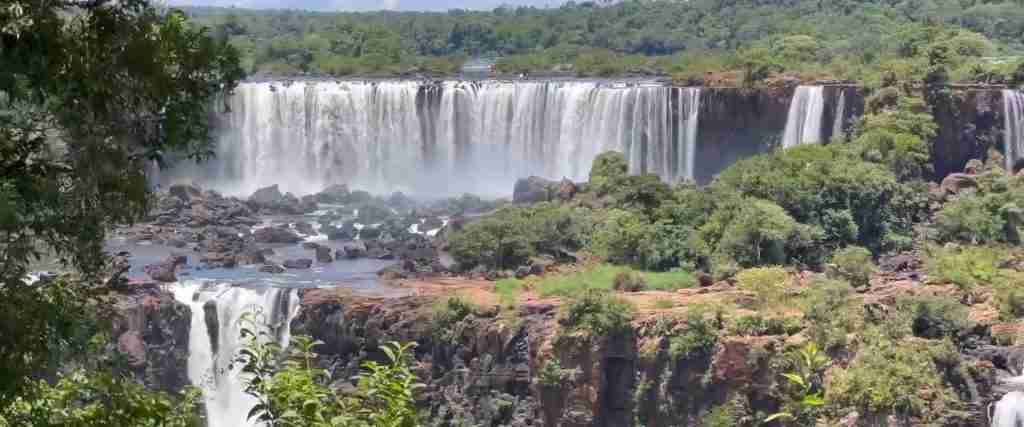
The falls continue actively evolving through erosional processes observable over human timescales. Water volume variations between wet and dry seasons create different cascade patterns, with maximum flows during February-May producing unified curtains of water across entire sections, while minimum flows in August-October reveal individual cataracts separated by exposed rock platforms. These seasonal transformations demonstrate living geological processes rather than static features, offering scientific insights into how water power shapes landscapes.
Rainbow formations in the falls’ spray clouds add aesthetic dimensions that enhance the site’s natural beauty. Sunlight refracting through water droplets creates vivid primary rainbows, with optimal conditions producing complete circular rainbows visible from certain vantage points. Double rainbows occasionally appear when light reflects twice within water droplets before exiting, creating secondary arcs with reversed color sequences. These optical phenomena combine with thundering water sounds and cool mist sensations to create multi-sensory experiences of extraordinary power and beauty.
The surrounding Atlantic Forest provides verdant natural settings that enhance the falls’ aesthetic impact while representing significant natural phenomena in their own right. Ancient tree species including strangler figs with massive buttressed roots, emergent canopy trees reaching 30-40 meters height, and diverse epiphytes festooning every branch create layered forest structures harboring exceptional biodiversity. The forest’s lush growth reflects high rainfall and humid conditions generated partly by the falls themselves, creating feedback loops where waterfalls influence local climate patterns supporting specific vegetation types.
Seasonal variations create dynamic natural phenomena as flowering events, fruiting periods, and wildlife activities follow annual cycles. Spring months bring explosive flowering displays including pink lapacho trees whose blossoms blanket entire canopies, while summer fruit production attracts diverse frugivores including toucans, parrots, and primates. These biological phenomena complement geological features, demonstrating how Criterion VII encompasses both abiotic and biotic aspects of exceptional natural environments.
Meeting UNESCO Criterion X: Biodiversity Conservation
Iguazu Falls’ World Heritage designation recognizes exceptional biodiversity values through Criterion X, which addresses sites protecting threatened species and critical natural habitats. The bi-national protected area preserves over 2,000 vascular plant species within Atlantic Forest ecosystems that have suffered catastrophic regional destruction, retaining fewer than 12% of original extent across their historical range in Brazil, Argentina, and Paraguay. This massive habitat loss elevates importance of remaining protected areas like Iguazú and Iguaçu National Parks as biodiversity refuges maintaining genetic diversity and population viability for countless species.
The Atlantic Forest ranks among Earth’s biodiversity hotspots, regions combining exceptional species richness and endemism with severe conservation threats. Over 50% of plant species and 40% of vertebrate species occurring in Atlantic Forest are endemic, found nowhere else on Earth. Iguazu Falls protects representative ecosystems spanning the western extent of this biome, where subtropical Atlantic Forest transitions toward interior cerrado grasslands and Paraná pine forests, creating ecotonal diversity that increases overall species richness.
Plant diversity includes over 90 tree species reaching canopy levels, with additional hundreds of understory shrubs, herbs, ferns, and non-vascular plants occupying forest floor and lower strata. Epiphytic communities feature orchids, bromeliads, cacti, and ferns growing on tree branches without parasitizing host plants, creating vertical gardens that dramatically increase forest structural complexity. Some individual large trees support over 100 epiphyte species, demonstrating extraordinary local diversity within single organisms.
Threatened plant species protected within the parks include several palm species harvested unsustainably outside protected areas, valuable hardwoods logged to near-extinction across the Atlantic Forest, and endemic orchids collected by illegal traffickers supplying horticultural markets. The parks function as gene banks preserving genetic diversity for these species, maintaining wild populations that could support future restoration efforts or provide disease-resistant genotypes for breeding programs.
Bird diversity reaches 450 species including residents, seasonal migrants, and occasional visitors, representing approximately half of Brazil’s total avifauna within less than 0.2% of the country’s land area. This compressed diversity reflects the Atlantic Forest’s exceptional bird richness and the parks’ varied habitats from riverine forests to plateau grasslands. Threatened species protected within the parks include harpy eagles, South America’s largest raptors requiring extensive territories and primary forest habitat now rare outside protected areas.
Red-spectacled parrots inhabit the parks year-round, forming large flocks that feed on fruiting trees and nest in tree cavities. These charismatic birds serve as flagship species helping generate public support for conservation while providing important ecological services as seed dispersers for numerous tree species. Their populations remain stable within protected areas while declining elsewhere due to habitat loss and illegal capture for the pet trade.
Mammal diversity includes 80 species ranging from tiny rodents to apex predators like jaguars. Five felid species inhabit the parks: jaguars, pumas, ocelots, margays, and jaguarundis, representing one of few remaining areas where this complete predator guild persists in South America. Jaguar populations in the parks comprise some of the largest remaining in Argentina, with genetic connectivity to Brazilian populations maintained through transboundary movement corridors.
Giant otters occupy rivers within Brazilian sectors of the protected area, representing one of few populations surviving in Atlantic Forest regions. These endangered carnivores require clean waterways with abundant fish populations and undisturbed riverbanks for den sites, conditions increasingly rare outside protected areas. Their presence indicates high ecosystem health and serves as umbrella species whose habitat requirements benefit numerous co-occurring aquatic species.
South American tapirs, the largest terrestrial mammals in South America, inhabit both parks’ forested areas where they function as important seed dispersers for large-fruited tree species. Hunting pressures have eliminated tapirs from most of their historical range, making protected populations critical for species survival. The parks’ tapirs move freely across the international border, demonstrating importance of transboundary conservation for wide-ranging species requiring large territories.
Reptile and amphibian diversity includes numerous endemic species restricted to Atlantic Forest regions. Tree-dwelling frogs occupy bromeliads and tree holes where they complete their life cycles independent of ground-level water bodies, demonstrating remarkable reproductive adaptations. Several poison dart frog species display vivid warning coloration advertising toxic skin secretions that protect them from predators. These amphibians face global declines from habitat loss, pollution, and emerging diseases, making protected populations increasingly valuable for conservation.
Invertebrate diversity remains incompletely documented, with new species regularly discovered during biological inventories. Butterflies show exceptional richness with over 250 documented species including spectacular blue morphos whose iridescent wings flash brilliant metallic colors as they patrol forest gaps. Leaf-cutter ants create complex underground colonies where they cultivate fungus gardens on harvested vegetation, forming superorganisms containing millions of individuals working cooperatively.
Aquatic ecosystems within the Iguazu River and tributaries support diverse fish communities including species endemic to the upper Paraná River basin. The falls create upstream/downstream habitat divisions isolating fish populations and driving evolutionary divergence between upstream and downstream forms. Some species complete their life cycles entirely above the falls, while others inhabit only downstream sections, with the cascade functioning as absolute barrier to fish migration.
Bi-National Conservation Cooperation
Iguazu Falls’ location on the Argentina-Brazil border creates unique management challenges requiring international cooperation to protect the unified ecosystem divided by political boundaries. Formal agreements establish joint technical committees that coordinate research activities, share monitoring data, harmonize visitor management approaches, and address transboundary conservation issues including wildlife migration, watershed protection, and invasive species control. These cooperative frameworks demonstrate how World Heritage designation can foster diplomatic collaboration around shared environmental goals.
Joint research programs conduct coordinated biological surveys that track wildlife populations moving between the two national parks without regard for international boundaries. Radio-telemetry studies of jaguars have documented individuals ranging across both countries, demonstrating the artificial nature of political divisions for species requiring large territories. Genetic studies compare populations on both sides of the border, revealing high gene flow maintained through regular animal movements that depend on maintaining habitat connectivity across the boundary.
Harmonized visitor management strategies create seamless experiences for tourists who often visit both parks during single trips to the falls region. Coordinated schedules allow visitors to cross borders easily during park operating hours, while reciprocal recognition agreements allow certain passes purchased in one country to provide benefits in the other. Joint marketing initiatives promote the bi-national World Heritage site as unified destination rather than competing attractions, maximizing tourism benefits for both countries while distributing visitor loads across available infrastructure.
Invasive species management requires coordinated approaches since plants and animals recognize no political boundaries. Wild boar populations originating from escaped domestic pigs damage native vegetation and compete with native wildlife in both parks, requiring control programs that coordinate across borders to prevent populations suppressed in one country from simply recolonizing from the other. Giant African snails spread through disturbed areas in both countries, necessitating joint monitoring and eradication efforts preventing establishment in pristine forest sections.
Fire management cooperation shares resources and expertise for controlling wildfires that threaten both parks. Lightning strikes and human-caused ignitions occasionally spark fires during dry seasons, with prevailing winds potentially spreading flames across the international boundary. Mutual assistance agreements allow firefighting personnel and equipment from one country to operate within the other’s territory during emergency responses, providing rapid access that can prevent small fires from becoming major conflagrations.
Watershed protection initiatives address upstream land use changes affecting water quality and flow regimes in both parks. Agricultural expansion, urban development, and hydroelectric projects in Brazilian headwaters directly impact Argentine park areas downstream, while activities in Argentine tributaries affect Brazilian sections. Joint advocacy for protective measures in upper watersheds represents both countries’ shared interests in maintaining natural water flows and quality essential to falls preservation.
Scientific information exchange occurs through regular meetings where park researchers present findings, share datasets, and discuss conservation challenges. This collaboration prevents duplication of effort while ensuring comprehensive coverage of research priorities across the bi-national system. Joint publications synthesize data from both countries, providing holistic perspectives on transboundary ecosystem processes that single-country studies might miss.
Training programs share expertise through staff exchanges where Argentine personnel learn from Brazilian colleagues and vice versa. These exchanges build personal relationships that facilitate ongoing communication and problem-solving while transferring specialized skills in areas like wildlife monitoring, visitor interpretation, or infrastructure maintenance. Binational workshops bring together larger groups for intensive training on specific topics, maximizing efficiency of expert instruction.
Conservation Management Strategies
Effective management of Iguazu Falls World Heritage site requires comprehensive strategies addressing diverse conservation challenges while facilitating sustainable visitor access. Management plans establish long-term visions, specific objectives, and action programs guiding park operations and resource allocation. These plans undergo periodic revision incorporating new scientific knowledge, adapting to emerging threats, and responding to changing social contexts including tourism growth and local community needs.
Zoning systems designate different management intensities across park areas based on conservation values and human use compatibility. Strict protection zones exclude all visitor access and infrastructure, protecting most sensitive ecosystems and providing undisturbed refuge for wildlife. These areas undergo only scientific research activities conducted under strict protocols minimizing disturbance. The majority of both parks falls under strict protection, with visitor activities concentrated in small designated zones.
Intensive use zones accommodate visitor infrastructure including trails, viewpoints, visitor centers, and transportation systems. These areas receive regular maintenance to prevent deterioration while upgrading facilities meet evolving standards for accessibility, safety, and environmental performance. Infrastructure placement considers landscape impacts, with designs that minimize visual intrusion and employ natural materials harmonizing with surroundings.
Buffer zones surrounding core protected areas allow limited human activities compatible with conservation objectives. These transitional areas permit sustainable agriculture, selective forestry, and low-impact tourism developments under restrictions preventing activities that might compromise core area integrity. Buffer zone regulations prohibit industrial facilities, intensive agriculture using heavy pesticides, and urban expansion that would bring dense human populations near park boundaries.
Wildlife monitoring programs track population trends for key species including threatened taxa requiring special management attention. Camera trap networks document jaguar, puma, and tapir populations through photographic capture-recapture studies that estimate population sizes and identify individual animals through natural markings. Bird surveys using standardized point count methodologies detect population changes over time, providing early warning of ecosystem changes that might require management intervention.
Habitat restoration projects address degraded areas within park boundaries resulting from historical land uses predating park establishment or recovering from natural disturbances. Native tree plantings accelerate succession in former pastures, while removal of invasive species allows native vegetation to recolonize sites where exotic plants had displaced indigenous flora. These active interventions speed recovery processes that might require decades if left to natural succession alone.
Fire management programs prevent and suppress wildfires while allowing natural fire regimes in ecosystems adapted to periodic burning. Prescribed burns reduce accumulated fuel loads that might otherwise support catastrophic crown fires destroying mature forests. Firebreaks strategic placed near park boundaries prevent fires originating outside from spreading into protected areas, while providing access routes for firefighting equipment during suppression operations.
Visitor impact monitoring tracks trail erosion, vegetation damage, wildlife disturbance, and waste generation. Regular assessments compare observed impacts against established thresholds, triggering management responses when impacts exceed acceptable levels. Interventions might include trail rerouting, temporary closures allowing recovery, enhanced visitor education, or stricter enforcement of existing regulations. Adaptive management principles allow flexible responses tailored to specific situations rather than rigid predetermined actions.
Environmental education programs target both visitors and local communities with messages promoting conservation values and appropriate behaviors. Visitor centers feature interpretive exhibits explaining ecosystem functions, species conservation needs, and management rationales for regulations that might seem restrictive. School programs bring local students into parks for hands-on environmental education creating personal connections to protected areas that foster long-term conservation support.
Community engagement initiatives recognize that conservation success depends partly on positive relationships with neighboring populations. Employment opportunities for local residents in park operations, tourism services, and conservation projects create economic incentives supporting protection. Consultation processes incorporate community perspectives into management planning, building local ownership of conservation goals rather than imposing external priorities.
Tourism and Sustainable Use
Tourism at Iguazu Falls exemplifies both opportunities and challenges inherent in managing World Heritage sites for public access while protecting natural values. The parks receive approximately 1.7 million visitors annually, generating substantial economic benefits while creating impacts requiring careful management. World Heritage status enhances tourism appeal, with many visitors specifically seeking sites bearing this prestigious designation, creating virtuous cycles where international recognition drives visitation that generates resources supporting conservation.
Visitor infrastructure employs sustainable design principles minimizing environmental impacts while providing quality experiences. Elevated walkways reduce trail erosion and vegetation trampling by keeping visitors on designated paths while providing close encounters with forest environments. Platforms constructed from recycled materials and designed for minimal visual impact offer spectacular waterfall viewpoints without requiring extensive landscape modification. Solar panels and rainwater collection systems reduce infrastructure’s environmental footprint.
Carrying capacity limits establish maximum daily visitor numbers preventing overcrowding that would degrade both natural resources and visitor experiences. Peak season restrictions require advance reservations ensuring visitation remains within sustainable levels. These controls prevent the overcrowding that plagues some popular natural attractions, maintaining quality experiences where visitors can contemplate natural beauty without battling excessive crowds.
Visitor education programs communicate conservation values and appropriate behaviors through interpretive signage, guided tours, visitor center exhibits, and ranger-led programs. Messages emphasize staying on trails, packing out all waste, respecting wildlife by maintaining distances, and appreciating how visitor fees directly support conservation work. Well-designed interpretive materials transform casual tourists into informed advocates who understand and value World Heritage protection.
Revenue generation through entrance fees, concession contracts, and souvenir sales provides substantial funding for park operations and conservation projects. Economic analyses demonstrate that tourism generates far greater long-term economic benefits than alternative land uses like agriculture or forestry would produce from the same areas, creating powerful economic arguments for maintaining protected status. Transparent accounting of how visitor spending supports conservation helps justify entrance fees while building public support for protection.
Local economic benefits from tourism include employment in hotels, restaurants, transportation services, and guiding operations that create stakeholder interests in maintaining park quality. Communities that benefit economically from protected area tourism become conservation advocates rather than viewing parks as constraints on development. These economic linkages make conservation increasingly self-sustaining as tourism revenues grow with enhanced World Heritage marketing.
Sustainable tourism certification programs encourage operators to adopt environmentally responsible practices including waste reduction, water conservation, local sourcing of food and materials, and cultural sensitivity. Certified operators receive promotional benefits including preferred listing on park websites and visitor information materials, creating competitive advantages that incentivize sustainability. These market-based mechanisms complement regulatory approaches, leveraging consumer preferences for eco-friendly options.
Overtourism prevention requires ongoing vigilance as World Heritage designation’s success in attracting visitors risks undermining the natural values that justified protection. Management maintains flexible approaches that can implement additional restrictions if monitoring reveals visitor impacts exceeding acceptable levels. Potential interventions include seasonal closures, additional area restrictions, higher fees during peak periods, or mandatory guided tours limiting independent access to sensitive zones.
Contemporary Threats and Challenges
Despite strong legal protections and effective management, Iguazu Falls World Heritage site faces ongoing threats requiring continuous monitoring and adaptive responses. Upstream hydroelectric development represents the most serious long-term challenge, with multiple dams already operating on the Iguazu River and tributaries plus additional facilities proposed. These projects alter natural flow regimes that create the falls’ spectacular displays, with flow regulation for power generation reducing seasonal variations that historically produced diverse cascade patterns.
The Salto Caxias Dam completed in 1999 on Brazil’s Iguazu River created a 141 square kilometer reservoir 45 kilometers upstream from the falls, regulating flows for hydroelectric generation. Additional upstream facilities include Foz do Areia, Segredo, and Salto Santiago dams on the Iguazu and tributaries. Combined, these facilities exert substantial control over water reaching the falls, with power generation priorities sometimes conflicting with environmental flow requirements maintaining natural ecosystem functions.
Future dam proposals including additional facilities on the Iguazu and other Paraná basin rivers would further regulate flows affecting the falls. Each new project incrementally degrades the natural character that justified World Heritage designation, raising questions about cumulative impact thresholds beyond which Outstanding Universal Value might be compromised. UNESCO and IUCN have expressed concerns about hydroelectric expansion, requesting impact assessments and urging both countries to consider alternatives including energy efficiency and renewable sources that don’t impair river flows.
Agricultural intensification in watersheds surrounding the parks increases runoff pollution carrying fertilizers, pesticides, and eroded sediments into protected waterways. Large-scale soybean cultivation employs heavy agrochemical inputs that contaminate surface and groundwater. Cattle ranching contributes waste products and requires pasture expansion consuming natural habitats. While these activities occur outside park boundaries and thus beyond direct management control, their impacts cross boundaries through water and wildlife movements.
Habitat fragmentation isolates the parks as ecological islands within agricultural landscapes, restricting wildlife movements and potentially reducing genetic diversity through population isolation. Some wide-ranging species including jaguars require territories larger than the protected areas provide, necessitating access to surrounding lands where human activities create mortality risks. Maintaining connectivity corridors linking Iguazu Falls to other protected areas requires cooperation with private landowners and government agencies controlling adjacent areas.
Invasive species introductions threaten native biodiversity through competition, predation, and disease transmission. Wild boar descended from domestic pigs damage native vegetation, prey on ground-nesting birds, and compete with native herbivores. Pine trees from commercial plantations outside parks spread into natural areas where they outcompete native species and alter fire regimes. Continuous control efforts suppress but don’t eliminate invasive populations, requiring ongoing resource commitments that divert funds from other conservation priorities.
Climate change projections indicate potentially severe impacts on Iguazu Falls ecosystems including altered precipitation patterns, temperature increases, and extreme weather events. Reduced rainfall during dry seasons could diminish water flow creating less spectacular falls displays and stressing aquatic ecosystems. More intense storms might increase erosion and infrastructure damage requiring costly repairs. Temperature increases could allow heat-adapted species to expand into areas currently occupied by species adapted to cooler conditions, gradually transforming species compositions.
Some climate models suggest the Atlantic Forest could experience substantial range contractions as suitable climate conditions shift southward and upward in elevation. Species lacking dispersal capacity to track shifting climate envelopes face local extinctions. The parks’ fixed boundaries might become climatically unsuitable for species they currently protect, raising fundamental questions about static conservation strategies in contexts of directional environmental change.
Illegal activities including wildlife poaching, plant collection, and unauthorized resource extraction require constant vigilance and enforcement efforts. Poachers target valuable species including parrots for the pet trade and palm hearts for food markets. Illegal loggers occasionally enter parks seeking valuable hardwoods commanding high prices. These activities directly harm protected species and ecosystems while undermining management authority. Enhanced surveillance using technologies including camera traps and satellite monitoring improves detection, but enforcement remains challenging across vast, remote areas.
Future Conservation Prospects
Long-term conservation of Iguazu Falls World Heritage values requires sustained commitment to effective management despite evolving challenges and pressures. Both Argentina and Brazil have demonstrated strong political will to maintain protected area integrity through decades of changing governments and economic conditions. World Heritage designation strengthens this commitment through international obligations and oversight mechanisms that extend beyond national political cycles.
Emerging conservation technologies offer new tools for monitoring site conditions and detecting threats. Satellite remote sensing tracks land cover changes in buffer zones and upstream watersheds, providing early warning of encroachment or habitat conversion. Automated acoustic monitoring uses sound recording devices to survey wildlife populations and detect illegal activities including gunshots or chainsaws. Drones equipped with cameras and sensors survey large areas efficiently while accessing remote locations difficult for ground patrols.
Genetic technologies enable more sophisticated wildlife population monitoring, with DNA analysis of scat samples, hair snags, or feathers identifying individual animals without direct observation. These non-invasive techniques reduce disturbance while gathering data previously obtainable only through capture and handling. Population genetics reveals connectivity between protected areas and identifies populations requiring special attention due to low genetic diversity or inbreeding risks.
Climate change adaptation strategies anticipate future conditions rather than solely protecting current ecosystem states. Forward-looking management might include assisted migration moving species to areas projected to provide suitable conditions as their current ranges become climatically unsuitable. Conservation corridors linking protected areas allow species to naturally shift ranges tracking changing climate conditions. These proactive approaches recognize that effective conservation must accommodate ecological changes rather than attempting to freeze ecosystems in historical configurations.
Expanded protected area networks in the region create larger conservation landscapes reducing isolation and supporting more viable wildlife populations. Adjacent reserves including Argentina’s Urugua-í Provincial Park and Brazil’s Turvo State Park extend protected habitats connecting to the national parks. Continued expansion of formal protection plus incentive programs encouraging private landowners to maintain natural habitats can build regional conservation mosaics supporting ecosystem processes at landscape scales.
Enhanced international cooperation through platforms including UNESCO World Heritage system, regional environmental treaties, and bilateral agreements between Argentina and Brazil strengthens conservation frameworks. International scrutiny and support provides additional layers of protection supplementing national commitments. Financial mechanisms including Global Environment Facility, World Bank programs, and bilateral development assistance can mobilize resources for priority conservation investments.
Public engagement through education, ecotourism, and citizen science builds broad constituencies supporting conservation. Millions of visitors experiencing the falls’ majesty become advocates for protection, generating political pressure on governments to maintain strong environmental safeguards. Educational programs reaching hundreds of thousands of schoolchildren annually develop future generations who value conservation and will make decisions affecting these places. Citizen science projects engage volunteers in monitoring activities, expanding data collection while building personal connections to protected areas.
The fundamental question remains whether human societies will sustain commitment to protecting extraordinary natural places amid competing pressures for resource exploitation and development. World Heritage designation represents optimism that humanity can achieve this balance, protecting the most exceptional natural and cultural heritage while meeting legitimate human needs. Iguazu Falls’ first four decades under World Heritage protection demonstrate conservation success is possible with adequate commitment and resources. Maintaining this success through the century ahead requires continued vigilance, adaptation to emerging challenges, and renewed commitment to conservation values transcending short-term interests.
FAQ – Iguazu Falls UNESCO World Heritage Status
Can Iguazu Falls lose its World Heritage status?
UNESCO can remove sites from the World Heritage List if Outstanding Universal Value has been destroyed or severely compromised, though this rarely occurs and requires extensive documentation of degradation. Before delisting, UNESCO employs reactive monitoring, technical assistance, and potential inscription on the List of World Heritage in Danger to pressure countries into addressing threats. Argentina and Brazil’s strong commitment to protecting Iguazu Falls makes delisting extremely unlikely, though serious threats like major upstream dams could theoretically compromise the site sufficiently to justify such action.
How does World Heritage status benefit local communities?
World Heritage designation enhances tourism appeal generating employment in hospitality, guiding, transportation, and retail sectors serving visitors. The international recognition allows premium pricing for quality tourism experiences while attracting higher-spending visitors specifically seeking World Heritage sites. Conservation programs funded partly through tourism revenue employ local residents in park operations and restoration projects. However, communities also face restrictions on resource use within protected areas that can create conflicts requiring ongoing negotiation and benefit-sharing arrangements.
What happens if Argentina and Brazil disagree on management decisions?
Formal agreements establishing joint technical committees provide mechanisms for resolving disagreements through structured dialogue and expert consultation. When conflicts arise, both countries typically engage UNESCO and IUCN for technical advice and mediation. The shared interest in maintaining World Heritage status creates incentives for finding compromises rather than allowing conflicts to escalate. Both countries recognize that major disagreements could prompt UNESCO intervention through reactive monitoring or even Danger List inscription, providing powerful motivations for collaborative problem-solving.
Are there restrictions on what countries can do in areas near the parks?
World Heritage designation doesn’t directly regulate activities outside protected area boundaries, but buffer zone policies and watershed protection principles encourage compatible land uses in surrounding areas. UNESCO expects member states to prevent activities in adjacent areas that might compromise World Heritage values, though enforcement mechanisms are limited. International pressure through periodic reporting processes and potential Danger List inscription provide diplomatic tools for discouraging damaging activities, though effectiveness depends on countries’ willingness to prioritize conservation over competing interests.
How is the effectiveness of conservation management measured?
Monitoring programs track multiple indicators including species population trends, habitat quality metrics, water quality parameters, visitor impact measures, and threat levels. Periodic State of Conservation reports synthesize these data streams providing comprehensive assessments of site conditions and management effectiveness. UNESCO and IUCN review these reports, sometimes commissioning independent expert evaluations assessing whether management meets World Heritage standards. Management effectiveness can trigger additional technical assistance, revised management strategies, or in severe cases, Danger List consideration.
What role do indigenous communities play in World Heritage management?
Guaraní communities maintain ancestral connections to lands now within national parks, with traditional territories extending across both protected areas. Contemporary management increasingly recognizes indigenous rights and incorporates traditional ecological knowledge into conservation planning. Some indigenous communities maintain access rights for cultural practices including ceremony locations and traditional resource collection, while restrictions prevent activities incompatible with park protection. Enhanced consultation processes seek indigenous participation in management planning, though implementation of indigenous rights remains evolving area sometimes involving conflicts between conservation priorities and cultural practices.
How do periodic reviews work?
Both Argentina and Brazil submit State of Conservation reports to UNESCO every six years documenting site conditions, management activities, visitor statistics, conservation achievements, and emerging challenges. These reports follow standardized formats facilitating comparison across reporting periods and between different World Heritage sites. IUCN reviews submissions and may request additional information, recommend management improvements, or in cases of serious concern, propose reactive monitoring missions. The review process creates accountability mechanisms ensuring countries maintain conservation commitments over time despite changing governments and priorities.
What scientific research occurs at Iguazu Falls?
Both parks maintain active research programs investigating geology, hydrology, ecology, wildlife populations, and tourism impacts. Universities and research institutions conduct studies under permits requiring data sharing with park management. Research priorities include long-term monitoring of key species, climate change impact assessments, invasive species control methods, and restoration technique evaluations. Scientific publications disseminate findings while contributing to global understanding of waterfall ecosystems, Atlantic Forest conservation, and protected area management. This research directly informs adaptive management while fulfilling World Heritage obligations for science-based conservation.
How does funding for World Heritage site management work?
Park operations receive primary funding from national government budgets supplemented by visitor entrance fees retained for conservation purposes. International sources including Global Environment Facility, World Bank, and bilateral development assistance provide additional funding for specific projects. UNESCO’s World Heritage Fund offers limited grants for technical assistance, emergency conservation, and training programs, though these represent small portions of total park budgets. The sustainable funding model combining government appropriations with tourism revenue creates more stable financial foundations than external grants alone could provide.
Can visitors contribute to conservation beyond entrance fees?
Several mechanisms allow interested visitors to support conservation including donations to park foundations conducting restoration projects and conservation research, purchases from nonprofit gift shops where proceeds fund specific programs, participation in volunteer programs including trail maintenance and biological surveys, and citizen science projects recording wildlife observations that contribute to monitoring databases. These voluntary contributions supplement mandatory entrance fees while building personal connections to conservation efforts. Visitors seeking deeper engagement can inquire at visitor centers about current opportunities matching their interests and available time.